

Introduction
‘The outlook is depressing’, wrote a civil servant in 1938 on reading a report from a colleague on the development of public hospitalsFootnote 1 in Devon; ‘I gather… that the County Medical Officer of Health has rather lost heart… as he has made reports before and practically nothing happens.’Footnote 2 Such a comment could have been applied to many local authorities, particularly on the issue that prompted it – the development of former Poor Law infirmaries as public hospitals. The Local Government Act (1929) [hereafter LGA] had granted permissive powers from April 1930 to enable local authorities to ‘appropriate’ former workhouse infirmaries and develop them for use by the general public. By 1937, however, only thirty-seven county boroughs (less than 50%) and nine county councils (less than 20%) had done so.Footnote 3
Failure by some local authorities to extend their personal public health services between the wars, even when this was heavily promoted by the Ministry of Health, has been the subject of recent attention within a context originally set by both Charles Webster and Roger Lee, who drew attention in the 1980s to the differences between local authority responses to central public policy on welfare services.Footnote 4 In the 1990s, Martin Powell sought to explain the variations between local authorities in the development of public general hospital services, the subject of the quotation above. He identified the wide overall range of hospital bed provision at the end of the 1930s that, for example, within Yorkshire ranged from 11.11 per thousand head of population in Halifax to 3.17 in the East Riding.Footnote 5 Initial quantitative analyses of the relationship between provision and indicators of need and wealth were unable to explain what he termed ‘unpatterned inequality’.Footnote 6 Further work during the 2000s by Martin Powell, John Stewart and colleagues in a Wellcome Trust project, Municipal Medicine, explored variations between county boroughs over a wider range of personal public health services. On general hospital provision, quantitative analyses identified a strong correlation only with the size of the population.Footnote 7 Other publications arising from the project portray inconclusive results for quantitative analyses, relating local authority expenditure and provision to a range of independent variables.
The inconclusive nature of the quantitative work led the authors to suggest that a robust explanation for the differences would need a more holistic approach, taking account of ‘economic determinism… politics and the rise of Labour, the role of the Ministry of Health… the existence of progressive institutions and individuals… the impact of civic pride and civic competition, and the importance of class and gender.’Footnote 8 Many of these factors have been noted as significant in local case studies undertaken by other researchers such as John Pickstone, Martin Gorsky, John Welshman and Barry Doyle.Footnote 9 As Becky Taylor, Martin Powell and John Stewart note, ‘there remains scope for further qualitative work to develop a hypothesis that can explain not only the variations in public hospital provision but potentially also those in areas such as tuberculosis or maternity and child welfare provision.’Footnote 10
The purpose of this article is to fill this gap by developing a robust hypothesis to explain the choices local authorities made about whether or not to appropriate workhouse infirmaries as public hospitals. Appropriation, as the Chief Medical Officer saw it, was a ‘declaration that a wide range of medical services is to be placed at the disposal of those who require these services, provided they are willing to pay the cost as far as they are able and are content to accept such standards of refinement and personal comfort as the various institutions afford.’Footnote 11
Sometimes. as Levene has highlighted, those institutions afforded poor facilities, and authorities failed to develop them.Footnote 12 Appropriation, as Powell warned, is a ‘crude dichotomous variable’.Footnote 13 Its strength, however, is that it was an issue on which almost all local authorities had to make a decision and indeed were pressured so to do by the Ministry of Health. Even where infirmary provision was of poor quality it might be appropriated, as the Manchester experience shows.Footnote 14 It therefore offers the opportunity to contrast the pathways to the decisions that individual councils took.
The ACF as updated in 1999, from Paul Sabatier and Hank Jenkins-Smith, ?The Advocacy Coalition Framework: An Assessment?, in Paul Sabatier (ed.), Theories of the Policy Process (Boulder, CO: Westview Press, 1999), 149.

The study on which it is based used a public policy approach, the Advocacy Coalition Framework [hereafter ACF]. The authors of the ACF, Paul Sabatier and Hank Jenkins-Smith, have sought to develop a framework that can offer explanations of the way in which agreement on practical policy changes between groups with fundamentally different beliefs emerges over time, as shown in Figure 1. Key features that prompt change are identified as (i) changes in the external environment, (ii) ‘learning’ absorbed by interest groups, and (iii) actions of particular individuals to broker agreements.Footnote 15
The use of the ACF has been supplemented in the present study by greater attention to the role of ‘policy entrepreneur’. In public policy literature the role of policy entrepreneur has emerged as significant in the creation and implementation of policy change.Footnote 16 Such entrepreneurs are individuals willing to invest time, energy, and reputation in the pursuit of the policy they support. Entrepreneurs use three different skill-sets to achieve their goals: advocacy, seizing opportunities, and relationship management. They may emerge from a variety of backgrounds, be ‘in or out of government, in elected or appointed positions, in interest groups or research organisations’.Footnote 17 A successful entrepreneur can make the difference as to whether a policy is implemented or not.
One important factor in the selection of an appropriate geographical area for the case studies was the need to develop a hypothesis applicable to counties, as well as to county boroughs, as both had responsibility for the delivery of personal public health services for their population. The Municipal Medicine project, like most of the work that preceded it, used information from urban authorities, the county boroughs. However, two-thirds of the population of England in the 1930s lived outside county boroughs, in rural or small town areas served by county councils. In such areas responsibility for public health services was split between the county council and second-tier authorities – the rural and urban district councils. Second-tier authorities had responsibility for environmental health services but also for some personal health services, particularly isolation hospitals, and, in some authorities, school medical services. A hypothesis applicable to county boroughs alone, such as the link with the size of population served, will not necessarily explain what happened in counties with large but scattered populations.
The Municipal Medicine research team acknowledged the restricted focus provided by work based on county boroughs alone. They suggested that the findings are nonetheless significant because county boroughs ‘capture much of the national trends in mortality, disease and housing conditions’ and so ‘are the places where medical innovations were most likely to be implemented’.Footnote 18 This urban focus is not unusual in inter-war studies. The editors of The English Countryside Between the Wars note that inter-war histories ‘have little to say about the countryside’ and afford experiences there ‘no real weight’.Footnote 19 Still less attention is given in the history of municipal medicine to the England of small towns and their hinterland, though Gorsky’s recent study of the Gloucestershire Extension of Medical Service Scheme is an honourable exception to this.Footnote 20 It remains the case that one of the best descriptions of public health services (or lack of them) in such areas is evoked by Winifred Holtby’s inter-war novel, South Riding, where the impact of tuberculosis, maternal mortality, lack of access to cancer services, and the impact of infectious disease are all vividly presented.Footnote 21
The urban bias needs to be corrected. Shire counties, as the opening quotation suggests, were often perceived by the Ministry of Health as problem areas. Richard Titmuss referred to an ‘official report’ which described one county as ‘feudal and parsimonious… where the word of one or two local people was often more powerful than the council itself.’Footnote 22 John Mohan, who has studied hospital services in the north, pointed out that twenty-two of the forty-nine county councils (forty-four per cent) performed so poorly both at and after the initial Ministry surveys in 1930–2, that the Ministry determined to re-survey them later in the decade. Devon was one of those counties. Mohan also quoted comments on councils in the North which echo those cited by Titmuss: ‘economical if not niggardly’ (Cumberland); ‘very dilatory’ (Northumberland); ‘parsimonious… niggardly’ (North Riding).Footnote 23
The case study therefore included a county council. Additionally, as one of the suggestions made in the Municipal Medicine research was that the availability of local authority services in adjacent areas to which neighbouring authorities had access might affect provision, a study focused on a self-contained geographical area was proposed. The Municipal Medicine project found that some regional cohesion could be observed in the Midlands and the North, with poor levels of expenditure in the North-East and the West Midlands, but patterns were less coherent in the South. This might be attributable to the availability of voluntary provision or the demands of particular geographies.Footnote 24 In view of this, and also of the fact that most of the single area case studies so far published are set in the metropolitan or old industrial heartlands, a complementary study of a rural area was appropriate. The empirical case studies have therefore been based on the analysis of decisions taken by a group of local authorities in the far South West, Devon and the two county boroughs within it, Plymouth and Exeter.
In order to apply the methodology of the ACF, a qualitative text-based approach was adopted. The framework for the study was created using the minutes and papers of Devon County Council, Exeter City Council, Plymouth City Council and their public health and public assistance committees, where these have survived. These papers, however, are couched in formal terms and give a limited picture of the decision-making process. Points in the argument are not noted; votes are infrequent, most committee papers being ‘taken as read’; and even when a vote is forced, the names of those for or against are rarely recorded. Other formal documentation used included the annual reports of the Medical Officers of Health and Ministry of Health surveys and related correspondence.
A more fruitful source does, however, survive in the accounts of local newspapers which record in considerable detail the debates at council meetings, and indeed, the activities and speeches of councillors in other settings. Local papers, of course, need to be used with caution. As Michael Dawson demonstrated, the provincial press in Devon was, by the 1920s, in Conservative hands, part of the Harmsworth empire.Footnote 25 It nonetheless appears to have recorded local debates fairly, and councillors rarely had to put the record straight or repair omissions. The Labour Party in Plymouth boycotted the Harmsworth papers in the late 1920s because of their attitude to the General Strike, and interviews with Labour councillors do not exist for this period, but by the early 1930s this boycott had ceased. For the purposes of this study, accounts of council debates on social welfare issues, interviews with the press, and election statements for the period 1928–39 in the two evening newspapers, the Western Evening Herald [hereafter WEH] for the west of the county and the Express and Echo [hereafter E&E] for the eastern half of the county, were extracted and a computer-generated textual analysis (using ATLAS.ti) undertaken to identify recurrent themes.
This article first describes the way in which the case study local authorities responded to the challenges of the LGA. It then analyses the differences between the local authorities over the core beliefs held by their councillors, the lessons they had learned from previous experience in the field of hospital care, and identifies active entrepreneurs. Finally, it draws together the analyses into an explanatory framework which generates a new hypothesis, that, provided a local authority inherited adequate workhouse provision, it would be most likely to proceed with the development of a public hospital service where councillors exhibited a substantial corpus of progressive deep core beliefs on accountability to the wider community on social responsibility; where they had a track record of successful experience of direct hospital provision; and when they had available a committed entrepreneur able to command support for change within the council.
The Development of Public Hospitals in Devon in the 1930s
Devon was a part of what J.B. Priestley’s English Journey called ‘Old England’, the England of ‘cathedrals and minsters and manor houses and inns, of Parson and Squire; guide-book and quaint highways-and-byways England’.Footnote 26 In the 1930s, Devon was England’s second largest administrative county, though twelfth ranked in size of population, with approximately 450,000 residents. From Exeter, the county town, it can be more than sixty miles to the county border. The two county boroughs within its borders, Exeter and Plymouth, the only English county boroughs west of Bristol, had populations of 61,000 and 228,000 respectively. Whilst Plymouth had a shipbuilding industry, the organisational setting within which this operated was properly part of the ‘Old England’ of the Royal Navy rather than part of an entrepreneurial profit-seeking industry. Plymouth’s economy was based on traditional naval and maritime trade and travel services. The economies of Devon and Exeter derived from the primary industries of agriculture, fishing and the general management of rural estates, although these traditional sources of income were, by the 1930s, gradually being supplemented by the exploitation of its seaside resorts for holiday and retirement opportunities.
The Poor Law Inheritance
For Plymouth, the feasibility of taking a positive decision over the appropriation of workhouse accommodation as a public hospital was eased by the availability of three workhouse sites. Local Boards of Guardians had not been amalgamated in 1913 when the three councils of Devonport, Plymouth and Stonehouse had merged into one county borough, and under the LGA the city inherited workhouse accommodation from three Boards of Guardians. Amalgamation offered the opportunity for a functional reorganisation concentrating infirmary services on one site and residential services on the other.
By contrast, Exeter City Council took on not only the Poor Law services run by the Exeter Guardians, but also those of the population within the city boundary hitherto provided by the St Thomas’ Union. The national apportionment of workhouses to councils, however, assigned the St Thomas’ workhouse, though geographically within the city, to Devon County Council for use by the rural population. Exeter was expected to meet the needs of the extra population it acquired for public assistance purposes within the city workhouse that the capacious nature of the accommodation enabled it readily to do. Its workhouse was endowed with a relatively modern, freestanding infirmary building (1905) assessed by the Ministry of Health as capable of appropriation as a hospital.Footnote 27
Within Devon County Council there had been sixteen Boards of Guardians covering the county, and sixteen different institutions, shown in Table 1. The tight timescale for implementing the Local Government Act (1929) defeated the Ministry’s wish that Guardians’ areas should be amalgamated, and the county’s Public Assistance Committee established sixteen sub-committees (Guardians’ Committees) to succeed the Boards.
Schedule of Guardians’ Committees and Poor Law Institutions within the Devon County Council area, 1930

Source: NA MH 66-58: 47
The Political Climate
In the quantitative analyses undertaken in Municipal Medicine, and in Powell’s earlier studies, the proportion of Labour seats on the Council was used as the distinguishing variable. Council politics in the inter-war period are, however, less amenable to analysis by simple party label than modern politics are. Party labels were used for Parliamentary elections, but in local politics, to describe a council as ‘Conservative-led’ gives little indication of the kinds of decisions they might favour. Stephen V. Ward has contrasted the culture of Conservative groupings in the four boroughs of Barnsley, Croydon, Gateshead and Wakefield.Footnote 28 He differentiated between the ‘active progressive reformist’ councils in Barnsley and Wakefield, the ‘anti-interventionist stance’ of small businessmen and private landlords in Gateshead, and the case of Croydon, where proponents of those two opposing cultures were further challenged by ‘the strength of domestic ratepayerism reflecting the residential character of the town’. Elements of all those traditions can be demonstrated in the political scene in the far South West.
In Plymouth, at the municipal elections for 1929, the year when the LGA was to be implemented, Labour gained five additional seats, resulting in the loss to the Conservatives of an overall majority on the Council. Even though, in practice, the Conservatives usually received Liberal support, this made the council year 1929/30 a uniquely unpredictable one for municipal decision making in the inter-war period. It must have been evident to the ‘active, progressive, reformist’ (in Ward’s terminology) Conservative leadership that measures to develop public health services would be likely to be well supported.
In Exeter, by contrast, it was often claimed that within the Council there was no party politics, although candidates for election were identified by the local papers under party labels. The Council was dominated by small businessmen and county-town solicitors who depended for much of their business on the interests of private landlords, and at the end of the 1920s often favoured an ‘anti-interventionist’ stance. In contrast to the situation in Plymouth, there was no party ‘drive’ to the management of business, no party whip, and no Leader of the Council. Such a system resulted in considerable delay. The chair of the Housing Committee summed up the frustration: ‘The Committee brings up a report. Then some individual jumps up and gets it sent back, and the matter is thrown into the melting pot again.’Footnote 29 Similar views were expressed by others, as was noted by ‘Citizen’, the principal columnist in the local newspaper, the E&E, who on one occasion wrote:
There must be finality somewhere. This passion for ‘referring back’ and reconsidering has become a positive disease…. What it really comes to is that no considerable public improvement is safe with us unless there is virtual unanimity in the Council, and that is impossible. It is high time our Council thought very seriously where it is drifting.Footnote 30
The composition of Devon County Council in 1934, based on an analysis of occupations where they can be traced in Kelly’s Directory for 1935, shows that at least forty-six per cent of the Council were farmers, landowners, or land agents. No other occupation even musters ten per cent, although there are several retired service personnel (in addition to those who were also landowners), solicitors, and ministers of religion. Farming interests were therefore by far the strongest influence on county decision making. Many were also making a second contribution to local government. They either had been or still were members of district councils. Councillors were designated at election times as Conservative (mostly) or Liberal, but councillors standing for re-election were rarely challenged by other parties and the Council’s experienced chair, Sir Henry Lopes, took care that the key positions of committee chairs went to representatives from both parties.
The Decisions that the Councils Took
Plymouth was among the initial group of twenty-seven county boroughs whose plans under the LGA to appropriate and develop a former workhouse infirmary as a general hospital were given Ministerial approval with effect from the earliest possible date, 1 April 1930. The former Plymouth workhouse became the City Hospital; three new medical posts were created; additional nursing staff appointed; and an extensive programme of improvements to the buildings was begun.
Neither in Exeter nor in Devon was the story so swift to start or to conclude. It was not until 1933 that Dr J.S. Steele-Perkins, chair of Exeter’s Public Health Committee [hereafter PHC], raised the topic of appropriation. He presented to the Council the PHC’s report on the letter sent by the Ministry of Health following the Ministry’s inspection in October 1930, which contained critical comments on hospital care for general acute and maternity cases. The Minister had asked the city to review the future of its transferred Poor Law infirmary in conjunction with the local voluntary hospital, and reminded the Council that Ministry approval for the admission of maternity cases to the Poor Law institution had been temporary only. Appropriation of suitable accommodation on the site of the institution should now ‘receive consideration’.Footnote 31
Steele-Perkins, himself a doctor, clearly grasped the potential for healthcare that this situation afforded:
[T]he co-ordination of all the medical services in the city, and the creation of a city hospital that was up-to-date with visiting surgeons and physicians…. If any development took place at the City Hospital [the polite name for the workhouse adopted by the council]… we should get to the point where there would be no waiting list. If we could get anywhere near that ideal it would be a tremendous boon to people in the city and who came to the hospital for treatment.Footnote 32
However, Steele-Perkins knew his Council. Even this positive statement included the caveat that ‘[n]aturally that could not be completed for some time, and the expense would be very heavy’. He could not have been surprised that the Council used its classic tactic of disapproval, and ‘referred back’ the report for reconsideration. The response that was finally despatched firmly stated that ‘the time was not opportune for the appropriation of the City Hospital’.Footnote 33
Debate on the appropriation of the infirmary, as far as the full Council was concerned, lay dormant thereafter for more than five years. During that time the Ministry exercised pressure on the PHC and its officers to prepare plans for the development of a new hospital. These were included in a five-year list of capital schemes approved in principle by the Council at the end of 1938.Footnote 34 At the end of March 1939, however, W.W. Beer, then chair of the PHC, presented the detailed proposals to the Council for approval. An amendment was immediately proposed by the chair of the Finance Committee, to the effect that before the proposals were considered, the local voluntary hospital should again be asked whether they would agree to provide obstetric services, thus remedying what all agreed was the major deficiency in provision. ‘On a vote being taken’, the newspaper reported, ‘the amendment was carried by an overwhelming majority, Mr Beer’s hand being the only one raised in opposition.’Footnote 35 Other events then overtook the Council’s deliberations, and at the outbreak of war no firm plans for development were in place.
Meanwhile, throughout the period, the County Council had been undertaking incremental change to its workhouse provision. This had proved difficult. They had experienced opposition to plans for change even from members of their own local Guardians’ Committees, composed partly of county councillors but partly of local people with an interest in welfare, such as district councillors or former Guardians. Opposition was sometimes because the proposed new use of the institution was unacceptable to the neighbourhood. In Totnes in 1932, the county’s proposals for the redevelopment of the institution for use for tuberculous patients were opposed by ‘[p]ractically the whole of the public bodies in the borough, as well as other interests’. The Ministry of Health, following a public inquiry, ruled against the county’s plans. Elsewhere, Guardians strongly opposed any disruption to the residents of their institution. In a discussion over change at Plympton, ‘shifting the aged poor’ was ‘viewed with disfavour’ as causing ‘hardships’, by ‘inmates being taken away from their relations’.Footnote 36
After eight years, therefore, Devon County Council had only managed to implement a few changes to the sixteen institutions that they had inherited. Three, Kingsbridge, Holsworthy and Torrington, had been closed altogether; two others, Axminster and Crediton, had become homes for people with learning disabilities; and South Molton was about to undergo the same change. Services for the sick were still diffused throughout the remaining eleven institutions. Agreement in principle had been reached that hospital services should be centralised at the three largest institutions in the county: Bideford, St Thomas (Exeter) and Newton Abbot. Holsworthy and Torrington had lost their services for the sick to Bideford, but the infirmary still remained under Public Assistance Committee [hereafter PAC] management. Newton Abbot was first on the list for appropriation, but the PAC had firmly advised that ‘there should be gradual change’ rather than immediate appropriation.Footnote 37 The position, given that the Council had committed itself to appropriating its medical services under public health legislation by 1934, was described by the Ministry in 1938 as ‘even more disappointing’.Footnote 38
Core Beliefs, Lessons from Experience, and Agents of Change
Differences in Core Beliefs
One of the most significant features of the public policy framework adopted for the study is the emphasis on identifying shared core beliefs which act as a ‘glue’ to hold together a coalition of participants in a policy system. As shown in Table 2 below, underlying and guiding ‘policy core beliefs’, the foundations for policy decisions, lie ‘deep core beliefs’, ‘fundamental normative or ontological axioms’.
The Advocacy Coalition Framework Structure of Belief Systems of Policy Elites
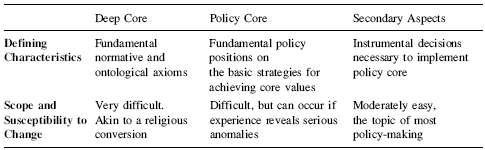
Source: Paul Sabatier and Hank Jenkins-Smith (eds), Policy Change and Learning: An Advocacy Coalition Approach (Boulder, CO: Westview Press, 1993), 133.
Three particular aspects of beliefs at this most visceral level were analysed for the study: beliefs about the nature of the interests councillors should serve; beliefs about the degree of social responsibility that rested upon the Council; and beliefs about the importance of promoting change and progress. These themes had emerged as the areas of greatest contrast from the textual analysis of councillor discourse. The master-texts for analysis were generated from statements on corporate responsibility or social welfare issues reported in the WEH and E&E. For Plymouth councillors this covered the period 1928 to 1936; and for Exeter and Devon, where appropriation continued to remain a topic for discussion throughout the 1930s, from 1929 to 1939.
Initial analysis of deep core beliefs for the two county boroughs of Plymouth and Exeter demonstrated a contrast that contributed to the smoothness of the Plymouth decision to appropriate an infirmary as a public hospital, and the Exeter avoidance of such a decision. Plymouth councillors from all parties used, as a point of reference in their decision-making on welfare issues, a more inclusive view of those whose interests they should serve, accountability to the whole of their citizenry rather than to ratepayers alone. They also took a broader view of the social responsibility of local government, leading to greater emphasis on direct municipal provision. Finally they displayed a commitment to ‘progress’, by which they meant the creation of continuous improvement rather than the mere maintenance of the status quo.
The original responsibility of local government had been to take decisions in the interest of those who paid the rates that the Council used to provide services. In 1929, the ratepayers were still the formal constituency of local councillors, as the universal franchise over the age of twenty-one operated only in Parliamentary elections. ‘Ratepayers’ appear as the group to which most reference was made by councillors when considering the interests that drove their decisions. In Plymouth, however, there are many references to accountability to ‘citizens’ or ‘the public’ by councillors not just from the Labour Party but from all parties, demonstrating a shift towards a recognition of the interests of the whole population of the city in municipal services. This would have created a greater likelihood that public hospital services, creating better access for the population to medical treatment, would be seen as desirable. This was not the case in Exeter where councillors saw themselves as accountable to ratepayers alone, describing expenditure as the use of the ‘ratepayers’ money’. The term ‘citizens’ was used as a polite description for the poor, equated to ‘people who could not afford to pay’, or used in the phrase ‘many poorer fellow citizens’.Footnote 39 In taking policy decisions, therefore, Exeter City Council would have been more inclined to act directly in the interests of that section of the population eligible to vote. Their policies for the wider community were more dependent on their beliefs about social responsibility.
The second set of deep core beliefs likely to influence councillor decisions on the development of personal health services was the beliefs about the parameters of their responsibility for the welfare of their population. The twin traditions of meeting the needs of the poor by charitable gifts or by minimal expenditure from a separate rate were now challenged by the requirement for councillors to administer the Poor Law alongside other responsibilities such as housing or education.
In the discourse between Plymouth councillors there are references to the duty councillors had to specific groups who were believed to require support, such as the elderly or mothers and children, and also to broader groupings such as ‘those living in the poorer quarters of the city’ and, referring specifically to hospital services, ‘a very large proportion of our population’, ‘many a home’, ‘the bulk of the people’, ‘dozens of homes’, ‘the sick and needy amongst the workers and their dependents’ and ‘the defenceless’. Some councillors did still contrast the ‘deserving poor’ with ‘spongers’.Footnote 40 More generally, though, there was an acknowledgment that those in particular need were so by chance rather than by contrivance.Footnote 41 It seems, therefore, that the council in Plymouth would have approached their new welfare responsibilities in the 1930s with a recognition of the diversity of groups whose needs should be given consideration, and an understanding that there were many for whom self-help could never be the answer.
Analysis of Exeter’s councillors’ beliefs about the exercise of social responsibility reveals a divided picture. There was a profound difference in the feelings about how the poor should be treated. Meeting the needs of the poor through the exercise of charity was still highly commended. Nevertheless the Mayor for 1937/8 told voluntary hospital governors, that ‘[c]harity as a method of providing means for such institutions was out of date’ and a very senior councillor considered the volume of appeals for ‘churches, hospitals and every conceivable thing’ was ‘unbearable’.Footnote 42
Some felt that ‘the poor had a right to a place in the sun’ and that the work of slum clearance was ‘the noblest work of any Council Committee’.Footnote 43 However, there were still those who wished to maintain a difference between the ‘deserving’ and ‘undeserving’ poor. Belief in the importance of promoting self-help underpinned this approach. The influential chair of the Finance Committee, a strong promoter of sickness insurance and founder of the Western Counties Aid Society, believed that:
[T]he social services, which were being asked for and given with a hand so lavish, apparently, that there was no money left for anything else. He was not satisfied that it was the duty of the Council to provide these services. Apparently it was going to be the duty of the country from the first conception of a child to the time in which it was launched on to the dole to provide for it in every conceivable way.
He argued that ‘[t]he more they spoon-fed the population, the more they sapped the independence and self-reliance of the people on which this country in the past had justly prided itself.’Footnote 44 These opposing views fed into an uncertain period of local public welfare policy.
The third set of deep core beliefs that influenced the decision to develop a public hospital in Plymouth was the cross-party commitment, explicitly articulated, to the notion of progress, continuous improvement in service provision, in welfare as in other fields, as part of the responsibility of the Council towards the development of the city. The idea of ‘progress’ was not confined to the development of alternative economic futures. The tone was set by the Conservative Leader of the Council who said in 1929, for example, that ‘the Conservative policy is not animated by a negative policy, but they were anxious to pursue the line of moderate progression in the advancement of the city’, and echoed this theme throughout the period, saying in 1936, for example, that ‘[w]e have to keep pace with the march of time in the general development of the city’. Such statements were echoed by his lieutenants and by members of the opposition parties, in statements such as ‘… our public services cannot be surpassed. There is no standing still. We must move on or move off. A brighter Plymouth must be our constant goal.’Footnote 45
Beliefs about progress were not so often featured by Exeter councillors as they were in Plymouth. Comments on the need for progress and the pace that should be set can only be traced to about seven per cent of the 119 councillors who held office between 1929 and 1938, whilst for Plymouth in the same period the proportion represents about twenty-three per cent. The Council was, nevertheless, a forum for remonstration about lack of progress. In 1929, one of the Labour councillors complained that ‘[t]he people of today are cussing because our grandfathers did not do what we have to do today’ and a leading Liberal was later a frequent vocal critic of lack of progress, saying, for example, that the Council ‘should not put back the clock a couple of generations’, and that ‘[w]e have got to progress or go back’.Footnote 46 His zeal for change cost him his seat in 1937 and (after success in a by-election) he then lost it again to a representative of the newly re-formed Ratepayers’ Association, in 1938.Footnote 47 This tendency to extreme caution probably influenced the low-key way in which, as shown on p. 62, the Exeter chair of the PHC approached the presentation of proposals for the development of a new municipal hospital service.
The position in the County Council in some ways resembled that in Exeter, particularly over social responsibility and the importance of progress. Attitudes that were, by the 1930s, edging into archaism, retained their hold. Social responsibility was expressed in the best traditions of patriarchal paternalism, the responsibility of ‘gentlemen’ with ‘time to devote to welfare work’ as one councillor put it. They were expected to have a detailed understanding of the needs of those they dealt with. ‘Each one knows the position of the applicant’, another councillor said approvingly of the old Guardians, and the speaker proposing the constitution of the new PAC explicitly stated that ‘on this Committee… there should be gentlemen who were ex-servicemen, and who by the part they took in the British Legion and Old Comrades’ Associations showed that they were interested in the fortunes of their former comrades.’Footnote 48
Devon County Council and Exeter City Council also shared the lack of expression of beliefs about the need for progress on welfare services. The importance of being progressive is rarely identified in county discourse. When ‘change’ is discussed, references are often made to the need for change to be introduced steadily or even slowly. A cluster of quotations about pace comes from debates in the PHC on proposals brought forward by the Medical Officer of Health [hereafter MoH] during the first year of his appointment. ‘You are going too fast’, said one councillor of a proposal for appointing extra staff, and ‘they must go steadily…. The man in the street was watching and saying “You are going too far”.’ Another ‘viewed the proposals with alarm’ and suggested that ‘[t]hey must go steadily’. The County Council chair ‘agreed… that the best course was to set slowly’ and subsequently advised the MoH that ‘if he only went a little bit slower he might be better enabled in the long run to carry the Committee…. They found it rather difficult to do things in a big way all at once.’Footnote 49 Those doctors who were councillors on the PHC were felt by other Committee members to be a source of pressure for change. Councillors whose quotations urge swifter action in the field of health policy are all doctors, and mainly refer to actions to combat tuberculosis.Footnote 50
The most noticeable difference between beliefs expressed in the boroughs and beliefs expressed in the county relates to the consideration of stakeholder interests. It is noticeable that accountability to ratepayers, or to taxpayers, is rarely mentioned by county councillors. The term ‘citizens’ does not appear and ‘the public’ or ‘the people of Devon’ are rare occurrences. What is used constantly is reference to the driving force of an understanding of particular localities as the best basis for correct decision making, and to the tension that existed between this and consideration of the county as a whole. This was evidently more than a mere policy belief: it was the fundamental ground for decision-making.
There were naturally some statements that represent no more than a local patriotism or a reluctance to commit additional expenditure, as argued by one councillor who considered that ‘local bodies [authorities] who had already spent hundreds of pounds on isolation facilities should not be called upon to pay an equal share in putting up new buildings [to serve other areas]’. The same councillor, however, also opposed the proposal to replace a Torquay tuberculosis hospital by new facilities at the main sanatorium site at Hawkmoor because ‘Hawkmoor was not in South Devon’.Footnote 51 An alderman grounded his advocacy of local administration in the expertise on which it could draw. Discussing the coming changes to the Poor Law, he said: ‘What I fear is lest the poor will not have such careful and close attention paid to their cases, which is possible now that every parish sends its representative. Now each one knows the position of the applicant… they would lose much of that valuable knowledge’. The Okehampton councillor quoted above also expressed concern that local people would be discouraged from joining the Guardians’ Committees: ‘There was the danger that difficulties covering long distances would lead to a loss of interest in the work’ and another North Devon councillor agreed that ‘there was a great danger of local interest being lost’. The county vice-chair, introducing the administrative scheme in 1929, made a point of stressing that the members of the PAC ‘had been carefully selected to represent the various Union areas’, and proposing its later revision, a relative newcomer to council work said ‘he was convinced it was quite possible [to] retain the local touch in giving relief, which he thought was absolutely essential’.Footnote 52
More specifically, the very idea of disruption to the people resident in their local workhouses caused concern. One councillor on the Plympton Guardians’ Committee, discussing a letter received from a parish council expressing concern about change, said: ‘I do not want my name to go down as a murderer. If some of the cases are moved from Plympton it will kill them.’ When after much discussion some people were transferred from Torrington to Bideford (only eight miles away) one of the Guardians expressed his regret at the decision in which the county PAC had overruled them: ‘[the] inmates, especially some old, crippled and helpless ones… must have felt the wrench of being taken… from their “home” and few friends to new and unfamiliar surroundings. Surely this could have been avoided.’Footnote 53
These beliefs had often been shaped during the long period that many councillors had spent on local councils. In addition to their work on district-tier authorities, councillors were regularly exposed to local views as members of the area-based Guardians’ Committees. In these settings, becoming too closely identified with unpopular county-wide policies could jeopardise their position. Councillor Dr Campbell, appearing for the county as an expert witness at the Ministry of Health public inquiry in Totnes, was menaced by the opposing counsel, who asked: ‘Do you think you would remain a County Councillor for Dartmouth if you took up that attitude [in Dartmouth]?’Footnote 54
This tension between duty to the local area and duty to the county was constant. In the 1931 debate over the amalgamation of two Poor Law administrations, intended to effect economies, one councillor alone amongst the speakers maintained that ‘the care of the poor at Axminster meant just as much to them as did care of the poor in Honiton’. Others were steadfast in their opposition, some still arguing against centralising initiatives in 1937 on the grounds that ‘[p]eople would not attend the meetings at considerable inconvenience if they were told what to do’ and ‘a central committee could not have inside knowledge’. When a newcomer argued that there was unlikely to be any ‘great hardship in enlarging areas in these days of improved travel’ and complained that ‘when they took steps to economise they found local interest got up’, an alderman responded that ‘[t]hey would lose a very great deal by centralization… they would lose the local touch.’Footnote 55
Such beliefs were, of course, difficult to reconcile with the concept of ‘equitable treatment’ for the whole county population. The County Council chair had reminded the Council that the intention of the LGA was to transfer Poor Law functions where possible away from the PAC ‘so that all received the same services’. The chair of the PAC referred to the duty to administer the Act ‘for the best average good of all concerned’ and another councillor, justifying the provision of PAC directions to the Guardians, stated that ‘it was very unfair for one Guardians’ Committee to be giving relief on a certain scale and another committee next door to give relief on perhaps a more liberal or rather poorer scale.’Footnote 56
The dominant beliefs in the importance of responding to local interests as identified in the localities themselves undoubtedly made it difficult for councillors or officers such as the MoH to promote centralisation of treatment for the sick poor, as in a large county this would involve making services more remote. Informing decisions about appropriation and development of county hospital services, therefore, were strong beliefs in the importance of locally sensitive services, an old-fashioned idea of paternalistic welfare responsibilities being sharpened by an understanding of people’s vulnerability to changes in society, and a recognition of the county’s responsibility to administer public policy on welfare services to provide ‘fair shares’. These beliefs contrast with the cross-party agreement in Plymouth to broaden the base of the services the city provided, and to change service provision in line with a positive idea of service improvement.
The Lessons of Experience: Commissioner or Provider?
The beliefs described above lie at the heart of the approach to decision-making which councillors, almost unconsciously, adopted. The second set of influences that the study identified as significant was the effect that earlier council decisions, particularly those taken to tackle tuberculosis and infectious diseases, had had on the decisions the councils made over the Poor Law infirmaries. The public policy framework used in the study argues that prompts for changes to policy are absorbed by actors through learning processes. This may occur through presentation and debate about technical information generated within research communities, or through ‘ordinary knowledge and case studies’ and ‘trial-and-error learning’.Footnote 57 Technical information on the policy option of appropriating and developing public hospitals was less available to councillors than would be the case in any modern policy-making context. The modern plethora of professional forums and policy papers was still emerging during the 1930s. There is no doubt that there was information in medical circles that could have been used to persuade councils of the need to develop their general hospital services. Medical consensus and medical advice were unequivocally in favour of increasing capacity and facilities. As Daniel Fox summarised the position: ‘By the 1920s… health policy was usually made on the assumption that increasing the supply of medical services and helping people to pay for them was the best way to reduce morbidity and mortality and to help individuals lead more satisfying lives….’Footnote 58
Very few references were identified in the case study communities, however, to the use of information and arguments grounded in the advice of epistemic communities in the medical profession. References by councillors to extending access are rare, and mostly confined to statements about waiting lists at the voluntary hospitals, although the Exeter PHC chair’s vision of such a hospital, quoted above, is an exception to this. The use of public hospitals for emergency treatment is only referred to once, by Plymouth’s PHC chair. Highlighting the use of the hospital during a cold winter, he stated that ‘[t]he value of the hospital had never been more strongly demonstrated than during the recent bitter east winds. Scores and scores of cases had been brought in who otherwise would not have been able to get beds.’Footnote 59 In discussion on hospital care, councillors display less well-developed arguments and fewer references to comparative information than they do, for example, in debates on housing. Exeter city councillors debating housing called on examples from Birmingham, Liverpool and even America.Footnote 60
It might have been expected that the MoHs would have contributed to the councillors’ understanding of the value of public hospital services. No record of their oral testimony on this topic has survived and the written evidence is limited. The need for acute general hospital services does not feature in the annual reports of the MoHs for Devon or for Exeter. Dr L.M. Davies, the Devon MoH, produced several reports on workhouse reorganisation. His treatment of the topic does not discuss need and medical opportunity, but treats the topic as an administrative puzzle to be resolved. The Exeter MoH, Dr G.B. Page, provided for the PHC a list of those authorities with small populations (between 60,000 and 120,000) that had appropriated hospitals. He also presented proposals for the development of a new hospital for Exeter to the Council in December 1938, but the need for the hospital is assumed rather than argued.Footnote 61 Only Dr A.T. Nankivell, the MoH for Plymouth at the time of appropriation, clearly advocated municipal hospital provision in his annual report stating – in a somewhat unspecific manner – that there was a need for ‘expansion necessitated by increasing knowledge and modern needs and that early treatment… is not easily obtained.’ This, of course, was published after Plymouth’s appropriation; Nankivell had, however, made the same point earlier in a report to the PHC in which he had referred to the local problems of waiting lists, rising demand for casualty services, and lack of provision for cancer treatment.Footnote 62
‘Trial-and-error learning’ is also referred to in the ACF as a type of policy learning; and the present study gives prominence to this type of learning. The significance of earlier decisions, as Pierson has described, is that ‘they set an institution on course down a pathway from which it becomes increasingly difficult to turn away, as resources have already been committed, learning and innovation already achieved ready for exploitation, and the product itself expanding or being increasingly used’.Footnote 63 Unsurprisingly, therefore, a major influence on the councils’ decisions on establishing general hospitals was their earlier experience of what would, in a modern National Health Service context, be classified as ‘provider’ or ‘commissioner’ roles. Opportunities for authorities to develop their own hospital services had increased during the 1920s. County boroughs had been expected to provide infectious disease services since the Public Health Act of 1875, but further legislation, particularly over the treatment of tuberculosis, subsequently established other opportunities for local government initiatives. The success or otherwise of the initiatives the councils took shaped their intentions for the future.
Plymouth, the council that chose to appropriate and develop its Poor Law infirmary provision, had embarked, six years before the LGA, on a series of major changes that increased its role as a direct provider of hospital services. A significant event was the decision in 1923 to purchase and run their-own sanatorium. The Council then embarked on a major reorganisation that increased the range of municipal services for infectious disease, tuberculosis, and orthopaedics. By 1930, the Council had confidence in its ability to operate hospital services successfully
Provider experience within the council in Exeter was limited to services set up before the First World War and not substantially altered since that date, and to the commissioning of services provided by other parties. The unusual development by the Exeter Board of Guardians of nursing home services for paying patients at the end of the 1920s did not tempt the City Council, which inherited them in 1930, into developing this aspect of a provider function. Feedback on the Council’s provider role was often negative. The Council’s smallpox hospital provision was condemned by the Council itself, and closed in 1930 with the decision to commission services from the county instead. The Ministry of Health condemned Exeter’s adult tuberculosis services in 1931, and the Council then determined to close the municipal sanatorium and commission services from the Royal National Hospital. For children’s orthopaedic services, the Council commissioned services on a cost-per-case basis from the Devonian Orthopaedic Association. By the 1930s, then, the Council had turned to having a commissioner rather than a provider role, and was more likely to seek support for acute and obstetric services from the Royal Devon and Exeter Hospital than to develop in-house provision.
For Devon County Council, experience had been gained both as a provider and as a commissioner. One of the earliest of their attempts at functional reorganisation of the workhouses was related to the treatment of paupers with tuberculosis. Their initial experience, the failure to achieve support from the Ministry of Health for their proposal to designate the function of the workhouse at Totnes as a specialist centre at the public inquiry reinforced their belief in taking action only where local support was forthcoming.Footnote 64 This can be contrasted with Plymouth’s learning from a public inquiry held on the same topic, the creation of a tuberculosis centre in a populated area. In that case the Ministry supported the Council.Footnote 65 For Devon, the management of a dispersed stock of small workhouses with mixed provision was also a challenge. There was constant tension between the local managers and central attempts at economy. The county also had access to a number of small local voluntary ‘cottage’ hospitals where, when necessary, they could, and did, send patients. Councillors would be unlikely to provoke local opposition unless there were compelling reasons so to do.
The success of council experience either in direct provision or in commissioning services from voluntary sector providers appears to have contributed to a propensity to appropriate to complement the capacity to appropriate created by the inheritance of buildings. So Plymouth turned willingly to a provider role in the field of general hospital care, while Exeter and Devon preferred the relationship of commissioner for voluntary sector hospitals.
Agents for Change
The availability of entrepreneurs interested in hospital development is an area of considerable difference between the councils. There was a notable entrepreneur amongst the councillors on Devon County Council, Sir Francis Acland, who said of himself in such a role: ‘I am a fairly good man to go tiger-hunting with’,Footnote 66 but he had been deployed by the chair to lead other difficult tasks in which Devon indeed performed relatively well: the development of county secondary schools and the improvement of rural housing. Neither the several chairs of the PAC and the PHC, nor the county MoHs during the inter-war years demonstrate the entrepreneurial skills described on page 51 that would have led to successful policy change: advocacy; seizing opportunities; and managing relationships.
In the county boroughs, by contrast, two individuals with considerable entrepreneurial skills held office as chairs of their PHCs, the ‘workshops of the Council’Footnote 67 during the period when appropriation was under consideration. In Plymouth this was H.B. Medland, a dockyard engineer who chaired the PHC for Plymouth between 1926 and 1932. In spite of being a member of the minority Labour Party, he managed to put in place both the major hospital reorganisation scheme and the policy of appropriating and developing the former workhouse infirmary. In Exeter, the chair of the PHC was held between 1923 and 1938 by J.S. Steele-Perkins, a medical practitioner. Although undoubtedly a skilled entrepreneur, he devoted his efforts during this period primarily to the major task of slum clearance rather than to hospital development. Both chairs were adept at advocacy, seizing opportunities and managing relations in order to achieve their goals. They also both acknowledged the need to improve access to hospital service provision, integrated across the sectors. However, their approaches to co-ordination with the voluntary sector differ, with Steele-Perkins more inclined to give primacy to the voluntary sector, saying that ‘they found a more tolerant spirit in the treatment of patients when working on a voluntary system’ and Medland concerned ‘to make it clear to the voluntary hospitals that there must be give and take’, and that the municipal sector should not be limited to the care of the chronic sick.Footnote 68
The investment of time and effort made by policy entrepreneurs is intended to assist them in achieving their policy aims. For Steele-Perkins, the idea of hospital development was attractive, but both (a) unlikely to be approved within the council environment of the 1930s and (b) a potential distraction from the slum clearance work to which he was already committing his time and in which he was notably successful, particularly over the clearance of Exeter’s West Quarter. The MoH who worked with him during the 1930s showed his forensic skills under pressure at public inquiries on slum clearance, but his tactless handling of councillors on the hospital development proposal in 1939 undoubtedly helped consign the proposal to limbo.Footnote 69 For Medland, public hospital development was one way of putting into practice his socialist beliefs about universal welfare services: because of his chairmanship of the PHC he was in a position to press forward with this policy. If he had not been PHC chair he would have committed the same energy to other schemes, as his subsequent track record shows. He was aided and abetted by a vigorous MoH, the PHC led by the two of them being described by the local paper as ‘a motor car with two accelerators but no brake’,Footnote 70 but the skill in managing relationships was Medland’s. The work of the entrepreneurs in their chosen fields led to successful hospital appropriation in Plymouth and successful slum clearance in Exeter.
Explaining Variations in Public Hospital Provision in Devon
The meta-analysis in Table 3 demonstrates the differences between the councils in terms of the key variables and the predisposition this created for the decisions the authorities took.
Comparison of the findings from the Plymouth, Exeter and Devon case studies

Source: For further detail underpinning the summary in this table see Julia Neville, 'Explaining Variations in Municipal Hospital Provision in the 1930s: A Study of Councils in the Far South West' (unpublished PhD thesis: University of Exeter, 2010), online: <http://hdl.handle.net/10036/96227>, accessed 17 August 2011.
The findings shown in Table 3 can be compared with the reports on progress made by the inspector of the Ministry of Health, who surveyed all three of the local authorities in the study in 1930 and repeated the surveys for Devon and Exeter, where progress had been deemed unsatisfactory, in 1934. The surveys included the assessment of the question ‘to what extent there has been fulfilled a primary purpose of the Local Government Act, viz the separation of the treatment of the sick from the Poor Law administration.’Footnote 71 The assessment for Plymouth specifically demonstrates two of the variables highlighted in the present case study: the Council’s belief in the importance of progress and the role of a committed entrepreneur.Footnote 72 The inspector who surveyed all three of the case study authorities highlighted, in Exeter, the importance of tradition rather than change and the dominant place accorded to the local voluntary hospital in Council thinking about hospital services.Footnote 73 For Devon the importance of localism, the persistence of a patriarchal approach to welfare and the influence of the Ministry’s adverse decision on County Council policy at the Totnes Inquiry are all identified.Footnote 74 Whilst inspectors’ reports have been used to develop the picture of local health services in the 1930s, for example by Levene and in the Municipal Medicine project,Footnote 75 there has not hitherto been an attempt to compare the evidence for a particular local authority with evidence from other sources. This study confirms that a systematic analysis of comments made in the reports to the Ministry of Health on councillor attitudes, the lessons of the past, and the availability of skilled entrepreneurs might offer a short-cut approach to a better understanding of the variations across the country.
Quantitative work on county borough policy concluded that, if the opportunity to appropriate existed (availability of a separate infirmary) then it was the size of population served that determined appropriation. This conclusion cannot be adopted for shire counties, where the population is dispersed rather than concentrated. Nor does it offer a full explanation for what happened in Exeter, where the ‘capacity’ to appropriate – accommodation and financial resources – existed, but the ‘propensity’ was absent. The public policy analysis undertaken for the Devon authorities in this study has suggested a new hypothesis to explain variations in public hospital provision in the 1930s. This is that a local authority would be most likely to proceed with appropriation if councillors exhibited a substantial corpus of deep core beliefs on accountability to the wider community and on social responsibility; where they had a successful experience of direct hospital provision in other fields; and when they had available a committed entrepreneur able to command support for change.
Conclusion
Efforts through quantitative analyses to provide a robust hypothesis to account for the considerable variations in public hospital provision by local authorities have not proved entirely successful, as can often be the case for complex multi-factorial problems. The elegant simplicity of the link between size of population and appropriation cannot be transferred to county councils, and exceptions existed even among county boroughs. Barnsley, Carlisle and Chester, though small, appropriated their infirmaries; Hull, Norwich and Stoke-on-Trent did not.
Although many factors likely to have influenced decisions taken by local authorities, not merely for hospital services but also for other personal health services, have been identified, these have not hitherto been linked into a coherent explanatory framework. The present research proposes that variations between local authorities can best be understood by comparing the prevalence of particular deep core beliefs amongst councillors, their ‘moral compass’ for decision making; understanding what they had learned from previous experience in related fields of public health commissioning or provision; and identifying the availability or otherwise of a committed policy entrepreneur.
In Holtby’s fictional South Riding,Footnote 76 the background against which her councillors and aldermen play out their drama of public service endeavour and personal temptation and tragedy is one where lack of access to effective obstetric or cancer treatment leads to death, where infectious disease kills, and tuberculosis cripples for life, and where an impoverished shack-dwelling settlement community is badgered into raising funds to pay for a district nursing service. It is a useful reminder of the harshness of rural life in the 1930s. Winifred Holtby, whose mother was an East Riding County Council alderman, has well illustrated how local government decisions spring from the same combination of interests, social responsibility, and determined action by individuals that this study has found.
Acknowledgements
I should like to acknowledge the comments made by Dr Claire Dunlop, Professors John Stewart and Andrew Thorpe on earlier versions of the material contained in this article, and by the two anonymous referees who provided comments to Medical History.



