


The prevalence of obesity in US adults has increased significantly over the past several decades(Reference Mokdad, Bowman and Ford1) and this condition is known to increase the risk for many chronic conditions including CVD(Reference Mokdad, Bowman and Ford1–Reference Yanovski4). Given the high prevalence of obesity, recent research has focused on the local food environment, including the types of food stores and the quality and availability of foods in a neighbourhood, and their influence on health outcomes and behaviours. There is evidence that dietary patterns differ across neighbourhoods and that these differences are not fully explained by individual-level socio-economic characteristics(Reference Diez-Roux, Nieto and Caulfield5–Reference Dubowitz, Heron and Bird7). Data have shown that supermarkets are more likely located in wealthier neighbourhoods than in poorer neighbourhoods(Reference Block and Kouba8–Reference Powell, Slater and Mirtcheva12). Furthermore, the presence of supermarkets and fewer fast-food restaurants has been associated with less obesity and better dietary intake(Reference Green, Hoppa and Young13–Reference Morland, Diez Roux and Wing17).
Despite demonstrated racial and socio-economic disparities, few studies have assessed the association between the availability of healthy food in neighbourhoods and dietary intake or BMI by neighbourhood characteristics(Reference Cheadle, Psaty and Curry18–Reference Franco, Diez Roux and Glass20). Therefore, the present study investigated the association between the availability of healthy foods and BMI. It was hypothesized that lower healthy food availability would be associated with higher BMI. Moreover, since healthy food availability has been shown to be associated with neighbourhood characteristics, a secondary hypothesis was that the association between neighbourhood healthy food availability and BMI would differ by neighbourhood race and socio-economic status (SES).
Methods
Overview of the Healthy Aging in Neighborhoods of Diversity across the Life Span study
The Healthy Aging in Neighborhoods of Diversity across the Life Span (HANDLS) study is a multidisciplinary, prospective epidemiological study set in Baltimore City and examines the influence and interaction of race and SES on the development of health disparities among minority and lower-SES groups(21). The study design was stratified across four factors: age, sex, race and SES. Baseline recruitment included 2616 black and white adults aged 30–64 years of middle and low SES, living in thirty-four census tracts across Baltimore City. Data collection was implemented in two stages by trained staff and physicians: (i) an in-home household survey; and (ii) a physical examination and medical history conducted in a mobile research vehicle (MRV). Baseline data collection occurred from 2004 to 2008. Inclusion criteria for participants included age 30–64 years and the ability to give informed consent, perform at least five measures and present valid picture identification. Exclusion criteria included pregnancy, being within 6 months of active cancer treatment, and multi-ethnic individuals who did not identify strongly with either the black or white race. Survey and medical information is confidential and approved by the National Institutes of Health Institutional Review Board.
The neighbourhoods included in the HANDLS study varied in terms of housing characteristics, green space and residential v. commercial space. Most of the middle-SES neighbourhoods were further removed from large commercial areas and busy roads; they often included single-family homes, duplexes and row homes that were well maintained. The lower-SES neighbourhoods tended to be bisected by commercial thoroughfares and more often had abandoned homes and less maintained residences; some neighbourhoods included government-assisted housing. The majority of food stores were convenience or small grocery stores that rarely sold fresh produce, whole wheat bread or skimmed milk; whole milk, salty snacks, soda and canned foods were typically available(Reference Franco, Nandi and Glass22).
Individual-level household interview measures
Demographic measures from the HANDLS in-home questionnaire included self-reported age, sex, race, education, income and general health status(Reference Jenkinson, Layte and Jenkinson23). Individual-level SES was determined during the initial doorstep interview. Low SES was defined as having a family income below 125 % of the poverty delimiter, which varies by household size. The initial doorstep responder was asked about their household size and then whether their household income was below or above a specific number from the federal poverty level table. Middle SES was defined as having a family income equal to or greater than 125 % of the poverty delimiter. Participants reported on neighbourhood crime and on the main mode of transportation used for travelling outside their neighbourhood (e.g. car, walking).
Individual-level health behaviours and outcomes
Dietary intake was reported as an average of two 24 h dietary recalls taken during the in-home and MRV visits. The data were collected by trained interviewers using the US Department of Agriculture's automated multiple-pass method(Reference Blanton, Moshfegh and Baer24). Participants were asked to report all types and amounts of foods and beverages consumed in the past 24 h. The 24 h dietary recalls included consumption on weekdays and weekends and over several seasons. Dietary quality was evaluated using the Healthy Eating Index-2005 (HEI) and selected HEI components; the HEI has been validated and reflects the 2005 Dietary Guidelines for Americans(Reference Guenther, Reedy and Krebs-Smith25, Reference Guenther, Reedy and Krebs-Smith26). Higher HEI scores indicate a diet of higher quality (total HEI range: 0–100). Medical staff measured height and weight using standard measurement tools to determine BMI (kg/m2).
Neighbourhood census measures
To characterize neighbourhoods beyond the collective of individuals that live in them, data from the US Census were used to determine neighbourhood race and SES. Neighbourhoods were classified as predominantly black or white if ≥60 % of the residents were black or white, respectively(Reference Morland, Wing and Diez10). Since only three tracts failed to meet these criteria and the racial composition included few (<2 %) non-blacks or non-whites, these racially mixed tracts were classified by the racial majority. Census tracts with ≥25 % of residents below the poverty threshold were categorized as low SES and <25 % as middle SES. These cut-off points were determined based on median values for census tract percentage of poverty in the HANDLS study.
Healthy food availability
Implementation of the Nutrition Environment Measures Survey–Stores instrument in Baltimore, MD
Data collected in 2006 as part of a previous study using the Nutrition Environment Measures Survey–Stores (NEMS-S) instrument(Reference Franco, Diez Roux and Glass20) were used to determine healthy food availability in HANDLS census tracts. A total of 226 Baltimore stores were assessed for the availability of eight food groups and a healthy food availability index (HFAI) was calculated for each store based on the items available (range: 0–27)(Reference Franco, Diez Roux and Glass20). Stores were categorized on the basis of Standard Industrial Classification codes(27) as supermarkets (a chain store or employs >50 personnel), grocery stores (stores with <50 employees), convenience stores (food marts attached to gas stations or 7–Eleven-type stores) or behind-glass stores (food items displayed behind bullet-proof glass).
Results from the Baltimore Multi-Ethnic Study of Atherosclerosis (MESA) study indicated that a higher percentage of predominantly black and lower-income neighbourhoods were categorized in the lowest HFAI tertile. Furthermore, supermarkets in predominantly black and lower-income neighbourhoods had significantly lower HFAI scores; findings were similar for grocery stores(Reference Franco, Diez Roux and Glass20). Given the policy implications of these main results and the known inaccuracies of national business data(Reference Cates, Karns and Carter-Young28), all food stores in Baltimore City were characterized by type (e.g. supermarket) in 2007 since the Baltimore MESA study only assessed stores located in selected Baltimore City census tracts. To characterize food stores, data collectors compared Baltimore City information on food stores in the area obtained from (i) InfoUSA, (ii) Baltimore area phone books and (iii) Baltimore City Health Department food license records. Data collectors visited each store, verified the correct categorization and revised the list of stores by adding stores omitted from the records and removing stores that were closed upon visit.
Present study
HFAI scores were imputed for all stores in HANDLS neighbourhoods using values from the Baltimore MESA study; the imputation was based on the racial composition of the census tract and the store type for each food store located in a HANDLS census tract. Thus, a supermarket located in a predominantly black neighbourhood was assigned a lower score than a supermarket located in a predominantly white neighbourhood; supermarkets were assigned higher scores than grocery and convenience stores. Racial composition, rather than income, was chosen for imputation based on the stronger trend in HFAI scores in supermarkets and grocery stores.
Statistical analysis
Participant characteristics were stratified by tertiles of neighbourhood healthy food availability. Mean BMI for each healthy food availability tertile was calculated using one-way ANOVA.
Linear regression coefficients (β) were estimated using multilevel (random-effects) linear models with a random intercept for each census tract. The main exposure variable was the average HFAI in a census tract. The main dependent variable was BMI. Dietary quality (total HEI), main mode of transportation and perceived crime were investigated as potential mediators in independent regression models; adjustment for all three potential mediators in the same model was also assessed.
All regression models were adjusted for potential confounders including age, sex, race, education, poverty status and self-reported health. Each analysis was stratified by neighbourhood race and SES. All regression analyses were conducted using the STATA statistical software package version 10·0 (StataCorp LP, College Station, TX, USA) and the xtreg procedure. Participants with missing data for the primary outcome (BMI) were excluded from analyses and evaluated for exclusion bias (n 874). There were no differences between participants who were included and excluded from analysis by race, poverty status, age, gender or education.
Results
Individual-level characteristics by neighbourhood healthy food availability
The average age of participants was 48 years and 56 % were female (Table 1). More individuals above the poverty threshold resided in neighbourhoods with high healthy food availability (P = 0·010). Unexpectedly, a higher proportion of individuals without a high school diploma resided in neighbourhoods with higher healthy food availability (P < 0·001). Overall, the mean BMI of participants reflected unhealthy body weights (BMI = 30 kg/m2). Participants’ HEI scores were low compared with national estimates(Reference Guenther, Juan and Lino29). The mean HEI score was 49 (possible range: 0–100) for the total population. HEI scores for total dietary intake, total fruit consumption and total energy from saturated fat were higher (or better) for individuals living in neighbourhoods with low healthy food availability (P < 0·001), with no difference for total vegetable intake (P = 0·267).
Characteristics of HANDLS study participants stratified by neighbourhood healthy food availability, Baltimore, MD, 2004–2008

HANDLS, Healthy Aging in Neighborhoods of Diversity across the Life Span; HEI, Healthy Eating Index-2005.
*n 1872.
†Total HEI, range 0 to 100; Total fruit, range 0 (0 cups/1000 kcal) to 5 (≥0·8 cups/1000 kcal); Total vegetables, range 0 (0 cups/1000 kcal) to 5 (≥1·1 cups/1000 kcal); Saturated fat, range 0 (≥15 % of energy) to 10 (≤7 % of energy); 1000 kcal = 4184 kJ.
Mean BMI by neighbourhood healthy food availability
BMI was higher in neighbourhoods with high healthy food availability among individuals residing in predominantly white neighbourhoods (P < 0·001; Table 2). Conversely, mean BMI was lower in neighbourhoods with high healthy food availability among individuals residing in predominantly black (P = 0·017) and low-SES neighbourhoods (P = 0·001).
BMI by neighbourhood healthy food availability and stratified by neighbourhood race and SES, Baltimore, MD, 2004–2008Footnote *
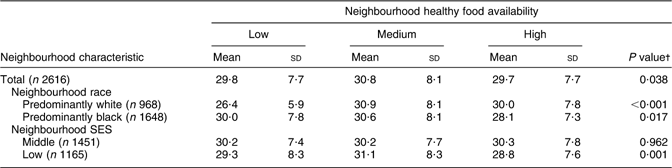
SES, socio-economic status.
* Unadjusted mean values.
† One-way ANOVA.
Neighbourhood healthy food availability and the association with BMI
Overall, there was no association between food availability in neighbourhoods and BMI after adjustment for individual-level confounders (Table 3). Among individuals living in predominantly white neighbourhoods, residing in neighbourhoods with medium or high food availability was associated with significantly higher BMI compared with individuals residing in neighbourhoods with low food availability (β = 3·90, P < 0·001; β = 3·22, P = 0·001, respectively). After adjusting for dietary quality, associations were attenuated but remained significant (β = 3·49, P = 0·003; β = 2·81, P = 0·012, respectively; data not shown). Additional adjustment for perceived crime and main mode of transportation did not further attenuate or alter the significance of the findings.
Associations between healthy food availability and BMI (β, 95 % CI), Baltimore, MD, 2004–2008Footnote *

Ref., reference category.
* Adjusted for individual-level age, gender, race, poverty status, education and self-reported health (n 2541).
Discussion
Earlier research indicates that the types of food stores and food availability in neighbourhoods are associated with neighbourhood characteristics(Reference Block and Kouba8–Reference Powell, Slater and Mirtcheva12), dietary intake(Reference Franco, Diez-Roux and Nettleton19, Reference Morland, Wing and Diez30) and obesity(Reference Green, Hoppa and Young13–Reference Larson, Story and Nelson16). Few studies have examined these associations stratified by neighbourhood race and SES.
Contrary to the study hypothesis, greater healthy food availability was associated with higher BMI among individuals living in predominantly white neighbourhoods after adjustment for demographic variables and dietary quality. One explanation for this unexpected finding is that individuals living in neighbourhoods with low healthy food availability choose to travel outside their neighbourhood to obtain healthy food. Indeed, individuals residing in neighbourhoods with low healthy food availability reported more often using a car as the main mode of transportation (83 %) and reported virtually no walking (1 %) compared with individuals in this subgroup residing in neighbourhoods with medium and high healthy food availability (55 %, 60 % for car use and 7 %, 8 % for walking, respectively; P < 0·001). Furthermore, individuals in neighbourhoods with low healthy food availability had better dietary quality (mean HEI score = 50) compared with their counterparts residing in neighbourhoods with medium and high healthy food availability (mean HEI score = 47 and 48 respectively; P < 0·001). Thus, in this urban, predominantly white population, higher neighbourhood healthy food availability was not a marker for either healthier diets or body weight.
Few studies have empirically assessed healthy food availability and the association with health outcomes. A cross-sectional study in twelve suburban/urban communities measured the availability of low-fat and high-fibre products and found positive, significant correlations between neighbourhood availability of these products and self-reported healthfulness of individual diet(Reference Cheadle, Psaty and Curry18). In another cross-sectional study, lower healthy food availability, measured by the NEMS-S, was significantly associated with poorer dietary patterns (fat and processed meats pattern) in urban and suburban Baltimore(Reference Franco, Diez-Roux and Nettleton19). The association became insignificant when adjusted for race; higher neighbourhood healthy food availability was not significantly associated with better dietary patterns (whole grains and fruit pattern). The authors noted that healthy food availability might be a proxy for neighbourhood racial composition, given the strong correlation that was documented between the two factors(Reference Franco, Diez Roux and Glass20). Thus, the association between healthy food availability and diet quality would be masked after controlling for race. With the exception of individuals in predominantly white HANDLS neighbourhoods, unadjusted results were insignificant for BMI. This suggests that neighbourhood healthy food availability, as assessed in the current study, may not be an accurate measure to capture food consumption patterns in this population. Information on the use of restaurants and the location where participants most frequently shop for food may begin to clarify the influence the neighbourhood food environment has on health.
There may be several explanations for the lack of significant results among individuals living in predominantly black or low-SES neighbourhoods. Recent literature has documented important implications and considerations for measuring food availability in minority and low-income neighbourhoods(Reference Gittelsohn and Sharma31, Reference Odoms-Young, Zenk and Mason32). Social constructs likely play an important role for understanding neighbourhood disorder and safety concerns that may impede the use of local food stores, regardless of availability(Reference Odoms-Young, Zenk and Mason32). Thus, the availability of healthy foods would have little impact on health outcomes in low-income, minority neighbourhoods. In predominantly black and low-SES HANDLS neighbourhoods, individuals residing in neighbourhoods with medium or high healthy food availability more often reported seeing serious crime as a common occurrence compared with their counterparts residing in neighbourhoods with low healthy food availability (P < 0·001, data not shown). Second, immigrant groups, particularly Asian Americans in Baltimore City, have operated businesses in low-income, black neighbourhoods for a number of years(Reference Gittelsohn and Sharma31, Reference Odoms-Young, Zenk and Mason32). There may be language and cultural barriers and feelings of discrimination by local food store owners that reduce the use of these neighbourhood establishments. Third, consumer interests need consideration when assessing the effects of neighbourhood food availability. Although foods of cultural preference would be expected to be available in a neighbourhood, these foods may be inadequately captured on standard surveys (e.g. NEM-S). In addition, low-income consumers may not be able to afford healthier fare such as fresh produce and whole grains(Reference Darmon and Drewnowski33). Thus, if the measures of food availability do not capture food relevant for the population, the power to detect neighbourhood effects is reduced. Finally, consumers residing in low-income, minority neighbourhoods may often have concerns that food quality, fresh or otherwise, is poor and choose to purchase foods outside their neighbourhood(Reference Gittelsohn and Sharma31).
The present study has several strengths. First, BMI was objectively measured; this method, rather than self-report, is preferred for large epidemiological studies. Second, a systematic assessment of food stores was conducted in Baltimore City. Since national business data may inaccurately classify food stores(Reference Cates, Karns and Carter-Young28), this method was a significant improvement from previous studies. Finally, the stratified sampling design allowed for associations to be compared by neighbourhood characteristics.
Nevertheless, the study has some limitations. First, the study was cross-sectional, which limited the ability to make causal statements about observed associations. Second, census tract boundaries were used to approximate neighbourhoods, which created the potential for measurement error when determining neighbourhood food availability. If measurement error were present, it would be expected to be non-differential; thus, results would be biased towards the null. Third, no information was available on where participants shopped. It was assumed that the neighbourhood environment was most influential on food procurement behaviours. Fourth, food store data were collected in 2006–2007 while individual baseline data were collected from 2004 to 2008. The current analysis assumes that neighbourhood characteristics and individual behaviours and health outcomes were relatively stable during this time period. The time point in the study represents the mid-point of the baseline data collection years, which minimizes the magnitude of this potential bias. Fifth, healthy food availability scores were imputed based on a previous study implemented in Baltimore. Given that the characterization of food stores was completed using the same procedures and in the same geographic location as the current study, it is assumed that these imputed values are solid estimates of the true HFAI. Furthermore, a prior study suggests that healthy food availability may be a proxy for neighbourhood racial composition(Reference Franco, Diez Roux and Glass20); stratification by neighbourhood characteristics was a strategy used to circumvent this issue and attempt to observe the independent effect of healthy food availability.
Neighbourhood healthy food availability is only one part of the built environment that may facilitate or provide the opportunity for individuals to make healthier choices and ultimately reduce BMI. Taken together with previous work, it is likely that the influence of the food environment operates differently across neighbourhoods of varying characteristics. The mechanisms for these associations deserve future investigation since neighbourhood food availability may partially account for racial and SES disparities in obesity and dietary intake. Larger studies with more variability in neighbourhood characteristics and food availability will help to clarify these relationships in the future. In addition, food pricing, location of employment and transportation patterns should be considered as influential factors for obesity and dietary intake. The potentially large public health impact that could be gained from further investigation warrants continued exploration.
Acknowledgements
The current research was supported in part by the Intramural Research Program of the National Institutes of Health, National Institute on Aging. Data on healthy food availability were supported by the Center for a Livable Future at the Johns Hopkins Bloomberg School of Public Health. T.L.G.-W. was funded by a grant from the National Heart, Lung, and Blood Institute (K01 - HL084700). The authors have no conflicts of interest to disclose. S.S.C. conceived the study design, performed data analyses and led the writing. T.L.G.-W. contributed to the study origination, supervised the study and assisted with the writing. J.G., A.B.Z. and M.K.E. contributed to the study origination and supervised the study. M.F. contributed the healthy food availability data. M.F.K. assisted with the dietary intake data. All authors helped to conceptualize ideas, interpret findings and review drafts of the manuscript.



