Type 1 diabetes is one of the leading chronic conditions in youth(1). The incidence of type 1 diabetes is increasing worldwide at roughly 2–3 % per year, as has recently been confirmed among non-Hispanic white youth in the USA by the SEARCH for Diabetes in Youth Study (SEARCH)(1–4). Even though medical nutritional therapy is one of the four cornerstones of care for youth with type 1 diabetes(Reference Silverstein, Klingensmith and Copeland5), this group falls markedly short of reaching the current dietary recommendations(Reference Mayer-Davis, Nichols and Liese6). Thus, while obesity has traditionally not been a part of the classical type 1 diabetes presentation, today obesity in youth with type 1 diabetes is as common if not more common than in youth without diabetes(Reference Liu, Lawrence and Davis7).
Over the past decades, nutritional epidemiology has increasingly focused on foods, food groups and dietary patterns, in addition to consideration of nutrients. While the earlier validation literature for FFQ focused largely on nutrients and energy intake(Reference Mayer-Davis, Vitolins and Carmichael8–Reference Kumanyika, Mauger and Mitchell10), more recent validation efforts have included foods and food groups(Reference Flagg, Coates and Calle11). Furthermore, while measurement error correction methods for dietary data have a longstanding tradition(Reference Beaton, Milner and Corey12–Reference Willett15), consideration of these methods in validations of FFQ has become more prominent(Reference Rockett, Breitenbach and Frazier16–Reference Midthune, Schatzkin and Subar21). Moreover, statistical methodology has been developed to the point of addressing the underlying complexities in appropriately analysing the validity of food and food group data(Reference Midthune, Schatzkin and Subar21–Reference Kipnis, Midthune and Buckman23). Researchers at the National Cancer Institute (NCI) and elsewhere have developed a measurement error model for episodically consumed dietary components that also accommodates daily consumed dietary components, termed the NCI method(Reference Tooze, Midthune and Dodd22, Reference Kipnis, Midthune and Buckman23). This method fits a two-part measurement error model to appropriately model episodically consumed foods, and models the correlations between the probability of consuming a dietary component on a given day and the consumption day amount. An extension of this method models energy as a ‘third part’ of the model to provide energy-adjusted estimates(Reference Midthune, Schatzkin and Subar21, Reference Zhang, Krebs-Smith and Midthune24).
Motivated by the need to investigate the role of dietary intake on the development of acute and long-term complications of diabetes in youth(4), the SEARCH Nutrition Ancillary Study (SNAS) was designed to take advantage of recent developments in dietary assessment and measurement error adjustment methodology by incorporating a diet assessment sub-study. At the inception of SEARCH in 2000, few validated FFQ existed for studies of youth, with the Block Kids Questionnaire and the Youth/Adolescent Questionnaire being notable exceptions(Reference Rockett, Breitenbach and Frazier16, Reference Block, Murphy and Roullet25). SEARCH developed an FFQ based on the Block Kids Questionnaire(Reference Mayer-Davis, Nichols and Liese6), but made a number of substantive changes, including an expanded list of foods to reflect the ethnic, cultural and regional diversity of the SEARCH population and a portion size visual, which is why we refer to it as the SEARCH FFQ. Neither the original Block Kids Questionnaire nor the SEARCH FFQ has been evaluated in youth with diabetes. The purpose of the present study was to evaluate the relative validity and reliability of the SEARCH FFQ to assess food groups and nutrients in a sub-population of youth with type 1 diabetes aged 10 years and older enrolled in SNAS between 2008 and 2011, using the NCI method.
Methods
Study design and sample
SEARCH is a multi-centre study that began conducting population-based ascertainment of non-gestational cases of diagnosed diabetes in youth less than 20 years of age in 2001 and 2009 for prevalent cases, and continues with ascertainment of incident cases from 2002 through the present(4). Details of the methods have been published. The protocol was compliant with the Health Insurance Portability and Accountability Act and approved by the local institutional review boards. Youth with diabetes identified by the SEARCH surveillance effort completed a brief survey. Those whose diabetes was not secondary to other health conditions were invited to the study visit involving questionnaires, physical examinations and laboratory measurements. Ascertainment was conducted using a network of health-care providers including paediatric endocrinologists, hospitals and other providers. Case reports were validated through physician reports, medical record reviews or, in a few instances, self-report of a physician’s diagnosis of diabetes. Diabetes type, as assigned by the health-care provider, was categorized as type 1, type 2 and other type (including hybrid type, maturity onset of diabetes in youth, type designated as ‘other’, type unknown by the reporting source and missing).
The SNAS was designed to examine the associations of nutritional factors with the progression of insulin secretion defects and the presence of CVD risk factors in youth with type 1 diabetes. The SNAS protocol was reviewed and approved by the institutional review boards of all participating institutions. SNAS did not recruit additional participants, but collected data on infant feeding and nutrient biomarkers from youth enrolled in SEARCH. The SNAS Diet Assessment Sub-study (DAS) was designed to validate the FFQ and correct for measurement error in analyses of dietary intake–disease outcome relationships in the larger SEARCH or SNAS samples. DAS enrolled 172 SEARCH participants aged 10–24 years proportionately from the six SEARCH sites to complete two FFQ one month apart and three 24 h dietary recalls by telephone in the interim.
Dietary assessment
The FFQ used by SEARCH (available upon request) was modified from the Block Kids Questionnaire with an expanded list of foods selected to consider ethnic, cultural and regional diversity(Reference Mayer-Davis, Nichols and Liese6). The FFQ was generally completed by the youth without assistance after receiving staff instruction. It consisted of eighty-five food lines for which the participant indicates if the item(s) was/were consumed in the past week (‘yes/no’) and if yes, on how many days and the average portion size. Portion size was queried either as a number (e.g. number of slices of bread) or as very small, small, medium and large relative to pictures of food in bowls or plates provided with the form. An open-ended question at the end of the FFQ queried other foods that a participant might want to report. The nutrient and portion size databases for this instrument were modified from the respective Diabetes Prevention Program databases, using the Nutrition Data System for Research (NDSR; Nutrition Coordinating Center, University of Minnesota, Minneapolis, MN, USA; database version 2·6/8A/23) and industry sources.
The previous-day 24 h recalls were conducted by trained and certified staff of the University of North Carolina Nutrition Obesity Research Center – Diet, Physical Activity and Body Composition Core. The interviews were conducted by telephone on randomly selected, non-consecutive days including two weekdays and one weekend day during a four-week sampling window. NDSR version 2008 and 2009 software licensed from the Nutrition Coordinating Center at the University of Minnesota was employed, using the multi-pass approach in which a participant was first asked to provide a general listing of foods consumed on the previous day, starting with the first food consumed after awakening and ending with the last food consumed before sleep, and grouped by eating episode. Subsequently, the interviewing dietitian reviewed the list with the participant and prompted for foods or eating episodes forgotten or omitted, queried for more detail on the time, name and location of the eating episodes, collected details on the foods reported including quantity and portion size, verified the information and prompted for any omissions.
The 166 individual foods that were ascertained from the 24 h recalls with the NDSR system were grouped into twenty-seven specific food groups. A total of twenty-seven corresponding food groups were created from the eighty-five lines of the FFQ by either collapsing food lines based on their major components or by disaggregating composite foods into constituent foods with the goal of having as similar a composition of the food groups in the FFQ and the 24 h recall. To be able to compare our findings with other published studies, we also created a number of broad food groups such as all fruit and all vegetables. If the portion size units differed between the 24 h recall and the FFQ, appropriate conversions were made to the FFQ data.
Statistical analyses
The most commonly used approach in the past to assessing FFQ validity was to examine the Pearson’s correlation between the FFQ and the reference method, i.e. the 24 h recalls, which is presented here for the sake of comparability. This approach does not account for measurement error and assumes that the variables obtained from the FFQ and 24 h recalls are continuous, an assumption that is violated for infrequently consumed foods. In fact, many of the studied food groups are consumed infrequently, so that there is a mass of zeroes in the distribution of the 24 h recall data.
To appropriately account for measurement error and these semi-continuous data we follow Midthune et al.(Reference Midthune, Schatzkin and Subar21), who use the NCI method to estimate the correlation between FFQ intake (Q i) and true usual intake (T i) for an individual i, briefly described below. The SAS macro and more details can be found elsewhere (http://appliedresearch.cancer.gov/diet/usualintakes/macros.html). We let p i be the true probability to consume on a given day, A i be the true average amount consumed on a consumption day and T i=p i × A i be the true usual intake of the episodically consumed food. The daily intake for day j from the reference instrument, the 24 h recall, is designated R ij. For this method, we assume that the reported 24 h recall intakes are unbiased estimates of true average daily intake(Reference Midthune, Schatzkin and Subar21). In particular, we assume that any food reported on the 24 h recall was actually consumed, that any food that was consumed was reported on the 24 h recall and that the usual intake from the 24 h recall on a consumption day is equal to A i plus random error (primarily due to day-to-day variation); therefore the mean of the R ij equals T i. The NCI method models jointly the probability of intake on a given day and, for days on which consumption occurs, the intake amount using the two-part model:
 $${\rm logit}(p_{i} )=\beta _{{10}} {\plus}\beta _{{11}} Q_{i} {\plus}u_{{1i}} $$
and
 $$(R_{{ij}}^{{\asterisk}} \,\mid\,R_{{ij}} \gt 0)=\beta _{{20}} {\plus}\beta _{{21}} Q_{i}^{{\asterisk}} {\plus}u_{{2i}} {\plus}{\varepsilon}_{{2ij}} ,$$
where u 1i and u 2i are person-specific random effects that have a bivariate normal distribution that are independent of the within-person random error, ε 2ij. The asterisks indicate that R ij and Q i are evaluated on a Box–Cox transformed scale.
Then, the true mean daily consumption (T i) is predicted for each participant as a function of Q i, u 1i and u 2i, using the Monte Carlo method to generate the distribution of T i and Q i. For detecting diet–disease relationships, the key statistics estimated are the correlation coefficient between T i and Q i and the attenuation factor, which is the slope in the regression of T iv. Q i. Although the NCI method was designed for episodically consumed foods, it can be applied to nutrients and daily consumed foods by constraining the consumption probability to be equal to 1. This constraint was applied to all nutrients/foods where consumption was reported on greater than 90 % of days.
We estimated the correlation coefficients and attenuation factors twice, without adjustment for energy and with energy adjustment, as described in Midthune et al.(Reference Midthune, Schatzkin and Subar21). Briefly, energy adjustment involves using the NCI method to jointly model usual intake of the food group or nutrient and usual intake of energy, then using the Monte Carlo method to generate T i and Q i for pseudo-individuals. From the Monte Carlo estimated distributions, energy-adjusted usual intake and energy-adjusted FFQ intake were estimated using the residual method. The residuals were then used to compute the correlation coefficients and attenuation factors. For nutrient densities the ratio of usual intakes to energy intake was used(Reference Zhang, Krebs-Smith and Midthune24). Standard errors of the correlation and attenuation coefficients were computed as the standard deviations across 100 Monte Carlo samples of usual intake. The attenuation factor was estimated from the measurement error model (with and without adjustment for energy) and quantifies the amount of bias (attenuation) that would apply to the regression coefficient of a specific food group/nutrient–disease relationship. It is a multiplicative factor; thus, the smaller the factor the greater the attenuation of the relative risk estimate. Foods for which consumption was reported on fewer than 90 % of the 24 h recalls were defined as episodically consumed and modelled accordingly.
Test–retest reliability of this FFQ was assessed in the 148 participants who completed both FFQ as part of the SNAS DAS. Reliability coefficients were estimated using intra-class correlation after Box–Cox transforming FFQ reported intakes to improve normality. All analyses were done using the statistical software package SAS version 9·2.
Results
Of the 172 participants enrolled in the DAS, fifteen were excluded because they were missing one or more 24 h recalls (n 15; seven had only one 24 h recall and eight had two). The analysis sample included 157 participants who completed the first FFQ and all three 24 h recalls and could be used to assess the validity of the FFQ. The included participants were similar to those excluded in terms of race, age and gender. Of the analysis sample, 51 % were male, 74 % were Non-Hispanic white, 15 % African American and 11 % of other minority race/ethnic group. The mean age was 16 years (range: 10–24 years) and the average duration of diabetes was 5·8 years (range: 0·5–7·8 years).
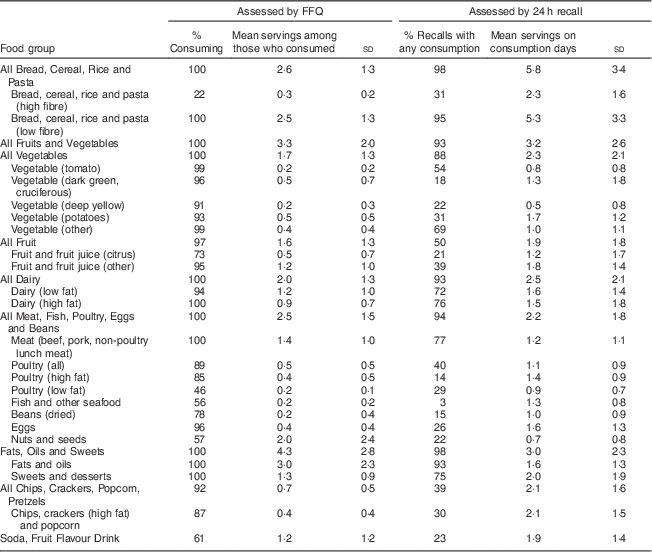
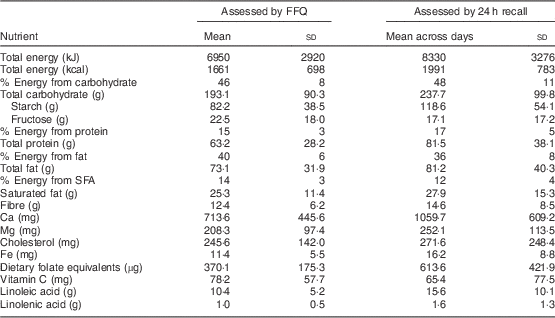
Presented in Table 1 are the mean intakes for the food groups for participants reporting any consumption level, as assessed by both the FFQ and the three 24 h recalls. Intakes were generally higher on the 24 h recalls than on the FFQ with the exception of meat, nuts and seeds, and fats and oils. Additionally, the percentage of the sample reporting any consumption is shown. Mean energy and nutrient intakes for the sample are shown in Table 2 according to dietary assessment instrument. Intake estimates from 24 h recalls were mostly, but not always, higher than those from the FFQ.
Consumption of foods groups (servings/d) as assessed by FFQ and 24 h dietary recalls (n 157); youth aged 10–24 years with type 1 diabetes, SEARCH for Diabetes in Youth Nutrition Ancillary Study

Of the food groups listed above, three (high-fat poultry, fish and other seafood, dried beans) are shown here for completeness sake but will not be considered in further analyses because they had fewer than twenty people with at least two consumption days on the 24 h recall.
Mean daily nutrient consumption assessed by FFQ and 24 h dietary recalls, with standard deviations (n 157); youth aged 10–24 years with type 1 diabetes, SEARCH for Diabetes in Youth Nutrition Ancillary Study
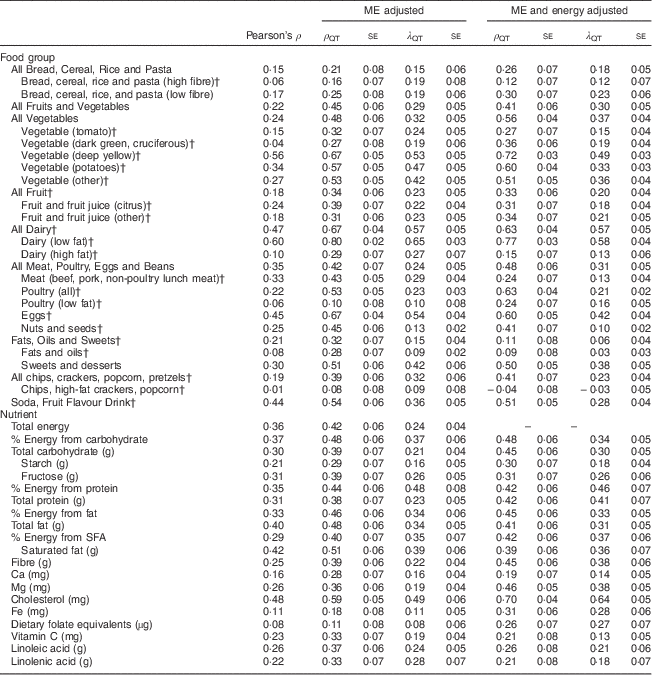
Estimates of the correlation between the true usual intake and FFQ-reported intakes and the corresponding attenuation factors are shown in Table 3, first as crude Pearson’s correlations (for comparison with the literature) and then as measurement error-adjusted coefficients with and without energy adjustment. Use of the measurement error model resulted in a strengthening of correlations. Without consideration of energy intake, the measurement error-adjusted correlation for the food groups ranged from high (ρ=0·80 for low-fat dairy) to very low (chips, high-fat crackers and popcorn; low fat-poultry; high-fibre bread, cereal, rice and pasta: all ρ<0·20), with sixteen of twenty-eight food groups (57 %) exhibiting correlations ρ>0·35. Validity estimates were quite high for several food groups typically recommended for youth with type 1 diabetes, such as low-fat dairy (ρ=0·80), vegetables (ρ=0·48) and foods typically to be avoided, such as soda (ρ=0·54) or sweets and deserts (ρ=0·51). Additional adjustment for total energy within the measurement error model did not have a strong impact on the correlation coefficients for most food groups, the exceptions being fats and oils, meat and high-fat dairy. This may be because misreporting in these food groups may not be proportional to energy intake. The mean measurement error-adjusted correlation coefficient was ρ=0·41 for all food groups without consideration of energy intake and ρ=0·39 after consideration of total energy.
Estimates of the correlation between true and FFQ-reported intakes (ρ QT) and the attenuation factor (λ QT), with standard errors, in the model adjusted for measurement error (ME) and the model adjusted for both ME and energy (n 157); youth aged 10–24 years with type 1 diabetes, SEARCH for Diabetes in Youth Nutrition Ancillary Study
† Denotes episodically consumed food (>10 % of 24 h recalls did not report consumption).
The correlations for the nutrients ranged from 0·59 for cholesterol to 0·11 for dietary folate, with fourteen of twenty nutrients (70 %) exhibiting correlation coefficients ρ>0·35 in the measurement error-adjusted but not the energy-adjusted model. For example, validity statistics for energy (ρ=0·42), protein (ρ=0·38), total fat (ρ=0·48) and saturated fat (ρ=0·51) were quite good. A total of eleven of nineteen nutrients (58 %) exhibited energy-adjusted correlation coefficients ρ>0·35. In summary, the mean measurement error-adjusted correlation coefficient was ρ=0·38 for all nutrients and ρ=0·37 adjusted additionally for energy intake. Adjustment for total energy impacted most nutrients. Additional subgroup analyses (data not shown) revealed that correlation coefficients were slightly higher for youth aged 15 years and older (mean measurement error- and energy-adjusted correlation for foods ρ=0·47 and ρ=0·37 for nutrients) compared with those under 15 years of age (ρ=0·44 and ρ=0·35, respectively).
Shown also in Table 3 are the attenuation factors for each food group and nutrient. The average of the attenuation factors (non-energy adjusted) was λ=0·29 for food groups (λ=0·25 adjusted for energy) and λ=0·27 for nutrients (λ=0·31 adjusted for energy). Energy-adjusted attenuation factors ranged from λ=0·53 for low-fat dairy to λ=−0·03 for chips, high-fat crackers and popcorn. The negative attenuation and correlation for chips, high-fat crackers and popcorn indicate a weak relationship between the FFQ and true usual intake. For nutrients, attenuation factors ranged from λ=0·64 for cholesterol to λ=0·13 for vitamin C.
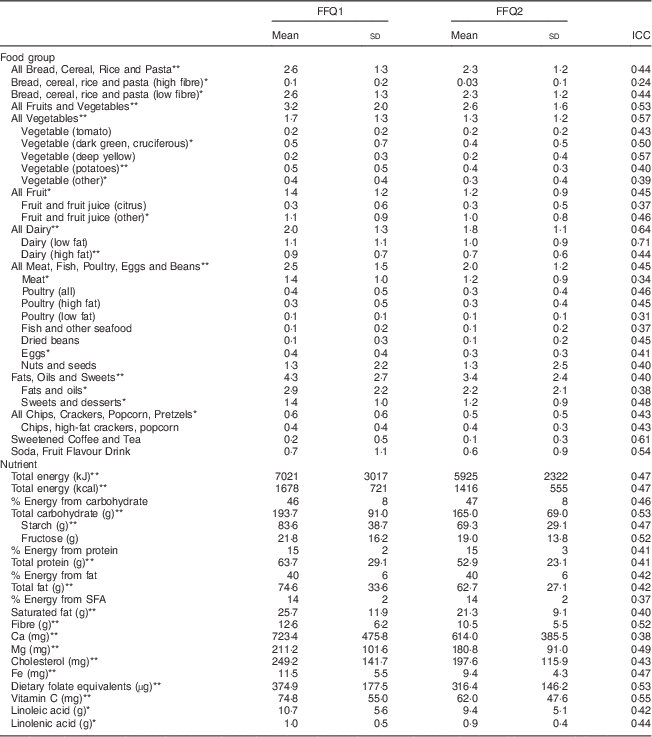
Reliability statistics for the FFQ are shown in Table 4. Average intake in the entire sample (including both consumers and non-consumers) was slightly higher for most food groups and nutrients at the first compared with the second administration of the FFQ. Intra-class correlation coefficients ranged from 0·24 for high-fibre bread, cereal, rice and pasta to 0·64 for all dairy and 0·71 for low-fat dairy.
Reliability of the FFQ: mean food group intake (servings/d) and mean daily nutrient consumption at baseline (FFQ1) and follow-up (FFQ2), with standard deviations, and intra-class correlation coefficients (ICC; n 148); youth aged 10–24 years with type 1 diabetes, SEARCH for Diabetes in Youth Nutrition Ancillary Study
*P<0·05, **P<0·01 for t-test comparison of mean of FFQ1 and FFQ2.
Discussion
The literature on validity and reliability of dietary assessment methods in youth was reviewed by McPherson et al. in 2000(Reference McPherson, Hoelscher and Alexander26). In addition to the SEARCH FFQ, there are still only a very limited number of validated FFQ instruments for youth designed to be self-administered (or interviewer-administered) that assess a general diet(Reference Rockett, Breitenbach and Frazier16, Reference Cullen, Watson and Zakeri18, Reference Watson, Collins and Sibbritt20, Reference Knuiman, Rasanen and Ahola27–Reference Preston, Palacios and Rodriguez37). Comparing with those studies that, like ours, utilized youth’s self-report reveals that the SEARCH FFQ performed quite well in terms of validity, focusing on the crude Pearson’s correlation coefficients for the sake of comparability(Reference Rockett, Breitenbach and Frazier16, Reference Cullen, Watson and Zakeri18, Reference Watson, Collins and Sibbritt20,,Reference Jenner, Neylon and Croft29, Reference Preston, Palacios and Rodriguez37) (Pearson’s r energy= 0·35 compared with range of 0·21–0·43 in previous studies; r protein= 0·31 compared with range of 0·15–0·31; r total fat=0·39 compared with range of 0·15–0·48). Our study also included an assessment of the instrument’s reliability, as the FFQ was administered twice about one month apart. The SEARCH FFQ compared favourably with previous studies(Reference Rockett, Breitenbach and Frazier16, Reference Watson, Collins and Sibbritt20, Reference Preston, Palacios and Rodriguez37, Reference Rockett, Wolf and Colditz38) (r energy= 0·50 compared with range of 0·30–0·49 in previous studies; r protein= 0·40 compared with range of 0·26–0·50; r total fat=0·40 compared with range 0·41–0·49).
To the best of our knowledge, only one other evaluation of the relative validity of the Block Kids Questionnaire (completed by the youths themselves) has been published(Reference Cullen, Watson and Zakeri18). Other reports on this instrument have relied on the parental report(Reference Marshall, Eichenberger Gilmore and Broffitt39), compared only mean intakes(Reference Smith and Fila40) or have been solely presented at conferences(Reference Block, Murphy and Roullet25). In a sample of eighty-three youth aged 10–17 years (thirty-one of whom had type 2 diabetes), Cullen et al.(Reference Cullen, Watson and Zakeri18) reported energy-adjusted and measurement error-adjusted correlation coefficients ranging from 0·29 for fibre to 0·69 for percentage of energy from carbohydrates and from −0·03 for grains to 0·74 for dairy. Comparison of the correlation coefficients for the SEARCH FFQ with those published by Cullen et al.(Reference Cullen, Watson and Zakeri18) reveals that with respect to nutrients, our study found a similar range of correlations (0·19 for Ca to 0·70 for cholesterol), with a better relative validity for fibre (0·45 in our study v. 0·29 in Cullen et al.) and cholesterol (0·70 v. 0·58), but lower correlations for percentage of energy from carbohydrates (0·48 v. 0·69) and percentage of energy from protein (0·42 v. 0·55). Furthermore, for the three food groups that were directly comparable between the two studies, the correlation coefficients for vegetables on the SEARCH FFQ were better than in Cullen et al. (0·56 v. 0·17) and dairy was similarly high (0·63 v. 0·74). Our correlation for bread, cereal, rice and pasta was also somewhat higher than in Cullen et al. (0·26 v. −0·03). While Cullen et al. concluded that in their sample, the Block Kids Questionnaire had ‘validity for some nutrients, but not [for] most food groups’(Reference Cullen, Watson and Zakeri18), we reached a different conclusion for the SEARCH FFQ. While there is clearly need for improvement for a few select food groups (i.e. the bread, cereal, rice and pasta group, especially the high-fibre versions of these foods; chips, high-fat crackers and popcorn; low-fat poultry; high-fat dairy), it is reassuring that many of the food groups encouraged by dietary guidelines demonstrated good relative validity. These included all fruits and vegetables, vegetables specifically, low-fat dairy and dairy in aggregate, and poultry in aggregate. Sugar-sweetened beverages, a food group specifically discouraged in dietary guidelines, was also measured with reasonable validity.
Aside from the fact that Cullen et al.(Reference Cullen, Watson and Zakeri18) evaluated the original Block Kids Questionnaire while our study evaluated the SEARCH FFQ, there are several methodological differences between the studies. Unlike our study, Cullen et al.(Reference Cullen, Watson and Zakeri18) relied on two days of 24 h dietary recalls and did not accommodate the episodic nature of the consumption of individual food groups. Furthermore, Cullen et al.(Reference Cullen, Watson and Zakeri18) relied on using an estimate of within-subject variability in consumption to perform measurement error adjustment of the correlation between food recalls and FFQ, and did not model systematic bias. This estimate of within-subject variability is best when the food recall data are approximately normally distributed, which is not the case with episodically consumed foods. Furthermore, with three days of 24 h recall, a participant is more likely to have at least two consumption days, which are needed on a subset of participants to partition within-person random error from the variability of usual intake.
While statistical methods to adjust dietary intake for measurement error have long been used in nutritional epidemiology(Reference Beaton, Milner and Corey12–Reference Willett15), the integration into analyses of the validity of dietary assessment instruments is still evolving. Unlike the Spearman or Pearson correlation coefficients that have been used traditionally to evaluate validity, either with or without correction for measurement error(Reference Rockett, Breitenbach and Frazier16, Reference Vereecken and Maes41, Reference Kobayashi, Kamimura and Imai42), the model-estimated correlation coefficient adjusts for within-person variability in intake in the 24 h recalls. The NCI method used in the current study appropriately models episodically consumed foods, adjusts for measurement error, transforms amount data to approximate normality, and models the ratio of usual intake of nutrients to energy by jointly modelling dietary components and energy. This method has been applied to food group validation in recent studies of adults(Reference Midthune, Schatzkin and Subar21). Validation efforts in samples of children and youth have either not included any consideration of measurement error(Reference Preston, Palacios and Rodriguez37, Reference Vereecken and Maes41–Reference Zemel, Carey and Paulhamus45) or applied a more simplified approach for daily consumed dietary components with consideration only of random error(Reference Willett15, Reference Rockett, Breitenbach and Frazier16, Reference Fumagalli, Pontes and Sartorelli19, Reference Watson, Collins and Sibbritt20).
In addition to the model-based correlation coefficients, we estimated attenuation factors, which express the amount of bias in an exposure–disease relationship. The smaller the attenuation factor (i.e. the closer to zero), the more biased is the exposure–disease relationship. Midthune et al.(Reference Midthune, Schatzkin and Subar21) suggest that for food groups (and nutrients) with attenuation factors of 0·2 and greater, measurement error modelling can be a viable solution. However, for attenuation factors <0·2, caution is advised because de-attenuation may result in unreliable estimates. Our results indicate that for some nutrients and food groups there is the potential for a considerable amount of bias. For instance, without consideration of measurement error modelling, the coefficient describing the relationship of FFQ-based dairy intake to disease or risk factor outcomes would be reduced by 43 %.
Our study has a number of limitations. Unlike most FFQ used for adults which query the past year(Reference Mayer-Davis, Vitolins and Carmichael8, Reference Thompson, Kipnis and Midthune46), the SEARCH FFQ asks about dietary intake in the preceding week, because most youth will not be able to cognitively integrate dietary intake over a whole year. Compared with studies of adults(Reference Midthune, Schatzkin and Subar21, Reference Thompson, Kipnis and Midthune46), validation efforts in youth – including our study – found somewhat weaker correlations, which is likely due both to this reduced time frame and to younger respondents having more difficulties with the recall(Reference McPherson, Hoelscher and Alexander26). When we explored the role of age, like others we too found that relative validity was slightly higher in the older age group of the youth(Reference Cullen, Watson and Zakeri18, Reference Preston, Palacios and Rodriguez37). Because of the more limited list of items compared with an adult FFQ and the shorter time window in which usual intake was assessed, administering the SEARCH FFQ yielded a higher proportion of non-consumption of certain food groups, which in turn limited the ability to create and evaluate very finely classified food groups. In addition, we were unable to adjust for true non-consumers in the present study, which requires a large sample size of at least four 24 h recalls; however, the true predicted intakes for non-consumers were close to zero. Similar to other studies, we relied on 24 h dietary recalls as the reference instrument under the assumption that they provide an unbiased estimate of true intake, even though it has been shown that the 24 h recall is somewhat biased for protein, energy and protein density in adults(Reference Kipnis, Subar and Midthune47, Reference Kipnis, Midthune and Freedman48). To the extent that the assumption of unbiasedness is violated, this may lead to some overestimation of the correlations and attenuation factors(Reference Kipnis, Subar and Midthune47, Reference Kipnis, Midthune and Freedman48).
The valid and reliable assessment of dietary intake in youth with diabetes is of paramount importance both for research and practice. Because of the emphasis on medical nutrition therapy and carbohydrate counting(Reference Rockett, Breitenbach and Frazier16, Reference Cullen, Watson and Zakeri18, Reference Watson, Collins and Sibbritt20, Reference McPherson, Hoelscher and Alexander26, Reference Jenner, Neylon and Croft29, Reference Preston, Palacios and Rodriguez37), youth with type 1 diabetes may have a heightened awareness of their diet and may potentially perform better on validity or reliability assessment. In comparison to other self-reported FFQ for youth, the SEARCH FFQ performed quite well both in terms of relative validity and reliability. A small number of food groups clearly need to be better assessed in future modifications of this instrument, including fats and oils and the bread, cereal, rice and pasta group, particularly with respect to high-fibre foods. In addition, the 7 d recall period necessary for children may be a significant limitation, and researchers may wish to consider replicating the FFQ or collecting supplemental dietary data to overcome this limitation. The present study furthermore illustrated the utility of measurement error modelling in the context of validating a dietary assessment instrument. While there is clearly some room for improvement in our questionnaire, our findings suggest that, with a few exceptions, the SEARCH FFQ will be useful in estimating associations between food group- or nutrient-based dietary exposures and outcomes in youth with type 1 diabetes in the SEARCH for Diabetes in Youth Study.
Acknowledgements
Acknowledgements: The SEARCH for Diabetes in Youth Study is indebted to the many youth and their families, and their health-care providers, whose participation made this study possible. The authors would also like to acknowledge the staff at the University of North Carolina Nutrition Obesity Research Center – Diet, Physical Activity and Body Composition Core (DK-56350) who conducted the 24 h dietary recall interviews. Financial support: The SEARCH Nutrition Ancillary Study was funded by the National Institutes of Health (NIH), National Institute of Diabetes and Digestive and Kidney Diseases (NIDDK) (Principal Investigator E.J.M.-D., grant number 5R01DK077949). The SEARCH for Diabetes in Youth Study is funded by the Centers for Disease Control and Prevention (PA numbers 00097, DP-05-069 and DP-10-001) and supported by the NIDDK (site contract numbers: Kaiser Permanente Southern California, U48/CCU919219, U01 DP000246 and U18DP002714; University of Colorado Denver, U48/CCU819241-3, U01 DP000247 and U18DP000247-06A1; Kuakini Medical Center, U58CCU919256 and U01 DP000245; Children’s Hospital Medical Center (Cincinnati), U48/CCU519239, U01 DP000248 and 1U18DP002709; University of North Carolina at Chapel Hill, U48/CCU419249, U01 DP000254 and U18DP002708-01; University of Washington School of Medicine, U58/CCU019235-4, U01 DP000244 and U18DP002710-01; and Wake Forest University School of Medicine, U48/CCU919219, U01 DP000250 and 200-2010-35171). The contents of this paper are solely the responsibility of the authors and do not necessarily represent the official views of the NIKKD or the NIH. The funders had no role in the design, analysis or writing of this article. Conflict of interest: None. Authorship: A.D.L. conceptualized the manuscript, interpreted the data, and drafted and revised the manuscript. J.L.C. conducted the statistical analyses and contributed to the drafting and revision of the manuscript. J.A.T. provided guidance to the statistical analyses and contributed to interpreting the data, drafting and revision of the manuscript. S.C.C., A.T.M., R.A.B. and E.J.M.-D. contributed to the interpretation of the data and the revision of the manuscript. Ethics of human subject participation: The SNAS protocol was reviewed and approved by the institutional review boards of all participating institutions. The SNAS study did not recruit additional participants, but collected data on infant feeding and nutrient biomarkers from youth enrolled in SEARCH.