


Introduction
Care-seeking entails taking action to find support in meeting one’s perceived care needs (Teo et al. Reference Teo, Churchill, Riadi, Kervin, Wister and Cosco2022). In long-term care (LTC) for older adults, seeking care often represents an auxiliary part of the care trajectory but is essential for accessing formal care. Indeed, this process significantly affects who receives assistance, and when and how they receive it. This article explores the factors and mechanisms that facilitate care-seeking, shedding light on what streamlines accessing LTC and what contributes to delays, non-take-up and inequalities in accessing formal care.
Existing research demonstrates how seeking care in later life entails various challenges. First, intrapersonal barriers shape older people’s behaviours in asking for help, including previous experiences and moral beliefs on health and illness (Elias and Lowton Reference Elias and Lowton2014). Asking for support triggers fears of losing independence, becoming a burden and losing one’s usual roles; these threaten one’s identity and can lead to a delay or refusal to seek care (Miller et al. Reference Miller, Sinding, Griffith, Shannon and Raina2016). Additionally, extrinsic factors, such as living circumstances, language and discrimination, play a role (Chung et al. Reference Chung, Seo and Lee2018). Also, scholars studying access inequalities expect low educational levels to influence the finding and processing of information (Albertini and Pavolini Reference Albertini and Pavolini2017; Englert et al. Reference Englert, Noelle, Hülsken-Giesler and Büscher2023). Second, interpersonal barriers are discussed in the literature, such as negative experiences with health-care professionals, ageism and public and internalized stigma, especially for mental and cognitive health issues (Perry-Young et al. Reference Perry-Young, Owen, Kelly and Owens2018; Polacsek et al. Reference Polacsek, Boardman and McCann2019). Manifold is the role of informal carers, as on the one hand they might represent a deterrent to seeking formal care (Teo et al. Reference Teo, Churchill, Riadi, Kervin, Wister and Cosco2022); on the other hand they facilitate the process with information collection and advice (Courcy and des Rivières‐pigeon Reference Courcy and des Rivières‐Pigeon2021; Hill et al. Reference Hill, Bratlee-Whitaker, Sillner, Brautigam and Mogle2021). Studies highlight the importance of social comparison with peers to evaluate their care needs and share information (Chung et al. Reference Chung, Seo and Lee2018; Elias and Lowton Reference Elias and Lowton2014). Finally, the barriers come from how policies are designed and implemented. Scholars have shown that local practices can encourage take-up and service utilization by making them easy to locate and reach promptly, while also ensuring their availability and alignment with care-seekers’ values, norms, and cultural context (Chung et al. Reference Chung, Seo and Lee2018; Hajizadeh et al. Reference Hajizadeh, Babaei Aghbolagh, Babaei, Tajvar and Heydari2024; Janssens and Marchal Reference Janssens and Marchal2024; Levesque et al. Reference Levesque, Harris and Russell2013; Schipper et al. Reference Schipper, Luijkx, Meijboom and Schols2015a). On the other hand, cumbersome access procedures and unclear information dissemination are also purposefully implemented to discourage citizens from applying for welfare benefits and to keep the demand under control by increasing the administrative burden (Moynihan et al. Reference Moynihan, Herd and Harvey2015).
However, little attention has been paid to how facilitating factors at the policy level interact with what hampers and facilitates care-seeking at the individual and interpersonal levels. This gap hinders the understanding of what strategies could effectively smooth this process and compensate for care-seekersFootnote 1 with lower chances of finding their way into LTC policies. Furthermore, more investigation is needed to disentangle the key factors shaping help-seeking trajectories in LTC policies, as most studies focus solely on medical or dementia care. This should contribute to a deeper understanding of all the facets of reaching LTC policies, including the most neglected ones, such as social care.
This qualitative study aims to address these gaps by describing care-seeking trajectories in LTC policies at initial contact and identifying the factors that facilitated these processes. Also, it investigates the mechanisms introduced and promoted by LTC policies at the local level to facilitate care-seeking processes. In particular, the following questions are addressed:
• What trajectories do care-seekers follow when first approaching LTC policies?
• Which factors facilitate or hamper care-seeking?
• How do LTC policies facilitate care-seeking trajectories? What are the underlying mechanisms?
This study adopts a qualitative case study approach, focusing on Italian LTC policies as an example of a hard-to-reach LTC system that is demand-based, highly fragmented and poorly coordinated, with few local exceptions (Notarnicola et al. Reference Notarnicola, Perobelli, Rotolo and Berloto2021). These aspects make ‘reaching’ publicly funded care particularly challenging due to various sources of information, multiple entry points and cumbersome and different access procedures. In Italy, LTC responsibilities are divided among the Ministry of Health, the Ministry of Labour and Social Policy, and the National Social Insurance Agency, which manages the Companion Allowance. Governance is multi-level, with regulation, funding and service provision varying at national, sub-national and local levels.
Conceptual framework
Care-seeking is seen as an essential component of accessing formal care. Therefore, its conceptualization is integrated into the definition of access, which is the opportunity to reach and obtain appropriate care when it is perceived to be needed (Levesque et al. Reference Levesque, Harris and Russell2013). In a bottom-up approach to policy implementation, care-seekers access policies through interactions with street-level workers, such as physicians, social workers and civil servants, who apply discretion and agency in implementing policies on the ground (Lipsky Reference Lipsky1980). These interactions are shaped by the distinct characteristics and combinations of both the professionals and the care-seekers, as well as the opportunities and constraints present at the organizational and municipal levels, resulting from the re-scaling of national policies (Kazepov Reference Kazepov2010). Therefore, access to LTC policies is determined not only by factors regarding care-seekers, primarily identified in the behavioural model by Andersen and Newman (Reference Andersen and Newman2005), but also by those emerging from the policy implementation process, as discussed by Levesque et al. (Reference Levesque, Harris and Russell2013) in their patient-centred health-care access approach. The factors at play are called ‘accessibility factors’ and have been grouped into three interrelated groups:
• Need interpretation factors refer to how care needs and health-care status are perceived, recognized and defined by care-seekers, and the legislative definition and eligibility criteria, which are mediated by professionals’ discretion.
• Predisposing factors are individual and policy features that increase the propensity to access and use public services. As for the former, these factors include the propensity to seek, influenced by socio-demographic and structural features and attitudinal-belief factors (Andersen and Newman Reference Andersen and Newman2005), and the ability to seek. This relates to autonomy and the capacity to choose to seek care, as well as the awareness of available care options and one’s rights, which influence the decision to seek care (Levesque et al. Reference Levesque, Harris and Russell2013). On the policy side, the predisposing factors include characteristics that make policies easy to locate (approachability), physically accessible and prompt (accommodation) and acceptable as they align with the values and norms of care-seekers (acceptability) (Levesque et al. Reference Levesque, Harris and Russell2013).
• Enabling factors are resources and means allowing individuals to adequately meet their care needs (Andersen and Newman Reference Andersen and Newman2005). For care-seekers, these can be material and non-material resources for care. The enabling factors identified on the policy side are affordability, availability, and appropriateness (Levesque et al. Reference Levesque, Harris and Russell2013).
Also, access is conceptualized as a process unfolding along and shaping care trajectories. The latter describes the development of arrangements to meet care needs over time, which is intertwined with the dependency trajectory describing the progress of care needs (adapted from Strauss et al. Reference Strauss, Fagerhaugh, Suczet and Wiener1985) and mirroring the persistence of social and health inequalities (Fors et al. Reference Fors, Illinca, Jull, Kadi, Phillips, Rodrigues, Vafei, Zolyomi and Rehnberg2022; Warner and Brown Reference Warner and Brown2011). Ultimately, the concept of ‘care trajectory’ is grounded in the lifecourse perspective (Elder Reference Elder and Elder1985), with the distinctive feature that care constitutes a specific domain within the lifecourse (Keating et al. Reference Keating, Eales, Funk, Fast and Min2019). According to this conceptualization, accessibility factors regarding care-seekers originate and are shaped by their lifecourses and their links with others’ lifecourses (linked lives) (Penning et al. Reference Penning, Cloutier, Nuernberger, MacDonald and Taylor2016). The ones regarding LTC policies result from the implementation processes passing through national and subnational levels, the organizational ones, until they reach the level of interaction with street-level workers (Kazepov Reference Kazepov2010; Winter Reference Winter, Peters and Pierre2012).
Methods
Study design
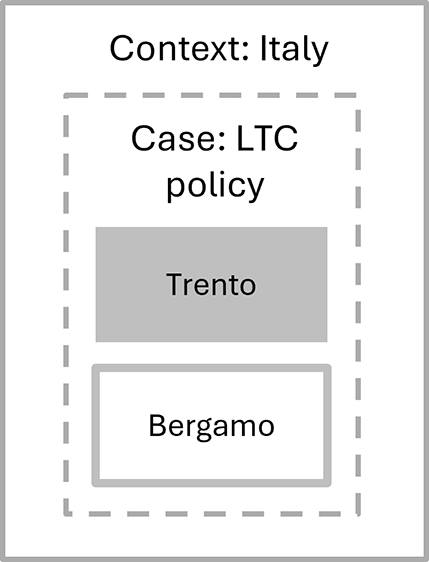
This qualitative study focuses on a typical case of hard-to-reach LTC policies: the Italian ones. An embedded case study design – involving two units of analysis within a case – (Yin Reference Yin2018) (see Figure 1) has been adopted because understanding how care-seekers interact with LTC policies is better achieved when considering how policies are implemented locally. The selected local sites are two mid-sized municipalities (120,000 inhabitants): Trento, 95 km north of Verona, and Bergamo, 45 km northeast of Milan. Both are situated in neighbouring northern Italy regions: Trentino-South Tyrol and Lombardy. The former borders Switzerland and Austria, while the latter borders only Switzerland.
The embedded case study design.
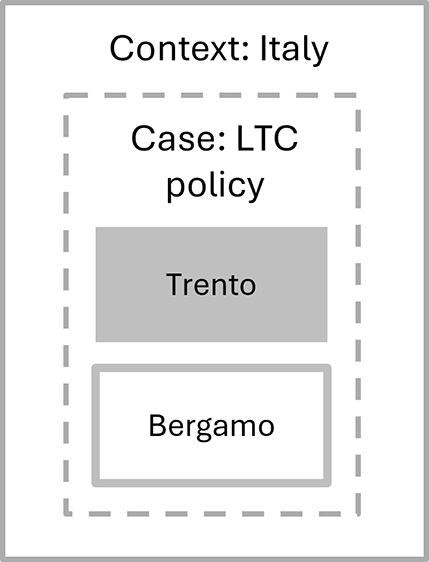
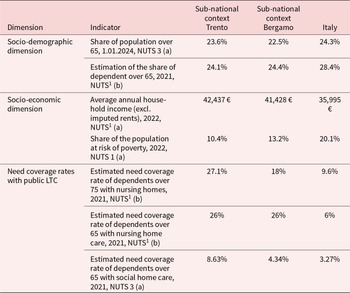
The two local sites were selected using the most similar system (Seawright and Gerring Reference Seawright and Gerring2008). In particular, the variance of the property space has been minimized by choosing between regions with similar socio-economic and socio-demographic characteristics and for a care-oriented regional LTC policy model (Nava and Accolla Reference Nava and Accolla2022). In contrast, the two sites vary regarding public home care models and the need coverage estimates with publicly funded LTC services. Table 1 shows that the share of the population aged over 65 and needing care is similar and below the national average. Socio-economic factors are comparable, with household income exceeding the Italian average and a lower risk of poverty. Additionally, the estimated capacity to meet the care needs of older adults surpasses the national average, with the Province of Trento outperforming Lombardy in social home care and nursing homes.
Descriptive statistics of socio-demographic and socio-economic conditions and the need coverage with LTC policies in the sub-national context of Trento and Bergamo, compared to the national context, 2021–2024

Notes: 1. NUTS 3 (Nomenclature of Territorial Units for Statistics) is considered for Trento, while NUTS 2 is for Bergamo due to their shared governance of health and social policies, including LTC.
Sources:
a. ISTAT [National Institute of Statistics] (2024), ‘IstatData’. https://esploradati.istat.it/databrowser/#/it/dw.
b. Notarnicola E and Perobelli E (Reference Notarnicola and Perobelli2024) Il settore Long Term Care per anziani non autosufficienti in Italia: rete di welfare, «badantato», posizionamento strategico dei gestori [The Long Term Care sector for dependent older adults in Italy: welfare network, domestic workers, strategic positioning of managers]. In Fosti G, Notarnicola E and Perobelli E (eds.), La sostenibilità del settore Long Term Care nel medio-lungo periodo: 6° Rapporto Osservatorio Long Term Care. Egea, 13–34.
The choice of intermediate urban sites reflects the preference of older people in Europe for these areas alongside rural regions (Eurostat 2020). The final selection of the two local sites was determined by which sites agreed to participate in the research. Lastly, the analysis of policy implementation primarily focuses on social care, which is the responsibility of municipalities, and its connection to health care and cash benefits.
Data collection
The case study is based on participant observation, in-depth and repeated interviews with carers and older people with care needs living at home, and semi-structured interviews with social workers and local key observers. The choice of each qualitative research method enabled the investigation of specific processes and interactions by which care-seeking occurs, contextualized in the care-seeker’s lifecourse and the social care context at the municipal level. Furthermore, triangulating various data sources alongside different qualitative methods was employed to enhance credibility and confirmability (Guba Reference Guba1981).
The study protocol, which outlines the data collection procedures in both municipalities, was approved by the Ethics Committee of the University of Trento, Italy (Prot_2023-28). Participants were regarded as experts for their professional roles or their lived experience of LTC. They were informed in writing and verbally about the research aims, participation implications, data handling, withdrawal options and funding sources. They were asked to provide written consent with an audio recording option. The files containing personal data and sensitive health information were securely stored under a pseudonym to ensure confidentiality. Interview transcripts were anonymized and the pseudonymization key documents will be destroyed within five years to prevent tracing back to the interviewees.
Participant observation of LTC policies in practice
The observation spanned over 100 hours in social workers’ offices across the two municipalities from April to September 2023. Access was secured through negotiations with the heads of the social policy sectors, formalized in a written agreement. Observations focused on key interactions along the care trajectory, including formal and informal meetings among social workers and with other professionals. Additionally, the observation of phone calls, assessment interviews and home visits captured interactions between professionals and care-seekers, whereas interactions among care-seekers were mainly observed at senior community centres. The observation process was overt, with the observer adopting either a peripheral or an active role (Cardano Reference Cardano2011), depending on the participants’ initiative and the appropriateness of the moment. Interactions were frequently followed by backtalk and informal interviews with participants. Field notes were taken immediately after the interactions and reflexive ones in a later stage.
Interviews with care-seekers
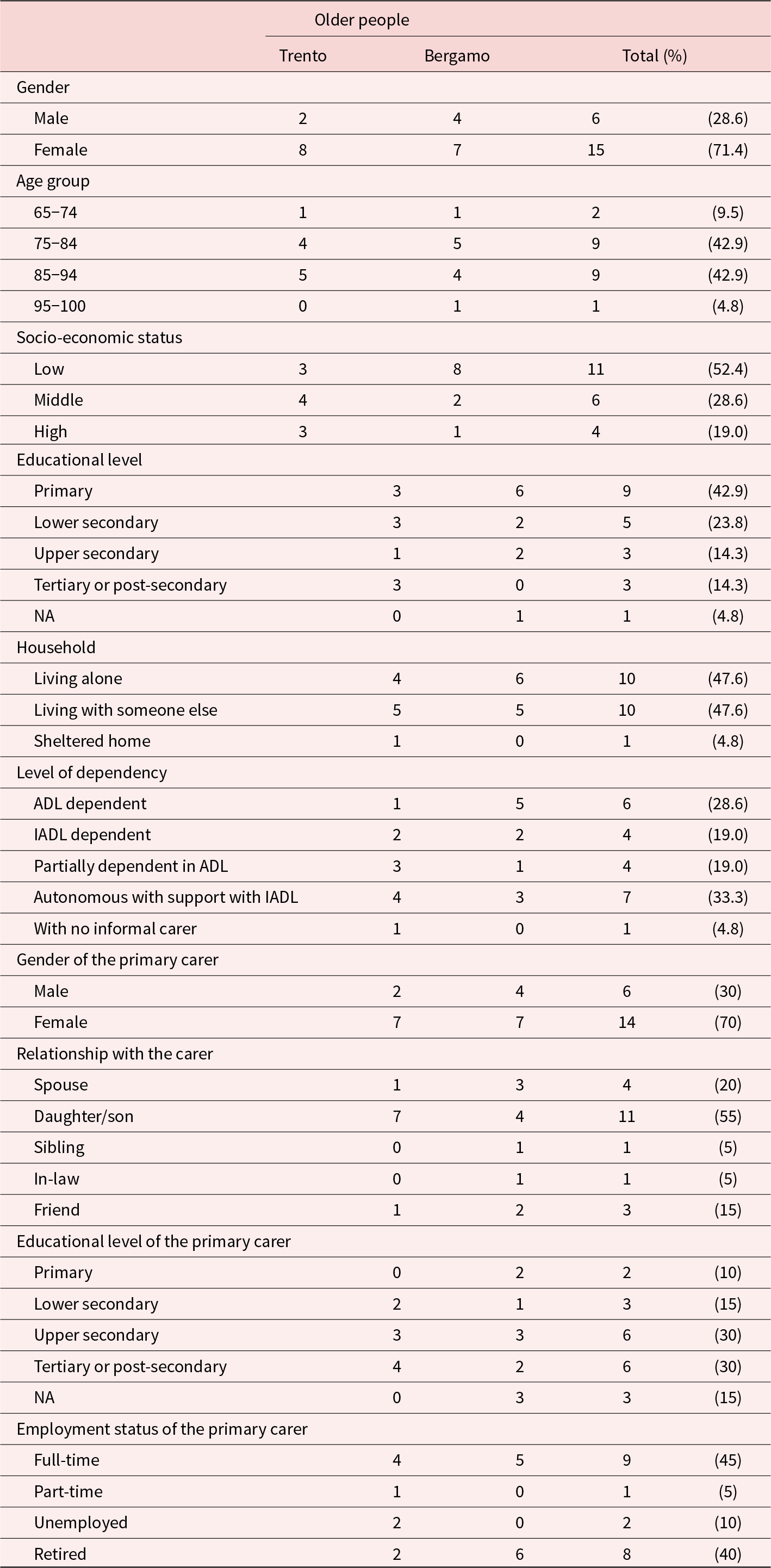
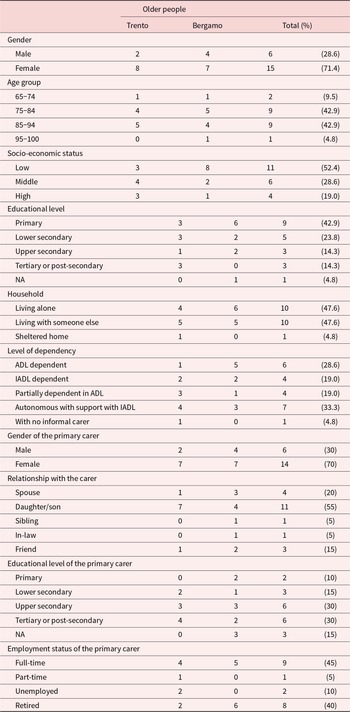
The semi-structured interviews involved 21 care-seekers: 11 older adults with care needs and 10 family care-givers. The latter were included when older adults were unable to give informed consent for research participation, for instance in cases of advanced dementia or severe cognitive impairments or when their involvement might lead to considerable distress. The topic guide featured open-ended questions on life stories, socio-demographic information, daily activities, care needs, care-seeking and care trajectories, personal wishes and evaluations. Conducted from July to September 2023, these interviews were repeated six to nine months later, with a 9.5 per cent attrition rate. This approach aimed to gather information on changes in care trajectories while double-checking some information and replicating the observations in a more trusting relational climate. Additionally, interview memos concerning the context or living environment, the interviewees’ physical, cognitive, and mental status, and the interviewer’s impressions of the relational climate and positionality were documented immediately after each interview to promote reflexivity (Guba Reference Guba1981). Half of the interviews occurred in interviewees’ homes, while the rest were in community settings or day centres. Each lasted 30 to 90 minutes. Most were audio-recorded and transcribed verbatim in the original language. Care-seekers were recruited via gatekeepers, allowing the researcher to build trust quickly. A significant drawback was that the final selection of samples was handed over to stakeholders – municipal social workers in Bergamo and professionals in a semi-public organization and a social enterprise in Trento – who might have selection biases towards specific profiles. Nevertheless, triangulation through participant observation has alleviated this issue, as professionals had reduced control over the sampling interactions. Table 2 presents the final sample of older people, whose data were directly or indirectly gathered through interviews. It contains a variety of situations concerning socio-demographic features, socio-economic status, educational level, living arrangements, dependency level and the primary carer’s features. Dependency is categorized into four stages: autonomous needing support with up to three instrumental activities of daily living (IADLs)Footnote 2; partially dependent with one to three limitations in basic activities of daily living (ADLs)Footnote 3; dependent when requiring help with at least four ADLs; and dependent when requiring help with at least four IADLs. The last includes people with later stage dementia or cognitive impairment. Note that in Trento, one older adult does not have any informal carers, whereas in Bergamo, low-income individuals were overrepresented because the social workers served as the gatekeepers. This reflects the actual socio-economic conditions of social care recipients (Arlotti et al. Reference Arlotti, Parma and Ranci2020).
Characteristics of the sampled older people in each local site
Interviews with social workers and key observers
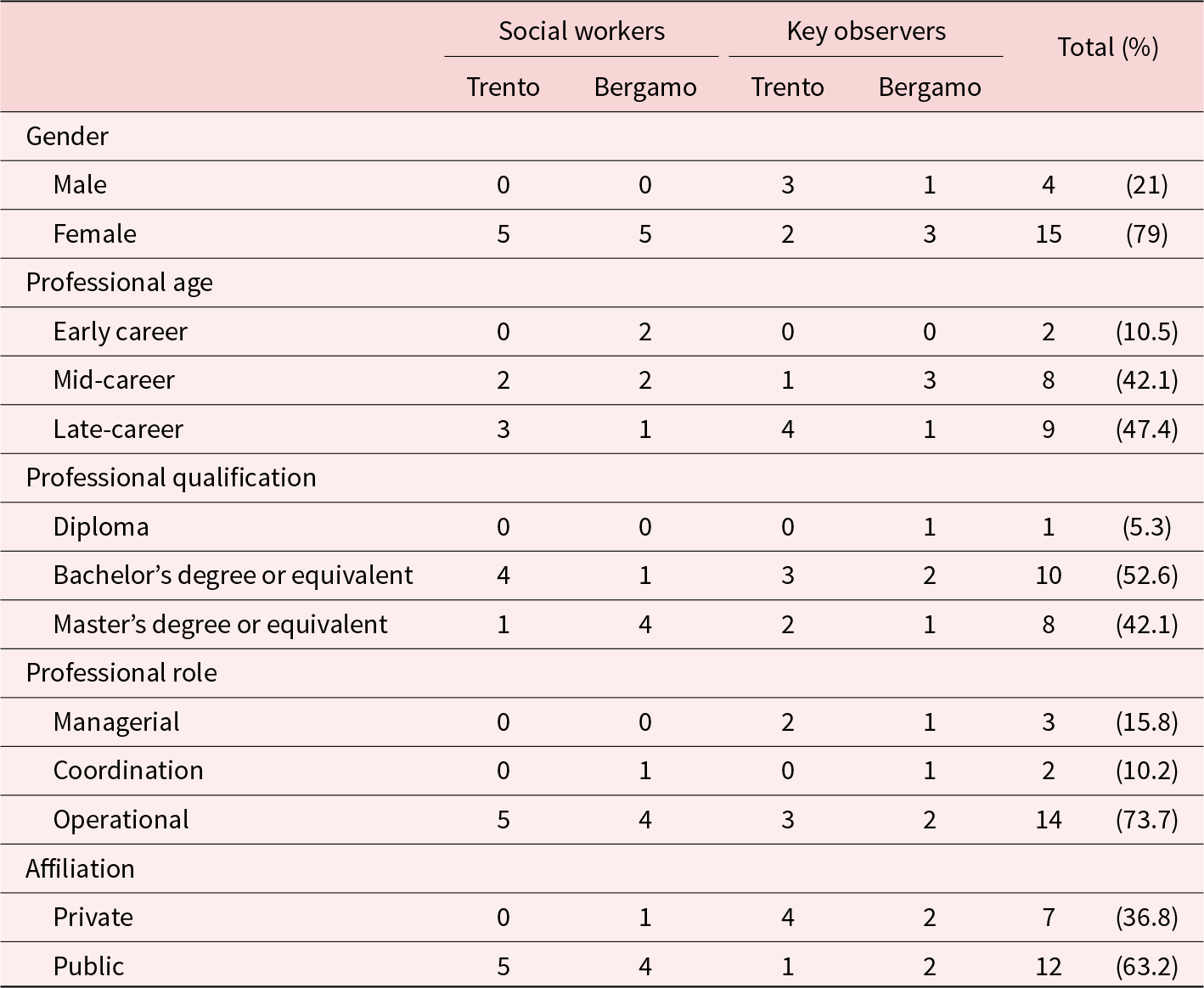
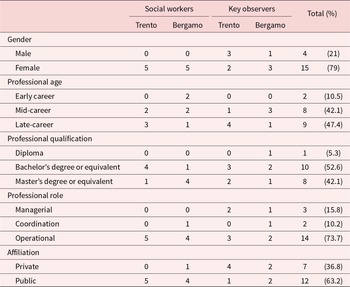
Ten social workers of different professional ages (Winter and May Reference Winter and May2001), five from each site, were interviewed using the vignette technique (Finch Reference Finch1987). The stimuli consisted of short stories featuring three older adults with different care needs, family support, living situations and socio-economic status in two stages of their dependency trajectories. The decision-making processes were tracked by simulating potential care trajectories, and information was gathered regarding the underlying factors that influenced these decisions. Finally, nine key observers with various professional roles and affiliations (public or private) were interviewed using a semi-structured format to help understand the relationship between micro-practices and mid-processes in LTC policy implementation. Recruitment followed the logic of snowball sampling, beginning with the gatekeepers. The overview of the professional profiles of these interviewees is illustrated in Table 3.
Characteristics of the sampled professionals
Data analysis
Data analysis was performed by integrating qualitative cross-case analysis (Miles and Huberman Reference Miles and Huberman1994) with thematic analysis (Boyatzis Reference Boyatzis1998) using the NVivo QSR 13 software (R1 2020). This iterative process followed three main stages: description, cross-case comparison and interpretation. First, the interviews and field notes were coded following a scheme based on the conceptual framework, which aided in identifying the accessibility factors while progressively integrating codes derived inductively to include new factors and themes. This descriptive process was accompanied by visualizing the care-seeking trajectories both as narrated by older people and carers and as described by social workers for each local site. These descriptive results were member-checked by social workers from both sites to ensure credibility (Guba Reference Guba1981). Second, the comparison of the two local sites aided in identifying patterns in accessibility factors during the care-seeking process. To do this, data from each code were summarized into a matrix comparing accessibility factors of care-seekers and LTC policies across different stages of the care-seeking trajectory. Lastly, an iterative analytical approach enabled the identification of the mechanisms that facilitate care-seeking. Also, memos and reflexive field notes were used throughout the data collection and analysis stages to foster reflexivity (Guba Reference Guba1981).
Findings: the care-seeking trajectories
The older adults and family carers involved in the research had diverse experiences seeking public care. For some, the process was relatively straightforward and rapid, while for others it proved intricate and extended over several months. These findings sections dig into the differences and similarities between the various care-seeking trajectories and outline the identified accessibility factors in facilitating these processes and the underlying mechanisms.
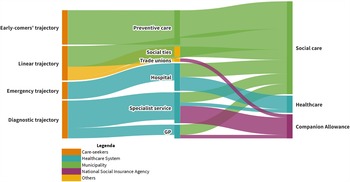
The first overarching observation is that care-seeking commonly involves three interconnected stages: recognizing care needs, being willing to receive formal care, and searching for information and an entry point. The first two act as preconditions to considering formal care as an acceptable option and taking the initiative to seek it. The third entails all the actions taken to search for formal care solutions. Within this common pattern, various care-seeking trajectories are experienced depending on the combination of care need development and their interpretation, along with predisposing and enabling factors both regarding care-seekers and the local policy context. In particular, four care-seeking trajectories have been identified: the earlycomers, linear, emergency and diagnostic. These are illustrated by the alluvial diagram in Figure 2, which displays the care-seeking trajectories of the older adults and family carers’ interviewed in both local sites. The diagram highlights the actors facilitating the transition to one or more public LTC interventions (social care, health care or the cash benefit Companion Allowance) distinguished by affiliation: Healthcare System, Municipality, National Social Insurance Agency and others. Although the trajectories are presented as separate patterns for the sake of clarity, their experiences are not always exclusive and may overlap.
Care-seeking trajectories of the interviewees when approaching LTC policies for the first time.
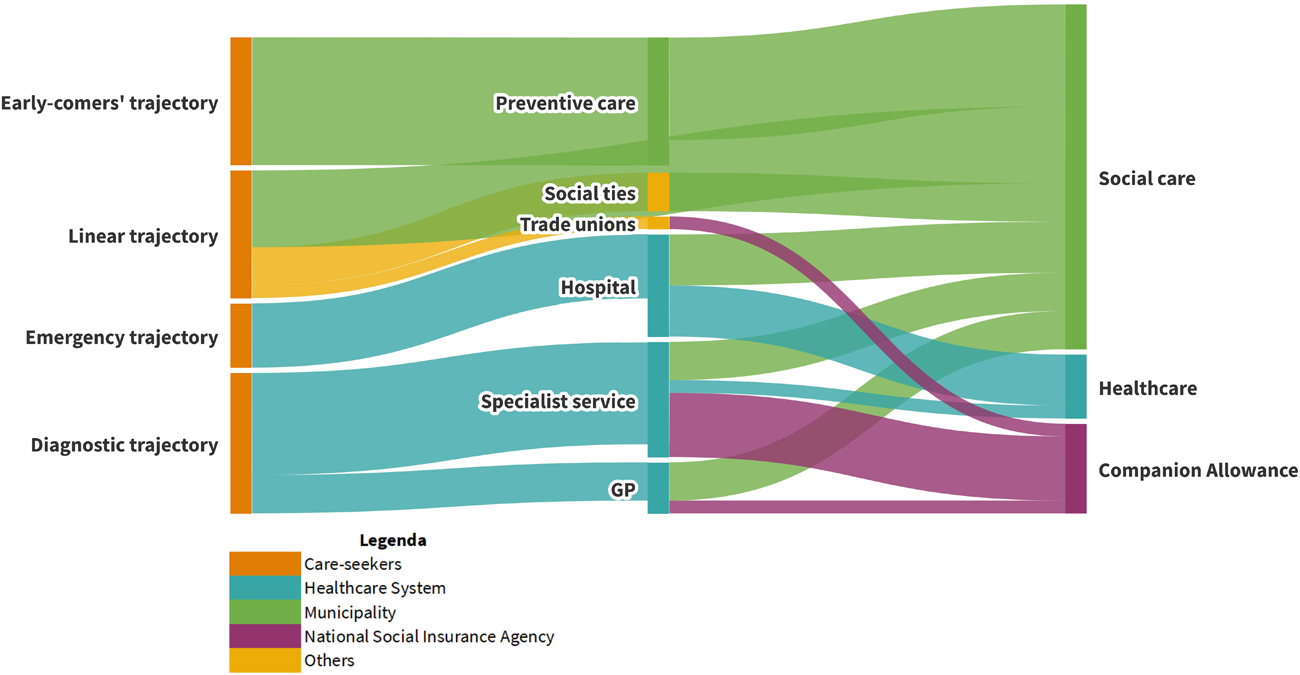
For participants experiencing the earlycomers’ trajectory, the care-seeking process starts in comparatively earlier stages of their dependency trajectory. Support is mainly sought for socio-emotional support and help with IADLs, such as shopping and transportation, which is offered in both municipalities as preventive care. As most of these care-seekers experience a gradual onset of care needs, when those needs escalate, preventive care professionals serve as intermediaries for higher-level social care support.
A linear care-seeking trajectory is experienced when the entire process is described as straightforward. Recognizing care needs follows taking action to find information on formal care provision and making an appointment for a first assessment. Six directly contacted the municipality for home social care; others relied on acquaintances’ advice or sought information from a trade union office. In constrast to earlycomers, access to LTC interventions occurs later in the dependency trajectory, at a point where assistance for personal care is also required.
A sudden escalation of care needs characterizes the emergency trajectory due to one or more critical events, such as falls, the contraction of a disease or the exacerbation of a health problem, that require immediate intervention and compromise independence in some ADLs in the long term. As shown in Figure 2, care-seekers first accessed the hospital, where they found professional support to understand their care needs and potential development after discharge. When older adults require short- and long-term home care, discharge procedures at both local sites comprise social and health-care professionals gathering information on the situation and discussing potential care arrangements with them or the family members, if any. Some research participants used emergency home care services provided by health-care or social care sectors to offer support immediately after hospital discharge. Meanwhile, care-seekers had some time to plan and search for long-term solutions.
Lastly, older adults living with dementia or other neurological conditions experience the diagnostic trajectory when they access LTC policies during or after a diagnosis process. The specialist service represents, therefore, a key facilitator of the seeking process; as the diagnostic process proceeds, the professionals involved offer advice and guidance on accessing the various LTC policy interventions. In Trento, general practitioners (GPs) also play this role, whereas Bergamo has faced a considerable shortage and unavailability of GPs since the Covid-19 pandemic.
Findings: the facilitating factors
The following sections examine the accessibility factors identified as facilitating the sampled care-seekers in reaching LTC policy interventions. These factors are interrelated and variously integrated into care-seekers’ characteristics. These findings focus on the three central stages identified: recognizing care needs, alternatively phased from the care-seeker perspective, ‘am I in need of care?’; being willing to become a public care recipient or ‘is public care an acceptable option?’; searching for an entry point or ‘how do I get there?’.
Am I in need of care?
Recognizing care needs represents a fundamental step towards even considering help. This process in LTC is often not straightforward as it involves not only various need interpretation factors, such as health literacy (Andersen and Newman Reference Andersen and Newman2005) and beliefs on health and illness (Elias and Lowton Reference Elias and Lowton2014), but also one’s identity, self-perceptions, mood and visions of the future. The complexity of this phase arises for older adults facing sudden and gradual onset of care needs. The former necessitates a swift rearrangement of their lives, while the challenge for older adults undergoing a slow transition to dependency is encountering a progressive process wherein independence diminishes gradually. The following interview excerpt partially uncovers these dynamics, showing the personal and interpersonal challenges that becoming aware of becoming dependent in old age entails. The interviewee, Osvaldo,Footnote 4 is a 78-year-old man who talks about how he is making sense of becoming dependent. He describes losing his capable self as ‘mortifying’, and the attention and care he receives from his son reinforce this feeling, even though he is trying to accept this new situation.
We are ‘handi’, aren’t we? Eh, handicap, I mean. I accept the idea, and I adapt myself, right? All these attentions [from my son] are absolutely meritorious, but they can leave you a little… can’t they? I accept them even though they are mortifying things. (…) I mean, realising that you are ‘handi’.
(High SES, tertiary education, partially dependent)
The interactions with research participants revealed that care needs recognition is part of the broader process of transitioning into dependency in old age, which entails adjusting to the loss of independence and the realization of approaching the end of life. Therefore, need interpretation factors are often insufficient in facilitating need recognition, unless they are paired with a predisposing factor, particularly the attitude of acceptance of a new phase of life with consequential changes, including having helping relationships (Hvalvik and Reierson Reference Hvalvik and Reierson2011). Struggles to accept these aspects may result in delays in seeking care and unfulfilled care needs. For instance, some participants on the emergency trajectory mentioned that they did not seek support despite struggling with daily activities until their care needs became critical enough to require hospitalization.
Family carers themselves are impacted by the consequences of the transition into dependency and are often directly involved on various levels, identity-wise, emotionally and practically. This was particularly stressed by relatives of older people going through a diagnostic process for dementia or other degenerative conditions, as also highlighted in other studies (Leung et al. Reference Leung, Finlay, Silvius, Koehn, McCleary, Cohen, Hum, Garcia, Dalziel, Emerson, Pimlott, Persaud, Kozak and Drummond2011). The whole care-seeking process was described as particularly stressful and emotionally destabilizing, not only because of the initial difficulties in recognizing potential symptoms but also due to the decision to take the initiative to seek help, as this involved accepting the diagnosed condition. For instance, in the following excerpt, the daughter of a woman with dementia describes how lost she felt as her mother started becoming more vulnerable.
She has always been a very strong woman. What she decided had to be done. Even for me, she was my reference. When she started to waver, I began to waver too.. It was as if I had not felt the floor under my feet.
(Upper secondary education, unemployed for caring)
Carers might also have difficulties recognizing and adjusting to the changes affecting their relatives. Some refuse to apply for formal care for various reasons, such as taking pride in asking for additional or professional help or having misconceptions about social care. In addition, interpretations of care needs can often misalign older people and carers in timing, relevance, intensity and meaning, leading to misunderstandings, tensions or conflicts. On the other hand, social ties, particularly family ties or close and confidential relationships, often act as predisposing factors when raising awareness of care needs. This is also evident when older people have no family carers; the recognition phase can be more difficult with no or little advice from trustworthy people.
Is public care an acceptable option?
Being willing to receive formal care is decisive in shaping the care-seeking trajectories of any older adult. It has been observed to be strictly connected to one’s values and interpretations of what care is acceptable when needed and for what activities, as well as the attitude mentioned above of acceptance of a phase of dependency. Besides this, what stood out in the analysis is that people’s attitudes towards formal services significantly differ between those who have previous experience with care or other social welfare policies and those who are approaching them for the first time. Indeed, familiarity with the supply has been identified as a crucial predisposing factor in lowering barriers to approaching and accepting formal care. Instead, the interactions with the outsiders revealed that the awareness of public care options in case of dependency in old age is scant, regardless of the educational level, especially concerning community and home care support. This contributes to increasing the hesitancy to approach formal care. For instance, many care-seekers said that they were convinced that the only available option was residential care, and either they were reluctant even to consider that option or they thought that it was not the appropriate service yet. It was possible to see that mistrust, if not refusal, was mainly concentrated during the initial approach to public care, as shown by the following field notes depicting a typical situation of difficulties in accepting public care. It reports the conversation with a community carer, which took place shortly after a home visit to the couple’s residence, where the husband is undergoing a diagnostic process for cognitive issues.
The community carer tells me he was advised to attend a daily centre. However, he is unwilling to accept it for the whole day, and there is no option for part-time. She invited him to the senior community centre, but at the last minute, his wife cancelled. The only service they accept is her weekly visit, during which they have a walk or small talk.
(Field notes)
The other key factor strongly influencing the propensity to consider public formal care is the absence or scarcity of an enabling factor, which is the availability of alternative care options. If market solutions are not affordable, carers’ availability, willingness to care for their relatives and the strength of family duties put more or less pressure on opting for statutory care solutions. Many of the sampled care-seekers following an earlycomers’ seeking trajectory have scarce or occasional informal support; some of them have little economic resources to self-finance their LTC, while others with good economic resources use public care services that they would not find on the market (e.g. senior community centres). In short, the analysis showed that those more willing to receive public care also had fewer other options.
How do I get there?
Care-seekers often mentioned or showed a high sense of disorientation when they initially approached formal care, especially those with little or no experience in the care field. Also, this disorientation was often intensified by the emotional involvement that comes with experiencing the transition to dependency in old age, both for older adults and for caregivers. Many participants complained about not having had information on interventions they were eligible for when it was needed, as expressed in the following interview excerpt by Ahmed, a 40-year-old carer of his mother with advanced dementia.
There are so many things that could have been done before that we did not know. (…) We went on without the [hospital] bed for years and, then, got the non-automated one. (…) Even the wheelchair they didn’t give right away… We spent some years struggling a lot.
(Primary education, self-employed full-time)
Various predisposing and enabling factors can smooth and facilitate this search process. First, carers are often decisive in searching for and reaching LTC policies; over half of the older people sampled relied on family carers to seek formal care. Carers frequently take the initiative to search for external help; in other cases, they are assigned this responsibility or share it with the person needing care. Depending on their specific function, they can act either as predisposing factors when they increase the propensity of access to LTC or as enabling factors when they are a non-material condition that makes accessing possible. Social ties, including friends and weak ties (Granovetter Reference Granovetter1973), have sometimes been mobilized. For instance, a few participants identified coincidental and lucky encounters as crucial since they provided them with essential information, such as the caregiver of a 77-year-old mother, who discovered social home care through her domestic worker.
Social ties often compensate for a lack of familiarity with the supply or enrich their information background to understand the process of accessing and providing suggestions and advice for their specific situation. This was also observed in how the internet was used as a source of information to seek formal care. Although most research participants can access the web directly or ask someone to do it for them, generally the family carers, this has not been mentioned as a crucial resource in care-seeking. Its use appeared more effective when they already had some details on the potential public care options due to the technical language, the limited opportunity to find personalized information, and the fragmentation of the websites mirroring the institutional arrangements of LTC policies. In the following extract, Elinor, aged 80 and with tertiary education, describes her struggles to find information online on public LTC independently.
I am pretty good with the computer; I use it, send e-mails, and stuff like that, but if you open the local government’s web page, you get your hands in your hair (…). This is also because the language does not correspond to your language, so how do you manage there? (…) It’s usually the children who do these things, you know?
(Single and childless, low SES, partially dependent)
Hence, technological skills become a more valuable predisposing factor when combined with information collected from other people so that one already knows what could suit them and the specific and technical keywords. Indeed, familiarity and awareness of the supply constitute a relevant predisposing factor at this stage. Those with direct or indirect experience with social welfare policies are generally better equipped to navigate LTC policies because they know where and how to find specific information or can count on a network of professionals or experts. The following memo outlines the researcher’s reflections following an interview with a carer with extensive social and health-care experience.
I felt that some questions about care-seeking were trivial for highly competent and proactive people like him. Such an interview shows that this process isn’t complex for everyone. They have lived with a chronic illness, and he has volunteered in the sector for decades and knows how to find local resources.
(Interview memo)
Another key factor shared by people with linear care-seeking trajectories is the ability to claim public support, which can be seen as a predisposing factor entailing the awareness of one’s needs and rights and the ability to voice them. This can play a fundamental role in facilitating care-seeking by speeding up the process and reaching an entry point with fewer difficulties. The excerpt below shows an observation in Renata’s home. She is in her 90s, childless, unmarried, and during a home visit, a social worker prompted her to explain how she first made contact.
She tells us that she called the municipality during the pandemic, saying, ‘How come you do not do anything for us older people from X [street name]?’ They politely assured her that something would be done. I understand this is how she connected with the community carer.
(low SES, primary education, autonomous with support in IADL)
Once the first step is taken, care-seeking might become smoother when it adheres to standardized procedures, such as for the emergency trajectory, and is guided by professional advice, as seen for those with a diagnostic trajectory; this is a finding also supported by previous studies (Baxter and Glendinning Reference Baxter and Glendinning2011; Schipper et al. Reference Schipper, Luijkx, Meijboom and Schols2015b).
Findings: the facilitating mechanisms
Taking the initiative, building trust and combining information provision and orientation are the mechanisms identified as facilitating care-seeking. The following sections present them by focusing on the role of LTC policies as implemented in the two local sites selected.
Taking the initiative
It has been observed that social ties facilitate care-seeking since relatives, friends and acquaintances raise awareness about one’s needs, share information and take the initiative to find an adequate care arrangement. Similarly, participants reported fewer difficulties in searching for LTC as professionals led them in charge of the hospital discharge or the diagnostic process, or reached out to them for preventive initiatives or information. The underlying mechanism identified as facilitating the first approach to LTC policies consists of shifting, at least partly, the locus of this initiative away from care-seekers rather than leaving the burden solely on them. This mechanism was introduced at both local sites, with preventive interventions and outreach strategies, such as senior community centres and other services in the community, aiming to reach potential care-seekers rather than being reached to facilitate need recognition and formal care access. These services are free or with low fees, as they are partly or fully publicly funded, usually involve a strong volunteer presence and are provided by third-sector or semi-public organizations.
The first condition observed as making this mechanism work is offering ‘light’ support, such as socio-emotional support and help with IADLs. This attracts older people living independently or in the early stages of their dependency trajectory by meeting their needs. The second condition is that the professionals involved also have a monitoring role, also entailing taking the initiative to provide information and guidance in help-seeking when they consider it appropriate. This proved to be particularly beneficial for older people with little informal support for whom practitioners working in preventive care can represent the closest social ties facilitating access to LTC policies, especially in Bergamo. Here, the local authority has implemented ‘the community carer programme’ to reach the most vulnerable older people and assist them with IADLs and socio-emotional needs. Also, the community carers, one for each neighbourhood, provide information and orientation and open a fast track for accessing social care, as they work side by side with social workers of the municipality. Similar dynamics have been observed in the community centres in both local sites, where professionals and long-experienced volunteers often act as facilitators in recognizing care needs and searching for public solutions. In some cases, specific agreements are in place to mediate access to social care services and share information on care-seekers’ situations if they consent. However, this close link with social services can raise barriers to acceptance due to misconceptions and stigmatization connected to being a social service user. This leads to the third condition identified, which is offering non-categorizing services. In this regard, the senior community centres in both local sites have been purposefully characterized as places for meeting and socializing regardless of age and health condition. For instance, the names of these centres have been changed, in Bergamo in the official documents and in Trento by the professionals in their daily practice, by eliminating any categorizing references to old age and emphasizing the socializing aspects in an effort to make them appear less stigmatizing and more approachable than other social care services. The last condition identified is proximity to care-seekers. In the following field note, a community carer described her strategy for contacting older people living at home.
Her connection as a community carer was a nun who cared for older adults and other volunteers. She began by accompanying her on home visits. The approach involved identifying and engaging with gatekeepers in the neighbourhood to be introduced to those who would not let you in without a trusted intermediary.
(Field notes)
Interviewees got to know the community carers because they found the leaflet in their local pharmacy, by word of mouth from neighbours or friends, or because caretakers introduced themselves at community festivals, at the club they belong to, or thanks to other trusted social ties. Indeed, taking the initiative also means being close to where potential care-seekers regularly spend part of their time.
Building trust
As older people and carers navigate the transition into dependency along with the related challenges, they tend to rely on trusted relationships with individuals with close emotional bonds or who have relevant expertise and professional backgrounds. They prefer these personal sources for gathering information and making decisions rather than solely relying on the internet. When local policy implementation strategies or professionals invest in building trustworthy relationships, they reproduce a similar mechanism that can facilitate the care-seeking trajectories by increasing the acceptability of one’s care needs and formal care.
Regarding the implementation strategies observed, the preventive care services in the community described in the previous section also offer a relational space with professionals or experienced volunteers, who become points of reference, especially for those with scarce informal support. This was observed in their interactions and was brought up explicitly by the interviewees using these services. These professionals often play a decisive role in easing the recognition of care needs, mediating the transition to formal support and making it more acceptable because care-seekers have an amicable relationship with them and trust them. Other professionals, such as GPs or social workers, also take a similar role, as clearly expressed by this excerpt from a social worker’s interview.
Our profession – I am very keen on this – is not only service delivery but purely relational. For me, it is important when the user recognises and accepts being supported emotionally and analysing their needs by offering moments of listening and re-elaboration. (...) My job is to create a relationship of trust that allows you to return when you need me.
(Interview with a mid-career social worker)
Building trust was also identified as a critical mechanism in cases of high hesitancy or refusal of formal care. An illustrative example is when carers take the initiative to search for care services without the informed consent of older persons who need support because they recognize a situation of care poverty (Kröger Reference Kröger2022) or the risk of it. In these situations, professionals enter ‘a minefield’, in some social workers’ words. On the one hand, they have the professional mandate to safeguard from care deprivation and, on the other hand, they have to respect elder persons’ willingness and self-determination. A social worker outlines an applied case for this dilemma in the following.
There is a man in the hospital with two amputated feet who wants to return to his bug-infested flat. I have been wondering for days what to do. He has neither a psychiatric condition nor a cognitive one; he simply wants to live this way. But should we leave him in this situation? It remains an open question, and I believe my colleagues would each offer a different answer.
(Interview with a late-career social worker)
This becomes even more delicate to handle when the initiative to contact formal services comes from non-professional third parties, such as neighbours. When social workers assess that the older person is at risk of care deprivation, they usually propose a slow process of familiarization with the potential care recipient mediated by another trusted subject, such as the carer or the GP, to gain their trust. Only as a second instance do social workers provide information on potential services or even propose sporadic and short periods of care service trials. This can help break the acceptability barriers; if not in the short term, the formal care option might be reconsidered in the long term or when the situation escalates.
The first condition for this mechanism to work is investing time in the relationship with care-seekers, a resource that care professionals often lack, as observed in the two local sites. The second condition is that this kind of support is included in the offer and not left to the professional’s discretion. For instance, the social workers’ teamwork for older adults in Bergamo is formally committed to including support in need recognition and care seeking as part of their responsibilities.
Combine information provision with orientation
The analysis identifies combining primary information provision with orientation as a third facilitating mechanism for the seeking process. Indeed, this is mainly why the interviewees identified the actors in Figure 2, as they were provided with both general information on the offer or specific policies and tailored guidance on what interventions they are entitled to and are suitable for their situation, how to apply for them and other information, such as on the situation of the waiting list in that specific place and moment. These kinds of information are referred to as personalized, procedural and overt (Tarshish and Holler Reference Tarshish and Holler2023).
Different professionals sometimes provide information and orientation at their discretion. Besides this, both municipalities recognize the need for information as they have recently invested in reorganizing their social services using different strategies to make information on LTC more approachable. This also aims to ease the burden on social workers due to the increasing demand for this type of support. In Trento, care-seekers have access to a dedicated office for social care for older people. They can only request information via phone and expect a callback on the same day or the following days if it is not an emergency. Instead, care-seekers in Bergamo can call, book an appointment or visit one of the general information points on social care around the town. Comparison of the observations in these information points showed that emotional needs underlie and intertwine with the request for information. What starts as a call for information often becomes a way for care-seekers to express their worries and emotions and be listened to. The following field notes excerpt exemplifies this kind of interaction. The lady calling the info point is a family carer who first says she wants information on the municipality’s home care service.
At some point, the lady says she is exhausted, not only from caring for her mother – with very aggressive Parkinson’s, in a wheelchair, needing constant assistance – but because her father recently died, and her husband is in oncology for cancer. She has not had a free weekend for approximately three years. (…) The social worker listens to her and is thanked for it at the end of the call.
(Field notes)
Therefore, listening has been identified as the first condition that makes this information provision mechanism work. The second overarching observation of these interactions is that practitioners tend to refrain from providing an overview of the public supply; instead, they immediately tailor the information to care-seekers’ demands. This demand-based approach to information provision can be summarized as ‘I will provide information based on your questions’. Therefore, a general overview of the offer is rarely provided for many interrelated reasons: personalization, efficient use of time, lowering expectations, discouraging overuse of services and excessive demands, and avoiding cognitive overload. However, as demonstrated in other studies (Baxter and Glendinning Reference Baxter and Glendinning2011), having an idea of the available care options is a precondition to formulating a care request. The following field notes excerpt from the observation of a preliminary interview with a social worker is an example of this recurrent dynamic.
The son states clearly, ‘We are bewildered; this is new to us.’ The social worker does not skirt around this; she says, ‘The situation has changed; this man comes back from the hospital no longer dependent. How do you plan to organise his return home?’ The son remains silent for a while and asks: ‘What would the offer be like?’ The social worker does not answer the question and asks several times: ‘What is your idea?’
(Field notes)
On the one hand, professionals adopt time-efficient and effective strategies to deal with information provision; however, these keep care-seekers in a situation of information asymmetry, which does not fully allow them to make informed decisions. Some participants highlighted this aspect by expressing suspicion that they might not have all the necessary information, as they found pieces of information later than needed. Striking a balance between primary information provision and personalized, procedural and covert information is difficult to implement. However, what has been observed as a helpful condition consists of diversifying the sources and the means for information provision. For instance, leaflets randomly found in ordinary places, such as pharmacies, have been mentioned as helpful in getting primary information on available services into the community. Also, peers are a great means to share information, representing a resource that could be more systematically mobilized.
Discussion
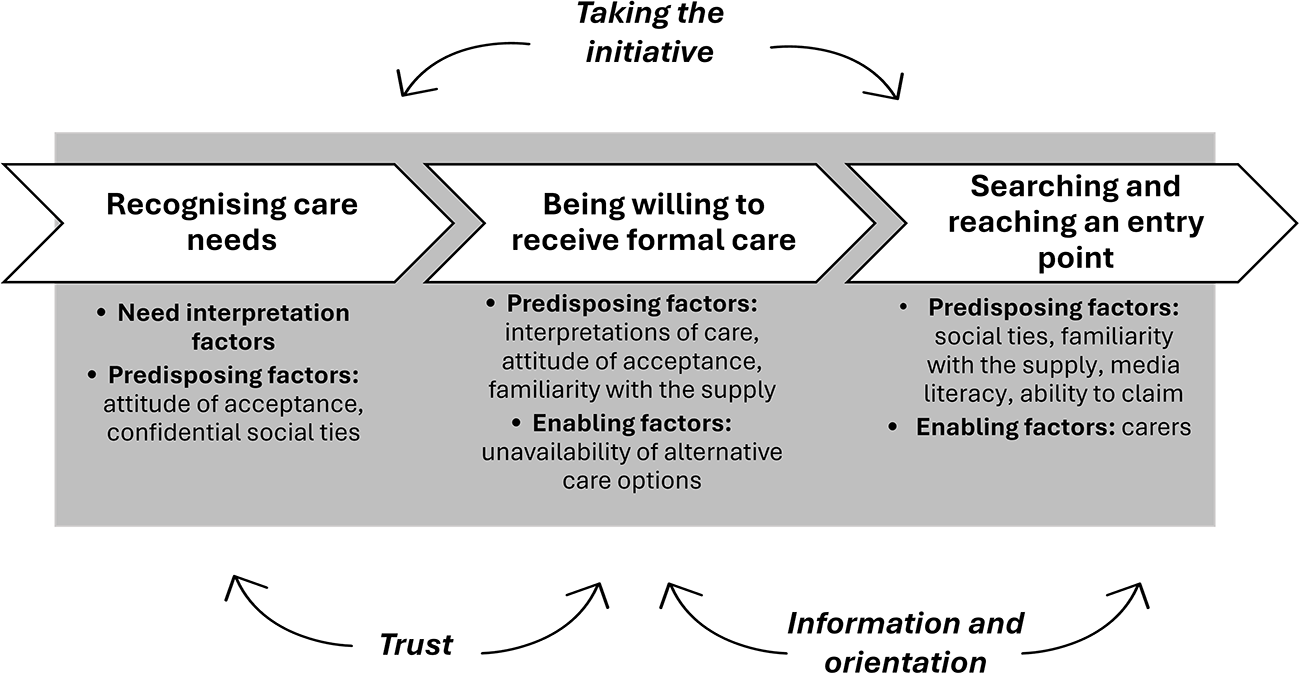
Seeking LTC for older adults within fragmented and poorly coordinated policies presents significant challenges. Evidence shows that various factors contributes to delays, non-utilization and inequality in accessing care. However, the interactions between these factors and care-seeking mechanisms are less understood. This hampers a deeper understanding of how policy in practice could smooth care-seeking trajectories and compensate for those with lower chances of finding their way into LTC policies. This qualitative study addresses these gaps by analysing Italian LTC policies, exemplifying a ‘hard-to-reach’ system in two mid-sized municipalities, combining interviews with care-seekers, practitioners and key observers. Key findings are summarized in Figure 3.
Facilitating factors and mechanisms operating at different stages of care-seeking.
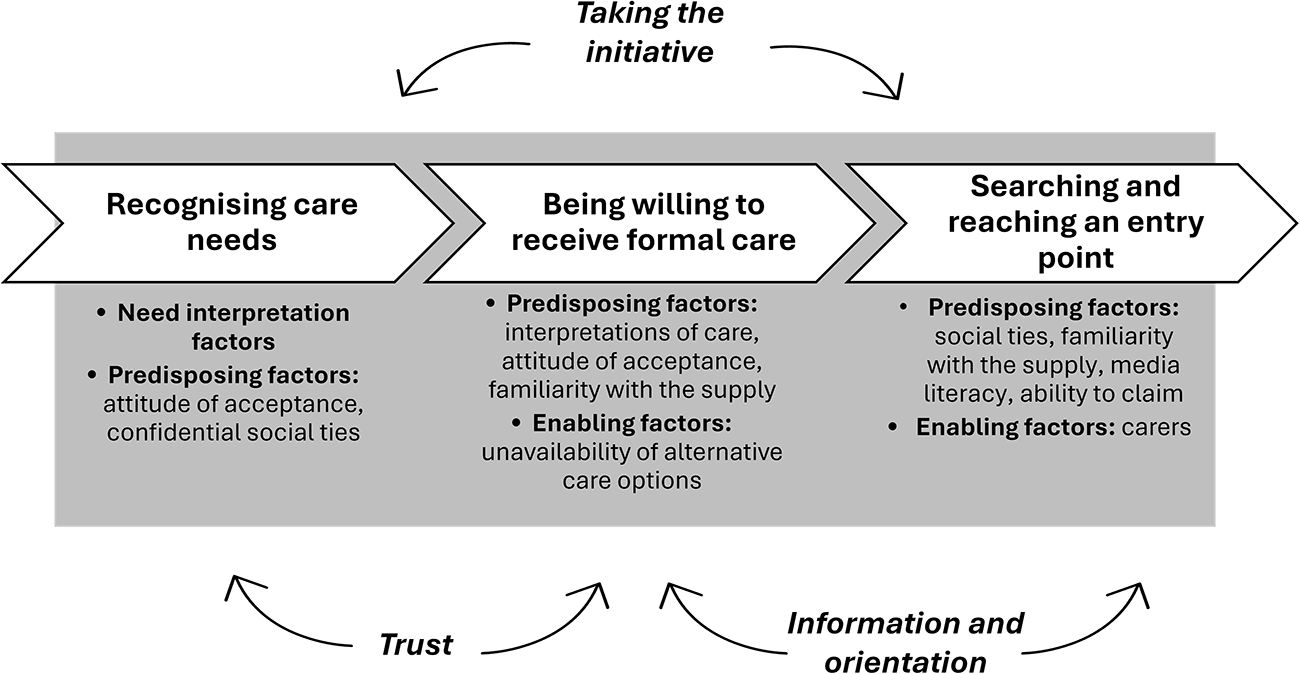
Concerning the first research question, this study found that care-seeking trajectories entail three interrelated steps: recognition of care needs, willingness to become a formal care recipient, and searching for and reaching an entry point. Within this overarching pattern, four care-seeking trajectories have been identified: earlycomers, linear, emergency and diagnostic. This variety of experiences depends on the combination of development of care needs and their interpretation, along with accessibility factors regarding care-seekers and the local policy context. The latter have been described for each key stage of care-seeking trajectories, highlighting commonalities and differences among care-seekers and the two local sites. These findings align with earlier studies on what facilitates and hampers care-seekers (see Introduction), and they stress how seeking care is not just a matter of finding the most appropriate care arrangement but also dealing with the challenges of transitioning into dependency in old age, both for older adults and for family members. Indeed, emotional involvement can be intense for care-seekers as they adjust to changes in their lives and uncertainties about how care needs will develop. The emotional aspect becomes crucial at every step, including considering formal care and seeking information. This partly explains why trust is one of the fundamental mechanisms, as in this transition, care-seekers tend to rely on confidential or trusted ties to discuss their needs and potential care arrangements.
Care-seekers with high predisposing factors, such as a high education level or the ability to claim public support, find it easier to dentify an entry point for LTC policies and access them without intermediaries. In this respect, previous experience in social welfare policies also plays a critical role both in the level of familiarity and awareness of the public offer, as in Baxter and Glendinning (Reference Baxter and Glendinning2011), and in the need for emotional support, as reported by other researchers (Schipper et al. Reference Schipper, Luijkx, Meijboom and Schols2015b).
The findings on the role of carers and other social ties are consistent with previous studies (Courcy and des Rivières‐pigeon Reference Courcy and des Rivières‐Pigeon2021; Hill et al. Reference Hill, Bratlee-Whitaker, Sillner, Brautigam and Mogle2021). However, this study adds a breakdown of their role, demonstrating all potential functions they play in different stages of care-seeking, representing either a predisposing or an enabling factor. Indeed, carers usually raise awareness of a problematic situation, take the initiative to seek information and provide guidance, and they may also make access possible. The results show how LTC policies can support or compensate for these functions when older people have scarce or no informal support if other accessibility factors are also lacking, such as the ability to claim. For instance, community services and outreach strategies have been observed as great facilitators in care-seeking at the early stages of one’s dependency trajectory and for those most at risk of care poverty.
Regarding the third research question, the study detected three mechanisms facilitating care-seeking trajectories: taking the initiative, building trust and combining information with orientation. In particular, it examined how the two local sites promoted and introduced them through formal and informal practices, implementation strategies or specific local policies. As shown by the arrows in Figure 3, each mechanism is particularly effective at two stages of the care-seeking trajectory. This also indicates that they can operate simultaneously or complement each other to facilitate the processes at stake.
First, shifting the initiative away from care-seekers has been shown to counterbalance the shortcomings of a demand-based system according to which the initiative to access LTC policies is up to the care-seekers and where those with lower predisposing and enabling factors are more disadvantaged, as also supported by other studies (Janssens and Marchal Reference Janssens and Marchal2024). However, it could be argued that investing in preventive LTC requires additional resources and potentially increases the demand for care services, especially for early stages of the dependency trajectory, such as help with IADLs and socio-emotional support.
The second policy mechanism identified as facilitating care-seeking trajectories is building trust. This requires recognizing the emotional needs intertwined with the other needs for information and guidance along the seeking process. This is often part of professional practices in health and social care; however, it can be encouraged and promoted if fully acknowledged and incorporated into the service provision.
Third, information provision has been observed to facilitate care-seeking when a general overview of the offer is given along with personalized, procedural and covert information. On the policy side, this mechanism is more supported by structured interventions and service reorganization so care-seekers can be oriented in the local supply. However, poor attention is given to breaking the information asymmetry by providing information that is not directly prompted. This observation matches previous studies on information provision in bureaucratic procedures (Tarshish and Holler Reference Tarshish and Holler2023).
The contributions presented here are both practical and conceptual. On the one hand, the findings provide illustrative examples of policies and practices that can facilitate care-seekers’ approach to formal care solutions by promoting mechanisms that compensate for those with lower accessibility factors. On the other hand, these findings are conceptualized by referencing accessibility factors and facilitating mechanisms, as depicted in Figure 3, also illustrating their connection along the care-seeking trajectory.
Limitations and further research
A limitation of this study is that the findings can be analytically generalized (Yin Reference Yin2018) to other similar cases, but the qualitative methods and the small sample size do not allow for statistical generalization. This is an important issue to further explore for future research as it could also illuminate the relevance of the identified facilitating factors and mechanisms. Also, several questions remain regarding how gender, socio-economic and demographic features pattern along care-seeking trajectories and related accessibility factors, as this issue has only partly emerged.
Furthermore, attention has been paid to what facilitates care-seeking, but much more is needed to disentangle the barriers and their mechanisms. Future research could concentrate more on care-seekers with minimal or no experience of formal care services, to better understand what hinders them or stops them from accessing public care. Attention could also be given to comparing care-seeking in rural and metropolitan areas, to identify the implications of the location on this process and detect what mechanism works better where.
Acknowledgements
I would like to express my gratitude to all the gatekeepers whose support in data collection has been invaluable, as well as to those who generously shared their working hours and experiences by participating in the study. I also thank Professor Cristiano Gori for his insights and guidance.
Financial support
The author acknowledges the support received from the APC initiative of the Department of Sociology and Social Research at the University of Trento. The research project is funded by the Ministry of University and Research through a PhD scholarship in Sociology and Social Research at the University of Trento, Italy.
Competing interests
The author declares no competing interests.

 Open access

