




1 Introduction
Traditionally, languages are divided into fixed-stress and free-stress systems. In the former, stress is fixed on one of the syllables of a word (for instance, initial in Czech, penultimate in Polish, final in Turkish), while in the latter, the position of stress is variable (as in German, Spanish and Italian, among others). Russian is a language with a free lexical stress system. The existence of minimal pairs such as ˈmuka ‘torture’ – muˈka ‘flour’, ˈdorog ‘expensive’ (short form) – doˈrog ‘road (gen pl)’ shows that stress can play an important role in differentiating between words. Though any syllable can potentially bear stress in Russian, its distribution is not completely unconstrained. In some words, stress is fixed on one of the syllables throughout the inflectional paradigm, while in others, stress alternates between one of the stem syllables and the suffix. Depending on the stress pattern (fixed vs. mobile) exhibited by a given word, stems have been standardly analysed as lexically accented or unaccented (Jakobson Reference Jakobson1963, Halle Reference Halle1973, Kiparsky & Halle Reference Kiparsky, Halle and Hyman1977, Zaliznjak Reference Zaliznjak1985); the latter are assumed to receive stress by grammatical default.Footnote 1 However, as there is no agreement as to which stem types are lexically specified as accented, the position of default stress in Russian has been the subject of a long-lasting debate (see e.g. Halle Reference Halle1973, Reference Halle1997, Melvold Reference Melvold1989, Idsardi Reference Idsardi1992, Alderete Reference Alderete1999, Revithiadou Reference Revithiadou1999). The present study contributes to this discussion by looking at regularisation errors made by speakers with surface dyslexia, a syndrome which has been described on the basis of the dual-route model (Coltheart et al. Reference Coltheart, Masterson, Byng, Prior and Riddoch1983, Coltheart et al. Reference Coltheart, Curtis, Atkins and Haller1993) as a pattern characterised by correct reading of regular words and difficulty in reading irregular words. Dual-route models of reading (see Coltheart Reference Coltheart and Underwood1978, Coltheart et al. Reference Coltheart, Rastle, Perry, Langdon and Ziegler2001 and others) postulate that the processes underlying the reading of a word consist of a lexical route and a non-lexical, rule-governed, route.Footnote 2 Errors in surface dyslexia often appear as regularisations, confirming the observation that the application of rules is intact, while the access to lexically specified, idiosyncratic information is disturbed. In this paper we consider this asymmetry and bifurcation between rule-governed and item-governed mechanisms with respect to stress assignment in Russian, drawing upon experimental data from patients suffering from surface dyslexia.
The article is organised as follows. First, in §2.1 we provide background information on the Russian metrical system. Next, §2.2 explains the rationale for using surface dyslexia in the study of metrical systems. §3 formulates hypotheses of the present research and §4 describes the design of the experiment. The results of the first part of the study, which examines disyllabic words from different stress classes, are laid out in §5.1. §5.2 presents the results of the second part of the study, analysing stress errors in trisyllabic and quadrisyllabic words. The theoretical implications of the present findings are discussed in §6, and the principal conclusions are presented in §7.
2 Background
2.1 Russian word stress
Russian has a lexical stress system. Any syllable in a word of more than one syllable can be stressed, e.g. ˈpravilo ‘rule’, avˈtobus ‘bus’, koriˈdor ‘hall’.Footnote 3 In the orthography, stress is not marked by diacritics, and is not recoverable from any other cues. There are numerous minimal pairs where word meaning is differentiated by stress alone, e.g. ˈmuka ‘torture’ – muˈka ‘flour’, ˈruki – ruˈki ‘hand (nom pl – gen sg)’, ˈgolovy – goloˈvy ‘head (nom pl – gen sg)’. Stress can be either fixed on one syllable, or alternate between different syllables in inflectional paradigms. Based on their accentual properties, Russian stems are traditionally divided into the classes in Table I.
Types of nominal stress. Data and percentages are taken from Zaliznjak (Reference Zaliznjak1967), Halle (1973, 1997) and Tornow (Reference Tornow1984). There is also a small number of stems with mobile stress (0.7%) in which stress alternates between the inflectional ending and the final vowel of a stem, e.g. kolbas+ˈa – kolˈbas+ami ‘sausage (NOM SG – INSTR PL)’.
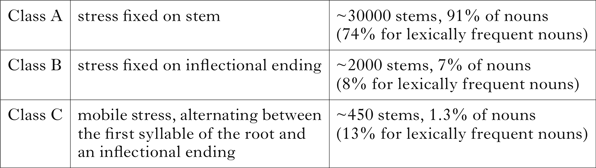
As shown in Table I, the majority of Russian nouns (90%) have stress fixed on one of the stem syllables, with the same vowel stressed in all case forms (Class A). (1) shows examples with stress fixed either on the first or the second syllable throughout the paradigm (referred to here as Classes A1 and A2 respectively); note, however, that other syllables can also be lexically accented, cf. poˈgoda ‘weather’, krokoˈdil ‘crocodile’ and beliberˈda ‘nonsense’, where the same syllable is stressed in all inflectional cases. New words entering the lexicon by borrowing are usually assigned to Class A.
(1)

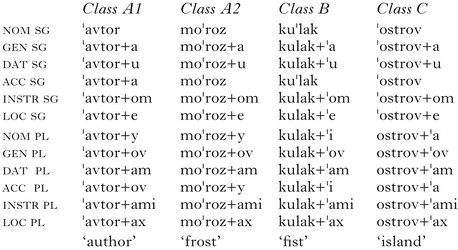
Nominal stems belonging to Class B are stressed on the suffix, or – when there is no inflectional suffix – on the final syllable of the stem, for instance kuˈlak – kulak+ˈu ‘fist (nom sg – dat sg)’. Class B stems constitute 7% of the Russian nouns. In stems with mobile stress (Class C stems), the stem-initial vowel is stressed in the singular, whereas the suffix receives stress in the plural, as in ˈostrov – ˈostrov + u – ostrov+ˈami ‘island (nom sg – dat sg – instr pl)’. Though least numerous (1.3%), this group contains items of very high lexical frequency (13% of all lexically frequent nouns), such as golova ‘head’, ruka ‘hand’ and gorod ‘town’.
It has been assumed in the literature that Russian morphemes (stems and inflections) are either inherently accented or unaccented (Jakobson Reference Jakobson1963, Halle Reference Halle1973, Kiparsky & Halle Reference Kiparsky, Halle and Hyman1977, Zaliznjak Reference Zaliznjak1985). In the former, accent is lexically specified on one of the syllables. In the latter, accent is not encoded in the underlying representation, and surface stress is derived by rule. While Class A stems are unanimously analysed as lexically accented, the representation of accent in Class B and Class C stems has been the subject of much debate (see Table II below). This issue is closely related to the position of default stress in Russian. Different defaults have been postulated, depending on which stems are analysed as lexically unaccented.
Phonological analyses of accented and unaccented stem types.
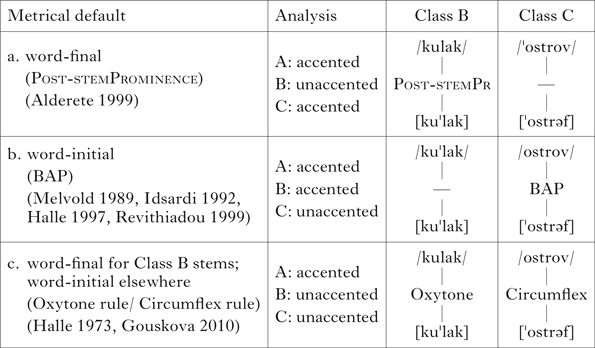
Alderete (Reference Alderete1999) suggests that Class C stems are inherently accented, while Class B stems are not lexically specified for accent.Footnote 4 To derive surface stress in Class B stems, Alderete (Reference Alderete1999: 70) postulates an OT constraint which forces an insertion of accent on the inflectional ending (‘the left edge of the stress prominence must coincide with the right edge of some stem’; Alderete Reference Alderete1999: 70).
In other approaches, Class B stems are analysed as lexically accented (e.g. Melvold Reference Melvold1989, Idsardi Reference Idsardi1992, Halle Reference Halle1997, Revithiadou Reference Revithiadou1999). The underlying accent is assumed to be stored as a floating feature, which surfaces as stress on the post-stem syllable (i.e. the syllable directly following the stem) or, when there is no overt inflectional suffix, on the final syllable of the stem. In this account, Class C stems are lexically unaccented and receive initial stress by the default rule in (2), the Basic Accentuation Principle (Kiparsky & Halle Reference Kiparsky, Halle and Hyman1977).
(2)

Halle (Reference Halle1973) assumes that both Class B and Class C stems are inherently unaccented, and postulates two lexically indexed rules, one placing accent on a vowel directly following the stem in Class B (the Oxytone Rule), and another deriving initial stress in Class C stems (the Circumflex Rule).
Gouskova (Reference Gouskova2010) observes in her study of compounds that secondary stress can only occur in Class A stems, but not in Class B and C stems, as in oboˌronospoˈsobnost’ ‘defence capability’ (oboron- is an accented Class A stem). Based on this, Gouskova argues for the absence of lexical accent in both Class B and C stems, and suggests two phonological defaults in Russian. Initial stress in Class C stems is derived by the constraint Align-L(PWd, Head), while Class B stems are within the purview of a lexically indexed constraint (Align-R(PWd, Head)B), which places stress on the final syllable. We summarise the different analyses in Table II.
As can be seen in Table II, both initial and final defaults have been postulated in the literature. The present study addresses the issue of default stress placement and, indirectly, the theoretical controversies concerning the division into lexically accented and unaccented stem types, by analysing stress errors made by Russian speakers suffering from surface dyslexia. Given that the key symptom of surface dyslexia is impaired access to lexical knowledge and an increased reliance on grammatical rules, we expect the regularisation errors to provide indications of the position of default stress. As the possible default positions of stress suggested in the literature are derived from the theoretical assumptions about the underlying accent specification of a given stem type (see Table II), it can be expected that the findings of the present study will provide more insight into the representations of different stem types in the mental lexicon.
2.2 Surface dyslexia
Surface dyslexia is characterised as an impairment in retrieving idiosyncratic lexical information when reading words (Marshall & Newcombe Reference Marshall and Newcombe1973, Coltheart et al. Reference Coltheart, Masterson, Byng, Prior and Riddoch1983). Typically, a person with surface dyslexia can read regularly spelled words, but experiences difficulties in reading irregularly spelled words. The concept of surface dyslexia is strongly related to the dual-route model of reading (e.g. Coltheart et al. Reference Coltheart, Curtis, Atkins and Haller1993, Coltheart et al. Reference Coltheart, Rastle, Perry, Langdon and Ziegler2001), according to which successful reading requires access both to holistic visual word form/phonological form representations via the lexical route and to grapheme–phoneme-correspondence rules via the non-lexical route. It is assumed that form-based knowledge of known words can be activated if the orthographic input lexicon comprises holistic visual word representations that are associated with the phonological word representations in the phonological output lexicon (e.g. Gvion & Friedmann Reference Gvion and Friedmann2016). Words with irregular grapheme–phoneme correspondences have to be read via the lexical route, where irregular links between visual and phonological forms are stored. The non-lexical route, in contrast to the lexical route, allows new words to be read on the basis of regular correspondences between graphemes and phonemes.
We note that the dual-route model focuses on segmental properties of the phonological form, to the neglect of prosodic properties. With regard to the prosodic realisation of a written word, it can be assumed that word-stress information needs to be represented in the word's phonological form if the pattern is not predictable, while predictable stress can be assigned by default (Levelt Reference Levelt2001). This distinction corresponds to the traditional assumptions of generative linguistic theory, which postulates that only non-redundant phonological information is coded in the mental lexicon (Chomsky & Halle Reference Chomsky and Halle1968).Footnote 5 Models of production often assume that the production of phonology starts from the sequence of phonemes associated with a lexical entry. Word-level prosody, if relevant, is sometimes treated as a diacritic marker alone, although Levelt (Reference Levelt1989: 182) notes that the ‘syllable and accent structure’ of words to be produced needs to be included in the lexical entry. In Levelt's model, prosody is encoded by a mixture of prosodic structure (more specifically, categories of syllables and words) and diacritic stress markers; see also Roelofs & Meyer (Reference Roelofs and Meyer1998). Furthermore, models of production often place the assignment of prosodic properties onto a late stage of the production mechanism (as in the weaver++ model; Roelofs Reference Roelofs1997, Levelt et al. Reference Levelt, Roelofs and Meyer1999). According to Levelt et al., predictable or regular word stress is assigned by default, whereas idiosyncratic word stress is lexically specified by means of diacritic stress markers activated during the process of phonological encoding. For Germanic languages like Dutch, German and English, Levelt et al. classify word-initial stress as the default stress pattern, resulting in lexical specification of non-initial stress.
According to the dual-route model, competent readers make use of both routes: known and familiar words are read via the lexical route, and new or rarely read words via the non-lexical one. In surface dyslexia, however, the lexical route is less accessible, leading to the dominance of the non-lexical route, with the result that words are read with reduced speed and accuracy, and are recoded on the basis of orthographic rules. For instance, Janßen & Domahs (Reference Janßen and Domahs2008) report the occurrence of segmental regularisation errors in the speech of a German patient, who substituted an irregular pronunciation of the French loanword Garage [gaˈraːʒə] with the regular pronunciation *[gaˈraːgə], i.e. the foreign segment [ʒ] is replaced by the native segment [g].
Previous reports on single cases of surface dyslexia show that individuals produce not only segmental regularisation errors, but also word-stress regularisations (Marshall & Newcombe Reference Marshall and Newcombe1973, Miceli & Caramazza Reference Miceli and Caramazza1993, Galante et al. Reference Galante, Tralli, Zuffi and Avanzi2000, Howard & Smith Reference Howard and Smith2002, Laganaro et al. Reference Laganaro, Vacheresse and Frauenfelder2002, Janßen & Domahs Reference Janßen and Domahs2008). For example, Janßen & Domahs observe a stress shift from the antepenultimate syllable [ˈalibi] ‘alibi’ to the penultimate syllable *[aˈlibi] in the production of a German dyslexic. This can be classified as a prosodic regularisation error, because German words with final open syllables tend be stressed on the penult (Janßen Reference Janßen2003, Domahs et al. Reference Domahs, Wiese, Bornkessel-Schlesewsky and Schlesewsky2008, Domahs et al. Reference Domahs, Plag and Carroll2014). In case studies of speakers with surface dyslexia, words with irregular stress are more prone to be incorrectly stressed than words with regular stress. For example, a study of lexical stress assignment in Italian reveals that words with irregular stress on the antepenultimate syllable were most prone to errors, and frequently showed a shift of stress to a regular penultimate position (Marshall & Newcombe Reference Marshall and Newcombe1973, Miceli & Caramazza Reference Miceli and Caramazza1993).
Word frequency plays a crucial role in lexical processing, and there are well-documented differences in lexical retrieval between high- and low-frequency words (Forster & Chambers Reference Forster and Chambers1973). Frequency effects leading to better performance for high-frequency than for low-frequency words are expected to occur in individuals with impaired access to the phonological output lexicon (Gvion & Friedmann Reference Gvion and Friedmann2016).
Another factor which has been shown to affect the reading performance of both unimpaired speakers and individuals with surface dyslexia is the size of the orthographic neighbourhood, defined as the number of words with the same stress pattern and containing the same final cluster of graphemes (Colombo Reference Colombo1992, Kelly et al. Reference Kelly, Morris and Verrekia1998, Burani & Arduino Reference Burani and Arduino2004, Arciuli & Cupples Reference Arciuli and Cupples2006, Arciuli et al. Reference Arciuli, Monaghan and Seva2010). For example, the study of Paizi et al. (Reference Paizi, Zoccolotti and Burani2011) showed that typically developing dyslexic Italian readers assigned stress more accurately to polysyllabic words with a large number of stress friends.Footnote 6 For Russian, Jouravlev & Lupker (Reference Jouravlev and Lupker2014, Reference Jouravlev and Lupker2015a, Reference Jouravlev and Lupkerb) found that disyllabic words with consistent stress neighbourhood enjoyed a processing advantage both in reading and in lexical decision tasks performed by unimpaired speakers. The effect of stress neighbourhood has not been investigated for Russian dyslexic readers. Based on the findings of Paizi et al. (Reference Paizi, Zoccolotti and Burani2011) for Italian, it is expected that the size of the stress neighbourhood will affect the performance of the participants in the present experiment.
Given the assumptions that idiosyncratic stress has to be specified in the mental lexicon and that the occurrence of regularisations is the primary symptom of surface dyslexia, the investigation of regularisation errors is an interesting test case for the study of certain aspects of the Russian stress system. It is expected that the participants in the present study will rely on non-lexical cues in stress assignment rather than retrieving accent from the lexicon, and will consequently be likely to produce more errors in accented stems than in lexically unaccented stems. In addition, the position of incorrect stress in the speech of speakers with surface dyslexia is expected to reflect default stress placement in Russian.
3 Research questions
The aim of the current study is to investigate stress errors in the speech of speakers with surface dyslexia, an impairment affecting phonological representations, but not regular grapheme–phoneme correspondence rules. Specifically, we test the four hypotheses detailed below.
3.1 Default stress position (Hypothesis 1)
We expected that reduced access to lexical representations would result in the overapplication of a regular rule of stress assignment. Thus, stress shifts to the initial syllable would suggest that initial stress is the default pattern (as assumed in the models listed in Table IIb). Conversely, stress shifts to the final syllable would point to final stress as the default stress position in Russian (as proposed by Alderete Reference Alderete1999; see Table IIa).Footnote 7
3.2 Accented/unaccented stem types (Hypothesis 2)
We also predicted that the differences in the underlying accent specifications might be reflected in the differences in error rates between stem types. If the theoretical division into lexically accented and unaccented stems is cognitively grounded, then accented stems (A) should be more readily mispronounced than unaccented stems (B and/or C). Fewer errors are expected in unaccented stems, because their stress is assigned without lexical look-up. If there is no differences between Class A, B and C stems, this would indicate that accent is present in the lexical encoding of all stem types.
Notice that this hypothesis predicts that participants will have increased difficulty with Class A words, because they are lexically accented. However, either Class A1 or Class A2 also displays the default stress pattern.Footnote 8 So, although participants would theoretically have increased difficulty with Class A, this would only apply to A1 or A2, whichever does not contain the default stress pattern. Therefore, depending on the position of the default stress, we expect a difference either between A1 and C stems or between A2 and B stems.
3.3 Frequency and stress neighbourhood (Hypotheses 3 and 4)
Based on previous research on aphasic speech, we expected that the performance of participants in the present experiment would be affected by lexical frequency and spelling-to-stress consistency. High-frequency lexical items were expected to be less error-prone than low-frequency lexical items (Hypothesis 3). Furthermore, fewer errors were expected to occur in words with a consistent orthographic neighbourhood (Hypothesis 4).
4 Methods
4.1 Participants
In Russian clinical settings, acquired dyslexia is traditionally regarded as part of a general aphasia syndrome (Luria Reference Luria1973). From this perspective, a single neuropsychological factor underlying a patient's deficit can manifest itself in different cognitive domains and in different linguistic modalities (comprehension, production, reading, writing). Given that surface dyslexia is frequently associated with Wernicke's aphasia (Tonkonogy & Puente Reference Tonkonogy and Puente2009), we targeted individuals with sensory aphasia, in terms of Luria's (Reference Luria1966) classification. Sensory aphasia is analogous to Wernicke's aphasia in the classification proposed by the Boston Group (Benson & Geschwind Reference Benson, Geschwind, Baker and Baker1971); it is characterised by impairment of phonological discrimination, leading to a comprehension deficit. Alienation of word meanings (when an individual is able to repeat a word, but does not understand its meaning) is a frequent symptom of sensory aphasia (Luria Reference Luria1970) and, in the written domain, we hypothesised, may interfere with the lexical reading route. However, since not every individual with sensory aphasia necessarily has surface dyslexia, we focused on those with regularisation errors documented in case histories.
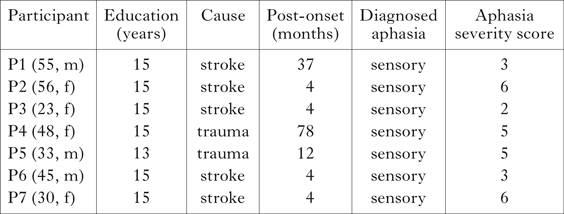
Seven such individuals identified at the Centre for Speech Pathology and Neurorehabilitation were included in the study. All were native speakers of Russian, premorbidly right-handed, and had normal (or corrected to normal) hearing and vision. All participants had suffered a left hemisphere stroke or traumatic injury. Table III summarises the participants’ demographic and clinical information. They were tested at the Centre, where they received a six-week intensive rehabilitation course. They gave informed consent for participation in the study. Aphasia types were identified in terms of Luria's classification (Luria Reference Luria1966, Akhutina Reference Akhutina2016) by certified clinical neuropsychologists and speech-language pathologists at the Centre, based on the results of extensive neuropsychological examinations. All participants were diagnosed with sensory aphasia, ranging from mild-to-moderate to very severe, as measured by the Assessment of Speech in Aphasia (Tsvetkova et al. Reference Tsvetkova, Akhutina and Pylaeva1981), a tool for quantitative speech and language assessment in Russian.
Demographic and clinical information about participants. Aphasia severity scores range from 1 (mild) to 6 (very severe).
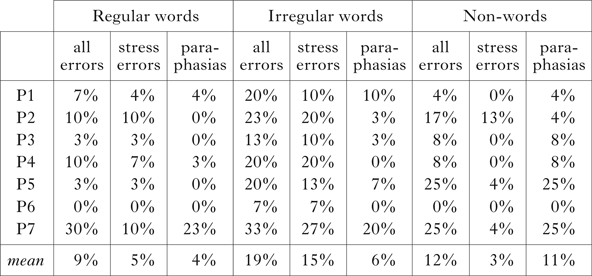
The participants were also tested with two tests of the Russian adaptation of the ‘Psycholinguistic Assessments of Language Processing in Aphasia’ (PALPA; Kay et al. Reference Kay, Lesser and Coltheart1992, Hallows et al. Reference Hallows, Trofimova, Marshall and Zychkova-Bortolussi2005): reading of words with regular/irregular spelling-to-sound correspondence, and reading of non-words (see Table IV for the results). All made more errors while reading irregular words than regular words. The most frequent errors in reading irregular words were regularisations and stress shift (e.g. reading solntse ‘sun’ as *[ˈsolntsə] instead of [ˈsontsə] or ma šina ‘car’ as *[ˈmaʂᵻnə] instead of [mɐˈʂᵻnə]). Interestingly, most participants also made stress shifts in reading regular words (e.g. reading u čenik ‘pupil’ as *[uˈʧenik] instead of [uʧɪˈnik]), and three participants made regularisation errors in non-words by not devoicing the final consonant (e.g. leb as *[leb] instead of [lep]). Phonological paraphasias (substitutions, omissions, additions or transpositions of phonemes with at least half of the word produced correctly) were numerous overall, and constituted the majority of errors in the reading of regular words and non-words. While phonological paraphasias are typical of the sensory aphasia syndrome in general, regularisations and stress shifts, which were the most frequent error types in the reading of irregular words, but also occurred in regular and non-words, signalled at least partial reliance on the non-lexical reading route in the individuals tested. The participants’ tendency to commit regularisation errors, which is characteristic of the non-lexical reading route, encouraged us to run the main experiment with this cohort, and to investigate their regularisation patterns in the stress domain.
Participants' performance on PALPA. For P7, the percentages of the error types do not add up to the percentage of all errors, because of mixed errors.
4.2 Stimuli
The experiment described here aims to determine the position of metrical default in Russian by investigating regularisation errors made by participants with acquired surface dyslexia. In addition, it aims to find out whether there are differences in processing stress information between the different classes (A, B or C). To make the results comparable to previous studies on stress in Russian (Mołczanow et al. Reference Mołczanow, Domahs, Knaus and Wiese2013, Jouravlev & Lupker Reference Jouravlev and Lupker2015a, Reference Jouravlev and Lupkerb), and to minimise the possible effects of differences in syllable structure and grammatical categories, we limited the set of stimuli to disyllabic masculine consonant-final nouns. The inclusion of consonant-final nouns is also motivated by the fact that Russian nominal stems are canonically consonant-final (Čurganova Reference Čurganova1973). The list consisted of 128 nouns, with similar numbers of items representing each of the classes. The list of the items is provided in Appendix A.Footnote 9 In addition, the list contained 36 monosyllabic filler items and 120 trisyllabic and quadrisyllabic words, which were analysed separately, as explained later in this section.
All disyllabic nouns appeared in the nominative singular form, and, as noted above, ended in a consonant. Prior research has shown that morphological information (the presence of affixes) is one of the main cues used by readers in stressing disyllabic words in English (Rastle & Coltheart Reference Rastle and Coltheart2000). In Russian, suffixes are like stems in that they can either attract or repel stress, and so can be analysed as accented or unaccented (Melvold Reference Melvold1989). Thus, in order to investigate the accentual properties of stems, consonant-final rather than vowel-final words were included in the present study, because a word-final vowel in Russian usually constitutes an inflectional suffix. The nouns used in the current experiment end in a consonant because they have a nominative singular ending represented by a zero affix. Also, using only one syllable type (word-final closed syllables vs. open syllables) helps to avoid possible effects of syllable structure on stress placement. A previous corpus study of Russian showed that stress pattern was probabilistically associated with grammatical category (Jouravlev & Lupker Reference Jouravlev and Lupker2014, Reference Jouravlev and Lupker2015a, Reference Jouravlev and Lupkerb). To avoid the possible influence of grammatical category on the outcome of the experiment, only nouns were included.
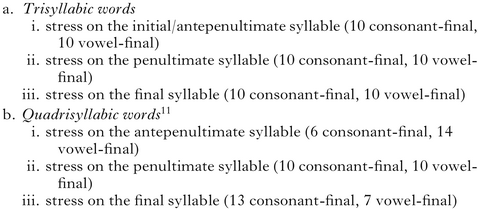
As regularisation errors observed in consonant-final disyllabic words were not expected to yield conclusive evidence as to the position of metrical default in Russian, the reading list was augmented with 120 trisyllabic and quadrisyllabic items ending in either a consonant or a vowel (see Appendix A: §2). Test items consisted of masculine, feminine and neuter nouns ending in open and closed syllables; details are shown in (3).Footnote 10
(3)
The stress position in the words used in the experiment was based on a Russian pronunciation dictionary (Avanesov & Ožegov Reference Avanesov and Ožegov1959). The test items were checked and matched for frequency using the Wortschatz Universität Leipzig database.Footnote 12 To minimise the effects of word frequency, items of very low and very high frequency were not used in the experiment. The majority of disyllabics used in the present study have word frequencies ranging from class 8 to class 15. Where possible, quadruples were formed, with one word from each stem class, with matched frequencies. Likewise, the trisyllabic and quadrisyllabic words were matched for frequency: each condition was represented by words from different frequency classes, ranging from 12 to 18.Footnote 13
As mentioned in §2.2, previous research has demonstrated that stress assignment in reading tasks is affected by the size of the stress neighbourhood (e.g. Colombo Reference Colombo1992, Burani & Arduino Reference Burani and Arduino2004, Arciuli & Cupples Reference Arciuli and Cupples2006, Jouravlev & Lupker Reference Jouravlev and Lupker2014). Stress neighbourhood of the items used in the present experiment was calculated employing a dictionary list extracted from Wawrzyńczyk et al. (Reference Wawrzyńczyk, Kuratczyk, Małek and Bartwicka2007).Footnote 14 The list included 37,388 words (two to four syllables), without proper nouns and abbreviations (see Orzechowska et al. Reference Orzechowska, Mołczanow and Jankowski2018 for further details). Spelling–stress consistency was calculated using a method employed in previous studies (Treiman et al. Reference Treiman, Mullennix, Bijeljac-Babic and Daylene Richmond-Welty1995, Jouravlev & Lupker Reference Jouravlev and Lupker2014, Paizi et al. Reference Paizi, Zoccolotti and Burani2011). Type consistency was measured for each word by dividing the number of stress friends by the number of all words sharing the same orthographic ending. For disyllabics, the suffix was constituted by the vowel of the second syllable and all following consonants. For trisyllabics and quadrisyllabics, the suffix consisted of the vowel in the penultimate syllable and the following syllable (V(C)V for vowel-final words, and VC(C)VC(C) for consonant-final words).Footnote 15 Words with the same spelling which differed only in the position of stress (e.g. звоˈ нок ‘ring (n)’ – ˈзвонок ‘loud (adj)’ (short form), as well as words with variable pronunciation (e.g. ˈ творог ~ твоˈ рог ‘cottage cheese’), were excluded from the calculation.Footnote 16 Items with a low proportion of stress friends (≤0.5) were regarded as having inconsistent spelling. Of the 128 disyllabic words used in the study, 27% of items had inconsistently stressed suffixes. In trisyllabics and quadrisyllabics, 23% (seven consonant-final and 21 vowel-final words) out of 120 items had endings with more stress enemies than friends.
The test with disyllabic words was conducted with seven participants, and the data on trisyllabic and quadrisyllabic words were collected from six participants (P1, P3–7) (see §4.1). Only stress errors were analysed in the present study. Other errors (including literal paraphasias, regularisations and segmental insertions/deletions) were not considered. Words which contained such errors but had a correct stress pattern were coded as ‘accurate’. Words which were pronounced syllable by syllable were excluded from further analysis (2.4% of all items). The productions also contained false starts and self-corrections. In the case of self-corrections, the initial erroneous production was included in the analysis. In sum, 890 disyllabic and 688 trisyllabic and quadrisyllabic items were analysed in the statistical tests.
4.3 Procedure
Stimuli were presented within a list of isolated words printed in 13-point Arial typeface, in a randomised order to minimise simple overapplication of the preceding stress pattern.Footnote 17 The participants were instructed to read the words aloud. The stimuli were also read by three Russian native speakers who had no speech impairments, and were naive about the purpose of the experiment. Two of these participants did not produce any stress errors, while one made one mistake, which was immediately self-corrected.
The responses were recorded and transcribed. Two phonetically trained native listeners rated the responses as ‘correct’ or ‘incorrect’. In 16 words (1% of all tested items), there was no interrater agreement, and a third listener was asked to rate these cases.
5 Results
5.1 Disyllabic words
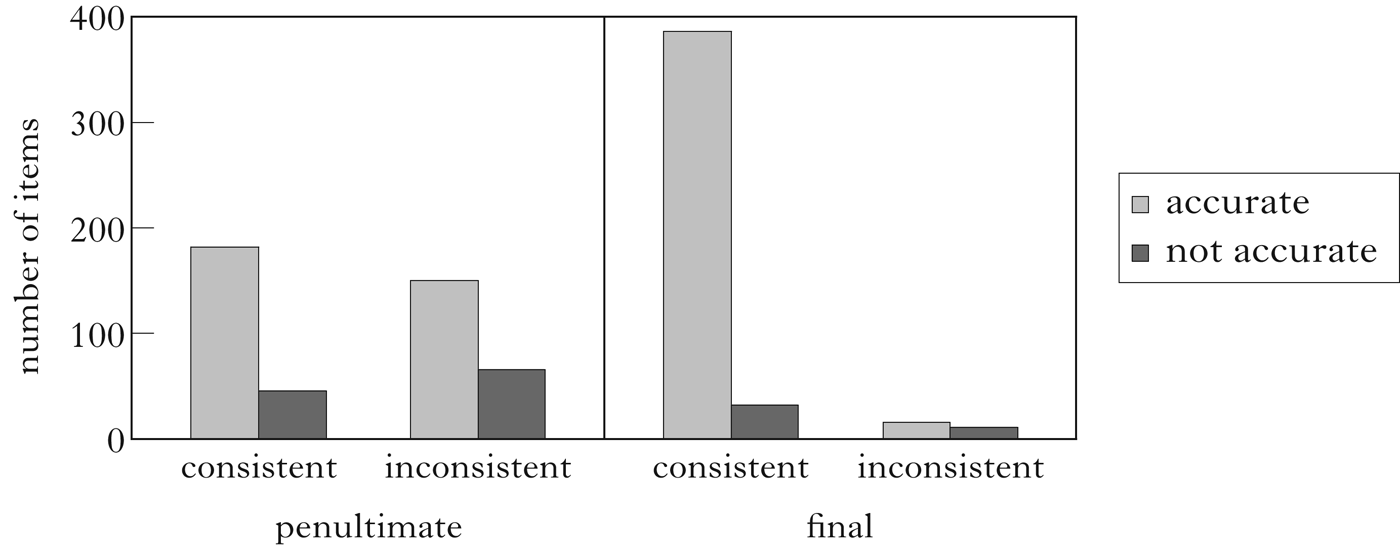
In general, the participants in the study produced incorrect stress patterns in 19% of all items. In disyllabic words, 17.5% of words were incorrectly stressed. In order to verify Hypothesis 1, concerning the default position of stress (see §3.1), we calculated the proportion of mispronounced words having incorrect stress on the initial or final syllable. The majority of errors consisted of shifts from the first to the second syllable (112 of 155 incorrectly stressed items; 72%), with more shifts taking place in words with inconsistent spelling, i.e. in words with more stress enemies than friends (see Fig. 1). Such items constituted 27% of disyllabic words. A binomial test with a hypothesised frequency of 50%, comparing the numbers of consistently and inconsistently spelled words, revealed that the number of consistently stressed words is significantly higher than the number of words with inconsistent spelling (z = 5.038, p < 0.001).
Error rates in words stressed on the penultimate and final syllables with consistent and inconsistent stress neighbourhoods.
In addition, an analysis of the distribution of errors across the four different stem types was performed, to address the predictions of Hypothesis 2 (§3.2). Figure 2 presents an overview of the number of correctly and incorrectly stressed words for each stem type. (Detailed information on the number of incorrectly stressed words per stem type for each participant is provided in Appendix C.)
Error rates across stem types with consistent and inconsistent stress neighbourhoods. The stem types are as in (1).
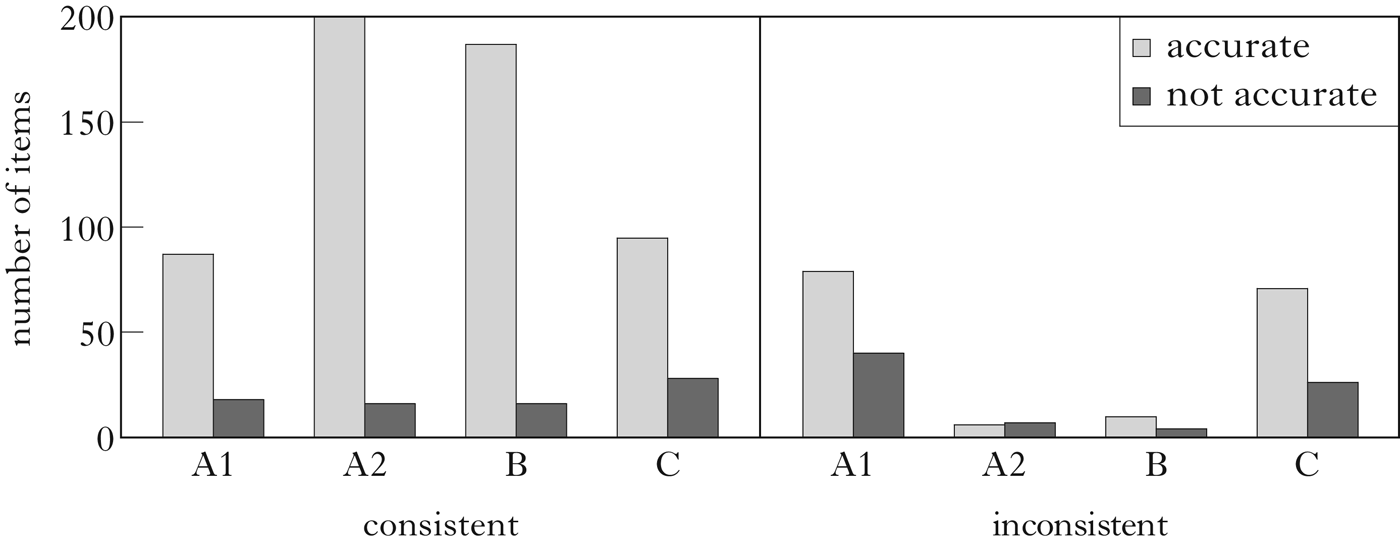
The data were analysed using generalised mixed-effects logistic regression models (e.g. Baayen Reference Baayen2008, Baayen et al. Reference Baayen, Davidson and Bates2008). The advantage of mixed-effects regression analysis is its ability to control for item and participant variation. In addition, it has proved successful in dealing with unbalanced datasets. The analysis was performed using the R package lme4 (Bates et al. Reference Bates, Maechler, Bolker and Walker2015). Binomial dependent variable accuracy was coded (‘yes’ for correct responses ; ‘no’ for incorrect responses). Participants and items were included as a random effect. To avoid the risk of overfitting, a set of logistic regressions was run, and the competing models were compared in terms of likelihood-ratio tests (using the maximum likelihood method), and simplified in accordance with standard stepwise procedure. The goodness of fit of a model was determined on the basis of the Akaike Information Criterion (AIC), the Bayesian Information Criterion (BIC) and the coefficient of multiple determination for multiple regression (R 2). Preference was given to a model which minimised AIC and BIC and maximised R 2. The fixed factors included Stress position, Stem type, Neighbourhood and Frequency. The choice of these factors was motivated by the research questions of the current study, formulated in §3 above. The fixed term Condition had four levels: stress fixed on the first syllable (A1), stress fixed on the second syllable (A2), stress on the ending (B) and mobile stress (C); the fixed term Stress position had two levels: trochaic stress and iambic stress; the fixed term Neighbourhood had two levels: consistent (more stress friends than enemies) and inconsistent (more stress enemies than friends). The baseline was defined as ‘yes’ for Accuracy, ‘A1’ for Stem type, ‘final’ for Stress position and ‘consistent’ for Neighbourhood. The choice of this baseline was motivated by the fact that initially stressed A1 and C stem types with inconsistent stress neighbourhoods were particularly prone to mispronunciations (see Figs 1 and 2).
The initial full model was built using the fixed terms Stem type, Stress position, Neighbourhood and Frequency. The results did not reveal a significant effect for Stem type, and model comparison showed that the factor Stem type did not contribute to the model's goodness of fit. The final simplified model was fitted with the predictors Stress position, Neighbourhood, Frequency and the interaction between the factors Stress position and Neighbourhood. The simplified final model fit the data better than the full model (full model: df = 8, AIC = 724.07, BIC = 762.40, R 2 = 0.2487; final model: df = 7, AIC = 718.15, BIC = 751.69, R 2 = 0.2473). As shown in Table V, the results of the final model reveal main effects of Stress position, Neighbourhood and the interaction between the factors Stress position and Neighbourhood. In addition, a weak effect of the factor Frequency was observed, indicating that less frequent items were more often assigned incorrect stress.
Mixed-effects regression model: bisyllabic words.

To conclude, the three factors which turn out to be significant predictors of stress assignment in the dyslexic speakers are the position of surface stress, the size of the orthographic neighbourhood and, to a lesser extent, frequency. More incorrect responses were observed for words with trochaic stress and inconsistent neighbourhood. Frequency played a marginal role, with less frequent words being more prone to mispronunciation. In addition, the interaction of stress neighbourhood and stress position shows that inconsistent stress neighbourhood has a greater impact on items with final stress than on items with surface initial stress.
5.2 Polysyllabic words
The analysis of error data in §5.1 revealed a significant effect of stress position on the accuracy of prosodic production: the majority of errors involved incorrect stress on the final syllable. However, these data do not allow us to draw valid conclusions about the default stress position in Russian (cf. Hypothesis 1). First, given that stress can only move to one other syllable in a disyllabic word, it is not clear whether words containing more than two syllables would follow the same pattern. Second, it is well known that syllable structure plays a major role in stress assignment in different languages. All the disyllabic items ended in a consonant, so it is possible that the incorrect iambic stress was due to the presence of a coda in the second syllable. The next part of the study addresses these issues by investigating longer words which ended either in a consonant or in a vowel.
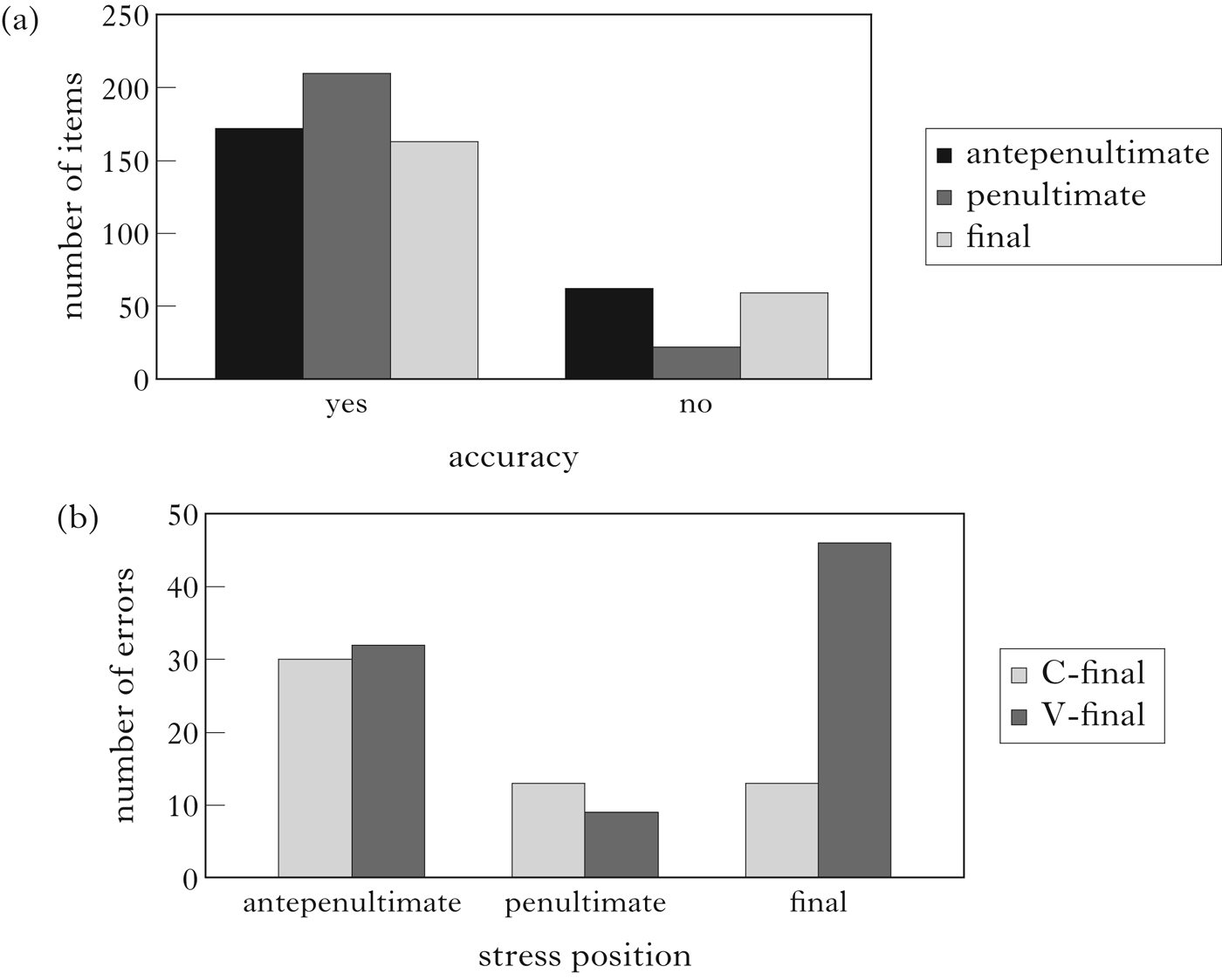
In general, the results show that words of more than two syllables were incorrectly stressed in 21% of all cases (143 errors; see Table IX in Appendix C for details). As illustrated by Fig. 3a, participants were more accurate in the production of words with penultimate stress (16% of all errors) than in the production of those with final stress (41%) and antepenultimate stress (43%). Figure 3b shows that most errors involved shifts to the penultimate syllable (69% of all errors), more so in vowel-final words than in consonant-final words (detailed information on the number of errors is provided in Table IX).
(a) Error rates in trisyllabic and quadrisyllabic words; (b) error distribution in and consonant-final and vowel-final words.
The analysis of stress errors in disyllabic words reveals that stress assignment is determined by orthographic neighbourhood, as well as by stress position. A post hoc measure of spelling-to-stress consistency showed that 23% (seven consonant-final and 21 vowel-final words) of trisyllabic and quadrisyllabic items used in the present experiment had endings with more stress enemies than friends. Among words with consistently spelled endings, 25 (16 consonant-final, 9 vowel-final) out of 92 items had unique endings. That is, a combination of graphemes representing the vowel of the penultimate syllable and the final syllable was present only in one of the words, e.g. обус in автобус ‘bus’, адня in западня ‘ambush’. Figure 4 provides a graphic presentation of the distribution of errors in words with different neighbourhood types.
Error distribution in words with consistent and inconsistent stress neighbourhoods. ‘Unique’ refers to words with uniquely spelled suffixes.

In order to find out which factors determine stress assignment in trisyllabic and quadrisyllabic words, a set of logistic regressions was run, and the competing models were compared and simplified in accordance with standard stepwise procedure. We used AIC, BIC and R 2 to choose the best model (see §5.1 above for details). Speakers and items were entered into the final model as random variables and the accuracy of stress realisation was included as a dependent factor. For the fixed factors, we considered the following potential predictors of stress placement: Stress position (penult, antepenult, final), Final segment (V, C), Word length (3 syllables, 4 syllables), Neighbourhood (consistent, inconsistent, unique) and Frequency. Due to the collinearity of the factors Neighbourhood and Final segment, one of them had to be excluded from the final model. To find out which of these factors determine the position of the incorrect stress, a set of models was built in which either Final segment or Neighbourhood was combined with the factors Stress position, Final segment, Word length and Frequency. The baseline was defined as accurate responses for consonant-final trisyllabic words with final stress and consistent spelling. The results of the analyses including four factors revealed that Frequency and Word length did not consistently contribute to the model.Footnote 18 The final model was fitted with the predictors Stress position and Final segment and the interaction of Stress position and Final segment (df = 8, AIC = 582.20, BIC = 618.47, R 2 = 0.3128). This model fitted the data better than both the model including Frequency and Word length (df = 8, AIC = 602.16, BIC = 638.43, R 2 = 0.3118) and the model with the fixed term Neighbourhood (df = 9, AIC = 595.67, BIC = 636.47, R 2 = 0.3114).
The results show main effects for the factors Stress position, Final segment and the interaction between Stress position and Final segment (see Table VI). The participants produced significantly more errors in words with antepenultimate stress than in words with final stress. Also, vowel-final words were mispronounced more often than consonant-final words. The significant effect on the interaction between Stress position and Final segment indicates that participants produced fewer errors in vowel-final words with penultimate stress and antepenultimate stress than in vowel-final words stressed on the final syllable.
Mixed-effects regression model: trisyllabic and quadrisyllabic words.
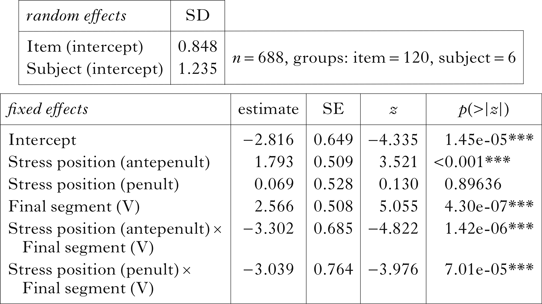
The model presented above did not assess the difference in the error rates between words with antepenultimate stress and words with penultimate stress. In order to fill this gap, we re-ran the analysis, with the baseline defined as accurate responses for consonant-final trisyllabic words with penultimate stress. The results showed that the difference in the error rates between words stressed on the antepenultimate syllable and words stressed on the penultimate syllable was statistically significant (z = 3.355, p < 0.01). This analysis did not reveal a significant effect for the interaction between the position of stress and the final segment (z = ―0.365, p = 0.71).
Finally, notice that low R 2 values indicate that the regression models which were performed are capable of explaining around 25% and 31% of the variation present in disyllabic and longer words respectively. Thus there are still other factors (for instance idiosyncrasies) contributing to stress placement that were not included in the models.
6 Discussion
6.1 Default stress position
This study has aimed to contribute to the debate on the position of default stress in Russian by investigating stress errors produced by speakers diagnosed with acquired surface dyslexia. The statistical analysis of the distribution of errors in disyllabic consonant-final nouns demonstrated that initially stressed words (Classes A1 and C) were more error-prone than finally stressed words (Classes A2 and B).Footnote 19 This finding points to final stress as the metrical default in Russian (cf. Hypothesis 1 in §3.1), thus supporting the theoretical model developed by Alderete (Reference Alderete1999) (see Table IIa), and contradicting the proposals of Melvold (Reference Melvold1989), Idsardi (Reference Idsardi1992), Halle (Reference Halle1997) and Revithiadou (Reference Revithiadou1999) (Table IIb). The present findings are not incompatible with the models positing two default stress patterns (word-final for Class B and word-initial for all other lexically unaccented words) in Table IIc. However, in contrast to these models, our results point to Class B as following a general (word-final) pattern, and Class C stems as having a prespecified word-initial accent. In addition, the analysis of stress errors in polysyllabics revealed a statistically significant difference between consonant-final and vowel-final words: stress was incorrectly assigned to the penultimate syllable in vowel-final words, whereas consonant-final words tended to be stressed on the final syllable.
Previous research has demonstrated that some languages with lexical stress systems exhibit statistically based stress regularities which are often used to formulate generalisations about non-lexical mechanisms of stress assignment. In English, for example, around 83% of disyllabic words are stressed on the first syllable (Baayen et al. Reference Baayen, Piepenbrock and Gulikers1993), so English speakers are likely to treat trochees as a default pattern. However, no such regularity exists in Russian. While a corpus study of the distribution of metrical patterns in Russian disyllabic words revealed a strong preference for initially stressed adjectives (80%) and a weak preference for final stress in verbs (60%), no regular stress pattern was found for disyllabic nouns (Jouravlev & Lupker Reference Jouravlev and Lupker2014). Overall, there is only a slightly higher probability of a trochaic stress pattern than an iambic pattern (55% vs. 45%), and behavioural experiments on the production of disyllabic words showed a processing advantage for initially stressed adjectives, and no differences in the processing of initially vs. finally stressed verbs and nouns (Jouravlev & Lupker Reference Jouravlev and Lupker2014).
The findings of the current experiment are not consistent with the results achieved in the event-related potentials (ERP) experiment of Mołczanow et al. (Reference Mołczanow, Domahs, Knaus and Wiese2013). In this study, words incorrectly stressed on the first and the second syllable induced asymmetric brain responses, and the results indicated a processing advantage for initially stressed disyllabic words. This finding was interpreted to constitute evidence for the syllabic trochee as the default foot type in Russian. However, it should be borne in mind that the asymmetric ERP responses to initially and finally ill-stressed words might be due to the rhythmical structure of the sentence. Specifically, the stimuli appeared in the carrier sentence after the word ˈslovo, with a stressed syllable followed by a weak syllable: kogˈda on napiˈsal ˈslovo … vtoˈroj ˈraz, zazvoˈnil teleˈfon ‘when he wrote the word … for the second time, the telephone rang’. In this context, listeners may have expected the next word to begin with a strong syllable, and hence experienced difficulties in judging the metrical correctness of the words which were incorrectly stressed on the initial syllable. Therefore, the findings of Mołczanow et al. (Reference Mołczanow, Domahs, Knaus and Wiese2013) may rather reflect listeners’ expectation of the metrical pattern of the stimulus, conditioned by the rhythmical structure of the preceding word in the carrier sentence.
The findings of our study are in line with previous experimental results on the production of nonce words and unfamiliar borrowings. In a study of the accentual patterns of foreign place names, Mayer (Reference Mayer1976) observed a tendency for the last syllable of the stem to receive stress. Similarly, an experiment on the accentuation of unfamiliar borrowings conducted by Nikolaeva (Reference Nikolaeva and Filin1971) demonstrated that Russian native speakers tend to stress the penultimate syllable in vowel-final words and the final syllable in consonant-final words. The same result was achieved in production studies using nonce words (D'jačok Reference D'jačok, D'jačok and Šapoval2002, Crosswhite et al. Reference Crosswhite, Alderete, Beasley and Markman2003). According to Crosswhite et al., these experimental findings provide evidence for the rightmost stem syllable as the default stress position in Russian (the stem-final hypothesis). Words with a final consonant often constitute bare stems in Russian, and the final syllable therefore receives default stress. The majority of words ending in final vowels are morphologically complex, and can be decomposed into a stem followed by an inflectional ending, in which case the stem-final (penultimate) syllable is stressed. In Crosswhite et al.’s optimality-theoretic analysis, proposed default stress is generated by the alignment constraint Align-R (‘the right edge of the stem coincides with the right edge of some foot’).
A different interpretation is suggested by Lavitskaya & Kabak (Reference Lavitskaya and Kabak2014), who investigated stress realisations in indeclinable novel words in Russian lacking morphological information. Their production study yielded a similar outcome: participants assigned final stress in consonant-final words and penultimate stress in vowel-final words. However, since word-final vowels could not be interpreted by the speakers as inflectional endings, the authors conclude that the default stress position in Russian is the trochee. They also argue that consonant-final words receive final stress because they end in a degenerate trochee, headed by the word-final syllable, which is followed by an empty dependent syllable.
In the present study, vowel-final polysyllabic words were mispronounced more often than consonant-final words (87 vs. 56 errors). Within vowel-final words, the vast majority of errors involved a shift to the penultimate syllable (88.5%), while consonant-final words were likely to be stressed on either the penultimate or the final syllable, with shifts to the final syllable being more frequent (37.5% vs. 52%). These results are unexpected if we assume, following Lavitskaya & Kabak (Reference Lavitskaya and Kabak2014), that default stress is assigned to the right-edge trochee in Russian, with consonant-final words ending in a degenerate trochee. Given that the reading lists included an equal number of consonant- and vowel-final items, we would have expected a systematic shift from final to penultimate syllable in vowel-final words, and an inverse shift direction for consonant-final words.
The current results are compatible with the stem-final hypothesis (Crosswhite et al. Reference Crosswhite, Alderete, Beasley and Markman2003), which assumes that stress is assigned to the final syllable of the stem. As vowel-final inflections are much more frequent than consonant-final inflections, vowel-final words are more likely to be parsed into a stem and a suffix, which explains the predominance of penultimate stress in vowel-final nouns.Footnote 20 Though most consonant-final words are bare stems, there are a number of inflectional and derivational suffixes which end in a consonant (e.g. the dative plural ending -am and the diminutive suffix -ik). Therefore, since two morphological parses can be assumed for consonant-final words, the participants incorrectly stressed either the penultimate or the final syllable of trisyllabic and quadrisyllabic words. A clearer trend towards final stress in disyllabic consonant-final words can be attributed to the fact that disyllabic words are less likely to be parsed into two morphological constituents (a stem and a suffix). Needless to say, further studies employing words from different grammatical categories and varying morphological structure are needed to validate the present results.
6.2 Accented and unaccented stem types
Another aim of this study has been to find empirical evidence that would justify the division into lexically accented and unaccented stems. Given that the key symptom of surface dyslexia is impaired access to lexical knowledge, stems with lexically specified accent were expected to be more error-prone than unaccented stems in which stress is assigned by a phonological rule. A comparison between error rates in disyllabic nouns with stress fixed on one of the stem syllables (Classes A1 and A2) and stress alternating between one of the stem syllables and the inflection (Classes A and B) did not reveal any significant differences. As stress incorrectly shifted only in one direction, it was not possible to separate the positional effects from the abstract differences between stem types. However, comparison of the most error-prone Class A1 and C stems did not reveal significant differences in error rates (cf. Hypothesis 2 in §3.2).
The present findings do not align with the results of previous empirical research investigating the division of the Russian lexicon into different stem types, conducted by Gouskova & Roon (Reference Gouskova and Roon2013) and Mołczanow et al. (Reference Mołczanow, Domahs, Knaus and Wiese2013). Gouskova & Roon ran a rating study of secondary stress in compounds, which revealed a difference between stems with fixed stress and those with non-fixed stress. While stems with fixed stress (Class A) were rated as equally acceptable when pronounced with and without secondary stress, stems with stress alternating between one of the stem syllables and the inflectional ending (Classes A and B) were rated better when secondary stress was absent. Based on these results, the authors concluded that only Class A stems were lexically accented, while Class B and C stems received surface stress in the grammatical component. Mołczanow et al. (Reference Mołczanow, Domahs, Knaus and Wiese2013) performed an EEG (electroencephalographic) experiment employing a stress-violation paradigm, in which participants judged metrical correctness of auditorily presented stimuli. ERPs evoked by stress violations showed a late parietal positivity in Class B stems, but not in Class A and C stems. As the late positivity effect can be interpreted as reflecting the ease of judgement of the correctness of a metrical form in the studies employing a violation paradigm (Domahs et al. Reference Domahs, Wiese, Bornkessel-Schlesewsky and Schlesewsky2008 for German), Mołczanow et al. assumed that stress violations in B stems were recognised and evaluated more easily because they lack an underlying accent specification. However, it is also possible to interpret this result differently, assuming that the violation of lexical stress could be recognised more easily than violations of stress in stems that allow stress to occur on different syllables. Notice, however, that the findings of the present study are not directly comparable with the results of Gouskova & Roon and Mołczanow et al., because they looked at the perception of different stress patterns in healthy participants, while the study here analysed stress errors in the production of speakers suffering from surface dyslexia.
6.3 Frequency effects
Numerous psycholinguistic studies have demonstrated that frequency plays an important role in language comprehension and production, in that high-frequency words display an advantage over low-frequency words in different tasks involving lexical access (e.g. Howes Reference Howes1957, Oldfield & Wingfield Reference Oldfield and Wingfield1965; see Bybee & Hopper Reference Bybee, Hopper, Bybee and Hopper2001 for an overview). Thus it was predicted that the participants in the present study would perform better on high-frequency words (Hypothesis 3 in §3.3). The results revealed a small frequency effect in disyllabic words, with incorrect stress assigned more often in low-frequency words. This pattern was not replicated in trisyllabic and quadrisyllabic words, where frequency did not have a significant impact on the performance of dyslexic speakers. The presence of a small frequency effect in disyllabics and its absence in longer words might be explained by the fact that the items in the present experiment were matched for frequency, and the reading list did not contain items with very low or very high frequencies.
6.4 Stress neighbourhood
Previous research has demonstrated that stress assignment by speakers with surface dyslexia is affected by the size of the orthographic neighbourhood (Paizi et al. Reference Paizi, Zoccolotti and Burani2011). In addition, a recent experimental study conducted by Jouravlev & Lupker (Reference Jouravlev and Lupker2015a) showed that unimpaired Russian readers rely on orthography-based correspondences between spelling and stress in the process of stress assignment. The most robust cues affecting stress placement in word-reading tasks included the orthography of the first and the second syllables and the ending of the second syllable. In the current study, 27% of disyllabic words and 23% of trisyllabic and quadrisyllabic words had orthographic endings with more stress enemies than friends.
Based on previous studies, we predicted that neighbourhood size would also affect stress assignment in the productions of the dyslexic participants of the present study (cf. Hypothesis 4 in §3.3). The statistical analysis revealed that stress-to-spelling consistency is a significant factor affecting stress assignment in disyllabic words. In trisyllabic and quadrisyllabic words, the size of the orthographic neighbourhood (calculated on the basis of the vowels of the penultimate and final syllables) was collinear with the quality of the final segment (vowel vs. consonant), and model comparison revealed that the quality of the final segment was a better predictor of error pattern than the stress-to-spelling consistency.
It should be noted that previous corpus analyses of the statistical distribution of stress patterns in Russian showed a correlation between stress and the complexity of onsets and codas: words with initial complex onsets are more likely to have trochaic stress (Ryan Reference Ryan2014, Jouravlev & Lupker Reference Jouravlev and Lupker2015a, b), while word-final complex codas are associated with iambic stress (Jouravlev & Lupker Reference Jouravlev and Lupker2015a, b). However, we believe that this statistically based regularity did not influence the results of the present experiment. First, a series of behavioural studies conducted by Jouravlev & Lupker failed to prove that these lexicon-based generalisations cue stress regularities in language production. The absence of effects of word-onset and word-coda complexity on stress assignment in Russian indicates that these patterns are likely to be unproductive, and hence not within the purview of synchronic grammar. Moreover, of 128 disyllabic stimuli employed in the reading test, 18 items contained a word-initial complex onset and 14 had a word-final complex coda. If the presence of consonantal clusters at word margins affected the results, we would expect a bias towards a trochaic stress pattern, rather than an iambic stress pattern, the opposite of what was observed in our study.
7 Conclusion
The findings of the current study contribute to the understanding of the role played by grammatical factors in a language with lexical stress. The analysis of errors showed that speakers suffering from surface dyslexia overgeneralise penultimate stress in polysyllabic vowel-final words. In consonant-final words, no regular pattern emerged: stress was incorrectly assigned to the final syllable in disyllabic words, while polysyllabic words were as likely to receive penultimate stress. These results provide evidence for the stem-final syllable as the default location for stress in Russian.
Furthermore, we found no differences in the production of the ‘accented’ and ‘unaccented’ stems. Instead, the analysis of errors revealed that the significant factors determining stress placement include stress neighbourhood and stress position. The speakers produced fewer errors in consistently spelled words, and there was a strong tendency to shift stress to the final syllable in consonant-final words and to the penultimate syllable in vowel-final words. These results indicate that distributional properties play an important role in stress assignment in all stem types.


 Open access

