

Who has the power to write climate change? As Chapter 5 documented, the writing of climate change begins before the authorship teams are assembled. It is in this chapter, however, that we follow the outline into author meetings, where the content of the next assessment truly takes form and the key findings that will galvanise and orientate future action on climate change emerge. This brings the authors to the fore of the analysis and, importantly, the order of relations that structure the interactions and decisions that imprint on the content of the next report.
Mapping the social order of the scientific assessment is an attempt to understand the social conditions that structure author interactions and the constructions of climate change produced. The chapter aims to help discern who speaks, is heard and leaves a mark on the content of the assessment and what properties authorise some actors to have a greater impact on this writing of climate change than others. Each WG produces an assessment report, a technical summary and an SPM, and this chapter explores the construction of the main WG assessment report. The final report spans thousands of pages and crosses disciplinary divides in its assessment of the science, impacts or mitigation of climate change. Unlike the SPM, which is a widely read and quoted source of information, the WG reports are not widely disseminated beyond the disciplinary and professional fields of authors. As revealed by interviews, the WG reports commonly serve as reference material or teaching aids for scientists and their students, providing a survey of the field and identifying the gaps in knowledge for research agendas and proposals.
The fact that IPCC assessment reports do not serve the same IPCC-specific purposes as the outline and SPM distinguishes them from these documents: the assessment reports are not marked by the political forces governing the panel or the social relations between IPCC units as imprinted on the outline. The reports serve the purpose and embody the relations of the fields of knowledge constructing them and are critical to the transformation of climate change from a scholarly object to an object of political struggle and social action. Mapping the social scientific order of this writing of climate change reveals asymmetry. Following the outline through the panel, it became apparent that the power to write climate change is not equally distributed between member governments. It is in the authorship of the assessment, however, that the inequalities suffused in global climate change knowledge and expertise become apparent. It was interviews and casual conversations that brought this to light. Comments such as only half the author team meaningfully contribute, followed by a pause, as if to say, ‘and you know which half’, comments that were mirrored in questionnaire responses (IAC 2010b), pointed me towards the exclusions and apparent blindness to it. Although these may have been minority views, these were a powerful minority – actors that historically had a strong voice in the writing of IPCC rules and procedures, the content of the report and in the approval of IPCC documentation. These views are not exceptional to the IPCC. They are common misperceptions that underpin social divisions by nationality, race and gender intersecting with measures of scientific authority. Author relations offer a reflection of the social order of science and broader patterns of global economic and cultural dominance that the IPCC’s practice of writing has historically embodied. It is this social order and the misrecognition of the distribution of resources that it rests upon and upholds that this chapter aims to document, alongside organisational attempts to counter it.
6.1 Author Nomination and Selection
Author selection begins with a letter from the secretariat inviting member governments and relevant organisations to ‘nominate experts for consideration as Coordinating Lead Authors, Lead Authors, or Review Editors’ for the next assessment (IPCC 2010i).Footnote 1 Until this point, the IPCC’s practice of writing has remained largely closed to the scientific communities that generate climate change knowledge. During the scoping of the report, expert input comes from the WG bureaux and scientists nominated by their government and invited to the scoping meeting, many of whom are known through participation in previous assessments. The secretariat’s request for author nominations and the roughly three-month nomination period initiate a wider search for qualified authors, providing the opportunity for national focal points and relevant international organisations to identify experts and for climate change experts to identify themselves and gain access to the IPCC’s practice of writing.Footnote 2 Not all qualified experts will be aware of this process, be nominated by their government or live in a country that submits author nominations, and at this stage asymmetries in access and participation become apparent.
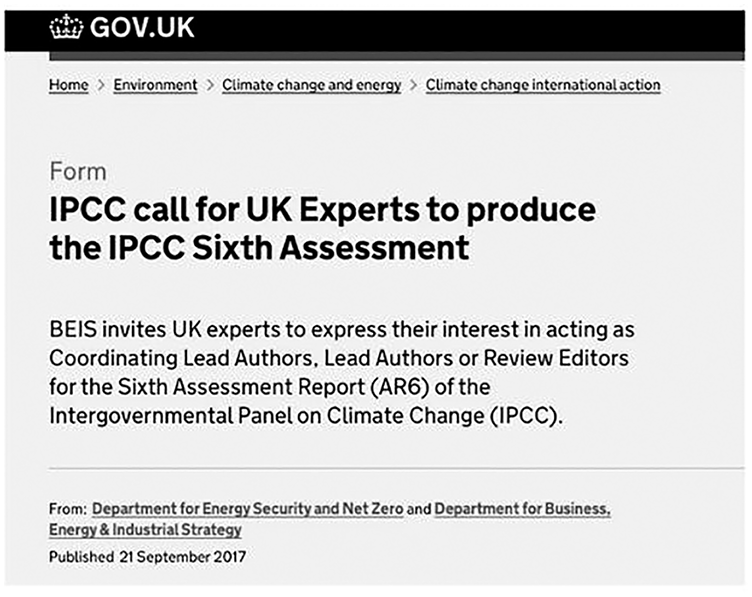
The focal point is regarded as the link between the government and the national scientific community, and as such it is responsible for orchestrating the national process for identifying experts and submitting a government-approved list of author nominations. How this list is compiled depends on the national context (IPCC 2010c). The IPCC encourages focal points to keep data bases of past authors and reviewers to contact (IPCC 2010c), and many developed country focal points have support staff and well-established mechanisms for sending out the call to government agencies and academic networks (see Figure 6.1), which may extend to workshops to raise awareness of IPCC authorship (IPCC 2010c: 6). Some developed countries have a set of institutionalised procedures, such as government and community consultations or expert committees, which are convened to assist in the selection process (IPCC 2010c: 7). This investment in author selection indicates the recognition that the government gives to the IPCC as a platform for national climate change research, an investment that in turn is reflected in the number of authors in the report.Footnote 3 For example, Australia and New Zealand had five times the global average number of authors in the first four IPCC assessment reports (Ho-Lem et al. Reference Ho-Lem, Zerriffi and Kandlikar2011: 1311–12), with Australia 6th and New Zealand 15th across the six assessment cycles (Tandon Reference Tandon2023). In terms of the institutional affiliation of these authors, the Australian Commonwealth Scientific and Industrial Research Organisation (CSIRO) is the second best represented institution overall, behind the National Oceanic Administrative Organisation (NOAA) in the United States (Tandon Reference Tandon2023). These figures reflect long-standing Australian and New Zealand membership on the bureau, national investment in the IPCC and institutionalised processes for undertaking IPCC activities, including author nomination (interview 25.07.2010).
UK call and application form for experts for the AR6. Screenshot taken from UK government website (From the UK Department for Energy Security and Net Zero and Department for Business, Energy and Industrial Strategy, published 21.09.2017). This contains public sector information licensed under the Open Government Licence v3.0. Available at: www.gov.uk/government/publications/ipcc-call-for-uk-experts-to-produce-the-ipcc-sixth-assessment.
Existing links between the national government and climate change research communities can narrow the search for expertise. In the UK, for example, in the early days of the IPCC, many of the scientists nominated were known through government-contracted research for the Department of Environment, Food and Rural Affairs. These actors were drawn from or related to a small number of research institutions, most notably the Met Office Hadley Centre in Exeter and the Climate Research Unit at the University of East Anglia, and were connected to each other and the focal point through these locations, academic networks and participation in research projects and national climate change assessments (interviews 30.06.2010; 07.07.2010b; 21.09.2010).Footnote 4 Although the call for author nominations is more widely distributed and anticipated in the UK, traditional centres remain better represented in appointed authors (Corbera et al. Reference Corbera, Calvet-Mir, Hughes and Paterson2016; Tandon Reference Tandon2023).Footnote 5
In contrast, scientists from developing countries have raised concerns about the responsiveness of their focal point and the appropriateness of the expertise nominated ‘either because they do not know who those scientists are or because political considerations are given more weight than scientific qualifications’ (IAC 2010a: 18). The lack of a coordinated effort for author nomination and selection in developing countries is supported by an IPCC study, which indicates that of those surveyed only half of developing and EIT country focal points submitted nominations for the AR4, compared to over ninety percent of those from developed countries (IPCC 2009n).Footnote 6 The first report by the special committee on developing country participation, published in 1992, indicates that the degree of coordination between various departments and ministries of governments and the ‘manpower’ [sic] ‘to receive, communicate and disseminate information’ was often not sufficient within developing countries (IPCC 1992b: 157), which meant that from the outset there was difficulty establishing the processes to fulfil these requests and tasks. As a result, developing country authors have sought alternative avenues, either through nomination by an international organisation or through a developed country focal point (Tandon Reference Tandon2023).
Once the nomination period closes, it is the task of the TSUs and WG bureaux to select and compile the author teams. This selection process has become a significant undertaking. Since the publication of the FAR in 1990, there has been rapid growth in scholarly interest in climate change, which has led to a corresponding increase in the number of experts qualified to author IPCC reports, as well as the volume of literature to be assessed.Footnote 7 The three WG reports of the IPCC’s FAR totalled 940-pages of climate change assessment. The WGI report was compiled by 35 authors drawn from 12 countries, reflecting the fact that academic interest in climate change was emerging and largely confined to a few research centres in the UK (Boehmer-Christiansen Reference Boehmer-Christiansen1995a, Reference Boehmer-Christiansen1995b; Shackley Reference Shackley1999) and North America (Edwards and Lahsen Reference Edwards and Lahsen1999).Footnote 8 This in turn meant that the available literature on the subject was limited and could effectively be reviewed by one or two leading experts with requests for contributions where necessary (interviews 1.07.2010; 21.09.2010; 26.10.2010).
There were over 3,000 author nominations received for the AR5, an increase of 50% from the previous assessment (IPCC 2010d), and 2,858 nominations from 105 countries for the AR6 (IPCC, n.d.). Through the selection process, the WG TSUs must ensure that the criteria used to assess professional credentials and differentiate between applicants identify the leading scientific authorities from expanding fields of climate research and compiles author teams with the necessary expertise to address each heading and bullet point of the panel-approved outline (interviews 5.10.2010; 20.01.2011). Conventions for distinguishing scientific authority are the first criteria used to identify suitable candidates. It is the job of the TSU to measure an applicant’s research impact and productivity. The tools for this vary across the WGs and assessment cycles and include h-index, i10-index, Research Gate scores and number of citations as recorded on Google Scholar (IPCC 2010e, 2018c, 2018d). WG bureaux may have other considerations they want to include in the selection procedure. In the AR5, WGII consulted ‘respected scientists and researchers’ to evaluate chapter candidates, particularly in regard to young scientists that were new to the IPCC and not known to WG bureau members (IPCC 2010f: 1). For the selection of chapter leaders, the AR6 WGIII bureau considered ‘qualities of leadership required to lead multidisciplinary and international chapter teams’ alongside scientific excellence (IPCC 2018e). At this stage, the emerging shortlist may need further supplementing by bureau and TSU members to ensure the necessary knowledge and regional representation is captured (IPCC 2010g; interviews 5.10.2010; 20.01.2011). Some authors may be contacted informally to encourage participation, discuss a leadership role and ensure support for the process (interviews 20.11.2010; 20.01.2011).
However, it is not solely WG priorities and scientific measures of authority that govern author selection. The final shortlist must meet the IPCC’s criteria for including the range of views, geographical representation, experts with and without previous IPCC experience and gender balance (IPCC 2013: 5–6). These criteria arise from the IPCC’s attempt to ensure continued acceptance and support for the assessment process amongst its member governments and the communities of knowledge that evaluate the finished products. Geographical representation has been a central concern to IPCC leadership since its establishment and a number of institutional mechanisms are in place to enhance developing country membership to the panel and in the authorship of the reports.Footnote 9 These mechanisms, such as bureau members identifying regional expertise to supplement government nominated applicants, adjustment to measures of expertise to fit the regional contexts (Standring and Lidskog Reference Standring and Lidskog2021: 11–12), ensuring that there is at least one lead author ‘and normally two or more from developing countries’ on each chapter (IPCC 2013: 5) and funding travel costs (IPCC 1992b: 152), have contributed to an increase in the selection of developing country authors across all WGs (IPCC 2018c, 2018d, 2018e). Despite these increases, however, significant issues remain in the identification and nomination of developing country authors (interviews 5.10.2010; 20.01.2011; IPCC 2019), which reappear throughout the authorship of climate knowledge.
Each of the selection criteria has a history and is in part a response to scrutiny and criticism. The criteria for balancing the retention of experienced authors with the introduction of fresh insight, for example, came into focus during author selection for AR5. The release of emails from the Climate Research Unit at the University of East Anglia reinforced existing perceptions that the IPCC assessment process was governed by a few long-standing members seeking to keep critical science out of the reports (de Costello Reference de Costello2009; McIntyre Reference McIntyre2009; Pearce Reference Pearce2010; Jowitt Reference Jowitt2011). The need for criteria on gender balance advanced through several avenues, including general observation and discussion (IPCC 2018f), data on gender disparity in the organisation (Gay-Antaki and Liverman Reference Gay-Antaki and Liverman2018; Gay-Antaki Reference Gay-Antaki2021; Liverman et al. Reference Liverman, vonHedemann, Nying’uro, Rummukainen, Stendahl, Gay-Antaki, Craig, Aguilar, Bynoe, Call, Connors, David, Ferrone, Hayward, Jayawardena, Mai Touray, Parikh, Pathak, Perez, Pirani, Prakash, Textor, Tibig, Tignor, Tuğaç, Vera and Wagle2022) and UN level consideration and targets (IPCC 2018f). The significant increase in the number of women in the assessment from 8% in the FAR to 32% in the AR6 demonstrates how increased awareness and organisational criteria impact author selection (IPCC 2019: 13).
The final shortlists are drawn up over email and via teleconferencing between co-chairs, the wider WG bureau and TSU staff; with the particulars of the process and the extent of bureau involvement dependent on the WG. Contention can arise at this stage as the structural disparities between developed and developing country scientists and measures of scientific credentials surface. All three WGs used publication output and impact factor to measure nominees’ scientific authority for the AR5 and AR6. These measures of actors’ scientific credentials, along with institutional affiliation, are the same sources of cultural capital that order social relations within the fields of knowledge themselves, as well as in the bureau and chapter teams (see Tables 4.4 and 4.8; Tandon Reference Tandon2021, Reference Tandon2023). Studies of the global economy of knowledge illuminate the structural disparities that scientists from the global south are subject to in acquiring these forms of scientific capital (Paasi Reference Paasi2005; Jöns and Hoyler Reference Jöns and Hoyler2013; Collyer Reference Collyer2016; Connell et al. Reference Connell, Pearse, Collyer, Maia and Morrell2018a, Reference Connell, Pearse, Collyer, Maia and Morrell2018b), which ‘assume there is a homogeneous domain of knowledge on which the measuring operations may be performed’ (Connell Reference Connell2014: 211).
Institutional affiliation is often the first criteria visible on a CV. Research identifies the Northern elite university system as central to the global production of knowledge, including in new fields like climate change (Corbera et al. Reference Corbera, Calvet-Mir, Hughes and Paterson2016; Connell et al. Reference Connell, Pearse, Collyer, Maia and Morrell2018a). This is also evidenced in the Shanghai and Times Higher Education-QS university rankings (Jöns and Hoyler Reference Jöns and Hoyler2013). Out of the 100 highest ranked institutions in 2009, over half of the Shanghai list (55) and one-third of the THE-QS (32) were located in the United States, and 11 of the Shanghai and 18 of the THE-QS in the UK (Jöns and Hoyler Reference Jöns and Hoyler2013: 50). Moving down the CV from institutional affiliation to publication record as a measure of scientific authority reinforces this pattern. Publishing practices are ‘fundamental’ to knowledge production (Collyer Reference Collyer2016: 69), and Anglo-American institutional dominance is mirrored in journal rankings and citation data. In a 2003 study of journals listed by the Thomson Institute of Scientific Information (ISI), an index generated by a US-based firm, the United States and the UK in particular, and English-speaking countries overall, dominated the total number of ISI indexed journals (Paasi Reference Paasi2005 779–80), with 66% of the journals in the science database from English-speaking countries, which rose to 85% for the social sciences (Paasi Reference Paasi2005).
The majority of these journals are edited in the United States, which makes publishing in them more accessible to US academics, who are both writing in their mother tongue and submitting to a peer review process that is ‘dominated by people accustomed to both the language and methodology of US scholars’ (Altbach Reference Altbach2004: 10–11). This puts scientists that are communicating in a second language and conforming to less-familiar academic norms at a significant disadvantage (Altbach Reference Altbach2004; Collyer Reference Collyer2016; Tandon Reference Tandon2021).Footnote 10 In interviews, journal editors cite the lack of awareness of current literature and the choice of outdated methodologies as holding back developing country submissions (Altbach Reference Altbach2004: 9). Older sources indicate editorial discrimination against authors on the basis of institutional affiliation and where English is not the first language (Gibbs Reference Gibbs1995: 96–98). As a study by Collyer (Reference Collyer2016) identifies, these editorial biases persist, with one US male editor of a sociology journal suggesting that ‘we very rarely get serious papers from developing countries … it is just a different kind of world’. He extended this judgement globally, suggesting ‘there are very different styles of work in different countries, much of which is “not to our taste”’ (Collyer Reference Collyer2016: 65). Editorial teams are in some cases taking steps to acknowledge and challenge these asymmetries (Schipper et al. Reference Schipper, Ensor, Mukherji, Mirzabaev, Fraser, Harvey, Totin, Garschagen, Pathak, Antwi-Agyei, Tanner and Shawoo2021) and transregional circuits of publication have emerged (Collyer Reference Collyer2016). However, these are steps against a tide of commercialisation, with 70% of the top 57 publishing companies headquartered in North America, Europe and the UK (Collyer Reference Collyer2016: 64), resulting in the further standardisation of international editorial and publishing practices (Collyer Reference Collyer2016). Even when published in international journals, scientists outside of the US and Europe are less frequently cited (Gibbs Reference Gibbs1995: 98; Jons and Hayler Reference Jöns and Hoyler2013: 53–54), which impacts a scientist’s citation index and perceived contribution to knowledge. It is therefore unsurprising that in Reuter’s ranking of the top 1,000 climate scientist, over three quarters were located in Europe and North America, and only five were listed for Africa (Okem et al. Reference Okem, Sutherland, Roberts, Craig, North, Hunter and Slotow2021), four of which were in South Africa (Reuters 2021).
To understand the persistent asymmetries in the distribution of scientific capital between developed and developing countries – as measured by these indices – the dependent relationship between scientific authority and economic capital has to be brought into focus. Contributing to knowledge through academic research requires access to libraries, databases, laboratories, office space, administrative support, internet and other electronic resources, and this substantial financial and infrastructural support must be consistent and long-term (Altbach Reference Altbach2004). The cost of maintaining a research university continues to grow because of the increasing complexity and cost of scientific research (Altbach Reference Altbach2004: 7). Studies on research expenditure and its link to output reveal how economic resources, as measured by Gross Domestic Product (GDP), impede developing countries from generating their own climate knowledge (Ho-Lem et al. Reference Ho-Lem, Zerriffi and Kandlikar2011; Pasgaard and Strange Reference Pasgaard and Strange2013). Thus, while the United States spends more than 2.5% of its annual GDP on research and development, ‘no country in sub-Saharan Africa – even the comparably rich South Africa – spends more than 1%’ (Tandon Reference Tandon2021). This makes external funding critical to building knowledge on climate change for the majority of African countries, the consequence being that national knowledge production is shaped by external interests. Overland et al. (Reference Overland, Fossum Sagbakken, Isataeva, Kolodzinskaia, Simpson, Trisos and Vakulchuk2022: 710) estimate that between 1990 and 2020 USD 620 million was spent on funding Africa-related climate research. The main sources for this were the United States, the United Kingdom and the European Union, with research on the continent largely being ‘dictated by the priorities’ of government institutions in these countries (Overland et al. Reference Overland, Fossum Sagbakken, Isataeva, Kolodzinskaia, Simpson, Trisos and Vakulchuk2022).
Expenditure on research is particularly relevant to climate knowledge because computing power has become essential for modelling future climate change and potential response pathways. Participating in and contributing to these forms of knowledge requires substantial investment in computer hardware, processing power, data, programs for producing and running models and high-speed internet to share and download the above. Even in highly industrialised countries with long-term investment in climate science, such as Australia, a researcher remarked that there is ‘just one computer system in the whole country advanced enough to handle this work’ (Connell et al. Reference Connell, Pearse, Collyer, Maia and Morrell2018b: 10). The dependent relationship between economic and scientific capital provides an important explanation for Northern dominance in the production of climate change knowledge, and the preponderance of scientific authority as measured by publications and impact (Sagar and Kandlikar Reference Sagar and Kandlikar1997; Kandlikar and Sagar Reference Kandlikar and Sagar1999; Lahsen Reference Lahsen, Jasanoff and Martello2004; Karlsson, Srebotnjak and Gonzales Reference Karlsson, Srebotnjak and Gonzales2007; Pasgaard et al. Reference Pasgaard, Dalsgaard, Maruyama, Sandel and Strange2015; Blicharska et al. Reference Blicharska, Smithers, Kuchler, Agrawal, Gutiérrez, Hassanali, Huq, Koller, Marjit, Mshinda, Masjuki, Solomons, Staden and Mikusiński2017; Schipper et al. Reference Schipper, Ensor, Mukherji, Mirzabaev, Fraser, Harvey, Totin, Garschagen, Pathak, Antwi-Agyei, Tanner and Shawoo2021; Overland et al. Reference Overland, Fossum Sagbakken, Isataeva, Kolodzinskaia, Simpson, Trisos and Vakulchuk2022).
Alongside and in some cases, as a by-product of resource asymmetries, there is the national context in which researchers work that are productive of place-specific academic cultures (Borland, Morrell and Watson Reference Borland, Morrel and Watson2018; Ibarra et al. Reference Ibarra, Jiménez, O’Ryan, Blanco, Cordero, Insunza, Moraga, Rojas and Sapiains2022). There may be limited recognition for the extra effort required to publish internationally, and instead, incentives to publish in national or regional outlets as well as national measures of contribution to knowledge and career progression (Collyer Reference Collyer2016; Tandon Reference Tandon2023). The pay and conditions, alongside the national funding context, may also mean that academics and institutions need to supplement incomes through consultancy work or because of the competition for limited expertise are involved in other national, regional and international assessment exercises (interview 17.09.2010). The resource asymmetries and the constraints they create need to be viewed alongside conscious decision-making to invest in local and national development priorities with industry and policy partners with place specific rewards over international scientific collaboration and publication (Borland, Morrell and Watson Reference Borland, Morrel and Watson2018).
It is during bureau scrutiny of the author list that there is opportunity to consider these multiple intervening factors and their effects. Historically, however, the lack of nominations for authors from developing countries, alongside scientific criteria for selecting nominees has been compounded by dispositions within the bureau. For instance, when interviewed some bureau members suggested that their counterparts in developing countries were not forceful or articulate enough when it came to contesting items on the agenda (interview 13.12.2010). In some cases, this was identified as part of a wider malaise in the bureau, characterised by a lack of interest and contribution from developing country bureau members (interviews 9.11.2010; 13.12.2010), which was sometimes put down to political appointments.Footnote 11 Comments like these and those critical of the overly formal style of developing country participants are indicative of the culture that has historically ordered relations within the panel and bureau as described in Chapter 4, which overlooks the resource maldistribution that this culture is built upon and serves to maintain. This order of relations is taken as a given and those not conducting themselves accordingly or presenting their grievances appropriately have historically struggled to have their contestations and contributions acknowledged within the IPCC’s practice of writing.
The final lists of WG authors are subject to full bureau and plenary approval. During these proceedings grievances over selection criteria and regional representation can again resurface, and if the bureau decides there is insufficient increase in the number of developing country authors from the previous assessment, WGs may be requested to reconsider the geographical balance of authors and amend accordingly, as WGI were requested for AR5 author selection (IPCC 2010h). At this point, those that have spent time compiling and amending these lists express frustration, highlighting the impossibility of such a task, and bringing attention to the number of developing country focal points that did not submit expert nominations (interview 20.01.2011). It is only once author lists have been revised and accepted by the bureau, however, that the assessment progresses. With bureau approval, author lists are made public and appointment letters are sent to successful candidates. Those that are unsuccessful are added to the IPCC database and requested to review the emerging report later in its assembly.
6.2 The Authorship
There is a hierarchical structure to the authorship of IPCC reports, and the aim of the following section is to detail the historical development and breakdown of labour between the coordinating lead authors (CLAs), lead authors (LAs), contributing authors (CAs), and review editors (REs). The articulation of these titles and the duties they entail have resulted from bureau and panel attempts to learn from the experience of previous assessments and in response to criticism sustained after the report’s publication (interview 5.08.2010). The IPCC’s assessment practice has been subject to scrutiny by those seeking to undermine its conclusions. These criticisms were particularly vociferous after the publication of the SAR in 1995, and in 2009, when emails between IPCC authors were made public and errors were discovered in the regional chapters of WGII’s contribution to the AR4. To respond to these events and prevent similar incidents undermining the next assessment, authorship roles and rules of procedure have been periodically updated and codified.Footnote 12
The FAR and SAR were put together and overseen by fewer participants and management of this process, such as that required for compiling the author teams, was largely the responsibility of the developed country chair and the TSU, with assistance and advice from key members of the then smaller WG bureau. Within the author teams, roles were not formally assigned, and leadership of the chapters was established more through scientific authority than formal decision-making (interview 26.07.2010). In addition, actors requested by members of the chapter team to contribute material were oftentimes colleagues within the same research institution and could become formal members of the chapter team through these informal avenues (interview 26.07.2010). In the first two assessments then, the scientific culture of authors governed the process (interview 1.07.2010, 21.12.2010). However, as climate change has ascended the political agenda, pressure on the IPCC and its conclusions increased and governments became more involved in the work and leadership of the panel (interview 13.12.2010). As a result, the informal epistemic conventions governing the IPCC’s assessment practice have been subject to member government scrutiny and codification.
The SAR’s conclusions were undermined by criticism surrounding IPCC procedures for revising the WGI report (Lahsen Reference Lahsen and Marcus1998; Skodvin Reference Skodvin2000b; Edwards and Schneider Reference Edwards, Schneider, Miller and Edwards2001; Houghton Reference Houghton2008). The controversy was initiated by an op-ed piece in the Wall Street Journal, which followed a similar criticism made earlier by the Global Climate Coalition (Nature 13 June 1996: 539). In this piece, an American physicist accused WGI lead authors of seriously corrupting the peer-review process by altering the text of the assessment after it had been formally ‘accepted’ by the panel (Seitz Reference Seitz1996). The chapter in question was the source of a widely quoted sentence from WGI’s SPM, which stated that despite large remaining uncertainties, ‘the balance of evidence suggests that there is a discernible human influence on global climate’ (Houghton et al. Reference Houghton1996: 5). The debate lasted several months, turning into a disagreement over the underlying scientific evidence for the statement. The exchanges between IPCC officials and their critics revealed ambiguity in the IPCC rules of procedure, which neither allowed nor prohibited changes to a report after its formal acceptance (Edwards and Schneider Reference Edwards, Schneider, Miller and Edwards2001: 227).
In another incident in the SAR, WGIII’s report got stuck in approval proceedings due to objections from the developing countries to controversial economic assumptions used in the calculation of the ‘social costs’ of climate change (Agrawala Reference Agrawala1998b: 626). In the chapter, a cash value of $1.5 million was assigned to a human life in OECD countries against $150,000 in developing countries (Pearce et al. Reference Pearce, Bruce, Yi and Haites1996). These controversial calculations could have been avoided if there had been better oversight of the authors’ response to review comments (Agrawala Reference Agrawala1998b: 626). In 1999 and in preparation for the third assessment report (TAR), the IPCC tightened its rules of procedures surrounding the approval and amending of text and introduced review editors to the authorship of IPCC assessments (Agrawala Reference Agrawala1998b: 228–29; Skodvin Reference Skodvin2000b).Footnote 13 These procedures and the role of review editors were subject to further scrutiny after the publication of AR4 in 2009, when mistakes were discovered in WGII’s contribution concerning the melting rate of Himalayan glaciers and the land area below sea level in the Netherlands (IAC Review 2010a; PBL 2010). The panel again responded to these events and the surrounding international media criticism by tightening the assessment rules and procedures (IPCC 2010a, 2011a).
Today, and as a result of these events, the responsibilities and duties of IPCC authors are codified in IPCC rules and procedures (IPCC 2013). These accord CLAs with overall responsibility for the production of the chapter (IPCC 2013). There are usually two CLAs per chapter, and an attempt is made to divide this leadership role by assigning a developed country and a developing or EIT country author. The CLAs effectively manage the LA teams of 6 to 16 experts per chapter, depending on the WG, and maintain oversight over the chapter content and any cross-cutting issues between chapters. Lead authors are charged with writing given sections, as assigned during the first lead author meeting, and in preparing these they are encouraged to seek contributions from other experts in the field. They may also be requested to contribute to other chapters within or across WGs. Contributing authors are usually identified at the first and second lead author meetings and tend to be colleagues or members of the same academic networks as appointed authors. CAs do not attend author meetings; they are requested to submit technical information, such as text, graphs or data, which are then assimilated into the relevant section (IPCC 2013). When the nationality of contributing authors is incorporated in the breakdown of authorship, developed country dominance is further marked, with 90% of all CAs in the first four assessments belonging to Annex 1 countries (Ho-Lem et al. Reference Ho-Lem, Zerriffi and Kandlikar2011: 1313). Review editors complete the chapter teams. Tasked with overseeing the chapter’s review process and ensuring that all substantive review comments are given due consideration and assimilated into the chapter (IPCC 2013), these actors join the authors teams from the third lead author’s meeting onwards.
The workloads of CLAs, LAs, CAs and REs require different levels of commitment and command different levels of influence over the chapter content. The IPCC indicates that the workload of the CLAs and LAs will be in the order of several months over the assessment cycle, with heavy periods towards the end of the drafting cycle (IPCC 2010i). The role of the CLA is most demanding. Responsible for overseeing the production of the chapter, these actors must ensure that the material submitted by the author team is arranged, harmonised and edited into a coherent chapter. This gives CLAs leadership and editorial power over the content, which increases with the time and institutional support – in the form of research assistance and technical and administrative resources – that are available to the individual to invest in the role (interview 1.08.2011). Although chapter visions are negotiated within and between the author team, and the ensuing text passes under many pairs of expert eyes at each stage of its development, it returns to the hands of the CLAs. Thus, just as the professional expertise of the WG co-chairs orientates the direction of the next assessment during the assembly of the outline, the CLAs’ practice of the climate change problematic and epistemic connections shape their interpretation of the outline and the expert networks whose contribution and recognition are sought. CLAs are usually invited or volunteer for the drafting team of the SPM (see Section 7.1), thereby leading the process of identifying the chapter’s key messages and conveying these in the most widely read constituent of the assessment.
For all participants, authorship requires a substantial time commitment over the course of the assessment. Authors are not remunerated by the IPCC, and participation is likely to reduce actor’s research and publication output. As outlined in the letter requesting author nominations, developed country governments are expected to support the travel of those they nominate (IPCC 2010i), while the IPCC Trust Fund supports those from developing and EIT countries.Footnote 14 Through participation, IPCC authors expose themselves to criticism and personal attacks from actors seeking to undermine the organisation’s credibility.Footnote 15 If the rewards are not financial, why do actors want to invest their time and professional expertise in the IPCC process? All participants interviewed were asked about the personal and professional benefits of contributing to the IPCC, and responses identified field-specific and IPCC-constituted interests. Field-specific interests are identified here, whereas those constituted in and through authors’ investment in the IPCC’s practice of writing are identified in Section 6.3, where authorship in practice is described.
The shared social interests of the authors of developed countries are largely constituted by the physical, natural and social scientific fields that qualify them as climate experts and which are the main audience for the reports. Being an IPCC, author enables actors to write about the field and their contribution within it, locating the major influences and advances in climate change knowledge, as well as remaining gaps. This assessment is subject to review by the wider field and will need to be redrafted accordingly, but in conducting and producing these overviews, authors secure their knowledge in the field. For climate scientists, atmospheric scientists and oceanographers of WGI, there is professional recognition in being appointed an IPCC author and considerable scientific authority attached to the CLA post. The awarding of the Nobel Peace Prize in 2007 further increased this cultural capital and extended it to the affiliated research institutes and universities, where the kudos of the Nobel Prize was incorporated into recruitment and funding strategies.
Authors of WGII noted that through participation they became aware of the limits and gaps in knowledge. Climate change impacts and adaptation are rapidly developing domains of study, and the IPCC has played a critical role in establishing the importance of this expertise to the UNFCCC negotiating process. As an IPCC author, actors have the opportunity to capitalise on the gaps they identify, either submitting publications before the end of the assessment cycle or creating grant proposals and new international research collaborations with the aim of generating knowledge for the next report (Hughes and Paterson Reference Hughes and Paterson2017). These collaborations are valuable for both developed and developing country scientists, with an increased likelihood of success in grant capture because of the guaranteed platform for research outputs. In WGIII, interests depend on professional and disciplinary fields of practice. Interviews with economists suggested that IPCC authorship in the first two assessments was not recognised because scholarly contribution to the field was measured by publication in one or two major journals (interview 10.07.2010). More recent scholarship of AR5 WGIII authors reveals the dominance of economists and identified a group of authors who appear to have orientated their career and publication strategies around the IPCC assessment cycle (Corbera et al. Reference Corbera, Calvet-Mir, Hughes and Paterson2016; Hughes and Paterson Reference Hughes and Paterson2017).
Nationally, the levels of recognition given to IPCC authorship vary. Early studies of India’s participation, for example, suggest that government funding agencies did not give as much value to lead authorship as North American and European governments (Biermann Reference Biermann1999: 8; Mahony Reference Mahony2014: 115–16). Whereas research in Brazil indicated that participation conferred prestige at the national level, which can result in lucrative consulting assignments with both national and international governmental and non-governmental entities (Lahsen Reference Lahsen, Jasanoff and Martello2004: 159). Authors from industry suggested that they became more knowledgeable of the climate field through participation and as a result more valuable to their clients and stakeholders (interview 19.09.2010). As well as field-specific and country-specific forms of interest, there appear to be perceived universal benefits to participation. These include networking with renowned experts in the field, transferring and expanding knowledge of climate change, making new friends and travelling to new countries (Tandon Reference Tandon2023).
6.3 The Order of Authorship in Practice
Following authors into lead author meetings and through the drafting cycle offers a clearer picture of how climate change is assessed in practice and the properties structuring these constructions. For the majority of actors, IPCC authorship begins with the receipt of a formal letter of appointment. Some will have been authors before, and a small percentage of those appointed will have contributed to the formation of the outline by sending in written comments and attending the scoping meeting, but for many this letter signals their initiation into the IPCC’s practice of writing.Footnote 16 In preparation for the first lead author’s meeting, the co-chairs request CLAs to lead the chapter team through the development of a more detailed outline. To assist authors in this process, TSUs provide detailed guidance notes. These notes provide background on the outline’s production and summarise the discussions and concerns of governments that arose during the scoping and approval process, providing authors with a road map for the content of the chapter and indicating the political dynamics and points of contention surrounding the topics (interview 20.01.2011).
The first lead author’s meeting is where the assessment takes form. This five-day meeting is when the chapter teams meet face to face for the first time, although in many instances, particularly in WGI and authors of multiple assessments, authors may be familiar with each other’s work and even be well known to one another (interviews 27.09.2010; 30.10.2010). At this meeting, the chapter teams are charged with the task of finalising a detailed chapter outline, dividing the writing tasks between chapter members and devising an internal timeline for the preparation and compilation of the chapter (IPCC 2004). The schedule of the meeting is divided between plenary and chapter team sessions. The plenary sessions are the more formal of these, bringing authors in front of the IPCC chair, WG co-chairs and TSU staff to instil a sense of value in the IPCC and the assessment task (see Figure 6.2). These sessions are also the main avenue for inculcating authors with the IPCC’s practice of writing: its processes and procedures, timelines and deadlines and relevant concept notes from expert meetings and workshops.Footnote 17 It is here that the WG co-chairs sensitivity and responsiveness to the political environment and their role as conduit or interface between member governments and the scientific community becomes apparent, as during WGI’s construction of the AR4.
The first lead author meeting of WGIII for the AR5 held in Changwon, South Korea.

WGI’s report was co-chaired by US climate scientist, Susan Soloman. Susan was appointed co-chair at a time when the US administration was hostile to the science of climate change and the international negotiating process, as indicated by President Bush’s rejection of the Kyoto Protocol and the government’s attitude towards the conclusions reached by the IPCC’s TAR and its chair, Robert Watson (McCright and Dunlap Reference McCright and Dunlap2003, Reference McCright and Dunlap2010). In 2001, the administration requested the National Academy of Science to undertake a review of the science of climate change, focusing particularly on ‘where there are the greatest certainties and uncertainties’ and ‘whether there are any substantive differences between the IPCC reports and the IPCC summaries’ (NRC 2001: appendix a). These events impacted the leadership of the AR4 from 2002 onwards, making them conscious that any conclusions reached in the report could be subject to congressional hearing. As a result, particular attention was given to the methods employed by authors to quantify certainty, to separate out fact from opinion and to ensure that there was a clear line of sight between the main report and the key findings in the SPM (interview 25.07.2010). The plenary of the author meetings is a time for the co-chairs and head of the TSU to share these concerns and ensure guidance notes for assessing uncertainties and non-peer-reviewed material are valued and adhered to in the writing of chapters.
Between plenaries, the WG break into chapter teams. The style and conduct of work are dependent on the WG and the academic and professional conventions of authors. The majority of IPCC authors come from government agencies and laboratories (~45% in the TAR and AR4) and universities (~40% in the TAR and AR4), with the remainder of authors from INGOs, NGOs or the private sector (Bhandari Reference Bhandari2020: 197) Working group I is the most homogenous in disciplinary and diversity terms, while gender balance has increased from a low starting point; female authorship reached 27% of the author team for the AR6, compared to 40% in WGII and 31% in WGIII (IPCC 2019). There was an increase in the number of authors from developing countries and economies in transition in the AR6, which was up to 42% from 23% in the AR5 (IPCC 2018c), although the drop in US authors for the AR6 is a factor (Tandon Reference Tandon2023).Footnote 18 Diversity is an ongoing issue in the fields of science that contribute to WGI’s assessment. Figures from the United States, which has been the largest contributor to IPCC authorship over the six assessment cycles (Tandon Reference Tandon2023), indicate that the lowest five occupational groupings for non-white-minority representation include ‘atmospheric and space sciences, environmental and geosciences, and conservation and forestry’ (Pearson and Schult Reference Pearson and Schuldt2014: 1040).
The cohesion in the authorship of WGI chapter teams means that the style of work, order of proceedings and social interactions – points of scientific contention and ways of contesting them – will be a familiar amalgamation of academic practice in the disciplinary fields that contribute to assessing the physical scientific basis of climate change. Less time spent establishing a means for conducting proceedings and negotiating a shared epistemology enables WGI authors to immediately burrow down into the content of the chapter, recent developments in climate science and the key messages that the chapter is likely to generate. However, it also means that working relations within WGI are most strongly governed by the dominant scientific order and its measures of scientific authority. This is an order with a propensity to marginalise and exclude the contribution of scientists that do not fit this embodiment.Footnote 19 In June 2018, a code of conduct was put in place for all IPCC meetings and events, as informed by UN and WMO instructions to prohibit discrimination, harassment and abuse of authority (IPCC 2018g). At the second lead author meeting, WGI CLAs, authors, bureau and TSU received training in inclusive practices, collaboration and participatory group dynamics as an attempt to broaden the space for participation (IPCC 2018f).
Although WGII is still largely composed of those practicing or managing research, its authors are more diverse in gender (40% in AR6), developing/EIT contribution (48% in AR6) and disciplinary make up, with chapter teams that span the natural and social sciences (IPCC 2018d, 2018f). This means that while authors continue to rely on shared academic practices for the conduct of their work, the substance and content of the chapters require negotiating disciplinary conventions, epistemologies and terminologies that on the surface are deceptively similar. This has become easier over subsequent assessments. During the compilation of the FAR, Dr Tegart, a WGII vice-chair, reported to the plenary on ‘the complexity of the work’ of WGII resulting from its multidisciplinary nature. He suggested that most of the experts involved ‘had no previous interactions as they come from different disciplines’ (IPCC 1990a: 20).
The IPCC has been an important facilitator of multidisciplinary collaboration, developing mechanisms to bridge epistemological divides and thereby deepen the level of engagement between disciplines through: (1) holding expert meetings and workshops that bring members of different communities together; (2) the treatment of cross-cutting issues and scenarios across working groups; and (3) developing concept papers providing authors with instructions and guidance notes to standardise assessment practice (interviews 25.07.2010, 5.10.2010). These guides on the treatment of uncertainties and the use of non-peer reviewed literature offer authors the means to assess the relevancy and validity of research that crosses disciplinary divides and for the treatment of these to be standardised across the WGs, although in practice, demands on authors’ time can mean that these instructions are not fully integrated into the drafting process.Footnote 20 The AR6 cycle further deepened the integration between the WGs, with the Special Report on 1.5, the first produced by all three WGs. This established cross working group relations that were designed to continue throughout the assessment cycle (interview 26.02.2019; IPCC 2018c, 2018d, 2018e).
As with WGII, WGIII brings together authors from a variety of disciplinary fields, it is also home to more authors from IGOs, NGOs and the private sector (30% in the TAR and AR4), although authors from universities still dominate (40% in TAR and AR4) (Bhandari Reference Bhandari2020: 197). Each of these professional fields has its own style of work and ways of understanding, producing and recognising knowledge of climate change; bringing these practitioners together in a single chapter necessarily gives rise to different dynamics and collective styles than in the other WGs. As a result, the order of relations may not be as structured by scientific authority as in the other WGs, although the hierarchy of disciplinary knowledges, institutional affiliations and publication record remain enduring guides. Once the author meeting has broken into chapter teams, chapter members are able to size one another up. There may be some apprehension at first as chapter members find their place, but once proceedings are underway clashes of opinion surface and authors disagree over the chapter’s direction, the material most relevant to the subheadings and the overall framing of the chapter.
The scientific habitus pervades the order of relations that emerge in the IPCC’s practice for assessing climate change, structuring the space of relations and the extent an author and their knowledge is recognisable within and by a chapter team. Overlooked in this adherence to a social-scientific order is how an author’s scientific capital to produce and contest climate knowledges is constrained and enabled by economic capital, level of English, race and gender (IPCC 1992b, 2018f; Gay-Antaki and Liverman Reference Gay-Antaki and Liverman2018; Gay-Antaki Reference Gay-Antaki2021). Despite the fact that there are two CLAs, generally one from a developed country and one from a developing or EIT country, all interview data indicates that the developed country CLA leads the process. The authors that take the lead and whose voices are heard most in the decision-making and writing of the assessment appear on paper as the most accomplished in their contributions to knowledge and as such, it is only natural that they have the most to offer the production of the chapter. However, this natural scientific order overlooks and misrecognises the social, economic and material conditions that structure participation and capacity to imprint on the final product. A reoccurring theme during interviews, which is also evident in the Interacademy survey undertaken in 2010, is that not all appointed authors are adequately qualified and equally participate in the labour of the assessment.Footnote 21 For instance, one CLA notes:
There are far too many politically correct appointments, so that developing country scientists are appointed who have insufficient scientific competence to do anything useful. This is reasonable if it is a learning experience, but in my chapter in the AR4 we had half of the LAs who were not competent.
While views like these are not explicit in recent surveys of IPCC authorship, concerns that balance overrides measures of scientific excellence in the appointment of authors persist, as indicated here
… scientific excellence should still be by far the most important factor. I am extremely worried that the whole process could be seriously harmed if for the sake of balance in everything scientific excellence decreases. The imbalance need to be solved at universities, labs etc., and not at the IPCC level.
This perspective is mirrored by some developing country scientists’ self-perceptions, as one LA comments:
The team members from the developing countries (including myself) were made to feel welcome and accepted as part of the team. In reality we were out of our intellectual depth as meaningful contributors to the process.
These attitudes generated by and generative of the social scientific order intersect with and overlook other determinants structuring the space for participation. Language and knowledge of the terms of the debate are cited as common barriers. When discussions become heated and the pace quickens, less-fluent English speakers have trouble following and are unlikely to interject in the proceedings (interview 7.07.2010c; Gay-Antaki and Liverman Reference Gay-Antaki and Liverman2018: 2062; IPCC 2018f; Tandon Reference Tandon2021). Alongside language, gender and nationality intersect, as one African woman describes in a survey by Gay-Antaki and Liverman (Reference Gay-Antaki and Liverman2018):
The only reason that I could have felt not required at all in the team could be that I am an African woman. I have very good command of English, I am as qualified as others, I am confident also—but I was never listened to.
The internalisation of this social-scientific order in authors self-perceptions leads authors to question their place and value, as an experienced author in global environmental assessments describes:
You are never sure whether access to something is denied because of your colour, because of your gender, or because of your nationality. You’re always questioning that. And I think the opposite is true as well – you aren’t sure whether you were invited to something because they truly value your work or if they were trying to fulfil some diversity criteria.
As authors begin to identify and assess the knowledge relevant to their assigned sub-heading, practical barriers to participation emerge, which again intersect and augment an author’s capacity to invest in the IPCC’s writing of climate change. Just as the acceptance rate for developing country scientists in international journals is much lower due to impeded access to current literature and perceived use of outdated methodologies (Gettelman Reference Gettelman2003; Blicharska et al. Reference Blicharska, Smithers, Kuchler, Agrawal, Gutiérrez, Hassanali, Huq, Koller, Marjit, Mshinda, Masjuki, Solomons, Staden and Mikusiński2017); limited access to international journals, slow and costly internet access, and even poor telephone connections impede developing country authors’ capacity to access and assess relevant literature (Yamineva Reference Yamineva2017: 28).Footnote 22 Schipper et al. (Reference Schipper, Ensor, Mukherji, Mirzabaev, Fraser, Harvey, Totin, Garschagen, Pathak, Antwi-Agyei, Tanner and Shawoo2021: 853) note, for example, that ‘… only a few African university libraries have reliable internet connectivity, with South African universities being among the most equipped in the continent’. Those leading the process have become aware of these barriers, and for the first time in the AR4 the WGI TSU reached an agreement with several publishing houses to provide authors with free access to journals. It was intended that this would be extended to all WGs for the AR5. However, WGIII was only able to offer a database and encourage sharing between authors. This meant that some developing country authors were again unable to efficiently search and access relevant literature and relied upon the support of other chapter team members (from correspondence with TSU). While this was meant to be resolved by a UNEP supported IPCC library facility for the AR6 (IPCC 2016a), issues with ease of access remained.
These asymmetries were amplified during the COVID pandemic and the dependence on virtual meetings it created. When the AR6 author meetings moved online, poor internet infrastructure meant that some developing country authors were ‘cut off from the process altogether’ (Julia Steinberger quoted in Ketcham Reference Ketcham2022). Switching to virtual meeting arrangements made visible that the physical location or place of participation matters, and the time required to identify, access and review climate change knowledge is dependent on physical location, which the large hotels and conference venues of in-person author meetings obscure. Further confounding this divide is the fact that while many developed country authors, particularly CLAs, receive government or institutional support, which may include a research assistant for compiling lists of relevant literature and producing endnote databases, these funds are not available for developing country authors. The effect of this has been that while WGs have attracted developing country authors at the start of the process, authors have dropped out due to the time commitment as the assessment progresses (Yamineva Reference Yamineva2010: 58).
IPCC authorship is demanding and time intensive. Although this labour is not financially rewarded, authors are able to distinguish themselves through their commitment to the process. One means of achieving this is through the figure. As well as reviewing, assessing and synthesising available knowledge through text, authors are keen to produce maps, tables, boxes, figures, and more recently, icons and infographics (Lorenzoni and Harold Reference Lorenzoni, Harold, De Pryck and Hulme2022). In a word restricted report, diagrams, graphs and tables allow authors to visually represent large volumes of data without taking up valuable space. These visualisations of climate knowledge are easily extracted for the SPM and from there, if they readily convey the extent and impacts of climate change, they may be taken into media and other forms of climate change reporting with the potential to influence international action. In the past, a few iconic figures have had a significant impact on popular discussion and negotiation, bringing attention (and criticism) to the IPCC and putting authors at the centre of controversy. Three important diagrams in this respect are the ‘hockey stick’ graph,Footnote 23 the ‘burning embers’ diagram (Mahony Reference Mahony2014),Footnote 24 and the ‘Bali Box’ (Lahn and Sundqvist Reference Lahn and Sundqvist2017).Footnote 25 Due to the advantages of diagrammatic representation and the attention it can bring to individual authors or chapter teams, the figure has become a significant object of interest, initiating contestation and competition as authors attempt to distinguish their contribution to the final product.
The IPCC also has its own rewards for those that demonstrate their proficiency through the conduct of the assessment and distinguish the value of their contribution and knowledge to the IPCC’s practice of writing. Accruing IPCC specific capital in the eyes of those leading the assessment may result in being offered the opportunity to become more deeply involved in the current and next assessment through invitation to the drafting team of the SPM (Chapter 7) and the scoping of the next assessment (Chapter 6), and rising up the ranks of authorship and on to the bureau.
6.4 Reviewing
Turning from the authors to the review process makes apparent the collective nature of the IPCC’s practice of writing. To ensure the emerging report is acceptable to both the fields of knowledge assessed and the governments accepting the reports, the IPCC has institutionalised an extensive expert and government review process. Nearly all scholarly text is subject to the approval of the field through some form of peer-review (Edwards and Schneider Reference Edwards, Schneider, Miller and Edwards2001: 229). The extended review procedures were not formally established for all IPCC reports until 1993 (IPCC 1993, appendix c annex 1). Today, reports are subject to three rounds of review, which typically leads ‘to hundreds or even thousands of changes’ in the text (Edwards and Schneider Reference Edwards, Schneider, Miller and Edwards2001: 235). The first review is conducted on the zero-order draft. This is when the assessment is largely at the stage of a list of topics and overview of relevant literatures. The document is reviewed internally and by a select number of external reviewers identified by the WG bureau, TSU staff and chapter authors (IPCC 2005, 2011b). At this stage, the reviewers are asked to consider the chapter’s structure, gaps, balance, and cross-chapter issues, with the aim of providing authors with an early indication of whether the draft reflects the available literature and provides a balanced coverage of the chapter’s scope (IPCC 2011b).
Comments from this review are discussed at the second lead author meeting and are incorporated into the construction of the first-order draft. Now the chapter begins to take shape and is made ready for its first expert review. Expert reviewers include those nominated as authors but not selected, experts put forward by relevant international and non-governmental organisations and individuals identified by the WG bureau and chapter review editors (IPCC 2021). For reviewers, the review process provides access to the IPCC’s practice of writing and an avenue to influence how climate change is assessed. Special interest groups, such as environmental organisations and representatives of fossil-fuel industries, regard this as the main channel for transmitting their views into the assessment and for drawing author’s attention to literatures beyond their purview (Yamineva Reference Yamineva2010: 80).Footnote 26
According to the IPCC’s own calculations for the AR6, the total number of review comments across the three WGs exceeded 60,000 comments on the first-order draft (IPCC 2021). Many of these comments identify editorial errors or remark on the choice of topics covered by the chapter, which oftentimes authors have limited scope to address because of the government-approved outline.Footnote 27 During the roughly three-month review period, authors continue to develop the draft. This can make responding to the review comments a complex task, which requires, as one author noted, ‘a tedious, confusing back-and-forth between the comment sheet, the formatted FOD and the active working draft’ (Edwards Reference Edwards, De Pryck and Hulme2022: 100). At this stage new literature is identified for review, and more substantial comments initiate chapter team discussion and debate as they assess the implications for the emerging second-order draft.
The review of the second-order draft returns it to the previous expert reviewers and, for the first time, exposes the emerging assessment to member governments that agreed its limits. As with expert review, the government review of the second-order draft is designed to gather comments on the accuracy, completeness and balance of the scientific and technical content of the draft reports (IPCC 2013), and for the AR6 this resulted in over 120,000 review comments across the three WGs (IPCC 2021). The review comments offer the co-chairs an opportunity to measure the reception of the report that governments sanctioned, with sufficient time before panel approval to address issues that comments identify as underdeveloped, missing or inappropriately formulated. As with author nomination, the internal particularities of the government review process depend on the focal point’s location and how IPCC participation and climate change are institutionalised. For example, since the FAR, Australia has held a national workshop to bring together experts from across different departments and outside of government to develop an agreed national view on the emerging assessment, which becomes a key document for the delegation during approval proceedings (Zillman Reference Zillman2008: 33). In earlier assessments, lack of trust in the scientists participating in this international collaborative exercise meant that the Brazil administration selected reviewers for the process (Lahsen Reference Lahsen, Jasanoff and Martello2004: 165).
All review comments are attributed; thus even if the reviewer is not known by name to the chapter team, the epistemic authority of the individual can be measured through national and institutional affiliation, which impacts how comments are received and dealt with by chapter team members. The overall response of the chapter teams to the review process depends on the actors and the attitude towards work cultivated, which also reflects the values instilled by those leading the process. Reports on errors made in regional chapters of WGII’s assessment identified variation in the conscientious of chapter teams (IAC 2010a; PBL 2010). While in some instances it is necessary for review editors to reassure authors that review comments are unfounded (interview 10.11.2010), in other cases, lack of consideration for reviewers and their comments has left mistakes uncorrected.Footnote 28 This process of reviewing and revising in response to comments again highlights the asymmetries between developed and developing country participation in the IPCC’s practice of writing.
The IPCC has undertaken its own study of developing country participation (IPCC 2009n, 2016b). This information gathering reveals a strong relationship between the nationality of authors and reviewers. In the data collected from the SAR to the AR5, developing country experts averaged 28% of the total authorship of the reports (CLAs, authors and review editors), and just 13% of reviewers (IPCC 2016b). WGII’s contribution to the AR4 is one of the most widely reviewed reports, with 95 countries submitting comments. However, out of the 1,162 reviewers participating, 46% (529) came from five countries: the US (18%); UK (11%); Canada (7%); Australia (6%); and Finland (4%). In fact, across the three WGs of the AR4, four countries (US, UK, Canada and Australia) provided 43.7% of the authors and 41.1% of reviewers, see Table 6.1. For the AR5, developing country reviewers dropped from 15% to 11%, the lowest for which data is available (IPCC 2016b). This has a double impact. First, the content of the report is not subject to the questions and comments that help to ensure its relevance to developing country perspectives. Second, through conducting this review member governments gain deeper knowledge of the content and form a position on the text, ensuring informed and active involvement during the approval of a report’s key findings (see Chapter 7).
| Country | Number of authorsFootnote * | Percentage of total (%) | Overall ranking | Number of reviewers | Percentage of total (%) | Overall ranking |
|---|---|---|---|---|---|---|
| US | 73 | 15.8 | 1 | 209 | 18 | 1 |
| UK | 60.5 | 13.1 | 2 | 128 | 11 | 2 |
| Canada | 38 | 8.2 | 3 | 76 | 6.5 | 3 |
| Australia | 31 | 6.7 | 4 | 65 | 5.6 | 4 |
| Finland | 3 | 0.6 | 17 | 51 | 4.4 | 5 |
* Author count includes coordinating lead authors, lead authors, contributing authors and review editors. All figures are based on author’s own calculations from list of authors in Parry et al., Reference Parry2007.
6.5 Re-ordering Author Relations
The IPCC has sustained considerable criticism over the diversity of participation. As this chapter demonstrates, it is a simple exercise to illustrate the dominance of men over women and a small number of countries over the IPCC’s practice and authorship of writing climate change. In response to this criticism, the co-chairs, bureau and wider panel have undertaken their own information gathering and taken steps to increase gender balance and diversify and deepen developing country participation in IPCC activities (IPCC 1992b, 2009n, 2016b, 2018f, 2018h, 2019). Participation, however, does not guarantee meaningful impact on the organisation and its writing of climate change when, as documented, there are resource and institutional constraints on the capacity of authors to invest, and when the social order overlooks the knowledge and authority of developing country experts and the asymmetrical resource distributions that structure scientific careers and participation in the process.
The criteria for selecting authors, the standardisation of the assessment practice and, more recently, diversity training disrupt dependence on the scientific habitus to identify climate expertise and to order relations in the conduct of the assessment. Although measures of scientific excellence remain pervasive, the AR6 was the most diverse assessment cycle in terms of gender and developing country participation. However, increasing the number of women in the assessment may prove easier than continuing to increase and maintain developing country participation and certainly easier than shaping the social order that would enable meaningful participation by all authors regardless of nationality, gender, race, publication record and institutional affiliation. As this chapter describes, the asymmetries in the global knowledge economy remain, and even those aspects of this that the IPCC would seem to have power to effect, such as access to literature for all authors, are proving difficult for the organisation to adequately address. Material factors intersect with language, gender and race and are generative of the order of relations through which climate change is written in and through the IPCC’s assessment practice. As captured in the IPCC’s own analysis:
For several questions, the strongest differences in responses between men and women occurred in the Latin American/Caribbean region. Women were three to more than eight times more likely than men of that region to give a negative response regarding gender balance and bias in the IPCC. Women were also up to nine times more likely to give a negative response than their male colleagues from that region on their experiences with the IPCC.
Experiences of participation currently diverge, and it cannot be assumed that increasing the number of white women in the assessment and in leadership roles – as important as this is – will necessarily result in broadened inclusivity for all authors (Dhillon Reference Dhillon2020, Reference Dhillon2022). The organisational attentiveness to diversity and order, which include and expand context specific evaluation of nominees, diversity and unconscious bias training, assessment skills workshops and the capacity to report and reshape relations during the assessment will continue to be critical in the IPCC’s journey in creating a more representative and fairer assessment practice for naming climate change.
6.6 Summing Up
The order of authorship in the IPCC’s practice of writing is not what it was when the organisation was established in 1988. During early assessments, practices for nominating and appointing authors relied on the scientific networks of those leading the process to identify and extend the author team. Mistakes in reporting, scrutiny and struggle over final wording by member governments and criticism in scholarship and by those contesting climate reality have resulted in increasing codification of authorship. This includes selection criteria to ensure geographical representation, a range of views, retaining experience alongside introducing new experts and gender balance in the selection of author teams. While scientific measures of authority continue to distinguish nominees and order relations within the chapter teams, the codification of the IPCC’s assessment practice exerts its own force. Those leading the process have the means to instil in authors a code of conduct that upholds the values of the organisation and aims to retain its privileged position within the climate field through the assessment practice. The TSUs are critical to achieving this, preparing documentation that provides background on the outline’s formation, producing concept papers to standardise assessment procedures, inculcating author dedication to the onerous drafting and reviewing cycle and ensuring that harassment and unfair treatment can be reported and acted upon.
Despite these tangible changes, the dominance of developed countries, or the global north, in the authorship, knowledge assessed, and review comments submitted remains. To understand this persistence, the chapter has explored broader practices and patterns of global knowledge production that structure the space for developing country experts to become internationally recognised climate scientists, as measurable by the TSU’s metrics and acknowledged by and within author teams. This reveals the coupling between the global knowledge order and the global distribution of economic resources, which is masked and easily overlooked in and by the scientific culture that orders and organises the relations and practices of assessing climate knowledge. As Collins (Reference Collins2015: 2) describes in defining intersectionality, ‘the devil is in the details’, which is why it is important to unravel and describe each activity that constitutes authorship within the IPCC’s assessment practice. Taking author nomination, the order of authorship, or reviewing as single separate stages identifies distinct ways in which the space for developing country participation in and contribution to global climate knowledge is pre-structured. Combine each of these activities and add the outline of the report that informed it, and the relationship between the maldistribution of resources and dominance over knowledge production is revealed. This is a vastly unequal global climate knowledge order.
Analysing each activity as an element within the practice of writing makes another, related pattern, discernible. Each activity in an assessment’s production enables governments to involve and invest in this global attempt to write climate change, ensuring the product is relevant to the national interests and needs for and from climate knowledge. Nominating authors and conducting a government review of the emerging text are not simply avenues to shape the content; they are avenues to know the content – to learn the latest knowledge on climate change, assess and disseminate it across government, develop an informed position and ensure the final product is relevant to national climate policy needs. It is those countries that have the resources to invest, fulfil the government activities and gain knowledge through their undertaking that the IPCC’s practice of writing best serves. It is with this in mind that I move from the scientific assessment to government approval of the report’s key findings in Chapter 7. It is here that these patterns of dominance can become exposed and struggled over as governments attempt to ensure that climate change, as written in and by the SPM, is relevant to and supports their order-making in its name.


 Open access