


Obesity in children is reaching disturbing proportions in many developed and developing countries, posing an urgent and complex public health challenge( 1 ). One country identified as facing a high prevalence of childhood obesity is Saudi Arabia( Reference El Mouzan, Al Herbish and Al Salloum 2 ). The prevalence of overweight and obesity in upper primary-school children has increased significantly in the last few years, from 16·8 % in 2002( Reference El-Hazmi and Warsy 3 ) to 37·0 % in 2010( Reference El Mouzan, Foster and Al Herbish 4 ). The increased obesity among Saudi Arabian children has been commensurate with the increased consumption of fast foods( Reference Collison, Zaidi and Subhani 5 ). The high rate of obesity in children and youth can be associated with the habit of frequent eating at fast-food restaurants and foregoing home-cooked meals( Reference Taveras, Berkey and Rifas-Shiman 6 ). Children who frequently eat at fast-food restaurants are shown to have a higher intakes of fatty foods, unwanted energy, sugar-sweetened drinks, sweet/savoury snacks and highly salted foods, and reduced intakes of dietary fibre, milk, water and healthy foods such as fruits and vegetables( Reference Taveras, Berkey and Rifas-Shiman 6 , Reference Powell and Nguyen 7 ). Therefore, eating foods prepared at restaurants, especially fast-foods outlets, adversely effects the achievement of dietary requirements( 8 ) and, consequently, the health of the population, especially in children.
Lifestyle in Saudi Arabia has undergone dramatic changes in the past few decades due to the vast economic growth in the Arabian Gulf, resulting in a cultural shift towards a more westernised and/or developed-world standard of living, to directly impact food choices and eating habits( Reference Al-Othaimeen, Al-Nozha and Osman 9 ). This has led to an increased consumption of fast foods by Saudi Arabians, particularly young people( Reference Collison, Zaidi and Subhani 5 ). Furthermore, the higher consumer demand has resulted in more fast-food restaurants opening, particularly in the major cities. Presently, fast-food restaurants can be seen everywhere. Anecdotally, most Saudi Arabian families, especially those with children, prefer to eat at restaurants as they are viewed as the best places to spend leisure time, especially during evenings, weekends and holidays. A main reason is the extreme climate (very hot and/or very cold) and an absence or lack of indoor recreational places for families. Moreover, due to increasing incomes, Saudi Arabian people can easily afford to eat out regularly( Reference Al-Othaimeen, Al-Nozha and Osman 9 ).
Primarily, young individuals are the main consumers of fast-food meals as opposed to older individuals( Reference Chiang, Wahlqvist and Lee 10 ). A rise in fast-food consumption is reported among children aged 9–19 years as they become more independent of parental influences( Reference Taveras, Berkey and Rifas-Shiman 6 , Reference Schmidt, Affenito and Striegel-Moore 11 ). As 56·4 % of the Saudi Arabian population is under the age of 18 years( 12 ), and parents play an integral role in their eating habits, gathering evidence-based data on how the consumption of fast foods can affect obesity in children of primary-school age is critically needed. Limited research in this area has been documented in Saudi Arabia and focuses on the intake of fast foods( Reference Collison, Zaidi and Subhani 5 , Reference Al-Hazzaa, Abahussain and Al-Sobayel 13 , Reference Alfaris, Al-Tamimi and Al-Jobair 14 ), without evidencing fast-food knowledge, attitudes and practices and/or including the parent’s role in these issues. Therefore, an important aim of our study was to investigate and obtain information on consumption of fast foods and related factors that may affect Saudi Arabian boys’ and girls’ body weight status, by using comparative data between BMI-classified normal-weight and obese children; intending to elucidate treatment strategies that may be achieved. To our knowledge, the present study is the first of its kind to be conducted in Saudi Arabia to provide comparative data of fast-food consumption factors and the role of parents in obese and normal-weight, upper primary-school children in urban areas of the country.
Methods
Setting
The study was implemented in Riyadh, as it is the best representative city for the Saudi Arabian population in many ways( 15 ). Riyadh’s population is typically made up of people from all different Saudi Arabian provinces. Therefore, it was a statistically good choice to provide a wider demographic representation. Convenience samples of participants were selected from each of the five geographical areas (north, south, east, west, centre) to cover most of Riyadh city. All data were gathered over a period of 4 months, December 2015 to March 2016.
Study design and sampling
Our study is a cross-sectional, convenience sample of volunteer children who participated after having secured parental consent. Logistic regression was used to explore the associations between the dependant variables, obese and normal weight (based on BMI classification), and other variables. A sample size of n 200 in each group, for each sex, would allow for a maximum of sixteen independent variables within a logistic regression, which is within the accepted ratio of subjects to independent variables (i.e. between twelve and fifteen subjects per independent variable). Other analyses included a comparison of answers, to various questions asked of the families, between those with an obese child and those with a normal-weight child, expressed as a percentage.
Data collection
The data were collected from primary schools of boys and girls in grades 4 (age 9–10 years), 5 (age 10–11 years) and 6 (age 11–12 years). Riyadh is divided into five districts. Two primary governmental schools (one for boys and one for girls) were randomly selected from each of the five districts to take part in the study. Furthermore, two private schools were randomly selected (one boys’ school and one girls’ school). Overall, a total of twelve schools were selected to participate in the study. Nevertheless, to maximise data collection on obese children, additional recruitment occurred in both public and private obesity clinics. The public clinic recruitment occurred during the day, and the free private clinic was held in the evenings, catering for parents and children unable to attend day sessions due to time constraints. During the recruitment, all children provided verbal assent as well as obtaining informed consent in writing from their parents. No measurements were taken from any child who did not provide assent.
Selection criteria
All participants meet the inclusion criteria of: (i) child between the ages of 9·00 and 11·99 years; (ii) Saudi Arabian nationality; and (iii) living in Riyadh city. Moreover, (iv) two groups were recruited according to BMI-for-age percentile based on the Centers for Disease Control and Prevention data( 16 ): an obese group (BMI>95th percentile) and a normal-weight group (BMI between 25th and 75th percentile). The 75th percentile was used as the BMI cut-off point, as opposed to the 85th percentile, to ensure a clear distinction between normal-weight and obese children.
Anthropometric measurements
Anthropometric variables for both groups (obese and normal weight) were as follows: height, weight and waist circumference were measured, and BMI (kg/m2) was calculated using measured height and weight. Measurements were performed by trained data collectors, using standard protocols. Weight was recorded to the nearest 100 g, without excess outer clothing and shoes, using a calibrated portable Seca scale. Height was measured to the nearest centimetre using the same device, with participants standing upright without shoes. Waist circumference measurement was recorded to the nearest 0·5 cm at the level of the umbilicus, and was classified according the Centers for Disease Control and Prevention’s anthropometric reference percentile data for children( Reference Fryar, Gu and Ogden 17 ).
Body composition assessment
A bioelectrical impedance analysis device (Omron BF511, model HBF-511B-E) was used as a fast, easy-to-use, portable and accurate method of body composition assessment( 18 ), as required for our cohort. The Omron BF511 device introduces a small alternating current (500 µA) into the body at a frequency of 50 kHz. By measuring the voltage drop across the body, a prediction of the conducting medium (i.e. total body water) can be made, allowing the fat-free mass to be calculated along with the fat mass. Additionally, bioelectrical impedance analysis has been shown to be more reliable than traditional skinfold thickness measurement( Reference Talma, Chinapaw and Bakker 19 ). The classification levels of body fat percentage (%BF) used in our study were based on McCarthy et al.( Reference McCarthy, Cole and Fry 20 ). For the 9–12 years age group, %BF was considered low when <16·1 %; normal when between 16·1 and 32·4 %; and high when between 32·5 and 35·3 %. %BF over 35·4 % was considered very high.
Data processing and statistical analysis
Data in each questionnaire, at each collection centre, were checked twice: initially by the assistant data collectors (dietitians), with a final check being completed by the main researcher (H.A.A.). The data were entered electronically, using standardised entry codes written on an SPSS data file. All data were analysed using the statistical software package IBM SPSS Statistics version 24. Descriptive statistics are presented as means and sd, or proportions. The main analysis was a comparative analysis between the two groups (obese and normal weight) and stratified by sex. The t test was used to determine the distribution of ages in the obese and normal-weight groups; while the χ 2 test was used to determine any significant associations between the obese or normal-weight group, and the dependent variables, including the participating child’s fast-food intake habits, parent engagement in the child’s intake from fast-food restaurants and reasons parents chose fast-food restaurants for their children’s meals. Logistic regression was performed to assess the impact of these aforementioned variables on the likelihood that children would be categorised as obese. The level of significance was set at P<0·05.
Dietary data
All fast-food intake habits and behaviour questionnaires used in our study are widely acceptable, valid and reliable( Reference Al-Hazzaa and Musaiger 21 – Reference Shim, Oh and Kim 23 ). Data on food consumption trends were collected using a variety of questionnaires, with focus questions gathering data on weekly consumption frequency of fast foods. Specifics of the frequency of eating fast foods per week were eating out (restaurants) and/or eating in (home). For the purposes of our research, ‘fast food’ was descriptive primarily of any food sourced from any international food chain, such as McDonald’s, Burger King, Hardee’s, KFC, Pizza Hut and Five Guys, as well as popular local chains like Herfy, Kudu, Al Baik and Shawarmer.
Other questionnaires included details of portion sizes that children preferred to consume at fast-food restaurants. In addition, parent/family engagement in their child’s consumption of fast foods (including whether the participating family normally ate fast-food meals together; identifying the family member who normally orders the fast-food meal for the child; if the parent normally decides the type/size of the meal; and if parents regularly chose fast-food restaurant meals to reward to their child/children) and a collection of reasons for parents to take their children to fast-food restaurants were included. Availability of healthy options and menu nutrition labels at fast-food restaurant was also collected. These questionnaire booklets, together with the written informed consent forms, were sent to parents/guardian to complete at home.
Results
A total of 1200 eligible children were consented by their parents to take part in the study, following written informed consent. The total number of children accepted into the cohort who met our eligibility criteria was 1023. This final cohort represented different geographical areas of Riyadh and was group-stratified as 497 obese and 526 normal-weight children.
The number of children in each year of age and their anthropometric data are shown in Table 1. The data are shown classified according to obese or normal weight and stratified by sex. There was no significant difference in age distribution for boys and girls in the obese and normal weight groups. Waist circumference and %BF for the normal weight and obese groups reflected the normal range of parameters for the respective group. The study cohort was clearly identified and selected; therefore, as expected, differences in weight, height, waist circumference, %BF and BMI between the groups, and stratified by sex, were statistically significant (P<0·001).
Anthropometric measurements, according to sex and categorisation as normal weight or obeseFootnote *, among children aged 9·00–11·99 years (n 1023), Riyadh, Saudi Arabia, December 2015–March 2016

WC, waist circumference; %BF, percentage of body fat; Ref., reference category.
Significant P values indicated in bold font.
* Normal weight defined as ≥25th and ≤75th percentile and obese defined as ≥95th percentile of BMI-for-age percentile based on Centers for Disease Control and Prevention data( 16 ).
† P value from t test.
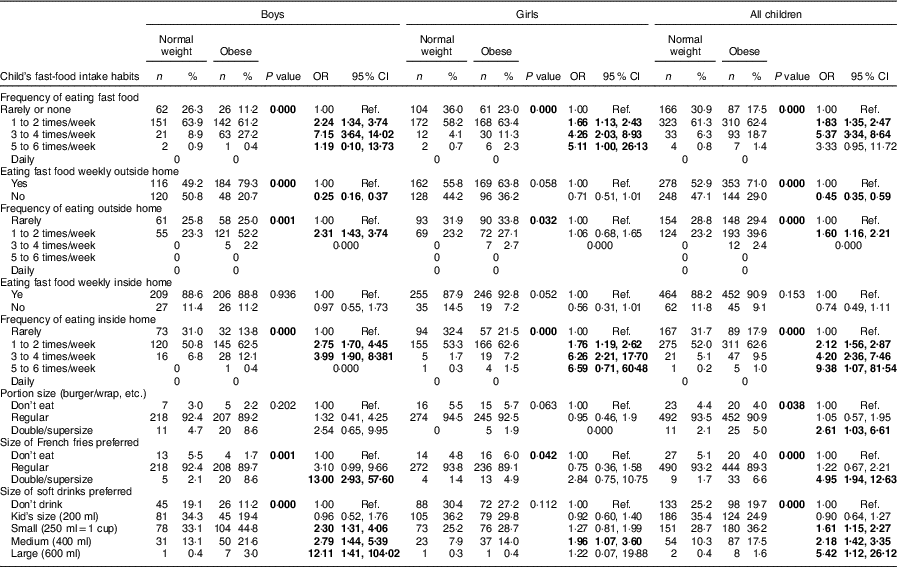
The frequency of fast-food intake, frequency of eating out (restaurants) as opposed to eating in (home) and the preferred portion size, classified by BMI and sex, are shown in Table 2, along with the odds of children being categorised as obese. Increased frequency of eating fast foods per week, irrespective of being out or at home, was positively associated with an increased risk of being obese. These relationships were statistically significant between groups and sex (P<0·001). Increased frequency of children eating fast foods outside the home was shown in the obese group (OR=0·45; 95 % CI 0·35, 0·59), especially boys (OR=0·25; 95 % CI 0·16, 0·37); however, no relationship was found between BMI and the frequency of eating fast foods at home (P=0·153). Interestingly, most children, in both groups, preferred to eat fast foods at home.
Association of fast-food intake with child weight status, according to sex and categorisation as normal weight or obeseFootnote *, among children aged 9·00–11·99 years (n 1023), Riyadh, Saudi Arabia, December 2015–March 2016
Ref., reference category.
Significant P values, OR and 95 % CI indicated in bold font.
* Normal weight defined as ≥25th and ≤75th percentile and obese defined as ≥95th percentile of BMI-for-age percentile based on Centers for Disease Control and Prevention data( 16 ).
A larger portion size chosen, when eating fast foods, was positively related to being obese as a group (P=0·038) and the risk of being obese (OR=2·61; 95 % CI 1·03, 6·61), but not when stratified by sex. In contrast, for specific foods, selecting a larger portion of French fries was positively associated with being obese as a group (OR=4·95; 95 % CI 1·94, 12·63; P<0·001) and stratified by sex (Table 2). The same statistical significance was also found if a larger soft drink size was chosen with the fast-food meal in the normal weight compared with the obese group (P<0·001), especially in boys (P=0·000), meaning an increased portion size corresponds to an increase in obesity.
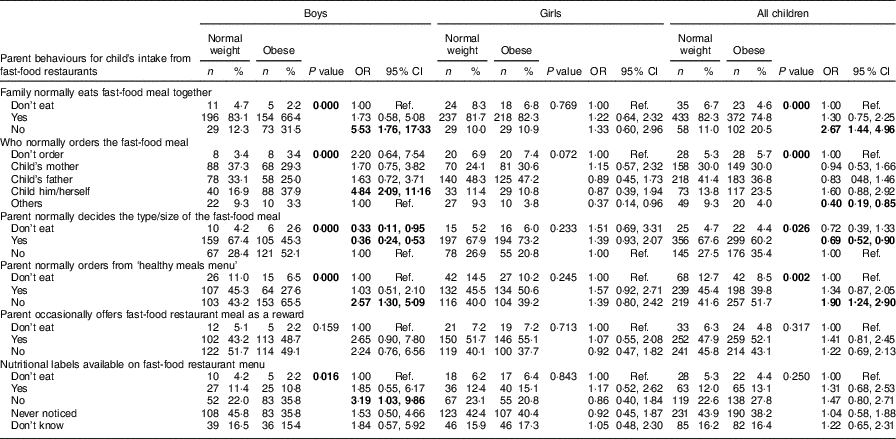
The data on parental and adult family members’ involvement dealing with, monitoring and controlling the behaviour of their children when eating at fast-food restaurants are shown in Table 3, along with the odds of children being categorised as obese. There was no association between parents offering to go to a fast-food restaurant, as a child’s reward, and weight status (P=0·317). The children were more likely to be of normal weight if the parents and/or families: ate fast-food meals together (OR=2·67; 95 % CI 1·44, 4·96); decided the type and/or size of the fast-food meal (OR=0·40; 95 % CI, 0·19, 0·85); and ordered from the ‘healthy meals menu’ (OR=7·90; 95 % CI, 1·24, 2·90) for their child, especially for boys (Table 3). Who normally ordered the fast-food meal for the child (mother, father, child or others) varied between groups; comparing boys, and groups, only, these relationships were statistically significant (P<0·001). As the children became more independent in ordering for themselves, this was shown as an increased risk factor to be obese (OR=4·84; 95 % CI 2·09, 11·16). However, no statistically significant relationships were found in girls (P=0·072). Our data showed no associations between a nutritional label being available on the menu at fast-food restaurants frequented by parents with their children, and BMI, except where parents ‘don’t see/notice’ such information, particularly in boys (OR=3·19; 95 % CI 1·03, 9·86; P=0·016).
Association of parent behaviours for child’s intake from fast-food restaurants with child weight status, according to sex and categorisation as normal weight or obeseFootnote *, among children aged 9·00–11·99 years (n 1023), Riyadh, Saudi Arabia, December 2015–March 2016
Ref., reference category.
Significant P values, OR and 95 % CI indicated in bold font.
* Normal weight defined as ≥25th and ≤75th percentile and obese defined as ≥95th percentile of BMI-for-age percentile based on Centers for Disease Control and Prevention data( 16 ).
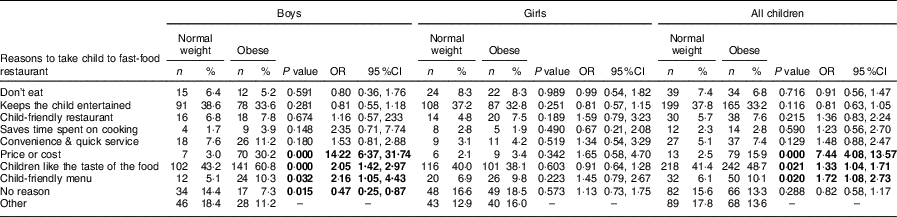
Reasons why parents chose to take their children to fast-food restaurants appear in Table 4, along with the odds of children to be categorised as obese. Our data varied between the groups, especially in boys. The cost of fast-food meals (OR=7·44; 95 % CI 4·08, 13·57; P<0·001), children liking the taste of the food (OR=1·33; 95 % CI 1·04, 1·71; P=0·021) and fast-food restaurants having child-friendly menus (OR=1·72; 95 % CI 1·08, 2·73; P=0·020) were common factors among the obese group, especially the boys. Conversely, reasons such as a fast-food restaurant entertaining the child, child-friendly restaurants, quick service time and convenience did not influence the results between the normal weight and obese groups. Parents who took their children to fast-food restaurants for ‘no particular reason’ was higher with normal-weight children, but only among the boys (OR=0·47; 95 % CI 0·25, 0·87; P=0·015).
Association of parental reasons for taking child to fast-food restaurant with child weight status, according to sex and categorisation as normal weight or obeseFootnote *, among children aged 9·00–11·99 years (n 1023), Riyadh, Saudi Arabia, December 2015–March 2016
Ref., reference category.
Significant P values, OR and 95 % CI indicated in bold font.
* Normal weight defined as ≥25th and ≤75th percentile and obese defined as ≥95th percentile of BMI-for-age percentile based on Centers for Disease Control and Prevention data( 16 ).
Discussion
Saudi Arabian society has undergone dramatic lifestyle changes in the past decade. Despite this, limited contemporary research exists on the fast-food consumption habits of Saudi Arabians, especially children. This current research highlights the prevalence of fast-food consumption factors among boys and girls, aged 9–12 years, in Riyadh. A high frequency of fast-food consumption was shown in both normal-weight and obese Saudi Arabian children, but weekly intakes of fast foods were much higher in the obese children. Moreover, logistic regression revealed that the knowledge, attitudes and practices of parents and their children towards the consumption of fast foods appeared to be associated with the occurrence of normal weight and/or obesity among Saudi Arabian children.
Socio-economic data from this cohort are described in detail in our previous study( Reference Alturki, Brookes and Davies 24 ). Briefly, parental education had no significant associations on children’s weight. However, increased trends showed that the fathers of normal-weight boys frequently had a postgraduate education; the fathers of obese boys reported an undergraduate or diploma qualification as their highest level of education; high income was positively associated with families having a normal-weight child; and low to mid incomes were a higher risk factor contributing to families having an obese child. Interestingly, family homes that typically have a ‘backyard’ to do physical activity was a protective factor against obesity. Overall, we previously highlighted that increased health-conscious parental involvement with their child’s diet may be a key factor in intervention management and dietary control. We showed a direct link between positive weight management and parents who actively adopt healthy food choices in the home. Our current data add to our previous publication on sociodemographic characteristics, by reporting the relationships between obesity and fast-food consumption.
In the current study, as expected, obese children consumed more fast food per week than normal-weight children. The average intake frequency of fast foods ranged between 1 and 2 times/week (61·3 % for normal weight, 62·4 % for obese), significantly more obese children had a fast-food intake of 3–4 times/week (6·3 % for normal weight, 18·7 % for obese) and more normal-weight children rarely consumed fast-foods compared with obese children (30·9 % for normal weight, 17·5 % for obese). Our results are comparable with data on 5th and 6th grade Saudi Arabian boys in Al-Hassa, eastern Saudi Arabia( Reference Amin, Al-Sultan and Ali 25 ), where obese children consumed significantly more servings of fast foods.
The evidence on the association between fast-food consumption and weight status in children is mixed. Some research shows a small, but important, positive correlation between fast-food consumption and increased BMI in children( Reference Taveras, Berkey and Rifas-Shiman 6 , Reference Rosenheck 26 ), while others have failed to support this correlation( Reference Boutelle, Fulkerson and Neumark-Sztainer 27 , Reference Duncan, Schofield and Duncan 28 ). In our study, while the obese group consumed fast foods more frequently than normal-weight children, the difference of 1–2 times/week was not significant between the groups. This may suggest that the frequency of fast-food intake is not the main cause of weight gain in school-aged children. However, the interaction of ‘very frequent intake’ of fast foods with other lifestyle and/or dietary factors may contribute to obesity among this age group( Reference Braithwaite, Stewart and Hancox 29 ).
Our data clearly showed that obese children were more likely to consume fast foods outside the home (e.g. at a restaurant) than normal-weight children (71·0 % v. 52·9 %). However, no statistically significant differences were found between groups if the fast food was consumed at home. Children aged less than 12 years are less likely eat outside their homes, without family supervision, compared with those over 12 years, who eat outside with their friends, especially boys, potentially being provided more freedom and independence. Interestingly, is appears that fast-food home delivery among the younger generation of Saudi Arabians is becoming increasingly popular. Therefore, it may not be unusual that more children, in both groups in our study, were eating fast foods inside the home.
The larger portion sizes available at fast-food restaurants is another aspect of concern, due to their higher density of dietary energy and fat content( Reference Livingstone and Pourshahidi 30 ). In the past decade, increased portion sizes available for consumers at fast-food restaurants has been reported, where increases of about two-to fivefold for burgers, French fries and soft drinks typically indicate a higher intake of dietary fat and energy( Reference Young and Nestle 31 ). Our study showed that larger portion sizes of fast foods were significantly positively associated with a high risk of obesity among both boys and girls, and suggested that obese children were more willing to consume larger portion sizes, especially of French fries and soft drinks, than normal-weight children.
Parents directly influence the eating habits and nutrition behaviours of their children( Reference Scaglioni, Arrizza and Vecchi 32 ), and play a critical role in dealing with, monitoring of and attitudes towards their children’s eating habits( Reference Brown and Ogden 33 ), including fast-food consumption. Our study showed that parents who regularly ate fast-food meals with their children, controlled the type and/or portion size for their children and ordered from the ‘healthy meals menu’ for their children were more likely to have normal-weight children, especially for boys. These may be considered as positive parental protective factors from obesity in our cohort. However, a study among 9–11-year-olds reported that parents more involved in their child’s fast-food selection did not necessarily have a positive impact on the children’s food selection behaviours( Reference Stutts, Zank and Smith 34 ). While healthier selection items are available at fast-food restaurants, not many children ordered these options. Provision of healthier product options in fast-food restaurants may not result in increased selection of these options( Reference Lesser, Kayekjian and Velasquez 35 ), parental intended reduction of energy intake for the child, or increased number of visits to a fast-food restaurant by a child consumer. Conversely, it could increase the chances of children selecting less-healthy choices( Reference Yoong, Dodds and Hure 36 ). Encouraging parents in limiting outings to fast-food restaurants may be a better option towards preventing obesity rather than influencing their child’s food choices from the menu.
Evidence for parental influence on fast-food choices and purchasing decisions is very scarce. Questions like the effects of permissive v. restrictive ‘parenting styles’ on children being overweight or obese, and whether parental intervention on food choice heightens child obesity, perhaps through inciting rebellious behaviour, remain unanswered( Reference Bowne 37 , Reference Wake, Nicholson and Hardy 38 ). In our cohort, children’s fast-food intake was influenced by their parents. The parents of normal-weight children tended to be more involved in the selection of lower-energy-dense foods from a fast-food menu, which may positively influence the child’s energy intake. Obese boys were more independent of parental influence when ordering from fast-foods outlets than normal-weight children. Children responsible for their own orders, in the absence of parental monitoring, tended to choose fast-food options with significantly higher energy and sugar content, and/or larger portion size. Similar results and views were reported in a recent unique Australian study, where children had the lowest energy content of foods purchased when parents controlled the selection of the fast-food meal( Reference Wellard, Chapman and Wolfenden 39 ).
The potential influence of nutritional information on a fast-food menu on children’s selection and resultant energy intake is not clear( Reference Tandon, Zhou and Chan 40 , Reference Elbel, Gyamfi and Kersh 41 ). Our study focused on parental attitudes, rather than those of the participating children, due to their limited grasp on concepts of energy and fat. A review of thirty-one studies (six conducted in children and adolescents, twenty-five in adults) assessed the effectiveness of energy (calorie) labelling, at the point of purchase, at fast-food restaurants( Reference Kiszko, Martinez and Courtney Abrams 42 ). The authors reported a positive trend of energy labelling on purchase decisions; however, the best-designed studies showed that energy labels do not have the desired effect in reducing total energy ordered at the population level. More specifically, among children, a study in parents of school-aged children (6–11 years) found that nutritional labelling on restaurant menus increased parents’ nutrition information awareness, but did not decrease energy purchased for either children or parents( Reference El Mouzan, Foster and Al Herbish 40 ). Therefore, the availability of nutritional information does not guarantee healthier food choices. Future research is required to determine the age where the provision of nutritional information may influence choices.
The majority of parents in our cohort did not notice nutritional labels in fast-food restaurants. While the regulations in Saudi Arabia require fast-foods outlets and restaurants to provide this information, it is not well followed or enforced. Saudi Arabian fast-food restaurants are not alone in this respect. In the USA, for example, of the 300 mega food chains, only about 50 % offer nutritional information( 8 ) and a parental-involved menu-labelling meta-analysis reported that energy labelling at restaurants weakly influences food choices( Reference Harnack and French 43 ). Further studies are required to increase the evidence for the provision of nutritional information having an effect on fast-food consumption among children( Reference Hobin, Lillico and Zuo 44 ).
Understanding the reasons why parents take their children to fast-food restaurants may assist in providing effective intervention strategies to minimise fast-food consumption and related health issues in children. Our study showed that most parents, for all groups, viewed fast-food restaurants as entertainment for their children; that the child was more likely to eat a full meal due to a taste preference for restaurant foods; and that this taste preference was significantly higher in the obese group, potentially due to the foods’ high fat, sugar and sodium content. However, the price of fast-food restaurant meals influenced parents’ decision to take their child, only with obese boys. A study among Saudi Arabian adolescent girls reported that the preferred taste at international food chains was a main factor to choose and enjoy this type of fast food; while price was the least important concern( Reference Alfaris, Al-Tamimi and Al-Jobair 14 ).
Food prices and cost offered by fast-food restaurants are major concerns( 8 ) in determining choice of fast foods for younger consumers( Reference Epstein, Dearing and Handley 45 ). A systematic review of time series and household surveys found that restaurant sales were ‘more responsive to price changes than any other food category, with a 10 % increase in price associated with an 8·1 % reduction in consumption’( Reference Andreyeva, Long and Brownell 46 ). A study on price sensitivity among 9–10-year-old children, examining the relationship between pricing and high-fat, energy-dense food choices, found a negative correlation between the fast-food prices, and selection and intake( Reference Sturm and Datar 47 ). Our study found that fast-food price and cost had a strong influence on consumption among obese children, especially boys, given that they visited fast-food outlets more than normal-weight children. Implementation of fast-food company taxes in Saudi Arabia, as public protective policy, may increase the prices of menu foods at these restaurants and, subsequently, reduce the consumption of high-fat and energy-dense foods( Reference Khan, Powell and Wada 48 ), especially in frequent and high-risk obese consumers( Reference Powell and Chaloupka 49 ).
In our study, parents of the obese group described the ‘child-friendly’ menus at fast-food outlets to be relatively influential. We showed trends, among parents of obese children, of adopting unhealthy dietary practices for their children (preferring fast-food restaurants for their cost, taste and child-friendly policies) without recognising the potential negative impact on their child’s health. This was further supported by parents stating, in ‘other reasons’, that ‘fast foods served as an escape from their usual home meals for the children’. This result was not surprising, as people make their food choices based on taste and cost first, and then ‘health’, especially among children and adolescents( Reference Swanson, Schoenberg and Davis 50 ).
Study limitations
Information gathered during this research has great potential to add to the limited data about fast-food consumption factors in a society undergoing a nutrition transition( Reference Popkin, Adair and Ng 51 , Reference Sibai, Nasreddine and Mokdad 52 ). One of the limitations of the study is that data were based on self-reporting, although we made every effort to minimise any possible over- or under-reporting by the participants. Even though the questionnaire was sent to the family to complete at home, we took great care in ensuring that the purpose the study was plain and simple to understand, and its importance, and we went to great lengths to explain the questionnaire items through a detailed informed consent form and participant information sheet. We also provided a direct contact number for the first author and encouraged all participating parents to inquire about any unclear questions or concerns.
Although the study’s cross-section design may be a limitation, the study cohort was clearly identified and selected. This helped to minimise the risk of bias associated with unblinded interviews. While some study variables appear to be more significant in boys than girls, all variables appear significant between groups. In addition, as fast-food consumption habits are perceived as unhealthy, it may be selectively under-reported and/or misreported due to the stigma of obesity and the young age factor( Reference Livingstone, Robson and Wallace 53 , Reference Forrestal 54 ). In girls, who can be more sensitive than boys about their weight status, there may be a possibility of bias.
Participants’ parents were asked about their role in their child’s intake from fast-food restaurants, even if the children chose the fast-food meal themselves. Justifiably, it is challenging to accurately record the choices of the young participants under parental care if they ate at fast-food chains without their parent/guardian. Data were gathered from self-reporting, not from actual purchase data, with the possibility that some results ‘may also have been influenced by social desirability bias’( Reference Van de Mortel 55 ).
Conclusion
Our study is unique to Saudi Arabia in that it examines parents’/caregivers’ behaviours and attitudes as factors that guide the child consuming fast foods in and outside the home. Parents who are cautious when buying fast foods for their children may act as a protective factor against obesity. We found a direct link between weight status in children and parents who proactively chose healthy foods at restaurants compared with those who did not. Understanding the effects of parental factors involved in children’s decision to eat fast foods is essential in formulating and implementing health promotion and disease prevention programmes among children. Overall, our findings highlight: the urgent need for increased responsibility among parents/caregivers to make healthier food choices to promote a healthy lifestyle for their children; and that the price of fast foods is linked to obesity in children, showing that governmental intervention, by way of higher taxes on fast foods, may make fast-food consumption less attractive to frequent fast-food consumers.
Acknowledgements
Acknowledgements: The authors thank all parents and families involved in the study sample, as well as the children who contributed to this study and agreed to participate. Also, the authors thank all dietitians who helped in collecting the anthropometric data. Financial support: This research was supported by King Abdulaziz City for Science and Technology (Riyadh City, Saudi Arabia) (reference number 161-14/2-3604338). The funders had no role in the design, analysis or writing of this article. Conflict of interest: None. Authorship: H.A.A. and P.S.W.D. conceived of and designed the research, and statistically analysed and interpreted the data. Collection and assembly of data was done by H.A.A. All authors participated in writing and drafting of the paper, critically reviewing its content, and approved the final version of the manuscript submitted for publication. Ethics of human subject participation: The study was approved by the Institutional Review Board (IRB) at the Ministry of Health in Saudi Arabia (approval number 15-336E). The Ethical Clearance for Research Involving Human Participants was reviewed and obtained from The University of Queensland Behavioural and Social Sciences Ethical Review Committee (BSSERC) (approval number 2015001629). In addition, permission to conduct the study at primary schools was obtained from the Ministry of Education in Riyadh. Written informed consent was obtained from parents/guardians of the children who participated in the study.



