


Introduction
Small-scale fisheries are globally important as food providers and as sources of employment in many coastal communities, particularly in the developing world (Berkes et al., Reference Berkes, Mahon, McConney, Pollnac and Pomeroy2001; McGoodwin, Reference McGoodwin2001; Béné, Reference Béné2006; Chuenpagdee et al., Reference Chuenpagdee, Liguori, Palomares and Pauly2006). Unlike industrial fisheries, which are more centralized and often have more defined management structures, small-scale fisheries are frequently characterized by political and economic marginalization and are often subject to minimal management and enforcement mechanisms (Berkes et al., Reference Berkes, Mahon, McConney, Pollnac and Pomeroy2001; McGoodwin, Reference McGoodwin2001; Dutton & Squires, Reference Dutton and Squires2008; Jacquet & Pauly, Reference Jacquet and Pauly2008). A growing list of recent studies shows that small-scale fisheries can have significant levels of incidental catch (bycatch) of marine fauna (e.g. Moreno et al., Reference Moreno, Arata, Rubilar, Hucke-Gaete and Robertson2006; Jaramillo-Legorreta et al., Reference Jaramillo-Legorreta, Rojas-Bracho, Brownell, Read, Reeves, Ralls and Taylor2007; Peckham et al., Reference Peckham, Diaz, Walli, Ruiz, Crowder and Nichols2007; Mangel et al., Reference Mangel, Alfaro-Shigueto, Waerebeek, Cáceres, Bearhop, Witt and Godley2010; Alfaro-Shigueto et al., Reference Alfaro-Shigueto, Mangel, Bernedo, Dutton, Seminoff and Godley2011). Attempts to address bycatch in these fisheries (e.g. through introduction of mitigation measures or time-area closures) are challenging (Lewison et al., Reference Lewison, Crowder, Read and Freeman2004; Campbell & Cornwelles, Reference Campbell and Cornwelles2008; Soykan et al., Reference Soykan, Moore, Zydelis, Crowder, Safina and Lewison2008).
The bycatch of small cetaceans has been reported in many fisheries worldwide (Jefferson & Curry, Reference Jefferson and Curry1994; Perrin et al., Reference Perrin, Donovan and Barlow1994; Reeves et al., Reference Reeves, Smith, Crespo and Notarbartolo di Sciara2003; Read et al., Reference Read, Drinker and Northridge2006). Small-scale fisheries are likely to contribute significantly to this bycatch (Read et al., Reference Read, Drinker and Northridge2006; Read, Reference Read2008). Gill-net fisheries in particular are widely regarded as some of the largest sources of small cetacean mortality (Jefferson & Curry, Reference Jefferson and Curry1994; Dawson & Slooten, Reference Dawson and Slooten2005; Read et al., Reference Read, Drinker and Northridge2006; Read, Reference Read2008).
The use of acoustic alarms is seen as one of the few potential solutions to gill-net bycatch (Read, Reference Read2008). Acoustic alarms, or pingers, are small battery-powered devices attached at intervals along a net that emit a repeated signal audible to small cetaceans. Pingers are successful at reducing the bycatch of many cetacean species (e.g. Kraus et al., Reference Kraus, Read, Solow, Baldwin, Spradlin, Anderson and Williamson1997; Bordino et al., Reference Bordino, Kraus, Albareda, Fazio, Palmerio, Mendez and Botta2002; Barlow & Cameron, Reference Barlow and Cameron2003; Carretta et al., Reference Carretta, Barlow and Enriquez2008; Palka et al., Reference Palka, Rossman, Vanatten and Orphanides2008) and their use is now a required bycatch mitigation measure in several commercial net fisheries in the USA and Europe (NOAA & NMFS, 1997, 1998; European Commission, 2004).
In Peru fishery interactions with small cetaceans have been reported since the 1960s (Clarke, Reference Clarke1962; Read et al., Reference Read, Waerebeek, Reyes, McKinnon and Lehman1988; Van Waerebeek & Reyes, Reference Van Waerebeek and Reyes1990). The majority of interactions were of small cetaceans caught by the small-scale gill-net fleet and the annual take was estimated at 10,000–20,000 individuals (Read et al., Reference Read, Waerebeek, Reyes, McKinnon and Lehman1988; Van Waerebeek & Reyes, Reference Van Waerebeek and Reyes1990, Reference Van Waerebeek and Reyes1994). Ministerial decrees in 1990 and 1994 (Decree Nos 569-90-PE and 321-94-PE) were followed by a national law in 1996 banning the capture of and trade in small cetaceans (Law No. 26585, 9 April 1996). Subsequent monitoring indicated that small cetaceans were still being killed in Peru's small-scale fisheries but reporting was limited (Van Waerebeek et al., Reference Van Waerebeek, Bressem, Felix, Alfaro-Shigueto, Garcia-Godos and Chavez-Lisambart1997, Reference Van Waerebeek, Alfaro-Shigueto, Montes, Onton, Santillan, Bressem and Vega2002). Using on-board observers on driftnet vessels from the northern Peru port of Salaverry, Mangel et al. (Reference Mangel, Alfaro-Shigueto, Waerebeek, Cáceres, Bearhop, Witt and Godley2010) reported that bycatch of small cetaceans was still common and suggested that capture rates may remain at levels seen before the 1996 ban. This study further noted that a large percentage of this bycatch was discarded, suggesting an opportunity to introduce bycatch mitigation measures, such as pingers, to the fishery. The purpose of our study was to assess the effect of pingers on bycatch of small cetaceans and on target catch within the Peruvian small-scale driftnet fishery.
Methods
The fishery
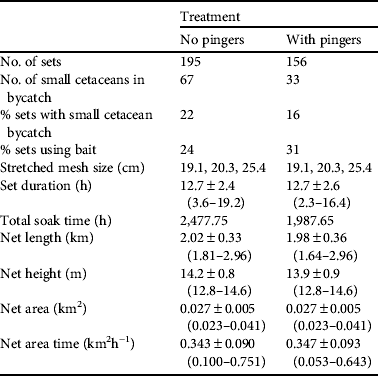
Small-scale (artisanal) vessels are defined according to Peruvian fishery regulations as those with a maximum of 32.6 m3 of storage capacity, < 15 m in length, and principally relying on the use of manual work during fishing operations (Ley General de Pesca, 2001). During April 2009–August 2011 small-scale driftnet fishing trips were monitored out of the port of Salaverry in northern Peru. Vessels in this fishery set multifilament nets at the ocean surface during the late afternoon and recover the nets the following morning after a soak time of c. 13 hours. Nets are typically 1.5–2 km long and have a stretched mesh of 19.1–25.4 cm, and remain attached to the drifting vessel during the set. This fleet operates almost exclusively over Peru's continental shelf and targets shark and ray species (primarily smooth hammerhead Sphyrna zygaena, blue Prionace glauca, short-fin mako Isurus oxyrinchus and thresher Alopias vulpinus sharks, and eagle rays Myliobatis spp.), although other species are captured incidentally, including sea turtles (Alfaro-Shigueto et al., Reference Alfaro-Shigueto, Mangel, Bernedo, Dutton, Seminoff and Godley2011), seabirds (Awkerman et al., Reference Awkerman, Huyvaert, Mangel, Shigueto and Anderson2006), swordfish Xiphias gladius, dolphinfish Coryphaena hippurus and manta rays Manta birostris. The blubber of small cetaceans is regularly used as bait in this fishery because of durability and perceived effectiveness at improving the catch of blue and mako sharks (Mangel et al., Reference Mangel, Alfaro-Shigueto, Waerebeek, Cáceres, Bearhop, Witt and Godley2010). This bait is derived from harpooned individuals or from bycatch recovered during the trip. Detailed descriptions of this fishery and its capture species can be found in Mangel et al. (Reference Mangel, Alfaro-Shigueto, Waerebeek, Cáceres, Bearhop, Witt and Godley2010), Alfaro-Shigueto et al. (2010) and Table 1.
Gear characteristics and fishing effort for control (no pingers) and experimental (with pingers) fishing sets observed during the study (April 2009–August 2011). Values are numbers or mean ± SD (range).
Experimental design
For the purposes of this experiment monitored vessels undertook normal fishing operations and did not deviate from their normal procedures or fishing locations. Two fishing captains, operating from six different vessels, were voluntary participants in the project. Control and experimental sets occurred in all months of the study except August 2009 and 2010, when vessels underwent annual maintenance. Vessels either set their nets continuously without pingers (control sets) or with pingers (experimental sets) or alternated between control and experimental sets throughout the course of a fishing trip and also alternated whether the initial set was control or experimental. There was some variation in net characteristics (net length and height) and set duration between control and experimental sets, which was accounted for in the analysis (Table 1).
Dukane Netmark 1000 pingers were used in the study. These pingers are no longer commercially available and were donated to the project. They have a fundamental frequency of 10–12 kHz and emit a 300 ms tone every 4 seconds with a source level range of c. 120–146 dB (re: 1 μPa at 1 m; Barlow & Cameron, Reference Barlow and Cameron2003). For experimental sets, pingers were attached to the net leadline at a depth of c. 14 m. The urgent need to begin this research (because of high reported bycatch rates) and logistical constraints, meant that pingers available for the trial were limited, and were therefore spaced at 200 m intervals. Battery voltages were checked before each trip to ensure each pinger was functioning properly. Pingers were also checked after each deployment and any failed units replaced. Data from those sets with failed pingers (six units over five sets, i.e. 3.2%) were not included in the analysis.
Data collection
On-board observers monitored all control and experimental fishing sets. These observers were trained to maintain and deploy the pingers and to monitor relevant aspects of the fishery operation as well as the target catch and bycatch of small cetaceans. Observers also recorded the provisioning costs (food, fuel, ice) for each trip and the gross profits received when the catch was landed and sold. Variables included in on-board observer monitoring were the date, time and location of sets as well as the primary gear dimensions and characteristics. The use of blubber from small cetaceans as bait was also monitored. For each fishing set all target catch and bycatch was counted and identified to the species level whenever possible. Bottlenose dolphins Tursiops truncatus were not differentiated between offshore or inshore stock. Neither common dolphins Delphinus spp. nor pilot whales Globicephala spp. were identified to species because of uncertainties in at-sea identification (it is likely, however, that the majority of interactions with common dolphins were with D. capensis; Van Waerebeek, Reference Van Waerebeek1994; Mangel et al., Reference Mangel, Alfaro-Shigueto, Waerebeek, Cáceres, Bearhop, Witt and Godley2010). Observers also monitored whether entangled cetaceans were alive or dead at the time of the haul and the final fate of each animal (released alive, discarded dead, used as bait, used for food).
Data analysis
Pinger effectiveness was assessed using generalized linear mixed models (GLMM). Preliminary models included fixed effects (control sets vs experimental sets, bait use) and random effects (trip, year, season, mesh size, vessel, captain). A random effect weather variable was not included because of missing values but when tested separately this variable was determined to be non-significant. The GLMMs were simplified sequentially to remove non-significant fixed and random effects. The random effect of ‘trip’ dominated variation in rates of bycatch whereas variance because of the other variables was negligible and these were therefore removed to arrive at the minimal adequate model. The fixed effect ‘bait use’ was also determined to be non-significant and was removed.
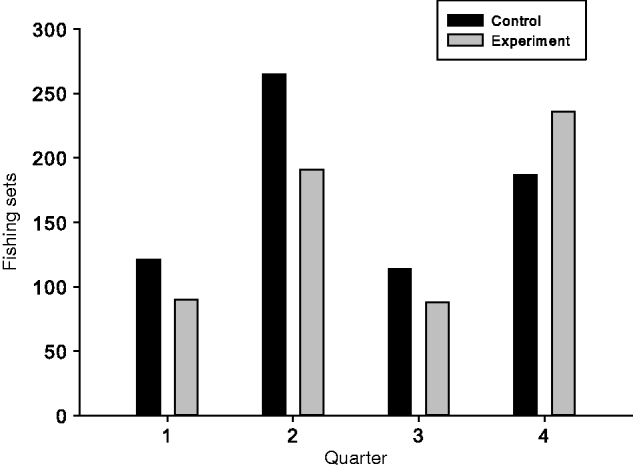
The resulting minimal adequate model for testing the impact of pinger use on bycatch of small cetaceans used a Poisson error distribution with fixed effects (control set vs experiment set) and the random effect (trip) as well as an offset term for fishing effort: offset(log[net area × time]). This offset term was calculated using the on-board observer data on each set's net area (km2) and soak time (h) and was therefore expressed as km−2h−1. Use of the log-offset allows the intercept parameters estimated by the GLMMs to be interpreted as catch per unit effort. Small cetacean bycatch data were not overdispersed and model checks confirmed that the Poisson error structure was valid. Seasons were defined as quarter 1 (January–March), quarter 2 (April–June), quarter 3 (July–September), and quarter 4 (October–December). The dependent variable was the total count of small cetaceans captured during a given fishing set.
We also examined the impact of pinger use on the fishery's target catch of sharks and rays. These tests also employed GLMMs and were structured similarly to the tests for small cetaceans described above. However, as shark and ray catch data were highly overdispersed we included an additional individual level random effect term that served to fit the extra-Poisson variation as a normally distributed error around the intercept (Elston et al., Reference Elston, Moss, Boulinier, Arrowsmith and Lambin2001). The dependent variable here was the total count of sharks and rays captured during a given fishing set.
Using the GLMMs we were able to calculate the small cetacean and target catch for control and experimental sets. This was accomplished by back-transforming the intercepts of the control and treatment groups to derive the catch per unit effort, which is presented as catch km−2h−1.
All GLMMs were fitted using the lme4 package for R v. 2.13.1 (R Development Core Team, 2011). Maps were prepared using ArcMap v. 9.2 (ESRI, Redlands, USA) and the Hawth's Tools Extension (Beyer, Reference Beyer2004). Bathymetric values were obtained from the Global Bathymetric Chart of the Oceans (IOC, IHO & BODC, 2003). Descriptive statistics are presented as mean ± SD unless specified otherwise. Trip costs and profits are presented in USD.
Results
Fishing effort
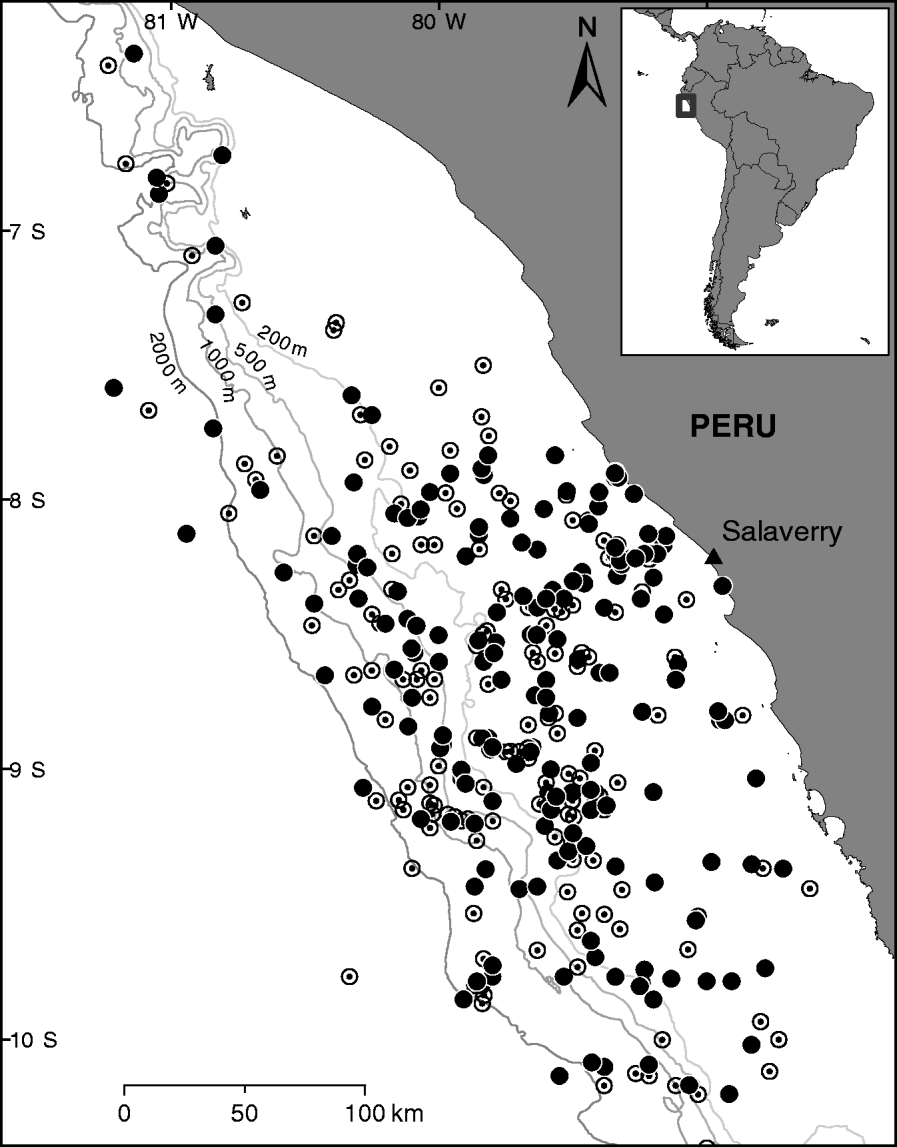
Over the 29 months of the study (April 2009–August 2011) we observed 195 control sets over 47 trips and 156 experimental sets over 43 trips (Table 1, Figs 1 & 2). Blubber of small cetaceans taken from bycatch and harpooned animals was used as bait in 24% of control sets and 31% of experimental sets. The mean cost to provision trips was USD 1,020 ± 669 (range USD 220–4,405, n = 52) and average gross profits were USD 2,195 ± 1,594 (range USD 0–7,401). Net profits were USD 1,176 ± 1,468 (range USD 2,276–6,094), with 10 trips (19.2%) operating at a loss.
Locations of control (filled circles) and experimental (open circles) fishing sets observed over the 29 months from April 2009 to August 2011. Fishing vessels participating in the study were based in the port of Salaverry. The rectangle on the inset indicates the location of the main map in Peru.
Distribution of control and experimental sets by monthly quarters over the course of the study (April 2009 to August 2011). Q1, January–March; Q2, April–June; Q3, July–September; Q4, October–December.
Bycatch of small cetaceans
Five species of small cetaceans were observed captured, including common dolphins (n = 45), dusky dolphins Lagenorhynchus obscurus (n = 20), bottlenose dolphins (n = 25), Burmesiter's porpoises Phocoena spinipinnis (n = 8) and pilot whales (n = 2). Each of these species was caught in both control and experimental sets, except pilot whales, which were only caught on one occasion in a control set. Forty-five percent of all small cetacean bycatch was common dolphins. All small cetaceans died as a result of their entanglement. Larger bycatch, including bottlenose dolphins and pilot whales, were typically discarded, whereas the majority of dusky dolphins were butchered for use as bait and the majority of Burmeister's porpoises were butchered for use as food (Table 2).
Species composition of bycatch of small cetaceans for control (no pingers) and experimental (with pingers) fishing sets, and percentage, by species, of final use of the carcasses.
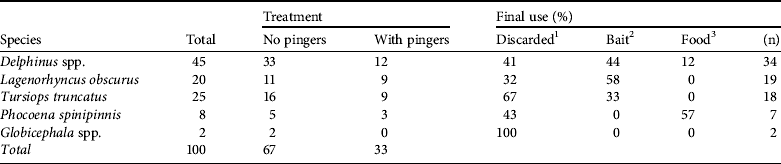
1 Animals recovered dead and discarded at sea
2 Animals recovered dead and then butchered for use as bait during subsequent fishing sets
3 Animals recovered dead and then butchered for food either for use during the trip or for home consumption
In addition to bycatch, 23 common dolphins and two dusky dolphins were observed to be harpooned, for use as bait on subsequent sets. This typically occurred as vessels were travelling to the fishing ground prior to the first fishing set. Harpooning was infrequent, occurring on 10 trips (11%) and with 1–4 individuals per event and only on trips primarily targeting blue and mako sharks. Twenty common dolphins were harpooned during seven trips that used pingers and two dusky dolphins and three common dolphins were harpooned during three control trips.
Pinger effectiveness
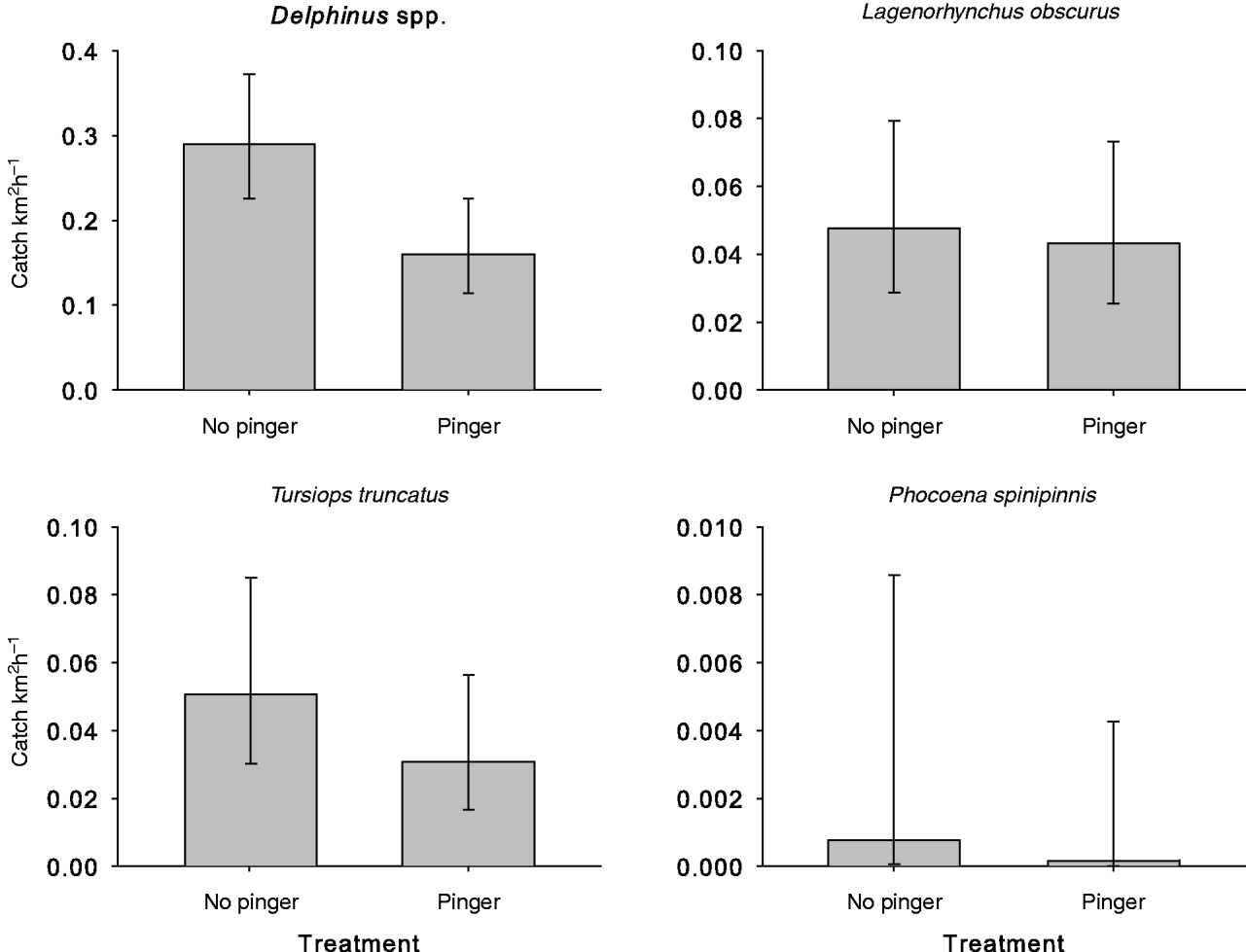
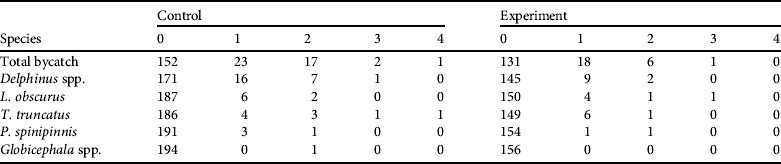
A total of 100 small cetaceans were observed captured, 67 during control sets and 33 during experimental sets (Tables 2 & 3, Fig. 3). Twenty-two percent of control sets (43 sets) and 16% of experimental sets (25 sets) had bycatch of small cetaceans. Control sets had a maximum catch of four individuals in a given set whereas experimental sets had a maximum catch of three individuals. Sets using pingers had a 37.2% lower bycatch rate of small cetaceans and this difference was statistically significant (GLMM, χ 2 1 = 4.0158, P = 0.0450; Table 4, Fig. 4). The bycatch rate declined from 0.798 km−2h−1 (range ± 1 SE 0.678–0.939) for control sets to 0.502 km−2h−1 (range ± 1 SE 0.407–0.619) for experimental sets. There were declines in bycatch rates of each small cetacean species but none of these declines were statistically significant (Tables 3 & 4, Fig. 4).
Locations and quantities of small cetacean bycatch in (a) control and (b) experimental sets. The shaded area is the minimum convex polygon of fishing sets.

Bycatch rates (catch km2h−1), with SE bars, of the main four small cetacean species for control (no pinger) and experimental sets (pinger).
Per set catch rates for all small cetacean bycatch species by control (no pingers) and experiment (with pingers) treatment groups.
Mean catch rates (km−2h−1, with range ± 1 SE, derived from the generalized linear mixed models used to test pinger effectiveness) of bycatch (dolphins and porpoises) and target catch (sharks and rays) for all observed control (no pingers) and experimental (with pingers) sets from April 2009 to August 2011, and % change in catch rate between control and experimental sets, and associated P-values.
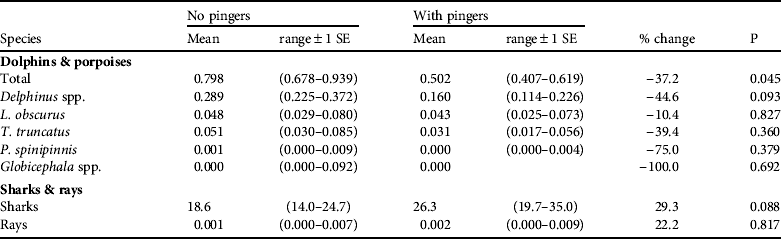
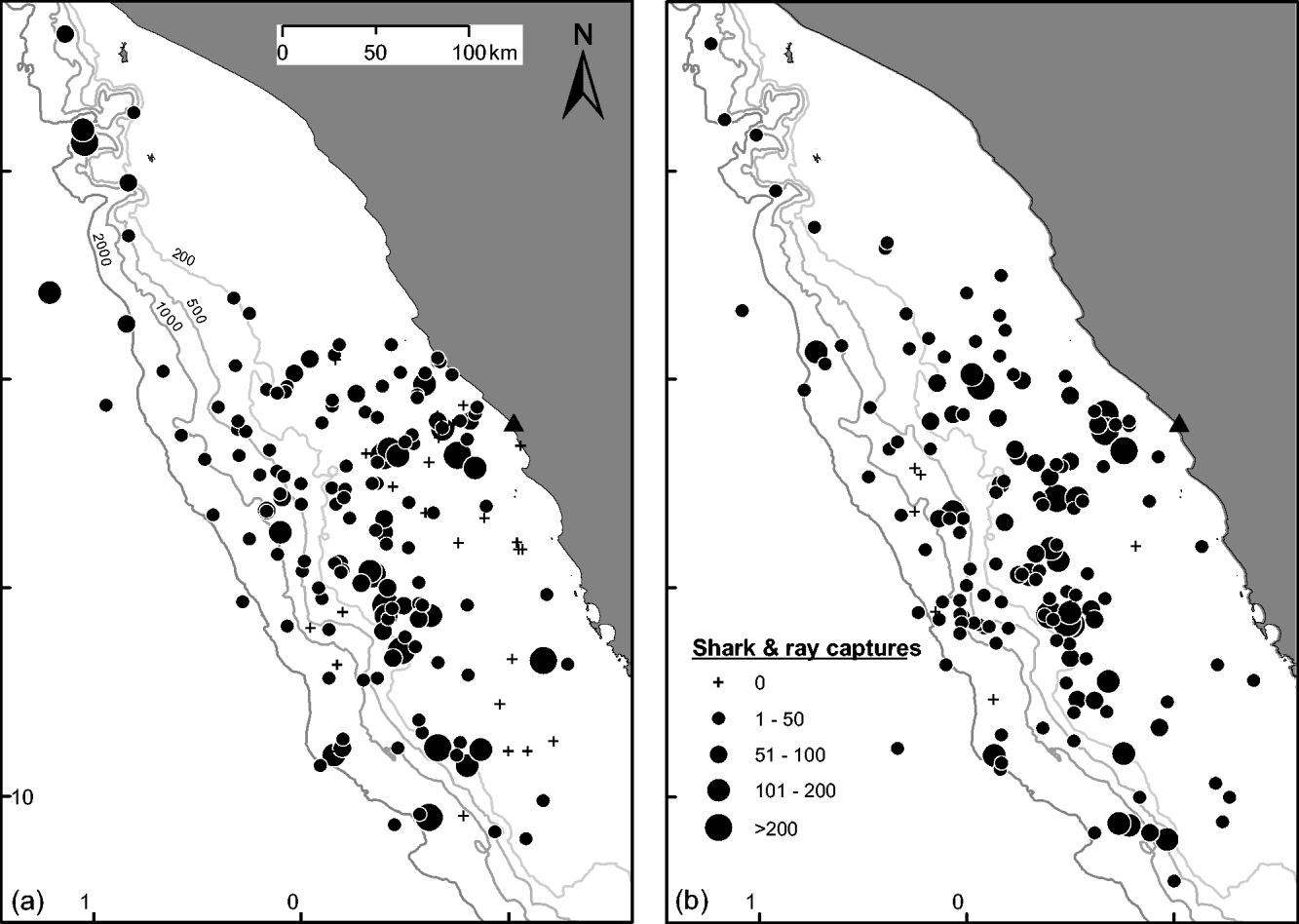
Control sets had a target catch rate of 18.6 sharks km−2h−1 (range ± 1 SE 14.0–24.7) whereas experimental sets had a catch of 26.3 sharks km−2h−1 (range ± 1 SE 19.7–35.0) but this difference was not statistically significant (GLMM, χ 2 1 = 2.9157, P = 0.088, Table 4, Fig. 5). Likewise, there was no statistical difference in the catch rates of rays between control sets (GLMM, χ 2 1 = 0.0534, P = 0.82) and experimental sets (Table 4, Fig. 5), with catch rates of 0.001 km−2h−1 and 0.002 km−2h−1, respectively.
Locations and quantities of shark and ray catch in (a) control and (b) experimental sets.
Discussion
Because of the nature of small-scale fisheries (i.e. minimal management or enforcement, economic and political marginalization), efforts to identify, test and implement bycatch mitigation measures have proven challenging (Campbell & Cornwelles, Reference Campbell and Cornwelles2008; Soykan et al., Reference Soykan, Moore, Zydelis, Crowder, Safina and Lewison2008). Here, in the first study of its kind in the south-eastern Pacific Ocean, we tested pinger effectiveness and have shown that they reduced bycatch of small cetaceans in the Peruvian small-scale driftnet fishery. As was observed in the California drift gill-net fishery for swordfish and sharks, the reduction was most pronounced when assessing total bycatch of small cetaceans (Barlow & Cameron, Reference Barlow and Cameron2003). Given the modest sample size in our study and the relative rarity of bycatch events, the observed declines in bycatch at the species level were not statistically significant. Although use of pingers did reduce the bycatch rate by 37%, it did not eliminate it. The greatest decline in bycatch rate was observed for common dolphins (44% decline), similar to the c. 50% decline observed in the California drift gill-net fishery for 1990–2009 (Carretta & Barlow, Reference Carretta and Barlow2011), but c. half the 86% decline observed in a controlled pinger experiment in the same fishery for the period 1996–1997 (Barlow & Cameron, Reference Barlow and Cameron2003).
Pinger effectiveness
How pingers work to reduce small cetacean captures in nets is still unclear (Kraus et al., Reference Kraus, Read, Solow, Baldwin, Spradlin, Anderson and Williamson1997; Carlström et al., Reference Carlström, Berggren, Dinnetz and Borjesson2002; Morton, Reference Morton2002). The range at which these devices may be audible is known to be variable and subject to environmental conditions such as sea condition and water temperature (Trippel et al., Reference Trippel, Strong, Terhune and Conway1999; Carlström et al., Reference Carlström, Berggren, Dinnetz and Borjesson2002). Dolphins and porpoises have been shown to alter their behaviour or distribution in the presence of pingers (Cox et al., Reference Cox, Read, Swanner, Urian and Waples2003; Carlström et al., Reference Carlström, Berggren and Tregenza2009). Experiments with Dukane 1000 pingers have indicated that they are probably audible under favourable weather conditions at a range of 600 m (Trippel et al., Reference Trippel, Strong, Terhune and Conway1999) and lead to reduced echolocations in harbour porpoises Phocoena phocoena at 500 m (Carlström et al., Reference Carlström, Berggren and Tregenza2009).
The appropriate spacing of pingers has been subject to some debate and recommendations vary (Bordino et al., Reference Bordino, Kraus, Albareda, Fazio, Palmerio, Mendez and Botta2002; Barlow & Cameron, Reference Barlow and Cameron2003; Larsen & Krog, Reference Larsen and Krog2007; Gazo et al., Reference Gazo, Gonzalvo and Aguilar2008; Gönener & Bilgin, Reference Gönener and Bilgin2009). Spacing has sometimes been in excess of the manufacturer's recommendations (Larsen & Krog, Reference Larsen and Krog2007; Gazo et al., Reference Gazo, Gonzalvo and Aguilar2008; Gönener & Bilgin, Reference Gönener and Bilgin2009). We spaced pingers at 200 m apart in an attempt to balance pinger effectiveness and the project's logistical constraints. Pinger spacing was also of concern because the relatively high costs of pingers in relation to income levels in this fishery had implications for economic viability, implementation and monitoring. The 37% decrease in small cetacean bycatch rate that we observed was less than that observed in other studies, where reductions were c. 50–90% (Kraus et al., Reference Kraus, Read, Solow, Baldwin, Spradlin, Anderson and Williamson1997; Bordino et al., Reference Bordino, Kraus, Albareda, Fazio, Palmerio, Mendez and Botta2002; Barlow & Cameron, Reference Barlow and Cameron2003; Carretta et al., Reference Carretta, Barlow and Enriquez2008; Carretta & Barlow, Reference Carretta and Barlow2011). The reasons for differences between studies include variations in fishery characteristics and net type, target and bycatch species, abundance and group size, and pinger specifications, as well as varying methods used to calculate bycatch rates. There have also been declines observed in pinger effectiveness between controlled studies and actual implementation, including in the California driftnet fishery (Carretta & Barlow, Reference Carretta and Barlow2011) and the US north-east gill-net fishery (Palka et al., Reference Palka, Rossman, Vanatten and Orphanides2008). Nevertheless, further reductions in the bycatch rate of small cetaceans in Peru may be possible with reduced pinger spacing, as there is evidence that bycatch rates decrease as the number of pingers increases (Trippel et al., Reference Trippel, Strong, Terhune and Conway1999; Barlow & Cameron, Reference Barlow and Cameron2003) and that bycatch rates can increase in sets with less than the prescribed number of operational pingers (Palka et al., Reference Palka, Rossman, Vanatten and Orphanides2008; Carretta & Barlow, Reference Carretta and Barlow2011).
We did not observe bycatch of pinnipeds, although South American sea lions Otaria flavescens and fur seals Arctocephalus australis are common on the fishing grounds and are known to depredate catch from fishing nets. Concerns have been raised that the sound emitted by pingers could increase depredations by pinnipeds by alerting them to the presence of nets, commonly referred to as the ‘dinner bell’ effect (Dawson, Reference Dawson1991). A review of 19 years of on-board observer data from the California driftnet fishery found evidence of an increase in depredations by pinnipeds after pingers were introduced but attributed that increase to changes in target catch rates and pinniped populations, rather than to attraction to the net by the pingers (Carretta & Barlow, Reference Carretta and Barlow2011). The systematic monitoring of depredations by pinnipeds was beyond the scope of our study as there was some uncertainty regarding the ability to identify depredation events accurately and consistently. It should, however, be monitored in the future as the effectiveness of pingers could be undermined if catch values declined as a result of increased damage from pinnipeds and other species (Kraus et al., Reference Kraus, Read, Solow, Baldwin, Spradlin, Anderson and Williamson1997; Bordino et al., Reference Bordino, Kraus, Albareda, Fazio, Palmerio, Mendez and Botta2002; Carretta & Barlow, Reference Carretta and Barlow2011).
There was no statistically significant difference in catch rates of sharks and rays, the primary target species in this fishery, between control and experimental sets. This finding is in line with other pinger trials that have shown either no impact on target catch (Kraus et al., Reference Kraus, Read, Solow, Baldwin, Spradlin, Anderson and Williamson1997; Trippel et al., Reference Trippel, Strong, Terhune and Conway1999; Bordino et al., Reference Bordino, Kraus, Albareda, Fazio, Palmerio, Mendez and Botta2002; Carlström et al., Reference Carlström, Berggren, Dinnetz and Borjesson2002; Gazo et al., Reference Gazo, Gonzalvo and Aguilar2008; Gönener & Bilgin, Reference Gönener and Bilgin2009) or an improved target catch (Buscaino et al., Reference Buscaino, Buffa, Sara, Bellante, Tonnelle and Hardt2009). The lack of an impact in our study is not unexpected as shark hearing is typically in the 40–800 Hz range (Myrberg, Reference Myrberg2001), well below the 10 KHz fundamental frequency of the Dukane pingers. Moreover, while sharks and small cetaceans are typically considered as having a predator–prey relationship, given the species and small sizes (c. 1 m; ProDelphinus, unpubl. data) of sharks typically captured in the fishery it may be more accurate to consider them as primarily competitors for prey (Heithaus, Reference Heithaus2001).
Regional significance and barriers to implementation
The significance of the declines in bycatch rate associated with pinger use become clear when one considers the potential regional-level impacts. Peruvian small-scale fisheries grew during 1995–2005 by c. 50% to 9,667 vessels, of which the largest component (30% of the fleet) is gill-net vessels (Escudero, Reference Escudero1997; Estrella et al., Reference Estrella, Guevara-Carrasco, Avila, Palacios and Medina1999, 2000; Estrella & Swartzman, Reference Estrella and Swartzman2010; Alfaro-Shigueto et al., Reference Alfaro-Shigueto, Mangel, Bernedo, Dutton, Seminoff and Godley2011). The annual mortality of small cetaceans in the operations of the Peruvian small-scale driftnet fleet is estimated to be 15,000–20,000 (Mangel et al., Reference Mangel, Alfaro-Shigueto, Waerebeek, Cáceres, Bearhop, Witt and Godley2010). Mortality of small cetaceans for the port of Salaverry alone was estimated to average 2,412 animals per annum for 2002–2007 (Mangel et al., Reference Mangel, Alfaro-Shigueto, Waerebeek, Cáceres, Bearhop, Witt and Godley2010). Given the catch rates reported here and the level of annual fishing effort for the port of Salaverry, c. 4,000 sets (Mangel et al., Reference Mangel, Alfaro-Shigueto, Waerebeek, Cáceres, Bearhop, Witt and Godley2010), one could expect a reduction in bycatch of small cetaceans of c. 500 individuals per year if all driftnet vessels from the port used pingers. As the Salaverry gill-net fleet represents c. 2% of gill-net fishing effort in Peru (Escudero, Reference Escudero1997; Estrella et al., Reference Estrella, Guevara-Carrasco, Avila, Palacios and Medina1999, Reference Estrella, Guevara-Carrasco, Avila, Palacios and Medina2000; Estrella & Swartzman, Reference Estrella and Swartzman2010; Mangel et al., Reference Mangel, Alfaro-Shigueto, Waerebeek, Cáceres, Bearhop, Witt and Godley2010), and that fleet deploys at least 100,000 km of net annually (Alfaro-Shigueto et al., 2010), use of pingers by gill-net vessels throughout Peru has the potential to reduce small cetacean mortalities by thousands of animals each year.
Significant barriers to implementation do, however, exist. The current unit cost of commercially available pingers is c. USD 130 per unit and the recommended spacing is generally 200 m (Northridge et al., Reference Northridge, Fortuna and Read2010). To equip a 2 km length net in this fishery would require an investment of c. USD 1,100–1,500. As we report here, this is approximately equivalent to the mean net profit of a fishing trip. These profits are divided between captain, crew and owner so the portion left to fund the purchase of pingers would take multiple trips to offset.
The pingers that are currently commercially available are durable and typically have estimated battery lives of thousands of hours to multiple years. These characteristics are particularly important for utilization by a small-scale fleet, where vessels are numerous and dispersed among many, often remote, locations. Under such conditions pinger or battery replacements would be difficult to find and this could lead to increased failure to use pingers appropriately. But there would still be unavoidable costs, however small, associated with maintaining pingers (e.g. battery replacement, pinger damage and loss). Whether vessel owners in this fishery would be willing to accept all the costs associated with purchasing and maintaining pingers in a management environment in which enforcement is minimal is questionable. Small cetaceans are still regularly captured, consumed and sold, in violation of regulations (Van Waerebeek et al., Reference Van Waerebeek, Alfaro-Shigueto, Montes, Onton, Santillan, Bressem and Vega2002; Mangel et al., Reference Mangel, Alfaro-Shigueto, Waerebeek, Cáceres, Bearhop, Witt and Godley2010). Other than a new effort for regulation and enforcement, which is unlikely, the available levers by which to mandate pinger use are limited. As a result, promotion and uptake of pinger use in the fishery will probably begin on a voluntary basis and build upon positive experiences of other fishers. In such situations product cost and ease of use become important factors that could help determine broader acceptance in the fishery. As Alfaro-Shigueto et al. (2010) note, gill-net fisheries in Peru can be thought of as entry-level or ‘gateway’ fisheries because of their relatively low costs and profits in comparison to other fisheries such as long-line fisheries. Any efforts to promote pinger use should therefore also stress the potential benefits to work efficiency. Reduced net damage associated with pinger use has been reported (Culik et al., Reference Culik, Koschinski, Tregenza and Ellis2001; Gazo et al., Reference Gazo, Gonzalvo and Aguilar2008; Buscaino et al., Reference Buscaino, Buffa, Sara, Bellante, Tonnelle and Hardt2009). Moreover, confirming the observation in Mangel et al. (Reference Mangel, Alfaro-Shigueto, Waerebeek, Cáceres, Bearhop, Witt and Godley2010), we found that c. 50% of all bycatch of dolphins and porpoises was discarded, a potential source of net damage and lost time and effort associated with disentanglement.
The use of small cetaceans for bait is widespread globally (Dolar, Reference Dolar1994; Goodall et al., Reference Goodall, Schiavini and Fermani1994; Lescrauwaet & Gibbons, Reference Lescrauwaet and Gibbons1994; Zavala-Gonzalez et al., Reference Zavala-Gonzalez, Urban-Ramirez and Esquivel-Macias1994; Mora-Pinto et al., Reference Mora-Pinto, Mufioz-Hincapie, Mignucci-Giannoni and Acero-Pizarro1995; Van Waerebeek et al., Reference Van Waerebeek, Bressem, Felix, Alfaro-Shigueto, Garcia-Godos and Chavez-Lisambart1997; Avila et al., Reference Avila, Garcia and Bastidas2008; Mangel et al., Reference Mangel, Alfaro-Shigueto, Waerebeek, Cáceres, Bearhop, Witt and Godley2010). We observed harpooning of dolphins for use as bait on 11% of trips. There is clearly a need to continue monitoring this dynamic as continued harpooning would offset some of the gains made through pinger use. Under the currently limited monitoring and enforcement of the ban on capture and trade of small cetaceans, the regular use of dolphins for bait will probably continue.
Conclusions and recommendations
We have shown that pingers were effective at reducing bycatch of small cetaceans in the Peruvian small-scale driftnet shark fishery. Given the vast size of this fishery and its current levels of bycatch of small cetaceans (Alfaro-Shigueto et al., 2010; Mangel et al., Reference Mangel, Alfaro-Shigueto, Waerebeek, Cáceres, Bearhop, Witt and Godley2010) appropriate use of pingers could result in mortality reductions of thousands of individuals per annum and would represent an important step for the conservation of small cetaceans in the south-eastern Pacific. Further collaborative research with fishermen and vessel owners in the Peruvian gill-net fishery are currently underway and will continue to monitor pinger effectiveness and their impacts on small cetaceans and the fishery (e.g. target catch rates, depredations by pinnipeds).
As the pingers used in this study are no longer commercially available, an alternative will have to be found if larger-scale trials are to occur. The current suite of commercially available pingers each has specific design specifications and are not necessarily inter-changeable, and therefore their suitability for the Peruvian small-scale driftnet fishery needs to be assessed prior to large-scale implementation.
Additional challenges to large-scale implementation remain, including the costs associated with pingers and their maintenance, and the continued practice of harpooning of dolphins for use as bait. These issues will have to be addressed before expanding pinger use to the national level and to achieve the full extent of potential reductions in mortality of dolphins and porpoises.
Acknowledgements
We thank the participating fishermen and field observers for their generous collaboration. ProDelphinus biologists Natalia Ortiz and Graciela McEvoy helped with field work. Project funding and equipment was provided by Cetacean Society International, Chelonia Ltd, Cleveland Metroparks Zoo, Comisión Permanente del Pacífico Sur, the Darwin Initiative, the Oak Foundation through Duke University, the Rufford Foundation and the Whale and Dolphin Conservation Society, as well as Dr Andy Read of Duke University and Dr Per Berggren of Newcastle University. The manuscript benefited from helpful comments by two anonymous reviewers. JCM and JA-S are Overseas Research and Students Awards Scheme (ORSAS) and University of Exeter scholarship awardees, respectively. MJW is funded by the Peninsula Research Institute for Marine Renewable Energy (PRIMaRE). DH is supported by the Natural Environment Research Council and the European Union. BJG receives funding from the Darwin Initiative, the Natural Environment Research Council and the European Union.
Biographical sketches
Jeffrey Mangel and Joanna Alfaro-Shigueto operate the Peruvian NGO ProDelphinus whose work focuses on monitoring and mitigating the bycatch of threatened marine fauna in small-scale fisheries. Matthew Witt is researching spatial ecology as an aid to understanding marine vertebrate distribution and foraging ecology. Dave Hodgson is a quantitative ecologist focusing on the robustness of empirical models on population and community dynamics, with applications for conservation management and the exploitation of natural resources. Brendan Godley has wide-ranging interests in biodiversity conservation and especially the study of marine vertebrates.



