


Introduction
The complexity of contemporary challenges – marked by environmental, social, political and economic crises – demands a reorientation of design in terms of its challenges, approaches, methods and tools (Lotti et al., Reference Lotti, Marseglia, Vacca and Sottani2022). In this context, as highlighted by various authors (Oxman, Reference Oxman2016) (Ito, Reference Ito2016) (Lucibello, Reference Lucibello2019) (Langella, Reference Langella2019a, Reference Langella2019b) (Mejía et al., Reference Mejía, Henriksen, Xie, García-Topete, Malina and Jung2023), the complexity of design responses must be nourished by heterogeneous and collaborative contributions from other disciplines. Accordingly, the design field must train professionals capable of understanding and interacting with other sciences in a more conscious and comprehensive manner to develop future application scenarios across all areas of design – from materials to products and systemic design – while addressing complex ethical issues. Based on this perspective, new approaches, methodologies and tools are being developed to prepare professionals for transdisciplinary collaboration between design and science (Langella, Reference Langella2019a) (Marseglia, Reference Marseglia2020) (Pollini, Reference Pollini2024). Biodesign, in particular, has emerged as the most advanced disciplinary field in this direction, focusing on the design of new materials and the exploration of novel manufacturing processes (Myers, Reference Myers2012) (Ginsberg and Chieza, Reference Ginsberg and Chieza2018). However, as noted by several authors (Camere and Karana, Reference Camere and Karana2018) (Vijayakumar et al., Reference Vijayakumar, Cogdell, Correa, Dade-Robertson, Danies, Edens, Forlano, George, Grushkin, Holbert, Hoover, Jalkh, Kisielewski, Obregon, Pirone, Polli, Scarpelli, Stukes, Ward and Walker2024), these approaches, while innovative and potentially disruptive, lack clearly defined pedagogical and applied methods. As is widely acknowledged, the design field is marked by its particular way of knowing and is identified as the “third area” or “third culture” within the domain of education (Cross, Reference Cross1982). What happens when the epistemologies of science intersect with those of design? What does it mean to combine two ways of knowing: science, which seeks to understand the nature of existing phenomena, and design, which aspires to invent valuable things that do not yet exist (Sydney A. Gregory in Cross, Reference Cross1982, Reference Cross2006)?
This article presents the results of an educational program where designer and scientists collaborated synergistically, sharing and redefining their practices in a blurred space between disciplinary boundaries, to create new mycocomposite materials. Materials remain a fundamental element of design, influencing the era in which we live (Ashby and Johnson, Reference Ashby and Johnson2010). Their impact can be both positive, through their aesthetic and sensory qualities, and negative, in terms of waste generated across their entire lifecycle. For instance, in 2020, the mass of anthropogenic materials surpassed the total biomass of living organisms (Elhacham et al., Reference Elhacham, Ben-Uri, Grozovski, Bar-On and Milo2020), highlighting how our ties with nature have been irreversibly severed (Antonelli and Tannir, Reference Antonelli and Tannir2019). In our time, it has become clear that human actions are deeply interwoven within the complexity of planetary systems (Morin, Reference Morin2015). In this context, design carries a pivotal responsibility, as it not only shapes but also defines the material identity embedded in the products and systems it brings to life.
In recent years, designer have returned to focusing on materials – not merely as selectors, experimenters or applicators, but as inventors and creators (Trebbi, Reference Trebbi2024) of potential future material scenarios. This approach has been described by Rognoli et al. (Reference Rognoli, Pollini and Alessandrini2021) as design for post-Anthropocene material transition. This paradigm shift has led many designers and researchers to focus on these aspects through various theories and practices, rooted in concepts such as Material Activism (Ribul, Reference Ribul2014), Material Driven Design (Karana et al., Reference Karana, Barati, Rognoli and Zeeuw van der Laan2015a), Material Experience (Karana et al., Reference Karana, Pedgley and Rognoli2013, Reference Karana, Barati, Rognoli and Zeeuw van der Laan2015a, Reference Karana, Pedgley and Rognoli2015b), DIY Materials (Rognoli et al., Reference Rognoli, Bianchini, Maffei and Karana2015; Vélez et al., Reference Vélez, Rognoli, Parisi, Pollini, Taranto and Ayala Garcia2022), Material Tinkering (Parisi et al., Reference Parisi, Rognoli and Sonneveld2017) and Growing Design (Camere and Karana, Reference Camere and Karana2018).
Simultaneously, material design approaches involving collaborations between design and other sciences have been developed (Ferrara and Lucibello, Reference Ferrara and Lucibello2009) (Langella, Reference Langella2007, Reference Langella2019a, Reference Langella2019b) (Lucibello, Reference Lucibello2019). In some of these theories and approaches, the collaboration between scientists and designer transcends individual disciplines, resulting in open, innovation-oriented partnerships. In this sense, as suggested by Ito (Reference Ito2016), the union of design and science can produce an approach that is both rigorous and flexible, enabling exploration, understanding and contributions to science in an antidisciplinary way.
In recent years, there has been a growing number of educational activities involving design students and professionals in material tinkering. These activities emphasize learning about materials through hands-on experiences to unlock opportunities from unconventional tools and processes while fostering creativity (Parisi et al., Reference Parisi, Rognoli and Sonneveld2017). Notable examples include the MaDe – Materials Designer project (2019–2021), coordinated by Professor Valentina Rognoli, which aimed to demonstrate the impact material designers can have on the planet as agents of change for a responsibly designed future (Rognoli and Parisi, Reference Rognoli and Parisi2021). At the European and international levels, material and biodesign-oriented educational programs include the Master in Bio-Integrated Design (BIO-ID) at UCL (UK), the Biodesign Masterclass at TU Delft (NL), the Master in Global Innovation Design (GID) at the Royal College of Art (UK), the MA in Biodesign at Central Saint Martins (UK) and the Biodesign Challenge program, among others.
In alignment with this trend, the Design for Sustainability Lab at the DIDA Department (University of Florence) has, since 2021, offered a 3-credit educational program – the Material beyond Materials (MbM) workshop – as part of the Bachelor’s degree in Product, Interior, Communication and Eco-Social Design.
In its third edition (2023–2024), the MbM workshop (Marseglia et al., Reference Marseglia, Cantini, Celli, Brunelli and Lotti2024) is rooted in concepts of sustainability and regeneration. It aims to engage students in exploring the relationship between the circular economy and material tinkering through the hybrid tools of biodesign. Each student is required to select a waste material or by-product from local supply chains as a starting point for material experimentation. Guided by a systemic design approach oriented toward the circular economy (Bistagnino, Reference Bistagnino2009), these material experiments and potential applications must be ecologically sustainable and have minimal environmental impact. Participants are also asked to reflect deeply on the concept of “material flow” and the systemic implications of their design choices. The workshop aims to train the first generation of material-focused biodesigners at the University of Florence (UNIFI), introducing them to the principles of material design and biodesign. Given the workshop’s highly heterogeneous content, its three editions required a methodological evolution toward a more inclusive approach that integrates other disciplines, fostering dialog with the sciences to develop knowledge and skills beyond traditional design fields.
In this sense, MbM III has evolved into what can be described as Transdisciplinary Material BioTinkering (TMBT) method, a design method for the design and development of bio-fabricated materials in educational contexts, supporting the training of future biodesigners. Here, the student-designer not only acquires basic biological knowledge but also collaborates side by side with scientists – from concept development to laboratory experimentation – acting as a true Designer in Lab (Langella in Pollini, Reference Pollini2021) (Pollini, Reference Pollini2024).
Methods
The MbM Workshop is grounded in the principles of Material Experience (Karana, Pedgley and Rognoli, Reference Karana, Pedgley and Rognoli2013) and Material-Driven Design (MDD), as outlined by Karana et al. (Reference Karana, Barati, Rognoli and Zeeuw van der Laan2015a), this approach facilitates the design of material experiences starting from the material itself.
The first edition of the MbM Workshop integrated the MDD approach and involved students in three specific steps: Explore Materials – activities in this step focused on data extraction, understanding the properties and constraints of the selected materials and identifying their potential. During this stage, students engaged in exploratory research through tinkering and online research to develop awareness about the chosen material; Roll Up Your Sleeves – this step involved students experimenting with DIY processes and techniques to develop the material. It was characterized by “borrowing” knowledge from other disciplines, such as biology, fostering processes of cross-pollination; Annotate – in this step, students were required to provide both technical and aesthetic-sensory characterizations of the material samples they produced using precompiled forms. At the end of the workshop, student feedback was collected informally and through direct observation; the information was used to shape the methodological framework for the second edition.
The second edition of MbM retained the foundational methodology described above. However, considering the themes of sustainability and circularity, it was deemed necessary to further integrate contributions from other scientific fields, particularly involving experts from biology, materials science and wood technology. This aimed to support students in acquiring technical knowledge to deepen their understanding of materials. Like the first edition, this iteration concluded with a final survey (Appendix 1) of the participants, and the results were used to inform the methodology of the third edition.
The third edition of MbM, named the Biodesign Edition, aimed to define a simultaneous material design methodology across multiple disciplines. MbM III focused on biofabrication techniques characterized by scientific approaches and technological complexity, which require specific and detailed knowledge for optimal application. The workshop revolved around the use of fungal mycelium – Pleurotus ostreatus – tested with various types of local industrial by-products and waste streams – such as those from the textile, paper and agro-industrial sectors – with the goal of obtaining circular material samples alongside related application concepts. Given the peculiar methodology adopted, the workshop required collaboration with living organisms – “nature as a co-worker” (Collet, Reference Collet2013, Reference Collet2021) (Roudavski, Reference Roudavski, Goodbody and Rigby2021; Lucibello and Montalti, Reference Lucibello and Montalti2019) or “nature as co-designer” (Camere and Karana, Reference Camere and Karana2018) – thereby necessitating a more advanced technical-scientific level compared to a typical DIY approach. This entailed an enhancement of scientific knowledge from the outset, introducing concepts such as general biology, the scientific method and laboratory best practices – Bio Safety Level 1 Lab – in order to establish a solid foundation for achieving appropriate theoretical and practical results aligned with the increased technological scope. For these reasons, the involvement of other scientific disciplines was extended across all phases of teaching and coaching, with the objective of creating moments of collaboration at the intersections of individual disciplines. Similarly, the MDD method was evolved into a more complex and iterative structure to effectively address the scientific and experimental needs of the highly transdisciplinary application field.
In this context, the approach of the third edition of MbM can be described as a transdisciplinary biotinkering process, where designer and scientists collaborated across design methodology and scientific methodology (Cross et al., Reference Cross, Naughton and Walker1981) throughout all phases of the design process. This workshop also concluded with a survey where students had the opportunity to share their opinions (Appendix 1).
The proposed method emerged from a series of workshops, which enabled the research team to develop an approach that could potentially be replicated by other researchers. While the method itself is reproducible, the outcomes – like in any design project – will naturally vary depending on the participants and the subject of the study. The TMBT method we present can serve as a foundation for other researchers looking to transdisciplinary biodesign workshops or other educational experiences within the field of biodesign.
Transdisciplinary material biotinkering (TMBT) method
Based on the theoretical and methodological foundations introduced in this article, methods and tools have been developed to integrate transdisciplinary approaches for the creation of bio-fabricated materials (Poblete et al., Reference Poblete, Romani and Rognoli2024). These were tested during the third edition of the Material beyond Materials workshop, where aspiring biodesigners created fungal mycelium (P. ostreatus)-based material samples.
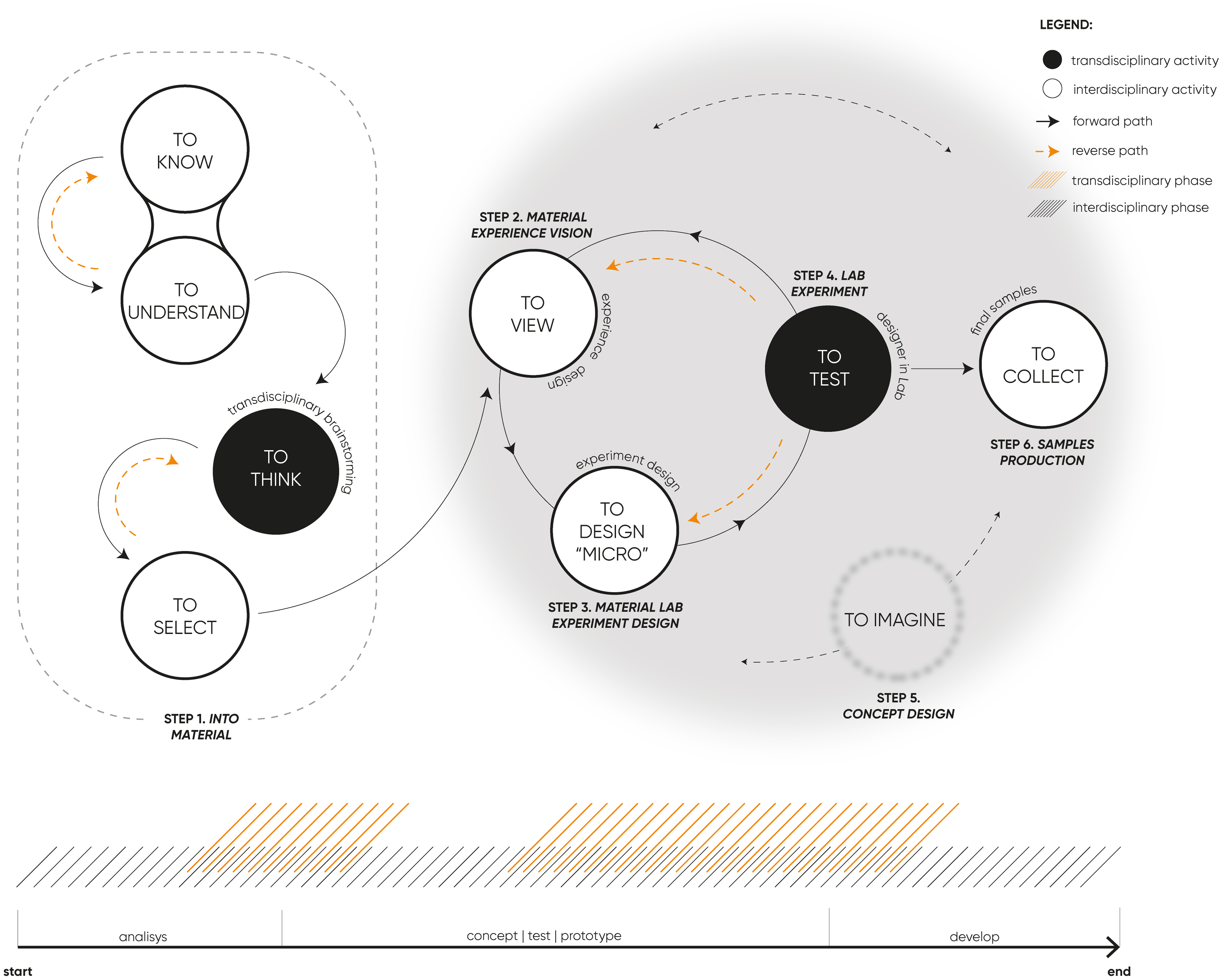
Figure 1 illustrates the “Transdisciplinary Material BioTinkering (TMBT)” method, which consists of six main steps: 1) Understanding Material; 2) Material Experience Vision; 3) Material Lab Experiment Design; 4) Lab Experiment; 5) Concept Design (simultaneous with Step 2); 6) Samples Production. The steps and activities of the TMBT method are briefly explained below.
Transdisciplinary Material BioTinkering (TMBT) Method.
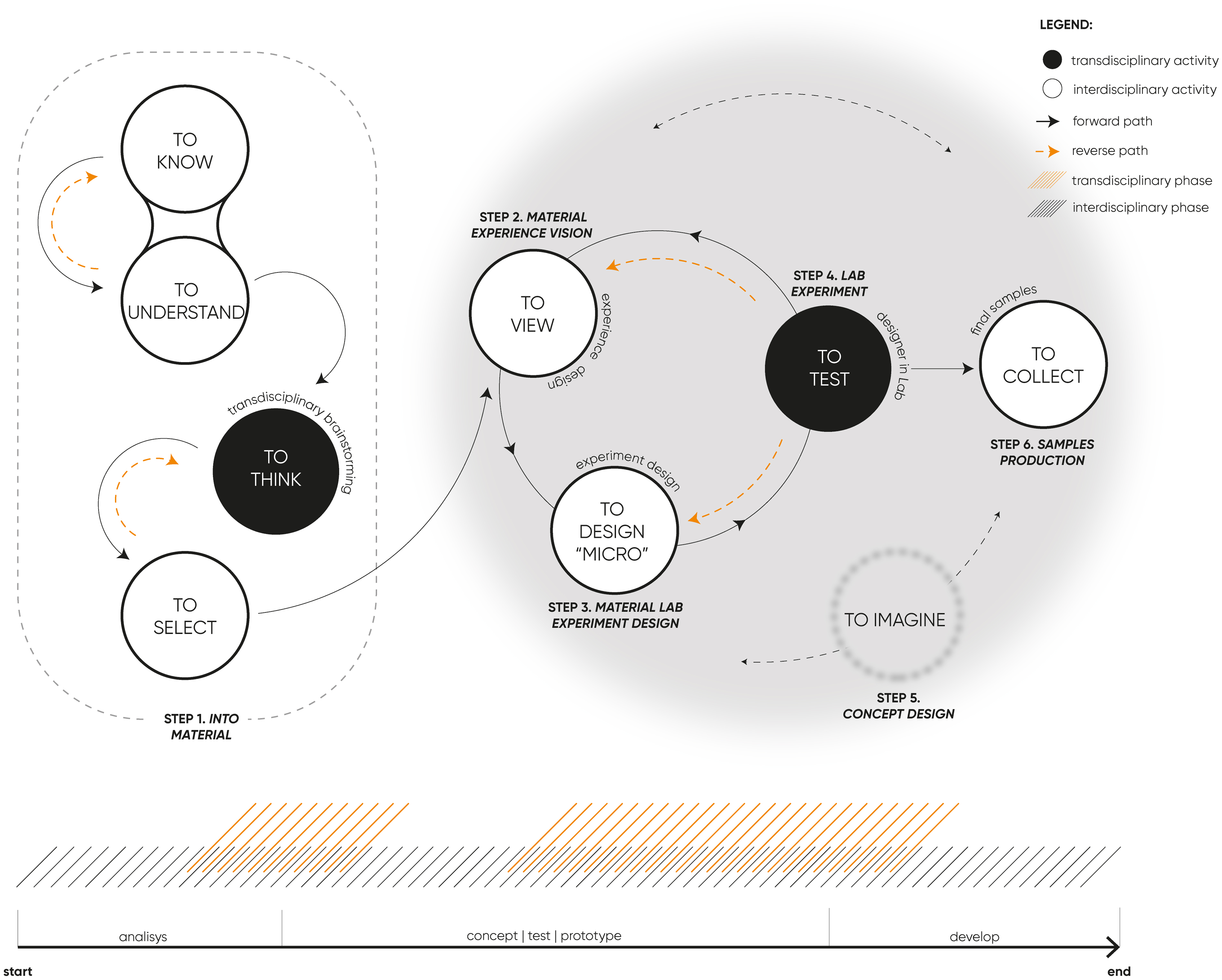
TMBT method. Step 1 – into material
In Step 1, the aspiring biodesigners is encouraged to deepen their knowledge across various disciplinary fields to achieve a more comprehensive and cross-cutting understanding of the potential applications and properties of the material. This phase emphasizes synthesizing acquired knowledge to guide the student towards an informed selection of raw materials, application methods and an initial transdisciplinary discussion. Step 1 consists of four consecutive activities:
To know
In this activity, students participated in lectures on, Etichs and Design for Sustainability, Material Design, Biology and Agriculture. Material Design lectures focused on circular economy and biodesign, emphasizing biofabrication and material tinkering. The interdisciplinary topics in Biology included the fundamentals of cell theory, the metabolism of living organisms, energy transfer, biodiversity and ecosystem interactions. Furthermore, in preparation for the experimental phases – Designer in Lab – the scientific method and best practices within the biological laboratory were introduced. Finally, in relation to the workshop theme, the study of fungal biology and ecology was explored in depth, with a focus on the most innovative techniques for their cultivation. This activity aimed to provide the student with all the necessary knowledge for the creation of the final sample, going beyond a merely technical-sensory approach fostering a systemic and ecological understanding of the material and living matter. By doing so, students explored raw materials, collaborating organisms (Collet, Reference Collet2013, Reference Collet2021) and the final product from a more conscious and integrated perspective (Cantini, Reference Cantini2024). The goal of these initial concepts is to help students understand all four dimensions of transdisciplinarity as proposed by Max-Neef (Reference Max-Neef2005): disciplines such as Biology and Agriculture for the empirical dimension, Material Design for the pragmatic dimension, Design for Sustainability for both the pragmatic and normative dimensions and Ethics for the value-based dimension.
To understand
In this activity, characterized by a field analysis, students explored fungal mycelium cultivation techniques by visiting a local company and a Biosafety Level 1 laboratory under the guidance of experts. The objective was to connect the technical knowledge acquired during the “To Know” activity with hands-on practices of the cooperating organism, highlighting the crafting properties as well as the technical and technological limitations of current cultivation practices (Camere and Karana, Reference Camere and Karana2018). Additionally, substrate preparation practices for biofabrication were introduced. Should any uncertainties arise regarding the properties, cultivation, manipulation, ecology or aspects related to the organism, a return to the theoretical phase is planned for further investigation.
To think
During this activity, aspiring biodesigners collaborated with researchers from various disciplines to generate preliminary ideas for new bio-fabricated materials. Using a transdisciplinary brainstorming approach inspired by De Bono’s method (Reference De Bono2015), students explored potential starting by-products, application scenarios, shapes, final outputs and possible technical-sensory properties. Finally, each student received a biodesign agenda, a hybrid design tool, whose objectives and usage were detailed. In the subsequent phases, this tool aimed to generate potential design ideas through individual and collective contributions, fostering convergence and synergy among the proposals. In this brainstorming phase, students and expert scientists were able to dialog in a transdisciplinary way about the first project ideas, encouraging cross-stimulation of creativity. Finally, on the biodesign agenda, students and experts involved simultaneously designed the experiment to be carried out in the laboratory.
To select
Students selected a substrate for fungal-based material development, exploring its properties, constraints and potential through tinkering activities. The selection process followed a systemic approach aligned with circular economy principles, utilizing by-products from local supply chains (e.g., textile, paper, agro-industrial), by following the knowledge acquired in “To Know” and “To Understand” activities. This step allowed students to select a waste by-product, addressing the Ethical dimension required by the transdisciplinary approach (Max-Neef, Reference Max-Neef2005). In some cases, students engaged directly with the supply chains providing the by-products.
Students then began substrate preparation, applying best practices learned earlier. This activity deepened their understanding of the chosen waste materials and prepared them for the material concept design and experiment planning phases; it aims to create connections between substrates, collaborating organisms and hypotheses of the final outcome. Additionally, substrate preparation and sterilization activities can negatively affect the characteristics of the substrate. In such cases, a return to the “To Think” phase is planned to help the student select more stable alternatives.
TMBT method. Step 2 – material experience vision
Step 2, defined by the activity “To View,” invites the designer to reflect on the future purpose of the material, defining its vision and the desired technical and aesthetic-sensory characteristics for the final material-product. In order to communicate with experts from other disciplines, the student is free to use any method: writing, moodboards, sketches, documenting everything in the biodesign agenda. In this phase, students and other experts involved interacted directly through the biodesign agenda (Appendix 2), principally using sketching as a shared language.
TMBT method. Step 3 – material lab experiment design
In Step 3, characterized by the activity “To Design Micro,” the future biodesigners is encouraged to design, using the biodesign agenda, an experiment on the biofabrication of a material to be carried out in the laboratory. The most interesting characteristics emerging from Step 2 – Material Experience Vision – are broken down into individual questions, from which hypotheses are developed to be tested. These hypotheses lead to the creation of individual experiments to be conducted in Step 4 – Lab Experiment. At this stage, the student, supported by experts from other disciplines, actively participates in the theoretical construction of the experiment. Specifically, the participant is asked to design, using the biodesign agenda – Science Sketches (Langella in Pollini, Reference Pollini2021) – the experiment for a controlled cultivation space, common in biological fields, namely a 90mm Petri dish. This step aims to stimulate the student to actively engage in the preparation of a scientific experiment, attempting to train the future biodesigners in the ways of thinking used in other sciences. The participant is encouraged to apply their design skills in a scientific environment. At the end of this step, the students, with the prepared substrate and the experiment designed and documented in the biodesign agenda, enter the laboratory for the testing phase – “To Test.”
This phase of the method is where the various disciplines involved collaborate most closely, transcending disciplinary boundaries. The designer, thanks to the scientific knowledge acquired in the previous phases, is able to engage with the other disciplines in a more scientific manner. On the other hand, the scientist is creatively stimulated through the biodesign agenda, in which the student not only develops sketches and design hypotheses but also envisions, starting from the microscale, the potential growth of the material. Design students, design teachers, mushroom cultivation experts and biologists collaborated directly on the biodesign agenda, thus using it as a tool for transdisciplinary dialog.
TMBT method. Step 4 – lab experiment
In Step 4, defined by the activity “To Test,” the student begins to experiment within a laboratory (Langella, Reference Langella2019a) (Sawa, Reference Sawa2016) (Pollini, Reference Pollini2024) through transdisciplinary biotinkering activities. In this step, the designer assumes the role of Designer in Lab (Langella in Pollini, Reference Pollini2021) (Pollini, Reference Pollini2024). Using laboratory materials and tools, and under the guidance of an expert (e.g., biologist), the student applies the knowledge gained, confronting the practical challenges that underlie this type of experience. All experiences and data that emerge during this phase are recorded and documented in the Biodesign Agenda, which is used here as a laboratory notebook. After the laboratory experience, students monitor the temporal evolution of the experiments at defined intervals, noting every variable. Four possible outcomes are anticipated from this step, all depending on the results obtained and recorded in the biodesign agenda:
-
Consistent data with the hypotheses (black arrows, Figure 1)
-
– If the experiential knowledge process of the material is deemed complete, proceed to Step 6.
-
– If the experiential knowledge process of the material is not complete, return to Step 2, by formulating new hypotheses and starting a new experimental cycle.
-
-
Inconsistent data with the hypotheses (orange arrow, Figure 1)
-
– We expect to be able to return to Step 2 to revise the hypotheses and design a new experiment.
-
-
Contradictory Data or Procedural Errors (orange arrow, Figure 1)
-
– We expect to be able to return Step 3 to redesign or repeat the experiment.
-
TMBT method. Step 5 – designing scenario
In this step, defined by the activity “To Imagine,” the student is asked to design potential concepts and application scenarios for the bio-fabricated material, using design-specific methods and tools in collaboration with other expert involved. The TMBT method emphasizes a strong influence of laboratory test data on scenario design. This influence is not strictly sequential but can occur at any point between Steps 2 and 6 (time range of influence shown in the gray area of Figure 1).
TMBT method. Step 6 – samples production
In this step, characterized by the activity “To Collect,” the student proceeds with the realization of the material. In collaboration with experts from other disciplines, the student is encouraged to select the experiments that show the most consistent and promising data. Using a DIY approach, the participants assess how to improve the structural properties of the samples, advancing towards the creation of a new material. Once again, the use of the biodesign agenda is crucial, as it will contain all the formulations and notes necessary to repeat and refine any new tests.
Results
Approximately 70 students from the Bachelor’s Degree program in Product, Communication, Interior and Eco-Social Design (UNIFI) participated in the three editions of the MbM workshop.
First edition
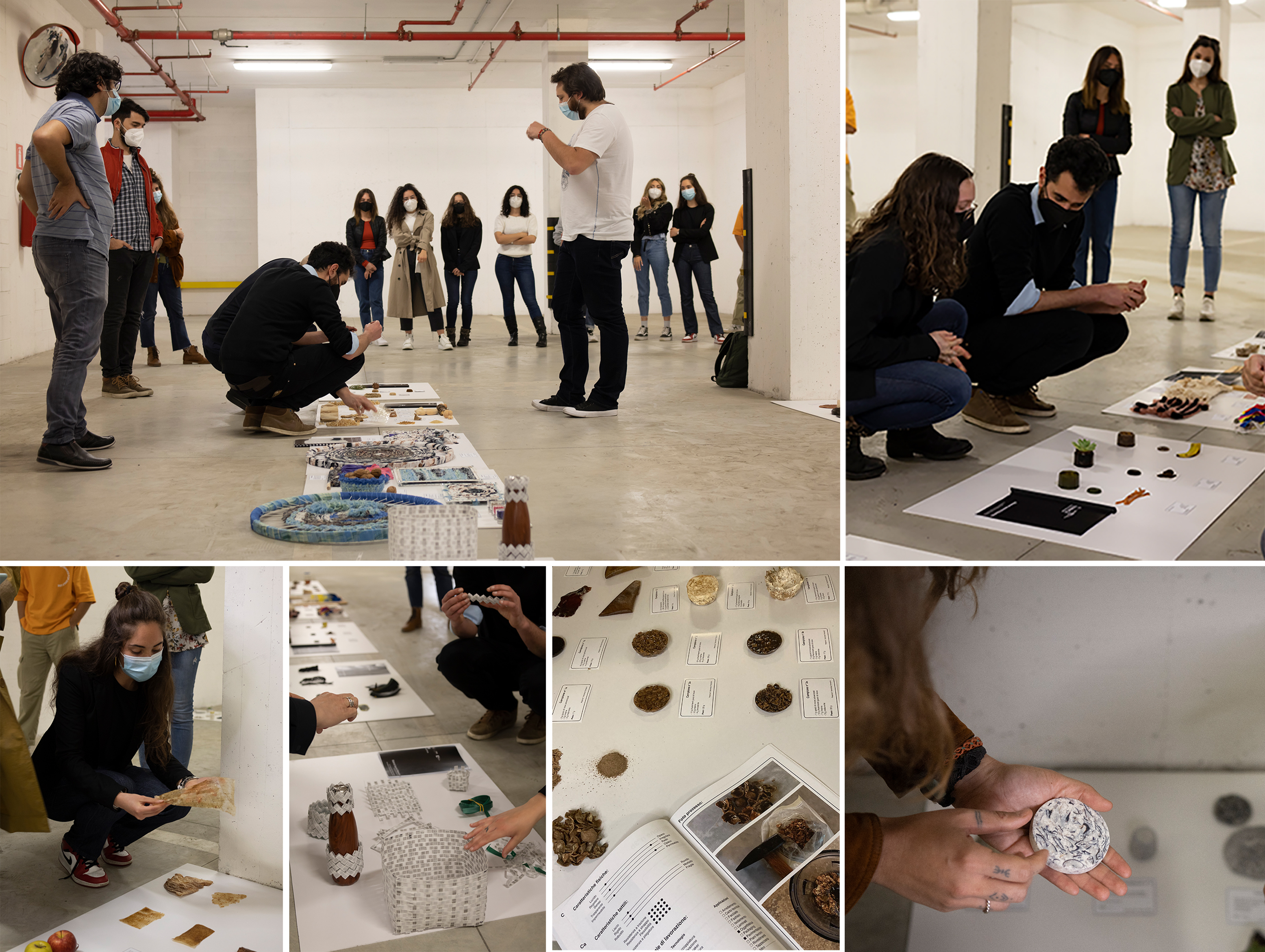
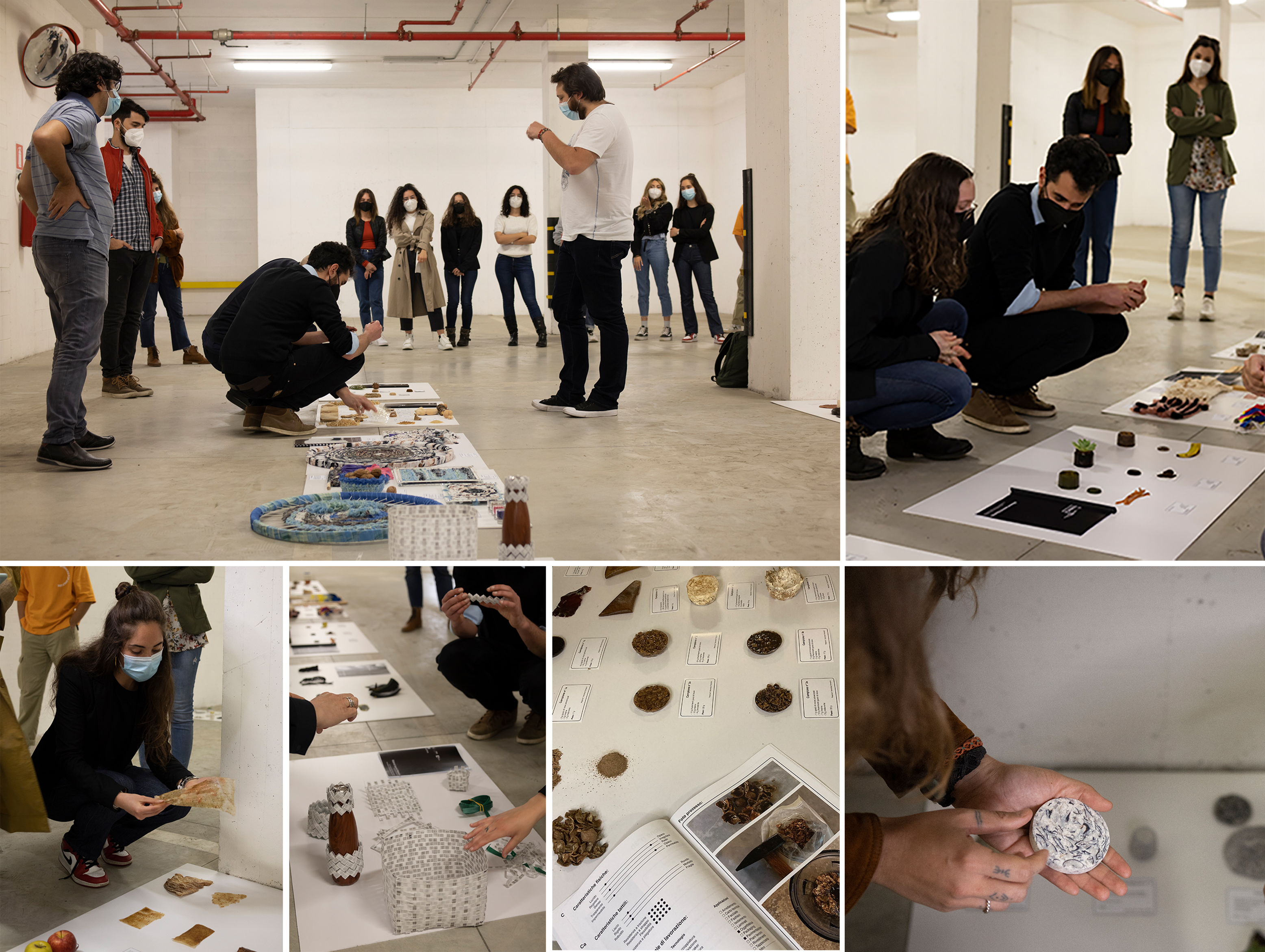
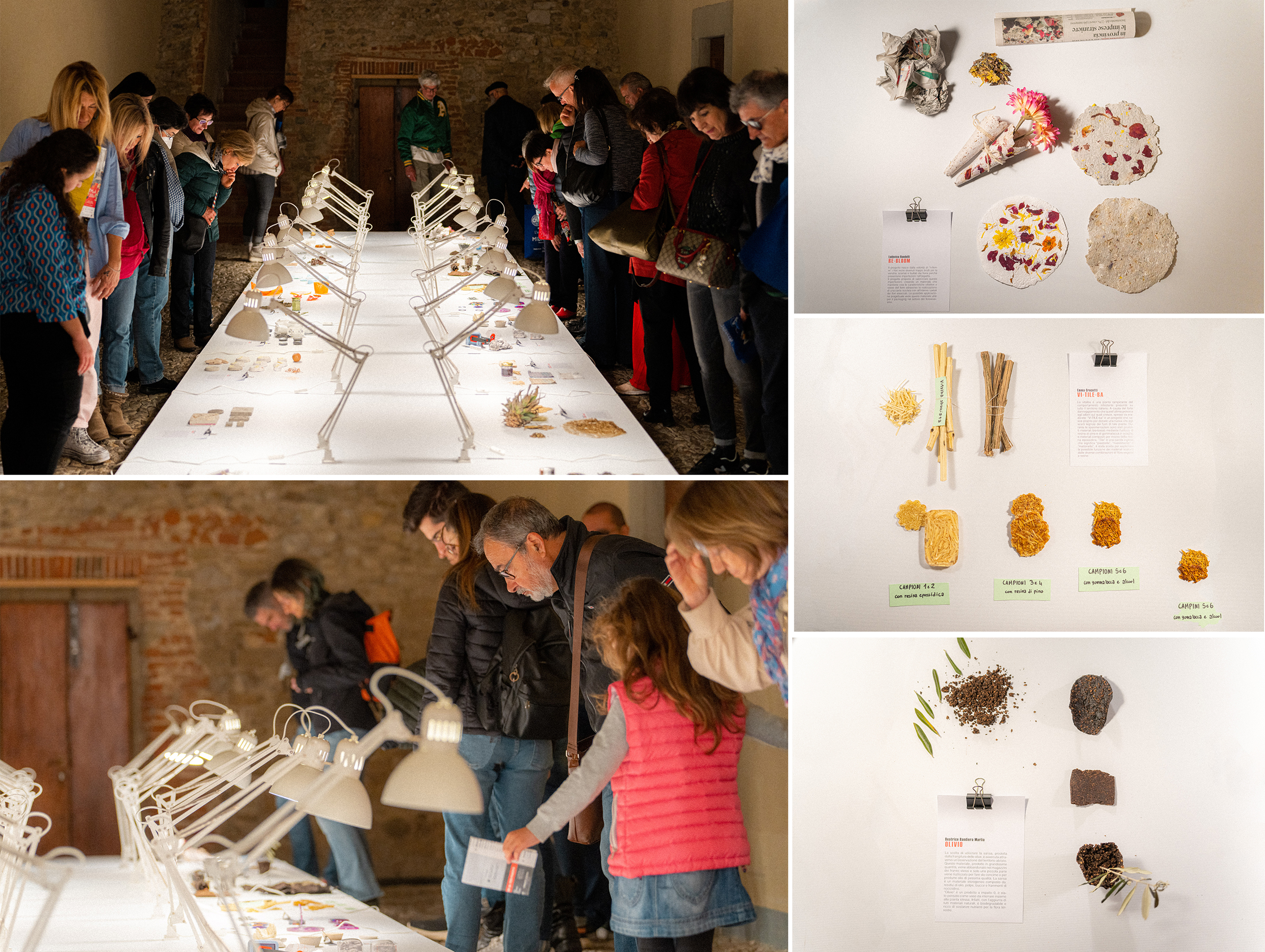
The first edition of MbM enabled students to complete their coursework by creating a material/semi-finished product based on circular economy principles, empirically experimenting with their ideas and producing DIY material samples (Rognoli et al., Reference Rognoli, Bianchini, Maffei and Karana2015), along with their respective physical and sensory characterizations. During this initial edition, references to other sciences – such as biology and materials science – were merely “borrowed,” with no direct contributions from experts in these fields. Students adopted a purely DIY approach, relying primarily on case studies and online databases related to DIY materials. On this basis, the first edition’s approach can be classified as multidisciplinary or pluridisciplinary (Max-Neef, Reference Max-Neef2005) (Moreno and Villalba, Reference Moreno and Villalba2018). That is, design leveraged knowledge previously developed in other disciplines, attempting to integrate it into the design of new materials without specific coordination among the disciplines involved. In this context, while the design approach shared numerous perspectives with other fields of knowledge, its aim was to borrow references from other disciplines without losing its distinctive creative and experimental nature, which was oriented toward achieving practical solutions. At the end of the workshop, feedback from students was collected informally through a classroom work session and direct observation. The results of the final feedback proposed to participants showed a general satisfaction with the students’ experience, especially regarding the exploratory phase and the material tinkering process. However, the informal feedback also highlighted some critical issues, including: the limited basic knowledge of materials design by students (due to the absence of contributions from other disciplines and methodologies), the lack of a laboratory and the necessary tools for material modification and, finally, the poor knowledge of biological materials and processes – such as fungi, algae and bacteria – especially regarding their functional and microscopic aspects (due to the lack of adequate equipment). The workshop program ended with a final exhibition at the Design Campus (University of Florence), where all the projects were displayed (Figure 2).
Pictures of the final show at Design Campus with student’s works.
Second edition
The second edition of MbM enhanced the “Explore Materials” and “Roll Up Your Sleeves” steps from the first edition by incorporating contributions from other disciplines, particularly biology, chemistry and materials science, to address some of the shortcomings identified during the initial workshop. Specifically, a biology researcher, a professor specializing in wood technology, a professor of materials engineering, and four design researchersFootnote 1 affiliated with the Design4Materials Network (Carullo et al., Reference Carullo, Cecchini, Ferrara, Langella and Lucibello2017) contributed their expertise. These experts introduced approaches to materials design that bridged design and other sciences. The aim was to provide students with technical knowledge to deepen their understanding of materials. Contributions from these disciplines sought to broaden students’ perspectives and scenarios, encouraging them to rethink both the types of waste materials selected for experimentation and the transformation processes, along with the potential applications of the new materials. The interactions between participants and experts also aimed to stimulate reflection on “material flow” and the potential ecological impact of their experiments. These contributions enriched the coaching activities as well; by engaging in reflections and discussions across different disciplines, it was possible to provide support during tinkering activities by offering technical knowledge related to material manipulation. Thus, the second workshop edition can be described as interdisciplinary (Moreno and Villalba, Reference Moreno and Villalba2018), meaning that the interactions between the involved disciplines involved sharing experiences, methods, tools and models. The results obtained, compared to the previous edition, were more coherent and integrated, addressing complex real-world problems related to the circular economy. The interdisciplinarity in the second workshop was therefore intentional or pragmatic (Max-Neef, Reference Max-Neef2005), meaning that it connected disciplines at the pragmatic level – Design – with disciplines at the empirical level. According to Max-Neef’s theory, design thus became interdisciplinary, providing a defined purpose to the empirical field represented by biology and materials science through the project. However, despite this approach, students were unable to fully grasp certain aspects of materials, particularly at the microscopic scale and in terms of laboratory material manipulation. The creation of samples still followed an exclusively DIY approach, as in the first edition. Furthermore, the experimental design process was not fully optimized, lacking the necessary connection between design thinking and scientific methodology to ensure that project outcomes were evaluable, replicable and self-correcting.
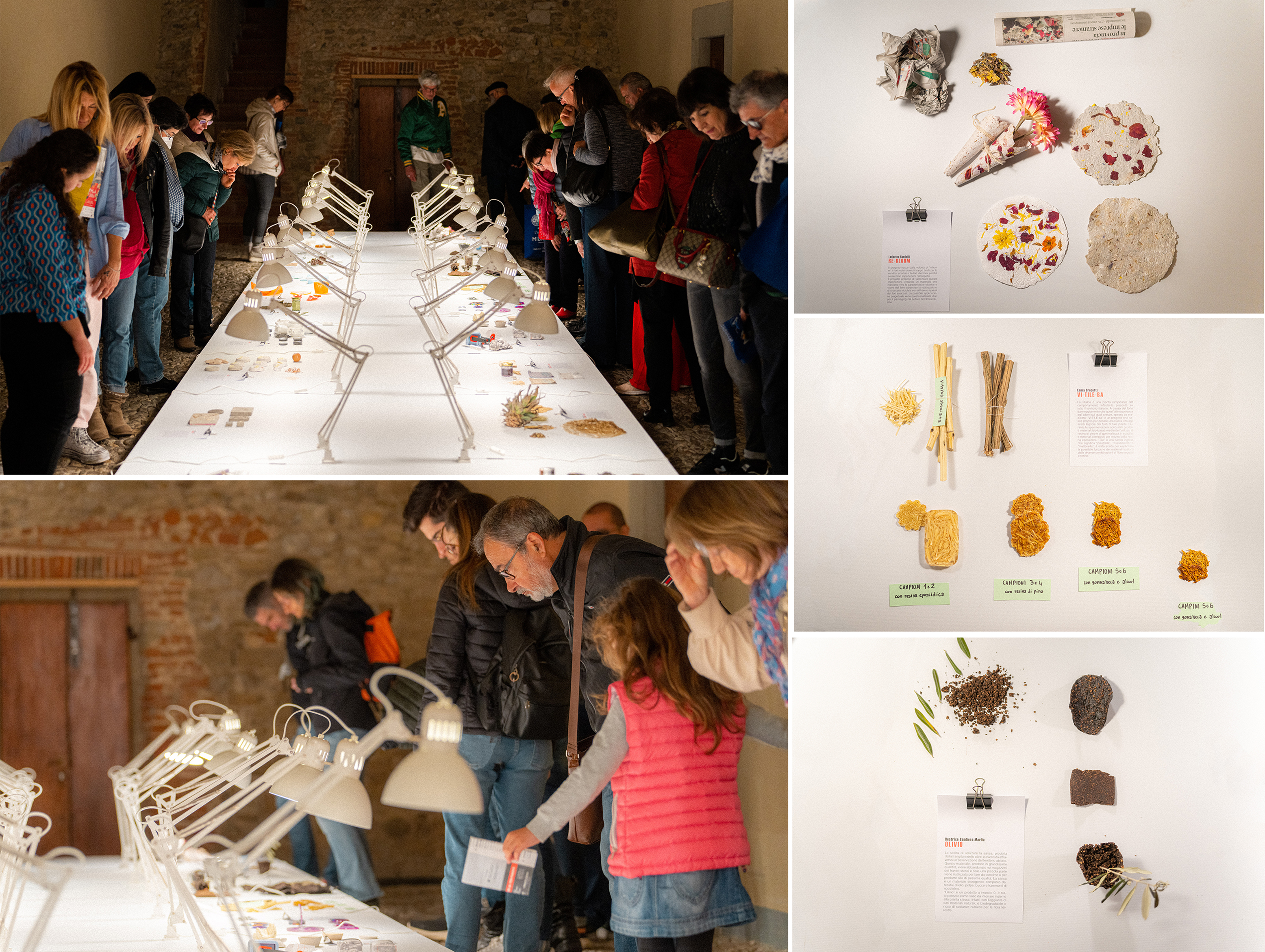
The second workshop concluded with the exhibition UP TO THE CRAFT – Generative Paths – at the International Handicrafts Trade Fair in Florence, organized by OMA (Osservatorio Mestieri d’Arte) (Figure 3).
Pictures of the final show “UP TO THE CRAFT – Percorsi generativi” at “MIDA - Fiera Internazionale dell’artigianato 2023” with student’s works.
The survey conducted at the end of this edition highlighted the significant impact of contributions from other disciplines. Many students expressed satisfaction in interacting with experts from other fields, especially regarding the support they provided in the technical and practical choices made for the sample designs and the microscopic understanding of material properties, including their chemical and physical characteristics. At the same time, the survey revealed persistent challenges, such as limited foundational knowledge, inadequate tools and facilities and – among some students – a need for greater proficiency in biology and laboratory practices (Appendix 1 for further details).
Third edition, TMBT method definition
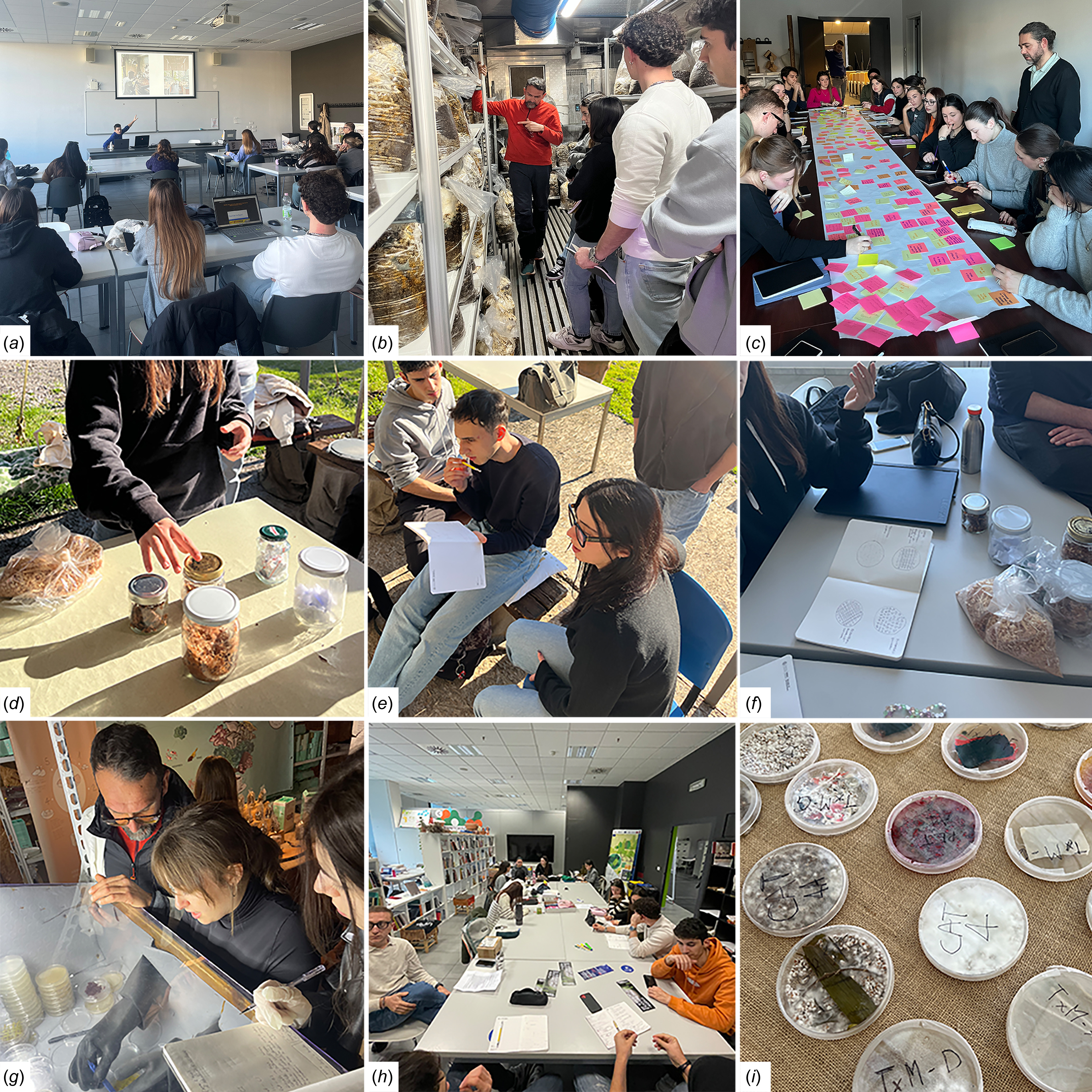
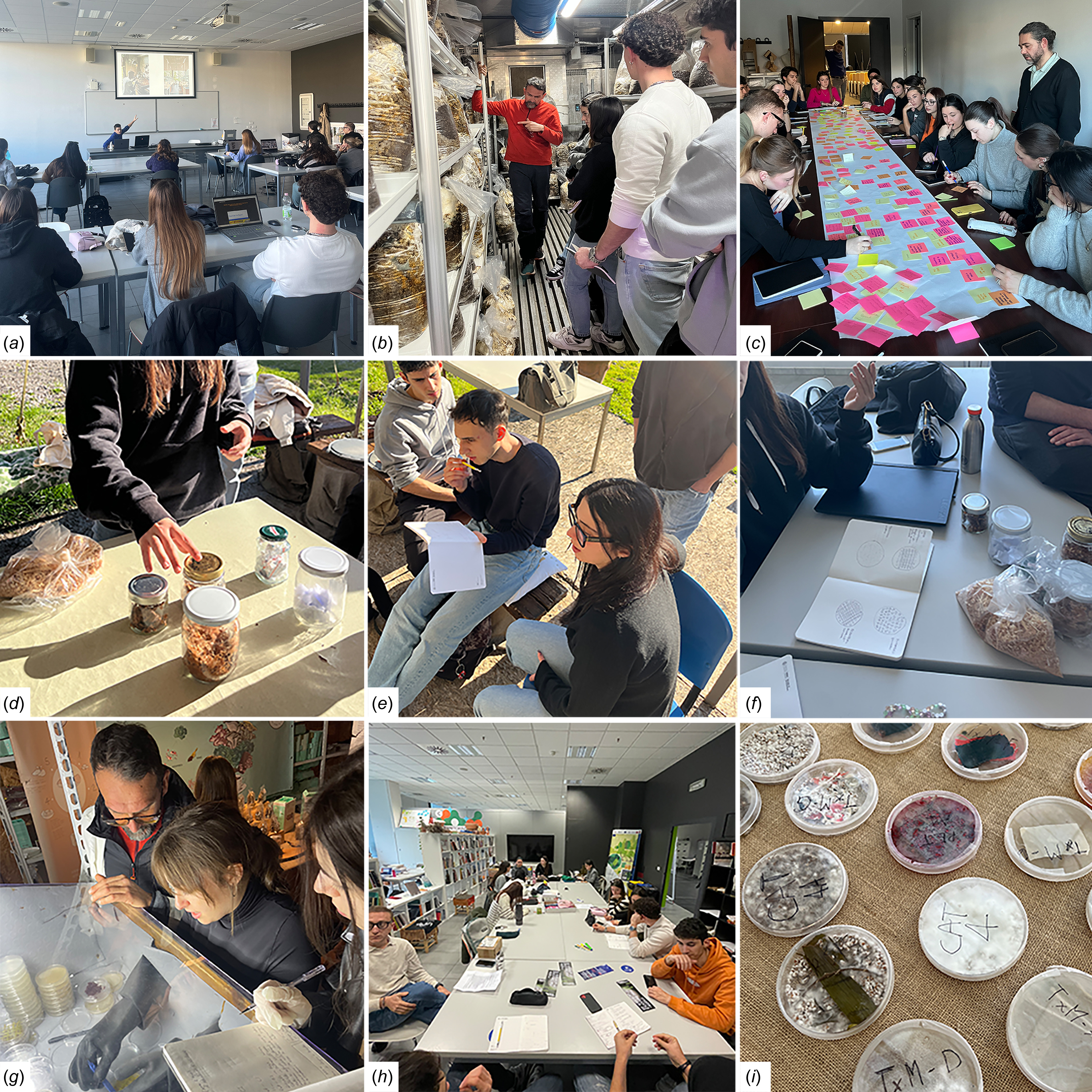
In the third edition of MbM, named the Biodesign edition, students collaborated throughout all stages of the design process with a biologist and an agronomist-entrepreneurFootnote 2 experienced in cultivation of fungi at all stages of the design process (Figure 4). The methodological structure introduced in the previous section (TMBT) represents an evolution of the approaches adopted in the first two workshops. It enabled the research group to address the scientific and experimental demands of an approach integrating design and scientific disciplines. As is often the case in transdisciplinary collaborations, specific tools for interaction between participants were created progressively (Moreno and Villalba, Reference Moreno and Villalba2018). The TMBT method described in the earlier section was not clearly predefined but rather evolved alongside the project itself. In other words, the practical development nurtured the theoretical framework and vice versa, in a dialogic process oriented toward discovering and defining a shared space between the involved disciplines. In this sense, the methodological definition can be considered an instance of Research Through Design (RtD) (Frayling, Reference Frayling1993) (Zimmerman et al., Reference Zimmerman, Stolterman and Forlizzi2010) (Pollini, Reference Pollini2024), combining design practices with scientific inquiry. As Cross (Reference Cross1982) notes, the invention of the method preceded the theoretical understanding: action came before methodological comprehension. According to Varela and Shear (Reference Varela and Shear1999), through reflection, cognitive approaches and practical experience, subjective practices can transform into a structured body of knowledge, as occurred in the development of TMBT.
Participants engaged in the Transdisciplinary Material BioTinkering (TMBT) method during the MbM III – Biodesign Edition. Highlights include activities: a) To Know; b) To Understand; c) To Think; d) To Select; e) To View; f) To Design Micro; g) To Test; h) To Imagine, i) To Collect.
TMBT combines a traditional design method (Bonsiepe, Reference Bonsiepe1993) – characterized by the reflective analysis and understanding of the problem, the creative design phase of concept definition and development and the project realization phase – with the Material-Driven Design (MDD) approach, which focuses on experiential and direct material research to produce physical samples. It also integrates the scientific method, whose steps include: formulating a hypothesis, designing and conducting experiments, collecting and analyzing data and interpreting results. In a way, TMBT bridges the “ways of knowing” of science and design (Cross, Reference Cross1982) to establish a methodological framework for transdisciplinary approaches in the biodesign context, aimed at designing new materials. This methodology does not dilute the distinct cognitive processes of design but instead enriches them with a scientific dimension essential for tackling the complexities of contemporary challenges. As a result, students were able to achieve outcomes that were not only more intricate and reliable but also easier to validate and replicate. This was made possible by the experimental design process and the biodesign agenda, which served both as a project management tool and as a laboratory notebook. By building on a traditional design process, TMBT respects the discipline’s “ways of knowing” (Cross, Reference Cross1982, Reference Cross2006) while expanding and harmonizing them toward a transdisciplinary dimension. Designer, as Cross (Reference Cross1982) explains, typically aim to find a workable solution – not necessarily the best one – among many possible alternatives. In TMBT, a brainstorming session involving all disciplines occurs in the Into Material step to identify a range of potential solutions. One of these solutions is then developed during the Concept Design and Material Experience Vision steps, progressing to experimental design and laboratory implementation and culminating in collecting final samples.
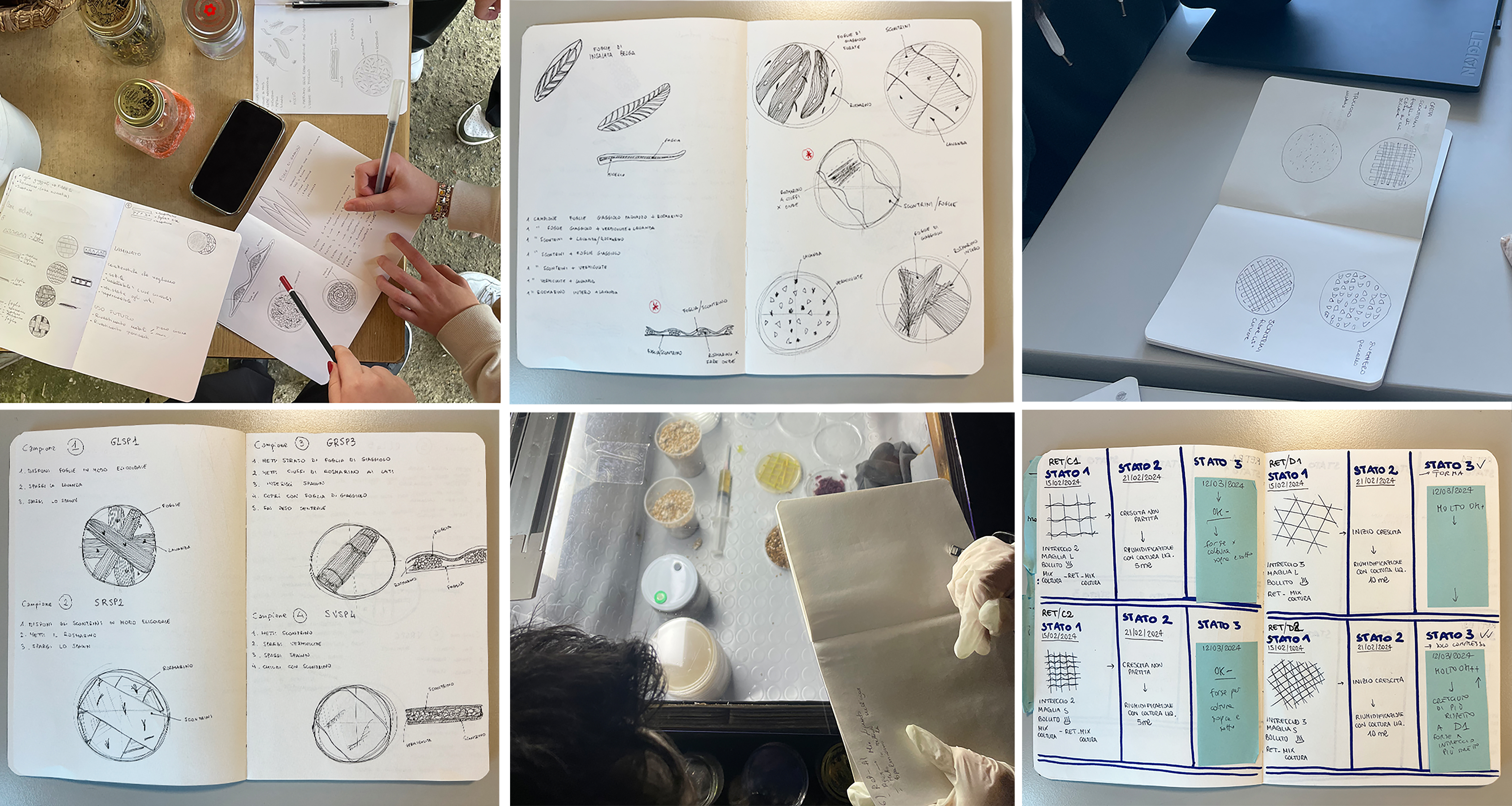
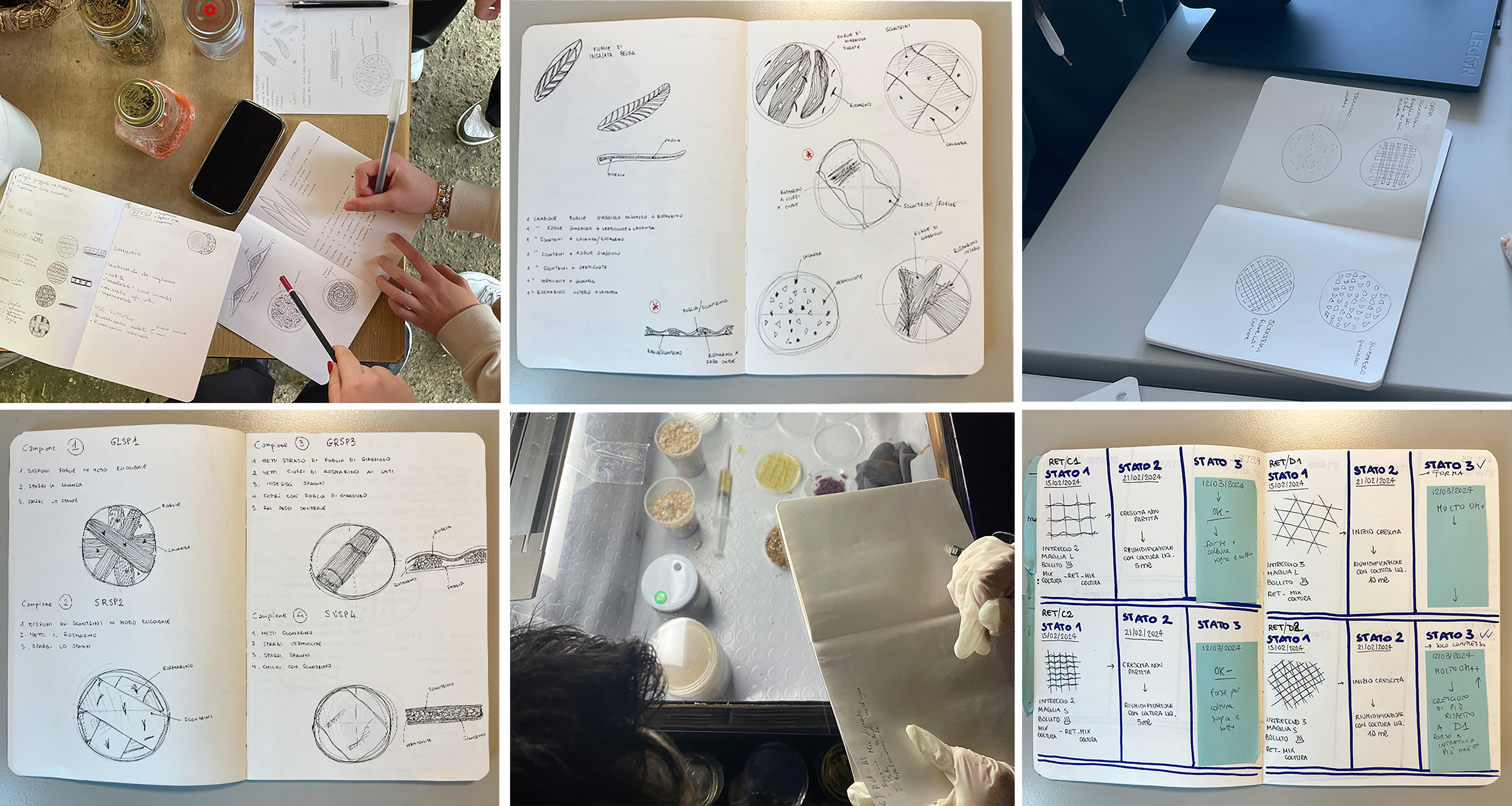
While TMBT retains the designer’s rapid solution-finding approach, it also allows for exploration of multiple alternatives if the initial solution does not meet the design intentions. Steps such as Material Experience Vision, Material Lab Experiment Design and Lab Experiment, along with the overarching Concept Design, incorporate recursive processes similar to the scientific method. These steps rely on inductive and deductive insights, supplemented by the abductive reasoning typical of designer. Thus, with TMBT, a possible solution is quickly identified; the difference compared to a traditional design process lies in the ability to investigate a number of possible solutions if the first one does not align with the design intentions. Indeed, steps 2 – Material Experience Vision, 3 – Material Lab Experiment Design and 4 – Lab Experiment and in a transversal way step 5 – Concept Design, in analogy with the scientific method, are recursive and based on inductive-deductive intuitions but fueled by the abductive thinking process typical of designers. In these four stages, the use of the biodesign agenda was essential, as students took notes, described the material, designed the material and the experiment – from the micro scale to sensory aspects – along with the conceptualization of possible applications (Figure 5).
Biodesign Agenda – Transdisciplinary Tool.
The solution-oriented approach described by Cross (Reference Cross1982) is closely linked to the type of problems that designers typically face, namely Wicked Problems (Buchanan, Reference Buchanan1992). In this sense, the ways of knowing of designer can only be constructive; that is, unlike science, which seeks solutions in an analytical way, focusing on how things are, designers are interested in how things should be (Simon, Reference Simon1988). In the proposed method, indeed, in the iterative steps between Material Experience Vision and Lab Experiment, students, using sketches as a communication method with scientists (Langella, Reference Langella2019a) (Langella in Pollini, Reference Pollini2021) – sketches of the material, the experiment and the potential design application – tried to establish the foundations of the design concept in order to define the design problem and offer an immediate possible solution. On the other hand, scientists sought solutions with an inductive-deductive approach, side by side with the designers, to reach the conceptualized design hypothesis. Conversely, scientists adopted an inductive-deductive approach, working closely with designers to refine the initially conceptualized design hypothesis. During these dialogs between science and design in the third workshop, another “way of knowing” theorized by Cross (Reference Cross1982) was emphasized: the use of codes – sketches and the integration of heterogeneous domains. These codes allowed designers to translate abstract concepts – such as Material Experience Vision, Concept Design and Material Lab Experiment Design – into concrete solutions during the Lab Experiment and Sample Production steps. In particular, in the Material Lab Experiment Design step, students undertook a novel activity for designers: planning scientific experiments. However, they still applied the codes typical of design disciplines – sketches, and the ability to synthesize heterogeneous domains – to effectively communicate with the other sciences.
During the Concept Design step, in addition to leveraging the “way of knowing” through sketches, designers also applied their ability to interpret and rewrite material culture. As Cross (Reference Cross1982) notes, objects carry vast knowledge through their forms, functions and materials. Immersed in material culture, designers are uniquely equipped to interpret and recontextualize this knowledge into new objects. This “way of knowing” was particularly evident in the Concept Design step, where students proposed potential applications for the developed material solutions. Using sketches, designers demonstrated the feasibility of their ideas to scientists, fostering a more grounded and expansive dialog. In the Lab Experiment step (Figure 6), students, having acquired prior knowledge, wore lab coats and entered a self-constructed laboratory equivalent to a Biosafety Level I Lab. They worked hands-on to produce material samples under the supervision of biologists and agronomists specializing in mycology (Designer in Lab, Pollini, Reference Pollini2024) (Langella in Pollini, Reference Pollini2021). Even in the laboratory, the biodesign agenda proved indispensable – not only as a tool for dialog across disciplines but also as a means of constructing a shared process. Scientists actively collaborated, using sketches to contribute to the workflow. Based on this experience, we can conclude that designer, as Pollini (Reference Pollini2024) argue, initially hesitant about the scientific approach and laboratory methods, achieved more complex results than in previous editions through continuous transdisciplinary engagement and the acquisition of new knowledge.
The participants take on the role of “Designer in Lab” and, guided by a biologist, starting experimentation within a BSL1 (Biosafety Level 1) laboratory with P. ostreatus.

The outcomes reveal that the third edition of MbM employed a transdisciplinary biotinkering approach, fostering collaboration between designer and scientists across design and scientific methods throughout all process phases. This methodology engaged all hierarchical levels proposed by Max-Neef (Reference Max-Neef2005). In fact, during the workshop, empirical disciplines – biology, agriculture and materials science – were made to interact, allowing us to understand “what exists”; pragmatic and normative disciplines – such as architecture and design – helped answer “what are we capable of doing?” (with what we have learned from the empirical level) and “what do we want to do?”. Finally, disciplines related to value and ethics – now incorporated into the design for sustainability field – posed the question “what should we do?” or rather “how should we do what we want to do?”. According to Max-Neef (Reference Max-Neef2005), any multiple relationship that includes all four of the levels described above defines a transdisciplinary action.
The final survey, submitted to the future biodesigners, highlights meaningful insights and areas for further reflection. In general, the simultaneous contribution of the different disciplines was positively evaluated by all students, especially in the laboratory phases. Instead, among the main difficulties that emerged were the laboratory practice and the difficult understanding of the organism and consequently the difficulty in generating ideas related to it. However, these difficulties, as highlighted by some students, were overcome thanks to the collaboration between the different expertize involved. Another important piece of data that emerged from the survey, which reinforces the theme of transdisciplinarity, was the direct contact with an external company expert in mushroom cultivation (Appendix 1 for further details).
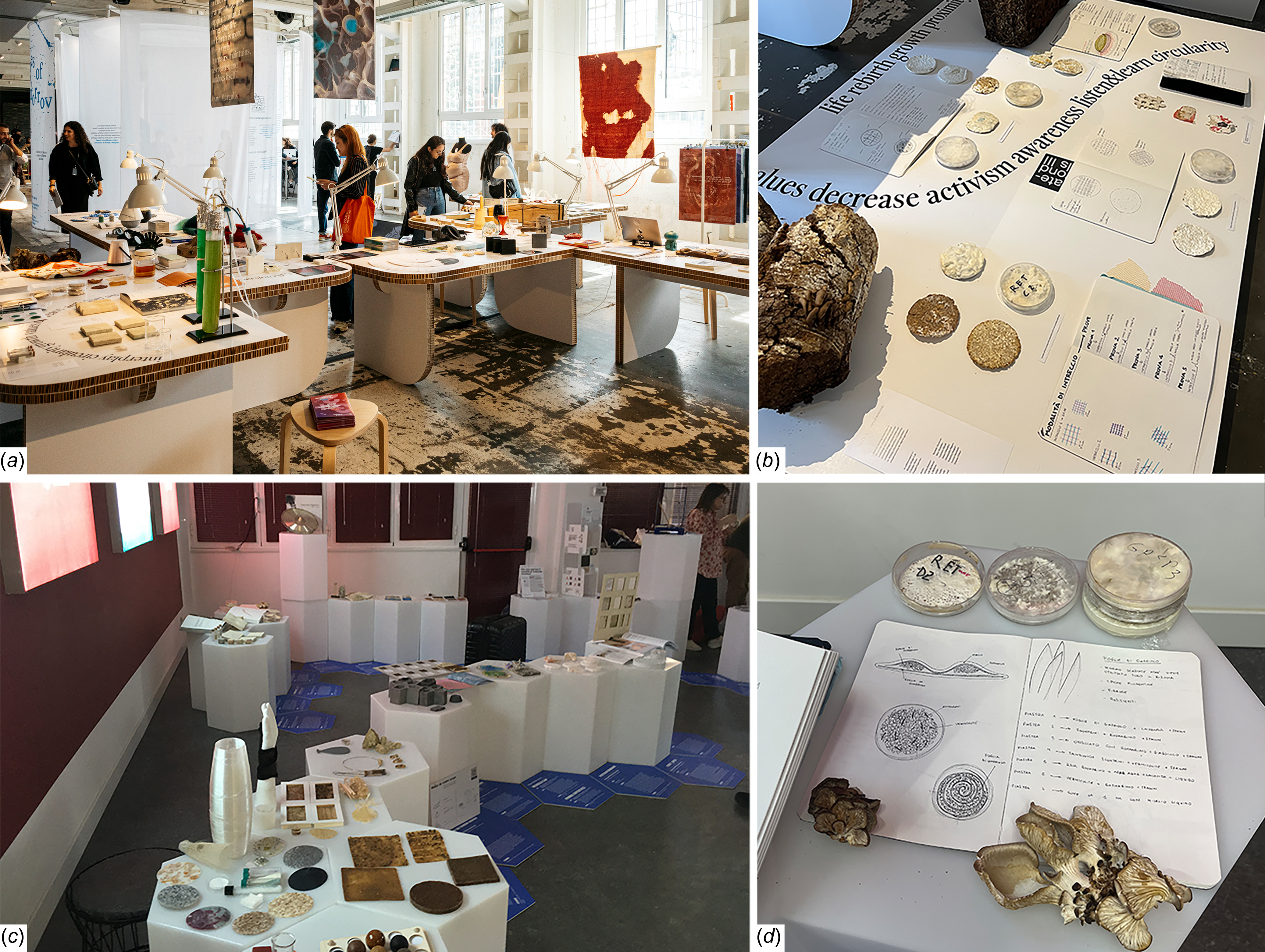
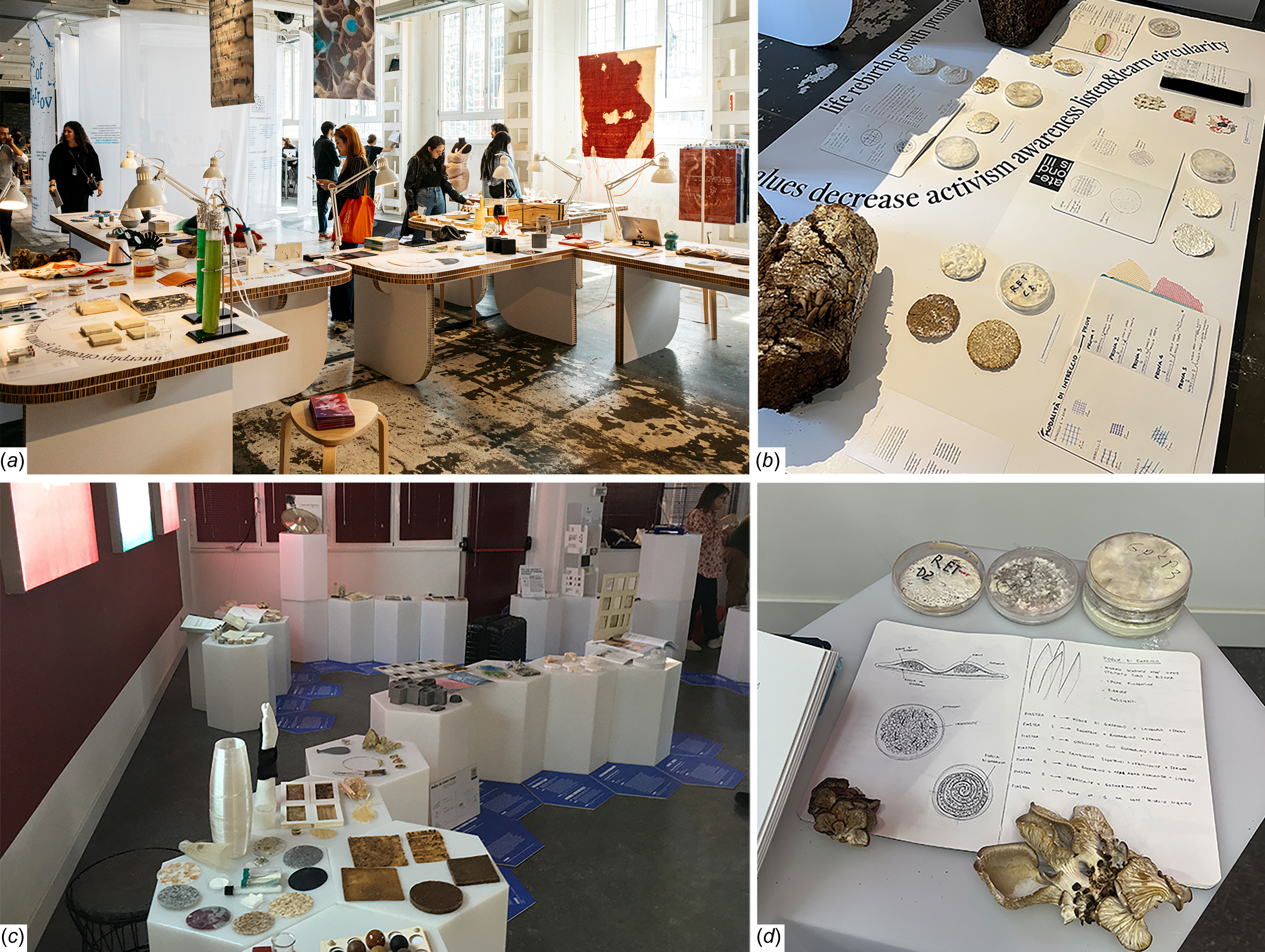
The third workshop concluded with students presenting their work at Milano Design Week 2024 as part of the exhibition “Design Across the Borders in Times of Global Crisis,” organized by the Design for Sustainability Lab at BASE Milano/We Will Design. Additionally, the results of MbM III were showcased at the “From Material Design to Research” exhibition, organized by the bottom-up group SID (Società Italiana di Design), Design4Material, held at Saperi&Co, Sapienza University of Rome, in June 2024 (Figure 7).
a) Final show at BASE Milano/We Will Design during Milan Design Week 2024 with student’s works – Photo Credits Giulia Ficarazzo; b) Final show at BASE Milano/We Will Design during Milan Design Week 2024 with student’s works; c & d) Final show at Sapienza Università di Roma at Saperi&Co.
Conclusions
This article highlights the potential for implementing the MDD method (Karana et al., Reference Karana, Barati, Rognoli and Zeeuw van der Laan2015a) in transdisciplinary pathways for training biodesigners. Biodesign is a disciplinary field in the process of consolidation, operating at various levels of depth (Pollini, Reference Pollini2024). As such, a transdisciplinary approach involving collaboration between designers and scientists is not always the right path. However, approaches that facilitate close collaboration between design and science appear to be the most promising in addressing the complexities of contemporary challenges. In this context, it is crucial to define a framework of methods, tools and approaches capable of fostering dialog between the different “ways of thinking” of those involved, enabling the adoption of a transdisciplinary practice. The methodological evolution of the MbM workshop – from multidisciplinary and interdisciplinary to a transdisciplinary approach – is a tangible example of the aspirations proposed by Karana et al. (Reference Karana, Barati, Rognoli and Zeeuw van der Laan2015a). Over its various editions, the workshop has evolved toward a hybridization of the design method and the scientific method. The TMBT method, developed from the educational experience described, was not predefined. Rather, as in Research Through Design, it emerged and solidified through the progression of design experimentation, evolving via practice-oriented dialog among the disciplines involved. The TMBT method is reproducible and applicable in the field of biodesign education, particularly for bio-fabricated materials. In the experience presented, designer wore lab coats and entered laboratories, demonstrating their ability to make meaningful contributions to science. Scientists, in turn, entered design faculties, pencil in hand, proving themselves ready to collaborate through a different way of thinking. The multiple relationships established among the various disciplinary levels allowed the research group to reconcile the intuitive and abductive approach typical of designers with the inductive-deductive approach characteristic of science. The results reveal that the dialog between the “ways of thinking” of designer and scientists, while preserving the specificities of each, enriches and nourishes both perspectives. By sharing codes, languages and common future-oriented perspectives, this dialog addresses not only how things are – the scientific method – but also how things could and should be – the design method.
Supplementary material
The supplementary material for this article can be found at https://doi.org/10.1017/S2977905725100024.
Data availability statement
Data availability does not apply to this article.
Acknowledgements
A special thanks goes to Antonio Di Giovanni, founder of Circular Farm and Funghi Espresso, for his support, availability and hospitality, and for providing the internal laboratory of his company for the MBM III – Biodesign edition workshop. A big thanks goes to all the participating students:
MbM I: Matteo Antonazzo, Giulia Antonelli, Camilla Benincasa, Giulia Bertozzi, Gherardo Borselli, Riccardo Cappello, Olivia Conti, Giulio Dalla Porta, Lissia Dinoia, Veronica Ferrarini, Lara Gaveglio, Edoardo Ghionzoli, Martina Naso, Sahar Neishaboori, Rachele Rutolo, Sara Serra.
MbM II: Beatrice Bandiera Marlia, Riccardo Belletti, Carmela Benevento, Michela Castelli, Greta Cesa Bianchi, Pietro Chiavacci, Chiara Coli, Emma Crocetti, Davide D’Alessandro, Edoardo Giusfredi, Gaia Lavinotti, Rebecca Leoni, Cataldo Malena, Lucrezia Pacifico, Manuela Pilato, Rachele Moriconi, Giulia Michelotti, Pietro Muzi Falconi, Allegra Natali, Marta Ravasio, Francesca Risaliti, Ludovica Rondinelli, Alice Severi, Dhenielle Soriben.
MbM III: Sara Bettarini, Carlotta Boschi, Cristiano Catocci, Nicola Chiarielli, Noemi Consoli, Martina Donati, Chiara Ferroni, Alessio Giacone, Ami Jovani, Lucrezia Giovannelli, Ludovica Lucci, Gianluca Marino, Laura Melcarne, Sara Merlini, Lorenzo Miceli, Rachele Moriconi, Anna Orlandini, Alessandra Paparo, Federico Scapati, Aurora Starnotti.
Author contributions
The research article was developed collaboratively by all authors. However it is attributed to:
Marco Marseglia: Conceptualization, Methodology, Project Administration, Validation, Writing – original draft, Writing – review and editing. Francesco Cantini: Conceptualization, Investigation, Methodology, Project Administration, Writing – original draft. Tommaso Celli: Conceptualization, Investigation, Methodology, Formal analysis, Validation, Writing – original draft, Writing – review and editing. Edoardo Brunelli: Investigations, Methodology, Formal analysis, Visualization, Validation, Writing – original draft, Writing – review and editing. Giuseppe Lotti: Supervision.
In particular it is attributed to: Marco Marseglia: Results and Conclusion; Francesco Cantini: Abstract and Method; Tommaso Celli: Transdisciplinary Material BioTinkering Method – Step 3–4 and 5 – Appendix 1; Edoardo Brunelli: Introduction, Transdisciplinary Material BioTinkering Method – Step 1 and 2 – Appendix 2. All authors have read and agreed to the published version of the manuscript.
Financial support
This research received no specific grant from any funding agency, commercial or not-for-profit sectors.
Competing interests
The authors have no conflicts of interest to declare for this publication.
Ethics statement
Ethical approval and consent are not relevant to this article type.



 Open access

