



In the past decades, food market concentration among a few transnational companies( Reference Popkin, Adair and Ng 1 ) has led to severe changes in food systems, allowing ultra-processed products to become dominant worldwide( Reference Monteiro, Moubarac and Cannon 2 ). These products have characteristics that facilitate their production and sales chain and favour their excessive consumption, such as the use of cheap ingredients, greater durability (long shelf-life), ease of transportation, commercialization in large portions, low price, hyper-palatability and aggressive marketing( Reference Monteiro, Moubarac and Cannon 2 ). Despite their low nutritional quality, the sales of ultra-processed products have grown worldwide( 3 ).
This scenario has led to an intense transformation in food sales dynamics, especially in middle-income countries( Reference Monteiro, Moubarac and Cannon 2 , Reference Swinburn, Sacks and Hall 4 – Reference Costa, Claro and Martins 6 ). In these countries, sales and consumption of ultra-processed products have grown simultaneously with obesity rates and the replacement of traditional food stores (such as street markets, greengroceries and butcheries) with supermarkets, usually parts of multinational chains( Reference Popkin, Adair and Ng 1 , Reference Reardon and Timmer 5 , Reference Hawkes 7 ). Supermarkets emerged in the USA, Canada and parts of Europe in the 1920s, and their expansion occurred slowly in these countries( Reference Reardon and Timmer 5 ). With the intensive competition within the food market in high-income countries, emerging markets have become the new focus for these large retail chains( Reference Reardon, Henson and Berdegué 8 , Reference Monteiro and Cannon 9 ). In Brazil, the supermarket sector transformation began in the 1990s, resulting in major sales concentration among five major grocers( Reference Monteiro, Farina and Nunes 10 ), making this now the most common food retail format in the country( 11 ).
Indeed, data show a global convergence in prioritizing food purchase at supermarkets( Reference Regmi, Takeshima and Unnevehr 12 ). For consumers, supermarkets provide a level of convenience by offering a variety of services in the same location (such as butchery, greengrocer and bakery)( Reference Hawkes 7 ) with a wide inventory, quality and lower prices( Reference Drewnowski 13 – Reference Duran, Roux and Latorre 15 ). However, evidence also suggests the potential influence of supermarkets on the consumption of ultra-processed products, influencing consumers to buy them by launching new products, using promotions and sophisticated marketing strategies, and allocating more shelf space to such kind of foods( Reference Monteiro, Moubarac and Cannon 2 , Reference Reardon and Timmer 5 , Reference Hawkes 7 , 16 , Reference Cameron, Waterlander and Svastisalee 17 ). Furthermore, the great availability in these stores of ultra-processed products in larger package sizes encourages the acquisition of these items, allowing individuals to reduce the frequency of store visits( Reference Hawkes 7 , 16 , Reference Vedovato, Trude and Kharmats 18 ) and thus discouraging the purchase of perishable foods, such as fresh fruits and vegetables( 16 ).
On the other hand, evidence suggests that purchasing at street fairs, greengroceries and farmers’ markets may increase access to fresh produce( Reference Costa, Claro and Martins 6 , Reference Vedovato, Trude and Kharmats 18 ), meanwhile improving smallholder agriculture by lowering costs and providing access to a large capillary distribution network. Although traditional markets still play an important role within the food system( Reference Reardon and Timmer 5 ), there is little evidence in the literature concerning the influence of food store type on food consumption in low- and middle-income countries, especially with a focus on the rise of the large supermarket chains( Reference Taillie, Ng and Popkin 19 ) and the consumption of ultra-processed products( Reference Monteiro, Moubarac and Cannon 2 ). Using data from the 2002–2003 Brazilian Household Budget Survey, Costa and colleagues observed in 2013 that supermarkets were the place where people in Brazil purchase most of their food, as well as the main source of ultra-processed products( Reference Costa, Claro and Martins 6 ). As a continuation of the previous survey, the 2008–2009 Household Budget Survey further can expand our knowledge regarding the influence of each food store type on food consumption in Brazil, with a special focus on the consumption of ultra-processed products. The present study aimed to evaluate the association between food store type and the consumption of ultra-processed food and drink products in Brazil.
Methods
Sampling and data collection
We analysed data from the nationally representative 2008–2009 Household Budget Survey (HBS), conducted by the Brazilian Institute of Geography and Statistics (IBGE) on a probabilistic sample of 55 970 Brazilian households. The 2008–2009 HBS used a complex clustered sampling procedure, involving the geographical and socio-economic stratification of all census tracts (information obtained from the 2000 Demographic Census) in the country, followed by random selection of tracts in the first stage and of households in the second. Sector location (region, state, capital city or countryside, urban or rural setting) as well as years of schooling completed by the head of household were taken into consideration, constituting 550 household strata. The number of tracts randomly selected from each stratum was proportional to the number of households in this stratum. Households from each tract were selected by simple random sampling without replacement( 20 ).
Interviews were uniformly distributed throughout four quarters (3-month periods) to reproduce seasonal variation in income, prices and purchases of foods and other products in each stratum during the year of the study. The number of days of visits by the IBGE interviewer in each household was, on average, four. During the first day, general information on the household and residents was collected. From the second to the seventh days, interviewers visited the household to follow the filling of the forms( 20 ).
The primary information analysed consists of all the records of foods and beverages acquired for domestic consumption by the household over seven consecutive days, logged daily by household members or IBGE interviewers when needed. These logs include detailed information about the amount acquired (in kilograms or litres) and the site of purchase. Only a general description of the purchasing site was recorded (i.e. supermarket or convenience store). Respondents were instructed to save purchase receipts to facilitate the process. The short reference period for recording household food expenditures did not allow the identification of the usual food purchase patterns of each household or to identify seasonal variations in income and purchases. Therefore, the household strata included in the survey’s sample design were used as a study unit, promoting a reliable understanding of food expenditure patterns of over a 12-month period( 20 ).
Variable creation and definition
Food groups
All foods and beverages purchased by households (after the exclusion of non-edible parts) were converted into energy (kilocalories; 1 kcal=4·184 kJ) using data from the Brazilian Food Composition Table (TACO)( 21 ) complemented by the national nutrient database of the US Department of Agriculture( 22 ).
The items were gathered into four groups according to NOVA, a food classification based on the extent and purpose of industrial food processing, as follows: Group 1, comprising unprocessed or minimally processed foods, such as rice, beans, meats, milk, eggs, fruits, vegetables, roots and tubers (among others); Group 2, processed culinary ingredients, which are substances obtained directly from Group 1 foods or from nature and usually used in culinary preparations, such as oil, sugar and salt; Group 3, processed foods, which are foods in their integral form that undergo techniques such as baking and smoking, or are produced through the addition of salt, sugar and/or oil, such as canned fruit and fish, salted and smoked cuts of meat, and cheese with added salt; and Group 4, ultra-processed food and drink products, which are industrial formulations that in addition to salt, sugar, oils and fats, include substances not used in culinary preparations, in particular additives used to imitate sensorial qualities of minimally processed foods and their culinary preparations, such as crackers, chips, ice cream, sodas, frozen and ready-to-eat meals( Reference Monteiro, Cannon and Levy 23 ).
Food stores
The 357 different types of food stores mentioned in the 2008–2009 HBS were gathered into nine groups according to physical characteristics, nature of the main products available and specific marketing characteristics. For instance, ‘supermarkets’ are self-service places with an average area greater than 300 m2, where products are arranged in a departmentalized way; ‘street vendors’ are people who offer foods usually in public spaces without having a permanent built-up structure but with a temporary static structure or mobile stall; and ‘bars/cafeteria/restaurants’ are foodservice places where people usually have meals out of home. This classification was based on the grouping performed in a previous study using the 2002–2003 HBS data( Reference Costa, Claro and Martins 6 ).
The nine established types and their components were: Group 1, ‘supermarkets’ (i.e. supermarket, hypermarket and wholesaler); Group 2, ‘small markets’ (i.e. small warehouse, small market, grocery store, emporium, shack); Group 3, ‘street markets/greengroceries’ (i.e. street market, greengrocer, fruit shop, public market, supply centre); Group 4, ‘bakeries’ (i.e. bakery, pastry shop, delicatessen, cookie store); Group 5, ‘small producers’ (i.e. purchasing of food produced in a private household, farm or garden and of food directly from a rural producer); Group 6, ‘butcher shops’ (i.e. butchery, meatpacking business, fish market and chicken market); Group 7, ‘street vendors’ (i.e. formal or informal street vendor, trailer or kiosk, beach stand, food cart); Group 8, ‘bars/cafeterias/restaurants’ (i.e. bar, cafeteria, restaurant, pizzeria, fast-food restaurant, buffet, meal delivery service); and Group 9, ‘others’ (i.e. other stores, such as gas station convenience store, drugstore, school and church).
Regional and socio-economic variables
The mean income in the stratum, expressed as per capita monetary units of Brazilian currency per month (R$/person per month), was obtained by dividing the total monthly income of all households that comprise the stratum by the number of residents in the stratum. Geographic regions and the household setting (urban or rural) completed the characterization of study units.
Data analysis
The acquisition of ultra-processed products and other food processing groups was expressed in kilocalories per capita per day, according to food store type, as well as regional and socio-economic distribution.
The participation of each food store type in food consumption was described through the percentage of total energy acquired from it. Next, the participation of each food store type in the total energy acquisition from each of the four food processing groups was also calculated.
The population was divided into five strata according to the energy that ultra-processed foods contributed to the total energy acquired for household consumption. These strata were related to the distribution quintiles of energy contribution from ultra-processed foods across the Brazilian population. Linear regression models were used to assess differences in the contributions of each food store type to the total energy acquired for household consumption across quintiles of ultra-processed foods consumption (percentage of total energy), and to test linear tendencies between quintiles of ultra-processed food consumption. The average increase between quintiles of energy contribution from ultra-processed products was calculated through β regression models.
The variables considered as confounders were region, setting (urban or rural) and income. In addition, the potential effects of interactions between quintiles of energy contribution from ultra-processed products and the confounding variables were also investigated. However, no significant interactions (P<0·05) were found.
Exploratory factor analysis by principal components was then conducted to identify a pattern of food store usage in Brazil. In the analysis, each store type was expressed as kilocalories per capita per day. Factorial analysis assumptions were tested using the Kaiser–Meyer–Olkin (KMO) index and the Bartlett sphericity test. KMO assumes values between 0 and 1, with values below 0·5 being unacceptable as they indicate a low correlation between variables, rendering a factorial analysis futile( Reference Kaiser 24 ). Bartlett test values with significance levels of P<0·05 indicate that the matrix is factorable. In our study, we obtained KMO=0·60 and a Bartlett’s test with P<0·001. We decided to retain only one pattern to create a summary indicator for the group of variables. Factor loadings were analysed after orthogonal rotation. Only factor loadings above |0·30| were considered( Reference Costello and Osborne 25 ). Predicted score of food store pattern was used as an explanatory variable in the linear regression model, with the energy share of ultra-processed products in the diet (percentage of total energy) as the outcome. The model was adjusted for income, region and setting (urban or rural).
All analyses were performed using the statistical software package Stata 14.0, considering the effects of complex sampling of the 2008–2009 HBS and enabling the extrapolation of the results for the entire Brazilian population.
The present study used secondary data (2008–2009 HBS) collected by the IBGE and available to the public on the Internet. The information contained in the database is confidential since identifying features such as names of household members, addresses and telephone numbers are excluded.
Results
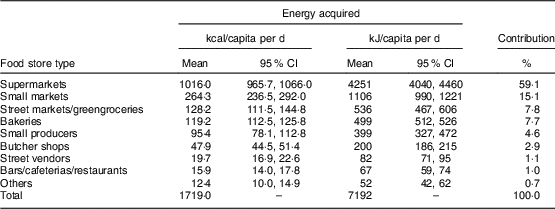
The mean energy purchased was 1719 kcal (7192 kJ)/capita per d. Supermarkets were the most important food store in Brazil, accounting for over half of total energy acquired (59·1 %), followed by small markets (15·1 %), street markets (7·8 %) and bakeries (7·7 %; Table 1).
Mean amount of energy acquired and contribution to household food consumption by food store type. Brazil, 2008–2009
Food acquisitions in supermarkets, bakeries, butcher shops and bars/cafeterias/restaurants were higher in the urban setting. Regarding the Brazilian regions, small markets, street markets/greengroceries, small producers, butcher shops and street vendors accounted for the highest food acquisitions in the North and Northeast. The share of supermarkets and bars/cafeterias/restaurants also increased in the largest income quintiles (Table 2).
Energy share (%) of foods acquired at nine different food store types according to household setting, region and quintiles of per capita income. Brazil, 2008–2009
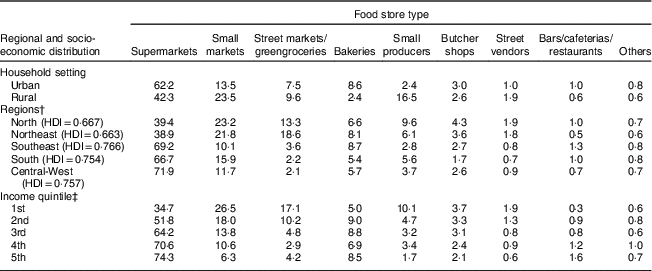
† Data on the Human Development Index (HDI) obtained from the United Nations Program for Human Development for 2010 ( 62 ) .
‡ 1st income quintile represents the 20 % poorest people and the 5th the 20 % richest.
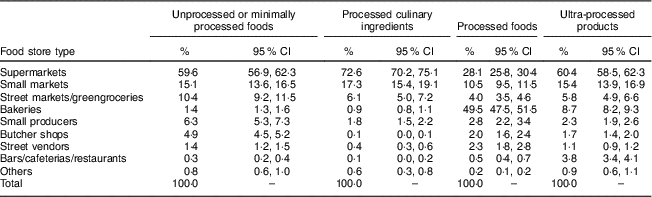
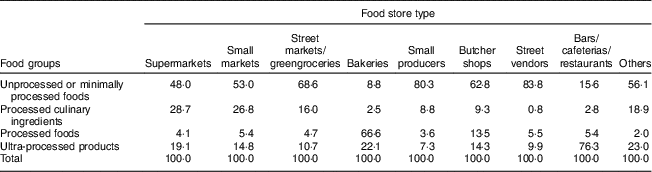
Except for the processed foods group, for which bakery was the main store category, supermarkets accounted for most of the acquisitions for all other food processing groups. Almost two-thirds of energy from ultra-processed products (60·4 %) came from supermarkets. Small markets were the second most important food store in Brazil, except again for the processed food group (Table 3). On the other hand, more than two-thirds of all energy acquired in street markets/greengroceries, butcheries, small producers and street vendors came from unprocessed or minimally processed foods. The same energy contribution was identified for bakeries in relation to processed foods. Although bars/cafeterias/restaurants had a small participation in the acquisitions, more than 75 % of the energy acquired from these stores was from ultra-processed products (Table 4).
Participation (%) of nine different food store types in the consumption of four different food processing groups. Brazil, 2008–2009
Participation (%) of the four food processing groups in the acquisition at nine different food store types. Brazil, 2008–2009
The participation of supermarkets in total food acquisition, adjusted for income, region and setting (urban or rural), tended to increase directly with higher ultra-processed products intake. An increase in the quintile of ultra-processed products consumption led to an average increase of 3·4 % in supermarket shopping. The same relationship was also observed for bakeries and for bars/cafeterias/restaurants, albeit to a smaller extent (0·7 and 0·2 %, respectively). Conversely, the consumption of ultra-processed products showed an inverse relationship with shopping in small markets and small producers, with average reductions of 2·9 and 1·0 % among the quintiles, respectively (Table 5).
Mean predicted values and mean increase (β) in the participation of nine different food store types in food consumption according to quintiles of consumption of ultra-processed products, adjusted for confounding variablesFootnote †. Brazil, 2008–2009
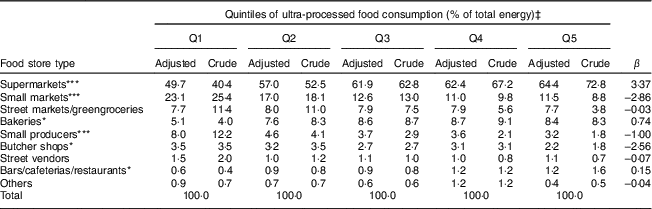
*P<0·05, ***P<0·001, for the linear trend of the variation of the participation of the food stores to the quintiles of ultra-processed food consumption.
† Adjusted for income, region and setting (urban or rural).
‡ Q1 represents the lowest consumption of ultra-processed products and Q5 the highest.
In the principal components analysis performed with the food stores, the retained pattern explained 24·5 % of the variance. This pattern was positively associated with purchases in small markets (+0·68), street markets/greengroceries (+0·30), small producers (+0·49), butcher shops (+0·45) and street vendors (+0·36), and negatively associated with purchases in supermarkets (−0·39), bakeries (−0·63) and bars/cafeterias/restaurants (−0·53). Adherence to this food store pattern was inversely associated with the energy share of ultra-processed products in the diet (adjusted linear regression model: −2·53 %; 95 % CI −3·4, −1·65; Table 6). The design effect for this association was 1·1.
Association between food store usage pattern and the consumption of ultra-processed productsFootnote †. Brazil, 2008–2009
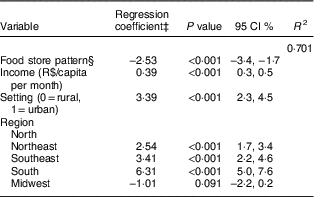
† The share (%) of the total energy acquired for household consumption.
‡ Linear regression.
§ Food store pattern: negatively associated with purchasing in supermarkets, bakeries and bars/cafeterias/restaurants, and positively associated with purchasing in small markets, street markets/greengroceries, small producers, butcher shops and street vendors.
Discussion
The results of the present study indicate the great contribution of supermarkets to Brazilian food intake, especially when it comes to the consumption of ultra-processed products. Grocery shopping in supermarkets tended to increase in households with higher ultra-processed products consumption, while the participation of small markets and small producers in acquisition tended to decrease. The food store usage pattern – negatively associated with purchasing in supermarkets, bakeries and bars/cafeterias/restaurants, and positively associated for the other traditional retail formats – was associated with smaller contribution of ultra-processed products to the diet.
Supermarkets accounted for the greatest share of food consumption in Brazil, and were also responsible for the largest acquisition share of all food groups, except for processed foods, considering that bakeries still play a prominent role in the sales of bread and dairy products in Brazil.
These findings were expected, considering that supermarkets are the most common retail format in Brazil, with the largest market share in grocery retail and also the one with more accelerated growth( 11 ). Despite the intense concentration of Brazilian retail among five supermarket chains, grocery shopping in traditional neighbourhood markets remains strong( Reference Monteiro, Farina and Nunes 10 ).
Further supporting our results, previous studies indicate that higher-income consumers living in large urban centres have better access to supermarkets( Reference Reardon and Timmer 5 ), largely due to their distribution centred around locations with higher socio-economic status( Reference Duran, Roux and Latorre 15 , Reference Vedovato, Trude and Kharmats 18 ). Additionally, consumer heterogeneity – with regard to income, educational achievement and preferences – and greater frequency and purchasing power by those who favour convenience, are factors that can explain the survival of small retailers in Brazil( Reference Farina, Nunes and Monteiro 26 , Reference D’Andrea, Lopez-Aleman and Stengel 27 ). While they cannot compete with supermarkets in terms of pricing, this retail modality is often attractive as they tend to be located closer to people’s homes, saving them the cost of transporting groceries for long distances by public transportation( Reference Duran, Roux and Latorre 15 , Reference D’Andrea, Lopez-Aleman and Stengel 27 ). In our study, small markets, street markets and bakeries stood out among these traditional retail formats.
Unlike small retailers that meet consumers’ needs for a few days at a time( Reference Monteiro, Farina and Nunes 10 ), supermarkets encourage impulsive buying of bigger quantities of food, which explains why their customers tend to consume more energy per day( Reference Hawkes 7 , 16 , Reference Thornton, Cameron and McNaughton 28 – Reference Stern, Ng and Popkin 30 ). Furthermore, in these places consumers are constantly persuaded to acquire food products with lower nutritional value, such as ultra-processed ones( Reference Monteiro, Moubarac and Cannon 2 , Reference Reardon and Timmer 5 , Reference Hawkes 7 , Reference Cameron, Waterlander and Svastisalee 17 ).
In Brazil, 60·4 % of ultra-processed energy available for household consumption comes from supermarkets. In 2002–2003 supermarkets were already the greatest suppliers of ultra-processed products in Brazil, contributing 37·3 % of the total energy acquired for household consumption( Reference Costa, Claro and Martins 6 ). Our study shows an increase in the participation of ultra-processed products in supermarket grocery shopping, considering that in 2008–2009 the participation of these items was 80 % higher than the 2002–2003 value. Although supermarkets are the largest source of ultra-processed product purchases in high-income countries( Reference Hawkes 7 , Reference An and Maurer 31 ), the increased consumption of ultra-processed foods coincides with the rise of supermarkets in many low- and middle-income countries, such as Guatemala( Reference Asfaw 32 ), Thailand, Mexico, China( Reference Gómez and Ricketts 33 – Reference Popkin 35 ), Kenya( Reference Kimenju, Rischke and Klasen 36 ) and other Latin America countries( 3 ). This is probably explained by changes in the food system of these countries, including changes in the retailing sector, due above all to urbanization, national economic growth, transnational food industries penetrating the local markets and the lack of a supply policy( Reference Swinburn, Sacks and Hall 4 , Reference Reardon and Timmer 5 , Reference Monteiro and Cannon 9 ), as well as the real household income growth in these countries( Reference Regmi, Takeshima and Unnevehr 12 ).
While the great concentration of food purchases at supermarkets might have contributed to the improvement of food safety in these countries( Reference Popkin, Adair and Ng 1 ), it also has negative effects. Studies associate the expansion of supermarket chains( Reference Taillie, Ng and Popkin 19 , Reference Courtemanche and Carden 37 ), the habit of buying at these stores( Reference Vedovato, Trude and Kharmats 18 , Reference Asfaw 32 , Reference Kelly, Seubsman and Banwell 34 , Reference Kimenju, Rischke and Klasen 36 , Reference Chaix, Bean and Daniel 38 ) and the larger area designated for ultra-processed products in supermarket shelf space( Reference Cameron, Waterlander and Svastisalee 17 , Reference Rose, Hutchinson and Bodor 39 ) with an increase in BMI and/or obesity prevalence. Despite the indication in some food environment studies pointing towards supermarkets as markers of healthy food consumption( Reference Caspi, Sorensen and Subramanian 14 , Reference Cobb, Appel and Franco 40 ), it is necessary to reinforce that this relationship is context dependent and that a great part of those studies were undertaken in higher-income countries( Reference Caspi, Sorensen and Subramanian 14 ). On the other hand, it is important to highlight that supermarkets can carry both healthy and unhealthy foods, especially when taking into account their location( Reference Caspi, Sorensen and Subramanian 14 , Reference Duran, Roux and Latorre 15 ).
Our results also indicate that higher adherence to the food store usage pattern negatively associated with supermarkets, bakeries and bars/cafeterias/restaurants (these last ones specialized in selling processed and ultra-processed products for household consumption), and positively associated with traditional retail formats, was correlated with a smaller share of ultra-processed products in the diet. However, as previously mentioned, since the relationship between food store type and food consumption is believed to be context dependent, these results might be partially validated by observing patterns of food store usage in other countries. In countries where supermarkets concentrate the greater part of retail sales, such as the USA( 41 ), Canada( 42 ), Germany( 43 ), Mexico( 44 ), Australia( 45 ), Chile( 46 ), the UK( 47 ), the Netherlands( 48 ) and Spain( 49 ), higher per capita sales of ultra-processed products are found( 3 ). On the other hand, in countries like Italy( 50 ), Peru( 51 ) and Russia( 52 ), where the traditional market remains strong, smaller per capita sales of ultra-processed products are found( 3 ).
Traditional retail, like street fairs, butcheries, small producers and street vendors specialized in selling unprocessed or minimally processed foods, plays an important role within the food system, especially in developing countries( 3 , Reference Costa, Claro and Martins 6 , Reference D’Andrea, Lopez-Aleman and Stengel 27 , Reference Popkin 35 ). By shortening the distances between purveyors and consumers, they can provide access to healthy, diverse, local, fair and sustainable foods, improving food and nutrition security( 16 , Reference Gómez and Ricketts 33 , Reference Kelly, Seubsman and Banwell 34 ). Evidence from Latin America suggests that purchasing at street fairs, greengroceries and farmers’ markets may increase access to fresh produce, including those produced by organic and agro-ecological methods( Reference Costa, Claro and Martins 6 , Reference Vedovato, Trude and Kharmats 18 , Reference Gómez and Ricketts 33 ).
The act of making a decision about where to acquire food by the consumer is part of a dynamic and complex process( Reference Krukowski, Mcsweenwey and Sparks 53 ), with facilitators and barriers sustained by the food system’s structure( Reference Glanz, Bader and Iyer 54 , Reference Hawkes, Smith and Jewell 55 ). Based on the understanding of food retail as a link between producer and consumer, with the potential to significantly influence a population’s eating behaviour( Reference Duran, Roux and Latorre 15 , Reference Cameron, Waterlander and Svastisalee 17 , Reference Rose, Hutchinson and Bodor 39 ), different actions and policies have been proposed and implemented to create healthy food environments in an effort to promote health, prevent obesity and reduce inequality( Reference Hawkes, Smith and Jewell 55 – Reference Swinburn, Vandevijvere and Kraak 57 ).
Increasing decision-making power implies better access to information. Therefore, dietary guidelines and nutrition education should encourage purchasing at sites specialized in selling healthy foods and offering better choices at the point of sale( 16 , Reference Hawkes, Smith and Jewell 55 ). However, measures to improve the retail environment are also necessary, whether in the microenvironment (availability, placement, marketing and price) or the macroenvironment. At the latter level, public policies play a role in combining initiatives to promote healthy food consumption, which include zoning policies to ensure the presence of places that sell healthy foods, encouraging access to family agriculture items and street vendors of healthy foods, and installing public facilities, among others( 56 – Reference Roberto, Swinburn and Hawkes 58 ).
Ultra-processed products have become dominant in the global food system( Reference Monteiro, Moubarac and Cannon 2 ) because they can be found in the most diverse food stores due to simplified transportation and stocking, high profit margins and higher efficiency of transnational companies in terms of distribution logistics( Reference Monteiro, Moubarac and Cannon 2 , Reference Reardon and Timmer 5 , Reference Hawkes 7 ). Despite this market appeal, these products are associated with unhealthy dietary nutrient profiles and several diet-related non-communicable diseases, and cause social, cultural, environmental, economic and political problems( Reference Monteiro, Cannon and Moubarac 59 ). Our study contributes to highlight the role of supermarkets in disseminating the consumption of these foods, and emphasizes the hypothesis according to which the ascension and concentration of purchases in these places are associated with consumption of ultra-processed products.
Moreover, our study’s relevance is also strengthened by describing the contribution of different sites to overall food consumption in Brazil, using a new food classification system that is being increasingly recognized as an effective method to address the quality of diets( Reference Monteiro, Cannon and Moubarac 59 ), and also using national data from the most recent food acquisition survey. Previous studies showed that food consumption indicators derived from household budget surveys were highly correlated with indicators from studies on individual consumption( Reference Louzada, Levy and Martins 60 ).
However, some limitations of the present study should be taken into consideration. Household food availability data were used, making it impossible to estimate actual food intake, intra-household distribution and consumption of foods outside the home. Regarding the latter, in 2008–2009, food consumption outside the home corresponded to about 30 % of total food expenses( 20 ), which at the time was estimated at 18 % of dietary energy( Reference Bezerra, de Moura Souza and Pereira 61 ). Another limitation inherent to household budget surveys is considering fractions acquired, not consumed. However, as food wastage is bigger for unprocessed or minimally processed foods than for ultra-processed ones, this limitation might suggest that the relative consumption of ultra-processed products in Brazil is even greater.
Future research will be necessary to investigate the mechanism by which supermarkets have encouraged consumption of ultra-processed products, and its relationship to socio-economic and demographic variables, from longitudinal studies, in distinct contexts and with national reach. Beyond that, due to the scarcity of studies, it is vital to further investigate the food environment considering the degree of food processing, assessing how food stores are related to population food consumption, obesity and other health conditions.
Conclusions
The great contribution of supermarkets to food purchasing, especially of ultra-processed products, reveals these stores’ potential for influencing food consumption and population health. It provides credence to the proposition of policies, regulatory measures and actions to create health-promoting environments, considering that regular and permanent access to adequate and healthy food constitutes a basic citizen right in Brazil and is a basic element to ensure food and nutrition security.
Even though the traditional retail format has been gradually dwindling around the world, it remains a strong element when it comes to the purchase of unprocessed and minimally processed foods in Brazil. Considering that the purchase pattern based on traditional retail was inversely associated with consumption of ultra-processed products, the variety of formats that exist in the country presents an opportunity to encourage purchasing at sites specialized in these foods, such as small markets, greengroceries, small producers and street vendors.
Acknowledgements
Financial support: This research was supported by the São Paulo Research Foundation (FAPESP; grant number 2014/26954-3). P.P.M. received a master’s scholarship from the Coordination for the Improvement of Higher Education Personnel (CAPES) and from the São Paulo Research Foundation (FAPESP; grant number 2014/26737-2). CAPES and FAPESP had no role in the design, analysis or writing of this article. Conflict of interest: None. Authorship: P.P.M. and R.B.L. formulated the research question, designed and carried out the study, as well as conducted the data analyses and wrote the article. R.M.C. supervised the analyses, as well as giving feedback on the writing. A.P.B.M. and J.C.C. provided feedback on the article. All authors have also read and approved the final version of the manuscript. Ethics of human subject participation: Ethical approval was not required.



