

Introduction
It is estimated that agriculture and associated land use change account for 24% of total global emissions (Smith et al., Reference Smith, Bustamante, Ahmmad, Clark, Dong, Elsiddig, Haberl, Harper, House, Jafari, Masera, Mbow, Ravindranath, Rice, Robledo Abad, Romanovskaya, Sperling, Tubiello, Edenhofer, Pichs-Madruga, Sokona, Farahani, Kadner, Seyboth, Adler, Baum, Brunner, Eickemeier, Kriemann, Savolainen, Schomer, von Stechow, Zwickel and Minx2014), while the global food system may contribute up to 35% of global greenhouse gas (GHG) emissions (Foley et al., Reference Foley, Ramankutty, Brauman, Cassidy, Gerber, Johnston, Mueller, O'Connell, Ray and West2011; Vermeulen et al., Reference Vermeulen, Campbell and Ingram2012). As a result, food systems—not just agricultural production—should be a critical focus for GHG mitigation (i.e., reduction in, or removal of, current and expected future emissions) and adaptation (i.e., building resilience for emerging and long term climate impacts) strategies. While a significant focus of climate change (CC) research and policy has been on agriculture (e.g., Thornton et al., Reference Thornton, van de Steeg, Notenbaert and Herrero2009; Challinor et al., Reference Challinor, Watson, Lobell, Howden, Smith and Chhetri2014; Varanasi et al., Reference Varanasi, Prasad and Jugulam2016), there is a growing recognition that our food will be affected by CC beyond just production aspects. The anticipated disturbances include sea-level rise that will likely threaten global food distribution (Brown et al., Reference Brown, Antle, Backlund, Carr, Easterling, Walsh, Ammann, Attavanich, Barrett, Bellemare, Dancheck, Funk, Grace, Ingram, Jiang, Maletta, Mata, Murray, Ngugi, Ojima, O'Neill and Tebaldi2015), the occurrence of food safety hazards throughout the food chain (Tirado et al., Reference Tirado, Clarke, Jaykus, McQuatters-Gollop and Frank2010) and impacts on nutritional quality of certain foods (Myers et al., Reference Myers, Zanobetti, Kloog, Huybers, Leakey, Bloom, Carlisle, Dietterich, Fitzgerald, Hasegawa, Holbrook, Nelson, Ottman, Raboy, Sakai, Sartor, Schwartz, Seneweera, Tausz and Usui2014). Further, CC may result in up to 600 million more people suffering from hunger by 2080 (Yohe et al., Reference Yohe, Lasco, Ahmad, Arnell, Cohen, Hope, Parry, Canziani, Palutikof, van der Linden and Hanson2007), with an additional 24 million undernourished children, almost half of whom would be living in sub-Saharan Africa (Nelson et al., Reference Nelson, Rosegrant, Koo, Robertson, Sulser, Zhu, Ringler, Msangi, Palazzo, Batka, Magalhaes, Valmonte-Santos, Ewing and Lee2009). These changes will impact rates of severe stunting, estimated to increase by 23% in central sub-Saharan Africa and up to 62% in South Asia (Lloyd et al., Reference Lloyd, Kovats and Chalabi2011). As a result, we argue here that there is a need to better understand, integrate and create action related to the food system and CC, beyond agricultural production. This focal shift is critical for multiple reasons, including (1) for greater mitigation potential; (2) for exploration of mitigation and adaptation co-benefits, synergies or trade-offs; (3) to identify clear research gaps; and (4) to integrate options that fall both inside and outside of agricultural production (e.g., dietary choices, food waste).
Approach
A food system ‘gathers all the elements (environment, people, inputs, processes, infrastructure, institutions, etc.) and activities that relate to the production, processing, distribution, preparation and consumption of food and the outputs of these activities, including socio-economic and environmental outcomes’ (HLPE, 2014). Food systems operate within and are influenced by social, economic, political and environmental contexts (Fig. 1). Further, a sustainable food system is one that delivers food and nutrition security for all in such a way that the economic, social and environmental bases to generate food security and nutrition for future generations are not compromised (HLPE, 2014).
Identified components, processes and activities within food systems, which are influenced by a diversity of different drivers ranging from infrastructure to demographics. Such drivers within food systems lead to different outcomes fundamental for sustainable development including resilience, equity, sustainability, stability, security, profit, well-being, health, productivity and protection. (Niles et al., Reference Niles, Ahuja, Esquivel, Mango, Duncan, Heller and Tirado2017).

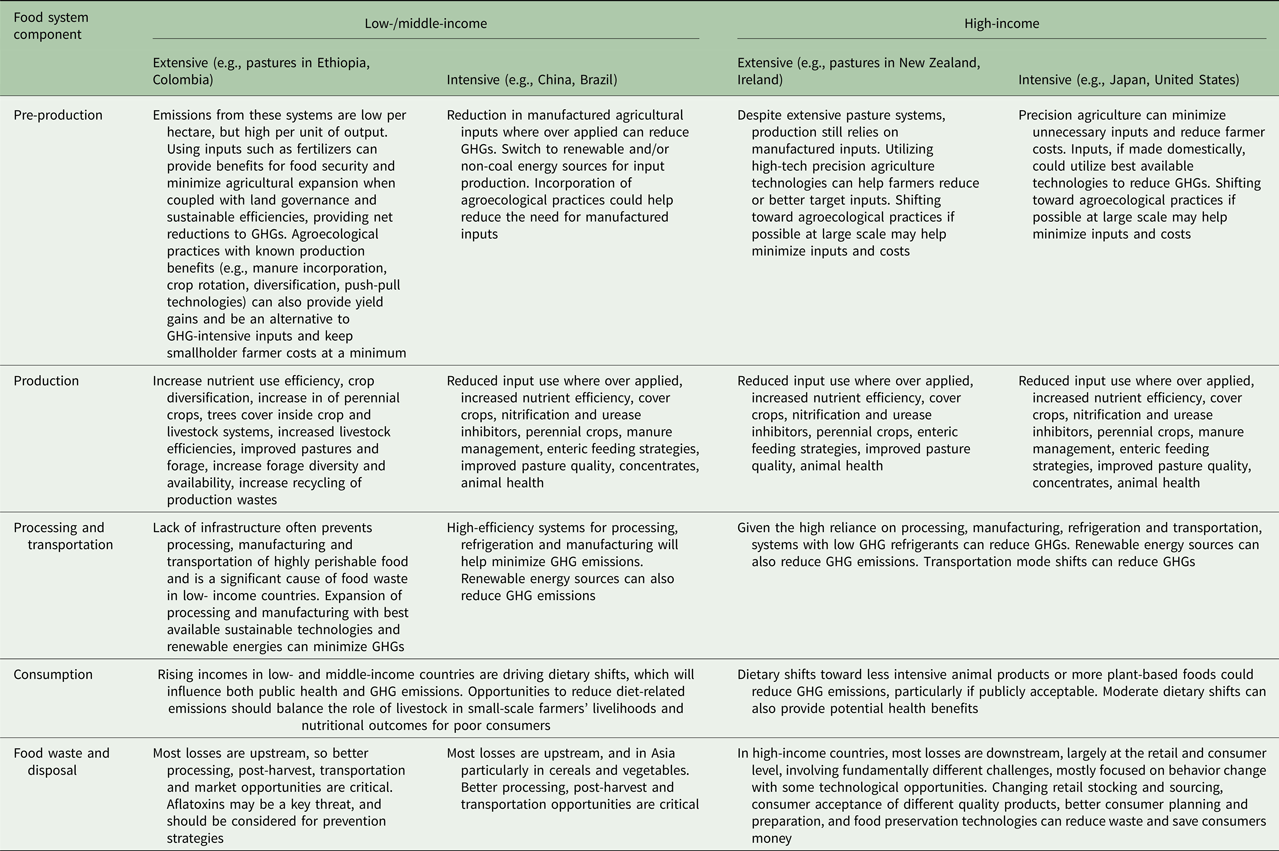
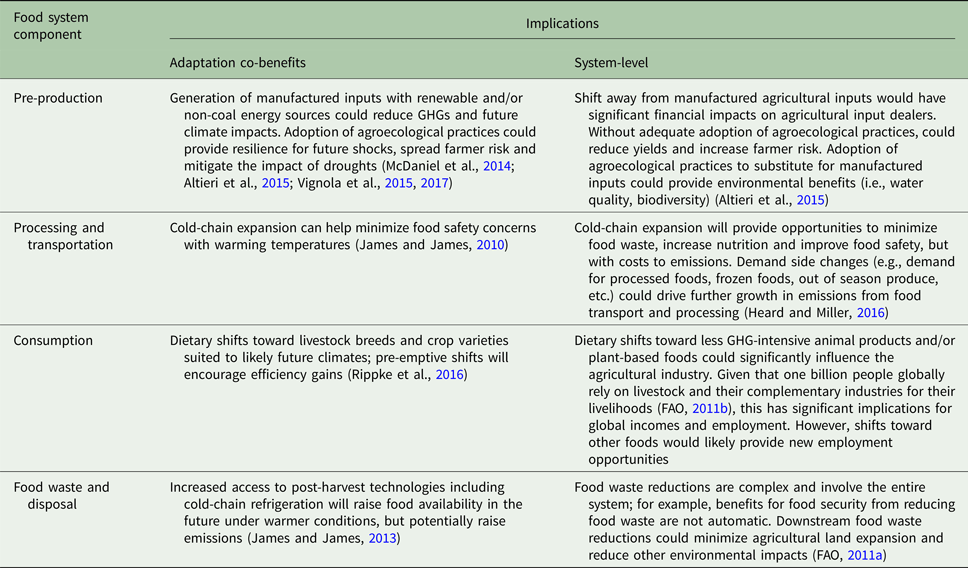
Here we synthesize the existing research briefly on pre-production and production, while providing greater detail and context for food system emissions beyond agriculture for the majority of the review. We conclude by discussing some of the pathways or barriers to action—which mechanisms may enable greater shift toward such mitigating behaviors and where future research may be necessary. We consider these opportunities in different country contexts with varying food and economic systems (Table 1). Further, though the focus of this review is primarily on opportunities to mitigate emissions in food systems, we also detail some potential adaptation co-benefits of various mitigation strategies and how they may influence other components of the food system (Table 2). We focus our attention on recent research that builds on the review by Vermeulen et al. (Reference Vermeulen, Campbell and Ingram2012).
Food system GHG mitigation opportunities across extensive and intensive low-/middle-income and high-income countries. Given the varying economic and food systems of different countries, these details potential mitigation opportunities as relevant for these contexts. We provide country examples below demonstrating some examples; however, we acknowledge that these system categories are not universal for a given place. For example, while Brazil, a middle-income country, has intensive agricultural soy and beef systems, it also has vast pasture systems that are not fertilized (Niles et al., Reference Niles, Ahuja, Esquivel, Mango, Duncan, Heller and Tirado2017)
Adaptation co-benefits and system-level implications of mitigation opportunities. Drawing upon mitigation opportunities described in Table 1, adaptation co-benefits and system-level impacts are detailed below (Niles et al., Reference Niles, Ahuja, Esquivel, Mango, Duncan, Heller and Tirado2017)
Opportunities, co-benefits and implications
CC adaptation and mitigation strategies in the food system require finding more sustainable, resilient and efficient ways of producing, trading, distributing, marketing and consuming diverse and nutritious foods (Tirado et al., Reference Tirado, Crahay, Mahy, Zanev, Neira, Msangi, Brown, Scaramella, Coitinho and Müller2013). Given the complexity of a food system, and its potential to have non-linear feedbacks and cross-cutting impacts throughout the system, it is critical to explore opportunities to mitigate and adapt to CC both within various components and actors interacting within a food system, and across its parts. To facilitate this approach, we highlight key sources of GHG emissions and mitigation opportunities within different stages of the food system (Fig. 1), their relevance across varying country contexts (Table 1), and the potential adaptation co-benefits and food system-level implications of such strategies (Table 2).
Pre-production
Pre-production emissions generally result from the manufacture and distribution of agricultural inputs such as synthetic fertilizers and biocides (e.g., herbicides, pesticides, fungicides), as well as concentrates, supplements or antibiotics for livestock systems. The production of synthetic fertilizer is a significant source of GHG emissions, especially when it relies on coal (Vermeulen et al., Reference Vermeulen, Campbell and Ingram2012) and global fertilizer use has increased 233% between 1970 and 2010 (Smith et al., Reference Smith, Bustamante, Ahmmad, Clark, Dong, Elsiddig, Haberl, Harper, House, Jafari, Masera, Mbow, Ravindranath, Rice, Robledo Abad, Romanovskaya, Sperling, Tubiello, Edenhofer, Pichs-Madruga, Sokona, Farahani, Kadner, Seyboth, Adler, Baum, Brunner, Eickemeier, Kriemann, Savolainen, Schomer, von Stechow, Zwickel and Minx2014). Mitigation strategies for pre-production include opportunities to increase the efficiency of input production systems, shift toward renewable or less GHG-intensive energy sources for its production, or shift toward more sustainable agricultural inputs required for agroecological practices (which would occur in the production phase). In high- and many middle-income countries, shifting away from high input use will be necessary to reduce GHGs, especially in areas of overapplication (Vitousek et al., Reference Vitousek, Naylor, Crews, David, Drinkwater, Holland, Johnes, Katzenberger, Martinelli and Matson2009). In many low-income countries, the addition of agricultural inputs could have significant benefits for food security (Vitousek et al., Reference Vitousek, Naylor, Crews, David, Drinkwater, Holland, Johnes, Katzenberger, Martinelli and Matson2009; Rockström et al., Reference Rockström, Stordalen and Horton2017a, Reference Rockström, Williams, Daily, Noble, Matthews, Gordon, Wetterstrand, DeClerck, Shah, Steduto, de Fraiture, Hatibu, Unver, Bird, Sibanda and Smithb) and help minimize agricultural land expansion and associated GHG emissions, through appropriate natural resource governance (Byerlee et al., Reference Byerlee, Stevenson and Villoria2014) and sustainable efficiencies. Opportunities for economically efficient agroecological alternatives to manufactured inputs include using organic sources of fertilizer such as manure or leguminous crops, crop rotations, companion plantings (Altieri et al., Reference Altieri, Nicholls, Henao and Lana2015), push-pull cropping strategies (Khan et al., Reference Khan, Midega, Pittchar, Murage, Birkett, Bruce and Pickett2014) and/or integrated pest and weed management (West and Post, Reference West and Post2002; Eagle et al., Reference Eagle, Olander, Henry, Haugen-kozyra, Millar and Robertston2012).
Production
We divide this section into three kinds of production to better demonstrate how existing research differs across these systems.
Cereals, grains and staple crops
Significant reviews have explored the myriad opportunities to reduce yield scaled net emissions in cropping systems, with a strong focus on nitrous oxide emissions resulting from soil management (e.g., Eagle et al., Reference Eagle, Olander, Henry, Haugen-kozyra, Millar and Robertston2012; Montes et al., Reference Montes, Meinen, Dell, Rotz, Hristov, Oh, Waghorn, Gerber, Henderson, Makkar and Dijkstra2013; Mangalassery et al., Reference Mangalassery, Sjögersten, Sparkes and Mooney2015; Di and Cameron, Reference Di and Cameron2016; Thapa et al., Reference Thapa, Chatterjee, Awale, McGranahan and Daigh2016). Relevant strategies include: crop breeding for increased yield and/or adaptation to future CC impacts; fertilizer and input management including reduced application rates, increased efficiency, timing, fertilizer type, and application methods of manure and fertilizers (e.g., injection); cover crops; nitrification and urease inhibitors; increases in perennial crops; organic production; reduced or minimal tillage, crop rotation, water use efficiency and crop diversification. Additional research also suggests cropping systems could be critical for increasing soil carbon sequestration, with agricultural practices having the potential to sequester between 1.3 and 8.0 Pg CO2eq yr−1 (Sommer and Bossio, Reference Sommer and Bossio2014; Paustian et al., Reference Paustian, Lehmann, Ogle, Reay, Robertson and Smith2016)
Horticulture (fruit, vegetable, perennials)
Very few reviews exist for horticulture climate mitigation, a clear need for future research. Many noted strategies include: soil amendments, crop residue removal, cover crops, organic production, water use efficiency and improved drainage and compaction prevention in tree crops, many of which may also be relevant for other cropping systems (Aguilera et al., Reference Aguilera, Lassaletta, Gattinger and Gimeno2013; Congreves and Van Eerd, Reference Congreves and Van Eerd2015; Rezaei Rashti et al., Reference Rezaei Rashti, Wang, Moody, Chen and Ghadiri2015; Swarts et al., Reference Swarts, Montagu, Oliver, Southam-Rogers, Hardie, Corkrey, Rogers and Close2016; Niles et al., Reference Niles, Ahuja, Esquivel, Mango, Duncan, Heller and Tirado2017).
Livestock/animal systems
Livestock mitigation has been the subject of many reviews (e.g., (Thornton et al., Reference Thornton, van de Steeg, Notenbaert and Herrero2009; Hristov et al., Reference Hristov, Ott, Tricarico, Rotz, Waghorn, Adesogan, Dijkstra, Montes, Oh, Kebreab, Oosting, Gerber, Henderson, Makkar and Firkins2013; Montes et al., Reference Montes, Meinen, Dell, Rotz, Hristov, Oh, Waghorn, Gerber, Henderson, Makkar and Dijkstra2013; Global Research Alliance, 2014; Knapp et al., Reference Knapp, Laur, Vadas, Weiss and Tricarico2014). Focus has been largely on ruminant animals, due to their enteric fermentation emissions. Strategies generally focus on improving feed conversion efficiency (e.g., improved pasture quality, forage processing and digestibility, concentrates), controlling enteric emissions (e.g., feeding of edible oils, ionophores, vaccines, animal genetics), improving manure management (e.g., methane digesters, storage time, manure covers), grazing management (e.g., intensive grazing, reduced grazing in wet conditions, soil carbon sequestration), silvopasture and incorporation of woody plants and trees, and optimizing animal health (vaccines, animal genetics, heat stress prevention, access to veterinary care). Mitigation opportunities also exist in monogastric systems, particularly around manure management.
Post-production manufacturing, processing and transportation
Globalization and demand for processed foods may likely increase emissions from this portion of the food system (Vermeulen et al., Reference Vermeulen, Campbell and Ingram2012). Post-production activities including food processing, packaging, distribution (transport) and the cold chain (i.e., unbroken refrigeration throughout the supply chain for many products) contribute to GHG emissions, though the extent varies by country. While not exclusively, most mitigation opportunities in this component of the food system come from reducing demand for fossil energy sources and lowering emission intensities of both electricity generation and transport fuels.
Processing
In its most basic sense, food processing involves converting foods from one form to another in order to improve their stability and storability, their bioavailability and nutrition, and/or their desirability by the end user. Industrial food processes have traditionally been designed with the assumption of abundant material and energy resources (van der Goot et al., Reference van der Goot, Pelgrom, Berghout, Geerts, Jankowiak, Hardt, Keijer, Schutyser, Nikiforidis and Boom2016). As a result, many are energy intensive; among the most intensive processes are oilseed and wet corn milling and refining [e.g., soy oil, high fructose corn syrup (Wang, Reference Wang, Tiwari, Norton and Holden2013)], water removal, and food safety practices including sterilization and pasteurization. Wang suggests that a 25–34% energy savings in the British food processing industry is possible through technically feasible and economically practical improvements (Wang, Reference Wang, Tiwari, Norton and Holden2013). Other authors call for a more fundamental redesign of food processing, away from highly refined, pure ingredients and toward mildly fractionated, complex and diverse ‘functional fractions’ (van der Goot et al., Reference van der Goot, Pelgrom, Berghout, Geerts, Jankowiak, Hardt, Keijer, Schutyser, Nikiforidis and Boom2016).
Refrigeration
Refrigeration is another critical aspect of post-production GHG emissions. Around 40% of all food produced requires refrigeration and 15% of the electricity consumed worldwide is used for refrigeration (James and James, Reference James, James, Tiwari, Norton and Holden2013). With today's electricity generation methods, this results in notable GHG emissions; for example, roughly 2.4% of the United Kingdom's GHG emissions are from food refrigeration (Garnett, Reference Garnett2007). Thus, utilizing more efficient refrigeration systems and increasing the use of renewable energies are critically important mitigation strategies for food systems. Currently, <10% of perishable foodstuffs are currently refrigerated worldwide (James and James, Reference James, James, Tiwari, Norton and Holden2013). Crops in most locations have seasonality and thus require managed storage, often through refrigeration or freezing in order to provide year-round consumption. Trade-offs between storage and out-of-season production GHG emissions and food transport emissions can vary greatly by season, product and location, as well as production and transportation strategies. While some studies demonstrate that local food production could result in lower GHG emissions (Lampert et al., Reference Lampert, Soode, Menrad and Theuvsen2016; Rothwell et al., Reference Rothwell, Ridoutt, Page and Bellotti2016), other studies show situations where imported food results in lower emissions (Milà i Canals et al., Reference Milà i Canals, Cowell, Sim and Basson2007; Ledgard et al., Reference Ledgard, Lieffering, Coup and O'Brien2011). While ozone-depleting refrigerants have largely been phased out, popular replacements [e.g., hydrofluorocarbons (HFCs)] have global warming potentials sometimes thousands of times higher than CO2 (Zhang et al., Reference Zhang, Wu and Lu2011). Recent changes to the Montreal Protocol will require withdrawal of HFCs in the coming 30 yr (Kigali Amendment, 2016), providing excellent opportunities to reduce cold-chain refrigerant GHG emissions. If cold-chain expansion is combined with improvements in energy efficiency, it is estimated that it could continue into new regions without increasing GHG emissions and possibly even reduce emissions, as food waste lessens (James and James, Reference James and James2010).
Transportation
While food distribution may be an easily identifiable mitigation target, from a food systems perspective, it often proves to be a less significant contribution to GHG emissions than assumed, and trade-offs exist with both production and storage stages. In the US, direct distribution of foods (from farm or production facility to retail stores) represented only 4% of the total greenhouse gas emissions of food, with indirect transportation (e.g., delivery of fertilizer to farms) adding an additional 7% (Weber and Matthews, Reference Weber and Matthews2008). Others have found that consumers driving more than 7 km in the UK to purchase organic vegetables is more GHG intensive than the cold chain, transportation and storage of regionally produced vegetables delivered to a consumer directly (Coley et al., Reference Coley, Howard and Winter2009). Opportunities to reduce transportation emissions are largely driven by either increased efficiencies or mode shifts, e.g., from road to rail. Refrigeration can also be a notable component of the food transportation system. Mobile refrigeration systems, especially in trucks, are commonly oversized and driven by auxiliary diesel engines, and can result in GHG emissions up to 140% of non-refrigerated trucks (Tassou et al., Reference Tassou, De-Lille and Ge2009). Thus, efforts to increase refrigeration efficiencies in transport vehicles are also an important strategy for reducing transportation emissions.
Consumption
Assessing the role of diets and food consumption patterns on CC is a growing research area (Nemecek et al., Reference Nemecek, Jungbluth, i Canals and Schenck2016), as diets consistently shift toward increased consumption of animal products, processed and packaged foods, lower micronutrient densities and greater energy intake in general (Pradhan et al., Reference Pradhan, Reusser and Kropp2013; Tilman and Clark, Reference Tilman and Clark2014). Diet shifts—the ‘nutritional transition’—are increasingly common as more countries shift toward more western-style diets (Popkin, Reference Popkin2001; Popkin et al., Reference Popkin, Adair and Ng2012). Since diet has the potential to be a significant portion of an individual's contribution toward GHG emissions (Macdiarmid, Reference Macdiarmid2013), some studies have suggested that managing diets and demand-side approaches may be more effective than technical agricultural mitigation options in reducing global emissions (Popp et al., Reference Popp, Lotze-Campen and Bodirsky2010; Smith et al., Reference Smith, Haberl, Popp, Erb, Lauk, Harper, Tubiello, de Siqueira Pinto, Jafari, Sohi, Masera, Böttcher, Berndes, Bustamante, Ahammad, Clark, Dong, Elsiddig, Mbow, Ravindranath, Rice, Robledo Abad, Romanovskaya, Sperling, Herrero, House and Rose2013; Bajzelj et al., Reference Bajzelj, Richards, Allwood, Smith, Dennis, Curmi and Gilligan2014). These mitigation options may be especially relevant to high-income countries where diets with high GHG emission profiles are more common, while low- and middle-income countries are often focused on ensuring food and nutrition security.
Household storage and utilization
A 2008 estimate placed the total number of domestic refrigerators worldwide at about one billion, twice as many as 12 yr prior (Coulomb, Reference Coulomb2008). The expansion of the cold chain into developing economies certainly means increased energy consumption at the consumer stages of the food system, but its net impact on GHG emissions for food systems as a whole is complex and uncertain (Heard and Miller, Reference Heard and Miller2016). Estimates suggest that household refrigeration represents upwards of 17% of the total energy used by the US food system (Heller and Keoleian, Reference Heller and Keoleian2003); appliance efficiency gains have been countered by growing refrigerator size and increased prevalence of second refrigerators (Kim et al., Reference Kim, Keoleian and Horie2006). The addition of household refrigeration in developing economy food systems has the potential to decrease spoilage, improve food safety, diversify food choices and may lead to reduced food waste while improving nutritional outcomes. But it can also have indirect effects such as increased access, and likely greater consumption, of meat, dairy and prepackaged or frozen ready-made foods; shifts to larger, supermarket-style shopping patterns; and may in fact result in greater food waste if changes in consumer purchasing patterns facilitate overbuying (Heard and Miller, Reference Heard and Miller2016). As Heard and Miller discuss, the balance of these factors on food system environmental impacts is challenging to assess and requires further study and evaluation.
Processed foods
Reducing consumption of processed and ultra-processed foods could help minimize emissions associated with their processing, packaging and transportation (van Dooren et al., Reference van Dooren, Marinussen, Blonk, Aiking and Vellinga2014; Green et al., Reference Green, Milner, Dangour, Haines, Chalabi, Markandya, Spadaro and Wilkinson2015). At least two recent studies found that ready-to-eat meals had much higher energy and GHG emissions compared with using fresh ingredients (Schmidt Rivera et al., Reference Schmidt Rivera, Espinoza Orias and Azapagic2014; Hanssen et al., Reference Hanssen, Vold, Schakenda, Tufte, Møller, Olsen and Skaret2017). As well, GHG emissions for the creation of bagged salads is largely due to both the agricultural phase and the use of water and energy in the processing phase (Fusi et al., Reference Fusi, Castellani, Bacenetti, Cocetta, Fiala and Guidetti2016). However, efforts to minimize processed foods should balance potential benefits, such as contributions to nutrition and potential to reduce food waste as well as the balancing of seasonal supply and demand (Weaver et al., Reference Weaver, Dwyer, Fulgoni, King, Leveille, MacDonald, Ordovas and Schnakenberg2014).
Balancing energy intake and individual metabolic demands
As higher calorie diets become more prevalent, evidence grows that diets that exceed individual metabolic demands can result in greater environmental impact (van Dooren et al., Reference van Dooren, Marinussen, Blonk, Aiking and Vellinga2014; Nelson et al., Reference Nelson, Hamm, Hu, Abrams and Griffin2016). Avoiding energy consumption beyond individual needs could reduce GHG emissions up to 11% (Vieux et al., Reference Vieux, Darmon, Touazi and Soler2012). Further, some evidence suggests that a significant portion of additional calories (up to 39% in the average Australian diet, e.g.) come from discretionary foods including alcohol, candy and baked goods, which, if reduced, could allow for greater intake of vegetables, dairy and grain providing health benefits (Hendrie et al., Reference Hendrie, Baird, Ridoutt, Hadjikakou and Noakes2016). Thus, reducing discretionary food to meet and not exceed metabolic demands could have both GHG emission benefits and potential health gains.
Animal products
A large body of recent work exploring the GHG emissions of different diet types typically highlights animal-based foods as a priority. Diets higher in animal products are associated with greater GHG emissions (González et al., Reference González, Frostell and Carlsson-Kanyama2011; Bajzelj et al., Reference Bajzelj, Richards, Allwood, Smith, Dennis, Curmi and Gilligan2014; Abbade, Reference Abbade2015) and animal-based foods are the largest portion of GHG emissions in a typical diet (Heller and Keoleian, Reference Heller and Keoleian2015; Monsivais et al., Reference Monsivais, Scarborough, Lloyd, Mizdrak, Luben, Mulligan, Wareham and Woodcock2015; Hendrie et al., Reference Hendrie, Baird, Ridoutt, Hadjikakou and Noakes2016; Clune et al., Reference Clune, Crossin and Verghese2017; Hanssen et al., Reference Hanssen, Vold, Schakenda, Tufte, Møller, Olsen and Skaret2017; Vetter et al., Reference Vetter, Sapkota, Hillier, Stirling, Macdiarmid, Aleksandrowicz, Green, Joy, Dangour and Smith2017). Opportunities to reduce GHG emissions, particularly in economies with high levels of meat consumption, have focused on switching to different types of meat and animal products, low-animal or substantially reduced animal product consumption, for example, through Mediterranean, vegetarian or vegan diets. Beef production results in roughly five times the GHG emissions per calorie of non-ruminant animal food sources like poultry, pork, dairy and eggs (Eshel et al., Reference Eshel, Shepon, Makov and Milo2014). Switching to less GHG-intensive animal protein is an opportunity to reduce GHG emissions, with partial substitution of red meat with pork or chicken offering between a 9% (Scarborough et al., Reference Scarborough, Allender, Clarke, Wickramasinghe and Rayner2012) and 19% reduction in GHGs (Hoolohan et al., Reference Hoolohan, Berners-Lee, McKinstry-West and Hewitt2013) and full substitution up to 40% (Scarborough et al., Reference Scarborough, Appleby, Mizdrak, Briggs, Travis, Bradbury and Key2014; Westhoek et al., Reference Westhoek, Lesschen, Rood, Wagner, De Marco, Murphy-Bokern, Leip, van Grinsven, Sutton and Oenema2014; Sabaté et al., Reference Sabaté, Sranacharoenpong, Harwatt, Wien and Soret2015).
Shifting from animal products toward plant-based foods likely offers more significant reductions to dietary GHG emissions. Studies range in their estimates with reductions of 22% (vegetarian) or 26% (vegan) (Berners-Lee et al., Reference Berners-Lee, Hoolohan, Cammack and Hewitt2012) to potential reductions by 2050 of up to 70% over current diets (Springmann et al., Reference Springmann, Godfray, Rayner and Scarborough2016). The inclusion of eggs and dairy (vegetarian) or no animal products at all (vegan) has resulted in varying outcomes for GHG emissions, given these products. For example, cheese has been found to have higher dietary emissions than eggs and poultry; conversely milk, cream and yoghurt have much lower dietary GHG emissions than eggs, poultry and even many vegetables and grains (Hamerschlag, Reference Hamerschlag2011; Scarborough et al., Reference Scarborough, Appleby, Mizdrak, Briggs, Travis, Bradbury and Key2014). Related research exploring diets such as the Mediterranean or New Nordic diets have found that these reduced GHG emissions compared with traditional Western European diets (Saxe et al., Reference Saxe, Larsen and Mogensen2013; Pairotti et al., Reference Pairotti, Cerutti, Martini, Vesce, Padovan and Beltramo2015), though vegetarian diets have the potential to reduce GHG emissions more (Pairotti et al., Reference Pairotti, Cerutti, Martini, Vesce, Padovan and Beltramo2015; Tilman and Clark, Reference Tilman and Clark2015).
Considering nutritional outcomes is critical in evaluating potential dietary shifts (Vetter et al., Reference Vetter, Sapkota, Hillier, Stirling, Macdiarmid, Aleksandrowicz, Green, Joy, Dangour and Smith2017). Potential micronutrient shifts have been explored (Temme et al., Reference Temme, Bakker, Seves, Verkaik-Kloosterman, Dekkers, van Raaij and Ocké2015; Payne et al., Reference Payne, Scarborough and Cobiac2016), as well as the implications of recommending dietary shifts in low-income and middle-income economies where food insecurity and hunger may still be prevalent (Garnett, Reference Garnett2011). Diet shifts away from animal products, especially red meat, offer mortality risk benefits (Westhoek et al., Reference Westhoek, Lesschen, Rood, Wagner, De Marco, Murphy-Bokern, Leip, van Grinsven, Sutton and Oenema2014; Aleksandrowicz et al., Reference Aleksandrowicz, Green, Joy, Smith and Haines2016) and there are general synergies between diets low in GHGs and health benefits (Tilman and Clark, Reference Tilman and Clark2014; Gephart et al., Reference Gephart, Davis, Emery, Leach, Galloway and Pace2016; Irz et al., Reference Irz, Leroy, Réquillart and Soler2016), though this is not universal [sugar, e.g., has a low GHG impact but negative health consequences (Briggs et al., Reference Briggs, Kehlbacher, Tiffin and Scarborough2016)]. However, there has been significantly less research on dietary shifts and GHG emission reductions in low- and middle-income countries (Jones et al., Reference Jones, Hoey, Blesh, Miller, Green and Shapiro2016), despite the nutritional transition many are undergoing. Overall, existing research indicates that dietary shifts toward non-ruminant protein sources will provide reductions in GHG emissions, though the extent of these reductions is variable depending on the protein replacement.
Loss, waste and disposal
Food loss (pre-consumer), waste (consumer-level) and disposal (post-consumer) represent a significant source of GHG emissions since up to one-third of all food produced is lost or wasted globally each year (FAO, 2011a), and food waste tripled between 1960 and 2011 (Porter and Reay, Reference Porter and Reay2016). The FAO estimates that if food waste were a country, it would be the third largest emitter of GHG emissions in the world (FAO, 2013). The food groups where losses matter most to GHG emissions and other environmental impacts are cereals, vegetables and meat (FAO, 2013).
In low-income countries, the majority of food is lost and occurs at the production, post-harvest and processing/transportation phases. These losses are often due to a lack of infrastructure including cold-chain refrigeration, processing facilities and reliable transportation to bring crops to market. As a result, crops may spoil before they can be fully utilized (FAO, 2011a). A lack of available drying technologies or improper storage can also contribute to losses due to aflatoxins, poisonous carcinogens produced by molds in staple crops under high moisture, high temperature conditions (PACA, 2013). Opportunities to minimize food loss and waste in low-income countries include the expansion of transportation infrastructure, processing and preservation infrastructure including the cold chain, drying technologies and increased market opportunities (FAO, 2011a), though many of these may result in increased use of energy or resources. Nevertheless, given that agricultural production is the majority of GHG emissions during the production of most food (Vermeulen et al., Reference Vermeulen, Campbell and Ingram2012), efforts to minimize loss and waste, even at the expansion of emission sources from other aspects of the food system, would likely result in overall benefits.
Conversely, in high-income countries, most food is wasted at the retail and consumption levels (FAO, 2013; Blanke, Reference Blanke2015). Opportunities to reduce food waste in retail include changing consumer perceptions about food appearances, reducing overstocking, reducing portion sizes in restaurants, utilizing packaging and processing technologies that help keep food fresh for longer, and clarifying the meaning of sell-by and use-by dates for consumers (Blanke, Reference Blanke2015; Schanes et al., Reference Schanes, Giljum and Hertwich2016; Wilson et al., Reference Wilson, Rickard, Saputo and Ho2017). Prevention of consumer food waste must consider complex human behaviors (Quested et al., Reference Quested, Marsh, Stunell and Parry2013) but might involve consumer acceptance of ‘ugly’ produce, increased planning and preparation for cooking, better storage techniques and food sharing (Blanke, Reference Blanke2015).
In addition to the impacts associated with producing food that is not eaten, food disposal in landfills is also a source of methane emissions as food decomposes anaerobically. Globally, landfills are the third largest source of methane emissions (Global Methane Initiative, no date), though not all is attributable to food waste. Opportunities to reduce methane emissions from landfills include diverting food waste for animal feed, and compost and employing methane capture technologies, which can also be used to generate electricity (Krause et al., Reference Krause, Chickering, Townsend and Reinhart2016).
Implications for action
Policy and funding mechanisms
There are multiple opportunities to reduce GHG emissions throughout the food system, although these vary with country contexts. Policies and funding will be critical catalysts for positive change. While high-income and low-income countries face different present-day challenges, experts contend that there is a global need for contraction and a convergence toward universal access to nutritious, low-emissions diets (Rockström et al., Reference Rockström, Stordalen and Horton2017a). Reductions in emissions from food systems will require actions from all value chain participants, including consumers, manufacturers, farmers and input suppliers.
Public policy will play a major role in driving change toward a lower food system GHG footprint in balance with other goals for food systems, such as health, jobs, incomes, biodiversity and gender equality. As governments recognize the opportunities with interlinked nutritional and environmental functions of food systems as well as the urgency for action, policy discourse is shifting from a focus on voluntary measures—such as consumer education, purchasing guidelines, commodity roundtables and good practice guidelines (Foresight, 2011)—to other complementary actions such as stronger regulatory and fiscal incentives, including food taxes, particularly in industrialized countries, mandatory industry standards, renewable energy subsidies and controls on land use change (De Pinto et al., Reference De Pinto, Li, Haruna, Hyman, Martinez, Creamer, Kwon, Garcia, Tapasco and Martinez2016; Mason and Lang, Reference Mason and Lang2017; Springmann et al., Reference Springmann, Mason-D/’Croz, Robinson, Wiebe, Godfray, Rayner and Scarborough2017). Further integration of sustainability criteria in food dietary guidelines could also be a driver for changing dietary patterns toward healthy, sustainable GHG diets (Fischer and Garnett, Reference Fischer and Garnett2016). However, this is currently only happening in four countries (Brazil, Germany, Qatar and Sweden) with recommendations in countries such as the US unsuccessful thus far (Dietary Guidelines Advisory Committee, 2015; Merrigan et al., Reference Merrigan, Griffin, Wilde, Robien, Goldberg and Dietz2015).
A shortfall in dedicated public and private finance to catalyze the necessary transition remains a critical barrier—for example, the US$2.5 trillion cost for agricultural mitigation estimated by 50 parties to the Paris Agreement is far in excess of globally available finance (Richards et al., Reference Richards, Bruun, Campbell, Gregersen, Huyer, Kuntze, Madsen, Oldvig and Vasileiou2016). Climate finance offers opportunities to achieve mitigation across a global context and refers to the ‘financial flows mobilized by high-income country governments and private entities that support CC mitigation and adaptation in low- and middle-income countries (Stadelmann et al., Reference Stadelmann, Michaelowa and Roberts2013). The international community aims to mobilize at least US$100 billion per year for mitigation and adaption in low- and middle-income countries. Unfortunately, only a small portion of global climate finance ($6–8 billion of $391 billion in 2015) is allocated to agriculture, and it is unclear how much can be traced directly to climate-smart agriculture and climate-friendly food systems.
Climate measures are much more likely to succeed if they not only aim at reducing emissions or creating climate resilience, but also integrate broader domestic development objectives, such as poverty reduction, food security, energy security, energy access or transportation (Jakob et al., Reference Jakob, Steckel, Klasen, Lay, Grunewald, Martinez-Zarzoso, Renner and Edenhofer2014). We argue that it is important to incorporate food systems thinking and related GHG mitigation and adaptation impacts into the decision-making process, which are adapted to the socio-institutional context (Vignola et al., Reference Vignola, Leclerc, Morales and Gonzalez2017), as policies are developed and investments are mobilized for achieving a variety of other sustainable development goals. A systems approach on the whole food value chain is necessary for assessing current climate finance and re-directing investments in climate-friendly food systems. To support decision-making, stakeholders are considering the potential utility of putting an explicit price on carbon emissions to help ensure that analysis of policy options and climate mitigation actions identify the most cost-effective mitigation efforts across the economy (Steckel et al., Reference Steckel, Jakob, Flachsland, Kornek, Lessmann and Edenhofer2017). To actually develop carbon pricing schemes, however, would require significant additional research and work to develop schemes appropriate for national contexts and priorities. Global Climate Fund and other multilateral funds and the growing green bonds market could be utilized to generate low cost capital and catalyze broader investments for climate-friendly food systems.
Research needs
The recent growth in food system and climate research is timely and laudable. Yet there remains much additional work, particularly in low-income countries and across multiple components of the food system. For example, although the greatest increases in GHG emissions from food loss and waste in recent decades are coming from low- and middle-income countries (Porter et al., Reference Porter, Reay, Higgins and Bomberg2016), barely any empirical research explores how to overcome these challenges (Nemecek et al., Reference Nemecek, Jungbluth, i Canals and Schenck2016; Porter et al., Reference Porter, Reay, Higgins and Bomberg2016). Further, the rapid dietary shifts in low- and especially middle-income countries toward high GHG diets (Clonan et al., Reference Clonan, Roberts and Holdsworth2016) has not resulted in a commensurate increase in research on assessing dietary changes and their climate implications in these contexts, and the majority of available studies focus on high-income countries (Jones et al., Reference Jones, Hoey, Blesh, Miller, Green and Shapiro2016). Understanding the myriad benefits and impacts of cold-chain expansion, including unintended feedback and rebound effects, is also a priority research topic. Other research priorities we have identified include improved post-harvest management (food storage, transformation, handling and processing) to reduce food contamination and losses (Tirado et al., Reference Tirado, Crahay, Mahy, Zanev, Neira, Msangi, Brown, Scaramella, Coitinho and Müller2013, Reference Tirado, Hunnes, Cohen and Lartey2015), as well as an increased focus on mitigation opportunities in horticulture. Given quickly evolving contexts, we argue that it is critical to increase food systems and CC research in low- and middle-income countries across these, and likely many other, topics.
Conclusion
Our global and local food systems need urgent action to reduce GHG emissions in ways that enable resilience and sustainability. Though an extensive body of research explores how we can mitigate and adapt to CC in agriculture, substantially less work has focused across the food system to explore opportunities for climate mitigation and adaptation more comprehensively. Here, we highlight some of the key strategies across the food system to mitigate emissions, and their applicability in varying country contexts. We have illustrated ways in which certain mitigation options in specific food system components could have profound impacts on other areas and also potentially offer adaptation co-benefits. However, the majority of existing peer-reviewed literature does not examine CC in food systems through this lens. Thus, future systems-level research is critical to assess connections to other sustainable development goals and ensure that mitigation of food system emissions does not have untold impacts in other sectors. Conducting this work in low- and middle-income countries is especially important as the policies and investments they put into place today will have a profound impact on their food systems, including its mitigation and adaptation capacity.
While many policy and funding mechanisms have been proposed, far fewer have been implemented to meet the need/aim of sustainable food systems in a changing climate. Such efforts can be informed by empirical research, including reviews such as these but will ultimately require political will and clear, equitable and resilient funding mechanisms. Increased efforts to implement research, policies and funding mechanisms simultaneously are necessary to achieve climate mitigation and adaptation goals now and into the future inside a sustainable food system development.
Acknowledgements
The authors thank Mil Duncan, Carsey School of Public Policy, University of New Hampshire (USA) for her review of literature on climate change and agricultural production. The authors also thank Advisory Committee members of Meridian Institute's Climate Change and Food Systems project who provided input on the scope and contents of the draft report Climate Change and Food Systems: Assessing Impacts and Opportunities. Advisory Committee members include: Kofi Boa, Center for No-Till Agriculture (Ghana); Timothy Griffin, Friedman School, Tufts University (USA); Tony LaViña, Ateneo de Manila University, University of the Philippines, De La Salle College of Law, Philippine Judicial Academy (Philippines); Alexander Müeller, The Economics of Ecosystems and Biodiversity for Agriculture and Food (TEEBAgriFood) (Germany); Ruth Richardson, Global Alliance for the Future of Food (Canada); Maria Sanz-Sánchez, BC3 Basque Centre for Climate Change (Spain); Whendee Silver, UC Berkeley (USA); Pete Smith, University of Aberdeen (Scotland); and Charlotte Streck, Climate Focus (USA). The authors thank the Global Alliance for the Future of Food for their generous support.


 Open access

