




Introduction
The world’s military spending has continued to grow for eight consecutive years, reaching a historical record of US$2240 billion in 2022, signalling a global escalation in military expenditures(Reference Tian, Lopes da Silva and Béraud-Sudreau1). The recent surge in military spending is attributed to three primary factors: the Russian invasion of Ukraine, the heightened military armament in Western and Central European nations as a response to this conflict, and the increased military outlays of Asian superpowers (India, China and Japan) due to rising tensions and the elevated risk of military conflicts both regionally and globally. In response to the deteriorating global security landscape, Western and Central Europe have unveiled plans to further elevate their military expenditures, with the most substantial increases occurring in countries geographically close to Russia and Ukraine(Reference Tian, Lopes da Silva and Béraud-Sudreau1,Reference Santorsola, Caferra and Morone2) . These geopolitical events and the resulting strategic shift in resource allocation highlight the need to ensure that soldiers are provided with appropriate nutrition during field operations to enhance their performance and resilience in challenging situations.
The potential spread of armed conflicts across the world presents military personnel with the challenge of operating in diverse scenarios and climates, with a primary concern being the provision of adequate and nutritionally balanced sustenance to troops. The dynamic nature of modern conflicts underscores the necessity of understanding how nutritional support can be optimised to sustain soldiers’ physical and cognitive capacities. In this context, the significance of proper nutrition for optimising military performance has been extensively investigated in recent years(Reference Anyzewska, Lakomy and Lepionka3–Reference Pomeroy, Tooley and Probert8). Although these studies lay the foundation for recognising the crucial role that nutrition plays in the overall readiness and effectiveness of military personnel, understanding the nuanced relationship between nutrition, extreme environments and military demands requires a more comprehensive assessment.
For example, engaging in training or combat within extreme environments(Reference Mantua, Bessey and Sowden9) under intense and demanding conditions can result in significant energy deficits among soldiers, often leading to reductions in body and muscle mass(Reference Ahmed, Mandic and Desilets10,Reference Church, Gwin and Wolfe11) . Hence, ensuring that soldiers maintain sufficient food and fluid intake during field operations in such conditions is paramount. A significant challenge lies in creating military rations comprising foods tailored to the demands of physical activity in extreme conditions, stimulating appetite and thereby facilitating consistent nutrient intake to maintain energy balance over time. The design of military rations becomes a focal point for addressing soldiers’ nutritional needs in various operational contexts, contributing to their ability to sustain peak performance. These physiological challenges underscore the need to identify nutritional strategies that mitigate energy deficits and support soldiers’ physical wellbeing, aligning with the overarching aim of optimising military performance.
Implementing controlled food consumption strategies before, during and after field exercises can enhance military performance(Reference Periard, Eijsvogels and Daanen12), and within the Armed Forces, overseeing food and drink consumption is a managerial responsibility. This strategic approach to managing soldiers’ nutrition aligns with the broader goal of ensuring their optimal performance during missions and training exercises. In this context, also nutritional content and requirements must be studied and improved to satisfactorily meet the needs in different situations, especially in extreme conditions. Therefore, the content of calories and macro- and micronutrients contained in the military’s diet must be determined by the type of mission, duration and environment to avoid negative impacts on military performance and final objective(Reference Sotelo-Diaz and Blanco-Lizarazo13).
Nowadays, technological approaches have led to many advances in military nutrition and packaging. Some examples of approaches used to improve the quality of military rations include (i) microencapsulation(Reference Karl, Margolis and Fallowfield6), (ii) omics approaches(Reference Russell and Deuster14), (iii) pulsed electric field(Reference Dziki15), (iv) microwave-assisted thermal sterilisation(Reference Patel, Parhi and Al-Ghamdi16), (v) high-pressure processing sterilisation(Reference Long, Zhang and Devahastin17), (vi) freeze-drying(Reference Coad and Bui18), (vii) osmotic dehydration(Reference Pandiselvam, Tak and Olum19), (viii) multilayer packaging(Reference Haque, Candlen and Peterson20), (ix) modified atmosphere packaging(Reference Kalpana, Priyadarshini and Maria Leena21) and (x) irradiation(Reference Castell-Perez and Moreira22). Therefore, there are several strategies to make the military ration safer, nutritious and with a longer shelf-life. However, the focus of this present study is the impact of military rations on the nutrition, health and performance of soldiers in extreme environments.
Given these considerations, the present study aims to comprehensively review the current state of scientific knowledge regarding the convenience, packaging, sensory attributes and nutritional components of military rations. This examination aims to provide insights into how military rations have been tailored to address soldiers’ nutritional requirements and preferences, as well as what could be the possible improvement areas, ultimately contributing to their physical and cognitive capabilities in challenging environments. Additionally, the study seeks to delve into factors influencing soldiers’ appetite, gut microbiota and nutritional requirements during training or combat scenarios in extreme environments (cold, warm and high altitude). This exploration aims to uncover the intricate connections between soldiers’ physiological responses, their dietary needs and the unique challenges posed by different operational settings, further advancing our understanding of contemporary and future nutritional strategies for military personnel, generating hypotheses to be tested in future research and highlighting areas with lack of sufficient knowledge in this field.
Methods
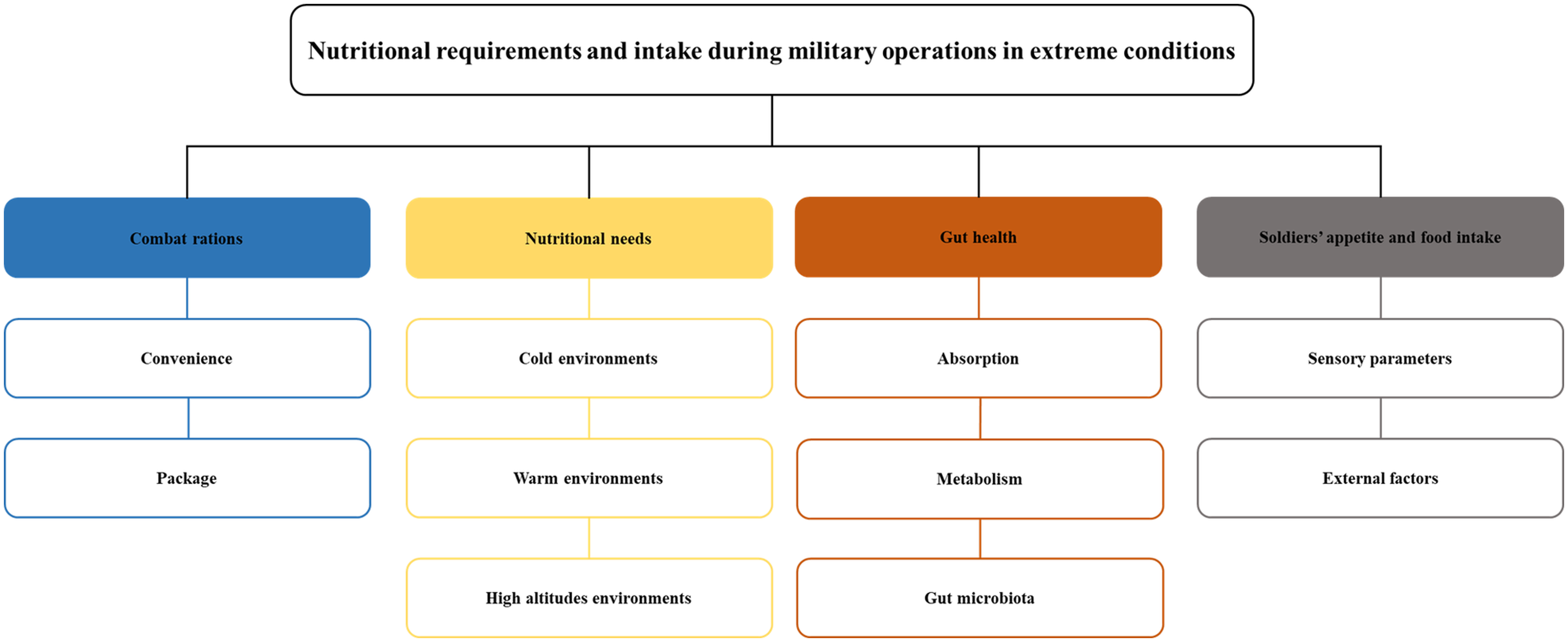
The topics covered in this review are shown in the Figure 1. The systematic literature search was carried out according to Peters et al. (Reference Peters, Marnie and Tricco23) utilising Web of Science, PubMed and Google Scholar databases.
Topics covered in this review article.
The words contained in the titles, abstracts and the index terms were utilised to develop a full search strategy. Broad inclusion criteria were initially employed to map the literature of interest and to obtain a comprehensive quantity of articles. The search strategy (Table 1), including all identified keywords and index terms, was adapted for use across three databases: Web of Science, PubMed and Google Scholar. The search was carried out by combining the term military/combat rations and terms presented in Table 1 (package, convenience, sensory parameters, technology, history, shelf-life, nutrition, gut health, metabolism, appetite, extreme, cold, warm, high altitude, exercise, conflict, soldier, war, operation, mission).
Search strategy, including all identified keywords and index terms

After the complete search strategy, search results were collated and exported to EndNote referencing software (version X9.3.3; Clarivate Analytics, Philadelphia, PA, USA). Duplicates were removed using the duplication detection tool of the EndNote software. The review process consisted of three levels of screening: (1) an initial title screening, (2) an abstract review and (3) a full-text review.
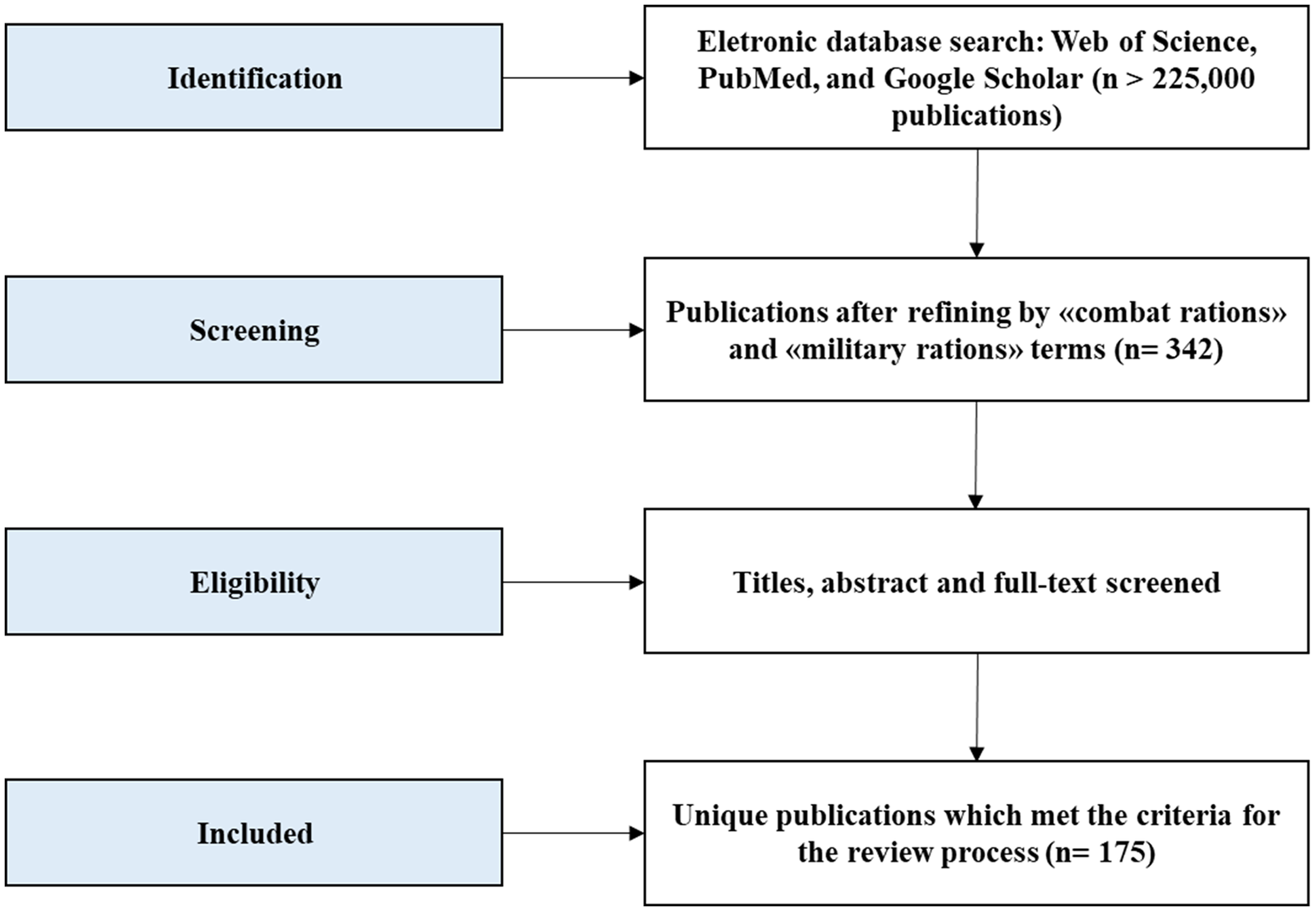
The review selection process is described in Figure 2. In total, more than 225 000 publications were found. Removing duplicate publications, the number of unique publications was reduced to 342, from which 175 met the criteria for the review process. No publication age restrictions were applied in the search.
Review selection process.
Military rations from a historical perspective
Military rations aim to provide military units with long-lasting, shelf-stable, safe and nutritious food, maintaining the troops’ physical performance, good health and cognitive function in any field operations and environments, designed to withstand multiple handling and to be used in severe conditions in all combinations of terrain, humidity and temperature(24). The food components, products and snacks in military rations are commonly thermally processed and/or dehydrated. Some rations require preparation in the field, while others can be consumed straight from the packaging.
During World War I, the growing demand for food for millions of soldiers in the field caused the food industry and the military to work together to develop military rations(Reference Prescott25). Hence, the war stimulated collaborations between the military and external laboratories, not only to develop new foods that could be produced on a large scale, but also to develop new techniques that guaranteed the quality of new processed and shelf-stable foods.
After World War I, the food industry worked hard with the army to further develop adequate and diverse foods for the soldiers, making them shelf-stable over time. That food products are shelf-stable over years is highly important in military operations. Shelf-stable food can be planned and ordered well in advance, be produced when the costs are low and be stored until needed, thus avoiding last-minute deployment issues. With this, shelf-stable military rations prepared the military well for future wars(Reference Fisher and Fisher26). In addition to being shelf-stable, military rations need desirable sensory qualities (taste, texture and aroma) and packaging resistance to different situations and climates, such as excess humidity and insect damage(Reference Fitzgerald27).
Fresh food, such as vegetables and meats, is highly valued by soldiers. However, transporting these foods to the field is very expensive, in addition to having a high risk of spoilage and being space demanding. From the 1950s onwards, freeze-dried meals have been developed and used as military rations(Reference Clifcorn28).
With the advancement in food science and technology, several military rations have now been developed using different packaging and technologies to assist soldiers in different climates and situations, taking into account the demand for calories and nutrients, in addition to cultural issues, cognitive function, and physical and mental stress(Reference Farina, Thompson and Knapik5,Reference Karl, Margolis and Fallowfield6,Reference Ahmed, Mandic and Lou29–Reference Moody31) .
Convenience and packaging of military rations
Convenience foods can be defined as products from the food industries where the degree of culinary preparation has been carried out at an advanced stage and that are labour-saving versions for the consumers of less processed products(Reference Scholliers32). They are often regarded as among the least healthy and unsustainable dietary options because of their sometimes wasteful packaging and low nutritional value compared with traditional foods(Reference Jackson and Viehoff33,Reference Seferidi, Scrinis and Huybrechts34) . However, convenience foods, such as ready meals, are gaining more importance in the market(Reference Vermeulen, Park and Khoury35) and becoming more nutritionally relevant(Reference Contini, Boncinelli and Marone36) in addition to more efficient packaging with less impact on the environment(Reference Bumbudsanpharoke and Ko37). Military rations must follow this trend, mainly due to the nutritional needs of soldiers and ease of use/disposal of packaging during operations that are often in hostile areas.
Soldiers’ nutritional requirements are specific due to intense physical activity and adversities. Moreover, in addition to a long shelf-life and being shelf-stable, due to environmental conditions and the particular performance, a military ration must also have light weight (e.g. freeze-dried foods) and be easy to cook and eat under extreme conditions. Convenience, packaging and ease of preparation are thus crucial for developing adequate military rations.
Convenience and practicality are important factors in military rations because military missions usually require intense physical activity and less time to eat, in addition to having less motivation to do so. Field operations have several activities that compete with or impair food intake. For example, Ahmed et al. (Reference Ahmed, Mandic and Lou38) stated that adequate energy consumption is impaired under strenuous field conditions and even more challenging in extreme climates.
In military rations, the packaging plays an important role in the practicality and mainly in the preservation of food for long periods. Normally, military rations are packaged in trilaminate material under vacuum or utilising oxygen scavengers(Reference Flock, Richardson and Pacitto-Reilly39). Haque et al. (Reference Haque, Candlen and Peterson20) concluded that multilayer film improves the conservation of military rations increasing the resistance to acidic foods. According to Long et al. (Reference Long, Zhang and Devahastin17), biodegradable/edible films are more appropriate for military rations. For example, the US military used edible film in conjunction with modified atmosphere packaging to achieve 3 years of shelf-life on sandwiches and pizzas stored at room temperature(Reference O’Connor, Favreau-Farhadi and Barrett40). However, Kalpana et al. (Reference Kalpana, Priyadarshini and Maria Leena21) stated that modified atmosphere packaging can increase the shelf-life of products but the variation in gas concentration can result in undesirable effects on flavour, texture, nutritional compounds and sensory acceptance. To assist the preservation and/or increase the shelf-life of military rations, technologies such as high-pressure processing sterilisation(Reference Long, Zhang and Devahastin17), microwave-assisted thermal sterilisation(Reference Patel, Parhi and Al-Ghamdi16), pulsed electric field(Reference Dziki15), irradiation(Reference Castell-Perez and Moreira22) and freeze-drying(Reference Coad and Bui18) have been used with satisfactory results in the final product quality.
To develop adequate new military rations, it is necessary to consider the effect of unwanted events that may occur during the preparation and consumption of a meal by introducing measures to ensure that the product is easy to prepare in any situation and that the package does not entail an additional load for the soldier. One strategy could be an increased focus on consumer-friendly packaging solutions and smart, functional materials that simplify the preparation and reduce the product’s total environmental footprint(Reference Wikström, Verghese and Auras41). In military rations, it can be crucial that the soldier has his individual equipment that ensures independence for the rest of the group. In addition, in modern conflicts, it must be considered that heat sources can be easily detected by satellites, drones and night vision, and the preparation and/or consumption of the meal in some cases needs to be carried out without heating/boiling water.
Nowadays, convenience, practicality and sustainability are important factors to consider in developing any food product. With this, military rations must be efficient in any situation, especially in extreme ones, convenient and with minimal weight and environmental impact.
Nutritional needs during physical military exercise
During military field operations, soldiers’ activity levels, and nutritional needs increase. This becomes particularly prominent during prolonged physical exertion under extreme climatic conditions(Reference Sotelo-Diaz and Blanco-Lizarazo13). In extreme conditions, the daily energy requirements of military personnel can reach more than 10 000 kcal(Reference Ahmed, Mandic and Desilets10). Thus, the soldier’s ability to adapt their diets to such extreme environmental conditions is essential to the success of any operations(Reference Ahmed, Mandic and Lou29).
An increased energy expenditure results in an increased heat production, where the heat energy must be removed to avoid an increase in the body’s core temperature(Reference Carlsohn, Braun and Grosshauser42). An increased blood flow to the body surface combined with sweating is the major pathway. Loss of body heat occurs via several mechanisms, such as evaporation, conduction, radiation and convection from the skin and evaporative loss from the respiratory tract(Reference Park, Kim and Woo43). The efficacy of these mechanisms is further determined by the airspeed (wind), temperature, radiation (solar heat) and relative humidity. In addition, the soldier must have enough time set aside for food and drink breaks.
Studies performed among Canadian Armed Forces personnel have reported that energy requirements in warm environments (10 °C to >25 °C) range from 3300 kcal/d to 6000 kcal/d(Reference Fallowfield, Delves and Hill44,Reference Johnson, Simonson and Darnell45) . Energy requirements in cold environments (temperature <10 °C, including arctic conditions) were reported from 4000 kcal/d to over 6000 kcal/d(Reference Ahmed, Mandic and Lou29,Reference Johnson, Simonson and Darnell45,Reference Mandic and Jacobs46) . High-altitude environments tend to increase energy requirements because soldiers generally carry more weight and engage in more exhausting activities(Reference Tharion, Lieberman and Montain47). Hoyt et al.(Reference Hoyt, Jones and Baker-Fulco48) studied Special Operations Forces soldiers exercises at high altitude (Mount Rainer, 4393 me above sea level), observing an average expenditure of 4558 ± 566 kcal/d. Several strategies can be used to prevent energy deficits during military operations (Table 2), including providing supplemental carbohydrates(Reference Margolis, Murphy and Martini49) and fat(Reference Karl, Margolis and Fallowfield6) and nutritional education before an operation(Reference Sepowitz, Armstrong and Pasiakos50,Reference Margolis and Pasiakos51) .
Energy content (kcal/d) of general and special purpose rations of eleven NATO countries
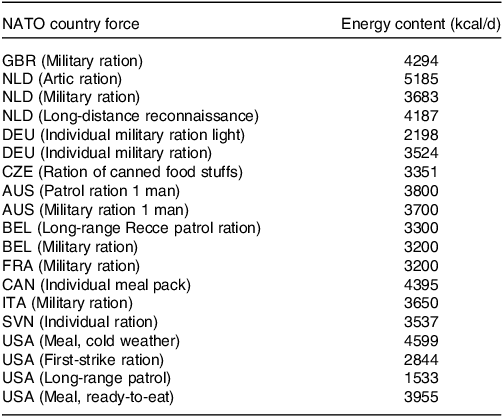
Source: NATO(24). Values are means.
According to several authors, hot environments increase the risk of suboptimal energy intake relative to energy requirements due to loss of appetite(Reference Johnson, Simonson and Darnell45,Reference Wasse, King and Stensel52,Reference Kojima, Sasaki and Tsuchiya53) . In contrast, appetite and energy intake increases have been reported related to activities in cold environments(Reference Johnson, Simonson and Darnell45,Reference Wasse, King and Stensel52) . Furthermore, adequate hydration and nutrition are essential for success within all military operations(Reference Ahmed, Mandic and Lou29,Reference Tharion, Lieberman and Montain47) . In addition, micronutrient requirements might be altered under extreme weather conditions owing to the environmental stress impact on intestinal absorption and/or increased utilisation of some nutrients(Reference Margolis, Crombie and McClung54). Sweating by hard physical exertion promotes the loss of both fluid and essential minerals, not the least sodium, but also calcium, magnesium, zinc and iron(Reference Carlsohn, Braun and Grosshauser42); replenishing these will be essential to compensate. To determine the need for vitamins and minerals for soldiers in the field, several national recommendations and recommendations from specific organisations have been used(55–Reference Carlsohn, Braun and Großhauser57).
Body mass loss is a consequence in soldiers during training and combat operations due to stressors conditions (cold, warm and high altitudes)(Reference Church, Gwin and Wolfe11). For example, Norwegian soldiers doing hard physical exertion during 7 d of field training lost an average of 4 kg of fat-free mass(Reference Hoyt, Opstad and Haugen58). The loss of glycogen and its associated water(Reference Berryman, Young and Karl59), fat loss(Reference El-Zayat, Sibaii and El-Shamy60,Reference Pesta and Samuel61) and subsequent mass loss during combat operations results from altered protein kinetics that promote catabolism(Reference Berryman, Young and Karl59), compromising the military personnel’s performance(Reference Murphy, Carrigan and Philip Karl62). The soldiers’ need for proteins will also increase to repair muscle fibres and increase metabolic activity(Reference Hargreaves and Spriet63). Increased protein intake is critical to avoid an unwanted reduction in skeletal muscle mass over time. Furthermore, protein requirements will increase, which needs to take into consideration that a significant relationship exists between specific amino acids and total protein for increased protein synthesis(Reference Church, Hirsch and Park64).
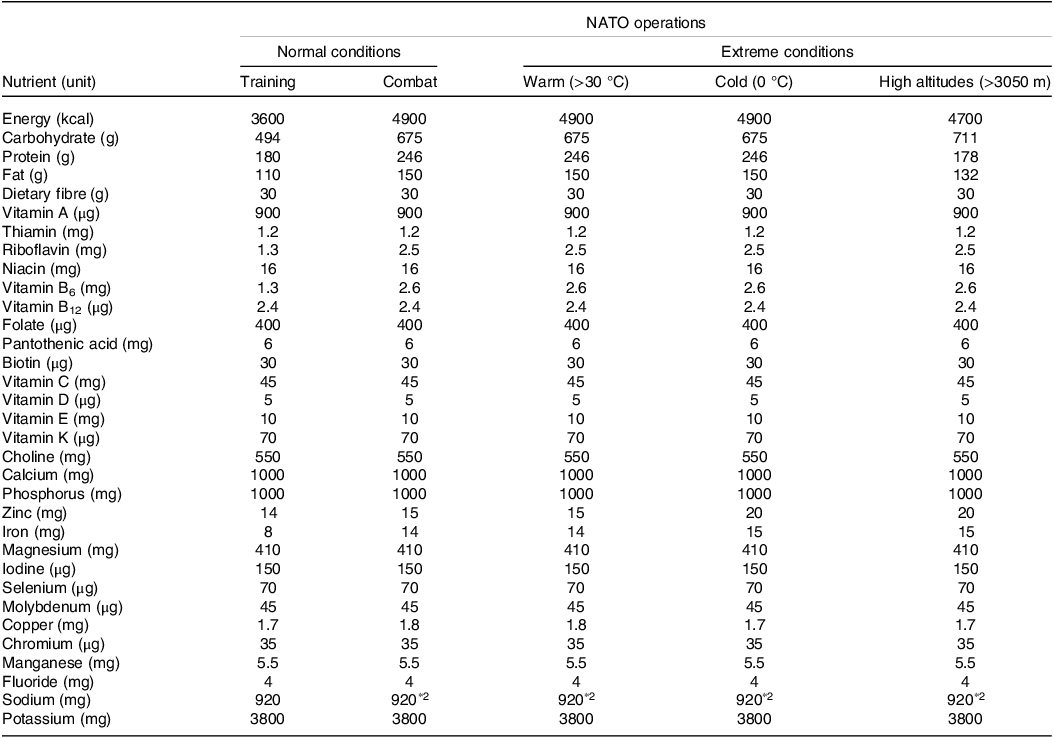
During demanding and continuous physical activity, the need for carbohydrates and water is vital (the need will be guided by the degree of physical activity). If these important micro- and macronutrients are not compensated for with further food intake, the performance can quickly be reduced(Reference Kimura, Moriyasu and Makizako65). Carbohydrates are the body’s most important source of energy and are particularly important for contractile muscles to perform at their maximum(Reference Hargreaves and Spriet63). Unless glucose is provided from the digestive tract, glycogen is essential for producing energy during anaerobic metabolism. Since the body lacks opportunities to store large amounts of glycogen, a person who is regularly engaged in high-intensity long-term physical activity must replenish these stores regularly(Reference Hargreaves and Spriet63). The body has a significant flexibility in long-term work with low physical load; thus, the need for a specific composition of the main energy-providing components carbohydrates and fat is limited. However, if the activity level is increasing, the demand will change (Table 3), and with high physical activity, a higher proportion of carbohydrates in the diet will be beneficial(Reference Hargreaves and Spriet63). According to Sotelo-Diaz and Blanco-Lizarazo(Reference Sotelo-Diaz and Blanco-Lizarazo13), there is a direct connection between physical activity, environmental factors, calculation of energy requirements, and the need for carbohydrates during military operations. Furthermore, this study showed that military personnel generally have a high intake of dietary supplements; it will therefore be appropriate to consider including such products in military rations for training and combat. This is particularly important to ensure the intake of micronutrients that cannot easily be included in traditional field rations owing to their stability (oxidation, thermal denaturation, etc.) and processing technology challenges. The data from the survey on the consumption of dietary supplements by military personnel indicated that this is a niche worth considering when designing military rations(Reference Sotelo-Diaz and Blanco-Lizarazo13).
Microencapsulation has been proving to be an interesting technology to improve and/or preserve the nutritional quality of military rations(Reference Karl, Margolis and Fallowfield6). In addition, technologies such as omics approaches have been successfully used to deeply assess the impact of different processes on the nutritional parameters of different foods(Reference Russell and Deuster14).
Research on nutritional requirements for military rations should optimise the amount of macro- and micronutrients and their biological value according to physical activity and environment, as well as maintaining their sensory quality, food safety and durability by correctly choosing processing technologies and packaging.
Cold environments
As mentioned above, excess body heat is mainly removed by sweating, resulting in greater blood flow to the body’s surface, increased skin temperature and heat loss. One of the concerns of operations in a cold environment (e.g. in the arctic field) is avoiding unnecessary sweating. Increased blood flow to active tissues and organs also results in increased heart activity with consequent increased energy consumption and needs(Reference Carlsohn, Braun and Grosshauser42).
In cold environments, the heat loss from the body will potentially be high(Reference Hymczak, Golab and Mendrala66). To prevent a reduction in core temperature, the body will try to maintain the core body temperature through three mechanisms. The first mechanism involves constricting blood vessels, which reduces blood flow to the skin and external tissues, with subsequent metabolic heat production saved for vital organs. The second mechanism will occur in parallel and increase muscle metabolic heat production through behaviourally regulated physical activity or involuntary shivering(Reference Hymczak, Golab and Mendrala66). The third mechanism is heat production by the so-called brown fat tissue, which generates heat directly(Reference Villarroya, Cereijo and Villarroya67).
Haman et al. (2010) pointed out that lipids are generally preferred as an energy substrate (contributing up to 80%) during low-intensity shivering, while carbohydrates become more important as the intensity of the tremor increases (up to 72% contribution). This may indicate that energy intake during extreme cold stress significantly impacts heat production. The body’s potential to redirect energy internally in the muscles to counter cold stress is highly individual, especially regarding the oxidation of carbohydrates(Reference Haman, Péronnet and Kenny68). This property is also considered particularly important for survival when the body is exposed to extreme cold stress(Reference Haman69).
The thermoregulatory response during activities in cold environments is influenced by sex, age and acclimatisation(Reference Niclou and Ocobock70–Reference Blondin, Labbé and Tingelstad75). However, these factors most likely have minor implications for the nutritional requirements. Body composition is the most important physiological factor influencing thermoregulation and cold tolerance during activity in cold environments(Reference McInnis, Haman and Doucet76).
According to Johnsen and Gjeldnes(Reference Johnsen and Gjeldnes77), handling military equipment during a state of exhaustion, mainly in extremely cold conditions (e.g. polar environments) is an element of danger in military exercises. Food and sleep deprivation are everyday situations during cold environment military exercises, as well as intense physical activity, including strenuous ski marches. Since people’s diet in arctic climates is rich in fat and protein, it has been suggested that the nutritional requirements under extreme cold conditions should be similar(Reference Margolis and Pasiakos51). At the same time, transitioning to a more fat-rich diet will require an adaptation period, which will often be unfavourable(Reference Dostal, Plews and Hofmann78,Reference Burke79) .
Tharion et al. (Reference Tharion, Lieberman and Montain47) studied the energy requirements of soldiers in everyday garrison situations and during training in the field under different conditions. They concluded that cold environments generally increased energy requirements in both sexes. For the female soldiers, the energy requirement varied from 2332 to 5597 kcal/d with an average of 2850 ± 620 kcal over 9 d. For the men in the same study, doing different activities and missions compared with female soldiers, the energy requirements varied from 3109 to 7131 kcal/d with an average of 4610 ± 650 kcal over 12 d. Tharion et al. (Reference Tharion, Lieberman and Montain47) further concluded that the sex differences were mainly due to differences in body mass, lower metabolic activity at rest and lower total physical activity. In another study by Ahmed et al. (Reference Ahmed, Mandic and Desilets10), the energy balance was mapped in an arctic field operation (infantry activity, −10 °C). This study reported an average energy expenditure of 4917 ± 693 kcal/d, while the intake was a modest 2377 ± 1144 kcal/d. This resulted in an average weight loss of 2.7% over 5 d. However, it is important to mention that the soldier’s daily ration consisted of 5685 kcal/d. This study shows one of the main problems with field nutrition: consuming enough food is challenging even if it is available.
It is known that soldiers experience a negative energy balance during military operations. Margolis et al. (Reference Margolis, Murphy and Martini49) studied the effect of supplementary foods on the intake of protein and protein balance in the body during a 4-d arctic military training (51 km ski march). Subjects with the highest protein intake had the protein supplement and subjects with the highest carbohydrate intake had the carbohydrate supplement. Based on this, consuming sufficient energy during periods of high energy needs is essential to mitigate the consequences of negative energy balance and protein deficiency. According to Margolis and Pasiakos(Reference Margolis and Pasiakos51), who studied the energy requirements for cold-weather military operations, suggested that, to improve energy balance, fat intake should be increased to at least 35–40% of the total daily energy consumption.
For training and military operations in cold environments, military rations must contain more calories than usual due to the increased energy demand required. An interesting strategy may be the use of a higher levels of fat.
Warm environments
In the coming decades, extreme heat events will likely be more frequent, severe and longer due to global warming(Reference Cramer, Gagnon and Laitano80). The negative impact of heat stress on productivity and health during physical exertion is well known and debated(Reference Periard, Eijsvogels and Daanen12,Reference Leyk, Hoitz and Becker81,Reference Parsons, Stacey and Woods82) . Combat units deployed are often exposed to warm environments, which manifest as high temperatures, often heightened by high humidity, resulting in heat-induced metabolic stress. Heat stress affects several physiological systems, compromising physical and potentially also cognitive performance(Reference Ashworth, Cotter and Kilding83–Reference Zhang, de Dear and Hancock86). However, Ashworth et al. (Reference Ashworth, Cotter and Kilding83) suggest that individuals could acclimate to warmer environments within a few months.
The soldier’s health conditions and adaptation directly influence physical and mental performance under heat-induced stress during military operations(Reference Parsons, Stacey and Woods82). Increasing muscle mass, high aerobic conditioning and previous adaptation to warm environments improve physical and cognitive performance under extreme heat(Reference Foster, Hodder and Lloyd87). Other factors, such as dehydration and psychological stress, can influence the thermo-physiological response(Reference Ioannou, Mantzios and Tsoutsoubi88) of soldiers under heat stress and decrease their operational capacity. Therefore, military units should be trained in advance and adapt to hot environments such as deserts to avoid or reduce the incidence of hyperthermia and decrease operational productivity.
When repeatedly exposed to high temperatures, the human body adapts to the environmental stress caused by better coping with physiological demands. According to Foster et al. (Reference Foster, Hodder and Lloyd87), adaptation to heat is a reversible phenomenon that begins at a genetic level and eventually results in whole-body physiological adaptations. Physiological adaptations due to resistance training directly improve thermoregulatory and cardiovascular performance during military operations under heat stress(Reference Hellsten and Nyberg89). In addition to the cardiovascular adaptations that are beneficial to support warm conditions, physical activity also enhances sweating function(Reference Hellsten and Nyberg89).
In a military context, heat-induced stress is exacerbated by the combination of carried loads, physical exertion and protective clothing, making them susceptible to heat illnesses. As the operational environment is unpredictable and dynamic, nutritional strategies to minimise the effects of heat should be planned and conducted before deployment.
In intense exercises, in a warm environment, a person can lose 10–15 litres of fluid daily(Reference Maughan and Shirreffs90). Although these high sweat rates are unusual, high fluid losses can be tolerated with an adequate rehydration strategy. There can also be substantial salt losses when sweat rates are high, which must be replaced to maintain the body water content(Reference Maughan, Merson and Broad91). This requirement has implications for the composition of the liquids to be consumed and the amount of required liquid. According to Shirreffs et al. (Reference Shirreffs, Taylor, Leiper and Maughan92), to rapidly recover the fluid lost through sweat, it is necessary to consume liquid with electrolytes and food containing salt. Another critical factor is that excess protein consumption can be a disadvantage in warm environments owing to the increased volume of urine required to excrete protein breakdown products(Reference Marriott93).
The relative proportions of carbohydrate, fat and protein in warm environments is not yet entirely known. However, the high consumption of liquid/electrolytes (such as water and sports drink) should be prioritised for the rapid replacement of fluid loss caused by the high sweat rate. In addition, rehydration and the type of beverage are influenced by troop culture and availability in the environment.
High-altitude environments
High altitude is an extreme environment that challenges a military unit’s operations. The combination of cold temperatures, low oxygen pressure due to reduced atmospheric pressure, low air humidity and high ultraviolet radiation levels may make adaptation to this environment more challenging than cold or hot environments(Reference Liu, Yang and Yuan94). However, the main factor underlying the physiological responses to high altitude is the low atmospheric pressure and the consequent proportional reduction in the partial pressure of oxygen in the inspired air (hypobaric hypoxia)(Reference Bilo, Caravita and Torlasco95,Reference Parati, Agostoni and Basnyat96) . Dunnwald et al. (Reference Dunnwald, Gatterer and Faulhaber97) concluded that short or long exposures to hypoxic environments promote comprehensive physiological alterations. This occurs even if the relative composition of the air remains the same as at sea level (approximately 21% of oxygen content). The consequent hypoxemia and tissue hypoxia trigger several regulatory mechanisms, which in most cases favour adaptation but occasionally evolve into pathological conditions such as chronic or acute mountain sickness(Reference Bilo, Caravita and Torlasco95,Reference Perez-Padilla98) .
Military units often do not have adequate time to prepare and/or acclimatise as top athletes(Reference Périard, DeGroot and Jay99,Reference Nindl, Billing and Drain100) . At high altitudes, troops must often engage in physical exertion, such as travelling long distances and climbing mountains(Reference Khodaee, Grothe and Seyfert101). Exercising at high altitudes is more challenging than at sea level owing to the low oxygen availability(Reference Peacock102). Due to hypoxia, training at high altitudes requires a cardiovascular adaptation characterised by increased ventilation and heart rate(Reference Naeije103). Ensuring oxygen supply to the tissue by hyperventilation is an essential factor in physical exertion. Due to the low partial pressure of oxygen in the inspired air, the physical capacity is reduced due to the increased effort required due to the limitation of muscle oxygenation(Reference Bilo, Caravita and Torlasco95). As a result, soldiers must have a unique and adequate nutritional plan to maintain their performance.
In cold and dry environments, increased ventilation may be accompanied by increased body water loss and ‘high-altitude diuresis’(Reference Siebenmann, Robach and Lundby104). The cardiovascular and ventilatory adaptation ensures that the metabolic demands of organs and tissues are adequate at rest and during physical exertion at high altitudes(Reference Dunnwald, Gatterer and Faulhaber97). Typically, hypoxic environments influence body composition (i.e. reduction in fat mass, muscle mass and body weight)(Reference Gao, Xu and Zhang105). According to Kayser and Verges(Reference Kayser and Verges106), these changes in body composition occur due to increased basal metabolic rate and negative energy balance, mainly due to lower caloric intake and higher energy expenditure. Furthermore, military units have a high energy expenditure due to the extra weight of specialised equipment (i.e. helmet, weapons and vest). According to Tharion et al. (Reference Tharion, Lieberman and Montain47), the energy expenditure of troops at 2550 m altitude is approximately 30% higher compared with the same activities in cold environments at sea level.
At altitudes higher than 5000 m, a negative energy balance may result from impaired intestinal function or reduced energy intake due to a reduced appetite(Reference Dunnwald, Gatterer and Faulhaber97). Additionally, muscle wasting seems to ensue predominantly at high altitudes, whereas catabolic mechanisms may be of minor importance at moderate altitudes with exposure to lower levels of hypoxia(Reference D’Hulst and Deldicque107). Muscle catabolism may arise in this environment owing to a negative energy balance resulting from increased energy expenditure, high levels of physical activity and inadequate nutritional intake(Reference Ocobock108).
The effects of altitude on the intestinal microbiota have gained attention in recent years, mainly due to the positive results that intestinal microbes can promote to the host under extreme conditions(Reference Geng, Qu and Zhao109–Reference Wan, Zhang and Jia112). Suzuki et al. (Reference Suzuki, Martins and Nachman113) stated that the gut microbiota profile changes according to altitude. It is expected that microbiota functions related to food assimilation and/or the host oxygen homeostasis regulatory system will be enriched in high-altitude populations(Reference Mazel114). Zhao et al. (Reference Zhao, Yao and Dong115) concluded that diet and high altitude strongly drive convergent adaptation of gut microbiota to high-altitude environments, changing the diversity of the microbiota and playing an essential role in the host’s energy compensation and cardiovascular regulation and helping the host adapt to the high energy demand and low oxygen pressure of high-altitude environments. In addition, Quagliariello et al. (Reference Quagliariello, Di Paola and De Fanti116) found that the gut microbiota has the potential to mitigate the effect of nutritional restrictions and environmental pressures induced by high altitude by providing metabolic functions able to supply compounds, such as vitamins, ketone bodies and amino acids, which are helpful for the host to cope with the challenging physiological stresses and energy demand imposed by life in this extreme environment.
Adequate gut health and gut microbiota profile are essential for soldiers during intense high-altitude exercise. Military rations or dietary supplements that improve these aspects can minimise the adverse effects of high altitudes and positively influence troop performance.
The importance of gut health for the absorption and metabolism of essential nutritional components
The connection between diet and human health is well explored and documented(Reference Cai, Chen and Wu117–Reference Perler, Friedman and Wu121). Interest in the importance of the frequency, quality and timing of food intake on human health and the increase of risk of development of diseases has been increasing over recent years.
The intestinal microbiota health is crucial to understanding how food is digested and how the body can absorb nutrients. The gut microbiota is a continuously changing ecosystem that contains trillions of bacteria. The composition and function of the intestinal biota are shaped by several factors, including dietary habits, seasonal variations, lifestyle, age, external and internal stress factors, inflammatory diseases and irritations, and the use of antibiotics or infections(Reference Rinninella, Cintoni and Raoul122). To maintain a healthy intestine, characterised by a low degree of irritation, best possible immune functionality and good digestion, it is essential to have a good balance between the host organism (individual) and the gut microbiota(Reference Divella, Palma and Tufaro123–Reference Li, Zhang and Guo125).
The host gut’s microbial communities influence several aspects of the host’s health and carry the adaptive potential to changes in extreme environments and diets(Reference Liu, Yang and Yuan94). According to Lan et al. (Reference Lan, Ji and Lin126), gut microbiota is essential in regulating high-altitude adaptation and high-fat diets. Furthermore, Zhao et al. (Reference Zhao, Yao and Dong115) stated that genetic, altitude, dietary, season and other environmental factors impact the structure and composition of gut microbiota. With this, military rations must be optimised for extreme conditions such as warm, cold and high-altitude environments.
Over the past few decades, modern diets have led to growing health problems such as diabetes and cardiovascular disorders. Many of these health challenges can be linked to a suboptimal gut microbiota. The intestinal microbiota is further directly influenced by individual components of the diet as macronutrients (protein, fat and carbohydrates) and micronutrients such as vitamins, minerals and amino acids(Reference Rinninella, Cintoni and Raoul122,Reference Fetissov127,Reference Karl, Armstrong and McClung128) . According to Karl et al. (Reference Karl, Berryman and Young129), altitude directly affected the intestinal microbiota with subsequent poorer appetite and nutrient absorption. For a soldier, active in a field operation, a diet that favours good gut health will therefore be beneficial for adequate nutrient intake owing to a direct connection between the intestinal microbiota and the individual’s appetite(Reference Fetissov127).
The composition of the gut microbiota is the result of the interaction and co-evolution of the host, as well as environmental factors such as altitude(Reference Zhao, Yao and Dong115), indirectly regulating host energy intake efficiency and helping to optimise nutritional assimilation and energy production in high-altitude environments(Reference Li and Zhao130).
Several studies(Reference Cataldi, Poli and Sahin131–Reference Mach and Fuster-Botella134) support that physical activity affects gut health and that the microbial community in the gut can be used as an indicator of the individual’s immune function, being a therapeutic tool to improve the soldier’s health, performance and energy intake by controlling inflammation and oxidation processes. Mach and Fuster-Botella(Reference Mach and Fuster-Botella134) concluded that the gut microbiota has a crucial role in preventing oxidative stress and inflammatory responses, as well as improving the host’s energy consumption and metabolism.
For soldiers who must perform physically and mentally, over a long period, under extreme external stresses such as cold, warm and high-altitude environments, factors in the diet that can improve the soldier’s intestinal health will be of great importance. This applies to appetite, nutrient absorption and energy metabolism. One ingredient known to have a positive effect on the gut microbiota is different varieties of probiotics(Reference Das, Pradhan and Chakrabarti135).
Probiotics are a popular dietary supplement for preventing and potentially treating intestinal disorders(Reference Gareau, Sherman and Walker136,Reference Sanders137) . In general, probiotics have a regulatory effect on the intestinal biota composition and can influence the human gut microbiota(Reference Wang, Zhang and Zhang138), improving immune function and digestive health while decreasing inflammation(Reference Baron139–Reference Kimmel, Keller and Farmer141). The probiotics consumption has been suggested to down-regulate pro inflammatory cytokines(Reference Lee, Kim and Kim142,Reference Vinolo, Rodrigues and Nachbar143) and up-regulate production of IL-10 (an anti-inflammatory cytokine)(Reference Nyangale, Farmer and Cash144). Furthermore, improving immune function from probiotic intake is associated with attenuating fatigue(Reference Makino, Hemmi and Kano145).
Intense military operations associated with physiological stress has been reported to a significant increase in inflammatory cytokine markers(Reference McClung, Martini and Murphy146,Reference van Zuiden, Kavelaars and Amarouchi147) . With this, stimulation of pro-inflammatory cytokines contributes to a decrease in performance during military exercises(Reference Lieberman, Bathalon and Falco148,Reference Nindl, Leone and Tharion149) . Gepner et al. (Reference Gepner, Hoffman and Shemesh150) reported that elite male soldiers (20 ± 0.7 years) ingesting a combination of β-hydroxy-β-methylbutyrate (metabolite of the amino acid leucine) and Bacillus coagulans increased the muscle integrity and reduced the inflammatory response promoted by intense military exercise. According to Hoffman et al. (Reference Hoffman, Hoffman and Zelicha151), results from 2 weeks of Bacillus coagulans supplementation indicated a positive effect on short-term speed performance in addition to decreasing the inflammatory response during intense military exercises. Noorifard et al. (Reference Noorifard, Ebrahimi and Dabbagh Moghaddam152) stated that the consumption of probiotics improves the health and immunity of soldiers during intense activity.
The gut health of soldiers, especially in extreme conditions, must be preserved and/or improved. Considering this factor, including probiotics in military rations can be an interesting strategy to ensure good intestinal functioning during training and operations in extreme environments.
Sensory and external factors that affect soldiers’ appetite and food intake
Taste plays a crucial role in soldiers’ food and nutrient intake. To ensure soldiers’ adequate nutrition under extreme conditions, it is important to consider eating patterns, psychosocial factors and the sensory qualities of the food product itself(Reference Carins, De Diana and Kitunen153). The activity largely influences the soldier’s eating patterns. External factors, such as temperature, environment, convenience, stressful exercise regimen, conflict, aspects relating to available time to prepare food and eat, the group’s internal routines and complexity, and public facilities for preparation and socialisation, impact the appetite and food intake of soldiers(Reference Gupta, Coates and Dorrian154). Any influence from one or more of the factors above will place a significantly demand on the other factors as well as the product’s excellence and sensory perception. At the same time, the products must have rational acceptability to meet soldiers’ physiological and nutritional needs.
Military research results suggest that ambient temperature may affect appetite and food intake, being high in cold and low in hot environments(Reference Hargreaves and Spriet63,Reference Mandic, Ahmed and Rhind155) . The link between exercise and ambient temperature and human appetite is unclear. Some studies suggest that appetite is reduced and that hormonal responses associated with appetite suppression increase with higher ambient temperature(Reference Shorten, Wallman and Guelfi156), while the reverse was observed with lower ambient temperature(Reference Crabtree and Blannin157,Reference Johnsen, Brattebø and Phillips158) . Johnsen et al. (Reference Johnsen, Brattebø and Phillips158) and Kojima et al. (Reference Kojima, Sasaki and Tsuchiya53) state that environmental conditions affect exercise-induced appetite-regulating hormonal responses. Understanding how exercise under different temperatures affects the appetite of military units in outdoor physical exertion is very relevant. In military units, body weight loss due to under-eating during field operations is not uncommon(55–Reference Carlsohn, Braun and Großhauser57,Reference Malkawi, Meertens and Kremers159,Reference Richmond, Horner and Wilkinson160) . Rapid weight loss during operations can suppress immune function and decrease cognitive and physical performance. This rapid weight loss can be the result of insufficient time to eat, extreme stress, food palatability, prolonged or difficult food preparation(Reference Fallowfield, Delves and Hill44,Reference Mandic, Ahmed and Rhind155) , or lack of nutritional competence among the soldiers, thereby impacting operational readiness and performance(Reference Ahmed, Mandic and Lou29). In addition, Ahmed et al. (Reference Ahmed, Mandic and Lou29) concluded that, after a physical exertion in extreme temperatures (warm or cold environments), military personnel did not have the necessary energy intake even when having time to eat properly.
Besides psychosocial and external factors, soldiers’ appetites can be increased by focusing on the products’ sensory properties. Important factors that influence soldiers’ perception of the product are the serving temperature(Reference Singh and Seo161), flavour and texture(Reference Morris and Taylor162).
The preference for hot meals increases with decreasing temperatures in the surroundings and the body(Reference Ahmed, Mandic and Lou29). Although the temperature is essential for product perception, the combination of several factors makes the sensory quality hard to manage; for example, the serving temperature of a tomato soup affects how consumers perceive the product’s salt content(Reference Kim, Samant and Seo163). Salt is an essential and necessary component for sensory quality and regulation of water balance and sweating in people who perform hard physical exercise, being the amount primarily adapted to the physiological needs of the soldiers(Reference McCubbin164). To adjust the sensory perception of food, there are interesting alternatives to salt that can be used, including natural salt substitutes such as plant extracts(Reference Taladrid, Laguna and Bartolomé165,Reference Vidal, Santana and Paglarini166) , umami flavour components(Reference Ando167–Reference Yu, Lu and Zi169) and bitter tastes in combination with salt(Reference Vinitha, Sethupathy and Moses170–Reference Vidal, Paglarini and Lorenzo172), and change in viscosity to alter salt perception(Reference Sun, Zhou and Hu173,Reference Khramova and Popov174) .
Another factor that regulates the sensory perception of a food product and appetite is sweetness. During a long-term activity, there is a need for simple carbohydrates to, among other things, maintain blood sugar levels. Such an acute need for simple carbohydrates should generally be covered by supplementary ‘grab & go’ products. Sugar, on the other hand, has a vital role in balancing the taste of food products(Reference Belc, Smeu and Macri175). Considering all these, the ratio between different tastes, such as salty–sweet, is essential for a soldier’s appetite, overall acceptance and consumption of the military ration.
As mentioned above, numerous factors affect soldiers’ appetite and food intake. During exercise, it is common not to have enough time to eat properly. Thus, for developing new military rations, it is necessary to consider sensory parameters and ingredients/additives that increase appetite in addition to nutritional quality and convenience.
Conclusion
The military rations quality has been noticeably improved in recent years owing to advances in knowledge about nutrition, physiology, sensory parameters, and food science and technology. Military rations must be practical, convenient, sustainable and, above all, nutritionally adequate.
There are several factors that influence the nutritional needs of military personnel. The type of environment, exercise and duration directly impact the amount of liquids, calories, and macro- and micronutrients needed for good performance and maintenance of soldiers’ health. Therefore, developing a military ration with specific characteristics for each environment and situation is necessary. In cold environments (such as polar and arctic), military rations must contain more calories than usual, with a higher fat level being significant. In hot environments, liquid/electrolyte consumption should be prioritised to avoid excessive fluid loss caused by high sweat rate. An interesting strategy to minimise the impacts of high altitudes on troops is the maintenance/improvement of gut health and gut microbiota profile.
Especially in extreme environments, soldiers’ intestinal health is important. Adding probiotics to military rations to improve the intestinal functioning of soldiers during combat and/or training operations may be a good strategy.
For the coming years, the trend is for military rations that are nutritionally optimised, sustainable, practical, convenient and stable for long periods of time, and with desirable sensory parameters considering cultural differences and aspects.
Financial support
We thank the Research Council of Norway (grant number 332249) for funding this research.
Competing interests
The author(s) declare none.
Authorship
V.A.S.V., I.J.J. and J.L. conceived the study. Ø.S., P.H., M.W.A., R.G. and B.S. contributed to planning of the review. V.A.S.V., Ø.S. and P.H. contributed to the search strategy in the databases. All authors drafted and revised the manuscript. All authors read and approved the final manuscript and order of authorship.


 Open access

