Rural areas of the Eastern Cape Province, South Africa have a high incidence of squamous cell oesophageal cancer (OC)( Reference Somdyala, Bradshaw and Curtis 1 , Reference Somdyala, Bradshaw and Gelderblom 2 ). Although the aetiology is still unclear, various risk factors have been associated with the disease( Reference Srivastava, Kapil and Chattopadhyay 3 , Reference Craddock 4 ). Exposure to the carcinogenic mycotoxin fumonisin has been associated with a variety of human diseases worldwide including increased oesophageal and liver cancer( Reference Rheeder, Marasas and Theil 5 – Reference Ueno, Iijima and Wang 7 ), childhood stunting( Reference Kimanya, De Meulenaer and Roberfroid 8 ), neural tube defects( Reference Marasas, Riley and Hendricks 9 ) and possible gastrointestinal disorders( Reference Bouhet and Oswald 10 ).
Fumonisins, produced by the fungus Fusarium verticillioides growing on maize, are found in higher concentrations in home-grown compared with commercially bought maize( Reference Shephard, Marasas and Burger 11 ). isiXhosa-speaking people living in these high OC areas are mostly poor subsistence farmers consuming a staple diet of home-grown maize. Fumonisin contamination of this food source is a major health concern and quantitative assessment of exposure has not been conducted( Reference Burger, Lombard and Shephard 12 ). This is mainly due to the fact that there is no method to determine the intake of maize, especially not one that is able to distinguish between home-grown and commercial maize consumption( Reference Shephard, Marasas and Burger 11 ). What little information is available regarding the eating habits of this population is old and outdated( Reference Rose 13 , Reference Beyers, Hammer and Groenewald 14 ).
Food safety authorities around the world have conducted risk assessments on the consumption of contaminated maize and the International Agency for Research on Cancer declared fumonisins to be a possible human carcinogen (Group 2B)( Reference Vainio, Heseltine and Wilbourn 15 ). The Joint FAO/WHO Expert Committee on Food Additives (JECFA) recommends a tolerable daily intake of 2 μg/kg body weight per d( Reference Burger, Lombard and Shephard 12 , 16 , Reference Bolger, Coker and DiNovi 17 ).
To assess exposure to fumonisins in Xhosas having maize as a staple food it is necessary to determine the amount of maize consumed daily. Owing to cultural differences, a pre-developed, Western/urban FFQ is not appropriate for use in this population because it does not include the maize-based dishes and beverages common for rural areas. The aim of the present study was to develop a culturally specific FFQ, able to identify maize-based meals and beverages and to distinguish between home-grown maize and commercial maize. The maize-specific FFQ is to be distinguished in name as the M-FFQ.
Methods
Overview
The M-FFQ was developed using mixed methods (Fig. 1). An existing FFQ developed for use with urban Xhosa populations to determine their nutrient intake was used as the starting point for the development of the M-FFQ. The urban FFQ contained 126 food items divided into ten food groups (bread, cereals, vegetables, fruit, meat, dairy, snacks, condiments, beverages and fat). In addition to the basic framework, data were obtained from the literature, a review of 24 h recalls and expert consultation. From this, a draft M-FFQ was developed which was then tested by means of in-depth interviews and focus group discussions (FGD) to develop a final culturally appropriate M-FFQ. Food items available in the local shops were listed and compared with the information obtained from the FGD. Sociodemographic information was collected by means of a questionnaire.
Steps taken to develop the maize-specific FFQ (M-FFQ)

Participants who participated in developing the M-FFQ
The M-FFQ was developed in two rural areas of the Eastern Cape Province, selected because of the high incidence of OC in these areas. Because of poor infrastructure, villages from each area were randomly selected and female volunteers were recruited by means of snowball sampling. Females were selected because of their traditional role in food selection and preparation( Reference Labadarios, Steyn and Maunder 18 ). Trained interviewers proficient in isiXhosa conducted the interviews and FGD.
Iterations of the M-FFQ
An expert panel (consisting of three registered dietitians and one nutritionist) evaluated the original urban Xhosa FFQ. Non-maize food items (fruit, vegetables, meat, dairy, snacks, condiments and fat) were excluded. The first draft of the M-FFQ contained twenty-eight food items.
Literature review
Published information regarding the eating habits of people living in high OC areas in the Eastern Cape Province of South Africa was reviewed to provide information on the eating habits of the population( Reference Rose 13 , Reference Beyers, Hammer and Groenewald 14 , Reference Groenewald, Langenhoven and Beyers 19 ). All relevant articles were obtained from the literature by means of search engines and the Internet. Appropriate keywords (‘Transkei’, ‘rural Eastern Cape’, ‘eating patterns’, ‘dietary habits’, ‘diet’, ‘Xhosa’, ‘isiXhosa’, ‘maize’, ‘oesophageal cancer’, ‘esophageal cancer’, ‘Centani’, ‘Chentani’) were used in the following search engines: MEDLINE PubMed and Google Scholar. Articles were included if they provided information on the specific dietary habits and patterns of isiXhosa-speaking people living in these specific villages.
Review of 24 h recalls
Initial steps to identify food items, dishes and beverages to be included in the M-FFQ were done according to guidelines provided by Teufel( Reference Teufel 20 ). This involved a review of data from a survey previously conducted among the population using single 24 h recalls (n 159; H-M Burger, G Shephard, W Gelderblom et al., unpublished results). Trained fieldworkers conducted recalls. Each participant provided information on the foods consumed the previous day regarding breakfast, lunch and dinner as well as snacks and beverages. During the interview, participants also provided information on food preparation methods and portion sizes. The objective of the review of the recalls was to identify commonly consumed food items and dishes, as well as food preparation methods. For the purpose of the present study, recalls were therefore reviewed to identify eating patterns and not to conduct nutrient analyses.
Consultation with a research expert
A consultation was held with an employee of the Medical Research Council of South Africa (MRC) who was knowledgeable about the eating habits of isiXhosa-speaking people living in the rural areas studied in an attempt to ensure face and content validity of the M-FFQ. The employee has been conducting a population-based cancer registry( Reference Somdyala, Bradshaw and Gelderblom 2 ) in these specific areas for many years. Additionally, she was born and raised in one of the study areas. The MRC employee provided valuable information regarding food items, dishes and beverages consumed; also dietary habits and cooking methods of different dishes. Results from the literature review, review of 24 h recalls and the expert consultation were compared with the existing urban Xhosa FFQ to develop a preliminary M-FFQ, which was then evaluated during in-depth interviews and FGD.
In-depth interviews
In-depth interviews were conducted with isiXhosa-speaking women (n 4) who lived in the Eastern Cape Province. Interviews were conducted in isiXhosa, with the help of isiXhosa-speaking interviewers. These women evaluated the preliminary M-FFQ and identified food items, dishes and beverages not frequently consumed by the rural Xhosa population, which were subsequently removed from the M-FFQ. They also identified food items, dishes and beverages which needed to appear on the food list and discussed the most commonly used food preparation techniques and recipes.
Focus group discussions
The preliminary M-FFQ (list of food items, dishes and beverages) was further evaluated by means of FGD in the Eastern Cape Province. Focus group sessions were conducted in two different areas. Women aged 18–55 years who were born and raised in the study areas were invited to participate in the FGD (n 56). Men were initially included in the recruitment, but declined participation because traditionally they are not involved in the cooking process and regard food preparation as being ‘women's business’. Because of the low socio-economic status, it was not expected that there would be any differences between the food/dishes/beverages of males and females.
Two nurses from Eastern Cape Province rural areas were trained to facilitate the FGD using a structured interview guide prepared by the research team. Facilitators identified two local women from each area to host the FGD. These hosts were provided with information regarding the number and age of the expected participants. The hosts of the FGD invited participants in the two areas according to the above-mentioned criteria.
Participants in the FGD discussed the M-FFQ food list to ensure inclusion of all traditional and local (Xhosa) foods and exclusion of uncommon food items.
The FGD were audio-recorded, transcribed by a single researcher, and then translated to English by an isiXhosa-speaking interviewer to identify food items, dishes and beverages as well as recipes that define the local cuisine.
Information obtained from the various methods described above was integrated to provide a final M-FFQ, comprising commonly eaten food items, dishes and beverages.
Inventory of local shops
Food items and beverages available in three shops of the study areas were inventoried and compared with the M-FFQ list of foods to determine if any more food items needed to be added.
Ethics
The study was approved by the Research Ethics Committees of the University of Cape Town and the MRC (Rec. Ref. 123/2003). Each participant gave informed consent to participate in the study.
Results
Sociodemographic description of participants in the focus group discussions
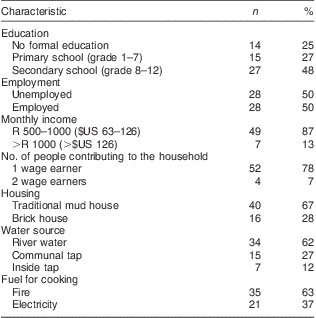
Table 1 provides a summary of the sociodemographic characteristics of the participants. The mean age of the participants was 44 (sd 16) years. The majority of participants lived in traditional mud houses (n 40, 67 %), used river water (n 34, 62 %) as a primary water source, made use of the bush for sanitation (n 39, 70 %) and cooked their meals outside on a wood fire (n 35, 63 %). Of these participants, fifteen (27 %) ended their education while in primary school, between grades 1 and 7. Most households (n 52, 78 %) had one wage earner contributing to the household income while 7 % (n 4) had two. The remaining households had nobody contributing financially and received only government grants (child or old age). Monthly income per household was mostly between R 500 and R 1000 ($US 63–126), and 13 % (n 7) of families earned more than R 1000 ($US 126) per month. Approximately R 200 ($US 25) was spent on food per month.
Sociodemographic description of the participants: women aged 18–55 years from two rural isiXhosa-speaking areas, Eastern Cape Province, South Africa
Urban FFQ
After reviewing the urban FFQ, ninety-eight food items/dishes/beverages were excluded. The majority of these were excluded because they were not maize-based. Twenty-eight (Draft 1) food items/dishes/beverages remained in the questionnaire for further testing.
Literature review
Very little information has been published in peer-reviewed literature on the eating habits of people living in these high OC areas. Three articles written in the early 1970s and 1980s were identified( Reference Rose 13 , Reference Beyers, Hammer and Groenewald 14 , Reference Groenewald, Langenhoven and Beyers 19 ). Based on the information provided by these articles, three new maize items/dishes/beverages – namely stiff maize porridge and iminifino (spinach-like wild leaves), amarewu (sour fermented maize beverage) and traditional maize beer – were added to the urban FFQ.
Review of 24 h recalls
Twelve food items, dishes and beverages were consumed in the earlier unpublished study, including bread, samp (cracked dry maize kernels), samp and beans, soft maize meal porridge, stiff maize meal porridge, pumpkin (mixed with the stiff maize porridge), chicken, rice, eggs, amarewu, tea and coffee. The food items, dishes and beverages were checked against the urban FFQ and three more maize dishes were added (samp, samp and beans, stiff maize porridge mixed with pumpkin).
Consultation with Medical Research Council employee
After consultation with the MRC employee seven non-maize food items/dishes/beverages were excluded from the M-FFQ, including white rolls, brown rolls, whole-wheat rolls, dry biscuits (crackers), Nesquick, Milo and hot chocolate.
Various maize-based dishes are made and consumed at different times of the day. These dishes differ only in the amount of water added. Soft porridge is consumed at breakfast/brunch, stiff porridge at late lunch/dinner, while crumbly porridge is consumed on special occasions. Although these dishes are prepared in the same way, they differ in consistency and are eaten as different dishes at different times. These dishes were therefore included on the initial urban FFQ as three separate maize dishes.
The MRC employee provided information regarding cooking methods and recipes of the different maize-based breads (steamed bread, baked bread, vetkoek (maize or flour dough fried in oil) and dumplings (maize or flour dough cooked in broth)) and it was decided to include these breads as different dishes on the urban FFQ list. Recipes were also provided and explanations were given for the preparation of different maize-based dishes (amarewu and traditional beer). These items were also included as two different beverages.
Information obtained from the literature review, 24 h recall review and expert consultant were evaluated against Draft 1 of the M-FFQ and the result was Draft 2 of the M-FFQ, which included twenty-seven food items, dishes and beverages consumed in these high OC areas.
In-depth interviews
Various food items, dishes and beverages were identified for exclusion from the preliminary M-FFQ list during the in-depth interviews. These items included: whole-wheat bread, fish bread, popcorn, sorghum porridge, sour sorghum porridge, pre-cooked sorghum porridge, sugar-coated cereal, cereals and high-fibre cereals. Maize rice (cracked maize kernels) as a single food item was removed, as it is usually part of a mixed dish. No other dishes were included. The preliminary M-FFQ therefore included seventeen maize-based food items/dishes/beverages.
Focus group discussions
After conducting FGD, six food items/dishes/beverages were excluded: sour maize flour bread, brown rice, wheat, maize meal (bought), maize meal (home-grown) and carbonated drinks.
Ten more maize dishes and beverages were added, including baked bread, whole kernels, maize meal and imifino, maize meal and spinach, maize meal and dried sugar beans, soup (whole maize kernels and dried sugar beans), maize rice and imifino, maize rice and spinach. The M-FFQ now included twenty-one food items/beverages/dishes.
Inventory of shop foods
No additional food items or beverages were added to the final M-FFQ.
Final M-FFQ
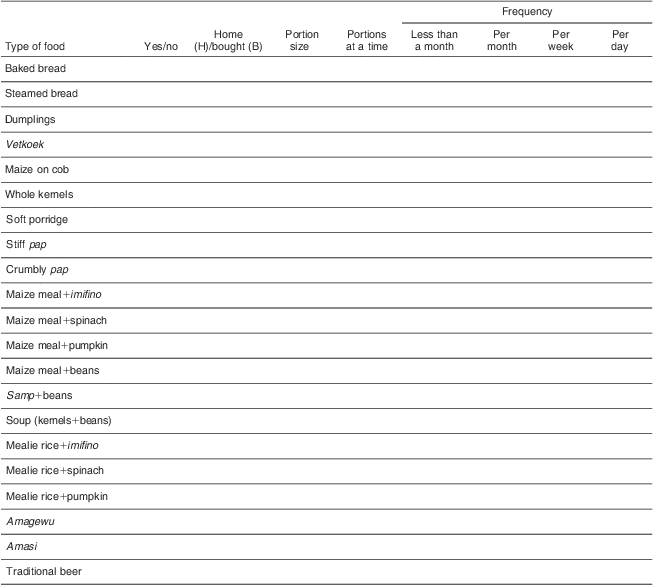
The final M-FFQ (see Appendix) comprised twenty-one items divided into four food groups: bread, cereals (main maize dishes), combined dishes (maize and vegetables) and beverages. Food items and dishes included: baked maize bread, steamed maize bread, dumplings, vetkoek, maize on the cob, whole kernels, soft porridge, stiff porridge, crumbly porridge, maize meal cooked with imifino, maize meal cooked with spinach, maize meal cooked with pumpkin, maize meal cooked with dried sugar beans, samp and dried sugar beans, soup (maize kernels and dried sugar beans), maize rice cooked with imifino, maize rice cooked with spinach, maize rice cooked with pumpkin, amagewu (maize beverage), amasi (sour milk) and traditional maize beer.
The final questionnaire (Appendix) is designed to measure usual intake over a period of 1 month. Participants are asked to report on the maize source used for the different maize-based dishes, namely commercially procured or home-grown. This provides crucial information regarding maize consumption, and thus dietary fumonisin exposure, as well as nutrient intake resulting from mandatory fortification of commercially available maize meal (home-grown maize is not fortified).
Columns include the following options: home-grown/bought ratio, portion size, portions at a time (if the participant consumes more than one portion at a single time), consuming the food item less than once a month, frequency of consumption per week and frequency of consumption per day (if the participant consumes the dish more than once daily).
Discussion
The primary aim of the present study was to develop an FFQ for estimating culture-specific maize intake that can distinguish between home-grown and commercial maize. The newly developed M-FFQ measures frequency, amount and type of maize consumed in a culturally relevant listing of foods, dishes and beverages for Xhosas in rural areas. The M-FFQ estimates total intake of all foods and beverages over a 1-month period and is able to separately quantify exposure to fumosins as it is able to distinguish between home-grown and commercial maize. To our knowledge, this is the first time such a culturally specific questionnaire has been used in the rural areas of the Eastern Cape Province in South Africa.
The final M-FFQ measures habitual dietary intake over a period of 1 month. Because of high levels of illiteracy in the area (25 % received no formal schooling and another 27 % received between 1 and 7 years of schooling) and various Xhosa dialects, the questionnaire is in English and will always be interviewer administered( Reference Teufel 20 ). Interviewers can also help the participants with the more difficult concepts such as portion size estimation( Reference Kumanyika, Tell and Shemanski 21 ).
The education levels of people living in these specific rural areas are low, with more illiterate people than in other areas of South Africa. According to the National Food Consumption Survey conducted in 2005, 3·1 % of those living in rural areas and 1·4 % of those in urban areas nationally have no schooling, compared with the 25 % in the present population( Reference Labadarios, Swart and Maunder 22 ). Furthermore, poverty rates in these areas are also higher than those in other rural areas. The National Food Consumption Survey reported income between R 500 and R 1000 for 35·9 % of households living in rural areas and for 24·6 % of household living in urban areas nationally, percentages which are much lower than the 87 % reported by households in the present study. The lack of money and employment opportunities, as well as the poor infrastructure in these areas, forces people to rely heavily on subsistence farming and this explains their higher fumonisin exposure. This is also the reason for the monotonous diet. Interestingly, poverty and illiteracy are associated with increased risk for OC( Reference Srivastava, Kapil and Chattopadhyay 3 , Reference Craddock 4 ). The national mean age-standardised incidence rate for OC in males and females in South Africa is 11·3 and 5·5/100 000 respectively, while in two selected rural areas of the Eastern Cape Province it is 48·3 and 19·2/100 000 respectively in one area and 37·2 and 14·4/100 000 in the other( Reference Somdyala, Bradshaw and Curtis 1 , Reference Somdyala, Bradshaw and Gelderblom 2 ).
Participants from randomly selected villages in these two high OC areas in the Eastern Cape Province were included in the present study. These areas were selected because of pre-existing research infrastructure. It is not expected that the eating patterns and dietary habits differ from those of people in low OC risk areas in the Eastern Cape Province. However, it is assumed from previous research that those living in higher OC risk areas may consume more home-grown maize and therefore be more frequently exposed to higher levels of fumonisins( Reference Rheeder, Marasas and Theil 5 ). To confirm this, the M-FFQ distinguishes between home-grown and commercially procured maize.
Very little information is available on the toxic levels of fumonisins. Various food safety authorities have undertaken risk assessments on the consumption of contaminated maize and risk assessments. The 56th meeting of the JECFA provided a no observed adverse effect level of 0·2 mg/kg body weight per d and a safety factor of 100, as a group provisional maximum tolerable daily intake for fumonisins of 2 μg/kg body weight per d( Reference Bolger, Coker and DiNovi 17 , 23 ).
It was therefore decided to base the M-FFQ on an FFQ design accompanied with portion size photographs, as this provides detail on habitual diet. It is also a feasible method for large studies and is easy to capture.
The newly developed M-FFQ was systematically developed with the use of in-depth interviews and FGD. According to Teufel( Reference Teufel 20 ) such FGD shed light on the knowledge, beliefs( Reference Kigutha 24 ) and attitudes of participants towards their eating habits. Culturally specific food preparation techniques and recipes as well as food availability and farming practices were discussed in the FGD in the present study.
Participants played a major role in the development of the M-FFQ. It is therefore envisioned that this culturally specific M-FFQ will provide accurate information on the dietary habits of those living in rural areas in the Eastern Cape Province of South Africa, especially regarding maize intake and subsequent fumonisins exposure. Although the M-FFQ includes only twenty-one food items, all efforts have been made to ensure that it includes the majority of food items and dishes consumed by the population. Due to the extreme poverty in the area, a lack of access to food (only three stores in the entire area) and because residents are subsistence farmers, their dietary intake is exceptionally limited. The majority of dishes are maize-based and relevant to the exposure study.
The M-FFQ has subsequently undergone further testing to demonstrate validity and reliability and was used further used in a cross-sectional study to determine maize exposure. The questionnaire can also be used in future intervention studies to track changes in exposure.
Conclusion
The M-FFQ was designed to determine the maize intake of people living in rural, high OC areas to contribute to the quantification of fumonisins exposure. This culturally appropriate M-FFQ is a crucial first step in planning and evaluating the impact of future dietary cross-sectional and intervention studies in Xhosa populations.
Acknowledgements
Sources of funding: The study was sponsored by the MRC as well as the Cancer Association of South Africa (Cansa). The work was also partly supported by a grant from the International Life Sciences Institute (ILSI South Africa). The opinions expressed herein are those of the authors and do not necessarily represent the views of ILSI South Africa. Conflicts of interest: None of the authors have declared any conflict of interest. Author contributions: M.L. conducted the research and wrote the article as part of a PhD thesis. N.S. was supervisor for M.L. and provided guidance for the study design and the writing of the article. H.-M.B. was part of the data collection team. K.C. was supervisor for M.L. and provided guidance for the study design and the writing of the article. W.G. was part of the data collection team. Acknowledgements: The authors wish to acknowledge the contributions made by N. Somdyala and the fieldworkers who collected the data.
Appendix
Newly developed maize-specific FFQ (M-FFQ)