





Introduction
Plastic mulches made from non-biodegradable polymers including polyethylene (PE) and polypropylene (PP) are a labor-saving, yield-boosting technology critical to modern agricultural systems. Plastic mulch lowers costs associated with weed management and reliance on herbicides while potentially increasing crop quality and improving soil microclimates (Amare and Desta Reference Amare and Desta2021; FAO 2021; Li et al. Reference Li, Li, Zhang, Zhang and Chen2018). Although this technology has generally been advantageous for agriculture, it does have significant sustainability concerns due to these plastics often being single use (Liu et al. Reference Liu, He and Yan2014; Madrid et al. Reference Madrid, Wortman, Hayes, DeBruyn, Miles, Flury, Marsh, Galinato, Englund, Agehara and DeVetter2022a). For example, global agricultural systems deploy an estimated 2 million tonnes of PE mulch film annually, and that number is projected to grow to 3 million metric tons by 2030 (Le Moine and Ferry Reference Le Moine and Ferry2019). Additionally, the market for mulch films was valued at US$7.8 billion in 2023 and is projected to grow to US$10.6 billion by 2028 (Markets and Markets 2023). Most of these plastics are landfilled, with other end-of-life outcomes including burning, in-soil burial, or stockpiling on farms (Goldberger et al. Reference Goldberger, DeVetter and Dentzman2019; Kasirajan and Ngouajio Reference Kasirajan and Ngouajio2012; Li et al. Reference Li, Ding, Flury, Wang, Xu, Li, Jones and Wang2022; Liu et al. Reference Liu, He and Yan2014). Due to their propensity for ripping and tearing, full removal of these plastics is impossible, and plastic accumulation in agricultural soils is a growing concern (Li et al. Reference Li, Ding, Flury, Wang, Xu, Li, Jones and Wang2022). Although recycling facilities for these plastics exist, recycling PE mulch film is currently challenging due to soil contamination (Levitan and Barros Reference Levitan and Barros2003; Sarpong et al. Reference Sarpong, Adesina, DeVetter, Zhang, DeWhitt, Englund and Miles2024). Soil-biodegradable plastic mulches (BDMs) were developed in the 1990s due to concerns regarding plastic pollution and have been slowly gaining market share in conventional agriculture. Yet certified organic growers in the United States and Canada cannot use commercially available BDMs due to the National Organic Program (NOP) and Canadian General Standards Board (CGSB) prohibitions on utilizing BDMs not made from 100% biobased ingredients (CGSB 2021).Footnote 1 In the United States, biobased content is determined by ASTM D6866 and stems from NOP rule § 205.3 (see note 1). In Canada, CGSB corrigendum CAN/CGSB-32.311 prohibits the use of BDMs that are not 100% biobased, that contain petroleum products or products of genetic modification, or that otherwise are not listed in the CGSB Permitted Substances List (CGSB 2021). At the time of writing, commercially available plastic BDMs range from 10% to 40% biobased content and thus are unacceptable for use in certified organic production in the United States and Canada (CGSB 2021; Giannotti Reference Giannotti2017; Miles et al. Reference Miles, DeVetter, Ghimire and Hayes2017; OMRI 2015). Additionally, under NOP rule § 205.3, BDMs must be compostable based on established standards (i.e., ASTM D6400, ASTM D6868, EN 13432, EN 14995, or ISO 17088), must degrade a minimum of 90% within 2 yr of soil incorporation based on ISO 17556 or ASTM D5988 standards, and cannot contain genetically modified organisms or their products per rule § 205.601(b)(2)(iii), further increasing challenges for a plastic BDM to be acceptable in U.S. certified organic systems.Footnote 2 Due to these strict standards for certified organic production, a plastic BDM comparable to traditional plastic mulch and acceptable in certified organic farming is unlikely to be available anytime soon. A handful of paper sheet mulches currently meet the requirements of both countries; however, their adoption has been limited (Haapala et al. Reference Haapala, Palonen, Korpela and Ahokas2014). Relative to PE mulch films and plastic BDMs, paper sheet mulches have limited adoption due to lower in-field durability, as well as higher costs compared with PE mulch films (DeVetter et al. Reference DeVetter, Zhang, Ghimire, Watkinson and Miles2017; Madrid et al. Reference Madrid, Zhang, Miles, Kraft, Griffin-LaHue and DeVetter2022b; Runham et al. Reference Runham, Town and Fitzpatrick1998).
Hydromulch (also known as “hydramulch” or “hydro-mulch”) is an alternative, sprayable, soil-biodegradable mulch technology that can be formulated to be acceptable in certified organic agriculture in the United States and Canada. If commercialized, hydromulch has the potential to do more than eliminate plastic pollution in agriculture. It also has a unique application system that lends itself to future multifunctionality, such as inclusion of soil amendments that could be added to hydromulch slurry, potentially allowing growers to accomplish multiple tasks (such as the application of dry amendments including fertilizers) with a single application. While its future is promising, hydromulch needs work to be commercialized, both from a horticultural perspective and an engineering standpoint. The objective of this review is to provide a historical overview of hydromulch, highlight key findings from previous hydromulch research, and provide recommendations to advance hydromulch as a biobased, soil-biodegradable alternative to plastic mulches in specialty crop agriculture.
Hydromulch History
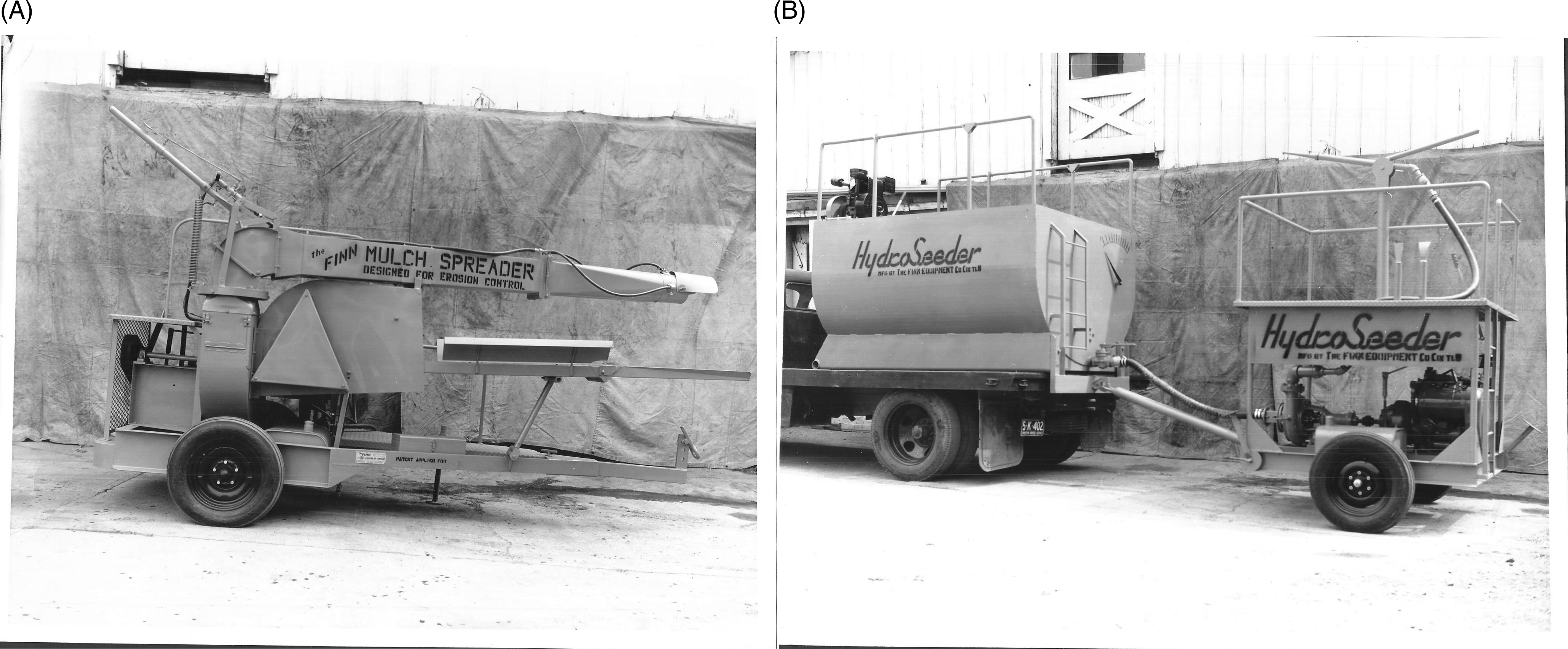
Hydromulch has its origins as a landscape management practice known as hydroseeding, which was developed by Charles Finn in 1953 (FinnCorp n.d.; Figure 1A). Finn’s first invention, introduced in 1935, was not a HydroSeeder but resembled a modern pro-chopper; it chopped and blew dry straw onto freshly seeded soil to protect against rain and wind erosion (Figure 2A). Finn then pursued a more efficient method by combining seed and straw application, which led to the invention of the first HydroSeeder in 1953 (Figure 2B). This machine allowed for the simultaneous application of seed and mulch in a single application, with the mulch serving both as a propagation medium and barrier that covered the soil (FinnCorp n.d.).
Charles Finn and others standing in front of the original HydroSeeder. (Courtesy of the Finn Corporation).

The mulch spreader that inspired the first HydroSeeder invented by Charles Finn in 1935 (A) and the original HydroSeeder invented by Charles Finn in 1953 (B). (Both pictures courtesy of the Finn Corporation).

One of the most common uses of hydroseeding is the management of highway embankments. An early paper on hydroseeding’s use for highway embankment management was authored by Blaser and Ward (Reference Blaser and Ward1958), who conducted a lab experiment to explore whether using a fertilizer-based slurry would injure common forage plants often used on highway embankments. This research, continued in 1961, found that certain grass species could be very successful at revegetating the sides of highways (Blaser et al. Reference Blaser, Thomas, Brooks, Shoop and Martin1961). Finally, Blaser and Woodruff (Reference Blaser and Woodruff1968) highlighted the challenges of the day for hydroseeding on highway embankments, including poor soils and other adverse environmental factors often causing complete or partial plant mortality. To ensure plant establishment, a multistep method was suggested involving first applying fertilizers and liming agents, followed by multiple grass–legume hydroseed applications (Blaser and Woodruff Reference Blaser and Woodruff1968). After playing a pivotal role in making hydroseeding functional on highway embankments, Blaser moved on to investigating the best plant species to hydroseed onto embankments and how to best manage areas revegetated using hydroseeding (Adams and Blaser Reference Adams and Blaser1979). Another common use of hydroseeding technology is the establishment of vegetation around recently constructed buildings. Lum et al. (Reference Lum, Watanabe and Koike1967) is a soil test report submitted on behalf of a developer to the city of Honolulu, HI. They recommended slope planting to minimize soil erosion and suggested that hydroseeding could be a viable method of accomplishing this goal. Interestingly, the plant of choice to maintain these slopes was bermudagrass [Cynodon dactylon (L.) Pers.], which is an intriguing sidenote, as C. dactylon is considered an economically damaging weed and today is listed as a noxious weed in Hawaii (Holm et al. Reference Holm, Plucknett, Pancho and Herberger1977). During the 1970s, hydroseeding expanded as a technology, with many publications on the topic and increased use by land managers. In 1970, the USDA began attempting to utilize hydroseeding to revegetate anthracite coal-mine spoils (Czapowskyj and Writer Reference Czapowskyj and Writer1970). While this initial experiment mostly failed, it did have marginal success in some areas containing spoils from strip mining, and more importantly, it marks the beginning of researchers’ attempts to use hydroseeding in rejuvenating areas impacted by mining. This early work laid the foundation for modern, impactful studies such as one carried out by Keene and Skousen (Reference Keene and Skousen2010), who demonstrated that switchgrass (Panicum virgatum L.) cultivated for biofuel can be successfully established on post-mining sites when fertilizers are incorporated into the slurry.
The term “hydromulch” (or “hydro-mulch” in many early papers) began appearing in the literature before the term “hydroseeding” was coined. Due to this, many papers inaccurately refer to hydroseed as hydromulch. However, the two are distinctly different. Hydromulch is devoid of seeds and is applied to suppress weedy plant growth, while hydroseed includes seeds, with the mulch material acting to enhance germination while also suppressing undesirable weedy plant growth. Due to this lack of clear nomenclature, it is challenging to precisely determine the first time hydromulch was used in agriculture as a true mulch. The probable first paper pertaining to hydromulch use in specialty crop production was authored by Aspitarte et al. (Reference Aspitarte, Rosenfield, Smale and Amberg1973), who evaluated paper sludge as a hydromulch for tomato (Solanum lycopersicum L.), strawberry [Fragaria × ananassa (Weston) Duchesne ex Rozier], and raspberry (Rubus idaeus L.) in Corvallis, OR. The greatest mulch volume applied reduced tomato yield by 38.9%, but also reduced the number of tomatoes with “soft spots” by half compared with the bare-ground control (no cause for these soft spots was specified). Strawberry yields were 46.4% greater without mulch, while raspberry yields trended toward being 51.2% higher with mulch. Another early example of hydromulch in agriculture comes from a publication by the USDA Forest Service. It utilized hydromulch with wood fiber as the predominant feedstock to aid in establishing nursery-grown sweetgum trees (Liquidambar styraciflua L.) in Natchez, MS, and reported that high rates of hydromulch resulted in improved plant establishment compared with hardwood bark mulch traditionally used by nurseries at the time (Barham Reference Barham1980). Further research on using paper-based mulches in nursery crop production in the U.S. Southeast region showed that pelletized, but not crumbled, paper mulch can effectively suppress prostrate spurge [Euphorbia maculata L.; syn.: Chamaesyce maculata (L.) Small] in containerized azalea (Rhododendron spp.) production (Smith et al. Reference Smith, Gilliam, Edwards, Olive, Eakes and Williams1998). More specifically, pelletized paper suppressed E. maculata sown either above or below the mulch layer (25-mm thick), whereas crumbled paper failed to suppress it at the same thickness. Although not directly studying hydromulch, this work suggests that loosely consolidated, dense paper pellets can suppress weeds and prevent germination better than more compact crumbled paper, a finding that may be able to inform future hydromulch formulations. Similarly, non-hydraulically applied paper sheet mulch impregnated with cooking oil maintained greenhouse-grown tomato yields comparable to PE mulch, increased mulch tensile strength by 294% relative to un-oiled paper, and increased soil heat retention by 8.3% relative to black PE (Anderson et al. Reference Anderson, Garisto, Bourrut, Schonbeck, Jaye, Wurzberger and DeGregorio1995). Adding oil to hydromulch may address durability issues commonly observed in other field trials. This may be especially practical when combined with pigments or colorants to augment soil microclimate effects and horticultural performance.
Recent Hydromulch Research
Annual Systems
Research on hydromulch resurged in the early 2000s and encompassed annual, biennial, and perennial crop species. Within annual systems, one study explored paper pulp treatments applied to both greenhouse- and field-planted corn (Zea mays L.) with the treatments containing 2%, 3%, or 4% paper solids derived from a local apple (Malus domestica Borkh.; syn.: Malus pumila Mill.) packing plant in Washington State (Granatstein et al. Reference Granatstein, Kirby and VanWechel2002). This research led to several key findings: (1) hydromulch has the potential to suppress weeds in corn (with the caveat that weed pressure in the field trial was low overall); (2) postemergence applications are better than preemergence applications, as preemergence applications interfered with corn seedling emergence and growth; (3) while 2-cm-thick applications had better weed suppression, especially for weeds that already emerged, 1-cm-thick applications still suppressed some weeds; (4) in-field durability was generally good; and (5) the feasibility of scaling up hydromulch applications is challenging. Similarly, work done around the same time in Florida with muskmelon (Cucumis melo L.) and bell pepper (Capsicum annuum L.) showed hydromulches have the potential to suppress a multitude of weed species in both conventional and organic systems (Warnick et al. Reference Warnick, Chase, Rosskopf, Scholberg, Simonne, Koenig and Roe2006a, Reference Warnick, Chase, Rosskopf, Simonne, Scholberg and Koenig2006b). While both trials showed hydromulch could successfully suppress various broadleaf and grass species, hydromulch failed at suppressing purple nutsedge (Cyperus rotundus L.). This finding was reemphasized by a recent pot experiment in Spain, which tested hydromulch formulations composed of a paper base mixed with either wheat (Triticum spp.) straw, used mushroom substrate, or rice (Oryza sativa L.) husks and found that these treatments suppressed only 16.3% of sprouted C. rotundus while preventing 87.5% of dallisgrass (Paspalum dilatatum Poir.) from penetrating the mulch layer (Mas et al. Reference Mas, Pardo, Pueyo, Verdú and Cirujeda2021). Hydromulch has also been ineffective at suppressing field bindweed (Convolvulus arvensis L.) within artichoke [Cynara cardunculus var. scolymus (L.) Fiori] systems (Romero-Muñoz et al. Reference Romero-Muñoz, Galvez, Martínez-Melgarejo, del Amor, Albacete and Lopez-Marín2024). These findings are in parallel with other hydromulch trials within annual production systems and underscore that nutsedge (Cyperus spp.) and periodically other weed species like C. arvensis are not suppressed by previous or current formulations of hydromulch (Cirujeda et al. Reference Cirujeda, Pueyo, Moreno, Moreno, Villena, López-Marín, Romero-Muñoz and Pardo2024; Mas et al. Reference Mas, Pardo, Pueyo, Verdú and Cirujeda2021; Warnick et al Reference Warnick, Chase, Rosskopf, Scholberg, Simonne, Koenig and Roe2006a, Reference Warnick, Chase, Rosskopf, Simonne, Scholberg and Koenig2006b; Weiss et al. Reference Weiss, Ahmad, Maupin, McFadden, Bajwa, Durado, Weyers, Galinato, Gramig and DeVetter2025a).
More recently in Spain, sprayable cellulosic feedstocks including rice hulls, wheat straw, and used mushroom substrate were compared with bare soil and PE mulch controls to examine drought stress in escarole (Cichorium endivia L.) (Romero-Muñoz et al. Reference Romero-Muñoz, Albacete, Gálvez, Gálvez, del Amor and López-Marín2022a). The mushroom substrate feedstock showed promise for minimizing crop drought stress, as it was associated with a greater total escarole biomass and leaf area when compared with all other treatments, including the optimally irrigated PE mulch control. This is likely because escarole grown using mushroom substrate–based mulch maintained photosynthetic rates comparable to the optimally watered plants. As a result, it better tolerated drought-induced stomatal closure and showed water-use efficiency similar to the optimally watered controls (Romero-Muñoz et al. Reference Romero-Muñoz, Albacete, Gálvez, Gálvez, del Amor and López-Marín2022a). These results were expanded upon in Romero-Muñoz et al. (Reference Romero-Muñoz, Albacete, Gálvez, Gálvez, del Amor and López-Marín2022b), a study in which greenhouse pots containing escarole were inoculated with arbuscular mycorrhizal fungi (Rhizophagus irregularis) and used to compare inoculated versus non-inoculated mulch treatments. Results showed all treatments inoculated with mycorrhizae had increased growth, with the mushroom substrate–based hydromulch treatment leading to greater shoot and root fresh weight compared with the bare soil control and greater leaf area compared with both bare soil and PE. This effect was attributed to some mycorrhizal treatments having increased nutrient absorption (evidenced by greater root nutrient content across inoculated treatments) in both plastic mulch and hydromulch treatments. Plants grown with hydromulch also had greater levels of gibberellins compared with plants grown in the inoculated PE mulch treatments (Romero-Muñoz et al. Reference Romero-Muñoz, Gálvez, Martínez-Melgarejo, Piñero, del Amor, Albacete and López-Marín2022b).
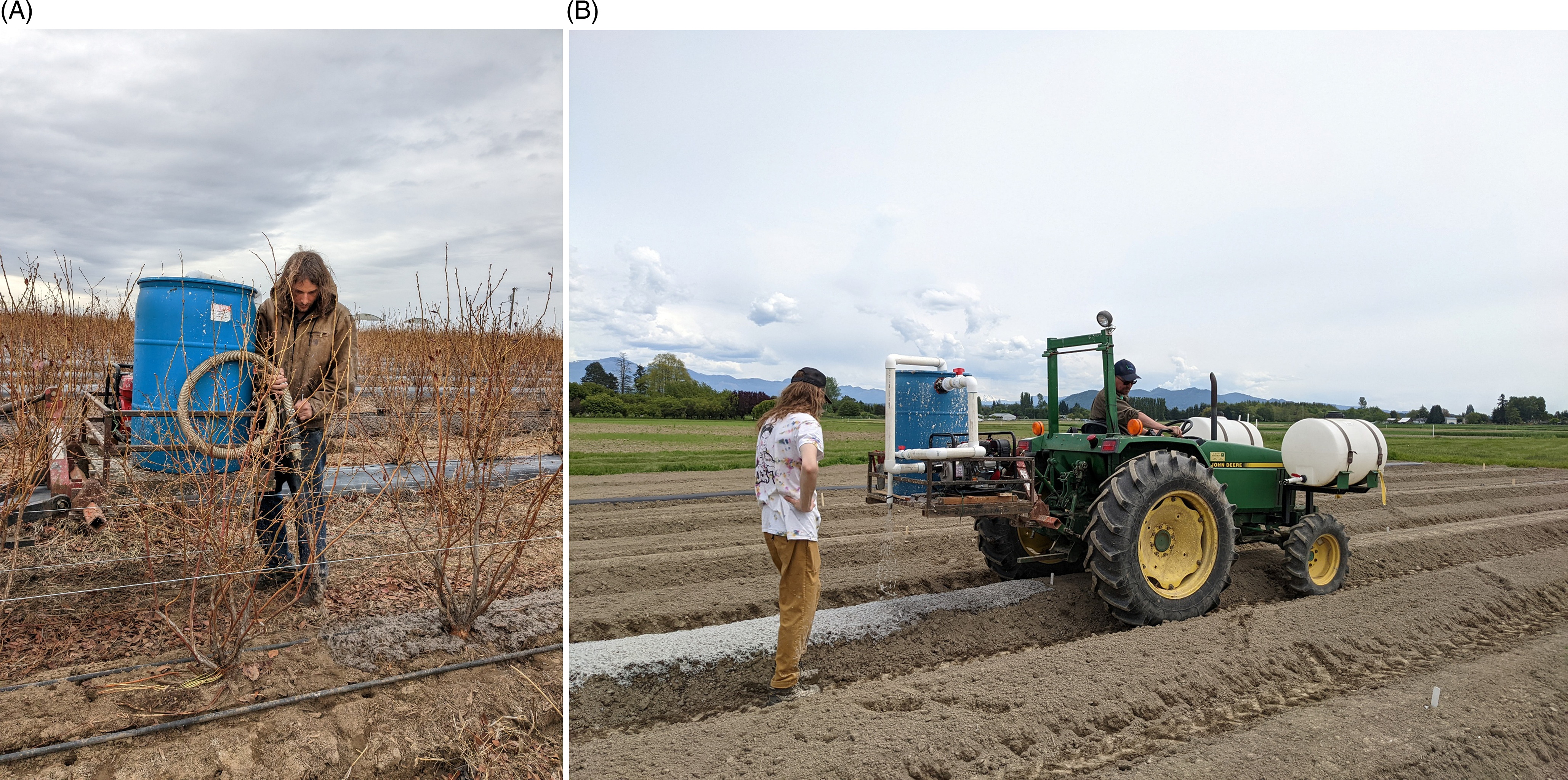
Hydromulch has also shown potential as an alternative mulch to PE mulch in certified organic day-neutral strawberry production grown in annual systems in North Dakota and Washington State (Ahmad et al. Reference Ahmad, DeVetter, McFadden, Maupin, Bajwa, Durado, Weyers, Galinato, Weiss and Gramig2024; Torres-Moya et al. Reference Torres-Moya, Prischmann-Voldseth and Gramig2025; Weiss et al. Reference Weiss, Ahmad, Maupin, McFadden, Bajwa, Durado, Weyers, Galinato, Gramig and DeVetter2025a; Figure 3B). This work evaluated hydromulch made with recycled newsprint paper and a gradient of tackifier concentrations and sources, including: no tackifier and 2% or 6% tackifier derived from guar gum [Cyamopsis tetragonoloba (L.) Taubert] or psyllium husk (Plantago ovata Forssk.). Both 6% tackifier treatments enabled strawberry plants to produce similar yield and fruit quality compared with the PE mulch control, although weed density was greater in all hydromulch treatments compared with PE hydromulch, indicating that hydromulch may be a promising alternative to plastic mulch in strawberry systems, but weed suppression is still inferior to that of PE mulch.
Perennial and Biennial Systems
Research conducted in Spain has also indicated that hydromulch was ineffective at suppressing C. arvensis in peach [Prunus persica (L.) Batsch] and almond [Prunus dulcis (Mill.) D.A. Webb], although it successfully suppressed annual forbs (Cirujeda et al. Reference Cirujeda, Pueyo, Moreno, Moreno, Villena, López-Marín, Romero-Muñoz and Pardo2024). Multivariate analysis indicated that wind-dispersed weed species’ pressure increased over time, meaning that some weed species are likely to germinate on top of hydromulch. In a similar perennial cropping study, Cline et al. (Reference Cline, Neilsen, Hogue, Kuchta and Nielsen2011) established a new planting of irrigated apple on ‘Malling 9’ rootstock with four experimental locations in British Columbia, Canada. The cellulosic feedstock used was newsprint residual and chopped wheat straw at a ratio of 6:1. Across years, sites, and weed taxa, hydromulch reduced weed counts relative to the glyphosate control. The largest reduction was observed with the dichlobenil-containing hydromulch at 6,800% lower than glyphosate control, followed by hydromulch applied over compost at 860% lower than glyphosate control. Additionally, all hydromulch treatments had reduced weed coverage during 24 of 30 data-collection time points, indicating that weed canopy area was also reduced. Finally, the highest cumulative crop yields were observed in plots treated with hydromulch alone and hydromulch applied over municipal composted biosolids, whereas the glyphosate control produced some of the lowest yields. Crop yield benefits may be attributed to a reduction in weed pressure and temperature modulation, as the hydromulch treatments kept soil 4 C cooler in summer and 2.5 C warmer in winter relative to the glyphosate control (Cline et al. Reference Cline, Neilsen, Hogue, Kuchta and Nielsen2011). Though promising, the study’s lack of weed biomass measurements and absence of a bare-ground control leave questions about weed suppressiveness. Hydromulch was also evaluated in established northern highbush blueberry (Vaccinium corymbosum L.) systems in Washington State, where it maintained yield and fruit quality and suppressed dicotyledonous weed species; however, monocotyledonous weeds, including yellow nutsedge (Cyperus esculentus L.), were not effectively suppressed (Weiss et al. Reference Weiss, Maupin, Bajwa, Durado, Weyers, Ahmad, Galinato, Gramig and DeVetter2025b; Figure 3A).
Hydromulch Formulation Development
Hydromulch formulations generally begin in material science laboratories, and promising formulations are advanced to field trials to ascertain the efficacy of the best formulations. The most comprehensive of these trials to date studied 24 combinations of hydromulch comprising rice husk, rice bran, wheat straw sieved to 2.5 mm and 5 mm, spent mushroom substrate, and paper (Claramunt et al. Reference Claramunt, Mas, Purdo, Cirujeda and Verdú2020). These cellulosic feedstocks were mixed with gypsum, white glue, or sodium silicate to ascertain which combination of materials had superior physical properties. Physical properties tested include punching and tensile strength, two critical metrics for any mulch material. These metrics are important, because they reflect the two mechanisms of how a weed penetrates mulches. Punching tests correlate to weeds such as Cyperus spp., where the growing shoot creates a hole in the mulch layer by pushing its sharp apical tip through the mulch without lifting or creating deformation outside the hole. Alternatively, lifting penetration relates to weed species such as common lambsquarters (Chenopodium album L.), which exert pressure on the mulch layer to deform and lift it until a crack forms, allowing the weed to penetrate through the crack in the mulch. Lifting stress correlates to tensile strength, as materials with greater tensile strength have better cohesion and can withstand greater deformation without cracking, making it harder for lifting weeds to penetrate. Of all the formulations tested, only one formulation composed of 75% paper pulp, 25% wheat straw sieved to 2.5 mm, and 50 g L−1 type B1 gypsum showed high resistance to both penetration and lifting stress. This formulation had up to 50% greater puncture and tensile strength when compared with treatments made with rice hulls or spent mushroom substrate. Based on electron microscopy, researchers hypothesized that this greater strength was due to wheat straw acting as a reinforcing material, whereas the other two materials merely acted as fillers. Similarly, a nearly identical formulation (wheat straw sieved to 2.0 mm instead of 2.5 mm) to Claramunt et al.’s (Reference Claramunt, Mas, Purdo, Cirujeda and Verdú2020) best-performing formulation was assessed for its effect on soil moisture (Verdú et al. Reference Verdú, Mas, Josa and Ginovart2020). In a pot experiment, the bare soil control was shown to lose 98.3% water to evaporation, whereas hydromulch lost 82.9% for the 9.9 kg m−2 treatment and 68.7% for the 15.8 kg m−2 treatment, with diminished evaporative loss corresponding to greater hydromulch thickness. Additional hydromulch formulation trials compared various feedstocks and tackifiers with the intent of determining the best formulation for subsequent field trials (Durado et al. Reference Durado, Bajwa, Gramig, Weyers, DeVetter, Formiga and Galinato2024). Treatments included filler material composed of hemp (Cannabis sativa L.) hurds, wood pulp, or paper fibers. The tackifiers tested included guar gum, psyllium husk, and camelina [Camelina sativa (L.) Crantz] meal. This work showed that adding either hemp hurds or wood pulp negatively impacted the material strength of hydromulch by 200% compared with paper alone. Conversely, guar gum showed the greatest improvement in puncture and tensile strength over paper alone, with increases of 182% and 91%, respectively (Durado et al. Reference Durado, Bajwa, Gramig, Weyers, DeVetter, Formiga and Galinato2024). This work confirms previous findings from Claramunt et al. (Reference Claramunt, Mas, Purdo, Cirujeda and Verdú2020) showing that most reinforcing agents act as fillers and may actively reduce the beneficial physical properties of hydromulches. Another key physical property of hydromulch is its rainfastness index (a measure of mulch erosion). In a recent study, investigators measured rainfastness and post-rain puncture resistance of several combinations of guar gum, psyllium husk, camelina meal, paper, hemp hurds, and wood fiber (Durado et al. Reference Durado, Ara, Bajwa, Gramig, DeVetter, Weyers, Formiga, Galinato, Ahmad, Weiss and Bajwa2025). The treatments with the greatest rainfastness indices included 75% paper to 25% wood fiber and 75% paper to 25% hemp hurds, with neither tackifier type nor percentage impacting rainfastness. In contrast, tackifier percentage and type influenced post-rain puncture resistance, with 6% guar gum performing best under 100% added moisture. These results highlight the need to optimize formulations that increase rainfastness while maintaining puncture resistance during and after rainfall. Finally, a major concern for any biodegradable mulch is the speed at which the mulch degrades once incorporated into soil. While hydromulch’s ability to degrade in soil has yet to be ascertained, similar tests with paper sheet mulches have indicated that these commercially available products (such as WeedGuardPlus manufactured by Sunshine Paper, Aurora, CO, USA) degrade readily once incorporated into soil (Madrid et al. Reference Madrid, Zhang, Miles, Kraft, Griffin-LaHue and DeVetter2022b; Moreno et al. Reference Moreno, González-Mora, Villena, Campos and Moreno2017). Additionally, based on the BW’s anecdotal observations from trials in Washington State and North Dakota, hydromulch appeared to degrade readily once tilled into the soil. However, further research is needed to quantify and confirm this observation.
Challenges for Adoption
Hydromulch is experiencing a resurgence in attention due to its potential to function as a soil-biodegradable, biobased mulch while eliminating plastic mulch waste generation. However, it is not yet an “off-the-shelf” technology ready for commercial adoption. Weed suppression is poor for certain weed taxa, such as Poaceae spp., Cyperus spp., and C. arvensis. Material properties of hydromulch will need to be improved to suppress these species, which would entail more in-depth study of hydromulch constituents and how they impact mechanical properties important for weed suppression as well as crop performance.
The logistics and economics of sourcing and applying hydromulch at a commercial scale are uncertain at this time. Most feedstock sources and tackifiers are costly, and careful economic evaluations are necessary to inform commercialization efforts. Although few economic studies on hydromulching have been conducted, those that exist at the time of writing are promising. A Spanish study on artichoke observed a slight but nonsignificant trend toward lower net profits with hydromulch use compared with PE mulch (López-Marín et al. Reference López-Marín, Romero, Gálvez, del Amor, Piñero and Brotons-Martínez2021). It should be noted that this trial utilized agricultural residues as a filler material in their paper-based hydromulch formulations, and it is probable that if paper feedstocks were analyzed in isolation, the cost of hydromulching would increase significantly. To this end, further field trials utilizing paper-based hydromulches with mushroom substrate, wheat straw, and other locally available materials as fillers should be conducted to ascertain how these materials impact in-field performance while lowering cost. Additionally, paper costs may rise as sourcing per- and polyfluoroalkyl substance (PFAS)-free feedstocks becomes more difficult. Although PFAS are not currently broadly banned in U.S. agriculture, they are facing increasing regulation and are heavily restricted in the European Union and have been detected in recycled-paper streams in Norway, potentially increasing complications surrounding feedstock sourcing in these regions (ECHA n.d.; Langberg et al. Reference Langberg, Arp, Castro, Asimakopoulos and Knutsen2024).
Another adoption issue is that hydromulches have not been tested in conjunction with soilborne disease management practices such as soil fumigation, including biofumigation. As a porous material derived from cellulosic feedstocks, the permeability of hydromulch will likely make it unsuitable for scenarios where pesticidal compounds need to be retained in soil for extended periods of time. Similarly, in organic systems where anaerobic soil disinfestation is increasingly common, further research is needed to ascertain if hydromulch could replace PE mulch.
An additional uncertainty that requires further research is soil health impacts. Paper-based hydromulch is high in carbon and could theoretically contribute to nitrogen immobilization. Yet no published studies have ascertained this or other impacts on soil health. Carbon-containing amendments often benefit variables associated with soil health, meaning the overall impacts of hydromulch on soil health are likely positive (Milne et al. Reference Milne, Banwart, Noellemeyer, Abson, Ballabio, Bampa, Bationo, Batjes, Bernoux, Bhattacharyya, Black, Buschiazzo, Cai, Cerri and Cheng2015). In totality, hydromulch remains a promising material for farming situations seeking to reduce PE mulch waste generation but requires further research and development to inform commercialization and application.
Practical Implications
While research on paper-based hydromulch is sparse, published studies show promise, and there is a robust number of publications on a similar technology, hydroseeding. The reviewed literature shows hydromulch could be a viable alternative to PE mulch, especially in certified organic farming scenarios where other soil-biodegradable alternatives are prohibited, and may replace herbicides in some scenarios. Collaborations with material scientists are essential and complementary, as they elucidate ideal hydromulch formulations for field testing. Laboratory experiments to date report most filler materials reduced the mechanical strength of paper-based hydromulch, but wheat straw may improve material properties and should be further tested in the field. Gypsum has proven to be a promising agglomerating agent, and the best tackifier tested to date is guar gum. While these studies have helped clarify ideal hydromulch formulations, it is clear further work is needed to improve hydromulch formulations so they perform more similarly to PE mulch at weed suppression, especially at suppressing certain monocot and perennial weed species. Overall, the future of paper-based hydromulch is promising. However, considerable work is still needed before the technology can be commercialized, including materials testing across a broad range of environments, cost–benefit analysis, and developing approaches to effectively deploy hydromulch while keeping material and application costs minimal. Parallel technologies for application and preplant soilborne pathogen management will also need to be developed as part of a systems-based approach for hydromulch to be commercially viable in organic and conventional specialty crop agriculture.
A more modern hydromulcher, constructed by mechanics at the Northwestern Research and Extension Center, applying hydromulch (A) from the side of the bed to a blueberry trial during Spring 2023 in Prosser, WA, and (B) over the top of a bed to a strawberry trial during Spring 2022 in Mount Vernon, WA.

Acknowledgments
The authors would like to thank Carol Miles and Deirdre Griffin-LaHue for providing feedback on this article when it was presented as a thesis chapter, as well as the Finn Corporation for providing photos of Charles Finn and early examples of hydroseeding and mulch-spreading machines. Mention of trade names or commercial products in this publication is solely for the purpose of providing specific information and does not imply recommendation or endorsement. This article is a portion of BW’s MS thesis.
Funding statement
This work was supported by Organic Research and Extension Initiative Award No. 2021-51300-34909 from the U.S. Department of Agriculture–National Institute of Food and Agriculture (USDA-NIFA). Additional support was provided by USDA-NIFA Hatch Project 7003737. Any opinions, findings, conclusions, or recommendations expressed in this publication are those of the authors and do not necessarily reflect the view of the USDA. Mention of product names are for the purposes of communication and do not signify endorsement.
Competing interests
The authors declare no conflicts of interest.


 Open access

