




As part of the methodological reform movement in second language (L2) research (Byrnes, Reference Byrnes2013; Gass, Loewen & Plonsky, Reference Gass, Loewen and Plonsky2021), there have been calls to examine the quality of studies within and across substantive domains to enhance scientific rigor of research (Plonsky, Reference Plonsky2013, Reference Plonsky2014, Reference Plonsky2024). With increased globalization that enhances L2 communication as well as technological advancements (e.g., automatic speech recognition models), L2 pronunciation is one of the domains that has been gaining steady attention from researchers in various disciplines, including speech and language pathology, language learning and assessment, computational linguistics, sociology, and others. Among the most commonly investigated and influential constructs in pronunciation research have been L2 speech accentedness, comprehensibility, and intelligibility, first introduced by Munro and Derwing (Reference Munro and Derwing1995). These constructs have been the ever-increasing focus of investigations, particularly since the change of emphasis in L2 teaching from native-like pronunciation to fluency and communicative value of clear, intelligible speech (Levis, Reference Levis2005, Reference Levis2020b).
Classified as listener-based constructs, accentedness, comprehensibility, and, in some studies, intelligibilityFootnote 1 oftentimes rely on scales that measure listeners’ perceptions to operationalize them. However, the use of instruments to describe and measure these constructs has been inconsistent (Thomson, Reference Thomson, Kang and Ginther2017), with primary empirical studies employing scales varying in length, item wording, and endpoint descriptors as well as occasionally conflating comprehensibility and intelligibility (e.g., Isaacs & Trofimovich, Reference Isaacs and Trofimovich2012).
Given the importance of psychometric measurement for the credibility of study findings and conclusions (DeVellis & Thorpe, Reference DeVellis and Thorpe2022), this methodological synthesis sets out to examine the quality of instruments used to operationalize accentedness, comprehensibility, and intelligibility in L2 pronunciation research. On a larger scale, the goal of this paper is to examine the overall quality of studies in this domain regarding participant characteristics, instrumentation, and reporting practices, as put forth by Plonsky (Reference Plonsky2024) in his framework for evaluating study quality in applied linguistics. This framework defines study quality as a combination of methodological rigor, transparency, ethics, and societal value. Methodological rigor in the framework incorporates instrument validity as one of its essential characteristics. The current study makes use of Plonsky’s (Reference Plonsky2024) framework in achieving its goal. In the literature review that follows, we first discuss the main listener perception-based constructs in L2 pronunciation research and the way they are typically measured. We then summarize synthetic and non-synthetic research in study quality before detailing the goal and research questions (RQs) of the present study.
Literature review
Main constructs in L2 pronunciation research
Over the past several decades, pronunciation has been regaining its place in language teaching in part due to the shift from the native (L1)-speaker pronunciation standard to a focus on successful communication and attainment of more achievable goals of comprehensibility and intelligibility (Derwing & Munro, Reference Derwing and Munro2005; Derwing, Munro & Thomson Reference Derwing, Munro and Thomson2008; Levis, Reference Levis2005, Reference Levis2018, Reference Levis2020a, Reference Levis2020b). In other words, rather than emphasizing the importance of sounding like an L1 speaker of a target language, pronunciation instruction has shifted toward the communicative success of an interaction where an L2 speaker’s foreign accent does not necessarily inhibit the understanding of their speech. As Saito (Reference Saito2021) note, how this “achievable” goal of L2 pronunciation has been operationalized varies from study to study. Closely related to this movement are three central and partially overlapping constructs that are used to characterize one’s L2 pronunciation proficiency—namely, accentedness, comprehensibility, and intelligibility (Derwing & Munro, Reference Derwing and Munro1997, Reference Derwing and Munro2005; Ghanem, Kang & Kostromitina, Reference Ghanem, Kang and Kostromitina2024). In its original conceptualization by Derwing and Munro (Reference Derwing and Munro1997; see Thomson, Reference Thomson, Kang and Ginther2017 for a summary), accentedness is defined as a property of speech that is perceived as noticeably different from an L1 speaker standard; comprehensibility and intelligibility are viewed as related aspects of pronunciation albeit different in what exactly is measured by each of them. While comprehensibility is described as listeners’ perceived effort to understand the speaker’s utterance (i.e., how easy or difficult it is for a listener to understand what a speaker is saying), intelligibility, in Munro and Derwing’s (Reference Munro and Derwing1995) view, is the amount of the speaker’s production that is understood at the word and utterance level. According to a more recent paper by Munro and Derwing (Reference Munro, Derwing, Reed and Levis2015), intelligibility of L2 speech should be a priority in pronunciation instruction, even though comprehensibility is still important for communicative success. Accentedness, in turn, matters insofar as it does not impede intelligibility of speech (e.g., a noticeable foreign accent can be associated with low intelligibility; see Munro, Reference Munro, Edwards and Zampini2008). At the same time, accentedness and intelligibility, while partially overlapping (e.g., word stress or rhythm contribute to both constructs), are also distinct because speech may be accented yet remain highly intelligible and comprehensible (Derwing & Munro, Reference Derwing and Munro1997). Shortly after these original definitions had been introduced by Derwing and Munro (Reference Derwing and Munro1997), other researchers in the domain of L2 pronunciation set forth their own conceptualizations of the three constructs. Thomson (Reference Thomson, Kang and Ginther2017) noted that while accentedness had generally been described similarly in the literature, intelligibility and comprehensibility were sometimes conflated (e.g., Isaacs & Trofimovich, Reference Isaacs and Trofimovich2012; Saito, Trofimovich, Isaacs & Webb, Reference Saito, Trofimovich, Isaacs, Webb, Isaacs and Trofimovich2016), leading to possible misinterpretation of the results. This confusion is oftentimes related to differences in how the two constructs are measured (e.g., Gooch, Saito & Lyster, Reference Gooch, Saito and Lyster2016; Kennedy & Trofimovich, Reference Kennedy and Trofimovich2019).
Apart from accentedness, comprehensibility, and intelligibility of L2 speech, pronunciation researchers have also been concerned with fluency. Fluency has typically been operationalized as a temporal measure of speech (e.g., speech rate or mean length of run; see Rossiter, Reference Rossiter2009; Saito, Ilkan, Magne, Tran & Suzuki, Reference Saito, Ilkan, Magne, Tran and Suzuki2018), even though it is normally presented as one of the core constructs of L2 proficiency, together with complexity and accuracy (Housen, Kuiken & Vedder, Reference Housen, Kuiken and Vedder2012). Additionally, as Chau, Huensch, Hoang and Chau (Reference Chau, Huensch, Hoang and Chau2022) exemplify, fluency can be operationalized as listeners’ judgments. This approach reflects the conceptualization of perceived fluency as a sub-construct of pronunciation proficiency (Saito & Plonsky, Reference Saito and Plonsky2019). Despite the emerging discussion about potentially combining L2 fluency with intelligibility and including this new sub-construct into L2 pronunciation proficiency—together with intelligibility, comprehensibility, and accentedness—the evidence that fluency is indeed related to the aforementioned constructs is scarce (Chau et al., Reference Chau, Huensch, Hoang and Chau2022; Derwing & Munro, Reference Derwing and Munro1997; Thomson, 2015). Note, however, that L2 comprehensibility has been found to be related to perceived fluency in some studies (e.g., Suzuki & Kormos, Reference Suzuki and Kormos2020). Additionally, a recent meta-analysis by Chau and Huensch (Reference Chau and Huensch2025) also reported rather strong relationships between fluency and comprehensibility (aggregated r = .82) as well as accentedness (aggregated r = .62). Nevertheless, in the current study, fluency has not been included as one of the constructs of interest. The next section of the literature review discusses how accentedness, comprehensibility, and intelligibility have been typically measured in L2 pronunciation research.
How constructs are measured in L2 pronunciation research
Although the constructs of accentedness, comprehensibility, and intelligibility are related, there exist different overarching approaches to measuring each of them: perceptual scale-based judgments and transcription. Because accentedness and comprehensibility are perceptual phenomena that work at the utterance level, they are normally evaluated using scales to elicit listeners’ intuitive perceptions of one’s strength of accent or the amount of effort needed to understand one’s speech (Saito, Reference Saito2021). In most cases, studies have used holistic (impressionistic) instruments to elicit such judgments (e.g., Galante & Thomson, 2016; Huensch & Nagle, 2023). Holistic rubrics usually assign a single score evaluating a certain construct with regard to an entire sound file and are contrasted with analytic rubrics where listeners assign separate scores to different aspects of a construct within a speech excerpt (e.g., Aksakallı & Yağız, Reference Aksakallı and Yağız2020; Elborolosy, 2020). As Saito (Reference Saito2021) notes, accentedness has also been referred to as “native-likeness” or “global foreign accent,” all reflecting to some degree the extent to which L2 speech is close to phonological norms of L1 speakers (p. 868). Accentedness and comprehensibility judgments, therefore, are thought to represent instant judgments made by interlocutors in real-life oral (intercultural) communication.
In contrast, intelligibility, in line with Munro and Derwing’s (Reference Munro and Derwing1995) approach, while being a perceptual construct that requires both acoustic and cognitive processing, is typically measured via listener transcription. However, some studies (e.g., Christiner, Bernhofs, Sommer-Lolei & Groß, Reference Christiner, Bernhofs, Sommer-Lolei and Groß2023; Kissling, Reference Kissling2014; Meritan, Reference Meritan2022) evaluated intelligibility using scalar ratings to measure listener perceptions of production accuracy. Notably, it has been argued that this approach can introduce bias into intelligibility measurement (Nagle & Baese-Berk, Reference Nagle and Baese-Berk2022). Intelligibility has been measured in several additional ways (e.g., true/false statements, perception of nonsense sentences, perception of filtered sentences), even though, as Kang, Thomson and Moran (Reference Kang, Thomson and Moran2018) observed, these techniques may not tap into the same construct. Caution must be taken in selecting the technique to ensure that it fits the purpose of a given assessment of intelligibility.
Scale design features
Regarding the length of rating scales to measure accentedness, comprehensibility, and, in some cases, intelligibility, there seems to be great variation in the literature regarding how the instruments have been designed. There are studies that employed 5-point (Kermad, Reference Kermad2021; Isaacs & Thomson, Reference Isaacs and Thomson2013), 7-point (Baills, Zhang, Cheng, Bu & Prieto, Reference Baills, Zhang, Cheng, Bu and Prieto2021; Dai & Roever, Reference Dai and Roever2019; Derwing et al., Reference Derwing2008), 9-point (Munro, Reference Munro, Kang, Thomson and Murphy2017), and even 1,000-point scales (Saito, Trofimovich, & Isaacs, Reference Saito, Trofimovich and Isaacs2017; Saito et al., Reference Saito, Tran, Suzukida, Sun, Magne and Ilkan2019; Tsunemoto, Lindberg, Trofimovich & McDonough, Reference Tsunemoto, Lindberg, Trofimovich and McDonough2022) to register listeners’ perceptions of accentedness and comprehensibility. For example, Munro and Derwing (Reference Munro and Derwing1995) used 9-point semantic differential scales with endpoints labeled as follows: 1 = no foreign accent/extremely easy to understand and 9 = extremely strong accent/impossible to understand, for accentedness and comprehensibility. Moreover, differences in endpoint scale descriptors are also quite common (e.g., in Kennedy & Trofimovich, Reference Kennedy and Trofimovich2008, comprehensibility scale endpoints were very easy/hard to understand, while in Saito et al., Reference Saito, Trofimovich, Isaacs, Webb, Isaacs and Trofimovich2016, the endpoints were easy to understand/difficult to understand); these differences, albeit slight, are rarely explained in the literature (Thomson, Reference Thomson, Kang and Ginther2017). The type of scale also seems to matter. Across applied linguistics domains, researchers typically use Likert, Likert-type, semantic differential, and visual analog rating scales. Likert scales, consisting of series of statements with a range of answer options typically from strongly agree to strongly disagree or vice versa, are common in measuring attitudes, opinions, or behaviors. Likert-type scales are also commonly employed, with the main difference being that their response options are usually worded using descriptors other than strongly agree/strongly disagree (e.g., from not at all to very much).
Semantic differential scales, where bipolar (e.g., comprehensible and incomprehensible; easy to understand and difficult to understand) or unipolar (e.g., comprehensible and not comprehensible; easy to understand and not easy to understand) adjectives are presented at the two ends of the scale, are usually used to measure one’s perceptions or reactions. Visual analog, also often referred to as slider scales, are similar to semantic differential ones in their use, but they typically do not have a fixed number of points to choose from; rather, the respondent is encouraged to move the slider to mark their answer on a continuous line. This makes visual analog/slider scales more interactive. Additionally, slider scales can include non-verbal descriptors at each end of the scale (e.g., smiley faces). For a more comprehensive account of various scale types, the readers are referred to DeVellis and Thorpe (Reference DeVellis and Thorpe2022).
Although scales are arguably the default instruments when it comes to measuring L2 speakers’ pronunciation, some studies have employed rubrics instead (e.g., Aksakallı & Yağız, Reference Aksakallı and Yağız2020, for comprehensibility; Elborolosy, 2020, for intelligibility). Rubrics are similar to scales in that they must include a measurement scale; however, rubrics are more commonly used in language assessment to evaluate L2 performance or achievement at different proficiency levels; each level of performance is typically accompanied by a detailed description with specific assessment criteria for raters. Rubrics can be analytic, where the measured construct is broken down into sub-constructs (e.g., as in Aksakallı & Yağız, Reference Aksakallı and Yağız2020, that measured L2 learners’ pronunciation based on five criteria, which included “vowels, consonants, intonation, word-stress and comprehensibility,” p. 15), or holistic, where a single score is given based on a comprehensive perception of the construct (e.g., Elborolosy’s 2020 rubrics assigned separate holistic scores to intelligibility and fluency). For a distinction between holistic versus analytic scoring elsewhere in L2 research (i.e., L2 writing), see Barkaoui (Reference Barkaoui2010).
There has been some examination of the use of scales in L2 pronunciation research. In Yan and Ginther (Reference Yan, Ginther, Kang and Ginther2017), minimally explicated scales (with only endpoints labeled) have been found to be more attractive for novice raters compared to other types of scales in the study. Several methodologically oriented studies have examined the functionality of rating scales in L2 pronunciation research. Munro’s (Reference Munro, Kang, Thomson and Murphy2017) comparison of different rating scales suggested that a 9-point scale should remain the preferred scale in the domain given its ease of application. However, when Isbell (Reference Isbell, Kang and Ginther2017) evaluated a 9-point rating scale for the measurement of comprehensibility and accentedness in Korean learners of English, listeners’ post-rating comments uncovered several challenges related to scale length and ambiguity of differences between adjacent points (e.g., “2” and “3”). Analogously, although Isaacs and Thomson (Reference Isaacs and Thomson2013) did not detect differences in the mean comprehensibility and accentedness scores between 5-point and 9-point scales, Rasch probability plots suggested that raters in their study were not able to meaningfully differentiate between the points on the longer scale. More recently, Kermad and Bogorevich (Reference Kermad and Bogorevich2022) found that a shorter 5-point scale is more reliable in measuring speakers’ accentedness and comprehensibility.
Listener factors
In addition to scale design choices, studies tend to differ in their composition of listener participant groups in terms of their number, language background, and the amount of training. A major discussion in the domain of L2 pronunciation has concerned the L1 status of listeners and whether listeners’ L1 background may affect how they perceive accentedness, intelligibility, and comprehensibility of L2 speech. Some existing studies have collected L1 judgments of L2 speech (e.g., Burda & Hageman, Reference Burda and Hageman2005), while others employed either a mix of L1 and L2 listeners (e.g., Chen & Wang, 2016) or a mix of L2 listeners from one or more language backgrounds (e.g., Dai & Roever, Reference Dai and Roever2019). Notably, these methodological choices are largely motivated by study goals. However, as Foote and Trofimovich (Reference Foote and Trofimovich2018) note, empirical evidence suggests that (a) L1 speakers generally find L2 speech less intelligible than L1 speech and (b) speakers of a shared L1 may find each other’s L2 speech more intelligible (also referred to as the interlanguage speech intelligibility benefit; Bent & Bradlow, Reference Bent and Bradlow2003); however, this effect may vary depending on listeners’ proficiency, context, and other background characteristics. With accentedness and comprehensibility, research on listeners’ L1 effect is scarce (e.g., Matsuura, Chiba, Mahoney, & Rilling, Reference Matsuura, Chiba, Mahoney and Rilling2014; Munro, Derwing, & Morton, Reference Munro, Derwing and Morton2006; Saito et al., Reference Saito, Tran, Suzukida, Sun, Magne and Ilkan2019) with findings suggesting significant but modest and non-pervasive effects of L1 background.
Another listener factor in L2 pronunciation studies measuring accentedness, comprehensibility, and intelligibility has to do with rater training (i.e., naïve versus expert listeners). Existing studies have varied in their definition of “listener training.” While some have operationalized training as listeners’ educational and/or professional background (e.g., being a linguist, having taken a phonology course, having teaching experience), others have provided actual training to listeners in preparation for perceptual ratings (for a discussion, see Kermad, Reference Kermad2021). While several studies have compared the effect of listener training on speech ratings, their findings have been arguably inconsistent. Some reports maintained that trained raters generally showed higher consistency when rating comprehensibility (Saito et al., Reference Saito, Trofimovich and Isaacs2017) and accentedness (Kermad, Reference Kermad2021) as well as producing higher comprehensibility and accentedness ratings overall (Kennedy & Trofimovich, Reference Kennedy and Trofimovich2008). At the same time, others have found no significant effect of listener training on rater judgments (Isaacs & Thomson, Reference Isaacs and Thomson2013). It is also noteworthy that in L2 pronunciation proficiency contexts, the measurement of the three constructs is different from expert assessments (commonly done in second-language acquisition [SLA] and L2 testing studies) that are done by professional coders using rubrics (e.g., Isaacs, Trofimovich, Yu & Chereau, Reference Isaacs, Trofimovich, Yu and Chereau2015).
It is evident that scales targeting accentedness, comprehensibility, and, to some extent, intelligibility, have been used somewhat inconsistently in the literature. First, there is variation across studies in how the three constructs are defined, often leading to overlapping interpretations. Within each construct, there exists variation in operationalizations (e.g., using transcription versus scalar judgments to measure intelligibility). Furthermore, there seems to be considerable variation in the scale design, including its length, type, descriptors, and other features at the instrument level as well as methodological choices at the study level, such as listener and speaker characteristics. Moreover, as suggested by existing non-synthetic studies (e.g., Isaacs & Trofimovich, Reference Isaacs and Trofimovich2016), a pervasive issue is the lack of transparency regarding how definitions and measurements are arrived at, which hinders the comparability and replicability of findings across L2 pronunciation studies.
Existing research on study and scale quality
Study and instrument quality is crucial for the domain of L2 pronunciation just like any other domain in applied linguistics. High-quality studies with well-designed instruments can provide a robust understanding of L2 pronunciation and help gain confidence in the conclusions we draw from research findings. In the context of applied linguistics research, there have been several attempts to define study quality. Plonsky (Reference Plonsky2013) defined it as adherence to standards of methodological rigor appropriate in given contexts as well as transparent and complete reporting practices. Expanding on this definition, Gass et al. (Reference Gass, Loewen and Plonsky2021) accounted for aspects of study quality specifically for quantitative research, including estimating effect sizes and prioritizing exhaustive reporting of results as well as sharing study materials. More recently, Plonsky (Reference Plonsky2024) proposed a framework for study quality that includes four interconnected elements: methodological rigor, transparency, ethics (contrasted with plagiarism, data falsification, and questionable research practices), and societal value. Methodological rigor in this framework involves, among other aspects, instrument quality. Plonsky (Reference Plonsky2024) notes that in the larger field of applied linguistics, consistent observations have been made about the lack of validity evidence for the instruments, such as scales and proficiency tests (e.g., Ellis, Reference Ellis2021; Norris & Ortega, Reference Norris, Ortega, Gass and Mackey2012; Sudina, Reference Sudina2023). Such validity evidence is especially important because its absence casts doubt on the value of study findings.
Although scale and study quality in L2 pronunciation research have not been examined extensively, there is abundant methodological and psychometric literature on scale development and use that SLA researchers can benefit from. DeVellis and Thorpe (Reference DeVellis and Thorpe2022) highlighted the importance of scale variability, which can be achieved by increasing either the number of items or the number of response options on the rating scale. However, including too many items or response categories “might fatigue or bore the respondents, lowering the reliability of their responses” (p. 107); at the same time, while single-item scales are easier to administer, they may not capture all the details of a given latent construct and can be problematic for reliability calculations. Another issue related to the number of scale response options concerns the extent to which respondents can meaningfully differentiate between them. Although a large number of options may be beneficial for the scale variance, it may result in so-called “false precision” with variability being random rather than systematic (DeVellis & Thorpe, Reference DeVellis and Thorpe2022, p. 107). To this end, Menold and Bogner (Reference Menold and Bogner2016) recommended 5- to 7-point scales that are arguably more optimal for participants’ mental effort yet still maintain the necessary psychometric properties. In addition to the number of items and response categories, other features of scale design, such as the presence or absence of a neutral midpoint, response option labeling, and the type of rating scale used (e.g., Likert or Likert-type), tend to have a bearing on scale validity and reliability (Menold & Bogner, Reference Menold and Bogner2016). Synthetic research in instrument and study quality, both in the wider domain of applied linguistics as well as in L2 pronunciation, has also revealed several trends that are noteworthy for the current study. Sudina (Reference Sudina2021) systematically described and evaluated the state of study and scale quality in L2 anxiety and motivation research and found several limitations, including a narrow range of target languages examined in primary studies (predominantly English) and the lack of diversity in participant population (the majority being college or university students in foreign language contexts). The study also found insufficient reporting of survey design characteristics, issues with missing data handling, and limited instrument availability. Critically, there was a lack of evidence for scale validity (both content and construct) as well as scale reliability, particularly for 1-item scales. Similar findings were observed in Sudina (Reference Sudina2023) regarding scale quality in L2 anxiety and willingness to communicate survey research. In the current analysis, we aim to expand Sudina’s (Reference Sudina2021, Reference Sudina2023) approach to examine study and scale quality in L2 pronunciation research.
Validation of instruments has also been central to other areas of applied linguistics such as language testing. Although this area of investigation is outside of the scope of the current study, it is worth mentioning that scholars in this domain have discussed instrument quality in relation to detailed rubrics designed to rate test-takers’ performance as well as standardization of ratings by means of using these rubrics. To that end, Knoch, Deygers, and Khamboonruang (Reference Knoch, Deygers and Khamboonruang2021) conducted a systematic review of studies undertaking scale development specifically for language testing. In that review, the authors provided a framework for scale development and validation, emphasizing the importance of considering test purpose and score use for scale construct validity. Knoch et al.’s (Reference Knoch, Deygers and Khamboonruang2021) synthesis cited Isaacs and Trofimovich (Reference Isaacs and Trofimovich2012) and Isaacs, Trofimovich and Foote (Reference Isaacs, Trofimovich and Foote2018) as exemplary studies in terms of the development and validation of an L2 comprehensibility scale for testing purposes.
Contributing to our understanding of scale and study quality in L2 pronunciation, several meta-analytic and systematic reviews investigated reliability of scales in this domain of research. Saito (Reference Saito2021) emphasized that reliability of L2 speech construct judgments, such as accentedness and comprehensibility, remains an underexplored area. To this end, the author conducted a reliability analysis that showed that comprehensibility and accentedness judgments yield generally high interrater agreement (.90, .91), regardless of listener background (expert versus L2 versus mixed). Lee, Jang and Plonsky (Reference Lee, Jang and Plonsky2015), in a meta-analysis of pronunciation instruction research, found an overall mean interrater reliability estimate of .82. This estimate was similar to that found in a meta-analysis of reliability coefficients in L2 research by Plonsky and Derrick (Reference Plonsky and Derrick2016). In their study, the median estimate for interrater reliability of L2 pronunciation was .81 (IQRFootnote 2 = .20, k = 55). Saito and Plonsky (Reference Saito and Plonsky2019) conducted a reliability generalization meta-analysis (RGM) where they examined variability in interrater reliability estimates in L2 pronunciation teaching research including listeners’ impressionistic judgments of global proficiency. Besides finding an overall increase in reliability reporting, the study reported high reliability estimates in the domain (median ranging from .76 to .93), even though there was variability in the estimates depending on the type of production (controlled versus spontaneous) and target of measurement (global constructs versus specific linguistic targets, such as segmental and suprasegmental features). Additionally, the study noted that L2 pronunciation research could apply more sophisticated statistical techniques (i.e., psychometric corrections) when calculating reliability estimates. While these findings seem to offer validity evidence for scales used to measure L2 pronunciation constructs (as reliability is an important aspect of validity evidence; see Chapelle, Reference Chapelle and Chapelle2013), a more fine-grained analysis of reliability estimates accounting for design features of scales that measure accentedness, comprehensibility, and intelligibility would provide additional evidence for study and scale quality in this line of research.
The present study
Being at the forefront of linguistic equity and diversity, L2 pronunciation research is committed to promoting successful communication and understanding the role of L2 users’ perceived accentedness, comprehensibility, and intelligibility in this process (Levis, Reference Levis2020a, Reference Levis2020b). However, little is known about the overall quality of primary studies and instruments used to measure these constructs. Responding to calls by Nagle and Baese-Berk (Reference Nagle and Baese-Berk2022), Plonsky (Reference Plonsky2024), and Sudina (Reference Sudina2021, Reference Sudina2023), this methodological synthesis examines study and instrument quality in L2 pronunciation research by scrutinizing methodological practices in recruiting listeners and speakers as well as designing and employing scales and rubrics that measure accentedness, comprehensibility, and intelligibility in an L2 context. The following RQs guided the study:
RQ1: To what extent has the overall scientific rigor of study design been upheld in perception-based L2 pronunciation research with respect to (a) sample characteristics (listeners and speakers) and (b) instrumentation and procedures at the study level?
RQ2: To what extent and by what means has instrument quality been achieved in perception-based L2 pronunciation research regarding (a) instrument design, transparency, and availability; (b) instrument validity; and (c) instrument reliability?
Method
Eligibility
This section outlines the main inclusion and exclusion criteria at both the study and the instrument levels. To address the RQs outlined above, the scope of this methodological synthesis was confined to peer-reviewed articles that focused on accentedness, comprehensibility, and/or intelligibility in an L2 context. While by no means exhaustive, this sample of primary studies is arguably representative of the target domain and allows for accomplishing the main objectives of the synthesis. When determining the scope of the synthesis, we used similar criteria as Plonsky (Reference Plonsky2013, Reference Plonsky2014) and Sudina (Reference Sudina2021, Reference Sudina2023). Specifically, to be eligible for inclusion, a study had to (a) represent primary quantitative L2 research into accentedness, comprehensibility, and/or intelligibility (substantive criterion); (b) appear in a peer-reviewed journal (locational criterion); (c) be published in a paginated issue before June 1, 2023Footnote 3 (temporal criterion); and (d) include listeners or judges who rated speech samples using scales or rubrics measuring at least one of the target constructs.
Consequently, the following studies were excluded: (a) all syntheses, meta-analyses, non-empirical studies (e.g., theoretical papers, editorials), and primary qualitative articles; (b) book chapters, conference proceedings, M.A. theses, and Ph.D. dissertations; (c) advance online publications that were not yet assigned to an issue by June 1, 2023; (d) articles that did not focus on accentedness, comprehensibility, and/or intelligibility as one of the central constructs and had insufficient information provided for coding (e.g., if an accentedness instrument was only mentioned in the Method section and used as a means to select eligible speakers, and no numerical results were provided; or if a scale measuring comprehensibility was only used in a pilot study to select speakers for the main study); (e) clinical studies with a focus on special populations (e.g., participants with language or cognitive impairments or disabilities); (f) articles that examined comprehensibility in reading or writing rather than speech; (g) articles that had no L2 participants; (h) studies about perceptions of accentedness, comprehensibility, and/or intelligibility in general or self-ratings thereof (without or prior to listening to sound files); (i) studies that did not include target scales or rubrics (e.g., when intelligibility was measured objectively, via a transcription task); (j) studies that employed fully synthesized stimuli rather than those produced by human speakers; and (k) articles that employed speech ratings from another published study.
Searches
This section discusses primary channels and search terms that were used to select eligible articles for this study and provides the results of the search process. As demonstrated in Figure 1, Round 1 included searches in three databases: Linguistics and Language Behavior Abstracts (LLBA), PsycINFO, and Google Scholar (based on recommendations by Plonsky & Oswald, Reference Plonsky, Oswald and Plonsky2015). Round 2 included additional searches in the same databases as well as the Second-language Research Corpus (Plonsky, Reference Plonskyn.d.). The latter is a comprehensive collection of L2 research articles from 22 journals (N = 27,187 files at the time of screening). During Rounds 1 and 2, we screened the full texts of all potentially eligible articles in LLBA and PsycINFO. Due to a large number of hits in Google Scholar, we arranged searches by relevance and conducted full-text screening of the first 100 pages (1,000 articles) in Round 1 and the first 30 pages (300 articles) in Round 2—until there were more false positives than true positives.
Preferred Reporting Items for Systematic reviews and Meta-Analyses (PRISMA) flow diagram of included and excluded studies. Source: Page et al. (Reference Page, McKenzie, Bossuyt, Boutron, Hoffmann, Mulrow and Moher2021).
Note: L2RC = Second-language Research Corpus (Plonsky, Reference Plonskyn.d.).

In Round 1, the following search terms were used: (a) ((accentedness OR comprehensibility OR intelligibility) AND (scale OR questionnaire OR survey) AND (L2 OR “second language” OR second-language OR L3 OR Lx OR LX)) AND stype.exact("Scholarly Journals") AND at.exact("Article") AND la.exact("English") AND PEER(yes) for LLBA; (b) (accentedness OR comprehensibility OR intelligibility) AND (scale OR questionnaire OR survey) AND (L2 OR second language OR second-language OR L3 OR Lx OR LX) for PsycINFO; and (c) (accentedness OR comprehensibility OR intelligibility) AND (scale OR questionnaire OR survey) AND (L2 OR second language OR second-language) for Google Scholar. In Round 2, the following searches were conducted: (a) (accent OR accented NOT accentedness) AND (scale OR rubric) AND (L2 OR L3 OR Lx OR LX) AND stype.exact("Scholarly Journals") AND at.exact("Article") AND la.exact("English") for LLBA; (b) (accent OR accented NOT accentedness) AND (scale OR rubric) AND (L2 OR L3 OR Lx OR LX) for PsycINFO; and (c) (accent OR accented -accentedness) AND (scale OR rubric) AND (L2 OR L3 OR Lx OR LX) AND (listeners OR raters OR judges) AND (speakers OR talkers) for Google Scholar. The L2RC searches were manually performed using AntConc (version 3.5.9) (Anthony, Reference Anthony2020). Combinations of the following search terms were used: accentedness; heavily accented; comprehensibility; easy to understand; and intelligibility.
After applying inclusion and exclusion criteria during the screening process and removing any duplicates, we identified a total of 458 articles that were eligible for coding. Upon closer examination, the sample was further refined, and the appropriateness of each study was made on a case-by-case basis, which resulted in the exclusion of 78 records (including any duplicates). The final sample comprised 380 peer-reviewed articles (409 independent studies/samples) published between 1977 and 2023 with a total of 576 eligible instruments (scales or rubrics) measuring accentedness (n = 310), comprehensibility (n = 236), and intelligibility (n = 30). Appendix A in Supplementary Materials Online provides a full list of articles included in the synthesis.
Codebook
A codebook was designed to extract the relevant information from primary studies and answer the RQs. It was primarily based on the coding instrument employed in two methodological syntheses of study and scale quality in L2 individual differences (Sudina, Reference Sudina2021, Reference Sudina2023). Other relevant sources in the domain of interest (e.g., Kang & Rubin, Reference Kang and Rubin2012; Nagle & Baese-Berk, Reference Nagle and Baese-Berk2022; Saito, Reference Saito2021) as well as L2 research more generally (e.g., Plonsky, Reference Plonsky2014, Reference Plonsky2023; Plonsky & Oswald, Reference Plonsky, Oswald and Plonsky2015) were consulted as well. The codebook consists of Part 1, with Categories 1–4 pertaining to study identification, listeners, speakers, and instruments and procedures at the study level, and Part 2, with Categories 5–8 referring to instrument characteristics, reliability, and content and construct validity. The variables in Part 1 were coded to respond to RQ1, whereas the variables in Part 2 were coded to respond to RQ2. There are 86 variables in total, with both categorical and open-ended items. The instrument was created in Excel and underwent multiple rounds of revisions until the final agreement was reached among the authors (see Appendix B in Supplementary Materials Online; the full codebook has been made available on the IRIS database; https://www.iris-database.org/).
Procedure
The screening process began at the end of May 2023 and lasted until September 2023. The coding process was mainly run in parallel and lasted until the end of January 2024. All authors were involved in both the screening and coding procedures. Additionally, a graduate research assistant was trained to assist with one database during the second round of screening. To ensure consistent and accurate coding of the study variables, the authors first coded and discussed two eligible studies together and afterward proceeded to code separately but continued to communicate actively via email as well as during face-to-face and virtual meetings to discuss any pertinent coding issues that arose. Overall, each of the authors coded approximately one third of the sample of primary studies and instruments, after which the lead author additionally double-coded a random subsample of the study (25 studies and 37 scales) to examine intercoder reliability, following Plonsky and Oswald’s (Reference Plonsky, Oswald and Plonsky2015) recommendations. Intercoder reliability for categorical variables was computed using statistics recommended by Norouzian (Reference Norouzian2021), such as percent agreement, Cohen’s κ, and the S-index using the meta_rate package. For continuously scaled variables, intercoder reliability was assessed using intraclass correlation (two-way mixed, consistency) based on recommendations by Shrout and Fleiss (Reference Shrout and Fleiss1979). Intercoder reliability estimates calculated before any disagreements had been discussed are demonstrated in Appendix C in Supplementary Materials Online and appear to be satisfactory. (The main points of disagreement were around the type of listeners and rating scales; they were fully recoded in the dataset.) Critically, these estimates were also used for diagnostic purposes, thereby allowing the authors to resolve any discrepancies in the coding sheet and reach the final agreement of 100%. Additionally, several variables in the codebook along with their descriptors were revised and clarified as needed.
Data analysis
To address two RQs that guided the study, various types of descriptive statistics were calculated (e.g., raw frequencies and percentages for categorical variables and means for continuous variables). The purpose of these analyses was to identify and examine existing trends and issues in L2 speech perception research and provide empirically grounded recommendations. For RQ1, the unit of analysis was an independent study (or sample). For RQ2, the unit of analysis was a target instrument. In response to a sub-question on instrument reliability, RGM was conducted (see Plonsky & Derrick, Reference Plonsky and Derrick2016; Plonsky, Marsden, Crowther, Gass & Spinner, Reference Plonsky, Marsden, Crowther, Gass and Spinner2020). In the first step, reliability coefficients across the scales in the sample were aggregated. A total of eight instruments in the sample had up to four different interrater estimates reported. To avoid redundancy and follow the “one instrument—one reliability estimate” principle when conducting the RGM, the preference was given to those estimates that represented more frequent indices in the sample (e.g., if both Cronbach’s α and Spearman’s ρ were reported, the preference was given to Cronbach’s α). The same approach was used in previous RGMs (e.g., Sudina, Reference Sudina2023). Next, several moderator analyses were conducted to examine reliability estimates by rating scale length, scale type, and scale labeling. To determine which descriptive statistics to report in the RGM (i.e., means and standard deviations (SDs) or medians and IQRs), we checked the assumptions of normality and linearity in JASP (JASP Team, 2024) by examining Q-Q plots and running Shapiro-Wilk tests. The data violated the normality assumption; thus, median reliability estimates and their respective IQRs were computed.
Results
The first RQ inquired about the aspects of study quality at the study level. The sample consisted of a total of 21,866 listeners (21,787 as the main study participants and 79 additional participants across nine comparison groups—i.e., reference groups used as a baseline for analysis, with a mean comparison group size of 8.78) and 19,890 speakers (19,264 as the main study participants and 626 across 67 comparison groups, with a mean comparison group size of 9.48; one group size was not reported). The sample size for listeners as the main study participants ranged from 1 to 1,309 with a median of 24 per study (mode = 10, mean = 53.8, SD = 106). The sample size for speakers as the main study participants ranged from 1 to 2,698 with a median of 25 per study (mode = 40, mean = 47.2, SD = 163.5).
As demonstrated in Table 1, a majority of primary studies in the sample recruited adults in the 18–54 age group (listeners: M age = 27.3; SD = 5.6; speakers: M age = 26.9; SD = 4.1) and focused on university students (listeners: 42% of a total of 409 independent studies; speakers: 35% of studies). However, general population (e.g., for listeners: Montreal residents; for speakers: actors), mixed groups (e.g., for listeners: English as a second language [ESL] teachers and residents, undergraduate students, and Amazon Mechanical Turk workers; for speakers: high school and university students, L2 English teachers, and students), and other group types (e.g., for listeners: phoneticians, speech-language pathologists, human resources [HR] specialists, and older people residing in assisted-living facilities; for speakers: political leaders, voice actors, management employees, Test of English as a Foreign Language [TOEFL] test-takers, L1 English expatriates living in the Czech Republic, and internationally educated nurses) were also present in the sample. The listeners were predominantly recruited among L1 speakers, whereas the speakers were mainly non-L1 speakers of the target language (in 68% and 63% of independent samples, respectively). Gender was reported in 51% of independent studies for listeners and 69% of studies for speakers; a majority of both listeners and speakers were female. Listeners’ proficiency was reported in 61% of independent studies, while speakers’ proficiency was reported in 55% of studies; of these, 58% of the sample were at multiple proficiency levels for both listeners and speakers. A comparison group of native listeners was present in approximately 2% of independent studies; a comparison group for the speaker sample was present in 16% of independent studies. The latter comprised predominantly L1 speakers; however, non-L1 and heritage speaker control groups were also present.
Participant characteristics at the study level (N = 409)

a As reported by the primary study authors.
b n = 119 for the listeners; n = 383 for the speakers, excluding L1 speaker groups.
As demonstrated in Figures 2 and 3, a majority of studies recruited listeners and speakers from English-speaking countries (USA, Canada, and the UK) and a small fraction of studies recruited participants in more than one country or region; however, participant location was not always available (listeners: 8.3% of studies and speakers: 8.6% of studies).
Studies by listeners’ location (N = 409).
Note: “Multiple” = multi-site locations; “Other” = 30 countries and regions with the lowest frequencies in the sample; “Unspecified” = no listener recruitment location was provided.

Studies by speakers’ location (N = 409).
Note: “Database/corpus” = recordings that were taken from an existing database or a corpus dataset; “Multiple” = multi-site locations; “Other” = 32 countries and regions with the lowest frequencies in the sample; “Unspecified” = no speaker recruitment location was provided.

As shown in Figure 4, the most common listeners’ L1 was English (197 studies), although 88 studies recruited listeners of various L1 backgrounds. Concerning speakers (see Figure 5), only 34 studies recruited L1 English participants; the majority focused on speakers of different L1 backgrounds (223 studies). According to Figures 6 and 7, the most frequently investigated target language was English (listeners: 293 studies; speakers: 296 studies), followed by German (listeners: 24 studies; speakers: 24 studies).
Studies by listeners’ L1 language (N = 409).
Note: “Multiple” = heterogenous groups of monolingual participants who represented different L1 languages (e.g., English and German); “Other” = < 2% per language in the sample; “Unspecified” = no information about participants’ L1 language was available.

Studies by speakers’ L1 language (N = 409).
Note: “Multiple” = either heterogenous groups of monolingual participants who represented different L1 languages (e.g., Spanish or Catalan) or bilingual participants with more than one L1 language (e.g., early Spanish-English bilinguals); “Other” = < 2% per language in the sample; “Unspecified” = no information about participants’ L1 language was available.

Studies by listeners’ target language (N = 409).
Note: “Multiple” = more than one target language in a primary study (e.g., Icelandic and English); “Other” = < 2% per language in the sample; “Unspecified” = no information about participants’ target language was available.

Studies by speakers’ target language (N = 409).
Note: “Multiple” = more than one target language in a primary study (e.g., Icelandic and English); “Other” = < 2% per language in the sample.

Zooming in on the instrumentation, there were 576 eligible instruments in total, including 310 measuring accentedness, 236 focusing on comprehensibility, and 30 targeting intelligibility. Some studies included more than one target instrument (M = 1.41, SD = .58). Regarding the listening procedure (see Table 2), there was an almost equal number of studies that allowed participants to listen to speech samples more than once and those that did not (approximately 22% in each category). However, more than half of the studies (56%) did not specify this information; in several instances (1%), relistening was not possible (e.g., due to live performance or when raters were asked to evaluate transcribed L2 speech). A small fraction of studies reported whether listeners were allowed to go back and change their rating, but a majority of studies (95%) did not provide this information. Concerning speech file presentation, a majority of studies (69%) reported having (pseudo)-randomized audio samples (or, on several occasions, written transcripts). A handful of studies (2%) explicitly reported not employing the randomization procedure; yet for another handful of studies (2%), randomization was not possible (e.g., there was only one sound file to listen to or raters were asked to evaluate live performance). Finally, listener training (including rating practice items) was employed in 38% of studies in the sample; no information was available for 52% of independent studies. Note that listener training in this study was defined as at least some degree of familiarization with rating materials with or without calibration as opposed to listeners’ credentials or professional background; the actual lengths of training varied from a short debrief to a multi-hour training.
Procedures at the study level (N = 409)

The second RQ dealt with speech perception instrument quality features. Table 3 illustrates instrument characteristics pertaining to instrument design, transparency, and availability. The eligible instruments were predominantly scales as opposed to rubrics. Accentedness and comprehensibility instruments constituted a majority of the sample. Several scales that arguably measured intelligibility used the same response options as scales measuring comprehensibility. A majority of instruments targeted independent constructs; however, a handful of instruments (Aksakallı & Yağız, Reference Aksakallı and Yağız2020; Baills et al., Reference Baills, Zhang, Cheng, Bu and Prieto2021; Sučková, Reference Sučková2020) focused on accentedness, comprehensibility, and intelligibility as part of a larger construct (e.g., pronunciation, oral performance/proficiency, communicative effectiveness, informational communication). Concerning transparency, a majority of instruments in the sample were not available (approximately 72%); among those that were reported (often without accompanying rating scales), only 17 instruments were made publicly available on IRIS or OSF (Open Science Framework). The number of items was reported for all instruments in the sample. Another transparently reported variable was the number of response options. However, there was a lack of consistency in reporting thereof. For example, several instruments were referred to as 1,000-point scales but ranged from 0 to 1,000, which suggests that they were in fact 1,001-point scales. The least transparently reported variables included pilot-testing procedures, the author(s) and origin of the instruments (newly developed or existing), the type of existing instruments (whether they were modified in some way or not), and the type of adaptations made. Overall, based on the information available, a majority of target constructs were measured using semantic-differential scales, followed by Likert and Likert-type rating scales (for a distinction, see the literature review), and only a few instruments had a neutral midpoint (e.g., neither agree nor disagree). A majority of rating scales were accompanied by both verbal and numerical descriptors or only verbal labels on the endpoints. Finally, means and SDs of the constructs of interest were reported by the primary study authors more frequently than they were not. Of note, the inclusion of a midpoint has been a controversial issue in the psychometric literature (e.g., Nadler, Weston & Voyles, Reference Nadler, Weston and Voyles2015; Raaijmakers et al., Reference Raaijmakers, van Hoof, ’t Hart, Verbogt and Vollebergh2000). On the one hand, it may not be ethically appropriate to force respondents to express a definite opinion if they do not feel strongly about a questionnaire item. On the other hand, the midpoint may be taken advantage of by participants who are reluctant to express their judgments, and it can even be understood in different ways (e.g., “neutral” versus “undecided” versus “don’t care”; see Nadler et al., Reference Nadler, Weston and Voyles2015; Raaijmakers et al., Reference Raaijmakers, van Hoof, ’t Hart, Verbogt and Vollebergh2000). As such, scale researchers should weigh the pros and cons of including or excluding the midpoint category and comment on their methodological choices in the research report (DeVellis & Thorpe, Reference DeVellis and Thorpe2022).
Instrument characteristics (N = 576)

a Based on a total of 118 existing instruments;
b based on a total of 45 adapted instruments;
c based on a total of 6 adaptations reported;
d these rubrics were not accompanied by traditional rating scales and were therefore placed in a separate category.
Moving on to instrument content validity, Table 4 demonstrates that there was insufficient evidence thereof. Specifically, a majority of instruments were single-item scales that arguably cannot adequately represent the complexity and various facets of the constructs of interest. Additionally, only three instruments were examined by experts regarding content validity (i.e., an adapted rubric and two newly developed scales). Content validity of three other new scales and the remaining adapted instruments was not reported to have been evaluated.
Instrument content validity (N = 576)

As shown in Table 5, there was limited evidence of instruments’ construct validity. No instrument in the sample was tested for measurement invariance or examined for convergent or discriminant validity. Few instruments were assessed using Rasch analysis or factor analysis. However, when factor analysis was performed, the choice of a specific technique (e.g., exploratory factor analysis [EFA] or principal components analysis [PCA]) was usually justified. Finally, several existing instruments, although not scrutinized for sample-specific construct validity by the primary study authors, were accompanied by a validity reference from a previous study that served as indirect validity evidence (e.g., “This scoring rubric has been validated in a study by Riaz, Sham and Riaz”; Sheredekina, Karpovich, Voronova & Krepkaia, Reference Sheredekina, Karpovich, Voronova and Krepkaia2022, p. 6).
Instrument construct validity (N = 576)

Note: aBased on a total of 4 factor analysis results reported.
Along with scale validity, the second RQ examined the status quo of instrument reliability. According to Table 6, item-total correlations were reported, either fully or partially, for only 2 of 27 multi-item instruments in the sample (see the full list in Appendix D in Supplementary Materials Online). Approximately 52% of the instruments were presented with interrater reliability; Cronbach’s α followed by intraclass correlation coefficient were the most reported indices. A total of 18 instruments had other types of reliability reported in addition to or instead of interrater reliability (e.g., internal consistency, test-retest, intrarater reliability). Cronbach’s α and intraclass correlation coefficient were, again, the most frequently reported indices in this category. All but five instruments in the sample were unidimensional. Subscale reliability was reported for all five multidimensional scales.
Instrument reliability (N = 576)

a Based on a total of 27 scales with > 1 item;
b based on a total of 311 indices for 299 scales with reported reliability—some instruments had > 1 index reported;
c based on a total of 19 alternative reliability indices reported for 18 different scales: 1 scale had 2 such indices reported;
d based on a total of 5 multidimensional scales.
In addition to examining instrument reliability reporting practices, we conducted a small-scale RGM (see McKay et al., Reference McKay, Teimouri, Sağdıç, Salen, Reagan and Malone2021; Plonsky et al., Reference Plonsky, Marsden, Crowther, Gass and Spinner2020; Sudina, Reference Sudina2021, Reference Sudina2023) to examine whether certain design features of scales used to measure the constructs of interest affect their reliability. Specifically, we compared two most commonly employed interrater reliability indices—Cronbach’s α and intraclass correlations—moderated by rating scale length (i.e., 5, 7, 9, 100, and 1,000Footnote 5 points), scale type (i.e., semantic differential, Likert/Likert-type, and visual analog), and scale labeling (i.e., fully verbal, fully verbal and numerical, partially verbal and numerical, and endpoints only). Because of how reliability was reported in our sample of primary studies, only the most representative moderators were included.
Table 7 reports the results of the RGM overall and as differentiated by moderator variables. Because sample sizes for each feature varied and were sometimes quite small, the results presented below need to be taken with caution. As seen in the table, there was not much variability in reliability estimates by index type or selected scale design features. Only the preference for scale labeling somewhat affected interrater reliability, with both Cronbach’s α and intraclass correlation being the lowest when fully verbal labeling was used. However, the sample size for this response option labeling type was small, and the results must be interpreted with a grain of salt.
Reliability generalization meta-analysis results

Note: ICC = intraclass correlation; IQR = interquartile range; Mdn = median; n = number of scales; NA = not available.
Discussion
This synthetic study set out to explore scale and study quality in L2 pronunciation research, focusing specifically on the measurement of three prominent constructs in the domain: accentedness, comprehensibility, and intelligibility. The study was guided by two RQs that examined the aspects of study quality followed by the aspects of instrument quality, including measurement instrument design, validity, and reliability. To address the RQs, a total of 380 articles containing 576 instruments were identified and coded for several variables of interest. Given that this is the first known principled synthesis of study and scale quality in L2 pronunciation research, we summarize and interpret the findings for each RQ contextualizing them within the larger field of applied linguistics.
Study quality
With regard to the first RQ, the findings are largely parallel to the state of study quality in applied linguistics overall and its subdomains of L2 pragmatics, language assessment, and individual differences (Kostromitina & Plonsky, Reference Kostromitina and Plonsky2022; Sudina, Reference Sudina2023; Taguchi, Kostromitina & Wheeler, Reference Taguchi, Kostromitina, Wheeler, Li, Hiver and Papi2022) as well as L2 pronunciation instruction itself (e.g., Lee et al., Reference Lee, Jang and Plonsky2015). Specifically, a majority of primary studies in our sample recruited listeners and speakers among adult university students; however, there seems to be a move toward diversification of participants in recent years by sampling from Amazon Mechanical Turk workers and HR specialists as listeners and high school students, test takers, and teachers as speakers. Another area of concern is that the location of participants was largely limited to English-centric contexts (e.g., universities in the US, the UK, and Canada). Moreover, the target language of investigation in over 70% of studies was English; unsurprisingly, it was also the predominant L1 of listeners. These potential shortcomings in participant sampling and recruitment as well as the focus on English to the detriment of other languages have been noted in previous synthetic studies in other areas of applied linguistics (Al-Hoorie, Reference Al-Hoorie2018; Sudina, Reference Sudina2021, Reference Sudina2023; Teimouri, Goetze & Plonsky, Reference Teimouri, Goetze and Plonsky2019) due to presenting the risk of making ungrounded generalizations about L2 learning and teaching. If certain groups are consistently overlooked in primary studies (e.g., older learners, children, and learners of languages other than English), it restricts our understanding of L2 pronunciation processes in these populations; researchers must recognize this limitation when interpreting their results (King & Mackey, Reference King and Mackey2016; Ortega, Reference Ortega2005). Contextualizing these findings in current methodological discussions surrounding L2 speech perception in particular, it is noteworthy that the majority of studies in our sample employed L1 as opposed to L2 listeners. It appears that, as a field, the focus on L1 listener judgments in evaluating L2 speakers’ accentedness, comprehensibility, and intelligibility is still prevailing. In part, it may be the case that researchers tend to choose L1 listeners for their studies to avoid potential confounding effects of L2 accent familiarity and/or mutual intelligibility benefit (Bent & Bradlow, Reference Bent and Bradlow2003) on the ratings. While we cannot make inferences about whether L1 or L2 listeners are preferred for perceptual judgments, we hope that more studies will examine the effect of listeners’ L1 and the interaction between listener and speaker L1s in L2 speech ratings.
Some of the additional weaknesses in the quality of L2 pronunciation research include small sample sizes compared to L2 research overall. In our sample of primary studies, the median sample size was 25 for the speakers and 24 for the listeners. This is considerably smaller than the sample size in the larger domain of L2 research as reported by Plonsky (Reference Plonsky2014; median = 62 for studies between 2000 and 2009). While small samples are quite common in quantitative L2 research (Loewen & Hui, Reference Loewen and Hui2021), the size of a sample should be appropriate for the chosen statistical analyses; larger sample sizes tend to increase the statistical power of a study and are likely to present the population of interest more accurately. It is important to acknowledge, however, that in L2 pronunciation research, comprehensibility, accentedness, and intelligibility judgments are oftentimes paired with time-consuming and laborious acoustic speech analysis to examine, for example, which speech features predict such judgments (e.g., Kang, Reference Kang2010; Kang et al., Reference Kang, Thomson and Moran2018). Therefore, smaller sample sizes, especially on the speaker side, might be warranted for research to be feasible.
Other aspects of study quality that are concerning include the lack of thorough reporting of participant demographic characteristics. That is, almost half of the studies in our sample did not report participants’ gender, age, and L2 proficiency. It appears that failure to report basic information about the study sample found in synthetic research in the early 2010s (e.g., Plonsky, Reference Plonsky2013; Plonsky & Gass, Reference Plonsky and Gass2011) remains an issue to this day.
Instrument quality
Delving into the findings related to the second RQ, L2 pronunciation research showed drawbacks in latent construct operationalization, insufficient reporting of measurement instrument origin, development, and use as well as limited instrument validity and reliability evidence. Our sample of primary studies included 30 investigations that measured intelligibility via a scale. This finding highlights the inconsistencies in operationalizing intelligibility and a tendency to conflate it with comprehensibility (as noted by Thomson, Reference Thomson, Kang and Ginther2017). If anything, L2 pronunciation research demonstrates a lack of agreement on the operationalization of intelligibility, which persists years after Derwing and Munro (Reference Derwing and Munro1997) published their seminal work attempting to unify the way accentedness, comprehensibility, and intelligibility were understood in the field. Importantly, in our sample of studies, we did not find instances of scale-based intelligibility measurement before Derwing and Munro’s seminal publication. The field is yet to agree on a specific instrument used to measure intelligibility, perhaps due to the unique nature of this construct. Intelligibility goes beyond listeners’ impression of ease of understanding and reflects the actual proportion or amount of speech being successfully understood. This definition of intelligibility may be the reason why this construct has been measured quite inconsistently across primary studies, which is reflected in the findings of this synthesis.
Nevertheless, it is encouraging to see that relative to the number of studies measuring accentedness and comprehensibility via a scale, the proportion of scale-based intelligibility-centered studies is rather small. This could indicate a move toward consistency in the operationalization of these constructs. Another muddling finding of the present synthesis is that all three constructs of interest were predominantly measured via a single-item instrument (i.e., a 1-item scale) except for 27 studies that used multiple items. While using a single scale may be an efficient way of collecting listener judgments, especially when it comes to naïve and untrained listeners, the complexity of L2 pronunciation constructs may require more than 1 item to tap into each of them more precisely. Several issues have been brought up in previous research on content validity related to using a single item to measure a latent construct. These issues are related to the difficulty of establishing reliability of a single-item scale as well as the potential underrepresentation of the construct of interest (DeVellis & Thorpe, Reference DeVellis and Thorpe2022; Sudina, Reference Sudina2023). This approach is particularly problematic for measuring accentedness, comprehensibility, and intelligibility due to existing disagreements on their conceptualization and operationalization in the field. In addition to single-item instruments, item evaluation in the current sample of primary studies was performed for three instruments only, thereby suggesting additional gaps in content validity evidence.
To focus on methodological strengths and highlight meritorious reporting practices in the field, we will discuss effective item evaluation practices in more detail. For example, Aksakallı and Yağız (Reference Aksakallı and Yağız2020), in developing a rubric to measure comprehensibility, solicited feedback from five expert language instructors with “adequate knowledge of English pronunciation” (p. 15). Ibnian and Yaseen (Reference Ibnian and Yaseen2018) submitted a newly developed accentedness scale to a panel of university instructors in the fields of testing of English as a foreign language, phonology, and sociolinguistics; the changes proposed by the panel were accounted for when finalizing the scale. These studies are great examples of researchers taking care in developing the scales and collecting content validity evidence for them; unfortunately, these studies constitute less than 1% of the sample. It appears that other domains of applied linguistics demonstrate more promising trends in content validity analyses. For example, according to Sudina’s (Reference Sudina2021, Reference Sudina2023) methodological syntheses, anxiety, willingness to communicate, and motivation were rarely measured via a single-item scale (between 2% and 5% of all scales). Additionally, although item evaluation practices were still scant, there was a larger percentage of scales that were subject to an expert review (from 10% for anxiety to 14% for willingness to communicate scales; Sudina, Reference Sudina2023) in comparison to the current findings on L2 pronunciation instruments. The evidence of construct validity of the instruments in this synthesis was also limited. We did not find studies where the instrument was tested for measurement invariance or convergent/discriminant validity. There were singular studies where authors provided an existing validity reference to a scale that had been previously validated (e.g., French, Gagné & Collins, Reference French, Gagné and Collins2020; Ruivivar & Collins, Reference Ruivivar and Collins2019; Saito & Saito, Reference Saito and Saito2017; Sheredekina et al., Reference Sheredekina, Karpovich, Voronova and Krepkaia2022; Tsunemoto, Trofimovich & Kennedy, Reference Tsunemoto, Trofimovich and Kennedy2023). For example, Ruivivar and Collins (Reference Ruivivar and Collins2019) stated that the 1,000-point scale used in their study was “adapted from Saito, Trofimovich and Isaacs (Reference Saito, Trofimovich and Isaacs2017), and validated in other speech rating studies” (p. 277; specific citations were provided). Saito and Saito (Reference Saito and Saito2017) asked the readers to refer to a different article regarding scale validity. A few studies in the sample performed Rasch analysis on their instruments (e.g., Dalman & Kang, Reference Dalman and Kang2023; Shintani, Saito & Koizumi, Reference Shintani, Saito and Koizumi2019), which can be regarded as another type of construct validity evidence. Overall, limited construct validity evidence in scale-based L2 pronunciation research is congruent with underreported construct validity elsewhere in applied linguistics and psychological sciences (Flake & Fried, Reference Flake and Fried2020; Sudina, Reference Sudina2023). Importantly, this gap in validity evidence does not only diminish the quality of reporting practices in L2 pronunciation research but also casts doubt on how accentedness, comprehensibility, and to some extent, intelligibility have been operationalized and whether the instruments measuring these constructs are sufficiently rigorous and reflective of the underlying latent constructs.
Regarding construct validity, the domain of L2 pronunciation could draw from validation frameworks that exist in language assessment (e.g., Knoch et al., Reference Knoch, Deygers and Khamboonruang2021). However, an important distinction must be made between scales used for assessing proficiency and perceptual judgment scalar ratings used to measure accentedness, comprehensibility, and (sometimes) intelligibility. Because studies measuring the three constructs are typically interested in intuitive, impressionistic judgments, it might occasionally make sense to use single-item scales to simplify the rating process. Nevertheless, the latent nature of these constructs necessitates a clear operationalization, which involves identifying key components or dimensions established in previous research and accounting for the purpose of the measurement. For L2 comprehensibility, for example, one may consider specific segmental and suprasegmental features that have been found to contribute to the construct and develop scales based on these features. To illustrate, there were several studies in our sample (e.g., Dai & Roever, Reference Dai and Roever2019; Kang, Reference Kang2010) that operationalized L2 comprehensibility and accentedness via multi-item scales, providing more refined operationalizations of the constructs. For example, Kang (Reference Kang2010) used a 5-item semantic differential scale; each item measured the following aspects of comprehensibility: effort to understand, clarity, ease of understanding, ease of grasping the meaning, and overall comprehensibility. Using multi-item scales may also allow researchers to get a more fine-grained representation by measuring constructs related to L2 comprehensibility such as perceived fluency (Suzuki & Kormos, Reference Suzuki and Kormos2020); that is, one of the scale items could address specifically this construct. This does not mean that future research needs to avoid single-item scales. We are simply calling for more thought and consideration involved in operationalizing the constructs of interest.
Transparency was another quality feature that was largely missing from the studies in the current sample. We identified several gaps related to instrument availability (~72% of instruments were not available), pilot testing procedures (not reported for ~94% of instruments), authorship (not reported for 79% of instruments), and presence of adaptations or lack thereof (not reported for ~87% of existing instruments). Descriptive statistics were not consistently reported either (mean scores were not reported for 26% of instruments; SDs were not reported for 45% of instruments). Similar problems with transparency were observed in L2 quantitative research by Plonsky (Reference Plonsky2013, Reference Plonsky2014); however, the reporting of descriptive statistics in L2 pronunciation research appears to have improved relative to the trends found in L2 research in 2000–2010.
Regarding instrument design features, scales used in L2 pronunciation research appear to vary in terms of rating scale length, response format types, and response option labeling. More often than not, these scale design choices were not explained in the current sample of primary studies. That is, the studies in our sample often stated that a certain scale was used but never mentioned its author and origin (79% of instruments). In certain cases (e.g., Hansen, Zampini & Cunningham, Reference Hansen Edwards, Zampini and Cunningham2019; Saito et al., Reference Saito, Trofimovich, Abe and In’nami2020; Sučková, Reference Sučková2020; Tekin, Reference Tekin2019), scales were mislabeled as Likert(-style) scales even though the actual design was a semantic differential scale. As de Vaus (Reference de Vaus2016) explains, Likert scales usually include descriptors for each point of the scale (e.g., strongly disagree, somewhat disagree, neutral, somewhat agree, and strongly agree). Respondents then indicate their level of agreement, but the scale can also be used to indicate frequency, quality, likelihood, etc. Semantic differential scales, similar to the Likert ones, can still be numeric; however, they typically include opposing adjectives placed at the ends of the scale (p. 102). In cases of accentedness, comprehensibility, and intelligibility, these adjectives may include, for example, very easy/hard to understand (e.g., Kennedy & Trofimovich, Reference Kennedy and Trofimovich2008). The observed incorrect labeling of scales as Likert-(style) when they are, in fact, semantic differential scales is concerning as it can lead to methodological misunderstandings, which would in turn influence data interpretation and analysis. For one, Likert scales do not assume equal intervals between the scale points, and their analysis typically relies on the assumptions of ordinal data. In contrast, semantic differential scales are more flexible in capturing nuanced perceptions and can be analyzed assuming interval-level data (for a more technical discussion of semantic-differential scales, see Stoklasa, Talášek & Stoklasová, Reference Stoklasa, Talášek and Stoklasová2019). Therefore, mistakenly treating semantic differential scales as Likert ones may lead to inappropriate statistical analyses and invalid inferences, thereby affecting instrument and study quality. It also appears from the results of this synthesis that researchers may choose to use different response labeling options, most commonly partially verbal and numerical or partially verbal (endpoints only) in measuring the constructs of interest; however, these choices were rarely justified.
The final aspect of transparency and scale quality that we discuss in this section concerns instrument reliability; here, as with other aspects of study and scale quality, we found under-reporting. For multi-item scales, less than 10% (2 out of 27) reported item-total correlations. Moreover, almost half of the instruments did not have any interrater reliability reported. This is in line with the findings by Plonsky and Gass (Reference Plonsky and Gass2011) as well as Plonsky (Reference Plonsky2013, Reference Plonsky2014) who observed 64%, 45%, and 50% of primary studies having reliability reported, respectively (although the present synthesis takes a more nuanced approach and examines reliability reporting practices at the scale level rather than at the study level). In fact, the rate of reliability reporting found in this study appears to be higher than that in other domains of applied linguistics, for example, as reported in a meta-analysis on the effects of instruction (Norris & Ortega, Reference Norris and Ortega2000) in SLA. For those instruments in our sample that had interrater reliability consistency reported, median agreement indices were relatively high and independent of the type of scale used and the construct measured (see Table 7 in the Results section). The overall median interrater reliability of the instruments was .92 (IQR .14, k = 287Footnote 6), which is comparable to estimates reported by Plonsky and Derrick (Reference Plonsky and Derrick2016; median internal consistency = .82, median interrater reliability = .92), Sudina (Reference Sudina2023; median internal consistency = .88), and Saito and Plonsky (Reference Saito and Plonsky2019; median interrater reliability ranging from .76 to .93).
When differentiated by moderator variables, RGM revealed that, in general, Cronbach’s α and intraclass correlations in our study were relatively stable and independent of the rating scale length, type, and labeling preferences. The interrater reliability indices across these variables were consistent both for accentedness and comprehensibility with a few exceptions. Fully verbal scales appeared to show slightly lower interrater reliability compared to other types of response option labeling. We speculate that this observation may be due to the complexity of fully verbal scales for the untrained raters as well as the subjectivity related to the interpretation of responses (see also Menold & Bogner, Reference Menold and Bogner2016). At the rating scale length, all scales demonstrated high reliability estimates, with 9-point and 1,000-point scales having the most consistent estimates as measured by both Cronbach’s α and intraclass correlation (see Table 7). This is possibly due to the higher number of these scales in the sample because a larger sample size may lead to higher reliability estimates due to the smaller margins of error (Kaye & Freedman, Reference Kaye and Freedman2011). However, it is also not unlikely that these particular rating scale lengths contributed to listener raters’ scoring consistency. This could be explained by increased variance of a scale with more points, leading to higher reliability coefficients, better discrimination, or reduced ceiling and floor effects (e.g., Lord & Novick, Reference Lord and Novick2008). This finding supports other studies in the domain of L2 pronunciation that argued in favor of either 9-point scales (e.g., Munro, Reference Munro, Kang, Thomson and Murphy2017) or 1,000-point scales for comprehensibility and accentedness measurement (e.g., Saito et al., Reference Saito, Trofimovich and Isaacs2017). At the same time, other studies in the field have argued for shorter scales (e.g., Isbell, Reference Isbell, Kang and Ginther2017; Kermad & Bogorevich, Reference Kermad and Bogorevich2022). Overall, it seems that L2 pronunciation research would benefit from greater consistency in the selection of scales that would facilitate the interpretation of results; critically, no matter the rating scale length, the choice of scale design needs to be motivated by research objectives and justified via reliability analyses.
Recommendations for researchers
Based on the findings in the current methodological synthesis as well as other synthetic literature on study quality, we would like to propose several recommendations for future studies in L2 pronunciation research that use perception-based judgments (noting, again, that intelligibility is a construct that is typically not measured with a scale).
Study quality and transparency
First, the field would benefit from an expansion of current research contexts and participant sampling outside of English-centric locations (see Plonsky, Reference Plonsky2023). In general, investigations of accentedness, comprehensibility, and intelligibility need to focus on languages other than English as the target. In terms of study transparency, the demographic characteristics of both listener and speaker participants need to be documented more thoroughly (e.g., gender, age, and target language proficiency for L2 speakers or listeners). Listening procedures (whether relistening to audio files is permitted, whether listening items are randomized, whether rating change is permitted, and whether and what kind of listener training is provided) need to be documented as part of the study design. Given the existing study design debates in L2 pronunciation (e.g., Kermad, Reference Kermad2021), it would be worthwhile to expand this line of research and provide clarity on the role of listeners’ L1 in perception-based judgments. Researchers should also be clear in their definitions of listener training (i.e., considering one’s background and experience or incorporating actual training procedures and calibration activities) to make more precise conclusions about its effects on the ratings.
Scale quality and transparency
Based on the findings of this synthesis, L2 pronunciation researchers collecting perceptual judgments about constructs like accentedness and comprehensibility might consider the following recommendations:
-
1. Constructs measured by the scales need to be rooted in and defined by previous research. In other words, consider how theoretical, framework-setting studies operationalized a construct.
-
2. The choice of an instrument to measure a construct needs to be motivated (e.g., the use of transcription versus a scale for intelligibility).
-
3. The steps in scale development or adaptation need to be documented and reported systematically. The following questions may be considered for documentation purposes: (a) Is this a newly developed scale or an adaptation? (b) If it is an adaptation, who are the authors, and what changes (if any) have been made to the original version? and (c) Was there any piloting done during scale development? If not, why?
-
4. The scale(s) should be made available in the study report itself, in an appendix, in supplementary materials online, or in a research database (e.g., IRIS; https://www.iris-database.org/) to help readers independently evaluate instrument and study quality, adhere to principles of open science, and enable future replications (McKay & Plonsky, Reference McKay, Teimouri, Sağdıç, Salen, Reagan and Malone2021).
-
5. Scale design choices should be reported thoroughly and systematically, explaining and justifying each of the following: rating scale length, presence or absence of a neutral midpoint, scale type, and response option labeling.
-
6. Descriptive statistics should be reported for each scale employed in the study along with (a) content and construct validity evidence (e.g., by referring to a previous scale validation study if the instrument was used without major adaptations and with the same population) and (b) interrater reliability and/or internal-consistency reliability.
-
7. In terms of scale length, given the results of the reliability generation meta-analysis conducted as part of this study, the following scale features seem to lead to higher interrater reliability when measuring accentedness and comprehensibility: a 9-point or 1,000-point scale and anything but fully verbal labeling (although these other scale design features need to be further investigated in future studies on study quality). Although researchers may consider using these scale lengths over others to measure these two constructs, the ultimate length of the scale should be motivated by additional aspects of study design like listener factors (e.g., age, availability of training) as well as the study goals.
Conclusion and future directions
The goal of this synthetic study was to examine study and scale quality in L2 pronunciation research, while focusing on the measurement of accentedness, comprehensibility, and intelligibility. To our knowledge, this was the first inquiry into perception-based quantitative L2 pronunciation research with a focus on study and instrument quality. The findings in this synthesis are important as they lay a foundational groundwork for future research endeavors in L2 pronunciation assessment. By highlighting the gaps in study and scale quality related to reporting practices, validity, and reliability evidence, this study underscores the need for more consistency, transparency, and overall methodological rigor in the domain.
The study presents several future research opportunities related to its limitations. For one, future research could expand the current findings by including non-articles and unpublished research (especially in languages other than English) as well as examining constructs and instrument types other than the ones chosen in this synthesis (e.g., L2 fluency). Given that some of the moderator analyses had to be conducted with relatively small samples, expanding the sample of studies included in the synthesis, especially its meta-analytic part, would provide ground for more generalizable findings. Specifically, we encourage synthetic researchers to expand on study design aspects that were outside of the scope of the current systematic review and RGM. It would be worthwhile to examine listener factors more closely, including the moderating effect of listener training along with its type and listener L1 background. Future studies could also examine features related to the sound files used for judgments (e.g., length of files, their quality, and word versus sentence versus text-level judgments) and how they may affect reliability of listener ratings. Finally, because the study and instrument quality have not been examined extensively in L2 pronunciation, future replications of this study could shed more light on this issue leading, in turn, to more robust research in the domain.
Supplementary material
The supplementary material for this article can be found at http://doi.org/10.1017/S027226312500018X.
Data availability statement
The experiment in this article earned Open Materials badges for transparent practices. The materials are available at https://doi.org/10.48316/10C5S-64Ug7
Acknowledgements
We would like to thank our handling editor Dr. Kazuya Saito, as well as the four anonymous reviewers for their helpful comments and suggestions. We also wish to thank Dr. Luke Plonsky and everyone who attended our talk and provided feedback on our study at AAAL-2024 in Houston, TX. Finally, we are grateful to Shelby Hans, a graduate research assistant, for her help with article searches and screening as well as Hande Özdemir for helping proofread and finalize the manuscript.


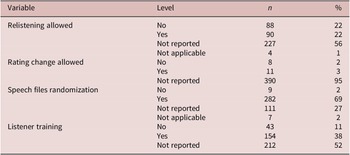
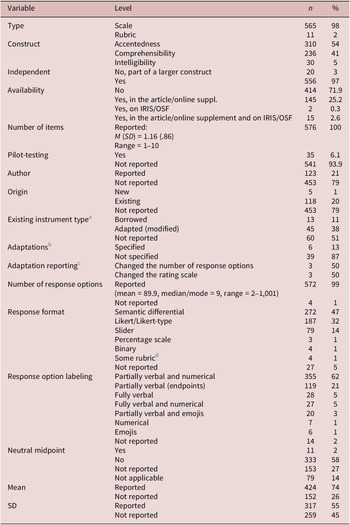


 Open access

