


Health-related quality of life (HRQoL) is the extent to which an individual is subjectively satisfied with life and the experience of pleasure despite the presence of disease.Reference Benedict, Wahlig and Bakshi 1 Persons living with multiple sclerosis (PLWMS) report lower HRQoL compared with the general population. This is because of physical impairment, cognitive impairment, mood dysfunction, pain, fatigue, sexual dysfunction, spasticity, elimination problems and sleep difficulties.Reference Kargiotis, Paschali, Messinis and Papathanasopoulos 2 Multiple sclerosis (MS) can also negatively affect professional and social life through loss of employment and decreased participation in recreational activities. Therefore, finding easy-to-implement and effective interventions for symptom management that are acceptable to PLWMS is important given its severe, burdensome and unpredictable nature. This paper includes only a selective sampling of the literature in this rapidly growing area of research.
A characteristic that may assist people in maintaining higher HRQoL is trait mindfulness—the innate (but potentially modifiable) ability to pay attention, on purpose, in the present moment, non-judgementally. Trait mindfulness is negatively associated with psychological distress, rumination and social anxietyReference Carmody and Baer 3 and is reported to moderate the relationship between pain and depressive symptoms.Reference Poulin, Romanow and Rahbari 4 The objective of this cross-sectional exploratative study was to determine whether trait mindfulness is related to HRQoL and other wellness variables in PLWMS. It was hypothesized that levels of mindfulness would positively correlate with HRQoL and inversely relate to depression, anxiety, fatigue, subjective cognitive dysfunction and pain.
The study was approved by the Ottawa Health Science Network Research Ethics Board (Protocol #20140197-01H) and participants were recruited from The Ottawa Hospital MS Clinic. To be eligible, patients had to (1) be between 18 and 65 years of age, (2) have clinically definite multiple sclerosis (McDonald criteria), (3) be fluent in English and (4) agree to be contacted for research. Patients who had consented to participate were initially contacted by phone and were subsequently sent a link to the online survey by email once appropriate informed consent was received.
The following demographic and medical characteristics were collected: age, gender, type of MS and most recent Expanded Disability Status Scale (EDSS) score. In addition, participants completed the following questionnaires: The Multiple Sclerosis Quality of Life Inventory (MSQLI), composed of 10 well-established psychometrically sound scales measuring fatigue, pain effects and self-perceived cognitive deficits; The Patient Health Questionnaire-9 (PHQ-9), a validated nine-item scale evaluating the severity of depressive symptoms; The Generalized Anxiety Disorder-7 (GAD-7), a seven-item questionnaire evaluating anxiety; and the Five Facet Mindfulness Questionnaire (FFMQ), evaluating the five theoretical subfacets of mindfulness—non-reactivity to inner experience, observing, describing, acting with awareness and non-judging of experience.
Pearson’s two-tailed bivariate correlations were used to evaluate the relationship between mindfulness and the other factors indicated (HRQoL, mood and so on). In addition, an adjusted linear regression model was used to further explore the relationship among the five facets of mindfulness and their predictive strength on variables of interest. All analyses were completed using SPSS version 20; significance was set at p<0.05. To achieve sufficient statistical power, a minimum sample size of 44 (level of significance=0.05, effect size=0.54 and power= 0.8) was required.Reference Grossman, Kappos, Gensicke, D’Souza, Mohr and Penner 5
A total of 156 patients were approached. All 84 PLWMS who met inclusion criteria consented to participate; 52 PLWMS (39 women and 13 men; mean age 47.00 [10.51] years, ranging from 26 to 67; mean EDSS 2.41 [2.15], ranging from 0 to 8) completed the questionnaires. There were 36 participants with relapsing-remitting MS, 10 with secondary-progressive, 4 with primary-progressive, 1 with clinically isolated syndrome and for 1 participant the diagnosis was not available.
Results revealed that some facets of trait mindfulness (i.e. describe, act with awareness, non-judgement, non-reactivity) were positively correlated with the mental health and role-emotional aspects of HRQoL (Table 1). Act with awareness, non-judgement, and non-reactivity were negatively correlated with depression and anxiety, with describe also being negatively correlated with depression (Table 2). Table 2 also demonstrates that various facets of trait mindfulness are negatively correlated with fatigue, perceived cognitive deficits and, to a lesser degree, pain experience. Notably, perceived cognitive deficits demonstrated the strongest negative correlation (r=−0.57, p<0.0001) with the FFMQ total score. Last, significant regression models emerged for all variables of interest, suggesting that all components of trait mindfulness together can predict mood, fatigue, pain experience and perceived cognitive deficits (Table 3). Regression models for depression and anxiety did not reveal specific predictor variables, suggesting that there is a significant degree of collinearity between the various components of mindfulness practice (i.e. one’s ability to observe one’s experience is closely related to one’s ability to describe that experience).
Mindfulness correlations with quality of life as measured by the Multiple Sclerosis Quality of Life Inventory (MSQLI)
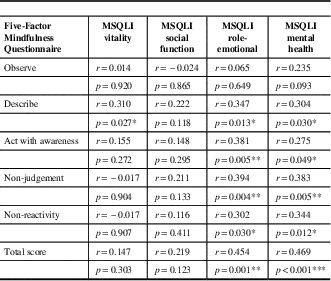
*p<0.05; **p<0.01; ***p<0.001.
Mindfulness correlations with mood, pain, fatigue and perceived cognition
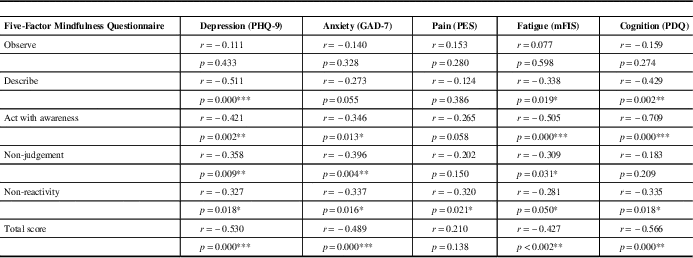
GAD-7=Generalized Anxiety Disorder-7; mFIS=Modified Fatigue Impact Scale; PDQ=Perceived Deficits Questionnaire; PES=Pain Effects Scale; PHQ-9=The Patient Health Questionnaire-9.
*p<0.05; **p<0.01; ***p<0.001.
Exploratory analysis
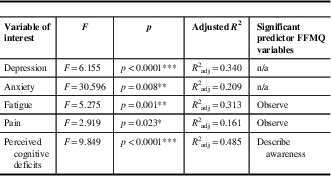
FFMQ=Five Facet Mindfulness Questionnaire.
*p<0.05; **p<0.01; ***p<0.0001.
“Mindfulness” is conceptualized as effectively reflecting on the present moment in an open and intentional manner. It is a practice that is achieved through observing the breath, body scanning, meditation, attention shifting and mindful movement. These and other practices are the core meditation practices in mindfulness-based stress reduction and mindfulness-based cognitive therapy. Classified as a holistic treatment, mindfulness-based interventions (MBI) are now frequently used for several disorders such as anxiety, depression, skin diseases, pain, immune disorders, hypertension and diabetes.Reference Poulin, Romanow and Rahbari 4 Potential benefits of the practice include improved sustained attention, emotional regulation, self-awareness and openness to experience. Trait mindfulness, a person’s characteristic or baseline level of mindfulness, affects interpersonal behavior by promoting self-expression and lowering anxiety in social situations, as well as increasing empathy.Reference Dekeyser, Raes, Leijssen, Leysen and Dewulf 6
The results from our analysis demonstrated that PLWMS with higher levels of trait mindfulness experience better psychological health and better HRQoL. On the administered measures, those who are more mindful are less likely to report symptoms of depression and anxiety, are less likely to report fatigue, report less pain experience and are less likely to report cognitive dysfunction. When maintaining a mindful orientation, attention is directed to the present moment, thus allowing the individual to refrain from ruminating over past events, or continuously thinking about the future. Despite the limitations associated with this study including the non-experimental design and the small sample size, the results echo others where mindfulness is implicated as an important protective factor against depression,Reference Poulin, Romanow and Rahbari 4 pain interference,Reference Senders, Borgatti, Hanes and Shinto 7 fatigue,Reference Grossman, Kappos, Gensicke, D’Souza, Mohr and Penner 5 as well as emotional distress and trait anxiety.Reference Crescentini, Matiz, Cimenti, Pascoli, Eleopra and Fabbro 8
Given the association between trait mindfulness and wellness-related variables in MS, there is a need for further interventional research to determine whether trait mindfulness can be enhanced in this population, thereby potentially having a positive impact on HRQoL. Mindfulness-based interventions have been incorporated into complimentary alternative medical treatment programs for PLWMS and are now recommended in the NICE guidelines for MS. After completing a course in Mindfulness Based Stress Reduction, PLWMS experience increased QoL, fewer depressive symptoms and less fatigue.Reference Blankspoor, Schellekens, Vos, Speckens and de Jong 9
Current data document clear associations among mindfulness sub-facets and factors affecting HRQoL. Specifically, the ability to act with awareness, maintenance of an open and non-judgemental perspective and the ability to describe experience demonstrate potential for influencing HRQoL, mood, perceived cognitive deficits and fatigue. In addition, research on the potential for MBI to influence objective cognition in PLWMS is also needed given that this area has demonstrated promise in other populations and has not been currently explored within the MS literature.
Those with high trait mindfulness are able to demonstrate attention, awareness and acceptance of present moment situations, outcomes, sensations and feelings—skills that some identify as essential ingredients contributing to psychological well-being.Reference Bogosian, Hughes, Norton, Silber and Moss-Morris 10 Incorporating mindfulness into the continuum of MS care may thus prove useful in providing patients with effective skills to assist in ameliorating debilitating symptoms (e.g. mood dysfunction, fatigue, perceived cognitive impairment, subjective pain).
Acknowledgments
The authors would to thank the participants for their time and for their dedication to MS research.
Statement of Authorship
OM: participant recruitment, data management, analyses, and manuscript preparation. HM: project conception, participant recruitment, and manuscript editing. PAP: project conception, statistical support, and manuscript editing. AMS: project conception and manuscript editing. LASW: project conception, participant recruitment, data management, analyses, manuscript preparation, and manuscript editing.
Disclosures
The authors have nothing to disclose.



