



The WHO and the FAO have identified high intake of energy-dense micronutrient-poor foods as a ‘convincing causative factor of weight gain’( 1 ). This category typically includes snack foods such as potato chips, chocolate and cookies. According to the WHO, a high intake of sugar-sweetened soft drinks may also increase body weight and promote obesity( 1 ). Overweight in childhood is associated with short-term and long-term physical and psychological morbidity( Reference Reilly and Kelly 2 , Reference Reilly, Methven and McDowell 3 ) and is likely to track into adulthood( Reference Singh, Mulder and Twisk 4 ). Independent of a high energy intake, high intakes of fat, sugar and salt from energy-dense snack foods (EDSF) or energy-dense drinks (EDD) may also result in harmful physical conditions (e.g. high blood pressure and high LDL-cholesterol) and diseases (e.g. diabetes, CVD and dental caries)( 1 ). There are indications that these dietary habits persist over time( Reference Totland, Gebremariam and Lien 5 , Reference Pearson, Salmon and Campbell 6 ).
Although there is no universally accepted definition of snack foods( Reference Gregori, Foltran and Ghidina 7 – Reference Johnson and Anderson 9 ), several nutrition institutes, including the Netherlands Nutrition Centre (NNC), distinguish core foods (e.g. fruit, vegetables and bread) from non-core foods (e.g. soft drinks, sauces and snacks)( 10 ). Due to the inconsistencies in definitions, some studies on snacking included the intake of all foods, including fruit and vegetables (e.g. reference Reference Kerr, Rennie and McCaffrey11), while others focused on non-core foods only (e.g. reference Reference Macdiarmid, Loe and Craig12). The EDSF and EDD investigated in the present study belong to this non-core foods category. The NNC recommends a maximum daily consumption of 837–1255 kJ (200–300 kcal) from non-core foods, depending on age and sex( 10 ).
Policy makers and health promotion practitioners would benefit from information on the amounts of EDSF and EDD consumed and on risk groups, eating occasions, places of consumption and consumed types of food and drink. For several dietary behaviours, this information is available (e.g. reference 13), but few studies focus on EDSF and EDD and use representative samples of children and recent data. Macdiarmid et al.( Reference Macdiarmid, Loe and Craig 12 ) used national survey data collected in 2006 to investigate snacking patterns among Scottish children. They found a median number of 2·0 snacks/d( Reference Macdiarmid, Loe and Craig 12 ). Bell et al.( Reference Bell, Kremer and Magarey 14 ) reported that in 1995 the average proportion of energy from non-core foods and drinks in the daily energy intake of Australian children aged 5–12 years was over 40 % for non-core foods and over 30 % for non-core drinks. A recent European study reported that soft drink consumption among Dutch children aged 10–12 years was higher than that of their peers in six other European countries( Reference Brug, van Stralen and te Velde 15 ). A recent report on the Dutch National Food Consumption Survey demonstrated that children aged 7–11 years consume almost 600 g of sugar-sweetened beverages daily( Reference Buurma-Rethans, Fransen and van Rossum 16 ). Studies among various Dutch samples have shown means of nine to ten EDSF events per week( Reference Van Strien, van Niekerk and Ouwens 17 , Reference Rodenburg, Kremers and Oenema 18 ).
Children from low socio-economic backgrounds have been found to be at risk for high EDSF and EDD consumption( Reference Craig, McNeill and Macdiarmid 19 , Reference Totland, Lien and Bergh 20 ). Differences in intakes between boys and girls and age groups have also been investigated( Reference Macdiarmid, Loe and Craig 12 , Reference Brug, van Stralen and te Velde 15 , Reference Rangan, Randall and Hector 21 ), but results are contradictory. Information concerning the occasions at which food is consumed has been reported in several studies. In particular, dietary patterns on weekdays have been compared with weekend days( Reference Rothausen, Matthiessen and Andersen 22 , Reference Rockell, Parnell and Wilson 23 ) and the importance of after-school snacking has been highlighted( Reference Rockell, Skidmore and Parnell 24 , Reference Gilbert, Miller, Olson and St Pierre 25 ). There is little information available on the places where EDSF and EDD are consumed, although home and school seem most common( Reference Briefel, Wilson and Gleason 26 , Reference Kerr, McCrorie and Rennie 27 ). Some studies have reported the most commonly consumed types of EDSF and EDD, but their results are hard to compare due to differences of categorization( Reference Kerr, Rennie and McCaffrey 11 , Reference Rangan, Randall and Hector 21 ).
The current study aimed to describe the EDSF and EDD consumption of children aged 7–12 years in the Netherlands. Results can inform public health policies and interventions, and contribute to the international literature. The specific research aims of the study were to:
-
1. describe what quantities of EDSF and EDD children consume per day in terms of events, amounts and energy;
-
2. test if there are differences in EDSF and EDD consumption between sociodemographic subgroups and BMI subgroups; and
-
3. describe at what type of eating occasions and in what places children consume EDSF and EDD, and which types of EDSF and EDD are consumed.
Methods
Data were derived from the most recent Dutch National Food Consumption Survey, the DNFCS 2007–2010( Reference Van Rossum, Fransen and Verkaik-Kloosterman 28 ). That survey was commissioned by the Dutch Ministry of Health, Welfare and Sport and coordinated by the Dutch National Institute for Public Health and the Environment. Initially, 5502 members of a consumer panel aged 7–69 years were invited to participate and data collection took place through a market research agency (GfK Panel Services). In total, 3819 persons participated, 860 of whom were 7–12 years old.
Data collection
Data on food consumption were collected by trained dietitians by means of two 24 h dietary recalls using the EPIC-Soft software program( Reference Slimani, Ferrari and Ocke 29 ). Food products were matched with products from the Dutch Food Composition Database (NEVO)( 30 ). Children were interviewed face-to-face at home twice, in the presence of at least one parent or caregiver. There was an interval of about 4 weeks between the two interviews. Data collection was evenly distributed over the seasons and days of the week. In addition to the interviews, the children were given written questionnaires to assess demographic variables including age, sex, height and weight, employment status and country of birth of both parents, household income and household size. Information on respondents’ place of residence (in terms of region and degree of urbanization) and the educational level of the head of the household was already known to the marketing research agency. A report on the full DNFCS 2007–2010, including the data collection method, is available( Reference Van Rossum, Fransen and Verkaik-Kloosterman 28 ).
Definitions of energy-dense snack foods and energy-dense drinks
EDSF were defined using the type of eating occasion (during meals or between meals), as self-designated by the study participants, and using a food classification( Reference Bell, Kremer and Magarey 14 ) from the NNC. First, all foods classified as ‘snacks’ according to the NNC were identified as EDSF. The NNC defines snacks as foods that are meant for consumption between main meals. They include potato chips, nuts, savoury snacks, deep-fried snacks, cookies, pastry, sweets, chocolate, ice creams and certain types of dessert. Second, the type of eating occasion was taken into account for foods which often constitute or are part of a meal in the Netherlands, such as pizza, deep-fried snacks, including French fries and hamburgers, and ice creams. Hence, these types of food were defined as EDSF only when consumed between meals. Third, similar EDSF consumed within 60 min were considered to be part of the same snacking event and coded as such. Fourth, foods (both core foods and non-core foods) eaten in conjunction with an EDSF (e.g. hamburger with bun) were also considered to be part of the same snacking event and the total energy involved in this snack event was counted.
EDD included in the present study were soft drinks and squash (drinks prepared from concentrated fruit syrups mixed with water), irrespective of the type of eating occasion. These drinks are included in the ‘soft drinks’ category of the non-core food group. Soft drinks with both sweeteners and added sugars were only included if the carbohydrate content was more than 2 g per 100 g( Reference Buurma-Rethans, Fransen and van Rossum 16 ). Sugar-free beverages and fruit juices were not included in the definition of EDD.
Data analysis
BMI was calculated according to age- and sex-specific cut-off values( Reference Van Buuren 31 , Reference Hirasing, Fredriks and van Buuren 32 ) and divided into underweight, normal weight and overweight (including obese). Based on definitions from Statistics Netherlands, the variables ethnicity, educational level of mother and education level of father were created( Reference Keij 33 , 34 ). Ethnicity consisted of three categories: native Dutch, Western immigrants and non-Western immigrants. Educational levels were defined as follows: low (primary school, lower vocational, low or intermediate general education), intermediate (intermediate vocational education and higher general education) and high (higher vocational education and university). Household income was assessed by nineteen categories of net income per month, which were reduced to three categories by splitting into tertiles (i.e. low, <€1700 net monthly; intermediate, ≥€1700 to <€2500 net monthly, high, ≥€2500 net monthly). Degree of urbanization was indicated by the number of addresses per square kilometre (i.e. low, <1000 addresses/km2; intermediate, ≥1000 and <1500 addresses/km2; high, ≥1500 addresses/km2).
Descriptive analyses were used to describe the sample according to demographics and consumption in terms of the types of EDSF and numbers of EDSF events, types and amounts of EDD, energy intake from EDSF and EDD, the type of eating occasion and place of consumption. Descriptive statistics for the amount of, and energy from, EDSF and EDD were weighted for small deviations from the general Dutch population regarding sociodemographic characteristics (i.e. region where household is located, urbanization of household location and educational level of the household head), as well as for day of the week and the season of data collection. The weighing factor was derived by using census data from Statistics Netherlands (2008)( 35 ).
Differences in intakes (mean number of EDSF events per day, mean EDD intake in millilitres per day, and mean energy intake from EDSF and EDD events per day) according to age, sex, BMI, ethnicity, household income, degree of urbanization, educational level of the mother and father, employment status of the mother and father, and household size were identified using ANCOVA with age as a covariate while weighting for small deviations from the general Dutch population and moment of data collection. If the F test showed a P value <0·05, Bonferroni post hoc tests were performed. Cohen’s d effect sizes for significantly different subgroups were calculated using group means and standard errors produced by the ANCOVA. Effect sizes were termed according to the classification of Lipsey( Reference Lipsey 36 ): small (≤0·32), medium (0·33–0·55) and large (>0·56). In order to determine the relative importance of the sociodemographic factors in explaining total EDSF and EDD intake and EDSF and EDD intake at home, weighted backward linear regression analyses were performed. To investigate determinants of intake at home, we created two new dependent variables called ‘relative EDSF consumption at home’ and ‘relative EDD consumption at home’, to rule out the influence of total consumption. These new variables were calculated by dividing the consumption at home by the total consumption. The intakes over two days were averaged for the analyses related to the amount of foods and drinks consumed. All analyses were conducted using the statistical software package IBM SPSS Statistics for Windows, version 20·0.
Results
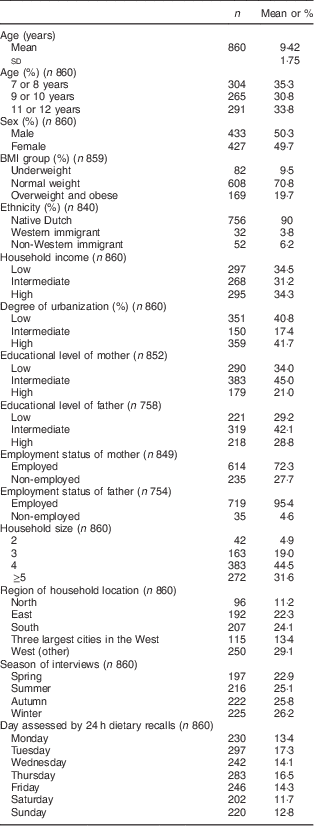
The sample consisted of 860 children, with fewer respondents in the 9–10 years category than in the youngest and oldest age categories (Table 1). Boys and girls were evenly distributed, and 71 % of the sample had a normal weight, while 20 % were overweight and 10 % were underweight. Overweight children and children of Dutch native ethnicity were somewhat over-represented, compared with the general Dutch population( 35 , Reference Schonbeck, Talma and van Dommelen 37 ). Compared with the general Dutch population, mothers and fathers with a high educational level were over-represented, while fathers and mothers with a low educational level were under-represented( 35 ). About 70 % of the mothers and more than 90 % of the fathers were employed. Almost half of the households consisted of four persons. The distribution of households across regions was comparable to that of the general Dutch population( 35 ).
Characteristics of the study sample: children aged 7–12 years, Dutch National Food Consumption Survey 2007–2010
Consumption of energy-dense snack foods and energy-dense drinks
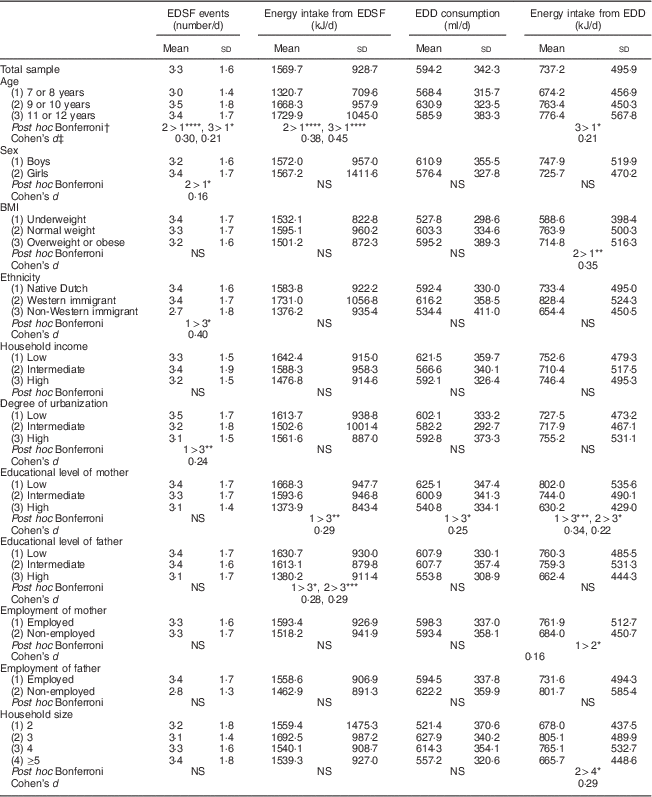
The mean number of EDSF events for the total sample was 3·3 (sd 1·6) per day (Table 2). The mean daily energy intake from EDSF was 1569·7 (sd 928·7) kJ for the total sample. The average amount of EDD consumed by the total sample was 594·2 (sd 342·3) ml/d. The mean energy intake from EDD for the total sample was 737·2 (sd 495·9) kJ/d.
Mean consumption of EDSF and EDD by sample characteristics among children aged 7–12 years, Dutch National Food Consumption Survey 2007–2010
EDSF, energy-dense snack food; EDD, energy-dense drink.
Analyses were weighted for small deviations in sociodemographic characteristics, day of the week and season of data collection; age was included as a covariate.
*P<0·05, **P<0·01, ***P<0·005, ****P<0·001.
† ANCOVA without age as a covariate.
‡ Cohen’s d values were calculated from subgroup means and standard errors produced by ANCOVA (with age as a covariate): Cohen’s
 $$ \quad {d={({\bar{x}_{a} {\minus}\bar{x}_{b}) } \Big/\{\sqrt {{{\left[ {\left( {n_{a} {\minus}1} \right)\left( {SE_{a} \sqrt {n_{a} } } \right)^{2} {\plus}\left( {n_{b} {\minus}1} \right)\left( {SE_{b} \sqrt {n_{b} } } \right)^{2} } \right]} \over {(n_{a} {\plus}n_{b} )}}} }}}.$$
The mean total energy intake from EDSF and EDD was 2306·8 (sd 1113·8) kJ/d (about 550 kcal/d) and 91·1 % of the children did not comply with the recommendation of the NNC (a maximum of 837–1255 kJ (200–300 kcal) from non-core foods per day, depending on age and sex( Reference Totland, Gebremariam and Lien 5 )).
Subgroup differences in energy-dense snack food and energy-dense drink consumption
The 9- and 10-year-olds (P<0·001) and the 11- and 12-year-olds (P=0·038) had significantly more events than the 7- and 8-year-olds. Girls had significantly more events per day than boys (P=0·018). Children of native Dutch ethnicity had significantly more events per day than non-Western immigrants (P=0·020) and children living in low-urbanization areas had more EDSF events than children living in highly urbanized areas (P=0·005). Cohen’s d values of these differences were small to medium (ranged from 0·16 to 0·40; Table 2).
Children from the two older age categories had higher energy intake from EDSF than children from the youngest age category (both P<0·001). Children of mothers with a low educational level consumed significantly more EDSF in kJ/d than children of highly educated mothers (P=0·007). Children of fathers with low and intermediate educational levels consumed significantly more energy EDSF in kJ/d than children of highly educated fathers (P=0·012 and P=0·004, respectively). Cohen’s d values of these differences were small to medium (ranged from 0·28 to 0·45; Table 2).
Children of mothers with a low educational level consumed significantly more EDD in ml/d than children of mothers with a high educational level (P=0·027, Cohen’s d=0·25; Table 2).
More energy from EDD was consumed by children aged 11–12 years (P=0·037) than by the youngest children. Children with a normal weight had higher energy intakes from EDD (P=0·008) than underweight children. Children of mothers with a low and intermediate educational level (P=0·001 and P=0·041, respectively), children of employed mothers (P=0·034) and children from three-person households (P=0·024) consumed relatively more energy from EDD. Cohen’s d values of these differences were small to medium (ranged from 0·16 to 0·35; Table 2).
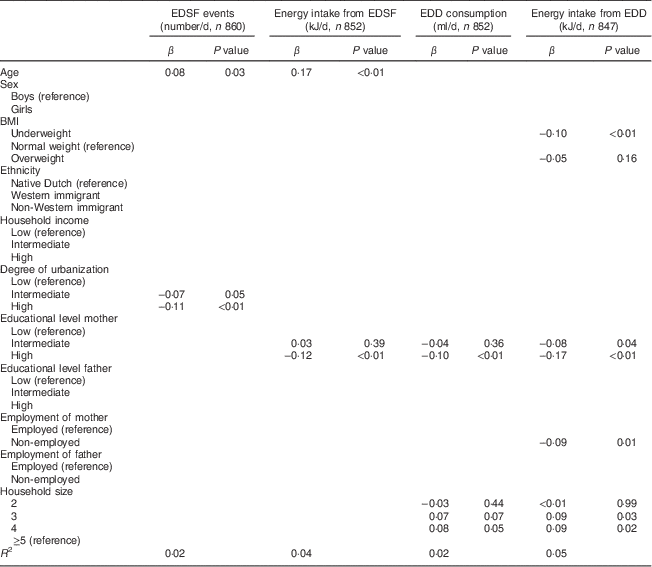
Age and the degree of urbanization were found to be significant correlates of the number of EDSF events after backward linear regression analyses (Table 3). With regard to energy intake from EDSF, the most important sociodemographic factors were age and the mother’s educational level. Educational level of the mother was also a significant correlate of EDD consumption together with household size, both in terms of amount and energy. Energy intake from EDD was additionally explained by the child’s BMI and mother’s employment.
Relative importance of child background characteristics in explaining EDSF and EDD consumption, children aged 7–12 years, Dutch National Food Consumption Survey 2007–2010
EDSF, energy-dense snack food; EDD, energy-dense drink.
Analyses were weighted for small deviations in sociodemographic characteristics, day of the week and season of data collection.
Type of eating occasions, places of consumption and consumed types
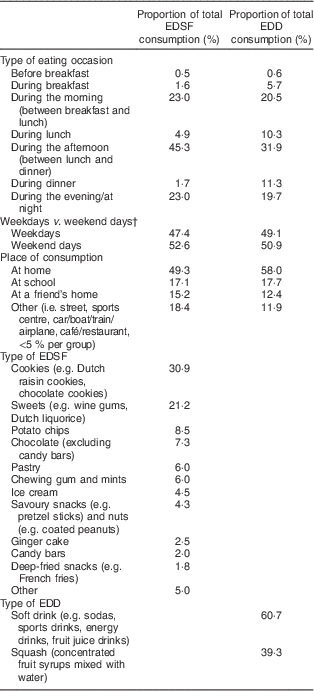
Almost half of the EDSF events took place in the afternoon and at home (Table 4). Cookies were consumed in one-third of all EDSF events and sweets in one-fifth of all EDSF events. Cookies included for instance Dutch raisin cookies, chocolate cookies and spiced cookies (i.e. Dutch windmill cookies). Sweets included mainly wine gums, Dutch liquorice, lollipops and boiled sweets. Almost one-third of the EDD were consumed in the afternoon. The majority of these drinks were consumed at home. The majority of EDD consumed were soft drinks, which included sodas such as coke and orangeade, fruit juice drinks, sports drinks and energy drinks.
Proportions of EDSF and EDD consumed according to eating occasion, place and type, children aged 7–12 years, Dutch National Food Consumption Survey 2007–2010
EDSF, energy-dense snack food; EDD, energy-dense drink.
† Percentages based on cases with one recall day during the week and one recall day during the weekend (n 294).
Backward linear regression analyses showed that children living in large households (i.e. five persons) consumed a greater proportion of EDSF at home than children living in small households (i.e. two persons; β=−0·11, P=0·002, R 2=0·01). These analyses also showed that children of unemployed mothers consumed a greater proportion of EDD at home than children with employed mothers (β=0·07, P=0·03, R 2=0·01) and that children living in low urbanized areas consumed a greater proportion of EDD at home than children living in high urbanized areas (β=0·02, P=0·03, R 2=0·01).
Discussion
The current study examined the consumption of EDSF and EDD among Dutch children in terms of the amounts consumed, type of eating occasions, places of consumption and consumed types. The results demonstrated that, on average, Dutch children aged between 7 and 12 years consumed more than three EDSF per day, yielding over 1500 kJ. The number of snacking events in the current study was higher than that found among Scottish children( Reference Macdiarmid, Loe and Craig 12 ) and in Dutch studies investigating specific sub-populations( Reference Van Strien, van Niekerk and Ouwens 17 , Reference Rodenburg, Kremers and Oenema 18 ). On average, the children consumed almost 600 ml of EDD daily, which is comparable to the outcomes of the European study by Brug et al.( Reference Brug, van Stralen and te Velde 15 ). In the current study, the average energy intake from EDD was more than 730 kJ/d. There are no similar studies available with which to compare our results concerning the energy intake from EDSF and EDD. Nevertheless, these results indicate that efforts to promote healthy dietary behaviours in Dutch children are justified and necessary, as their energy intakes from EDSF and EDD exceed the recommendations from the NNC( 10 ). The total mean intake from these foods and drinks was over 2300 kJ/d (about 550 kcal/d) and as many as 90 % of the children exceeded the recommendation (a maximum of 837–1255 kJ (200–300 kcal) from non-core foods per day, depending on age and sex( 10 )).
Older children had higher intakes of EDSF and EDD than younger children. Older children are generally likely to have higher total daily energy intakes than younger children, while the proportion of snack foods to the total daily energy intake may increase with age as well( Reference Rangan, Randall and Hector 21 ). Intervening just before the age of 9 years might be the most effective option to reduce EDSF and EDD consumption, as we found a steep rise in these behaviours from this age onwards, indicated by medium sized effects( Reference Lipsey 36 ). Considering all factors included in the present study, age appeared to be one of the most important predictors of EDSF consumption. Girls, children of native Dutch ethnicity and children living in low-urbanization areas had relatively more EDSF events. Macdiarmid et al.( Reference Macdiarmid, Loe and Craig 12 ) did not find differences in the number of snacking events between Scottish boys and girls. Future studies should examine sex differences in the portion sizes and types of EDSF and EDD consumed. We found no other studies that reported results concerning urbanization, and we have no a clear explanation for the difference we observed. The finding that non-Western immigrants had fewer EDSF events may be explained by the under-representation of this group in the sample, as non-Dutch speaking persons were excluded from the study. Brug et al.( Reference Brug, van Stralen and Chinapaw 38 ) found no differences in soft drink consumption between children of non-native ethnicity and native ethnicity in the Netherlands, which is in agreement with the current findings. The finding that overweight and obese children did not differ from normal-weight or underweight children in their intakes of EDSF and EDD may be caused by under-reporting( Reference Fisher, Johnson and Lindquist 39 ), dieting behaviour( Reference Hill and Pallin 40 ) or low levels of energy expenditure( Reference Rennie, Johnson and Jebb 41 ) by overweight children. Less favourable outcomes regarding EDSF and EDD consumption were found among children with lower educated parents. The mother’s educational level was found to be the most important sociodemographic predictor of a child’s EDD intake. Other studies have amply documented higher intakes of EDSF among children of low socio-economic status compared with children of high socio-economic status( Reference Brug, van Stralen and te Velde 15 , Reference Craig, McNeill and Macdiarmid 19 ). Hence, interventions to promote healthy eating should prioritize children with lower educated parents, taking into consideration the mechanisms that make these children consume more EDSF and EDD, such as food parenting practices, parental consumption and food availability at home( Reference Totland, Lien and Bergh 20 , Reference De Coen, Vansteelandt and Maes 42 , Reference Zarnowiecki, Dollman and Parletta 43 ). Children with mothers in employment had higher energy intakes from EDD than children with non-employed mothers. Earlier studies have also acknowledged the role of mothers’ working hours in children’s diets and found a positive association between maternal working hours and intakes of soft drinks and fast food( Reference Datar, Nicosia and Shier 44 ). The most plausible explanation for this finding is lack of time, as working mothers may have less time to prepare healthy meals( Reference Datar, Nicosia and Shier 44 ) or monitor their child’s dietary intake( Reference Gubbels, Kremers and Stafleu 45 ). Children living in households consisting of three individuals had a higher energy intake from EDD than children living in the largest households. Ayala et al.( Reference Ayala, Baquero and Arredondo 46 ) did not find a relationship between household size and soft drink consumption, but found a positive relationship between household size and snack food intake. Neither their study nor ours collected data on family composition (e.g. one-parent families), so it is possible that relationships between household size and dietary intakes interact with other factors.
Half of all EDSF and a third of the EDD events occurred in the afternoon, most often at home. The importance of after-school snacking has also been found among children in other countries( Reference Rockell, Skidmore and Parnell 24 , Reference Gilbert, Miller, Olson and St Pierre 25 ). Intervention objectives should therefore not be limited to reducing EDSF intake at schools. We found that children living in large households, children of unemployed mothers and children living in low urbanized areas had a relatively high proportional intake of EDSF or EDD at home. Probably, these children and their mothers spend more time at home. Still, research should pay more attention to factors underlying after-school snacking. Popular types of EDSF were cookies and sweets. These foods often contain nutrients that may have harmful effects, such as sugar and fat. Most EDD that were consumed consisted of soft drinks. Few studies have distinguished between snack food consumption during meals and consumption between meals. In the present study, there was a modest contribution of energy from snack foods consumed during meals and a moderate contribution of energy from EDD consumed during meals to the total consumption of these foods and drinks. Nevertheless, both could have unfavourable effects, as those foods and drinks may replace nutritious foods served at meals. The current study did not find major differences in intakes of EDSF and EDD between weekdays and weekend days, although several studies have observed such differences( Reference Macdiarmid, Loe and Craig 12 , Reference Rothausen, Matthiessen and Andersen 22 , Reference Bjelland, Lien and Grydeland 47 , Reference Hart, Raynor and Osterholt 48 ). In the current sample, differences between weekdays and weekend days might be present in the energy derived from these foods or drinks, or the types consumed. Additionally, differences in these behaviours could be captured in day-to-day variations, which might be explored in future studies.
It is likely that dietary patterns, and particularly the type of eating occasion and place of EDSF and EDD consumption, vary between countries due to differences in school hours and policies concerning school meals. In the Netherlands, primary schools usually start around 08:30 hours and end around 15:15 hours, with a short break in the morning and a one-hour break at lunchtime. Children may go home for lunch or may stay at school. The results of the present study should be interpreted in the light of this context.
The current sample is representative of the Dutch population in many characteristics. However, overweight children, children of native Dutch ethnicity and children with highly educated parents were somewhat over-represented. The method of data collection in the current study carries a certain risk of memory and recording biases( Reference Willett 49 ). However, these biases were minimized by using trained dietitians and a computer-based recording system. The data that were used probably do not fully represent habitual intake, as the habitual intake may deviate from reported recall days( Reference Mackerras and Rutishauser 50 ). However, reported intakes were based on two recall days, approaching habitual intake more accurately than a single 24 h recall( Reference Guenther, Dodd and Reedy 51 ).
Conclusions
The data from the present study demonstrate that snack food and drink consumption is highly prevalent among Dutch children. Health promotion efforts addressing these behaviours are warranted and can benefit from our findings regarding the specific groups at risk, eating occasions and places involving higher risks, and the types of foods and drinks that are frequently consumed. Particularly, focusing on children with low educated parents and on snacking at home after school offers the greatest potential to reduce snack food and drink intake.
Acknowledgements
Acknowledgements: Data analysed were from FCS2010_Core_20111125; part of the Dutch National Food Consumption Survey, performed by the National Institute for Public Health and the Environment (RIVM), Bilthoven. Financial support: This research received no specific grant from any funding agency in the public, commercial or not-for-profit sectors. Conflict of interest: None. Authorship: All authors contributed to the formulation of the research questions and the design of the study. D.W.M.G. performed the statistical analysis and drafted the first version of the manuscript. All authors made substantial contributions in improving the manuscript and read and approved the final manuscript. Ethics of human subject participation: The DNFCS 2007–2010 was conducted according to the guidelines laid down in the Declaration of Helsinki.



