

Introduction
Solar geoengineering refers to a group of proposed techniques that aim to reduce global warming by reflecting a portion of sunlight away from Earth. One prominent proposal is stratospheric aerosol injection (SAI), which mimics the cooling effect of volcanic eruptions by injecting reflective aerosols such as sulfur dioxide into the upper atmosphere to scatter sunlight (National Academies of Sciences, Engineering, and Medicine 2021). Climate scientists remain unsure how a sustained program of SAI would affect the ozone layer and local weather patterns; questions also remain about the potential health and environmental effects of spraying sulfuric acid or other aerosols into the atmosphere.
As solar geoengineering research has attracted more attention, critics have raised a further, more social scientific objection: will researching or even discussing solar geoengineering undermine public support for the vital work of decarbonization?Footnote 1 If the public learns that solar geoengineering can lessen the damage from climate change, there might be a weakening of public support for taking the necessary steps to reduce the concentration of greenhouse gases in the atmosphere, exacerbating the underlying problem and some of its consequences (such as ocean acidification). Keith (Reference Keith2000) refers to this possibility as “moral hazard;” others refer to crowding out (Cherry et al. Reference Cherry, Kallbekken, Kroll and McEvoy2021), lack of self-control (Wagner & Weitzman Reference Wagner and Weitzman2015), or risk compensation (Lin Reference Lin2013; Reynolds Reference Reynolds2015). Even if solar geoengineering is found to be effective and safe in engineering terms, deploying it could have a net negative impact if this moral hazard mechanism operates strongly enough. In that case, decarbonization should be the sole focus, and investigation of solar geoengineering (let alone deployment) should be discouraged.
Although some previous research has validated concerns about SAI and moral hazard (Raimi et al. Reference Raimi, Maki, Dana and Vandenbergh2019; Campbell-Arvai et al. Reference Campbell-Arvai, Hart, Raimi and Wolske2017; Andrews et al. Reference Andrews, Delton and Kline2022), other studies suggest that informing the public about SAI can instead serve as a “clarion call” that inspires greater support for decarbonization (Merk et al. Reference Merk, Pönitzsch and Rehdanz2016; Cherry et al. Reference Cherry, Kallbekken, Kroll and McEvoy2021), as we discuss below. Given these conflicting results and important limitations in previous work, we revisit the issue with a new study that builds on previous work while addressing some of its shortcomings. Our preregistered survey experiment assesses how exposing Americans to balanced information about solar geoengineering, either on its own or in conjunction with a message about decarbonization, affects support for mitigation policy and attitudes toward climate change. We also assess how these effects vary with respondents’ political ideology, concern about global warming, and attribution of global warming to human action (all measured pre-treatment).
We find no evidence that informing Americans about SAI affects average support for emissions reductions, even compared to a message emphasizing the importance of decarbonization. We also do not find that SAI information has more positive effects for liberal respondents, but we do find suggestive evidence that it increases support for mitigation policy among respondents who are less concerned about climate change. Turning to attitudes about climate change, we find that providing balanced SAI information increases average concern about global warming (though not when paired with the decarbonization message) and increases the perception that without emissions reductions we may end up “deploying unproven technologies with harmful consequences” to address global warming; it also decreases respondents’ confidence that technology will allow us to address global warming without emissions reductions. Together, our results suggest that informing people about SAI may make climate change seem like a more challenging, higher-stakes problem, especially among those who are initially relatively complacent about climate change.
Background
Theoretical considerations and prior empirical evidence yield conflicting expectations about how sharing information about SAI and related technologies might shape public attitudes toward climate change mitigation.
The moral hazard hypothesis suggests that informing the public about SAI could lead to an unwarranted decline in public support for decarbonization. Offered a temporary means of limiting global warming, such as SAI, the public may come to view costly emissions reductions as unnecessary. Consistent with this moral hazard hypothesis, Raimi et al. (Reference Raimi, Maki, Dana and Vandenbergh2019) found that reading a highly optimistic description of SAI could make Americans less supportive of policies that would reduce carbon emissions. Similarly, Campbell-Arvai et al. (Reference Campbell-Arvai, Hart, Raimi and Wolske2017) report that learning about carbon dioxide removal may reduce support for emissions reductions by diminishing the perceived threat of climate change.Footnote 2 Andrews et al. (Reference Andrews, Delton and Kline2022) find via incentivized games that subjects who are asked to make policy decisions expect others to engage in moral hazard behavior, discouraging the deployment of geoengineering technologies. Considering that SAI experts view SAI as a complement to aggressive emissions reductions (Keith Reference Keith2021; National Academies of Sciences, Engineering, and Medicine 2021), it is important to assess this moral hazard mechanism as one of the possible harmful unintended consequences of further research into SAI.
SAI information could have the opposite effect, however, increasing the desire to reduce emissions. As Merk et al. (Reference Merk, Pönitzsch and Rehdanz2016) noted, learning about SAI could act as a “clarion call.” The knowledge that experts are seriously considering spraying sulfuric acid into the atmosphere to block the sun’s rays could reinforce the belief that climate change is a serious problem. To the extent that SAI sounds like a risky technology that should be avoided, information about SAI may also make recipients more committed to reducing emissions as a way of making sure that SAI is never attempted. Consistent with this, Merk et al. (Reference Merk, Pönitzsch and Rehdanz2016) found that providing information on SAI increased German survey respondents’ average willingness to pay for carbon offsets. Similarly, in a US sample, Cherry et al. (Reference Cherry, Kallbekken, Kroll and McEvoy2021) found that providing information about solar geoengineering increased support for a carbon tax among respondents with egalitarian and communitarian worldviews.
Of course, SAI information could also have little average effect on attitudes toward decarbonization, whether because these attitudes are relatively fixed or because such information provokes a mix of conflicting reactions. Indeed, most recent studies appear to show minimal impacts of geoengineering information. In a US sample, Schoenegger & Mintz-Woo (Reference Schoenegger and Mintz-Woo2024) found that providing solar geoengineering information had no significant effect on support for emissions reductions measured by either behavioral choices or stated preferences. Similarly, Fairbrother (Reference Fairbrother2016) found that solar geoengineering information does not significantly impact trust in climate science or willingness to pay taxes on polluting energy in a UK sample, and Merk & Wagner (Reference Merk and Wagner2024) found no effect of including solar geoengineering information in appeals for climate action on Facebook, except when in conjunction with extreme messaging. Austin & Converse (Reference Austin and Converse2021) found no significant effect of reading a news article about solar geoengineering on commitment to mitigation efforts in a US sample, and Andrews et al. (Reference Andrews, Delton and Kline2022) also report no evidence of moral hazard among participants.Footnote 3
Our contribution
Our research seeks to contribute to the existing literature on the effects of SAI information in three principal ways.
First, while other studies (Merk et al. Reference Merk, Pönitzsch and Rehdanz2016; Fairbrother Reference Fairbrother2016; Cherry et al. Reference Cherry, Kallbekken, Kroll and McEvoy2021; Schoenegger & Mintz-Woo Reference Schoenegger and Mintz-Woo2024) examine the effect of providing SAI information in isolation, we use a factorial design that allows us to compare the effect of providing SAI information to the effect of providing a decarbonization message and to compare the effect of providing SAI information on its own to the effect of providing both messages. Critics of SAI (e.g., Thompson Reference Thompson2021; Vasquez Reference Vasquez2021) stress that we should keep a laser focus on decarbonization, while SAI researchers describe SAI as a possible complement to deep decarbonization (e.g., Keith Reference Keith2021; National Academies of Sciences, Engineering, and Medicine 2021). Our design allows us to compare the effects of SAI information on its own, a decarbonization message on its own, and a combined message.
Second, while previous studies (particularly Raimi et al. Reference Raimi, Maki, Dana and Vandenbergh2019; Merk & Wagner Reference Merk and Wagner2024) measured the effects of framing SAI in exaggeratedly positive or negative terms,Footnote 4 we focus on reactions to a neutral, balanced presentation of both SAI and decarbonization. Raimi et al. (Reference Raimi, Maki, Dana and Vandenbergh2019) established that describing SAI in highly optimistic terms (suggesting “we wouldn’t have to do much more” to mitigate climate change) could reduce support for decarbonization among Americans; a more moderate framing in the same study did not produce such an effect. Building on this more moderate framing (and similar to the framing in Schoenegger & Mintz-Woo (Reference Schoenegger and Mintz-Woo2024)), we present SAI much as it is presented by SAI experts (Keith Reference Keith2021) – as a potentially effective medium-term measure with acknowledged risks. Distinct from Raimi et al. (Reference Raimi, Maki, Dana and Vandenbergh2019)’s framings, our framing refrains from explicitly depicting SAI as either a substitute or a complement to emissions reductions, thus leaving it to respondents to draw their own conclusions about the implications of SAI for decarbonization efforts.
Third, we take important steps to advance the scientific rigor of studies on this topic. To our knowledge, ours is the first study on the effects of SAI information to be pre-registered, and after Raimi et al. (Reference Raimi, Maki, Dana and Vandenbergh2019), it will be the second to make its data publicly available on publication. Moreover, in two important studies in this literature (Merk et al. Reference Merk, Pönitzsch and Rehdanz2016; Cherry et al. Reference Cherry, Kallbekken, Kroll and McEvoy2021), the main regression analyses adjust for post-treatment variables, which could undermine the randomization and produce biased results (Montgomery et al. Reference Montgomery, Nyhan and Torres2018). By contrast, all control variables and moderators in our analysis are measured before treatment is applied.
Survey design
In this section, we explain the design of our survey. The exact questions appear in the Appendix.
Treatments
All respondents were shown a screen explaining how carbon emissions contribute to global warming (see Figure 2 in the Appendix). Our message combines a “blanket metaphor” explanation of the greenhouse effect (from Bergquist et al. (Reference Bergquist, Marlon, Goldberg, Gustafson, Rosenthal and Leiserowitz2022)) with a statement that past carbon emissions will continue to warm the planet for hundreds or even thousands of years (derived from Keith (Reference Keith2021), who calls this “the single most important fact about climate change”).
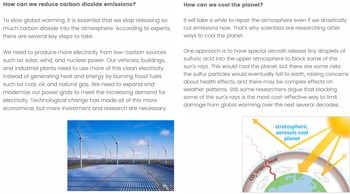
Respondents were then randomly assigned into one of four groups: (1) Control; (2) Decarbonization; (3) SAI; (4) Both. Respondents in the control group were not given any additional information. The decarbonization group was shown the message at left in Figure 1. It states that reducing emissions is essential, lists “key steps to take,” and shows an image of solar panels and wind turbines. The SAI group was shown the message at right in Figure 1. It states that emissions reductions will not immediately repair the atmosphere, so “scientists are researching other ways to cool the planet.” It then describes SAI and some of its risks and benefits, accompanied by a diagram showing sunlight being reflected into space by stratospheric aerosols. Respondents in the Both group saw the decarbonization information followed by the SAI information.Footnote 5
Treatments shown to survey participants: Decarbonization (left) and SAI (right).
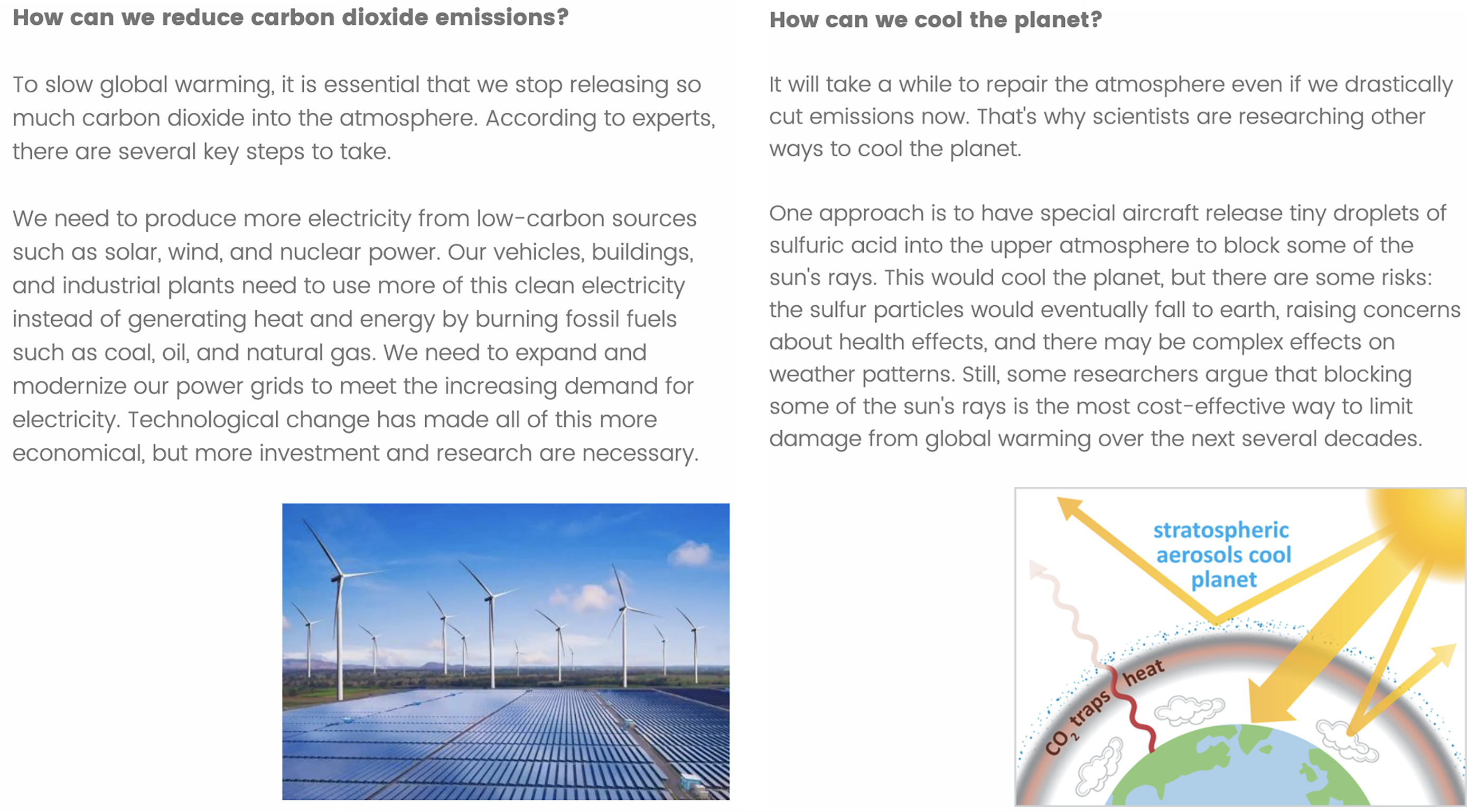
Figure 1 Long description
The left image is a photo of a wind farm with multiple wind turbines and solar panels on the ground, representing renewable energy sources. The right image is a diagram illustrating the concept of stratospheric aerosol injection (SAI). The diagram shows the Earth with arrows indicating sunlight being blocked by aerosols in the stratosphere, labeled as 'stratospheric aerosols cool planet.' The diagram also includes labels for 'CO2 traps heat' and 'sulfur particles,' indicating the process of reflecting sunlight to cool the planet.
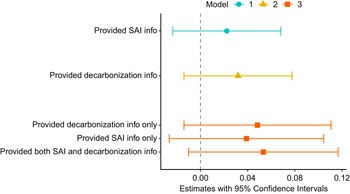
Effect of information treatments on support for emission reduction policies.
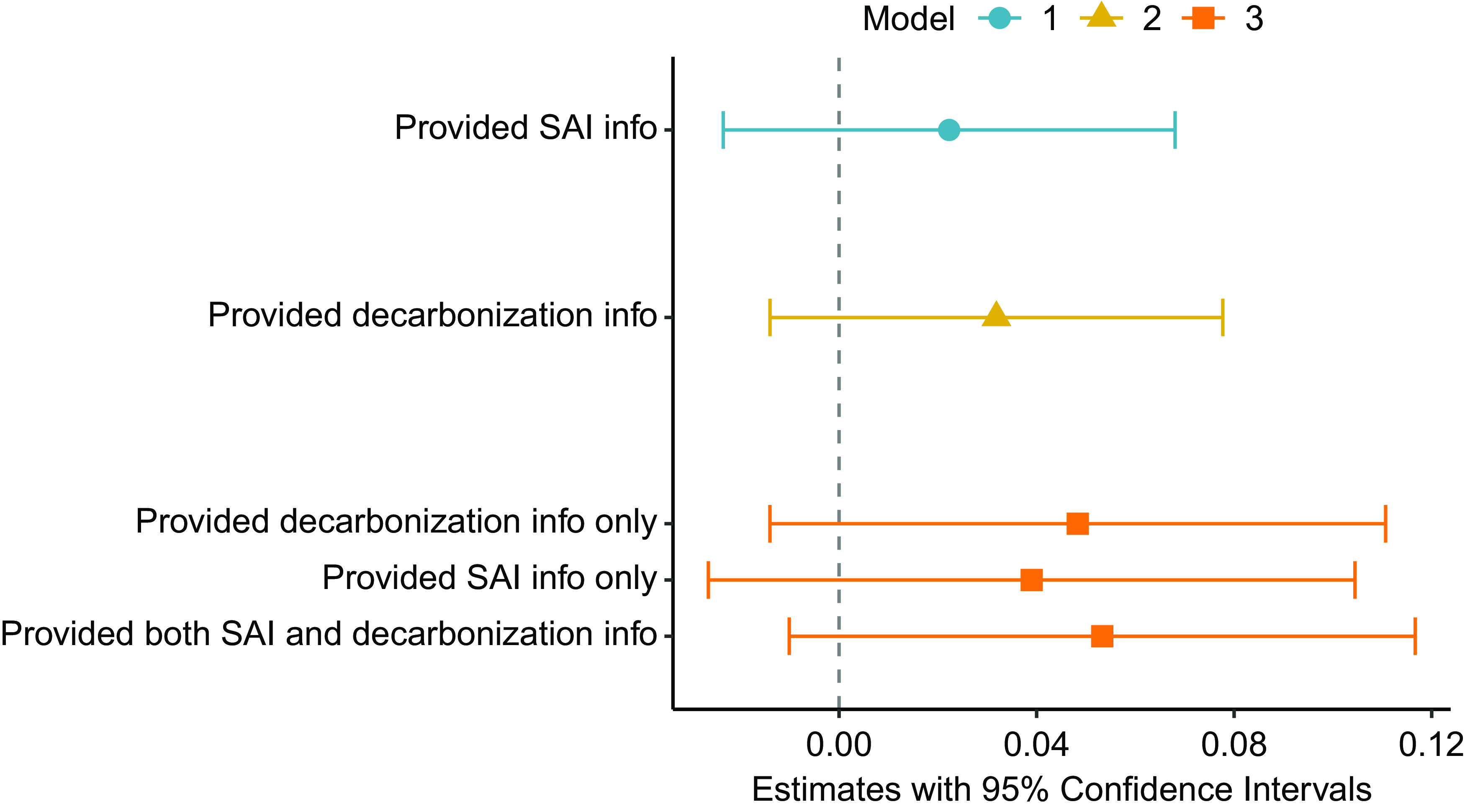
Figure 2 Long description
The line graph displays the effect of different information treatments on support for emission reduction policies. The x-axis represents various information treatments, including provided solar geoengineering information, provided decarbonization information, provided decarbonization information only, provided solar geoengineering information only, and provided both solar geoengineering and decarbonization information. The y-axis shows the estimates with ninety-five percentage confidence intervals. Three models are represented by different symbols and colors: Model 1 with a blue circle, Model 2 with a yellow triangle, and Model 3 with an orange square. Each model's data points are plotted along the x-axis with corresponding confidence intervals extending horizontally. The graph illustrates how different information treatments influence support for emission reduction policies, with varying levels of confidence intervals for each model.
Outcome measures
To measure support for a range of emissions reduction policies, we ask our respondents to assess eight possible US climate policies drawn from Raimi et al. (Reference Raimi, Maki, Dana and Vandenbergh2019) (international emissions treaty, stricter fuel efficiency standards, subsidies to renewable energy, a carbon tax, expanded nuclear power, energy conservation regulations, industrial emissions reductions, and clean energy research subsidies) at the very end of the survey. We convert support for each measure to a numerical 1-5 scale and average them to obtain an index of post-treatment support for emissions reduction policy.
To assess mechanisms by which SAI information could affect policy preferences, we asked additional questions after treatment but before the policy questions.Footnote 6 To tap into the “clarion call” mechanism highlighted by Merk et al. (Reference Merk, Pönitzsch and Rehdanz2016), we asked respondents to state how much (five points between “Not at all” and “A great deal”) they think global warming will affect them personally and how much it will negatively affect future generations. We convert the two responses to a numerical 1-5 scale and average them to obtain an index of post-treatment global warming concern.
To assess other mechanisms through which SAI information might affect policy preferences, we surveyed respondents’ agreement with each of the following statements:
1. Techno-threat: “If we don’t take action to reduce emissions now, then responding to global warming in the future is likely to require deploying unproven technologies with harmful consequences.” (SAI information could make salient a threat that respondents would seek to avoid, as suggested by Merk et al. (Reference Merk, Pönitzsch and Rehdanz2016).)
2. Belief in the efficacy of emissions reductions: “Humanity could limit future increases in the global average temperature by reducing emissions of carbon dioxide now.” (SAI information could strengthen respondents’ understanding of and belief in the greenhouse effect.)
3. Techno-fix: “Thanks to technology, there is a good chance that we will be able to completely solve the problem of global warming in the next 50 years without significantly reducing carbon dioxide emissions.” (SAI information could convince respondents that technology will solve climate change without the need for emissions reductions.)
Pre-treatment covariates
At the start of the survey, we asked respondents to assess their political ideology on a five-point scale from “Very liberal” to “Very conservative.” After reading our explanation of global warming but before seeing any treatment messages, all respondents were also asked how concerned they were about global warming, how much of global warming they think is caused by human activities, and whether they believe that they can “do something to address global warming.” All four pre-treatment questions were used as categorical prognostic covariates in regression analysis, as explained below.
Sample
We fielded our survey to 2,509Footnote 7 US residentsFootnote 8 on April 30, 2024, using CloudResearch Connect, an online survey panel. To counteract typical biases in internet panels, we specified quotas to obtain a 50-50 gender split and a 30-30-40 split between respondents who identify as Democrats, Republicans, and other (Independents, something else, prefer not to say).
Our pre-analysis plan stated that we would exclude respondents who completed the survey unusually quickly or slowly, conditional on treatment status (a total of 32 respondents), as well as those who missed an attention check question (an additional 139 respondents), given a satisfactory balance in the post-exclusion sample. To allay concerns about post-treatment bias caused by these exclusions (and to meet the journal’s submission guidelines), we deviate from this plan and report results for the full sample in the main text; all pre-registered results using the restricted sample appear in the Appendix (along with balance tests). The two sets of results are substantively identical.Footnote 9
Our sample is broadly representative of the US in terms of gender, partisanship, and race. It is younger than the population (with e.g., about 32% of respondents in their thirties, compared to around 18% of the population, and 3% of respondents over 70, compared to 15% of the population); it is also more educated, with about 40% holding BAs compared to about 22% of the population, and its distribution of household income is lower than that in the population. (See Appendix Figure 3 for further details on representativeness.)
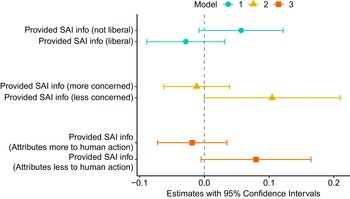
Heterogeneity in the effect of SAI information on support for emission reduction policies.
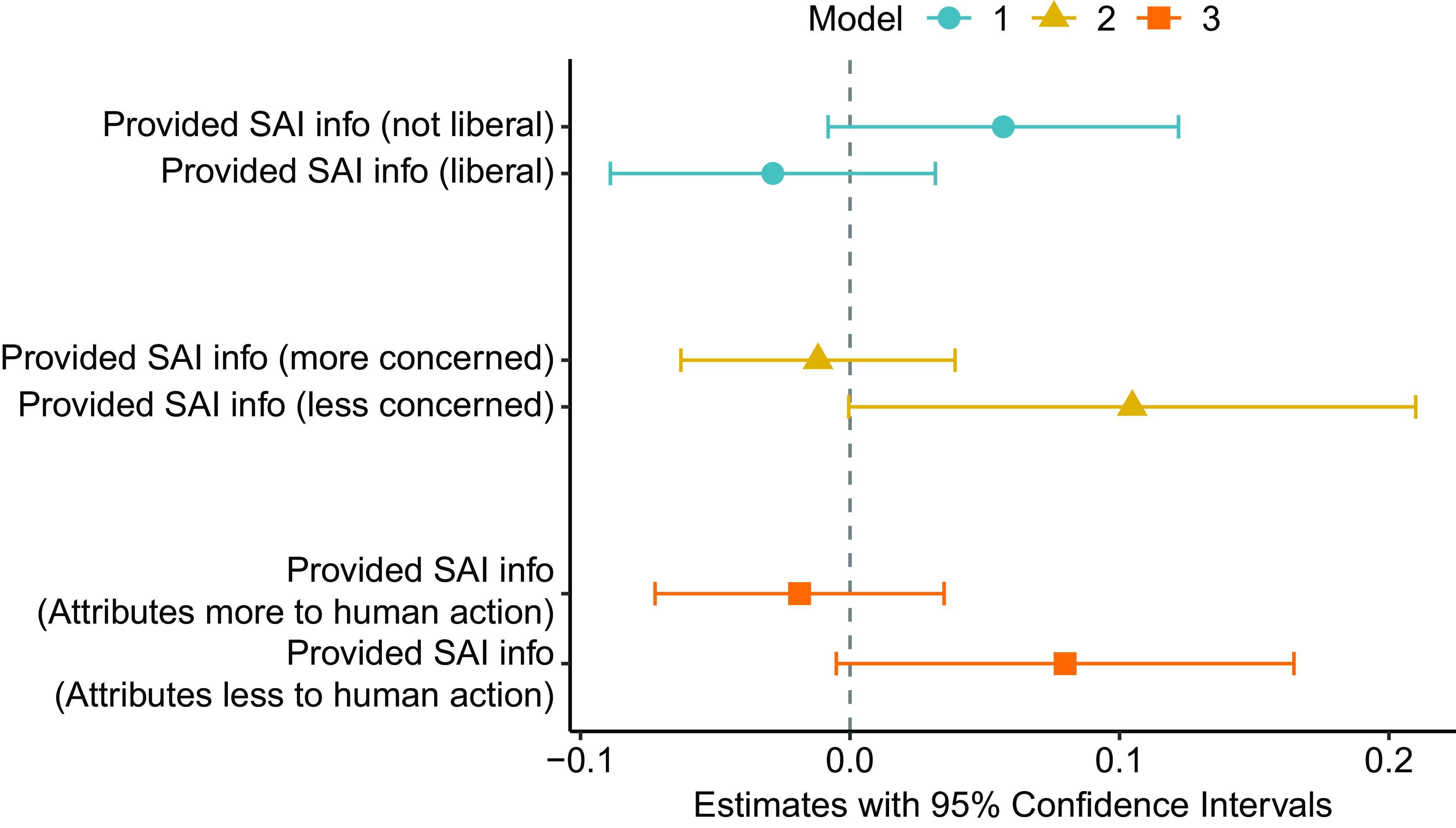
Figure 3 Long description
A line graph illustrates the heterogeneity in the effect of stratospheric aerosol injection (SAI) information on support for emission reduction policies. The x-axis represents the estimates with 95 percentage confidence intervals, ranging from negative 0.1 to 0.2. The y-axis lists different respondent groups: those who provided SAI information categorized by political ideology (liberal and not liberal), level of concern (more concerned and less concerned), and attribution of climate change to human action (more and less). Three models are depicted using different symbols and colors: Model 1 with teal circles, Model 2 with yellow triangles, and Model 3 with orange squares. Each data point shows the estimated effect size with horizontal lines indicating the 95 percentage confidence intervals. The graph reveals variations in support for emission reduction policies based on the provided SAI information across different respondent groups. All values are approximated.
Results
In all analysis, we use OLS regression with heteroskedasticity-robust (HC2) standard errors. Analysis of pilot data showed that all four pre-treatment variables (ideology, concern about global warming, attribution of global warming, and self-efficacy) predict support for climate mitigation policy, so following our pre-analysis plan, we include all four variables as prognostic covariates. Also, following our pre-analysis plan, we standardize all outcome variables so that all treatment effects are measured in standard deviations of the outcome variable.
Manipulation check
We expected that few respondents would be familiar with SAI and that the SAI information we provide would therefore substantially increase awareness of SAI. To check this, we asked respondents to indicate whether each of four technologies is viewed by some experts as a promising response to global warming. Two of the listed technologies are fanciful (“Pumping dry ice into the earth’s crust” and “Extracting silicates from agricultural soil”), while one describes SAI (“Releasing sulfur dioxide into the stratosphere”) and one is a component of decarbonization (“Converting heating systems to use electricity instead of gas”). Consistent with expectations, we find that about 70% of respondents who receive the SAI information indicate that “releasing sulfur dioxide into the stratosphere” is considered promising by some experts, compared to only about 20% of respondents who did not receive this information. By contrast, we do not find an effect of providing the decarbonization treatment on respondents’ recognition that electrifying heating systems is seen as promising. (Full results appear in Appendix Figure 4 and Table 1.) This suggests that (i) our respondents were mostly unaware of SAI before the experiment, (ii) many of those who received SAI information became aware of the technology as a result, and (iii) awareness of decarbonization/electrification is higher at baseline and was unaffected by our information treatments.
Effects of information on support for mitigation policy
Figure 2 reports the estimated effects of our information treatments on our index of support for emissions mitigation policy.Footnote 10 In model 1, we compare respondents who received SAI information (whether or not they also received the decarbonization information) to those who did not; in model 2, we compare respondents who received decarbonization information (whether or not they also received the SAI information) to those who did not; in model 3, we regress the outcome on the categorical treatment condition, thus comparing respondents across the four treatment conditions in our factorial experiment.
All the point estimates are positive, but none of the effects are significant at the .05 level, and magnitudes are small: e.g., the point estimate in model 3 suggests that providing both SAI and decarbonization information increases support for mitigation policy by 0.053 standard deviations compared to no information ( $p$
= 0.099).
$p$
= 0.099).
In the Appendix, we present an exploratory analysis assessing the effect of our information treatments on each of the policies in the index (Figure 5, Figure 6). We find significant positive effects of the decarbonization message and marginally significant effects of the SAI message on support for building nuclear power plants, as well as marginally significant positive effects of all messages on support for encouraging individuals to use less energy. Future confirmatory analysis could assess these effects.
Appendix Table 3 shows a version of the analysis in Figure 2 where we use raking to weight the sample to match population demographic margins.Footnote 11 As in the unweighted results, effects are null (though the point estimate of the effect of the SAI message is larger in the weighted sample).
Heterogeneous effects of SAI information on support for mitigation policy
Although SAI information did not significantly affect average support for mitigation policy (Figure 2), it may have larger effects in subgroups. Following our PAP, we assessed treatment effect heterogeneity by respondents’ political ideology (prompted by Cherry et al. (Reference Cherry, Kallbekken, Kroll and McEvoy2021)‘s finding that SAI information increased carbon tax support among more egalitarian and communitarian respondents) and by respondents’ concern about climate change and attribution of climate change to human causes (because we hypothesized that the “clarion call” effect would be larger for people who are initially more complacent about climate change). Figure 3 shows the results.
For respondents who self-identify (pre-treatment) as “Liberal” or “Very liberal,” we cannot reject the null hypothesis that providing SAI information has no effect (model 1). In fact, the point estimate suggests that SAI information might have a slightly negative effect for liberals and a slightly positive effect for others ( $p$
-value on the main effect: 0.086;
$p$
-value on the main effect: 0.086; $p$
-value on the difference: 0.059). This contrasts with Cherry et al. (Reference Cherry, Kallbekken, Kroll and McEvoy2021), who find that SAI information encourages support for a carbon tax among more egalitarian and communitarian respondents (many of whom likely self-identify as liberalsFootnote
12
) and not among others.
$p$
-value on the difference: 0.059). This contrasts with Cherry et al. (Reference Cherry, Kallbekken, Kroll and McEvoy2021), who find that SAI information encourages support for a carbon tax among more egalitarian and communitarian respondents (many of whom likely self-identify as liberalsFootnote
12
) and not among others.
For respondents who say they are “Not concerned at all” or “Slightly concerned” about global warming (pre-treatment), SAI information appears to increase their average support for mitigation policy by about .12 SD, though the difference between this effect and the effect for other respondents is not statistically significant ( $p$
= 0.051).
$p$
= 0.051).
Finally, for respondents in the bottom two quintiles in attributing global warming to human activity (pre-treatment), SAI information does not have a statistically significant effect on average support for mitigation policy, although the point estimate suggests that it slightly increases their average support. Again, the difference between this effect and the effect for other respondents is not statistically significant ( $p$
= 0.055).
$p$
= 0.055).
Although none of the differences are statistically significant, the estimated effect of SAI information on support for emissions reductions is consistently more positive for the subgroup of respondents with lower average support for emissions reductions (non-liberals, those less concerned about climate change, and those who attribute less of climate change to human action).Footnote 13 This could reflect a ceiling effect: SAI information can only noticeably increase support for emissions reductions for people who are not already highly concerned about climate change and fully supportive of emissions reductions.
The appendix reports exploratory, non-preregistered analysis on other heterogeneous effects of SAI information. We find suggestive evidence that SAI information increases support for mitigation policy among older respondents and non-college graduates, though the relevant interaction terms are significant only at the .1 level (Table 7).
Effect of SAI information on other attitudes
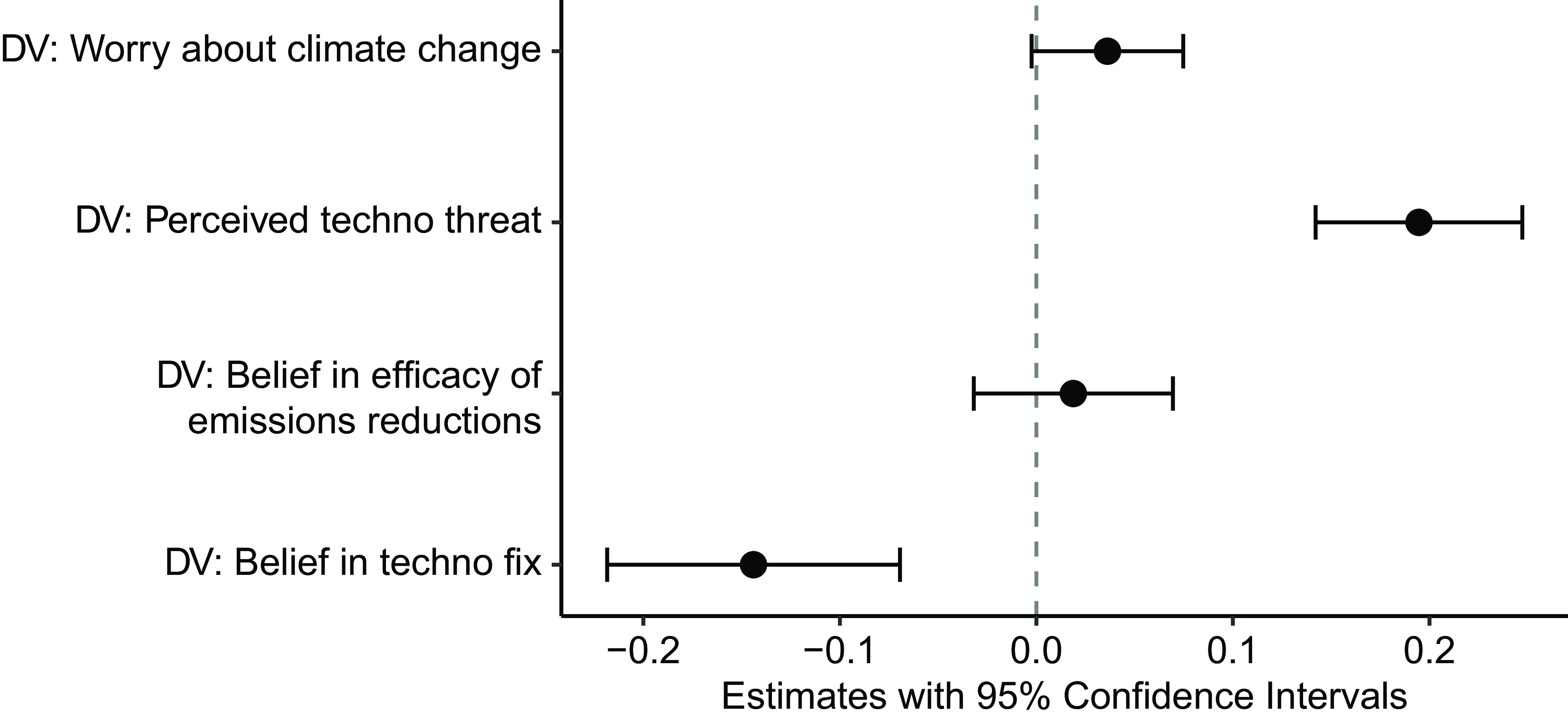
Figure 4 shows the estimated effect of providing SAI information on other post-treatment outcomes designed to tap into possible mechanisms by which SAI information could affect policy preferences.
Effect of SAI information on other attitudes.
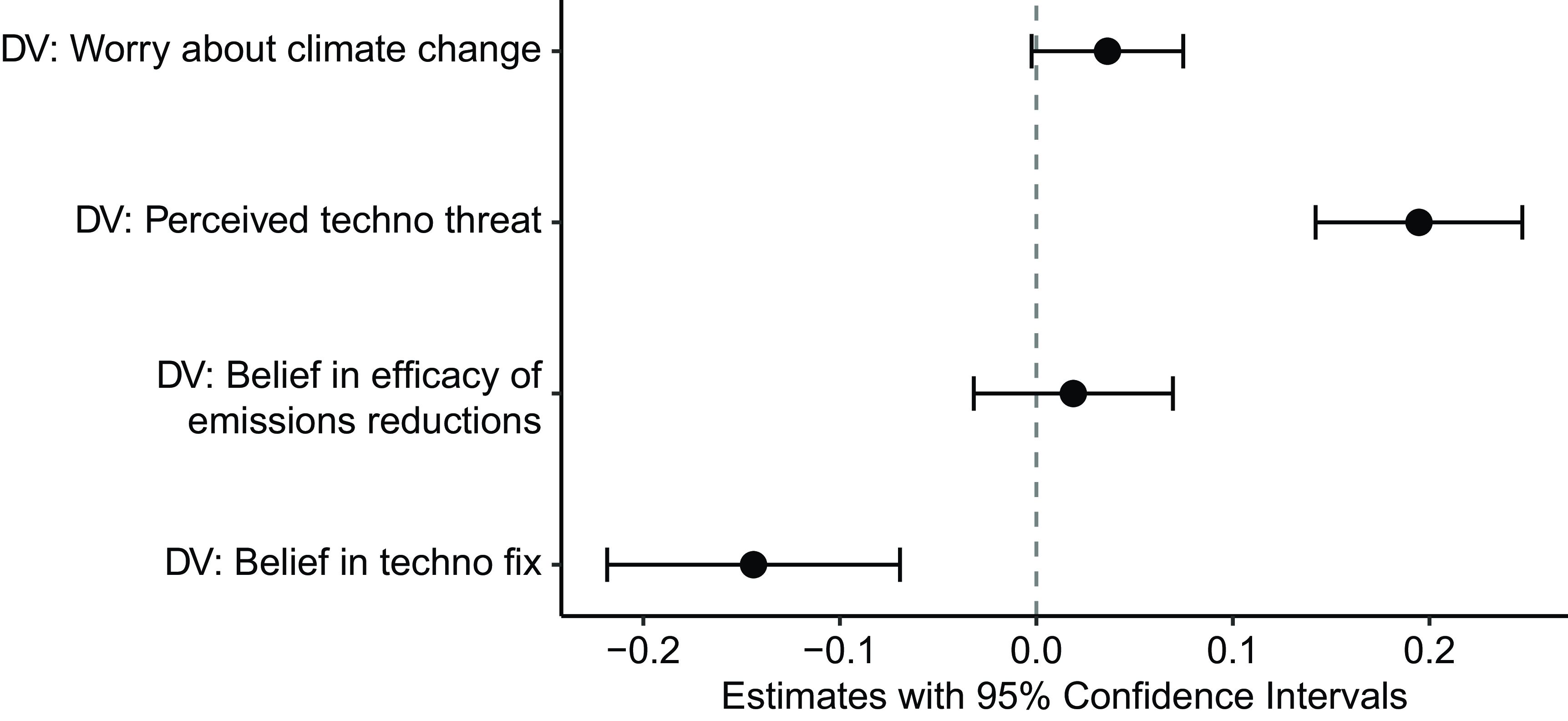
Figure 4 Long description
The line graph presents the effect of solar geoengineering information on four dependent variables: worry about climate change, perceived techno threat, belief in the efficacy of emissions reductions, and belief in techno fix. The x-axis represents the estimates with ninety-five percent confidence intervals, ranging from negative zero point two to positive zero point two. The y-axis lists the four dependent variables. Each variable is represented by a dot with horizontal error bars indicating the confidence intervals. Worry about climate change shows a positive estimate around zero point one. Perceived techno threat has a negative estimate around negative zero point one. Belief in the efficacy of emissions reductions is close to zero with a slight positive estimate. Belief in techno fix has a negative estimate around negative zero point one. All values are approximated.
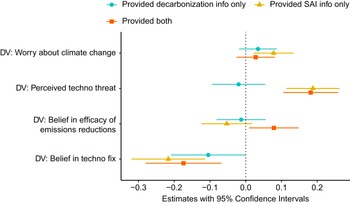
Effect of each information treatment on other attitudes.
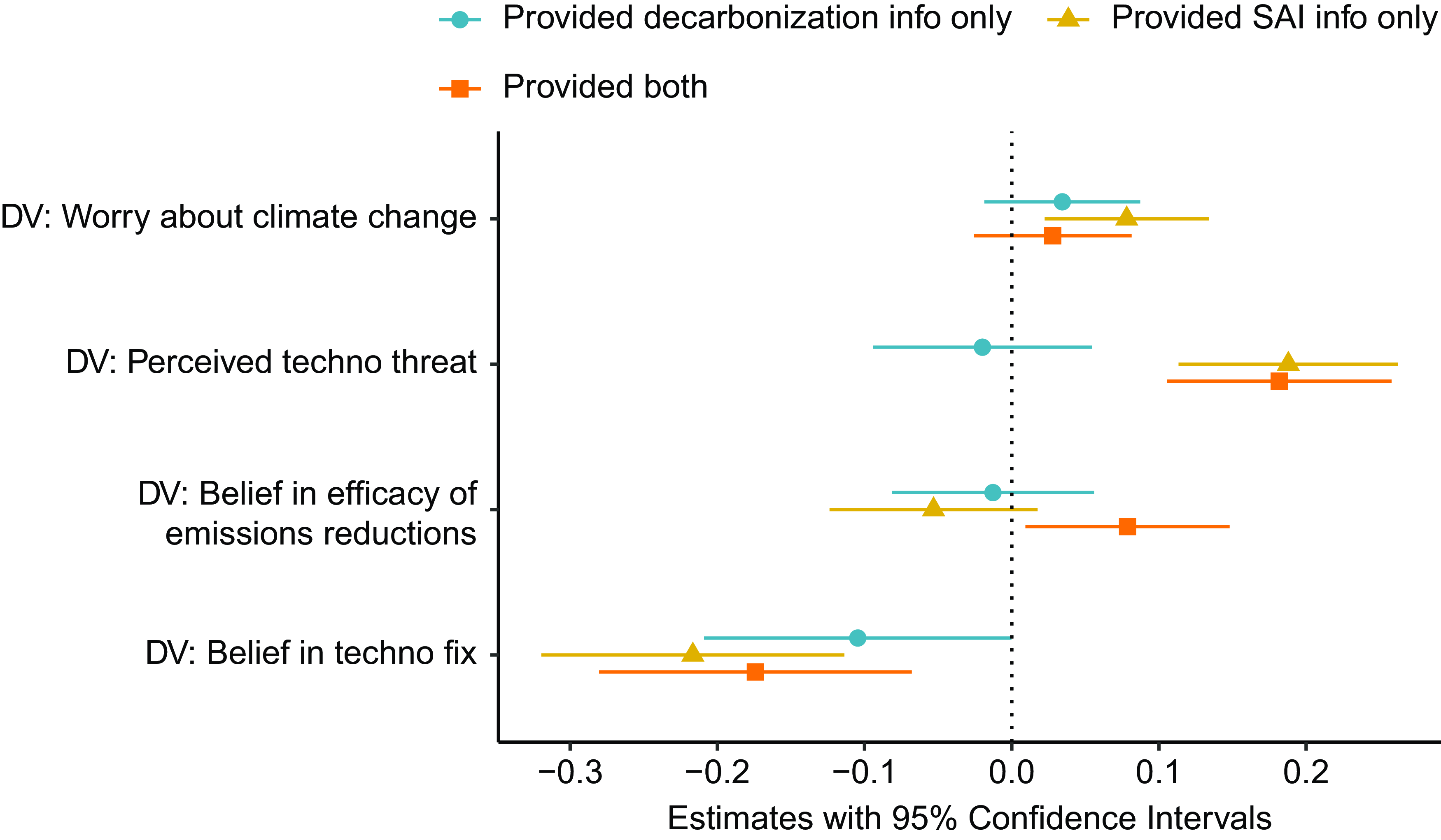
Figure 5 Long description
The line graph presents the impact of various information treatments on attitudes towards climate change and technological solutions. The x-axis represents the estimates with ninety-five percentage confidence intervals, ranging from negative zero point three to positive zero point two. The y-axis lists four dependent variables: worry about climate change, perceived techno threat, belief in the efficacy of emissions reductions, and belief in techno fix. Three data series are shown: one for those provided decarbonization information only, another for those provided solar geoengineering information only, and a third for those provided both types of information. Each series is marked with different symbols and colors. The graph indicates how each treatment affects the different attitudes, with varying levels of confidence intervals for each estimate. All values are approximated.
We estimate that exposure to SAI information (i) increases post-treatment worry about global warming (as measured by our index) by about 0.036 standard deviations, though we cannot reject the null ( $p$
= 0.066); (ii) increases respondents’ perception that without emissions reductions, addressing global warming may require “deploying unproven technologies with harmful consequences” (“perceived techno threat” in Figure 4) by about 0.195 standard deviations (p < .001); and (iii) decreases respondents’ confidence that global warming can be addressed without “significantly reducing carbon dioxide emissions” (“belief in techno fix” in Figure 4) by about -0.144 standard deviations (p < .001). (The latter two effects are significant even after applying a Bonferroni correction as specified in our PAP.) Our SAI treatment thus appears to generally make respondents more pessimistic about climate change on average: slightly more worried about its effects (though this evidence is only suggestive), more concerned about measures that might be taken to address it, and more skeptical that the problem can be addressed without reducing emissions. We view this as evidence that balanced SAI information serves as an attitudinal “clarion call” for many respondents (Merk et al. Reference Merk, Pönitzsch and Rehdanz2016), even if average effects on emissions policy preferences are muted.
$p$
= 0.066); (ii) increases respondents’ perception that without emissions reductions, addressing global warming may require “deploying unproven technologies with harmful consequences” (“perceived techno threat” in Figure 4) by about 0.195 standard deviations (p < .001); and (iii) decreases respondents’ confidence that global warming can be addressed without “significantly reducing carbon dioxide emissions” (“belief in techno fix” in Figure 4) by about -0.144 standard deviations (p < .001). (The latter two effects are significant even after applying a Bonferroni correction as specified in our PAP.) Our SAI treatment thus appears to generally make respondents more pessimistic about climate change on average: slightly more worried about its effects (though this evidence is only suggestive), more concerned about measures that might be taken to address it, and more skeptical that the problem can be addressed without reducing emissions. We view this as evidence that balanced SAI information serves as an attitudinal “clarion call” for many respondents (Merk et al. Reference Merk, Pönitzsch and Rehdanz2016), even if average effects on emissions policy preferences are muted.
In Figure 5, we report the effect of each distinct information treatment (relative to control) on the same attitudes.Footnote 14 We highlight the most important findings.
Of the three treatments, only providing SAI information on its own significantly increases worry about climate change relative to control. Our SAI information in isolation may have especially worried respondents because it emphasizes that emissions reductions won’t immediately cool the planet and/or because putting sulfuric acid in the atmosphere sounds risky. SAI information appears to worry respondents less when it is paired with a decarbonization message, though we cannot reject the null that the two effects are the same ( $p$
=0.077).
$p$
=0.077).
Although above we found that providing SAI information has null average effects on belief in the efficacy of emissions reductions, Figure 5 shows that it matters whether decarbonization information is also included: the combined treatment made respondents believe in emissions reduction efficacy more (by .079 SDs), while the effect of SAI information on its own is negative ( $p$
value on difference in the two effects: 0.012).
$p$
value on difference in the two effects: 0.012).
The last set of estimates in Figure 5 shows that the decarbonization treatment, like the SAI treatment, reduced confidence in the existence of a “techno fix” that would obviate the need for emissions reductions (compared to control). The effect of the SAI treatment was larger, however ( $p$
. = 0.036). This suggests that a balanced message about SAI information could be even more effective than a decarbonization message at convincing people of the necessity of emissions reductions.
$p$
. = 0.036). This suggests that a balanced message about SAI information could be even more effective than a decarbonization message at convincing people of the necessity of emissions reductions.
Discussion
Our study investigated how providing balanced information about SAI as a potential temporary response to climate change, both with and without a message about the importance of decarbonization, affects public support for decarbonization policies and related attitudes in the USA. We found no significant effects of SAI information on support for emissions mitigation policies on average, which contrasts both with previous research showing a moral hazard or crowding-out effect (Raimi et al. Reference Raimi, Maki, Dana and Vandenbergh2019; Campbell-Arvai et al. Reference Campbell-Arvai, Hart, Raimi and Wolske2017) and with previous research documenting a “clarion call” or crowding-in effect (Merk et al. Reference Merk, Pönitzsch and Rehdanz2016; Cherry et al. Reference Cherry, Kallbekken, Kroll and McEvoy2021). We did, however, find some evidence that SAI information increases support for mitigation among respondents more skeptical of climate change, and we found that information about SAI makes climate change appear to be a more serious problem, consistent with the “clarion call” hypothesis. Thus, our findings suggest that broader awareness of SAI will not reduce, and may even increase, support for decarbonization policy.
Our study also highlights the importance of balanced messaging that portrays SAI as a potentially risky complement to decarbonization rather than as a substitute. Our SAI treatment highlighted the technology’s risks, which may explain why it increased worry about climate change while not eroding support for decarbonization. It also increased confidence that emissions reductions would mitigate future warming, but only when paired with a message emphasizing the importance of decarbonization. Future studies should further investigate this and other ways in which combinations of messages alter the public perception of climate change and responses to it.
Our study has important limitations, some of which future work can address. As in most research in this area (e.g., Cherry et al. Reference Cherry, Kallbekken, Kroll and McEvoy2021; Raimi et al. Reference Raimi, Maki, Dana and Vandenbergh2019; Fairbrother Reference Fairbrother2016), our outcome measures are simply stated positions in an online survey; following Merk et al. (Reference Merk, Pönitzsch and Rehdanz2016) and Merk & Wagner (Reference Merk and Wagner2024), future work could examine how similar information treatments affect “real stakes” outcomes such as willingness to donate or sign a petition. Moreover, as in other studies, our treatment is just a short text passage and an image. The effects of an actual program of SAI that alters the climate (and the discourse around climate change) could be altogether different.
Supplementary material
The supplementary material for this article can be found at https://doi.org/10.1017/XPS.2025.10017.
Data availability
The data, code, and any additional materials required to replicate all analyses in this article are available at the Journal of Experimental Political Science Dataverse within the Harvard Dataverse Network, at: doi: https://doi.org/10.7910/DVN/3N2OPB.
Competing interests
The costs of running the survey were defrayed by support from the University of Chicago’s Climate Systems Engineering Initiative (CSEi, $5,000) and by a University of Chicago Core Conversation Innovation Grant ($2,500).
Ethics statements
The University of Chicago’s Social and Behavioral Sciences Institutional Review Board gave this research an exempt determination (IRB23-0386-AM003). The research adheres to APSA’s Principles and Guidance for Human Subjects Research, as discussed in Section 3 of the online appendix.


 Open access

