

INTRODUCTION
Democratic theorists tend to agree that “[e]lections play a distinctive and important role within a broader framework of democracy” (Chapman Reference Chapman2018, 102), even though most advocate for more robust forms of political engagement (Barber Reference Barber1984; Chambers Reference Chambers, Parkinson and Mansbridge2012; Landemore Reference Landemore2020). Voting in elections, many believe, contributes to some political good: individual and collective autonomy, civic equality, justice, pluralism, peaceful conflict resolution, political stability, or smarter policies. However, such arguments overwhelmingly assume that elections occur under a democratic regime. While most democratic theorists are careful not to conflate elections with democracy (avoiding what Schmitter and Karl Reference Schmitter and Karl1991 term the “fallacy of electoralism”), they have largely overlooked elections that take place under authoritarian regimes (but see Kirshner Reference Kirshner2018). Recent decades have seen the growth of electoral authoritarianism, under which illiberal regimes use elections to entrench their own hold on power. As Svolik (Reference Svolik2012, 13) pithily notes, “under dictatorship, nominally democratic institutions serve quintessentially authoritarian ends.”
In this article, we draw on the empirical literature on comparative authoritarianism and democratization to argue that elections under authoritarianism create a dilemma for citizens who are broadly committed to democratic principles. By exercising their right to vote, citizens of authoritarian regimes may find themselves bolstering the very regimes they wish to unseat—even when casting a vote for the opposition. By sitting out the election, however, they may miss an opportunity to register their discontent and perhaps even to unseat the regime through peaceful means. We term this the democrat’s dilemma.
Resolving the democrat’s dilemma, as we set out to do in this article, requires answering a complex series of interrelated empirical and normative questions. First, what role do elections play in authoritarian regimes? How do they differ from elections under democracy? Does authoritarian manipulation rob elections of their democratic value? If flawed elections nevertheless bolster the authoritarian incumbent’s claim to legitimacy, does voting make citizens complicit in perpetuating authoritarianism? Democratic theorists have offered compelling reasons for citizens to participate in elections under broadly democratic conditions. Are these reasons applicable in the circumstances of competitive authoritarianism? Or might they instead create an obligation for citizens who value democracy not to vote?
The rise of electoral authoritarianism in the contemporary era gives these questions urgency and prompts us to revisit longstanding assumptions about the democratic value of elections. Answering them requires integrating the literature on electoral authoritarianism in comparative politics with the democratic theory literature on the ethics of voting, as we seek to do in this article. Our analysis has important practical implications for contemporary elections around the world. Citizens of electoral authoritarian regimes routinely confront the democratic dilemma we describe, and scholars of political participation under authoritarianism find that disengagement is a common response to it (Croke et al. Reference Croke, Grossman, Larreguy and Marshall2016). However, the dilemma has rarely been considered from the perspective of democratic theory.
We begin our analysis by reviewing the literature on authoritarian elections, showing how authoritarian regimes undercut the institutional and procedural foundations of elections to prolong, stabilize, and legitimate their rule. We then describe the normative stakes of the individual decision to vote and show how authoritarian electoral practices complicate arguments about the democratic value of voting. Next, we consider possible responses to the democrat’s dilemma by surveying three influential strands of contemporary democratic theory that focus on the value of elections, namely justice-based, epistemic, and proceduralist accounts. Because each approach has been formulated with implicit reference to democratic elections, we adapt each to the circumstances of electoral authoritarianism. We argue that the proceduralist approach is best suited for understanding the paradox of authoritarian elections, which are problematic not primarily because they create injustice or yield suboptimal decisions but because they help incumbents harness the legitimacy payoffs of elections while violating the institutional preconditions that give elections their democratic quality. In a nutshell, our claim is that although authoritarian manipulation undermines the capacity of elections to produce just outcomes, smart policies, or legitimate political power, such elections nevertheless retain what we call residual democratic value insofar as they allow citizens to reassert their right to choose their representatives, reaffirm the principle that political elites must compete for the right to rule, and remind elites that they must be accountable to those whom they govern. Even if most voters and candidates—in any regime—use elections instrumentally to advance their preferences, the normative significance of elections as a collective practice stems from the political principles they embody, such as equality, fairness, pluralism, individual autonomy, and popular sovereignty (Anderson Reference Anderson, Christiano and Christman2009). The residual democratic value of authoritarian elections derives from the fact that they give citizens an opportunity to reaffirm these principles in the face of authoritarian attacks.
CONCEPTUALIZING AUTHORITARIAN ELECTIONS
Classic works on authoritarianism defined authoritarian regimes as
political systems with limited, not responsible, political pluralism, without elaborate and guiding ideology, but with distinct mentalities, without extensive nor intensive political mobilization, except at some points in their development, and in which a leader or occasionally a small group exercises power within formally ill-defined limits but actually quite predictable ones (Linz Reference Linz, Allardt and Rokkan1970, 255, emphasis added).
This conceptualization of authoritarian politics ruled out mass participation by definition, viewing participation to be a feature of either democratic rule or totalitarian rule. Friedrich and Brzezinski (Reference Friedrich and Brzezinski1962), for example, considered the presence of a single mass party to be one of the defining features of totalitarian rule. But in subsequent decades, conceptual accounts of authoritarianism evolved in response to the observation that not all authoritarian systems discourage their subjects from political participation. Regime theorists noted that political movements such as fascism, corporatism, populism, or revolutionary theocracy invite the masses into the political arena, so long as they can be controlled (Linz Reference Linz2000; Urbinati Reference Urbinati2014). Nevertheless, prior to the recent wave of research on authoritarian rule pioneered by Geddes (Reference Geddes1999) and others, elections under authoritarianism were seen as puzzling. Why would regimes subject themselves to elections they have no intention of losing? The resolution of this puzzle can be found in the functionalist orientation of the contemporary authoritarianism literature: regimes do things that maximize their likelihood of remaining in power (see also Przeworski Reference Przeworski2023). It follows that elections, parties, legislatures, and other nominally democratic institutions must serve some useful function from the perspective of the regime.
Even though the idea that political regimes differ based on their decision-making procedures dates at least to Aristotle’s Politics (Reference Lord2013), the role of elections themselves under authoritarianism only attracted scholarly attention relatively recently. An important early contribution was Elections without Choice (Hermet Reference Hermet, Hermet, Rose and Rouquié1978), in which contributors focused on the practice of elections under noncompetitive conditions, outlining a broad set of functions of authoritarian elections including communication, education, legitimation, and power sharing (Hermet Reference Hermet, Hermet, Rose and Rouquié1978, 13–7). Geddes’s (Reference Geddes1999) landmark contribution produced a more sophisticated understanding of authoritarian rule that broadly distinguishes between regimes with more democratic institutional features (elections, legislatures, and parties) and those without them. Subsequent work has adopted a similar distinction among regimes based—in part—on their embrace of nominally democratic institutions (Cheibub, Gandhi, and Vreeland Reference Cheibub, Gandhi and Vreeland2010; Gandhi and Przeworski Reference Gandhi and Przeworski2007; Geddes, Wright, and Frantz Reference Geddes, Wright and Frantz2014; Reference Geddes, Wright and Frantz2018; Svolik Reference Svolik2012). The body of research on the utility of elections for authoritarian regimes is now rich and well-developed (Gandhi and Lust-Okar Reference Gandhi and Lust-Okar2009) and adds to the list of electoral functions proposed by Hermet (Reference Hermet, Hermet, Rose and Rouquié1978) the notion that elections allow authoritarian regimes to coopt elites and oppositions, to share power, and to gain information about the strength of the opposition.
Our focus is on authoritarian regimes that hold multiparty elections. Levitsky and Way (Reference Levitsky and Way2010, 5) describe post-Cold War regimes with such elections as “competitive authoritarian” regimes:
competitive authoritarian regimes are civilian regimes in which formal democratic institutions exist and are widely viewed as the primary means of gaining power, but in which incumbents’ abuse of the state places them at a significant advantage vis-à-vis their opponents. Such regimes are competitive in that opposition parties use democratic institutions to contest seriously for power, but they are not democratic because the playing field is heavily skewed in favor of incumbents.
We refer to such regimes using Schedler’s (Reference Schedler2006, 5) terminology of “electoral authoritarianism,” a closely related concept that “takes seriously both the authoritarian quality these regimes possess and the electoral procedures they put into practice.”
How Authoritarian Elections Work
Elections in authoritarian regimes are often nominally competitive, but take place against a background of coercive constraints on dissent, mobilization, and opposition organization. Authoritarian regimes employ elections to justify and strengthen their rule, while demolishing the deep infrastructure of electoral politics, including robust guarantees of freedom of speech, information, and association; the freedom to run for office; and equal access among electoral contestants to material and informational resources. The act of voting on election day should not obscure the underlying facts of authoritarian control in such elections.
We can conceptualize electoral competitiveness as a continuum, ranging from sham elections at one extreme to perfectly free elections at the other. Our concern is not with the entirely managed affairs that allegedly generate 100% turnout and support for the incumbent, as in the 2002 elections in Iraq. Rather, we are interested in elections characterized by a meaningful degree of competition and uncertainty, that is, where voters can choose among more than one candidate or party and where the outcome is not clearly determined by wholesale fraud (e.g., ballot stuffing or lying about the results), but which fail to meet basic standards of democracy, which we will clarify below. As Thompson (Reference Thompson2002, 3) observes, the more competitive an election, “the harder it is to show that a particular violation or set of violations [of electoral rules] was the factor that makes the difference.” This generates some amount of uncertainty over the outcome of the election, but also allows the regime to identify supporters and opponents, to coordinate expectations about distributive politics and patronage, and to claim electoral legitimacy. Coercive restrictions on open competition and mass participation also generate deep moral ambiguity about the extent to which the outcome reflects the preferences of a meaningful majority and therefore vests the government with a well-founded right to rule.
Our analysis of the dilemma of participating in authoritarian elections hinges on the mechanisms through which authoritarian regimes render elections undemocratic. In order to be considered democratic, elections must meet minimal standards; that is, they must be “free, in the sense that there is virtually no fraud or intimidation of voters, and fair, in the sense that opposition parties campaign on relatively even footing” (Levitsky and Way Reference Levitsky and Way2010, 7). Levitsky and Way (Reference Levitsky and Way2010) identify “access to resources,” “access to media,” and “access to law” as three general ways in which regimes tilt the playing field against the opposition. Equal access to resources means that opposition parties can mobilize and deploy material, symbolic, and other resources in the same way that regime-affiliated parties can. Equal access to media means that opposition leaders, voters, and organizations can communicate with one another and with the mass public without restriction. Equal access to law means that regulations on campaigning, organization, mobilization, and information sharing are applied equally and fairly to all participants in the election. Access to the law also encompasses institutional neutrality in the conduct of elections themselves: all votes are counted according to the same publicly known procedures, and the right to vote is equally upheld for all citizens legally empowered to participate in elections.
Authoritarian strategies for undermining the democratic values of elections depart from these three equalities, but in practice they do so in varied ways. Schedler (Reference Schedler2002) elaborates a range of practices that authoritarian regimes may employ to manipulate elections, ranging from efforts to restrict opposition parties’ ability to campaign and deliver their messages, to stacking the voter rolls and more plainly undemocratic practices such as stuffing the ballot boxes. Many authoritarian regimes also restrict which political parties can contest in elections, as in Indonesia’s New Order regime, which forced all opposition parties to merge into two regime-sanctioned opposition parties (Reeve Reference Reeve1985). Even when regimes do not formally restrict which parties may contest, they may make it difficult for opposition parties to organize, secure funding, communicate their message, and choose their platforms and candidates. Some authoritarian regimes, such as Russia under Putin, nurture “parastatal” opposition parties that form relatively freely but are designed to contain the opposition (March Reference March2009). Leaders and members of parties that pose a more radical challenge to the regime may be jailed or banned from political activity, as they are in Turkey (Esen, Gumuscu, and Yavuzyılmaz Reference Esen, Sebnem and Hakan2023). Still, for our purposes, the essential feature of authoritarian elections is that the voter’s activity at the polls—casting a ballot in a system with universal suffrage, some degree of choice among candidates, and some uncertainty about the outcome—is sufficiently similar to a democracy, as is the expectation that the winner of the election will take office.
Our conception of democracy in this article is minimalist (Przeworski Reference Przeworski, Shapiro and Hacker-Cordon1999; Schmitter and Karl Reference Schmitter and Karl1991; Schumpeter Reference Schumpeter1976): free, fair, inclusive, and irreversible elections are necessary and sufficient for a regime to be democratic. We work with a minimalist conception of democracy not because we find more demanding conceptions of democracy unpersuasive, but because the regimes we examine fail to meet even this standard. However, we underline the broader institutional infrastructure that elections require, which scholars of electoral authoritarianism such as Levitsky, Way, and Schedler highlight as the preconditions for any election to be truly democratic. Furthermore, whereas some minimalists argue that elections are merely instrumental for expressing and satisfying political preferences but deny that they convey any intrinsic value, we will argue that elections should be understood as a normative practice and represent built-in political principles even when corrupted.
The literature on authoritarian elections explains them as instruments of top-down control that strengthen the regime, rather than tools through which mass publics can affect meaningful political change. One objection to this distinction between authoritarian and democratic elections is that it romanticizes the latter. After all,
democratic norms are not perfectly realized anywhere, even in advanced democracies. Access to the electoral arena always has a cost and is never perfectly equal; the scopes and jurisdictions of elective offices are everywhere limited; electoral institutions invariably discriminate against somebody inside or outside the party system; and democratic politics is never quite sovereign but always subject to societal as well as constitutional constraints
(Schedler Reference Schedler2002, 38).Given these observations, it is reasonable to ask whether the distinction between electoral authoritarianism and electoral democracy is a meaningful one.
We distinguish uncompetitive elections under democratic regimes from elections under authoritarian regimes by the latter’s systematic, coercive suppression of opposition and organized dissent. For example, uncompetitive mayoral elections in American cities where the Democratic Party is electorally dominant are distinct from uncompetitive presidential elections in countries where opposition parties are unable to campaign freely because the incumbent regime controls the press, intimidates or persecutes opposition candidates, or restricts opposition rallies (but not pro-regime ones).Footnote 1 Similarly, what marks local- and state-level elections in parts of the American South under Jim Crow as competitive authoritarian elections is the systematic exercise of coercion (Gibson Reference Gibson2012; Mickey Reference Mickey2015). Combined with restrictions or partisan imbalances in suffrage, campaigning, and popular mobilization, the threat or exercise of coercion makes elections undemocratic rather than simply uncompetitive.
Just how common are authoritarian elections? In Figure 1, we calculate a rough answer to this question based on two widely used sources of data on regimes and elections. Regimes are “democratic” if Geddes, Wright, and Frantz (Reference Geddes, Wright and Frantz2014) have coded them as democratic. Regimes are closed authoritarian regimes if there is a legislature in which the regime party holds all of the seats and there is an executive that is elected by less than all eligible voters, each as coded by Svolik (Reference Svolik2012). The remainder are authoritarian regimes in which there are multiparty elections. These coding rules differentiate effectively between cases such as the USSR and Iraq under Saddam Hussein, on the one hand, and Mexico under the Institutional Revolutionary Party, on the other.
Electoralism, 1946–2008

The line denoting electoral authoritarian regimes begins to rise at the end of the Cold War, alongside the so-called third wave of democratization (Morse Reference Morse2012). Today, electoral authoritarian regimes are roughly as common as their closed authoritarian counterparts.
THE DEMOCRAT’S DILEMMA
Not only are elections associated with longer-lived authoritarian regimes (Frantz and Morgenbesser Reference Frantz and Morgenbesser2019), but also the features that make elections desirable in a democratic context can further authoritarian ends. Elections are stabilizing for authoritarian regimes because the prospect of a future victory (however remote) incentivizes losers to observe established procedures instead of trying to win power through violence or other irregular means (Przeworski Reference Przeworski, Shapiro and Hacker-Cordon1999; Schumpeter Reference Schumpeter1976). Authoritarian elections coopt dissidents into a system controlled by the incumbent regime, keeping in check political forces that might otherwise engage in different forms of resistance in search of a new, more just political order. In this way, they can perform what Hermet (Reference Hermet, Hermet, Rose and Rouquié1978, 14) termed an “anesthetizing function.”
Elections also bolster authoritarian regimes’ claims of legitimacy. Electoral systems are characterized by the expectation that incumbents have the right to rule because they have secured the assent of the majority through a process of political competition (Chapman Reference Chapman2018; Manin Reference Manin1997, 85). Many authoritarian leaders are eager to retain the rhetorical mantle of democracy that elections confer even as they jettison traditional liberal safeguards (Isaac Reference Isaac2017). Likewise, authoritarian regimes often encourage turnout in order to show that they represent the popular will (Frantz Reference Frantz2018). Expressing disappointment with the low turnout in the first round of the 2024 presidential elections in Iran, its unelected Supreme Leader Ali Khamanei declared: “People’s participation is a support for the Islamic Republic system, it is a source of honor, it is a source of pride” (Fassihi Reference Fassihi2024).
The fact that authoritarian regimes use elections to stabilize and legitimate their rule creates a dilemma for citizens who are broadly committed to democracy. On the one hand, this commitment may motivate citizens to seek political change through the ballot box rather than support riskier ways to overturn the regime. On the other hand, voting may contribute to the longevity of the authoritarian incumbent even when casting a ballot for the opposition. Furthermore, turning out may be interpreted as implicit approval of the outcome and bolster the regime’s claim to legitimacy. This dilemma highlights the nature of elections as a collective practice in which “our actions depend constitutively on others’ compliance with the practice, so that… others’ wrongdoing can alter the character of what we ourselves are doing” (Schapiro Reference Schapiro2003, 333). Authoritarian manipulation of elections may not only rob a quintessentially democratic act (voting) of its normative significance, but it may also make otherwise democratically minded citizens complicit in authoritarianism. Such complicity vitiates the democratic reasons for voting and may even create a duty to refrain from it altogether. If so, the most civic-minded course of action may be to boycott elections altogether. In other words, the same democratic principles that nudge us toward the ballot box under a democratic system might, in an authoritarian setting, require that we deny the regime the political advantages it would reap from elections.
The democrat’s dilemma is framed by two forms of uncertainty. The first is the uncertainty inherent in any democratic election: the outcome may be predictable, but it is not known in advance, leading Przeworski (Reference Przeworski1991) to describe democracy as “institutionalized uncertainty.” The second is uncertainty about whether the act of voting helps or hurts the prospects of democracy. This type of uncertainty may certainly be present in democratic elections, but it is an inherent feature of elections under authoritarianism. In a democratic election, even if outcomes are uncertain, voting for a particular candidate or party certainly makes that candidate or party’s victory strictly (if infinitesimally) more likely. Under authoritarianism, by contrast, citizens cannot know whether voting for the opposition will help or hurt the prospects of a more democratic future. The supercharged uncertainty of political action under authoritarianism neither obviates the need for citizens to exercise their judgment in light of the best information available to them nor absolves them of the responsibility to do so.
In thinking through the democrat’s dilemma, we do not presume that citizens possess perfect foresight about the consequences of their choices, nor do we impute a particular decision calculus (risk aversion or regret minimization) to their reasoning. We treat voters as situated actors, subject to biases and possessing limited information about the likely consequences of their actions. We also acknowledge that elections make sense only as a collective endeavor: the meaning of the individual act of going to the ballot hinges on a collective intention to choose officeholders through the aggregation of individual votes. But even though individuals’ decisions about whether to vote will be shaped by their anticipation of others’ choices, we focus our account of voting on the individual’s choice, simply because voters cannot control others’ behavior, only their own. Borrowing Beerbohm’s formulation, we approach the problem of voting in authoritarian elections “from a first-personal perspective of the democratic participant,” with a view to investigating “the moral responsibilities of individuals embedded in institutions” that we take as “pretheoretically given” (Beerbohm Reference Beerbohm2012, 19).
To be sure, there is intense disagreement among both scholars and citizens about whether particular elections, regimes, or leaders should be classified as democratic or authoritarian. Cases such as Argentina under Juan Perón are classified differently by different scholars.Footnote 2 The scholarly debate echoes a more fundamental disagreement among citizens of authoritarian regimes. Voters who support leaders like Erdoğan, Maduro, Orbán, or Trump are unlikely to accept that their candidate is autocratic. Since the leaders of electoral authoritarian regimes generally come to power through electoral victories and continue to hold regular elections with near-universal suffrage, such beliefs are not prima facie unreasonable.
We acknowledge that there is legitimate scope for disagreement about whether a particular leader or regime is democratic by a given standard. However, our argument does not hinge on whether there is an objective way to classify a particular regime as authoritarian or democratic. It hinges on whether there is specific, verifiable, and publicly available evidence of systematic practices by an incumbent—such as the suppression of dissent, coercive constraints on opposition organizing, or methodical election interference—that mark significant departures from established democratic practices and that severely compromise the quality of elections as free and fair (Glasius Reference Glasius2018). When such practices are present and widely known, we argue, citizens who value democracy face a dilemma: They know that elections give them an invaluable opportunity (however remote the odds may be) to unseat the regime they reasonably believe to be authoritarian in favor of a democratic alternative, but the very act of participating in them may play into the regime’s hands. By the same token, the dilemma does not apply to supporters of the regime. Whether citizens who vote for Erdoğan, Maduro, Orbán, or Trump sincerely believe in the democratic credentials of these leaders or support them despite or because of their authoritarian practices, they do not confront the dilemma we address in this article. This does not mean, of course, that their choice is democratically permissible—an issue we address in the final section of this article.
DEMOCRATIC THEORY AND THE PROBLEM OF AUTHORITARIAN ELECTIONS
Contemporary democratic theory provides a range of important reasons as to whether and why we ought to vote. In this section, we first address the skeptical view that contests the significance of the individual act of voting since, if voting is irrational, the democrat’s dilemma is trivial. The skeptical view, we argue, rests on an erroneous understanding of the rationality of electoral participation. Next, we focus on how three prominent strands of democratic theory (namely the justice-based, epistemic, and proceduralist strands) characterize the significance of voting. Because these accounts assume that elections take place in a broadly democratic context, however, we assess how well their arguments apply to the circumstances of authoritarianism. We distinguish between arguments that premise the value of voting on some hoped-for outcome (such as smarter policies or a more just society) versus those that focus on the intrinsic value of the electoral process, even in its corrupted form. Given the distinctive features of authoritarian elections, we contend that intrinsic arguments provide a more reliable guide for citizens confronting the democrat’s dilemma. We conclude that even though elections under authoritarianism are unlikely to advance many of the desiderata conventionally associated with elections, they nevertheless have residual democratic value. In other words, citizens have good reasons to persist in their voting habits even in the face of authoritarian manipulation of elections. Furthermore, these reasons are conditional on the political and institutional environment under which elections take place. Our argument presumes that elections are minimally competitive; sham elections have no residual democratic value.
Our discussion focuses on justice-based, epistemic, and proceduralist arguments not only because they are among the most influential and compelling in the voting ethics literature, but also because their insights are particularly relevant to the dilemma with which we are concerned. We by no means claim to offer a comprehensive catalog of existing accounts of the value of participating in elections. Our selective analysis inevitably fails to fully take account of the diversity and disagreements within the voting ethics literature (but see Destri Reference Destri2021; Peter Reference Peter2007; Ziliotti Reference Ziliotti2020). Finally, our aim is not primarily to question the persuasiveness or coherence of these theories, but to assess whether their insights hold up in a different regime context. Although these theories give citizens of democratic regimes compelling reasons for voting, unsurprisingly, many of their arguments only work if relatively robust democratic institutions are available.
Does Voting Matter?
Most democratic theorists acknowledge that elections “perform [a] special role in realizing democratic values” (Chapman Reference Chapman2022, 22) and acknowledge that this presupposes high turnout. Even so, some contend that the individual act of voting is irrational. In modern elections, the chance that one person’s vote will be decisive is vanishingly small. Since no individual voter has any real chance of deciding the outcome of an election, skeptics argue, the utility of virtually any other activity outweighs the time and energy any individual would spend at the ballot box. The inconsequentiality of one’s vote also undermines any “claim that one is producing some public good through exercising the franchise” (Lomasky and Brennan Reference Lomasky and Brennan2000, 67), which means that the ethical stakes of voting in mass elections are virtually nil.
According to this view, citizen control is illusory under democratic and authoritarian regimes, both of which reserve power to a privileged few. According to Lomasky and Brennan (Reference Lomasky and Brennan2000, 86), “belief in a duty to vote is the opiate of democratic masses,” while voting is a “balm for democratic anxieties” that distracts from the essential elitism of politics. If the individual act of voting is inconsequential when procedures are fair and citizens enjoy their rights fully, it is even less consequential when autocrats corrupt these rights.
We also know, however, that civic participation is higher when the risks of collective political action are high (Aytaç and Stokes Reference Aytaç and Stokes2019). Politically excluded groups, including the Civil Rights movement in the United States and the anti-apartheid movement in South Africa, have prioritized access to the ballot box as an efficacious means of dismantling authoritarian systems. Rather than dismiss their demands as an instance of mere symbolism or mass irrationality, we do better to look for an alternative way to comprehend the rationality of voting. The key to such an alternative is to question the assumption that voting is an isolated, individual act. As Beerbohm points out, the standard irrationality argument against voting presumes a model of causation that “places exclusive weight on us as pivotal actors” (Beerbohm Reference Beerbohm2012, 81). As Mackie (Reference Mackie, López-Guerra and Maskivker2014, 44) argues, any individual voter understands herself to be engaged in a collective effort and is justified in valuing “her effective contribution to the effort.” In this respect, voting is unlike consumer choice, where the standard transaction “is the pivotal choice of one alternative over another” (46). Rather, voting “is a contribution to a decision to be made by some collective of individuals over one alternative or another” (46; also see Tuck Reference Tuck2008). Unlike the marketplace, “politics is fundamentally a team sport which yields collective goods” that ultimately redound to the individual (Hill Reference Hill2002, 89).
Thus, while it is “irrational for a single voter to hold the intention that her ballot—determines the outcome” (Beerbohm Reference Beerbohm2012, 74), it is rational for each voter to view his or her vote “as an action in concert to bring about certain ends” (Beerbohm Reference Beerbohm2012, 81). Viewed as participation in a shared enterprise, Chapman argues, elections “[provide] voters with an unparalleled opportunity to express and perform their willingness to participate as one among many in a shared project of democratic governance” (Reference Chapman2022, 41). If I expect others to vote to achieve a jointly desired outcome, it is perfectly rational for me to join them. If elections are an act of “collective, rather than strictly individual, rationality” (Maskivker Reference Maskivker2016, 232), then it is rational to vote to support the stability and accountability of the democratic system (Mackie Reference Mackie, López-Guerra and Maskivker2014, 35–7), to win by a larger margin or lose by a smaller one (Mackie Reference Mackie, López-Guerra and Maskivker2014, 23–4), to publicize a cause, to build support for one’s preferred candidate/policy/party over multiple electoral cycles, among other reasons.
Although these considerations help to establish that voting is not prima facie irrational, particularly if voting is understood as participation in a collectively rational effort, they do not resolve the democrat’s dilemma. To the extent that authoritarian regimes reduce the opposition’s odds of success, participating in the collective effort to unseat the incumbent may help to bolster the regime’s stability and legitimacy. In that case, the only democratically justifiable option may be to stay at home or to spoil one’s ballot. To address this question, we next turn to justice-based, epistemic, and proceduralist strands of democratic theory, each of which accounts for the value of electoral participation. Reviewing these accounts, we ask: to what extent are they applicable under the circumstances of competitive authoritarianism; that is to say, can they guide voters in authoritarian regimes out of their dilemma?
Justice-Based Reasons to Vote
Some democratic theorists hold that the duty to vote is rooted in our general moral obligation to establish just political institutions (Maskivker Reference Maskivker2016). Building on a Kantian intuition, Rawls argues that we are obliged to “further just arrangements not yet established, at least when this can be done without too much cost to ourselves” (Rawls Reference Rawls1971, 115). Of course, saddling individuals with a general duty to establish just political institutions is too onerous and, in any case, unassured of success (Korsgaard Reference Korsgaard2008). A more reasonable demand is that citizens should avoid supporting unjust political institutions through whatever participatory means are available to them. As Beerbohm (Reference Beerbohm2012) argues, we enable coercive public institutions by paying the taxes that finance them and observing the rules that they make. Consequently, when we disagree about how the state deploys its coercive power and its resources, we must use the opportunities available to us to change the practices we find morally problematic. The general duty to avoid complicity in injustice is institutionally mediated; that is to say, its requirements will vary according to “the kind of relation that we bear to our elected officials and our state institutions” (Beerbohm Reference Beerbohm2012, 11–2). In electoral regimes, voting is the most basic practice that allows citizens to shape the exercise of political power. In this justice-based approach to voting, the individual duty to vote is grounded in the fact that electoral participation affords a low-cost way to “prevent injustice and bad governance” committed in our name and with our contribution (Maskivker Reference Maskivker2019). Under a justice-based view, then, the value of voting in elections is primarily instrumental: it is a way for citizens to contest or thwart injustices that public institutions may commit in their name and with their cooperation.
Given that authoritarian regimes create electoral environments with unequal access to resources, media, and the law, however, voting is not assured to be a low-cost way to “prevent injustice and bad governance.” In fact, if elections serve to stabilize authoritarian regimes, as the empirical scholarship suggests, then voting—even against the incumbent—may make the citizen complicit in injustice. But refusing to participate may mean passing up an opportunity (however remote) to bring down an unjust regime through peaceful means. In other words, while the justice-based argument provides compelling reasons to vote in a broadly democratic context, in authoritarian elections, both voting and refraining from voting threaten to implicate us in injustice. If a citizen values electoral participation primarily as a means to further justice or reduce injustice, this ambiguity undermines the ethical significance of voting under authoritarianism. In fact, her commitment to justice may be more directly advanced through extra-electoral means of regime change, such as civil disobedience or armed resistance. Of course, this does not necessarily point to a flaw in justice-based accounts of the value of electoral participation. It merely shows that such accounts provide the clearest guidance in elections that possess greater democratic integrity than they do under authoritarian regimes.
Epistemic Reasons to Vote
Epistemic democrats value majoritarian procedures such as elections primarily for producing better-than-random political outcomes (Cohen Reference Cohen1986; Estlund Reference Estlund2008; Landemore Reference Landemore2013). Majority rule derives its justification not merely from being a fair method of aggregating preferences or adjudicating among competing interests, but it also has “its own distinct epistemic properties” (Landemore Reference Landemore2013, 11). According to Landemore, democracy harnesses the advantages of cognitive diversity among citizens, yielding better policy responses to the problems facing a polity.
Importantly, the epistemic advantages of majority rule do not themselves generate an individual moral duty to participate in majoritarian decision-making processes.Footnote 3 In fact, thinkers who prioritize the epistemic properties (whether rationality, justice, or wisdom) of collective decision-making have argued that there cannot be a duty to vote simpliciter, since voting in favor of a genocidal leader or an apartheid regime cannot be morally meritorious, let alone obligatory (Brennan Reference Brennan2012). On this view, the epistemic advantages of majority rule depend on citizens’ being willing and able to vote “with care” (Maskivker Reference Maskivker2019). Voting can only function as “a mechanism to support and erect just institutions and a just social order more generally,” Maskivker (Reference Maskivker2016, 225) argues, if voters are conscientious about how they cast their ballots. Proponents of this view disagree about what voting well entails, but tend to require that citizens should vote with a minimum of epistemic competence and in conformity with an ethic of impartiality or what they reasonably consider to be in the common good. Failing to fulfill our duty to vote with care contributes to “denying democracy the epistemic properties that come with the aggregation of (good) votes” (Maskivker Reference Maskivker2016, 225).
Do the very conditions of authoritarian rule make it harder to vote well? To answer this question, we distinguish voters’ ability to reason well given the information available to them from the more fundamental question of how politics constrains what information is available and how it might be shared and debated among citizens. Epistemic democrats are concerned with both. Some point out that pathologies of democratic practice—such as party polarization or elite capture—might dilute the epistemic advantages of vote aggregation by distorting public opinion and coloring voters’ perceptions (Maskivker Reference Maskivker2016). Such pathologies are not unique to authoritarianism, but they are more severe under it. Thus, on the one hand, inequalities in access to resources, media, and the law hamper citizens’ ability to make informed and rational decisions by subjecting them to propaganda, blocking access to diverse information sources, and controlling the available electoral choices. This objection would apply to dissidents as well as supporters of the regime, since they are subject to the same institutional and structural conditions.
On the other hand, however, contemporary information and communication technologies often allow the circulation of information that contradicts officially sanctioned narratives. Skeptics of the regime can find their way into epistemic communities that escape state control, and a strong electoral showing by the opposition can help disseminate their views (Cunha, Schuler, and Williamson Reference Cunha, Schuler and Williamson2022; Knutsen, Nygård, and Wig Reference Knutsen, Nygård and Wig2017; Miller Reference Miller2014). In fact, by clarifying the stakes of electoral choice, authoritarian elections might make it easier for citizens to vote well.
In our view, what limits the applicability of the epistemic argument to authoritarian circumstances is not that authoritarian rule robs citizens of the capacity for sound political judgment. Rather, it is the fact that elections tilted heavily in favor of the incumbent cannot be expected to have the epistemic payoffs they purportedly have in democratic settings, since authoritarian elections undermine the informational and deliberative preconditions for these payoffs. According to epistemic democrats, the advantages of cognitive diversity hinge on the existence of “an open liberal society” (Cohen Reference Cohen1986; Estlund Reference Estlund2008; Landemore Reference Landemore2013), where citizens encounter different sources of information, weigh a variety of policy choices and party platforms, and engage in the political debate without fear of coercion. By undermining these essential background conditions, authoritarian regimes deprive majority rule of its potential epistemic advantages. Election results are more likely to indicate the weight of the autocrat’s thumb on the scale rather than collective wisdom. This is true even if voters can circumvent some of the restrictions on organization, mobilization, and communication that authoritarian regimes impose.
So far, we have argued that voting in authoritarian elections cannot with any certainty be expected to improve the justice or epistemic quality of political outcomes. While these expectations may reasonably motivate citizens to vote under well-functioning democracies, the restrictions on electoral freedoms implemented by authoritarian regimes undercut them. In the next section, we turn to proceduralism, which emphasizes the value of the electoral process rather than the salutary outcomes it tends to produce. While proceduralists typically prize elections for producing legitimate outcomes, we argue that authoritarian manipulation compromises their capacity to do so. We conclude that while elections that are neither free nor fair cannot be expected to produce just, wise, or legitimate government, there are nevertheless sound proceduralist reasons for participating in them. We then propose a resolution to the dilemma that emphasizes the residual democratic value of elections under authoritarianism.
PROCEDURALIST REASONS FOR VOTING
Proceduralism takes its cue from the fact that modern societies feature irreducible disagreement over what counts as just, rational, wise, correct, or efficient decisions (Waldron Reference Waldron1999). On this view, “[a]greements in societies living with value-pluralism are to be sought for not at the level of substantive beliefs but at the level of procedures, processes, and practices for attaining and revising beliefs” (Benhabib Reference Benhabib1994, 34; see also Hampshire Reference Hampshire1989). Procedural conceptions of democracy do not judge the legitimacy of political outcomes with reference to an external, independent standard of validity; they do so according to the extent to which the decision-making process itself embodies or instantiates important moral principles such as equality (Christiano Reference Christiano1996; Viehoff Reference Viehoff2014), autonomy or non-domination (Pettit Reference Pettit2012), or fairness (Waldron Reference Waldron1999). Proceduralists share the intuition that “respect of reasonable value pluralism entails a demand for inclusive, fair procedures which enable individual agents to act together,” because such procedures “allow individuals with differing conceptions of the good to participate in the collective evaluation and choice of their social arrangements” (Peter Reference Peter2008, 36).
To be sure, elections are only one type of democratic procedure, and few democratic theorists view elections as sufficient for satisfying the moral demands built into proceduralism. Furthermore, proceduralists disagree on what normative value(s) majoritarian procedures such as elections advance. These include allowing citizens to exercise agency over political outcomes (Kirshner Reference Kirshner2022), recognizing their “equal political liberty” (Saffon and Urbinati Reference Saffon and Urbinati2013, 442), affording “equal respect for persons” (Waldron Reference Waldron1999, 115), or “equal consideration of interests” in the political process (Christiano Reference Christiano1996). Importantly, if elections are to realize these values, they must take place “under equal conditions of opportunity, which entails protecting civil, political, and basic social rights with the aim of ensuring a meaningful political participation” (Saffon and Urbinati Reference Saffon and Urbinati2013, 442).
Insofar as procedural conceptions place the weight of political legitimation on the integrity of the processes, they would deem elections in authoritarian contexts as meaningless or worse. The fact that authoritarian regimes “repurpose” elections in ways that “force citizens to advance the interests of the government” (Kirshner Reference Kirshner2022, 79) throws the legitimacy of electoral outcomes into doubt. Under a proceduralist conception, then, what kind of value could such flawed elections possibly convey?
In addressing this question, we pivot away from the conventional emphasis of proceduralist theories on the legitimating function of elections. We acknowledge that neither the process nor the outcome of an authoritarian election is likely to satisfy proceduralist principles such as equality, fairness, inclusion, autonomy, or non-domination. Instead, we focus on the role that they can play in preserving the procedural remnants of democracy and keeping alive the political principles that elections represent even in their adulterated form. We call this the residual democratic value of voting under authoritarianism. Similarly to mainstream procedural accounts, we focus on the democratic value of elections as a fair decision-making procedure rather than on the substantive merits (such as justice or injustice, competence, or wisdom) of their expected outcomes.Footnote 4 However, our argument departs from standard proceduralist accounts insofar as it does not predicate the value of elections on conferring legitimacy on political outcomes. Instead, we explicate the reasons for voting under authoritarianism in terms of two sets of considerations: first, their contribution to upholding and reinforcing the institutional vestiges of the democratic process, and second, their contribution to reaffirming the intrinsic value of this process. According to the first strand of our argument, elections under authoritarianism retain some democratizing potential (however remote), which gives citizens good reasons for turning out to vote. This line of reasoning is sensitive to the likely outcome of citizens’ participatory choices. The second set of reasons is largely outcome-independent insofar as it is premised on reaffirming the principles intrinsic to elections as a democratic procedure. Our claim is that although elections under authoritarianism frequently violate the demands of equality, fairness, inclusion, pluralism, and autonomy, they nevertheless give citizens an opportunity to reaffirm the normative validity of these principles and reinforce the demand for democracy.
Preserving the Institutional Vestiges of Democracy
Under authoritarianism, voting offers a unique opportunity to challenge the incumbent through non-violent, institutionalized means. Skeptics are correct that voting in elections is not a particularly efficacious way to bring about policy change. Full-scale democratization is difficult to bring about by any means, much less the ballot box alone. However, as we have emphasized, even though authoritarian regimes do exercise great control over electoral outcomes, that control is not total. In holding elections, dictators take a risk, and electoral authoritarian regimes are sometimes defeated. The fact that elections create uncertainty is significant in regimes whose strength hinges on their ability to control political events.
Importantly, elections under electoral or competitive authoritarianism do sometimes unseat authoritarian incumbents. Elections are the second-most common way that authoritarian regimes end (the most common is by coup; see Geddes, Wright, and Frantz Reference Geddes, Wright and Frantz2018, 179). Because these elections are not entirely controlled, authoritarian regimes sometimes find themselves unseated by elections that they intend to win through illiberal and undemocratic means. Unsurprisingly, elections held in competitive authoritarian regimes are more likely to result in regime change than elections in closed authoritarian regimes (Brownlee Reference Brownlee2009; Donno Reference Donno2013; Howard and Roessler Reference Howard and Roessler2006).
Comparativists describe authoritarian elections that result in regime change as “democratization by elections” (see, e.g., Lindberg Reference Lindberg2009). And indeed, a common feature of anti-authoritarian backlash from the Arab Spring to the Colored Revolutions was mass opposition to illiberal elections (see Bunce and Wolchik Reference Bunce and Wolchik2010; Tucker Reference Tucker2007). Less dramatically, elections at the local level may produce wins for the opposition, as the 2019 and 2024 mayoral elections in Ankara and Istanbul demonstrate. Although these typically do not unseat the regime, they can weaken it by disrupting its patronage networks and revenue streams, tarnishing its image of stability and universal support, and encouraging dissent both within and outside its ranks.
But focusing on alternation as the only function of elections ignores interstitial forms of political agency, which, in conjunction with voting, can help pave the path to an eventual transition to democracy. For instance, dissidents may win local election victories, develop more effective strategies of cooperation, chart alternate paths of peaceful mobilization, or use elections to disseminate information. Unexpectedly strong showings for the opposition may expose a leader’s eroding support over time, trigger a leadership struggle, or spawn new alliances among opposition groups, as happened in Malaysia following the “political tsunami” of 2008 (Pepinsky Reference Pepinsky2009). Some choices, if made by a significant number of people, can destabilize the regime or shift the balance of power, for instance, by robbing the regime of a supermajority that might allow it to enact constitutional changes or by keeping it from securing or retaining key political offices. Narrow or contested election results can bring people out into the streets, producing pressure on the regime and amplifying demands for accountability and reform.
Just as elections are too narrow a way to conceive of democracy (Landemore Reference Landemore2020), elections are more than just a way to appoint or dismiss officeholders. Thus, voting in an electoral authoritarian regime may be the only low-risk avenue of political contestation that is available to all citizens. Voting skeptics like to argue that citizens of democratic regimes can more effectively further their civic and political ends by doing almost anything besides voting: volunteering, organizing, leafletting, protesting, petitioning, and so forth. Such activities are dangerous under authoritarianism, whereas voting is typically far less risky by comparison (although, of course, where voting entails high personal risk, citizens are justified in refraining from it). Compared to the citizens of democratic regimes, citizens of many electoral authoritarian regimes have few alternative avenues of political participation whose personal costs are similarly modest.
Furthermore, the advantage of elections over other kinds of political action is that they solve a large-scale coordination problem (Maskivker Reference Maskivker2019). Under authoritarianism even more so than democracy, election participation “performs a coordinating function for… political groups that might otherwise face difficulty organizing for coordinated action” (Chapman Reference Chapman2022, 42). When other avenues of dissent are obstructed or forbiddingly costly, voting can matter more. Protests, mass disobedience, or election boycotts may be more impactful for demanding a just system, but elections offer citizens an established means of coordination. Whatever their benefits for stabilizing incumbent authoritarian regimes, elections are also dangerous for authoritarians because they are moments of heightened political uncertainty that invite the opposition to coordinate in public to advocate for political change.
Another way in which elections can destabilize an authoritarian regime is by undermining its claim to representativeness. In recent years, political theorists have pointed to the ways in which populist leaders use elections to eliminate pluralism from the public arena (Müller Reference Müller2016). These leaders often argue that their electoral mandate makes them the sole legitimate representatives of the people and/or the nation (Mudde and Kaltwasser Reference Mudde and Kaltwasser2013, 153; Müller Reference Müller2016, 37–8). Once populists are in power, they treat elections as plebiscites, that is, occasions for reauthorizing their leadership and dismissing dissenting viewpoints from the political arena (Urbinati Reference Urbinati2019). Even when they enact measures to drastically reduce the chances of an alternation of power, a strong showing by the opposition (or a strengthening trend over time) can discredit the incumbent’s attempt to monopolize popular representation.
Even if we assume that elections under authoritarianism are unlikely to produce regime change, a disengaged citizenry is more convenient for an autocrat than one that vigilantly guards its prerogative to vote. Electoral participation fosters the engagement of an anti-authoritarian segment of the electorate and civil society, who are best placed to press for liberalization when the opportunity arises. Elections offer a higher probability of peaceful rotation of power than under any feasible alternative strategy (see Brownlee Reference Brownlee2009). Conversely, if citizens give up on elections as a means of effectuating regime change, opportunities for peaceful democratization may grow slimmer, implying that turnover can only come through violence, revolution, coup, or an extra-institutional event such as leader death. Thus, while an authoritarian regime may benefit from the legitimacy gains of elections in the immediate term (with low risk of turnover), the democratic opposition may benefit over the longer term. Of course, a potential voter may reasonably conclude that turning out to vote can complement other, extra-institutional means of fostering democratization. For instance, mass mobilization against Ferdinand Marcos in 1986 was strengthened by the public knowledge that the preceding elections had been fraudulent, giving protestors moral authority to demand political change through mass protests (see Villegas Reference Villegas1987).
This brings us to our fourth and final point: skewed elections can nevertheless help to keep civic practices alive under authoritarian conditions. Indeed, the new literature on authoritarian successor parties—former hegemonic authoritarian parties like Indonesia’s Golkar Party, Mexico’s PRI, or the Hungarian Socialist Party, which persist after democratization—holds that strong authoritarian parties accustomed to holding elections can facilitate successful democratic transitions (Loxton Reference Loxton2015; Riedl Reference Riedl2014). Voting may therefore be valuable even if the regime exercises significant control over who is permitted to run on what platform and how freely they may disseminate their message. Seeking change exclusively through the ballot box may be ineffectual in the short term, but in the long term it may ease the transition from authoritarian rule to democracy, as citizens understand the practice and function of voting and accept it as the sole legitimate way to allocate political authority, and ruling parties understand that they may transition to democracy without losing access to power (Slater and Wong Reference Slater and Wong2013). A committed democrat may choose to participate in flawed elections on the belief that doing so nurtures the institutions and habits that will sustain democracy sometime in the future.Footnote 5
The reasons for voting under authoritarianism we have so far enumerated hinge on the possibility of challenging the authoritarian regime in favor of an eventual restoration of democratic institutions. This appears to premise the value of voting on the basis of possible or expected outcomes—a strategy which, we earlier argued, diminished the relevance of justice-based and epistemic paradigms to the circumstances of authoritarian elections, where participation is just as likely to strengthen the regime as to undermine it. Why does the same critique not apply to the proceduralist claims we defend here, given that they also appear to rest on certain expected outcomes?
First, we maintain that the hope of contributing to a more just, wise, or informed political outcome does not provide enough of a reason for participating in undemocratic elections, since there is a serious possibility that voting against the incumbent regime will work to its advantage. Elections under authoritarianism are an uncertain and precarious vehicle by which to pursue any ends beyond the democratic process itself. Second, from a proceduralist point of view, restoring the integrity of the democratic process is a precondition for harnessing the epistemic and justice-enhancing virtues of elections. While citizens cannot be assured that voting in an authoritarian election will contribute to more just or wiser outcomes, the mechanisms we described in this section illustrate the ways in which their participation contributes to upholding the institutional vestiges of democracy. As Rostbøll explains, commitment to democratic procedures necessarily has a “prospective aspect” (Reference Rostbøll2023, 119): outcomes are legitimate not only to the extent that they are the results of democratic procedures but also to the extent that they do not undermine, and contribute to maintaining, those very procedures into the future. Therefore, even though citizens may be voting prospectively (to unseat an authoritarian incumbent), their vote has more than purely instrumental value. In participating in elections that are neither free nor fair, citizens can help to preserve the remaining vestiges of the democratic process, hollowed out though they may be, with the possibility of rebuilding them in the future.
Finally, it is important to stress that the contingent outcomes we have described, whose very possibility we argue makes it worthwhile for democratically minded citizens in authoritarian regimes to participate in elections despite their flaws, are part and parcel of electoral politics understood as a long-term practice rather than as a one time event. These contingent outcomes may well be considered net improvements in justice or epistemic quality, but our argument does not hinge on their satisfying some standard external to democracy. Participating in elections that fail to meet minimal standards of fairness may help to reduce injustice or produce better policies, but on our account, doing so is worthwhile even if those outcomes are not assured. The fact that participating in elections helps to preserve less risky avenues of political opposition and keep the public engaged gives citizens good democratic reasons to vote even if the outcome of a given election is a net decline in terms of justice or epistemic metrics.
Upholding the Intrinsic Value of Democratic Practices
Many democratic theorists defend elections as desirable both because of the outcomes they tend to bring about (such as fairer, smarter, or more responsive policies) and because of what they stand for (respect for civic equality, individual freedom, pluralism, etc.). Together, these considerations give citizens good reasons for voting in elections. Without questioning the validity of these arguments in well-functioning democratic contexts, we have so far argued that authoritarian elections severely undercut outcome-based rationales for voting, except insofar as the outcome in question is to preserve whatever remains of democratic institutions, practices, and habits.
Outcome-based reasons for voting are hampered by a further set of considerations in authoritarian contexts. A credible democratic alternative is not always available. Authoritarian regimes sometimes allow “only those who are compromised by the government” to compete (Kirshner Reference Kirshner2022, 81). Where there is a bona fide democratic challenger, citizens cannot know with certainty that it can deliver on its promises. The challenger may be an authoritarian in democratic garb; in fact, these are often dissatisfied former members of the incumbent authoritarian regime itself. Furthermore, defeating an authoritarian incumbent at the ballot box hardly guarantees a transition to democracy; it may in fact lead to a worse outcome compared to the status quo ante.
With all this in mind, this section enumerates some reasons for voting in authoritarian elections that do not turn on the likelihood of an ideal democratic challenger toppling an authoritarian incumbent through the ballot box. Our argument hinges on the idea that democracy—much like parenting, education, journalism, scientific inquiry, or athletics—is a social practice that entails its own standards of meaning, value, and excellence, along with concomitant expectations of behavior. We contend that the principles immanent to a social practice are not simply constitutive of it; they remain recognizable as regulatory norms even after the practice has been corrupted. For instance, we criticize universities for operating as degree mills; media outlets for privileging clicks over facts; or a sports league for encouraging doping at the expense of fair play. Even when they are not free or fair, elections stand for core democratic principles such as political equality, fairness, popular sovereignty, and respect for pluralism. These principles underwrite the social consensus around elections as a legitimate means of appointing power-holders. Commitment to them, we contend, gives citizens outcome-independent reasons to vote, that is, independent of whether doing so will facilitate a democratic transition. Thus, even if mass electoral participation contributes to the longevity of electoral regimes, as the empirical literature suggests, citizens nevertheless have intrinsic reasons for participating in a compromised election.
These reasons are particularly important in guiding action under circumstances of political uncertainty. Citizens may not be able to judge which course of action is most likely to bring about a desired outcome, much less foresee whether political instability would leave them worse off than they were under the incumbent regime. While instrumentalist accounts of voting are vulnerable to uncertainties about the likely effects of citizens’ choices in the aggregate, intrinsic reasons are not similarly vulnerable. Furthermore, if our reason for participating in elections is to advance an independent value like justice, then the likelihood that elections will bolster a system of authoritarian domination may lead us to pursue extra-institutional means such as nonviolent resistance, rebellion, revolution, or coup. By contrast, the intrinsic value proceduralist democrats attach to elections commits them to effecting change through the ballot box so long as this possibility—however remote—is present. Assessing the ethical stakes of extra-institutional forms of regime change would take us beyond the scope of this article; we make this point merely to illustrate the contrast between considerations that are intrinsic to democracy and those that are not.
What, then, are these intrinsic reasons? What democratic value could elections represent when they have been distorted by autocrats?Footnote 6 As we signaled above, there is deep disagreement among democratic theorists about what values, precisely, elections instantiate in a democratic context. Our argument is compatible with many of the available accounts. Our point, as nicely formulated by Chapman, is that actions that we engage in collectively (like voting) make sense only in light of “a set of shared norms that we all accept as the norms that we will use to govern our shared activity, even if we do not necessarily endorse or internalize them” (Chapman Reference Chapman2022, 28). This is not to say that individuals’ participation in these actions or practices is necessarily motivated by these values in each instance. We acknowledge that most voters participate in elections to get their preferences satisfied and not out of some civic-minded desire to uphold democratic principles. And authoritarian rulers most certainly do not share these principles. However, the fact that most voters and office-seekers treat elections as a means to their own ends does not mean that the normative significance of elections is reducible to their instrumental value for each participant (Anderson Reference Anderson, Christiano and Christman2009). We cannot account for why citizens from across much of the ideological spectrum endorse elections as a legitimate method of choosing their leaders without referring to broadly shared values such as popular sovereignty, civic equality, individual liberty, fairness, respect for pluralism, and the like. The fact that contemporary authoritarian regimes are keen to wear the mantle of electoral legitimacy underlines the values that make elections a meaningful collective practice in the first place. In the absence of a broadly shared understanding (and approval) of the democratic values built into the electoral process, authoritarian leaders’ insistence on electoral legitimacy—even as they blatantly distort the competitive process in their favor—would make no sense. Put differently, the autocrat corrupts a process that citizens collectively view as deserving of their participation, but continues to trade on the shared meaning of that practice.
Although we acknowledge that autocrats treat elections as a means to dominate, therefore, we maintain that democrats can use elections under authoritarianism to reaffirm their shared values. The values that are constitutive of the moral authority of elections—such as civic equality, fairness, pluralism, individual autonomy, or popular sovereignty—continue to operate as benchmarks even when the practice itself has been corrupted and is no longer capable of realizing them. Especially when citizens know the opposition’s odds of success to be low, their participation in elections signals their continued support for democratic principles over and above the immediate prospects of getting their preferred party or leader into power. Similarly, citizens who turn out to vote despite the typically unfair and unfree circumstances of elections under authoritarianism may be understood as asserting their right to choose their representatives. Even in the absence of a viable or robust opposition, their participation reiterates the norm that political elites must earn the right to rule and remain accountable to those whom they govern. In sum, participating in flawed elections nevertheless helps to uphold the democratic values that make elections intelligible (and valuable) as a collective practice.
What Proceduralism Demands of Citizens
We wish to highlight a final implication of our argument. Proceduralist theories do not normally stipulate a right way to vote in robustly democratic contexts, because there is usually more than one way to vote that is consistent with the normative principles that are constitutive of democracy as a practice. Whichever way citizens vote, their participation in elections can be understood as contributing to upholding the democratic system as a whole (Mackie Reference Mackie, López-Guerra and Maskivker2014, 35–7, 46). Under authoritarianism, by contrast, voting for the incumbent directly conflicts with democracy’s constitutive values. Our argument implies, therefore, that where a relatively more democratic alternative to the authoritarian incumbent is on the ballot, the democratic principles that justify voting in authoritarian elections oblige citizens to choose that alternative.Footnote 7 Where no such alternative is available, citizens may convey their dissatisfaction in the form of “blank ballots, spoiled ballots, protest votes” and the like (Hill Reference Hill2002, 86).Footnote 8
Why should it be impermissible for a voter to choose an authoritarian incumbent if, for instance, she expects to benefit from the incumbent’s patronage or identifies with the ethnic or religious community they represent? We do not deny that individuals do, in fact, vote in line with their perceived interests. Many choose the autocrat if they consider their rule advantageous to themselves or their social groups. Nor are we arguing that doing so is morally wrong, since that would require showing that democracy is morally superior to other things that people value such as economic welfare, order, security, or identity (a claim beyond the scope of this article). Our task is to clarify what democratic principles demand of us under non-democratic conditions, if we take those principles seriously.
Democratic principles undoubtedly allow citizens to use their vote instrumentally, purely as a way of advancing their preferences. We submit, however, that democracy itself places limits on the ends for which voting may be used as a means. Citizens may use their vote instrumentally so long as their vote does not undermine the institutions and norms that make elections meaningful in the first place. Although most contemporary authoritarians vociferously tout their own democratic credentials, practices such as outlawing credible opposition parties, harassing and jailing opponents, and muzzling the press manifestly undermine the integrity of democracy. Clearly, leaders who claim democratic legitimacy while all but ensuring that they cannot be outvoted are not democrats at all (Mackie Reference Mackie2009). Likewise, citizens who vote such leaders into office may justify their choice in a number of ways, except by appeal to democratic reasons. Under conditions of electoral authoritarianism, the principles constitutive of democracy yield a right way and a wrong way to exercise one’s right to vote. We should not think much of a theory of democracy that equivocates to the civic merits of voting for a tyrant.
CONCLUSIONS
The normative significance of elections, and the contours of a theory of the ethics of voting, depends on institutional and political context. Electoral authoritarianism raises important challenges to the way that political theorists have traditionally understood elections and political participation. In this article, we have brought the comparative politics of authoritarianism into conversation with the ethics of voting in political theory. The basic challenge to existing accounts—which assume elections to be democratic—is that elections are protean. Under democratic conditions, they deliver a range of democratic goods. Under authoritarianism, they often serve authoritarian ends. The dilemma for the democratically minded voter is whether participation in an election that the regime has no intention of losing, and which does not approximate a fair contest among candidates or platforms, does more to sustain an illiberal and undemocratic status quo than does staying home. This dilemma is complicated by the observation that sometimes authoritarian regimes do lose elections that they held believing that they would win.
We have reasoned through this dilemma by adapting normative theories of voting to the circumstances of electoral authoritarianism. First, against voting skeptics, we argued that voting has normative significance if it is understood as participation in a collectively rational practice. We then evaluated some prominent responses to the question of whether citizens have an obligation to vote. We found that most existing accounts are tailored to elections held under democratic conditions and equivocate on the significance of voting in elections that are likely to serve the authoritarian incumbent. Nevertheless, we argued that voting in flawed elections has residual democratic value under specific circumstances. Insofar as participation may create unwelcome risks for the regime, erode regime control over political outcomes, undermine the regime’s claim to popularity, and keep alive habits of democratic political life and engagement, citizens have democratic reasons to participate in the electoral process. Moreover, citizens of competitive authoritarian regimes are justified in viewing participation in elections as an opportunity to reiterate their commitment to intrinsic principles that give the electoral process its normative significance, even where the elections in question are incapable of realizing those principles (and violate them in practice). In other words, even if elections unfairly privilege an authoritarian incumbent over challengers and are unlikely to result in alternation, participating in them nevertheless has residual democratic value.
Nonetheless, we conclude on a sober note. Judgments about whether to participate in authoritarian elections cannot be categorical. They require voters to balance principled reasons with prudential ones, such as what they consider to be the likely outcomes of an election, especially in terms of regime stability. This conclusion is in tension with a point of emphasis shared by normative theorists and empirical scholars alike. The emphasis conventionally placed on the democratic value of uncertainty and alternation would lead us to regard voting in elections under authoritarianism as futile. We have challenged this implication, contending that even when short-term prospects of alternation are slim and uncertainty is low, voting might still make sense as a collective reaffirmation of democratic aspirations. Judging by the civic energy that repressive measures tend to unleash (Aytaç and Stokes Reference Aytaç and Stokes2019), dissidents are alive to the democratic potential of civic engagement under adverse conditions. Far from giving up, they make smart use of whatever contestatory opportunities the regime allows them.
Our argument suggests some further avenues of reflection concerning challenges confronting established democracies. Much of the literature on the ethics of voting assumes that voters choose between candidates whose differences are at the level of policy, not regime characteristics. In other words, they presume that all contestants are loyal to the basic framework of democracy. Even in what are conventionally considered established democracies, however, this is increasingly not the case. Just as voting in the authoritarian context is not merely a matter of endorsing the opposition but demanding a different type of regime, under broadly democratic conditions, voting can be a matter of choosing to preserve democracy rather than merely a choice between alternative policy platforms. Democracy itself is at stake when a voter confronts a segregationist platform, a candidate who signals that he might not leave office if he loses an election or a party that promises to dismantle essential liberal safeguards if elected. In such instances, the ethics of voting are not independent of the content of one’s political choice; citizens must put their commitment to the democratic process first.
DATA AVAILABILITY STATEMENT
Replication materials to reproduce Figure 1 are openly available at the American Political Science Review Dataverse: https://doi.org/10.7910/DVN/KWWUG7.
ACKNOWLEDGMENTS
For thoughtful comments and discussion, we thank Ana Arjona, Eric Beerbohm, Anne Meng, Ben Ansell, Simone Chambers, Pradeep Chhibber, Yasmin Dawood, Jennifer Gandhi, Bryan Garsten, Steph Haggard, Alexander Kirshner, Sarah Khan, Jan Komarek, Hélène Landemore, Egor Lazarev, Andrew Little, Anthoula Malkopoulou, Jeremy Menchik, Lee Morgenbesser, Vicky Murillo, Isaac Nakhimovsky, Zeynep Pamuk, Carlo Prato, Loren Reinoso, Andrew Roberts, Steve Rosenzweig, Christian Rostbøll, Melissa Schwartzberg, Steven B. Smith, David Wiens, participants at the 2019 APSA Annual Meeting, and seminar participants at Boston University, Griffith University, Northwestern, UC Berkeley, the University of Copenhagen, UC San Diego, and Yale University. We are also grateful to the APSR editors and anonymous reviewers for their careful and generous engagement with the paper’s arguments.
CONFLICT OF INTEREST
The authors declare no ethical issues or conflicts of interest in this research.
ETHICAL STANDARDS
The authors affirm this research did not involve human participants.
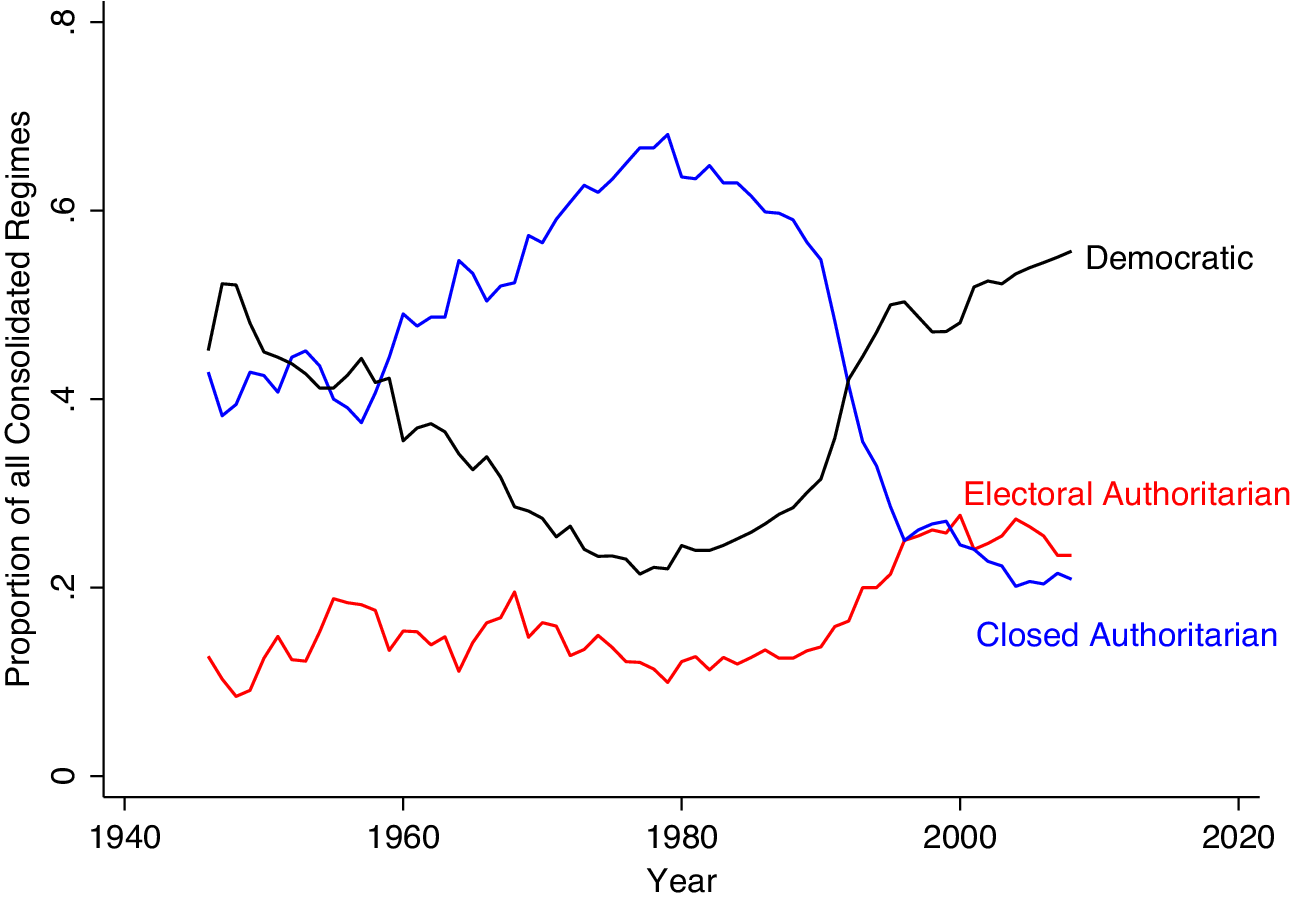


 Open access


Comments
No Comments have been published for this article.