


- GI
gastrointestinal
It is only in recent years that research has revealed the breadth of factors that can influence nutritional intake and nutritional status. There is an increasing interest in drug–nutrient interactions and an ever-growing body of evidence in this field; however, there appears to be less focus on the overall effect that medication can have on nutritional intake.
This paper does not aim to review specific drug–nutrient interactions, readers are directed to the literature already available(Reference Boullata and Armenti1, Reference White, Payne and Barker2), but focuses on how drug therapy can influence nutritional intake, both positively and negatively, through effects on appetite, gastrointestinal (GI) symptoms and food perception. It will identify the associated drug therapy and define high-risk patients.
In the broadest sense, the effects of drug therapy may begin with reducing the patient's ability to gather and prepare food. There are many medical conditions that can affect a patient's mobility or cognitive function and these are well recognised; however, drowsiness induced by drug therapy can have the same effect. There are other side effects that may affect mobility, such as continence issues for patients taking alpha blocker therapy(Reference Tsakaris, Oelke and Michel3) or diuretics who are reluctant to leave the house or patients who are unsteady on their feet due to drug-induced orthostatic hypotension(Reference Poon and Braun4, Reference Darowski, Chambers and Chambers5).
Food avoidance
Many medicines have specific dosing recommendations with respect to food intake in order to optimise their absorption (Table 1). For example, tetracycline should not be taken with milk as this can significantly reduce the absorption; even the small amounts added to tea or coffee can have a clinically important effect(Reference Jung, Peregrina and Rodriguez6). For this reason, many patients alter their usual food intake to comply with dosing guidelines and may reduce their overall intake.
Examples of medication with specific dosing instructions
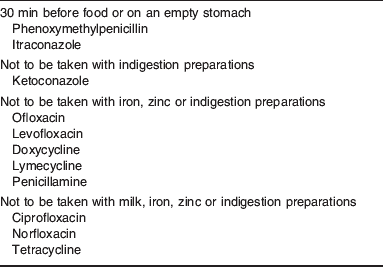
The oral bisphosphonates, alendronate and risedronate have a very low oral bioavailability and therefore to maximise absorption they should be taken 30 min before breakfast with water only(Reference Porras, Holland and Gertz7). In a susceptible population, such as older adults, this may cause them to delay or even omit breakfast.
Medication counselling offers an opportunity to ascertain any possible change to the patients' usual dietary intake as a result of the dosing requirements. Tailored advice could then be given to ensure that dietary intake is optimised.
Anorexia and weight loss
Anorexia is a commonly reported side effect of several frequently prescribed drugs (Table 2); however, the lack of reports indicates that this is not clinically significant in most cases. Recent research is only just beginning to explore the mechanisms by which drug therapy can cause weight loss.
Drugs associated with anorexia or weight loss

Weight loss in Parkinson's disease is related to levodopa therapy(Reference Bachmann, Zapf and Brunner8); however, this weight loss can also be attributed to disease severity and the effect of movement disorders on food preparation and intake.
The weight loss attributed to amantadine has been therapeutically exploited in the management of patients with antipsychotic-associated weight gain(Reference Graham, Gu and Lieberman9).The weight loss associated with topiramate is due to increased energy metabolism(Reference Li, Zou and Xia10).
Patients with pre-existing malnutrition should be closely monitored when initiating medicines associated with anorexia and regular reviews should be undertaken to ensure that any weight loss is quickly identified and corrective action taken.
Increased appetite and weight gain
Weight gain secondary to drug therapy can be clinically important, and is associated with many commonly used drugs (Table 3). Weight gain is a major consideration in the treatment of psychosis and depression, as it is associated with poor treatment adherence in addition to reduced quality of life(Reference Wirshing11). Clinical consequences of drug-associated weight gain are also a concern, due to the negative effects on glucose tolerance, lipid profile and blood pressure, which may contribute to morbidity and mortality.
Drugs associated with weight gain
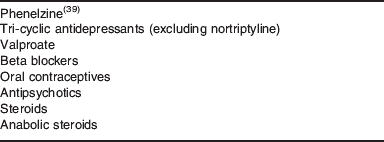
Weight gain associated with antipsychotic therapy can affect up to 80% of patients(Reference Alvarez-Jiménez, González-Blanch and Crespo-Facorro12). This can be 10–15 kg in patients taking olanzapine. Other antipsychotics, such as risperidone and haloperidol, are associated with a lower magnitude of weight gain. Interventions, such as dietary counselling, exercise programmes and behavioural therapy, aimed at attenuating this weight gain are only effective over a short period of time(Reference Alvarez-Jiménez, Martínez-García and Pérez-Iglesias13).
In addition to their original licensed indication, several drugs associated with weight gain are used in the management of migraine(Reference Taylor14), particularly amitriptyline, propranolol and valproate. This is a particular problem in this group of patients as there is evidence that overweight and obese patients with migraine have an increased severity and frequency of attacks when compared to normal-weight patients(Reference Bigal and Lipton15). Prescribers should be aware of the risks of weight gain when prescribing drugs for this group of patients.
Drug therapy associated appetite stimulation and weight gain has been exploited in the management of cachexia syndromes associated with cancer and AIDS, and more recently in the management of the anorexia–cachexia syndrome in the elderly(Reference Yeh, Lovitt and Schuster16).
Megestrol acetate is licensed in the USA for the treatment of anorexia, cachexia or unexplained weight loss in patients with AIDS; however, the data supporting its use in cancer cachexia is more robust(Reference Berenstein and Ortiz17), with demonstrable effects on appetite, weight gain and health-related quality of life(Reference Pascual López, Roqué i Figuls and Urrútia Cuchi18).
Synthetic anabolic steroids are increasingly being used to attenuate the catabolism and weight loss experienced by critically ill patients. There is a growing body of evidence to support the use of oxandrolone in thermal injury(Reference Miller and Btaiche19).
A multimodal approach is required when attempting to promote weight gain. Sound dietary advice should be given and drug therapy utilised only when dietetic measures have been demonstrated to be ineffective.
Nausea and vomiting
Nausea and vomiting is one of the most common side effects of drug therapy; it usually occurs early in treatment and symptoms may resolve despite continued treatment. Nausea and vomiting can have a profound effect on nutritional intake; however, there is an arsenal of effective anti-emetics which when correctly selected can minimise or even remove this adverse effect.
Understanding how drugs can cause nausea and vomiting can help to target therapy.
The mechanisms by which drug therapy can cause vomiting are by a direct effect on the chemoreceptors in the GI tract (serotonin/5HT3 receptors); a direct effect on the chemoreceptor trigger zone (serotonin/5HT3 and dopamine receptors) or where both pathways converge at the vomiting centre in the medulla (muscarinic cholinergic) (Table 4). By understanding the likely receptor stimulation, an appropriate anti-emetic can be selected.
Drugs commonly associated with nausea and vomiting

However, care should be taken as drug-induced nausea can be an indication of drug toxicity as in the case of digoxin or theophylline. Anti-emetic choice should not negate the desired therapeutic effect of the original therapy; for example, using metoclopramide in nausea associated with the levodopa therapy will worsen Parkinson's symptoms due to central dopamine blockade.
Decreased gastrointestinal motility
A reduction in GI motility is associated with bloating, fullness and constipation and this can potentially reduce oral nutritional intake. Drugs blocking anticholinergic and those stimulating opiate receptors in the gut are the most common cause of slow transit and bloating; for many drugs this is a dose-related effect and may be attenuated through the use of modified release preparations or dose reduction (Table 5).
Medication associated with decreased gastrointestinal motility
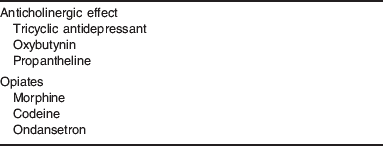
A syndrome of abdominal distension, pain, constipation, nausea and vomiting is a well-recognised effect of opiate therapy, and affects over 50% patients. Opiates have both a central and local component to their effect on the gut(Reference Kurz and Sessler20). Opioid receptors are expressed throughout the GI tract, reducing motility and secretory processes. Constipation caused by opioid therapy can be a side effect which is difficult to manage. Traditionally therapy has been targeted using stimulant laxatives, such as senna or bisacodyl, to counteract the effect on GI motility(Reference McMillan21). Transdermal opioid delivery systems appear to have a reduced incidence of constipation(Reference Tassinari, Sartori and Tamburini22), perhaps due to the lack of topical action in the GI tract.
Specific peripherally acting opioid antagonists are under investigation, which may offer an effective means of managing opioid-induced constipation without affecting the analgesic potential(Reference Holzer23).
Dietetic management includes the provision of adequate oral or enteral fluid therapy and the supplementation of fibre. A multidisciplinary approach is necessary to manage constipation which can have a significant adverse effect on the quality of life of patients.
Diarrhoea
Diarrhoea is one of the most frequently reported side effects of drug therapy, with hundreds of drugs being implicated. Drug therapy can cause diarrhoea through a variety of mechanisms: increase in GI motility, alteration of gut flora and disturbance of mucosal surface. For some drugs, this can be a debilitating side effect; patients may reduce their oral intake in an attempt to reduce the frequency of diarrhoea (Table 6).
Drugs associated with diarrhoea

Anti-microbials are responsible for over 25% drug-induced diarrhoea. This can range from mild diarrhoea to life-threatening pseudo-membranous colitis. Penicillins and cephalosporins account for the vast majority of cases of pseudo-membranous colitis. Prompt corrective action is necessary; removal of the implicated antibiotic and initiation of metronidazole or vancomycin therapy(Reference Chassany, Michaux and Bergmann24). Erythromycin acts directly on motilin receptors to increase GI motility; this side effect has been exploited in the management of diabetic gastroparesis and other motility disorders.
Antiretrovirals are also associated with diarrhoea(Reference Hill and Balkin25) particularly combinations of lopinavir and fosamprenavir with ritonavir; if significant, consideration should be given to changing to another combination.
Several chemotherapy regimens are associated with significant diarrhoea(Reference Richardson and Dobish26) which can lead to dehydration; loperimide is used routinely in the management of this side effect.
Consideration should also be given to the excipients used in liquid drug formulations; excessive intake of sorbitol from liquid medicines can cause diarrhoea(Reference Edes, Walk and Austin27), and excess maltitol causes bloating.
For most drugs, diarrhoea is self-limiting or ceases on discontinuation of the offending drug. Taking the drug with food or increasing the dose may gradually reduce symptoms, and is particularly effective with diarrhoea associated with metformin and iron preparations. Corrective action should be taken before reduced oral intake leads to weight loss.
Perception of food
Perception of food can dramatically change intake and enjoyment, and is influenced by image, texture, smell and taste(Reference Drewnowski28). Side effects of drug therapy can affect all aspects of food perception but are predominantly due to effects on the perception of texture, taste and smell.
Dry mouth
Saliva has many functions. It enhances taste, facilitates speech and swallowing and irrigates, lubricates and protects the mucous membranes of the upper GI tract.
Salivary stimulus is affected by both the parasympathetic and sympathetic pathways. Parasympathetic stimulation increases the volume of saliva produced and sympathetic stimulation decreases volume and increases viscosity.
Many drugs have an action at the receptors that influence saliva production, causing a dry mouth and therefore affecting the perception of food texture and taste (Table 7). The most common cause of dry mouth is due to parasympathetic blockade by drugs with anticholinergic or antimuscarinic activity, and sympathetic stimulation caused by alpha agonists. There are many drugs that act non-specifically at these receptors. The prevalence of dry mouth is unsurprisingly influenced by the number of drugs taken per day(Reference Nederfors, Isaksson and Mörnstad29).
Drugs associated with dry mouth (incidence >10%)

SSRI, selective serotonin reuptake inhibitor; ACEI, angiotensin converting enzyme inhibitor.
Management of dry mouth caused by drug therapy can be achieved in several ways. For many drugs, it is a dose-dependent side effect and therefore flattening the pharmacokinetic profile of the drug by using a modified release preparation or splitting the dose may reduce the severity of symptoms. An alternative drug within the same class may achieve the desired therapeutic effect with less dry mouth symptoms. If discontinuing the offending drug is not an option, it may be possible to adjust dose times to minimise the effect on oral intake and meal times. Salivary stimulants and artificial saliva products may be appropriate in severe cases.
Taste disturbances
Perception of taste is determined by the proportion of the five constituents: sweet, salt, bitter, sour and umami. Bitter and sour tastes tend to elicit an adverse effect on intake(Reference Rozin and Vollmecke30), because most toxins are bitter and food that has ‘gone off’ is sour; it is a protective mechanism and the reaction is more pronounced in children than in adults. Most drugs are toxic, particularly in large quantities, and most have a bitter taste.
Disturbances in taste due to medication are well documented and acknowledged as a common side effect; however, the implications for the effect on nutrient intake both in quantity and profile can be overlooked.
Taste disturbances can be categorised into four main types. Ageusia, a complete loss of one of the taste sensations, is rarely associated with drug therapy; however, hypogeusia, a reduction in the overall sense of taste, is more commonly associated with drug therapy (Table 8). Dysgeusia is an altered perception of taste, often described as bitter or metallic and is commonly associated with drug therapy (Tables 9 and 10). Parageusia is a bad taste in the mouth, in the absence of a source of taste and is rarely associated with drug therapy.
Drugs associated with ageusia or hypogeusia

ACEI, angiotensin converting enzyme inhibitors.
Drugs associated with dysgeusia – bitter

Drugs associated with disgeusia – metallic
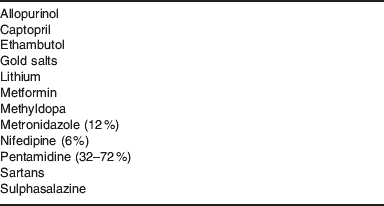
Management of drug-induced taste disturbances should include an investigation into other causes such as dry mouth or depression(Reference Bergdahl and Bergdahl31) and where identified, corrective action taken. Where a clear association with a particular drug is identified, discontinuation of the offending drug should be considered.
If discontinuation of the offending drug is not possible, masking techniques using mouth sprays and lozenges containing local anaesthetics can be useful for dysgeusia.
The evidence supporting zinc supplementation in the therapeutic management of taste disturbances due to drug therapy is not conclusive and should only be recommended in patients with a proven zinc deficiency(Reference Heyneman32).
Drug-induced olfactory disturbance
The larger proportion of what we call flavour is contributed by odour and not taste, although the exact proportion is still debated, and smell is 10,000 times more sensitive than taste(Reference Moncrieff33).
We respond in an involuntary way to odour, because smell is the only sensory pathway routed through the limbic system. The limbic system deals with emotion, motivation and the association of emotions with memory. The Proust phenomenon links autobiographical memory to odour(Reference Chu and Downes34). This can be a problem with trauma or medical treatments as they can be associated with the meal that was eaten prior to the event.
Smell is linked to appetite and satiety and is the first part of the cephalic phase. Food odour triggers an increase in salivation, gastrin and insulin release(Reference Yeomans35).
Patients suffering from anosmia (a complete lack of sense of smell) tend to prefer a texture-centred diet to facilitate food enjoyment. A reduction in the sense of smell and therefore taste can cause overeating due to the search for something ‘tasty’ or a reduction in intake(Reference Mattes, Cowart and Schiavo36).
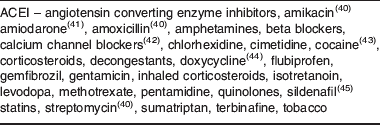
Drug-induced olfactory disturbances are rarely considered in clinical practice and yet a reduction or alteration in our sense of smell can clearly have a profound effect on nutritional intake (Table 11).
Drugs associated with olfactory disturbance
Recent research in cancer patients has identified that chemotherapy causes a transient reduction in both sense of taste and smell, which is more pronounced in elderly patients(Reference Steinbach, Hummel and Böhner37). A recent review highlighted the potential impact on appetite, nutritional intake and weight loss and provided suggestions to improve nutritional intake in this group of patients(Reference Wismer38).
Identifying patients at risk
Numerous studies demonstrate a direct correlation between the number of medications that a patient is taking and the incidence of side effects(Reference Poon and Braun4, Reference Nederfors, Isaksson and Mörnstad29). The consequences of these side effects can be compounded by the physical condition of the patient due to age, disease or malnutrition.
The older adult patient is at particular risk, due to declining organ function which may affect drug metabolism potentially increasing side effects coupled with a declining sensory function. Polypharmacy is particularly prevalent in this patient group.
An increased awareness of drug side effects that can affect nutritional intake in addition to the use of effective nutritional screening tools will assist in the early identification of drug side effects that adversely affect nutritional intake and allow corrective action to be taken.
It is increasingly important that the whole of the multidisciplinary team involved in the nutritional care of patients is aware of the potential impact, both negative and positive, that drug therapy can have on nutritional status. Any nutritional assessment should include a review of the patient's drug therapy and consideration should be given to any opportunity to optimise this therapy in collaboration with the pharmacist and prescriber.
There have been several publications advocating a role for both pharmacists and dietitians in the counselling and management on drug nutrient interactions; there are also many publications on the benefits of side effect counselling on concordance; however, many other ways in which drug therapy can affect nutritional status are yet to be widely acknowledged. There is a need for both patient- and professional-oriented educational materials to raise the awareness of these issues.
Acknowledgements
The author declares no conflict of interests. There were no sources of funding for this review.



