


Introduction
The European Commission's Work Programme 2018 (COM/2017/0650) emphasized the importance of the Digital Single Market and set out the New Deal for Consumers, stating that the success of the internal market ultimately depends on trust and that trust can easily be lost if consumers feel that remedies are not available in cases of harm.
The current study was a contribution to the evidence reviewed by the Commission in the regulatory Fitness Check of EU Consumer and Marketing Law concerning online platforms. Within this framework, the characteristics of online platforms in terms of the criteria guiding the presentation of searched information, transparency regarding contractual entities and users’ reviews were seen as having important consequences for consumers. The platforms provide a service to the users and access to goods and products. Thus, at a general level, the question arises as to what extent the service provided by online platforms is balanced in the interests of the users or balanced in the interests of the platform. More concretely, if in an online search the criteria for the ranking of providers of goods and services is not transparent and is designed to maximize advertising revenue for the platform, then this might constitute an unfair commercial practice. Similarly, if consumers are intentionally misled to the extent that they do not know who is their ‘contractual counterpart’ or who they have to deal with in case of any contractual questions, this constitutes an unfair commercial practice. The same holds true for the risk of manipulating consumer opinion through the presentation or transparency of reviews and ratings, including fake reviews. At the heart of all of these aspects is the issue of trust and transparency in platforms. Trusting that the platform has the users’ interests in mind and having confidence that the information provided is unbiased allow the consumer to make an informed choice.
The success of the Digital Single Market ultimately depends on the confidence and trust of Europeans. As the use of online platforms has reached unprecedented levels, the potential of online platforms to generate economic growth as drivers of innovation remains undisputed. However, the growing importance of online platforms and their expansion into new areas of the economy has given rise to new challenges.
The overall purpose of this behavioural study on the transparency of online platforms was to understand the impact of enhanced transparency on consumer trust and behaviour in searching for and selecting goods and services on online platforms in three specific areas:
1. The criteria used by platform operators to present search results to users, in which order and at what level of saliency.
2. The identity and the legal status of the contracting parties involved in transactions enabled or facilitated by the platforms. For example, whether the consumer would be entering a contract with the platform provider or some other retailer or service provider and whether that person is acting as a trader within the meaning of EU consumer law or not.
3. The quality controls established by platform operators (or lack thereof) on user reviews, ratings and endorsement systems. For example, verification of origin and authenticity, incentives linked to entries, screening/censorship and the right to rebuttal of affected parties.
The study comprised a systematic review of the literature, an in-depth ‘think aloud’ online qualitative enquiry and three discrete-choice behavioural experiments.
Literature review
Search information
The articles identified in the systematic literature review address the impact of information display (Ma et al., Reference Ma, Liu and Hossain2013; Rieder & Sire, Reference Rieder and Sire2014; Sonntag, Reference Sonntag2015; Ursu, Reference Ursu2018), search results position (Chen & He, Reference Chen and He2011; Kulkarni et al., Reference Kulkarni, Kannan and Moe2012; Jerath et al., Reference Jerath, Ma and Park2014; Baye et al., Reference Baye, De los Santos and Wildenbeest2016), trust (Jeacle & Carter, Reference Jeacle and Carter2011) and review manipulation (Luca et al., Reference Luca, Wu, Couvidat, Frank and Seltzer2015). According to Ma et al. (Reference Ma, Sheng, Pant and Iriberri2012), search engines play a critical role in the diffusion of online information, as they determine what content is available to Internet users. Major search engines, such as Google, Microsoft Live Search and Yahoo!, provide two distinct types of results – organic and paid – each of which uses different mechanisms for selecting and ranking relevant webpages.
The findings of Baye et al. (Reference Baye, De los Santos and Wildenbeest2016) suggest that a retailer's rank on a results page is an important driver of its organic clicks. That is, holding other drivers of clicks constant, consumers tend to click retailers that are more recognized, trusted and have reputations for providing value (in terms of price, product depth or breadth) and service (well-designed websites, return policies, secure payment systems). Unsurprisingly, paid placement, where advertisers bid payments to a search engine to have their products displayed prominently among the results of a keyword search, has emerged as a dominant form of advertising on the Internet (Chen et al., Reference Chen and He2011). Luca et al. (Reference Luca, Wu, Couvidat, Frank and Seltzer2015) find that, while Google is known primarily as a search engine, it has increasingly developed and promoted its own content as an alternative to results from other websites. By prominently displaying Google content in response to search queries, Google is able to use its dominance in search to gain customers for this content, which may potentially lead to reduced consumer welfare if the internal content is inferior to organic search results.
An experiment conducted by Ma et al. (Reference Ma, Liu and Hossain2013) on consumer trust and purchase choice from vendors listed in organic and sponsored search results suggests that trust is lower for sponsored links compared to organic links, and that consumers are less likely to buy from vendors in sponsored search results. However, the disclosure of information about vendors’ reliability reduces this negative effect. This highlights the importance of ensuring that the ‘organic results’ are ranked according to relevance to the user and not driven by the platforms’ corporate or financial interests. Specifically, disclosing vendors’ reliability ratings helps increases consumers’ trust of sponsored results.
Identity of contractual parties
The identification of the contractual parties has traditionally served to ensure trust and credibility among exchange partners (Flanagin et al., Reference Flanagin, Metzger, Pure and Markov2011). Consumer trust is identified as one of the most important features in electronic commerce growth. For example, Kim and Gupta (Reference Kim and Gupta2012) suggest that consumer trust in a website or service is more important than the product or price offered, as no matter how low the price offered, the authentication of the website or online supplier is more influential. Hong and Cho (Reference Hong and Cho2011) argue that consumers’ trust in one aspect of the online marketplace generalizes to other features and influences online purchases.
Beyond the issue of trust, online transparency is of particular relevance to provisions of the European Unfair Commercial Practices Directive. This stipulates that a trader in an online platform is required to act with a degree of professional diligence commensurate to its specific field of activity and honest market practice, and not to mislead their users/consumers by either action or omission. Platforms should, therefore, take appropriate measures to enable users to clearly understand with whom they are concluding contracts. The crux of the issue is that platform users will only benefit from protection under EU consumer and marketing laws in their dealings with contractual parties (sellers) who are traders. With sellers not operating as traders, it is a case of caveat emptor; there is no consumer protection should the service or product be deficient in any way or form.
User reviews
Internet users increasingly rely on product reviews and ratings provided by other consumers (Baek et al., Reference Baek, Ahn and Choi2012; Malbon, Reference Malbon2013; Agnihotri & Bhattacharya, Reference Agnihotri and Bhattacharya2016). Llamero (Reference Llamero2014) reports that only so-called ‘electronic word of mouth’ (eWOM) consumer reviews are seen as credible, suggesting that reviewing is based on limited sources. Ballantine and Yeung (Reference Ballantine and Yeung2015) postulate that consumers seeking eWOM often use heuristic cues to assess the credibility of online information. In particular, content characteristics are one of the main factors determining trust in eWOM.
To understand the perceptions of the credibility of commercial website information and the factors users find important in their evaluative processes, Flanagin et al. (Reference Flanagin, Metzger, Pure and Markov2011) conducted a nationally representative survey and quasi-experiment. The survey finds that while people engage in online marketplaces regularly, they seldom contribute to the review process. They do, however, rely heavily on ratings to evaluate the credibility of online commercial information. Experimental results further indicate that people tend to aggregate product ratings, but not to assess the number of ratings when evaluating the quality of products sold online. As suggested by Baek et al. (Reference Baek, Ahn and Choi2012), the influx of online consumer reviews has created information overload, making it difficult for consumers to choose reliable reviews.
Online reviews could, in principle, greatly improve consumers’ ability to evaluate products (Mayzlin et al., Reference Mayzlin, Dover and Chevalier2014). However, the authenticity of online user reviews remains a concern, as traders and non-traders have an incentive to manufacture positive reviews for their own products and negative reviews for their rivals. Mayzlin et al. (Reference Mayzlin, Dover and Chevalier2014) provide an empirical analysis of promotional reviews, examining both the extent to which fakery occurs and the market conditions that encourage or discourage promotional reviewing activity in two travel websites: Expedia.com and TripAdvisor.com. In this regard, some of the features applied by websites can be important. For example, while anyone can post a review on TripAdvisor, only those who have spent at least one night at the hotel and have booked through the website can post a review of a hotel on Expedia.
In this context, Kusumasondjaja et al. (Reference Kusumasondjaja, Shanka and Marchegiani2012) investigate the effects of review valence and the presence of source identity on consumer perceptions of review credibility and trust in the travel services being reviewed. The results indicate that a negative online review is deemed more credible than a positive review, while a positive review leads to a greater initial trust than a negative review. These findings apply when the identity of the reviewer is disclosed. However, when the reviewer's identity is not disclosed, there is no significant difference between positive and negative reviews in terms of either perceived credibility or impact on consumer trust.
According to Filieri (Reference Filieri2015), the proliferation of fake and paid online reviews means that building and maintaining consumer trust is a challenging task for websites hosting consumer-generated content. Fake consumer reviews are found to undermine a (potentially) effective and efficient mechanism for overcoming information asymmetry between online sellers and buyers (Malbon, Reference Malbon2013). Consumer reviews also offer a powerful mechanism for regulating the marketplace. Genuine consumer reviews can moderate bad seller behaviour and assist in improving the quality and efficiency of the marketplace. Although there are laws in many jurisdictions that prohibit misleading and deceptive conduct, detecting fake reviews is complex. It has been suggested that it should be addressed by regulators through an ‘alliance approach’, bringing soft power to achieve a fair and competitive marketplace.
An in-depth exploratory study
A small-scale qualitative study was conducted to gain a better understanding of how experienced and less experienced online participants use and think about online platforms (Lupiáñez-Villanueva et al., Reference Lupiáñez-Villanueva, Gaskell, Tornese, Vila, Gómez, Allen, Codagnone and Veltri2018). One objective of this exploratory study was to ensure that the design of the forthcoming experiments on the impact of greater transparency and in particular of the choice of interventions reflected, as far as possible, the everyday reality of online consumers. The procedure adopted was a set of ‘think aloud’ online tasks with ten participants in each of four countries: Spain, the UK, Germany and Poland. Accompanied by a social researcher, the respondents talked through the completion of three online tasks: information searches, a simulated purchase and an assessment of user reviews. The researcher observed the respondent's behaviour and conducted an in-depth interview about their experience and about the Internet in general.
With the small numbers of respondents in this qualitative study, it is necessary to be cautious in drawing conclusions. Insights that informed our experimental studies are as follows.
Respondents were far more concerned with the speed and convenience of their search than with issues of transparency or potential manipulation. Results showed that, generally, participants felt that the order of the results presented was based on popularity (i.e., number of previous clicks). The ranking of search results or advertising was not considered to exploit them. Rather, it was perceived as a source of revenue for the websites. Some level of ‘manipulation’ of search results was seen as just a part of how business works. Respondents were often unware of issues related to contractual parties. They tend to trust platforms that are recognized and well-known. Consumers willingly buy from unknown traders in online marketplaces, since they trust the institutional mechanisms behind the platforms. Respondents acknowledged that websites cannot be held responsible for the reliability of reviews. While the platforms were trusted, user reviews were seen as likely to be open to manipulation. Negative reviews were generally seen as more credible than positive reviews, and a high number of reviews gave a kind of guarantee that potentially biased comments were compensated by authentic ones.
Experimental methodology
The outcome of this preparatory phase informed the design of three discrete-choice experiments testing the impact of: transparency in information provision on the choice behaviour of respondents in online searches; the identity of contractual parties (sellers); and user reviews and ratings.
The discrete-choice methodology is a quantitative technique for eliciting preferences and identifying the relative importance of different attributes of a product or service in the consumer decision-making process. A discrete-choice experiment consists of a series of binary choices between pairs of products made up of different attributes and levels of these attributes. The goods and services offered were: (1) booking of a restaurant (information search); (2) purchasing a smartphone (contractual identity); and (3) booking of a hotel (user reviews).
Sample characteristics
The sample for the experiment consisted of 4800 subjects in four European countries (Germany, Poland, Spain and the UK) representing different cultural and geographical areas of the EU as well as different levels of Internet penetration. In aggregate, each discrete-choice experiment for topics 1, 2 and 3 was a sample of 1600 subjects. The sample for each discrete-choice experiment – 400 subjects in each country – was representative of the population that had purchased a good or service online during the last year. Quotas by gender and age were applied to these samples, based on the last available Eurostat data from the 2016 survey on information and communications technology. The respondents for the experiment (and a pilot test) were recruited through an online panel in which an invitation e-mail contained a link to the experiment. Screening question elicited age and gender in order to achieve the desired quotas. After the screening questions, respondents were directed to the platform where the experiment was implemented using ad-hoc software created for the experimental task. Respondents completing the experiment in less than 50% of the median duration of the experiment (so-called ‘speeders’) were excluded from the final sample (~8%). The time spent by the participants in completing the experiment was calculated as the interval of time between the time at which the respondent accessed the platform to the time at which he/she left the platform. Additional details are available in Annex 1A (available online).
To maximize realism and ecological validity, the information (provision and prominence) was shown in realistic screenshots of mock-up websites.
The first experiment investigated three attributes of information about restaurants: (1) information content (IC); (2) information presentation; and (3) rank position on the screen. IC had three levels, while visual prominence of information presentation and rank position had two levels (see Table 1).
Task 1: booking a restaurant experiment – attributes and levels.
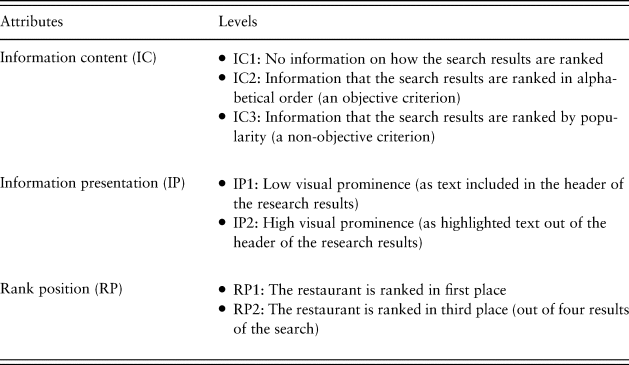
Based on different combinations of the three informational attributes and their different levels, respondents made ten choices between two restaurants featuring different attributes and attribute levels. From these choices, it is possible to infer the relative impact on the different attributes and levels of attributes on respondents’ choices. Note that this study was not interested in the choice of restaurant – that was merely an example of a product about which users may search for information. The focus was on the effect on choices of different IC, visual prominence and rank ordering of the search results. More specifically, we were interested in exploring the following research questions (RQs). With all other attributes held constant, does an objective criterion for ranking search information influence consumer choice (RQ1)? With all other attributes held constant, does a non-objective criterion for ranking search information influence consumer choice (RQ2)? With all other attributes held constant, does highlighting information on the criterion for rank position influence consumer choice (RQ3)? With all other attributes held constant, does the rank of the information search influence consumer choice (RQ4)?
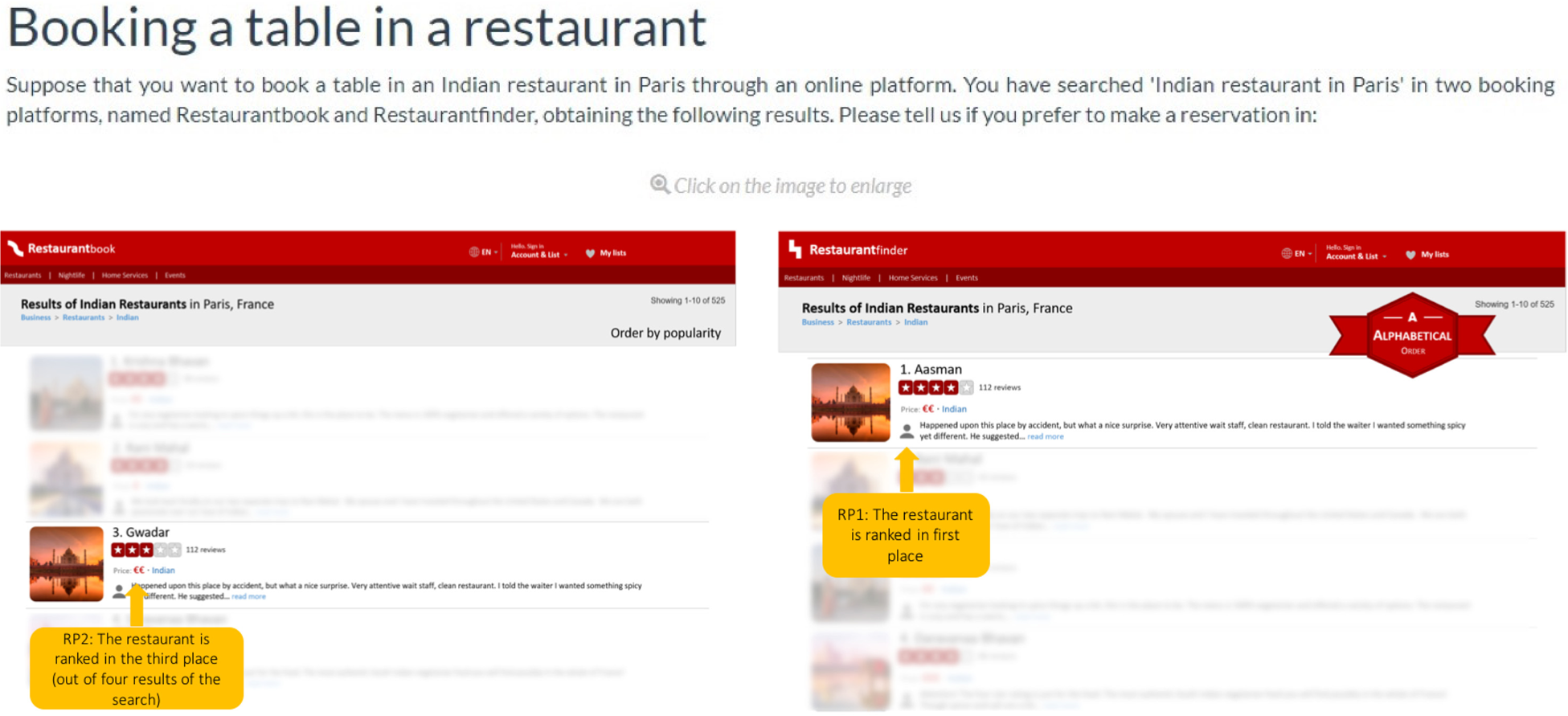
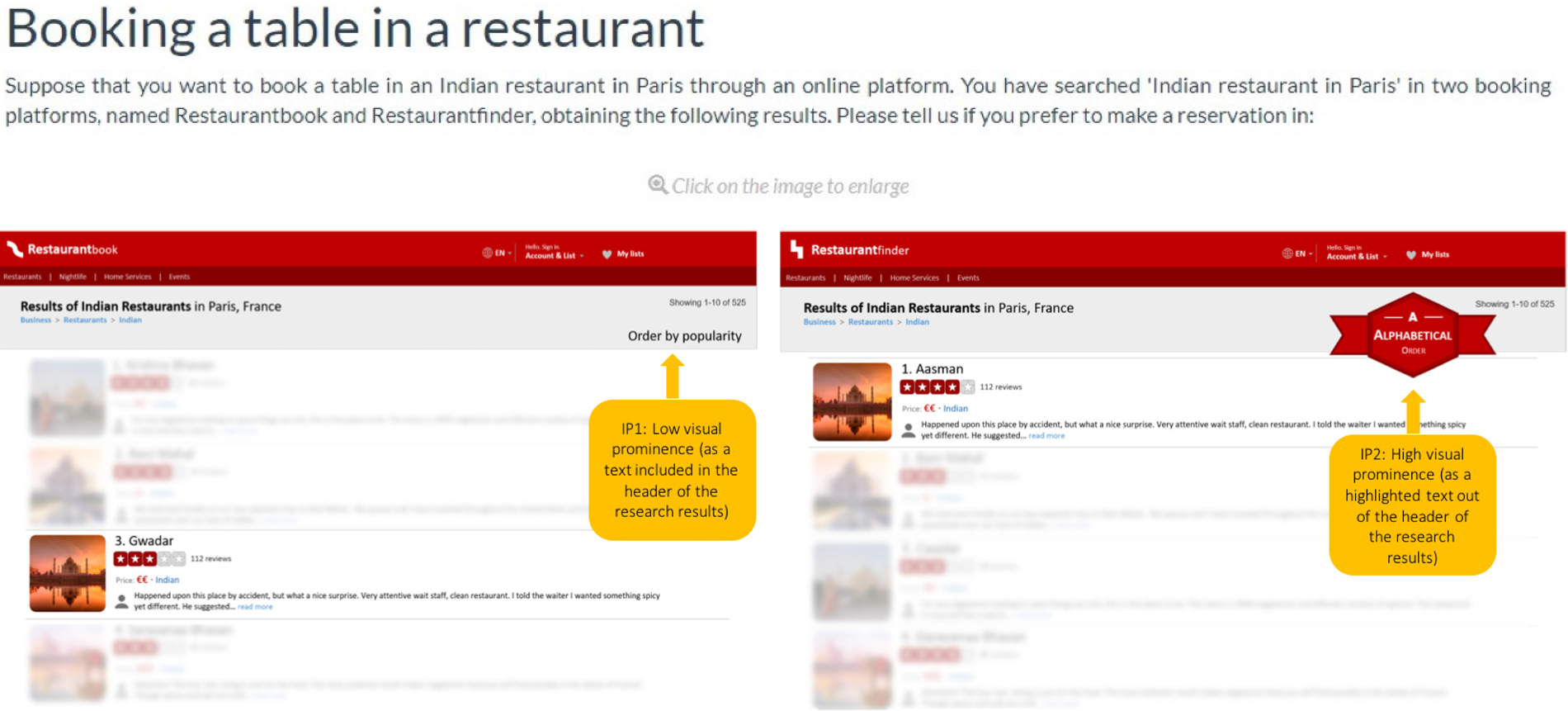
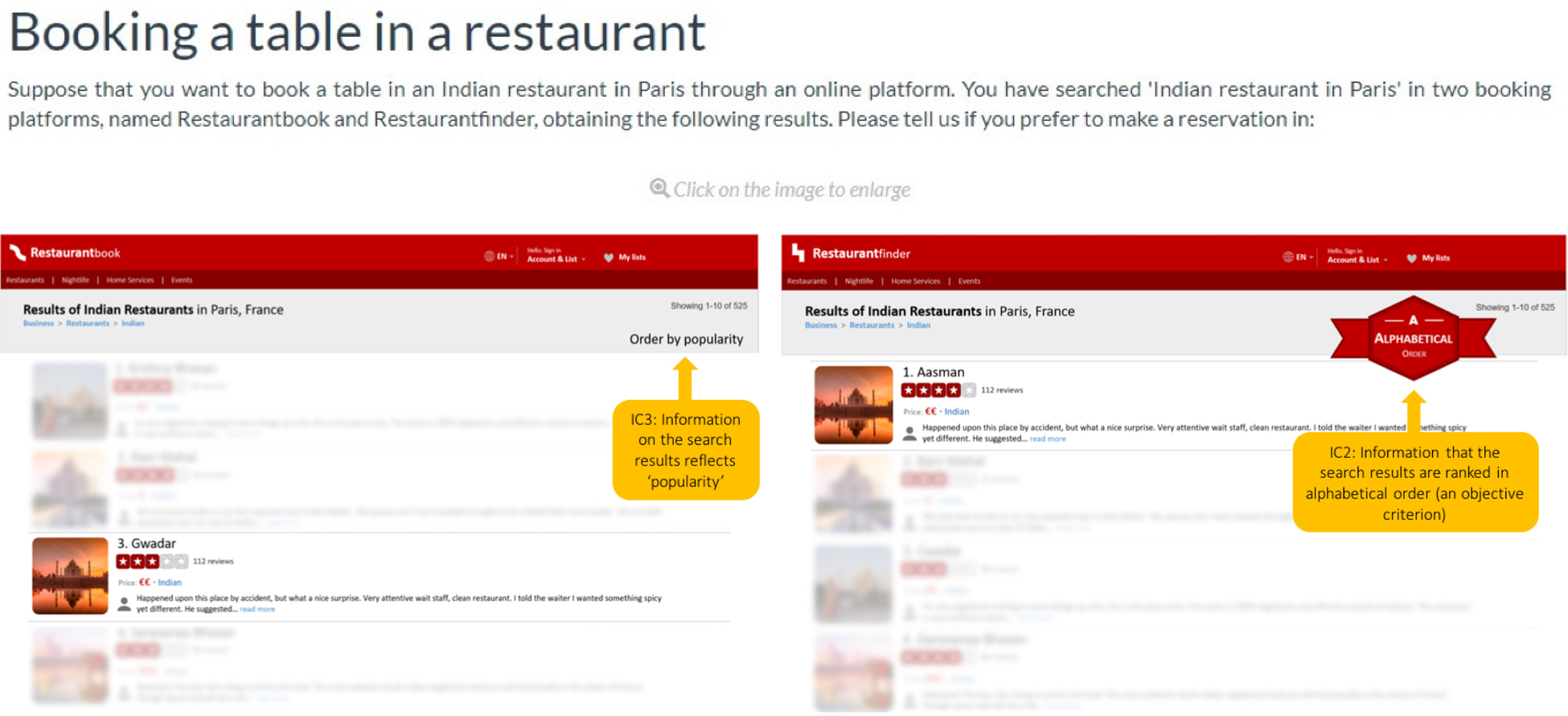
Figures 1–3 present examples of how the IC attribute (see Figure 1), information presentation (see Figure 2) and rank position (see Figure 3) were shown to the participants.
Search result experiment: example of the information content attribute.
Search result experiment: example of information presentation.
Search result experiment: example of rank position.
In the second experiment, a different group of respondents were presented with two mobile phones and asked which phone they preferred based on their evaluation of three attributes concerning contractual information and price. Here, the relevant measures followed the guidance on the implementation/application of the Unfair Commercial Practices Directive on information about contractual entities. The three attributes were: (1) IC about the contractual entity; (2) information presented in terms of visual prominence about the contractual entity; and (3) price of the mobile phone (Table 2). Table 2 shows the levels for each attribute. The design follows the logic of the study in discrete-choice task 1. In this case, the RQs were as follows. With all other attributes held constant, does information on the contractual entity being a trader influence choices (RQ5)? With all other attributes held constant, does information on the contractual entity being a trader giving the purchaser consumer rights in case of problems influence choices (RQ6)? With all other attributes held constant, does highlighting information about the contractual entity influence choices (RQ7)? With all other attributes held constant, does the price of the mobile phone influence choices (RQ8)?
Task 2: transparency of contractual parties experiment – attributes and levels.
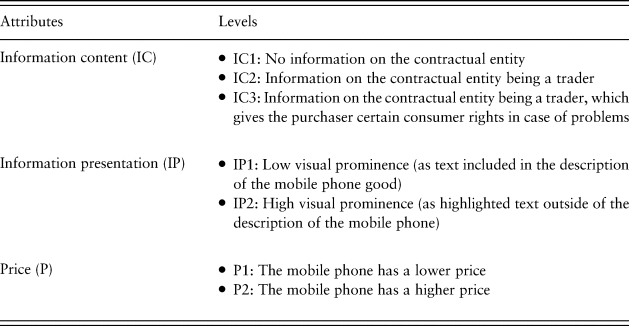
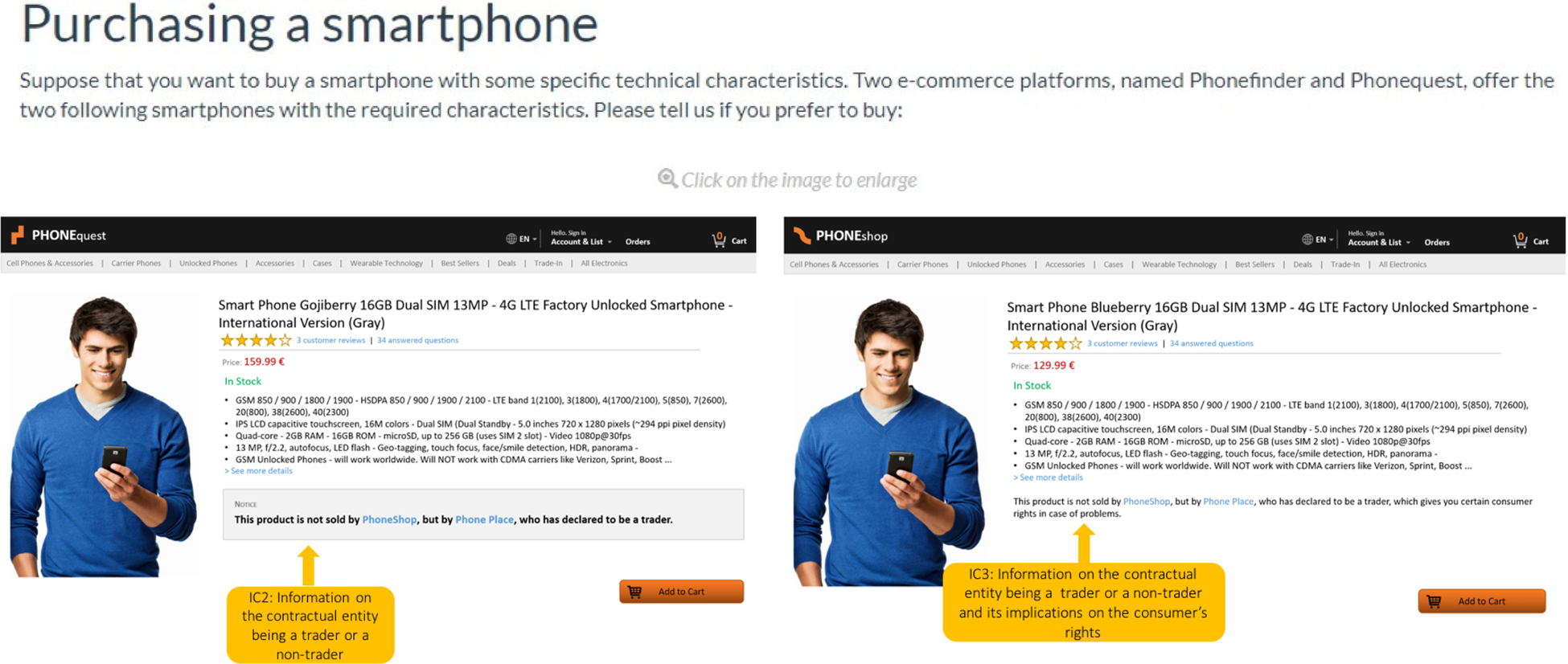
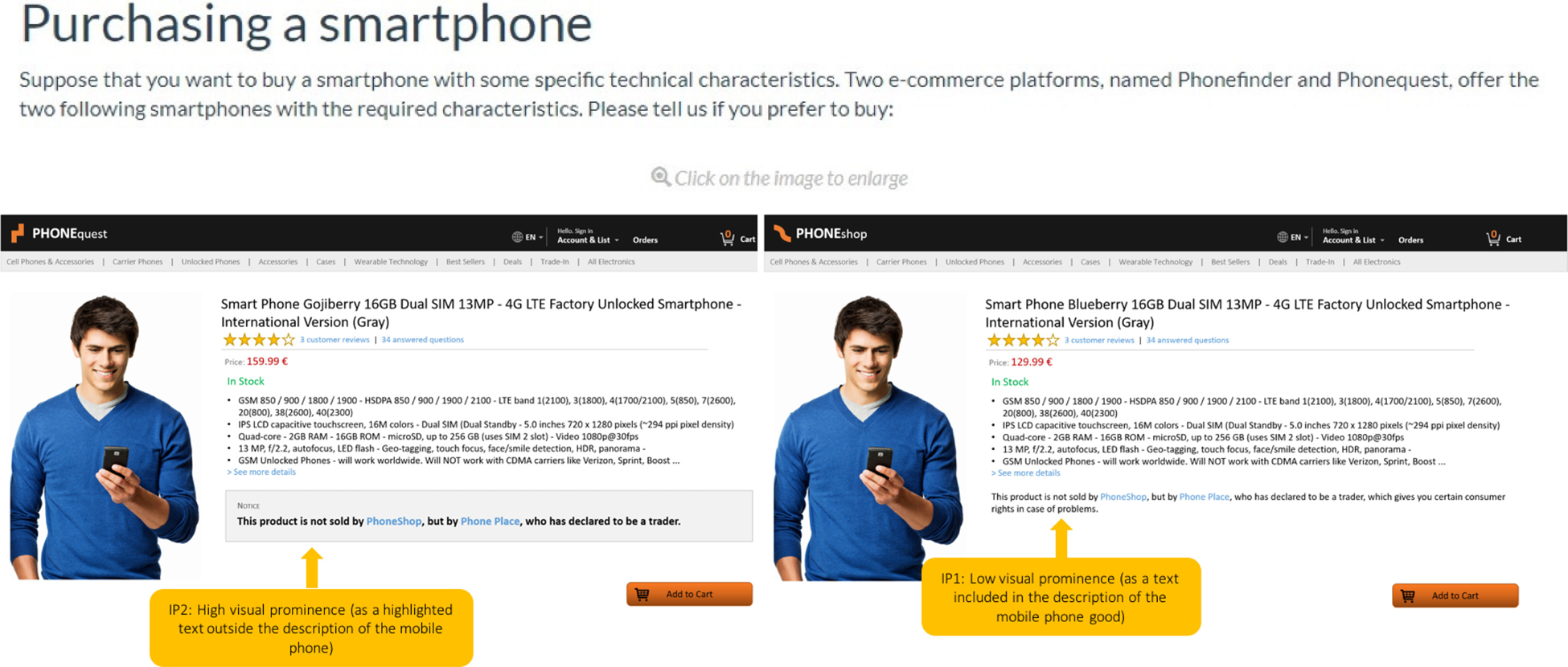
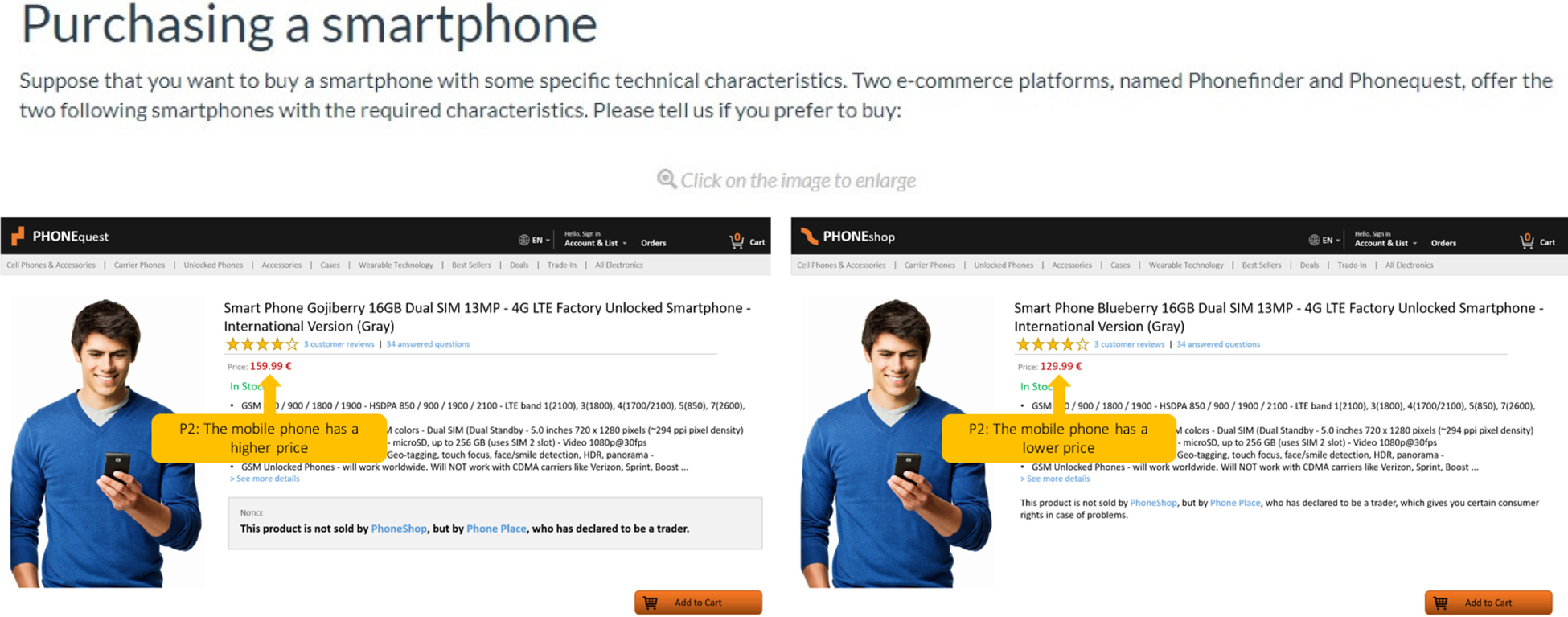
In a similar vein to the first discrete-choice task, 2 of the possible 12 combinations of the attributes and their levels were not feasible. With no information about the contractual entity, there can be no low or high information salience. Hence, ten combinations were presented to the respondents. Figures 4–6 present examples of how the IC attribute (see Figure 4), information presentation (see Figure 5) and price (see Figure 6) were shown to the respondents.
Identity of contractual parties experiment: example of the information content attribute and levels.
Identity of contractual parties experiment: example of information presentation and levels.
Identity of contractual parties experiment: example of price.
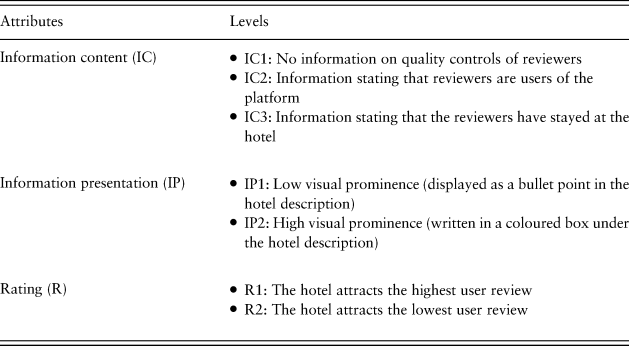
The third experiment, again with a different group of respondents, investigated the effect on product selection – choice of a hotel – of user reviews. The RQs were as follows. With all other attributes held constant, does information stating that the reviewers are platform users influence choices (RQ9)? With all other attributes held constant, does information stating that the reviewers have stayed at the hotel influence choices (RQ10)? With all other attributes held constant, does highlighting information about reviewers influence choices (RQ11)? With all other attributes held constant, does the quality of user reviews influence choices (RQ12)? The respondents were presented with two of the possible hotels and asked which hotel they preferred, basing their evaluation on the source of reviews received, the visual prominence of such reviews and the review rating. Table 3 outlines the levels for each attribute.
Task 3: consumer reviews experiment – attributes and levels.
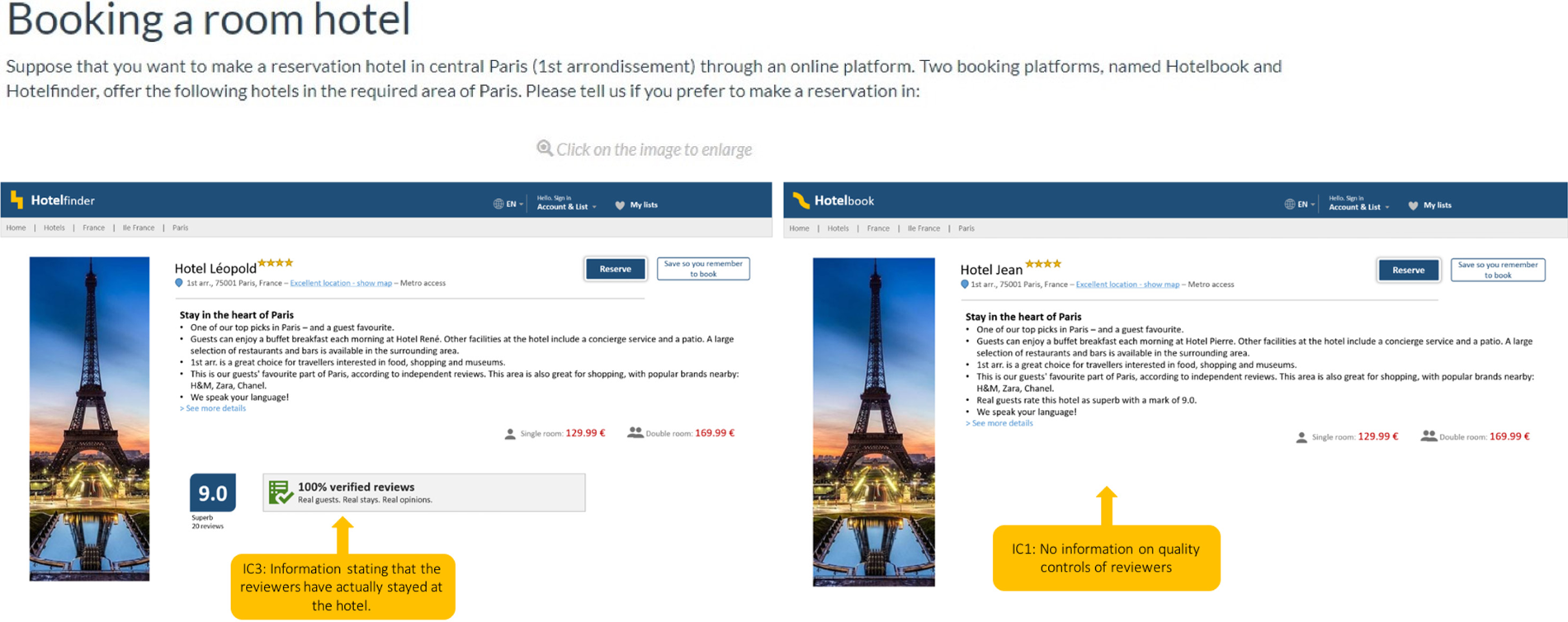
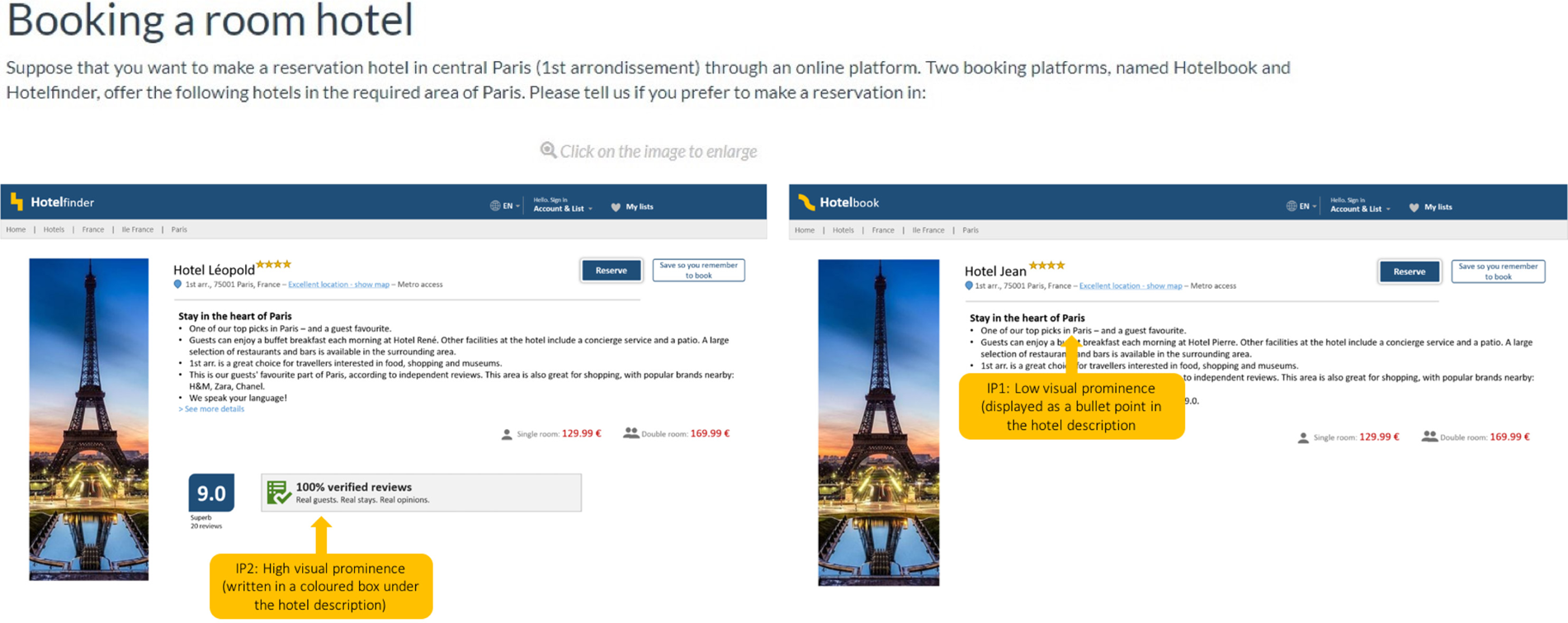
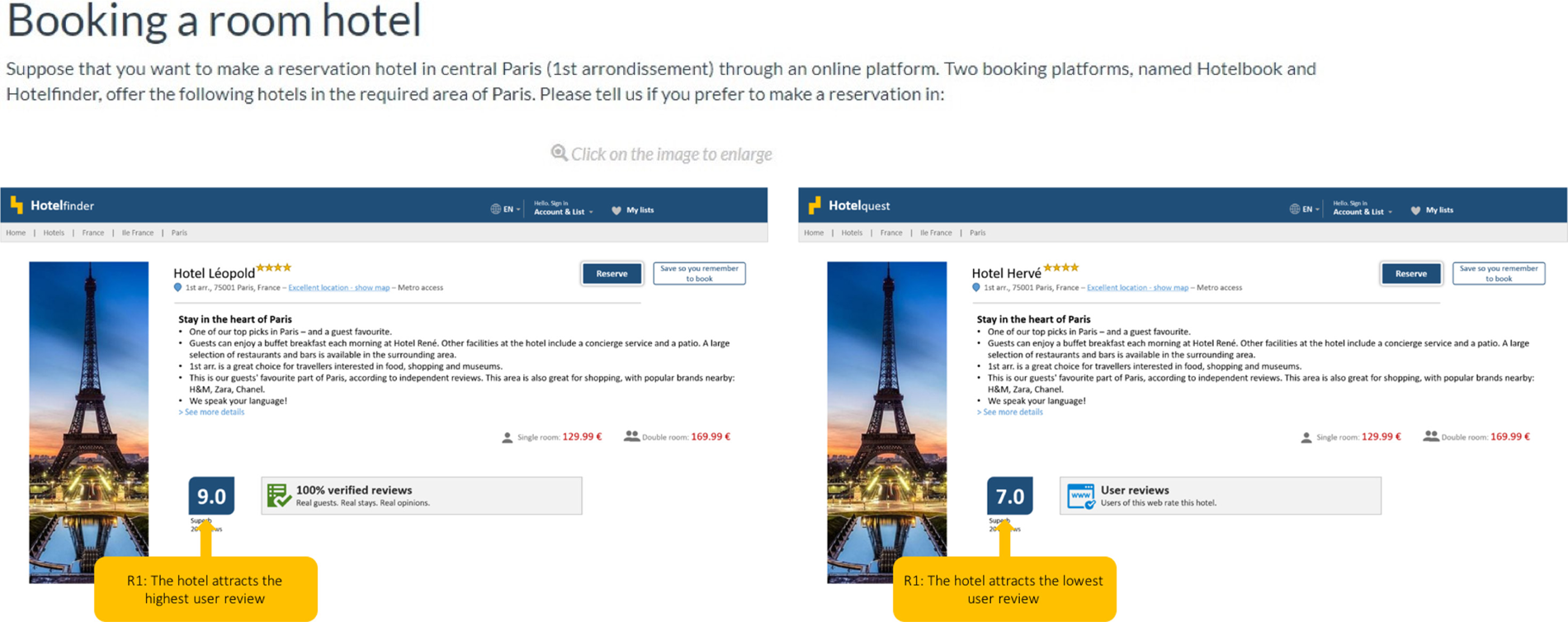
As with the previous discrete-choice tasks, Figures 7–9 present examples of how the IC attribute (see Figure 7), information presentation (see Figure 8) and rating (see Figure 9) were shown to the respondents.
Consumer review experiment: example of the information content attribute and levels.
Consumer review experiment: example of information presentation and levels.
Consumer review experiment: example of rating review and levels.
Results
The discrete-choice methodology is based on random utility maximization theory, whereby an individual is assumed to choose the utility-maximizing option when presented with a choice set containing alternative scenarios. The parameter estimates are standard logit, the outcome of a conditional logistic regression with the regression coefficients representing the change in the logit for each unit change in the predictor.
Information on search results
In Table 4, we report the results of the first discrete-choice experiment. Compared to having no information on the criteria for ranking search results, when informed that the ranking is based on popularity, the probability of selecting the product is 115% higher, irrespective of its ranking position and visual prominence on the screen (RQ1). Separately, when a product is ranked first on the screen, the probability of selecting it is increased by 47%, irrespective of transparency about the basis of the ranking or visual prominence (RQ2, RQ3 and RQ4). It is plausible to argue that most consumers read popularity as a signal that, since many others have chosen the product, it must be of good quality and from a trustworthy source. It is also likely that first place in the search results carries similar connotations. Setting aside the possibility of the manipulation and/or distortion of ‘popularity’, the findings are evidence that information on the ranking criterion and the order in which search results are presented have a significant effect on product selection.
Search results experiment: booking a restaurant (n = 1600).
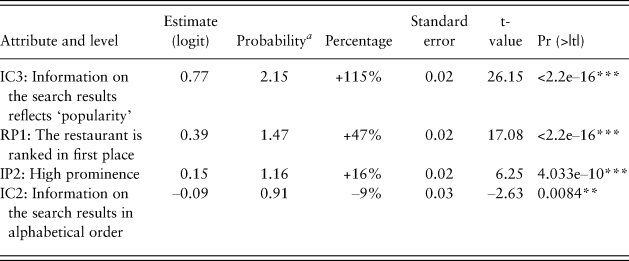
Baselines: no information, low visual prominence and restaurant ranked in third place out of four results.
*p < 0.05, **p < 0.01, ***p < 0.001.
a The odds ratio is calculated by the exponential of the logit. This value is compared to 1, which is the baseline probability.
Information on the contractual entity
Moving to the experiment about transparency and contractual identity (Table 5), compared to having no information about the identity of contractual parties, being informed merely that the product is sold by a third-party trader reduces the probability of product selection (RQ5). However, providing the additional information that the third-party trader's status ensures consumer rights should there be any post-purchase problems increases the probability of product selection over no information by almost 50% (RQ6). Partial transparency – introducing the (possibly surprising to respondents) fact that a third party is involved in the sale – may lead to confusion and concerns: “Can this third party be trusted?” But full transparency – the additional information that the third party's trader status provides consumer protection rights – increases the probability of purchase (RQ7). Here, full transparency is seen to increase trust and confidence in the online transaction. Price affects choice as expected, and cheaper products increase probability of selection (RQ8).
Contractual entities experiment: buying a mobile phone (n = 1600).
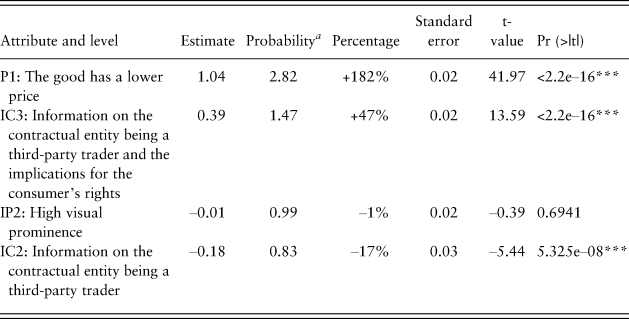
Baselines: no information on contractual entity, low visual prominence and lower price.
*p < 0.05, **p < 0.01, ***p < 0.001.
a The odds ratio is calculated by the exponential of the logit. This value is compared to 1, which is the baseline probability.
Information on user reviews and ratings
Table 6 reports the results of the experiment on user reviews and ratings. Compared to having no user reviews or ratings, a review in a prominent position on the website leads to an almost 200% increase in the probability of choosing the product (RQ11). An increase of 107% is found when the product receives the highest user rating with all other attributes held constant (RQ12). Information that the reviewers have stayed in the hotel increases the probability of choosing it by 40% (RQ10), while knowing that reviewers are merely platform users increases the chances of selection by 20% (RQ9).
User reviews experiment: booking a hotel (n = 1600).
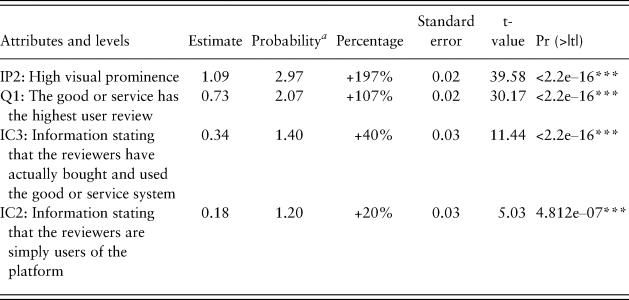
Baselines: no information on quality controls on reviews, low visual prominence and hotel attracts low user reviews.
*p < 0.05, **p < 0.01, ***p < 0.001.
a The odds ratio is calculated by the exponential of the logit. This value is compared to 1, which is the baseline probability.
Having completed one of the three experiments, respondents completed a questionnaire asking about their reactions to the information provided. Did they recall the information? Did it make them more confident and trusting in the platform? And was it important in their decisions? At least two out of three respondents said they recalled the information and, of these, about one in two accurately selected the correct information out of a list of options. Of those who recalled the information correctly, 70% or more agreed that the information was important in their decision and that it made them more trusting and confident in the transaction.
Country comparisons
The discrete-choice experiments were conducted with respondents from Spain, Poland, Germany and the UK. To investigate country differences, we carried out the same analysis for the pooled data on each country separately. Overall, across the four countries, the similarities in the pattern of results are far greater than the differences, as shown in Annex 1B.
For ‘information search’, the average estimates show a consistent picture, with the exception that high prominence appears not to be significant for the German sample.
For the issue of the ‘contractual entity’, the estimates are consistent across the four national samples, with the exception of Germany, where details that the contractual entity is a trader and the implications of that for consumer rights are not significant, while they are for the other three countries. Finally, all of the estimates are similar for the four countries on ‘user reviews’.
Discussion and conclusions
The objective of this study was to investigate the impact of enhanced transparency on consumers’ trust and behaviour in three specific areas: (1) the criteria for and presentation features of search results; (2) the identity of contractual parties; and (3) quality controls on consumer reviews, ratings and endorsement systems.
The results showed that the order of presentation of the search outcomes based on popularity is by far the most important attribute in increasing the probability of choosing a product. In addition, ranking first in the presentation of the search results increases the probability of product selection, while the influence of just ranking first is about half of that of ranking by popularity. When the explanation of the search outcomes is given high visual prominence, there is a small increase in the probability of product selection. Information that the search outcomes are ordered alphabetically does not affect the probability of choosing a product, and a lower price has the largest effect on the probability of purchasing a product. Full information that the contractual entity is a trader carrying the associated consumer rights increases the probability of product selection. Whether information on contractual entities is visually prominent or not, it does not affect the probability of product selection. Information limited to the contractual entity being a trader, without indicating the consequences for consumer rights, reduces the probability of product selection. High visual prominence of user reviews increases the probability of selecting the product. In addition, high ratings of a product increase the probability of selection of the product. Reviews from users of the product increase the probability of selecting the product, and reviews from platform users also increase the probability of selecting the product, but these are less impactful than actual users of the product.
From the perspective of behavioural science, the results indicate that most people use heuristic-driven forms of decision-making in processing information about search results. Popularity, which is associated with the cognitive heuristic of ‘social proof’ (Cialdini et al., Reference Cialdini, Wosinska, Barrett, Butner and Gornik-Durose1999; Cialdini, Reference Cialdini2009), was the most powerful information cue in determining participants’ choices. Today, social commerce, like business-to-consumer sites and, more importantly, intermediaries that facilitate the shopping experience, continue to offer more and more innovative technologies to support interaction among like-minded community members who share the same shopping interests (Amblee & Bui, Reference Amblee and Bui2011). Among these technologies, reviews, ratings and recommendation systems have become some of the most important social shopping strategies to foster ease of use and simplicity in sharing consumption experiences and aggregating evaluations (MacCoun, Reference MacCoun2012; Lu et al., Reference Lu, Fan and Zhou2016). The results showed that “popularity was followed by rank position, which operates as a substitution bias” (Kahneman & Frederick, Reference Kahneman, Frederick, Dale Griffin and Kahneman2002). Rank position is used to formulate an easily computable assessment of other attributes of a product. A similar consideration can be made regarding the issue of the contractual identity of sellers. The results indicate that providing information only about the contractual identity has a detrimental effect on product choice, while including details of the scope of consumers’ rights is positive.
These findings indicate that the availability heuristic may be operating in these contexts. One of the most accepted assumptions of human decision-making holds that most people make estimates and decisions based on the ease with which instances or associations come to mind (Tversky & Kahneman, Reference Tversky and Kahneman1973). The dual-process theory of decision-making provides a robust framework for investigating the psychological processes that underlie the effects that we have found (Kahneman, Reference Kahneman2011). The dual-process theory postulates that two different systems are active during decision-making processes. System 1 is considered to be fast and intuitive, while System 2 is slow and reflective. The theory suggests that purchase decision-making in online environments that involve minimal risks, such as restaurant or hotel choices, is governed by System 1, making it more susceptible to systematic biases. Consumers rely on heuristics, especially in online shopping (Nazlan et al., Reference Nazlan, Tanford and Montgomery2018), where mental shortcuts simplify the decision-making processes.
Information limited to contractual identity may raise the spectre of potential troubles. By contrast, full transparency with the inclusion of details on consumer rights may make future problems more salient, but may provide reassurance about consumer protection (Patel et al., Reference Patel, Balic and Bwakira2002). The final aspect of transparency concerned the user reviews, distinguishing between users that have actually purchased the product or are simply users of the platform. The results indicate a stronger effect of ‘true reviewers’, but the ‘unverified reviewers’ do have a positive impact on product selections. The social proof heuristic appears to be operating here, even with reviews from unverified users. It is perhaps a reminder of how automatic forms of cognition can be pervasive in decision-making contexts.
One of the strengths of the current study is that we conducted the discrete-choice experiments in four European Member States with population-representative samples. Second, multiple online contexts were assessed, thereby increasing external validity. To maximize ecological validity, the information (provision and prominence) was shown as realistic screenshots of mock-up websites. Third, we established whether the increased transparency of different product attributes is associated with a greater impact on consumers’ choices. A limitation of the current study is that participants conducted the experiment online and, as such, it was not possible to control the situation in which they participated. This is a potential threat to internal validity. However, it could also be argued that making simulated online purchases at home reflects real online purchasing decisions. Second, only a limited number of products and platforms were used in the experiments; hence, one must be cautious about generalizing the findings to online behaviour in general. Nonetheless, we did not identify anything issues that would point to the expectation of different effects for other products or on other platforms.
To achieve greater online transparency leveraging behavioural insights, it is recommended that: (1) action be taken to make the criteria used to order search results apparent to consumers; (2) it is made possible to reorder search results using a range of criteria; (3) efforts are made to raise consumers’ awareness of the identity of contractual parties and their understanding of the legal implications; and (4) platforms are encouraged to implement quality controls for improved authenticity and to achieve greater numbers of user reviews.
To conclude, the findings from the three discrete-choice experiments and the post-experimental survey suggest that greater online transparency has three effects: (1) it is important in decision-making; (2) it increases trust and confidence in the online environment; (3) and, all things being equal, it increases the probability of product selection. As such, online transparency is clearly in the interests of consumers. By the same token, it is in the interests of platforms that could expect to see growth in online activity as a result of increased consumer confidence and trust. As a final note, the outcomes of this study were adopted by the European Commission's President J.-C. Juncker in the New Deal for Consumers.
Supplementary material
To view supplementary material for this article, please visit https://doi.org/10.1017/bpp.2020.11.


 Open access

