
Hostname: page-component-77f85d65b8-2tv5m Total loading time: 0 Render date: 2026-03-26T21:08:48.167Z Has data issue: false hasContentIssue false

The archaeology of a Nazi synthetic-fuel plant and its legacy: the Hydrierwerke Pölitz AG

Published online by Cambridge University Press:  30 September 2024

Grzegorz Kiarszys*
Affiliation:
Department of Archaeology, Institute of History, Szczecin University, Poland
Maksymilian Dzikowski
Affiliation:
Department of Archaeology, Institute of History, Szczecin University, Poland
*
*Author for correspondence ✉ grzegorz.kiarszys@usz.edu.pl

Abstract

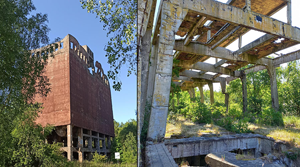
The Hydrierwerke Pölitz AG was a synthetic-fuel plant of strategic importance to the Nazi war machine. The surrounding area contained labour camps, factories and other military infrastructure. The area was a target for sustained Allied bombardment causing extensive damage to the plant and nearby towns and villages. After the war, the plant's troubled past faded before interest was revived in the 1990s. Here, with the aid of historical aerial photographs and modern remote-sensing methods, the authors document the physical remains of the site, reconstruct its ‘dark history’ and reflect on the significance of the Hydrierwerke for the discourse on neglected and appropriated Second World War heritage.

Information

Type
Research Article
Copyright
Copyright © The Author(s), 2024. Published by Cambridge University Press on behalf of Antiquity Publications Ltd

Access options

Get access to the full version of this content by using one of the access options below. (Log in options will check for institutional or personal access. Content may require purchase if you do not have access.)

Article purchase

Temporarily unavailable