




Non-technical Summary
In The Structure of Evolutionary Theory, Stephen Jay Gould observed that the theory of punctuated equilibria formed “the coordinating centerpiece” of his work in evolutionary biology. But that was not always the case. This paper examines how punctuated equilibria came to play a coordinating role in Gould’s thought—something that was only possible once Gould had abandoned his youthful preference for adaptive explanations and, more surprisingly, his commitment to the central importance of “biological improvement” in the history of life. This exercise sheds new light on Gould’s early understanding of punctuated equilibria, while also illuminating underappreciated features of his intellectual development during the crucial decade of the 1970s.
Introduction
The term “punctuated equilibria” (PE) was coined 53 years ago in a now classic volume called Models in Paleobiology (Eldredge and Gould Reference Eldredge, Gould and Schopf1972). Since then it has had an eventful career, first in paleontology, then in biology, and finally in sundry places like public policy-making and religious studies. It is frequently misunderstood, especially in the popular press, in ways that have proved resilient. So, for example, one sometimes reads that the punctuations of PE correspond to “explosive” bursts of evolution like those supposedly involved in the Cambrian Explosion. But this is a mistake. The Ediacaran–Cambrian radiation was a polyphyletic radiation; PE is a theory about the scaling of speciation in geological time. There is no obvious connection between the two.
But this paper is not about those relatively simple misunderstandings of PE. It is about a different kind of misunderstanding: one that concerns the history of the idea, particularly in relation to Stephen Jay Gould’s thinking about evolution. This history will be familiar to most readers of Paleobiology. Many will have read David Sepkoski’s excellent study of the “paleobiological revolution,” which contains an account of the origins of PE (Sepkoski Reference Sepkoski2012). Some will even have waded through Gould’s 300-page chapter on PE in The Structure of Evolutionary Theory, later published as Punctuated Equilibrium (Reference Gould2007). These readers may be tempted to conclude that the publication of PE was the major event in Gould’s career, overshadowing everything else. And so it was, I suppose—but only in hindsight. Lots needed to happen before Gould could embrace PE as the “coordinating centerpiece” of his thought, as he put it in The Structure of Evolutionary Theory (Gould Reference Gould2002: p. 37). Not least, he needed to renounce the idea that the history of most animal groups is a history of biological improvement, or “progress” in the sense of increased mechanical efficiency. He also needed to repudiate his deep-seated preference for adaptive explanations in paleontology—but here I am getting ahead of myself.
This paper is organized in seven sections. In “A Portrait of the Paleontologist as a Young Man,” I discuss what Gould was up to on the eve of “Punctuated Equilibria: An Alternative to Phyletic Gradualism” (Eldredge and Gould Reference Eldredge, Gould and Schopf1972). This included a promotional campaign for a vision of evolutionary paleontology that differed starkly from the one he would promote in his later work. The next two sections discuss PE itself and argue that nothing in the original formulation of the theory forced Gould to abandon his vision for evolutionary paleontology or the associated ideas about evolution. But if nothing in PE forced Gould to abandon this vision, then why did he do it? And how did PE come to form the centerpiece of a quite different view of evolution associated with an almost diametrically opposed research program to the one he promoted in 1970? These are the questions I will take up in the final three sections of the paper.
But first things first. What was Gould up to on the eve of “Punctuated Equilibria: An Alternative to Phyletic Gradualism”?
A Portrait of the Paleontologist as a Young Man
In 1966, a remarkable essay appeared in the journal Biological Reviews. Commissioned by Julian Huxley, it was written in a style that Huxley would have appreciated: witty and energetic, and expansive in its view of evolution. Its author was Stephen Jay Gould, and he began his review of allometry, or relative growth, by confessing “a nearly complete bias for seeking causes framed in terms of adaptation” (Gould Reference Gould1966: p. 588). He then made clear that this extended even to changes that result from increasing size: “for whatever reason complex organ systems may have originally developed, the expanded potential for further progress thus conferred … is a true and most significant phylogenetic advance” (p. 591). Gould went on to observe that scientists “too often confine [their] explanatory attempts to immediate causes,” perhaps as an inheritance “from the mechanical aspects of the Newtonian approach” (p. 629). But “whereas the citation of efficient physiological mechanisms can explain the form of a wolf’s dentition, the response ‘all the better to eat you with my dear’ answers the question ‘why this specific form’ in another, and equally valid, sense.” Elsewhere, Gould described his preference for adaptive explanations even more straightforwardly. “The fundamental problem of evolutionary paleontology,” he argued in 1967, “[is] the explanation of form in terms of adaptation” (Gould Reference Gould1967: p. 385).
It must have surprised many readers to learn that this essay was penned by a graduate student, barely 25 years old. Gould had earned the commission by writing a fan letter of sorts to Huxley, who was by then an old man decades removed from his last scientific work of any significance (Princehouse Reference Princehouse, Sepkoski and Ruse2009). Thirty years earlier, Huxley had kickstarted the study of allometry in a book, Problems of Relative Growth, which Gould greatly admired (Huxley Reference Huxley1932). It is therefore unsurprising to find Huxley’s influence radiating throughout Gould’s review (1966), just as it radiated throughout the whole of his early career.
Nowhere is this influence more evident than in Gould’s remarks about progress, or as he sometimes said, “biological improvement” (e.g., Gould Reference Gould1967, Reference Gould1970). Huxley was a man obsessed with progress (Smocovitis Reference Smocovitis, Somsen and Kamminga2009). It was for him an idée fixe. Nothing about evolution was more important than the “fact” that natural selection leads to improvement, including improvement of a general sort. So he emphasized it wherever he could. It was a basicallyoptimistic perspective, befitting Huxley’s role as the first director-general of UNESCO. Indeed, Huxley sometimes wrote as if the purpose of evolution was to bring about the cosmopolitan liberalism of the 1950s. Yet for his younger acolyte, the importance of progress lay rather in the promise it held for evolutionary paleontology, and for the study of adaptation in fossil invertebrates.
Gould was not as besotted with progress as Huxley. He recognized, at least, that it was “a touchy subject,” because improvement “is so difficult to define and has so often been discussed with anthropocentric bias” (Gould Reference Gould1968: p. 97). Still, it could hardly be dismissed on this count, as it remained a leading theme in the evolution of major groups:
The evolution of most major groups … is a history of mechanical improvement … [which] is recognized only when we can specify biological tasks, define the structures that fit them best and monitor the evolutionary changes that lead, usually in independent lineages, to new grades or functional … zones. (Gould Reference Gould1970: p. 111, emphasis added)Footnote 1
The evolution of fishes, for instance, “is replete with polyphyletic transitions to improved adaptive mechanics of swimming and eating” (Gould Reference Gould1970: p. 110). But it is not just vertebrates whose evolutionary history has been progressive: invertebrates too have experienced biological improvement. The problem was that invertebrate paleontologists “have been embarrassed into silence by our inability to offer functional explanations for this evident history.” “That we will be able to do so,” Gould concluded, “is the greatest promise of the [emerging science of form in paleontology].”
What did this mean for paleontological practice? First, some context. Gould was trained as a quantitative paleontologist during a time when there was not much precedent for that sort of thing (Sepkoski Reference Sepkoski2012). His specialty was multivariate biometry, which he applied to a variety of groups, including land snails in the genera Poecilozonites and Cerion. He completed his Ph.D. at Columbia University under Norman Newell, a leading invertebrate paleontologist, and John Imbrie, a pioneer of quantitative methods in paleontology who would go on to make important contributions to the theory of ice ages. Then it was off to Harvard, where he would spend the remainder of his career as a professor of geology (and later zoology) and curator of invertebrate paleontology at the Museum of Comparative Zoology.
Gould arrived at Harvard in the fall of 1967. That was near the beginning of the episode known as the “paleobiological revolution,” which saw the consolidation of paleobiology as a distinct area of study focused on the quantitative analysis and interpretation of the history of life (Sepkoski Reference Sepkoski2012). The paleobiological revolution would come to be associated with the data-centric approach of Gould’s student, Jack Sepkoski, who compiled exhaustive datasets of known marine fossil taxa and their stratigraphic ranges (Sepkoski Reference Sepkoski1978, Reference Sepkoski1993, Reference Sepkoski2002). But in 1967, Sepkoski was a college sophomore, and Gould had his own ideas about how to restore paleontology’s reputation among the evolutionary sciences. These were based on a coordination of multivariate statistics, theoretical morphology (the simulation of form in silico), and the experimental study of adaptation in fossils (Dresow Reference Dresow2017). Although Gould’s expertise was in biometry, it was the third approach that would anchor the proposed research program. The reason was that it held the key to demonstrating the reality of mechanical improvement in large taxonomic groups, and it was this demonstration, Gould imagined, that would “reinstate paleontology as a source of new themes for evolutionary theory” (Gould Reference Gould1970: p. 112).
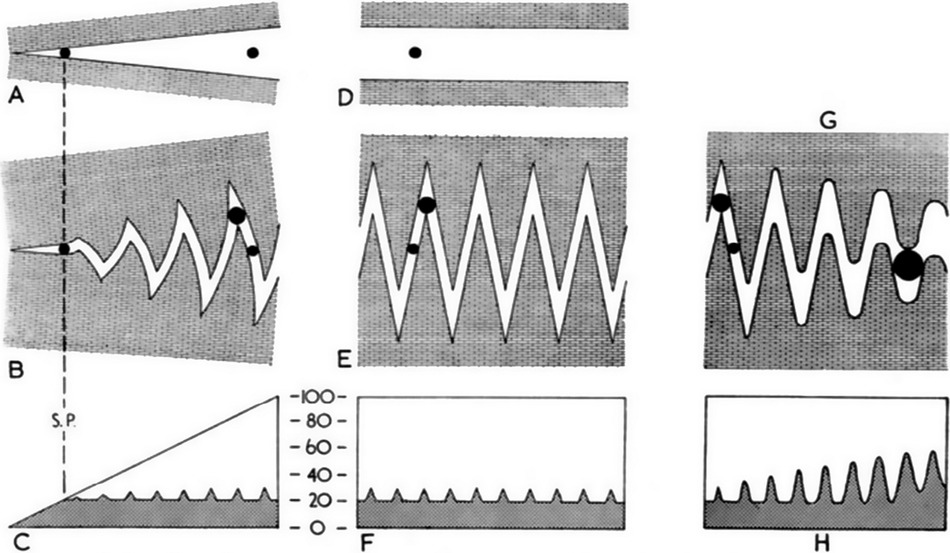
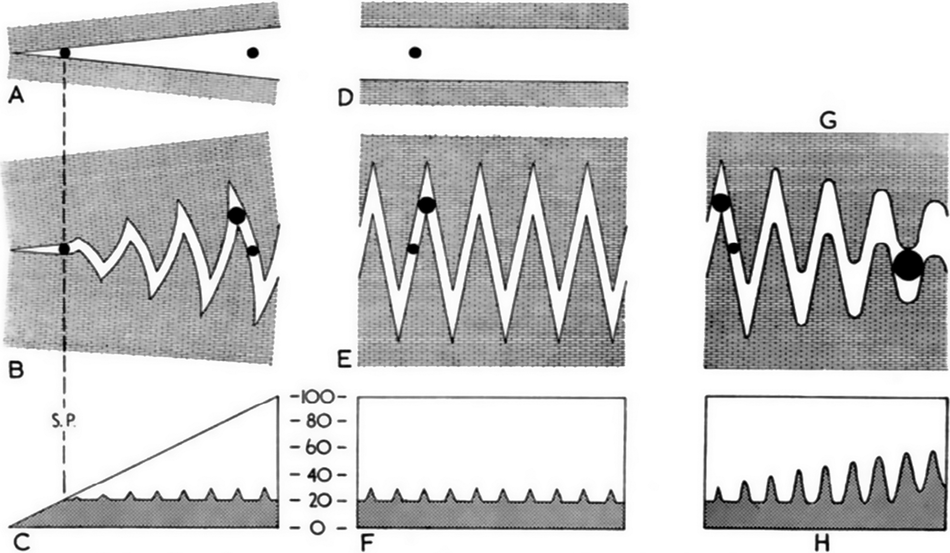
The key was something called paradigm analysis. This was a technique Martin Rudwick had developed to infer the functions of fossilized structures, and it went as follows. First, researchers would use their knowledge of contemporary organisms, along with the principles of engineering, to speculate about the possible functions of a fossil structure. Then they would build models for each hypothesis corresponding to the structure best able to perform the postulated function under the constraints imposed by the nature of the building materials—“paradigms” (Fig. 1). After this, the researchers would run both the fossil (or a model of the fossil) and the paradigms through an experimental setup designed to test how well the fossil could have performed a function relative to the corresponding paradigm. The closer the fossil approximated the performance of the paradigm, the stronger was the case that the structure actually performed that function; although strictly speaking, all the analysis could show was that the fossil would have been capable of functioning in the manner indicated. It could not show that it really did perform the postulated function (Rudwick Reference Rudwick1964b).
A paradigm for “zigzag deflections,” like those formed by the valve edges of certain brachiopods, on the assumption that their function is to filter out large food particles during filter feeding (Rudwick Reference Rudwick1964a). The basic idea is that zigzag deflections increase the area of the slit without increasing the risk of admitting harmful particles.
What interested Gould was the possibility that paradigm analysis could be performed longitudinally, on early and later members of a taxon, to test whether mechanical improvement had taken place in that taxon (Rudwick Reference Rudwick1970). This would involve, first, determining the likely function of a fossil structure, and then testing earlier and later instances of that structure to determine how closely each approximated a shared paradigm. Increases in efficiency would provide experimental evidence that mechanical improvement had taken place in that taxon—just the thing invertebrate paleontology had been missing. Likewise, the convergence of many lineages on a shared paradigm would provide evidence that the history of that taxon had seen the repeated evolution of a mechanically optimal structure.
Why did such evidence matter? Paleontologists had long noted that convergent evolution is a ubiquitous feature of the fossil record, with one even calling its recognition “the most distinctive contribution that paleontology has made to the modern evolutionary synthesis” (Sylvester-Bradley Reference Sylvester-Bradley1959: p. 193). It was also widely suspected that many groups of animals were “grades of improvement attained in the same way by many [separate] lineages” (Gould Reference Gould, Masterton, Hodos and Jerison1976b: p. 119). What Gould hoped to show was that widespread parallelism and convergence could be ascribed to “the evolution, in many lineages, of features that improve the basic design of [a] taxon” (Gould Reference Gould1970: p. 110). This would advance evolutionary theory by demonstrating what previous workers had only suggested—that a major pattern in life’s history resulted from natural selection shaping many lineages to perform shared functions. It would also support the notion that major animal groups are “grades of improvement” achieved through polyphyletic transitions to better functional arrangements. And because the evidence would come from fossils, the contribution would be a distinctively paleontological one; just what was needed to pull paleontology out of the doldrums and establish it as an active and vital contributor to evolutionary science.
Huxley would have been proud. In the event, though, the research program failed to materialize. I know of just two attempts to apply paradigm analysis in the manner Gould indicated, and neither was inspired by Gould (Rudwick Reference Rudwick1970; Stanley Reference Stanley1970). Later paleontologists seem hardly to have noticed the suggestion, or if they noticed it, they did not pursue it (Rudwick Reference Rudwick2017, Reference Rudwick2018). As for Gould, he was soon busying himself with other attempts to remedy paleontology’s low standing: first stochastic models of clade dynamics (Sepkoski Reference Sepkoski2012); then a framework for interpreting developmental changes in adaptive terms (Dresow Reference Dresow2017); and finally, a “hierarchical expansion” of evolutionary theory with PE as its fulcrum (Dresow Reference Dresow2019a,b). There is much that could be said about this frenzied period in Gould’s career, and I will say some of it below. For now, though, the thing to notice is that PE only assumed a central place in Gould’s thought near the end of the 1970s, not in 1972, when PE made its debut (Eldredge and Gould Reference Eldredge, Gould and Schopf1972). Why was this, and why did Gould continue to defend a basically adaptationist and progressivist view of evolution into the second half of the 1970s?
Paradox of Stasis
The answer is that nothing in the original presentation of PE forced Gould to abandon either his adaptationism or his confidence that progress supplied an overarching theme in the history of life. So he didn’t—at least not right away. His views would shift considerably in the mid-1970s, and by Reference Gould1980 would resemble those expressed in his mature work (e.g., Gould Reference Gould2002). But that leaves the first half of the decade to make sense of. This was a period of relative stasis, at least as regards Gould’s basic ideas about evolution, terminated by an abrupt shift. The next two sections of this essay address the stasis; then, in the remainder of the paper, I will consider the punctuation.Footnote 2
To begin, a few words about PE. The theory of PE was based on a model of speciation developed by Ernst Mayr, in which a (typically small) population becomes isolated from a source population at the periphery of its range (Mayr Reference Mayr, Huxley, Hardy and Ford1954; Eldredge Reference Eldredge1971). After a period of isolation, the peripheral isolate loses its ability to interbreed with the source population, at which point it graduates to the rank of a new species. Mayr proposed that these isolates are good candidates to undergo rapid evolution owing to their small size and likely habitation in novel environments. They are also more likely than source populations to incubate evolutionary novelties, including entirely new structures and ways of life. Mayr speculated that during the normal run of a species’ existence, its genes form a tightly coadapted bundle. This precludes the extensive reworking of the gene pool by natural selection. But during speciation, a reduction in population size exposes homozygotes to selection and more generally “produce[s] a sudden change of the genetic environment of most loci” (Mayr Reference Mayr, Huxley, Hardy and Ford1954: p. 170). At this point, all hell breaks loose, genetically speaking, and this permits the population to “pass from one well integrated and rather conservative condition … to another” (p. 172). It is the genetic equivalent of moving from Louis XVI to Napoleon via the Terror.
What Eldredge and Gould (Reference Eldredge, Gould and Schopf1972) asked was what we should expect to see in sedimentary successions if this model is correct.Footnote 3 Their answer was that we should expect a pattern of morphological stasis (corresponding to the stratigraphic range of the source population) punctuated by rapid change (corresponding to the reinvasion of a formerly isolated peripheral offshoot). This would generate a discontinuous series lacking smooth morphological transitions. But if the model is correct, these discontinuities would be an artifact of the speciation process itself. The intermediate forms existed, they just would not exist where a naive observer would expect to find them (and perhaps because of the small size of peripheral isolates, they would be less likely to be preserved as fossils).Footnote 4 By contrast, the morphological stability of the source population was not an artifact. It was evidence that something was preventing the population from changing—in Mayr’s terminology, the “homeostasis” of coadapted gene pools.
So far there is nothing in this treatment to shake the foundations of evolutionary theory. As one reviewer of Models in Paleobiology put it, the proposal “will sound novel only to earth scientists who have not read anything in 20 years[!].”Footnote 5 But Eldredge and Gould staked a claim to novelty in their discussion of large-scale evolutionary trends. This began with a puzzle. Grant that species spend the majority of their time in morphological stasis. How then are paleontologists to explain the existence of long-term directional changes in higher taxa? Slow and steady evolution in lineages will not do the trick, as on this view most change is cramped into relatively infrequent speciation events separating periods of morphological stasis. Perhaps natural selection acts to shift morphology in the same direction whenever new species happen to arise, but this seems improbable. Instead, Eldredge and Gould envisioned
multiple “explorations” or “experimentations” (see Schaeffer Reference Schaeffer1965)—i.e., invasions, on a stochastic basis, of new environments by peripheral isolates. There is nothing inherently directional about these invasions. However, a subset of these new environments might, in the context of inherited [sic] genetic constitution in the ancestral components of the lineage, lead to a new and improved efficiency. Improvement would be consistently greater within this hypothetical subset of local conditions that a population might invade. The overall effect would then be one of net, apparently directional change: but as with the case of selection upon mutations, the initial variation would be stochastic with respect to this change. (Eldredge and Gould Reference Eldredge, Gould and Schopf1972: p. 112)
Basically, if speciation is random with respect to the direction of an ongoing trend, and if there is some (phenotypic) reason that species varying in the direction of the trend are likely to do better than those varying in another direction, then a process of differential survival among incipient species will drive the trend forward, generating directional change.
The most interesting part of this quotation, for present purposes, is the mention of “new and improved efficiency.” I am going to make a big deal out of this in the next section. First, though, I want to glance ahead to 1977, when the sequel to “Punctuated Equilibria: An Alternative to Phyletic Gradualism” appeared (Gould and Eldredge Reference Gould and Eldredge1977). In this paper, Gould and Eldredge presented the same basic story about trends, with random speciation (analogous to mutation) followed by the nonrandom success of a subset of speciations (natural selection). There was a significant difference, however. In the 1977 paper, Gould and Eldredge emphasized the “decoupling” of micro- and macroevolution via punctuated equilibria and its implications for the explanation of general patterns in life’s history. Here, “speciation interposes itself as an intermediate level between macroevolutionary trends and evolutionary events within populations” (Gould and Eldredge Reference Gould and Eldredge1977: p. 140). So, the explanation of macroevolutionary trends must involve processes other than those active in local populations: in particular, processes operating on populations of species.
I will return to this reimagining of PE later. The point of raising it here is simply to highlight that claims about “decoupling,” with their implication that major features of evolution owe to an irreducible domain of macroevolutionary causes, are an addition to what Eldredge and Gould wrote in 1972. Perhaps they were implicit in the original treatment, but anyway they were not highlighted, and probably they were not even recognized. I suspect this was because, in order to embrace decoupling, Eldredge and especially Gould would have had to abandon certain ideas that they were not prepared to abandon in 1972. For this, an external stimulus would be required.
Punctuation and Progress
I claimed in the last section that nothing in the original logic of PE forced Gould to rethink the role he assigned to notions of adaptation and progress in the history of life. So he didn’t, until he had to. This requires further elaboration, and for this we need to return to Eldredge and Gould’s original discussion of trends.
Recall that for Eldredge and Gould (Reference Eldredge, Gould and Schopf1972), speciation involved the adaptation of an isolated segment of a population to novel environmental conditions. By itself, this was not expected to produce directional trends in higher taxa. But now imagine that some isolates find themselves in environments to which they are especially well suited, despite having evolved in a different environment. Then we can expect, as George Simpson put it in Tempo and Mode in Evolution, that “[such] groups [will be] subjected to strong selection pressure and [will] evolve rapidly in the further direction of adaptation to the new [conditions]” (Simpson Reference Simpson1944: p. 123). What Eldredge and Gould proposed is that this process will sometimes produce “net, apparently directional change” in a group of lineages. It will do this whenever a subset of environments exist whose invasion yields “new and improved efficiency,” permitting certain isolates to survive while so many others perish.
In all this adaptation was the key consideration. But not all adaptations are created equal. An old paleontological adage, still widely credited in 1972, held that adaptive specialization is the enemy of evolutionary progress. On this view, specialized lineages sacrifice evolutionary plasticity for short-term adaptive gains. The result is the improvement of some characters at the expense of others, leading to what Julian Huxley called a “limiting” or “one-sided” improvement (Huxley Reference Huxley1942: p. 564).Footnote 6 However, there also exist adaptations that contribute to “raising [the] upper level of all-round functional efficiency” (emphasis added). These adaptations are the stuff of open-ended evolutionary progress. They are the source, ultimately, of higher taxa representing new grades of functional organization. So, you might think, they are exactly the kinds of adaptations that are likely to be incorporated into large-scale evolutionary trends.
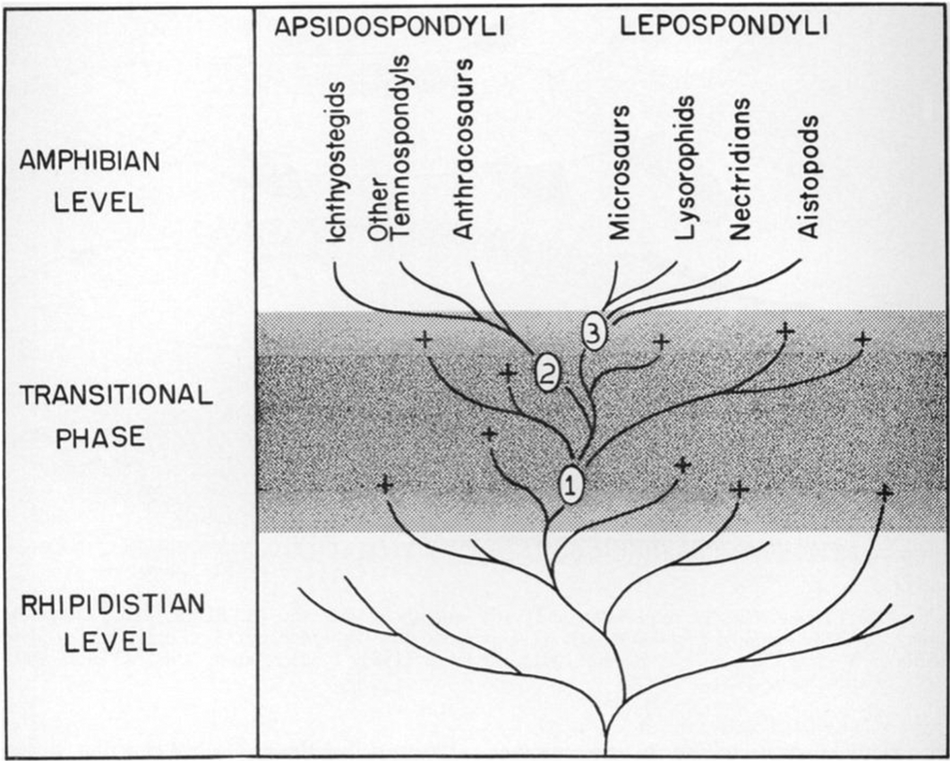
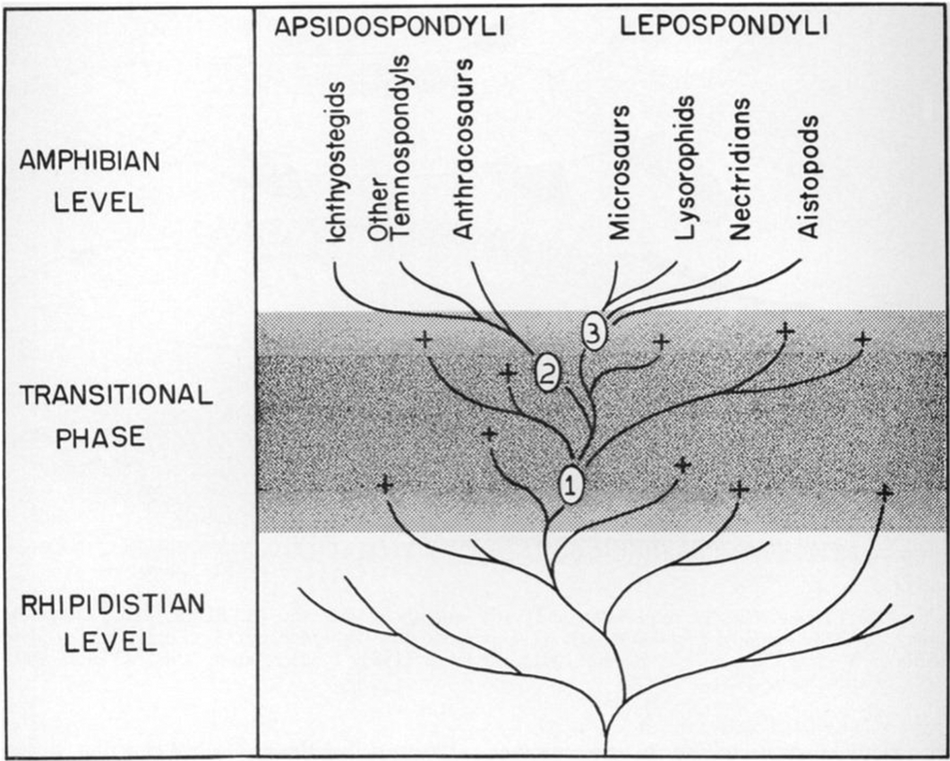
Are these non-limiting adaptations what Eldredge and Gould had in mind when they spoke about “new and improved efficiency”? There are two reasons to think so. First, Eldredge and Gould cited Bobb Schaeffer in connection with their concept of “‘explorations’ or ‘experimentations’ (see Schaeffer Reference Schaeffer1965)—i.e., invasions, on a stochastic basis, of new environments by peripheral isolates.” This matters, because Schaeffer’s Reference Schaeffer1965 paper was about the role of experimentation in the origin of higher levels of organization, which Schaeffer understood, following Huxley, as grades of increasing functional efficiency. Schaeffer was a paleontologist at the American Museum of Natural History and a professor at Columbia University, where Eldredge and Gould were graduate students. They must have known that his concept of experimentation involved the “trying out” of character combinations (so to speak) until one combination achieved an overall improvement. In Schaeffer’s words, “each successful [character] combination must be adapted to a particular ecological niche, but some combinations may also represent improved solutions to functional problems common to many different niches” (Schaeffer Reference Schaeffer1965: p. 334). The latter constitute the successful experiments, in Schaeffer’s sense (Fig. 2).Footnote 7
Schaeffer’s (Reference Schaeffer1965) diagram depicting “the phylogeny of Amphibia in relation to levels of organization.” The numbers, (1) to (3), refer to successful “experiments” in the “amphibian direction.” Each corresponds to a “broad adaptation” representing the best possible solution to a basic functional problem. Crosses represent failed experiments, or lineages that failed to achieve the new organizational grade.
The second reason is a conceptual one. If all speciation involves adaptation to local environments, then Eldredge and Gould could not specify the subset of a directional trend by gesturing at adaptation or “improvement” as such. They must have had in mind a special kind of improvement, like an increase in overall efficiency as opposed to the refinement of a narrow functional capacity. And as luck would have it, there is textual evidence that this was indeed the case. In an article published in 1977, Gould remarked that many nineteenth-century paleontologists rejected natural selection because it offered no toehold for a belief in progress. These paleontologists were right, Gould argued. Natural selection operating within populations generates no overall directionality, only a to-ing and fro-ing of populations in response to shifting conditions. However, “once we discard the shackles of phyletic gradualism as an explanation for ‘trends’, we can see that the operation of natural selection in evolutionary time can yield direction” (Gould Reference Gould and Hallam1977a: p. 22). His explanation of how this works followed Eldredge and Gould (Reference Eldredge, Gould and Schopf1972), but was more explicit at a key point:
The primary events of speciation yield no direction, for they only adapt populations to local environments. But all speciations do not have an equal phyletic longevity or an equal opportunity for further speciation. Trends represent the differential success of subsets from a random spectrum of speciations. Improved biomechanical efficiency, for example, represents one pathway to adaptation in local environments. The species that follow this path—rather than the acquisition of a limiting, morphological specialization—might form the subset of a directional trend.
(Gould Reference Gould and Hallam1977a: p. 22, emphases added)Admittedly, Gould wrote “for example,” which indicates that improved biomechanical efficiency is not the only way species become incorporated into directional trends. But that is not the point. The point is that this rendering of PE “saves the phenomenon” at the center of Gould’s early vision for evolutionary paleontology—improvement in the basic design of large taxa. And this supplies a satisfying answer to the question posed earlier: how did Gould weather the publication of PE with his basic view of evolution mostly intact?
Up to this point I have been examining how an adaptationist with a nose for biological improvement came to formulate a theory (PE) associated with a radically different view of life. First I introduced the adaptationist and explained why “biological improvement” played such a large role in his thinking about evolution. Then I noted a puzzle: that the advent of PE did little to shake Gould’s adaptationist and progressivist commitments, at least at first. I then argued that the puzzle vanishes once we realize that the original formulation of PE was wholly compatible with Gould’s early view of evolution, including the idea that improvement supplies the main vector of history in large taxa. But I have yet to explore why Gould abandoned this set of ideas in the second half of the 1970s. How is it that PE came to serve as the coordinating centerpiece for a larger set of concerns in evolutionary theory, most notably, a twin-barreled critique of adaptationism and the idea of progress? And why did it only begin to play this role after 1977?
Steven Stanley and the “Decoupling” of Micro- and Macroevolution
The short answer to this question is that, in 1975, Steven Stanley published a paper that ascribed to PE a foundational role in an expanded conception of evolutionary theory. Stanley began the paper with an interpretive claim. Taking his lead from Eldredge and Gould (Reference Eldredge, Gould and Schopf1972), he wrote that “the presence of a largely random process (speciation) between [micro- and macroevolution, or evolution within and above the species level, respectively] decouples them, [such] that large scale evolution is guided not by natural selection, but by [an analogous] process” (Stanley Reference Stanley1975: p. 646, emphasis added). “In this higher-level process,” he continued, “species become analogous to individuals, and speciation replaces reproduction” (p. 648). The following remark, which explores the analogy between natural selection and “species selection,” is worth quoting at length.
Whereas, natural selection operates upon individuals within populations, a process that can be termed species selection operates upon species within higher taxa, determining statistical trends. In natural selection, types of individuals are favored that tend to (A) survive to reproduction age and (B) exhibit high fecundity. The two comparable traits of species selection are (A) survival for long periods, which increases chances of speciation and (B) tendency to speciate at high rates. Extinction, of course, replaces death in the analogy. (Stanley Reference Stanley1975: p. 648)
The thing to notice here is that it is PE—and especially the suggestion that morphological evolution is cramped into “random” speciation events—that permits the analogy to go through. If species originate in geological instants and remain stable after that, it is conceptually straightforward to treat them as individuals. And if speciation is random (or undirected with respect to ongoing evolutionary trends), then one can speak about there being a discontinuity between micro- and macroevolution. Previously it had been assumed that individual-level selection explains most trends in the history of life. But if speciation insinuates itself between events in populations and those in clades (i.e., events involving populations of species), then researchers must take seriously the idea that macroevolution is “decoupled” from microevolution. That was Stanley’s proposal in a nutshell.
How much of this had Eldredge and Gould anticipated? To begin, the idea that speciation is “random” (or undirected with respect to ongoing evolutionary trends) was taken directly from Eldredge and Gould (Reference Eldredge, Gould and Schopf1972). The same goes for the idea that a higher-level process is responsible for the directionality of (certain) evolutionary trends. Beyond that, however, things get murky. Eldredge and Gould argue that trends arise when species that vary in a certain direction become more efficient, making them better able to hang on in an environment than their competitors. But this seems to presuppose that what matters in the explanation of evolutionary trends is phenotypic characteristics—basically, adaptations. Stanley’s view is more general. Perhaps some trends are driven by the greater efficiency conferred by a key adaptation (or whatever). But others may be driven by the greater ability of certain species to produce daughter species, or to resist extinction. Very widespread taxa, for example, might be especially resistant to extinction for reasons that have little to do with the phenotypic characteristics of their members.Footnote 8 If this is true, then we must say that selection sometimes operates on species in virtue of irreducible species-level properties. Stanley’s proposal accommodates this possibility; Eldredge and Gould’s apparently does not.
All this is post hoc reconstruction, though. At the time, the differences between the proposals were harder to spot (Dresow Reference Dresow2019b). Even Gould seems to have missed the crucial distinction in the early going. Writing just after Stanley’s publication, Gould complained that Stanley gave a name to a process “Eldredge and I chose explicitly not to christen” (Gould Reference Gould and Hallam1977a: p. 24). This was a priority claim meant to establish that the core of Stanley’s proposal was already contained in Eldredge and Gould (Reference Eldredge, Gould and Schopf1972). But the claim is only valid if the distinction between selection operating on species in virtue of the phenotypic characteristics of organisms and selection operating on the irreducible features of species themselves cuts no ice. To his credit, Gould soon recognized Stanley’s creative contribution and even came to view selection on the irreducible features of species as the more promising form of species selection (e.g., Gould Reference Gould1982).Footnote 9
The Turning Point
But what exactly was promising about a process of selection that operates on the irreducible features of species? Precisely that “true species selection” (as Gould called it) was a macroevolutionary cause, operating on paleontological timescales, which had been discovered by paleontologists of the present generation. Further, it was a cause that might explain some of the most important features of life’s history—not the complex adaptations “which justly [excite] our admiration,” but instead the differential success of major groups of organisms. Assuming this panned out, it would be exactly what Gould had been looking for: a distinctively paleontological contribution to evolutionary theory. And, happily, it would be a contribution that incorporated PE as part of its internal logic. It is because PE correctly describes the process of speciation that macroevolution is decoupled from microevolution. And so, Gould would endlessly argue, PE takes its place as the linchpin of a hierarchically expanded theory of natural selection, “the most portentous and far-reaching reform of Darwinism in our generation” (Gould Reference Gould1994: p. 6769).
This argument will be familiar to anyone who has browsed The Structure of Evolutionary Theory (2002). But Gould began assembling it much earlier, in the sequel to “Punctuated Equilibria: An Alternative to Phyletic Gradualism” (Gould and Eldredge Reference Gould and Eldredge1977). Titled “Punctuated Equilibria: The Tempo and Mode of Evolution Revisited,” this paper was largely a progress report on early debates about PE. Yet it also contained a long section on the theoretical implications of the model. Here, Gould claimed that PE supplied the basis for a new theory of macroevolution, which he termed “the speciation theory.”Footnote 10
Wright’s analogy [comparing speciation with random mutation] represents the key to the claim that a new theory of macroevolution resides in the expression: punctuated equilibria + Wright’s rule = species selection … Previously, mutation and natural selection were regarded as fully sufficient to render macroevolution: one had only to extrapolate their action directly to longer times and higher taxa in large clades. But if we (1972) and Stanley (Reference Stanley1975) are right, speciation interposes itself as an intermediate level between macroevolutionary trends and evolutionary events within populations. Species become the raw material of macroevolution … [and all] movement from micro- to macroevolution must be translated through the level of species by Wright’s grand analogy. (Gould and Eldredge Reference Gould and Eldredge1977: p. 140)
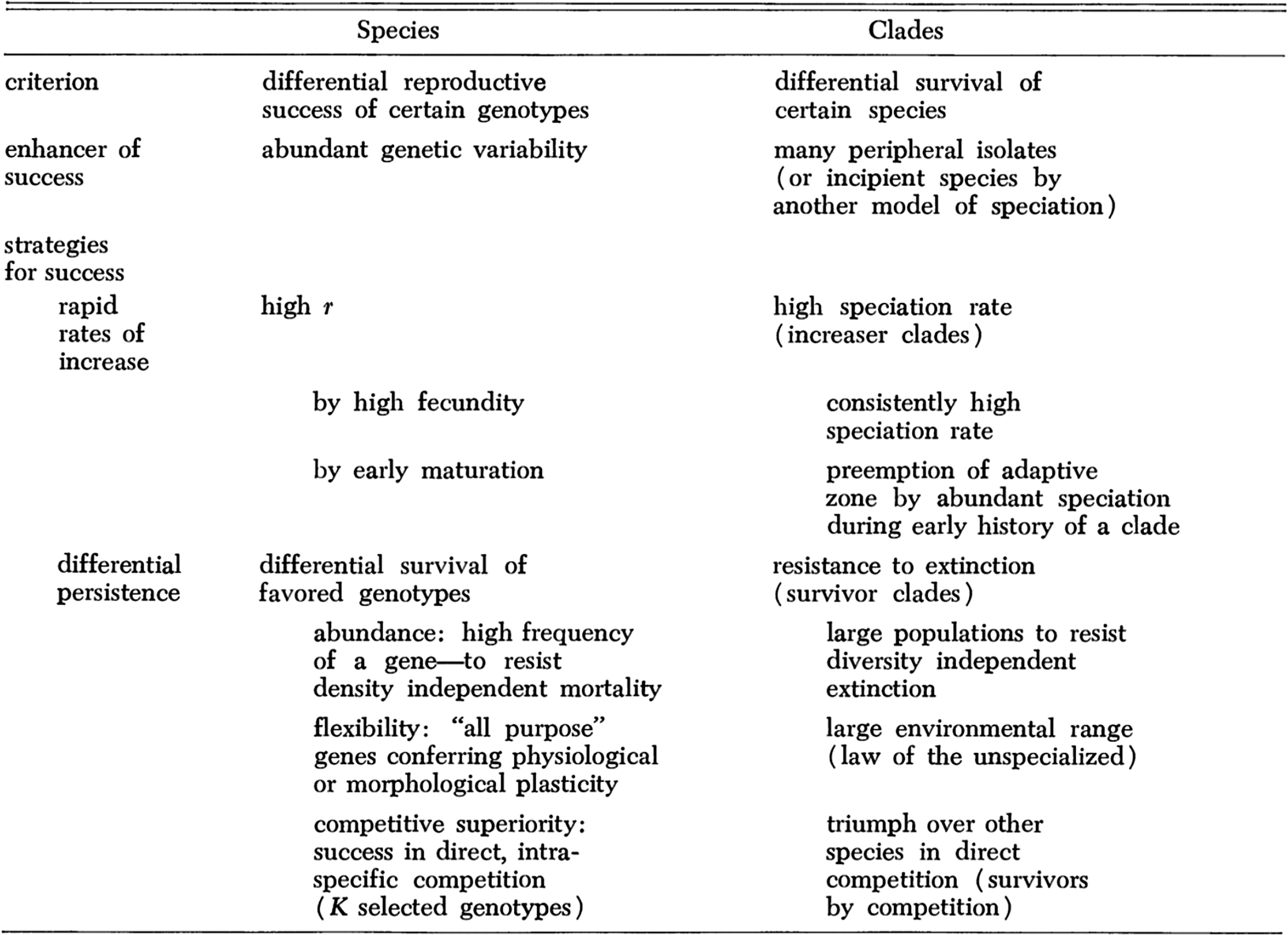
What did this look like in practice? Consider the old paleontological adage that “overspecialized” groups are especially prone to extinction (e.g., Newell Reference Newell1967). What explains this? The traditional explanation pointed to the increased morphological flexibility of (typically small) “unspecialized” forms, which allegedly immunizes these groups against extinction. But Gould and Eldredge speculated that “relative ability to speciate, not [increased] morphological flexibility, provides [the] interpretive key” (Gould and Eldredge Reference Gould and Eldredge1977: p. 140). Large-bodied animals tend to live in small populations that do not easily fragment. By contrast, “[small] animals maintain populations large enough to weather severe density-dependent mortality, while their limited mobility [as adults] and coarse-grained perception of the environment permit an easier separation into isolated subgroups” (p. 141). Small-bodied species are thus comparably good speciators; and if this is so, perhaps it is the case that the world has become full of small-bodied species for reasons having little to do with the morphological overspecialization of their large-bodied competitors (Fig. 3).
Gould and Eldredge’s (Reference Gould and Eldredge1977) table of the “determinants of evolutionary success in species and clades.” Notice how Gould—ever aware of the power of visual arguments—relegates “triumph over other species in direct competition” to the bottom righthand corner of the figure.
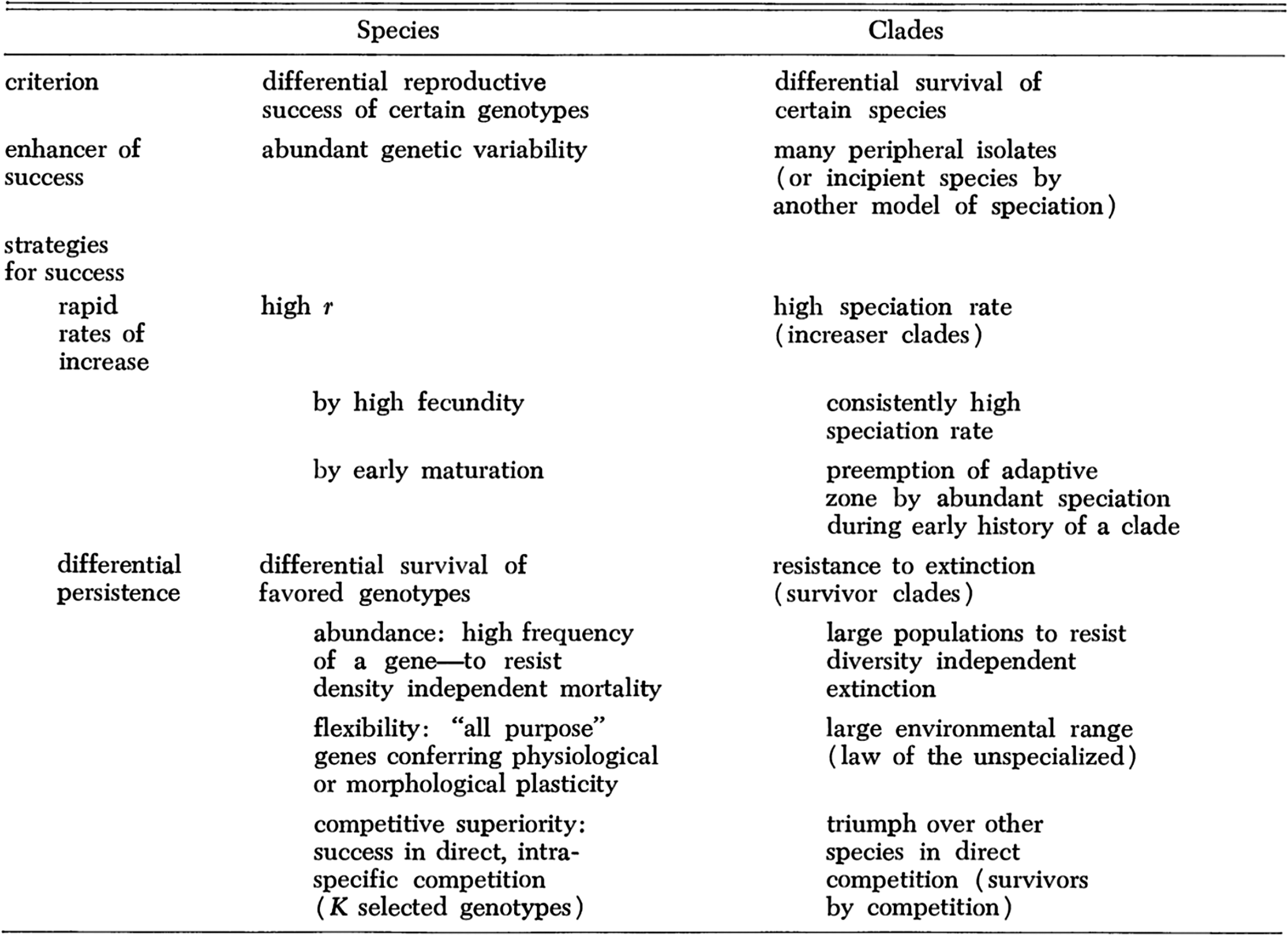
In a similar vein, Gould and Eldredge observed that many paleontologists explain the success of diverse and long-lived clades in terms of “good morphological design, fashioned and tested in competition against species of other clades” (Gould and Eldredge Reference Gould and Eldredge1977: p. 143). “But just as life history parameters of maturation time and reproductive effort have been used to explain success in ecological time, so must the macroevolutionary study of speciation rate be included in our study of successful clades.” Speciose taxa are predicted to be macroevolutionary “r-strategists”—they will be taxa that are especially good at producing daughter taxa. (The “r” refers to the term for maximal growth rate in a general logistic growth model. The r-strategists invest in population growth rate at the expense of parental care for individual offspring.) By contrast, long-lived taxa might be understood as macroevolutionary “K-strategists” (from the term for carrying capacity). If the analogy is apt, then the greatest evolutionary success stories are “the ‘supertramps’ of macroevolution” (p. 145). Further, “[the] virtual irrelevancy, in many cases, of morphological superiority to a clade’s success may largely explain the puzzling observation that so few stories of increasing perfection in design can be read from the history of life” (p. 144). (Compare this to Gould’s remark, made seven years before, that “the evolution of most major groups is … a history of mechanical improvement” [Gould Reference Gould1970: p. 111].)
What is striking about this paper it that it appeared less than a year after Gould took umbrage at Stanley’s coinage of “species selection” in a publication that displays Gould’s ongoing commitment to a view of evolution centered on adaptation (Gould Reference Gould and Hallam1977a). Gould and Eldredge (Reference Gould and Eldredge1977) thus marks the point at which Gould assimilated Stanley’s insight, and most significantly, when he realized that the decoupling of micro- and macroevolution stood to enshrine PE at the center of a major, paleontologically inspired revision of evolutionary theory (Dresow Reference Dresow2019b). It was self-serving, even self-aggrandizing, but it was not cynical—Gould really believed that PE unlocked a new tier of evolutionary causation. And once he convinced himself of this, a whole string of consequences followed in its train.
Dominoes Falling
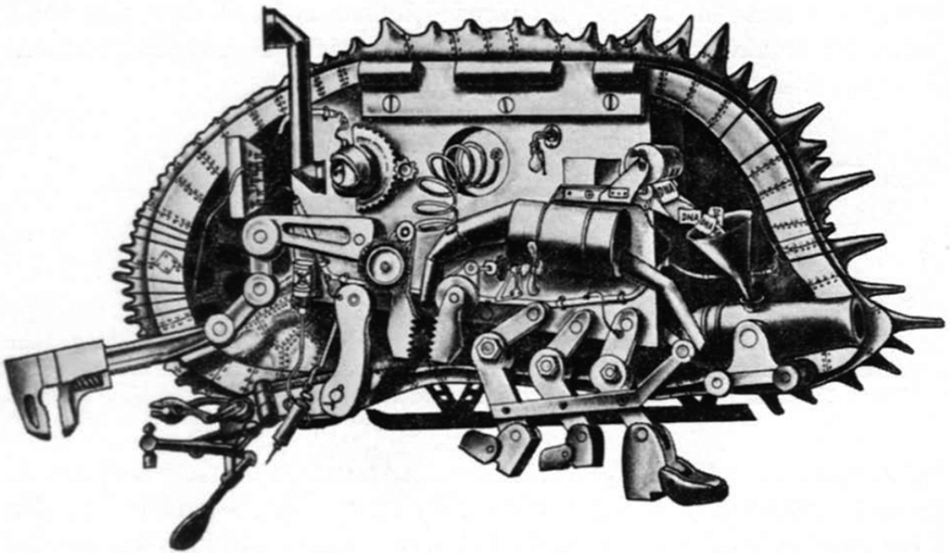
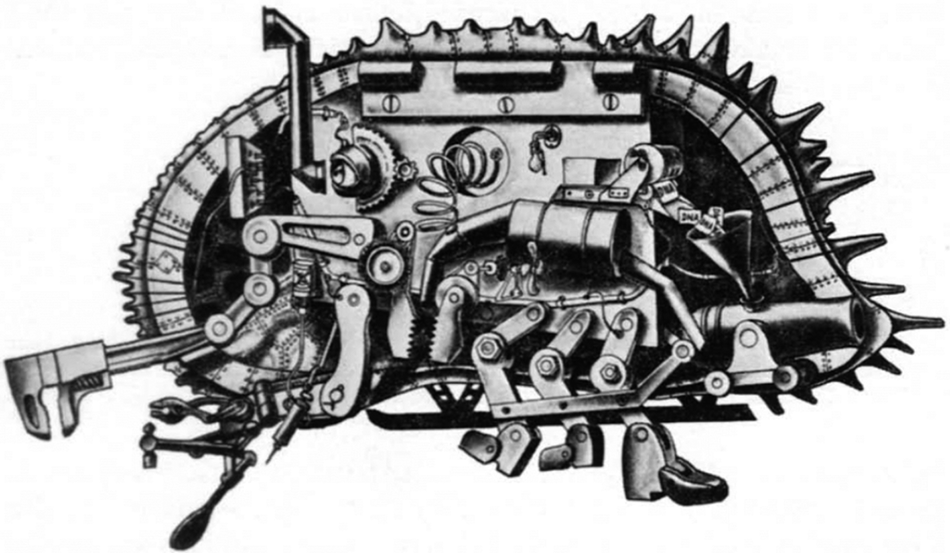
The most conspicuous consequence was that Gould rapidly abandoned the other two projects that he had once regarded as promising sources of distinctively paleontological contributions to evolutionary theory (Dresow Reference Dresow2019a). The “science of form,” in its original shape, was the first to fall. Back in 1970, Gould had regarded the experimental demonstration of mechanical improvement as the supreme goal of evolutionary paleontology (Fig. 4). Yet by 1977, he was publicly remarking on the absence of clear instances of mechanical improvement in the fossil record. Three years later, he confessed with embarrassment how he once believed “that a simple enumeration of more and more cases [of good design] would yield new principles for the study of form” (Gould Reference Gould1980: p. 101). This was an indictment of the program outlined in “Evolutionary Paleontology and the Science of Form,” albeit scrubbed of any reference to the goal of documenting biological progress. Gould was free to make these remarks because, by 1980, the future of paleontology no longer hinged on the empirical study of adaptation. Instead, it hinged on the decoupling of micro- and macroevolution via PE, and all that this entailed. As Gould observed, “If species are irreducible inputs [to macroevolution], then paleontology wins its independence as a subject for the generation in testing of evolutionary theory” (Gould Reference Gould1980: p. 107). Remarkably—although he had failed to anticipate it—PE had become a pillar on which the theoretical autonomy of paleobiology rested.
Figure 2 from Gould (Reference Gould1970), described as “The compleat ostracode, Mechanocythere. Drawn for Richard H. Benson by L.B. Isham… [and meant to] underline the mechanistic thinking that most zoologists use … quite appropriate[ly].” Gould (Reference Gould1970) had a similar agenda. Paleontologists should think of animals as being analogous to machines if they wish to develop a science of adaptation worthy of the name.
The other project was the “MBL project,” named after the Marine Biological Laboratory at Woods Hole (Huss Reference Huss, Sepkoski and Ruse2009; Sepkoski Reference Sepkoski2012). This was a pioneering attempt to use stochastic models to simulate broad patterns in the history of life, and its early returns were promising. In their debut publication, the MBL team showed that even simple stochastic models can recover evolutionary patterns strikingly similar to those constructed using fossil compendia (Raup et al. Reference Raup, Gould, Schopf and Simberloff1973).Footnote 11 It wasn’t clear what to make of this, and indeed the collaborators never agreed on how the simulations should be interpreted. Still, it was new and exciting: unfamiliar enough to scandalize traditional sensibilities while hearkening to tradition in its computer-rendered spindle diagrams.
By 1977, however, the project was on the rocks. First, there were internal differences among the collaborators. Tom Schopf had become increasingly evangelical about his vision of a stochastic paleontology organized around a set of “gas laws,” and Gould was among the colleagues he was in the process of alienating (Sepkoski Reference Sepkoski2012). It was one thing to observe that major features of life’s history could be reproduced using stochastic models. It was another to imply that the processes responsible for generating those patterns resembled a turn at the roulette wheel. The latter was Schopf’s position, and Gould could not accept it. Nor did he support the way Schopf moralized about randomness and determinism in the history of life.Footnote 12 Schopf compared the scientist who says that trilobites were outcompeted to the person who says that some biological races are superior to others. But this was a strategy designed to win few friends. Whatever the legitimate uses of stochastic models, they were not racks for extracting doctrinal commitments to the one true stochastic creed.
There were technical issues with the MBL model, too. Steven Stanley, of all people, published a paper in 1981 that showed that stochastic models fail to reproduce realistic clade dynamics when appropriately scaled with species-level data (Stanley et al. Reference Stanley, Signor, Lidgard and Karr1981). This dealt a near-lethal blow to the aspirations of the MBL team. But even before this, Gould had begun to distance himself from the project of using stochastic models to simulate the history of life in silico (Sepkoski Reference Sepkoski2012). He seems to have experienced little distress over this, and why should he have? With his new “speciation theory” in tow, there was no longer a need to pin the future of paleobiology to the fortunes of the MBL project.
There was also no need to continue emphasizing adaptation. It is noteworthy that Gould and Lewontin’s (Reference Gould and Lewontin1979) critique of the “adaptationist programme” was prefigured in Gould and Eldredge (Reference Gould and Eldredge1977). Here Gould observed that gradualism “is not the only prior prejudice constraining paleontological thought” (Gould and Eldredge Reference Gould and Eldredge1977: p. 140). Just as important was “our propensity for explaining all questions of diversity and success in terms of morphological adaptation.” The remark would have been unthinkable even a few years earlier. So, to raise the question one last time, what happened?
Quite a bit, frankly, but three things warrant mentioning. The first was a modeling result, which Gould subsequently acknowledged to have shaped his intuitions about the causes of evolutionary change. It came out of the MBL project, and specifically out of the attempt to simulate random changes in morphology in a “phyletic context” (Raup and Gould Reference Raup and Gould1974). The idea was to figure out was whether stochastic models could generate patterns of directional change similar to those found in the fossil record. They found that they could. And while Gould declined to see this as a challenge to orthodoxy in 1974, he later revealed that it “sobered me against … a priori preferences for adaptationist solutions” (Gould Reference Gould2002: p. 43). (Again it is useful to recall an earlier comment of Gould’s, this one from the allometry review: “As a paleontologist, I acknowledge a nearly complete bias for seeking causes framed in terms of adaptation” [Gould Reference Gould1966: p. 588].)
The second thing that shook Gould’s adaptationism was Ontogeny and Phylogeny (Gould Reference Gould1977b). This was Gould’s first professional monograph, completed in 1975 or early 1976 and published in 1977. It is sometimes described as an attack on adaptationist biology in the spirit of Gould and Lewontin (Reference Gould and Lewontin1979). But that is wrong. Ontogeny and Phylogeny is adaptationist to its bones. Gould said as much in subsequent reflections, where he described the book as an attempt to show “that all [changes in developmental rate or timing] can be interpreted as adaptations, once the proper ecological correlations are established” (Gould Reference Gould and McKinney1988: p. 11). So, “progenesis” (truncated development) will be favored in unstable environments that impose strong selection for rapid maturation and quick generational turnover, and “neoteny” (delayed somatic development) will be favored in stable environments that permit the fine-tuning of morphological adaptations.
Yet Ontogeny and Phylogeny did not just establish correlations between developmental timing and environmental circumstances. It also argued that some changes in developmental timing will have macroevolutionary consequences despite not being selected for these consequences. Most important is progenesis, which gains its macroevolutionary power “by presenting to future selective contexts a … mosaic of juvenilized and adult characters in an organism freed from rigid morphological monitoring” (Gould Reference Gould and McKinney1988: p. 10). This represents a pathway to evolutionary novelty, because where progenesis is adaptively favored, selection does not act primarily on “adult” morphology. Instead, it acts on developmental timing—something that permits the novelties associated with truncated development to escape close selective scrutiny.
But so what? Isn’t this just more adaptationism? The answer is yes and no. On the “yes” side, Gould remained preoccupied with providing adaptive explanations of evolutionary events. But whereas he had earlier conceptualized the relationship between adaptation and selection as simple (with selection operating on morphology to produce adaptive improvement), here the picture is more complicated. Sometimes selection operates directly on morphology to produce adaptive change. Yet at other times, major evolutionary changes are produced by selection operating on developmental timing, with fortuitous morphological consequences. The thing to notice is that if major morphological change sometimes arises in the absence of direct selection, then the conceptual link between selection and morphological change is severed (Dresow Reference Dresow2017). What had once seemed obvious—that the changes studied by paleontologists should be explained by selection acting on morphology—was actually a bias. This enabled Gould to adopt a new posture, which I have elsewhere termed “strategic non-adaptationism” (Dresow Reference Dresow2019b).Footnote 13
Then there was the politics of the matter. It is noteworthy that Gould’s souring on adaptationism coincided, roughly, with the publication of Sociobiology (and, it should be added, with Lewontin’s arrival at Harvard). This is no coincidence. Gould was an early critic of sociobiology and was especially critical of its links with hereditarianism, or the idea that an individual’s traits—and hence their talents and capacities—are inherited and immutable (Segerstråle Reference Segerstråle2001).Footnote 14 In Sociobiology, hereditarianism was combined with adaptationism to produce a picture in which an individual’s behavioral dispositions are under strict genetic control. It all implied, Gould thought, that social disparities are the result of intrinsic biological differences shaped by selection (Gould Reference Gould1976a). Racism, sexism, and austerity politics could all find comfort in such a doctrine. Complacency too. After all, if existing social arrangements reflect innate and immutable differences, what reason could we have for trying to change them?
I have listed this factor third because many people seem to think that Gould’s politics directly determined his position on adaptation. But this, I think, is simplistic. Gould was a committed leftist and a critic of hereditarianism and scientific racism, who also criticized adaptationism (Perez Reference Perez2024). Yet his attacks on adaptationism were characterized by an epistemic orientation. As I have indicated, adaptationism could be combined with hereditarianism in racist and sexist arguments. But considered on its own, it was a sin comparable to gradualism (here, the view that natural change is slow and incremental). Like gradualism, adaptationism reinforced a comforting view of the world, or so Gould liked to say. But by itself it did not naturalize social hierarchies. By itself it did not imply that compensatory education for underprivileged children was bound to fail.
I will conclude this paper with a small thought. Stephen Jay Gould was never reluctant to admit that, as a young scientist, he had been an adaptationist. In his final book, he went so far as to describe Gould (Reference Gould1970) as “a ringing paean to selectionist absolutism, buttressed by the literary barbarism that a ‘quantifunctional’ paleontology, combining the best of biometric and mechanical analyses, could prove panadaptationism even for fossils that could not be run through the hoops of actual experiments” (Gould Reference Gould2002: p. 41).Footnote 15 He was less forthcoming, however, about his volte-face on biological improvement. Once, the experimental demonstration of improvement had been central to his vision for evolutionary paleontology. Even in Ontogeny and Phylogeny, discussions of “progress” can be found in his writings without accompanying scare quotes or explicit criticisms. So, what accounts for the difference? Perhaps there is no deep reason, and Gould simply never felt the need to exorcise that particular demon. Or perhaps he knew that some admissions cut too close to the quick.
Acknowledgments
This paper revisits and builds upon some of the first work I did in history and philosophy of science. As such, it is (and I am) indebted to many people. These include A. C. Love, D. Sepkoski, S. Lidgard, D. H. Erwin, N. Eldredge (for an early, and perhaps forgotten, correspondence about B. Schaeffer), R. C. Lewontin, M. J. S. Rudwick, and M. Tamborini. I would also like to thank B. S. Lieberman for inviting me to participate in this special issue and D. R. Prothero for his generous handling of my tardiness in producing a manuscript.
Competing Interests
The author declares no conflicts of interest.

 Open access

