1. De nihilo nihil – clustering needs contact
Particle suspensions are ubiquitous and they yield fascinating dynamics including non-Newtonian rheological behaviour and particle clustering. These are two very important examples of processes occurring in many applications in engineering (e.g. froth flotation, pneumatic conveying) and in the environment (e.g. flocculation of fine-grained sediments, debris flows). For dilute suspensions, particles may interact with each other upon contact, which can be driven by three different mechanisms: (i) Brownian motion, (ii) differential settling and (iii) fluid shear. While Brownian motion may be neglected in most large-scale, practical engineering systems, differential settling is relevant in environments where the root-mean-square velocity of the turbulent fluctuations  $u_{rms}$ is lower than the settling velocity of the sediment grains. Consequently, for most environments, fluid shear is the dominant mechanism that brings particles into contact (Partheniades Reference Partheniades2009). For a dense suspension, however, a regime change can be identified. As the mean free path between particles decreases, collisions and contact become more and more frequent, so that eventually frictional contacts and short-range hydrodynamic interactions dominate over long-range hydrodynamic effects. This behaviour has been observed, e.g. for the rheology of dense suspensions, where the transition happens at around 30 % volume fraction (Vowinckel et al. Reference Vowinckel, Biegert, Meiburg, Aussillous and Guazzelli2021).
As particles decrease in size, the inertial effects diminish, allowing any attractive force to cause the particles to bond together and form larger aggregates with hydrodynamic properties that are very different from those of their original primary particles. The flocculation and clustering of cohesive particles is therefore an intriguing phenomenon in flows laden with fine-grained sediments (Vowinckel et al. Reference Vowinckel, Zhao, Zhu and Meiburg2023). Flocs, aggregates and clusters are stable assemblies of particles that are held together by their cohesiveness. As an example that addresses differential settling, Sutherland, Barrett & Gingras (Reference Sutherland, Barrett and Gingras2015) investigated the settling of fine-grained clay particles in salt water for various sediment concentrations. Such particles are cohesive so that they form aggregates upon contact. It was observed in these experiments that distinct settling fronts emerge as a clear indication for flocculation at sediment concentrations larger than 20 grams per litre, whereas the front remained more fuzzy at lower clay concentrations.
Experiments considering fluid shear find that flocculation is governed by a delicate balance between cohesiveness and shear forces. While cohesive properties always promote flocculation, shear can act either to enhance or retard flocculation. On the one hand, shear promotes flocculation as particles are brought into more frequent contact. On the other hand, aggregate growth is disturbed, if a certain critical threshold value for the shear rate is exceeded. Consequently, there is an optimal shear rate for maximum aggregate growth at various sediment concentrations. This was observed in the experiments by Dyer (Reference Dyer1989), where dilute concentrations up to 10 grams per litre were considered. As an important finding, this study has shown that aggregates cannot exceed the Kolmogorov eddy size as the smallest scale of the turbulent motion. As the aggregate size becomes larger than this critical length scale, the shear forces will very soon thereafter break the aggregate apart (cf. Fettweis et al. Reference Fettweis, Francken, Pison and Van den Eynde2006).
Cohesiveness can be induced by different particle properties. Three prominent examples are (i) electrostatic van-der-Waals forces, (ii) biofilms and (iii) capillary forces. Most of the studies in the recent literature investigating flocculation have focused on three-dimensional flows with only two phases (solid and liquid), where capillary forces do not play a role. In addition, these studies are mostly limited to dilute systems with mass fractions below 20 grams per litre (e.g. Dyer Reference Dyer1989; Sutherland et al. Reference Sutherland, Barrett and Gingras2015). However, it can be expected that, at liquid interfaces, where buoyant particles tend to accumulate, capillary forces are going to play a key role and this process also deserves further consideration. The study by Shin & Coletti (Reference Shin and Coletti2024) addresses this research question in a rigorous manner by investigating sediment suspensions at a liquid interface subjected to quasi-two-dimensional turbulence (Shin, Coletti & Conlin Reference Shin, Coletti and Conlin2023). Such a scenario is useful to investigate the clustering of debris floating in the ocean such as the Great Pacific Garbage Padge (GPGP) or the deposition of ash on lakes in the aftermath of a wildfire or even the selective separation of various milled rock materials in froth flotation, to name only three prominent examples. What is more, it was recently shown by Zhao et al. (Reference Zhao, Vowinckel, Hsu, Bai and Meiburg2023) that such a quasi-two-dimensional set-up can be utilized to make predictions for particle clustering in fully developed three-dimensional isotropic turbulence as well. Zhao et al. (Reference Zhao, Vowinckel, Hsu, Bai and Meiburg2023) were able to show this by numerical simulations, where the flow field was further simplified by the initial condition of two-dimensional Taylor–Green vortices. With this computational approach, particles were driven by the analytically defined flow field, but no feedback by the particles was imposed on the fluid.
2. In medias res – a regime map for clustering at liquid interfaces
In the study by Shin & Coletti (Reference Shin and Coletti2024), shallow layers of a conductive fluid were placed on a tray with a chequerboard array of magnets arranged at distance $L_f$ of alternating polarity underneath to generate the two-dimensional turbulent field. Full details of this procedure are given in Shin et al. (Reference Shin, Coletti and Conlin2023). Particles were nearly neutrally buoyant, non-Brownian and possessed little inertia, that is, they had low Stokes numbers. The authors conducted a set of experiments varying the particle size from diameters of 1.09 to 1.84 mm, the volume fraction $\phi$ from 0.01 to 0.71 and the turbulence intensity, where turbulent intensity is defined by the Reynolds number, $Re=u_{rms}L_f/\nu$, and was varied from 192 to 1747. Here, $\nu$ is the kinematic viscosity of the fluid. As a main consequence of these choices for the physical parameters, the ratio of particle diameter to Kolmogorov length scale was in the range of 0.57–3.54.
Having established the physical setting, Shin & Coletti (Reference Shin and Coletti2024) provide a scaling analysis to identify the three most important forces governing the system behaviour. Those are forces due to capillary attraction ($F_{capillary}$), long-range hydrodynamic forces due to fluid drag on the particle ($F_{drag}$) and short-range hydrodynamic forces due to lubrication ($F_{lubrication}$). The forces due to capillary attraction are especially hard to assess. Shin & Coletti (Reference Shin and Coletti2024) therefore developed an elegant argument to measure the power-law relation for the difference of the initial interparticle distance to the distance evolving in time. This was done for two particles in creeping flow conditions and serves as a surrogate for capillary attraction. Similar to the classical picture of Dyer (Reference Dyer1989) for dilute suspensions, Shin & Coletti (Reference Shin and Coletti2024) derive a non-dimensional capillary number $Ca=F_{drag}/F_{capillary}$ that describes the competition of fluid shear and capillary forces, i.e. the higher the $Ca$ the stronger the impact of fluid shear. Lubrication forces are important to the system only for small interparticle distances. Those forces are dissipative and represent the work needed to squeeze fluid out of the gaps of approaching particles. Hence, it becomes the dominant force for denser systems.
For every experimental run, Shin & Coletti (Reference Shin and Coletti2024) measured the fraction of clustered particles, the cluster diameter and the particle kinetic energy. The data show clear trends. As the capillary number increases, the fraction of clustered particles decreases in a power-law behaviour. Furthermore, as the volume fraction is increased beyond 40 %, the cluster diameter increases sharply while the particle kinetic energy decreases (figure 1a). This observation shows that shear serves to break up particle clusters, but this can be counteracted by a high enough volume fraction which does not allow for cluster dispersal. In fact, at volume fractions larger than 40 %, shear generates very few very large clusters that are able to decouple their kinematics from the fluid flow despite the Stokes number of individual particles being low. This observation gives rise to a comprehensive regime map that distinguishes three limits, in which one of the three force scales prevails (figure 1b). For low capillary numbers, the attractive forces promote the formation of large clusters regardless of the volume fraction. For $Ca>1$, shear breaks up the clusters as long as the volume fraction is below 40 %, while for more dense systems dissipative lubrication forces promote the formation of clusters that become as large as 10 $L_f$ even for the highest $Ca$-values investigated ($Ca=3.0$).
3. Quo vadis? – major outcomes and future perspectives
The study by Shin & Coletti (Reference Shin and Coletti2024) provides several very important findings. As a first obvious outcome, the proposed regime map allows for rapid assessment and categorization of the cluster formation mechanisms as a function of only two non-dimensional parameters, i.e. the particle volume fraction and the capillary number. The regime map thereby confirms previous studies in the dilute regime, where an optimal shear rate was proposed for cluster formation. The parameter space investigated by Shin & Coletti (Reference Shin and Coletti2024), however, goes beyond this finding by considering dense suspensions up to a volume fraction of 71 %. This choice opens up the perspective on two more interesting aspects. First, if systems are dense, clusters can grow beyond the Kolmogorov scale due to lubrication effects. Second, the clusters formed in denser suspension have the potential to decouple from the fluid motion. Consequently, the large clusters become stable entities that cannot be broken up by fluid shear as easily. This has important consequences for environmental systems in which debris floats on the water surface, such as the GPGP.
As an interesting aspect for future work, it will be worthwhile following up on the argument of Zhao et al. (Reference Zhao, Vowinckel, Hsu, Bai and Meiburg2023) described above and testing if the results provided by Shin & Coletti (Reference Shin and Coletti2024) would also apply for three-dimensional isotropic turbulence or even turbulent flow with mean shear. In such cases, capillary forces will no longer be the mechanism for clustering. Instead, cohesive forces due to van-der-Waals forces or biofilms become the driving factor. Such particles, however, have to be fine grained so that the ratio of particle diameter to Kolmogorov length scale should increase. A common value for this ratio is around 10 (Vowinckel et al. Reference Vowinckel, Zhao, Zhu and Meiburg2023), and this consideration would be a useful extension of the parameter range considered by Shin & Coletti (Reference Shin and Coletti2024). The regime map by Shin & Coletti (Reference Shin and Coletti2024), therefore provides a valuable tool for engineers to characterize cluster formation as well as their kinematics and has the potential to become an important tool for practitioners dealing with questions of particle-laden flows in environmental and process engineering.





 Open access


1. De nihilo nihil – clustering needs contact
Particle suspensions are ubiquitous and they yield fascinating dynamics including non-Newtonian rheological behaviour and particle clustering. These are two very important examples of processes occurring in many applications in engineering (e.g. froth flotation, pneumatic conveying) and in the environment (e.g. flocculation of fine-grained sediments, debris flows). For dilute suspensions, particles may interact with each other upon contact, which can be driven by three different mechanisms: (i) Brownian motion, (ii) differential settling and (iii) fluid shear. While Brownian motion may be neglected in most large-scale, practical engineering systems, differential settling is relevant in environments where the root-mean-square velocity of the turbulent fluctuations $u_{rms}$ is lower than the settling velocity of the sediment grains. Consequently, for most environments, fluid shear is the dominant mechanism that brings particles into contact (Partheniades Reference Partheniades2009). For a dense suspension, however, a regime change can be identified. As the mean free path between particles decreases, collisions and contact become more and more frequent, so that eventually frictional contacts and short-range hydrodynamic interactions dominate over long-range hydrodynamic effects. This behaviour has been observed, e.g. for the rheology of dense suspensions, where the transition happens at around 30 % volume fraction (Vowinckel et al. Reference Vowinckel, Biegert, Meiburg, Aussillous and Guazzelli2021).
As particles decrease in size, the inertial effects diminish, allowing any attractive force to cause the particles to bond together and form larger aggregates with hydrodynamic properties that are very different from those of their original primary particles. The flocculation and clustering of cohesive particles is therefore an intriguing phenomenon in flows laden with fine-grained sediments (Vowinckel et al. Reference Vowinckel, Zhao, Zhu and Meiburg2023). Flocs, aggregates and clusters are stable assemblies of particles that are held together by their cohesiveness. As an example that addresses differential settling, Sutherland, Barrett & Gingras (Reference Sutherland, Barrett and Gingras2015) investigated the settling of fine-grained clay particles in salt water for various sediment concentrations. Such particles are cohesive so that they form aggregates upon contact. It was observed in these experiments that distinct settling fronts emerge as a clear indication for flocculation at sediment concentrations larger than 20 grams per litre, whereas the front remained more fuzzy at lower clay concentrations.
Experiments considering fluid shear find that flocculation is governed by a delicate balance between cohesiveness and shear forces. While cohesive properties always promote flocculation, shear can act either to enhance or retard flocculation. On the one hand, shear promotes flocculation as particles are brought into more frequent contact. On the other hand, aggregate growth is disturbed, if a certain critical threshold value for the shear rate is exceeded. Consequently, there is an optimal shear rate for maximum aggregate growth at various sediment concentrations. This was observed in the experiments by Dyer (Reference Dyer1989), where dilute concentrations up to 10 grams per litre were considered. As an important finding, this study has shown that aggregates cannot exceed the Kolmogorov eddy size as the smallest scale of the turbulent motion. As the aggregate size becomes larger than this critical length scale, the shear forces will very soon thereafter break the aggregate apart (cf. Fettweis et al. Reference Fettweis, Francken, Pison and Van den Eynde2006).
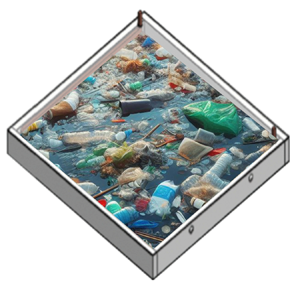
Cohesiveness can be induced by different particle properties. Three prominent examples are (i) electrostatic van-der-Waals forces, (ii) biofilms and (iii) capillary forces. Most of the studies in the recent literature investigating flocculation have focused on three-dimensional flows with only two phases (solid and liquid), where capillary forces do not play a role. In addition, these studies are mostly limited to dilute systems with mass fractions below 20 grams per litre (e.g. Dyer Reference Dyer1989; Sutherland et al. Reference Sutherland, Barrett and Gingras2015). However, it can be expected that, at liquid interfaces, where buoyant particles tend to accumulate, capillary forces are going to play a key role and this process also deserves further consideration. The study by Shin & Coletti (Reference Shin and Coletti2024) addresses this research question in a rigorous manner by investigating sediment suspensions at a liquid interface subjected to quasi-two-dimensional turbulence (Shin, Coletti & Conlin Reference Shin, Coletti and Conlin2023). Such a scenario is useful to investigate the clustering of debris floating in the ocean such as the Great Pacific Garbage Padge (GPGP) or the deposition of ash on lakes in the aftermath of a wildfire or even the selective separation of various milled rock materials in froth flotation, to name only three prominent examples. What is more, it was recently shown by Zhao et al. (Reference Zhao, Vowinckel, Hsu, Bai and Meiburg2023) that such a quasi-two-dimensional set-up can be utilized to make predictions for particle clustering in fully developed three-dimensional isotropic turbulence as well. Zhao et al. (Reference Zhao, Vowinckel, Hsu, Bai and Meiburg2023) were able to show this by numerical simulations, where the flow field was further simplified by the initial condition of two-dimensional Taylor–Green vortices. With this computational approach, particles were driven by the analytically defined flow field, but no feedback by the particles was imposed on the fluid.
2. In medias res – a regime map for clustering at liquid interfaces
In the study by Shin & Coletti (Reference Shin and Coletti2024), shallow layers of a conductive fluid were placed on a tray with a chequerboard array of magnets arranged at distance $L_f$ of alternating polarity underneath to generate the two-dimensional turbulent field. Full details of this procedure are given in Shin et al. (Reference Shin, Coletti and Conlin2023). Particles were nearly neutrally buoyant, non-Brownian and possessed little inertia, that is, they had low Stokes numbers. The authors conducted a set of experiments varying the particle size from diameters of 1.09 to 1.84 mm, the volume fraction $\phi$ from 0.01 to 0.71 and the turbulence intensity, where turbulent intensity is defined by the Reynolds number, $Re=u_{rms}L_f/\nu$, and was varied from 192 to 1747. Here, $\nu$ is the kinematic viscosity of the fluid. As a main consequence of these choices for the physical parameters, the ratio of particle diameter to Kolmogorov length scale was in the range of 0.57–3.54.
Having established the physical setting, Shin & Coletti (Reference Shin and Coletti2024) provide a scaling analysis to identify the three most important forces governing the system behaviour. Those are forces due to capillary attraction ( $F_{capillary}$), long-range hydrodynamic forces due to fluid drag on the particle ( $F_{drag}$) and short-range hydrodynamic forces due to lubrication ( $F_{lubrication}$). The forces due to capillary attraction are especially hard to assess. Shin & Coletti (Reference Shin and Coletti2024) therefore developed an elegant argument to measure the power-law relation for the difference of the initial interparticle distance to the distance evolving in time. This was done for two particles in creeping flow conditions and serves as a surrogate for capillary attraction. Similar to the classical picture of Dyer (Reference Dyer1989) for dilute suspensions, Shin & Coletti (Reference Shin and Coletti2024) derive a non-dimensional capillary number $Ca=F_{drag}/F_{capillary}$ that describes the competition of fluid shear and capillary forces, i.e. the higher the $Ca$ the stronger the impact of fluid shear. Lubrication forces are important to the system only for small interparticle distances. Those forces are dissipative and represent the work needed to squeeze fluid out of the gaps of approaching particles. Hence, it becomes the dominant force for denser systems.
For every experimental run, Shin & Coletti (Reference Shin and Coletti2024) measured the fraction of clustered particles, the cluster diameter and the particle kinetic energy. The data show clear trends. As the capillary number increases, the fraction of clustered particles decreases in a power-law behaviour. Furthermore, as the volume fraction is increased beyond 40 %, the cluster diameter increases sharply while the particle kinetic energy decreases (figure 1a). This observation shows that shear serves to break up particle clusters, but this can be counteracted by a high enough volume fraction which does not allow for cluster dispersal. In fact, at volume fractions larger than 40 %, shear generates very few very large clusters that are able to decouple their kinematics from the fluid flow despite the Stokes number of individual particles being low. This observation gives rise to a comprehensive regime map that distinguishes three limits, in which one of the three force scales prevails (figure 1b). For low capillary numbers, the attractive forces promote the formation of large clusters regardless of the volume fraction. For $Ca>1$, shear breaks up the clusters as long as the volume fraction is below 40 %, while for more dense systems dissipative lubrication forces promote the formation of clusters that become as large as 10 $L_f$ even for the highest $Ca$-values investigated ( $Ca=3.0$).
(a) Mean cluster diameter $D_{cl}$ and normalized particle kinetic energy as a function of $\phi$. The diameter is seen to increase for $\phi >0.4$, whereas kinetic energy drops sharply. (b) Regime map for clustering in the ( $Ca, \phi$)-space. The snapshots are for $\phi =0.28$ with different $Ca$. White circles and scale bar indicate $D_{cl}$ and $L_f$, respectively. Images taken and modified from Shin & Coletti (Reference Shin and Coletti2024).
3. Quo vadis? – major outcomes and future perspectives
The study by Shin & Coletti (Reference Shin and Coletti2024) provides several very important findings. As a first obvious outcome, the proposed regime map allows for rapid assessment and categorization of the cluster formation mechanisms as a function of only two non-dimensional parameters, i.e. the particle volume fraction and the capillary number. The regime map thereby confirms previous studies in the dilute regime, where an optimal shear rate was proposed for cluster formation. The parameter space investigated by Shin & Coletti (Reference Shin and Coletti2024), however, goes beyond this finding by considering dense suspensions up to a volume fraction of 71 %. This choice opens up the perspective on two more interesting aspects. First, if systems are dense, clusters can grow beyond the Kolmogorov scale due to lubrication effects. Second, the clusters formed in denser suspension have the potential to decouple from the fluid motion. Consequently, the large clusters become stable entities that cannot be broken up by fluid shear as easily. This has important consequences for environmental systems in which debris floats on the water surface, such as the GPGP.
As an interesting aspect for future work, it will be worthwhile following up on the argument of Zhao et al. (Reference Zhao, Vowinckel, Hsu, Bai and Meiburg2023) described above and testing if the results provided by Shin & Coletti (Reference Shin and Coletti2024) would also apply for three-dimensional isotropic turbulence or even turbulent flow with mean shear. In such cases, capillary forces will no longer be the mechanism for clustering. Instead, cohesive forces due to van-der-Waals forces or biofilms become the driving factor. Such particles, however, have to be fine grained so that the ratio of particle diameter to Kolmogorov length scale should increase. A common value for this ratio is around 10 (Vowinckel et al. Reference Vowinckel, Zhao, Zhu and Meiburg2023), and this consideration would be a useful extension of the parameter range considered by Shin & Coletti (Reference Shin and Coletti2024). The regime map by Shin & Coletti (Reference Shin and Coletti2024), therefore provides a valuable tool for engineers to characterize cluster formation as well as their kinematics and has the potential to become an important tool for practitioners dealing with questions of particle-laden flows in environmental and process engineering.
Declaration of interests
The author reports no conflict of interest.