


Denmark has two sets of official dietary recommendations: The Nordic Nutrition Recommendations (NNR) 2004 and the Danish Dietary Guidelines (DDG) 2005. The NNR 2004(1) includes recommendations for the macronutrient composition of the diet, micronutrient intake, and reference values for energy intake.
The DDG 2005(Reference Astrup, Andersen, Stender and Trolle2) communicates the concept of a healthy and balanced diet that fulfils the NNR 2004 and is expressed in terms of seven advices for food intake and one advice for physical activity. The DDG 2005 includes recommended quantities (g/d or g/week) in order to increase the population intake of fruit and vegetables, fish, starchy foods (potatoes, rice or pasta and wholemeal bread), to limit (no specified amount) intake of sugar from soft drinks, confectionery and cakes, and to limit the intake of fat especially saturated fat from meat and diary products. The DDG 2005 further emphasises the importance of eating a varied diet and of drinking water when thirsty.
Diet quality has been measured by means of a constructed dietary quality index (DQI) in several studies(Reference Fogli-Cawley, Dwyer, Saltzman, McCullough, Troy and Jacques3–Reference Patterson, Haines and Popkin7). In assessment of diet quality all facets of the diet must be taken into consideration and the purpose of a DQI is to combine a large amount of information on nutrient and/or food group intake into a simple index, making it easier to characterise the quality of food intake in different population groups. The various DQI differ in a number of ways, for example, in the construction of scores. In some studies, each index component is given 1 or 0, for example, dietary guideline reached = 1, not reached = 0. In other studies, the individual score was determined as a percentage of how close the dietary recommendations were met(Reference Thiele, Mensink and Beitz5). Indices also differ in number of dietary components included, ranging from eight(Reference Patterson, Haines and Popkin7) to approximately twenty(Reference Fogli-Cawley, Dwyer, Saltzman, McCullough, Troy and Jacques3). An index with many components is complex to construct and several index components tend to be correlated or circular. Regarding the macronutrient distribution, this is mutually dependent, i.e. if the energy from one macronutrient is high, another must be lower, when the total is 100 %. Foods and nutrients may be correlated, which can result in some components contributing greater weight to the overall index score(Reference Kant6).
The aim of this project was (1) to examine if a simple DQI (SDQI) containing only the two index components saturated fat and dietary fibre can indicate diet quality by assessing adherence to the NNR 2004 and the DDG 2005 and (2) to characterise the dietary patterns in different subgroups classified according to the SDQI.
Material and methods
Index component selection
The concept of evaluating the dietary habits of a population starts with identifying the prevailing nutritional problems. As the DDG 2005(Reference Astrup, Andersen, Stender and Trolle2) describes a balanced diet that fulfils the NNR 2004, the SDQI developed in the present paper is focused on nutrients rather than foods.
In the Danish diet the content of micronutrients is generally sufficient. The nutritional problems in Denmark mainly relate to a macronutrient distribution with too much fat, especially saturated fat, too little carbohydrate and dietary fibre, and too much added sugar and alcohol(Reference Lyhne, Christensen and Groth8). Added sugars are defined as sugars and syrups added to foods during preparation or processing or eaten separately at the table.
The macronutrient distribution is important in relation to nutritional policies, for example, the Nordic Plan of Action on better health and quality of life through diet and physical activity(9). Here, the target for the population is to meet the NNR 2004, especially to reduce the average percentage of food energy (E%) from fat to no more than 30 (25–35 for individuals), reduce saturated fat to no more than 10 E%, and to increase the intake of dietary fibre to 3 g/MJ.
Regarding fat intake and health, there is strong scientific evidence to suggest that a reduction in saturated fat intake will have great impact on public health. It has been estimated that a reduction in intake of saturated fat by 5 E% (from 15 E% to 10 E%) will reduce the risk of CHD by 17–42 % depending on whether carbohydrates or unsaturated fatty acids are substituted for the saturated fat(1). Since the early 1990s nutrition information in Denmark has focused on limitation of total fat intake, because it was hypothesised to reduce the intake of saturated fat. However, the mean fat intake of Danish adults was reduced from 39 E% in 1995 to 34 E% in 2001, but the intake of saturated fat remained nearly constant. The mean intake of saturated fat is 50 % too high (15 E%) compared with the recommended level of 10 E%(Reference Lyhne, Christensen and Groth8). Therefore saturated fat and not total fat is used as an index component in the present study.
A diet rich in dietary fibre has a number of vital health benefits including promotion of healthy laxation, prevention of obesity, and reducing the risk of type 2 diabetes and CHD(1, 10). Naturally occurring dietary fibre exists in fruits, vegetables and grains, especially whole grains, and is an important indicator for dietary quality. The content of dietary fibre is too low in the diet of nine out of ten Danes(Reference Lyhne, Christensen and Groth8). It was therefore decided that dietary fibre should be the other index component.
Study population and dietary intake data
In the Danish National Dietary Survey 2000–2 information on intake of food and beverages was collected from a random sample of 3151 individuals aged 18–75 years; the rate of participation was 50 %(Reference Lyhne, Christensen and Groth8). Dietary intake was recorded for 7 consecutive days in supplied food diaries with pre-coded answer possibilities for the most commonly eaten foods and dishes in the Danish diet. The questionnaire was organised chronologically according to the typical daily meal pattern. For food items not included in the pre-coded food diaries, the participants could note food type and eaten amount. The amounts of food consumed were given in household measures (cups, spoons, slices, etc) or estimated from photographs of different portion sizes showing four to six different portions. A trained interviewer interviewed the participants about their social background, physical activity, weight and height, attitudes and knowledge about healthy eating, and their general dietary habits; the interviewer also instructed the participants how to fill in the pre-coded food diary. The pre-coded food diary has been validated against energy expenditure measured by a validated position-and-movement monitor (Actireg®; PreMed AS, Oslo, Norway) where 138 study participants recorded their food intake and wore the Actireg® during the same period. The pre-coded food diary was found valid, although there was observed some (12 %) underestimation of energy intake(Reference Rasmussen, Matthiessen, Biltoft-Jensen and Tetens11).
The procedures followed were in accordance with the Helsinki Declaration of the World Medical Association and the study was approved by the Danish Data Protection Agency.
All foods and beverages consumed by the participants in the Danish National Dietary Survey 2000–2 were classified into 231 food groups. Only the most relevant are described in the present paper. Three additional food groups were constructed for use in the analysis: (1) ‘fatty meat’, i.e. all meat and meat products with ≥ 17 g fat/100 g; (2) nutrient-poor, energy-dense foods like confectionery, snacks and cakes; (3) nutrient-poor, energy-dense beverages like sugar-sweetened soft drinks and alcoholic beverages.
The average food and nutrient intake was calculated for each individual using the General Intake Estimation System (GIES, version 0.995a, released 26 June 2005; Danish Institute for Food and Veterinary Research, Søborg, Denmark) and the Danish Food Composition Databank (version 5, October 2002; Søborg, Denmark; www.Foodcomp.dk).
The nutrient intake was calculated without including dietary supplements, in order to concentrate on foods that lead to a balanced diet.
Simple dietary quality index
As illustrated in the Appendix, the score for saturated fat and dietary fibre was determined by the ratio of nutrient intake relative to the recommended intake in the NNR 2004. For each individual a score was calculated for dietary fibre and saturated fat. The minimum score was 0 and maximum was 100 for each nutrient.
The compliance score (the SDQI) is the mean of the scores for dietary fibre and saturated fat. The higher the compliance score, the more favourable the diet. This approach is adopted from Thiele et al. (Reference Thiele, Mensink and Beitz5).
Identification of subgroups
The population was divided into three subgroups using the compliance score. Compliers are defined as the 25 % of individuals with the highest compliance score, i.e. they meet or are closest to meeting the recommended intake of dietary fibre and saturated fat. Non-compliers are the 25 % with the lowest score, i.e. are furthest away from the recommended intake of saturated fat and dietary fibre. The two middle quartiles were added together to form one subgroup termed intermediates.
Dietary pattern of the three subgroups
To get an indication of the usefulness of the compliance score as an indicator of dietary quality, the correlation between the compliance score and selected nutrients such as vitamins and minerals and the percentage of energy from total fat and food groups addressed in the DDG 2005 (fruits and vegetables, fish, starchy foods, fats) was estimated.
The diet of the three subgroups was characterised by means of a food energy profile based on the contribution of energy from different food groups.
The subgroups were examined for differences in under-reporting. The degree of under-reporting was estimated for each individual by calculating recorded energy intake divided by BMR (energy intake/BMR) and estimating the proportions with energy intake/BMR < 1·1. Goldberg et al. have suggested that with 7 d dietary measurements energy intake/BMR < 1·1 can be used to identify an under-reporter(Reference Goldberg, Black, Jebb, Cole, Murgatroyd, Coward and Prentice12). No difference in trend of intake of the various food groups was found between under-reporters and acceptable reporters (data not shown) in the three subgroups. Therefore it was decided to include under-reporters in all the statistical analysis (to maintain adequate group sizes).
The calculations of food and micronutrient content in the diets were done relatively (in quantities per 10 MJ) in order to reduce the influence of differences in energy intake and non-selective under-reporting.
Alcohol is excluded in calculations of the distribution of the macronutrients, total fat E%, saturated fat E%, carbohydrate E% and added sugar E%.
Consumers only
Concerning the differences in food intake between subgroups the focus is on the median intake among consumers of a given product and not the average intake of the entire group. The proportion of each of the three subgroups actually consuming a given food item was noted, and a possible difference in these proportions was tested.
Statistical analyses
Statistical package SPSS version 13 for Windows (SPSS Inc.; Chicago, IL, USA) was used for all statistical analysis. The significance level was set at P = 0·05, but for the interpretation of results only P values below 0·001 were considered entirely ‘safe’. In Tables 2–4 this is marked with a triple asterisk. Due to the non-standard distribution of food intakes, non-parametric methods were used to test differences in medians across the three subgroups (compliers, intermediates and non-compliers). Percentages of energy from macronutrients are given as mean values, as they were nearly normally distributed.
Spearman's rank correlation was used to correlate the SDQI to intakes of macronutrients, for example, total fat E%, carbohydrate E%, added sugar E% and micronutrients and against intakes of food groups addressed in the DDG 2005.
For each food group the difference in the proportion of consumers among the three subgroups was tested using the χ2 test. Generally, the differences between subgroups in any characteristic were assessed using the Kruskal–Wallis non-parametric test.
If the SDQI ranks subjects sensibly according to diet quality, there should be a trend in food and nutrient intake across the three subgroups. Cuzick's test for trend was applied to assess if the median tended to increase or decrease across the three subgroups (assigned the scores 1, 2 and 3 in Table 4).
Results
Compliers were more likely to be women, older and under-reporters compared with intermediates and non-compliers (Table 1). Although women had higher diet quality than men, the trend between compliers, intermediates and non-compliers regarding diet quality was the same for both men and women.
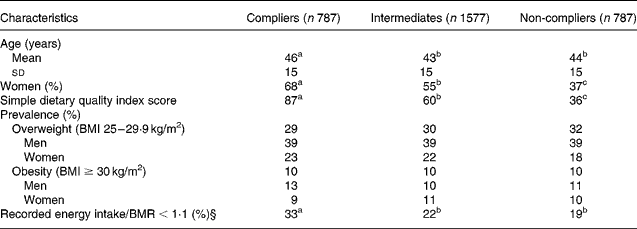
a,b,c Within a row, values with unlike superscript letters were significantly different (P < 0·05).
* The 25 % of individuals closest in meeting the recommended intake of dietary fibre and saturated fat.
† The individuals in the interquartile range for meeting the recommended intake of dietary fibre and saturated fat.
‡ The 25 % of individuals furthest away from meeting the recommended intake of dietary fibre and saturated fat.
§ With 7 d dietary measurements energy intake/BMR < 1·1 indicates under-reporting at the individual level(Reference Goldberg, Black, Jebb, Cole, Murgatroyd, Coward and Prentice12).
Indicators of dietary quality
Of the individuals, 5 % complied with the recommendation for saturated fat, 13 % with the recommendation for dietary fibre; less than 3 % complied with both goals.
Significant differences were found between the three subgroups in the intake of all nutrients and food groups, except for vitamins D and B12 (Table 2). The compliance score was highly(Reference Altman13) inversely correlated with fat E% (r − 0·8; P < 0·001) and a good correlation was observed with carbohydrate E% (r 0·7; P < 0·001) and with most vitamins and minerals (data not shown).
(Mean values and standard deviations)

E%, percentage of food energy; RE, retinol equivalents; α-TE, α-tocopherol equivalents; NE, niacin equivalents.
***P < 0·001.
† The 25 % of individuals closest in meeting the recommended intake of dietary fibre and saturated fat.
‡ The individuals in the interquartile range for meeting the recommended intake of dietary fibre and saturated fat.
§ The 25 % of individuals furthest away from meeting the recommended intake of dietary fibre and saturated fat.
∥ For>60 years of age.
¶ Women of reproductive age, recommended intake is 400 μg/d.
†† Women of reproductive age, recommended intake is 15 mg/d.
Table 2 shows that compliers have a significantly better nutrient profile expressed per 10 MJ than the intermediates and non-compliers. Non-compliers and to some extent intermediates consume more fat and saturated fat and less carbohydrate and dietary fibre than compliers. Furthermore, non-compliers had intakes of vitamin E, folate and Se below the recommendations, indicating that several individuals in this group may have very low intakes. The diet of non-compliers also had a significantly (P < 0·001) higher energy percentage from alcohol (7 E%) compared with compliers (5 E%).
Table 3 indicates that compliers tend to follow the eating guidelines in the DDG 2005. Among the DDG 2005, the compliance score was inversely correlated with fat (for cooking and as spread on bread) and positively correlated with the content of starchy foods, fish and fruits and vegetables (P < 0·001) (Table 3).
(Mean values and standard deviations)

***P < 0·001.
† The 25 % of individuals closest in meeting the recommended intake of dietary fibre and saturated fat.
‡ The individuals in the interquartile range for meeting the recommended intake of dietary fibre and saturated fat.
§ The 25 % of individuals furthest away from meeting the recommended intake of dietary fibre and saturated fat.
∥ Estimated recommended quantity for use in cooking and as spread on bread.
Food energy profile
As shown in Fig. 1, compliers get a higher proportion of their energy from cereals, vegetables, fruits and fish and a smaller proportion of energy from sugar and sugary foods than intermediates and non-compliers, whereas non-compliers get a higher proportion of their energy from meat, fats and beverages than compliers and intermediates. The energy from milk and milk products is similar for all three subgroups.
Food energy profile of compliers (■), intermediates ( ) and non-compliers (○) based on the contribution of energy from different food groups. For details and description of compliers, intermediates and non-compliers, see Table 1. The food group ‘sugar and sugary foods’ includes table sugar, confectionery, cakes, etc, but does not include sugar-sweetened beverages.

Food consumption of compliers and non-compliers
Table 4 shows that compared with intermediates and non-compliers, the diet of compliers contains more vegetables, fruit (four times as much as non-compliers), fish, cereals (especially whole-grain varieties such as rye bread and brown bread), milk products (especially more low-fat varieties) and beverages, especially water (about three times as much as non-compliers). Also the diet of compliers contains significantly less fat, less fat as spread on bread, less cheese and less meat, especially less fatty meat (43 % less than non-compliers).
Content of food groups in the diet of compliers† (subgroup 1; n 787), intermediates‡ (subgroup 2; n 1577) and non-compliers§ (subgroup 3; n 787)

a,b,c Column proportions and median intakes with unlike superscript letters were significantly different (P < 0·05).
*P < 0·05,
**P < 0·01,
***P < 0·001.
† The 25 % of individuals closest in meeting the recommended intake of dietary fibre and saturated fat.
‡ The individuals in the interquartile range for meeting the recommended intake of dietary fibre and saturated fat.
§ The 25 % of individuals furthest away from meeting the recommended intake of dietary fibre and saturated fat.
∥ Brown bread is defined as bread made with refined wheat flour with added various amounts of wholemeal flour, bran, colour, etc.
For most food groups the proportion of consumers with a more favourable food choice within the food group is higher among compliers than intermediates and non-compliers.
A higher proportion of compliers are consuming rye bread and brown bread, low-fat cheese and milk varieties and water compared with intermediate and non-compliers, whereas the opposite is seen for white bread, fatty meats and fat spread on bread.
Consumption of nutrient-poor, energy-dense foods and beverages
The proportion consuming nutrient-poor, energy-dense foods is almost the same in the three subgroups, but the diet of compliers contains significantly less. The proportion consuming nutrient-poor, energy-dense beverages is significantly lower among compliers and their diet contains significantly less compared with intermediates and non-compliers, especially so for soft drinks and beer (Table 4).
Discussion
The results indicate that the compliance score successfully ranked the survey population according to the dietary quality as given by DDG 2005 and NNR 2004.
Less than 3 % of the individuals comply with both the dietary targets for saturated fat and dietary fibre, in line with what is found in other Nordic countries(Reference Becker14). Since the proportion of real compliers would make an insufficient subgroup the compliers group include the 25 % closest to meeting the recommendations.
The diet quality of compliers was significantly better than intermediates and non-compliers and this is consistent with the findings of previous studies using other indices(Reference Fogli-Cawley, Dwyer, Saltzman, McCullough, Troy and Jacques3, Reference Kranz, Hartman, Siega-Riz and Herring4, Reference Kant6). In the 2005 Dietary Guidelines Adherence Index (DGAI) it was found that the total DGAI score was highly correlated with dietary fibre and saturated fat, only exceeded by an index component for variety of fruits and vegetables(Reference Fogli-Cawley, Dwyer, Saltzman, McCullough, Troy and Jacques3). This indicates that the two index components dietary fibre and saturated fat are strong indicators of diet quality in the US and Danish populations. The results of the present study clearly show that diet quality depends on the intake of fruits and vegetables, cereals, especially whole-grain bread, the avoidance of fat spread on bread and the intake of water. These foods, beverages and practices can be used as key indicators of diet quality in other studies.
However, there are limitations associated with SDQI. In the present study dietary fibre and saturated fat intake were moderately correlated (r − 0·5), and dietary fibre is contributing with greater weight to the score. A future improvement of the present SDQI would be to weigh the index components. In multiple components DQI there may be problems with circularity of index components. In a Dutch(Reference Lowik, Hulshof and Brussaard15) and a German(Reference Hermann-Kunz and Thamm16) study the quartile with the highest total fat intake had the lowest mean consumption of alcoholic beverages, probably due to the fact that a higher energy percentage from alcohol led to a lower fat energy percentage, thus being an example of circularity. In the present study the results are based on the percentage of energy from saturated fat excluding alcohol.
Furthermore, it is important that the analytical data for the components included in a quality index are reliable and representative for foods on the Danish market, and eaten by the majority of the population. It has been concluded that the reliability for saturated fat and dietary fibre is relatively high(Reference Møller, Saxholt, Christensen and Hartkopp17). In addition, the dietary survey method used is a 7 d pre-coded food diary, which gives a good estimation of the mean and the distribution of usual intake for individuals.
The results are expressed relatively (in quantities per 10 MJ) to take into account differences in energy intake. Furthermore, the amounts given in the DDG 2005 are based on energy requirements corresponding to 10 MJ/d. The absolute intakes are similar in the subgroups, due to the sex distribution and under-reporting in the three subgroups, with more women and under-reporters among compliers.
The average energy intake is 8·2 MJ in the compliers group and 10·2 MJ in the non-compliers group, reflecting that the compliers group consists of more women than the other subgroups. The age and sex composition of compliers are similar to those found in other studies(Reference Fogli-Cawley, Dwyer, Saltzman, McCullough, Troy and Jacques3, Reference Thiele, Mensink and Beitz5, Reference Patterson, Haines and Popkin7). However, none of these studies have characterised their groups regarding under-reporting. The proportions of individuals reporting an energy intake being incompatible with long-term maintenance of energy balance and therefore with long-term survival (energy intake/BMR < 1·1)(Reference Goldberg, Black, Jebb, Cole, Murgatroyd, Coward and Prentice12) is significantly higher in the compliers compared with intermediates and non-compliers (33 v. 22 v. 19 %) (Table 1). This, together with the similar prevalence of overweight and obesity in the three subgroups, suggests that more overweight and obese subjects may have used the registration period as a ‘kick off’ to go on a diet and to focus more on healthy and socially acceptable foods, for example, eating more fruits and vegetables and more whole grains – ending up in the compliers subgroup.
Both compliers and non-compliers consume too much of nutrient-poor, energy-dense foods and beverages. It has been calculated that in a Danish diet meeting the DDG 2005 and the NNR 2004, the available energy for such products for an average adult individual with an energy requirement of 10 MJ/d is approximately 900 kJ/d(Reference Biltoft-Jensen, Ygil, Christensen, Christensen and Christensen18). In the present study, the diet of compliers contained twice as much (1800 kJ/d) and the diet of non-compliers almost three times as much (2500 kJ/d). The high intake of nutrient-poor, energy-dense foods and beverages among compliers indicates that it is more difficult to avoid nutrient-poor, energy-dense foods and beverages than to focus on eating more fruit and vegetables and whole grains.
In the present study focus is on consumers because information on consumers is relevant in relation to promotion of healthy eating, since strategies for increasing or decreasing food intakes can focus on (a) increasing or decreasing the number of consumers eating certain food groups, (b) increasing or decreasing the frequency of intake among consumers and (c) increasing or decreasing serving size among consumers. The results give an insight into the dietary habits adopted by Danish individuals which are closest in meeting current nutritional benchmarks. This could provide background for improved nutrition information and for revision of future DDG, bearing in mind that less than 3 % of individuals comply with the current recommendations for both saturated fat and dietary fibre.
Even compliers include high-fat varieties of meat, milk, cheese and potato products in their diet, and guidance on how often and in which quantities such foods may be included in a healthy diet would be helpful in order to improve the flexibility of dietary guidelines.
Danish compliers consume less high-fat processed meats such as sausages. This finding is in line with an Irish study where it was found that processed meat consumption is negatively correlated with dietary quality(Reference Cosgrove, Flynn and Kiely19), and a German study where it was found that high fat consumers ate at least 30 % more sausages than low fat consumers(Reference Hermann-Kunz and Thamm16). In the present study non-compliers ate 35 % more sausages than compliers. The dietary patterns associated with processed meat consumption should be investigated further in order to be able to tailor future nutrition information in this area.
The diet of non-compliers contains almost twice as much beer as compliers. Non-compliers also get more energy from alcohol (Table 2). Alcoholic beverages are not mentioned in the DDG 2005, but in future DDG it may be appropriate to address alcohol consumption and emphasise restriction.
It should also be noted that there is great variation in the intake of different foods among compliers – indicating that various dietary patterns can fit with a healthy diet.
Conclusion
The results demonstrate that the SDQI containing the two index components saturated fat and dietary fibre in relation to the recommended intake is a useful indicator of diet quality. The findings suggest that compliers had a dietary pattern in closer agreement with the NNR 2004 and DDG 2005 than intermediates and non-compliers.
The diet of compliers contained more whole-grain cereals, fruits, vegetables, fish and water, and more low-fat dairy products, lean meats and boiled potatoes than intermediates and non-compliers. However, all three subgroups consumed high amounts of nutrient-poor, energy-dense foods (confectionery, snacks) and beverages (soft drinks, alcoholic beverages).
The results can also be used to point at key food indicators of diet quality, which in the present study should be the intake of fruits and vegetables, the intake of whole-grain bread, the avoidance of fat spread on bread, and the intake of water.
Some of the results could be useful in the refinement of the Danish dietary guidelines, especially when informing the population how much nutrient-poor, energy-dense foods and beverages are consistent with a healthy diet.
Acknowledgements
A. B.-J., S. F. and T. C. were responsible for the study concept and design. A. B.-J., S. F., M. V. G., J. M. and T. C. were responsible for the acquisition of the data and the study design of the Danish National Dietary Survey 2000–2. All authors took part in critical revision of the manuscript. H. W. provided statistical expertise. A. B.-J. drafted the manuscript. A. B.-J. and S. F. obtained funding. The present study was supported by a grant from the Danish Meat Association.
The authors are grateful to senior consultant Leif Bøgh-Sørensen (Department of Nutrition, National Food Institute, Technical University of Denmark) for his valuable comments and input in preparing this manuscript. There are no conflicts of interest.
Appendix A
Calculation of the dietary fibre score
Recommended dietary intake (Nordic nutrition recommendations (NNR) 2004): 3 g/MJ.
Intake of an individual: 2 g/MJ.
Score = 2/3 × 100 = 67.
When intake ≥ 3 g/MJ, score = 100.
Calculations of the saturated fat score
Recommended dietary intake (NNR 2004): ≤ 10 % energy (E%) (without alcohol).
Intake of an individual: 13 E%.
Score = (1 − (13 − 10)/10) × 100 = 70
When intake ≤ 10 E%, score = 100; when>20 E%, score = 0.
Simple dietary quality index mean score
In this case, score = (67+70)/2 = 68·5.



