


Caffeine, 1,3,7-trimethylxanthine, occurs naturally in the leaves, seeds and fruits of more than sixty plants, including coffee beans and tea leaves, and has long been consumed in the form of coffee, black tea, green tea and cocoa(Reference Barone and Roberts1, Reference Graham2). Caffeine is also used as an additive in products such as energy drinks, soft drinks and sweets(Reference Barone and Roberts1–Reference McCusker, Goldberger and Cone3). Caffeine appears to have stimulatory effects, particularly on the central nervous system, via its activity as an adenosine receptor antagonist(Reference Graham2, Reference Carrillo and Benitez4–Reference Higdon and Frei6). Although findings are not consistent, high caffeine intake has been associated with adverse health outcomes, including high blood pressure, osteoporosis and spontaneous abortion(Reference Nawrot, Jordan and Eastwood5–Reference Cornelis and El-Sohemy7). Moderate intake has also been associated with several health benefits, including the prevention of type 2 diabetes and Parkinson’s disease(Reference Higdon and Frei6). Further, a long-term increase in caffeine intake was associated with a smaller weight gain(Reference Lopez-Garcia, van Dam and Rajpathak8). Reviews on the effect of caffeine intake on health status in 2003 and 2006 concluded that while moderate intake among adults (up to 400 mg/d) may have no negative effect on health status, women of reproductive age should limit intake to below 300 mg/d(Reference Nawrot, Jordan and Eastwood5, Reference Higdon and Frei6) or 4·6 mg/kg body weight per d(Reference Nawrot, Jordan and Eastwood5). Several committees, including the European Union Scientific Committee on Food (1999) and Health Canada (2003), have advised women of reproductive age to keep caffeine intake below 300 mg/d(9, 10). Recently, the UK Food Standards Agency (2008) decreased its recommended limit from 300 to 200 mg/d(11).
Several Western studies of caffeine intake among individuals which used detailed dietary assessment methods (e.g. 24 h recall and diet record) reported mean estimated intakes ranging from 173·9 to 490·0 mg/d (1·9 to 7·0 mg/kg body weight per d)(Reference Barone and Roberts1, Reference Derbyshire and Abdula12–15), obtained mainly from coffee(Reference Barone and Roberts1, Reference Cotton, Subar and Friday13–15) or black tea(Reference Barone and Roberts1, Reference Derbyshire and Abdula12). In Japan, in contrast, the main beverages both at and between meals are Japanese and Chinese teas, including green tea and oolong tea(16, 17), suggesting that sources and amounts of caffeine intake may differ from those in Western populations. In addition, caffeine content in the different forms of beverages consumed in Japan (brewed, canned or polyethylene terephthalate (PET)-bottled) are reported to vary widely(16, Reference Kizu, Kimoto and Arakawa18–Reference Sumitani, Suekane and Nakatani39), further emphasizing the need for detailed dietary assessment among Japanese populations. Although any investigation into the effects of caffeine on the health status of specific populations should begin with the estimation of caffeine intake in that population, data on the caffeine intake of individuals estimated by detailed diet assessment methods in Japan are lacking.
Here, we developed a caffeine database which considered the types and forms of both beverages and foods, and then estimated caffeine intake among a Japanese population using 16 d weighed diet records (DR).
Methods
Development of a caffeine database
Data sources and number of beverage and food items
We developed a caffeine database which accounted for important caffeine-containing beverages and foods in various forms, as follows. First, we searched the PubMed, CiNii, Medical Online Library and Ichushi Web databases for English and Japanese papers reporting analyses of the caffeine content of beverages and foods conducted in Japan. We reviewed the abstracts and reference lists of all relevant articles and selected articles which assessed the caffeine contents in beverages and foods in Japan (n 53). We included data in the Standard Tables of Food Composition in Japan (16) as one of the references. We then selected reports which assessed caffeine content by HPLC and gave sufficient explanation of the assessment methods used. This process identified twenty-three reports(16, Reference Kizu, Kimoto and Arakawa18–Reference Sumitani, Suekane and Nakatani39) for consideration in the development of the present database.
Using the data in the reports, we then created the database, as follows. Since the Standard Tables of Food Composition in Japan (16) is considered to cover major beverages and foods consumed in Japan (n 1976), we first selected beverages and foods made with plant varieties possibly containing caffeine(Reference Barone and Roberts1–Reference McCusker, Goldberger and Cone3, Reference Nawrot, Jordan and Eastwood5, Reference Higdon and Frei6, Reference Gilbert40) from items in the Standard Tables of Food Composition in Japan (16) (n 26). However, these tables include coffee, black tea, and Japanese and Chinese teas in dry and brewed forms only; given the wide variation in caffeine contents in different forms of beverages (brewed, canned or PET-bottled) in Japan(16, Reference Kizu, Kimoto and Arakawa18–Reference Sumitani, Suekane and Nakatani39), we also added beverages in canned or PET-bottled forms (n 23). We then added other beverages and foods made with plant varieties possibly containing caffeine and reported in the DR but not shown in the tables (n 6). As supplemental information, we also added other items whose caffeine values were provided in the analytic reports but which were not listed in the DR or tables (n 25). In total, we covered eighty items (fifty-nine beverages and twenty-one foods).
Determination of caffeine content for eighty beverages and foods
Caffeine values in the analytic data were standardized to milligrams per 100 grams (mg/100 g)(16). For several reports which assessed content in brewed coffee, brewed Japanese and Chinese teas, or canned or PET-bottled beverages as milligrams per 100 millilitres (mg/100 ml), we compared caffeine contents in mg/100 ml and mg/100 g using the ESHA Food Processor SQL, obtained approximate conversion factors (e.g. 0·96 for canned or PET-bottled black tea with lemon, 1·002 for brewed coffee, 1·001 for brewed Japanese and Chinese teas, and 1·04 for canned or PET-bottled cola), and converted them to mg/100 g.
We then considered a strategy to determine the caffeine content of individual items. Several reports analysed the same type of beverages and foods using the same method but provided different mean values. For these, we applied the following guidelines, with determination done in a two-step process, as follows.
1. Step 1: Assigning analytic values reported in the literature.
(a) When only one report existed and this report analysed the caffeine content in a single example of a beverage or food only, this value was selected (n 13).
(b) When multiple reports existed, we calculated the mean value by weighting the number of items analysed in each report (n 57). For example, four reports analysed canned or PET-bottled black tea (n 33) and showed mean values per 100 g of 13·4 mg (n 5)(Reference Kizu, Kimoto and Arakawa18), 13·5 mg (n 5)(Reference Kunugi, Aoki and Kunigi28), 17·0 mg (n 19)(Reference Moriyasu, Saito and Nakazato29) and 14·6 mg (n 4)(Reference Sumitani, Suekane and Nakatani39). The weighted mean value of thirty-three samples (15·6 mg/100 g) was thus selected as the value for canned or PET-bottled black tea (i.e. 13·4 × 5/33 + 13·5 × 5/33 + 17·0 × 19/33 + 14·6 × 4/33). Some reports did not indicate the number of samples analysed(16, Reference Maekawa, Yamazaki and Yagasaki19); these were excluded when calculating the mean from multiple reports since the calculation of mean required the number of samples be known.
2. Step 2: Assigning analytic value of a similar beverage or food within the same category.
When a caffeine value for specific beverages or foods could not be obtained using Step 1 but the analytic value of a similar item was available, that value was assigned (n 10). The value for canned or bottled sencha was assigned to canned or bottled kamairicha, bancha and tamaryokucha; that for the dry type of hojicha was assigned to the dry type of genmaicha; that for the dry type of bancha was assigned to the dry type of blend Japanese and Chinese tea; that for the brewed type of bancha was assigned to the brewed type of blend Japanese and Chinese tea; that for the canned or bottled type of oolong tea was assigned to the canned or bottled type of pu-erh tea; that for pure cocoa powder was assigned to that for milk cocoa powder; that for soda was assigned to fruit-flavoured soda; and that for chocolate cake was assigned to coffee cake.
Caffeine values were determined using either Step 1 or 2 for all eighty items. A summary of the caffeine content of beverages and foods as well as the definitions of some beverages are shown in Table 1.
Caffeine content of beverages and foods and contribution (%) of each source to caffeine intakeFootnote * of 230 Japanese subjectsFootnote †

Can/bottle, canned or polyethylene terephthalate (PET)-bottled.
* Assessed by 16 d weighed diet records.
† Table presents caffeine contents of eighty items (fifty-nine beverages and twenty-one foods).
‡ Item codes correspond to the food codes in the Standard Tables of Food Composition in Japan (16).
§ Database development step: 1A, caffeine value was determined from a single sample of a beverage or food reported in one article; 1B, caffeine value was determined from the mean value of multiple reported samples; 2, caffeine value was determined by assigning analytic values of a similar beverage or food obtained in Step 1.
|| Number of samples analysed by HPLC.
¶ Mean values were determined by following Steps 1 and 2.
** In the contribution column (%), – means that the contribution to caffeine intake was zero because no subjects consumed the item and 0 means that contribution to caffeine intake was zero because the item contained no caffeine.
Estimation of caffeine intake among a Japanese population
Study population
The study was conducted between November 2002 and September 2003 in four areas in Japan: Osaka (Osaka City), Okinawa (Ginowan City), Nagano (Matsumoto City) and Tottori (Kurayoshi City). In each area, we first recruited apparently healthy women aged 30–69 years who were living with and willing to participate with their husbands, without consideration to the husband’s age. Our recruitment strategy was to obtain eight women for each 10-year age stratum (30–39 years, 40–49 years, 50–59 years and 60–69 years). Group orientations were held prior to the study at which the study purpose and protocol were explained. Written informed consent was obtained from each subject. Body height was measured to the nearest 0·1 cm with the subject standing without shoes. Body weight in light indoor clothes was measured to the nearest 0·1 kg. BMI was calculated as body weight (kg) divided by the square of body height (m). A total of 121 women and 121 men completed the study protocol. For analyses, a woman whose body weight was mistyped in the database and men aged <30 or >69 years (n 11) were excluded, leaving 120 women and 110 men aged 30–69 years in the analyses.
Diet records
Subjects completed a 4 d weighed DR, comprising four non-consecutive days, four times, once in each season, at intervals of approximately 3 months (DR1 in November and December 2002 (autumn), DR2 in February 2003 (winter), DR3 in May 2003 (spring) and DR4 in August and September 2003 (summer)). Each set of four recording days consisted of one weekend day and three weekdays. Details of the diet record procedure are provided elsewhere(Reference Murakami, Sasaki and Takahashi41). Briefly, during the orientation session, registered dietitians gave the subjects both written and verbal instructions on how to keep the DR, provided recording sheets and a digital scale, and asked the subjects to record and weigh all beverages and foods consumed on each recording day. All collected records were checked by trained registered dietitians in the respective local centre and then again in the study centre.
A total of 1318 beverage and food items appeared in the DR. Energy intake was estimated based on the estimated intakes of all items and the Standard Tables of Food Composition in Japan (16). Caffeine intake was estimated based on the database created in the present study.
In the DR, information on brand names was not required, so we were unable to differentiate brewed beverages made at outlets from those made at home. Caffeine content of some brewed beverages at outlets might have been higher than those made at home(Reference Derbyshire and Abdula12). Because information was available on whether beverages were self-prepared or purchased as well as whether they were consumed at food service establishments, we differentiated beverages and foods of various forms as follows. We considered beverages which were reported as self-prepared or consumed at food service establishments to be brewed types. For example, when subjects reported that they self-prepared green tea or drank green tea at a restaurant, we used the food code for brewed green tea. We considered purchased beverages as of the canned or bottled types. For example, when a subject reported that they purchased green tea, we used a food code for a canned or bottled green tea. In addition, for purchased beverages and foods containing other main ingredients (e.g. café au lait, black tea with milk, ice cream, cake, and cookies and snacks), we used food codes created in the present study (no subjects cooked caffeine-containing foods themselves). For example, when a subject reported drinking 100 g of canned black tea with milk (e.g. 90 g black tea and 10 g milk), we used a food code for canned black tea with milk rather than a code for brewed black tea and for milk, but when a subject reported drinking 100 g brewed black tea with milk, we calculated the caffeine intake from 90 g of black tea.
Statistical analyses
All statistical analyses were performed for women and men separately using the SAS statistical software package version 9·1 (SAS Institute Inc., Cary, NC, USA). We categorized the subjects into four age groups (30–39 years, 40–49 years, 50–59 years and 60–69 years). Further, we analysed caffeine intake of the subjects according to BMI (kg/m2). Because no significant seasonal variation in caffeine intake was observed (data not shown), all analyses were performed using the 16 d mean dietary intake of the subjects.
Results
Mean BMI was 22·3 kg/m2, ranging from 17·8 kg/m2 to 31·3 kg/m2 for women; and 23·8 kg/m2, ranging from 17·4 kg/m2 to 30·9 kg/m2 for men. Mean energy intake was 7732 kJ/d, ranging from 4795 kJ/d to 12552 kJ/d for women; and 10 025 kJ/d, ranging from 5929 kJ/d to 17 334 kJ/d for men. Mean caffeine intake was 256·2 mg/d (4·9 mg/kg body weight per d), ranging from 35·3 mg/d to 821·7 mg/d for women; and 268·3 mg/d (4·1 mg/kg body weight per d), ranging from 35·7 mg/d to 1290·1 mg/d for men.
Table 1 shows the contribution (%) of beverages and foods to caffeine intake in the diet of Japanese subjects. The major contributors to caffeine intake were Japanese and Chinese teas (women: 47·1 %; men: 47·4 %) and coffee (women: 46·7 %; men: 47·1 %).
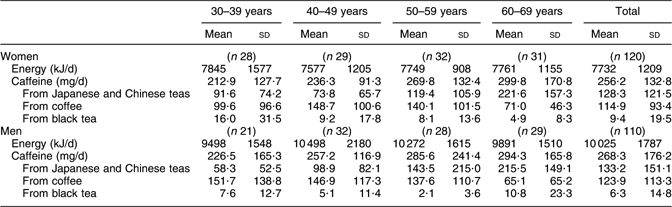
Table 2 shows caffeine intake by age. The 60–69 years group showed the highest intake of caffeine and caffeine from Japanese and Chinese teas. Caffeine intake from coffee was highest among the 40–49 years group in women and the 30–39 years group in men, while that from black tea was highest among the 30–39 years group in women and 60–69 years group in men.
Energy and caffeine intakeFootnote * of 230 Japanese subjects according to age group
* Assessed by 16 d weighed diet records.
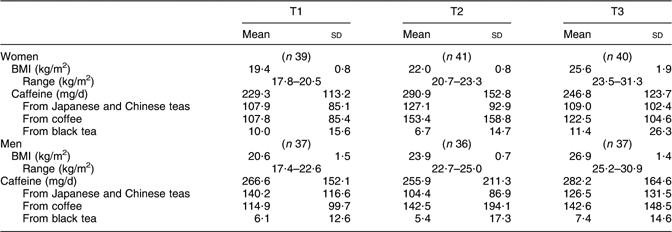
Table 3 shows caffeine intake by tertile of BMI. For women, subjects in the second tertile (mean BMI: 22·0 kg/m2) showed the highest intake of caffeine, caffeine from Japanese and Chinese teas and that from coffee, followed by those in the third tertile (mean BMI: 25·6 kg/m2). In contrast, caffeine from black tea was the highest among those in the third tertile, followed by those in the first tertile (mean BMI: 19·4 kg/m2). For men, subjects in the third tertile (mean BMI: 26·9 kg/m2) showed the highest intake of caffeine and caffeine from black tea, followed by those in the first tertile (mean BMI: 20·6 kg/m2). In contrast, caffeine from Japanese and Chinese teas was the highest among the subjects in the first tertile, followed by those in the third tertile, and that from coffee was the highest among those in the third tertile, followed by those in the second tertile (mean BMI: 23·9 kg/m2).
Caffeine intakeFootnote * of 230 Japanese subjects according to tertile of BMI
* Assessed by 16 d weighed diet records.
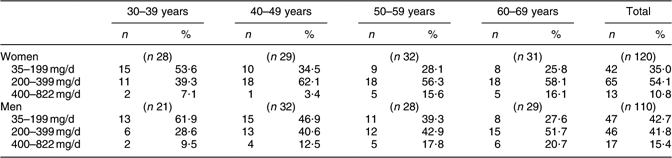
Distribution of caffeine intake is shown in Table 4. Intake in 11 % of women and 15 % of men was greater than 400 mg/d, the maximum recommended level suggested to have no negative health effects in review studies(Reference Nawrot, Jordan and Eastwood5, Reference Higdon and Frei6). Caffeine intake of 56 % of women aged 31–49 years (around reproductive age) was more than 200 mg/d, the maximum recommended level for women of reproductive age issued by the UK Food Standards Agency(11).
Distribution of caffeine intakeFootnote * among 230 Japanese subjects according to age group
* Assessed by 16 d weighed diet records.
Discussion
To our knowledge, this is the first study to estimate caffeine intake in an Asian population using a detailed diet assessment method (i.e. DR). Although several previous studies in Western countries estimated intake in individuals using detailed diet assessment methods(Reference Barone and Roberts1, Reference Derbyshire and Abdula12–15), some(Reference Barone and Roberts1, Reference Derbyshire and Abdula12, 15) of these estimated intake from a few beverages only (i.e. coffee, black tea and soft drinks) and/or chocolate. In the present study, we developed a comprehensive caffeine database which considered beverages in various forms and foods. We found that mean caffeine intake among the Japanese subjects in the present study was 256·2 mg/d (4·9 mg/kg body weight per d) for women and 268·3 mg/d (4·1 mg/kg body weight per d) for men. The major contributors to intake were Japanese and Chinese teas and coffee.
Mean caffeine intake in several previous Western studies which assessed intake using detailed diet assessment methods (e.g. 24 h recall and diet record) ranged from 173·9 to 490·0 mg/d (1·9 to 7·0 mg/kg body weight per d)(Reference Barone and Roberts1, Reference Derbyshire and Abdula12–15). Thus, caffeine intake in this Japanese population was comparable to the estimated intake in Western populations. Some discrepant estimates among studies may be attributable to differences in populations and dietary habits. Another reason may be that different databases comprising different analytical values were used. Moreover, the number of items (beverages only or beverages and foods) and sources of caffeine intake in the databases varied among studies. Coffee contributed the largest part(Reference Barone and Roberts1, Reference Cotton, Subar and Friday13–15) of intake in most of the previous studies in Western populations (e.g. 71 % to 86 %)(Reference Cotton, Subar and Friday13–15), with the exception of UK women, whose largest source was black tea (43 %), followed by coffee (17 %) and confections (17 %)(Reference Derbyshire and Abdula12). Among a US population, soft drinks were the second largest source (16 %) after coffee (71 %), while confections contributed only a small part (1·7 %)(Reference Frary, Johnson and Wang14). In contrast, Japanese and Chinese teas and coffee were the largest sources of intake among subjects in the present study, and black tea and soft drinks contributed only a small part (women: 4·3 % and 0·8 %; men: 3·0 % and 1·5 %, respectively). Regarding the form of beverages, canned and PET-bottled beverages contributed 8 % of caffeine intake in women and 17 % in men, suggesting that future studies of associations between caffeine intake and health status in Japanese populations may be better to differentiate the various forms of beverages.
In some previous Western studies with detailed diet assessments which examined caffeine intake and sources according to age group, results differed among populations(Reference Barone and Roberts1, Reference Frary, Johnson and Wang14, 15). In a US population aged >20 years, the 50–64 years group showed the highest caffeine intake, whereas coffee and black tea intake peaked in the 25–34 years group(Reference Barone and Roberts1). A second US population aged >18 years showed the highest caffeine and black tea intake in the 35–54 years group, but highest coffee intake in the 35–54 years group in women and the 55–64 years group in men(Reference Frary, Johnson and Wang14). In a Danish population aged >20 years, caffeine and coffee intake was highest in the 35–49 years group whereas black tea intake peaked in the 25–34 years group(Reference Barone and Roberts1); while in an Icelandic population aged 15–80 years, coffee intake was highest in the 40–59 years group, while black tea intake peaked in the 60–80 years group(15). In our study, caffeine intake was highest in the 60–69 years group, and thus different to these Western populations, whereas coffee intake was higher among the younger age groups and thus consistent with them. The high caffeine intake of older age groups may be explained by their high intake of Japanese and Chinese teas. Japanese and Chinese teas are traditionally consumed both at meals and with snacks in Japan, and such dietary habits may be more pronounced among older populations.
According to tertile of BMI, caffeine intake of women was the highest in the second tertile and that of men was the highest in the third tertile (Table 3). Data of caffeine intake according to BMI are not available from the previous studies with detailed diet assessments. To our knowledge, the only available observational evidence is a cohort study in American adults, which assessed caffeine intake of the subjects using a semi-quantitative FFQ(Reference Lopez-Garcia, van Dam and Rajpathak8). The study found an increase in caffeine intake was associated with a smaller weight gain. Since moderate caffeine intake has been suggested to be effective to prevent type 2 diabetes(Reference Higdon and Frei6) and weight gain is a major factor of type 2 diabetes, more studies examining the association of caffeine intake with obesity measures are needed.
Several limitations of the present study should be mentioned. Although our caffeine composition database considered various types and forms of beverages and foods, these do not represent the total number of beverage and food products on the market. Further, analytic caffeine values were not available for all types of beverages and foods. However, the contribution to intake of items whose values were assigned from similar items was 0·3 % in women and 0·4 % in men, suggesting that the influence of such values on our results was likely negligible. Also, plant varieties, fermentation methods of tea leaves, analytical methods and preparation (brewing) methods for beverages, such as the length of infusion, cup size and temperature, might also have produced errors(Reference Barone and Roberts1). Moreover, since the DR was not designed solely for the estimation of caffeine intake and did not enquire about brand names, we were unable to differentiate brewed coffee made at home from that made at coffee outlets. Although we considered any kind of tea and coffee served at a food service establishment as of the brewed type, some establishments might have offered canned or PET-bottled beverages. Further, although we asked the subjects to report all beverages and foods in the DR in detail, some subjects may not have differentiated similar items, such as canned black coffee and canned coffee beverages. In addition, although decaffeinated coffee did not appear in the DR and is not commonly consumed in Japan, we cannot exclude the possibility that some subjects had decaffeinated coffee. Nevertheless, we ensured that we obtained all relevant data from sources with suitably clear and comprehensive assessment methodologies, and then carefully conducted matching processes to maximize database reliability. The use of DR allows detailed assessment of the dietary intake of individuals; however, since energy intake (a surrogate measure of overall dietary intake) in older age groups did not tend to be lower than that in younger age groups, our results for caffeine intake by age group should be interpreted with caution. Given that total energy expenditure should be lower in older than younger age groups(Reference Black, Coward and Cole42) and that under-reporting is a common problem even in self-reported weighed DR(Reference Trabulsi and Schoeller43), the present study may be biased by under-reporting among younger age groups, which would in turn mean the underestimation of caffeine intake among younger age groups. Nevertheless, we found that caffeine intake from Japanese and Chinese teas in the 60–69 years age group was more than double that in the 30–39 years group, suggesting that the high caffeine intake from Japanese and Chinese teas among the older age groups cannot be explained by under-reporting by younger age groups alone. Finally, our subjects were not a representative sample of the general Japanese population but volunteers, who may have been more nutritionally conscious than others who did not participate. Our results may thus not be generalizable to the entire Japanese population.
Although mean caffeine intake in our present Japanese adults was within the maximum level recommended in reviews to have no negative health effects (400 mg/d)(Reference Nawrot, Jordan and Eastwood5, Reference Higdon and Frei6), 11 % of women and 15 % of men consumed more than 400 mg/d. Following the UK Food Standards Agency’s recent renewal of advice to women of reproductive age to limit intake below 200 mg/d, caffeine intake in this population is now also of concern. In our subjects, 56 % of women aged 31–49 years (around reproductive age) consumed more than 200 mg/d, but given the possibility of underestimation by younger age groups, the proportion of young women with an intake above 200 mg/d and of all subjects with an intake above 400 mg/d may be higher than our estimates. Currently, no recommended level is provided in Japan. Further research targeting women of reproductive age is warranted.
In conclusion, caffeine intake in this Japanese population was comparable to the estimated values reported in Western populations. Also, the caffeine database developed in the present study may be a valuable tool in future studies of the association between caffeine intake and health status among Japanese populations.
Acknowledgements
The work was supported by grants from the Japanese Ministry of Health, Labour and Welfare. All of the authors have read and approved the final submitted manuscript. There is no conflict of interest. M.Y. performed statistical analyses and wrote the manuscript. S.S. contributed to the concept and design of the study, study protocol, and data collection, and assisted in writing and editing the manuscript. K.M. assisted in writing and editing the manuscript. Y.T., H.O., N.H., A.N., H.T., A.M., M.F. and C.D. contributed to data collection of diet records. S.S. is responsible for any correspondence concerning the manuscript and the proof reading.



