




Non-technical Summary
Edrioasteroids are a group of extinct echinoderms that originated in the Cambrian during the early emergence of animal body plans. Fossils of this group look like modern starfish with five main rays (ambulacra) that converge in a central mouth. But this resemblance is only superficial. Edrioasteroids lived permanently attached to the sea floor or to hard substrates. Herein we redescribe the poorly known edrioasteroid Sprinkleoglobus spencensis n. comb. (Wen et al., Reference Wen, Babcock, Peng and Robison2019) on the basis of a new exquisitely preserved specimen from the Spence Shale Member, Langston Formation of Utah. This new specimen allows interpretation of its anatomy and will help us understand early echinoderm evolution.
Introduction
Edrioasteroids are a typical class of Paleozoic echinoderms with a discoidal to globular thecal shape and recumbent ambulacra (Bell, Reference Bell1976). The phylogenetic significance of Cambrian edrioasteroid is currently debated (for example, concerning crinoid origin, see discussions by Ausich et al., Reference Ausich, Kammer, Rhenberg and Wright2015 and Guensburg et al, Reference Guensburg, Sprinkle, Mooi, Lefebvre, David, Roux and Derstler2020). Accordingly, all new occurrences of Cambrian edrioasteroids are potentially relevant to our understanding of echinoderm phylogeny (Zamora et al., Reference Zamora, Rahman, Sumrall, Gibson and Thompson2022).
Cambrian edrioasteroids have been reported from Stage 3 (late early Cambrian) to the Jiangshanian (middle late Cambrian) in Baltica, East Gondwana, West Gondwana, and Laurentia, with 15 named genera and 21 named species (Rahman and Zamora, Reference Rahman and Zamora2024). Edrioasteroids are rare fossils in Cambrian deposits from Laurentia (North America) (see Table 1). The earliest occurrence includes isolated plates from the Poleta Formation, California, USA, dated as Cambrian Series 2 Stage 3 (late early Cambrian), which are also among the earliest known echinoderms (Sprinkle, Reference Sprinkle1973).
Occurrences of Cambrian edrioasteroids from Laurentia. Modified from Zamora et al. (Reference Zamora, Lefebvre, Álvaro, Clausen, Elicki, Harper and Servais2013b).

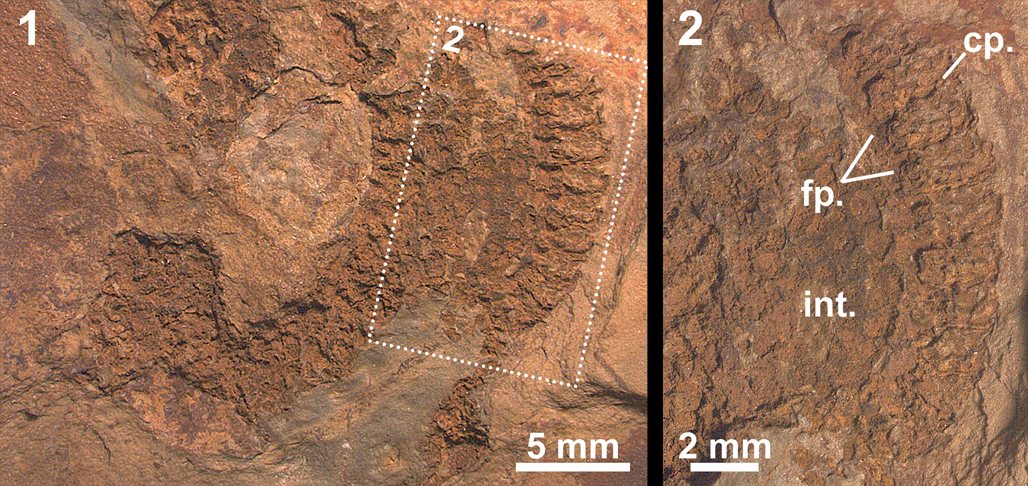
The recently described edrioasteroid “Totiglobus” spencensis Wen et al., Reference Wen, Babcock, Peng and Robison2019 was founded on a single specimen preserved in moldic condition (Fig. 1). The specimen was neither cast using recommended techniques for the study of specimens preserved as molds (Zamora et al., Reference Zamora, Wright, Mooi, Lefebvre and Guensburg2020), nor scanned using more sophisticated techniques, CT scanning for example (Rahman et al., Reference Rahman, Zamora and Geyer2010). Thus, many important features were misinterpreted or not observed, resulting in questionable assignment. Here we describe an exquisitely preserved specimen of “Totiglobus” spencensis from the Spence Shale Member of the Langston Formation (Miaolingian Series, Wuliuan Stage) of Utah (western United States). We review previous material described by Wen et al. (Reference Wen, Babcock, Peng and Robison2019) and propose reassignment of the material to the recently described genus Sprinkleoglobus Zhao et al., Reference Zhao, Rahman, Zamora, Chen and Cong2022. Sprinkleoglobus spencensis n. comb. is among the earliest known direct evidence for attachment of edrioasteroids on hard substrates, a life mode later adopted among the great majority of Edrioasteroidea (Zamora et al., Reference Zamora, Deline, Álvaro and Rahman2017; Wen et al., Reference Wen, Babcock, Peng and Robison2019). Early occurrence and expanded anatomical information of this new taxon establish an important standard for understanding edrioasteroid and stem group echinoderm phylogeny.
Holotype of Sprinkleoglobus spencensis (Wen et al., Reference Wen, Babcock, Peng and Robison2019) from the Spence Shale (Cambrian, Wuliuan Stage), Spence Gulch, Idaho. (1) Partial specimen preserving two ambulacra. (2) Detail of ambulacra showing floor plates (fp.) and cover plates (cp.). Interambulacra composed of tessellate plates (int.). Specimen number KUMIP 49294.
Locality and geologic setting
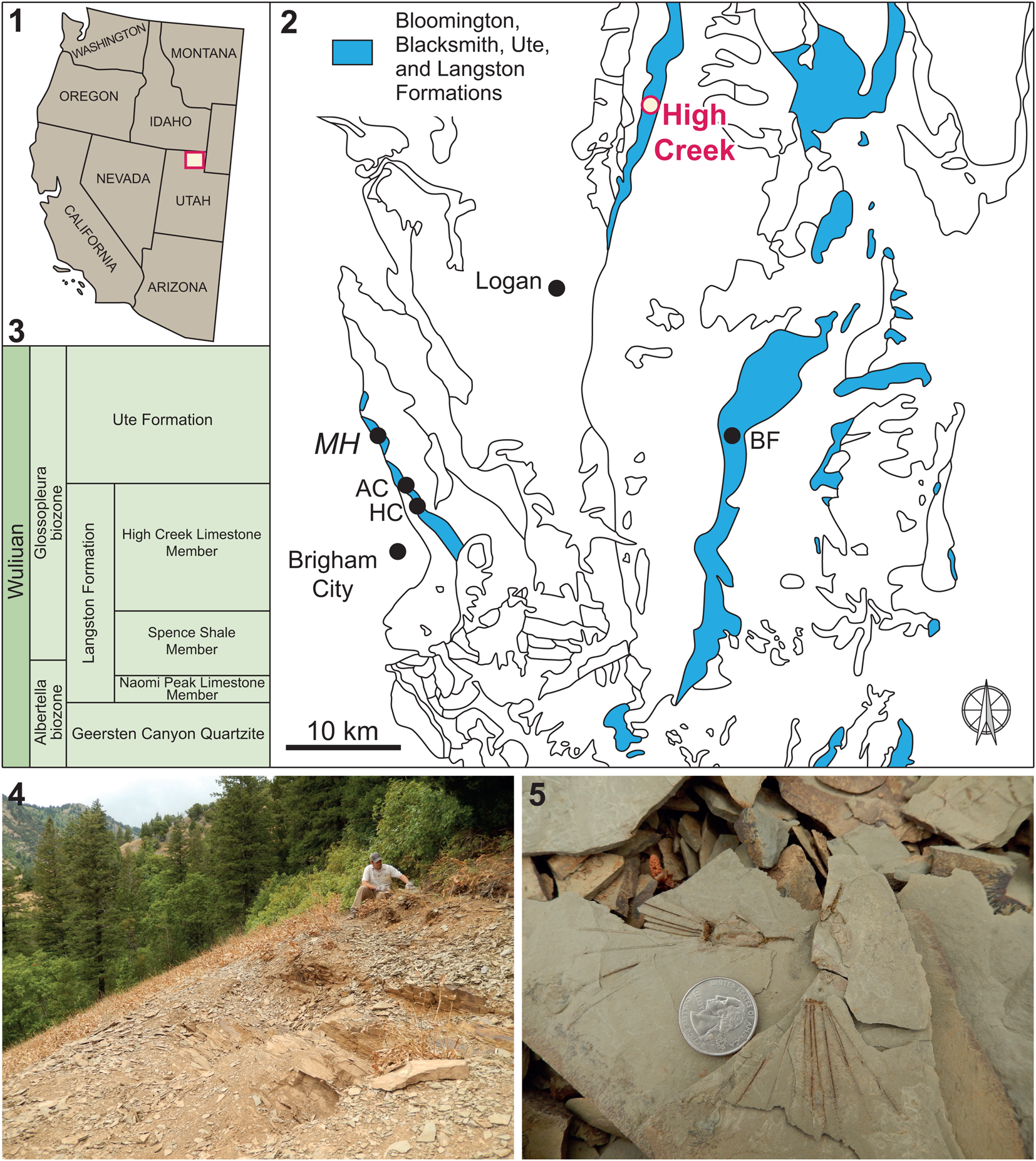
The collecting locality is known as High Creek Canyon in the Bear River Range north of Logan, Cache County, Utah. GPS coordinates are: 41°58′20.55″N, 111°42′03.93″W (Fig. 2). The single specimen was collected in situ, 2–3 meters below the top of the Spence Shale Member of the Langston Formation. The age, also indicated in Figure 1, corresponds to the Glossopleura walcotti Biozone, Wuliuan Stage, early middle Cambrian. Regionally, this is approximately coeval with the upper portion of the Pioche Shale farther to the southwest. The Spence Shale at High Creek is interpreted as having been deposited in a shelf environment deposited below storm wave base, shallower than localities further west and south (Kimmig et al., Reference Kimmig, Strotz, Kimmig, Egenhoff and Lieberman2019).
Locality information. (1) Map of western United States with indication of the area exposing the Langston Formation. (2) Enlargement of the red rectangular area in (1). (3) Simplified stratigraphy of the Langston Formation. (4) Quarry rich in echinoderms in the Langston Formation at High Creek locality, Utah. (5) Moldic preservation of undescribed eocrinoid from the productive horizon. (1–3) From Kimmig et al. (Reference Kimmig, Strotz, Kimmig, Egenhoff and Lieberman2019).
Materials, preservation, associated fauna, and methods
The original single specimen of the edrioasteroid Sprinkleoglobus spencensis n. comb. was collected from the Spence Shale of Spence Gulch, Bear River Range, southeastern Idaho (Cambrian, Miaolingian Series, Wuliuan Stage) and appears attached to a hyolithid shell (Wen et al., Reference Wen, Babcock, Peng and Robison2019).
The new specimen described herein is largely articulated and complete. One ambulacrum lacks cover plates, exposing disheveled floor plates. Preservation of delicate structures and evidence of in situ attachment indicate rapid burial.
Two other specimens in private collections are known from the same locality but were unavailable for study (J. Savill, personal communication, 2023). One of these appears to be attached to a hyolithid.
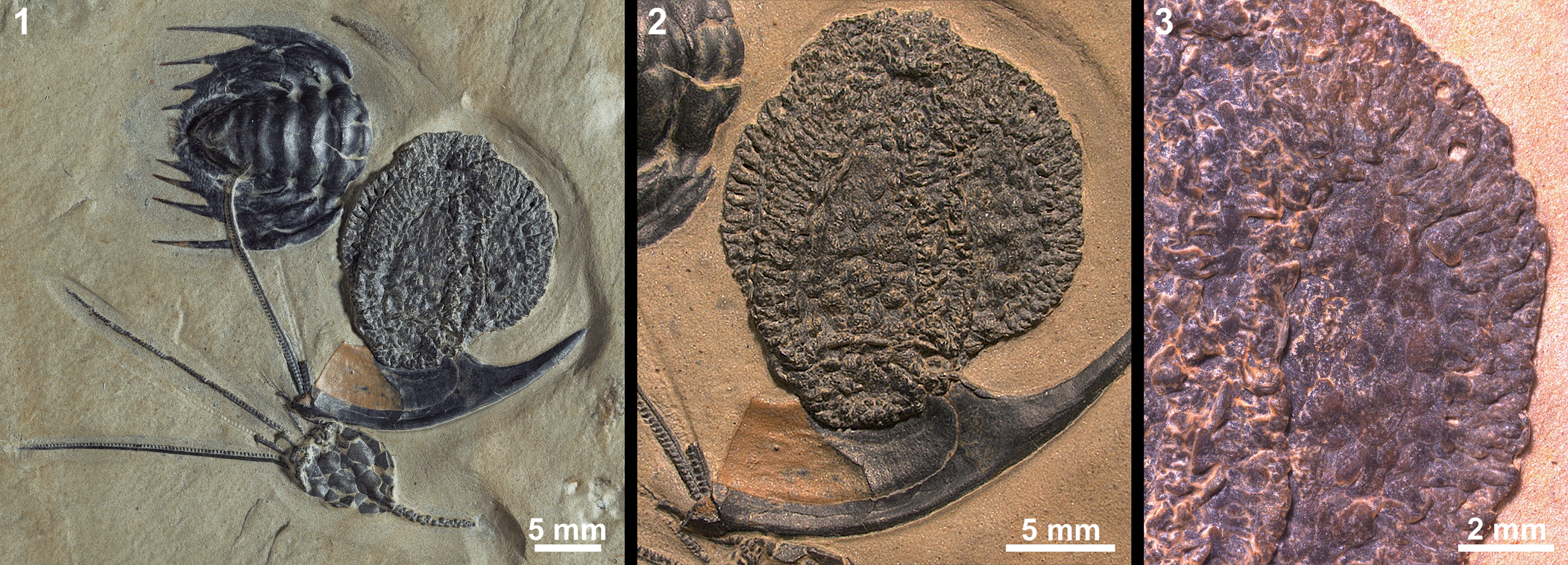
The new specimen of Sprinkleoglobus spencensis n. comb. is part of a small associated cluster of other taxa (Fig. 3). It is attached to an interior librigena of the trilobite Amacephalus idahoense (Resser, Reference Resser1939). Nearby is a pygidium of Zacanthoides idahoensis (Walcott, Reference Walcott1908), a small nearly complete Gogia sp., and not depicted in Figure 3, a vague trumpet-shaped fossil of unknown affinities.
New specimen of Sprinkleoglobus spencensis n. comb. (uncoated images) from the Cambrian Wuliuan of the Spence Shale Member, Langston Formation (Utah). (1) Associated assemblage, including attached to Amacephalus idahoense (Resser, Reference Resser1939) librigena, nearby complete eocrinoid Gogia sp., and pygidium of Zacanthoides idahoensis (Walcott, Reference Walcott1908). (2) Entire specimen and attachment close up. (3) Detail of right-hand ambulacrum.
Other echinoderms occur in the same stratum as that yielding Sprinkleoglobus spencensis n. comb., including a common but undescribed species of the eocrinoid Gogia and ctenocystoids. A few specimens of a common but undescribed Gogia are also attached to bioclastic debris by small holdfasts (Zamora et al., Reference Zamora, Darroch and Rahman2013a). Several other Lagerstätte occur in the Spence Shale and are rich in arthropods (Kimmig et al., Reference Kimmig, Strotz, Kimmig, Egenhoff and Lieberman2019) and diverse echinoderms, including three species of Gogia, the eocrinoid Lyracystis reesei Sprinkle and Collins, Reference Sprinkle and Collins2006, the ctenocystoid Ctenocystis utahensis Robinson and Sprinkle, Reference Robison and Sprinkle1969, and the stylophoran Ponticulocarpus robisoni, Sumrall and Sprinkle, Reference Sumrall and Sprinkle1999 (Sprinkle and Collins, Reference Sprinkle and Collins2006; Kimmig et al., Reference Kimmig, Strotz, Kimmig, Egenhoff and Lieberman2019; Wen et al., Reference Wen, Babcock, Peng and Robison2019; P. Jamison, personal communication, 2024).
The single specimen described was received partly prepared. Additional preparation with fine needles removed more matrix. Detailed coated and uncoated images are multi-focus, stacked montages taken at the Field Museum with a Leica DMS 300 digital microscope and accompanying software. Locality images were provided by the first author.
Repositories and institutional abbreviations
The specimen reported in this study is deposited at the Field Museum, Chicago, USA (PE 93415). The holotype of the same species is deposited in the University of Kansas Museum of Invertebrate Paleontology, with part numbered as KUMIP 49294A and counterpart as KUMIP 492941B.
Systematic paleontology
Classification and terminology
The classification and morphologic terminology follow Bell (Reference Bell1976). A–E are used to designate the five ambulacra in pentaradially symmetric echinoderms, with the anterior part indicated by ambulacrum A and the posterior part by interambulacrum CD. The type specimen is exposed in anterior view only. Certain aspects of the morphology in the new species appear to be unique (see the following), further complicating interpretation.
Phylum Echinodermata Bruguière, Reference Bruguière1791 (ex Klein, Reference Klein1734)
Class Edrioasteroidea Billings, Reference Billings, Billings, Hall, Jones, Salter and Thompson1858
Order ?Edrioasterida Bell, Reference Bell1976
Remarks
On the basis of new observations “T.” spencensis is transferred to the new genus Sprinkleoglobus (see the following). The genus Sprinkleoglobus was tentatively included in the order Edrioasterida by Zhao et al., Reference Zhao, Rahman, Zamora, Chen and Cong2022 on the basis of the presence of biserial podial pore-bearing flooring plates. Details of the arrangement of the oral plates and flooring plate interiors, which would add to the diagnosis, are lacking at this time.
Genus Sprinkleoglobus
Type species
Totiglobus? lloydi Sprinkle, Reference Sprinkle1985 under original designation.
Included species
Sprinkleoglobus lloydi (Sprinkle, Reference Sprinkle1985), S. extenuatus Zhao et al., Reference Zhao, Rahman, Zamora, Chen and Cong2022, and S. spencensis n. comb.
Diagnosis
An edrioasterid with globoid to pear-shaped theca, with small aboral attachment structure, much narrower than theca, composed of tiny plates. Ambulacra long and wide, nearly reaching the holdfast, with large biserial flooring plates and multiserial cover plates. Interambulacral plates slightly tumid (after Zhao et al., Reference Zhao, Rahman, Zamora, Chen and Cong2022).
Remarks
The genus Sprinkleoglobus was created to accommodate Sprinkleoglobus lloydi (Sprinkle, Reference Sprinkle1985) and S. extenuatus Zhao et al., Reference Zhao, Rahman, Zamora, Chen and Cong2022. The latter species is of particular interest in that it is among the earliest known edrioasteroids. The former species was originally described on the basis of a single specimen from the Marjum Formation (Cambrian, Miaolingian Series) of Utah and first included with doubts in the genus Totiglobus Bell and Sprinkle, Reference Bell and Sprinkle1978. Description of the latter was based on two specimens from the Chengjiang biota of Yunnan Province, China. With a third occurrence of the genus, some characters of the anatomy are now understood in greater detail (see the following). The general thecal shape and ambulacral development of Sprinkleoglobus spencensis n. comb. resemble S. extenuatus, and thus it is included with that genus.
Sprinkleoglobus spencensis n. comb.
Figures 1, 3–5
- Reference Wen, Babcock, Peng and Robison2019
Totiglobus spencensis (Wen et al., Reference Wen, Babcock, Peng and Robison2019), fig. 2
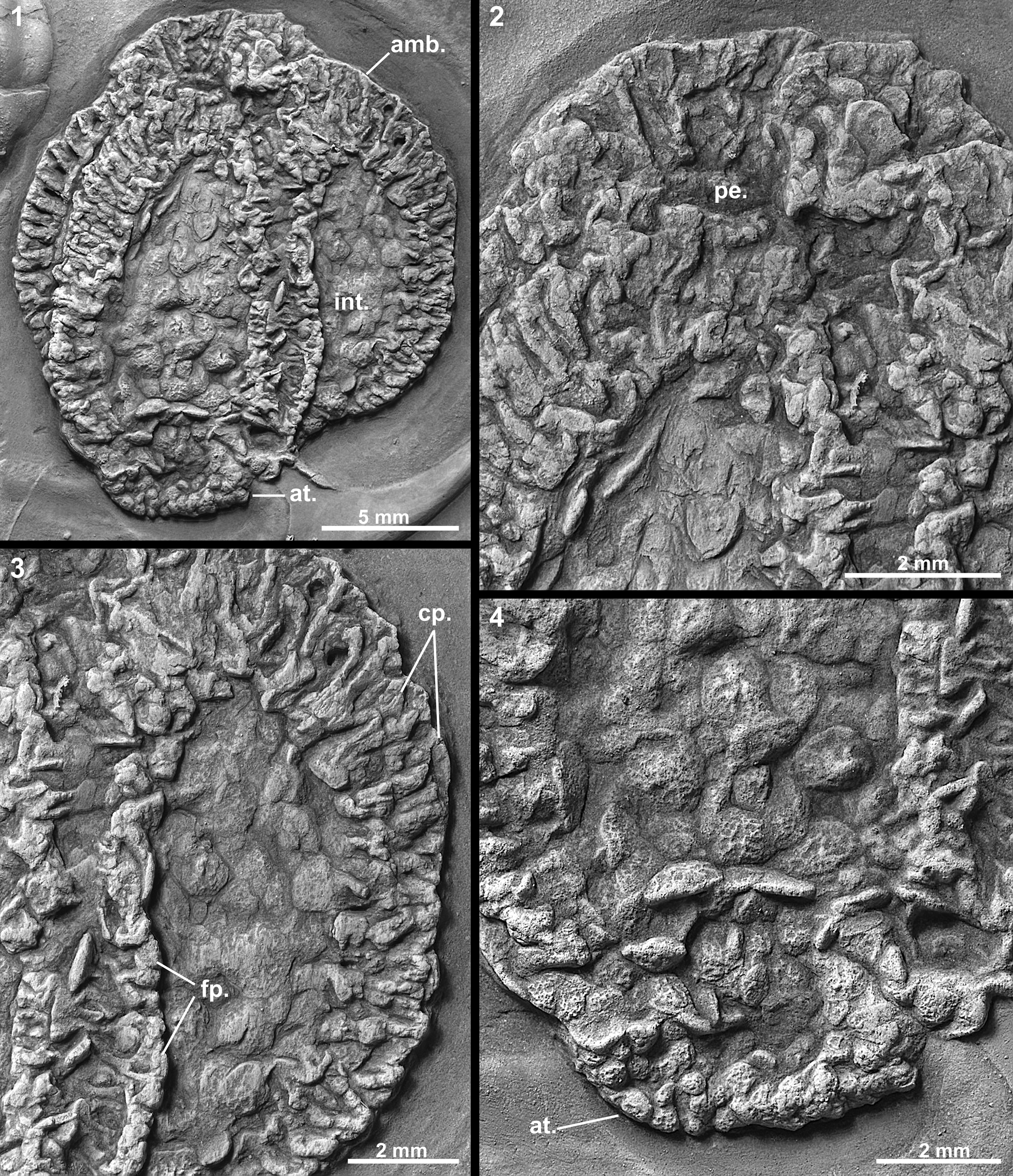
Morphology of Sprinkleoglobus spencensis n. comb. from the Cambrian Wuliuan of the Spence Shale Member, Langston Formation (Utah). Holotype PE 93415 (coated with ammonium chloride). (1) Entire specimen. (2–4) Detail of oral region (2), right-hand side (3), and holdfast (4). amb. = ambulacra; at. = attachment structure; cp. = cover plates; fp. = flooring plates; int. = interambulacral; pe. = peristome.
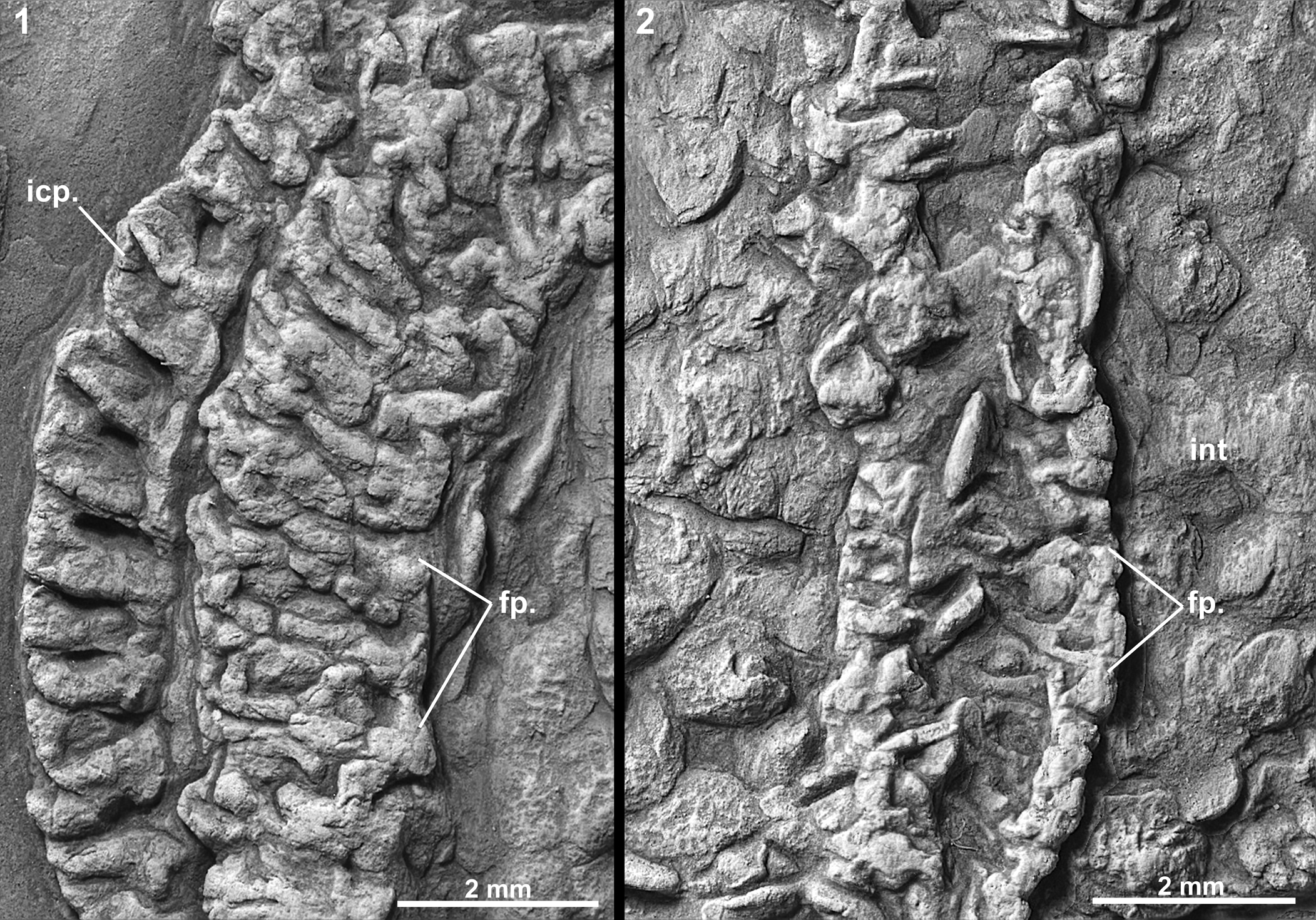
Ambulacral detail (coated with ammonium chloride) of Sprinkleoglobus spencensis n. comb. from the Cambrian Wuliuan of the Spence Shale Member, Langston Formation (Utah). (1) Left-hand ambulacra with coarse cover plate ornament. (2) Central ambulacrum with floor plates. fp. = flooring plates; icp. = internal part of cover plates; int = interambulacra.
Type specimen
Holotype is a largely disarticulated specimen preserved as a natural mold (KUMIP 49294A and counterpart KUMIP 492941B). New referred specimen is complete, flattened (PE 93415).
Diagnosis (emend.)
Species of Sprinkleoglobus characterized by wide oral area, large interambulacral plates, strongly ornamented cover plates, and fully calcified small discoidal holdfast.
Occurrence
Spence Shale Member of the Langston Formation (Wuliuan Stage, early Miaolingian Series, Cambrian).
Description
Referred specimen flattened theca preserved in lateral view, original shape globoid, adoral surface strongly convex with a wide oral area. Five wide ambulacra are inferred from three exposed examples; ambulacra raised above interambulacra. Ambulacra approximately half the width of each interambulacrum; approximately 18 mm long and 15 mm wide as preserved; with slight distal taper, ending in broad rounded terminations near the holdfast. Each ambulacrum composed of flooring and cover plates. Flooring plates biserial, much wider than long (see discussion that follows); adradial ends thin, paddle-shaped, smooth, forming wide floor of the adradial ambulacrum, abradial ends thicker, exposed surfaces each with V-shaped coarse ridge. Podial pores rimmed, large, ovate. Cover-plate pattern difficult to interpret; holotype and referred specimen indicate large highly ornamented rectangular abradial elements with much smaller adradial elements bordering the perradial suture; abradial elements with ridges in continuity with exposed floor-plate ornament; ridges extend adradially where they continue to near the perradial suture; arrangement of adradial cover plates uncertain.
Interambulacra composed of large, slightly tumid, reticulate, tessellate plates; transitioning distally to low conical plates; approximately 60 in fully exposed anterior interambulacrum, larger elements with smaller intercalated elements; reticulate ornamentation appears to become more prominent distally.
Aboral part of the theca terminating in a holdfast, consisting of numerous small rounded thick plates forming a basal attachment disk; disc approximately 30% of thecal diameter as preserved.
Remarks
Flattening, recrystallization, coarse irregular ornament in ambulacra/oral region, and potentially irregular plate arrangement all contribute to difficulties in morphological interpretation of the new available specimen. Further, the important posterior side of the specimen is unexposed, obscuring observation of main apertures (periproct, gonopore, and hydropore). Original diagnosis by Wen et al. (Reference Wen, Babcock, Peng and Robison2019) misinterpreted important features such as the curvature of ambulacra, which is the result of flattening of the dome-shaped theca with straight ambulacra (see Zamora et al., Reference Zamora, Rahman, Sumrall, Gibson and Thompson2022 for comparison). Fine ambulacral anatomy was available in the original specimen (Fig. 1) but not reported in the description. New specimen and new observations of the original material indicate that Sprinkleoglobus spencensis n. comb. expresses a biserial floor plating and highly ornamented cover plates that diminish in size toward the perradial suture.
Both the type species of Sprinkleoglobus, S. lloydi, and S. extenuates, are characterized by short ambulacra extending down approximately 50% of the bud-shaped theca, in contrast to the long ambulacra extending nearly to the holdfast globoid theca in S. spencensis. Interambulacral and distal thecal plates of S. lloydi and S. extenuatus are smaller and more numerous than those of S. spencensis. The holdfast of S. spencensis is more completely exposed, apparently more heavily calcified, than other species of Sprinkleoglobus. The new species is also highly ornamented, but that character is difficult to compare due to poor preservation of the other two species.
Concluding remarks
The species of edrioasteroid “Totiglobus” spencensis Wen et al., Reference Wen, Babcock, Peng and Robison2019 is transferred to the genus Sprinkleoglobus on the basis of a new, well-preserved, complete referred specimen and comparison with the fragmentary holotype. It furnishes new information concerning a relatively poorly known genus, but there is much more to be learned, including oral region and posterior interray plating. In one important aspect, the holotype and referred specimens complement each other with regard to interpretation of the cover-plate configuration (see the preceding). Biserial ambulacral floor-plate morphology resembles those of S. lloydi, Totiglobus nimius Bell and Sprinkle, Reference Bell and Sprinkle1978 and Stromatocystites Pompecki, Reference Pompecki1896. There is still much to be determined in this taxon to furnish sufficient data for an informed phylogenetic analysis. S. spencensis provides important information regarding attachment strategies among edrioasteroids. This study also emphasizes the risk of describing new species of Cambrian echinoderms on the basis of a few poorly preserved specimens.
Acknowledgments
We thank P.G. Jamison for collecting the specimen and making it available for study. F. Gahn (Brigham Young University, Idaho, USA) assisted in the field in 2016. We appreciate the help of N. López-Carranza, Invertebrate Paleontology Collection Manager at University of Kansas, for making holotype material available for study. We appreciate comments of Associate Editor R. Mooi and two reviewers, R. Parsley and an anonymous one. S.Z. acknowledges support from the Spanish Ministry of Science and Innovation (PID2021-125585NB-I00), co-financed by the European Regional Development Fund, and the project “Aragosaurus: Recursos Geológicos y Paleoambientales” (E18_17R) funded by the Government of Aragón.
Competing interests
The authors declare none.


 Open access

