




Introduction
The study of real wages in India has progressed substantially over the last three decades. The present contribution aims to expand the current evidence available, resulting in more complete long-term trends between c.1500 and 1870. Such reconstructions of income trends are important for two reasons. The first pertains to the historical roots of India's underdevelopment. The second reason, linked to the first, is the importance of the Indian case for the Great Divergence Debate (GDD).Footnote 1 Modern research into India's economic underdevelopment is heavily dependent on statistical evidence after 1900 or even after 1945. However, earlier quantitative evidence is necessary to reveal more important backgrounds to contemporary underdevelopment.Footnote 2
The key question in this debate is when the Great Divergence between different parts of Eurasia started. To answer this, it is necessary to trace back from global inequalities blatantly visible in the nineteenth century and thereafter. It requires the precise timing, which is a sine qua non for discovering the root causes of the divergence between living standards in Western Europe on the one hand and in Asia, in particular China and India, on the other. The evidence collected so far suggests – notwithstanding substantial fluctuations over the earlier centuries – that India's real wages were lagging behind those of Europe already in the sixteenth century.Footnote 3 The most recent historical reconstruction of India's real wages emphasizes the need for significant improvements in data quality, given the vast geographical scope of the Indian subcontinent and the long time span under consideration. This, of course, also applies to the other regions involved in this global comparison. However, for the seventeenth century, especially for the years 1640–1720, Indian wage data are still relatively scarce compared to earlier and later periods. This article will address that gap by examining new evidence from Portuguese sources. It will also briefly expand on discussions regarding the reliability of the colonial sources used.
Apart from these preliminary but necessary additions, our main aim is to contribute to their interpretation in a more nuanced way – along the lines of Joyce Burnette's recent work on European comparisons and Pim de Zwart's intercontinental comparisons. In this respect, the debate has advanced more recently, e.g. through a discussion of the frequency of payment, possible wage deductions, and the composition of the “basket” of consumer necessities.Footnote 4 Nevertheless, two methodological questions deserve priority. First, the household as a consumption unit (instead of the – adult male – individual) and the contribution to household income by its different members, and second, the scope available to Indian wage-earning families to improve their income position.
Indeed, nearly all adult males are part of a family, consisting of several members, but these males cannot simply be seen as a pars pro toto. We need to ask ourselves which of these members, male and female, contribute to household income, and how many consumers is this income meant to support (the consumer:producer (or c/p) ratio)? In other words, what is the relationship between the income generated by household members and their own consumption, as well as that of their non-working dependants? We will try to answer this question by looking at both long-term developments in the “gender wage gap” and by analysing the earliest sources available on the composition of wage-earning families.
Second, this relationship between producers and consumers within the household is directly related to so-called family strategies. Not only who works and who does what kind of work, but also decisions on whether and how to improve working conditions and remuneration. This goal can be reached by improving skills and related wages (the “skill premium”). It is an important aspect of mobility, geographical (which we will not discuss here) as well as social, i.e. strategies to change types and places of work and employers. Both methodological issues (briefly, the gender wage gap cum c/p ratios and the skill premium) affect our interpretation of welfare levels and, consequently, any global comparison.
With these objectives in mind, the article proceeds as follows. First, it offers a reassessment of the evolution of Indian real wages, supplemented by new evidence for the seventeenth century and by a discussion of the reliability of our long-term wage series between 1500 and 1870. It then examines the gender wage gap in relation to individual male and female income before assessing how the latter contributions are representative for both household income and consumption in precolonial and early colonial India. It investigates household strategies to improve income, or at least prevent its deterioration, by examining the so-called skill premium as an indicator of the scope to improve one's income position by moving from a lower paid unskilled job to a better paid skilled one. Finally, it summarizes our main contributions to both our knowledge about Indian household income and consumption as well as to the Great Divergence Debate, ending with a plea to improve its methodology and, thus, the quality of global comparisons.
Long-Term Trends in Real Wages: A Reconsideration
The reconstruction of long-term trends in real wages in precolonial India has made significant progress in recent decades.Footnote 5 This article will not only summarize these but also add to the data collection new evidence from Western India for the seventeenth century. This provides us with a substantially longer set of parallel wage data for Western and Northern India than before, enabling us to discuss the relationship between the two.Footnote 6 The evidence for the 1680s is based on a yearly overview of payments to sailors and taskmasters in Portuguese settlements on India's West Coast. It also helps to say more about the eighty-year period between 1640 and 1720 for which the Dutch and English sources are severely wanting. In the appendix more details are given about these new data. Together with the results of previous research about real wages in Western India (2024), Figure 1 shows the long-term trend in real wages, expressed in terms of how many subsistence baskets an adult male could afford with an unskilled daily wage.
Evolution of real wages for male adults in India, 1500–1870. Goa and Bengal represent, respectively, Western and Eastern India, while Agra represents Northern India.
Sources: See Appendix, section A1.
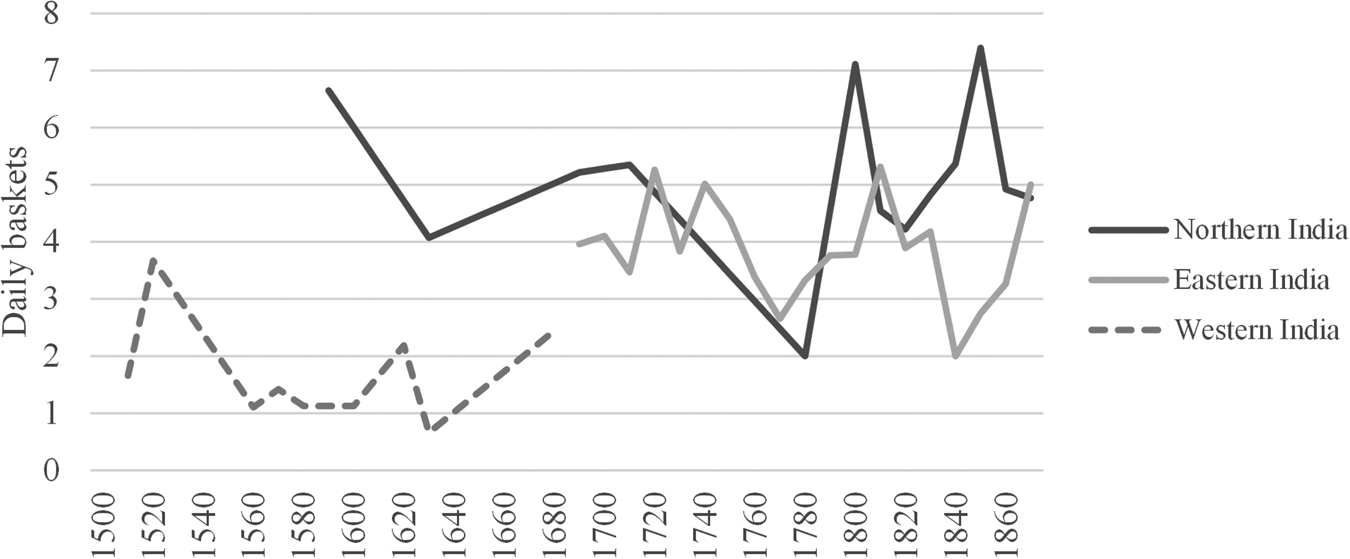
Although more research may be needed, this serves as the starting point for the rest of the article. Provisionally, we can discern the following trends. After a hike during the 1520s, real wages of unskilled workers in Western India decreased from nearly four baskets around 1525 to extreme poverty levels until 1600. We stressed earlier that a combination of internal and external reasons – including the decline of both intercontinental and intra-Asian overseas trade, together with the imposition of a “stricter” set of colonial policies, and possibly stagnating agricultural productivity – might explain such decline.Footnote 7 Again, after an ephemeral and less expressive hike in the 1620s, real wages plummeted – coinciding with the famines in the 1630s – only to grow steadily until the end of century to levels comparable to the 1620s (around two baskets per day). Adding to our previous analysis of subsistence real wages, this new evidence suggests two things. First, that the often-used normative data of the Ain-i-Akbari, represented in the evolution of Northern Indian real wages in the 1590s, are clearly outliers due to their nature (according to Haider, they were based on wages paid to palace employees and other administration servants); and second, that workers in Western India lived in poverty for the whole of the period, with between one and two baskets most of the time and only three around 1525. In turn, Northern Indian unskilled workers (in Agra) already enjoyed higher real wages by the 1630s, and this grew to five baskets as a daily wage until 1720, followed by a decline up to 1780–1780 and two hikes (seven baskets in the North around 1800 and 1850) until wages stabilized around five baskets at the end of the period.
These substantial wage differences for Western and Northern India in the seventeenth century are simultaneously the most spectacular and the most enigmatic results of our research, which requires an explanation. Sivramkrishna shows that, in Mysore (around 650 kilometres southeast of Goa), around 1800, the purchasing power of agricultural wage labourers, if expressed in ragi or jola (meaning corn, the prevailing staple of the poor), is nearly twice as high than if expressed in coarse rice.Footnote 8 Although we have no evidence in our data from the Portuguese settlements on the West Coast that this kind of substitution was feasible, let alone that it was practised (as far as we know “our” workers ate rice as a staple), Sivramkrishna's research may serve as a warning to take care when selecting a particular staple for a particular group of workers in a specific place and moment in time.
Let us now see what this means for the global comparison and, in particular, for the trends in the seventeenth century (Figure 2).
Indian real wages for male adults in global perspective, 1500–1870. The different parts of India are represented as explained in Figure 1. Madrid and Oxford represent respectively Southwest and Northwest Europe; Beijing represents China.
Sources: See Appendix, section A2.
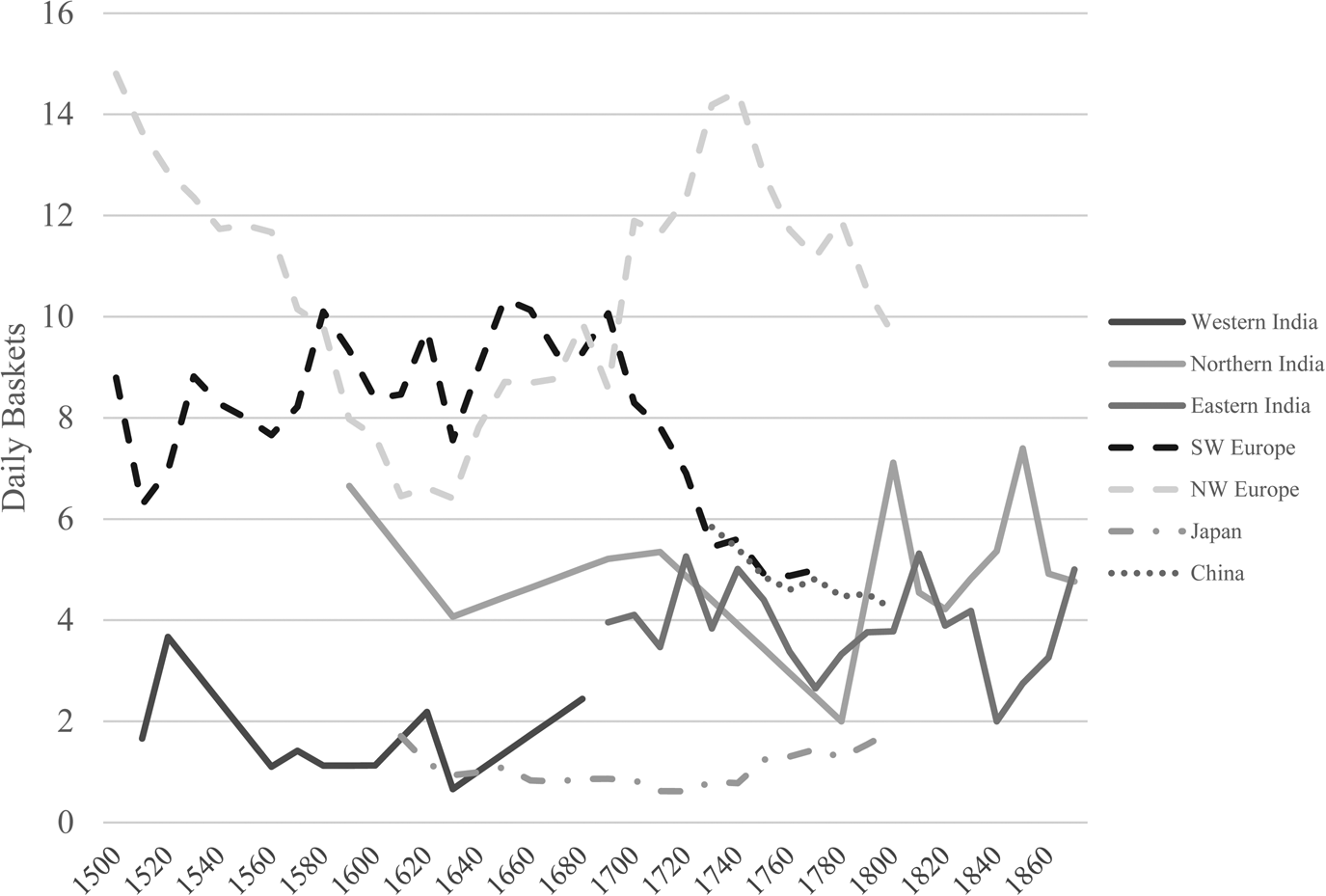
Compared to the conclusions in our previous article, the evolution of real wages in several parts of pre-1700 India suggests different development trajectories.Footnote 9 Western Indian grain wages showed little significant increase from the 1630s until the end of the seventeenth century. Western Indian male workers fared slightly better than their rural Japanese counterparts. However, Northern and Eastern workers had significantly better living standards than Western Indians (and Japanese), at least during the above-mentioned period. Nevertheless, India lies below most European data lines, although it should be stressed that Southern Europe and Northern India did not differ substantially in this respect around the early 1700s. This implies that the conclusions from our previous research about an early Great Divergence between India and Europe are corroborated by our new data for Western India in the late seventeenth century.
So far, our contribution to the GDD aligns partially with our own earlier research, while also nuancing it. Most importantly, it teaches us to be cautious in contrasting “all-Asian” with “all-European” trends, as well as in supposing long-term linear trends for different parts of Eurasia.
Before drawing more conclusions by comparing regional trends, we need to delve more deeply into the comparability as such. A few more considerations deserve our attention. Earlier source critique extensively addressed possible misinterpretations because of, for instance, the possible inclusion of board and lodging,Footnote 10 or seasonal fluctuations in wages and employment, and that critique will not be repeated here. However, we also have to question whether the type of employer matters. Many of our sources pertain to Indians working within a colonial setting. We should therefore ask who pays best: the European colonial government, private European employers in India, or private Indian employers? If the first were to be the case, our trend would be too optimistic. Counterintuitively, perhaps, this seems not to be the case. On the contrary, European sources might even provide an overly pessimistic view if we follow J.H. Middleton, Assistant to the Civil Commissioner Delhi. In a long letter in 1819, he writes at length regarding the prevailing wages in Delhi and Meerut (seventy-five kilometres north of Delhi).Footnote 11 Notwithstanding recent wage increases by the British authorities, private Indian employers outcompeted the British, both governmental and private: “A native [employer] pays one piece per diem beyond the rates established [by Government] more than a European does.” Furthermore, Middleton thinks this is right and that the British should not try to disobey the rules of the labour market: “I think every man should be free to work for the man who will pay and treat him best.”
Against this possibility of underestimating wage levels are the risks of overestimation. We mention two here: deductions by foremen and money exchange losses. Such deductions were made where workers were hired as a group. The intermediaries, sometimes called jobbers, were entitled to keep part of the wage for themselves in exchange for their services. There is plenty of evidence of this for the nineteenth and twentieth centuries, but it is hard to quantify. Daniel Houston Buchanan thinks that, in the 1930s, foremen in the textile industry kept between one and ten per cent for themselves on pay days.Footnote 12 Unfortunately, this is rather vague and not very helpful for drawing further conclusions. In the Indian case, losses from exchanging the coins received as wage stem from frequent fluctuations in the exchange rate of silver, copper, and cowrie shells (the lowest denomination, especially in use in northeast India until around 1850). There are numerous complaints about the shroffs or money changers taking advantage of the ignorance or weakness of workers in this process, but, again, it is hard to quantify.Footnote 13 It is quite possible that the decentralization of the minting process in the eighteenth and early nineteenth centuries, along with the subsequent distortion of centrally enforced exchange rates, exacerbated this disadvantage for workers, making it more severe than in earlier or later periods. On the other hand, workers’ protests and abuse of shroffs are well documented and therefore wage receivers cannot be represented simply as their powerless victims.
This questioning of the reliability and representativeness of our wage data does not point to a problem that is typical of Indian history alone. It applies equally to other regions studied within the framework of the Great Divergence Debate and to later Indian wages. We must therefore content ourselves with these results, chiefly because of a lack of information on systematic change over time. At the same time, we hope for research that will elaborate on these important issues. More results can be achieved by looking at the c/p ratio.
Individual Income and Gender Wage Gap
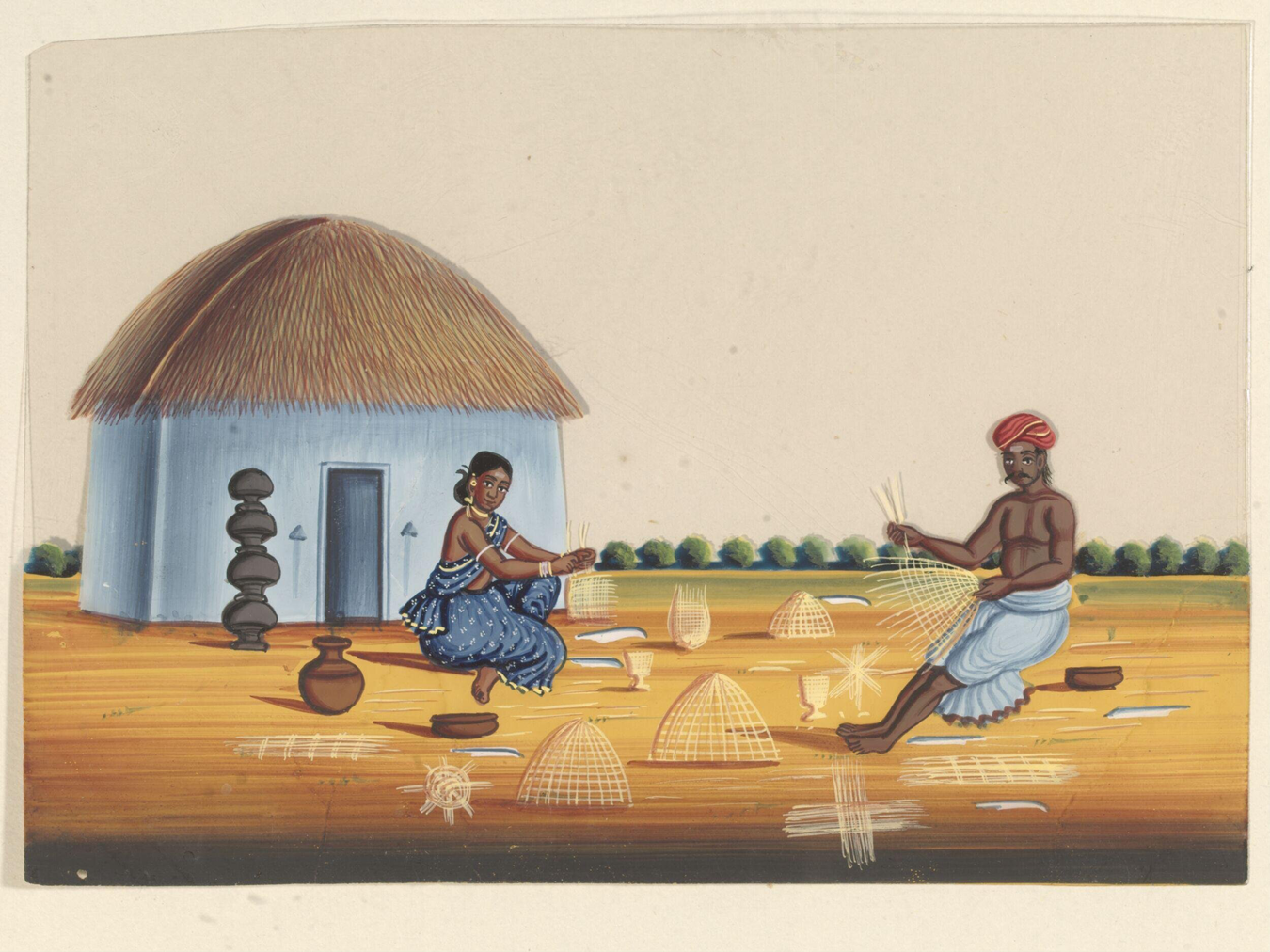
In recent decades, much of the literature on real wages adopted the methodology of assembling baskets of goods to assess the purchasing power of individuals over time and space.Footnote 14 This literature generally and mostly implicitly suggested that the male wage earner's income is intended to support not only himself, but also the other members of his household. If, for example, his income equals two baskets of goods, this would mean that his earnings were sufficient for himself, his wife (who is assumed to consume less), and one or two small children. Yet, there is a growing body of literature showing not only the degree to which women are involved in working for the market (Figure 3), with more visible impact on household finances, but also in the income generated from non-market activities (domestic work for example).Footnote 15 Regarding the former point, how does a woman's wage compare to that of a man? In other words, how wide is the so-called gender wage gap?
A basket-maker and his wife, Trichinopoly, India, c.1870. Painting; gouache on mica.
Source: Victoria and Albert Museum, London.
This assessment is of paramount importance because we need to know more about the earning capacity of all able-bodied household members, not only the adult males that appear in our general trends, but also their spouses, other women in the household, and elderly and working children. More precisely, did women also produce more than they consumed? If so, to what extent? This brings us to the question of the “gender wage gap”, which indicates the difference between average male and female wages for work of the same kind and amount (Figure 4). The female wage is expressed as a percentage of the male wage, which is set to 100 per cent.
Evolution of gender wage gap in precolonial India, 1510–1870. 0.1 is considered a very high gap (women making 10 per cent of a man's wage), while 0.9 implies a lower gender wage gap (women's wage is 90 per cent of a man's). Decadal benchmarks for Western India are Kannur 1510s, Goa 1520s, and Kochi 1580s–1590s. Both men and women worked in similar unskilled jobs (HISCLASS 11). Interpolations were used accordingly for the decades for which evidence is missing.
Sources: See Appendix, section A3.
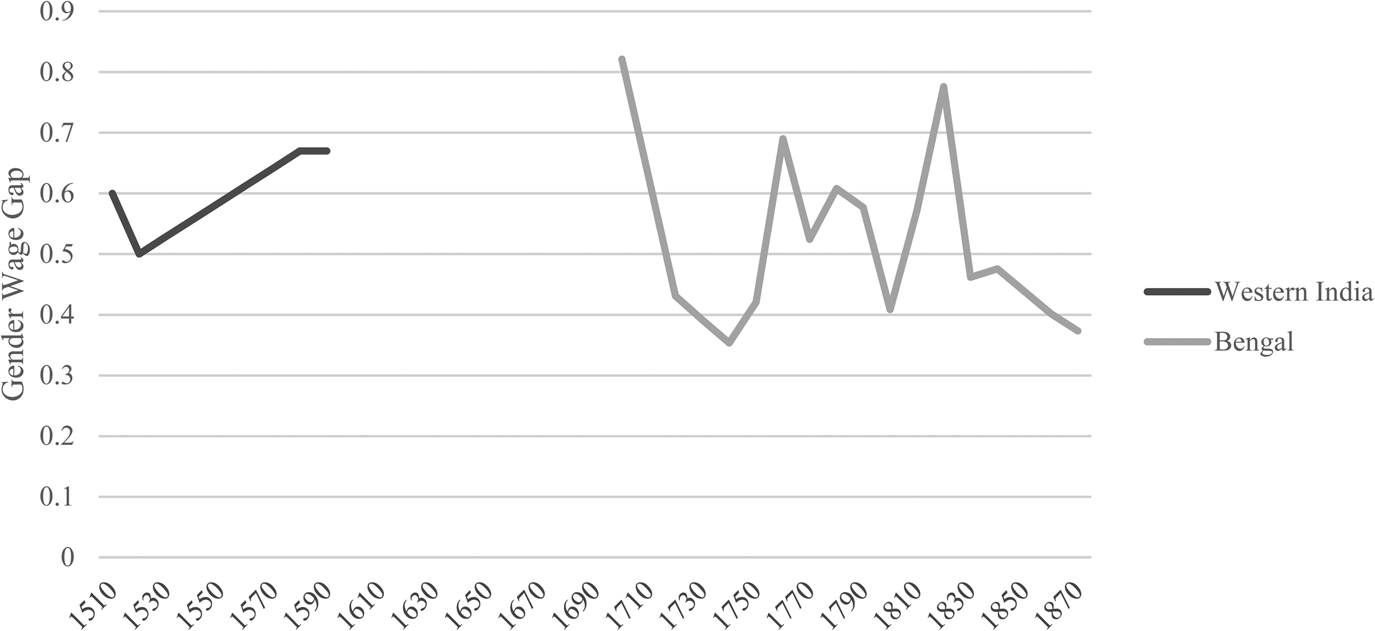
The available evidence for both Western India and Bengal (Figure 4) points to a gender wage gap of at least 0.5 or less during most of the period. In Bengal, the gap seems to have been lower around 1700, 1760s, and 1820s, which, in part, was in counter cycle with the evolution of male real wages. Western India witnessed a decreasing gap between the 1520s and the 1580s–1590s. In theory, this tendency might be related to the decline in Western Indian real wages until around 1600, as women had an incentive to carry out waged work outside the household if their economic circumstances worsened. In the context of high male real wages, the opposite would probably happen, due to patriarchal culture and norms, as seen above (see below for further considerations about perceptions on women's wage work outside the household). While these two regions do not represent precolonial India as a whole, the estimates suggest that men earned twice as much as women in the same or similar jobs. At the same time, the gender division of labour was significant in many areas of activity.Footnote 16 It is also true that variation existed, and lower male real wages would boost the income of women's wage work. However, as will become clear from the following analysis of budgets, the earnings power of women cannot only be derived from the gender wage gap. There is much more to it, and women's earning capacity was larger than that.
Household Income
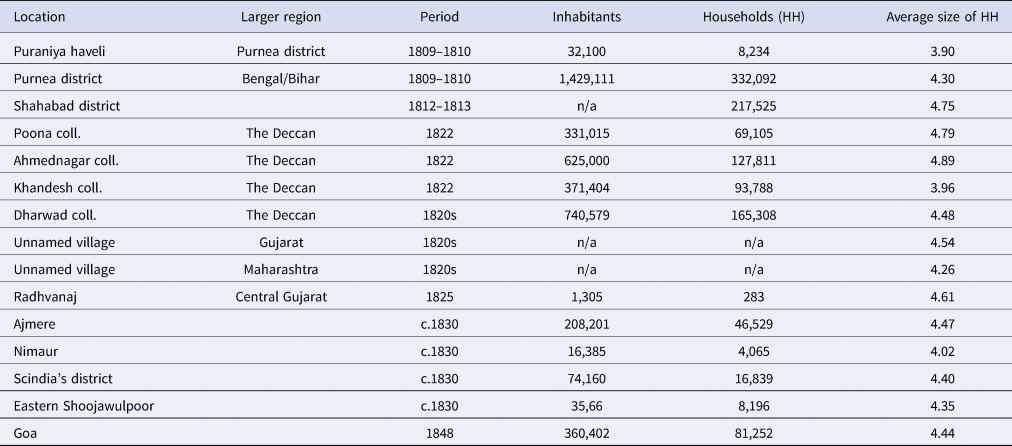
To widen our perspective from individual wages to household income, we need to know the average or median size of the household, the composition of that household, and the balance between the income-earning capacity (in the broadest sense of the word) of its members, as well as their consumption needs (Table 1).Footnote 17 Before the census of 1881, little was known about size of the household in India and its working members, and before 1800 virtually nothing. But even afterwards there was much confusion. Definitions and counting methods were not consistent across the different censuses.Footnote 18 An early complaint from Bengal about the confusion caused by the uncritical usage of the terms “family” and “household” warns us that “It should be noted here that the term translated family or house is often employed to describe an aggregate of families, as when two or more married brothers live in a collection of huts or buildings having one enclosure, one entrance and one court”.Footnote 19
Household size in India, c.1800–1850.
Sources: See Appendix, section A4.
These people living on more or less the same spot form separate households according to A.M. Shah's definition of a household unit: “A residential and domestic unit composed of one or more persons living under the same roof and eating food cooked in a single kitchen.”Footnote 20 This definition is important for Shah but also for us because of the stubborn and still very influential idea that, in the past, Indian households were extended (patrilocal or virilocal patrilineal) three-generation units to become smaller only under the influence of colonialism and industrialization. In his authoritative study, which appeared in 1974, Shah demonstrates that this simple evolutionist dogma was initiated by Henry S. Maine in the 1860s–1870s and worked out in the Indology tradition. However, as he also shows, this development of the Indian household from traditional joint to modern elementary family under the influence of colonialism is based not on solid demographic data, and the evolution might even have been in the opposite direction.Footnote 21
The earliest, more reliable evidence available to us now, covering Northern, Central, and parts of Southern India (see Table 1), points in the same direction. It indicates that, at the beginning of the nineteenth century, the average Indian household was small – as small as or maybe even smaller than that in Europe. It is also likely that the poor had smaller households than the wealthy at that time.Footnote 22 In fact, the average household size of the wage earners we are concerned with here will have been closer to 4 than to 4.5. Unless new evidence suggests otherwise, we suppose that for the wage-earning part of the Indian population during the period under scrutiny we must assume small households. This assertion is also important for global comparisons, as the 1911 Census of India concludes that India's average 4.9 persons per house is “much the same as in European countries”.Footnote 23
How can we go beyond numbers of persons to imagine more concretely the composition of this Indian household in the past? In his extensive study on the Indian household, A.M. Shah also emphasizes how little we know about this, even after the gradual improvement in the Indian censuses from 1881 onwards. Luckily, we have information about Goa around the mid-nineteenth century that enables us to get an idea about how to envisage this relatively small household of the Indian working classes.
Given the age-class division of twenty-five per cent under the age of ten (some of whom started working from, say, the age of eight, see below) and five per cent over sixty years old, we may suppose that, around 1850, about twenty-five per cent of the total population of Goa was unable to work.Footnote 24 A more detailed idea about family composition may be gained from an – admittedly – small sample of gunpowder factory worker families around 1800.Footnote 25 This rare information became available from correspondence relating to industrial accidents, mainly explosions, and compensation paid to the widows, parents, or children of the victims. These records generally include their names and age. The factory for which most information is available was situated at Ichapur, north of Calcutta, but data for a few victims from the auxiliary factory at Allahabad may also be included. For sixty-five out of a total of 126 named victims from 1783 until 1815 we have enough relevant information about their family composition. Twelve of them were unmarried, and, as the information on brothers and sisters of the victims is generally lacking, we will restrict ourselves to the households of the fifty-three married factory workers.Footnote 26
These fifty-three cases represent two different types of households. First, there were forty-four complete households, comprising husband (in this case, the victim of the industrial accident) and wife, with or without children, plus (sometimes) the husband's parents (three with a co-residing mother and one with both co-residing parents). One of these husbands had two spouses. Secondly, there were nine incomplete households, seven of which comprised the father (the victim of the industrial accident) and his children (from that moment full orphans), one case comprising the worker, his mother, and his son, and in another the worker, his father, and two sons.
Despite the incomplete information on the unmarried victims, the age of their parents is still important. In the case of two of them, both parents were still alive (father aged seventy and mother forty-five in one case; father aged sixty-one and mother forty-two in the other). Two lived alone with their father (ages 70 and 80) and no fewer than seven with just their mother (ages 48, 50, 2×60, 60-70, and two unknown). Finally, one lived alone with his brother.
The substantial age gap between the parents of these unmarried victims (age gaps of 9, 15, and 22) is confirmed by the same gap for workers whose ages we know, along with that of their wives (age gaps 5, 10, 12, 14, and 17). This means that girls married at a very early age (in our sample we have widows aged 10, 11, 2×12, 13, 14, 15/16, 16/17; the rest were twenty or older at that time of the accident).Footnote 27 As far as we can judge, they had their first child between the ages of sixteen and seventeen. It is possible that at the time of the accident many firstborns had already passed away. This is suggested by the fact that the age gap between succeeding surviving children was no less than 3.2 years. This and the rather low number of children per household must be due to high mortality rates for children, in particular for girls (see Table 2).
Children per household in the Ichapur sample, 1783–1815.
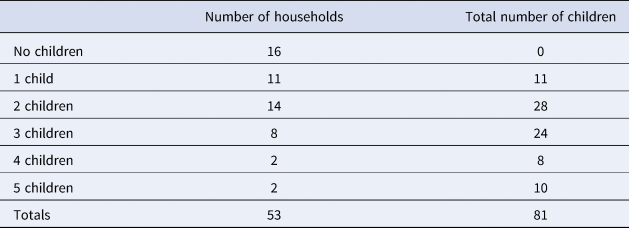
Gender division of children: 40 boys, 31 girls, 10 unknown gender. Average number of children per household: 1.6.
Source: See Appendix, section A6.
The census data for Goa around 1850 and the “Ichapur” sample of half a century earlier have important implications for the interpretation of our wage data, which so far only pertain to adult males. It confirms A.M. Shah's thesis, namely, that these wage earners were members of small households (especially because of the high mortality rates among children, in particular girls) and that the supposedly normative three-generation household was rather an exception (six out of fifty-three in the Ichapur case), and not adding substantially to the household size of the commoners.
For a better understanding of welfare rates, we now must know the ratio between consumers and producers in these wage-earning households. For this, we need to make a brief excursion to late Czarist Russia. Using a wide range of Russian statistics around 1900, Alexander V. Chayanov proposed to measure the pressure of consumer demand by a coefficient relating the number of farm consumer units to the size of the labour force. He computed this relationship between the number of consumers to the number of workers (c/w) by using budget surveys. Without providing actual numbers, his c/w categories vary from a minimum of 1.00–1.15 to 1.61 and higher. The effect of a high c/w ratio is, he claimed, that “other things being equal, the peasant worker, stimulated to work by the demands of his family, develops greater energy as the pressure of these demands becomes stronger. The measure of self-exploitation depends to the highest degree on how heavily the worker is burdened by the consumer demands of his family”.Footnote 28
Applying this formula to the – equally rural – Goan society around 1850 (see Table 3) gives a c/w ratio of 1.33, supposing that the consumption of dependants (mainly children) equals that of the members of the household actually producing (mainly adults). Luckily for the parents, that is not true as the dependants are mainly children who consume less. For that reason, and also given the fact that workers’ households were among the smallest (as posed by Shaw and confirmed by our Ichapur sample), we tentatively suggest that in pre-industrial India the availability of 1.25 baskets of goods per fully abled household member was required to prevent a shortage of food – with all that implied.
Average household composition in Goa, 1848–1851.
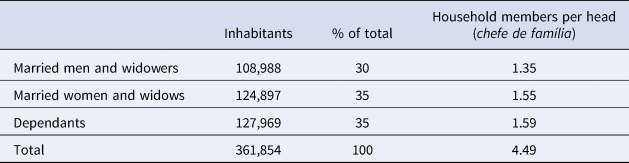
By dependants we mean the remaining non–married, non–widowed household members.
Sources: See Appendix, section A5.
From the handful of early budgets that provide data on the production and consumption side of a worker's household, we present one that illustrates best how such a balance can be realized. It is provided by the best proto-statistician, active in India at the dawn of the nineteenth century, Francis Buchanan Hamilton.Footnote 29 He started his statistical career working for the East India Company in Southern Bengal in 1798 and Southern India in 1800–1801, the results of the latter enabling Sashi Sivramkrishna to draw his important reconstruction of welfare levels (ut supra), including his emphasis on the importance of female earning power. We will now follow Buchanan on his tours through Bengal and Bihar, where he further developed his working methods some ten to fifteen years later. For our purpose, his report on the district of Dinajpur (now in Bangladesh) is the most revealing. Among the six budgets he details for Hindu families at Dinajpur, the sixth and lowest class consists of “sharecroppers, common labourers, low artificers (basket makers, washermen, the greater part of fishers, carpenters, etc)”. We first summarize the expenses of “a common labourer, his family, consisting of his wife and two children” and subsequently two ways in which these may be covered by income gaining activities.
Buchanan comments: “The food of the people is in general superior to their lodging, furniture and clothing: few are distressed by hunger; and although in general their food is not of a nature sufficiently nourishing, it is abundant. […] Their supply of fish, oil and vegetables is very scanty”. About the vegetables, he wrote that these were “either wild ones collected by their children, or a few beans and cucurbitaceous plants that cover the roofs of their huts”. In sum:
On the whole half a seer of rice, weighing […] 1.231 pound avoirdupois [0.56 kilograms] is considered as sufficient for the daily sustenance of each person in a family, young and old; to which if there is plenty of salt and oil, with pulse or other vegetables, rather to convey the latter, than to afford nourishment, the person is considered as living on a full diet. The only drink is water.Footnote 30
On the income side, Buchanan provides two types of landless households: sharecroppers and farm labourers. The sharecroppers (adhiyars; 150,000 families in Dinajpur) are cultivators who work with their own stock, and the produce of their labour is divided between them and the farmer-owner “and each takes his fair share”.Footnote 31
Apparently, this is a household where the children (if any) still do not contribute to the household income. More importantly, the net monetary contribution of the woman (10¼ rupee) as compared to the net income of her husband (13 rupees) shows a relatively modest gender wage gap of seventy-nine per cent.
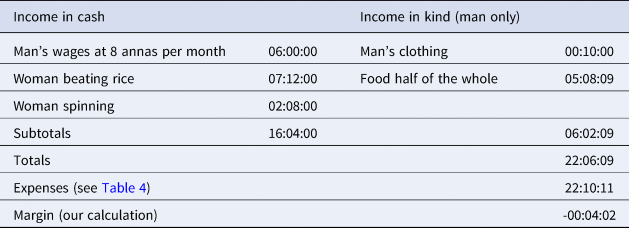
The households of farm labourers (krishans; no more than 80,000 families in Dinajpur) are even slightly smaller than those of the sharecroppers:
I have only supposed two small children per family, because the women are so hardly wrought, that they do not breed fast, and before a woman has more than two children, the eldest is usually eight years old. At that age the boys […] begin to tend cattle and each can take care of 25 heads [against a meal and 3 annas per year] from every proprietor in turns. The girls can then assist their mothers in beating rice but are generally very soon married.Footnote 32
The work of these farm labourers is described as follows:
In lands that produce a constant succession of crops [they are] hired for the whole year; but in clay farms they are engaged for six months only. This, however, makes little difference, as at the months when agriculture is at a stop, the demand for workmen is great, and they can make rather more than in the season of cultivation. (See Table 6.)
In this case of agricultural labourers, the woman earns eighty-five per cent of what her husband earns. Of course, both budgets need to be compared to those for wage earners outside the purely agricultural sector, who dominate our wage statistics. These are not abundant before the last quarter of the nineteenth century; thus, a systematic comparison is not possible within the framework of this article.Footnote 33 A rare working-class household budget from Calcutta in 1797–1798, for example, mentions only male cash incomes and is silent on any possible contributions by females.Footnote 34
The main purpose of presenting these two very early, very detailed, and very complete budgets is to provide a clear idea of the contributions to household income by the different household members – husband, wife, and children – from about eight years of ageFootnote 35 – at least for the lowest income classes (we will return to this issue later when discussing the impact of caste). While touring Bengal and Bihar in 1808–1814, Buchanan stressed the importance of female wages also in districts other than in Dinajpur. Interestingly, men did not always view positively this opportunity to increase household income through female labour. In Bihar, he remarks that “notwithstanding the extreme jealousy of the men, the women of the day labourers make almost as much as the men, as they are employed to weed and transplant rice, receiving the same allowances as men, and they assist in the harvest”.Footnote 36 Such “extravagant jealousy” is also known from agricultural labourers in the district of Bhagalpur. On the other hand, these same men enabled the women to make extra earnings from gleaning. While the husband earned 15 rupees per year, “[t]he woman makes the remainder, in which she is very much assisted by gleaning, most of the reapers having a strong fellow-feeling in leaving her a large quantity of ears”.Footnote 37
All these reports are consistent with and might even confirm our previous tentative conclusion about 1.25 baskets of goods as a minimum requirement for the male wage income (see also Table 4). At the same time, it illustrates how varied the sources of income are at the bottom of the social ladder: from a very early age, all members contribute wages (in cash or in kind), independent agricultural produce for the market and the fruits of industrial production, gardening, and gathering.Footnote 38 Perhaps most importantly, the contribution of female wages was essential, even more so than the gender wage gap approach suggests. Moreover, there is the unremunerated work of childbearing, childrearing, and household chores, of which we see only a glimpse in this source – and, thus, a more profound analysis of this dimension is beyond the scope of this article. Some of these were heavily seasonal, others were not. During the long period researched here, fluctuations in the income opportunities offered by different types of labour will have had an impact on the total results. This was clearly the case with the demand for public works, which, as we have seen, was so important during the slack agricultural season, but also in the demand for spinning, which declined quickly in the nineteenth century.Footnote 39
Household expenses of common labourers in Dinajpur, 1808.
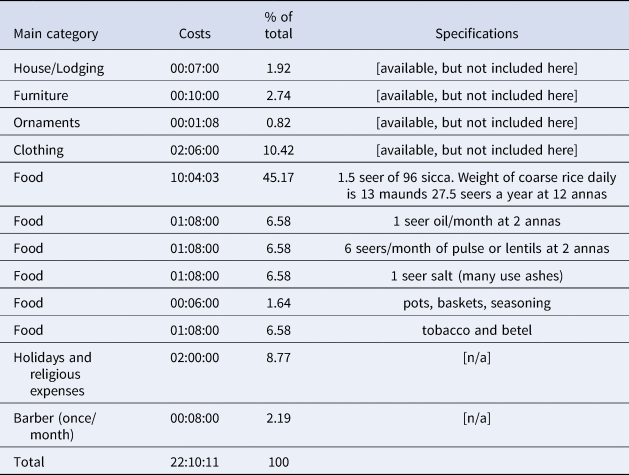
Costs are displayed in rupees, annas, and pice.
Sources: See Appendix, section A7.
Social Mobility and Skill Premium
However important the trend in prevailing wage levels may be, equally crucial are the options for wage earners to improve their position or to prevent it from deteriorating. Aside from one's economic position, these options could contribute to significant change in household income over time. To what extent were Indian wage earners in our period able to move from lesser-paid to better-paid jobs in their own profession? And how significant an increase in income could this result in? To what extent were they able to change occupations, again improving their income? And to what extent did these attempts at social mobility also involve geographical mobility, either temporal (seasonal or not) or permanent? Many authors are pessimistic as to these possibilities for mobility in the Indian case. The two reasons most frequently mentioned in the literature are: immobility because of indebtedness to the employer or local money lenders (bonded labour); and caste restrictions on occupational freedom.Footnote 40
Illustrations of indebtedness are abundant for the nineteenth and twentieth centuries. Buchanan points to this inflexibility of the labour market at Purnea in 1809–1810:
Many more people live here as servants or hired labourers than ever in Dinajpur; yet the difficulty which a stranger finds in procuring porters is still greater than in that district; and this, however extraordinary such an assertion may seem, must be attributed to the extreme poverty of that class of people, although one would naturally expect that this should render them anxious for service; but the fact is that in order to defray the expense of marriage, funerals, and other ceremonies, most of them are deeply involved in debt, and their services are bound for many months in anticipation, so that they no longer are able to engage themselves to a stranger.Footnote 41
Illustrations of the limitations of caste restrictions on the free choice of occupation are even more general and need no further citations here.Footnote 42 In both cases, the question is not whether these limitations have disturbed the functioning of the labour market. They certainly have. But how can we best understand how severe their effects were for most wage earners, certainly over time? After all, many counter examples demonstrating the functioning of the lower end of the labour market may be given. One example is the Delhi/Meerut case of 1819, cited above, but also the examples given in earlier studies, including our own on Indian wages.Footnote 43 Or of Gorakhpur district in 1813–1814, where the agricultural labourer was paid better than in other districts, “no doubt owing to the competition among the gentry, who have great difficulty in hiring workmen”.Footnote 44
The strictness of caste limitations on job opportunities does not apply to the lowest income classes. In Dinajpur 1808, Buchanan reports that: “All proper Hindus regret, that in these days no caste adheres to its proper duties, but that many persons, in order to procure a subsistence, betake themselves to professions for which they were not originally intended.”Footnote 45 In other words, the higher social classes might have attempted to impose occupational caste restrictions, but the lower classes did not necessarily act accordingly. For Bihar, he notes similarly that
People of high caste, although they will work on their own farms at every labour except holding the plough, will not hire themselves as day labourers, but poor people of the cultivating tribes (chasas) or artificers do not consider this employment as at all disgraceful, and by its means many small farmers gain a part of their subsistence.Footnote 46
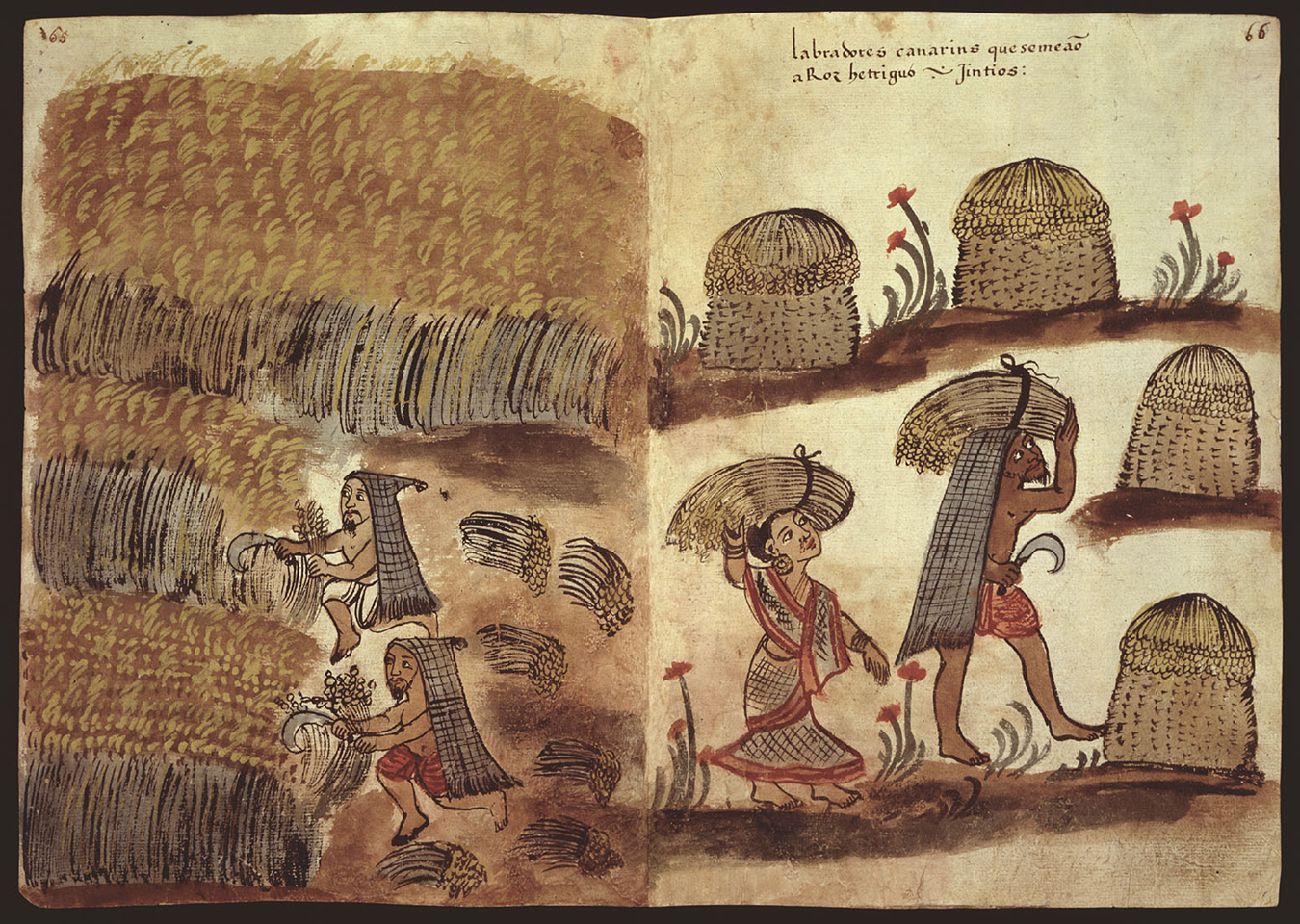
And a few years later in northern Gorakhpur, Buchanan also states that especially “the women of the low tribes have ample employment” (Figure 5).Footnote 47
Hindu farmers from the Kanara Coast, anonymous Portuguese illustration from the Códice Casanatense, c.1540. The inscription reads: “Kanaran farmers who grow wheat and rice. Gentiles”.
Source: Biblioteca Casanatense, Rome. CC0, via Wikimedia Commons.
One way of testing the flexibility of the market is to study the varying ratios between skilled and unskilled occupations, reflecting in part mobility between unskilled and skilled employment. The wage differentials between the two are expressed by the “skill premium”.Footnote 48 Thus far, we have focused on wage series for unskilled workers classified in HISCLASS 11. HISCLASS is the most often used taxonomy in international comparisons of wages.Footnote 49 Fortunately, a significant concentration of observations can also be found in HISCLASS 7 (“medium skilled workers”), which represents the group of skilled craftsmen. The differential between these two groups is often used to estimate the skill premium. There are several benefits to using skilled craftsmen as a surrogate for skilled workers, namely, the wider availability of data on skilled craftsmen and because the basic skills needed by craftsmen in the building trades did not change radically over time – which would have influenced their pay.Footnote 50
Table 7 provides skill premium estimates comparing data on Goa for HISCLASS 11 with HISCLASS 7, and a series with only carpenters (to which we added data for Diu to increase the number of observations, while controlling for the average wage differential between Goa and Diu).
Annual household income of sharecroppers in Dinajpur, 1808.
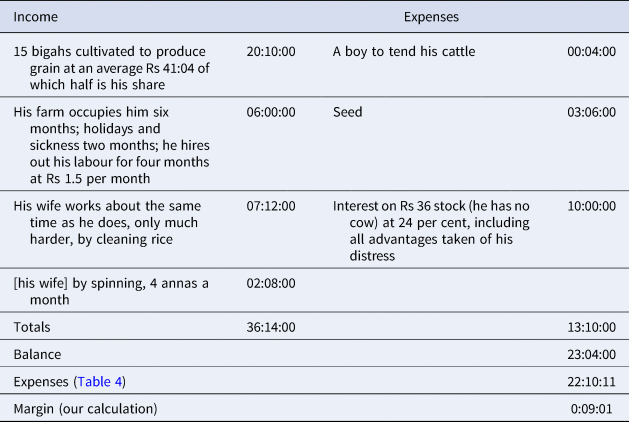
A household comprises husband, wife, and two children.
Sources: See Appendix, section A8.
Household income of agricultural labourers in Dinajpur, 1808.
Sources: See Appendix, section A9.
Estimates of skill premium in Goa, 1520–1680.
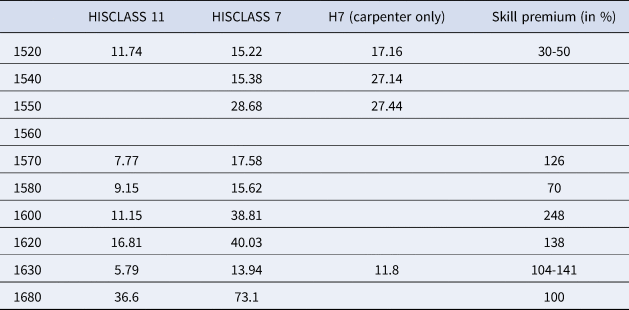
Benchmark for the 1680s used sailors in H11 as unskilled workers (n = 46) and moccadan supervisors (taskmasters; n = 3) in H7 as their skilled counterparts.
Sources: See Appendix, section A10.
We initially focus here on Goa only to avoid compositional effects (whether a town has or does not have data for this class of workers) exerting too much of an influence on the results. Despite a focus on only carpenters in Goa, we observe that the skill premium still fluctuates quite considerably. Admittedly, our data are not perfect, but when we compare our figures with those from Europe, this phenomenon does not seem to be uncommon.Footnote 51
The Indian skill premium in the sixteenth century, thus defined, is more or less similar to levels seen in England and the Low Countries – regions with the lowest skill premium in the world at that time. Unfortunately, for the next half century, we have no useful data, but by 1570 the skill premium had increased to over 120 per cent, after which it declined to seventy in 1580, only to increase to a dramatic 250 per cent in 1600. After peaking at that level, the skill premium hovered around 100 to 140 per cent in the 1620s and 1630s. Lastly, similar levels at around 100 are found for the benchmark 1680 (Figure 6). Such levels remind us not of northwestern Europe, where fluctuations were much more fluent and gradual, but of the fringes of that continent, where rates above 100 can be found, as in different parts of Scandinavia and Eastern Europe in the same periods.
Evolution of skill premium in precolonial India, 1510–1870 (in %). Western India is represented by Kannur 1510, Goa 1520, and Kochi 1580s–1590s. For remaining criteria, see again section A11 in the appendix.
Sources: See Appendix, section A11.
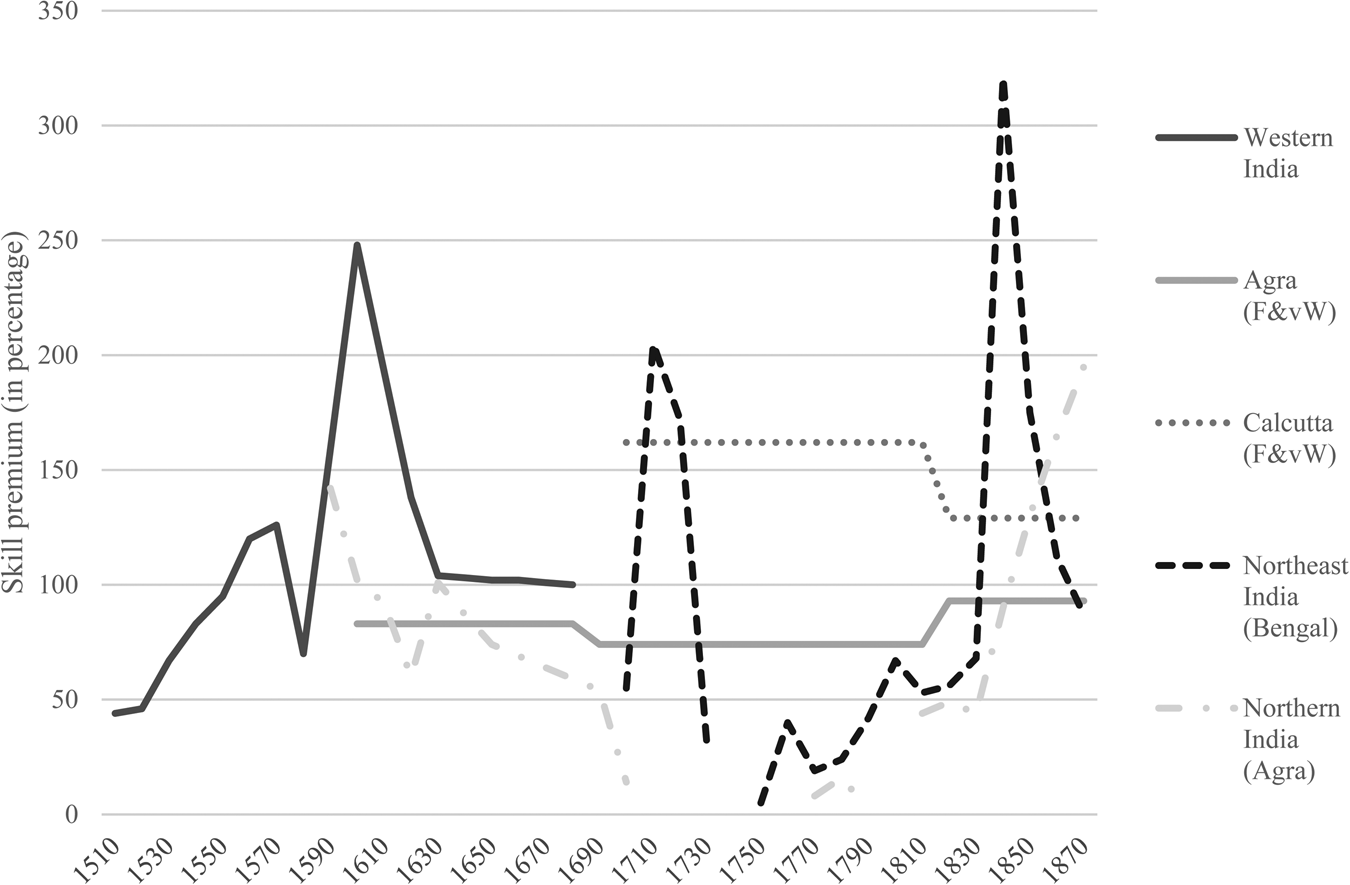
The skill premium in Western India thus increased from one of the lowest in the world in the 1520s to one of the highest around 1600, before returning to average levels of around 100 per cent by the mid-seventeenth century. What can explain this pattern? One hypothesis is that the rise of European activities along the Western Indian coast (first the Portuguese, and later also the English, French, Dutch, and others) led to trading posts being built and elaborate trace italienne-style fortifications at a rate and on a scale never previously seen. This building boom pushed up demand for skilled craftsmen at such a rate that local systems for supplying skills, such as the caste system, could not keep up. However, such a short-term explanation seems to be less convincing, because this building boom in the Estado da Índia took place only from the late 1540s onwards.Footnote 52 Moreover, the sudden increase in deep monetization across India in that same period suggests more structural reasons for the wage hike than the construction of a number of fortresses.Footnote 53
This shift in Indian skill premiums, originally at the same level as in Western Europe at the beginning of the sixteenth century and a completely different pattern later, comparable to what we know of thinly populated, poor, and hardly urbanized Scandinavia and Eastern Europe, suggests a fundamental change in the functioning of the Indian labour market. The fact that this shift occurred during the same decades that nominal and real wages declined (see Figure 1) suggests a common background. Hypothetically, both may have been caused by a decline in channels of social mobility.
More generally, the fluctuations in skill premium over time suggest a functioning labour market for the ordinary worker, and, contrary to what most of the literature suggests, one much less hampered by the inflexible effects of widespread debt bondage causing bonded labour and obeyance to the norms of occupational caste restrictions. Finally, a functioning labour market is one of the main preconditions for accepting wage levels as an indicator of economic development or national income.
An alternative explanation, convincingly put forward by Frankema and van Waijenburg (2023) on the basis of African and Asian countries 1870–1920, i.e. a dramatic fall in skill premiums over the course of the twentieth century due to the rise of formal mass education, may have played a certain role in developments in India after 1870, but not for earlier periods.Footnote 54 As there are no indications of a rise in “formal mass education” or “large-scale accumulation of human capital” in the sixteenth century, the background to the fall in skill premiums in that century must be found elsewhere. A most likely similar movement has been observed for England after the Black Death, when prevailing skill premiums for carpenters dropped from around 100 per cent in the preceding century to levels around fifty per cent from 1400, where they remained for more than four centuries. In Holland a similar development can be observed.
Long-Term Trends in Household Income: A Discussion
Despite the never-ending complaints of scholars about insufficient data, we believe that we have reached the point where both qualitatively and quantitatively Indian data are sufficient to be used in global comparisons of real wage levels, as in the Great Divergence Debate. Of course, for such an enormous subcontinent like South Asia we hope for more supplementary evidence, especially also from Indian-language sources, but our research so far has also demonstrated how, even with restricted evidence, our questions regarding real wage levels can be developed in other directions.
In recent research on Indian wages, the terms of a meaningful global and Eurasian comparison have already been sharpened by considering factors such as differences in body mass and differences in climate zones.Footnote 55 The results of the present study urge us to deepen exactly this type of argument, to take account particularly of the size of the household, the internal ratio between producers and consumers, the gendered earnings capacity, and the dynamics of the labour market, especially the role of the skill premium. Here, India illustrates how much these factors matter for a balanced comparison across time and space. Unless we have an idea about these factors for all regions and countries involved in the comparison, a fair and meaningful comparison will be very difficult.
To give one crucial example: the small size of the Indian working-class family in the past, combined with the considerable earnings power of women, tempts us to interpret welfare levels in the subcontinent more positively than has so far been usual. If, however, it transpires that other countries or regions in the comparison have even smaller households or even more favourable female income contributions, the outcome would be reversed. The same applies to the interpretation of skill premium figures.
Our attempt to come up with new preliminary answers to the question of how the Indian subcontinent performed in the long run compared with other parts of Eurasia must be seen as one more step along a long road that we have been following for several years now. However, we realize how long the journey is. Besides reconstructing general trends, this article has endeavoured to discuss the intermediate steps between wages of unskilled male workers and household income.Footnote 56 It is clear that the outcome depends not only on family size and composition, but also on the freedom for all household members to join and move freely within the labour market. We proved that there is evidence of labour market integration in precolonial India. Yet, in the Indian case, two or even three impediments mattered: indebtedness, unfree labour (various forms of slavery), and caste restrictions on certain types of work in general and with regard to women especially. The evidence on both male and female wages over time suggests that women would have an incentive to work outside the household if its economic status worsened. In contrast, higher male real wages disincentivized women's work in public, as the anecdotal evidence above tells.
We have mapped some of these impediments for the decades around 1800, but we cannot assume that these factors will have been constant over time and space. Returning to historical developments in India between 1500 and 1870, and particularly in the seventeenth century, we can tentatively distinguish the following subperiods and trends, though these might raise more questions than firm conclusions.
First, India's small working-class households, unexceptionally low c/w ratios, and the rather high earnings capacity of women might indicate less dramatic overall levels of standard of living than income per adult male earner suggests. Second, the substantial wage differences between the less prosperous West and the rest require explanation. The same applies to the general improvement in living standards in all regions in the seventeenth century. Third, between c.1690 and 1740 both Indian living standards and skill premium (c.1600 for Western India and c.1700 elsewhere) show visible improvements, leading us to wonder what this tells us regarding occupational mobility, and how this impacts household income. Did the increase in skill premium incentivize Indians to switch jobs, to pursue a higher level of well-being?
Fourth, in relation to wage labour men seemed to account for a higher proportion of household income. However, domestic work appears to have been quite relevant for total household income. How can we reconcile such different dimensions? Including the income provided by non-market activities, mostly performed by women, would change our perspective on Indian economic development (as recently demonstrated for elsewhere in Burnette).Footnote 57
Finally, how does our evidence on household income c.1800 interplay with a period of rising male real wages and a widening gender wage gap between the late 1780s and 1800? Given the impact on budgets of income generated by women, might we suggest that occupational mobility was favoured in this context? Or did non-market activities become more relevant for household consumption (and, by extension, female wage labour markets diminish over time)?
With these trends in mind, we engage with recent criticism, and call for a more nuanced way to calculate individual and household income at local and regional levels during the precolonial period. If the discussion around the validity of real wages and, by extension, around the Great Divergence Debate itself, has reached a stalemate, changes in methodological approach is clearly the path to pursue. With a more accurate assessment of production and consumption levels within the household, where non-market activities are a key part of the equation, we hope to see more informed debate about the trajectories of economic development, not only in India but elsewhere in the world.
Supplementary material
The supplementary material for this article can be found at https://doi.org/10.1017/S0020859025000100


 Open access

