Nutritionists and dietitians are advisors and practitioners concerning eating habits, nutritional status and lifestyle in the prevention and treatment of lifestyle-related diseases( 1 ). They have a broad knowledge of nutrition and diet and are active in all health-care settings. In their professional role, they demonstrate high-level skills in the application of nutritional knowledge and in advising clients how a specific dietetic approach will affect eating behaviour. Furthermore, nutritionists and dietitians act as a role model for personal conduct when dealing with clients( 1 , 2 ).
Health professionals with a personal healthy lifestyle can positively affect the behaviour of clients by influencing their attitudes and practices. These professionals can better motivate clients during counselling and improve the confidence of these clients on their advice( Reference Lobelo, Duperly and Frank 3 , Reference Frank, Breyan and Elon 4 ). Moreover, health professionals in training with healthy habits, such as medical students, have a positive attitude towards preventive counselling in nutrition( Reference Duperly, Lobelo and Segura 5 – Reference Wright 7 ).
When being educated to become a dietitian, knowledge on nutrition improves during education in nutrition and dietetics (ND) students. However, it is unknown whether this knowledge results in a (more) healthy diet during education and thus contributes to a healthy lifestyle. There is evidence suggesting that the eating behaviour of dietitians in the USA complies with established dietary standards of the Food Guide Pyramid. Dietitians practising for longer than 3 years comply more with recommendations than their colleagues practising fewer years. Registered dietitians continue to model this positive dietary behaviour to foster respect, credibility and effectiveness of the dietetic profession( Reference Seawell and Kandiah 8 , Reference Fredericks and Hamilton 9 ). In contrast, students studying in various disciplines do not meet the recommended dietary intakes for nutrients and food products( Reference Nola, Jelinic and Mantanic 10 – Reference Khattak, Kahn and Khattak 12 ). A recent Malaysian study in university students of multiple disciplines showed that more than 50 % of the participants (n 584) did not meet the Malaysian Recommended Nutrient Intake for energy, vitamin C, thiamin, riboflavin, niacin, Fe (females only) and Ca. That study highlighted the presence of unhealthy eating behaviours and inadequate nutrient intakes( Reference Gan, Mohd and Zalilah 13 ).
The unhealthy eating behaviour of students is reflected by skipping meals (breakfast and lunch), irregular consumption of meals and choices regarding food products and snacks considered unhealthy. Only a minority of students exhibit positive health practices above recommended levels( Reference Stock, John and Deeny 14 ).
Moreover, an American study in college students in health-related disciplines showed that 95 % of the students were non-compliant with dietary recommendations for vegetables and 81 % did not meet the recommendations for fruits. In that study, only a small percentage (12 %) of ND students participated and the results of the study were not specific to the Nutrition and Dietetics discipline( Reference McArthur and Pawlak 15 ). Another study suggested that higher knowledge of dietary guidelines results in healthier food choices( Reference Kolodinsky, Jarvey-Berino and Berlin 16 ).
The present study is a first step to investigate the lifestyle of ND students. As ND students have an affinity for and interest in food and eating behaviour, and their nutritional knowledge improves during their education, we hypothesized that ND students would eat more healthily than their peers. Therefore, the study's primary aim was to compare dietary intakes of first-year and fourth-year ND students with Dutch RDA and data from the Dutch National Food Consumption Survey (DNFCS). The second aim was to assess whether dietary intake changes during education.
Methods
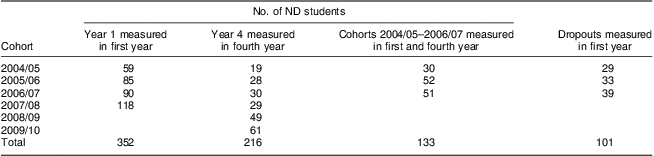
The present study had both a cross-sectional and a longitudinal design. The study was conducted at the Institution of Nutrition and Dietetics, Hanze University of Applied Sciences in Groningen, the Netherlands. In the Netherlands, Nutrition and Dietetics is a four-year Bachelor programme. All first-year ND students (2004–2007) and all fourth-year ND students (2004–2010) were included and dietary intake was assessed in this period once (cross-sectional) or twice (longitudinal), as shown in the Appendix. Students who quit the ND programme were defined as dropouts. Of these students, data were collected in the first year only. To study differences in dietary intake between young adults with and without specific interest in nutrition, we compared data of dropouts with data of ND students and DNFCS participants.
All students gave their written informed consent. Assessments were carried out in the context of education. Therefore, approval of the Medical Ethics Committee was not required.
Data collection
Data collection was accomplished in two steps. First, participants completed a questionnaire about gender, age, housing situation, following a specific diet, supplement use and BMI. For calculating BMI (kg/m2), body weight and height were measured. Body height was measured with a Stanley Ltd ‘microtoise’ (Poissy, France). Body weight was measured on a calibrated Seca 770 scale (Medical Scales & Measuring Systems Seca Ltd, Birmingham, UK) to the nearest 0·1 kg. These measurements were performed by trained fellow students in the first year, to restrict underestimation in anthropometric measurements. In the fourth year data for weight were self-reported.
Second, students assessed their dietary intake using the 7 d dietary record, a method commonly used by dietitians to collect data about dietary intake( Reference Thomas and Bishop 17 ). Students were taught to correctly read nutrition information as shown on labels and to estimate amounts of food on serving dishes. After completing different assignments and training sessions, to develop competence in using the dietary record method and food calculating, students registered their dietary intake as accurately as possible. For calculating food intake, the Dutch software program ‘Eat measurer’ was used, which is based on the Dutch Food Composition Database (Nevo-table)( 18 ). The dietary record of each first-year student was recalculated by a fellow student, to check if the dietary record was imputed in the software program correctly. If the student's self-calculated energy intake differed by ≥314 kJ (≥75 kcal) compared with the calculation by the fellow student, the students had to discuss the outcome and to recalculate the intake within an accepted difference of ≤314 kJ (≤75 kcal). Intakes of nutrients from dietary supplements were not calculated, because the Dutch Food Composition Database contains very few analyses on dietary supplements and because in the DNFCS dietary supplements are not taken into account in the assessment of dietary intake either. However, frequency of use and types of supplements used were identified in the questionnaire.
The students’ data were compared with both the RDA of the Dutch Health Board and the results of the DNFCS. In the DNFCS 2003, data regarding the intakes of macro- and micronutrients were collected from 750 adults (352 men and 398 women), aged 19–30 years, using the 24 h recall method( Reference Hulshof, Ocké and van Rossum 19 , Reference van Bakel and Ocké 20 ). The Dutch Health Board provides RDA values for energy, protein, total fat, saturated fat, carbohydrates, dietary fibre, vitamins (vitamin A, thiamin, riboflavin, niacin, vitamins B6, C and D), minerals (Ca, Fe, Mg, Se and Zn), fruits, vegetables and fish. For fluid, a minimum of 1500 ml/d is advised as a practical guideline. The RDA is defined as the estimated average requirement plus twice the standard deviation of the requirement and based on the needs of 97·5 % of the individuals in a life-stage and gender group. The dietary reference intakes are intended for use by the healthy section of the population( 21 – 24 ).
Statistical analysis
Data were analysed using the statistical software package SPSS version 19. Cross-sectional data were compared with the DNFCS and the RDA of the Dutch Health Board. Results are expressed as means and standard deviations, 95 % confidence intervals and percentages of the RDA. Differences in mean intake between first-year and fourth-year students were analysed by confidence interval analysis using CIA software version 1·0( Reference Altman, Machin and Bryant 25 ).
In the longitudinal data, changes in dietary intake between the first- and fourth-year participants in the three cohorts were analysed by paired t tests. Outliers were identified and normal distributions were assessed by the Kolmogorov–Smirnov test. Primary outcome variables were: energy intake (kJ/kcal), protein, total fat, saturated fat, carbohydrates, dietary fibre, water; vitamins A, thiamin, riboflavin, niacin, B6, C and D; minerals Ca, Fe, Mg, Se and Zn; and the food products fruits, vegetables and fish. To control for total energy intake, data regarding fibre, vitamins and minerals are also presented as intake per 4184 kJ (1000 kcal)( Reference Willett, Howe and Kushi 26 ). Secondary outcome variables were: housing situation, specific diets, supplements and BMI. The relationship between dietary intake and housing situation was analysed using Pearson's χ 2 test.
Results
In total, 352 first-year students (2004–2007) and 216 fourth-year students (2004–2010), aged 18–29 years (96 % female), were included in the study. From the cohorts in 2004/05, 2005/06 and 2006/07, 234 students participated in the first year, and 133 students participated in the first and the fourth year of the study. In these cohorts 101 students dropped out, of whom seventy-three students quit the ND programme, twenty-one students shifted to another programme and seven students postponed their ND programme. As 101/234 students dropped out, this group was analysed separately. Data of the first-year students included data from students who completed the study and dropouts.
Student characteristics
Table 1 summarizes characteristics of the students. Fourth-year students more often lived outside the parental home compared with first-year students (56 % and 72 %, respectively). More than 95 % of first- and fourth-year students had a normal diet. In both years ≤5 % of the students used a diet for medical reasons (2 %) or a specific diet (sports, vegetarian, energy-balanced).
Characteristics of the Dutch nutrition and dietetics students and the Dutch National Food Consumption Survey (DNFCS) participants
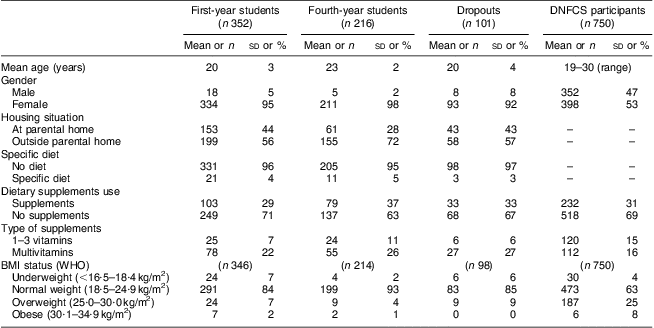
The rate of dietary supplements use was 29 % in first-year students, 37 % in fourth-year students and 31 % in DNFCS participants. In the three cohorts use of dietary supplements increased from 30 % in the first year to 40 % in the fourth year, but this difference was not statistically significant (P = 0·055). Nearly all students had a normal weight (BMI = 18·5–24·9 kg/m2): 93 % of fourth-year students and 84 % of first-year students v. 63 % of the DNFCS participants. Of the DNFCS participants, 25 % were overweight and 8 % obese.
Energy and macronutrients
The Kolmogorov–Smirnov test showed that data regarding energy intake were normally distributed. Dietary intake of first- and fourth-year students, the DNFCS participants and dropouts is shown in Table 2. Seven students in the first year had a high daily energy intake, ranging from 12 619 to 15 778 kJ (3016 to 3771 kcal). Five of these students were semi-professional athletes.
Nutrient/food product intakes of the Dutch nutrition and dietetics students, dropouts and the Dutch National Food Consumption Survey (DNFCS) participants: cross-sectional data
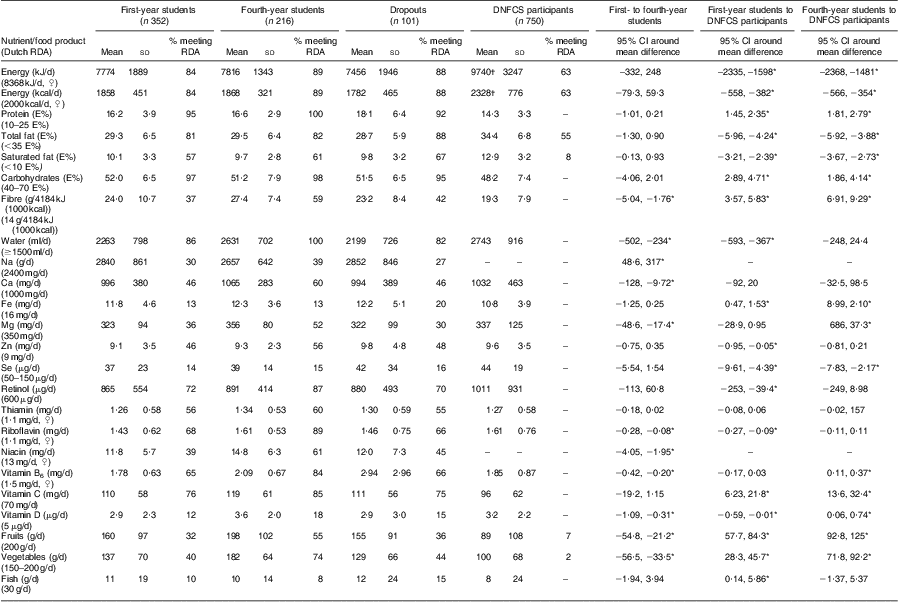
E%, percentage of energy; ♀, female; ♂, male.
*Significant (P < 0·05), analysed by confidence interval analysis.
†By sex, mean energy intake (kJ/d) = 8037 ♀/11 548 ♂ (kcal/d: 1921 ♀/2760 ♂).
Intakes of all macronutrients differed significantly between first-year students and DNFCS participants and between fourth-year students and DNFCS participants. Fourth-year students complied more with the RDA values in terms of their macronutrient intakes than first-year students. Since the start of their education more than 80 % of the students met the RDA for protein, total fat and carbohydrates. Moreover, 81 % and 82 % of first- and fourth-year students, respectively, met the RDA for total fat, whereas only 55 % of DNFCS participants met the RDA for total fat. Respectively 57 % and 61 % of first- and fourth-year students met the RDA for saturated fat, i.e. intake of saturated fat <10 % of energy intake, whereas only 8 % of the DNFCS participants did. The percentage of students meeting the RDA for dietary fibre, i.e. 14 g/4184 kJ (1000 kcal), was 37 % for first-year students and 59 % for fourth-year students. Mean intakes of dietary fibre and water differed significantly between first- and fourth-year students (95 % CI −5·04, −176 g/4184 kJ (1000 kcal) and −502, −234 ml/d, respectively). Dropouts’ intakes of total fat, saturated fat and dietary fibre were more in line with the RDA than the intakes of first-year students.
Table 3 shows the longitudinal change in intakes from the first to the fourth year. The intakes of protein (P = 0·001) and water (P < 0·001) increased significantly between the first and fourth year.
Changes in nutrient/food product intake of Dutch nutrition and dietetics students between the first and fourth year (cohorts 2004–2006): longitudinal data
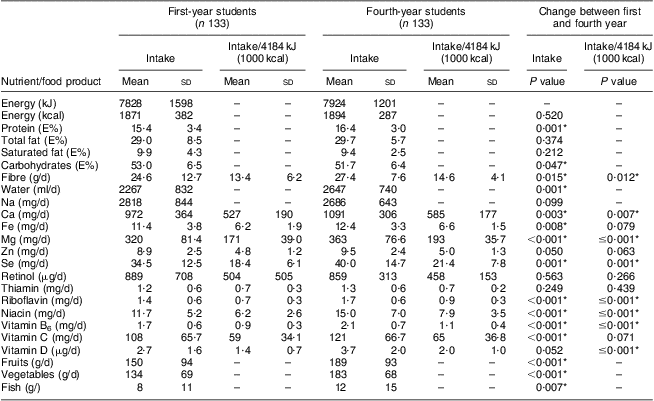
E%, percentage of energy.
*Significant change between first and fourth year (P < 0·05), analysed by paired t test.
Vitamins and minerals
In general, intakes of vitamins and minerals of DNFCS participants were higher than those of first-year students, but lower than those of fourth-year students (Table 2). The mean intakes of Fe, Zn, Se, retinol, riboflavin, vitamin C and vitamin D differed significantly between first-year students and DNFCS participants. Also between fourth-year students and DNFCS participants, mean intakes of Fe, Mg, Zn, Se, vitamin B6, vitamin C and vitamin D differed significantly (P < 0·05). Furthermore, DNFCS participants had a higher intake of Zn than first- and fourth-year students.
The vitamins and minerals for which the RDA was most frequently met by first-year students were: retinol (72 %), thiamin (56 %), riboflavin (68 %), vitamin B6 (65 %) and vitamin C (76 %). However, less than 50 % of first-year students met the RDA for Na, Ca, Mg, Zn and niacin, and less than 25 % met the RDA for Fe, Se and vitamin D. Intakes of all micronutrients increased in fourth-year students, only the intake of Fe remained stable at 13 %. Mean intakes of the minerals Ca and Mg and of the vitamins riboflavin, niacin, B6 and D were significantly higher for fourth-year students (P < 0·05) than for first-year students.
Table 2 also shows that dropouts more often met the RDA for Fe (20 % v. 13 %) and niacin (45 % v. 39 %) than first-year students. In the three student cohorts, the longitudinal increase in total intake of Ca (P = 0·003), Mg (P < 0·001), Se (P = 0·001), riboflavin, niacin and vitamin B6 (all P < 0·001) was significant, as was the increase in intake per 4184 kJ (1000 kcal). Increase in intake of Fe and vitamin C lost statistical significance in the energy-adjusted data analysis. The increase in vitamin D was significant in the energy-adjusted data analysis only (Table 3).
Food products
Only 7 % of DNFCS participants met the RDA for fruits, i.e. 200 g (Table 2). The RDA for fruits was more frequently met by fourth-year students (55 %) than by first-year students (32 %). The proportion meeting the RDA for vegetables nearly doubled from 40 % in first-year student to 74 % in fourth-year students. Only 2% of DNFCS participants met the RDA for vegetables. Moreover, only 0·2% of female DNFCS participants met the RDA for vegetables. Consumption of fruits and vegetables by first-year students was significantly lower than that by fourth-year students. However, both first- and fourth-year students consumed significantly more fruits and vegetables than DNFCS participants.
In general, ND students consumed little amounts of fish. Only 10 % of first-year students met the RDA for fish of 30 g/d. This percentage decreased to 8 % in fourth-year students. It should be noted that the DNFCS did not use the RDA of eating fish twice weekly as its standard for comparison. Instead, it used eating fish at least once monthly as the standard. In the three cohorts, longitudinal analysis showed that consumption of fruits (P < 0·001), vegetables (P < 0·001) and fish (P = 0·007) increased significantly (Table 3).
Relationship between dietary intake and housing situation
In the cross-sectional data, Pearson's χ 2 test indicated that first- and fourth-year students who lived outside the parental home had significantly higher intakes of water, Fe, Mg, niacin and vegetables. They also more frequently met the RDA for Ca, Zn and Mg than their classmates who lived in the parental home. In first-year students living outside the parental home, intake of water was significantly higher by 248 ml at 2369 ml/d (P = 0·02), Fe by 1·2 mg at 12·3 mg/d (P = 0·001), Mg by 35 mg at 304 mg/d (P = 0·01), niacin by 1·2 mg at 1·4 mg/d (P = 0·02) and vegetables by 26 g at 149 g/d (P = 0·04). In fourth-year students who lived outside the parental home, the intake of water was significantly higher by 194 ml at 2685 ml/d (P = 0·02); moreover, the intake of Mg was significantly higher by 31 mg at 365 mg/d (P = 0·01).
Discussion
By comparing the dietary intake of Dutch students with the data from the DNFCS in young adults aged 19–30 years and the RDA, the present study demonstrated that since the start of their study ND students had much better dietary intakes of all macronutrients, Fe, Se, riboflavin, vitamin C, vitamin D, fruits and vegetables than the participants of the DNFCS. In contrast to DNFCS participants, a large majority (>80 %) of first-year students met the RDA for all macronutrients. Furthermore, compared with DNFCS participants, fourth-year students more often met the RDA for fruits (55 % v. 2 %), vegetables (74 % v. 7 %) and saturated fat (61 % v. 8 %). Second, the present study also demonstrated that students further improved their dietary intake as they progressed in their training, even when they did not live with their parents.
In the longitudinal analysis, the ND students showed an improvement in mean intake of dietary fibre, Ca, Fe, Mg, Se, riboflavin, niacin, vitamin B6, fruits, vegetables and fish during education. This finding may be explained by our hypothesis that ND students have an affinity for and interest in food and eating behaviour, and their improving nutritional knowledge during their education( Reference Kolodinsky, Jarvey-Berino and Berlin 16 ). Not only do ND students eat more healthily than their peers, but they also eat more healthily than college and university students of different disciplines( Reference Neslisah and Emine 11 – Reference McArthur and Pawlak 15 ). The improvement of Fe intake lost significance in the energy-adjusted data analysis, indicating a higher energy intake in the fourth year compared with the first year. In contrast, intake of vitamin D improved in the energy-adjusted data analysis only, which means that the composition of dietary intake changed positively.
However, there is a huge gap between actual dietary intakes and the RDA. RDA values for several micronutrients were not met by either ND students or DNFCS participants. Even in the fourth year of their study, less than 25 % of ND students met the RDA for Fe, Se and vitamin D. The inadequate intake of vitamin D may be explained by the low intake of oily fish. From discussions with our ND students during teaching activities we learned that financial considerations might play a role in not frequently buying and consuming fish. Furthermore, the students had a low intake of fat, for example resulting from the infrequent use of fat while preparing meals. As in the Netherlands margarine is enriched with vitamin D, low fat intake may have contributed to the low intake of vitamin D as well. Moreover, dietary supplements were not taken into account in the calculation of dietary intakes, both in the survey of the DNFCS and in the present study. As a result, total intake of vitamins and minerals might have been underestimated. At the same time, our study revealed that the proportion of ND students using dietary (multi)vitamin supplements tended to increase during their education.
Currently, worldwide no standard approach for deriving nutrient recommendations exists, which results in an approach varying from country to country( Reference Doets, Wit de and Dhonukshe-Rutten 27 ). The dietary reference intake is a set of dietary standards including the Estimated Average Requirement, RDA, Adequate Intake and Tolerable Upper Intake Level( 21 – 24 , 28 ). In the present study we chose to compare intakes with the RDA, conforming to Dutch practice.
Our study may be limited by possible social desirability in reporting dietary intake, which might have resulted in under-reporting or misreporting. Ideally, dietary intake records are controlled by a weighed method. However, this was not feasible in the present study. To avoid bias as much as possible, students started with calculating the intake 7 d after they had completed their food diary. Furthermore, the data of students’ food diaries were entered for recalculation by fellow students. From an educational perspective, students were trained in developing an evidence-based attitude. For the current study, students were challenged to report accurately to know exactly their own nutritional outcomes of dietary intake.
Also the use of different methodologies to collect data of dietary intake may have caused bias. Whereas the DNCFS used the 24 h recall, we chose the 7 d dietary record method for two reasons. First, this method is the most comprehensive form of dietary intake collection and supplies detailed information of long-term food consumption habits. Second, our sample consisted of half of the participants of the DNCFS, and a 24 h recall is advised specific in large-scale studies( Reference Thomas and Bishop 17 ).
In general, reporting of dietary intake may be accompanied by under-reporting (30 %) and underestimation of energy by approximately 15 %( Reference Poslusna, Ruprich and Vries de 29 ). Specifically in obese persons trends of under-reporting for weight and BMI and over-reporting for height are known( Reference Poslusna, Ruprich and Vries de 29 ). However, in our study only <3 % of the ND students used a specific diet including an energy-balanced diet, a sports diet or a vegetarian diet. Eighty-four per cent of the first-year ND students and 93 % of the fourth-year students had a normal weight, in contrast to 63 % of the DNFCS participants, in whom 25 % were overweight and 8 % obese. Moreover, it is known that dietitians estimate their energy intake more accurately than non-dietitians, suggesting that familiarity with and interest in keeping food records may lead to more reliable estimates of energy intake( Reference Connor Gorber, Tremblay and Moher 30 , Reference Champagne, Bray and Kurtz 31 ). It is also known that nutrition students tend to restrict their food intake in order to control their weight more than other students( Reference Korinth, Schliess and Westenhoefer 32 ). Therefore we expect that under-reporting and underestimation was low in the present study.
The finding that ND students eat more healthily than the participants of the DNCFS, but do not yet meet all nutritional requirements, may be explained by some specific barriers for students. Students’ barriers to a healthy diet are lack of time to purchase food products and prepare meals and financial limits( Reference Silliman, Roda-Fortier and Neyman 33 ). Another important barrier is that friends/roommates may not like healthy food( Reference Stock, John and Deeny 14 ). Thus, even for students a challenge remains to cope with these barriers, to meet nutritional requirements.
Conclusion
The dietary intake of ND students was much better than that of DNFCS participants and improved during education. However, even in the fourth year of study there was still a gap between actual dietary intake of the students and the RDA, especially for Fe, Se and vitamin D.
Acknowledgements
Sources of funding: This research received no specific grant from any funding agency in the public, commercial or not-for-profit sectors. Conflict of interest: There is no conflict of interest. Authors’ contributions: J.J.v.d.K. carried out the design, performed the statistical analysis and drafted the manuscript. H.J.-W. was involved in the statistical analysis and the revision of the manuscript. R.M.B.N. was involved in the revision of the manuscript. C.P.v.d.S. was involved in the study design, the statistical analysis and the revision of the manuscript.
Appendix
Data collection from Dutch nutrition and dietetics (ND) students