One of the six global nutrition targets of the WHO is a 40 % reduction in child stunting, an indicator of child malnutrition, by 2025( 1 ). Stunting is associated with reduced cognitive and physical development( Reference Black, Allen and Bhutta 2 , Reference Black, Victora and Walker 3 ) and poor health during childhood( Reference Kossmann, Nestel and Herrera 4 , Reference Olofin, McDonald and Ezzati 5 ) and adulthood( Reference Huxley, Shiell and Law 6 , Reference Whincup, Kaye and Owen 7 ). It is defined as height/length more than 2 sd below the median height/length of the WHO standard population of the same age and sex( 8 ) (i.e. height-for-age Z-score (HAZ) <–2) and thus serves as an indicator of growth faltering at the population level.
Infants and children with height/length-for-age less than the reference median but above −2 sd are classified as ‘not stunted’. Such a dichotomous definition of stunting is useful for population-wide intervention programmes in developing countries with inadequate health-care facilities. However, growth faltering begins and progresses for weeks or months before the lag in growth of height reaches the degree classified as stunting( Reference Roth, Krishna and Leung 9 ). Therefore, HAZ, which is a continuous variable, is useful for studies aimed at elucidating those factors that begin the cascade of poor growth leading to poor health, which leads in turn to poorer growth( Reference Roth, Krishna and Leung 9 ). Although there have been multiple studies addressing the nutritional, infectious and environmental factors associated with stunting( Reference Stewart, Iannotti and Dewey 10 – Reference de Onis and Branca 12 ) in developing countries, there are few studies that have addressed the effect of sex on stunting or growth faltering among ethnic minority, indigenous populations with low socio-economic status (SES) in economically developed countries.
A meta-analysis of sixteen Demographic and Health Surveys of children under 5 years of age in sub-Saharan Africa found that boys had consistently lower mean HAZ than girls and a higher prevalence of stunting, especially among those from lower SES groups( Reference Wamani, Astrøm and Peterson 13 ). In a case–control study of stunting in Uganda among children aged 6–59 months, boys were significantly more likely to be stunted and stunted children were significantly less likely to receive appropriate complementary food( Reference Bukusuba, Kaaya and Atukwase 14 ). In a study from China, boys had a higher risk of becoming stunted or severely stunted than girls( Reference Jiang, Su and Wang 15 ). In a population of indigenous Guatemalan infants and toddlers, boys were also found to have more growth faltering than girls at age 6–17 months in a population with a 50 % prevalence of stunting( Reference Tumilowicz, Habicht and Pelto 16 ). The authors hypothesized that boys were more likely to receive inappropriate contaminated or hypoenergtic complementary food in early infancy. By contrast, in studies from northern Ethiopia( Reference Abeway, Gebremichael and Murugan 17 ) and Bangladesh( Reference Khatun, Stenlund and Hörnell 18 ), girls were found to have higher prevalence of stunting than boys. A recent global analysis of HAZ for children aged 0–59 months from countries with high rates of undernutrition found a global pattern of lower HAZ (i.e. more growth faltering) among boys than girls from birth throughout the first 3 years of life( Reference Alderman and Headey 19 ).
None of the above studies on sex effects on growth faltering or stunting were performed in an ethnic minority, indigenous, low-SES population in an economically developed country. We therefore studied the sex effect on growth faltering in the Bedouin paediatric population in southern Israel, an Organisation for Economic Co-operation and Development country. The Bedouin population is an indigenous population of Moslem Arabs in southern Israel, a low-SES semi-nomadic population with high prevalence of stunting( Reference Dagan, Sofer and Klish 20 – Reference Bilenko, Reisman and Belmaker 24 ). It is a patriarchal society with a high rate of polygamy( Reference Rubin, Belmaker and Somekh 25 ).
Sex preference can affect postnatal influences on growth through sex differences in feeding and child-rearing practices. We therefore chose to study postnatal sex effects on growth by studying growth of full-term, normal-birth-weight infants. We predicted that boys would be favoured over girls in this culture and that girls would therefore have more growth faltering than boys. It should be noted that none of the previous growth studies in this population studied sex effects on stunting.
The universal access of Bedouin infants in southern Israel to preventive community-based maternal and child health (MCH) clinics allowed us to examine the sex effect on HAZ in this population over the decade between 2000 and 2009. In order to focus on sex effects on postnatal growth, we studied infants born after a normal gestational period and with normal birth weight. We also examined whether there was a secular change through the decade of the study in the sex effect on HAZ. In addition, we were able to examine sex effects on growth of Bedouin infants living in established settlements (ES) which have municipal services (i.e. drinking-water pumped directly to homes, connection to the national electricity grid, sewage and rubbish disposal, paved roads) v. those living in ‘temporary’ non-established settlements (NES) that lack municipal services.
Methods
Study design
A retrospective cohort study was performed using computerized medical records of twelve MCH clinics in southern Israel, which cover over 95 % of the Bedouin infant population. The Ministry of Health database includes data from birth records (including birth weight, gestational age at birth, sex and address, which was translated to settlement type – established v. non-established) and anthropometric measurements from the medical charts of MCH clinics. Data on height measurements are collected by public health nurses during routine follow-up visits in MCH clinics.
Anthropometric measurements
Recorded measurements of height of children during routine visits at age 6, 12, 18 and 24 months (±2 weeks) to computerized MCH clinics for the years 2000–2009 were analysed in the present study. In all MCH clinics the nurses used the same equipment, underwent the same training programme, and worked under supervision of the same senior nurse staff of the Ministry of Health. From birth to 24 months of age, linear growth is measured while the infant is a supine position (‘height’ in the present paper). The infant’s length was measured once in each encounter using identical infantometers, which were built according WHO standards. The same technique was used across clinics: head held vertically against the head plate by the mother; back straight on the infantometer; knees straightened; and foot positioned by the nurse vertically against the foot plate.
Study population
As we aimed to assess postnatal factors associated with linear growth during the first 2 years of life, in the present study we included term infants (birth at 37 to 42 weeks of gestation) with normal birth weight (2500–4000 g). We also used address data to identify Bedouin infants living in ES v. those living in temporary NES unrecognized by the government. Place of residence (ES v. NES) was determined by the address of the mother at the time of each growth measurement, as recorded in the computerized database. Inclusion criteria were: normal birth weight (between 2500 and 4000 g), normal gestational age at birth (between weeks 37 and 42) and four routine height measurements at age 6, 12, 18 and 24 months (±2 weeks).
During the study period, 17 842 Bedouin infants were registered in the twelve computerized MCH clinics. Of the children, 9·5 % had low birth weight (<2500 g) and/or preterm birth (delivery before the 37th week of gestation); 4 % had high birth weight (>4000 g) and/or were born after the 42nd week of gestation. These infants were therefore excluded from the current data analysis, leaving 15 433 eligible infants. Of 15 433 eligible infants, 5426 (35·2 %) had all four follow-up growth measurements at age of 6, 12, 18 and 24 months (±2 weeks); 8062 (52·2 %) had three growth measurements only, at age 6, 12 and 18 months; and 1945 (12·6 %) had fewer than three measurements. We compared background demographic characteristics of children who had all four routine growth measurements at age 6, 12, 18 and 24 months (±2 weeks) with children who had fewer than the four recommended growth measurements, and did not find any significant differences in the distribution of demographic characteristics (sex of infant; age, years of schooling and employment status of parents; place of residence; family size).
Statistical analysis
HAZ was calculated using 2006 WHO child growth standards by means of WHO Anthro software( 26 ). Stunting was defined as a height more than 2 sd below the median length/height of the WHO standard population of the same age and sex( 8 ) (HAZ < –2). One-way ANOVA was used to examine differences between mean HAZ by sex, birth weight and type of settlement for Bedouin children at 6, 12, 18 and 24 months of age (±2 weeks). Linear trend lines for HAZ at age 6, 12, 18 and 24 months for boys and girls by year of birth, R 2 and P values were calculated using univariate regression analysis. Multivariate regression analysis using GLM (General Linear Model) was performed separately for each age of growth measurement (6, 12, 18 and 24 months). Estimates of mean differences in HAZ (β) with 95 % CI between boys and girls at age 6, 12, 18 and 24 months were calculated, while year of birth, birth weight and type of settlement (ES v. NES) were entered into the model as covariates since they were found to be significantly related to sex and HAZ in univariate analysis, and adjusted for MCH clinic as a random factor. Differences with P value of less than 0·05 for two-tailed tests were considered statistically significant. The statistical software packages IBM SPSS Statistic version 24 and Stata version 8 were used for statistical analysis.
The study was conducted according to the guidelines laid down in the Declaration of Helsinki and all procedures involving human subjects were approved by the Ethical Committee of the Israeli Ministry of Health. All data were received and analysed without personal identifying details.
Results
The study population consisted of birth cohorts of 5426 Bedouin infants (see online supplementary material, Supplemental Table S1), born during 2000 to 2009, who had normal birth weight (2500–4000 g), a normal gestational period (37–42 weeks), who received well-baby care in computerized MCH clinics, and who had growth measurements at age 6, 12, 18 and 24 months (49·8 % girls and 50·2 % boys). Of the 5426 infants, 42·6 % lived in ES and 57·4 % in NES. Mean (sd) birth weight of the study population was 3128 (0·353) kg. Mean (sd) gestational age at birth was 39·4 (1·25) weeks.
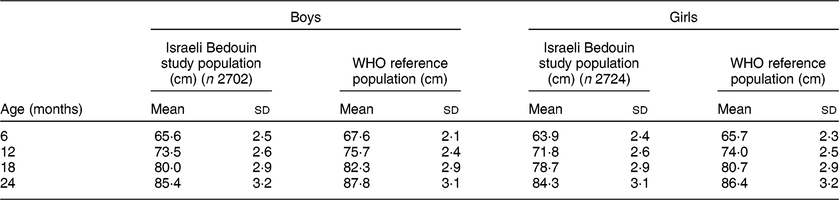
Table 1 shows the mean absolute height of Bedouin boys and girls at all ages of measurement compared with the mean height of boys and girls in the reference WHO population. Height was normally distributed at all ages of measurement for both sexes. As expected, boys were significantly taller than girls at all ages. The median heights were less than those of the standard population of the WHO( 8 , Reference Rubin, Belmaker and Somekh 25 ) at all ages of measurements and for each sex. The absolute deficit in mean height ranged from 1·8 to 2·2 cm in girls and from 2·0 to 2·4 cm in boys.
Mean height and sd of boys and girls in centimetres at four ages of growth measurement (6, 12, 18 and 24 months) in the study population of Bedouin infants in southern Israel and in the reference WHO population( Reference Bilenko, Reisman and Belmaker 24 )
We found that, at all ages, Bedouin girls had significantly higher mean HAZ (a smaller HAZ deficit) than boys (P < 0·05). We found that HAZ in boys decreased at each age of measurement from 6 to 18 months (from −0·72 to −0·92), followed by an increase at age 24 months to −0·76 (Table 2). However, the absolute height deficit in boys increased monotonically from 6 to 24 months, reaching a value of 2·4 cm at age 24 months. For girls a similar pattern was found in mean HAZ by age of measurement, with decreasing HAZ for girls at each age of measurement from 6 to 18 months (from −0·61 to −0·81), followed by an increase at age 24 months to −0·65, but without a monotonic pattern of increasing height deficit with age.
Mean height-for-age Z-score (HAZ) and absolute difference in mean of the population compared with the median of the standard population (HAD) at age 6, 12, 18 and 24 months in the study population of Bedouin boys and girls in southern Israel. (n 5426 for each age of measurement)

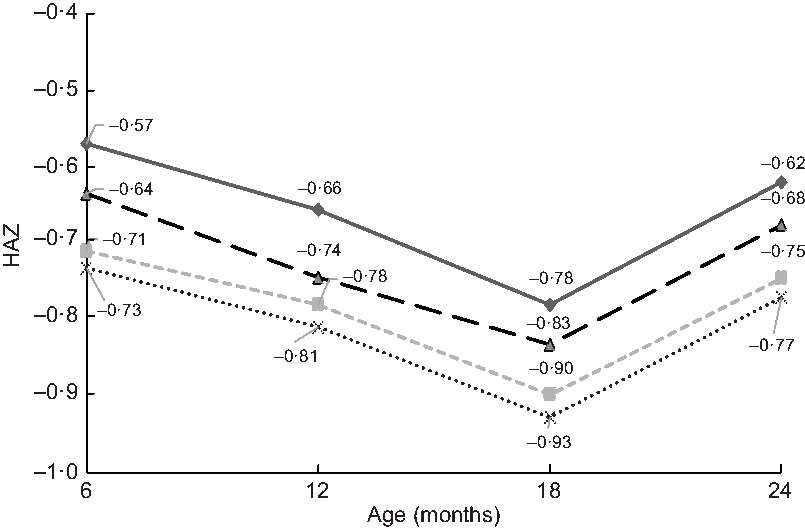
We then compared HAZ between girls and boys by type of settlement, ES v. NES (Fig. 1). In both established and non-established settlements, girls had significantly smaller HAZ deficits at all ages than boys. We found that residence in ES was associated with significantly smaller HAZ deficits than residence in NES for both boys and girls at all ages of growth measurement (P < 0·05).
Mean height-for-age Z-score (HAZ) at age 6, 12, 18 and 24 months (±2 weeks) by sex, stratified by type of settlement ( , girls, established settlement (ES);
  , boys, ES;
  , girls, non-established settlement (NES);
  , boys, NES), of Bedouin children in southern Israel born during years 2000–2009 (n 5426). P values for differences between sexes in ES were <0·001, 0·003, 0·004 and 0·002, and in NES were 0·003, 0·055, 0·006 and 0·006, for age 6, 12, 18 and 24 months, respectively
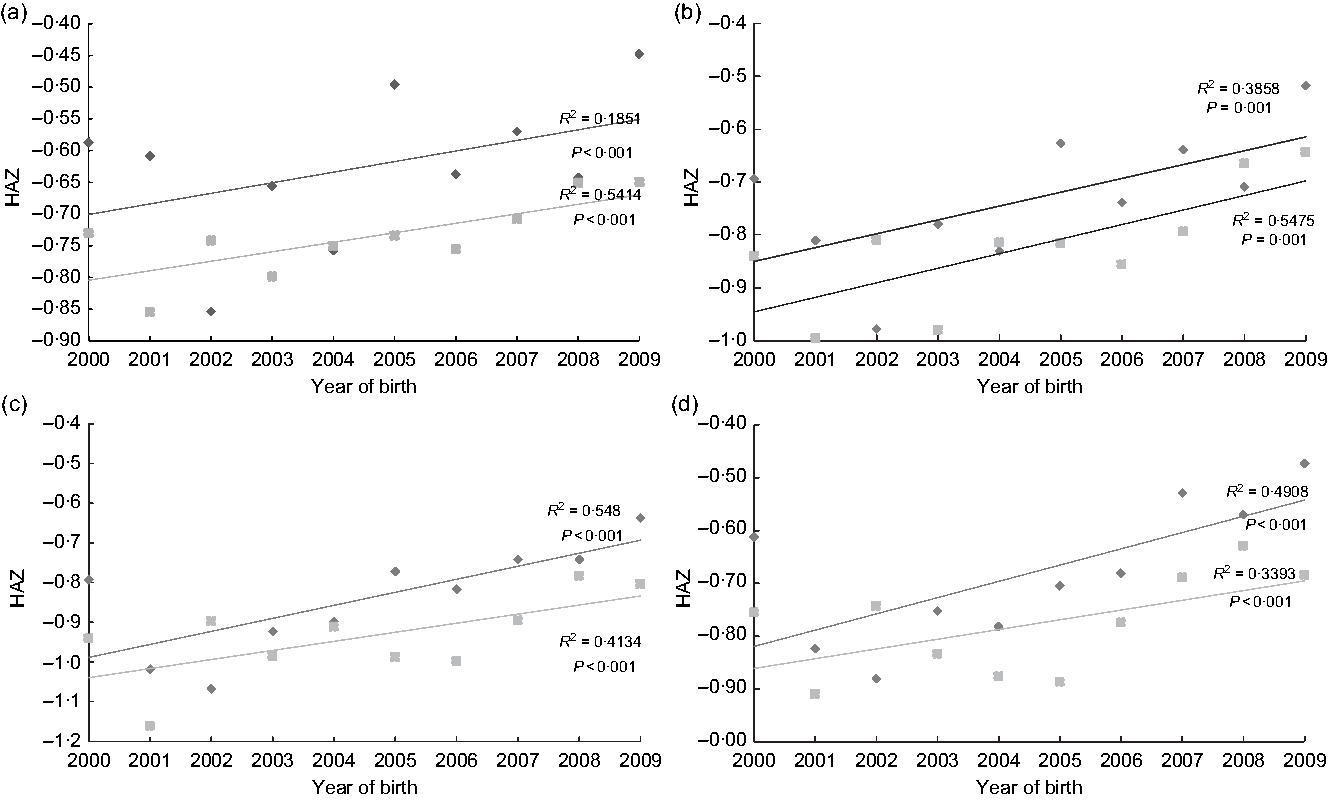
We then studied temporal trends by birth year over the 10-year period of the study. Over this period, there was a significant decrease in the percentage of Bedouin infants living in NES from 66·0 % to 51·3 %. There was no change in mean birth weight by year of birth for either sex during the decade. Figure 2 presents HAZ by sex and birth year for each age of measurement for the entire study period (2000–2009). Calculated linear trend lines indicate that there was an improvement of growth for both sexes and for all four ages of measurement over the study period (less growth faltering), with P < 0·001 for all ages of measurement. For all four ages of measurement, the linear trend lines show that girls had smaller HAZ deficits than boys. Prevalence of stunting in this population (HAZ < −2) decreased from 13·6 % in the birth cohort of 2000 to 7·8 % in the birth cohort of 2009 among children at 18 months of age and from 11·7 % to 6·6 %, respectively, at 24 months of age.
Mean height-for-age Z-score (HAZ) at age of (a) 6 months, (b) 12 months, (c) 18 months and (d) 24 months, by sex ( , girls;
  , boys) and year of birth (n 5426), of Bedouin children in southern Israel, with calculated linear trend lines and square of correlation coefficients between year of birth and HAZ (R
2) for each sex
, boys) and year of birth (n 5426), of Bedouin children in southern Israel, with calculated linear trend lines and square of correlation coefficients between year of birth and HAZ (R
2) for each sex
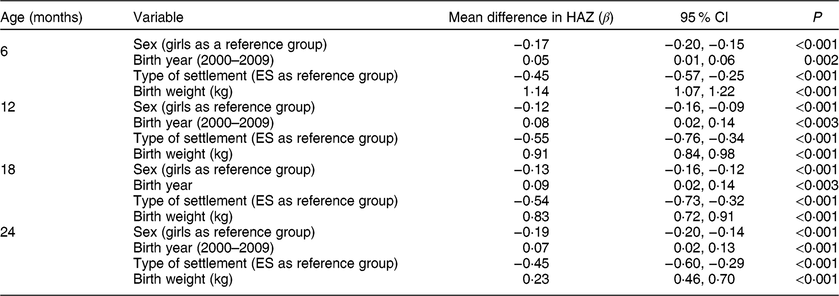
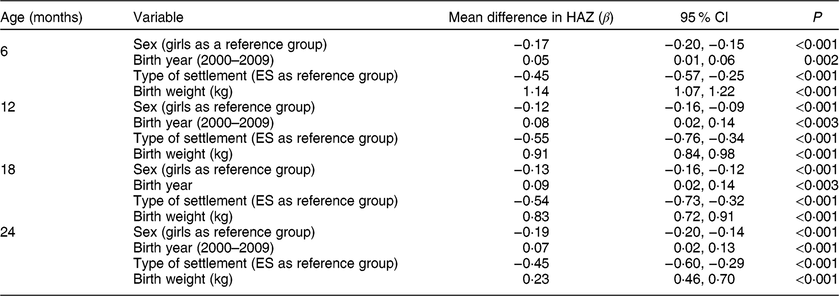
Given the growth differences between sex and trends towards less growth faltering over the study period, we performed a multivariate linear regression analysis adjusted for cluster (MCH clinic) to examine the independent influence of sex on HAZ, controlling for birth year, birth weight and type of settlement (ES v. NES; Table 3). When controlling for birth year, birth weight and type of settlement, sex still had a significant effect. We found that in all age groups boys had significantly lower HAZ compared with girls, with mean difference in HAZ (β) of −0·17, −0·12, −0·13 and −0·19 at 6, 12, 18 and 24 months of age, respectively (P < 0·001 for each age), when controlling for other confounding variables. We found at all ages that increase in birth weight and increase in each birth year were positively associated with HAZ (P < 0·001), while residence in NES was associated with lower mean HAZ at all ages and for both sexes. No interaction between sex and year of birth was found.
Multivariate linear regression analysis using GLM (General Linear Model) of the association between height-for-age Z-score (HAZ) of Bedouin children by sex (girls as reference group) at age 6, 12, 18 and 24 months after controlling for birth year (each one-year increase in birth year), type of settlement (non-established settlement; with established settlement (ES) as reference group) and birth weight in kilograms, adjusted for maternal and child health clinic as random factor (n 5426 observations in each age of growth measurement)
A comparison population of Jewish infants attending computerized MCH clinics of the Ministry of Health consisting of 7213 infants, born during the study period of 2000–2009 (49·3 % girls and 50·7 % boys), was analysed. The mean HAZ at 6, 12, 18 and 24 months for the Jewish girls was 0·051, −0·031, −0·140 and −0·058, respectively; and for Jewish boys, −0·111, −0·054, −0·119 and −0·113. The lowest mean HAZ for Jewish infants was for girls at age 18 months (−0·140), close to the mean of the reference population and significantly higher than the highest score of Bedouin infants (−0·607 for Bedouin girls at age 6 months). All the mean HAZ for both sexes in the Jewish population were significantly higher than those of Bedouin infants in each group, with a difference in mean HAZ ranging from 0·5 to 0·8 units of HAZ. Since we found that the population of Jewish infants was not at significant risk of growth faltering, we performed all analyses on the Bedouin population only.
Discussion
There is obviously a large difference in mean height and weight of male and female infants and children, beginning at birth. This has driven the development of sex-specific growth standards( 26 ) which allow the identification of populations of children at risk for growth faltering. Potential determinants of growth faltering such as prenatal conditions, inadequate infant feeding (including early cessation of breast-feeding), high rates of infectious diseases, inadequate access to clean water and food, poor access to health care and socio-economic factors have been widely studied( Reference Roth, Krishna and Leung 9 – Reference Wamani, Astrøm and Peterson 13 , Reference Alderman and Headey 19 ). There are several studies of sex as a potential determinant of growth faltering and stunting which have been performed on populations in various developing countries( Reference Wamani, Astrøm and Peterson 13 – Reference Khatun, Stenlund and Hörnell 18 ). Recently, Alderman and Headey performed a global analysis of HAZ for children aged 0–59 months from low-income countries with high rates of undernutrition( Reference Alderman and Headey 19 ). In low-income countries, they found a global pattern of lower HAZ (i.e. more growth faltering) among boys than girls from birth throughout the first 1000 d, with the sex differences disappearing by age 40 months. However, none of the above studies examined sex as a possible determinant of growth faltering among indigenous, ethnic minority, low-SES populations in economically developed countries.
In the desert area of southern Israel, there is a large Bedouin population in transition from semi-nomadic to urban living conditions( Reference Gottlieb, Belmaker and Bilenko 27 ). This population is the poorest in Israel( Reference Binyaminy, Bilenko and Haas 28 ), with the highest infant mortality rate in Israel (11·9 per 1000 live births in 2011)( Reference Haas, Bilenko and Shoham-Vardi 29 ). All the Bedouin infants and children have had National Health Insurance since 1995 and receive their well-baby care in a community-based network of MCH clinics, all of which use the same equipment for measuring height and weight and the same WHO growth standards. The computerized database allowed us to examine sex differences in postnatal growth of Bedouin infants and toddlers. Unfortunately, we were not able to assess the impact of breast-feeding duration and introduction of complementary foods to the diet of infants since these data are not adequately recorded in the computerized database. In addition, since length of infants was not measured routinely at birth, we have no data on newborn length-for-age.
We do have data on birth weight, gestational age at birth, residence by type of settlement (ES v. NES), date of birth and growth measurements of Bedouin infants at age 6, 12, 18 and 24 months. We chose to study postnatal effects on growth and therefore studied a population of infants of normal birth weight (2500–4000 g) and normal gestation period (37–42 weeks), unlike previous studies in other countries which included all live births.
We found significant degrees of postnatal growth faltering among normal-birth-weight, full-term Bedouin infants of both sexes at all ages of measurement from 6 to 24 months. Mean HAZ ranged from −0·61 to –0·81 in girls and from −0·72 to –0·92 in boys, with smaller HAZ in girls than boys at every age of measurement.
Our findings of a statistically significant effect of sex on growth faltering in an indigenous population of Bedouin infants living in Israel are similar to those of Alderman and Headey( Reference Alderman and Headey 19 ), Wamani et al.( Reference Wamani, Astrøm and Peterson 13 ), Bukusuba et al.( Reference Bukusuba, Kaaya and Atukwase 14 ), Jiang et al.( Reference Jiang, Su and Wang 15 ), Tumilowicz et al.( Reference Tumilowicz, Habicht and Pelto 16 ) and Khatun et al.( Reference Khatun, Stenlund and Hörnell 18 ), who found that boy infants have more growth faltering than girl infants. We found the same sex effect among Bedouin infants residing in NES without basic municipal services such as drinking-water pumped directly to homes, connection to the national electricity grid, sewage and rubbish disposal as well as those residing in ES with all municipal services. We found the same sex effect for each birth cohort throughout the 10-year study, although each birth cohort had improved growth compared with the cohort of the previous birth year. This result is surprising since we predicted that in the patriarchal Bedouin society, infant-rearing practices would favour boys over girls and therefore predicted more growth faltering among girls.
There was a clear trend among boys of increasing height deficit with age, reaching a mean deficit of 2·4 cm at age 24 months when compared with the standard population. In girls, height deficit did not increase monotonically with age. There was an increase in the sd of height with age in both sexes (Table 1), as expected from the increase in variance with age in the WHO standard population( Reference Leroy, Ruel and Habicht 30 ). A study of catch-up growth in children in our population would be useful in order to study the effect of growth faltering in infancy on final attained height. However, our database did not allow us to analyse catch-up growth after age 24 months.
It is interesting that the association between sex and HAZ was maintained over the decade of the study, although there was a continuous significant improvement in growth of Bedouin infants over the 10 years.
It is clear that stunting and growth faltering in infancy and early childhood can have long-term consequences, particularly on health and cognitive development, and is reflected in school achievement( Reference Dewey and Begum 31 , Reference Victora, Adair and Fall 32 ). Our study design did not allow us to evaluate long-term effects on health and cognition in our study population. However, routine growth data of Bedouin schoolchildren in the south of Israel who were in 7th grade in 2015 (the birth cohorts of 2002–2003, which were included in our study) have recently been published( Reference Rubin, Belmaker and Somekh 25 ). It was found that a significantly higher percentage of Bedouin boys have a height that is less than the third percentile (4·89 %) than Bedouin girls (3·37 %), indicating that at age 12–13 years, Bedouin boys still had more growth faltering than girls. It is impossible to know whether this is due to long-term effects of growth faltering in infancy and early childhood or whether the same factors that cause sex differences in growth faltering at a young age continue to operate throughout childhood in this culture( Reference Dewey and Begum 31 ).
The reasons are unclear for this striking and consistent sex effect on the growth of infants and toddlers up to 24 months of age in this population. Bukusuba et al.( Reference Bukusuba, Kaaya and Atukwase 14 ) and Tumilowicz et al.( Reference Tumilowicz, Habicht and Pelto 16 ) both found a sex difference in infant feeding practices, with male infants less likely to receive appropriate complementary food at appropriate ages. Stewart et al.( Reference Stewart, Iannotti and Dewey 10 ) emphasize that complementary feeding is a major factor affecting infant growth, development and health. They cite studies that indicate that most of the decline in HAZ occurs between 6 and 24 months of age (the age of Bedouin infants in our study), since this is the age at which complementary foods are introduced and the toddler becomes mobile, with increasing exposure to environmental factors that affect health and growth. The authors include in their paper the WHO conceptual framework on childhood stunting, emphasizing the importance of complementary feeding.
Since our study is based on a computerized database, with no data on length of exclusive breast-feeding, the type and quality of complementary foods, infectious diseases, diagnosed chronic diseases and/or hospitalizations, our study was not able to address the underlying causes for our findings of significant associations between increased prevalence of growth faltering and male sex, residence in an unrecognized settlement, lower birth weight and earlier year of birth.
It is therefore imperative to perform an anthropological study of current feeding practices of Bedouin infants in southern Israel, with emphasis on possible sex differences in length of exclusive breast-feeding, as well as the timing and dietary quality of complementary foods. The last anthropological study of infant feeding practices among the Bedouin was carried out over 20 years ago in southern Israel( Reference Forman, Guptill and Chang 21 – Reference Forman, Lewando-Hundt and Graubard 23 ). The authors found that the growth of Bedouin infants began to deviate from standard growth curves upon the addition of complementary food. They hypothesized that since the complementary food was often of inadequate nutritional quality and could easily become contaminated with pathogenic bacteria due to the lack of refrigeration and a clean and adequate water supply, the addition of complementary food began a cycle of diarrhoea, weight loss, poor feeding, more diarrhoea and more weight loss – all factors crucially associated with poor linear growth. However, they did not study sex differences in infant feeding practices or linear growth.
Abu-Saad et al.( Reference Abu-Saad, Shahar and Fraser 33 ) have found that Bedouin mothers consume a diet with many nutritional deficiencies. In a study of Bedouin infants in our population( Reference Bilenko 34 ), Bedouin girls were found to have significantly higher mean serum Zn levels (164·5 µg/dl) than Bedouin boys (104·7 µg/dl) at age 12 months (P = 0·02), although there was no significant sex difference in mean (sd) serum Zn levels at age 6 months (129·5 (67·3) µg/dl). High rates of Fe-deficiency anaemia were also found, with Hb level below 11 g/dl in 58 % of 6-month-old Bedouin infants, but with no sex difference. It is important to perform a detailed dietary intake study among Bedouin infants and children in order to assess the extent to which sex differences in intake of essential amino acids, Fe, Zn and other micronutrients might be a contributor to the sex difference we found in growth faltering.
Another possible hypothesis for sex difference in rates of growth faltering is that Bedouin boy infants have higher rates of infectious diseases and chronic illnesses than girls. We searched the literature in order to explore this hypothesis. Hendel( Reference Hendel 35 ) studied hospitalization rates of Bedouin infants from birth to 1 year of age from 1991 to 2012. She found that male Bedouin infants had significantly higher rates of hospitalization for infectious diseases than female infants (OR = 1·24; 95 % CI 1·19, 1·28), controlling for maternal age, birth weight, gestational age at birth, congenital malformation, metabolic diseases of the newborn, polyhydramnion, lack of prenatal care and hypertension of pregnancy. Differential illness rates, with boys having higher rates than girls, could be a factor in the sex difference we found in growth.
There are recent studies on the high prevalence rate of Helicobacter pylori infections in the Arab population living in northern Israel and its association with poor growth. Muhsen et al. followed Arab infants from 2 to 18 months of age( Reference Muhsen, Goren and Cohen 36 ). They found that prevalence rates of H. pylori ranged from 6 % to 10 % in infants from 3 to 6 months of age in the two study villages, which rose to 51·9 % by 18 months of age in the village with low SES, but remained low with a prevalence of 3·0–9·6 % at 18 months of age in the village with higher SES. No significant association was found with sex, although male infants had slightly higher rates of H. pylori infection than females. In another study by the same group, they found that the mean HAZ of children infected with H. pylori was significantly lower than that among non-infected children. However, they did not study sex differences in HAZ( Reference Muhsen, Jurban and Goren 37 ). H. pylori is a pathogen that is receiving growing attention as a possible agent related to poor growth in populations growing up in endemic areas( Reference Frenck and Clemens 38 , Reference Windle, Kelleher and Crabtree 39 ) and deserves further study as a possible factor affecting sex differences in growth faltering in low-SES populations.
Our study emphasized postnatal effects on growth faltering by studying growth of normal-birth-weight, full-term infants from an indigenous, low-SES, minority population of Bedouin infants living in an economically developed country. We found growth faltering at ages 6 to 24 months with mean HAZ ranging from −0·61 to −0·92 (depending upon sex and age), with a significant sex difference in prevalence of growth faltering (boys had more growth faltering at all ages of growth measurement than girls). Residence in NES with lack of municipal services (drinking-water pumped directly to homes, connection to the national electricity grid, sewage and rubbish disposal) was also associated with increased rates of growth faltering, for both sexes, indicating the importance of environmental factors on growth among infants and toddlers( Reference Roth, Krishna and Leung 9 ). These findings indicate unacceptable rates of health inequalities, despite universal coverage of the population by National Health Insurance, free community-based MCH clinics and secular trends of improved infant growth over time. It is imperative to elucidate the underlying causes for such inequalities in order to implement an effective programme to reduce and eliminate health disparities.
Conclusions
We found a significant postnatal sex effect on growth faltering in an indigenous ethnic minority of low-SES Bedouin infants at 6–24 months of age in an economically developed country. It is imperative to elucidate the basic reasons for growth faltering and stunting and develop appropriate intervention programmes, with emphasis on the first 1000 d of life( Reference Roth, Krishna and Leung 9 , Reference Alderman and Headey 19 ), since growth faltering is known to have significant effects on health as well as cognitive and physical development( Reference Black, Allen and Bhutta 2 – Reference Whincup, Kaye and Owen 7 , Reference Roth, Krishna and Leung 9 , Reference Alderman and Headey 19 ). Israel is working to decrease such health inequalities in children’s health( Reference Rubin, Belmaker and Somekh 25 ), but more needs to be done. Public health experts, local and national governments, together with the local communities, need to rise to the challenge and find and implement effective ways to decrease and eliminate inequalities in growth, health and development for all children of the world.
Acknowledgements
Acknowledgements: The authors would like to acknowledge the helpful insights and comments of Professor Jean-Pierre Habicht, Graduate Professor of Nutritional Epidemiology at Cornell University, who helped them interpret the data and put the results of the research in context. Financial support: This research received no specific grant from any funding agency in the public, commercial or not-for-profit sectors. Conflict of interest: None. Authorship: N.B. took part in formulation of research questions and the study design, data analysis and interpretation, and writing the manuscript. I.B. took part in formulation of research questions and study design, data interpretation and writing the manuscript. Ethics of human subject participation: The study was conducted according to the guidelines laid down in the Declaration of Helsinki and all procedures involving human subjects were approved by the Ethical Committee of the Israeli Ministry of Health. All data were received and analysed without personal identifying details.
Supplementary material
To view supplementary material for this article, please visit https://doi.org/10.1017/S1368980019001691