


Introduction
With the rapid development of digital technology, people have adopted lifestyles that are significantly impacted by the internet, including in Indonesia. During 2021–2022, Indonesia had an internet penetration rate of 77%, with 210,026,769 of 272,682,600 of the total population in 2021 using the internet (APJII, 2022). Nationally, Indonesia has one of the highest numbers of internet users, especially in terms of Facebook (2022) use (Scheepers et al., Reference Scheepers, Scheepers, Stockdale and Nurdin2014; Morgan & Chng, Reference Morgan and Chng2018). The Covid-19 pandemic led to greater use of e-commerce platforms, with increasing numbers of new users living in rural areas (Google et al., 2021). This increase in internet use has facilitated e-commerce transactions, including those involving wildlife products, and illegal wildlife trade did not decline during the pandemic (Nijman, et al., Reference Nijman, Ardiansyah, Bergin, Birot, Brown and Langgeng2019; Puspitasari, Reference Puspitasari2022). Social media also play a key role in the illegal distribution and trade of wildlife products (Rosen & Smith, Reference Rosen and Smith2010; Herrel & van der Meijden, Reference Herrel and van der Meijden2014; Guan & Xu, Reference Guan and Xu2015, Morcatty, et al., Reference Morcatty, Feddema, Nekaris and Nijman2021; Toomes et al., Reference Toomes, Moncayo, Stringham, Lassaline, Wood and Millington2023), increasing pressures on wild populations.
There has been a shift of illegal wildlife trade of items such as elephant ivory, hornbill casques, rhinoceros horn, sun bear Helarctos malayanus claws and live individuals, and songbirds for the pet trade to online social media platforms such as Facebook and WhatsApp (Yu & Jia, Reference Yu and Jia2015; Nijman et al., Reference Nijman, Langgeng, Birot, Imron and Nekaris2018; Gomez et al., Reference Gomez, Shepherd and Morgan2019; WhatsApp, 2022). These platforms allow traders to reach a large audience of potential consumers (Budiani & Raharningrum, Reference Budiani and Raharningrum2018). In Indonesia, songbirds, birds of prey and non-native species, including protected species, are openly traded online (Morgan & Chng, Reference Morgan and Chng2018; Nijman et al., Reference Nijman, Langgeng, Birot, Imron and Nekaris2018, Reference Nijman, Ardiansyah, Bergin, Birot, Brown and Langgeng2022).
The wide scope of illegal wildlife trade in Indonesia has become a significant conservation challenge (Nijman, Reference Nijman2010). The high economic value within the wildlife supply chain and the low levels of detection and prosecution, combined with insufficient regulatory and law enforcement mechanisms, threaten the survival of some species (Nijman, Reference Nijman2010). The illegal pet trade in Indonesia has been linked to decreased populations of wild species such as the Roti Island snake-necked turtle Chelodina mccordi and yellow-crested cockatoo Cacatua sulphurea (Collar et al., Reference Collar, Andreev, Chan, Crosby, Subramanya and Tobias2001; Shepherd & Ibarrondo, Reference Shepherd and Ibarrondo2005; Shepherd, Reference Shepherd2006; Nijman et al., Reference Nijman, Shepherd and Van Balen2009; Shepherd, Reference Shepherd2011; Harris et al., Reference Harris, Green, Prawiradilaga, Giam, Giyanto and Hikmatullah2015; Eaton et al., Reference Eaton, Van Balen, Brickle and Rheindt2016; Shepherd et al., Reference Shepherd, Eaton and Chng2016; Nijman & Nekaris, Reference Nijman and Nekaris2017).
The internet has facilitated the illegal wildlife trade by eliminating several barriers, such as the need to discuss and arrange trade in-person (IFAW, 2005), and by lowering the level of risk involved (Lavorgna, Reference Lavorgna2014, Reference Lavorgna2015). Interactions on the internet are now a challenge to uncovering cases of illegal wildlife trade. For example, posts advertising wildlife on Instagram (2022) can be located via Google searches (Google, 2022; Nijman et al., Reference Nijman, Morcatty, Feddema, Campera and Nekaris2022), and on Facebook wildlife traders take advantage of the Groups feature, using both public and closed-access groups (where access is controlled by the group's administrator), which are created thematically according to the type of wildlife product being sold (Nijman et al., Reference Nijman, Langgeng, Birot, Imron and Nekaris2018). These groups can be located using the search feature in Facebook via keywords such as the name of the desired species (Nijman et al., Reference Nijman, Langgeng, Birot, Imron and Nekaris2018). However, the administrator of a closed-access Facebook group may allow members to discuss and make transactions only via a messaging application (Crook et al., Reference Crook, Henst, Debeve, Reinjgoud, Janssen and Ruysschaert2020). This enhances confidentiality, protecting those involved from being traced (Lavorgna, Reference Lavorgna2014; Yu & Jia, Reference Yu and Jia2015; Crook et al., Reference Crook, Henst, Debeve, Reinjgoud, Janssen and Ruysschaert2020). In addition to social media, the illegal wildlife trade has expanded to other online platforms, including e-commerce platforms (e.g. OLX, 2022; Tokopedia, 2022a; Shopee, 2022), where advertisements of wildlife products usually provide information such as photographs, sale prices and seller locations and contact information (Nijman et al., Reference Nijman, Langgeng, Birot, Imron and Nekaris2018). Thus, online illegal wildlife trade can occur without in-person contact between the transacting parties, and this has also facilitated the emergence of new actors with specific roles, such as animal couriers (Budiani & Raharningrum, Reference Budiani and Raharningrum2018).
In response to these challenges, research has been conducted to identify the volume, characteristics and dynamics of online illegal wildlife trade in Indonesia (Iqbal, Reference Iqbal2015, Reference Iqbal2016; Paridi & Noske, Reference Paridi and Noske2017; Morgan & Chng, Reference Morgan and Chng2018; Nijman, Reference Nijman2020; Nijman et al., Reference Nijman, Smith, Foreman, Campera, Feddema and Nekaris2021, Reference Nijman, Morcatty, Feddema, Campera and Nekaris2022), and associated legal instruments, regulation enforcement and/or regulatory gaps (Rajagukguk, Reference Rajagukguk2014; Nijman, Reference Nijman2017; Nijman et al., Reference Nijman, Morcatty, Feddema, Campera and Nekaris2022). To facilitate responses to online illegal wildlife trade in Indonesia, it is important to understand the policy framework. In particular, any inconsistencies and legal loopholes in the regulation of social media and e-commerce platforms need to be examined, including those related to wildlife conservation, cybercrime and information technology. Here we assess the online illegal wildlife trade activity on the major e-commerce platforms in Indonesia during 2021–2022, connectivity between platforms, and court cases and convictions during 2016–2021. Based on our findings we provide recommendations for strengthening the legal framework related to online illegal wildlife trade.
Methods
Online illegal wildlife trade advertisements and accounts
We collected data on online illegal wildlife trade occurring during April 2021–March 2022 from Facebook Marketplace and the five largest e-commerce platforms operating in Indonesia: Tokopedia, Shopee, Bukalapak (2022), Lazada (2022) and Kaskus (2022). We recorded the following variables: number of advertisements related to illegal wildlife trade, number of accounts with advertisements, and names of species traded and any protected status. Protected species were those listed in the Attachment to the Regulation of the Minister of Environment and Forestry of the Republic of Indonesia Number P.106/Menlhk/Setjen/Kum.1/12/2018 on the List of Protected Plants and Animals (Permen LHK P.106/2018; Supplementary Table 1). We did not interact with sellers, and in recording data we omitted account names or identities and thus do not report any identifiable personal information.
To search the platforms, we used keywords and phrases related to protected species, including species names and body parts (along with spelling variations). We used 39 combinations of keywords for 18 species and 11 types of wildlife products (Supplementary Table 2). Before collecting data for analysis, we modified these keywords based on preliminary searches that we conducted to determine their effectiveness for obtaining appropriate results. We used descriptive statistical methods to analyse the data and determine the volume of illegal wildlife trade, including the numbers of species, advertisements and accounts involved.
To examine the operation of these online illegal wildlife trade networks, we analysed the data using social network analysis in Analyst's Notebook 9.2.4 (IBM, USA). We used degree centrality to determine the number of relationships between entities within the network (IBM, 2013). Degree centrality is a value used to assess the number of connections associated with a node, with higher degree centrality indicating that a node is linked to a greater proportion of other nodes within the network. We employed this metric to understand the preferences of account holders and users (Yuliana et al., Reference Yuliana, Santosa, Setiawan and Sukirman2017) by evaluating the level of connectedness between users and the platform while trading wildlife. Through this value, we were able to identify the main participants in online illegal wildlife trade in Indonesia.
Court case outcomes
We collected data on court cases involving online illegal wildlife trade during 2016–2021 using the Case Tracking System (Sistem Informasi Penelusuran Perkara) for district courts throughout Indonesia (Supplementary Table 3). We traced the data by using three keywords related to wildlife trade: satwa liar (wildlife), sumber daya (resources) and konservasi (conservation). We also collected information on the date of arrest, the type and volume of the wildlife/animal body parts found, the location of the incident, the case number, the claims of the prosecutor and the verdict of the judge. To complement the information from the case records, we obtained additional information on modus operandi, tactics and strategies from analysis of news articles on wildlife trade cases in relation to the case records. We traced the articles using keyword combinations, building upon the data from the Case Tracking System, such as combined perpetrator–animal keywords or perpetrator–animal–location keywords. We conducted all analyses and prepared all plots using R 4.0.1 (R Core Team, 2020) and ArcGIS Pro 2.4.0 (Esri, USA).
Legal framework for online illegal wildlife trade
We identified policy and legal gaps related to online illegal wildlife trade through descriptive analysis of judicial regulations cross-checked with the court cases analysis. We conducted a gap analysis of the following nine laws and regulations and their derivatives: (1) Law No. 5 of 1990 on the Conservation Act, (2) Law No. 11 of 2008 on Electronic Information and Transactions, (3) Law No. 7 of 2014 on Trade, (4) Government Regulation No. 7 of 1999 on Preserving Flora and Fauna Species, (5) Government Regulation No. 8 of 1999 on the Utilization of Wild Plants and Animals, (6) Government Regulation No. 80 of 2019 on Trade through Electronic Systems, (7) Ministerial Decree of Forestry No. 447 of 2003 on the Administration Directive of Harvest or Capture and Distribution of Specimens of Wild Plant and Animal Species, (8) Minister of Forestry Regulation No. P.19 of 2005 on the Breeding of Wild Plants and Animals, and (9) Decision of the Minister of Environment and Forestry No. 86 of 2006 on the Determination of Benchmark Prices for Wild Plants and Animals Domestically and Abroad (Supplementary Table 4).
Focus group discussion and interviews with experts
We collected and clarified empirical data regarding online illegal wildlife trade cases and associated challenges, and recommendations to strengthen policies and regulations, through a focus group discussion with 58 participants and through interviews with four experts (Albertina Ho, Anugerah Rizqi Akbari, Sugeng Irianto and Budi Riyanto). The focus group discussion included participants from management authority and enforcement agencies of online illegal wildlife trade laws: the Ministry of Environment and Forestry (Directorate General of Nature Resources and Ecosystem Conservation, and Directorate General of Law Enforcement of Environment and Forestry), the Indonesian National Police (Criminal Investigation Agency, and Security and Intelligence Agency), the Ministry of Communication and Information Technology, the Ministry of Trade, the National Cyber and Crypto Agency (Badan Siber dan Sandi Negara), the Attorney General of the Republic of Indonesia, the Indonesian E-Commerce Association, criminologists and wildlife trade experts. The list of questions used in the focus group discussion and expert interviews is in Supplementary Table 5, and the informed consent form used is in Supplementary Material 1). We held both activities (online and in-person) on 22–23 March 2022, consecutively. We analysed the data using qualitative descriptors, to depict the issues of law enforcement and to gather expert opinions and recommendations for strengthening the legal framework and national policies for addressing online illegal wildlife trade in Indonesia.
Results
Overview of online illegal wildlife trade cases
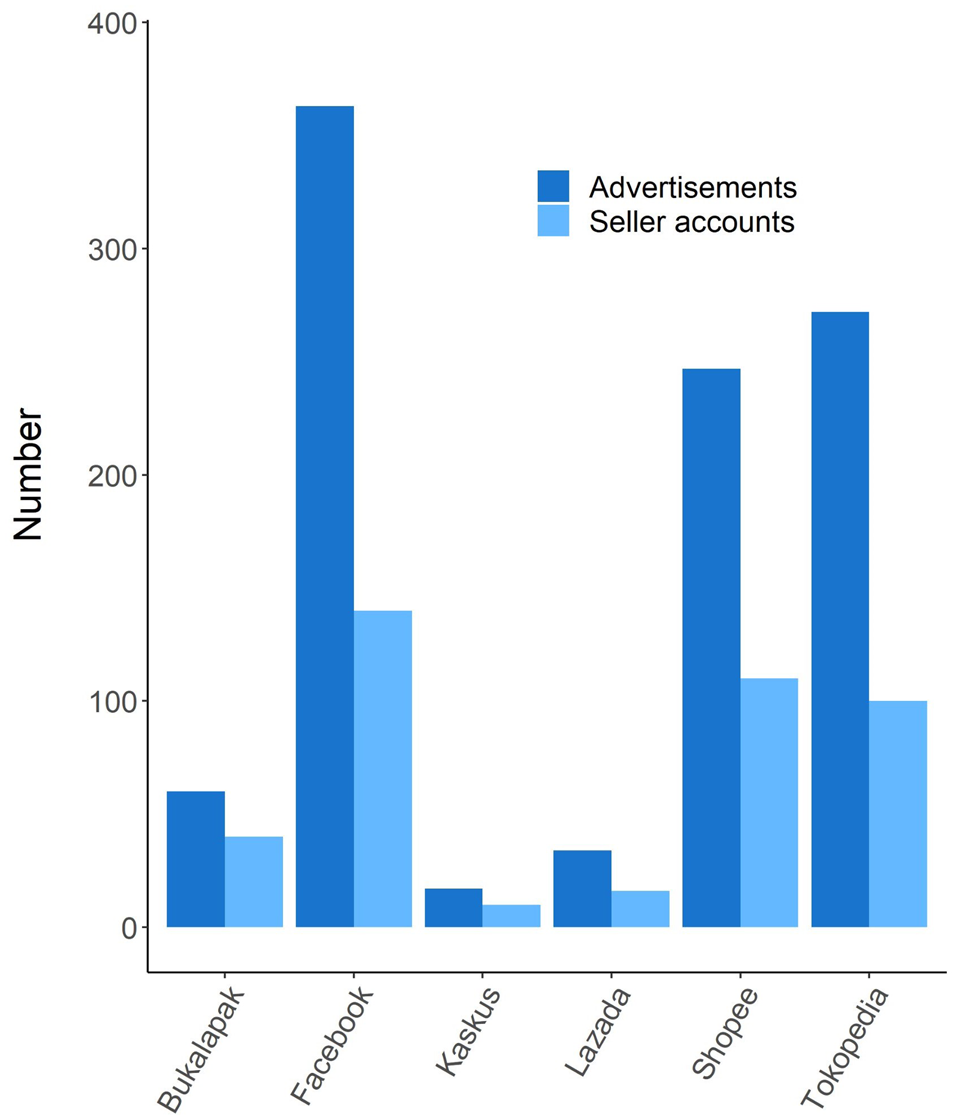
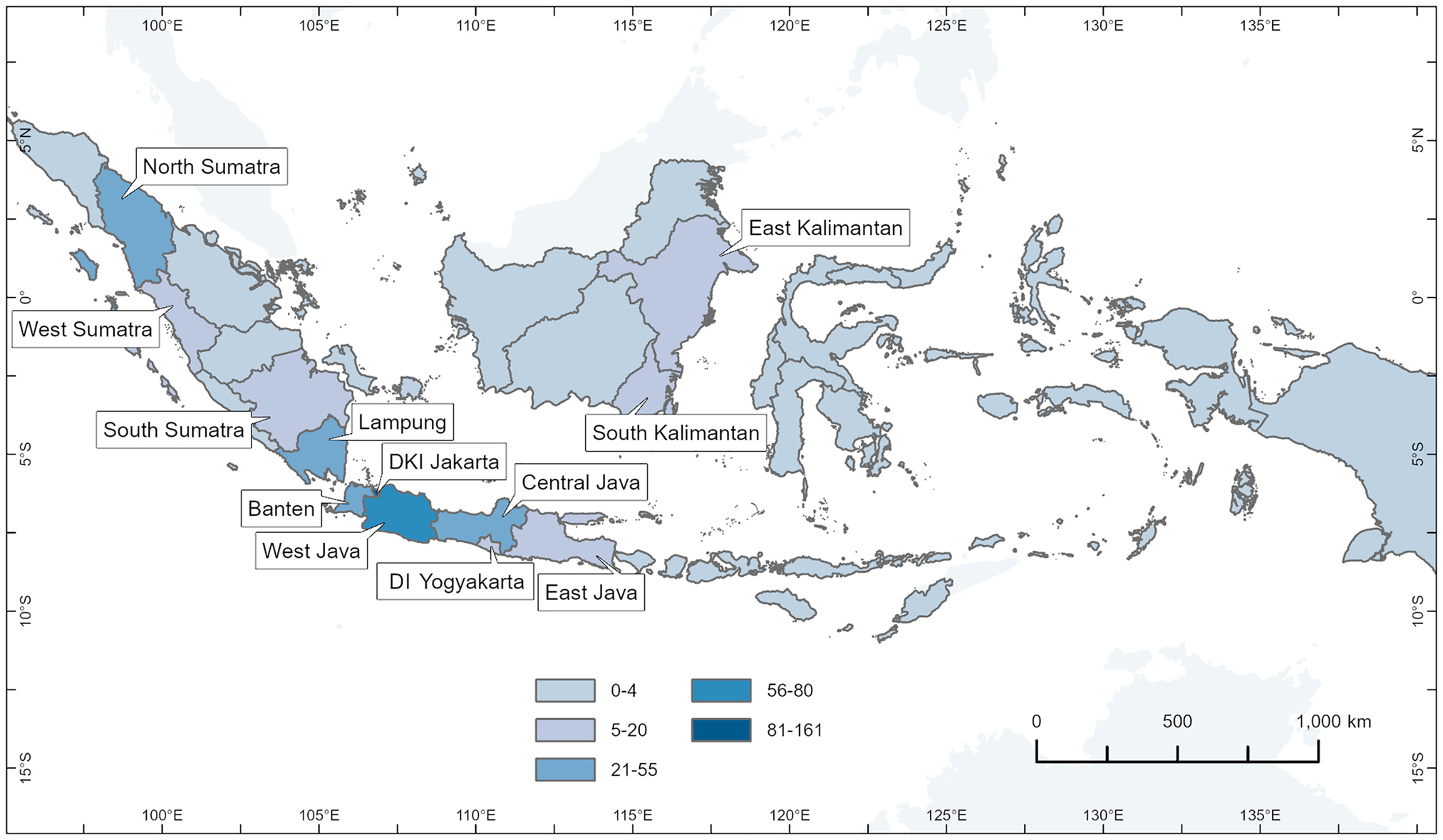
During April 2021–March 2022, we detected 996 wildlife trade advertisements on 421 accounts. We found the highest numbers of wildlife advertisements and sellers on Facebook Marketplace (334 advertisements, 122 seller accounts); numbers were lowest on Kaskus (18 advertisements, 11 seller accounts), probably because the platform is no longer widely used in Indonesia (Fig. 1). Based on the residence information associated with the accounts, sellers were distributed across 21 of the 34 Indonesian provinces, with the most in Jakarta (161 accounts), West Java (80) and Central Java (55; Fig. 2), all of which are on the island of Java.
Number of advertisements and seller accounts associated with online illegal wildlife trade in Indonesia that we identified on six e-commerce platforms monitored during April 2021–March 2022.

Online illegal wildlife trade hotspots in Indonesia, based on the number of trading accounts found on e-commerce platforms monitored during April 2021–March 2022. There were 81–161 accounts in DKI Jakarta. DKI (Daerah Khusus Ibukota), Special Capital Region; DI (Daerah Istimewa), Special Region. (Readers of the printed journal are referred to the online article for a colour version of this figure.)

We identified 52 wild species, including 45 protected species, six non-protected species and one non-native species traded through the online platforms. This comprised 6,013 live individuals, and 1,868 pieces and 2,500 g of body parts in total. In addition, we found eight other species with minimal information (only local names/genera were provided) and replicas of animal body parts. Of live animals, birds were the most traded taxa, particularly parrots (13.6% of total advertisements; 20 species), songbirds (16.8% of total advertisements; eight species) and ornamental/other birds (2.4% of total advertisements). Live reptiles (frill-necked lizards Chlamydosaurus kingii and pig-nosed turtles Carettochelys insculpta) were the second most traded taxa. Mammals were the most traded taxa for body parts, especially of elephants and the tiger Panthera tigris. Elephant ivory was the most advertised product derived from protected species, comprising 56.4% (426) of all protected species advertisements, followed by tigers (6.9%) and small or other mammals (1.5%). However, these findings could have been influenced by the composition and uniqueness of the keywords used to monitor each platform.
Online illegal wildlife trade networks
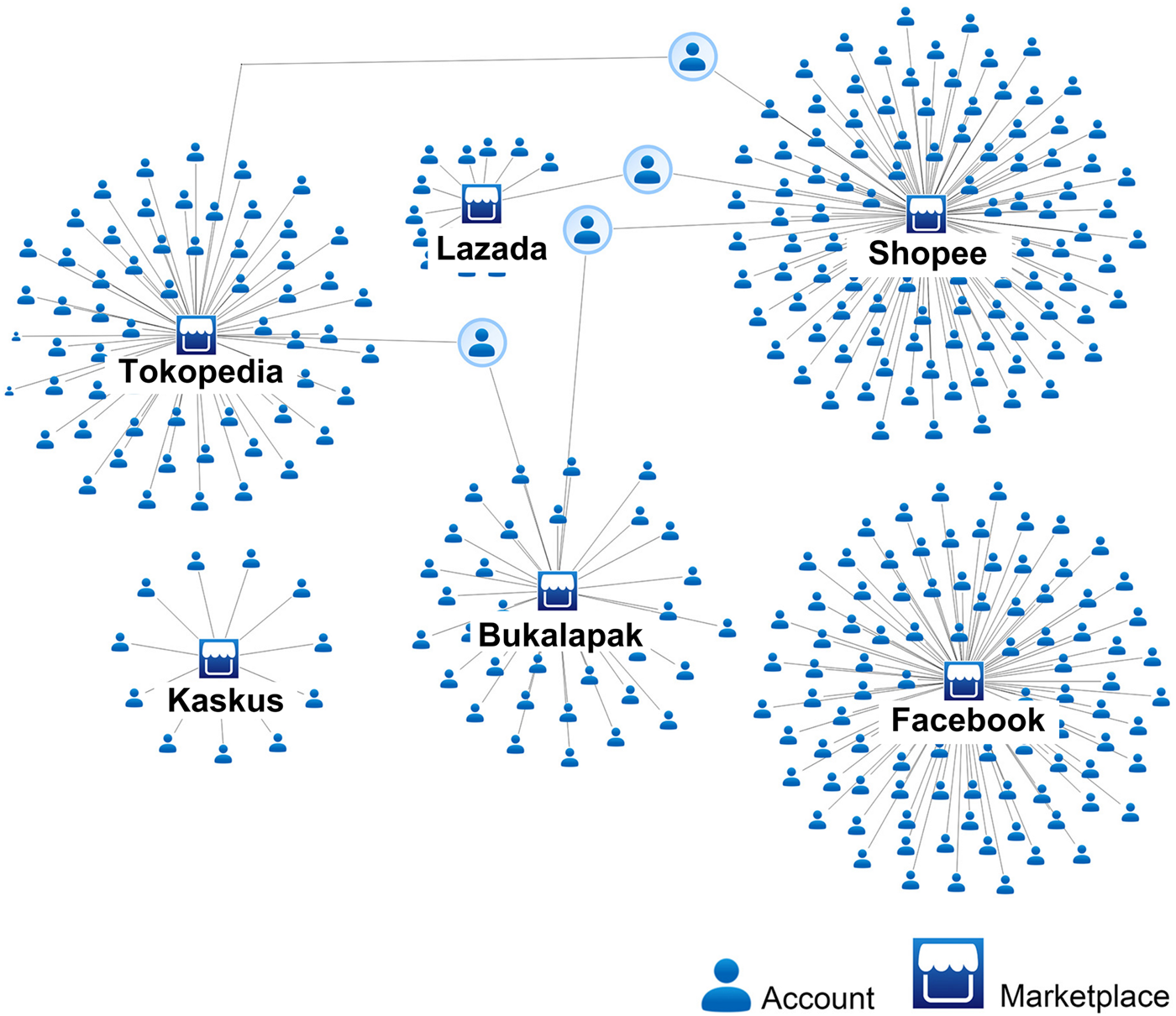
We identified four accounts that had a degree centrality value of 2, indicating they advertised wildlife on two marketplaces (Fig. 3). The combinations of marketplaces used by these accounts were Shopee and Lazada, Shopee and Bukalapak, Shopee and Tokopedia, and Tokopedia and Bukalapak. We detected no marketplace combinations for accounts that used Facebook Marketplace and Kaskus, although this does not mean that sellers registered with Facebook Marketplace and Kaskus do not also have accounts on other marketplaces, but rather that further investigations are required to explore this.
Online illegal wildlife trade networks monitored during April 2021–March 2022 on the six online marketplaces analysed in Indonesia, based on degree centrality, with lines showing the relationships between seller accounts and marketplace groups. Only four accounts used more than one marketplace to sell wildlife.

Modus operandi of online illegal wildlife trade
The focus group discussion and the interviews with experts revealed that online illegal wildlife trade removes the need for sellers to rent a shop or pay tax on transactions. Wildlife/wildlife products can only be viewed as photographs, the seller and buyer do not meet face-to-face and sellers can display and sell wildlife/wildlife products without owning them. Online illegal wildlife trade also uses intermediaries such as couriers and logistics companies, presumably to increase security and to conceal the identity of both sellers and buyers. Sellers may use more than one platform and create more than one account, to expand their market reach and also help them avoid detection by law enforcement.
Our case analyses and online illegal wildlife trade monitoring indicated various other common modi operandi used by sellers. Sellers use specific keywords combined with hashtags to advertise their intention to trade. From the 39 keyword combinations used we found 46 search results with different combinations of upper- and lower-case letters or with recommendations for other species. A combination of numbers and letters containing the selling name and local species name of the animal in the title of the advertisement or the inclusion of other codes were used to market wildlife/wildlife products to potential consumers. Traders also used inappropriate information (e.g. photographs that did not match the title of the advertisement), unrelated categories and titles that were not related to wildlife in their advertisements.
Advertisements on these marketplaces had the sole intention of selling wildlife/wildlife products, with no advertisements being found with other intentions (e.g. virtual wildlife displays or exhibition of pets). In terms of payment, joint accounts, also known as escrow accounts (company accounts or verified third-party accounts), were used for transactions. For example, on Facebook Marketplace transactions can occur privately using the Ask the Seller feature before the parties agree to proceed with the sale and payment. For both general payments (transactions that are not specific to wildlife) and transactions related to wildlife sellers tend to use joint accounts and avoid transactions via cash-on-delivery or payment-on-the-spot methods.
Court case outcomes
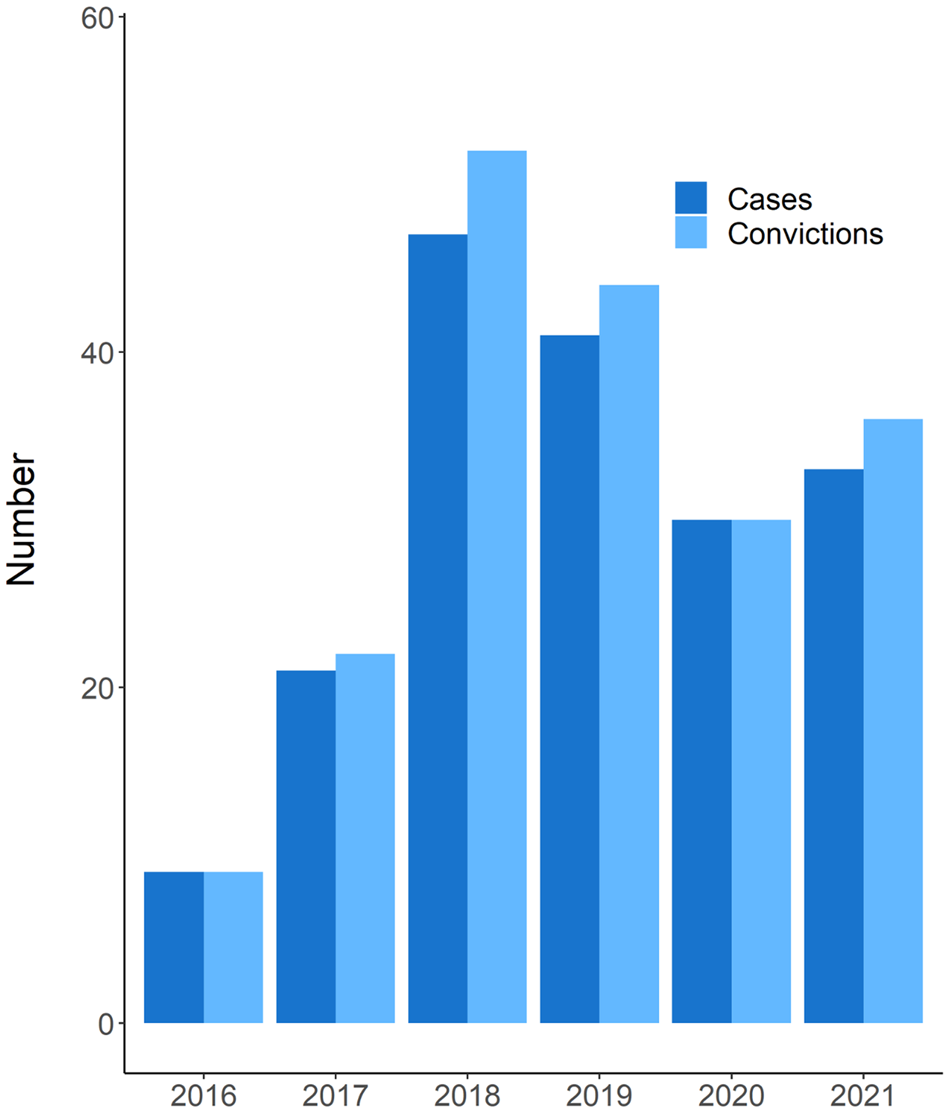
We identified 209 indictments during 2016–2021 concerning online illegal wildlife trade, which was c. 17% of all wildlife-related cases closed during this period. Through these actions law enforcement agencies arrested 277 traders, of which 193 were convicted and sanctioned (imprisoned and/or fined) in 181 cases. The highest numbers of cases and convictions were in 2018 and 2019 (Fig. 4). The statements of some defendants mentioned that they use online platforms such as Facebook to engage in illegal wildlife trade.
The number of cases of and convicted persons for online illegal wildlife trade in Indonesia during 2016–2021.

From the 181 collated court case outcomes, 70% resulted in a jail time no longer than 1 year and/or fines of USD 67–670 (IDR 1,000,000–10,000,000). There were discrepancies between the sentences requested by prosecutors and those given by judges: on average, prosecutors recommended that sellers be sentenced to 13 months in prison and receive a USD 973 (IDR 14,457,310) fine, whereas judges sentenced sellers to 9 months in prison and imposed a USD 865 (IDR 12,847,802) fine.
The highest sentence imposed in a wildlife trade case was 3 years imprisonment and a fine of USD 3,332 (IDR 50,000,000), with an additional 3-month imprisonment in lieu of payment of this fine. This was given to a seller trading a palm cockatoo Probosciger aterrimus, a yellow-crested cockatoo, a Javan langur Trachypithecus auratus and 10 Moluccan eclectus Eclectus roratus in Pasuruan, East Java, in 2021. The lowest sentence imposed was 1 month and 10 days of imprisonment and a fine of USD 333 (IDR 5,000,000), with substitute imprisonment of 2 months (substitute imprisonment is an alternative imprisonment imposed when a fine is not paid). This was to a seller trading a rhinoceros hornbill Buceros rhinoceros and various species of parrot, including the yellow-crested cockatoo, Moluccan cockatoo Cacatua moluccensis, white cockatoo Cacatua alba and black-capped lory Lorius lory, in Lubuk Pakam, North Sumatra, in 2018.
Most of the recorded trade comprised live animals (62.6%), followed by body parts (20.7%) and various wildlife products, including accessories (13.9%) and handicrafts (2.6%). The greatest seizure of wildlife products involved the confiscation of 285 elephant ivory accessories in the form of 197 tobacco smoking pipes, 53 rings, 31 bracelets and four necklaces.
Policy review
Our analysis of the nine relevant regulations indicated there are no laws or regulations in Indonesia, including under the Conservation Act, covering online illegal wildlife trade of protected species (Supplementary Table 3). The Conservation Act only refers to ‘commerce’ and does not contain a detailed definition of commerce or, specifically, the advertising of protected species as part of the commercial process. The current electronic trading regulation as the derivative of the Trade Law does not include activities involving the excessive use of natural resources, one of which is the illegal use and distribution of wildlife on online platforms, and the permit system does not include the list of protected species (stated in Permen LHK P.106 of 2018).
The Indonesian Government has rules and regulations, including monitoring and enforcement, for control of the utilization and distribution of wildlife. Firstly, a domestic or international distributor requires a utilization and distribution permit. The issuance of licensing documents must be completed for the use and circulation of wildlife, including forms for a Permit for Domestic Transport of Wild Plants and Animals and a Permit for Foreign Transport of Wild Plants and Animals. However, no online sellers indicated the legality of their business by posting a distribution permit in their advertisements.
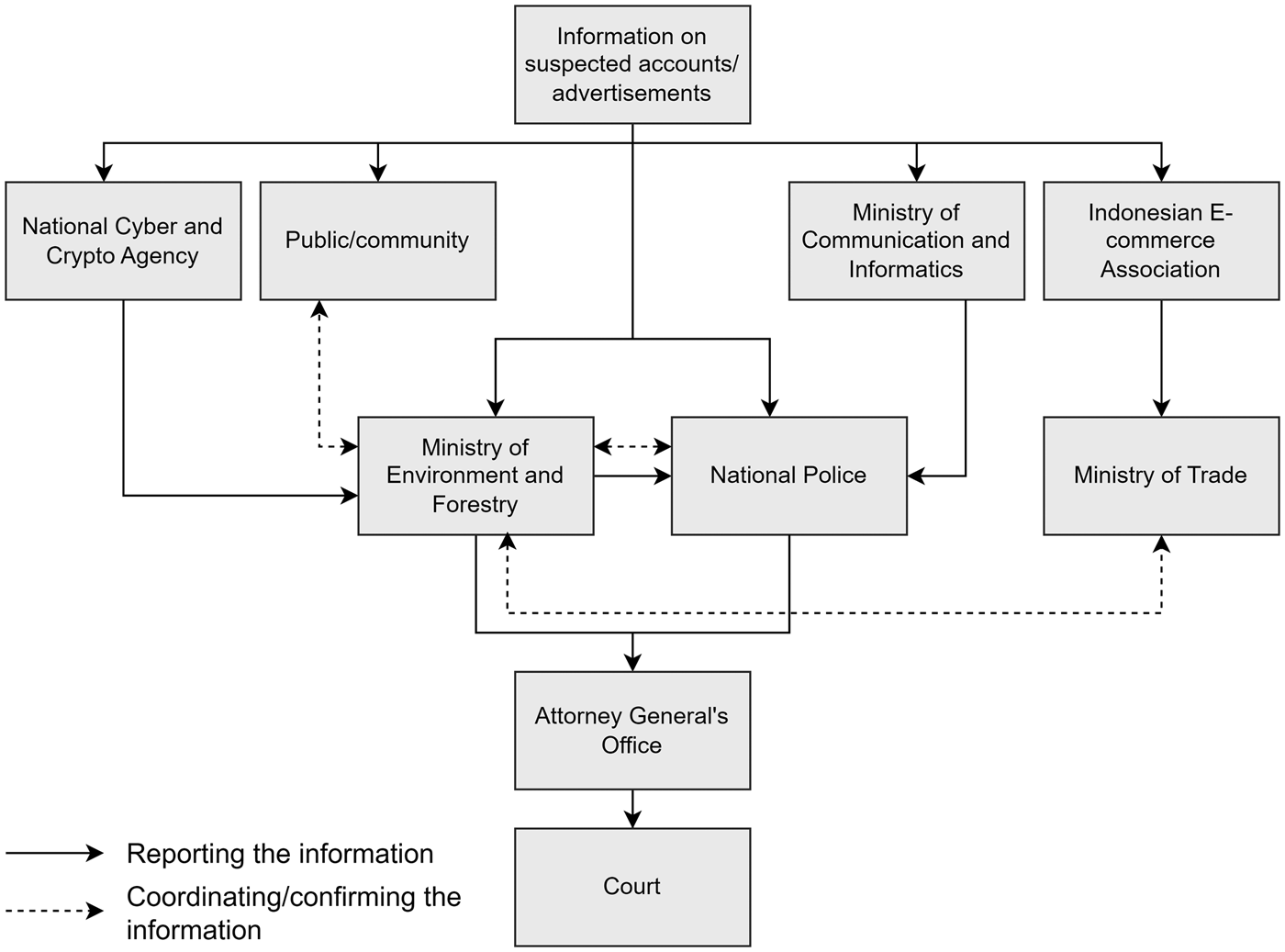
Secondly, according to the focus group discussion, online wildlife trade monitoring in Indonesia has been conducted by cyber patrol teams involving the Ministry of Environment and Forestry, the Indonesian Police, the Ministry of Communication and Information Technology and several NGOs. These cyber patrol teams are tasked with identifying accounts that advertise wildlife for sale on e-commerce and social media platforms. The identification process is generally conducted using specific keywords commonly used to buy and sell wildlife. A flow chart for the monitoring and reporting of advertisements and/or accounts related to online illegal wildlife trade is shown in Fig. 5. To support the process, the Indonesian E-Commerce Association provides information related to e-commerce accounts that have violated Ministry of Trade regulations. Actions can then be taken in accordance with the applicable laws and regulations, such as by reporting the person who owns an account that has posted an advertisement for the sale or purchase of a protected species to the police or Ministry of Environment and Forestry investigators and by removing the reported advertisement. During 2018–2021, we found 4,463 posts containing illegal wildlife trade content on various platforms, with Facebook, Instagram, Shopee and Tokopedia having the largest volumes of such content. In collaboration with the Indonesian E-Commerce Association, the findings of the cyber patrol team were acted upon and advertisements were reported using the report feature provided by Facebook and other e-commerce platforms, resulting in 2,805 posts being removed. There is also a mobile application for reporting general environmental crime (including online illegal wildlife trade), hosted by the Ministry of Environment and Forestry. As there is no formal collaboration between the Ministry of Environment and Forestry and the Indonesian E-Commerce Association, the reporting process is time-consuming and ineffective.
Flow chart for the monitoring and reporting of online illegal wildlife trade advertisements and/or accounts in Indonesia.

Thirdly, regarding the implementation of law enforcement operations to address and prosecute online illegal wildlife trade, transactions are not directly conducted by the parties involved. This means that, in reference to the Code of Criminal Procedure, Article 1, point 19, sting operations cannot typically be used in online illegal wildlife trade cases.
Currently, digital information can only be used as preliminary information for initiating an investigation process in accordance with the Penal Code of Indonesia. During investigations of online illegal wildlife trade cases, investigators experience difficulties using the available evidence. As account holders also act as dropshippers, they do not have the wildlife in stock. Thus, they use photographs from the wildlife suppliers in their advertisements, which makes it challenging to confirm the veracity of the information included in the advertisement, such as whether the wildlife stock exists or not (information from an expert interview). Albertina Ho (an environmental judge on the Supreme Court of Indonesia), one of the experts interviewed, indicated that a criminal act must meet at least two of the elements of evidence outlined in Article 184 of the Penal Code of Indonesia; material such as online wildlife trade advertisements and photos of the wildlife advertised are used solely as references and not as evidence.
In the general provisions in the Conservation Act the definition of commerce includes advertising, and therefore even without proof of existence of the item for sale, sellers can still be prosecuted. But cyber and digital forensics experts are required to demonstrate account ownership during a trial and to close accounts involved in illegal wildlife trade.
In analysing the court cases we found several in which investigators cooperated with the Indonesian Financial Transaction Reports and Analysis Center to track the high turnover of money in online illegal wildlife trade using Law No. 8/2010 on the Prevention and Eradication of Criminal Money Laundering to detain those involved. Additionally, the focus group discussion indicated that the law targets both active (i.e. seller) and passive (i.e. financial transaction intermediary) individuals and can be used to provide cumulative sanctions. Prosecution of escrow account holders for the sale and purchase of protected species has been implemented through Article 40 paragraph 2 in conjunction with Article 21 paragraph 2 of the Conservation Act and Articles 55–56 of the Penal Code of Indonesia. The owners of the escrow accounts, as third parties that assist with the trading of protected species, charge a fee for the sale or purchase of wildlife. In a 2019 case the holder of an escrow account linked to the online illegal wildlife trade of Komodo dragons Varanus komodoensis was penalized. The escrow account was individually owned and not affiliated with any particular e-commerce platform.
Discussion
Recent online illegal wildlife trade cases in Indonesia indicate that Java is a hotspot of online trade activity. The focus group discussion indicated that this was also the experience of cyber patrols of the Directorate General of Law Enforcement of the Ministry of Environment and Forestry during 2018–2021. As the most populous island in Indonesia, Java is the centre of demand for most general commerce (BPS–Statistics Indonesia, 2021). This is influenced by the absence of geographical barriers, the presence of major urban and economic centres (including the capital city, Jakarta), better internet access compared to other Indonesian islands, a large number of wildlife markets in almost every province in Java, and access to a range of shipping and transportation options (Gomez et al., Reference Gomez, Shepherd and Morgan2019).
Away from the urban provinces in Java, there has been a significant increase in new internet users in rural areas (Google et al., 2021). Many rural areas are close to forests and wildlife and are typically home to both wildlife poachers and hunters (Kamim, Reference Kamim2020). As there are few barriers and a low risk of detection associated with accessing e-commerce platforms (Gomez et al., Reference Gomez, Shepherd and Morgan2019), illegal online trade is an emerging threat to wildlife populations in Indonesia.
Loopholes in e-commerce features that facilitate online illegal wildlife trade
Those involved in online illegal wildlife trade have exploited the convenience of e-commerce platforms, including the ease with which new accounts can be created, advertisements placed and transactions conducted (Gomez et al., Reference Gomez, Shepherd and Morgan2019). Our social network analysis revealed that a wildlife trader could operate on more than one platform, without restrictions or barriers. Of the five e-commerce platforms and one social media platform examined, only Tokopedia stated in its terms and conditions that trading in species protected under Indonesian law was prohibited (Tokopedia, 2022b). We also found that monitoring by e-commerce platforms of online illegal wildlife trade currently relies solely on users using the report feature. Existing reporting features help to combat online trade by, for example, facilitating the removal of wildlife trade groups on Facebook (Gomez et al., Reference Gomez, Shepherd and Morgan2019). However, this could cause illegal wildlife traders to switch to other e-commerce platforms (Gomez et al., Reference Gomez, Shepherd and Morgan2019) and closed-access Facebook groups (Crook et al., Reference Crook, Henst, Debeve, Reinjgoud, Janssen and Ruysschaert2020). To date, there are no automatic filters or detection features for online advertisements of protected species on e-commerce platforms.
E-commerce platforms typically use algorithms to optimize sales by influencing consumer decision-making (Haubl & Trifts, Reference Haubl and Trifts2000). These algorithms also aid wildlife trade. For example, Facebook's algorithms display advertisements based on a user's search history, which can increase the visibility of wildlife advertisements, including for protected species (Avaaz, 2022).
Identifying advertisements selling protected species requires the use of more complex keywords compared to finding non-protected species (Alfino & Roberts, Reference Alfino and Roberts2020; Xu et al., Reference Xu, Cai and Mackey2020). Our study revealed that it took greater effort to find protected species being traded, requiring the combination of a greater amount of numbers and letters assembled as a species name (e.g. ‘eleph4nt’). This was not required for finding non-protected species, which typically displayed the common name of the species in the advertisement's title. Traders of protected species also attempt to avoid detection by making access to their advertisements complex and the advertisements themselves less visible (Nijman et al., Reference Nijman, Morcatty, Feddema, Campera and Nekaris2022). For example, we found, as did Alfino & Roberts (Reference Alfino and Roberts2020), that marketplace actors place their product(s) in a category of goods that is unrelated to wildlife, and sellers typically communicate through private chat facilities, as has been found for Facebook (Xu et al., Reference Xu, Cai and Mackey2020). A study conducted in China showed that Facebook posts regarding wildlife were difficult for search engines to detect because of changes in keyword combinations that are unrelated to the real species name, such as persuasive text (e.g. ‘Check it out!’) and animal emojis (Xu et al., Reference Xu, Cai and Mackey2020).
Our findings revealed other modi operandi in the payment process, including the use of escrow accounts because of their ease of use and transaction security. Escrow account holders are at low risk of being arrested as the buyer and seller are unaware of the identity of each other because of this third-party mediation (Istiyana & Irawan, Reference Istiyana and Irawan2017; Gomez et al., Reference Gomez, Shepherd and Morgan2019), providing an added layer of privacy and security fot all parties involved (Gomez et al., Reference Gomez, Shepherd and Morgan2019). Marketplace platforms have no direct involvement and only offer supervision, such as in the case of Facebook Marketplace. If a conflict occurs between the three parties, Facebook Marketplace simply issues a warning to each party (Pribadi et al., Reference Pribadi2021). Moreover, the account itself is solely responsible for temporarily holding money from the buyer before it is passed on to the seller, meaning that disputes can only occur between the seller and buyer. The lack of law enforcement supervision over the use of joint accounts for such transactions has led sellers to take advantage of this loophole for illegal wildlife trade (Gomez et al., Reference Gomez, Shepherd and Morgan2019).
Gaps in the legal framework
We found that the existing legal framework is ineffective for detecting, monitoring and addressing illegal wildlife trade on e-commerce platforms in Indonesia. Protected species continue to be sold openly, and the sanctions and fines imposed are not commensurate with the high financial turnover generated from these transactions. Law enforcement agencies have a range of priorities in Indonesia and have limited resources and capabilities for surveillance, species identification and applying other regulations to address this form of illegal wildlife trade. Law enforcement efforts typically focus on violations of the articles associated with the Conservation Act and have not yet investigated other violations, such as unregistered business operations (Nijman et al., Reference Nijman, Morcatty, Feddema, Campera and Nekaris2022). Linkage of the illegal wildlife trade to money laundering and corruption is also still rarely explored (FATF, 2020). Regulations at the statutory level that are related to trade and electronic transactions and information do not have explicit clauses to prevent and act against online illegal wildlife trade, and this failing needs to be addressed.
During the focus group discussion, Judge Albertina Ho stated that, learning from narcotics cases, the investigation process often cannot progress when there is only electronic rather than physical evidence. In practice, investigators sometimes split one case into multiple case files if it is difficult to find evidence. Cases are split based on the role of the suspects (e.g. in a wildlife smuggling case into separate cases against the courier and the owner of the wildlife). This allows investigators to process cases for which there is sufficient evidence. However, this can potentially result in violations of legal principles in the evidentiary process, in differences of opinion on a case (information from an expert interview) and human rights violations against suspects (Tjondroputranto, Reference Tjondroputranto1994).
Limitations in the legal framework do not, however, preclude action being taken against online illegal wildlife trade. We found several potential legal frameworks that could be used. In prosecuting wildlife cases, the article on data and/or information discrepancies in the Trade Law is useful, as is the Electronic Information and Transactions Law, particularly in relation to the intention of conducting online transactions and using electronic evidence during trials. The fundamental intention of conducting an illegal transaction involving a protected species is criminal and therefore prohibited by law (Puspitasari, Reference Puspitasari2022). Moreover, the opportunity to use electronic evidence in court, such as photographs, videos and electronic documents, is strengthened by the articles in the Electronic Information and Transactions Law. These findings represent opportunities to strengthen the capacity of civil servants and police investigators to combat online illegal wildlife trade.
Regarding the imposition of fines and sanctions, legal expert Anugerah Rizqi Akbari suggested that instead of a custodial sentence, financial penalties should be increased, as the motives of the perpetrators are often financial (rather than paying a fine, perpetrators usually choose a custodial sentence). Judge Albertina Ho indicated that a current challenge is the form of imprisonment outlined in the Code of Criminal Procedure in lieu of a fine, which is not comparable to a monetary fine considering the economic losses and the ecological damage caused to the state. The length of substitute imprisonment must be scrutinized during the regulation process to create a deterrent effect (information from an expert interview).
Recommendations
Based on our findings we recommend that efforts to prevent online illegal wildlife trade in Indonesia are increased and that the Conservation Act be revised to facilitate prosecution of perpetrators of online illegal wildlife trade. Currently, Article 21 paragraph 2 of the Conservation Act regulates the trade of wild animals and their body parts. However, this law does not explicitly contain adequate norms regarding this matter. The definition of the concept of ‘trade’ as outlined in Article 21 paragraph 2 of the Conservation Act must be expanded in the General Provisions and/or Elucidation of the article, with advertising a protected species included as a criminal act, and this must be clearly stated in the norms of the Conservation Act (information from an expert interview). The expansion of the criteria for criminal acts, particularly in relation to the elements of commerce, will be critical for helping prevent and prosecute cases related to online illegal wildlife trade that have not been included in the Conservation Act. We therefore recommend that the act of advertising wild animals for sale, either physically or online, be included in the definition of commerce that is prohibited by law. In addition, financial penalties and the severity of substitute penalties must be strengthened in the ongoing revisions of the Conservation Act (information from the focus group discussion and expert interviews). Furthermore, to strengthen related regulations, we recommend that revision of the Electronic Information and Transactions Law should include norms regarding the prohibition of electronic transactions for matters prohibited in other laws; in this case, protected species under the appendices of Permen LHK P.106/2018.
In conclusion, we make the following recommendations for combatting online illegal wildlife trade: (1) Develop detection tools and filters for advertisements and accounts related to online illegal wildlife trade by optimizing the use of technologies such as artificial intelligence, particularly for e-commerce monitoring. (2) Review community guidelines and terms and conditions for e-commerce users, to ensure online illegal wildlife trade of protected species is prohibited, and make this clear to users. (3) Dedicate a team and funding to follow up online illegal wildlife trade reporting by citizens through the existing platform hosted by the Ministry of Environment and Forestry, which operates based on the applicable laws and regulations. (4) Ensure each platform adopts a policy clause to review their algorithms for automatic detection of advertisements, using both simple and complex keywords, and to remove accounts and advertisements as necessary; this would strengthen the Ministry of Environment and Forestry cyber patrols. (5) Strengthen the approach of combining multi-context laws (e.g. the Trade Law, the Electronic Information and Transactions Law and the Money Laundering Law) and stakeholder cooperation to prosecute online illegal wildlife trade cases. (6) Establish cross-sectoral cooperation, including between the following: the Ministry of Communication and Information Technology, for utilizing and developing online trading system applications; the Indonesian Financial Transaction Reports and Analysis Center, for tracking money turnover related to online illegal wildlife trade; the Indonesian E-Commerce Association, for controlling accounts that conduct online illegal wildlife trade; and the National Cyber and Crypto Agency, for strengthening cyber security in relation to online illegal wildlife trade cases.
Author contributions
Study design: KP, N, AADP, AIM, SM; methodology: KP, N; data compilation: ZA, AADP, NH, AIM, SY, NWH; data analysis: KP, N, ZA, NH; jurisdictional and legal analyses: MIA, IH; writing: all authors.
Acknowledgements
We thank the Ministry of Environment and Forestry, Republic of Indonesia, for their support and guidance, and the Department for Environment, Food and Rural Affairs (Defra) UK for supporting this research. We are grateful for the legal and criminology expertise provided by Albertina Ho, Anugerah Rizqi Akbari, Sugeng Irianto and Budi Riyanto. We thank respondents from multiple stakeholders for sharing their insights, and also Indra Exploitasia, Noviar Andayani, Matthew Linkie, Josh Robertson, Dwi Nugroho Adhiasto, Ulfah Mardhiah and Cahaya Ramadhani for their support and feedback during the research design and implementation, and for their critiques of this text.
Conflicts of interest
None.
Ethical standards
This study was approved by the Atma Jaya Catholic University of Indonesia (ID 0031 M/III/LPPM-PM.10.05/11/2021) and abided by the Oryx guidelines on ethical standards.
Data availability
The data supporting the findings of this study are available upon reasonable request to the corresponding author. The data are not publicly available because they contain information that could compromise the privacy of account holders and research participants.


 Open access

