



The increased consumption of processed foods and sugar-sweetened beverages (SSB) is linked to the increased burden of obesity and type 2 diabetes globally( Reference Chan 1 ). These products are produced and sold by Big Food (i.e. large multinational processed food and beverage companies)( 2 ). Although processed foods and SSB are more energy-dense and nutrient-poor, Big Food focuses its production and distribution on these products as they are typically more profitable for manufacturers. Profitable products also enable companies to increase shareholder revenue, something that corporations are legally required to do( Reference Rutkow and Pomeranz 3 ). High profit margins have also made Big Food undeniably influential. It has been successful in translating its market power into political power, which has enabled it access to, and dialogue with, public policy makers( 2 ).
Internationally, public health efforts to minimise the harms associated with overconsumption of processed foods and SSB have attempted to reduce consumption levels through policy interventions such as a ‘sugar’ or ‘soda’ tax( Reference Pomeranz 4 – Reference Smith, Lin and Lee 8 ). The food industry has also undertaken self-regulatory actions, such as highly visible pledges to reduce children’s food marketing on television, reduce the number of products available in schools and improve product labelling( Reference Sharma, Teret and Brownell 9 ). These commitments are governed by industry bodies and participation by individual companies is typically voluntary. Independent evaluations of industry self-regulatory commitments indicate that they are ineffective and unlikely to curb the amount of unhealthy food marketing that children are exposed to or reduce the impact of this exposure( Reference Lumley, Martin and Antonopoulos 10 ).
In response to public health measures, Big Food has employed a range of tactics to continue to promote its products, prevent its products from becoming regulated, and gain public and political favour( Reference Wiist 11 ). Key examples of these tactics include stealth marketing, lobbying federal and state governments, co-opting scientists and funding research, and, more recently, corporate social responsibility (CSR) strategies( Reference Brownell and Warner 12 ). While this is an emerging area, public health experts have called for increased levels of critical social marketing to address these tactics, particularly CSR, as less is known about the influence these strategies may have on consumers( Reference Pomeranz 4 – Reference Powell, Chriqui and Khan 6 ).
CSR is an evolving concept, defined as ‘a company’s ethical, legal and philanthropic responsibilities to society in addition to meeting the company’s fiduciary responsibility to its shareholders’( Reference Dorfman, Cheyne and Friedman 13 ). Companies have publicly reported on CSR strategies – addressing social issues ranging from environmental sustainability to initiatives aimed at supporting the health and welfare of Indigenous and migrant communities – via public reports and company websites( Reference Richards, Thomas and Randle 14 ). CSR has also been described as a mechanism for creating shared value that allows companies to reconnect their own company success with social progress. For example, Porter and Kramer( Reference Porter and Kramer 15 ) suggest that CSR can assist in generating economic value that also allows the company to produce value for society by addressing social challenges. However, public health experts suspect CSR strategies may function primarily as a public relations tool, used to build a positive brand image and consumer preferences, with the underlying intention of protecting companies’ profitability( Reference Dorfman, Cheyne and Friedman 13 , Reference Richards, Thomas and Randle 14 ).
Given the diverse range of activities that may be used as part of Big Food’s CSR strategies, the authors believe that categorisation into two groups is useful to consider the potential range of impacts and where public health advocates should focus their attention.
The first group we have termed ‘genuine’ CSR strategies. Examples include adhering to labelling agreements, reformulating products to make them healthier, sourcing local and sustainable products, employee well-being programmes and implementing sustainability programmes to minimise environmental impacts (e.g. packaging initiatives)( Reference Richards, Thomas and Randle 14 , Reference Hartmann 16 ). These strategies are considered genuine because they aim to improve existing corporate practices, enhance the nutritional quality of products to benefit consumer health, increase the transparency of nutrition information and improve supply chain practices( Reference Richards, Thomas and Randle 14 , Reference Herrick 17 ).
The second group are those we consider to be more ‘questionable’ CSR strategies. These strategies attempt to address issues related to the overconsumption of products through specific activities that target children and vulnerable populations; for example, sports sponsorship, nutrition education programmes, the provision of resources and equipment to schools, charitable donations and education opportunities( Reference Dorfman, Cheyne and Friedman 13 , Reference Richards, Thomas and Randle 14 ). Some of these strategies appear to be addressing public concerns related to the long-term negative health impacts of these companies’ products. However, they also serve as an opportunity to build brand value, given that brand logos are heavily featured throughout these activities and on resources( Reference Dorfman, Cheyne and Friedman 13 , Reference Richards, Thomas and Randle 14 ). Other strategies seem to be disconnected from companies’ products and the consumption of these, also appearing to target vulnerable population groups( Reference Richards, Thomas and Randle 14 ). However, they do not attempt to improve the nutritional quality of products, nor do they address any of the health issues associated with the consumption of such products (e.g. obesity).
Preliminary studies in the critical public health literature also show that Big Food is using CSR to divert public attention away from the negative health effects of its products; avoid government regulation; and shift blame from corporations to consumers( Reference Brownell and Warner 12 , Reference Dorfman, Cheyne and Friedman 13 , Reference Hartmann 16 , Reference Herrick 17 ). Studies from the critical public health literature have reported that companies use these CSR strategies to build brand image and preferences in an attempt to cultivate a climate in which the consumption of their products is viewed as a natural activity. Companies can achieve this by implementing strategies that either provide something of value to a particular group (e.g. charitable donations) or emulate the moral values of a group( Reference Brownell and Warner 12 , Reference Richards, Thomas and Randle 14 , Reference Herrick 17 ). Therefore, it could be argued that these strategies aim to serve the bottom line of corporations, despite their stated intentions to address the impacts of their products.
While we have some understanding of CSR from both the industry and ‘public health’ perspectives, what appears less well understood is how consumers perceive the CSR strategies of Big Food. Previous studies have explored adults’ views of CSR only within the contexts of organic food and genetically modified food( Reference Pino, Amatulli and De Angelis 18 , Reference Pivato, Misani and Tencati 19 ). These studies found that consumers who were more socially oriented tended to have a higher level of trust in a brand that engaged in socially responsible activities, which in turn influenced their purchase decisions( Reference Pino, Amatulli and De Angelis 18 , Reference Pivato, Misani and Tencati 19 ). A study exploring how young adults perceived two fast-food companies’ CSR strategies found that the majority of participants viewed the companies’ initiatives to be no more than marketing strategies aimed at increasing profits( Reference Monika, Schroder Morven and McEachern 20 ).
Recent studies have identified parents and children as two key target groups whom Big Food hopes to positively influence through its CSR strategies( Reference Dorfman, Cheyne and Friedman 13 , Reference Richards, Thomas and Randle 14 ). While CSR was not the specific focus, we identified two studies that have investigated the role of Big Food’s sports sponsorship of community sports clubs (which is a form of CSR)( Reference Kelly, Baur and Bauman 21 , Reference Kelly, Baur and Bauman 22 ). One study aimed to establish whether parents and children would support policy interventions to restrict unhealthy food sponsorship at both elite and junior sporting clubs( Reference Kelly, Baur and Bauman 21 ). Telephone surveys were conducted with parents and online surveys with children who had participated in sport that received sponsorship in the past. Three-quarters of the parents who participated in the survey supported the introduction of policies to restrict unhealthy food and beverage sponsorship of community and elite-level sports, whereas 39 % of children said they felt better about a company if it had previously sponsored a team or professional athlete. The second study identified that parents perceived their children to be influenced by elite sport sponsorship, but that this form of sponsorship was considered less influential within community sports club settings( Reference Kelly, Baur and Bauman 22 ). That study also highlighted that the majority of parents who participated supported restrictions to children’s sport sponsorship, particularly the inclusion of Big Food logos on children’s uniforms( Reference Kelly, Baur and Bauman 22 ).
However, to date, no study has specifically explored how Big Food’s CSR programmes shape parents’ and children’s perceptions of companies. To address this gap in knowledge, the present study utilised qualitative methods to gain an in-depth understanding of how parents and children interpret the messages promoted in a range of CSR-themed advertisements (ads).
Specifically, the following research questions addressed were:
-
1. Do parents and children recognise Big Food’s CSR strategies?
-
2. How do parents and children perceive Big Food’s CSR strategies?
Methods
Participant information
Printed flyers were used to recruit participants of primary school age and their parents in the Illawarra region in New South Wales, Australia. Flyers were distributed to various local community organisations and throughout professional networks. Snowball sampling was also utilised, where participants were asked at the end of each interview if they could recommend potential participant families. Thirty participants took part in the semi-structured dyadic interviews (i.e. one parent and one child per interview). Most of the children who participated were male (eight males, seven females), aged 8–12 years. Parents’ ages ranged from 34 to 52 years, with the majority being female (twelve females, three males).
Data collection methods and materials
Semi-structured dyadic interviews were used to explore the research questions. Interviews were conducted in person, in either the participants’ home or a private room located at the university campus, with both the parent and child present at each interview. Basic demographic information was collected from each participant prior to the interview commencing. This included participants’ age, gender and family postcode. Postcodes were collected to determine a family’s SEIFA (Socio-Economic Indexes for Areas) index.
Following this, the three brand logos were shown on a laptop. Participants were then asked what they knew about the company and how they felt when they saw each logo. Participants were then shown a CSR-themed ad, one each from the same three brands. In response to each CSR-themed ad, participants were asked what they thought the company was trying to communicate and how they felt about the company communicating that particular message. The order in which brand logos and ads were shown varied across the interviews. Parents and children in each dyad viewed the brand logos and CSR-themed ads simultaneously, but children were asked the questions first. This was done to ensure that the parent’s opinion did not influence the child’s response. The interviews were audio-taped and then transcribed verbatim by the first author for analysis.
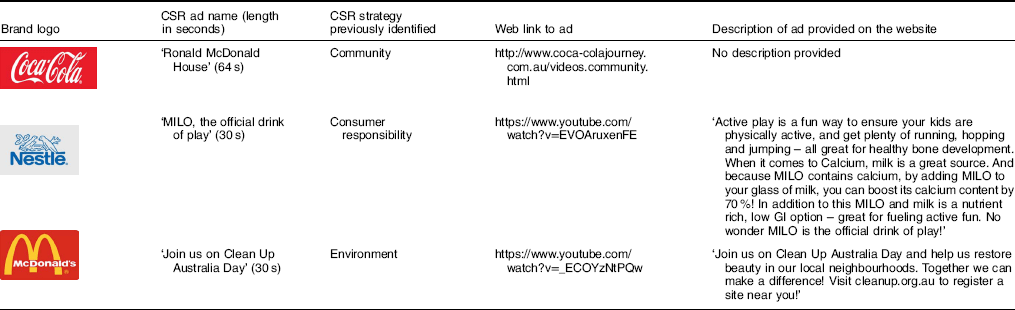
McDonald’s, Nestlé and Coca-Cola were the included brands, based on a previous study that identified these companies as implementing the most CSR strategies in Australia( Reference Richards, Thomas and Randle 14 ). That previous study also identified that the companies’ CSR strategies focused primarily on environmental responsibility, consumer responsibility and community-based initiatives. Therefore, each CSR-themed ad represented one of these strategies. A search of the three brands’ Australian-specific YouTube channel was conducted by the first author to identify appropriate ads. Definitions for a range of CSR strategies provided by Richards et al.( Reference Richards, Thomas and Randle 14 ) were used to select an ad for each CSR category. Table 1 outlines the brand logos and CSR-themed ads (with web links) included in the present study.
Brand logos and corporate social responsibility (CSR)-themed advertisements (ads) included in the interview schedule
Data analysis
Upon completion, transcribed interviews were uploaded to the qualitative data analysis software QSR NVivo version 21 and then analysed using thematic analysis techniques( Reference Miles and Huberman 23 ). First, meaningful sections of text in the interview transcripts were given basic code names. Codes were then assessed for similarities and differences across the transcripts. Following this, codes were inductively grouped into themes by the first author. The first analysis of the data revealed a central theme of the participants describing CSR strategies as representing some form of value or as being in conflict with the companies’ core business. ‘Value’ has been variously defined as something of merit or worth (noun)( Reference Anon. 24 ), or as a principle or standard of behaviour (verb)( Reference Anon. 24 ). In this sense, the concept has both instrumental dimensions (‘acts’ or ‘property’ of worth) and a philosophical dimension (that underpins the ascribing of worth to something because of a belief in some type of moral or other good). Following a discussion about the initial analysis, the authors made the decision to continue to analyse the data using the concept of value, as described above, considering whether participants perceived the values they ascribed to be in conflict with the companies’ CSR activities. CSR strategies were therefore coded as acts of worth, indicators of moral values, in conflict with business values, or as ‘harmful’ or ‘unethical’.
Peer debriefing was also utilised to enhance the credibility of the results, where the first author presented the themes to the second co-author as they were developed to ensure that they reflected the data accurately( Reference Patton 25 ). All participants were de-identified to ensure confidentiality. Each participant was assigned a sequential number based the order in which they were interviewed (e.g. child 1 (C1), parent 1 (P1)).
Results
Brand logo recognition and associations
All parents who participated in the present study recognised all three brand logos. All children recognised the McDonald’s and Coca-Cola logo; however, approximately one-third did not recognise the Nestlé logo and said that they had never seen it before. As expected, participants associated the company logos with the products they produce, and children expressed strong attachments to how the products taste, ‘Coke is yummy’ (C10), and appear, ‘I feel a bit thirsty’ (C4). Prior to viewing any of the CSR-themed ads, several children and parents cited four activities implemented by McDonald’s but did not directly identify these being a part of the company’s CSR programme. These were the Ronald McDonald House Charity, the sponsorship of local sporting clubs, provision of healthier food options and the partnership with Little Athletics Australia:
‘When they supported Little A’s, um well I think they still do it, if we have, if we get like a PB they give out these sheets and you can get this free thing from McDonald’s.’ (C1)
‘That have the McDonald’s logo, also there is Ronald McDonald House of course. So there is some sort of semi-good things I guess that McDonald’s try to do.’ (P7)
At this stage of the interview neither children nor parents mentioned any examples of CSR strategies from Nestlé.
Responses to corporate social responsibility-themed advertisements
Participant responses to the CSR-themed ads clustered around one central theme: CSR as having value; and four sub-themes: CSR strategies as acts of worth, CSR strategies as indicators of moral values, CSR and conflicted values, and CSR as deceitful, harmful or unethical.
Corporate social responsibility as having value
Corporate social responsibility strategies as acts of worth
In the present study, approximately two-thirds of children and just over one-third of parents described the CSR strategies performed as being of merit or worth. The strategies were described as worthwhile because the participant had either experienced the benefits of the activity in the past or they appreciated that someone else in the community would benefit from the strategy. For children, the merit they credited to the CSR strategies was the provision of fun and giveaways associated with the sponsorship of community events and sporting clubs:
‘It sort of makes me feel excited because whenever we go to the Australia Day fair we always see the big thing, the big M, next to the stage. They [McDonald’s] always give you lunch boxes and stuff and they support soccer and rugby clubs, which I like about that.’ (C3)
Parents also described the CSR strategies as worthwhile because they fulfilled a funding gap for services that meet the needs of others in the community. For example, without sponsorship from food companies, children’s sporting programmes may not be able to continue. In a similar sense, parents also stated that without the financial resources provided, charities like the Ronald McDonald House Charity may not exist:
‘So, if the government isn’t going to do it obviously they’re patching a hole there that is needed, they’re fulfilling a need that’s out there.’ (P7)
Corporate social responsibility strategies as indicators of moral values
A smaller proportion ascribed various CSR strategies as aligning with their own values of charity (giving time, effort and financial resources) and health (physical and environmental). With regard to charity, some children described Coca-Cola’s support of Ronald McDonald House Charity as a good way of helping the community, and expressed that they liked the fact that a company was giving up its time to help sick children. This aligned with the underlying act of giving either time or money that is often associated with charity:
‘They were helping lots of people and like a few times a year, and they were helping … they got free food, they were being very nice all around the community.’ (C11)
Children also explained that they liked that McDonald’s was participating in the Clean Up Australia Day initiative to work with the community to pick up rubbish and keep the environment clean. They discussed their appreciation of both McDonald’s again giving time and effort (perhaps again a form of charity), but also that it was contributing to the maintenance of a clean environment:
‘McDonald’s helped a lot in Cleaning Up Australia Day. There was heaps of rubbish, and then out of all of the people that do Clean Up Australia Day, McDonald’s tries the hardest.’ (C12)
For parents, associated fundraisers and provision of financial resources to the Ronald McDonald House Charity appeared to align with the value of charity. For example, some parents described that this particular initiative encouraged them to spend money at McDonald’s restaurants because they knew that some of it would end back up in the community:
‘It’s a great initiative and I’m aware of the service they provide for families in hospital. As they say, they have the resources to do it and for me as a customer it encourages me to go and spend my money on their product because I know a bit of it ends up back in the community.’ (P9)
Health was another thing that was valued by participants and was represented in terms of acts which contributed to both physical and environmental well-being. With regard to physical health, in response to Nestlé’s Milo ad, children expressed that it was ‘pretty smart’ (C4) for the company to be encouraging parents and children to ‘play together’ (C4):
‘So, if your kids are like a person who likes to play on the computer, it’s trying to tell the parents that to get Milo, because it helps them go out and play.’ (C1)
This appeared to align with the value of health and the importance of maintaining an active lifestyle when consuming unhealthy products. Overall, the value associated with these specific CSR strategies resulted in some children assigning moral attributes to the companies. For example, some participants described the companies as ‘nice’ (C9), ‘caring’ (C1) and ‘helpful’ (C7).
Parents also demonstrated that they valued health. Some parents described the importance of maintaining a healthy lifestyle and that the physical activity programmes implemented is an important avenue for companies to pursue as it is a way that companies can offset the negative health impacts that their products have on children:
‘It’s good for them to promote sport, because you know sport … any type of sport makes you know an active person, so more active person the more healthy you are, it’s good.’ (P10)
A group of parents also ascribed the strategies as being indicative of the companies’ own corporate values. This was in reference to the healthy options menu provided at McDonald’s that reinforced the company’s value of the importance of choice and individual responsibility. Although this was not featured in the ads shown, some parents commented on the healthy options at McDonald’s that allowed for consumers to make a healthy choice. This gave the impression that not only did some parents value individual responsibility and choice, but the company did as well:
‘Now they give you the choice of whether you can eat healthy, or whether you can eat unhealthy at McDonald’s. They have the salads that have been brought in, and wraps, and the apples and things for kids instead of the fries. So again, it’s the same as what I said about them [children] being aware of the brand. It’s trying to educate them [children] yes this is a brand, but you can choose from this, and you can choose from that.’ (P14)
Corporate social responsibility and conflicted values
Another group of children and parents ascribed the CSR strategies as being in conflict with other activities of the corporations. This caused confusion for participants as they were unsure of what to believe about the company. Participants expressed their confusion in relation to how the companies’ core business (producing and selling unhealthy products) conflicted with the moral values they also ascribed to the CSR strategies (e.g. charity and physical and environmental health). For example, children questioned why McDonald’s was promoting Clean Up Australia Day, when the packaging of their products impacted on the health of the environment:
‘I think they were trying to tell us to clean up, but they were telling you in the wrong way. Like because they were trying to tell them [consumers] to clean up from their own company or the takeaway. I think that’s pretty dumb because that’s the company who causes all of the takeaway rubbish.’ (C2)
Some parents also stated that while they appreciated McDonald’s involvement in the campaign, they also found it to be ‘quite ironic’ (P2) for the company to partner with the Clean Up Australia Day organisation, given that the company’s packaging is one of the biggest contributors to pollution:
‘It’s a bit mixed, as I said before it’s wonderful that they’re putting money into communities and into Clean Up Australia Day, that’s great and I really appreciate that, but on the other hand I can’t see how they are changing. They’re not using less packaging, and they’re not changing anything in store to have any less packaging. On one hand they’re one of the biggest polluters in communities, but then on the other hand they’re doing something. I find that a very two-edge sword.’ (P12)
With regard to physical health, some children were confused as to why junk food companies were promoting physical activity. For instance, some children questioned why a company such as Nestlé would try to promote physical activity to them. Some described the company had implied that their product Milo helps you to be active, or that you need Milo to have the energy to go outside and play. However, they expressed that this wasn’t the case:
‘They were trying to get the message that Milo helps kids play [laughs]. But, it really doesn’t.’ (C11)
With regard to charity, some parents described the Ronald McDonald House Charity as being of merit. However, they also expressed that this charity was made possible only due to consumers purchasing high volumes of unhealthy products. While they appreciated the financial resources provided to an initiative that supported families with sick children, they also stated that companies were profiting on obesity:
‘It’s good that they do some fundraising, and that they are out there, and they do contribute with the Ronald McDonald House and all sorts of things for children. But, still I just see it as profiting on obesity and bad eating habits.’ (P4)
Corporate social responsibility as deceitful, harmful or unethical
A small group of parents described the companies’ CSR strategies as being a smokescreen. These parents expressed that they did not see these activities as being a reflection of moral values (charity, health), as described by other participants. Nor did they describe the CSR strategies to be of merit or worth, but regarded them as harmful. In fact, these parents articulated that CSR was another unethical marketing tactic used to increase and protect the sales of unhealthy products that have a negative impact on physical health. For example, one parent suggested that CSR strategies allow companies to ‘get away with’ (P15) selling their products:
‘Well they got on to the smoking tobacco companies and everyone knows that it’s bad for you. But, they fly under the radar because there is evidence everywhere to prove that sugar is killing everyone, and yet they seem to have enough lobby groups who have got their fingers in enough pies with politicians.’ (P15)
Rather than being of merit or worth, some parents stated that the strategies were an effort to address the public criticism that junk food companies receive in the media with regard to the childhood obesity epidemic. For example, some parents described the strategies as ‘feel-good exercises’ (P8) with the underlying intention of diverting attention away from the harmful health outcomes associated with the long-term consumption of processed products to encourage sales:
‘It’s just more public relations, feel-good rubbish, and they are just trying to offset all of the negativity by something in the grand scheme of things it doesn’t even cost them that much to run this place when they’re making millions of dollars every year. I see right through it.’ (P5)
Discussion
The literature has previously reported on both Big Food’s publicised motivations for undertaking CSR activities( Reference Brownell and Warner 12 , Reference Dorfman, Cheyne and Friedman 13 , Reference Herrick 17 ) and public health critiques of these strategies( Reference Richards, Thomas and Randle 14 , Reference Scrinis 26 ), but to a much lesser extent on the public perception of these strategies( Reference Kelly, Baur and Bauman 22 , Reference Miles and Huberman 23 ). Given that companies argue the social good of CSR activities, and their critics associate them with harm, it is important to gain a better understanding of how the public themselves perceive the strategies and impacts.
The current study is the first to systematically explore parents’ and children’s recognition and perceptions of Big Food’s ‘genuine’ and ‘questionable’ CSR strategies. To our knowledge, it is the first to document unsolicited CSR strategy recognition of parents and their children. Both groups identified CSR strategies, activities and their settings for McDonald’s and Coca-Cola prior to viewing any ads. All unprompted strategies included ‘questionable’ activities that targeted children and occurred in settings where children would be present (e.g. community events, sporting clubs and children’s hospitals). This may be indicative that both parents and children associate the brands with not just the products they produce (e.g. hamburgers, soft drinks), but with activities for children that are considered to be ‘normal’ or ‘everyday’. It may also indicate that CSR strategies enable companies to create strong brand associations with consumers, and that both parents and children may not view CSR to be a separate entity of the brand, but embodied within the company. Previous public health studies suggest that one of the intentions behind Big Food’s CSR strategies is to cultivate an environment in which the consumption of processed foods and SSB is a normal and frequent activity( Reference Brownell and Warner 12 , Reference Dorfman, Cheyne and Friedman 13 ). Although the current study was comprised of a small sample, this finding may indicate that ‘questionable’ CSR strategies might be working to achieve this by embedding brands within ‘everyday’ children’s activities, which may also contribute to the process of consumption becoming normalised. It is currently unclear how much money is being invested into such activities as information is limited to what is described in company CSR reports, with not all expenditures for all activities accounted for. However, given both parents’ and children’s ability to recognise CSR activities from their own community it could be assumed that for companies this is money well spent.
When discussing CSR activities some parents and most children saw value in the activities, viewing them as acts of merit or worth. For children, value was associated with receiving free gifts, fun and doing good for communities. The concept of CSR strategies as fun aligns with the findings of a previous study where children described companies that provided sport sponsorship to be ‘fun’, ‘cool’ and ‘exciting’( Reference Kelly, Baur and Bauman 21 ).
For parents, CSR activities were seen as worthy because they filled a health service gap. For some parents and children, the company’s CSR activities were viewed as a reflection of the company’s moral attributes and therefore they appreciated the activities because they resonated with their own values of charity and health. This may indicate that both parents and children have strong brand attachments with brand attributes that extend past the taste and convenience of products. These results align with those previously suggested by Richards et al.( Reference Richards, Thomas and Randle 14 ), who believe that companies use CSR to align themselves with respected organisations and events in an effort to transfer those positive image attributes to their own brands. It could be argued that companies seek to attain positive brand attributes to normalise their own brand within communities by role modelling behaviours that are desirable to parents and children (e.g. contributing to charities)( Reference Dorfman, Cheyne and Friedman 13 ).
For others, the CSR activities were in conflict with other activities of the company. Participants expressed their confusion in relation to how the companies’ core business (producing and selling unhealthy products) conflicted with the moral values they also ascribed to the CSR strategies (e.g. charity and physical and environmental health). Although the activities were described to be in conflict with each other, participants still preferred that these activities were provided to communities, as they most likely would not exist otherwise. However, both groups of participants appeared to view these activities as the ‘social norm’ and that brands participating in community activities is an expected outcome.
Typically, public health experts advocate for the activities that the study participants appear to value to not be sponsored by the food industry( Reference Brownell and Warner 12 ). However, findings from the present study signal that gaining public support for the restriction of activities that are valued at multiple levels will be a difficult process. The extent to which companies have invested in their own market research to predict and measure the reach and impact of their CSR strategies on consumers is currently unknown. However, this type of information could be used to help the public determine whether CSR activities are ‘genuine’ efforts to improve products and practices, or are ‘questionable’ attempts to build market share. With regard to sports sponsorship (a form of ‘questionable’ CSR), previous studies have indicated that parents would support restrictions on unhealthy food and beverage sport sponsorship to reduce the potential impact of this type of marketing on children( Reference Kelly, Baur and Bauman 21 , Reference Kelly, Baur and Bauman 22 ), and were willing to bear the cost of a policy to be introduced through increased sports fees( Reference Kelly, Baur and Bauman 22 ). However, it may still be difficult to gain community support for public health action on CSR, due to the harms associated with processed foods and beverages being less clear than those associated with tobacco and alcohol. Therefore, to be successful in challenging this belief, public health must consider how to address these elements of value with replacements that come from a place that holds no vested interest, but still ensure the community need is met. For instance, the Good Sports programme framework( 27 ) may serve as an example where funding for a community need can be met, while also reducing the promotional opportunities for corporations. In the context of tobacco control, government legislated for specific amounts of revenue derived from tax measures placed on tobacco products to be used to buy out corporate sponsorship of sporting events( Reference Richards 28 ). Examining the feasibility of introducing hypothecated taxes on processed foods and SSB to be utilised in the same manner may be a potential course of action for public health researchers.
Finally, some parents viewed the activities as harmful, representing a deceit of the public and a smokescreen for the potential negative health impacts associated with companies’ products. These parents expressed that they did not see CSR to be a reflection of the moral values that others attributed to them, nor did they describe the activities to be of merit or worth. Parents were concerned about how companies that appear to be a genuine contributor in society may work to normalise brands in communities and influence children’s brand preferences. This is finding is consistent with previous studies that identified parental concerns relating to food marketing influencing children’s preferences and consumption of unhealthy products, through social media platforms( Reference Mehta, Coveney and Ward 29 ), pester power( Reference Mehta, Coveney and Ward 29 – Reference Campbell, James and Stacey 31 ) and sports sponsorship( Reference Kelly, Baur and Bauman 21 , Reference Kelly, Baur and Bauman 22 ). However, the present study appears to be the first that highlights parents’ concerns related to the influence that CSR ‘questionable’ strategies may have on children’s consumption.
Some parents could therefore be considered to champion efforts to address the potential impacts of ‘questionable’ CSR strategies, to carry this concern forward to other segments of the community, policy makers and governments. An existing advocacy platform that could highlight parental concerns regarding CSR is the Parents’ Voice network( 32 ). Parents’ Voice is a community-driven organisation that aims to improve the food and activity environments of Australian children through a range of advocacy campaigns and programmes, some of which already address elements of junk food marketing (e.g. sports sponsorship, pester power). Working with an organisation such as this would also allow for action on CSR strategies to be framed as a community issue, rather than nanny state intervention.
Limitations
Four limitations should be considered when interpreting the present study results. First, our sample consisted of parents and children from middle- to high-income neighbourhoods. It is possible that the perceptions of consumers from low-income areas may vary and therefore the results may not be transferable across all socio-economic groups. Future research should also extend this line of enquiry by conducting further qualitative interviews with participants from low socio-economic neighbourhoods to gain insights into how this group perceives CSR strategies. Second, the study was comprised of a small sample of parents and children; therefore these results should be considered preliminary. To confirm and build on these results, future research should be conducted with a larger sample size. Third, although children were posed the interview questions first, there is a possibility that at times they were influenced by their parents’ responses. To limit this from happening, future studies could use ‘friendship dyads’ whereby children are interviewed with a friend. Finally, the Coca-Cola ad used in the study may have caused confusion for the participants, as it included the Ronald McDonald House Charity, which is usually promoted by McDonald’s. Therefore, participants’ responses about this ad may have been in reference to McDonald’s rather than Coca-Cola.
Conclusion
So far, public health responses to Big Food include taxation on products (e.g. sugar tax), which has been shown to be effective, and self-regulation of marketing strategies, despite a lack of evidence to support self-regulatory approaches( Reference Moodie, Stuckler and Monteiro 33 ). The current preliminary study and previous public health literature( Reference Dorfman, Cheyne and Friedman 13 , Reference Richards, Thomas and Randle 14 ) suggest that in order to be comprehensive, regulation and restriction of CSR should also be considered as part of an effective public health approach to reduce the consumption of processed foods and SSB. However, given that a large proportion of our study participants valued ‘questionable’ CSR activities, it may be quite difficult to gain public support for action on CSR, which has been essential in getting the government to regulate other big companies’ strategies in areas such as tobacco and alcohol. Efforts to gain public acceptance and support for the public health intervention on CSR may need greater levels of persuasion and compensation for the public to be supportive of a comprehensive and restrictive approach. Currently, an optimal public health response to Big Food’s ‘questionable’ CSR strategies is yet to be explored. Therefore, future studies may seek to speak to health experts about how we can advocate on behalf of consumers to minimise the potential impacts ‘questionable’ CSR strategies have on the perceptions of consumers.
Acknowledgements
Acknowledgements: The authors would also like to acknowledge Associate Professor Samantha Thomas and Associate Professor Melanie Randle for assisting the first author in the initial development stages of the methodology. Financial support: This research has been conducted with the support of the Australian Government Research Training Program Scholarship. The funder had no role in the design, analysis or writing of this article. Conflict of interest: None. Authorship: Z.R. formalised the research questions, designed the study, collected and analysed the data, and was responsible for writing the manuscript. L.P. assisted in formalising the research questions, data analysis and reviews of the manuscript. Ethics of human subject participation: This study was conducted according to the guidelines laid down in the Declaration of Helsinki and all procedures involving human subjects were approved by the University of Wollongong and the Illawarra Shoalhaven Local Health District (ISLHD) Human Research Ethics Committee (HE16/141). Informed written consent was obtained from all parent participants. Informed verbal assent was obtained from all child participants, which was witnessed and formally recorded.



