




Introduction
Astrobiology has a long history in Russia. Its formation was significantly influenced by both the outstanding achievements of world science in the late 19th and early 20th centuries, and the progressive scientific and philosophical ideas, which united their representatives within the framework of the doctrine of cosmism. Subsequently, in the Soviet Union, active research pertaining to space exploration, manned space flight programs and space missions to Venus and Mars marked the beginning of active data collection and the transition from theoretical and remote to the real practical study of space and cosmic bodies.
Currently, Russian astrobiology is developing in various directions, the priority of which are determined by historical, technological and geographical factors. Russia, with its advancements in theoretical and experimental developments in space studies, is adequately capable of making a significant contribution to the development of world astrobiology collectively. The collective participation of their scientists in astrobiology projects promotes closer cooperation and integration of other related scientific groups within the framework of achieving common goals. This is ultimately one of the main principles of the development of astrobiology, reflecting the basic philosophies of the universality and integrity of our world, which prevails in the debates of philosophers-cosmists.
This review presents significant achievements of Russian astrobiologists. They include important contributions in concepts of origin of life and its evolution; studies of biodiversity of various extreme ecosystems and modeling hypothetical habitability of extraterrestrial icy worlds; and investigation of microfossils as well as a variety of experiments on the orbital spacecrafts.
This is the first comprehensive retrospective review of astrobiological research in Russia which can serve as (i) the basis for uniting the Russian astrobiological community; (ii) the systematic organization of data accumulated over the past three quarters of a century of research; and (iii) the presentation of the state-of-the art of Russian astrobiology for national and international scientific collaborations.
Formation of ideas about the relationship between terrestrial phenomena and space
In Russia, the ideas of “cosmists” have had a significant influence on the formation of plethora of scientific concepts in the field of space exploration and the potentially possible proliferation of life in the Universe. Notions about the cosmos as a single structural entity – living organism – date back to ancient philosophy, in particular to the teachings of Plato (Briot, Reference Briot2012; Nascimento-Dias and Martinez-Frias, Reference Nascimento-Dias and Martinez-Frias2023; Noack et al., Reference Noack, Verseux, Serrano, Musilova, Nauny, Samuels, Schwendner, Simoncini and Stevens2015). The term “cosmism” comes from the Greek word “cosmos” meaning “ordered world.”
During the Late Middle Ages, one of the exponents of a general philosophical view on the prevalence of life beyond the Earth was Giordano Bruno in his work “On Infinity, the Universe and the Worlds” (1584). Subsequently, concepts of evolutionary development applied to the Universe as a whole began to be examined and formalized within Western scientific thought during the latter half of the nineteenth century and the early decades of the twentieth.
Alexander von Humboldt’s five-volume work “Cosmos” (1845–1859), the foundation of German philosophical cosmism, had an immense influence on both European and Russian cultures. In France, this was developed further by Henri-Louis Bergson who noted in “Creative Evolution” (1907). The American version of “cosmic philosophy” was presented in the works of the religious naturalist John Fiske (the term – “Philosophy of Cosmism”, 1874) and in the works of Samuel Alexander (1920); in addition, a number of other scientists reworked the notion in the form of “emergent evolution,” emphasizing the qualitative uniqueness of each new level of evolution.
Russian cosmism arose as a generalization of the most striking views of foreign thinkers and Russia’s own ideas which formed into an independent deep scientific and philosophical direction pillar. Scientist and philosopher-cosmists sought to prove the systematic nature of the laws of the origin and development of life and their relationship with the general laws of the universe. The most important feature of cosmism at that time was the study of rapidly developing sciences and their integration into a universal cosmic science of life, which evolved into the new field of astrobiology. The latter science is now characterized by the same multidisciplinary approach.
The beginning of the 20th century witnessed an unprecedented acceleration of scientific and technological progress. Simultaneously, art, philosophy, and science mutually influenced one another, while probing living organisms’ essence and their connection to the environment.
The spiritual and philosophical direction of Russian cosmism can be seen in the works of the famous Russian thinkers N.F. Fedorov, V.S. Solovyov, N.A. Berdyaev, P.A. Florensky and others. Philosophers believed that through rational activity, humans have a special mandate to harness nature’s forces and shape the future – a mission that requires comprehending the world and its universal laws.
N. F. Fedorov said that “the earth is open on all sides, and the means of transportation and modes of life in different environments not only can, but should change” and believed that “in regulation, in managing the forces of blind nature lies that great work that can and should become common” (1906).
The scientific and philosophical ideas of Russian cosmism formed the basis of the work of many artists, painters, writers, and poets. Then, art “uncorked the human imagination and made it possible to think beyond the limitations of existing scientific approaches and methods”, to elevate above the ordinary and often anticipated future scientific discoveries which largely influenced the development of science (Gacheva, Reference Gacheva2004).
As V. I. Vernadsky wrote in his personal correspondence: “We know only a small part of nature, only a small part of this incomprehensible, unclear, all-encompassing mystery. And everything we know, we know thanks to the dreams of dreamers, visionaries and scientist-poets; every step forward was made by them.”
A wonderful confirmation of this precept is the work of K.E. Tsiolkovsky. Many tenets of this scientist and thinker, who founded modern cosmonautics, first appeared in his science fiction works titled: “Beyond the Earth. Dreams of the Earth and the Sky and the Effects of Universal Gravitation” (1895); “On the Moon” (1893); and “The Adventures of the Atom” (1919).
It is also necessary to mention science fiction books by: Alexei Tolstoy’s “Aelita” was about a flight to Mars, the first edition of which was published back in 1923; a novel by A.R. Belyaev entitled: “The Star of KETs” (1936), which sets out the ideas of K.E. Tsiolkovsky about the activities of people beyond our Earth and “The Andromeda Nebula” (1957), by I. Efremov was about interstellar travel.
In the context of cosmism, the famed triad – Dream (Fantasy), Theory, Implementation – was most clearly evident, for without it the development of civilization would be impossible (Zeleny, Reference Zeleny2022). Art, philosophy, and science evolved in concert, each enriching the others with new ideas and perspectives.
The scientific and philosophical concepts of Russian cosmism formed the basis of the work of many painters (M.K. Čiurlionis, K.S. Malevich, V.V. Kandinsky, K.F. Yuon, P.N. Filonov, N.K. Roerich, and the Armavella group), who embodied the notions of an inseparable and multifaceted relationship between the macrocosm and the microcosm in their paintings (Figure 1).
A proposition of cosmos without emptiness (biocosmos) in the painting “Symphony of the Cosmos” (1925) by A.P. Sardan, Armavella group.

Figure 1 Long description
The painting features a complex array of patterns and shapes that represent cosmic elements. The central focus is a large, fan-like structure with intricate details, surrounded by various geometric and organic forms. The background is filled with a mix of wavy lines, dots, and other abstract elements, creating a sense of depth and movement. The overall composition suggests a harmonious relationship between the macrocosm and the microcosm, reflecting the philosophical concepts of Russian cosmism.
The painter Pavel Filonov understood the meaning of his work in reflecting the unity of science and art, emphasizing that life is not static but is evolving continuously. To describe his works, he invented new terms that other artists had never envisioned previously and these terms are biomonism, biodynamics, emanation, and genesis.
Scientific and philosophical views and concepts of Russian scientists-cosmists and the emergence of astrobiology
In the natural sciences, researchers examined and investigated the relationship between life, humanity, and space (see Table 1), placing special emphasis on the scientific achievements that substantiate this connection.
Scientific and philosophical contribution of Soviet and Russian scientists to the development of astrobiology

Table 1 Long description
A table summarizing scientific contributions and main publications of various scientists. The table has three columns: Name, Date, and Scientific contributions and main publications. It contains 10 rows, each detailing a scientist's name, their active years, and their key contributions. Row 1: Tsiolkovsky K E, 1895-1935, Space Philosophy and Theoretical Issues of Cosmonautics, Living Creatures in Space, Living Universe, Monism of the Universe, Space Philosophy. Row 2: Umov N A, 1902, The Concept of the Anti-entropic Essence of Life, Collected works of Professor Nikolai Alekseevich Umov. Row 3: Chizhevsky A L, 1915-1930, Heliobiology, Physical factors of the historical process, Cosmic radiation as a biological factor. The result of experimental studies on the influence of cosmic radiation - solar and stellar - on cells and tissues, Epidemic catastrophes and periodic activity of the Sun. Row 4: Oparin A I, 1924-1977, Theory of the Origin of life (primordial soup, coacervates), The Origin of life. Row 5: Vernadsky V I, 1926-1940, The doctrine of the biosphere. The concept of transformation of the geosphere by living organisms. Biogeochemistry, The Biosphere, On the Conditions of the Emergence of life on Earth, Biogeochemical essays. Row 6: Kholodny N G, 1944, Anthropocosmism. Row 7: Efremov I A, 1947, Thoughts of a Naturalist on Nature and Man. Row 8: Tikhov G A, 1941-1953, Astrophysical Research of Mars, Term Astrobotany, Book Astrobotany, Term Astrobiology, Book Astrobiology.
M. V. Lomonosov was among the first to articulate the idea that outer space forms an extension of life on Earth and that the laws of nature operate uniformly throughout the cosmos. He may therefore be regarded as the founder of Russian cosmism. His works in the eighteenth century introduced the concept of other worlds into Russian intellectual culture, where it subsequently began to receive serious consideration. In his doctrine, later termed “Physical Theology,” Lomonosov emphasized the centrality of scientific inquiry in elucidating the nature of the world (Zeleny, Reference Zeleny2022).
In the late 19th to early 20th centuries, natural science cosmism gained further significant development in the works of the renowned Russian scientist K.E. Tsiolkovsky, who had a huge influence on the subsequent organization of space research and proposed the notion of life spreading further afield in space. In his numerous works, the key propositions being: “Living Creatures in Space” (1895), “The Living Universe” (1923) and “Cosmic Philosophy” (1935). He developed his ideas relating life as a universal phenomenon, the connection of living organisms with cosmic phenomena and the inevitability of life spreading elsewhere in space.
A great contribution to the development of the cosmism doctrine and the study of natural phenomena was forwarded by the Russian physicist N.A. Umov, who introduced the theory of the “Negentropic Essence of Life,” which resisted the ability to decay by increasing the level of organization. He attached great importance to the philosophical understanding of physics. It should be noted that he is one of the founders of modern biophysics (Tverdislov, Reference Tverdislov2013). Umov proposed that there is no contradiction between animate and inanimate nature, and that we must strive to discern the general laws governing both.
Of great importance for the evolution of the scientific advancement of cosmism were the works of A.L. Chizhevsky, the founder of heliobiology – the science of the relationship between living organisms, solar activity and other cosmic influences. He proposed a bold hypothesis highlighting the connection between solar activity and outbreaks of epidemics (“Epidemic Catastrophes and Periodic Activity of the Sun,” 1930) and the influence of solar cycles on the behavior of society and the historical process (“Physical Factors of the Historical Process,” 1924). Chizhevsky reflected deeply on the unity of all phenomena in the Universe and adopted a synthetic approach, seeking to integrate diverse scientific disciplines and methods across both the natural sciences and the humanities. He was one of the first in the world to have begun the investigative research in the field of space biology. His article “Cosmic radiation as a biological factor. The result of experimental research on the effect of cosmic radiation – solar and stellar – on cells and tissues” was published in 1929, though only in France.
The teachings of V.I. Vernadsky had a huge influence on the scientific and philosophical understanding of the organization of the living world and, in particular, on the development of astrobiology, which later became a new science in its own right (Marov, Reference Marov2013). He developed the concept of the biosphere, defined life as a cosmic phenomenon and noted the decisive influence of life processes on the geology of the planet, highlighting their immense transformative potential. He further proposed that humanity’s transition to autotrophy represents a fundamentally new and highly promising mode of compound exchange with the environment. Vernadsky’s most important scientific contribution was also the creation of the biosphere doctrine as well as the important transformative nature of life on the planet. The main provisions of this concept were formulated between 1916 to 1926. The recognition of biogeochemical energy within living matter, together with the identification of the biogeochemical functions of life, led scientists to conclude that living matter constitutes the most powerful geological force – one that has shaped, and continues to shape, the Earth’s present form. It has been instrumental in shaping the Earth’s geomorphic evolution and continues to exert a primary influence on the planet’s contemporary geochemical and geophysical configuration. Based on his theory of the biosphere, Vernadsky not only initiated new advancements at the intersection of sciences, such as geochemistry and biogeochemistry, but also astrochemistry and radiochemistry (Marov, Reference Marov2013).
Within the scientific arena, a special place belongs to A.I. Oparin, who proposed a biochemical hypothesis of the origin of life. According to Oparin, the initial step of abiogenic synthesis of organic compounds occurred in the reduced atmosphere of the ancient Earth. The gradual accumulation of the organic compounds in the ancient ocean led to the formation of the so-called “primordial soup.” As a result of polymerization, complex organic compounds such as peptides, lipids, nucleic acids would have been gradually formed – leading to the development of “coacervates”: these also were able to grow in size in the watery environments of the ancient Earth. Combining coacervates with nucleic acids led to the formation of primitive self-reproducing living entities, possibly probionts. These represented prototypes of the earliest living unicellular organisms. Subsequently, several stages in the formation of both simple and complex organic compounds were experimentally validated in the pioneering studies of S. Miller, J. Oro, L. Orgel, S. Akabori, and others (Akabori et al., Reference Akabori, Okawa and Sato1956; Lohrmann and Orgel, Reference Lohrmann and Orgel1968; Miller, Reference Miller1953; Oró, Reference Oró1963). Oparin (Reference Oparin1976) emphasized that the problem of life’s origin carried significance not only for science but also possessed profound philosophical implications. He said: “This is one of the most important worldview problems of humanity, in which, as if in focus, all scientific knowledge is collected.” His hypothesis had a huge impact on the development of astrobiology and was included in biology textbooks as a classic concept of how Earth’s first living organisms may have arisen. Oparin himself considered his theory in a broader context. He wrote: “At present, the hypothesis pertaining to the origin of life is not only the foundation for the new science of “theoretical biology.” The science revealed the essence of life and research in evolutionary biochemistry; a theoretical basis for cosmochemical research and the search for life on various celestial bodies” (Oparin, Reference Oparin1975).
In his anthropocosmism, N. G. Kholodny regarded humanity as one organic part of the world, and held that natural scientific knowledge is the key to understanding our place in nature and our relationship with the cosmos.
The notions of cosmism were also contained in the work of the writer and paleontologist I.A. Efremov, who instigated the science of taphonomy (the study of fossil distribution which enables researchers to reconstruct the functioning of ancient biocenoses and past ecosystem) at the intersection between geology and paleontology. Thus, recognizing the inseparable unity of all sciences and the relevance for interdisciplinary research.
However, a significant event in the history of the study of extraterrestrial life was the scientific work of academician G.A. Tikhov (Cockel, Reference Cockell2024), who, while studying the possibility of the existence of vegetation on Mars, first introduced the term “astrobotany” in 1945, and then the term “astrobiology” in 1951 (Figure 2).
…life is an extremely persistent and stubborn phenomenon. It can exist in conditions that are very different from those on Earth. Life can and should exist not only on the planets of the solar system, but also on planets that undoubtedly move around the countless stars found in the infinite Universe” G.A. Tikhov, Corresponding Member of the USSR Academy of Sciences
Illustration and text excerpt standing for “The New Science. Astrobiology” from the magazine “Science and Life” (1951), where G.A. Tikhov first announced the creation of a new science of astrobiology.

Tikhov authored the pioneering works Astrobotany (1949) and Astrobiology (1953), in which he articulated the foundational scientific frameworks of these emerging disciplines, thereby marking the inception of a rapidly developing field (Figure 3). In his works, Tikhov expounded notions relating to the extremely high adaptability of life under various unfavorable conditions on distant planets and, in essence, substantiated the importance of studying extremophiles as model organisms in the context of astrobiology.
The first book on astrobiology, published by A.G. Tikhov in 1953, “Molodaya Gvardiya” Publishing House, Moscow.

It should be noted that A.A. Sternfeld, a Russian scientist of Polish descent, was perhaps the first scientist who used the term astrobiology in a scientific paper published in an international scientific French journal, in which he described the new science, the main goal of which could be to assess the habitability of other worlds (Briot, Reference Briot2012; Nascimento-Dias and Martinez-Frias, Reference Nascimento-Dias and Martinez-Frias2023; Sternfeld, Reference Sternfeld1935). However, it was Tikhov who truly first used this term within the Russian scientific community. In addition to the term astrobiology, at that time the terms cosmobiology, exobiology, bioastronomy also appeared, but it was the term astrobiology that finally became established in the scientific community (Heizer and Nascimento-Dias, Reference Heizer and Nascimento-Dias2023).
In 1947, Gavriil Tikhov created the world’s first Astrobotany Department, at the Academy of Sciences of Kazakh SSR, initiating systematic research into the possibility of life on other planets. Subsequently, Tikhov and this emerging scientific discipline faced intense criticism. In 1952, the Presidium of the Academy of Sciences of the Kazakh SSR organized a broad discussion to critically discuss the work of the department and its research into extraterrestrial life. Opponents believed that all of Tikhov’s ideas were a big mistake. It is known that at the same time, the well-established American astronomer Albert Wilson came to Kazakhstan to visit Tikhov. He highly praised Tikhov’s research and was very interested in his ideas. Wilson said: “America recognized Tsiolkovsky too late, and now we are correcting the mistake by recognizing Tikhov’s ideas.” Soon after his trip to Kazakhstan, Wilson organized the world’s first seminar on Astrobiology in the United States of America. In the Soviet Union, after the death of Gavriil Tikhov in 1960, the Astrobotany Department was disbanded.
Main directions of modern Russian astrobiology
The second half of the 20th century was characterized and defined by revolutionary advances in biology, beginning with the discovery of the DNA structure by Watson and Crick (Reference Watson and Crick1953) and the subsequent rapid development of molecular biological techniques that made it possible to reconstruct phylogenetic relationships between all living organisms and study their diversity and distribution in various ecosystems at the genomic level. At the same time, the era of space exploration of near-Earth space began with the advent of rocketry engineering leading to exploration using spacecrafts. The first spacecraft that carried a living creature, namely a dog named Laika, was sent into outer space in 1957, followed by the first cosmonaut, Yuri Gagarin, who orbited the Earth in 1961. Subsequent to these two missions, it became possible for the first time to study the impact of space factors on various terrestrial organisms. Individually and independently, both the United States of America and the Soviet Union regularly launched space missions to planets in our Solar System. As part of the USSR space programs, unmanned spacecrafts successfully landed on the surface of the Moon (Luna-9, 1966), Venus (Venera-7, 1970) and Mars (Mars-3, 1971). The active development of various natural science areas and the improvement of the methodological apparatus led to the accumulation of a large amount of new data, including data relevant to astrobiology. New concepts and new research areas emerged, to which Soviet/Russian scientists made a significant contribution – this continues to this day. Table 2 presents the names and achievements of Russian scientists who played pivotal roles in shaping the modern advancements of Russian astrobiology.
Main conceptual achievements of Soviet and Russian scientists in global astrobiology at the present stage

Table 2 Long description
A table with three columns and multiple rows. The columns are labeled 'Names', 'Date', and 'Scientific contributions'. The table lists the names of scientists, the years of their contributions, and their specific scientific achievements. Row 1: Spirin A.S. and Belozersky A.N., 1959–2005, Development of the RNA World hypothesis. Row 2: Shklovsky I.S., 1960–1975, Creation of Soviet and Russian SETI. Row 3: Abyzov S.S., 1974–2001, Microbiological studies of Antarctic ice. Row 4: Gilichinsky D.A., 1978, Ultra-long anabiosis in microorganisms. Row 5: Gilichinsky D.A., 1978–2012, Study of ice ecosystems. Row 6: Zavarzin G.A. and colleagues, 1984, The role of microorganisms in the functioning and evolution of the biosphere. Row 7: Zavarzin G.A. and colleagues, 1993, Models of primordial microbial communities of Earth – the hypothesis of the “soda continent.” Row 8: Zavarzin G.A. and colleagues, 1995–2004, Principles of the evolution of biological systems. The theory of additive evolution. The concept of “Microbial community first”. Row 9: Bonch-Osmolovskaya E.A. and colleagues, 1988–present, Microbiological study of hydrothermal ecosystems, description of novel chemosynthetic processes. Row 10: Goldansky V.I., 1997, The role of chirality in prebiological evolution. Row 11: Rozanov A.Y. and Zavarzin G.A., 1997, Study of microbial fossils and bacterial paleontology. Row 12: Galimov E.M., 2001–2009, Development of the theory of sequential ordering. Row 13: Marov M.Ya., 2005–2015, Geochemical approach to the origin of life. Row 14: Mulkiudjanian A.Y., Bychkov A.Yu., Koonin E.V. and colleagues, 2012, Proposal of the origin of first cells at terrestrial, anoxic geothermal fields.
The scientific contribution of these scientists, along with those of other researchers, are outlined in the relevant sections below, each of which addresses specific areas of Russian astrobiology.
Unresolved research issues in astrobiology and related fields in Russia are addressed through three independent conferences, held regularly at the following institutions: the Institute of Physical-Chemical and Biological Problems of Soil Science of the Russian Academy of Sciences in Pushchino (IPCBS RAS), the Space Research Institute of the Russian Academy of Sciences in Moscow (IKI RAS), and the Joint Institute for Nuclear Research (JINR) in Dubna. Each conference has distinctive features shaped by the nature of its audience. Nevertheless, a generalized analysis of the astrobiology research presented across these meetings makes it possible to evaluate the structure of contemporary astrobiology directions in Russia (Figure 4).
The proportion of different astrobiology directions in Russia, calculated from the number of presentations given at the three conferences in Pushchino, Moscow and Dubna.

The analysis indicates that the primary themes of study in Russian astrobiology are cold and extremely cold ecosystems, particularly the icy regions of the Arctic and Antarctic. This focus reflects the geographical nature of Russia landscape, with its extensive cold climates and widespread permafrost zones. It should be noted that the study of extraterrestrial ecosystems includes a large share of work related to the survival of microorganisms in the Martian climate, which also mirror the above-mentioned cold environments as model ecosystems.
A substantial portion of priority astrobiology research in Russia is linked to astronomical studies and experiments conducted aboard orbital space stations, reflecting the country’s status as one of the world’s leading space powers.
Finally, a significant part of theoretical and experimental research is related to various aspects of the challenges of the origin of life, which is a continuation of the conceptual legacy of Oparin.
In more detail, the structure of various divisions of astrobiology in Russia and their interrelationships are shown in Figure 5. The interdisciplinary connections in the diagram are formed through current scientific interactions between scientists working in these scientific fields.
Structure of the main divisions of astrobiology in Russia.

In fact, the real inter-relationships of such divisions and subdivisions are even more complicated. For example, the study of terrestrial extreme ecosystems as analogs of hypothetical extraterrestrial systems is important for organizing astrobiology experiments within the framework of missions to other celestial bodies. Concomitantly, new data on the study of physical and chemical conditions on individual celestial bodies in the Solar System encourages astrobiologists to search for new terrestrial organisms as possible candidates for survival in the extreme environments.
Origin of life
Oparin was an active researcher throughout his life, developing and generalizing his hypothesis of the biochemical origin of life (Oparin, Reference Oparin1975, Reference Oparin1976). Together with a number of other scientists, he participated in the setting up of the International Society for the Study of the Origin of Life – The International Astrobiology Society (ISSOL) (Raulin-Cerceau, Reference Raulin-Cerceau2016), meetings of which are still held in a triennial cycle. Oparin’s former student Mikhail Kritsky, who later headed his laboratory of evolutionary biochemistry at the A.N. Bakh Institute of Biochemistry at the Russian Academy of Sciences, together with his colleagues continued to develop the thesis of phase-separated microsystems (Kolesnikov et al., Reference Kolesnikov, Telegina, Lyudnikova and Kritsky2008) and study the abiogenic synthesis of molecules necessary for living organisms. He pointed out the importance of photochemical processes in the prebiotic accumulation of organic molecules important in the context of the origin of life (Kritsky et al., Reference Kritsky1996, Reference Kritsky, Lyudnikova, Mironov, Neverov, Chela-Flores and Raulin1998, Reference Kritsky, Kolesnikov and Telegina2007, Reference Kritsky, Telegina, Vechtomova, Kolesnikov, Lyudnikova and Buglak2013) and postulated an important role of coenzymes as catalysts in the RNA world (Kritsky et al., Reference Kritsky, Telegina, Lyudnikova, Zemskova, Seckbach, Chela-Flores, Owen and Raulin2004).
The works of Ilya Prigogine, a famous Belgian physical chemist (born into a Russian-Jewish family in Moscow) on the thermodynamics of non-equilibrium processes and dissipative structures, had a very great influence on the understanding of the processes of self-organization and development of biological systems (Prigogine, Reference Prigogine1955). The theory of dissipative structures describes the process of internal self-reorganization that occurs in open systems that exchange energy and matter with the environment. According to this theory, open systems can create new structures de novo during the initial state of the system. These structures arise due to the process of dissipation of energy, which is dispersed into the environment (Prigogine and Lefever, Reference Prigogine, Lefever and Haken1973). This concept considered the emergence and evolution of life as self-reorganization in non-equilibrium processes and was enthusiastically accepted by the world scientific community (Prigogine and Nicolis, Reference Prigogine and Nicolis1977 ). Within his long collaboration with Moscow State University (MSU), Prigogine inspired and helped to organize the Institute of Complex Systems Mathematical Research (IMISS of MSU) in 1995. Its primary objective was to advance Prigogine’s ideas on developing a theory of non-equilibrium systems, within the framework of broad international cooperation led by the International Solvay Institutes for Physics and Chemistry. Over time, research on modeling the behavior of biological non-equilibrium systems became increasingly important at IMISS. This effort culminated in the long-term IMISS-1 experiment, which recorded and analyzed accelerations during orbital flight aboard the Lomonosov satellite launched in 2016. The study had a significant impact on biophysics and human physiology in space, particularly in relation to the phenomenon of “space motion sickness” (Sadovnichii et al., Reference Sadovnichii, Alexandrov, Bugrov, Lemak, Pakhomov, Panasyuk, Petrov and Yashin2018). Prigogine’s work most notably earned him the Reference Prigogine and Nicolis1977 Nobel Prize in Chemistry “for his contributions to non-equilibrium thermodynamics, particularly the theory of dissipative structures.”
A.S. Spirin, a famous Soviet and Russian molecular biologist and one of the architects of the “RNA world” hypothesis, made a huge contribution to the origin of life. Spirin was a student of A.N. Belozersky, who was the first to point out the possible primacy of RNA in the origin and early development of life (Belozersky, Reference Belozersky1957, Reference Belozersky1959). Together with Belozersky, Spirin published a paper in which he reported that the main part of RNA is not involved in the transfer of genetic information, but instead plays a different role. In 1960, Spirin first isolated ribosomes and began a series of studies on their spatial organization (Spirin, Reference Spirin1960). Spirin suggested that abiogenically synthesized oligoribonucleotides actively recombined through the mechanism of spontaneous non-enzymatic transesterification, leading to the formation of elongated RNA chains and giving rise to their diversity. It was in this way that both catalytically active types of RNA (ribozymes) and other types of RNA with specialized functions could have appeared in the population of oligonucleotides and polynucleotides (Spirin, Reference Spirin2001) (Figure 6).
Comparison of the origins of life according to the protein-coacervate theory of A.I. Oparin (left) and the RNA world developed by A.S. Spirin (modified from Spirin, 2001). The “RNA first” theory has replaced the “protein first” theory and is currently one of the most widely accepted theories of the origin of life in the world.

Figure 6 Long description
A diagram comparing the origins of life according to the protein-coacervate theory of A.I. Oparin and the RNA world developed by A.S. Spirin. The diagram is divided into two sections. The left section illustrates the protein-coacervate theory. It starts with abiogenic amino acids forming polypeptides through transpeptidation, which then form proteins with unique three-dimensional structures. These proteins lead to the formation of supramolecular structures and phase separation, resulting in catalytically active coacervates. These coacervates undergo assimilation, growth, and reproduction to form cells. The right section illustrates the RNA world theory. It starts with abiogenic nucleotides forming oligoribonucleotides through transetherification, which then form polyribonucleotides. These polyribonucleotides are self-processing and self-replicating RNA molecules that synthesize proteins. The proteins form coacervates, which eventually lead to the formation of cells.
The appearance of such ribozymes in a small body of water could have become the basis for the preservation and development of the “RNA world” on ancient Earth (Spirin, Reference Spirin2005). According to Spirin, an important condition for development is the compartmentalization of the system. In the case of the RNA world hypothesis, this could have been possible in molecular “colonies” of RNA, the formation of which was proven in the works of A.B. Chetverin’s group. The essence of this phenomenon is that, when appropriate conditions are met, RNA replicates in a cell-free system to form colonies similar to growing colonies of microbial cells. Such colonies may well undergo recombination reactions and rearranges their nucleotide sequences (Chetverin and Spirin, Reference Chetverin and Spirin1995; Chetverin et al., Reference Chetverin, Chetverina, Demidenko and Ugarov1997; Munishkin et al., Reference Munishkin, Voronin, Ugarov, Bondareva, Chetverina and Chetverin1991). It is highly probable that these RNA colonies may satisfy most of the requirements for a “universal precursor” of living entities on Earth (Woese, Reference Woese1998): a high level of mutations due to imperfect mechanisms of replication of genetic material, free exchange of genetic material between progenotes, and a communal mode of life – when any products and innovations arising de novo become the property of all (Spirin, Reference Spirin2005a, Reference Spirin2005b, Reference Spirin2010). Such a commune had to evolve very quickly. Anyhow, the entire evolutionary path to the formation of cellular microorganisms including its supporting infrastructures, DNA, and a modern protein synthesis apparatus was completed in less than half a billion years (Spirin, Reference Spirin2005). Spirin also postulated the emergence of a molecular machine during the RNA world – a replicating ribozyme with a helicase function, capable of significantly increasing the rate of RNA replication (Spirin, Reference Spirin2004, Reference Spirin2013). Finally, Spirin identified the conditions for the emergence of a communal RNA world: (1) the presence of liquid water and RNA-adsorbing surfaces; (2) the implementation of cycles of drying and moistening (or wetting), heating and cooling, freezing and thawing; (3) protection from cosmic radiation, indicating that such processes could, in principle, occur both on Earth and on other cosmic bodies or even in comet nuclei (Spirin, Reference Spirin2007).
An alternative hypothesis for the origin of life, the theory of sequential ordering, was developed by the famous geochemist E. M. Galimov (Galimov, Reference Galimov2009b). He considered processes in which ordering is an attractor in accordance with Prigogine’s theory (Prigogine, Reference Prigogine1955) and assumed that life is a natural form of occurrence of this type of process, uniquely inherent in carbon chemistry (Galimov, Reference Galimov2001, Reference Galimov2004). Galimov believed that in primitive chemical systems, the specified mechanism is carried out with the participation of the adenosine triphosphate (ATP) molecule, which plays a special role in the origin and evolution of life. This is due to its universal ability to couple with polymerization reactions that underlie the synthesis of biologically important structures (Galimov, Reference Galimov2009).
Another alternative to the RNA world is the progene hypothesis of the Russian virologist A.D. Altshtein, which suggests that the formation of the first bimolecular nucleoprotein genetic system (protoviroid), is considered as the first living organism Protoviroidum primum (Altshtein, Reference Altstein1987, Reference Altstein2015).
V.I. Goldanskii made a significant contribution to the problems of the origin of life in his works on the role of chirality during the prebiotic evolution. He suggested that the formation of complex organic molecules in cold interstellar dust should be considered as an important prehistory of life (Goldanskii, Reference Goldanskii1977). He also analyzed mechanisms of solid-phase astrochemistry reactions to find direct connections to the formation of organic compounds in space and their delivery onto Earth which contributed to prebiotic evolution (Goldanskii, Reference Goldanskii1997). Goldanskii postulated that the emergence of chiral purity of the basic “building blocks” of life – sugars and amino acids – occurred at the early stages of prebiological evolution and is a mandatory condition, without which the emergence of self-replication is impossible (Goldanskii and Kuzmin, Reference Goldanskii and Kuzmin1991). In other words, chiral purity is the relic property that the biosphere inherited from the stages of chemical evolution of the organic environment on the primitive, prebiological Earth. Goldanskii (Reference Goldanskii1993) examined mirror-symmetry breaking in both “warm” (terrestrial) and “cold” (extraterrestrial) origin-of-life scenarios. He concluded that deracemization occurs cooperatively through a bifurcation process, with the biosphere’s chiral signature (L-amino acids, D-saccharides) representing a “memory” of a random bifurcation choice rather than a consequence of parity violation in weak interactions. Furthermore, he argued that cold, solid-phase astrochemical pathways are more promising than warm, terrestrial ones.
S.E. Shnol’ used a thermodynamic approach in analyzing biological evolution from primary matrix molecules to higher biological forms and described the process of biological evolution as a sequential, alternating action of various physical and physicochemical criteria of natural selection. These factors come into play when their action becomes key. Shnol’ introduced the concept of the “principle of ultimate perfection” for this, which is similar to the “limit transition method” popular in physics and mathematics (Shnol’, Reference Shnol1973, Reference Shnol1979).
A. Mulkidjanian pointed out that the resistance of molecules to ultraviolet radiation may be an important factor in their selection at the stage of abiogenic synthesis (Mulkidjanian and Galperin, Reference Mulkidjanian and Galperin2007). He also developed the theory of the “zinc world” – a scenario of abiogenic synthesis of organics at geothermal sources (Mulkidjanian, Reference Mulkidjanian2009; Mulkidjanian and Galperin, Reference Mulkidjanian and Galperin2009; Mulkidjanian et al., Reference Mulkidjanian, Dibrova and Bychkov2025). Subsequently, leading representatives of the biochemical (Mulkidjanian), geochemical (A. Yu. Bychkov), and bioinformatic (E. V. Koonin) schools of Moscow State University – working collaboratively with research groups across Europe, the USA, and Russia – developed one of the most recent theories proposing that the earliest cells emerged within terrestrial, anoxic geothermal fields (Mulkidjanian et al., Reference Mulkidjanian, Bychkov, Dibrova, Galperin and Koonin2012). They reconstructed the “hatcheries” of the first cells by combining geochemical analysis with phylogenomic scrutiny of the inorganic ion requirements of universal components of modern cells. The analysis revealed that protocells must have evolved in habitats with a high K+/Na+ ratio and high concentrations of Zn, Mn, and phosphorous compounds. Modern viscous watery fluid in hot mud pools most closely resembles cellular cytoplasm, and life on Earth could have emerged – driven by UV-rich solar radiation – at photosynthetically active, porous edifices of hydrothermally precipitated zinc sulfide (ZnS), similar to those found around modern deep-sea hydrothermal vents. The ZnS surfaces served as templates for the synthesis of biopolymers by the solar radiation.
Koonin considered the probability of events leading to the complexity of systems in the context of the origin of life and its evolution based on comprehensive molecular evolution studies (Koonin, Reference Koonin2007, Reference Koonin2011).
A. Markov proposed the concepts of spontaneous polymerization of oligonucleotides on mineral matrices and non-enzymatic polymerization to solve the difficulty of prebiological RNA synthesis (Markov, Reference Markov2015).
Kompanichenko V.N. proposed the concept of thermodynamic inversion (TI concept) for the origin of life on and possibly on other distant planets as well. This proposes that the transition of a non-living prebiotic system (organic microsystems and their cluster) into an initial living system (primary microorganisms and their population) is possible only through thermodynamic inversion, when free energy and information within the system begin to concentrate faster than entropy depreciates them (Kompanichenko, Reference Kompanichenko2017, Reference Kompanichenko2019). Such a transition occurs through an enhanced and targeted response of the organic prebiotic system to high-frequency oscillations of physicochemical parameters in a nonequilibrium environment like hydrothermal fluids (Kompanichenko, Reference Kompanichenko2023).
Managadze et al. (Reference Managadze2009) proposed that the initial emergence of living matter could have occurred in the plasma torch generated during the meteorite’s hypervelocity impact onto the planetary surface, where ensuing conditions drove the abiogenic synthesis of complex organic compounds. The plasma torch from meteorite impacts could have played an important role in the formation of homochiral molecules (Managadze, Reference Managadze2007; Managadze et al., Reference Managadze, Brinckerhoff and Chumikov2003, Reference Managadze, Engel, Getty, Wurz, Brinckerhoff, Shokolov, Sholin, Terent’ev, Chumikov, Skalkin, Blank, Prokhorov, Managadze and Luchnikov2016) as well as the synthesis of various compounds relevant for the emergence of life (Managadze et al., Reference Managadze2010).
A principal contribution to the theory of the origin and evolution of life is the notion put forward by the famous microbiologist G.A. Zavarzin (Reference Zavarzin2015), who pointed to the microbial community as the simplest biological system consisting of microorganisms (units of life) linked to each other trophically. He indicated the microbial community as the main component and the architect of the biosphere (Zavarzin, Reference Zavarzin2001, Reference Zavarzin2004a) and believed that life can only emerge as a community, with the prokaryotic microbial community being the priori generator of Earth’s biosphere. An individual organism can only survive as part of a community. He named epicontinental soda reservoirs as a possible ecosystem where the first biotopes could have originated (Zavarzin, Reference Zavarzin1993). Using a systems approach to the study of microbial processes, he believed that the microbial community drives the meaning of its activity and sustainability within the geosphere-biosphere system, being a system of a higher level. He also argued that evolution on Earth was additive, with the new complementing but not rejecting the old (Zavarzin, Reference Zavarzin2004b) and that cooperation rather than competition plays a key role in evolution (Zavarzin, Reference Zavarzin1995a).
The importance of the geochemical approach to the origin of life was initially realized by M.Y. Marov. He contended that the conditions for the emergence of life are closely related to geology and geochemistry and pointed to Vernadsky’s fundamental ideas about the origin and development of the biosphere and its influence on the Earth’s geochemical processes (Marov, Reference Marov2013). In geology, we can now scientifically address the origin of the biosphere; geochemistry precisely defines the conditions required for life’s emergence, and biogeochemistry characterizes the geochemical processes within the biosphere mediated by living organisms (Marov, Reference Marov and Marov2015, Reference Marov2023). Marov suggested that an important stage of pre-biogenic, and possibly biogenic, synthesis of organic matter could have been made in space. Such organic matter, together with water, could have been delivered to Earth by impactors and dust particles (Marov and Ipatov, Reference Marov and Ipatov2005). Marov also suggested the important connection between various philosophical concepts and the emergence of astrobiology (Marov, Reference Marov and Marov2015). With the direct participation of Marov, pioneering studies of Venus and Mars were carried out, which received worldwide recognition (Marov, Reference Marov2024).
It is also necessary to note the works of V.A. Tverdislov on chiral dualism as a systemic factor in the origin and evolution of life on Earth (Tverdislov and Malyshko, Reference Tverdislov and Malyshko2016), V. Matveev and his sorption theory of the origin of life (Matveev, Reference Matveev2017, Reference Matveev2019), as well as V. Gusev’s hypothesis on the origin of microorganisms in water clouds with the eventual precipitation via raindrops (Gusev, Reference Gusev2002),
Bacterial paleontology
Bacterial paleontology as a scientific field was created by the academicians of the Russian Academy of Sciences, A.Yu. Rozanov and G.A. Zavarzin (Reference Rozanov and Zavarzin1998). Its main tasks are the investigation of fossil microorganisms: their morphology and sizes; burial conditions; and products of habitability that are reflected in lithologic and geochemical features of rocks (Rozanov, Reference Rozanov2021). Bacterial paleontology deals with fossil materials and is useful in the analysis of the genesis of sedimentary rocks, and sedimentary mineral resources including oil and gas. Microfossils were present in almost all sedimentary and sedimentary-volcanic rocks of the earth’s crust, circa 3.9 billion years ago. The development of bacterial paleontology has led to corrections in interpreting geobiological events during the Archean–Proterozoic periods of evolution of the biosphere on Earth. A micropaleontological study of Earth’s oldest terrestrial rocks will deepen our understanding of the conditions on the early Earth and elucidate the history of life’s development. In addition, some findings of bacterial paleontology may contribute significantly to astrobiology in relation to the origin of life (Afanasyeva et al., Reference Afanasyeva, Kapralov and Rozanov2024; Rozanov, Reference Rozanov, Zhegallo, Ushatinskaya, Shuvalova and Hoover2002, Reference Rozanov2024).
Findings of ancient prokaryotic and eukaryotic microorganisms, their links to early Earth environments, and structures resembling fossilized microorganisms in carbonaceous chondrites (meteorites) have challenged established scientific paradigms and sparked active debates on panspermia and the origin of life on Earth (Hoover et al., Reference Hoover, Rozanov, Krasavin, Ryumin and Kapralov2018; Rozanov et al., Reference Rozanov, Astafieva, Zaytseva, Alfimova and Felitsyn2016). Having analyzed meteorites (some of them are older than the Earth) and terrestrial rocks using modern bacterial paleontology methods, Rozanov concluded that life could originate in the form of a protogenome during the formation of the Solar System, such that primitive micron and submicron sized organisms have existed from the time of the origin of the Solar System to the present-day Phanerozoic era (Rozanov, Reference Rozanov2017, Reference Rozanov2024). The critical point here is to distinguish ancient microfossils native to the meteorite from terrestrial contaminants and abiogenic structures.
Space research related to astrobiology
Astrochemistry and astrocatalysis
This section includes scientific concepts that consider prebiotic synthesis of organics in space as a principal precondition for the emergence of life.
In this context, a significant contribution is the hypothesis of astrocatalysis that has been developed by the Russian physicists, Snytnikov and Parmon. The hypothesis posits that the preplanetary circumstellar disk of the early Solar System was the most probable site for the primary abiogenic synthesis of prebiotic organic compounds from simpler molecules, ultimately leading to the emergence of life. Catalytically active nanoparticles in a protoplanetary disk facilitated synthesis of complex molecular compounds followed by the RNA world hypothesis and further biological evolution on Earth. The basis of this postulation is the phenomenon of autocatalytic reactions resulting in rapid formation of increased complex organic compounds. Primary synthesis of autocatalysts depends on external sources of energy, as exemplified by the presence of ubiquitous ultraviolet radiation from the young Sun (Parmon, Reference Parmon2002; Snytnikov, Reference Snytnikov2007a, Reference Snytnikov2007b, Reference Snytnikov, Dobretsov, Kolchanov, Rozanov and Zavarzin2008, Reference Snytnikov2010; Snytnikov and Parmon, Reference Snytnikov and Parmon2004; Snytnikov et al., Reference Snytnikov, Vshivkov and Parmon1996, Reference Snytnikov, Dudnikova, Gleaves, Nikitin, Parmon, Stoyanovsky, Vshivkov, Yablonsky and Zakharenko2002). The universal premise is that life is a cosmic phenomenon, with its emergence and evolution occurring in space after cosmic inflation, progressing toward organic complexity and, ultimately, humans.
Ionizing radiation interacting with formamide (HCONH2) in the presence of meteoritic material drives the catalytic formation of prebiotic organics (e.g., amino acids), which are then sequestered within the mineral framework of those meteorites (Saladino et al., Reference Saladino, Carota, Botta, Kapralov, Timoshenko, Rozanov, Krasavin and Di Mauro2015, Reference Saladino, Carota, Botta, Kapralov, Timoshenko, Rozanov, Krasavin and Di Mauro2016, Reference Saladino, Bizzarri, Botta, Šponer, Šponer, Georgelin, Jaber, Rigaud, Kapralov, Timoshenko, Rozanov, Krasavin, Timperio and Mauro2017).
The importance of cosmic factors, and in particular cosmic rays, on the evolution of life is published in the works of Obridko and Ragulskaya. They considered the dynamics of the early Sun, the migration of giant planets, and the formation of the Earth–Moon system as the main influencing factors on the origin of biosphere and geomagnetic fields (Obridko et al., Reference Obridko, Ragulskaya and Khramova2020; Ragulskaya and Obridko, Reference Ragulskaya and Obridko2017). These factors are used to assess the potential for detecting prokaryotic life beyond Earth (Obridko et al., Reference Obridko, Ragul’skaya and Snytnikov2024; Ragulskaya, Reference Ragul’skaya2024).
General and practical issues of astrochemistry are studied in the works of Wiebe D.Z. and Stolyarov A.V. They described the relevance of the emergence of a new field of experimental studies, namely laboratory astrochemistry (Wiebe and Stolyarov, Reference Wiebe and Stolyarov2021). This is necessary to create a comprehensive atomic and molecular database for the purpose of interpreting molecular emission and absorption lines emanating from meteors (Popov et al., Reference Popov, Berezhnoy, Borovička, Labutin, Zaytsev and Stolyarov2021) and from exoplanet atmospheres (Kozlov et al., Reference Kozlov, Terashkevich, Pazyuk, Stolyarov, Yurchenko and Tennyson2024; Mitev et al., Reference Mitev, Taylor, Tennyson, Yurchenko, Buchachenko and Stolyarov2022; The EXOMOL project (www.exomol.com)). In laboratory experiments, together with colleagues, they also showed that effects related to distinct features of adsorbed molecule photochemistry may change theoretical abundances of some organic molecules by more than an order of magnitude in protoplanetary disks (Wiebe et al., Reference Wiebe, Molyarova, Akimkin, Vorobyov and Semenov2019), and that the photo-induced reactions in the solid phase astrochemistry of the interstellar medium are crucial for the astrochemical modeling (Murga et al., Reference Murga, Wiebe, Vasyunin, Varakin and Stolyarov2020). It has been shown that the photodissociation of adsorbed aromatic hydrocarbon molecules proceeds through alternative channels and with appreciably different efficiencies than does the analog process in the gas phase chemistry (Murga et al., Reference Murga, Varakin, Stolyarov and Wiebe2019).
Wiebe considers cosmic rays as an essential astrochemical factor that is significantly relevant in the thermal and ionization balance of molecular clouds, essentially initiating chemical processes in these objects, and stimulating the formation of organic compounds in the icy mantles of interstellar dust grains (Wiebe, Reference Wiebe2024).
Studies on modeling chemical evolution during star formation (Kochina and Wiebe, Reference Kochina and Wiebe2014, Reference Kochina and Wiebe2015) and on the synthesis of complex molecules and the formation of water with its subsequent delivery to ancient Earth (Kirsanova et al., Reference Kirsanova, Baklanov, Vasiliev, Vasyunin, Wiebe, Drozdov, Larchenkova, Likhachev, Moiseev, Pavlyuchenkov, Sozinova, Topchieva, Tret’yakov, Fedoseev, Khudchenko and Shakhvorostova2025; Kochina and Wiebe, Reference Kochina and Wiebe2020) have also been published.
Delivery of water and organic species to Earth by volatile-rich impactors such as meteoroids, asteroids and comets, played a central role in shaping the prebiotic chemistry on the early Earth. Oxygen-rich impactors delivered mainly oxidized species such as OH, H2O, CO, CO2, SO2, FeO and CaO to planets (Berezhnoy and Borovička, Reference Berezhnoy and Borovička2010; Berezhnoy et al., Reference Berezhnoy, Hasebe, Hiramoto and Klumov2003, Reference Berezhnoy, Belov and Wöhler2024; Popov et al., Reference Popov, Berezhnoy, Borovička, Labutin, Zaytsev and Stolyarov2021). Low-speed cometary impacts can deliver CH3OH, NH3, and complex organic species produced by disequilibrium processes, while C-rich comets with high dust-to-ice ratios serve as sources of hydrocarbons (Berezhnoy et al., Reference Berezhnoy, Kozlova, Sinitsyn, Shangaraev and Shevchenko2012).
For astrobiological applications it is necessary to ascertain the chemical compositions of comets. Different aspects of cometary science have been developed in Russia. Cometary dust particles enriched by volatile elements (C, H, and O) were observed by the Vega spacecraft during its mission flyby of Halley’s Comet (Mukhin et al., Reference Mukhin, Dolnikov, Evlanov, Fomenkova, Prilutsky and Sagdeev1991). UV spectra of pyrene are sensitive to composition of the ice matrix (Freidzon et al., Reference Freidzon, Valiev and Berezhnoy2014), allowing the use of pyrene as a marker of the chemical composition of cometary ices. The stability of polyaromatic hydrocarbons (PAHs) to UV irradiation was studied by Murga et al. (Reference Murga, Akimkin and Wiebe2022).
Gontareva suggested that meteorites can play a central role in the evolution of life. Due to their structure, they tend to adsorb organic compounds and catalyze a variety of organic reactions critical to scenarios of life’s origins such as peptides and nucleotides, thus, lending support to the RNA world hypothesis. Model experiments on irradiation of solid samples containing minerals and organic compounds were conducted onboard different Russian space stations (Bion, Cosmos, and Mir) with varying duration, altitude, and radiation conditions (Gontareva et al., Reference Gontareva, Simakov and Kuzicheva2013).
In model experiments on the synthesis of organic matter under the action of pulsed electric discharges simulating lightnings in planetary atmospheres, e.g. on a Jupiter’s reducing atmosphere (Kalinichenko et al., Reference Kalinichenko, Bondarev, Gerasimov, Mukhin and Safonova1977), it was shown that this process is much more efficient in an oxygen-free atmosphere, which correlates with the hypothesis that Earth’s atmosphere was reducing when life emerged. Model experiments, simulating meteorite impact conditions, showed efficient formation of various saturated and unsaturated C1–C6 hydrocarbon molecules even in neutral atmospheric conditions (Gerasimov, Reference Gerasimov2002; Gerasimov et al., Reference Gerasimov, Mukhin and Nussinov1984).
Subsequent experiments simulated impact vaporization with peridotite and carbonaceous chondrites (Murchison CM2 and Kainsaz CO3) as targets, under helium, hydrogen, and N2 + CH4 atmospheres, to test the role of meteoritic or atmospheric volatiles in organic synthesis (Zaitsev et al. Reference Zaitsev, Gerasimov, Safonova and Vasiljeva2016, Reference Zaitsev, Gerasimov, Vasiljeva, Korochantsev, Ivanova and Lorenz2018). Analysis of condensates from experiments with vaporization of peridotite in the nitrogen + methane (N2 96% + CH4 4% by volume) atmosphere resulted in detection of approximately 80 complex organic compounds (Figure 7). Simple protein and non-protein amino acids including some hydroxy-, and dicarboxylic acids as well as urea (the main product) were found at ppm levels, which corresponded to the abundances of these molecules observed in carbonaceous chondrites (e.g., in CM2-chondrite Murchison).
Total ion current chromatograms of tBDMS derivatives of the ultrasonic water extraction products isolated from 20 mg of the condensates obtained by laser vaporization of peridotite in nitrogen–methane (96:4 and 50:50) atmospheres (Zaitsev et al, Reference Zaitsev, Gerasimov, Vasiljeva, Korochantsev, Ivanova and Lorenz2018).

Such impact-induced production of organic compounds on the early Earth and on distant planets with reduced or neutral atmospheres must be considered as a valuable input of precursor organic molecules for further biological evolution (Gerasimov et al., Reference Gerasimov, Mukhin and Safonova1991; Mukhin et al., Reference Mukhin, Gerasimov and Safonova1989).
The similarity between organic matter in pristine meteorites and in their impact-generated condensates under neutral atmospheric conditions suggests that these compounds were likely to have been formed through analogs high-energy impact processes in neutral – possibly vacuum – environments, rather than within a dense, hydrogen-rich protosolar cloud.
The research group from Yekaterinburg has developed an Ice Spectroscopy Experimental Aggregate (ISEAge) for experiments on transmission infrared spectroscopy of the interstellar ice analogs. Using the ISEAge, IR spectra of solid HCN in astrochemically-relevant environments were obtained followed by the interpretation of the open JWST data (Ozhiganov et al., Reference Ozhiganov, Medvedev, Karteyeva, Nakibov, Sapunova, Krushinsky, Stepanova, Tryastsina, Gorkovenko, Fedoseev and Vasyunin2024). It was shown that solid HCN may constitute up to 1% of the total amount of interstellar ices. This is the first Russian experimental study of the interstellar ice analogs.
The same methodology was applied to estimate, for the first time, the content of gaseous and solid methane towards the protostar IRAS23385+6053 (Nakibov et al., Reference Nakibov, Karteyeva, Petrashkevich, Ozhiganov, Medvedev and Vasyunin2025). The main finding was that solid methane is mixed with water and CO2 in the icy mantles of interstellar grains. Furthermore, a tentative detection of nitrous oxide (N2O) in the ices toward IRAS23385+6053 has been reported.
Additionally, it was found that the highest abundance of gas-phase methanol in the dense cores of the filament L1495 is observed at the regions characterized by the moderate depletion of gas-phase CO (Punanova et al., Reference Punanova, Vasyunin, Caselli, Howard, Spezzano, Shirley, Scibelli and Harju2022). This finding supports the scenario of CH3OH formation in chemical reactions on interstellar grains during the active CO freeze-out from the gas phase.
Finally, a comprehensive rate-equations-based chemical model MONACO capable of simulating the time-dependent evolution of chemical composition in star-forming regions accounting for gas-phase and grain-surface chemistry, including non-diffusive surface kinetics (Borshcheva et al., Reference Borshcheva, Fedoseev, Punanova, Caselli, Jiménez-Serra and Vasyunin2025). In this work, for the first time, abundances of complex organic molecules (COMs) in the prestellar core L1544 are accurately reproduced, as well as their spatial distribution and observed COMS-to-methanol ratio.
Cosmic dust
Cosmic dust is defined as particles of solid matter ranging in size from fractions of a micron to several microns. Cosmic dust is formed mainly during the disintegration of periodic comets, as well as during the fragmentation of asteroids, and plays a central role in various stages of star formation (Ivlev et al., Reference Ivlev, Akimkin, Silsbee, Wiebe, Bovino and Grassi2024). Interstellar dust particles (IDPs) have sizes 0.1 mμ to several nm and are present in the interplanetary medium (Kochina and Wiebe, Reference Kochina and Wiebe2020). Studies of cosmic dust falling onto the Earth’s surface are important for reconstructing the geological history of the planet and obtaining data on the paleoclimate, while also advancing solutions to fundamental questions about interplanetary matter and its role in the origin of life (Grachev et al., Reference Grachev, Tselmovich and Korchagin2008). Cosmic dust is found in deep-sea marine; in oceanic sediments and snow covering mountain peaks, Arctic and Antarctic as well as in the earth’s rocks and other natural tablets. Cosmic dust delivers a unique influx of matter and energy to Earth, continuously arriving from space and actively shaping the planet’s geochemical and geophysical processes, while also impacting on biological lifeforms, including possibly humans.
Sphagnum moss can also be used as an accumulator of cosmic dust and can be a bio-monitor in its study (Tselmovich, Reference Tselmovich, Votyakov, Kiseleva, Grokhovsky and Shchapova2020; Tselmovich et al., Reference Tselmovich, Kurazhkovskii, Kazansky, Shchetnikov, Blyakharchuk and Philippov2019). Cosmic dust in moss samples collected in the USA, Georgia, Belarus and Russia consisted mainly of Fe, Fe-Ni, and Fe-Cr minerals (Frontasyeva et al., Reference Frontasyeva, Tselmovich and Steinnes2018)
Cosmic dust in Antarctic ice contains the smallest amount of terrestrial dust impurities and does not contain man-made particles. In the snow cover of Central East Antarctica, Vostok station, stony-iron micrometeorites were first to be found (Bulat et al., Reference Bulat, Bulat, Grokhovsky, Muftakhetdinova, Kolunin, Tselmovich, Sekatski, Smirnov, Ekaykin and Petit2018a, 2018Reference Bulat, Ezhov and Tselmovichb). In the summer season the first detection of tin and copper particles in the magnetic component of space matter from Antarctica collected by a magnetic trap was reported (Tselmovich et al., Reference Tselmovich, Kuzina, Muftakhetdinova, Yakovlev, Ezhov, Chetverikov and Bulat2025).
Russian scientists have developed a method for identifying interstellar comets using ground-based instruments, which involved studying cosmic dust settling on Earth. It is based on the results of European colleagues in identifying the Ni and Fe metal spectral lines previously detected in the spectra of interstellar comets (Guzik and Drahus, Reference Guzik and Drahus2021). Cosmic dust particles differ depending on where they were formed. For example, those of asteroidal origin are hard and dense, while particles of cometary origin have a looser and more porous in structure. The presence of nickel films in terrestrial dust particles, in particular, indicates their cometary origin (Tselmovich et al., Reference Tselmovich, Amelin, Gusiakov, Kirillov and Kurazhkovskii2023).
Biomarkers in the atmospheres of terrestrial exoplanets
As part of the scientific difficulties of searching for habitable worlds, Russian scientists are conducting theoretical studies that propose certain criteria for the potential habitability of planets. In addition to key habitability parameters, such as the presence of water and suitable physicochemical conditions, an important factor may be the presence of an N2–O2 dominant atmosphere on the planet. This gas can form on the extraterrestrial planet as a result of both geological and biological processes (Lammer et al., Reference Lammer, Sproß, Grenfell, Scherf, Fossati, Lendl and Cubillos2019). Hence, N2O, NO2, NO, and the N2–O2 dimer can serve as direct indicators – and thus biomarkers – of such an atmosphere, with their spectral signatures potentially detectable in the UV and IR bands of Earth-like exoplanet’s upper atmospheres (Schwieterman et al., Reference Schwieterman, Olson, Pidhorodetska, Reinhard, Ganti, Fauchez, Bastelberger, Crouse, Ridgwell and Lyons2022; Sproß et al., Reference Sproß, Scherf, Shematovich, Bisikalo and Lammer2021; Tsurikov et al., Reference Tsurikov, Sychevsky, Shmagin, Nikonorov and Shustov2024b).
The task of analyzing such biomarkers in the atmosphere of identified exoplanets is included in the scientific program of the 2-meter class Spektr-UV space telescope (ST) being developed in Russia (launch scheduled for 2029) (Sachkov and Kopylov, Reference Sachkov and Kopylov2024), which will continuously obtain data in the UV range. To assess the possibility of detecting NO molecule as a biomarker, the studied models of NO formation (Shematovich et al., Reference Shematovich, Bisikalo and Tsurikov2023, Reference Shematovich, Bisikalo, Tsurikov and Zhilkin2024), radiative transfer (Tsurikov and Bisikalo, Reference Tsurikov and Bisikalo2023) and the Spektr-UV ST exposure calculator (Tsurikov et al., Reference Tsurikov, Bisikalo, Shematovich and Zhilkin2024a) were used. In addition, transmission spectroscopy relies on measuring the change in stellar flux when a planet transits its host star compared to the out-of-transit baseline. According to calculations by Tsurikov et al. (Reference Tsurikov, Sychevsky, Shmagin, Nikonorov and Shustov2024b), under Earth-like atmospheric conditions, detecting NO with the Spektr-UV observatory’s LSS spectrograph (R = 1000) is feasible only for exoplanets located relatively close to Earth. The maximum distances from the Earth to exoplanets in this case should not exceed 2 pc for reliable signal detection (significance level 3σ) for a reasonable observation time (<200 hours). However, intense electron precipitation into the atmospheres of exoplanets near stars with high stellar wind flows can lead to a significant increase in the NO concentration and an increase in the maximum distances to exoplanets for signal detection in the NO γ-bands to 8 and 40 pc for typical super-Earths and mini-Neptunes (Shematovich et al., Reference Shematovich, Bisikalo, Tsurikov and Zhilkin2024). Among the 35 nearest (<100 pc) terrestrial exoplanets located in the habitable zone (HZ), suitable candidates for NO detection with ST Spektr-UV are (Figure 8): super-Earth τ Ceti e; mini-Neptunes HD 192310 c and HD 31527 d.
Limiting distances to typical super-Earths (blue curve) and mini-Neptunes (red curve) for detection of the nitric oxide (NO) biomarker molecule in their atmospheres with ST Spektr-UV with a significance level of 3σ and a total observation time of less than 200 hours. Colored spheres indicate candidate exoplanets earmarked for nitric oxide search with ST Spektr-UV.

The other exoplanets in the habitable zone include HD 109365 b, HD 69830 b and HD 10180 g that are possible contenders for the presence of NO. All of these exoplanets are candidates for the upcoming ST Spektr-UV science program to search for biomarkers.
Programs for exploring the cosmic bodies of the Solar System
Russia prioritizes the organization of various space programs and missions – both near-Earth and for exploring the planets of the Solar System – within which astrobiology research is planned. Currently, active developments are conducted in relation to the exploration of Mars and Venus, where one of the tasks is to search for life or traces of its existence in the distant past on these planets.
Mars
Mars is the planet in which astrobiologists show the greatest interest, since it is theorized to have “ecosystems,” mainly at the subsurface level, where the conditions are largely similar to those in the cold Arctic and Antarctic zones on Earth.
During the Mars space exploration program, the main data was initially collected by orbiting unmanned spacecraft. Simultaneously, the probe “Mars-3” first successfully landed on the surface of the planet in 1971, and “Mars-6” first transmitted collected data pertaining to the Martian atmosphere.
Since the early 2000s, Russian scientists have led or participated in several space astrobiological experiments of importance, carried out on board NASA, ESA, or joint ESA-Roscosmos missions. The High-Energy Neutron Detector (HEND) on NASA’s orbiter, Mars Odyssey, first mapped hydrogen-bearing areas on the surface of Mars to determine the mass fraction of water ice and chemically bound water to a depth of 1–2 m by measuring the flux of secondary neutrons emitted from the surface due to the action of cosmic rays (Mitrofanov et al., Reference Mitrofanov, Litvak, Kozyrev, Sanin, Tret’yakov, Grin’kov, Boynton, Shinohara, Hamara and Saunders2004). These investigations have been extended to in situ surface measurements by the Dynamic Albedo of Neutrons (DAN) experiment aboard NASA’s Curiosity rover. In contrast, the FREND neutron telescope aboard the ESA–Roscosmos Trace Gas Orbiter (TGO) mapped surface hydrogen with roughly tenfold higher spatial resolution than HEND (Malakhov et al., Reference Malakhov, Mitrofanov, Golovin, Litvak, Sanin, Djachkova and Lukyanov2022).
The radiation environment on Mars is too harsh for life to be sustained and, naturally, affects all potential life forms (see, e.g., Pavlov et al., Reference Pavlov, Shelegedin, Vdovina and Pavlov2010). High-energy radiation and the associated risks to human health largely determine the planning of future human missions to Mars. One channel of FREND, the radiation monitor Liulin-MO, monitors galactic cosmic rays and energetic solar wind particles in the orbit of TGO (Semkova et al., Reference Semkova, Bengin, Koleva, Krastev, Matveychuk, Tomov, Bankov, Malchev, Dachev, Shurshakov, Drobyshev, Mitrofanov, Golovin, Kozyrev, Litvak and Mokrousov2024). HEND and DAN data have also been used to assess the radiation environment at the surface of Mars (Litvak et al., Reference Litvak, Sanin, Mitrofanov, Bakhtin, Jun, Martinez-Sierra, Nosov and Perkhov2020; Martinez Sierra et al., Reference Martinez Sierra, Jun, Ehresmann, Zeitlin, Guo, Litvak, Harshman, Hassler, Mitrofanov, Matthiä and Loffler2023). The Martian atmosphere’s current ability to shield the surface from sterilizing solar UV radiation is demonstrated by SPICAM’s UV spectrometer measurements aboard ESA’s Mars Express mission (Lefèvre et al., Reference Lefèvre, Trokhimovskiy, Fedorova, Baggio, Lacombe, Määttänen, Bertaux, Forget, Millour, Venot, Bénilan, Korablev and Montmessin2021; Müller et al., Reference Muller, Moreau, Fonteyn, Bertaux and Korablev2001).
Possible present-day life on Mars could manifest itself in its atmospheric composition. Methane, a primarily biogenic gas on Earth, has long been considered a possible signature of life (e.g., Krasnopolsky et al., Reference Krasnopolsky, Maillard and Owen2004). Methane detections by ground-based telescopes (and spacecrafts) onboard Curiosity rover (Mumma et al., Reference Mumma, Villanueva, Novak, Hewagama, Bonev, DiSanti, Mandell and Smith2009; Webster et al., Reference Webster, Mahaffy, Atreya, Moores, Flesch, Malespin, McKay, Martinez, Smith, Martin-Torres, Gomez-Elvira, Zorzano, Wong, Trainer, Steele, Archer, Sutter, Coll, Freissinet, Meslin, Gough, House, Pavlov, Eigenbrode, Glavin, Pearson, Keymeulen, Christensen, Schwenzer, Navarro-Gonzalez, Pla-García, Rafkin, Vicente-Retortillo, Kahanpää, Viudez-Moreiras, Smith, Harri, Genzer, Hassler, Lemmon, Crisp, Sander, Zurek and Vasavada2018) equipped with the Russian experiment, Atmospheric Chemistry Suite (ACS)/the ESA-Roscosmos ExoMars Trace Gas Orbiter (TGO) mission, failed to detect any traces of the gas. The search for methane has been remotely continuing since 2018 by the TGO (Korablev et al., Reference Korablev, Vandaele, Montmessin, Fedorova, Trokhimovskiy, Forget, Lefèvre, Daerden, Thomas, Trompet, Erwin, Aoki, Robert, Neary, Viscardy, Grigoriev, Ignatiev, Shakun, Patrakeev, Belyaev, Bertaux, Olsen, Baggio, Alday, Ivanov, Ristic, Mason, Willame, Depiesse, Hetey, Berkenbosch, Clairquin, Queirolo, Beeckman, Neefs, Patel, Bellucci, López-Moreno, Wilson, Etiope, Zelenyi, Svedhem and Vago2019; Montmessin et al., Reference Montmessin, Korablev, Trokhimovskiy, Lefèvre, Fedorova, Baggio, Irbah, Lacombe, Olsen, Braude, Belyaev, Alday, Forget, Daerden, Pla-Garcia, Rafkin, Wilson, Patrakeev, Shakun and Bertaux2021). The TGO upper limits are 10–100 times lower than the most reliable SAM-TLS measurements carried out by Curiosity measurements (e.g., Webster et al., Reference Webster, Mahaffy, Pla-Garcia, Rafkin, Moores, Atreya, Flesch, Malespin, Teinturier, Kalucha, Smith, Viúdez-Moreiras and Vasavada2021), highlighting the inconsistency with current understanding of both Martian atmospheric chemistry and physics. The highly debated issue of Martian methane remains the focus of the scientific community and TGO continues its hunt for methane.
The Russian ACS/TGO, as well as the SPICAM and PFS/Mars Express experiments with Russian participation, have collected a copious number of datasets on the Martian atmosphere and its losses over time, summarized in recent reviews (Määttänen et al., Reference Määttänen, Fedorova, Giuranna, Hernández-Bernal, Leseigneur, Montmessin, Olsen, Sánchez-Lavega, Stcherbinine, Szantai, Tirsch, Vincendon, Willame and Wolkenberg2024; Montmessin et al., Reference Montmessin, Fedorova, Alday, Aoki, Chaffin, Chaufray, Encrenaz, Fouchet, Knutsen, Korablev, Liuzzi, Mayyasi, Pankine, Trokhimovskiy and Villanueva2024; Vandaele et al., Reference Vandaele, Aoki, Bauduin, Daerden, Fedorova, Giuranna, Korablev, Lefèvre, Määttänen, Montmessin, Patel, Smith, Trompet, Viscardy, Willame and Yoshida2024). Together with the global mapping of the surface composition provided by the joint French-Russian OMEGA/Mars Express experiment (e.g., Bibring et al., Reference Bibring, Langevin, Mustard, Poulet, Arvidson, Gendrin, Gondet, Mangold, Pinet, Forget, Berthé, Gomez, Jouglet, Soufflot, Vincendon, Combes, Drossart, Encrenaz, Fouchet, Merchiorri, Belluci, Altieri, Formisano, Capaccioni, Cerroni, Coradini, Fonti, Korablev, Kottsov, Ignatiev, Moroz, Titov, Zasova, Loiseau, Pinet, Doute, Schmitt, Sotin, Hauber, Hoffmann, Jaumann, Keller, Arvidson, Duxbury and Neukum2006), these results collectively shed light on past conditions on Mars, with major astrobiological implications.
The astrobiology part of the Phobos-Grunt mission (Phobos LIFE experiment), which included the exposure of biological samples in a simulated meteoroid during the flight to Phobos being an experimental test for the panspermia hypothesis (Betts et al., Reference Betts, Warmflash, Fraze, Friedman, Vorobyova, Lilburn, Smith, Rettberg, Jönsson, Ciftcioglu, Fox, Svitek, Kirschvinck, Moeller, Wassmann and Berger2019; Kotsyurbenko et al., Reference Kotsyurbenko, Duplex, Roey, Golyshina, Golyshin and Vorobyova2012), but the mission failed. Further, astrobiology research on Mars was carried out mainly in the laboratory during various experiments that simulated Martian conditions and studied the survival potential of terrestrial organisms.
Venus
Over the past few years, interest in the astrobiology of Venus has grown rapidly due to both proactive and active consideration for the existence of living entities in the dense cloud layers; within such layers a fairly high concentration of some “absorber” of ultraviolet radiation of unknown nature was recorded (Perez-Hoyos, Reference Pérez-Hoyos, Sánchez-Lavega, García-Muñoz, Irwin, Peralta, Holsclaw, McClintock and Sanz-Requena2018). A number of astrobiologists believe that biological macromolecules could act as an absorber and, consequently, a microbial community is highly likely to be present in certain pockets of clouds of Venus, driving biogeochemical cycles that support them (Grinspoon, Reference Grinspoon1997; Limaye et al., Reference Limaye, Mogul, Smith, Ansari, Słowik and Vaishampayan2018). It is proposed that, in such layers, hypothetical microbial communities could exist in aerosols being a concentrated aqueous solution of sulfuric acid, for instance. Microorganisms in such a specific “air” habitat are to be exposed to several extreme factors simultaneously, the main ones being very low values of pH and water activity. The principal strategies for survival under these conditions should be the availability of effective biochemical mechanisms which are resistant to the impact of adverse environmental factors and use all possible methods of extracting energy in such an ecosystem to maintain the sufficient biomass of microbes in order for the entities to reproduce (Kotsyurbenko et al., Reference Kotsyurbenko, Cordova, Belov, Cheptsov, Kölbl, Khrunyk, Kryuchkova, Milojevic, Mogul, Sasaki, Słowik, Snytnikov and Vorobyova2021; Skladnev et al., Reference Skladnev, Sorokin and Kotsyurbenko2023). Venus has always been one of the priorities of the space research program in Russia. The history of successful investigations of Venus during the Soviet Union era is primarily associated with the sending of a whole series of spacecrafts to Venus, culminating in 10 successful landings on its surface: Venera and Vega in 1970–1985 (Kotsyurbenko, Reference Kotsyurbenko, Skladnev, Jheeta and Kolb2023; Sagdeev et al., Reference Sagdeev, Linkin, Kerzhanovich, Lipatov, Shurupov, Blamont, Crisp, Ingersoll, Elson, Preston, Hildebrand, Ragent, Seiff, Young, Petit, Boloh, Yu, Armand, Bakitko and Selivanov1986a).
The SPICAV-SOIR experiment has been carried out on board ESA’s Venus Express project with a significant Russian contribution. Results of astrobiological relevance include atmospheric chemistry (Belyaev et al., Reference Belyaev, Montmessin, Bertaux, Mahieux, Fedorova, Korablev, Marcq, Yung and Zhang2012; Evdokimova et al., Reference Evdokimova, Belyaev, Montmessin, Korablev, Bertaux, Verdier, Lefèvre and Marcq2021), properties of the cloud layer (Luginin et al., Reference Luginin, Fedorova, Belyaev, Montmessin, Korablev and Bertaux2024), and refinement of measurements of the deuterium-to-hydrogen ratio (Fedorova et al., Reference Fedorova, Korablev, Vandaele, Bertaux, Belyaev, Mahieux, Neefs, Wilquet, Drummond, Montmessin and Villard2008) related to past conditions on the planet. Currently, several world-wide space missions to Venus are being planned (Widemann et al., Reference Widemann, Smrekar, Garvin, Straume-Lindner, Ocampo, Schulte, Voirin, Hensley, Dyar, Whitten, Nunes, Getty, Arney, Johnson, Kohler, Spohn, O’Rourke, Wilson, Way, Ostberg, Westall, Höning, Jacobson, Salvador, Avice, Breuer, Carter, Gilmore, Ghail, Helbert, Byrne, Santos, Herrick, Izenberg, Marcq, Rolf, Weller, Gillmann, Korablev, Zelenyi, Zasova, Gorinov, Seth, Rao and Desai2023) and, in some of them, experiments are included to search for biomarkers in cloud layers (Kotsyurbenko et al., Reference Kotsyurbenko, Kompanichenko, Brouchkov, Khrunyk, Karlov, Sorokin and Skladnev2024).
Russia is working on organizing another Venera-D mission, which aims to study Venus both from the orbit and in situ, using an orbiter (Figure 9), a lander and two airborne balloons.
Venera-D space station. Graphics by NPO “Lavochkin.”

Each part of the spacecraft will be able to contribute to the astrobiological endeavors using various scientific payloads. The composition and distribution of the unknown UV absorber in the atmosphere of Venus can be studied in detail during the Orbiter’s onboard UV and IR spectrometers from a high elliptical, polar, orbit. During the Lander’s short descent through the cloud layer its instruments will measure the composition and the microphysics of the cloud aerosol, including isotopic ratios – these results will provide new information on the chemical cycles and cloud properties, confirming or negating the presence of any possible ecosystem. Two balloons will be deployed to the altitude range of 53–57 km for at least 20 days (Kotsyurbenko et al., Reference Kotsyurbenko, Kompanichenko, Brouchkov, Khrunyk, Karlov, Sorokin and Skladnev2024) in order to perform a long-term analysis of the middle cloud layer properties, where temperature and pressure are close to Earth surface average.
The astrobiological applications of Venera-D measurements were greatly inspired by two workshops organized by the IKI/Roscosmos/NASA Venera-D Joint Science Definition Team (JSDT) in 2019 and 2021 (see references to Venera-D workshops). The JSDT also supported two special issues of the Astrobiology journal, also related to the aforementioned workshops (see references to Venus (2021) and Venus-2 (2024)).
Other cosmic bodies
It is worth noting that, within the framework the Vega program, in addition to Venus, Halley’s comet was also studied and the chemical composition of its coma was determined, which included a mixture of carbon-hydrogen-oxygen-nitrogen (CHON) complex compounds (Kissel et al., Reference Kissel, Sagdeev, Bertaux, Angarov, Audouze, Blamont, Büchler, Evlanov, Fechtig, Fomenkova, von Hoerner, Inogamov, Khromov, Knabe, Krueger, Langevin, Leonas, Levasseur-Regourd, Managadze, Podkolzin, Shapiro, Tabaldyev and Zubkov1986).
Astrobiological studies of the satellites of the giant planets have, to date, remained largely theoretical. Titan has inspired proposals for biogeochemical cycles and potential biomarkers, grounded in its unique organic-rich environment (Simakov, Reference Simakov2000, Reference Simakov and Seckbach2004).
At the present time, the promising Russian space project is lunar exploration by the orbiter (Luna-26) and landers (Luna-27a and b) followed by the lunar station Luna-28 that is designed to deliver samples of lunar polar regoliths back to Earth. It is known that the regolith in the vicinity of the lunar poles may contain several percentages by weight of water ice and other cometary compounds, preserved in pristine form in polar permafrost. Studying samples returned to Earth by the Luna-28 return capsule will enable experimental tests of the panspermia hypothesis (Mitrofanov, Reference Mitrofanov2024).
The prospective goal of the lunar program, includes among national missions, the creation of the International Lunar Research Station (ILRS) in cooperation with China and other countries that will require efforts of astrobiologists for conducting different biological experiments on survival of terrestrial organisms pertaining to lower gravity and higher radiation (see also the section below).
Orbital biological experiments
In September 1968, Zond 5 became the first circumlunar mission to carry living organisms and return safely to Earth. On board the spacecraft was a diverse biological payload, including animals (tortoises, fruit flies, and mealworms); plants such as Chlorella, spiderwort, onions, and seeds of higher plants; as well as microorganisms (E. coli) and cultures of human cells (Parfenov and Lukin, Reference Parfenov and Lukin1973).
First experiments on the possibility of prebiotic synthesis of organic molecules in open space have been conducted during space missions on the Soviet orbital stations Salyut-6 (1977–1982) and Salyut-7 (1982–1991). The formation of such nucleosides as adenosine, deoxyadenosine, thymidine, as well as nucleoside-like molecules have been confirmed (Kuzicheva and Gontareva, Reference Kuzicheva and Gontareva2003).
Scientific research in near-Earth orbit occupies an important place in the Russian space program. Biological experiments are regularly conducted on the International Space Station (ISS). Moreover, during the 27 years of the station’s operation, the majority of all research (more than 40%) has been devoted to space biology and physiology (Orlov et al., Reference Orlov, Kotov and Smirnov2023). In the framework of biological experiments (not considering those of medical nature, which make up a significant part of all experiments), the influence of microgravity on the vestibular apparatus of snails was studied (“Statoconia,” 2005–2008); regeneration of snail’s eye and body fragments of planarians (“Regeneration”, 2014–2019); activation of African mosquito larvae (“Aquarium,” 2014); alteration in the genetic apparatus of plants (“Plants,” 1999–2022); as well as the influence of cosmic radiation on the genetic apparatus of fruit flies (“Poligen”, 2010) and other experiments – see Table. 3.
Some orbital space experiments of astrobiological importance

Table 3 Long description
A table listing various space experiments conducted on the International Space Station (ISS), Bion-M1, and Foton-M4, detailing their tasks and objectives. The table has three columns: Spacecraft Program/Experiments, Program tasks, and two rows for each spacecraft program. Row 1: Spacecraft Program/Experiments, Program tasks. Row 2: ISS, Bacteriophage - Study of biological and genetic properties of bacteriophages. Bioecology - Study of physiological and biochemical properties of microorganisms that degrade oil pollution and produce plant protection products. Biofilm - Study of the features of formation of bacterial films on carriers. Biorisk and Test - Study of the effect of radiation outside the station on plant seeds, dormant eggs of lower crustaceans, mosquito larvae, strains of microorganisms in different types of soil. Electronic nose - Study of microbial contamination of materials on the ISS using the portable gas sensor system E-NOS in order to ensure biosafety of the space-station habitat. Microbiological monitoring - Study of the formation and spread of microorganisms in the living compartments of the ISS. Plasmid - Study of the frequency of transfer and mobilization of plasmids in bacteria and the formation of polyresistance. Row 3: Bion-M1, Biokont-B - Study of the influence of space flight factors on the vital activity and functional characteristics of microorganisms. Bioimpedance - Obtaining scientific data on the morphofunctional state of cell cultures in space flight conditions by monitoring the bioimpedance characteristics of a cell culture sample. Recombination - Analysis of the influence of space flight factors on the biological activity of microorganisms exposed in a thermostated container inside an unmanned spacecraft for 30 days of space flight. Lysogenization - Study of the influence of FCP on the exchange of chromosomal DNA during crossing of strains of the genus Streptomyces. Metabolism - Influence on the level of exit from the cell (spontaneous induction) of the phage fC31 in lysogenic strains of Streptomyces. Bioelectricity - Influence on the biosynthesis of the antibiotic tolysin in Streptomyces fradiae. Abiogenesis - Influence on the vital activity of the electrogenic bacterium Shewanella oneidensis MR-1. Identification of possible pathways and mechanisms of chemical evolution in the absence of water on the surface of space bodies exposed to the directed effects of cosmic radiation and temperature changes. Row 4: Foton-M4, Biocultivator - Study of the process of biodegradation of polyethylene film by microorganisms without adding additional ingredients and forced removal of metabolic products under space flight conditions. Biokont-FE - Study of the influence of space flight factors on the vital activity and productive capacity of economically valuable microorganisms in the absence of a magnetic field, as well as to study the influence of space flight factors on the development of reptile embryos. Meteorite - Study of the survival of thermophilic microorganisms in the mass of a mineral when it passes through dense layers of the atmosphere. Exobiofrost - Study of the stability of the permafrost microbial consortium under space exposure conditions.
In “Biorisk” and “Test” experiments on the exterior of the ISS a number of strains of bacteria, archaea and fungi were “seeded” in different types of soil, plant seeds, dormant forms of insects, lower crustaceans, and vertebrates were exposed to the duration 13 months to two years. It was found, that most organisms remained viable (Deshevaya et al., Reference Deshevaya, Fialkina, Shubralova, Tsygankov, Khamidullina, Vasilyak, Pecherkin, Shcherbakova, Nosovsky and Orlov2024; Novikova et al., Reference Novikova, Gusev, Polikarpov, Deshevaya, Levinskikh, Alekseev, Okuda, Sugimoto, Sychev and Grigoriev2011). These experiments provided evidence that not only bacterial and fungal spores but also dormant forms of higher organisms have the capability to survive a long-term exposure in outer space.
Of great importance for astrobiology are the results of the Russian programs “Bion” and “Photon” (Table 3), biosatellites launched into low near-Earth orbits. Experiments have been conducted from 1973 to the present-day to study the effect of ionizing cosmic radiation and prolonged microgravity on the cellular, tissue and systemic levels of organization of animals, plants, and microorganisms (Aniskina et al., Reference Aniskina, Sudarikov, Levinskikh, Gulevich and Baranova2023; Levinskikh et al., Reference Levinskikh, Sychev, Derendyaeva, Signalova, Salisbury, Campbell, Bingham, Bubenheim and Jahns2000). The biological objects on board were monkeys, rats, mice, fruit flies, geckos, turtles, fish, lower and higher plants, yeast and bacteria.
At present, astrobiological experiments are planned and conducted on the Bion-M and Foton-M series spacecraft. The most significant of these are the Meteorite, Microcosm, Abiogenesis and Exobiofrost experiments.
The goal of the Meteorite experiment is to study the survival of microorganisms embedded in mineral rock as it passes through dense layers of the Earth’s atmosphere. Biomaterial in the form of various thermophilic bacteria was placed in holes drilled in a piece of basalt disk (Figure 10a). After such an artificial meteorite passed through the dense layers of the Earth’s atmosphere with the satellite (Figure 10b), of the 9 tested species of microorganisms (Moorella thermoacetica, Clostridium thermosaccharolyticum, Clostridium difficile, Thermoanaerobacter siderophylus, Desulfotomaculum nigrificans, Clostridium thermosulfurogenes, Clostridium thermocellum, Bacillus pumilus and Aspergillus niger), only two were able to survive: Thermoanaerobacter siderophylus, isolated from the hot iron-containing spring of Karymsky volcano in Kamchatka, and Bacillis pumulus, isolated from the outer surface of the International Space Station (Slobodkin et al., Reference Slobodkin, Gavrilov, Ionov and Iliyin2015).
( A ). The “Meteorite” product: size 17X70, 24 holes with a diameter of 1.5 mm and a depth of up to 8 mm are drilled in the frontal plane. Four similar products are placed in a container with a lid to prevent overheating during the return of the satellite. ( B ). Removal of the “Meteorite” products after the return of the satellite. ( C ). The “Exobiofrost” product. ( D ) and ( E ). Electron micrographs of Thermoanaerobacter siderophylicus strain SR4T cells grown in basal medium with peptone as an electron donor and sulfite as an electron acceptor – the former ( D ) negatively stained whole-cell specimen and the latter ( E ) cell with peritrichous flagella (negative staining). Bars, 1 µm. Modified from (Slobodkin et al., Reference Slobodkin, Tourova, Kuznetsov, Kostrikina, Chernyh and Bonch-Osmolovskaya1999).

The results of the experiments proved that terrestrial organisms can survive a meteorite impact while being enclosed in the satellite. Obviously, the thicker the matrix in which the microorganisms are located, the greater their chances of surviving a meteorite impact. Thus, the possibility of lithopanspermia in experiments with terrestrial extremophiles was demonstrated for the first time (Slobodkin et al., Reference Slobodkin, Gavrilov, Ionov and Iliyin2015).
In the Microcosm series experiment, various microorganisms were exposed in a thermostatted container located inside the Bion-M 1 spacecraft during a 30-day space flight. Several separate experiments were conducted within the Microcosm series, as presented in Table 3.
In the Exobiofrost experiment, the stability of the permafrost microbial consortium was investigated in special containers under conditions of exposure in outer space (Figure 9c).
A significant part of the bacterial community retained viability after a month of flight, and the number of cultured bacteria decreased by no more than an order of magnitude (Figure 9d) (Rivkina et al., Reference Rivkina, Spirina, Shatilovich, Shmakova and Abramov2019).
In the “Abiogenesis” experiment, researchers investigated potential pathways and mechanisms of chemical evolution on water-deprived cosmic-body surfaces exposed to targeted cosmic radiation and temperature variations. Experimental samples were dry films of the amino acids glycine and phenylalanine, as well as of the nucleoside uridine with the addition of inorganic phosphate Na2HPO4 and various minerals of terrestrial and extraterrestrial (meteorite) origin after application and subsequent drying of their solution on round substrates made of monolithic polycarbonate. As a result of the experiment, dimers and trimers of glycine, as well as trace amounts of longer polymers, were formed, and especially intensively in the sample with meteorite matter, which indicates the possibility of organic synthesis reactions in space conditions.
Additionally, several Russian research groups are conducting laboratory experiments on plants to understand how they react to cosmic environmental stressors (ionizing radiation, weak or fluctuating magnetic fields, microgravity) and identify the mechanisms that trigger acclimatory or protective responses that may be critical for designing future space missions.
It has been shown that enhanced ionizing radiation in doses comparable to “space” levels; hypomagnetic conditions; and ultra-low-frequency magnetic fields alter morphometric traits and physiological activity in higher plants (Arabidopsis thaliana, Triticum aestivum, and Nicotiana tabacum) (Grinberg et al., Reference Grinberg, Gudkov, Balalaeva, Gromova, Sinitsyna, Sukhov and Vodeneev2021, Reference Grinberg, Nemtsova, Ageyeva, Brilkina and Vodeneev2023, Reference Grinberg, Il’in, Nemtsova, Dolinin, Ivanova, Sarafanov, Pirogova, Volkova, A Vodeneev and Mareev2025). Exposure to ionizing radiation and modified magnetic fields markedly alters and often amplifies stress signals and regulatory pathways triggered by other adverse factors, thereby shaping the overall physiological status of plants under combined environmental stress (Grinberg and Vodeneev, Reference Grinberg and Vodeneev2025; Gudkov et al., Reference Gudkov, Grinberg, Sukhov and Vodeneev2019; Pirogova et al., Reference Pirogova, Zdobnova, Ivanova, Grinberg and Vodeneev2024).
The absence of a gravity vector influences the growth and development of A. thaliana as realized by increased transcriptomic and proteomic analyses (Frolov et al., Reference Frolov, Didio, Ihling, Chantzeva, Grishina, Hoehenwarter, Sinz, Smolikova, Bilova and Medvedev2018). The important role of phytohormone redistribution and cytoskeletal remodeling in plant responses to the lack of a stable gravity vector has been demonstrated (Pozhvanov et al., Reference Pozhvanov, Sharova and Medvedev2021).
Recent studies, including Saburov et al. (Reference Saburov, Kazakova, Moiseev, Kazakov, Podlutskii, Babina, Korol, Gorbatova and Volkova2024), show that Arabidopsis thaliana lines chronically exposed to radiation in the Chernobyl exclusion zone develop enhanced tolerance to ionizing radiation, and when combined with simulated microgravity experiments, they provide key insights into how plants adapt to extreme space-like environments.
Extreme Earth ecosystems
One of the important areas of astrobiological research in Russia is the study of Earth’s ecosystems, which serves as analogs of potentially inhabited extraterrestrial systems (Figure 4). In these habitats, key studies focus on diversity, metabolic properties and adaptive survival mechanisms of microorganisms under harsh environmental conditions. Such habitats can also be explored to search for and isolate new extremophilic organisms with unique characteristics.
In this area, it is necessary to note the series of studies by A.A. Imshenetsky, who dealt with issues of survival of microorganisms under extreme conditions both in artificial and natural environments. Notably, he discovered that rocks and meteorites can draw microorganisms into the interior through microcracks, then help preserve their viability (Imshenetsky et al., Reference Imshenetsky, Abyzov, Voronov, Zhukova and Lysenko1966); the inference being that these microorganisms can survive in the high vacuum of space (Imshenetsky and Lysenko, Reference Imshenetsky and Lysenko1965) located at altitudes of 77 km (Imshenetsky et al., Reference Imshenetsky, Lysenko and Kazakov1978). An important contribution in this area was the work of Lizina-Lazovsky’s group which studied the survival of microorganisms in “Photostat-I,” the first chamber created in Russia which simulated Mars conditions, (Zaar et al., Reference Zaar, Zelikson, Kitaigorodsky, Lozina-Lozinsky, Koshelev and Rybin1970).
Currently, laboratory experiments have been conducted to simulate the extreme conditions characteristic of various cosmic bodies. Under Martian-like shallow subsurface conditions – at low pressures of 0.01–0.1 mbar – mesophilic terrestrial bacteria (Vibrio sp.) were shown to metabolize and reproduce in regolith analogs (Pavlov et al., Reference Pavlov, Shelegedin, Vdovina and Pavlov2010). Cheptsov et al. (Reference Cheptsov, Belov, Vorobyova, Osipov and Bulat2019) demonstrated that temperate soil microorganisms remain viable after exposure to 148 kGy of gamma irradiation. Notably, Deinococcus radiodurans embedded into a simulated Europa-analog ice at −130°C and pressure of 0.01 mbar could survive with the dosage of 50 kGy irradiation (Pavlov et al., Reference Pavlov, Cheptsov, Tsurkov, Lomasov, Frolov and Vasiliev2019). Cheptsov et al. (Reference Cheptsov, Belov, Soloveva, Vorobyova, Osipov, Manucharova and Gorlenko2021a) demonstrated that bacterial radio-resistance depends markedly on the mineral matrix supporting the cells and that survival rates rise as radiation intensity decreases, even when metabolic activity is absent.
Within “TARDISS” project organized by the Joint Institute for Nuclear Research (JINR), researchers are actively investigating radiation-resistant organisms (bacteria, fungi, and tardigrades), the molecular mechanisms of extreme radio-resistance, and their applications in medicine, space research, biotechnology as well as astrobiology. Among the most recent findings are studies of unique tardigrade intrinsically disordered proteins – particularly the DNA-protective properties of the Dsup protein, its structural features, and the development of extremophile-inspired protectors for other animals and humans (Zarubin et al., Reference Zarubin, Azorskaya, Kuldoshina, Alekseev, Mitrofanov and Kravchenko2023, Reference Zarubin, Murugova, Ryzhykau, Ivankov, Uversky and Kravchenko2024). Also, the metagenomic studies are investigated by this JINR scientific group within extreme ecosystems, such as the vicinity of a nuclear reactor and in the Baksan Neutrino Observatory (INR RAS), one of the deepest underground laboratories (>2 km) in Russia and North Caucasus (Tarasov et al., Reference Tarasov, Kravchenko, Zarubin and Yakhnenko2024; Zarubin et al., Reference Zarubin, Kuldoshina and Kravchenko2021b). Furthermore, within this unique underground facility, the transcriptomic-based studies are performed to investigate the biological impact of secondary cosmic radiation, high-energy muons and reduced natural background radiation are performed (Zarubin et al., Reference Zarubin, Gangapshev, Gavriljuk, Kazalov and Kravchenko2021a, Reference Zarubin, Pikalov and Gangapshev2025).
Next, under simulated Martian conditions a decrease in activity of dehydrogenase enzyme by a factor of 1000 from the initial level could occur within 5.7 Myr. Conversely, catalase could remain active for even longer periods (Cheptsov et al., Reference Cheptsov, Vorobyova, Manucharova, Gorlenko, Pavlov, Rozanova, Lomasov, Belov and Chumikov2021b), indicating the possibility of detecting enzymatic activity by landers in the course of planned space missions.
Metabolism peculiarities of living organisms such as photosynthetic systems and biogenic synthesis of nanoparticles can be considered as the important biomarkers in their detection (Konyukhov et al., Reference Konyukhov, Pogosyan, Garipov and Rubin2023; Skladnev et al., Reference Skladnev, Vasilyeva, Berestovskaya, Kotsyurbenko, Kalenov and Sorokin2020).
Deep subsurface ecosystems (500–5000 meters) are also important analogs of various extraterrestrial potentially habitable systems (Onstott et al Reference Onstott, Ehlmann, Sapers, Coleman, Ivarsson, Marlow, Neubeck and Niles2019). In Russia, metagenomic and cultivation studies of unique deep subsurface ecosystems associated with oil and mineral water deposits were conducted with the samples taken from the depths of approximately 1 to 3 km (Frank et al., Reference Frank, Kadnikov, Gavrilov, Banks, Gerasimchuk, Podosokorskaya, Merkel, Chernyh, Mardanov, Ravin, Karnachuk and Bonch-Osmolovskaya2016; Karnachuk et al., Reference Karnachuk, Frank, Lukina, Kadnikov, Beletsky, Mardanov and Ravin2019; Zavarzina et al., Reference Zavarzina, Maslov, Merkel, Kharitonova, Klyukina, Baranovskaya, Baydariko, Potapov, Zayulina, Bychkov, Chernyh, Bonch-Osmolovskaya and Gavrilov2025). Recently, the first modern analog of the presumed habitat of the Last Universal Common Ancestor (LUCA) of all the living organisms was identified and described at the deep subsurface water-bearing horizon of the Yessentukskoye Mineral Water Basin. This 1 km-deep ecotope is characterized by high partial pressure of CO2; high magmatic activity; and reduced environment that favors stable predominant of a hydrogenotrophic acetogenic autotrophic bacterium among the microbial community. Evolutionary reconstructions predict LUCA, which lived from 4.30 to 4.00 billion years ago and played a key role as the primary producers of organic matter in the early stages of the Earth’s biosphere history. LUCA had a nearly robust and complete metabolic inventory (Zavarzina et al., Reference Zavarzina, Maslov, Merkel, Kharitonova, Klyukina, Baranovskaya, Baydariko, Potapov, Zayulina, Bychkov, Chernyh, Bonch-Osmolovskaya and Gavrilov2025).
The discovery of microorganisms that can survive and thrive in extreme environments, which may also be typical for some extraterrestrial systems, has contributed to the active development of astrobiology (Nascimento-Dias and Martinez-Frias, Reference Nascimento-Dias and Martinez-Frias2023).
Currently, in the absence of data on extraterrestrial organisms, the primary focus of microbiologists involved in astrobiology is the study of diverse extreme terrestrial habitats which are then considered as hypothetical extraterrestrial environments.
Cold ecosystems
The putative extraterrestrial environments where life could potentially exist are in fact cold places. The main, well-studied, cosmic body where such conditions do exist is Mars; here the existence of subsurface life is a realistic possibility (Beaty et al., Reference Beaty, Clifford, Borg, Catling, Craddock, Marais, Farmer, Frey, Haberle, Mckay, Newsom, Parker, Segura and Tanaka2005; Gilichinsky, Reference Gilichinsky1997; Gilichinsky et al., Reference Gilichinsky, Vorobyova, Erokhina, Fyordorov-Davydov, Chaikovskaya and Fyordorov-Dayvdov1992, 1993, Reference Gilichinsky, Wilson, Friedmann, McKay, Sletten, Rivkina, Vishnivetskaya, Erokhina, Ivanushkina, Kochkina, Shcherbakova, Soina, Spirina, Vorobyova, Fyodorov-Davydov, Hallet, Ozerskaya, Sorokovikov, Laurinavichyus, Shatilovich, Chanton, Ostroumov and Tiedje2007; Vorobyova et al., Reference Vorobyova, Soina, Gorlenko, Minkovskaya, Zalinova, Mamukelashvili, Gilichinsky, Rivkina and Vishnivetskaya1997), because life would be protected from sudden temperature changes on the surface and from the ionizing radiation, which would otherwise be incinerated much earlier in the geological time-frame (Pavlov et al., Reference Pavlov, Blinov and Konstantinov2002).
Such systems also include the predicted deep subglacial environments such as the moons Jupiter and Saturn, namely Europa and Enceladus respectively, the comparable best analogs on the Earth are the subglacial Antarctic lakes, especially Lake Vostok.
Frozen soils
The frozen soils of Russia, including the permafrost of the Arctic region, are the best analogs of the hypothetical habitable ecosystem of Mars. Permafrost is a unique subsurface ecosystem in which constant physical, chemical and temperature conditions are maintained for a long duration, from several thousand to several million years, allowing viable microorganisms to survive and flourish.
The first reports regarding viable microorganisms in permafrost appeared in the early 20th century and were reported by Russian scientists exploring the Siberian mammoth localities and Far East subsoils (Isachenko, Reference Isachenko1912; Omelyansky, Reference Omelyansky1911). In later years, a number of independent discoveries of viable microorganisms were made in Trans-Baikal, Northern Ural, Siberia, Canada, and Alaska (Gilichinsky et al., Reference Gilichinsky, Wagener and Vishnevetskaya1995; Gilichinsky and Wagener, Reference Gilichinsky and Wagener1995). In the middle and late 1980’s new methods of sampling permafrost – including drilling without fluid – as well as sterility controls, allowed the latest tests to be deployed. In the process it was shown that permafrost is inhabited by swathe of living microorganisms (Gilichinsky, Reference Gilichinsky, Horneck and Baumstark-Khan2002; Gilichinsky et al., Reference Gilichinsky, Khlebnikova, Zvyagintsev, Fedorov-Davydov and Kudryavtseva1989; Zvyagintsev et al., Reference Zvyagintsev, Gilichinsky, Blagodatsky, Vorob’eva, Khlebnikova and Arkhangelov1985). Importantly, viable microorganisms were found in ancient, estimated to be millions of years old. The age of these microorganisms was inferred from the age of permafrost deposits (Abramov et al., Reference Abramov, Vishnivetskaya and Rivkina2021; Gilichinsky et al., Reference Gilichinsky, Wilson, Friedmann, McKay, Sletten, Rivkina, Vishnivetskaya, Erokhina, Ivanushkina, Kochkina, Shcherbakova, Soina, Spirina, Vorobyova, Fyodorov-Davydov, Hallet, Ozerskaya, Sorokovikov, Laurinavichyus, Shatilovich, Chanton, Ostroumov and Tiedje2007; Soina et al., Reference Soina, Vorobiova, Zvyagintsev and Gilichinsky1995; Vorobyova et al., Reference Vorobyova, Soina, Gorlenko, Minkovskaya, Zalinova, Mamukelashvili, Gilichinsky, Rivkina and Vishnivetskaya1997), leading to a reassessment of the limits of the terrestrial biosphere.
These and later studies based on analysis of thousands of samples have shown, that Arctic and Antarctic permafrost are inhabited with a wide diversity of bacteria, archaea, yeasts, filamentous fungi, microalgae, protists, multicellular eukaryotes and viruses, including previously unknown ones (Dmitriev et al., Reference Dmitriev, Gilichinskii, Faizutdinova, Shershunov, Golubev and Duda1997; Gilichinsky et al., Reference Gilichinsky, Wilson, Friedmann, McKay, Sletten, Rivkina, Vishnivetskaya, Erokhina, Ivanushkina, Kochkina, Shcherbakova, Soina, Spirina, Vorobyova, Fyodorov-Davydov, Hallet, Ozerskaya, Sorokovikov, Laurinavichyus, Shatilovich, Chanton, Ostroumov and Tiedje2007; Kochkina et al., Reference Kochkina, Ivanushkina, Karasev, Gavrish, Gurina, Evtushenko, Spirina, Vorob’eva, Gilichinskii and Ozerskaya2001; Malavin et al., Reference Malavin, Shmakova, Claverie and Rivkina2020; Shatilovich et al., Reference Shatilovich, Tchesunov, Neretina, Grabarnik, Gubin, Vishnivetskaya, Onstott and Rivkina2018; Shcherbakova et al., Reference Shcherbakova, Chuvil’skaya, Rivkina, Pecheritsyna, Suetin, Laurinavichius, Lysenko and Gilichinsky2009, Reference Shcherbakova, Rivkina, Pecheritsyna, Laurinavichius, Suzina and Gilichinsky2011, Reference Shcherbakova, Yoshimura, Ryzhmanova, Taguchi, Segawa, Oshurkova and Rivkina2016; Vishnivetskaya et al., Reference Vishnivetskaya, Petrova, Urbance, Ponder, Moyer, Gilichinsky and Tiedje2006; Vorobyova et al., Reference Vorobyova, Soina, Gorlenko, Minkovskaya, Zalinova, Mamukelashvili, Gilichinsky, Rivkina and Vishnivetskaya1997). Notably, it was not just a matter of a few microbial cells, rather that microbial abundance in permafrost was only an order of magnitude lower than in temperate soils. Representatives of different physiological and functional microbial groups were found, including heterotrophs and photo- and chemotrophs, aerobes and anaerobes, methanogens, sulfate reducers, iron reducers, nitrifiers, denitrifiers, nitrogen fixers, etc. (Rivkina et al., Reference Rivkina, Gilichinsky, Wagener, Tiedje and McGrath1998, Reference Rivkina, Shcherbakova, Laurinavichius, Petrovskaya, Krivushin, Kraev, Pecheritsina and Gilichinsky2007; Shcherbakova et al., Reference Shcherbakova, Rivkina, Pecheritsyna, Laurinavichius, Suzina and Gilichinsky2011; Vorobyova et al., Reference Vorobyova, Soina, Gorlenko, Minkovskaya, Zalinova, Mamukelashvili, Gilichinsky, Rivkina and Vishnivetskaya1997). Moreover, it was shown that a lot of permafrost microorganisms are able to grow under subzero temperatures, and metabolic activity in situ was shown to survive at temperatures as low as −20°C (Rivkina et al., Reference Rivkina, Friedmann, McKay and Gilichinsky2000, Reference Rivkina, Laurinavichius, McGrath, Tiedje, Shcherbakova and Gilichinsky2004; Vorobyova et al., Reference Vorobyova, Soina, Gorlenko, Minkovskaya, Zalinova, Mamukelashvili, Gilichinsky, Rivkina and Vishnivetskaya1997).
A lot of effort was made to understand how, and in which state, microorganisms survive during the harsh permafrost conditions. It was revealed that a large number of prokaryotes are preserved in a viable but non-culturable state (deep resting state), but they can be readily revived to proliferate again. It was suggested that transition to resting or dormant state is one of the most important adaptation survival strategies (Soina and Vorobyova, Reference Soina and Vorobyova1996; Soina et al., Reference Soina, Mulyukin, Demkina, Vorobyova and El-Registan2004; Vorobyova et al., Reference Vorobyova, Soina, Gorlenko, Minkovskaya, Zalinova, Mamukelashvili, Gilichinsky, Rivkina and Vishnivetskaya1997). The distinctive ultrastructural characteristics of these cells and the mechanisms governing their transition into and out of dormancy were systematically examined, leading to the identification of several metabolites responsible for these processes (Demkina et al., Reference Demkina, Soina, Registan and Zvyagintsev2000, Reference Demkina, Mulyukin, Kozlova, Zolotareva and El-Registan2015; El-Registan et al., Reference El-Registan, Mulyukin, Nikolaev, Stepanenko, Kozlova, Martirosova, Shanenko, Strakhovskaya and Revina2005; Mulyukin et al., Reference Mulyukin, Demkina, Kryazhevskikh, Suzina, Vorob’eva, Duda, Galchenko and El-Registan2009, Reference Mulyukin, Suzina, Mel’nikov, Gal’chenko and El’-Registan2014; Soina and Vorobyova, Reference Soina and Vorobyova1996; Soina et al., Reference Soina, Vorobiova, Zvyagintsev and Gilichinsky1995, Reference Soina, Mulyukin, Demkina, Vorobyova and El-Registan2004; Vorobyova et al., Reference Vorobyova, Soina and Mulukin1996). It was evidenced that microorganisms in complex heterogeneous natural medium can be more stress tolerant than in pure cultures, due to the presence of metabolites and enzymes immobilized on mineral matrix. Moreover, it was revealed that dormant cells differ in elemental composition compared to active ones and this has led to development of some approaches for living cells detection in terrestrial and extraterrestrial permafrost, using elemental composition analyses (Managadze et al., 2017; Mulyukin et al., Reference Mulyukin, Sorokin, Vorob’eva, Suzina, Duda, Gal’chenko and El’-Registan2002).
Microorganisms isolated from permafrost were studied for tolerance to a number of extreme parameters, including astrobiology relevant ones. It was found that Arctic and Antarctic permafrost microorganisms in general are tolerant to low and high temperatures, freezing-thawing, freezing-drying, salinity, low and high pH, strong oxidizers, antibiotics, heavy metals and thus they have increased adaptability compared to non-permafrost ones (Belov et al., Reference Belov, Cheptsov, Manucharova and Ezhelev2020a; Reference Belov, Cheptsov, Vorobyova, Manucharova and Ezhelev2020b; Gilichinsky et al., Reference Gilichinsky, Vishnivetskaya, Petrova, Spirina, Mamykin, Rivkina, Margesin, Schinner, Marx and Gerday2008; Kryazhevskikh et al., Reference Kryazhevskikh, Demkina, Loiko, Baslerov, Kolganova, Soina, Manucharova, Gal’chenko and El’-Registan2013; Vishnivetskaya et al., Reference Vishnivetskaya, Spirina, Shatilovich, Erokhina, Vorobyova and Gilichinsky2003; Vorobyova et al., Reference Vorobyova, Soina, Gorlenko, Minkovskaya, Zalinova, Mamukelashvili, Gilichinsky, Rivkina and Vishnivetskaya1997). In particular, methanogens isolated from permafrost have been shown to be among the most promising models for possible life on Mars. This is because methanogens can withstand effects of perchlorates in concentrations that are found in the regolith of the Red Planet (Shcherbakova et al., Reference Shcherbakova, Oshurkova and Yoshimura2015). The first hypobarophilic bacteria capable of growth under simulated Martian atmospheric conditions were isolated from Siberian permafrost by Nicholson et al. (Reference Nicholson, Krivushin, Gilichinsky and Schuerger2013), prompting extensive research into these organisms.
An important feature of ongoing studies in Russia is the use, in astrobiological model experiments, not only of pure microbial cultures isolated from different extreme environments, but natural microbial communities as a whole. Such an approach is rarely realized globally (Cheptsov, Reference Cheptsov2024; Finster et al., Reference Finster, Hansen, Liengaard, Mikkelsen, Kristoffersen, Merrison, Nørnberg and Lomstein2008). In the course of such studies, it was shown that Antarctic permafrost microbial communities are almost not inhibited by the effect of 5% sodium perchlorate, retaining taxonomic and functional diversity, whereas a lot of prokaryotes in pure cultures are unable to survive under such conditions (Cheptsov et al., Reference Cheptsov, Belov, Soloveva, Vorobyova, Osipov, Manucharova and Gorlenko2021a). Investigations of Arctic permafrost microorganisms in situ revealed extraordinary radio-resistance, with some cells surviving gamma-ray irradiation doses of up to 250 kGy (Vorobyova et al., Reference Vorobyova, Cheptsov, Osipov, Kotsyurbenko and Soina2018). It was found that Arctic and Antarctic microorganisms within the natural community are able to survive simultaneous effects of low pressure, low temperature and ionizing radiation (Cheptsov et al., Reference Cheptsov, Vorobyova, Manucharova, Gorlenko, Pavlov, Vdovina, Lomasov and Bulat2017, Reference Cheptsov, Vorobyova, Belov, Pavlov, Tsurkov, Lomasov and Bulat2018a, Reference Cheptsov, Vorobyova, Gorlenko, Manucharova, Pavlov and Lomasov2018b, Reference Cheptsov, Vorobyova, Osipov, Manucharova, Polyanskaya, Gorlenko, Pavlov, Rosanova and Lomasov2018c, Reference Cheptsov, Vorobyova, Manucharova, Gorlenko, Pavlov, Rozanova, Lomasov, Belov and Chumikov2021b), making them polyextremophiles.
Apart from polar permafrost studies, research of such specific environments around volcanic permafrost are underway in Russia. Aerobic bacteria isolated from volcanic permafrost exhibited polyextremotolerance, and unlike polar permafrost they included viable thermophilic prokaryotes, including methanogenic archaea and sulfur-reducing bacteria. These microorganisms are suggested to be akin to models for the alien inhabitants of Mars (Kasatkina et al., Reference Kasatkina, Abramov and Belov2025; Mironov et al., Reference Mironov, Shcherbakova, Rivkina and Gilichinsky2013; Vishivetskaya et al., Reference Vishnivetskaya, Mironov, Abramov, Shcherbakova and Rivkina2022).
Cryopegs – brine lenses trapped within permafrost or ice – form unique hypersaline, subzero ecosystems where the presence of free liquid water fundamentally alters microbial viability compared to “solid” permafrost. These highly mineralized, negative-temperature waters are the most plausible form of free water in Martian frozen soils, and the microorganisms inhabiting cryopegs likely to serve as analogs for potential Martian life (Gilichinsky et al., Reference Gilichinsky, Rivkina, Shcherbakova, Laurinavichuis and Tiedje2003). It was found, that cryopegs are inhabited with prokaryotes, mycelial fungi, and yeast belonging to aerobic and anaerobic heterotrophs, sulfate reducers, acetogens, diazotrophs and methanogens (Gilichinsky et al., Reference Gilichinsky, Rivkina, Shcherbakova, Laurinavichuis and Tiedje2003, Reference Gilichinsky, Rivkina, Bakermans, Shcherbakova, Petrovskaya, Ozerskaya, Ivanushkina, Kochkina, Laurinavichuis, Pecheritsina, Fattakhova and Tiedje2005; Pecheritsyna et al., Reference Pecheritsyna, Rivkina, Akimov and Shcherbakova2012; Shcherbakova et al., Reference Shcherbakova, Chuvilskaya, Rivkina, Demidov, Uchaeva, Suetin, Suzina and Gilichinsky2013; Spirina et al., Reference Spirina, Durdenko, Demidov, Abramov, Romanovsky and Rivkina2017). Presence of halophilic and psychrophilic prokaryotes was noted as a characteristic property of these microbial communities and in situ metabolic activity has been demonstrated at –15°C. In general, microorganisms in frozen soils demonstrate a high potential for adaptation and survival as well as polyextremophilic traits.
Ice systems
One of the most notable studies focuses on the exploration of potential microbial life in Lake Vostok, which is buried under approximately 4 kilometers of Antarctic ice. This lake is not only the largest but also the deepest among more than 675 subglacial lakes that have been investigated using airborne radio-echo sounding and satellite altimetry surveys (Livingstone et al., Reference Livingstone, Li, Rutishauser, Sanderson, Winter, Mikucki, Björnsson, Bowling, Chu, Dow, Fricker, McMillan, Ng, Ross, Siegert, Siegfried and Sole2022; Siegert et al., Reference Siegert, Ross and Le Brocq2016; Wright and Siegert, Reference Wright and Siegert2012). Lake Vostok is located beneath the Russian Vostok Antarctic research station and has been unsealed in triplicate (Bulat, Reference Bulat2016).
The lake has likely to have been isolated from the surface approximately 14 million years ago, tracing back to the major East Antarctica glaciation (Bo et al., Reference Bo, Siegert, Mudd, Sugden, Fujita, Xiangbin, Yunyun, Xueyuan and Yuansheng2009). It is characterized by high pressure – approximately 400 bars – and in situ temperatures close to the freezing point of water at −2.6°C. Energy resources are severely limited due to the complete darkness and extremely low dissolved organic carbon content (DOC < 0.01 mg/L C) (Preunkert et al., Reference Preunkert, Legrand, Stricker, Bulat, Alekhina, Petit, Hoffmann, May and Jourdain2011). The water in the lake is likely to be highly saturated with air, in particularly molecular oxygen, which has accumulated over long periods of duration from continuous ice melting, with a dissolved oxygen concentration estimated to be between 815 and 1300 mg/L (Lipenkov and Istomin, Reference Lipenkov and Istomin2001; Lipenkov et al., Reference Lipenkov, Ekaykin, Polyakova and Raynaud2016; McKay et al., Reference McKay, Hand, Doran, Andersen and Priscu2003).
The Vostok Station was established in 1957, with the deepest borehole, Vostok 5G-1, being drilled on February 19, 1990. The first papers on Antarctic microbiota, focusing on microscopy and culturing, were published by S.S. Abyzov in Russian. The most notable of these papers appeared in a book published in 1993 (Abyzov, Reference Abyzov and Friedmann1993). Later, Abyzov published several influential papers related to astrobiology in 1998 and 1999, following the availability of high-quality ice cores for investigation (Abyzov et al., Reference Abyzov, Bobin and Koudriashov1979; Reference Abyzov, Mitskevich and Poglazova1998a, Reference Abyzov, Mitskevich, Poglazova, Barkov, Lipenkov, Bobin, Koudryashov and Pashkevich1998b).
In his 2002 review, Abyzov suggested that microorganisms in the Vostok ice core of Central Antarctica may persist in a state of prolonged anabiosis (Abyzov et al., Reference Abyzov, Welsh, Vestal, Vorobyova, Heptner, Gerasimenko, Gilichinsky, Zhegallo, Zavarzin, Zvyagintsev, Orleanskiy, Raaben, Rozanov, Sergeev, Soina, Ushatinskaya, Hoover, Shkolnik and Rozanov2002). However, it is now recognized that these findings were erroneous due to contamination during those earlier studies. Recent research has shown that environmental DNA (eDNA) is ubiquitous, particularly in confined environments (Cook et al., Reference Cook, Briscoe, Fonseca, Boenigk, Woodward and Bass2025; Malli Mohan et al., Reference Malli Mohan, Parker, Urbaniak, Singh, Hood, Minich, Knight, Rucker and Venkateswaran2020).
Recent studies indicate that the ice covering Lake Vostok is notably clean, with low levels of chemical and biological contamination. The uppermost layer of lake water appears to be almost entirely devoid of life, with only a few bacterial phylotypes identified in the accreted ice that are not linked to contamination (Bulat, Reference Bulat2016; Bulat et al., Reference Bulat, Alekhina, Blot, Petit, De Angelis, Wagenbach, Lipenkov, Vasilyeva, Wloch, Raynaud and Lukin2004, Reference Bulat, Alekhina, Lipenkov, Lukin, Marie and Petit2009). The DNA profile of the chemolithoautotrophic thermophile Hydrogenophilus thermoluteolus (philum Pseudomonadota) suggests the existence of a deep biosphere within the surrounding bedrock (Bulat et al. Reference Bulat, Alekhina, Blot, Petit, De Angelis, Wagenbach, Lipenkov, Vasilyeva, Wloch, Raynaud and Lukin2004; Lavire et al. Reference Lavire, Normand, Alekhina, Bulat, Prieur, Birrien, Fournier, Hänni and Petit2006; Petit et al. Reference Petit, Alekhina, Bulat, Gargaud, Barbier, Martin and Reisse2005). However, the high levels of oxygen stress in the water might pose significant challenges for biological life (Bulat et al. Reference Bulat, Alekhina, Blot, Petit, De Angelis, Wagenbach, Lipenkov, Vasilyeva, Wloch, Raynaud and Lukin2004).
It has been proposed that the niche for this thermophilic microbiota lies within the deep faults of the bedrock encircling the lake. The environmental conditions in this area – including warm, anoxic, CO2-rich sediments and potential hydrogen emissions from water radiolysis – could support such microbiota. Sporadic seismotectonic activity (Studinger et al. Reference Studinger, Bell, Karner, Tikku, Holt, Morse, Richter, Kempf, Peters, Blankenship, Sweeney and Rystrom2003) may have introduced some material from these veins into the lake and the accreted ice (Bulat et al. Reference Bulat, Alekhina, Blot, Petit, De Angelis, Wagenbach, Lipenkov, Vasilyeva, Wloch, Raynaud and Lukin2004; Petit et al. Reference Petit, Alekhina, Bulat, Gargaud, Barbier, Martin and Reisse2005).
According to the data from Bulat et al. (Reference Bulat, Alekhina, Lipenkov, Lukin, Marie and Petit2009), cell concentrations in both accretion ice and glacial ice would not exceed 19 to 24 cells/mL. These values are similar to those found in other studies, such as D’Elia et al. (Reference D’Elia, Veerapaneni and Rogers2008). The environmental conditions in the lake and the accreted ice would limit the types of organisms as in chemoautotrophs. The possible redox couples appear to be restricted to hydrogen and/or sulfides as electron donors, with sulfates and oxygen (from sediment inclusions) serving as electron acceptors. Carbon dioxide or carbonate from sediments could act as a carbon source. Therefore, if life persisted in this environment, we might expect to find anaerobic chemoautotrophic piezophilic psychrophiles in the accretion ice, as well as similar organisms with a high tolerance for oxygen in the lake water, which is likely to be supersaturated with oxygen.
Aside from the thermophile found in natural accretion ice, the current bacterial findings (which underwent all necessary contamination precautions) in lake water introduced into the borehole after the lake unsealed (referred to as “technogenic,” meaning contaminated lake water) include previously unknown and phylogenetically unclassified phylotypes. These belong to several groups, such as phylum Candidatus Parcubacteria, Herminiimonas of Oxalobacteraceae (Betaproteobacteria, phylum Pseudomonadota), and Marinilactobacillus of Carnobacteriaceae (phylum Bacillota). The significance of contamination-free sampling was also highlighted in the work of Bulat et al. (Reference Bulat, Doronin and Sumbatyan2020, Reference Bulat, Anosova, Tsvetkova and Shvetsov2024).
Subglacial Lake Vostok is considered as one of the only extremely clean (microbe-free) large aquatic systems on Earth. This unique environment serves as an ideal model site for searching for life on icy bodies such as Jupiter’s moon, Europa, and/or Saturn’s moon, Enceladus. If life is confirmed in Lake Vostok, it would enhance the likelihood of finding life on these icy moons of distant planets and planets themselves.
Arid soils
Water is a necessary solvent used by all life forms on the Earth, since all metabolic reactions require the presence of watery environments. Its low water content can limit or suppress life’s physicochemical processes. It has been shown that desert soil microbial communities can withstand simultaneous actions of low pressure (0.01 Torr), low temperature (from −50 to −130°C range) and high doses of ionizing radiation (at least up to 100 kGy), preserving high cells counts, as well as high biodiversity. From this it can be extrapolated that microbial communities in such habitats can likewise remain viable under Martian and outer space environments, withstanding radiation damage for million of years (Cheptsov et al., Reference Cheptsov, Vorobyova, Belov, Pavlov, Tsurkov, Lomasov and Bulat2018a, 2018b, Reference Cheptsov, Vorobyova, Osipov, Manucharova, Polyanskaya, Gorlenko, Pavlov, Rosanova and Lomasov2018c, Reference Cheptsov, Vorobyova, Polyanskaya, Gorlenko, Pavlov and Lomasov2018d). Further, it has been shown that the majority of culturable heterotrophic bacteria of Sahara, Gibson and Mojave Desert soils can grow in wide temperature and pH ranges, and in high salt (including perchlorates) concentrations. Extreme tolerance levels were identified for bacteria of Arthrobacter, Microbacterium, Bacillus, Planomicrobium, Kocuria, Leucobacter, and Pontibacter genera. In addition, surprisingly, a high proportion of psychrotolerant bacteria is found in soils of hot deserts (Belov et al., Reference Belov, Cheptsov and Vorobyova2018; Reference Belov, Cheptsov, Vorobyova, Manucharova and Ezhelev2019). It is demonstrated that arid soil microbial communities in situ are almost not inhibited by 5% sodium perchlorate. Furthermore, they are not only surviving, but are fairy active in the presence of perchlorate, with an increase in the number of metabolically active Bacteria and Archaea (Cheptsov et al., Reference Cheptsov, Belov, Soloveva, Vorobyova, Osipov, Manucharova and Gorlenko2021).
Recently, Russian microbiologists renewed international collaboration on the basis of former Soviet Union states in a series of joint projects with academic institutions from Uzbekistan, China and Italy dedicated to comprehensive studies of microbial communities thriving in Central Asian hot deserts, especially on the former bottom of the Aral Sea which now represents an extremely dry and saline landscape. Currently, phylogenetic diversity of several desert soil ecotopes have been described and biocalcining and water-retaining microorganisms have been isolated from desert saline soil and characterized (Chernyh et al., Reference Chernyh, Merkel, Kondrasheva, Alimov, Klyukina, Bonch-Osmolovskaya, Slobodkin and Davranov2024; Kondrasheva et al., Reference Kondrasheva, Umruzokov, Kalenov, Merkel, Chernyh, Slobodkin, Gavrilov and Davranov2023; Yakimov et al., Reference Yakimov, Marturano, Kondrasheva, Gavrilov, Klyushin, Umruzokov, Mamarasulov, Crisafi, Smedile, La Spada, La Cono, Messina and Davranov2025).
Thermal ecosystems
Despite Russia’s predominantly cold climate and the flourishing field of cryoastrobiology, a vast majority of other extreme ecosystems is also available in Russia for investigations. Most notable are the hydrothermal environments of the Kamchatka Peninsula and Kuril Islands. Here, lithotrophic, chemosynthetic microorganisms thrive at high temperatures by exploiting inorganic compounds for energy. Such organisms possess exceptional adaptive capacities to survive. These hydrothermal settings likely to mirror conditions on the early Earth when life first emerged, making hot-spring community’s valuable analogs of primordial microbial ecosystems. Moreover, chemosynthesis is widely regarded as the principal metabolic mode in extraterrestrial habitats deprived of sunlight. The volcanically active Kamchatka region thus serves as a singular modern theater for the evolution of extremophiles, which in turn act as pivotal geochemical agents in these habitats.
Volcanic activity heats Kamchatka’s spring waters to boiling point, dissolving heavy and ostensibly toxic elements – arsenic, cadmium, lead, mercury – together with vital iron and sulfur minerals, creating pH extremes that can range from 0–2 to 9–10 (Karaseva et al., Reference Karaseva, Elcheninov, Prokofeva, Klyukina and Kochetkova2024; Kochetkova et al., Reference Kochetkova, Podosokorskaya, Elcheninov and Kublanov2022; Lebedeva and Kharitonova, Reference Lebedeva and Kharitonova2020).
Pioneering investigations into Kamchatka’s microbial communities were conducted by G.A. Zavarzin, E.A. Bonch-Osmolovskaya, V.F. Galchenko and their colleagues at the Winogradsky Institute of Microbiology RAS (Bonch-Osmolovskaya et al., Reference Bonch-Osmolovskaya, Miroshnichenko, Slobodkin, Sokolova, Karpov, Kostrikina, Zavarzina, Prokofieva, Rusanov and Pimenov1999; Dvoryanchikova et al., Reference Dvoryanchikova, Kizilova, Kravchenko and Galchenko2011; Zavarzin, Reference Zavarzin1973), followed by wide international collaborative efforts of 1996–2010 which involved world-known experts in extreme microbiology, such as Karl Stetter, Juergen Wiegel and many others.
Under Zavarzin’s guidance, new microbial taxa were described, the principal biochemical pathways in hydrothermal vents were elucidated, key trophic links in these communities were established, and microorganisms’ direct roles in geochemical processes – particularly in shaping Earth’s atmospheric composition – were proposed (Gerasimenko et al., Reference Gerasimenko, Karpov, Orleanskiy and Zavarzin1983; Zavarzin and Karpov, Reference Zavarzin and Karpov1982; Zavarzin et al., Reference Zavarzin, Karpov, Gorlenko, Golovacheva, Gerasimenko, Bonch-Osmolovskaya and Orleanskiy1989). Notably, the group of Academician Zavarzin described novel chemosynthetic processes which could greatly influence both the lithosphere and atmosphere of the early Earth–autotrophic dissimilatory reduction of iron minerals with H2 as the only electron donor, CO2 as the only carbon source (Balashova and Zavarzin, Reference Balashova and Zavarzin1979), and the process of autotrophic hydrogenotrophic carboxydotrophy with a proton being the electron acceptor (Svetlichny et al., Reference Svetlichny, Sokolova, Gerhardt, Ringpfeil, Kostrikina and Zavarzin1991).
E.A. Bonch-Osmolovskaya’s team succeeded the pioneering works of Zavarzin and isolated dozens of novel thermophilic and hyperthermophilic archaea and bacteria from both terrestrial and marine hydrothermal systems as well as subsurface thermal habitats, including representatives of deep phylogenetic lineages at the order, class and phylum levels. They also characterized the diversity of key metabolic groups which could drive the biogeochemical processes in terrestrial hot environments (Chernyh et al., Reference Chernyh, Mardanov, Gumerov, Miroshnichenko, Lebedinsky, Merkel, Crowe, Pimenov, Rusanov, Ravin, Moran and Bonch-Osmolovskaya2015; Frolov et al., Reference Frolov, Gololobova, Klyukina, Bonch-Osmolovskaya, Pimenov, Chernyh and Merkel2021, Reference Frolov, Elcheninov, Gololobova, Toshchakov, Novikov, Lebedinsky and Kublanov2023a, Reference Frolov, Lebedinsky, Elcheninov and Kublanov2023b; Kublanov et al., Reference Kublanov, Sigalova, Gavrilov, Lebedinsky, Rinke, Kovaleva, Chernyh, Ivanova, Daum, Reddy, Klenk, Spring, Göker, Reva, Miroshnichenko, Kyrpides, Woyke, Gelfand and Bonch-Osmolovskaya2017; Merkel et al., Reference Merkel, Podosokorskaya, Sokolova and Bonch-Osmolovskaya2016; Podosokorskaya et al., Reference Podosokorskaya, Kadnikov, Gavrilov, Mardanov, Merkel, Karnachuk, Ravin, Bonch-Osmolovskaya and Kublanov2013). They characterized new metabolic types utilizing hydrothermal energy sources and oxidants, sequenced complete genomes of these thermophiles to define their metabolic capabilities, and identified thermostable enzymes with biotechnological potential (Bonch-Osmolovskaya, Reference Bonch-Osmolovskaya2013; Bonch-Osmolovskaya et al., Reference Bonch-Osmolovskaya, Slesarev, Miroshnichenko, Svetlichnaya and Alekseev1988, Reference Bonch-Osmolovskaya, Miroshnichenko, Slobodkin, Sokolova, Karpov, Kostrikina, Zavarzina, Prokofieva, Rusanov and Pimenov1999; Merkel et al., Reference Merkel, Podosokorskaya, Sokolova and Bonch-Osmolovskaya2016, Reference Merkel, Pimenov, Rusanov, Slobodkin, Slobodkina, Tarnovetckii, Frolov, Dubin, Perevalova and Bonch-Osmolovskaya2017). Of special importance is the description within a wide international collaborative project of the novel lithotrophic metabolic process which is only thermodynamically favorable at elevated temperatures, that is formate-driven growth coupled with H2 production (Kim et al., Reference Kim, Lee, Kim, Bae, Lim, Matsumi, Lebedinsky, Sokolova, Kozhevnikova, Cha, Kim, Kwon, Imanaka, Atomi, Bonch-Osmolovskaya, Lee and Kang2010).
V.F. Galchenko’s laboratory examined carbon and sulfur biogeochemical cycling in extreme marine, lacustrine and terrestrial ecosystems using physico-chemical, radioisotope and microbiological diagnostic methods. They investigated methanotrophic bacteria’s role in regulating atmospheric methane and devised the Life Research Program for Europa, Jupiter’s icy moon (Galchenko, Reference Galchenko2001, Reference Galchenko2002).
The physiology and adaptive strategies of Kamchatka microorganisms were further explored by research teams in Siberia and the Russian Far East (Bryanskaya et al., Reference Bryanskaya, Rozanov, Slynko, Shekhovtsov and Peltek2015; Peltek et al., Reference Peltek, Bryanskaya, Uvarova, Rozanov, Ivanisenko, Ivanisenko, Lazareva, Saik, Efimov, Zhmodik, Taran, Slynko, Shekhovtsov, Parmon, Dobretsov and Kolchanov2020; Rozanov et al., Reference Rozanov, Bryanskaya, Malup, Meshcheryakova, Lazareva, Taran, Ivanisenko, Ivanisenko, Zhmodik, Kolchanov and Peltek2014).
During a joint Russian–American expedition project “Kamchatka Microbial Observatory” of 2003–2008, the fate of various organic compounds in natural hydrothermal vents were studied: key biomolecules were found to dissolve, desorb or bind to mineral surfaces (Deamer et al., Reference Deamer, Singaram, Rajamani, Kompanichenko and Guggenheim2006, Reference Deamer, Damer and Kompanichenko2019). Investigations of oil seeps in Uzon Caldera’s central zone confirmed their biological origin (Galimov et al., Reference Galimov, Sevast’yanov, Karpov, Kamaleeva, Kuznetsova, Konopleva and Vlasova2015; Simoneit et al Reference Simoneit, Deamer and Kompanichenko2009).
Subsequent laboratory experiments, conducted under the “hot” origin-of-life paradigm, analyzed organic matter from hot springs and steam-gas outlets. These studies revealed crucial prebiotic constituents – nitrogenous compounds (amino acids, nitriles, amides, nitrogen cycles) and lipid precursors (carboxylic acids, esters, alcohols, aldehydes) – supporting hypotheses of thermally driven biochemical evolution (Kompanichenko, Reference Kompanichenko2019; Kompanichenko et al., Reference Kompanichenko, Poturay and Rapoport2010, Reference Kompanichenko, Poturay and Karpov2016; Poturay and Kompanichenko Reference Poturay and Kompanichenko2019).
Salty ecosystems
Another ecosystem that can be considered as a model ecosystem in the context of astrobiology research are the saline alkaliphilic lakes in Transbaikalia, whose microbial composition includes organisms that can survive and develop in conditions of increased concentrations of mineral salts and high pH. Transbaikalia is located in the cryo-arid climate zone, which is characterized by sharp fluctuations in seasonal and daily temperatures and low precipitation. Therefore, in soda lakes, salts accumulate not only due to evaporative concentration during hot and dry periods, but also during freezing in winter. Intensive microbiological studies of lakes are due to interest in them, in particular, as relic systems, possible places of origin of life and terrestrial biodiversity, as well as an extreme ecosystem with the existence of a specific alkali-halophilic microbial community (Zavarzin, Reference Zavarzin1993). Microbiologists G. Zavarzin, V. Gorlenko, B. Namsaraev, and D. Sorokin made a huge contribution to the study of salt ecosystems (Namsaraev, Reference Namsaraev, Gorlenko, Namsaraev, Barkhutova, Kozyreva, Dagurova, Tatarinov, Dobretsov, Kolchanov, Rozanov and Zavarzin2008, Reference Namsaraev2009; Sorokin et al., Reference Sorokin, Berben, Melton, Overmars, Vavourakis and Muyzer2014; Zavarzin, Reference Zavarzin2007). As a result of many years of research, pure cultures of more than 30 representatives of cyanobacteria and more than 70 strains of representatives of bacteria of different physiological groups were isolated and described (Gorlenko, Reference Gorlenko2007; Namsaraev et al., Reference Namsaraev, Kolganova, Patutina, Tsyrenova and Samylina2018; Tsyrenova et al., Reference Tsyrenova, Bryanskaya, Namsaraev and Akimov2011 and others). The dominant phyla in microbial communities of all these lakes are Proteobacteria (Pseudomonadota) (30–52%), Firmicutes (Bacillota) (5–20%), Bacteroidetes (Bacteroidota) (11–24%), with differences at the class and genera level. The exception was the highly mineralized Lake Borzinskoye, where a significant proportion of Euryarchaeota archaea (currently reclassified as the phylum Methanobacteraeota) (33%) was identified. A common feature of the microbial communities of mineral lakes is a significant proportion of bacteria involved in different stages of the sulfur biogeochemical cycle (Lavrentyeva et al., Reference Lavrentyeva, Banzaraktsaeva, Dambaev, Buyantueva, Valova, Ivanov and Plotnikov2023; Zaitseva et al., Reference Zaitseva, Abidueva, Namsaraev, Wang and Wu2014, Reference Zaitseva, Abidueva, Radnagurueva, Bazarov and Buryukhaev2018). The main role in the production of autochthonous organic matter belongs to cyanobacteria, the proportion of anoxygenic photosynthesis in most lakes did not exceed 14.2% of the total photosynthesis. The main process of anaerobic destruction of organic matter in lakes is sulfate reduction. Importantly, mineralization determines the type of relationship between production and destruction processes. If in weakly mineralized reservoirs, the rates of processes are relatively high and the processes are most likely balanced, then in highly mineralized reservoirs the productivity is high and sulfate reduction is minimal. Perhaps as result of this imbalance, organic matter can accumulate in highly mineralized lakes. This process can also be facilitated by the burial of organic matter as a result of seasonal salt precipitation in highly mineralized lakes (Namsaraev, Reference Namsaraev2009; Namsaraev and Namsaraev, Reference Namsaraev and Namsaraev2007; Namsaraev et al., Reference Namsaraev, Zaitseva, Gorlenko, Kozyreva and Namsaraev2015).
Additionally, saline lakes of the Altai region can also be considered as analogs of Martian ecosystems with low temperatures and high salt content solutions. Viability of both halophilic archaea and halotolerant bacteria from these lakes only slightly decreased in conditions that hypothetically existed in subsurface layers of the early Mars (Bryanskaya et al., Reference Bryanskaya, Berezhnoy, Rozanov, Serdyukov, Malup and Peltek2020).
Search for extraterrestrial intelligence
The founder of the initial scientific abstraction of SETI in Russia/Soviet Union was the astrophysicist I.S. Shklovsky. At first, he published a large article titled “Is it possible to communicate with intelligent beings of other planets” in the scientific-popular magazine Priroda (“Nature” in Russian) (Shklovsky, Reference Shklovsky1960), which formed the basis of his famous book Universe, Life, Intelligence (Shklovsky, Reference Shklovsky1987) that was re-published in Russian six times. In this book he provided a rationale for habitable zones, and also assessed the probability of discovering life and intelligent life elsewhere in the Universe. Shklovsky collaborated with Carl Sagan and later published a joint book titled: “Intelligent Life in the Universe” (Shklovsky and Sagan, Reference Shklovsky and Sagan1998). At that time, this work influenced the development of similar research throughout the world. Work on the SETI program was continued by Shklovsky’s students. N. Kardashev has formulated the idea of the existence of three types of civilizations (Kardashev, Reference Kardashev1964) and together with colleagues presented the concept of the “radio-communicational” strategy of SETI (Kardashev, Reference Kardashev1978). Subsequently, the Radio Astronomy Council of the USSR Academy of Sciences established a dedicated section titled “Search for Extraterrestrial Civilisations.”
Currently, work within the framework of SETI in Russia is also continued by Shklovsky’s followers (Gindilis and Gurvits, Reference Gindilis and Gurvits2019; Panov et al., Reference Panov, Astapov, Awad, Beskin, Bezyazeekov, Blank, Bonvech, Borodin, Bruckner, Budnev, Bulan, Chernov, Chiavassa, Dyachok, Gafarov, Garmash, Grebenyuk, Gress, Gress, Grinyuk, Grishin, Horns, Ivanova, Kalmykov, Kindin, Kiryuhin, Kokoulin, Kompaniets, Korosteleva, Kozhin, Kravchenko, Krivopalova, Kuzmichev, Kryukov, Lagutin, Lavrova, Lemeshev, Lubsandorzhiev, Lubsandorzhiev, Lukanov, Mirgazov, Mirzoyan, Monkhoev, Osipova, Pakhorukov, Pan, Pankov, Petrukhin, Podgrudkov, Poleschuk, Popova, Porelli, Postnikov, Prosin, Ptuskin, Pushnin, Raikin, Razumov, Rjabov, Rubtsov, Sagan, Samoliga, Sidorenkov, Silaev, Silaev, Skurikhin, Satyshev, Sokolov, Suvorkin, Sveshnikova, Tabolenko, Tanaev, Tarashansky, Ternovoy, Tkachev, Tluczykont, Ushakov, Vaidyanathan, Volchugov, Volkov, Voronin, Wischnewski, Yashin, Zagorodnikov and Zhurov2021, Reference Panov, Astapov, Beskin, Bezyazykov, Blinov, Bonvech, Borodin, Budnev, Bulan, Chernov, Chiavassa, Dyachok, Gafarov, Garmash, Grebenyuk, Gress, Gress, Gress, Grinyuk, Grishin, Ivanova, Ivanova, Ilyushin, Kalmykov, Kindin, Kiryuhin, Kokoulin, Kompaniets, Korosteleva, Kozhin, Kravchenko, Kuzmichev, Kryukov, Lagutin, Lavrova, Lemeshev, Lubsandorzhiev, Lubsandorzhiev, Lukanov, Malakhov, Mirgazov, Monkhoev, Okyneva, Osipova, Pakhorukov, Pan, Pankov, Petrukhin, Podgrudkov, Poddubny, Popova, Postnikov, Prosin, Pushnin, Raikin, Razumov, Rjabov, Rubtsov, Samoliga, Shaikovsky, Sidorenkov, Silaev, Silaev, Skurikhin, Satyshev, Sokolov, Sveshnikova, Tabolenko, Tanaev, Ternovoy, Tkachev, Ushakov, Volchugov, Volkov, Voronin, Yashin, Zagorodnikov, Zhurov and Zirakashvili2025).
Global trends in the development of astrobiology
Astrobiology is a fundamental discipline of a wide range of scientific subjects, and its research programs are aimed at future discoveries and should, in the first instance, be primarily directed at government and public–private funding sources.
As for many natural sciences, the main attributes of astrobiology are the experimental methodologies for acquiring knowledge, collecting and analyzing actual material and datasets, which involves the development of a new ways of moving forward, as well as determining new research questions and organizing expeditions and space missions.
Until recently, primary way for astrobiologists to obtain results was working within broader scientific programs in related fields, where astrobiology research was incorporated as a component and the resulting data were subsequently integrated into a unified astrobiology concept.
Over the past two decades, the global community of astrobiologists has actively worked to combine efforts and structure research within an independent astrobiology framework, establishing dedicated research programs, funding mechanisms, and organizational measures. It should be noted that G.A. Tikhov pointed out the great scientific prospects of astrobiology and the importance of its further development back in 1956, when he wrote about the need to create an astrobiology institute: “There is a pressing need to create a special astrobiology institute that would concentrate the efforts of astronomers, physicists, chemists, botanists, microbiologists, biologists of various profiles, etc. The institute should have an astronomical observatory and a chemical laboratory equipped with the latest technology, and organize expeditions to various places on the globe. There can be no doubt that a wide field of research is open to the new science” (Tikhov, Reference Tikhov1956).
All these ideas are currently being actively implemented in the United States of America and the European Union, in the form of the NASA Astrobiology Institute – NAI (1998) and the European Astrobiology Institute – EAI (2019), respectively. The European Astrobiology Network Association – EANA has been highly active in promoting astrobiology since 2001. Common activities are organizing research, creating, and integrating working groups of astrobiologists from various fields, developing scientific and educational programs, including the organization of expeditions, workshops and summer schools. Astrobiologists are actively involved in writing scientific projects that compete with projects from other scientific fields for the same funding source. The most important tool for integrating astrobiologists is regular participation in national and international conferences and symposiums, where ideas are exchanged, research results are presented, and future development prospects are discussed. An important aspect of the development of the Western astrobiology is the financial support from space agencies – ESA in Europe and NASA in USA.
Astrobiology institutes are virtual organizations that bring laboratories from various universities or research institutes, where astrobiology-related work is conducted and financial support for these activities is provided.
The names of the working groups within the EAI reflect the priority areas of research in Western astrobiology. These include the study of the formation and evolution of planetary systems and the search for habitable worlds; prebiotic synthesis and the complexities of the origin and evolution of life; investigations of exoplanetary ecosystems and the conditions for their potential habitability; studies of terrestrial life in extreme environments; the identification and search for biosignatures beyond Earth; as well as historical, philosophical, social, and ethical issues in astrobiology. An important event for European astrobiologists was the approval of the first joint project AstRoMap: “Astrobiology and Space Missions Road Mapping” (2013–2015) within the Seventh Framework Programme for Research and Innovation (FP7) with the aim of developing a roadmap for European research in the field of astrobiology (Horneck et al., Reference Horneck, Walter, Westall, Grenfell, Martin, Gomez, Leuko, Lee, Onofri, Tsiganis, Saladino, Pilat-Lohinger, Palomba, Harrison, Rull, Muller, Strazzulla, Brucato, Rettberg and Capria2016), as well as the COST Action TD1308: Origins and evolution of life on Earth and in the Universe (ORIGINS) project (2014–2017), which involved almost 200 researchers from 30 countries and which provided European researchers with opportunities for interdisciplinary networking. This made it possible to form working groups and begin organizing expeditionary research and holding seminars. A website site has been developed and is currently operating, which is necessary for providing information to specialists and all those interested in the complexities of astrobiology. Vacancies for students and young scientists for developing their careers in the field of astrobiology are also posted there.
Additionally, project of organizing summer schools where young astrobiologists – aimed at enhancing their qualifications – has also been approved. Regular workshops within the framework of the AbGradE (Astrobiology Graduates in Europe) organization, the goal of which is to inspire, educate future students of astrobiology, early career scientists and open up connections between these cohort of scientists in astrobiology, space science and other related fields.
Across Europe, several universities have incorporated astrobiology into their teaching programs, each adapting the course content to reflect their own areas of emphasis. Given the wide range of topics encompassed by astrobiology, institutions select and integrate individual modules – focused on biology, chemistry, geology, or related disciplines – that align with their particular strengths. Textbooks on astrobiology are published regularly (Cockell, Reference Cockell2020; Kolb, Reference Kolb2019; Plaxco and Gross, Reference Plaxco and Gross2021).
In Germany, the National Astrobiology Society is active, uniting various institutions, which undertake both the organization of national conferences on astrobiology and the coordination of scientific research by supporting for students.
The main criterion for the success of the activities of Western astrobiologists is the recognition of astrobiology by the scientific community as a relevant independent research area, competitive and promising with the possibility of funding on an equal footing with other priority scientific areas, although astrobiologists will need to constantly prove this point with their achievements.
Prospects for the development of astrobiology in Russia
Astrobiology in Russia is currently becoming gradually aligned with various scientific groups and has begun to coordinate inter-research programs.
Cooperation between astrobiologists is largely achieved through their regular interaction to air and share ideas at meetings and conferences, both nationally and internationally. Scientists have to organize themselves into groups of special interest so as to visit one another’s labs and even go on expeditions to sites of special scientific interest.
In addition to three mentioned earlier Russian institutions that organize regular conferences for the exchange of scientific information between astrobiologists, a number of national research institutes organize seminars at which various studies in the astrobiology field are periodically discussed. There are also groups of researchers who are engaged in astrobiology or related fields quite separately. The Scientific Council of Astrobiology of the Russian Academy of Sciences (RAS) is coordinating different organizational activities.
An important aspect of astrobiology’s development in Russia and globally is the engagement of specialists whose research intersects astrobiological questions, even if they do not formally label their findings as such. Inviting these experts to contribute to astrobiology conferences and to participate in joint scientific projects is crucial and offers significant promise for enhancing the field’s scientific potential.
A further essential condition for the sustainable advancement of any modern scientific discipline is the synergy between research, education and practical application – for example, through the commercialization of innovative ideas. This relationship is embodied in the well-known knowledge-triangle concept, and the stronger the interactions within that triangle, the more sustainable the field (Unger and Polt, Reference Unger and Polt2017).
With regard to astrobiology, the most important component for its development is the field of education. At present, conditions already exist for the introduction of astrobiology courses into university curricula for training specialists at the master’s level, the need for which is gradually but steadily increasing. The first step in this direction is the publication of the textbook of Astrobiology in Russian for students at Dubna State University, developed for the profile of the Master’s program which includes “Radiation Biophysics and Astrobiology,” where astrobiology itself is taught as a tag-on subject (Rozanov and Saprykin, Reference Rozanov and Saprykin2024). However, much work remains to be done in developing and disseminating astrobiology courses within Russia’s educational landscape. Consolidated participation of astrobiologists having expertise in different scientific fields is necessary to create a comprehensive astrobiology curriculum. The experience of Western universities, if adapted to the specific context and needs of Russian education, could prove highly valuable in advancing such efforts.
More complex aspects are innovative developments that could enable astrobiologists to gain significant financial independence, since the main financial support is provided by government institutions. However, there is an opportunity to combine fundamental and practical areas of activity. The instrumental base of astrobiologists and, above all, innovative developments for the study and detection of biological objects beyond the Earth, can be successfully applied to terrestrial ecosystems, for example, in such areas as ecology or medicine. Currently, practical astrobiology is being formed, which studies the adaptive potential of terrestrial organisms in artificial space ecosystems – in a spacecraft and on lunar stations of the near future, as well as biotechnological processes in space conditions.
In the contemporary context, the use of electronic resources is of critical importance for the effective exchange of scientific information, the dissemination of vacancy announcements in astrobiological research, the discussion of joint projects, the organization of online conferences, and the prompt resolution of emerging issues, as well as for participation in various international communities, including astrobiology associations
One such organization is the Network of Researchers on the Chemical Emergence of Life (NoRCEL), founded by Dr Sohan Jheeta in 2013. It has since evolved into the NoRCEL Institute (https://norcel.net/), which now oversees a suite of groundbreaking initiatives.
The AstroScience Exploration Network (ASEN) operates across the African continent, while the Latin America Hub (LatAm Hub) serves Latin American communities; both deliver online science education with a focus on astroscience. The Blue Earth Project (BEP) addresses pressing terrestrial issues, and their Microbial World Network (MWN) adopts a top-down approach to trace life’s origins – starting from prokaryotes, in particular the domain of Archaea, and working back towards prebiotic chemistry. Through NoRCEL Education and Research Academy (NoRCEL ERA), the Institute extends its online astroscience programs throughout the Global South. Russian scientists also participate regularly in NoRCEL events, especially in MWN enriching its international collaborations.
Finally, to increase interest in the challenges that astrobiology deals with, it is important to publish books, popular science articles, general educational lectures, stand-alone chapters in a collective book, and interviews in the mass media (Kotsyurbenko and Govorova, Reference Kotsyurbenko and Govorova2024, Nikitin, 2012, https://www.youtube.com/@surdinpodcast).
International cooperation has always been an important factor for the development of Russian astrobiology. A significant event for Russian astrobiologists was the organization of the EANA 2010 conference with broad international participation, including representatives from both Europe, USA and further afield. Further, international scientific cooperation developed in various areas, the key ones being realized in astrochemistry, space biology and medicine, space missions aiming at the search for life and study of extreme terrestrial ecosystems relevant to astrobiology (Table 4).
Key modern national and international projects related to astrobiology

Table 4 Long description
The table presents information about various astrobiology projects, including their topics, dates of cooperation, Russian and foreign partners, and statuses. It has seven rows and six columns. The columns are labeled as No, Topics, Dates of cooperation, Russian partner, Foreign partner, and Status. Each row provides details for a specific project. For example, Row 1 describes orbital experiments on the influence of space factors on various organisms, with cooperation dates from 1995 to 2030, involving Roscosmos and IMBP from Russia and various foreign partners, with statuses ranging from completed to planned. Row 2 details the Origin of Life project, with cooperation from 2001 to 2004, involving the Institute of Volcanology and Seismology in Petropavlovsk and several foreign institutions, completed. Row 3 covers cryosystems in Vostok Lake from 2004 to 2024, involving the Nuclear Physics Institute in Petersburg and foreign partners, completed. Row 4 discusses astrochemistry projects from 2010 to 2022, involving the Joint Institute for Nuclear Research in Dubna and foreign partners, completed. Row 5 describes extreme ecosystems projects from 2015 to present, involving the Russian Science Foundation, in progress. Row 6 lists space missions from 2012 to 2040, involving Roscosmos and various foreign partners, with statuses ranging from canceled to planned. Row 7 details deep space studies from 2019 to 2026, involving Roscosmos and foreign partners, with statuses ranging from partly canceled to planned.
The main objective of the Bion-M2 program (Figure 11) is a comprehensive study of the combined biological effects of weightlessness and high levels of cosmic radiation on the body at the systemic, organ, cellular and molecular levels. The biosatellite was launched into an orbit of approximately 400 kilometers, which is as high as the orbit of the ISS and 5 times higher in radiation levels than the first Bion.
Scheme of “Bion-M2”. OSCTD – Onboard synchronizing coordinate-time device.

Dosimetric equipment will allow measurements of the dynamics of the dose rate of ionizing cosmic radiation not only inside but also outside the device and will allow the separation of the received doses of cosmic radiation by components (the contribution of electrons, protons, neutrons and heavier charged particles).
In the Regulation of the Scientific Council of Astrobiology of RAS from 2020, one of the objectives of its activities is to strengthen and develop international relations with scientists working in the field of astrobiology.
In Russia, the new national space program has been approved in 2025. It includes various space activities, in particular, the ambitious project of lunar exploration in collaboration with China and other countries. A few Russian automatic spacecrafts will explore lunar surface (Table 4). Russia is also developing a new human rated spacecraft designed for flights beyond low Earth orbit. In the framework of the project of the International Lunar Research Station, biological and medical experiments are also planned. They should include studying bioavailability and bio-toxicity of lunar regolith, developing plant cultivation methods in it and studying symbiotic relationships of plants with microbial communities, testing small-scale terrestrial ecosystems on lunar surfaces as well as studying long-term ionizing radiation and zero magnetic field effects on plant growth and development.
An important aspect of international cooperation in space is the work of the COSPAR scientific commissions on planetary protection, which include representatives from Russia (https://cosparhq.cnes.fr/scientific-structure/panels/panel-on-planetary-protection-ppp/). The main goals of these commissions are to prevent contamination by alien biological material and to develop the appropriate standards for protection against such contamination.
As things stand, modern astrobiology in Russia faces challenges, and most significant one is the lack of necessary financial support. The Russian space program has been historically underfunded, which impacts its ability to conduct extensive astrobiological research. The budget constraints mean that progress can be slow, with many ambitious projects facing delays or cancelations.
Unfortunately, as a result of the difficult political situation, cooperation with Western scientists was suspended, and promising space programs were terminated. Additionally, political tensions have complicated international scientific collaboration. Issues such as the International Traffic in Arms Regulations (ITAR) pose challenges for cooperative research efforts involving foreign scientists.
Against this backdrop, contemporary astrobiology in Russia is undergoing a process of reorganization and diversification. The Scientific Council for Astrobiology of the Russian Academy of Sciences has succeeded in establishing astrobiology as an independent and fully-fledged scientific discipline within the Academy as the main funding organization. Russian astrobiologists are forced to redirect cooperation towards other countries, such as China and India´ and further follow the trends of other scientific fields in Russia to establish and/or renew scientific collaboration with other BRICS-member countries, etc. However, the process of establishing new scientific relationships may take a long time. There is, however, hope that the previous effective scientific collaborations can be restored in future.
Conclusion
Russian astrobiology as a science emerged in the mid-20th century, building on the body of space-related knowledge accumulated by that time and shaped by the scientific and philosophical ideas of the founders of Russian cosmism. Their intellectual legacy provided a broad foundation for subsequent research into life as a cosmic phenomenon, explored in all the diversity of its manifestations.
The achievements of Russian scientists and the rapid development of space technology during the USSR era contributed to the gradual development of astrobiology research and its differentiation into various subjects and sub-subjects. Presently, Russian astrobiology is following the path of interaction between scientific research groups, but is in great need of government financial support for its further development. Russian astrobiology is now forced to diversify its activities and establish new scientific relationships. Difficulties during the previous few decades, lack of effective cooperation and new modern political challenges have to be overcome by close collaboration of Russian astrobiological groups, creating joint competitive projects and contributing to prospective space programs with astrobiological goals.
The peculiarity of astrobiology associated with the need to integrate various science subject matters and search for scientific truth in their interaction has an important ideological component, which was enshrined by Academician Tikhov in the form of following quote: “The close connection of astrobiology with astronomy, physics, chemistry, biology will unite the efforts of researchers. All this will give science a unified set of knowledge about life on Earth and other planets. And in the future… truly unlimited possibilities will open up for astrobiology. The secrets of life on other planets will be available to humanity. The study of life on Earth and on other planets will merge together” (Tikhov, Reference Tikhov1953).
Having emerged as a science encompassing wide coverage of topics and questions – both scientific and ideological – addressed by researchers from diverse perspectives, astrobiology experienced a period of certain skepticism on the part of the scientific community (Nascimento-Dias and Martinez-Frias, Reference Nascimento-Dias and Martinez-Frias2023). Today, however, it has regained recognition as a discipline of global integrative character (Malaterre and Lareau, Reference Malaterre and Lareau2023). In the modern world – in particular scientific views of developed countries – in line with the understanding of astrobiology as a discipline that integrates diverse area of natural sciences, the concept of coevolution is gaining prominence. This idea emphasizes the joint development of humanity and nature as interconnected processes.
The ideas of partnership – rather than ownership of it – and the challenges of global ecology are becoming significant, which is absolutely consistent with the basic provisions of cosmism and involves the creation of scientific concepts and ideological ideas aimed at overcoming inertial anthropocentric views of the world.
Finding a common language between scientists working in different fields, often having different types of scientific viewpoint and using different methodological approaches to obtaining results, is a powerful tool for fruitful cooperation between scientists and all those who are interested in this area of knowledge. From this viewpoint, we can conclude that astrobiology is a science that stands as a leader in both promising breakthroughs and integrative processes within the modern global scientific community. Moreover, it exerts a positive influence on the worldview of humanity as a whole.
The Russian astrophysicist and science popularizer, namely I. Shklovsky pointed out that intelligent life in the Universe can be an unusually rare, if not unique, phenomenon and therefore “the greater responsibility falls on humanity so that this spark of consciousness, due to its unreasonable actions, does not go out, but flares up into a bright fire, observable even from the distant outskirts of our Galaxy” (Shklovsky, Reference Shklovsky1987).
Russia, with its considerable scientific potential – particularly in the field of space research – and its rich philosophical and cultural-historical heritage in the study of knowledge of the world, is well positioned to make a significant contribution to global astrobiology. The establishment of a dedicated Russian astrobiology institute in the near future would be an excellent opportunity to structure and coordinate the scientific work of Russian astrobiologists, while also opening new international frontiers for cooperation with all colleagues across the globe.
Funding statement
A.A.B. was supported by Russian Science Foundation, grant no. 22-72-10059-P.
AIV is supported by the State Assignment contract FEUZ-2025-0003.
D.V.B., G.N.T. and V.I.S. were supported by the Russian Science Foundation under Grant 22-12-00364-p.
M.A.G. and L.M.Z. were supported by the scientific program of the National Center for Physics and Mathematics, section №10 “Experimental laboratory astrophysics and geophysics”.
S.A.B was supported by the Ministry of Science and Higher Education of the Russian Federation, specifically through the Ural Federal University Program of Development under the Priority-2030 Program.
V.S.C. was supported by state assignment of Ministry of Education and Science of the Russian Federation, CITIS number 121040800174-6 “Soil microbiomes: genomic diversity, functional activity, geography, and biotechnological potential” (in terms of the permafrost biodiversity review) and by Ministry of Education and Science of the Russian Federation, topic no. 122012400153 (in terms of permafrost microorganisms stress tolerance review).
D.V.V. was financially supported by the Ministry of Science and Higher Education of the Russian Federation (State Scientific Program, grant no. 125051305922-5).
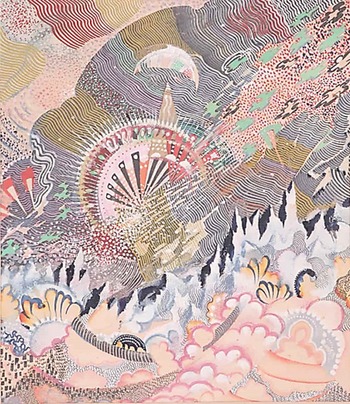


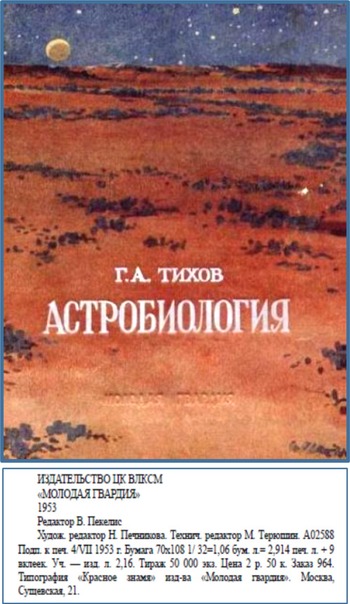

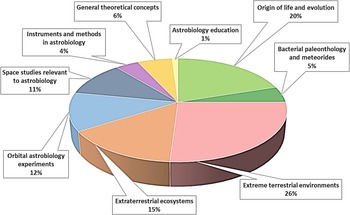


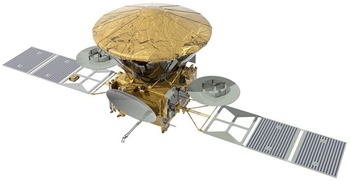
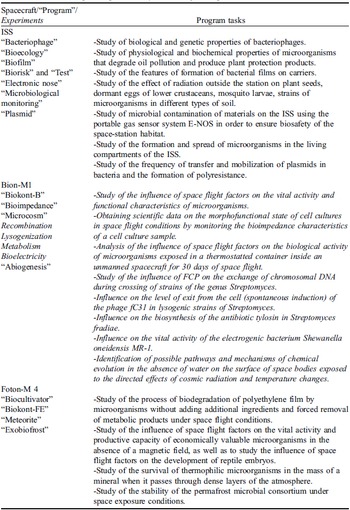


 Open access

