


Aquaculture represents a fast-growing food production sector in many low-income and food-deficit countries (LIFDC). In certain South-East and South Asian countries, like Bangladesh and Vietnam, the contribution of aquaculture to gross domestic product is now over 2·5 %, indicating that aquaculture is an important contributor to the countries’ economy performance( Reference Little, Newton and Beveridge1 , Reference Cai, Huang and Leung2 ). In the ten leading aquaculture countries in the Global South, farmed fish is increasingly available and accessible to poor urban and rural consumers in these markets( Reference Belton, Bush and Little3 ). Yet the specific impacts of commercial aquaculture on food security, nutritional status and livelihood in local communities where it is located are poorly understood. On a global scale, the importance of aquaculture in enhancing the resilience of the world food supply has been questioned( Reference Troell, Naylor and Metian4 ), and aquatic products have often remained neglected in food security analyses, despite their important role in world trade, human nutrition and support for livelihoods( Reference Little, Newton and Beveridge1 ). Indeed, while its role in securing livelihoods of poor households through employment in fishery and aquaculture supply and value chains is well established( Reference Allison5 , Reference Béne, Arthur and Norbury6 ), aquaculture’s contribution to food security, as well as to nutritional status as a consequence of increased fish consumption, has been largely ignored in international debate. A recent review found that fish consumption was absent from strategies for reduction of micronutrient deficiency( Reference Allison, Delaporte and Hellebrandt de Silva7 ). The disconnect between nutrition and seafood continues; the recent Global Nutrition Report makes no mention of the role of seafood in human diets because the Sustainable Development Goal most linked to aquaculture (SDG14, Life under the water) has no ‘nutritionally relevant’ indicators( Reference Little, Young and Zhang8 ). The real importance of fish consumption occurs in LIFDC; in 2010, of the thirty countries where fish contributed more than one-third of the total animal protein intake, twenty-two were LIFDC( Reference Kawarazuka and Béné9 ).
The evidence that emergent commercial aquaculture in LIFDC has had important effects on local livelihoods and the environment has not been matched with detailed studies of its direct impacts on peoples’ nutritional status, health and well-being( Reference Toufique and Belton10 ). A review of the literature on the relationship between aquaculture and poverty, food security, food production sustainability and gender equality found that, although there were a number of studies identifying income benefits, these analyses were less relevant for consumption in poor households( Reference Burns, Wade and Stephen11 ). Recently, the impacts of deteriorating marine fish catches on human health was modelled using the declines in intakes of critical nutrients as indicators( Reference Golden, Allison and Cheung12 ). However, this global model was limited to marine fisheries and cannot make predictions for highly complex agroecological food systems characterizing many LIFDC. The present study reviews our current understanding of connections between aquaculture agroecosystems, fish production and consumption patterns in relation to nutrition and health outcomes, discussing how integration of such factors may improve impact on food security, nutritional status and well-being in Bangladesh.
Methods
Here we present a narrative review discussing evidence from interdisciplinary research fields including agroecosystems producing farmed seafood, food security and nutritional status. The review was conducted by an interdisciplinary group of authors. It contains argumentative elements to explore how integration of such interdisciplinary factors could improve future impact on food security, nutritional status and well-being in Bangladesh.
Aquaculture production systems in Bangladesh
The ecosystems
The geographical characterization of South-East and South Asian countries is diverse, and aquaculture systems vary according to position – coastal or inland – and salinity gradient.
In Bangladesh, the agroecological dynamics of aquaculture are complex in a coastal zone ranging from saline to freshwater aquatic environments, with seasonal and annual fluctuations in freshwater availability. The variable salinity gradients impact on aquaculture specifically and on food production more generally( Reference Faruque, Hayat Sarwer and Karim13 ). Local adaptation and risk management in terms of strategic cropping of rice and vegetables v. production of shrimp and finfish are common as people respond to changes to water regimes. For example, export-orientated shrimp aquaculture, that has developed to dominate land use in estuarine flood plains of many coastal LIFDC, causes a range of impacts on local livelihoods. Pressures from a growing human population and the quest for economic benefit are now transforming marginal agroecosystems in LIFDC, including coastal wetlands that are vulnerable to climate change and salinization( Reference Faruque, Hayat Sarwer and Karim13 ). The livelihoods of the rural poor are increasingly dependent on alternative land-use strategies and aquaculture has often become a key component of food production( Reference Béne, Arthur and Norbury6 ), mostly alongside continued exploitation of unstocked aquatic animals( Reference Amilhat, Lorenzen and Morales14 ). The impacts of such changes are not limited to the producers, or even producer communities themselves, as the poor are often intrinsic members of associated value chains and/or consumers throughout a much broader geography( Reference Mialhe, Morales and Dubuisson-Quellier15 ). Key drivers to this dynamic are both the declining harvests of wild aquatic stocks and the growth in demand driven by increasing, often urban, populations consuming more nutritious diets( Reference Bunting, Stuart, Little, def Zeeuw and Drechsel16 , 17 ).
Aquaculture in food systems
After three decades of sustained growth, aquaculture now accounts for 53 % of reported fish production( 18 ), although pathways to consumption are less well understood. Farmed seafood now contributes nearly 50 % of total direct human consumption globally, but in some countries such as Bangladesh, its rise has been comparatively more important( Reference Belton and Thilsted19 ), given the context of fish being the most accessible and also preferred choice of animal-source foods. On the global level, significant diversity in consumption levels of seafood (total and as a percentage of animal-source protein) and spatial importance of aquaculture production (as the contribution to gross domestic product) suggest some important mismatches. Indeed, although high consumption levels are met by high production in in South-East and South Asia, demand for fish as a source of animal protein in West and Central Africa cannot be met by current levels of indigenous aquaculture, despite years of sector growth( Reference Little, Newton and Beveridge1 ). Moreover, on the local level, access of vulnerable individuals to farmed seafood within the community or even within the household is influenced by a range of social and individual factors.
Role of aquaculture in the sustainable development of Bangladesh
The challenge to meeting the sustainability agenda of the UN in Bangladesh is immense and linked to its poverty and estuarine environment( Reference Sack20 ). The positive economic growth of Bangladesh in recent years has been based largely on the rise of ‘non-traditional exports’, garments and the mainly farmed shrimp and prawn( Reference Lewis21 ). Aquaculture, mainly practised in southern coastal areas, has grown to constitute about 60 % of primary product exports, but has given rise to considerable criticism on environmental and social grounds( Reference Stonich and Bailey22 ). The well-publicized negative consequences of shrimp culture( Reference Stonich and Bailey22 ) include impacts related to general salinization of the environment, which can reduce terrestrial diversity and possibly impoverish local diets and negatively impact on community social welfare. On the other hand, however, it has also been found that aquatic diversity can be enhanced in such environments, and a wide range of naturally recruited ‘co-products’ of indigenous fish are harvested from the commercial ponds, destined for local consumption( Reference Faruque, Hayat Sarwer and Karim13 ). This appears to be particularly the case in extensive and semi-intensive production systems characteristic of Bangladesh. We recently showed that small homestead ponds, raising both fish and vegetables, can contribute to a wider food supply, reduced poverty and enhanced food security, which would be especially critical for food-vulnerable rural households compared with peri-urban households, and which would be most important during the lower income months( Reference Karim and Little23 ). But the role of aquaculture located in different agroecosystems also needs to be assessed. Recent research found that the hydrological forces in south-west Bangladesh are actively displacing a zone of transition between fresh and brackish water southwards despite a countervailing trend of rising sea level. Thus, the agro- and aquaculture systems in such highly dynamic environments are continually being adapted to both environmental and market factors( Reference Faruque, Hayat Sarwer and Karim13 ).
Role of aquaculture in economic development and poverty reduction
Previous attempts to explore the associations between commercial aquaculture and poverty as a measure of its impact on economic development have focused mainly on the direct and indirect contribution to poverty reduction for the poor entering into paid employment( Reference Belton and Little24 ). A study in the Philippines used Gini decomposition of income due to employment generation and showed that commercial shrimp culture reduced economic inequality in several coastal villages( Reference Irz, Stevenson and Tanoy25 ). The contribution of aquaculture to poverty reduction has been related to both the direct and indirect contributions of increased income and consumption in Bangladesh( Reference Toufique and Belton10 , Reference Mialhe, Morales and Dubuisson-Quellier15 ). There is a lack of empirical studies that show the impact of indirect consumption through increased availability of fish in the markets and increased accessibility of fish due to reduced price. Household income and expenditure survey data can be used to demonstrate if aquaculture is ‘pro-poor’, where pro-poor aquaculture growth is defined as the ‘quantity of fish eaten by poor consumers increases by a greater amount than the quantity of fish eaten by non-poor consumers’( Reference Toufique and Belton10 ). Better information on the specific nutritional, health and well-being outcomes that are related to changes in the ‘foodscape’ around aquaculture production, especially for the most vulnerable groups such as adolescent females, is required to inform future policy support for further transformation of rural landscapes and the livelihoods they support.
Fish consumption and health outcomes in Bangladesh
Fish consumption in Bangladesh
Fish consumption across Bangladesh is not well documented. The most recent and representative data evaluate fish consumption patterns based on 24 h recall data collected as part of the Bangladesh Integrated Household Survey (BIHS) between October 2011 and March 2012( Reference Bogard, Marks and Mamun26 ). The average intake of fish (fresh fish and dried fish converted to fresh weight) was 67 and 75 g per person per day for adult women and men, respectively, across all wealth groups. Fish consumption among the poorest quintile wealth group was about half this amount, 35 v. 78 g per person per day for adult women. Less than half of children under the age of 2 years had been fed animal-source foods the previous day, and the portion sizes were very small, despite the mothers’ awareness of the importance of feeding their children fish or other animal-source foods( Reference Bogard, Marks and Mamun26 ). However, the period covered in the study included the peak season for fish supply in Bangladesh and therefore average fish consumption figures across the year may be lower.
In food system analysis, it is important that the relationship between fish intake and fish supply can be evaluated. Food balance sheets from the FAO’s statistical database (FAOSTAT), providing data on quantities of food available to consumers based on production and trade between 2009 and 2011( 27 ), have shown the unique importance of fish availability in the food system in Bangladesh among five fish-producing Asian LIFDC, including China and India (Fig. 1). While the total available food supply in terms of dietary energy per capita is relatively comparable between the five countries (Fig. 1(a)), in Bangladesh the supply of animal-based foods (meat, egg, milk and seafood) contributes significantly less to total available dietary energy (Fig. 1(b) and (d)), fat (Fig. 1(e)) and protein (Fig. 1(f)) compared with availability in the other countries. On the contrary, the contribution of animal-based foods from fish and seafood (Fig. 1(c) and (g)–(i)), and particularly freshwater fish (Fig. 1(j)–(l)), to dietary energy, fat and protein intakes is among the highest across the countries investigated. The food system in Bangladesh is characterized by a generally sufficient – not alarming – per capita total supply of dietary energy and protein, but very low supply of fat and a very low total supply of animal-source foods( 27 ). However, despite the very low availability of fat, a previous study also deriving data from FAOSTAT showed that Bangladesh did appear to have a relatively good supply of total n-3 PUFA compared with other LIFDC( Reference Michaelsen, Dewey and Perez-Exposito28 ). In this context, the contribution from fish and seafood is significant and therefore any changes to the supply and accessibility of aquatic foods will impact on the dietary quality of the population.
Quantities of foods and nutrients available to consumers in five fish-producing, low-income and food-deficit countries in Asia based on production and trade. Data obtained from food balance sheets from the FAO’s statistical database (FAOSTAT) 2009–2011( 27 ). (a), (b), (d), (e) and (f) availability of animal-based food and nutrients; (c), (g), (h) and (i) availability of animal-based food and nutrients from fish and seafood; (j), (k) and (l) availability of animal-based food and nutrients from freshwater fish. To convert to kJ, multiply kcal values by 4·184

Fish consumption and health outcomes
Consumption of seafood may be able to alleviate the often multiple micronutrient deficiencies that are highly prevalent in the Bangladeshi population( Reference Sack20 ). In this country, fish is the most important nutrient-rich food in the diet across population groups and ages, being a valuable contributor to the reference nutrient intakes for a range of micronutrients, in addition to being an important source of protein and energy( Reference Bogard, Farook and Marks29 ). Indeed, promotion of the consumption of mola carplet, a small indigenous fish high in vitamin A, appears a cost-effective approach to increase vitamin A intake, reduce the prevalence of inadequate vitamin A intake and generally reduce the burden of micronutrient malnutrition in Bangladesh( Reference Fiedler, Lividini and Drummond30 ). Furthermore, dietary long-chain n-3 PUFA from fish have well-documented positive impacts on the brain development of infants and children( Reference Lauritzen, Hansen and Jorgensen31 ). In relation to this, it has been observed that the weight and head circumference of babies at birth have been positively associated with seafood consumption in Norwegian mothers( Reference Brantsæter, Birgisdottir and Meltzer32 ).
Between 1991 and 2010, fish consumption increased by 30 %, and, with fish being the major protein source of a typical Bangladeshi diet consisting of polished rice, fish and vegetables, this has also led to significant increases in average energy, protein and fat intakes from fish, both nationally and for all poverty groups( Reference Bogard, Farook and Marks29 ). However, while protein levels vary little, micronutrient levels do vary across fish species( Reference Roos, Wahab and Chamnan33 ) and, more generally, the nutritional quality of farmed species is known to be decreased for some species due to global changes in fish feed composition( Reference Bogard, Thilsted and Marks34 – Reference Roos, Wahab and Hossain36 ). This may have contributed, for example, to a significant decrease in Fe and Ca intakes from fish in the general Bangladeshi population, despite an increase in fish consumption in the past 20 years( Reference Bogard, Farook and Marks29 ). The impact of seafood consumption in populations in LIFDC is, however, blurred by the multiple health impacts of poor living conditions, such as a high infectious disease burden and generally poor nutritional quality of diets. While there exists a positive correlation between fish and seafood supply and male height (with low height being an indicator of stunted growth in early life) in Europe, this correlation is negative for fish and seafood supply, especially freshwater fish supply, and male height in populations in Asia and Africa( Reference Grasgruber, Sebera and Hrazdira37 ). This may indicate a higher dependency on fish, particularly freshwater fish, in LIFDC populations compared with high-income countries.
It was recently reported that obesity, hyperglycaemia and raised blood pressure are important but unrecognized health threats in rural Bangladesh, indicating a need for new treatment strategies to preventing the growing burden of non-communicable diseases like diabetes and CVD( Reference Fottrell, Ahmed and Kumer Shaha38 ). Indeed, low-income and middle-income countries like Bangladesh suffer the largest burden of morbidity and mortality due to non-communicable diseases( 39 ). Therefore, the inverse relationship between fish consumption and risk for CHD and stroke, as established in two recent meta-analyses in mostly Western populations( Reference Zheng, Huang and Yu40 , Reference Xun, Qin and Song41 ), may become increasingly relevant for the treatment and prevention of non-communicable diseases in LIFDC such as Bangladesh.
Linking aquaculture agroecosystems with nutritional health outcomes to address the nutritional challenges in Bangladesh
Current nutritional and health challenges in Bangladesh
Bangladesh has one of the worst rates of malnutrition in the world: 36 % of children under the age of 5 years are stunted, 33 % of children under 5 years are underweight and millions of people have micronutrient deficiencies( 42 ). Deficiencies in folate, Zn, vitamins A, B6, B12, C, E and riboflavin, mainly resulting from inadequate dietary intake of animal-source foods, fruits and vegetables, are highly prevalent and may occur concurrently among pregnant women( Reference Black, Allen and Bhutta43 ), albeit that the prevalence of Fe deficiency is low, contrary to the widely held assumption, possibly as a result of high levels of Fe in groundwater( Reference Rahman, Ahmed and Rahman44 ). Multiple nutrient deficiencies are generally observed in populations with low socio-economic status( Reference Arsenault, Yakes and Islam45 ). However, despite many challenges, Bangladesh has made improvements in the health outcomes of its children. Stunting in children under 5 years has declined by nearly 1·4 % per year between 1997 and 2011, with the key drivers for this change being multidimensional: improvements in parental education, household assets, sanitation and heath-care use, for example( 46 ). The WHO currently recommends Fe and folic acid supplementation for pregnant women to prevent maternal anaemia, puerperal sepsis, low birth weight and preterm birth, and this is also implemented in Bangladesh. However, Fe–folic acid supplementation often starts too late in the pregnancy to have impact on maternal nutrition and birth outcome. This supports the case for public health interventions to include nutritional interventions in addition to supplementation regimens to improve nutritional status and thereby maternal and child health outcomes. Indeed, it has been argued, for example, that Zn biofortification of rice has the potential to markedly improve Zn adequacy in diets in rural Bangladeshi populations( Reference Arsenault, Yakes and Hossain47 ). Moreover, a recent systematic review concluded that dietary interventions and fortified food products were effective in increasing birth weight and reducing the incidence of low birth weight( Reference Gresham, Bisquera and Byles48 ).
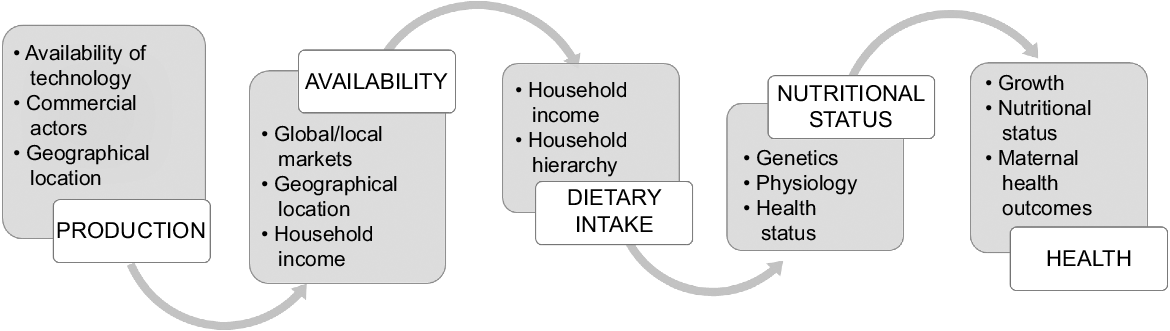
Increasingly we acknowledge that improvements in nutritional and health status on the individual, local and national level depend on a complex network of interacting factors that drive food production, food availability and dietary intake, and by linking these we may be able to better address the nutritional challenges in Bangladesh (Fig. 2). Currently, policies addressing the specific challenges of risk management of these communities are characterized by the sectoral separation of aquatic food production – the fisheries and aquaculture sector and the broader food sector – and public health institutions. Indeed, a succession of national policies have acknowledged the importance of food security at the national, household and individual level in the agro-based economy of Bangladesh, stressing the importance of increasing production and processing in the fisheries sub-sectors in an environment-friendly and sustainable manner, without addressing the impact on human diet and health outcomes( 49 – 51 ). Likewise, several national policies have set out strategies to improve the overall health, nutritional status, survival, growth, development and productivity of the population by preventing and alleviating micronutrient deficiencies, as well as ensuring quality and equitable health care for all citizens of Bangladesh by gradually achieving universal health coverage, without addressing the impact of food production and distribution( 52 , 53 ). It is therefore difficult to assess how government policies on fish production impact on nutritional status and human health, and vice versa, in Bangladesh.
Schematic interpretation of links between aquaculture production systems, food availability, dietary intakes, nutritional status and individual health
Cultural factors affecting dietary intake, nutritional status and health in Bangladesh
One main problem with linking factors like dietary intake, nutritional status and health (Fig. 2) is that for the measurement of dietary intake, data are commonly collected at the household level. However, in Bangladesh, differential access to food within households, with a tendency of disfavouring females, is a cultural norm(Reference D’Souza and Tandon54). This means that dietary intake data may not necessarily align with nutritional status and health outcomes, especially in adolescent girls and young women. Adolescent girls represent a vulnerable group in Bangladesh. They have lower access to food but at the same time have higher nutritional requirements: for their own growth, as well as – in the case of early marriage and motherhood – for the in utero growth of the fetus and for breast-feeding the infant (the critical ‘1000 days’)( 55 ). Indeed, in Bangladesh, almost 30 % of adolescent girls are married before 14 years of age, with almost 60 % married by the age of 16 years; the country has been ranked third in the prevalence of child marriage globally( Reference Kamal56 ). Greater female autonomy, which has been found to confer improved food and resource allocation within the family, has been strongly linked to female employment, especially outside the home( Reference Anderson and Eswaran57 ). Given the large increase in female employment related to export-led processing of farmed seafood, a value chain approach, in which employment within entities involved in the forward and backward trade linkages with production is assessed, is critical to understanding the interactions of nutrition and health outcomes.
Aquaculture production factors affecting nutritional and health status
It is currently unclear how exactly aquaculture production systems contribute to population and individual health, and how this relationship may be affected by food availability, dietary intakes and nutritional status on the local level (Fig. 2). Global value chain frameworks containing information on product, process, functional and interchain categories( Reference Blazek58 – Reference Gereffi and Fernandez-Stark60 ) acknowledge the growing link between intensifying aquaculture in LIFDC and global markets( Reference Little, Young and Zhang8 ). However, typically, such frameworks do not include value add-ons such as food security, nutritional status, health and well-being outcomes. Despite the apparent lack of systematic approaches and methodologies to assess impact on health and related quality of life( Reference Gyles, Lenoir-Wijnkoop and Carlberg61 ), these are necessary to create a better understanding of impacts of access to aquatic foods on health and nutrition – resulting in the development of more integrated policy models to evaluate the effectiveness and cost-effectiveness of interventions on lifetime health outcomes( Reference Lewsey, Lawson and Ford62 ), as well as informing policy decisions for practice in the development of farmed aquatic systems. Analysis of global patterns in seafood reliance, malnutrition level and economic prospects has already indicated that island nations in South-East Asia have the best opportunities for the farming of marine species( Reference Liu, Molina and Wilson63 ). However, frameworks and metrics for the linkages between terrestrial agroecosystems and nutritional and health outcomes, including in Bangladesh, highlight the need for more research on in-country specific settings including dietary diversity and the role of women in food production and distribution( Reference Yosef, Jones and Chakraborty64 ). Furthermore, the very specific complexity of the dynamic coastal ecosystems with fluctuating salinity, and the dependency of local communities on aquatic food resources, remain to be conceptualized for the aquaculture/fisheries and health sector. Monitoring of the consequences of natural and man-made developments in these extremely dynamic agroecological systems will be necessary to provide information on the nutritional, health and well-being outcomes of local residents that are related to the value chain and changes in the ‘foodscape’ relating to aquaculture production.
Conclusion
Establishing the relationships between aquaculture agroecosystems producing nutritious foods, and their impact on the health and nutritional status of local communities living in such dynamic aquatic ecozones, is currently challenging for various reasons. These include the complex ecological dynamics of seasonal and annual fluctuations in freshwater supply and variable salinity gradients in aquatic environments, which is especially relevant for a country like Bangladesh. It also includes difficulties with the accurate assessment of fish consumption and how this relates to individual health outcomes, as this relationship can be confounded by many factors, including the health impacts of poor living conditions, such as the high prevalence of infectious diseases and generally poor nutritional quality of diets. Access to and availability of fish is another factor to consider, including geographical locations, access to global and local markets, and household income. Populations in LIFDC are more dependent on fish, particularly freshwater fish, to ensure sufficient intakes of energy, protein and fat, and fish consumption may affect also growth and micronutrient status. Therefore, it is important that global value chain frameworks, which are currently mostly focusing on product, process, functional and interchain categories, include factors such as food security, nutritional status, health and well-being outcomes in the future. This will provide a better understanding of impacts of access to aquatic foods on health, resulting in a more integrated and relevant policies and practices when further developing farmed aquatic systems.
Acknowledgements
Financial support: The authors wish to acknowledge funding from Immana to write this review. The research of B.d.R. and A.A.S. is supported by the Scottish Government’s Rural and Environment Science and Analytical Services Division (RESAS). N.R. is funded by the University of Copenhagen, A.-A.M. is funded by Noakhali Science and Technology University Bangladesh, T.A. is funded by icddr,b (International Centre for Diarrhoeal Disease Research, Bangladesh), and F.M. and D.C.L. are funded by the University of Stirling. Funding agencies had no role in the design, analysis or writing of this article. Conflict of interest: None to report. Authorship: All authors contributed to the writing of the manuscript. Ethics of human subject participation: Not applicable.



