


During the last decades, more and more of the food consumed in Western societies is eaten outside the home(Reference Kant and Graubard1–Reference Nielsen, Siega-Riz and Popkin3). Most of the research on this issue has been carried out in the USA, but a few studies from Europe confirm that the proportion of food eaten out of home is considerable(Reference Orfanos, Naska and Trichopoulos4, Reference Kearney, Hulshof and Gibney5). An association between eating out of home and BMI has been explored and suggested in different studies(Reference Duerksen, Elder and Arredondo6–Reference McCrory, Fuss and Hays9). Three US studies found a positive association between eating away from home and (over)weight(Reference Duerksen, Elder and Arredondo6, Reference Binkley, Eales and Jekanowski7, Reference McCrory, Fuss and Hays9), whereas no clear association was found in Australia(Reference Simmons, McKenzie and Eaton8). Several studies report that meals eaten out of home often do not comply with dietary guidelines, and tend to be richer in fat, sugar and total energy, and contain less fruits and vegetables than meals prepared at home(Reference Guthrie, Lin and Frazao2, Reference McCrory, Fuss and Hays9–Reference Burns, Jackson and Gibbons12). An exception is Finland, where those eating in staff canteens were found to be more likely to follow food recommendations than others(Reference Roos, Sarlio-Lahteenkorva and Lallukka13).
In Norway, most workplaces have canteens where employees can buy food for lunch and sometimes dinner. The majority is outsourced, but some are run by the employer. The menus vary, but normally they offer cold food for lunch in line with Norwegian meal traditions, consisting of different kinds of sandwiches with butter, mayonnaise and spreads, various pastries, sweets, crisps, salads, other vegetables and fruits, and drinks such as milk, juice, water, soft drinks, coffee and tea. Some places offer hot meals for lunch and/or dinner. The Norwegian health authorities have published recommendations for canteens: meals should be based on wholegrain products, fruits, vegetables and berries, cooked or baked potatoes, fish, lean meat and low-fat diary products, all prepared with oils, not hard fats(14). There are, however, no legally established regulations regarding food selection in canteens.
Food choice at work and use of staff canteens may be influenced by the traditions and preferences of the employees, the selection in the canteens and factors in the working environment, such as time and the possibility to take lunch breaks. Research from Finland has shown that degree of control over own working day may determine the use of staff canteens(Reference Lallukka, Sarlio-Lahteenkorva and Roos15, Reference Raulio, Roos and Mukala16). Previous research on associations between work stress and weight status are divergent; however, some evidence finds that work stress is related to increased weight(Reference Schulte, Wagner and Ostry17). Shift work, which may entail working outside the opening hours of canteens or that meals other than lunch are eaten there, has been associated with overweight in several studies(Reference Schulte, Wagner and Ostry17).
The shift from consumption of mostly home-made food to more food prepared by others outside the home gives rise to new challenges, and also new possibilities, in promoting healthy eating habits in a population. Nutrition policies need to include means to ensure the availability of healthy options when eating out. The dimension and nature of the influence of environment and policies on eating habits is a relatively new science with few established associations(Reference Ball, Timperio and Crawford18). Little research has been carried out with regard to socio-economic differences in the use of eating places and how different policies targeting those eating out possibly could reduce, or augment, social inequalities in health(Reference Orfanos, Naska and Trichopoulos4, Reference Ayala, Rogers and Arredondo11).
Previous studies have found associations between the intake of certain foods and eating places out of home(Reference McCrory, Fuss and Hays9, Reference Lachat, Huybregts and Roberfroid10, Reference Burns, Jackson and Gibbons12). However, little is known about the association between use of staff canteens and diet, and the association with food patterns derived by factor analyses remains to be explored. It is necessary to know which socio-economic groups are eating in these places. Generally, the combined effect of low work control and more stress is larger in lower occupational groups(Reference Wandel and Roos19, Reference Siegrist and Marmot20). The possible contribution of this to socio-economic differences in eating habits at work and weight status needs to be explored.
The present study aims to contribute to this research by using data from the cross-sectional Oslo Health Study to answer the following questions:
1. Who are using staff canteens? What are the differences in use between demographic, socio-economic and occupational groups?
2. How is eating in staff canteens associated with different food patterns?
3. To what extent are frequent visits to staff canteens associated with obesity? Can such associations be explained by differences in demographic, socio-economic or working factors?
Method
Design
The Oslo Health Study was conducted in 2000–2001 by the Norwegian Institute of Public Health, the Oslo City Council and the University of Oslo. All women and men from seven birth cohorts were invited to participate. The participants received a letter of invitation and the main questionnaire by mail. A health examination was conducted at a central screening station and included height and weight measurements. The participants received another two questionnaires, which they were asked to complete and return in a prepaid envelope. The study is described in detail elsewhere (http://www.fhi.no/hubro-en). The Norwegian Data Inspectorate approved the study and it was cleared by the Regional Committee for Medical Research Ethics.
Sample
Our sample included participants born in 1940, 1941, 1955, 1960 or 1970. Of altogether 34 151 invited persons, 15 186 attended the health examination and/or answered at least one of the questionnaires, which gave an attendance rate of 44·5 %. Of these persons, 19 % had not completed one of the two questionnaires containing food frequency questions and another 8 % had ≥20 % answers missing among the food frequency questions, and were therefore excluded from the analyses. Furthermore, the self-employed were excluded, as they were not likely to have a staff canteen (819 persons, 7·4 %), as were those with no reported work (1314 persons, 11·9 %). The total number of persons included in the analyses was 8943.
Variables
The main questionnaire contained questions about own health, diet and sociodemographic factors and the additional questionnaires expanded on these topics. Eating in staff canteens was recoded from five categories (ranging from ‘seldom/never’ to ‘5–7 times/week’) into 0 = ‘monthly/never’ and 1 = ‘1–2 times/week’ (=not frequently) and 2 = ‘≥3 times/week’ (=frequently).
The questionnaires contained questions about eighty-two food-related items (sixty-eight food items, thirteen drink categories and two categories of supplements). The questions covered intake of bread (slices per day for three categories), bread spreads (no portion size; response categories of ‘seldom/never’, ‘1–2 times/week’, ‘3–4 times/week’, ‘5–7 times/week’ and ‘several times/day’), dinner dishes, sauces/dressings, cakes/sweets, fats (no portion size; response categories of ‘seldom/never’, ‘1–3 times/month’, ‘1–2 times/week’, ‘3–4 times/week’ and ‘5–7 times/week’), fruit, vegetables (no portion size; response categories of ‘seldom/never’, ‘1–3 times/month’, ‘1–3 times/week’, ‘4–6 times/week’, ‘1–2 times/day’ and ‘≥3 times/day’) and milk, fruit juice, soft drinks (in glasses; response categories of ‘seldom/never’, ‘1–6/week’, ‘1/day’, ‘2–3/day’ and ‘≥4/day’). The selection of food items was based upon previous analyses of a representative Norwegian sample identifying items contributing the most to between-person variability in energy or nutrient intake(Reference Mosdøl, Holmboe-Ottesen and Bjørge-Løken21). The food frequency questions have previously been validated against intake of the matching food/food group based on a 14 d diet diary(Reference Mosdøl22). The Spearman rank correlation coefficients between responses to the FFQ items and corresponding intake over 14 d were in the range of 0·3–0·7 for the items included in the food pattern analyses.
Sixty-seven non-overlapping food items from the food frequency questions were included in factor analysis with Varimax rotation to identify food patterns (this analysis was executed before excluding the self-employed). The food items were all recoded to times/week before being entered in the factor analysis. Missing values for food items were replaced with the lowest value (=seldom/never; 2·4 % of values). A scree plot supported a four-pattern solution, and all food patterns had eigenvalues ≥2. Food items with factor loadings of 0·35 or more were used to characterize a pattern. Separate analyses for men and women gave the same patterns with close to the same food groups loading above 0·35 in each gender. Thus, we chose to report the results from factor analysis for the collected sample. The first food pattern was named ‘Western’, characterized by high factor loadings for chips, hot dogs, hamburgers, béarnaise, coleslaw, pizza, potato salad/mashed potatoes, crisps, mayonnaise, and soft drinks with sugar. The ‘prudent’ food pattern was based on fruit, vegetables (cooked and raw), fish dishes (other than fish fingers), beans/lentils, shellfish, oil, vinaigrette and sour cream. The ‘traditional’ Norwegian diet was characterized by boiled potatoes, gravy and melted butter on dinner dishes and less rice, pasta and oil. The ‘sweet’ pattern was high in sugar, with high factor loadings for cakes/sweet biscuits, desserts, buns, chocolate/sweets, ice cream, jam, Danish pastry, cheese and waffles. These four patterns explained 20 % of the variation in the intake of these food items. The factor scores were used for further analyses. We also made another variable, dividing the sample according to a score above (=1) or below (=0) the mean score for each food pattern.
Education was recoded into three groups according to the Norwegian education system: ‘≤high school’ (≤12 years), ‘lower university/college’ (13–16 years) and ‘higher university/college’ (≥17 years). Personal annual income was recoded into three groups: ‘0–200 000 NOK’ (≈0–25 000 €), ‘200 000–300 000 NOK’ (≈25 000–38 000 €) and ‘>300 000 NOK’ (≈>38 000 €). Control over own working situation was assessed through a question about being able to make decisions about own work and recoded from four categories to ‘never/seldom’, ‘most often’ and ‘always’. Shift work was coded 0 = ‘no’ and 1 = ‘yes’. The occupational groups were constructed after the Erikson–Goldthorpes scheme(Reference Erikson23) with seven original categories, giving six categories in our sample due to the exclusion of self-employed workers:
I. Higher-grade professionals, administrators and officials; managers in large industrial establishments; large proprietors.
II. Lower-grade professionals, administrators and officials; higher-grade technicians; managers in small industrial establishments; supervisors of non-manual employees.
III. Routine non-manual employees, higher and lower grade.
IV. Lower-grade technicians, supervisors of manual workers.
V. Skilled manual workers.
VI. Semi- and unskilled manual workers.
The six occupational groups were further divided into three groups for use in regression analyses: ‘higher- or lower-grade professionals’ (groups I and II), ‘routine non-manual employees’ (group III) and ‘manual workers’ (groups IV–VI).
Physical activity was assessed through the question ‘Can you describe your spare-time activity?’, with the answer categories ‘read, watch TV, other activities done sitting’, ‘walk, cycle or move in other ways ≥4 h/week’, ‘exercise, heavy garden work ≥4 h/week’ and ‘competitive sports or heavy exercise several times a week’. The two last categories were merged into one in the analyses. Smoking was recoded 0 = ‘no’ (never or former smoker) and 1 = ‘yes’ (current smoker). Birth cohorts were divided into three groups according to age at study: ‘30 years’, ‘40/45 years’ and ‘59/60 years’. Region of origin was assessed through a question about mother’s country of birth, and was recoded into 1 = ‘Norway’, 2 = ‘other Western countries’ (Western Europe, North America and Australia) and 3 = ‘non-Western countries’ (East Europe, North Africa, Middle East, Africa south of Sahara, Asia, the Pacific and Latin America). Overweight was defined as BMI ≥ 25·0 kg/m2 and obesity as BMI ≥ 30·0 kg/m2. For logistic regression analyses, obesity was coded to 0 = ‘not obese’ and 1 = ‘obese’.
Analyses
Data were analysed using the SPSS statistical software package version 14·0 (SPSS Inc., Chicago, IL, USA). The χ 2 test with continuity correction was used to find the differences between women and men. Multiple logistic regression was used to explore factors associated with eating frequently in staff canteens (≥3 times/week), such as demographic factors (gender, age, region of origin), socio-economic position (SEP), work control, working shift, smoking and physical activity, crude and adjusted for all the other variables, and to explore the likelihood of being obese when eating frequently in staff canteens, adjusted for demographic factors, SEP, work control, working shift, smoking and physical activity, as well as food patterns. Linear regression analyses were carried out to explore associations between having high scores on the different food patterns and eating frequently in staff canteens, crude and adjusted for demographic and socio-economic factors. All independent variables were checked for multicollinearity, and there were no problems with this. Significance level was set to P < 0·05.
Results
Characteristics of the sample
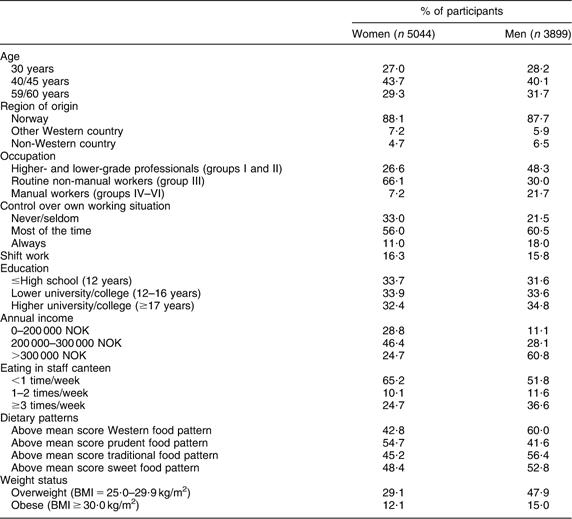
Table 1 describes the sample with regard to demographic and socio-economic variables, working situation, eating habits and weight status. Nearly half of the men were higher- or lower-grade professionals and two-thirds of the women were routine non-manual workers. More than half of the sample indicated they had control over own working situation most of the time; more women than men never or seldom had control over own working situation. About 15 % were shift workers, among both women and men. Two-thirds of the sample had education from university/college, lower or higher. Almost half of the women were in the middle income group, whereas more than half of the men were in the highest income group. Among women, one out of four ate in the staff canteen ≥3 times per week and about 10 % ate in the canteen once or twice per week. Among men, one out of three ate in the staff canteen ≥3 times per week and about 10 % ate in the canteen once or twice per week. A higher proportion of women than men had a score above the mean regarding the prudent eating pattern, whereas higher proportions of men than women had scores above the mean regarding the Western, the traditional and the sweet eating patterns. Overweight was prevalent in nearly half of the men and close to one-third of the women. The obesity rate was also higher among men than women.
Characteristics of the sample by gender, Oslo Health Study, 2000–2001
Who are eating frequently in staff canteens?
Factors associated with frequent eating in staff canteens (≥3 times/week) were explored using multiple logistic regression analyses (Table 2). Men were more likely than women to eat frequently in staff canteens and the odds of eating frequently in staff canteens decreased with age. The odds for frequent eating in staff canteens increased with income, but decreased when being a shift worker. These relationships were robust to adjustment for other variables in the model. Education increased the odds of eating frequently in staff canteens. Higher- and lower-grade professionals were more likely than manual workers to be frequent users of staff canteens. Furthermore, those who had control over their work situation were more likely to eat frequently in staff canteens compared with those who seldom had control. However, in the adjusted model, relationships to work were no longer significant and those in the highest educational group were least likely to eat frequently in staff canteens. Smokers and those whose spare-time activity was mostly sitting were more likely than non-smokers and those exercising to be frequent users of staff canteens. Finally, those originating from non-Western countries were less likely than others to eat frequently in staff canteens. However, this relationship diminished after adjustment for demographic, socio-economic, working and lifestyle factors.
Eating frequently (≥3 times/week) in staff canteens (compared with more seldom), as a function of demographic, socio-economic, working and lifestyle factors: results from logistic regression analyses, Oslo Health Study, 2000–2001
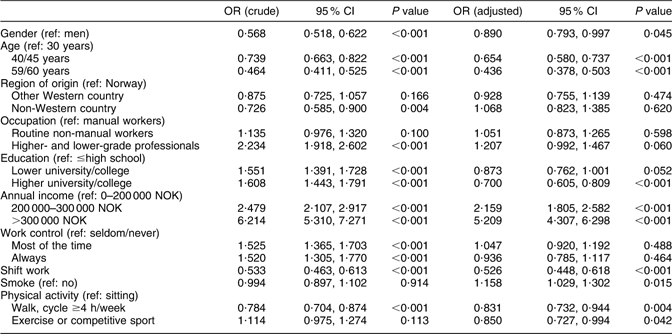
ref, reference category.
For adjusted model, n 7889.
The relationships between frequent use of staff canteens and socio-economic and work-related factors in the adjusted model were the same for women and men when analysed separately, the only difference being that the relationship with education did not reach statistical significance among men.
Food patterns and eating in staff canteens
The associations between the food patterns (Western, prudent, traditional and sweet) and frequent eating in staff canteens were explored through linear regression analyses and are shown in Table 3. In crude terms, the Western pattern was positively associated, while the prudent and the traditional patterns were negatively associated, with frequent eating in staff canteens. No significant association was seen between the sweet food pattern and frequent eating in staff canteens. When adjusted for demographic and socio-economic factors, the associations with the Western and the traditional dietary patterns, but not the prudent dietary pattern, were still significant.
Associations between different food patterns and eating frequently (≥3 times/week) in staff canteens, crude and adjusted for demographic (gender, age, region of origin) and socio-economic (education, occupation and income) variables: results from linear regression analyses, Oslo Health Study, 2000–2001
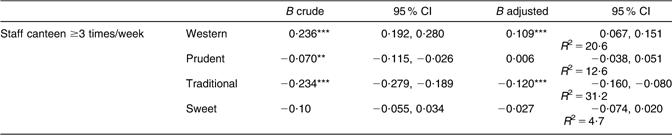
n 8561.
Significance of association: **P < 0·01, ***P < 0·001.
Obesity and eating in staff canteens
The likelihood of being obese when eating frequently in staff canteens was explored through logistic regression analyses (Table 4). After adjustment for demographic and socio-economic factors, as well as smoking and physical activity, those eating frequently in staff canteens were more likely to be obese. Adjustment for the food patterns attenuated this relationship, but it was still significant.
Likelihood of being obese as a function of frequent eating in staff canteens, demographic, socio-economic and working factors, physical activity and smoking (model 1), and in addition food patterns (model 2): results from logistic regression analyses, Oslo Health Study, 2000–2001
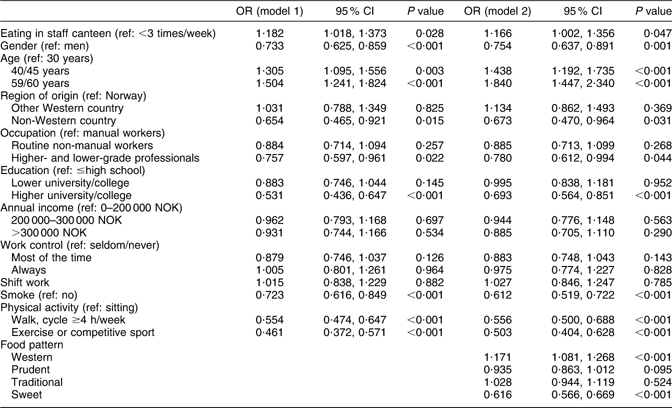
ref, reference category.
n 7865.
Discussion
We found socio-economic differences in the use of staff canteens, and that frequent use of staff canteens was associated with unfavourable dietary habits and obesity. The strength of the Oslo Health Study is the large population-based sample from different birth cohorts, with the extensive data collection including food frequency questions, anthropometric measures and questions about working conditions and SEP. The response rate was 44·5 %. An analysis of the non-responders to the study found a somewhat higher attendance rate among females (OR = 1·32) and persons with higher age (OR = 2·20 for 59–60 years v. 30 years), education (OR = 1·46 for education from college or university v. ≤9 years) and income (OR = 1·52 for ≥400 000 NOK v. <100 000 NOK), but the results were concluded to be robust(Reference Sogaard, Selmer and Bjertness24). Furthermore, since the focus in the present study is on associations rather than prevalence, the low response rate should be of less concern. However, the possible uneven distribution of staff canteens in workplaces of distinct socio-economic groups may have influenced the results. Assessing the availability of staff canteens was beyond the present study, thus we are not able to adjust for this.
Our data are confined to Oslo, the capital of Norway. In Finland, research has shown that people living in the capital area use workplace cafeterias more often than others, even when adjusted for education(Reference Raulio, Roos and Rahkonen25). This may be true also in Norway. Previous research from Norway has shown some regional differences in dietary patterns; those having a high consumption of fish and bread being more highly represented in the west and north of the country, and those scoring high on other healthy foods (fruits, vegetables, low fat) being more highly represented in southern and eastern parts of Norway (including Oslo)(Reference Engeset, Alsaker and Ciampi26).
Staff canteens, dietary habits and obesity
Prior research, identifying food patterns more or less similar to our Western pattern, has found it to be associated with overweight and chronic diseases(Reference Hu, Rimm and Stampfer27–Reference Slattery, Boucher and Caan33). In agreement with this, the Western food pattern was significantly associated with obesity in the present study and also with frequent use of staff canteens. Adjustment for food patterns attenuated the positive association between obesity and frequent use of staff canteens. Thus, food patterns are likely to partly explain the increased likelihood of obesity among frequent staff canteen users.
Given the cross-sectional design of the study, we cannot say if people who have a Western food pattern or are obese tend to eat more often in staff canteens, or if eating in staff canteens leads to a Western food pattern or obesity. It would be of great concern if staff canteens contribute to unhealthy food patterns and increased risk of obesity. However, it would also be of concern if foods offered in staff canteens have a quality that is most tempting for those who already have unhealthy food patterns or are obese. Regardless of the direction of associations, health promotion efforts would be beneficial in an eating place associated with a less favourable food pattern. Healthy options are usually available in Norwegian canteens; thus such efforts should include means to make these options more tempting and to improve the selection of favourable foods. Furthermore, energy-dense, unhealthy foods tend to be relatively cheap and give more energy for the same amount of money than healthy options. Therefore, assuring affordable prices on healthy options could be a means to improve food choices of staff canteen users, especially those from lower-income groups.
Lunch, which is the meal most commonly eaten in staff canteens, is not the main meal in the Norwegian diet. However, it may comprise a considerable proportion of daily energy consumption, and the tendency to adhere to an unhealthy food pattern when eating in the staff canteen is likely to reflect an unhealthy eating pattern during the whole day. One-third of men and one-quarter of women were eating in staff canteens three or more times per week. This implies that what is available and what is chosen there are of considerable importance for their diet. Previous research has shown the positive effects of different kinds of interventions to improve dietary habits in worksites(Reference French, Jeffery and Story34, Reference Engbers, van Poppel and Chin35). Such interventions could be useful to improve diet quality among the considerable proportion of workers using staff canteens frequently.
We did not have the required information in the present study to compare the nutritional impact of eating in staff canteens with other eating options during work time, which for most Norwegians would be packed lunch brought from home. However, our results indicate that there would most likely be no health benefit from encouraging people to eat more in staff canteens, as the situation is today. Nevertheless, as the proportion of workers eating food from canteens increases, improving the availability of healthy options and increasing the proportion choosing healthy options are of considerable importance from a public health perspective.
Socio-economic differences
Previous research has consistently shown more favourable dietary habits among higher compared with lower socio-economic groups(Reference Jacobsen and Nilsen36–Reference Perrin, Simon and Hedelin41). It may seem contradictory that in the present study, people in higher educational and income groups ate more frequently than others in staff canteens, which was associated with unhealthy dietary habits. However, after adjustment for demographic, socio-economic and work-related factors, people in the highest educational group were least likely to eat frequently in staff canteens. Socio-economic differences may be due to higher availability of staff canteens among people in higher SEP groups. Wandel and Roos(Reference Wandel and Roos19) found differences in eating places during the work day among men from different occupational groups, and more healthy foods offered at the worksite for engineers than for carpenters. Possible socio-economic differences in availability of staff canteens are also discussed by Raulio et al.(Reference Raulio, Roos and Mukala16). Furthermore, most staff canteens in Norway are not subsidized and eating out is in general more expensive than bringing food from home. This may explain a more frequent use of canteens among those with highest income. A probable relationship between education and occupation, together with the adjustment for shift work which is most common among manual workers, is likely to explain the non-significant relationship between occupational groups and frequent eating in staff canteens in the adjusted model. The inverse association between a prudent food pattern and frequent eating in staff canteens could be explained by differences in demographic and socio-economic factors. This suggests that socio-economic differences in food choice may occur in the staff canteens. It may as well reflect differences in what is served in the staff canteens of different occupational groups, possibly with healthier options available for higher-SEP groups.
Practical implications
The results from the present study imply a need to improve dietary choices made in staff canteens. To target social inequalities in health, socio-economic disparities in the use of staff canteens demand special attention and mapping of the availability of staff canteens in different occupational groups will be needed. The probable differences in selection and prices in staff canteens of different worksites should be assessed and evaluated in further research on staff canteen use.
In Finland there is a long tradition of eating a hot meal during the work day, and for many this meal is eaten in staff canteens(Reference Roos, Sarlio-Lahteenkorva and Lallukka13). Development of worksite kitchens has for decades been an important part of Finnish nutrition policies, with the goal to reduce the consumption of fat, sugar and salt, and to increase the use of vegetables, fruit, cereal products and potatoes(Reference Prattala42). Recent research has revealed that eating in staff canteens is now associated with adherence to recommended food habits in Finland(Reference Roos, Sarlio-Lahteenkorva and Lallukka13) and that the improvement of meals offered in staff canteens has contributed substantially to the shift towards a healthy diet which has taken place in the country since the 1970s(Reference Prattala42). This Finnish example highlights the possibilities and importance of including staff canteens in nutrition policies. Given the association between eating in staff canteens and an unhealthy diet in the present study, developing such a focus could be beneficial also in other countries.
Conclusions
Frequent eating in the staff canteen was significantly associated with unhealthy dietary habits, possibly contributing to higher odds of obesity. Given the substantial proportion of workers this concerns, the results from the present study highlight a need for focusing on improving dietary choices in staff canteens. Taking socio-economic considerations into the planning of such efforts will be necessary in order to reduce, not increase, social inequalities in health. In future research, there is a need to assess the availability of staff canteens and the selection of foods offered in them among different socio-economic groups.
Acknowledgements
The data collection was conducted as part of the Oslo Health Study, carried out in 2000–2001 as a collaboration between the Norwegian Institute of Public Health, the Oslo City Council and the University of Oslo. The present research received no specific grant from any funding agency in the public, commercial or not-for-profit sectors. No conflict of interest exists for any of the authors. All authors contributed in the conception and the writing of the article. Statistical analyses were executed by M.R.K.



