


There is increasing evidence that fruit and vegetable intake in young people is associated with health benefits(Reference Antova, Pattenden and Nikiforov1, Reference Baranowski, Mendlein and Resnicow2), including lower BMI(Reference Roseman, Yeung and Nickelson3) and reduced risk of cancer in adulthood(Reference Maynard, Gunnel and Emmett4). Despite this, many young people eat less fruit and vegetables than is recommended for health(5, 6) and consumption declines throughout childhood and adolescence(Reference Rasmussen, Krolner and Klepp7) and may track into adulthood(Reference Resnicow, Smith and Baranowski8, Reference Mikkila, Rasanen and Raitakari9). The development, implementation and evaluation of interventions to increase fruit and vegetable consumption among adolescents are therefore imperative.
The influence of the family on adolescent fruit and vegetable consumption is well documented(Reference Rasmussen, Krolner and Klepp7, Reference Pearson, Biddle and Gorely10). The relationship between the parent and adolescent, including modelling of health behaviours, choosing, preparing and making foods available, encouraging and reinforcing healthy eating patterns and knowledge (education) about healthful foods, suggests that parents and the home environment must be significantly involved in interventions promoting healthy nutrition(Reference Pearson, Biddle and Gorely10, Reference Eisenmann, Gentile and Welk11). However, the best method for involving families in promoting change in adolescent’s fruit and vegetable consumption is unclear(Reference Baranowski, Baranowski and Cullen12).
Interventions have been predominantly school-based programmes with limited effectiveness and have often targeted a range of healthy eating behaviours rather than focusing specifically on increasing fruit and vegetable consumption(Reference Knai, Pomerleau and Lock13). Direct parental involvement in such interventions is nominal and difficult to evaluate(Reference Knai, Pomerleau and Lock13). Furthermore, school-based healthy eating programmes, including a parental component, have shown low participation rates by parents if not directly linked to the school curriculum(Reference Burgess-Champoux, Marquart and Vickers14–Reference Nader, Sellers and Johnson16). Although the school is an important environment for nutrition intervention, about two-thirds of the foods that young people consume are from home(Reference Adair and Popkin17). Thus, intervening directly at the family environmental level may be a more efficacious method for promoting fruit and vegetable consumption among adolescents.
Recent family-based interventions, targeting parents and their children, have been successful in increasing pedometer steps and cereal consumption(Reference Rodearmel, Wyatt and Barry18), as well as being successful in increasing child- and parent-mediating variables associated with fruit and vegetable consumption(Reference Cullen and Thompson19). Home-delivered, leaflet-based interventions have shown effectiveness for modifying feeding practices in mothers of pre-school children(Reference Essemy, DiMarco and Rich20) and in increasing fruit and vegetable intake in adults(Reference Lutz, Ammerman and Atwood21). The purpose of the present study was to evaluate whether a short-term home-based newsletter intervention promoting increased fruit and vegetable consumption, aimed at both parents and adolescents, was feasible and whether it could positively affect adolescent fruit and vegetable consumption and psychosocial variables associated with adolescent fruit and vegetable consumption over time.
Methods
Recruitment
Parents of adolescents aged 12–14 years were recruited through newspaper and website advertisements, posters in workplaces (universities, factories and warehouses), and letters through schools and activity clubs/societies in the East Midlands region of the United Kingdom between September and December 2008. The method of recruitment was aimed at targeting parents from a range of socio-economic backgrounds. The study was approved by the Ethical Advisory Committee of the host university.
Participants and design
Other than recruitment, the present study was conducted solely through mail correspondence at no financial costs to participating families. Fifty-one families (parent–adolescent pairs) agreed to take part in the study and were mailed baseline questionnaires throughout October–-December 2008. Those mails contained separate questionnaires for parents and adolescents. All parents provided informed consent and all adolescents provided assent at the time of baseline assessment. Forty-nine families (96 % response rate) returned baseline questionnaires and were randomly assigned to receive the delayed intervention (control group) or to receive the fruit and vegetable newsletter packs (intervention group). Families randomised to the intervention group were mailed two fruit and vegetable newsletter packs over a 1 month period. Packs contained separate materials for parents and adolescents. The control group did not receive intervention materials until the end of the study.
All participating families were mailed questionnaire packs (identical to baseline apart from the demographic questions) immediately post-intervention (2 weeks after the intervention group received their second fruit and vegetable newsletter packs or 6 weeks after completing the baseline questionnaires) and 6 weeks later at follow-up.
Intervention
Overview
This pilot, home-delivered, family-based intervention was entitled ‘Choosing Five Fruit and Veg Every Day’ and contained three main components addressing environmental, personal and behavioural factors derived from the behavioural choice and social cognitive (SCT) theories of individual change. Behavioural choice theory draws on behavioural economics(Reference Meyerhoefer22) in which the choice to eat certain foods may be determined by the interaction of environmental factors (accessibility and availability of foods) and the individual (e.g. habits, preferences and reinforcing value of foods). Research has shown that choice of healthy foods can be enhanced by decreasing access to unhealthy foods and improving access to healthy foods(Reference Lappalainen and Epstein23). Parents in the intervention group were encouraged to make fruit and vegetables readily available and accessible for their children and to provide fruit and vegetable alternatives to energy-dense snacks. Adolescents in the intervention group were encouraged to try new fruit and vegetables instead of energy-dense snacks as well as trying recipes that included fruit and vegetables.
The SCT(Reference Bandura24) explains human behaviour in terms of a reciprocal relationship between personal, behavioural and environmental factors(Reference Baranowski, Perry and Parcel25). SCT constructs addressed in this intervention included outcome expectancies, self-regulation, to learn by observing others, self-efficacy, behavioural factors, such as behavioural capability, and environmental factors including the availability and accessibility of fruit and vegetables. A distinct aspect of the ‘Choosing Five Fruit and Veg Every Day’ programme was that parent and child behaviours would be targeted reciprocally. This approach was designed to enhance the efficacy of the intervention, given that parental intake of fruit and vegetables and home availability of fruit and vegetables are significant predictors of child fruit and vegetable consumption(Reference Pearson, Biddle and Gorely10).
Newsletter intervention
Two sets of adolescent newsletter packs and two sets of parent newsletter packs were developed for the present study. Adolescent newsletters were designed to (i) target normative beliefs by highlighting others’ fruit and vegetable consumption and approval of fruit and vegetable consumption; (ii) target health and nutritional knowledge; (iii) increase preferences for fruit and vegetables and overcoming barriers to eating fruit and vegetables by providing alternative ways of preparing, cooking, serving and eating fruit and vegetables; and (iv) improve behavioural skills and healthy eating. In addition to the newsletters, adolescents received quizzes about fruit and vegetables and recipes for using fruit and vegetables for snacks and meals.
Parent newsletters were designed to (i) target health and nutrition knowledge; (ii) target parents’ fruit and vegetable consumption; and (iii) target home availability and accessibility of fruit and vegetables. Parents also received leaflets including top tips and recipe ideas for using fruit and vegetables, and fruit and vegetable portion guides. Monitoring charts and pencils were included in adolescent and parent newsletter packs. Charts encouraged adolescents and parents to log the amount and types of fruit and vegetables they had eaten and to reach for ‘Five Fruit and Veg Every Day’.
Measurement
Identical measures for parents and adolescents were administered at baseline, post-intervention and follow-up.
Adolescent measures
Adolescent’s gender and date of birth were collected at baseline only.
Primary outcome measure: adolescent fruit and vegetable consumption
Adolescent fruit and vegetable consumption was assessed using a twenty-seven-item FFQ, based on the previously validated youth/adolescent FFQ(Reference Rockett, Breitenbach and Frazier26). Adolescents were asked how often they ate thirteen different fruits and fourteen different vegetables in the past month. A five-point response scale was provided for each fruit and vegetable item; responses were recoded (scores presented in parentheses) and summed to compute total frequency of fruit and vegetable consumption per day: one or more a day (1); 2–6 a week (0·57); 1 a week (0·14); 1–3 a month (0·06); and never/less than once a month (0).
Secondary measures
Barriers to eating fruit and vegetables were assessed with eight items (e.g. ‘When you do not eat fruit and vegetables, is it because they take too much time to eat?’) from a previously validated questionnaire(Reference De Bourdeaudhuij, Klepp and Due27). Fruit and vegetable habits (e.g. ‘Eating fruit and vegetables is something I do without having to remember’) were assessed using the previously validated twelve-item self-report habit index(Reference Verplanken and Orbell28). Preferences for fruit and vegetables were assessed with a single-item question asking ‘Which of the following do you like or dislike?’ A list of thirteen fruits and thirteen vegetables were provided. Internal consistency of items and scales measuring barriers to eating fruit and vegetables and fruit and vegetable habits and preferences are shown in Appendix 1.
Parent measures
Information on age, ethnicity, marital status, education level and occupation of the main income earner in the household was assessed at baseline only. Socio-economic position was determined using the Index of Multiple Deprivation, based on the postcode of the participants’ home, and thus represents an area-level approximation of socio-economic status.
Fruit and vegetable consumption was assessed with a single-item for fruit and vegetables, adapted from the ‘5-a-Day Power Plus Program’ parent survey(Reference Perry, Bishop and Taylor29). For example, ‘Thinking back over the past week, how many portions of fruit did you usually eat on a typical day?’ Responses were measured using an eight-point scale ranging from (1) No fruit to (8) Five or more portions.
Internal consistency of items and scales measuring parental knowledge of fruit and vegetable recommendations, encouragement and home availability and accessibility of fruit and vegetables are shown in the Appendix.
Process evaluation
Given that the present study was a pilot, process evaluation was as important as the assessment of the outcome measures. Process evaluation questions were included in the follow-up questionnaire packs for both parents and adolescents in the intervention group. Guided by previous process evaluations of public health interventions(Reference Baranowski and Stables30, Reference Steckler, Ethelbah and Martin31), the process evaluation assessed reach, dose, acceptability and fidelity of intervention delivery. For example, participants were asked whether they received all of the intervention materials; whether or not they used them; and about their favourite/least favourite aspects of the programme.
Statistical analyses
All analyses were conducted using the Statistical Package for the Social Sciences statistical software package version 16·0 (SPSS Inc., Chicago, IL, USA). Forty-nine families provided full data at baseline (twenty-five intervention and twenty-four control families), forty-four families provided full data at post-intervention (twenty-three intervention and twenty-one control families) and thirty-nine families provided data at follow-up (nineteen intervention and twenty control families). Analyses were conducted under the intent-to-treat assumption by replacing missing values at follow-up with the most recent available data from either the post-intervention and/or baseline assessments. Pearson’s χ 2 tests and independent t tests were used to examine baseline differences between the intervention and control group in sociodemographic characteristics and outcome measures.
Repeated-measures ANOVA was used to detect any univariate differences in adolescent fruit and vegetable consumption, barriers, habits and preferences, between-groups (intervention and control), time (baseline, post-intervention and follow-up) and group-by-time. The same analysis was conducted for all parent outcome measures. For each analysis, the main effect for group, the main effect for time and the interaction between group and time are reported in the tables. Bonferroni contrast analyses were used to detail specific differences. Where significant interactions were detected, the time and group values were plotted according to the outcome variable to illustrate the interaction.
To allow comparisons of effect sizes across different measures and studies, partial η 2 effect sizes were calculated for differences in time, group and time-by-group. Partial η 2 values of 0·01, 0·06 and 0·14(Reference Cohen32) were applied to determine small, moderate and large effects, respectively, and are reported in Tables 2 and 3. Alpha levels were set at 0·05 for all the analyses.
Results
Sample characteristics
The study sample consisted of forty-nine parent–adolescent pairs. Most of the parents in the study were women (73 %), married (88 %), of white ethnic background (88 %) and of high socio-economic status (62 %). Adolescents were boys (57 %) with a mean age of 12·5 years. Table 1 presents the baseline characteristics of the intervention and control group samples. No differences were found between groups on sociodemographic characteristics, behavioural or psychosocial outcomes at baseline, indicating that randomisation was successful.
Baseline characteristics of the pilot study sample
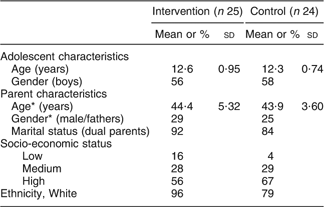
*Parents who provided consent and completed questionnaires.
Intervention effects for adolescents
Frequency of consumption of fruit and vegetables
A significant time-by-group interaction was observed for fruit consumption, with a large effect size (η 2 = 0·25; Table 2). At post-intervention and follow-up, adolescents in the intervention group reported eating significantly more fruit than adolescents in the control group (P < 0·01).
Frequency of consumption of fruit and vegetables and psychosocial outcomes for adolescents at baseline, post-intervention and follow-up
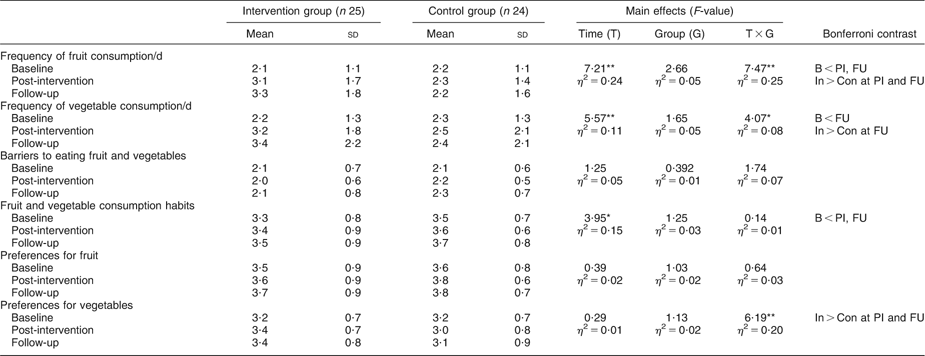
B, baseline; PI, post-intervention; FU, follow-up; In, intervention group; Con, control group.
Repeated measures ANOVA examining within-group differences (T), between-group differences (G) and time-by-group interactions (T × G). η 2: Partial eta-squared effect sizes (0·04 = small; 0·06 = medium; 0·14 = large).
*P < 0·05; **P < 0·01; ***P < 0·001.
A significant time-by-group interaction was observed for vegetable consumption, with a medium effect size (η 2 = 0·08). At follow-up, adolescents in the intervention group ate significantly more vegetables than adolescents in the control group (P < 0·05).
Secondary measures
There was no significant time-by-group interaction for fruit and vegetable habits (Table 2). However, a significant increase in habits was observed over the three time points (P < 0·05).
There was a significant time-by-group interaction for preferences for vegetables, with a large effect size (η 2 = 0·20). At post-intervention and follow-up, adolescents in the intervention group had significantly higher preferences for vegetables than those in the control group (P < 0·01).
Time, group and time-by-group differences in barriers to eating fruit and vegetables and preferences for fruit were non-significant.
Intervention effects for parents
Frequency of consumption of fruit and vegetables
There was a significant time-by-group interaction for fruit consumption, with a large effect size (η 2 = 0·28; Table 3). At post-intervention and follow-up, parents in the intervention group reported eating significantly more fruit than parents in the control group (P < 0·001).
Frequency of consumption of fruit and vegetables and psychosocial outcomes for parents at baseline, post-intervention and follow-up
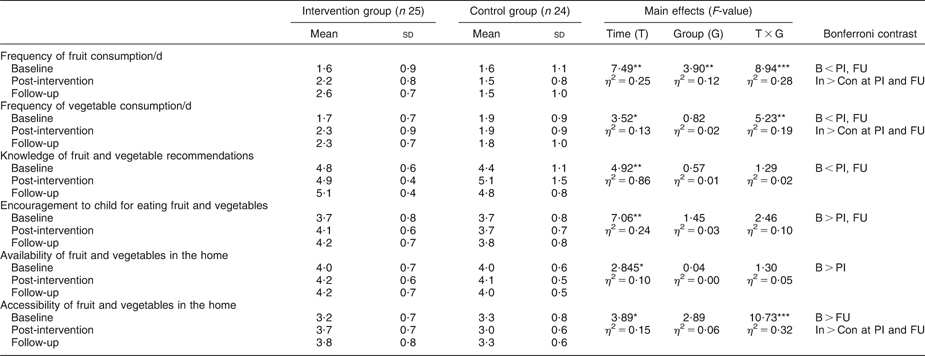
B, Baseline; PI, Post-intervention; FU, Follow-up; In, Intervention group; Con, Control group.
Repeated measures ANOVA examining within-group differences (T), between-group differences (G) and time-by-group interactions (T × G). η 2: Partial eta-squared effect sizes (0·04 = small; 0·06 = medium; 0·14 = large).
*P < 0·05; **P < 0·01; ***P < 0·001.
There was a significant time-by-group interaction for parent vegetable consumption, with a large effect size (η 2 = 0·19). At post-intervention and at follow-up, parents in the intervention group reported eating significantly more vegetables than parents in the control group (P < 0·01).
Other measures
No significant time-by-group interaction was observed for parental knowledge of the fruit and vegetable recommendations (Table 3). However, a significant increase was observed in knowledge over the three time points (P < 0·01).
No significant time-by-group interaction was observed for parental encouragement and home availability of fruit and vegetables. However, a significant increase was observed in parental encouragement (P < 0·01) and home availability of fruit and vegetables (P < 0·05) over the three time points.
There was a significant time-by-group interaction for home accessibility of fruit and vegetables, with a large effect size (η 2 = 0·32). At post-intervention and follow-up, parents in the intervention group reported higher home accessibility of fruit and vegetables than that of the control group (P < 0·001).
Intervention implementation
Feedback from adolescents and parents regarding the newsletter packs, intervention delivery and overall satisfaction with the programme was positive. The majority of parents (95 %) reported receiving both newsletter packs, found the newsletters (82 %), the recipes and portion guides (80 %) and the top tips useful (75 %). After reading the newsletters, over 75 % of parents felt that they could increase their own and their child’s fruit and vegetable intake; they could make changes at home; encourage and facilitate their child’s fruit and vegetable intake; and that they knew more about the importance of a diet rich in fruit and vegetables. Over 90 % of parents were happy with the methods used to contact them and to deliver the intervention. Over 75 % of parents encouraged their child to read and make use of the materials that were sent to them.
Parents felt that the intervention materials were ‘very useful and made me think about how important the fruit and vegetables are for parents and children’. The monitoring charts were very well received: ‘we used them as a family to have competitions to see who ate the most fruit and vegetables’.
The majority of adolescents (95 %) received and opened both of their newsletter packs. Most adolescents liked and read/used the newsletters (64 %), recipes (79 %), quizzes (84 %) and monitoring charts (74 %). After reading the newsletters and other materials, more than 70 % of adolescents felt that they could start to eat more fruit and vegetables; they knew more about fruit and vegetables; they could try new fruit and vegetables; and could make their own snacks and meals using fruit and vegetables. Most of the adolescents (79 %) were pleased to have materials sent to them that ‘were just for them’ and not for the whole family to read together.
Adolescents felt that the intervention materials ‘were colourful and had lots of good information on fruits I hadn’t tried but I now like’; ‘using the chart helped me to get to five because I could see what I had eaten in a day’.
Discussion
The purpose of the study was to evaluate the feasibility and efficacy of a short-term, home-based newsletter intervention to increase adolescent fruit and vegetable consumption. The intervention was successfully implemented and produced significant increases in adolescent and parent FV consumption. To our knowledge, this is one of the first family-based studies to show that a theory-based programme, delivered entirely by mail to participants’ homes, could positively influence adolescents’ and parents’ fruit and vegetable consumption.
The current study achieved significant changes in both adolescent and parent fruit and vegetable consumption over time. Intervention effect sizes for changes in adolescent and parent fruit and vegetable consumption were moderate-to-large. Given that parental fruit and vegetable intake is a significant predictor of adolescent fruit and vegetable intake(Reference Pearson, Biddle and Gorely10), it may be that parents who alter their fruit and vegetable intake are likely to be better role models and may modify the home environment to make fruit and vegetables more available and accessible to their children. The newsletters contained sections encouraging parents to be role models to their children, and the process evaluation indicated that the intervention materials made parents think about the importance of fruit and vegetable consumption for themselves and for their children. Targeting parents to change their own behaviour may be an effective way of increasing both adolescent and parent fruit and vegetable consumption.
In both adolescents and parents in the intervention group, fruit and vegetable consumption increased from baseline to post-intervention, with further increases (or a sustained increase for parent vegetable consumption) seen at follow-up. A similar intervention in adults, lasting 4 months, showed significant increases in fruit and vegetable consumption at 6 month follow-up(Reference Lutz, Ammerman and Atwood21). Given that positive effects were seen in the present short pilot intervention study, it is possible that the intervention effect might be sustained for substantially longer if the intervention period was extended, and additional newsletter packs and materials were provided to families. Future research is needed to examine the composition and timing of newsletter packs to maximise the long-term intervention effects.
Significant effects were also found for several of the psychosocial variables assessed as potential mediators of change in fruit and vegetable consumption. Preferences for vegetables increased significantly over time with a greater increase among adolescents in the intervention group. Preferences in adolescents have most often been examined as taste preferences for fruit and vegetables as a composite and have been positively associated with consumption(Reference Neumark-Sztainer, Wall and Perry33). In the present study, we examined fruit and vegetable preferences separately and found a change in preferences for vegetables only. Fruit preferences were higher than those for vegetables at baseline; thus, there may have been limited scope for increasing them further, and may reflect the difference in how and when fruit and vegetables are eaten. Adolescents were provided with recipes and tip sheets on trying new fruit and vegetables, as well as encouraging adolescents to ask their parents for a variety of fruit and vegetables while food shopping. Increases in preferences for vegetables may reflect an increase in parents’ provision of vegetables at home as snacks and at mealtimes.
Parents’ knowledge of the fruit and vegetable recommendations increased over time in both the intervention and control groups. Parental encouragement for fruit and vegetables and home availability of fruit and vegetables increased over time, with a trend for a greater increase in the intervention group than in the control group. Accessibility of fruit and vegetables at home increased significantly in the intervention group over time compared with the control group. These factors have been previously associated with adolescent fruit and vegetable consumption(Reference Rasmussen, Krolner and Klepp7, Reference Pearson, Biddle and Gorely10). Future research should examine the mediating effects of such psychosocial variables on change in adolescent and parent fruit and vegetable consumption.
Process evaluation indicated that, in the main, intervention materials were delivered as planned and the majority of parents and adolescents reported that the methods used to deliver the intervention were acceptable. Process evaluation also indicated a high dose and fidelity of the intervention. Home-delivered, leaflet-based interventions have shown effectiveness for modifying feeding practices in mothers of pre-school children(Reference Essemy, DiMarco and Rich20), and in increasing fruit and vegetable intake in adults(Reference Lutz, Ammerman and Atwood21). The provision of materials that promote thoughts on the importance of fruit and vegetable consumption, as well as simple ways to achieve the recommendations for fruit and vegetables, appear to be an effective intervention strategy for parents and adolescents. Both parents and children appeared to particularly like, and make use of, the monitoring charts that were provided. Self-monitoring is a systematic observation, and recording of target behaviours and previous research has identified this technique as the cornerstone of behavioural treatment(Reference Klem, Wing and McGuire34, Reference Weber Cullen, Kay Bartholomew and Parcel35). Future research should examine the effect of self-monitoring of fruit and vegetable consumption on change in the fruit and vegetable consumption.
The results of the present study are encouraging, but there are a number of shortcomings that need to be addressed. The sample was predominantly white and of high socio-economic status; therefore, it is not possible to state whether the results would have been similar in a more ethnically and socio-economically diverse sample. Several studies have identified the overestimation of fruit and vegetable intake when using FFQ(Reference Kremers, Brug and de Vries36, Reference Van Assema, Brug and Ronda37). Given that the fruit and vegetable consumption levels reported by participants in the present study are higher than those reported by the same aged adolescents and adults in the Health Survey for England(5), our findings may be reflective of our high socio-economic status sample (as there are national differences in fruit and vegetable consumption according to socio-economic status(Reference Nelson, Erens and Bates38)) or an overestimation, because fruit and vegetable consumption is perceived as healthy and socially desirable. However, the aim of the present study was to examine the change in fruit and vegetable consumption over time, rather than absolute values. The present study had a control group, and there were no significant differences in fruit and vegetable consumption between groups at baseline; thus, we may expect the overestimation to be similar for both groups at each time point. However, the intervention may have led to a higher level of social desirability in the intervention group than in the control group.
Other potential limitations include the short duration of the intervention programme and the small sample size. Strengths of the study include a delivery channel that minimised the participant’s burden, targeting of parents and adolescents together, a high programme dose and acceptability and a thorough process evaluation.
Conclusion
The present pilot, family-based intervention was successfully implemented and produced significant increases in adolescent and parent fruit and vegetable consumption. Family-based, newsletter interventions promoting fruit and vegetable consumption of adolescents appear to be feasible and effective in increasing fruit and vegetable consumption. Future research is needed to examine the feasibility, efficacy and dose of such an intervention with a larger and more diverse sample.
Acknowledgements
The present study was carried out at the School of Sport, Exercise & Health Sciences, Loughborough University, UK. Sources of funding: N.P. and A.J.A. are supported by research studentships from Loughborough University. Competing interests: The authors declare that they have no competing interests. Authors’ contributions: N.P. had full access to all of the data in the study and takes responsibility for the integrity of the data and the accuracy of the data analysis. A.J.A., S.J.H.B. and T.G. provided critical feedback on drafts. All authors read and approved the final manuscript.
Appendix Internal consistency of items and scales measuring potential predictors of adolescent fruit and vegetable consumption
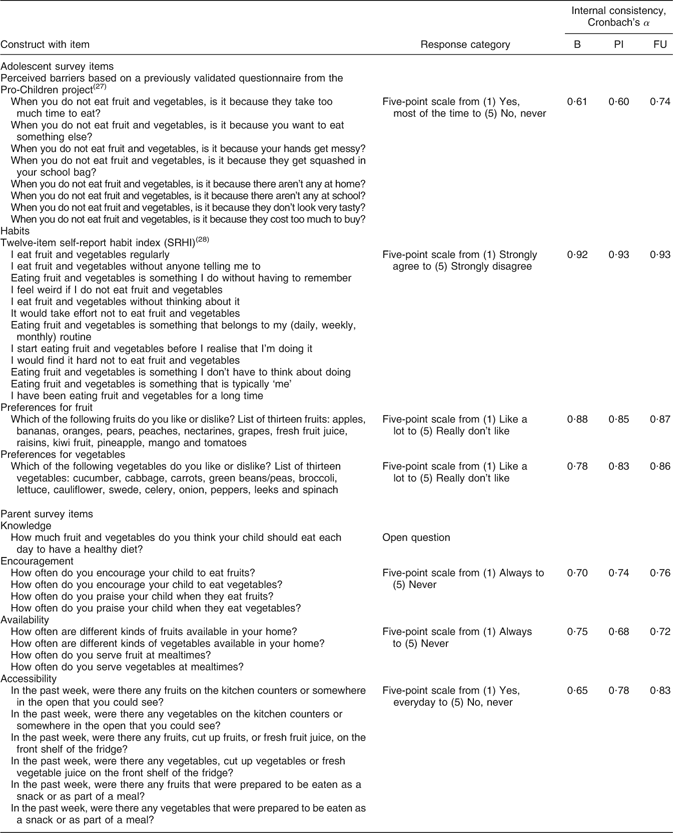
B, baseline; PI, post-intervention; FU, follow-up.



