



Metabolic syndrome (MetS) is a set of metabolic abnormalities, including abdominal obesity, high fasting blood glucose, hypertension, decreased HDL cholesterol (HDL-C) and high TAG level, which increases cardiovascular and non-cardiovascular mortality and morbidity risks( Reference Li, Yang and Yang 1 ). The prevalence of MetS varies around the world. For example, in the National Health and Nutrition Examination Survey (NHANES) during 2003–2006, the prevalence of MetS according to the National Cholesterol Education Program’s Adult Treatment Panel III (NCEP ATP III) criteria was 34 % in American people aged over 20 years( Reference Ervin 2 ). In central Iran, more than 32 % of the population suffers from MetS( Reference Sadrbafoghi, Salari and Rafiee 3 ). However, MetS is growing rapidly worldwide. For instance, MetS has increased in the adult population in China from 2005 (31·6 % in females and 26·3 % in males) to 2014 (48·3 % in females and 41·0 % in males)( Reference Jiang, Li and Wang 4 ). Genetic, lifestyle and environmental factors have been associated with MetS. For instance, circadian clock genes( Reference Lin, Kuo and Liu 5 ), location (urban or rural area), low physical activity and obesity( Reference Hwang, Kam and Shin 6 ) might affect MetS. The majority of studies have assessed the nutritional determinants of MetS, with the associations between dietary foods, nutrients, dietary patterns and MetS being investigated. Some food patterns such as rich potato and meat dishes can increase the risk of MetS( Reference Panagiotakos, Pitsavos and Skoumas 7 ), and high consumption of dairy products, foods rich in grains and fish might decrease the risk of MetS( Reference Ruidavets, Bongard and Dallongeville 8 ); however, some researchers reported that there was no association between the intake of meat or fish and risk of MetS( Reference Lutsey, Steffen and Stevens 9 ). Also, daily consumption of fruits and vegetables may have inverse effects on MetS( Reference Esmaillzadeh, Kimiagar and Mehrabi 10 ). The Mediterranean diet decreases the risk of MetS owing to large intakes of fruits and vegetables, while the Western diet increases the risk of MetS owing low intake of fruits and high intakes of red and processed meats( Reference de Oliveira, Manda and Torezan 11 ). Also, undesirable mealtime habits can increase the risk of MetS tenfold( Reference Mendez-Hernandez, Dosamantes-Carrasco and Siani 12 ).
Dietary habits are also important factors that might affect the risk of non-communicable diseases including MetS. A limited number of studies have tried to examine food intake habits in association with MetS( Reference Shin, Lim and Sung 13 ). In a study performed in a Saudi community, most of the participants (83·9 %) removed skin from poultry and consumed moderate amounts of oil and salt (59·9 %), but the effect of these dietary habits on MetS was not assessed( Reference Al-Khateeb and Al-Gelban 14 ). In Taiwan, changes in dietary habits such as consuming cake, sweets, and generally large energy intake have enhanced the risk of MetS. People in Taiwan traditionally eat the skin on poultry and high-fat meat, but these dietary habits have decreased from 50 % during 1993–1996 to 40 % in 2008. During this time, consumption of vegetables and fruits increased and use of high-fat dairy decreased. However, MetS has increased from 10 % in 1993–1996 to 31·5 % in 2008( Reference Pan, Wu and Yeh 15 ). It was shown in a cross-sectional study in Iran that consuming whole grains can reduce the odds of MetS and its components, while refined grains could increase the odds of MetS and its components( Reference Esmaillzadeh, Mirmiran and Azizi 16 ). Also, intake of white rice (low-fibre food) as a staple food( Reference Bahadoran, Mirmiran and Delshad 17 ) and higher consumption of red meats( Reference Azadbakht and Esmaillzadeh 18 ) might increase the risk of MetS in the Iranian adult population. However, we did not find any studies about the effect of dietary habits on the risk of MetS. The effect of dietary habits on the risk of MetS might be different based on the population in which the study takes place( Reference Shin, Lim and Sung 13 ). To the best of our knowledge, no studies have tried to investigate such an association in the Middle East using a prospective design. The present study aimed at determining the effect of dietary habits on the risk of MetS in a 10-year follow-up study in central Iran.
Materials and methods
Study population
In the first wave of the cohort study, 1979 participants aged 20–74 years were recruited in the context of the Yazd Healthy Heart Project (YHHP) during 2005–2006 using the cluster sampling method. They were also re-invited to the Yazd Cardiovascular Research Center to be re-evaluated during 2015–2016. The participants were selected from the urban population of Yazd city. Yazd is the capital of Yazd province and is located in the central part of Iran. At baseline, the prevalence of MetS was 44·8 % (n 887). Therefore, all participants from Yazd city aged 20–74 years at baseline (2005–2006) and without MetS (n 1092) were included in the present study. They were followed-up for 10 years and were re-assessed for MetS during 2015–2016. The participants were invited to the Yazd Cardiovascular Research Center again during 2015–2016 over the telephone by a clinical psychologist with good communication skills to prevent subject attrition as far as possible in the follow-up. After repeated measurements, 283 out of 1092 participants were lost to follow-up and finally the data of 809 participants were completed at the end of the study. The cumulative 10-year incidence of MetS was found to be 56·1 % (n 454). The details on the study protocol are reported elsewhere( Reference Sarebanhassanabadi, Jalil Mirhosseini and Mirzaei 19 ).
Ethical approval
The study was approved by the Ethics Committee of Shahid Sadoughi University of Medical Sciences in Yazd, Iran (ethical code: IR.SSU.MEDICINE.REC.1395.287). Also, at the first and the second phases of the study, informed consents were obtained from all participants. This article is reported based on the STROBE (Strengthening the Reporting of Observational Studies in Epidemiology) Statement( Reference Poorolajal, Cheraghi and Irani 20 ).
Data collection
During 2005–2006, data on demographics, anthropometrics, economics, education, physical activity, smoking status and dietary habits were collected. During 2015–2016, to estimate the cumulative incidence of MetS, biochemical tests, anthropometric measurements (weight, height and waist circumference) and blood pressure assessments were repeated.
Anthropometric and blood pressure measurements
Participants’ height was measured accurately without shoes with a stadiometer to the nearest 0·1 cm and their weight was assessed with an Omron Karada Body Scan and Scale (model BF511; Omron Co., Osaka, Japan) to the nearest 0·1 kg. The upper iliac crest was selected to measure waist circumference with a tape measure. Blood pressure was assessed twice by a trained nurse using an automatic digital blood pressure monitor (model M6 Comfort; Omron Co.), with an interval of 5 min between readings and the participant in a seated position.
Assessment of dietary habits
Data on dietary habits were collected via a researcher-made dietary habit questionnaire that was used during 2005–2006 and designed by experts in nutrition. Content validity of the dietary habits questionnaire was determined by experts in the field of nutrition. We also checked the reliability of the dietary habits questionnaire using Cronbach’s alpha and it was assessed to be reasonable (α=0·63). The participants were asked about their dominant dietary habits including being on a special diet (yes/no), eating salad (yes/no), consuming mayonnaise (a high-fat creamy dressing used as condiment), following a weight-control programme (yes/no), salt intake with food when eating (yes/no), removing poultry skin before cooking or eating (yes/no), type of dairy product consumed (low/high fat), paying attention to food labels (yes/no), eating canned or fast foods or foods prepared in restaurants (yes/no), the predominant method used for cooking (boiling/frying/roasting), consumption of high-fat meat (yes/no) and using a special measuring cup for adding oil and salt when cooking (yes/no).
Diagnosis of metabolic syndrome
Five components of MetS, including abdominal obesity, hypertension and biochemical tests (fasting blood glucose, TAG and HDL-C levels), were measured. Blood was taken from a vein after 9–12 h of fasting. To evaluate fasting blood glucose and TAG, a biochemical auto-analyser (model BT 3000 plus; Biotechnica, Rome, Italy) and relevant kits (Pars Azmoon Inc., Tehran, Iran) were used. HDL-C was assessed using Bionic kits (Bionic Co., Tehran, Iran). In the current study, diagnosis of MetS was established using the new version of the NCEP ATP III criteria( Reference Huang 21 , Reference Li, Yatsuya and Iso 22 ). MetS was defined according to a revised version of NCEP ATP III criteria adapted for Iranians. Based on this definition, the participants who had three out of five components of MetS were considered as having MetS. These components included: blood pressure ≥130/85 mmHg or taking a treatment for hypertension; fasting blood glucose ≥100 mg/dl or taking drugs to treat diabetes; TAG level ≥150 mg/dl; HDL-C <40 mg/dl in men or <50 mg/dl in women or treatment for dyslipidaemia; and abdominal obesity defined as waist circumference ≥91·5 cm for men or ≥85·5 cm for women( Reference Esteghamati, Ashraf and Rashidi 23 ).
Economic status
At the first phase of the study during 2005–2006, based on the oral responses to a questionnaire by the participants, economic status was considered based on scoring three variables, including home area (square metres), household income and having a private car. According to tertiles of summed score of these three variables (economic score), the participants were classified into low, moderate and high economic status groups.
Physical activity
Level of physical activity was assessed by the International Physical Activity Questionnaire (IPAQ)( Reference Maddison, Ni Mhurchu and Jiang 24 ). Based on the cut-off points of physical activity level of 2510 and 5020 kJ/week (600 and 1200 kcal/week), the participants were divided into three groups of low (<2510 kJ/week (<600 kcal/week)), moderate (2510–5020 kJ/week (600–1200 kcal/week)) and vigorous (>5020 kJ/week (>1200 kcal/week)).
Assessment of other covariates
Education was classified into three categories according to the level of education (primary school, high school diploma, academic degree). Furthermore, the participants were asked about their smoking habits and then they were divided into two categories (smokers, non-smokers).
Statistical analysis
Data were analysed using the statistical software package IBM SPSS Statistics version 19. To compare the means of quantitative variables such as age, weight, BMI and components of MetS (waist circumference, high fasting blood glucose, systolic blood pressure, diastolic blood pressure, TAG and HDL-C levels) between the two groups of MetS developers and healthy participants, the independent Student t test was used. To find any significant differences in categorical variables such as sex, smoking, economic status, physical activity and educational level between the two groups (MetS and non-MetS), the χ 2 test was used. Cox proportional hazards regression analyses were used to find the associations between dietary habits and MetS risk in crude and adjusted models in men and women, separately. In model I, the association was adjusted for age and sex; in model II, smoking, economic status, physical activity and educational level were additionally adjusted. P values less than 0·05 were considered statistically significant.
Results
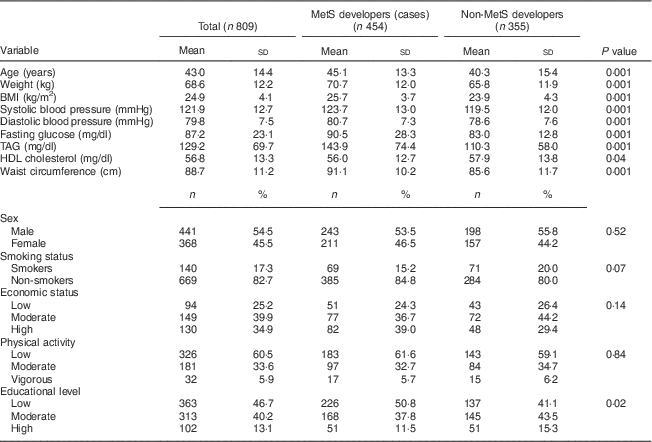
The mean age of the participants who had MetS was 45·1 (sd 13·3) years; also, 53·5 % (n 243) of those with MetS were male while 46·5 % (n 211) of them were female. A comparison of characteristics between the participants with and without MetS is shown in Table 1. We found statistically significant differences in age and weight, BMI, systolic blood pressure, diastolic blood pressure, fasting blood glucose, TAG, HDL-C, waist circumference and educational level between the two groups. Participants in the MetS group were significantly older, had higher body weight and waist circumference, higher systolic and diastolic blood pressures, and higher levels of fasting blood glucose and serum TAG than the healthy group (P=0·001). There were no significant differences in sex, smoking, economic status and physical activity between the two groups.
Baseline characteristics of the study population and comparison between participants who did and did not develop metabolic syndrome (MetS) over the 10-year follow-up; Yazd Healthy Heart Project, Iran
The risk of MetS related to dietary habits in the total population at the 10-year follow-up is demonstrated in Table 2. In model I, after adjustment for sex and age, participants who did not use a special measuring cup for adding oil (hazard ratio (HR)=1·22; 95 % CI 1·00, 1·49) and participants who did not use a special measuring cup for adding salt (HR=1·27; 95 % CI 1·03, 1·56) had a higher risk for MetS than the rest of the participants.
Hazard ratio (HR) and 95 % CI for development of metabolic syndrome based on dietary habits in the total population of the Yazd Healthy Heart Project, Iran
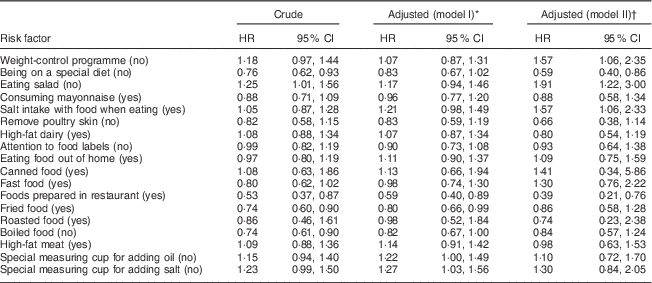
* Model I: adjusted for age and sex.
† Model II: adjusted for age, sex, smoking, economic status, physical activity and education.
In model II, after further adjustment for smoking, economic status, physical activity and educational level, the risk of MetS in participants who had no weight-control programme (HR=1·57; 95 % CI 1·06, 2·35), did not usually eat salad (HR=1·91; 95 % CI 1·22, 3·00) and consumed salt with food (HR=1·57; 95 % CI 1·06, 2·33) was higher than in the other participants; however, the risk of MetS in participants who were not on a special diet (non-diabetic and non-hypertensive diet) was significantly lower compared with those with a special diet (HR=0·59; 95 % CI 0·40, 0·86). Participants who consumed fried foods had lower risk for MetS after adjustment for sex and age (HR=0·80; 95 % CI 0·66, 0·99), but there was no association between consuming fried foods and MetS after adjustment for all potential confounders in model II.
The results in Table 3 show the risk for MetS in association with dietary habits according to sex. In men, after adjustment for covariates (model II), the risk of MetS in those who had no weight-control programme (HR=1·72; 95 % CI 1·08, 2·74) and who did not eat salad (HR=2·41; 95 % CI 1·43, 4·08) was higher than in their counterparts who had these behaviours. The risk of MetS in women who were not on a special diet was significantly lower than in those with a special diet (HR=0·45; 95 % CI 0·23, 0·89). No other significant associations were found between dietary habits and risk of MetS in women.
Hazard ratio (HR) and 95 % CI for development of metabolic syndrome based on dietary habits in men and women of the Yazd Healthy Heart Project, Iran
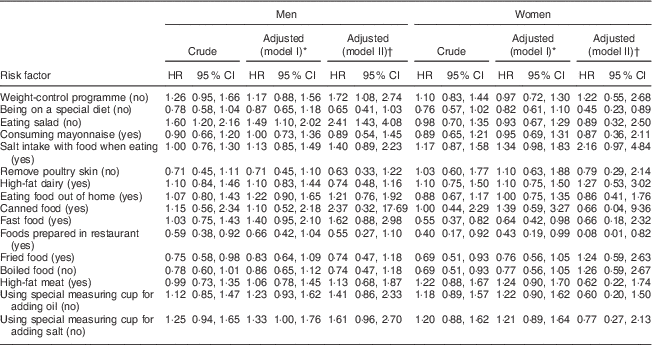
* Model I: adjusted for age.
† Model II: adjusted for age, smoking, economic status, physical activity and education.
Discussion
In the current cohort study, after a 10-year follow-up in an Iranian population, some associations were found between dietary habits and increased risk of MetS. First, after adjustment for potential confounders in model II, the risk of MetS was increased in the participants who did not have a programme for controlling their body weight. Similar to our results, another study emphasized that obesity is the result of a lack of body weight control, low physical activity and, especially, dietary habits with high energy intake( Reference Grundy, Cleeman and Daniels 25 ). The results of the current study showed that the risk of MetS increased in those who did not eat salad. It is interesting that when data were stratified by sex, such an association was significant in men whereas there was no significantly increased risk of MetS according to eating salad in women. Other studies have reported that consumption of vegetables can decrease the risk of MetS( Reference Esmaillzadeh, Kimiagar and Mehrabi 10 , Reference Ford, Mokdad and Giles 26 , Reference Yoo, Nicklas and Baranowski 27 ). However, consumption of vegetables could decrease inflammatory markers, cardiovascular events and diabetes via their constituents such as antioxidants and consequently lead to a decreased risk of MetS( Reference Esmaillzadeh, Kimiagar and Mehrabi 10 , Reference Wannamethee, Lowe and Rumley 28 ). Although no significant association was found between eating salad and risk of MetS in women in the present study, another study conducted in Tehran, Iran, revealed that consumption of vegetables decreases the risk of MetS by 30 % compared with the lowest quintile( Reference Esmaillzadeh, Kimiagar and Mehrabi 10 ). This inconsistency of results among the studies may be attributed to factors such as use of the modified version of the NCEP ATP III criteria instead of the original NCEP ATP III criteria and the use of BMI instead of high fasting blood glucose to define MetS, as well as to the long-term rather than short-term consumption of vegetables. It should be noted that the definition of MetS in our study was consistent over time in both phases of the study. Also, other components of MetS such as dyslipidaemia and high blood pressure might change diet and subsequently would serve as confounders in the correlation between vegetable intake and MetS( Reference Esmaillzadeh, Kimiagar and Mehrabi 10 ).
In the present study, the risk of MetS decreased based on high-fat dairy consumption (in model II) rather than low-fat dairy in the total population, but the difference was not statistically significant. Also, a cohort study conducted in Brazil showed no association between low-fat dairy intake and MetS risk, even though the consumption of full-fat dairy could decrease the risk of MetS for every additional daily intake( Reference Drehmer, Pereira and Schmidt 29 ). In a meta-analysis of seven cohort studies, relative risk of MetS decreased with higher consumption of dairy foods (relative risk= 0·86; 95 % CI 0·8, 0·9)( Reference Chen, Szeto and Chen 30 ). These results were similar for the Iranian population in the Tehran Lipid and Glucose Study( Reference Azadbakht, Mirmiran and Esmaillzadeh 31 ). The SFA in milk can affect metabolism of foods and lead to reduced hypertriacylglycerolaemia and hypercholesterolaemia. Furthermore, milk fat is proposed to elevate HDL-C( Reference Rice, Cifelli and Pikosky 32 ).
In the current study, there was no association between high-fat meat and MetS. Although the other researchers reported that a high intake of dietary fat can lead to insulin resistance and MetS( Reference Grundy, Abate and Chandalia 33 ), it depends on the type of fat and its degree of saturation( Reference Freire, Cardoso and Gimeno 34 ).
In our study (in model II), a statistically significant increased risk of MetS was observed for salt intake with food in the total population. A similar result was seen among participants who had no measuring cup for adding salt in model I in the total population and after stratifying by sex in men. Similar to our results, other studies emphasize that high consumption of salt is associated with an increase in the risk of MetS( Reference Baudrand, Campino and Carvajal 35 , Reference Oh, Han and Han 36 ) and reported that there was a significant difference in the associations between high salt intake and all components of MetS( Reference Oh, Han and Han 36 ). However, lipogenic enzymes can be increasingly active in participants who have high-salt dietary habits and the process of synthesis of glucose into lipids will be developed( Reference Fonseca-Alaniz, Brito and Borges-Silva 37 ). Also, a high-salt diet can increase lipid metabolism and insulin resistance and, as a result of increased energy intake, waist circumference and BMI can be increased( Reference Oh, Han and Han 36 ).
In the current study, after adjustment for all potential cofounders, no significant differences were seen between consumption of poultry with or without skin, high-fat meat and fried, roasted and boiled food consumption and the risk of MetS. However, some researchers have reported that high-fat food and fried food intake can increase the risk of MetS( Reference Freire, Cardoso and Gimeno 34 ).
In the present study, the risk of MetS in participants who were not on a special diet was significantly lower compared with those with a special diet. This may be attributed to the risk factors pertaining to the participants who went on a diet compared with other subjects without any special diet. Also, another reason may be changes in the risk factors that affect the components of MetS in the participants during the 10 years of the study( Reference Chang, Horng and Chau 38 ).
The present study was the first cohort study on the effect of dietary habits on the risk of MetS in an Iranian population and the Middle East. There are some limitations in the study that might affect the final results. First, 26 % of the participants in our study who did not have MetS at baseline during 2005–2006 were lost to follow-up at the second phase during 2015–2016. Although this limitation was unavoidable, an attempt was made to decrease the attrition in any way possible. Second, we lost the exact time of occurrence of MetS, because repeated measurements were performed about 10 years after the start of the study. It would have been better if repeated measurements were performed each year. Third, in the questionnaire used in our study, most of the dietary habits items were answered as yes/no. Fourth, we could not check the participants during the follow-up period. Therefore, their lifestyle including physical activity, dietary habits, smoking, etc. might have changed. The change in the independent variables might reduce the power of the study to find the true risk estimates. Nevertheless, we can be confident that the associations found in the present study might be even more predictive in this population. Finally, it should be noted that the present study was conducted in a small area of Iran; therefore, its results should be considered with caution when generalizing to other populations.
Conclusion
In the present study, dietary habits like the lack of a weight-control programme, lack of salad eating and high salt consumption increased the risk of MetS in the total population. Also, after stratifying by sex, lack of a weight-control programme and lack of salad eating increased the risk of MetS in men, but not in women. Therefore, dietary habit changes are recommended. More studies are needed to find out the precise role of dietary habits in increasing the risk of MetS.
Acknowledgements
Acknowledgements: The authors thank all colleagues in the Yazd Cardiovascular Research Center for their cooperation in performing this research; special thanks go to Dr Hadiani, Dr Jalilian and Mrs Lesan and all staff in Afshar Hospital Laboratory in Yazd, Iran. Financial support: This project was supported by Shahid Sadoughi University of Medical Sciences in Yazd, Iran and the Iran National Science Foundation (INSF); the study was not supported by industry. The funders had no role in the design, analysis or writing of this article. Conflict of interest: There were no financial conflicts of interest during follow-up, analysis of data and reporting results of the study. Authorship: Study concept and design: S.J.M., M.S., S.M.N., M.M., M.H.S., A.P. and A.S.-A. Sampling: M.S., Z.B. and R.F. Statistical analysis: A.S.-A. and M.S. Drafting of the manuscript: M.S. Critical revision of the manuscript for important intellectual content: M.S., M.M., S.M.N., A.S.-A. and M.P. Ethics of human subject participation: The Ethics Committee of Shahid Sadoughi University of Medical Sciences in Yazd, Iran (ethical code: IR.SSU.MEDICINE.REC.1395.287) approved the study and all participants provided informed consent.



