




Introduction
The first pottery vessels to appear in the region around the Arabian Gulf date to the middle of the sixth millennium BC—the Arabian Neolithic (see online supplementary material (OSM) Table S1 for radiocarbon dates for sites mentioned in the text). The vessels belonged to two distinct groups, Ubaid Ware and Coarse Red Ware (CRW), which differ in terms of technology, morphology, function and potentially also provenance. Fundamental differences in the geochemical composition of Ubaid Ware and CRW sherds indicate different geographic origins for the two ceramic groups (Oates et al. Reference Oates, Davidson, Kamilli and McKerrell1977; Magee & Karacic Reference Magee, Karacic and Drechsler2018; Ashkanani et al. Reference Ashkanani, Tykot, Al-Juboury, Stremtan, Petřik and Slaviček2020; Preston Reference Preston, Coppini and Simi2020). While Ubaid Ware is known to be an import from Mesopotamia, CRW is thought to have been locally produced, but its exact provenance is one of the unresolved questions of the Arabian Neolithic because clay sources matching the geochemical composition of the CRW have not yet been identified (Carter & Crawford Reference Carter and Crawford2010; Kainert & Drechsler Reference Kainert and Drechsler2014; Kainert Reference Kainert and Drechsler2018; Magee & Karacic Reference Magee, Karacic and Drechsler2018; Preston Reference Preston, Coppini and Simi2020).
This article presents key data regarding the provenance of this ware obtained during investigations at the site of Bahra 1 in the al-Subiyah region on the north coast of Kuwait Bay (Figure 1) (Bielinski Reference Bielinski2017, Reference Bielinski2018, Reference Bielinski2020). Studied since 2009 by the Kuwaiti-Polish Archaeological Mission, Bahra 1 is one of more than 60 sites scattered along the coast between Kuwait and the Strait of Hormuz that have links to the Ubaid culture.
Map of the Arabian Gulf showing Ubaid and Ubaid-related sites (shoreline reconstruction at 5300 BC, after Pournelle Reference Pournelle2003) (figure by Marta Momot).

Ceramic typology indicates that the site can be dated to the Ubaid 2 period and the earlier part of Ubaid 3 (Ubaid 3a or Ubaid 2/3)—c. 5740–4890 BC according to radiocarbon dating (Table S2). Given the site's location, its early dating and the presence of material culture elements of both local and Ubaid origin, Bahra 1 may have served as an intermediary in interactions between Mesopotamia and the Arabian Gulf during the Neolithic period. Bahra 1 is of fundamental importance for tracing the origin of pottery in the Gulf during the Neolithic period due to both the large number of pottery fragments found at the site and the diversity of vessels represented. In total, more than 22 000 potsherds of Ubaid Ware and CRW have been registered from excavations in 2009–2023. These represent different morphological types, a variety of technological groups and a wide range of functions (Smogorzewska Reference Smogorzewska2013, Reference Smogorzewska2015, Reference Smogorzewska2016). By identifying the provenance of the CRW, this study sheds light on the contacts between the Arabian Peninsula and Mesopotamia in the Ubaid period (c. 6500–4200 BC) and helps develop our understanding of the organisation of ceramic production and distribution within the region and more broadly.
Materials and methods
The Bahra 1 CRW assemblage
Also referred to as ‘Arabian Coarse Ware’, ‘chaff-tempered red ware’ or ‘straw-tempered coarse ware’, the CRW is found at more than a dozen sites along the eastern coast of the Arabian Peninsula—at Bahra 1 and the neighbouring site of H3 (5500–3800 BC, although see Carter & Crawford Reference Carter and Crawford2010: 201 for shorter occupation estimates) in the al-Subiyah region, as well as the sites of Dosariyah (5060–4480 BC, with a focus between 5000 and 4600 BC; Dreschler Reference Drechsler2018: 182), Abu Khamis, Ain as-Sayh, al-Da'asa, DA11 at Dalma Island (c. 5480–4550 BC; Beech & Glover Reference Beech and Glover2005: tab. 1), Jazirat al Hamra 4, Umm al-Qaiwain and others, where it was accompanied by finds of Ubaid Ware at all of the sites mentioned (Table S1) (Burkholder Reference Burkholder1972; Oates Reference Oates1976; Oates et al. Reference Oates, Davidson, Kamilli and McKerrell1977; Potts Reference Potts1990; Boucharlat et al. Reference Boucharlat, Haerinck, Phillips and Potts1991; McClure & Al-Shaikh Reference McClure and al-Shaikh1993; Vogt Reference Vogt and Kenoyer1994; Masry Reference Masry1997; Carter & Crawford Reference Carter and Crawford2010; Kainert & Drechsler Reference Kainert and Drechsler2014; Kainert Reference Kainert and Drechsler2018). Bahra 1 is the earliest known ceramic site in the Arabian Gulf, though it is partially contemporaneous with H3, Dosariyah and Dalma Island.
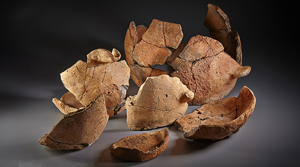
CRW ceramics are typified by their red colour (Figure 2). In the Bahra 1 assemblage, this ranges from light red (10R6/6, according to Munsell 1994) through red (10R4/6) to light reddish brown (2.5YR6/4) and reddish yellow (5YR6/6), although some vessels can also be light brown (7.5YR6/3), while others are covered with a yellowish slip or self-slip. The type, frequency and size of temper mixed into the ceramic paste varies considerably, permitting categorisation of 42 macroscopically distinct ceramic fabrics among the assemblage. Both organic (chaff) and mineral temper (sand, lime, as well as other inclusions) were used. Chaff is the most common temper, occurring in various amounts in most fabrics, and may or may not be accompanied by sand. In some fabrics sand grains are the main type of temper, with moderate or sparse addition of chaff. In a few cases, medium and coarse white and red particles dominate, with minimal presence of chaff (for details, see Smogorzewska Reference Smogorzewska2016).
Coarse Red Ware from Bahra 1 (figure by Adam Oleksiak).

The CRW vessels were formed by hand, using coiling or slab-building techniques. In some cases, the coils were poorly bonded, and the edge-to-edge construction is visible on the surface of the vessel walls (Figure 3). Circular and oval woven impressions on the outer surface of some base sherds (Figure 4) indicate the use of mats to support the vessels and allow rotation during construction. In most cases, the vessels were fired at low temperatures, resulting in brittle and soft receptacles that were easily broken. A small portion of the assemblage does, however, show characteristics indicative of high firing temperatures, such as the ringing sound produced when two sherds are struck together, which suggests harder walls.
Coils visible on the surface of a Coarse Red Ware vessel (figure by Aleksandra Oleksiak).

Mat impressions on the bases of CRW vessels (figure by Aleksandra Oleksiak).

The assemblage includes six main morphological types (Figure 5). The main characteristic form is a pot with lugs (Figure 5: 10) but bowls of varied shapes are also common (Figure 5: 4, 7, 8), including some featuring a pouring lip (Figure 5: 6), as well as trays (Figure 5: 1), dishes (Figure 5: 2), jars (Figure 5: 3, 5), large rectangular basins (Figure 5: 9) and a few unique forms (e.g. footed cup or vessel with pedestal base). The range of types indicates that the function of CRW vessels was not limited to cooking, as is often assumed (e.g. Masry Reference Masry1997: 239; Carter & Crawford Reference Carter and Crawford2010: 33). These vessels were also used for various stages of food preparation, storage and consumption. Despite this versatility, CRW and Ubaid Ware were largely complementary in their functions. The imported Ubaid Ware lacked cooking vessels, which make up the bulk of the CRW, while the CRW assemblage was deficient in luxury tableware, a role filled by the Ubaid Ware, which could also have been used for display (Smogorzewska Reference Smogorzewska2020: 210–17).
Different morphological types of CRW found at Bahra 1 (figure by Ewa Hander & Anna Smogorzewska).

Archaeological indications of local production
Multiple lines of evidence point to the local production of CRW vessels at Bahra 1, notably the high frequency and diversity of vessels and the presence of pottery wasters, pottery kilns and unfired clay vessels (cf. Rice Reference Rice1987: tab. 6.3). According to the “criterion of relative abundance” (Rice Reference Rice1987: 177), pottery is presumed to be produced in the area of its greatest abundance and subsequently distributed from there to other regions. The CRW accounts for 47 per cent of the total ceramic assemblage at Bahra 1 (n = 10 742), constituting the largest currently known collection of this pottery group. Additionally, the CRW repertoire at the site is more diverse than at any other location in the Gulf region (for forms of CRW vessels found at other Gulf sites, see Masry Reference Masry1997; Carter & Crawford Reference Carter and Crawford2010; Kainert & Drechsler Reference Kainert and Drechsler2014; Kainert Reference Kainert and Drechsler2018). This diversity of morphological types is again suggestive of local production, because imports are more likely to be limited to just one or a few forms.
Another piece of evidence confirming the local production of CRW at Bahra 1 was the discovery of an almost complete unfired clay vessel—a pot with lugs (Figure 6). The pot was discovered in 2019 alongside a fired jar in Sector SBH 35, where CRW vessels may have been fired, as suggested by the fire installations and pottery wasters found in this area.
Unfired pot with lugs (figure by Adam Oleksiak).

Unfired clay vessels are fragile and are not typically transported far from the place of their production, making the presence of such vessels a strong indicator of local provenance (Rice Reference Rice1987: 179; see also Duistermaat Reference Duistermaat2007 on the rarity of unfired vessels). Moreover, the identification of overfired fragments of CRW (pottery wasters) with visible temperature-related faults, such as warping, cracking and blistering (bubbles, craters or pinholes in the vessel surface) (Figure 7), signals local firing because such failures are unlikely to have been exported or imported. The discovery of at least a dozen (no specific number is possible yet as the study is still in progress) fire-related installations, the function of which may have included pottery firing (Bielinski Reference Bielinski2018: 26), provides evidence of a tangible means of local pottery production.
CRW pottery wasters from Bahra 1 (figure by Adam Oleksiak).

Archaeometric provenance analyses
To directly test the hypothesis for the local production of CRW, archaeometric provenance analyses were undertaken. Forty ceramic samples from Bahra 1 were analysed, with an even representation of Ubaid Ware and CRW (Table S3). Additionally, one clay sample was taken from the unfired vessel (sample P2), while six geological samples from the al-Subiyah region provided reference materials (P1, P3–7).
The samples were selected to represent the greatest possible diversity of fabrics within both ceramic groups, including examples from all technological groups (fine ware, common ware and coarse ware) and with varying types and amounts of temper.
The elemental composition of samples was measured through inductively coupled plasma mass spectrometry (ICP-MS) using a system equipped with a liquid sample introduction system and a quadrupole mass analyser. Samples were ground and appropriately prepared through mineralisation prior to analysis (for detailed methods, see OSM). Approximately 0.06g of each sample was subjected to wet digestion in a mixture of concentrated nitric, fluoroboric and hydrochloric acids (Sigma Aldrich/Merck, Germany). The TotalQuant screening method was used to determine the elemental composition (for a list of elements included in this study see Table S4) and the accuracy of these results was verified through comparison with reference materials (SPS SW1 and SPS SW2, SpectraPure Standards, Norway). The obtained concentrations in μg/l were converted to mg/kg (ppm), taking sample weights and dilutions into account. The results were analysed using principal components analysis (PCA).
Results
A general correspondence in geochemical composition is apparent between the CRW samples from Bahra 1 and three samples of clay from the al-Subiyah region (P4, P5, P6; Figure 8), confirming the local origin of this pottery. Recent geological surveys in the area additionally demonstrated the existence of clay deposits within the al-Subiyah, underscoring the region's potential for pottery production (Dakrory Reference Dakrory, Al Rashed and Alkandari2018). The unfired clay vessel (P2) also shares a similar geochemical composition to the CRW from Bahra 1. Differences in absolute composition are, however, apparent between the clay and ceramic samples and could result from natural variation in local clay deposits or factors related to clay processing and post-depositional changes (Attas et al. Reference Attas, Fossey and Yaffee1982: 181–90; Jornet et al. Reference Jornet, Blackman, Olin and Kingery1985; Myers & Blackman Reference Myers and Blackman1986: 64; Rice Reference Rice1987: 421–24; Arnold et al. Reference Arnold, Neff and Bishop1991: 72–74; Blackman Reference Blackman and Neff1992). Three geological samples (P1, P3, P7) do not match the geochemical composition of the CRW; this includes a sample from the Jal az-Zor escarpment (P3), which has also previously been shown to differ geochemically from the CRW at H3 (Carter & Crawford Reference Carter and Crawford2010: 36).
PCA plot for all 47 samples analysed with ICP-MS (figure by Anna Ruszczynska).

In addition to providing evidence for the local origin of the CRW, the provenance analyses of ceramics from Bahra 1 confirm that Ubaid Ware and CRW originate from different sources. When plotted through PCA, two geochemically distinct groups of ceramics may be observed and these correspond to the two archaeologically defined ceramic groups—Ubaid Ware and CRW (Figure 9). The Ubaid Ware exhibits substantially higher content for most of the tested elements, especially lanthanum, magnesium and yttrium (Ni, La (x4), Ca, Ce, Mg (x3), Co, Mn, and Y (x2)) (Table S4). Only potassium and barium were found at higher concentrations in the CRW samples. The geochemical characterisation of both groups of ceramics from Bahra 1 is consistent with earlier studies at other Ubaid-related sites in the Arabian Gulf, which characterise Ubaid Ware through calcium plagioclase, and pyroxene (rock-forming ferromagnesian silicates) inclusions and the absence of sodium plagioclase and potassium feldspar, and distinguish CRW based on the absence of calcium plagioclase and the presence of sodium plagioclase (Oates et al. Reference Oates, Davidson, Kamilli and McKerrell1977: 229, 231). The CRW from the Dosariyah site is distinguished by a lower calcium, manganese, chromium and nickel content and an elevated potassium and rubidium content (Magee & Karacic Reference Magee, Karacic and Drechsler2018: 200).
PCA plot for Ubaid Ware and CRW samples (figure by Anna Ruszczynska).

Two outliers in the Ubaid Ware samples (UF13 and UF39) can be distinguished based on their elemental composition. In the CRW group, two samples (LF1 and LF17) deviate from the average values for elemental composition, showing greater similarity in geochemical composition to the Ubaid Ware. The differences in the content of various elements may reflect diverse factors, including post-depositional processes (most potsherds are covered by a compact layer of calcareous residue formed as a result of deposition) and contamination.
Within group variation in geochemical composition can be observed in both the Ubaid Ware and the CRW. Within the Ubaid Ware, three groups can be distinguished, while two groups are discerned in the CRW (see Figure 9). With the data available it is not currently possible to determine whether each of these groups represents a different centre of production, though this would be particularly illuminating for the Ubaid Ware given the low diversity of alluvial soils in southern Mesopotamia. In the case of both wares, the existence of these groups might also relate to intentional modifications of the clay paste, for example by purification or the addition of temper, or to secondary changes resulting from post-depositional conditions.
Discussion
Organisation of pottery production
Two factors are fundamental in understanding the organisation of pottery production—the scale and the mode of production (Rice Reference Rice1987: 180). The determination of the mode of production involves interconnected studies on manufacturing technology, the role and status of potters, relations between producers and consumers, the organisation of production, as well as the labour and capital intensity of pottery production (Rice Reference Rice1987: 182–83).
The scale of production refers to the levels of labour and resources used and to the quantity of the output, all of which arguably relate to the general level of societal complexity. For the Arabian Neolithic, with its small, mostly seasonal settlements only loosely integrated into broader regional economies, pottery production may have been primarily intended for personal use or for irregular household exchange and consumption (see Rice Reference Rice1987: 180–81).
The geochemical composition of the CRW from Bahra 1 varies considerably; the coefficient of variation for most elements is substantially higher for the CRW than for the Ubaid Ware (see Table S4). Similar observations were made when comparing the geochemical compositions of CRW and Ubaid Ware from Dosariyah (Magee & Karacic Reference Magee, Karacic and Drechsler2018: fig. 8.2) and the heterogeneity of CRW mineralogical composition has also been demonstrated by petrographic thin section analysis (Ashkanani et al. Reference Ashkanani, Tykot, Al-Juboury, Stremtan, Petřik and Slaviček2020). From a technological point of view, no single formula was commonly used for the production of the CRW, as evidenced by the diversity of fabrics—the clay used to make the vessels was tempered with different admixtures that varied in the type of inclusions, their frequency, size and grain-size distribution.
The diversity of CRW fabrics may be associated with clay procurement and processing (Gosselain Reference Gosselain and Stark1998). The inhabitants of Bahra 1 may have had access to multiple clay sources in the vicinity of the site or within the territory they exploited, each with varying geochemical compositions. The diversity of fabrics could also be related to the number of CRW-vessel producers in the settlement. It is likely that each maker used a different formula for refining the raw materials and preparing the ceramic clay, which led to variability in paste composition (Jornet et al. Reference Jornet, Blackman, Olin and Kingery1985; Blackman Reference Blackman and Neff1992).
Differentiation is further apparent in the varied morphological types and vessel dimensions. The diversification of forms indicates that the production of CRW was not specialised; manufacture did not focus on the creation of standardised vessels and surpluses for exchange, but rather catered to household needs (Alchian & Allen Reference Alchian and Allen1969; Bates & Lees Reference Bates and Lees1977; Costin Reference Costin and Schiffer1991). In specialised production, each workshop has its own measurement standards and procedures, while variation or relative heterogeneity in vessel dimensions, as seen in the CRW from Bahra 1, reflects household production. Specialisation can be defined as a regular and permanent production system (Costin Reference Costin and Schiffer1991, Reference Costin, Maschner and Chippindale2005; Costin & Hagstrum Reference Costin and Hagstrum1995), with the level of specialisation measured by the amount of time a potter spends on producing vessels (a full-time versus a part-time activity), as well as their reliance on this craft as their sole source of livelihood (Costin Reference Costin2000). In the case of CRW, it seems likely that manufacturers were part-time potters, engaging in other types of activities and only periodically undertaking the production of pottery vessels. While the production of the CRW at Bahra 1 does not appear to have been specialised, the manufacture of tubular shell beads was—these were not used by the settlement's residents but were destined for off-site consumers (Reiche Reference Reiche and Bieliński2013: 100–103).
Low-skilled potters develop the whole chaîne opératoire by themselves, through trial and error, and the properties and variability of the vessels, as well as their quality and technological features, suggest that CRW was crafted by individuals with minimal specialised skills. Inspection of sherds from Bahra 1 reveals that CRW pastes were often poorly mixed and homogenised, and the firing of the vessels was irregular, indicating the low level of expertise of their producers. Moreover, the vessels are usually slightly asymmetrical and skewed, and the coil joints are poorly bonded (Figure 10).
Asymmetric small CRW cooking pot with lugs. Poor bonding between the coil joints is visible in the walls of the vessel (figure by Aleksandra Oleksiak).

A small number of CRW vessels from Bahra 1 deviate from this characterisation; they are distinguished by a different technology (fabric, firing temperature) and include thin-walled fine ware and vessels fired at high temperatures, discernible by the ringing hardness of the vessel walls. The presence of higher-quality vessels indicates a variation in the expertise and know-how of CRW producers and may also suggest experimentation with firing techniques and attempts at achieving higher temperatures. As the pottery wasters show, these experiments were not always successful. Evidence of over-firing can indicate a lack of control over the firing process, which may occur when the firing temperature is too high, reached too quickly or maintained for too long (Rice Reference Rice1987: 106–107).
In terms of technological features, morphology, as well as metric and geochemical data, the CRW most closely corresponds to the household industry mode of production (Rice Reference Rice1987: 184). This is further supported by the high variability of pottery production. Rather than the product of specialised workshops, the vessels were made by a number of individual manufacturers who possessed a rudimentary understanding of pottery production, each using their own formula for the paste and their own vision for the form.
Although household industry involves simple technology that does not require a large investment in equipment or advanced knowledge and skills, it is of economic importance to the manufacturers (Rice Reference Rice1987: 184). Described as “potting for profit”, the household industry can be seen to represent the beginnings of commoditisation (Hart Reference Hart and Goody1982: 38–49)—the pottery not only has use value but can acquire exchange value so may eventually also be produced for consumers from outside the immediate household.
The cultural affiliations of the CRW and its producers remain a topic of debate, particularly in the context of relationships between the Gulf region and Mesopotamia in the Ubaid period. Various authors have interpreted the evidence differently, arguing either for the adoption of ceramic technology by inhabitants of the Gulf influenced by contacts with Mesopotamia (Carter & Crawford Reference Carter and Crawford2010: 67; Magee Reference Magee2014: 73) or for the direct agency of Mesopotamian settlers (Oates et al. Reference Oates, Davidson, Kamilli and McKerrell1977: 233; Potts Reference Potts1990: 58).
In contrast to the Ubaid Ware, which, as an exotic good of high value, could have been used as an item of prestige, the CRW was primarily used for everyday cooking purposes (Carter & Crawford Reference Carter and Crawford2010: 33, 67; Carter Reference Carter, Anderson, Barrett and Boyle2010: 195–97). Its use was associated with specific lifestyles and culinary habits, which determined the way food was prepared and processed. Fishermen, hunters and shellfish gatherers residing in the Arabian Gulf probably did not require ceramic vessels for their daily needs, using containers made of organic materials that were better suited for their mobile lifestyles (Eerkens Reference Eerkens, Barnard and Wendrich2008: 309–13).
Yet the occurrence of CRW exclusively in contexts also containing Ubaid Ware, and its disappearance coinciding with the end of the Ubaid culture, may argue for cultural ties between these pottery groups. At the site of al-Markh, for instance, the CRW is no longer present in the later phases of the settlement, after the Ubaid Ware disappears (Potts Reference Potts1990: 57–58). The appearance of ceramics at Ubaid-related sites in the Gulf region did not therefore lead directly to the emergence of a lasting local ceramic tradition, indicating a lack of demand for ceramic vessels among local populations. The first substantial local pottery production does not occur until c. 3000 BC, and the scarce earlier finds represent vessels imported from other regions (Potts Reference Potts1990: 63–64).
CRW distribution in the Gulf
Based on currently available data on the distribution of CRW and its quantity across various regions and sites in the Gulf, the frequency of CRW decreases from north to south. Sites in the Upper Gulf reveal the highest proportions: CRW accounts for 47 per cent of the total ceramic assemblage at Bahra 1, and for 26 per cent of the assemblage at the nearby site of H3 (between 20% and 38% depending on the period; Carter & Crawford Reference Carter and Crawford2010: fig. 3.3). Despite the large number of Ubaid-related sites in the Central Gulf, the quantity of CRW at individual sites and its share in their ceramic assemblages seems smaller compared to the Upper Gulf, although it can occasionally be substantial. CRW may account for 60–70 per cent on the more extensively occupied sites in the Central Gulf (Oates et al. Reference Oates, Davidson, Kamilli and McKerrell1977: 22), but precise data on the number of potsherds at individual sites are lacking. At Dosariyah, CRW accounts for 17.8 per cent of the ceramic assemblage according to the latest research (Kainert Reference Kainert and Drechsler2018: 184), which corrects earlier estimates of 45–50 per cent (Masry Reference Masry1997: 80–81; Kainert Reference Kainert and Drechsler2018: 198). With the exception of Dosariyah, where the exact number of CRW fragments is reported, the amount of pottery is only described in general terms at other sites, which hampers interpretations of distribution. A small amount of CRW comes from Qatar, where three potsherds are known from al-Da'asa (Oates Reference Oates1976: 26; Reference Oates and de Cardi1978: 42–46; de Cardi Reference De Cardi, Al-Khalifa and Rice1986; Potts Reference Potts1990: 46).
In the Lower Gulf—the area extending east of Qatar to the Strait of Hormuz—the amount of CRW decreases substantially, as does the amount of Ubaid Ware and the number of Ubaid-related sites in general. CRW is identified at DA11 on Dalma Island (one potsherd; Carter & Crawford Reference Carter and Crawford2010: 36), Site 69 (al-Madar) in Umm al-Qaiwain (quantity unknown; Boucharlat et al. Reference Boucharlat, Haerinck, Phillips and Potts1991: 70, no. 8) and Site JH4 (Jazirat al-Hamra) in Ras al-Khaimah (three or four fragments; Vogt Reference Vogt and Kenoyer1994: 123–25). The low occurrence of CRW in the Lower Gulf can be explained not just by the distance from the sources of supply, but also by the fact that the Qatar peninsula was a natural barrier to maritime communication. The inhabitants of the Lower Gulf presumably obtained ceramics and other commodities through contacts with the Central Gulf rather than directly from Mesopotamia or the Upper Gulf (Carter Reference Carter, Anderson, Barrett and Boyle2010: 191).
Data on the presence of CRW in the different parts of the Gulf region point to a down-the-line model for its distribution; frequency of occurrence relates to distance from the source, and the Upper Gulf is indicated as a major CRW production centre. A similar distribution pattern has been observed for Ubaid-related small finds (labrets, flanged discs, ceramic nails) discovered at Neolithic sites in the Arabian Gulf (Carter Reference Carter2020: 2–9). Whether CRW was also produced at other Neolithic sites in the Gulf region besides Bahra 1 remains an open question. The coastal location of most sites containing CRW, as well as associated finds of ceramic boat models (at H3, Dosariyah and Bahra 1), suggest a sea route for the dispersion of the CRW and other objects to other parts of Eastern Arabia (Oates et al. Reference Oates, Davidson, Kamilli and McKerrell1977: 233; Piesinger Reference Piesinger1983: 753; Carter & Crawford Reference Carter and Crawford2010).
Conclusions
Archaeological research at Bahra 1 in Northern Kuwait provides conclusive evidence for the local production of the CRW—the first ceramic tradition originating in the Arabian Gulf region. The emergence of CRW can be dated to the mid-sixth millennium BC—the Arabian Neolithic—when the pottery types appear alongside the Ubaid Ware imported from Mesopotamia. The site of Bahra 1 is the earliest known site in the Gulf (c. 5740–4890 BC) where CRW was not only discovered but where its production is confirmed by both archaeological and archaeometric evidence.
Determining the provenance of the CRW is crucial to our understanding of the organisation of its production and distribution. The variability in raw materials, technology (fabrics) and morphological types of CRW suggests that its production may have occurred at the household level, with multiple producers engaging periodically in vessel production using various recipes. CRW producers possessed basic ceramic production skills, although they experimented with creating higher-quality vessels fired at high temperatures. Despite the household scale, CRW production could have had economic significance for its producers, becoming an exchange commodity and a source of additional income. In the distribution of CRW, a down-the-line model appears likely, in which the Upper Gulf was the main production centre of this pottery. The decrease in the quantity of CRW in the Central and Lower Gulf aligns with the reduced presence of Ubaid Ware and other Ubaid-related products (such as small finds) particularly in the Lower Gulf. This suggests a similar distribution pattern for these products. Sites in the Upper Gulf (Bahra 1 and H3) have the most Mesopotamian features in their material culture; this may result from direct contact with Mesopotamia or reflect the physical presence of Mesopotamians. The settlement at Bahra 1 may have served as an intermediary for the distribution of Mesopotamian products to regions located further south. Alongside its role as an exchange intermediary and specialised shell-bead production centre, Bahra 1 potentially also gained economic significance through the manufacture and exchange of CRW vessels. Determining the place of CRW production, as well as analysing pottery economics, such as the organisation of pottery production and distribution, has broader implications. It contributes to the ongoing debate about the nature of interactions between Neolithic communities in the Arabian Gulf and those in Mesopotamia during the Ubaid period.
Funding statement
Laboratory analyses of pottery from Bahra 1 were supported by University of Warsaw's IDUB (‘The Excellence Initiative-Research University’) programme. Excavations at the Bahra 1 site are funded by the National Council for Culture, Arts & Letters, Kuwait.
Online supplementary material (OSM)
To view supplementary material for this article, please visit https://doi.org/10.15184/aqy.2025.13 and select the supplementary materials tab.


 Open access

