




Introduction
Nutrition science is complex and uses many complementary research methodologies to fully elucidate the relationship between nutrition and health. Research at the forefront of nutrition science has focused on identifying the individual nutrients that are vital for human survival and the quantities needed to eradicate deficiencies and maintain health at the population level. This so-called reductionist approach has shaped dietary guidelines and informed nutrition policy from its earliest days. However, a single nutrient focus on its own has notable limitations which have been discussed in other reviews(Reference Fardet and Rock1–Reference Thorning5). A primary concern is that we do not eat single nutrients and to consider dietary adequacy in such simple terms ignores the fact that synergies and antagonism of nutrients within the micro- and macro-structure of individual foods will influence their health effects.
The consideration of the food matrix, that is, ‘the overall structure of a food, the spatial organisation of the nutrients and structures within it and how these interact with each other’, in nutrition research allows a holistic understanding of the health effects of food(Reference Feeney, McKinley and Givens6). Several studies have demonstrated food matrix effects across all food groups(Reference Liu7–Reference Grundy10), with evidence continuing to grow in this important field of research. For dairy foods, research has grown substantially since the paper of Thorning et al. (2017)(Reference Thorning5), including exploration of different types of dairy matrices, some of which will be discussed in this paper demonstrating that the whole is greater than the sum of its parts(Reference Geiker4–Reference Feeney, McKinley and Givens6,Reference Weaver11) .
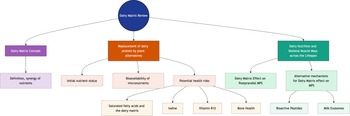
The need for food system transformation on a global scale to ensure a sustainable food supply is a prominent concern for policymakers. Alongside the need for environmental sustainability is the challenge of ensuring food systems can provide a healthy diet for a growing population. The need for a protein transition has dominated the discourse around achieving more sustainable food systems. The ‘protein transition’ refers to a process of gradually replacing animal-derived protein in diets with protein from plants. However, the term is often misused since it typically ignores the fact that protein cannot be replaced in isolation and other nutrients will be affected(Reference Duluins and Baret12,Reference Duluins and Baret13) . Hence, there are concerns that the protein transition concept reduces food to a single macronutrient and so ignores the properties and complexities of the food matrix. Moreover, the protein transition in its literal sense perpetuates the idea that protein food sources are easily interchangeable in relation to health outcomes, implying that one food source can easily be swapped with another in the diet without wider consequence. This narrative review explores the role of dairy in the protein transition, illustrating how the food matrix influences dairy-related health outcomes, nutrient bioavailability and muscle health (Fig. 1).
Schematic diagram into the proposed role of dairy in the protein transition, illustrating how the food matrix influences dairy-related health outcomes, nutrient bioavailability and muscle health. MPS, muscle protein synthesis.

Replacement of dairy protein by plant alternatives
According to UK statistics, milk and dairy foods (excluding butter) contribute 31%, 20%, 13%, 13%, 15% and 18% of dietary protein intake for 1·5–3, 4–10, 11–18, 19–64, 65–74 and 75+ year age groups, respectively(14). Those advising that dairy foods should be replaced with plant foods have generally not recognised that dairy foods comprise a diverse range of foods that vary substantially in nutrient composition. Table 1 displays examples of this variability in nutrient composition for normal and fat-reduced milk, cheese and yogurt, although the variability across all dairy foods is considerably greater(15).
Typical variability of energy and nutrient concentrations in typical dairy foods (from Ref.(15))

Semi-S, semi-skimmed; Fat-R, fat reduced; Tr, trace; ND, not determined; SFA, saturated fatty acids, MUFA, monounsaturated fatty acids; PUFA, polyunsaturated fatty acids.
Despite the wide range of constituent nutrients in dairy foods, there has been a focus only on replacement of protein, which ignores the realisation that such a replacement will lead to a reduction in other key nutrients that dairy foods contain. This notion was demonstrated in a 12-week randomised controlled trial (RCT) involving the partial replacement of animal protein foods, including dairy foods, with plant-derived protein foods which led to a lower intake and status of vitamin B12 and iodine(Reference Pellinen16). The authors concluded that more attention is needed to ensure adequate intakes of micronutrients are achieved when flexitarian diets are adopted. Accordingly, Table 2 illustrates that replacing ∼9 g of protein from 250 g of semi-skimmed milk with that from faba bean flour leads to a marked reduction in supply of calcium, iodine and vitamin B12, although the faba bean provides more dietary fibre. Also noteworthy is the observation that faba bean protein is of lower quality than milk, as illustrated by their respective digestible indispensable amino acid scores (DIAAS). This internationally agreed scoring system for food protein quality is defined by the most limiting digestible indispensable (essential) amino acid content of a protein with digestible indispensable amino acid ratios defined by age group(17). Overall, animal proteins have a higher quality than those from plants, and there is substantial variability between plant protein sources. Protein content and quality is also a concern with plant-based milk alternative beverages since, with the exception of soya-based products, most contain very limited protein(Reference Moore18) and this has caused serious illness in young children(Reference Walsh, Gunn and Given19). There have also been proposals that protein quality is incorporated into relative assessments of environmental impact of animal versus plant foods(Reference McAuliffe20).
Effect of replacing protein in milk with that from faba bean flour on micronutrient and dietary fibre supply

1 Nutrient composition from Ref.(15) for milk and from Ref.(Reference Miller112,Reference Pinchen113) for faba beans; digestible indispensable amino acid score (DIAAS) scores from Ref.(Reference Herreman114) for milk and Ref.(Reference Nosworthy115) for faba beans.
Initial nutrient status
The impact and risk of a dietary transition from dairy to plant-derived foods will clearly depend on the extent of the transition and crucially, the baseline nutrient status of the consumer. Table 3 displays the percentage of three UK populations that have micronutrient intakes below the lower reference nutrient intake (LRNI) and for vitamin D, as a percentage of the reference nutrient intake (RNI) derived from NDNS(14). The LRNI reflects the nutrient intake which satisfies the needs of only 2·5% of the population and consuming nutrients below this threshold represents a serious risk to health. The subpopulation with highest proportion consuming below the LRNI is adolescent females (aged 11–18 years), although there are also some concerns for adolescent males and older females, particularly those of child-bearing age.
The extent of suboptimal intakes of micronutrients in three sections of the UK population (derived from Ref.(14))

1 Lower reference nutrient intake;
2 Reference nutrient intake, values for vitamin D are median intake as %RNI.
The low nutrient intakes of calcium, iodine and, to some degree, magnesium during adolescence are largely due to reduced dairy intake over the past few decades, predominantly milk(Reference Givens21). Reports of similar trends have been presented in the United States Eating Among Teens study (1998–2004)(Reference Larson22) and Australia Raine birth cohort(Reference Parker23). In the US study, mean calcium intakes declined by 153 and 194 mg/d in females and males, respectively, due primarily to reduced milk consumption over the period from 15·9 to 20·5 years of age. The Australian study reported that mean intakes of dairy foods fell from 536 to 464 g/d from ages 14 to 17 years, with the largest reduction observed in females. The reasons behind these reduced dairy and related nutrient intakes during adolescence are difficult to reconcile, but it seems that this subgroup of the community have already undergone a form of dietary transition. In the UK, there is limited evidence that dairy consumption has been replaced by plant-based foods that provide more dietary fibre(Reference Givens24). Moreover, only 7% of this UK age group consume less free sugars than the maximum target (5% of energy intake), with the mean intake being 250% above the maximum target, thus representing a major concern despite free sugars being of plant origin.
The EAT-Lancet diet(Reference Willett25), aimed at being a world-wide reference diet which balanced adequate nutrition with the Earth’s ability to sustainably produce food, has received much publicity. However, it was recently demonstrated that the EAT-Lancet diet is not able to deliver adequate intakes of four micronutrients that are in animal-based foods at higher concentrations and with higher bioavailability(Reference Beal26). Indeed, the EAT-Lancet diet provided only 84%, 55%, 93% and 93% of calcium, iron, zinc and vitamin B12 respectively, relative to the US recommended intakes for females 5–49 years of age. Thus, it is likely that the suboptimal supply of calcium and vitamin B12 in the EAT-Lancet diet was at least partially due to restrictions in dairy intake.
Bioavailability of micronutrients
Although Table 1 shows that milk and dairy products are rich in nutrients such as calcium, iodine and vitamin B12, nutrient composition alone does not reflect the actual bioavailability of these nutrients. For example, the dataset presented in Table 1 does not indicate that calcium in milk and dairy products exhibit a high bioavailability in the digestive tract whilst phytate in some plant-derived foods can substantially limit the absorption of calcium(Reference Shkembi and Huppertz27) and other nutrients, including iron(Reference Ravindran28) and zinc(Reference Lonnerdal29). Research has also shown that plasma vitamin B12 concentration was primarily linked with increasing intakes of vitamin B12 from dairy products and fish, but not from meat or eggs. These data highlight that vitamin B12 in dairy foods exhibits a higher bioavailability than from comparable foods(Reference Vogiatzoglou30). Accordingly, the potential nutrient absorption inhibitors in some plants warrant consideration with regard to a transition from milk and dairy foods to plant-derived foods or milk alternative beverages.
A key feature concerning the high bioavailability of calcium in milk relates to the role of the casein micelle as a complex matrix within the overall dairy matrix. Casein micelles are protein-based colloids that contain ∼70% of total calcium and 50% of total inorganic phosphate(Reference Bijl31) at supersaturated concentrations. Hence, the micelle is an efficient delivery vehicle for calcium and phosphorus and also carries ∼33% of milk magnesium(Reference Grewal32). Moreover, a single serving of milk provides high intakes of calcium which become bioavailable within the digestive tract(Reference Shkembi and Huppertz27). Although studies measuring the bioavailability of calcium from milk and dairy foods and some calcium-fortified foods(Reference Shkembi and Huppertz27) have demonstrated large variability in calcium bioavailability, overall calcium bioavailability was higher for dairy foods than other foods due, at least in part, to the absence of phytate and oxalate which inhibit calcium absorption. Other foods that are rich in calcium (168–206 mg/100 g) but exhibit very low calcium bioavailability values include American spinach (5·1%), Chinese spinach (9·3%) and rhubarb (9·2%). Based on thirty studies which used isotopic techniques to measure the bioavailability of calcium in dairy products, the authors calculated that bioavailability reduced in a logarithmic fashion as intake increased, which they suggest raises questions about the efficacy of calcium fortification strategies(Reference Shkembi and Huppertz27).
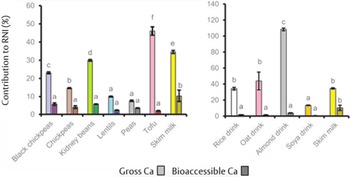
A recent study(Reference Muleya33) compared gross calcium supply and bioaccessible calcium from a range of plant-based foods and beverages with those from skimmed milk are summarised in Fig. 2. This in vitro study used the acclaimed INFOGEST static digestion model(Reference Brodkorb34) coupled with an isotopically labelled 43Ca tracer to enhance the accuracy of the bioaccessibility estimates. The results highlight that, whilst several plant-based foods and drinks provided more gross calcium than skimmed milk, with the exception of kale (not shown), the bioaccessible calcium supply was significantly greater from a serving of skimmed milk. With the exception of the soya product, all milk-alternative beverages were fortified with di- and tri-calcium phosphates; however, this fortification did not translate into increased calcium bioavailability. These data confirm that the correct food vehicle and chemical form of calcium are important considerations for calcium fortification activities. Consistent with the findings of Muleya et al. (2024), Moore et al. (2024)(Reference Moore35) compared the nutritional compositions and nutritional scores of rice-, oat-, soya-, almond- and coconut-based beverages bought at retail in northern Italy with those of ultra heat treated (UHT) whole cow milk and goat milk. None of the plant drinks were fortified with minerals or vitamins. Whilst the plant drinks mostly achieved high front-of-pack scores, their contributions to macro- and micronutrient recommended daily intakes were lower than the cow and goat milk. Notably, the plant-based drinks provided no iodine and only trace amounts of calcium and magnesium, whereas the soya-based drink provided more essential fatty acids and magnesium than milk but contained no iodine.
Contribution of five plant-based foods and four plant-based drinks and skimmed cow’s milk to the recommended nutrient intake (RNI) for calcium based on gross and bioaccessible calcium supplies per serving. For example, tofu provides a significantly (P < 0·05) greater supply of calcium than skimmed milk, yet the milk provides significantly (P < 0·05) more bioaccessible calcium than the tofu. A similar situation is observed whereby the almond drink provides more total calcium than the other products, yet the skimmed milk provides the most bioaccessible calcium. The term bioaccessibility refers to the relative ease with which a nutrient is released from the food matrix during digestion. High ease (high bioaccessibility) indicates that more of the nutrient is likely to be absorbed than if it had a low bioaccessibility. Different letters above pillars indicate a significant difference (P < 0·05). © 2024. Muleya, M., E. F. Bailey and E. H. Bailey. All rights reserved. Reproduced with permission from Elsevier.

Potential health risks
As illustrated in Table 2, the nutrients most likely to become limiting if the protein transition advocates replacing milk and dairy foods with plant-based alternatives are calcium, iodine, vitamin B12 and, to some extent, magnesium, especially if dietary intake of these nutrients is already low.
Bone health
The rate of bone mineral accretion increases substantially at puberty such that about 90% of bone mineral content in adults is completed by the end of adolescence. Moreover, Cashman et al. (2023)(Reference Cashman36) highlighted that ∼40% of adult bone mineral content is created during the 4 years of maximum mineral accretion rate. Weaver et al.(Reference Weaver37) indicated that, in children of European ancestry, maximum bone mineral accretion rate occurs at the age of 14 years for males and 13 years for females. A major concern is that, if optimal bone mineralisation does not occur throughout adolescence, there will be a substantial increased risk of osteoporosis and associated bone fractures in later life, especially for women in the post-menopausal period(Reference Baker and Benayoun38).
Whilst it is widely established that calcium is a key bone-trophic nutrient and that magnesium content of bone is less than for calcium, magnesium has a key role in maintaining optimal bone strength. Dominguez et al.(Reference Dominguez39) demonstrated that low serum magnesium concentrations are associated with osteoporosis and higher risk of fractures. In addition, it is now understood that magnesium plays a key biochemical role in both stages of vitamin D activation(Reference Uwitonze and Razzaque40). Moreover, given that vitamin D has an important function in calcium absorption and that individuals in the UK and elsewhere have suboptimal vitamin D status(Reference Cashman41), there is considerable concern that suboptimal calcium, magnesium and vitamin D status are coinciding, thus creating a much greater risk of impaired bone strength. This perspective is supported by prospective studies that report associations between vegetarian and especially vegan diets and reduced bone mineral density(Reference Iguacel42) and substantially increased fracture rate in individuals aged over 50 years(Reference Tong43). It is of course recognised that bone tissue is highly dependent on skeletal muscle tissue for movement and protection. The importance of skeletal muscle mass and strength, their maintenance throughout life and the interaction with the dairy matrix are examined later in this paper.
Iodine
Whilst iodine is required for the synthesis of thyroid hormones throughout all life stages, an adequate dietary supply is particularly important during pregnancy to ensure adequate synthesis of both maternal and foetal thyroid hormones. These thyroid hormones are vital for adequate development of the foetal brain and nervous system. Until recently, it has been assumed that iodine intake and, hence, status was satisfactory in the UK. Subsequently, several studies have challenged that assumption(Reference Bath44,Reference Vanderpump45) . For instance, Bath and Rayman(Reference Bath and Rayman46) reviewed the evidence on the iodine status of UK pregnant women which showed that a sizeable percentage were iodine deficient as were a group of non-pregnant women of child-bearing age. A more recent study in Ireland found that teenage girls were at the ‘low end of iodine sufficiency’, which raised concerns about their subsequent pregnancies(Reference Mullan47). Moreover, two recent studies(Reference Pawlak48,Reference Perrin49) have also shown that women who follow vegetarian and especially vegan diets are likely to have lower iodine concentration in their breast milk. For example, one of the studies(Reference Pawlak48) assessed that an iodine concentration of 141 µg/l would be needed to ensure an adequate iodine intake by the infant, but found that breast milk from vegan and vegetarian mothers contained mean iodine concentrations of only 89 µg/l and 116 µg/l, respectively, compared with 276 µg/l in milk from omnivore mothers. This observation suggests that adoption of vegetarian and especially vegan diets may have serious health implications for the infant. In addition, detailed dietary assessment studies have recorded reduced iodine intakes in women following vegetarian and vegan diets compared with omnivorous diets. For example, a UK study reported intakes of 112·6, 90·8 and 24·4 µg/d for omnivores, vegetarians and vegans, respectively. Given that the UK RNI for iodine is 140 µg/d(Reference Mansilla50), the low intakes resulting from the vegetarians and vegan diets are concerning and suggest that vegetarians and vegans need more awareness of this potential problem. Interestingly, Mansilla et al.(Reference Mansilla50) found that analysis of shopping data can be used to detect deficiency risks associated with dietary transitions and highlighted the health risks associated with reduced iodine intake. Interestingly, Bath(Reference Bath51) reviewed evidence from nine prospective cohort studies in Europe and two in Tasmania which assessed the association of measured maternal iodine status during pregnancy and tests of neurological development and cognitive performance of the offspring. Overall, these data demonstrated that iodine deficiency during pregnancy in locations of mild-to-moderate deficiency resulted in associations with poorer verbal IQ rather than performance IQ, with one study reporting an association with non-verbal IQ. It was also noted that results from supplementation studies in school-aged children showed no improvements in tests of working memory, suggesting that iodine deficiency during pregnancy cannot be reversed by iodine adequacy in childhood, which suggests permanent damage to the brain has occurred. There also seemed to be benefits from ensuring adequate iodine status pre-pregnancy(Reference Bath51).
Vitamin B12
Vitamin B12 is one of relatively few nutrients that plants cannot supply. Consequently, milk/dairy, meat and fish are the primary food sources of vitamin B12 in the diet. The study of Vogiatzoglou et al.(Reference Vogiatzoglou30) aimed to compare the relative efficacy of dietary sources of vitamin B12 for increasing plasma vitamin B12 concentration. This analysis involved 5,937 participants from the Hordaland Homocysteine Study who had dietary food assessments using a food-frequency questionnaire. Plasma vitamin B12 concentrations were measured at intervals after food consumption. The results showed that the rise in plasma vitamin B12 concentration relative to the amount ingested was most rapid and increased to a higher terminal concentration when supplied by dairy products compared with fish/shellfish and meat products, suggesting the bioavailability of dietary vitamin B12 was substantially higher when provided by milk/dairy foods. Moreover, the efficiency of B12 absorption from food decreases in later life, which can lead to mild vitamin B12 deficiency. However, based on the study by Vogiatzoglou et al.(Reference Vogiatzoglou30), increased milk consumption is likely to be more efficacious than other foods in terms of reversing vitamin B12 deficiency for those without milk intolerances.
Vitamin B12 intakes are typically less in those following diets which exclude, or partially exclude, animal-derived foods. This trend was shown in a study with women of childbearing age (19–39 years)(Reference Sukumar52). The study showed that a small group of non-vegetarians had significantly higher serum vitamin B12 concentrations than vegetarians (248 versus 192 pmol/l). The UK National Institute for Health and Care Excellence (NICE) considers serum vitamin B12 concentrations <133 pmol/l (<180 pg/ml) to be possibly deficient(53).
The functions of vitamin B12 have been established over >100 years with key landmark findings including its treatment of pernicious anaemia. Later important findings included the biochemical interactions of vitamin B12 with folate and data that showed deficiency to be linked with severe and potentially fatal neuropathy(Reference Scott and Molloy54). The recommendation for taking a folic acid supplement (typically 400 µg/d) to reduce the risk of neural tube defects (NTD) ideally before conception and for the first 12 weeks of pregnancy has been in place in the UK for about 32 years. However, the metabolism of folic acid is dependent on an adequate supply of vitamin B12. Consequently, a low maternal vitamin B12 status can lead to a 3-fold increased risk of NTD even when folic acid supplements are used(Reference Ray55,Reference Molloy56) . Ray et al.(Reference Ray55) also suggested that addition of vitamin B12 to folic acid fortification regimes should be considered especially in countries with a low vitamin B12 status. Given the serious impact of low vitamin B12 status on a range of health issues, the topic has been recently reviewed with reference to India(Reference Givens57). A key conclusion was that, although the highly prevalent anaemia was usually regarded as being primarily due to inadequate iron intake, there was evidence that low vitamin B12 status was also an important contributor. Moreover, since the aetiology of anaemia is multifactorial, it requires a multifactorial assessment which must include assessment of vitamin B12 status. Accordingly, there has been a proposal that tea should be fortified with vitamin B12 and folate since the metabolism of both is interdependent.
There is widespread agreement that those following vegetarian and especially vegan dietary patterns are at substantially greater risk of low vitamin B12 status. Obtaining an acceptable source of supplementary vitamin B12 can be challenging, but given the fundamental necessity of vitamin B12, supplementation cannot be overlooked. Moving forward, the aim should be to achieve the UK reference nutrient intake for vitamin B12 of 1·5 µg/d during pregnancy and 2 µg/d during lactation. For those individuals who can drink milk, a 200 ml serving of milk will typically provide ∼2 µg of vitamin B12.
Saturated fatty acids and the dairy matrix
A range of systematic reviews and meta-analyses on the association of dairy foods with cardiovascular disease (CVD) have been published, and overall, most show a neutral relationship, with some showing an inverse association with CVD risk. These observations are evident despite dairy foods being the largest source of dietary saturated fatty acids (SFA) which are known to increase circulating low-density lipoprotein cholesterol (LDL-C). This subject, including possible mechanisms which can explain the counterintuitive lack of SFA-related CVD, has been recently reviewed in detail(Reference Givens58) and is beyond the scope of the present review.
There is evidence that SFA in different foods and by implication different food matrices can have different health-related impacts. Three key studies(Reference de Oliveira Otto59–Reference Vogtschmidt61) have indicated that SFA from meat and processed meat have a positive association with significantly increased risk of CVD and related conditions, whilst the same amount of dairy SFA was associated with a significant risk reduction. The recent modelling exercise conducted by Vogtschmidt et al.(Reference Vogtschmidt61) also showed that replacing SFA in processed meat with SFA from milk or cheese was also associated with a reduced CVD risk. Similar conclusions were reached by the meta-analysis of 123 prospective studies, although this compared associations between food groups (not SFA) and risk of coronary heart disease (CHD)(Reference Bechthold62). Overall, dairy foods were not associated with CHD, stroke or heart failure whilst red and particularly processed meat were positively associated with a significantly increased risk of all three outcomes. A range of suggestions as to the reasons for these differential associations have been made. Mozaffarian(Reference Mozaffarian63) suggested that the increased risks linked with meat products may be due to pro-inflammatory and/or pro-oxidative compounds initiated by nitrosamines, haem iron, SFA and high sodium especially in processed meat. Other evidence indicates that the so-called dairy matrix may provide risk-reducing effects which would not be fully explained by single components in the foods(Reference Thorning5).
A key beneficial effect linked to the dairy matrix is a moderation in blood lipid response to a given intake of dairy SFA. Most studied is the comparison between equal intakes of SFA from hard cheese and butter. One of the early studies was a RCT of two weeks duration whereby participants were fed three isoenergetic diets each containing 45g SFA/10 MJ as either semihard cheese, milk or a control diet mainly of butter(Reference Soerensen64). The dairy calcium supplied by these diets was 810, 781 and 0 mg/10 MJ, respectively. The SFA-stimulated increases in serum total lipoprotein cholesterol (TC) and LDL-C were significantly lower on the cheese and milk diets than the control. In addition, faecal fat excretion was higher on the cheese and milk diets than the control and overall, there was a significant negative relationship between change in LDL-C concentration and faecal fat excretion, suggesting that reduced fat absorption (that is, increased faecal fat excretion) may contribute to the moderated TC and LDL-C response. Moreover, calcium intake was greater after consuming cheese than butter, with the possibility that insoluble calcium soaps have been formed together with insoluble calcium–phosphorus complexes with bile acids(Reference Lorenzen and Astrup65,Reference Vaskonen66) . Interestingly, Lorenzen and Astrup(Reference Lorenzen and Astrup65) explored the mechanisms that underpin the moderated TC and LDL-C responses to SFA within the cheese matrix. These studies demonstrated that the cholesterol-moderating effect was greater than could be explained just by increased faecal fat excretion. However, the increased dairy calcium intake also resulted in greater faecal excretion of bile acids (Table 4), potentially resulting from bile acids binding with calcium (and probably phosphate) leading to less bile acid recycling through entero-hepatic circulation. This response could result in enhanced uptake of circulating cholesterol by the liver for synthesis of more bile acids resulting in reduced LDL-C concentration in the blood.
Faecal excretions resulting from the four dairy dietary treatments (derived from Ref. (Reference Lorenzen and Astrup65))

1 LC, low calcium, HC, high calcium, HF, high fat, LF, low fat;
2 Standard error;
3 Based on two-way ANOVA.
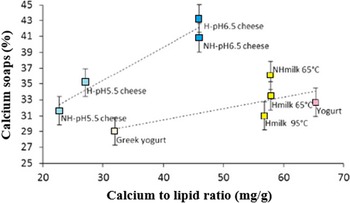
It has been known for a long time that calcium-dairy fatty acid saponification can occur in the intestines with subsequent excretion of the insoluble calcium-soaps in faeces. Bosworth et al.(Reference Bosworth67) showed in 1918 that infants fed cow milk produced faeces containing large quantities of calcium soaps, which was not observed in breast-fed infants consuming breast milk with lower calcium concentration. The key role of calcium in this process was confirmed in a study with cow’s milk where most of the calcium was removed(Reference Lamothe68). As noted above, there has been a range of studies in recent times(Reference Bosworth67–Reference O’Connor69) related to the dairy matrix, the results of which have implied calcium–fatty acid saponification. However, few, if any, of the human studies that compared cheese with butter chemically confirmed the presence of calcium soaps in faeces alongside the moderated blood lipid responses. In addition, there has been limited in vivo examination regarding the impact of the physical food form and the susceptibility for saponification to occur. However, aspects were reported by Lamothe et al.(Reference Lamothe68) using an in vitro gastrointestinal environment. This study measured the proportion of the fat initially present in a range of dairy food matrices that gave rise to calcium soaps by the completion of the digestion period. The authors examined liquid matrices (milk with three combinations of homogenisation or not and heat treatment), semi-solid matrices (three types of yoghurt) and solid matrices (cheese made from four combinations of homogenised or not milk and pH) and reported that liquid and semi-solid matrices generated the least calcium-soap. Interestingly, there was a small increase in soap production in milk and standard yoghurt as calcium:lipid ratios increased, but the rate of response was lower than for the solid cheese matrices which also generated considerably more calcium soap at similar calcium:lipid ratios (Fig. 3). Lamothe et al.(Reference Lamothe68) proposed that this observation may be due to the high calcium concentration in cheese matrix particles close to the lipid droplets. Broadly, calcium soap synthesis was more efficient with the solid cheese matrices, highlighting that the nature and physical form of the matrix is important for its effectiveness. The authors correctly concluded that follow-up human studies are warranted, but their findings are supported by the recent human randomised parallel study which examined the effect of 6-week consumption of ∼40 g of dairy fat consumed as unmelted cheddar cheese, melted cheddar cheese or a ‘deconstructed’ cheese (made up from butter, calcium caseinate and calcium carbonate) on changes in circulating lipids, glucose and insulin concentrations(Reference O’Connor69). No effect of the diets was reported on anthropometrics, blood pressure, fasted blood glucose or serum insulin, but the melted cheese significantly increased both TC by 0·20 mmol/l (P = 0·027) and triacylglycerols by 0·17 mmol/l (P = 0·049) more than the unmelted cheese. The authors highlighted that these small changes were clinically meaningful based on studies which have confirmed that lower values have been shown to reduce the risk of major vascular events. No significant effects were observed for high-density lipoprotein cholesterol, LDL-C and very low-density lipoprotein cholesterol, although the trend in LDL-C matched that of TC.
Relationship between the proportion of calcium soaps at the end of digestion and calcium to lipid composition ratio for liquid (milk), semi-solid (yoghurt) and solid (cheese) dairy matrices. The cheese was made from homogenised (H) and non-homogenised (NH) milk at pH values of 5·5 and 6·5. NH milk was treated at 65 °C, H milk was treated at 65 °C and 95 °C. The figure illustrates that more calcium soaps are produced from the solid cheese matrix than the liquid or semi-solid matrices and that cheese produced at pH 6·5 has soap formation greater than when produced at pH 5·5. © 2017. Lamothe, S., N. Rémillard, J. Tremblay, and M. Britten. All rights reserved. Reproduced with permission from Elsevier.

Dairy nutrition and skeletal muscle mass across the lifespan
The importance of skeletal muscle for physiological health across the lifespan is best highlighted by the positive relationship between muscle mass and age-specific indices of muscle function and cardiometabolic health. Examples include, but are not limited to, taking the first steps during childhood, achieving peak muscular strength, power and aerobic capacity during young adult life, and maintaining mobility and independence during older adult life(Reference Sayer70). Beyond locomotion, skeletal muscle also exhibits important metabolic roles in regulating blood glucose homeostasis, fat oxidation and energy expenditure, thereby reducing the risk of diabetes, obesity and cardiovascular disease(Reference Wolfe71). Alongside physical activity and exercise as key lifestyle strategies, adequate dietary protein intake is widely regarded as fundamental to optimising muscle mass across the lifespan(Reference Cermak72). Accordingly, dietary guidelines typically adopt a muscle-centric approach when devising protein recommendations for children/adolescents, young adults and older adults(Reference Burd73).
The key metabolic process that underpins changes in skeletal muscle mass across the life course, at least in otherwise healthy individuals, is termed muscle protein synthesis (MPS). Multiple variables related to protein nutrition, including the amount, type and timing of ingested protein, have been shown to modulate the postprandial response of MPS. By collating data from a series of dose–response studies, we (led by Dr Daniel Moore) calculated that the optimal per meal protein dose for maximal postprandial stimulation of MPS was equivalent to ∼0·30 g/kg body mass (BM) in young adults and ∼0·40 g/kg BM in older adults(Reference Moore74), with these acute data often extrapolated to daily protein recommendations. Interestingly, >80% of the studies used to inform these protein recommendations in young and older adults were conducted using isolated dairy proteins as the test protein source.
Dairy nutrition has also played a fundamental role in developing our basic understanding into the postprandial regulation of MPS(Reference Phillips75–Reference Witard77). For instance, by isolating casein and whey protein fractions from milk in their natural form, studies in young(Reference Tang78) and older(Reference Burd79) adults have demonstrated a greater postprandial stimulation of MPS after ingesting a fast digested and leucine-rich whey protein drink compared with a dose-matched (20 g) micellar casein protein drink that is digested at slower rates and exhibits a lower leucine content than whey protein. Accordingly, it has generally been accepted that digestion rate and amino acid composition are key nutritional factors that determine the anabolic potential of a protein source. On a mechanistic level, the ‘leucine trigger hypothesis’ was subsequently conceived whereby a rapid rise in blood leucine concentrations (that is, within 30–60 min post ingestion) was proposed to serve as a key trigger to stimulate MPS(Reference Tang78). However, dietary protein intake is derived primarily from whole foods rather than isolated intact proteins; hence, more recent interest has focused on the postprandial response of MPS to commonly consumed protein dense foods, including dairy products(Reference Gorissen80).
Regarding the protein transition, plant proteins exhibit lower digestibility scores, are deficient in at least one essential amino acid (typically methionine or lysine) and generally constitute a lower leucine content relative to animal proteins, including dairy(Reference Gorissen and Witard76,Reference van Vliet81) . Hence, it is critical that any protein transition implements strategies to compensate for lower postprandial MPS rates that, over time, could theoretically compromise muscle mass across the lifespan. Promising compensatory strategies include simply increasing the recommended dose of a plant-based protein(Reference Gorissen82), fortifying plant proteins with additional leucine(Reference Wall83,Reference Norton84) or blending complementary plant proteins to negate any deficiencies in individual essential amino acids that are required for the postprandial stimulation of MPS(Reference Pinckaers85–Reference Kouw87). Nonetheless, any blanket recommendations to simply substitute animal proteins with plant proteins on a like-for-like basis should be met with caution given that commonly consumed protein-rich animal products such as dairy also provide significant sources of other essential nutrients (calcium, vitamin D, potassium, iodine) that have been identified as nutrients of ‘concern’(Reference Phillips88).
Dairy matrix effect on postprandial muscle protein synthesis
In recent years, greater emphasis has been placed on adopting a food-first approach to devising protein recommendations for muscle health across the lifespan(Reference Gorissen80,Reference Burd89) . Based on studies that have assessed the postprandial MPS response to ingestion of protein dense foods such as milk(Reference Wilkinson90), cheese(Reference Hermans91), quark(Reference Hermans92), egg(Reference van Vliet9), beef(Reference Symons93) and salmon(Reference Paulussen94), rather than isolated proteins (whey, casein, soy, wheat, potato), evidence has emerged that nutritional factors beyond protein content per se are important in regulating the postprandial stimulation of MPS and optimising musculoskeletal health across the lifespan. Aligned with the definition of the food matrix, alternative nutritional factors have been broadly classified as nutrient (nutrient–nutrient interactions between protein, carbohydrate, lipid, vitamins and minerals) and non-nutrient components of food (for example, physical structure and processing). For instance, the comparison of protein handling after fluid milk and solid beef patty ingestion revealed an apparent disconnect between protein digestion and amino acid absorption kinetics and the postprandial response of MPS(Reference Burd95). In this study(Reference Burd95), skimmed milk ingestion stimulated a greater increase in MPS during the early (0–2 h) postprandial period compared with beef ingestion, despite the observation that amino acid availability was greater following beef compared with milk ingestion. Given that the 30 g milk and beef conditions were matched for protein content, these data indicate that other components of milk beyond protein digestion and amino acid (leucine) kinetics modulated the postprandial response of MPS. Similar disassociations between protein digestion/amino acid absorption kinetics and postprandial MPS also have been demonstrated in studies that compared 20 g of milk protein concentrate and 20 g of whey protein(Reference Mitchell96), 25 g of casein dissolved in bovine milk serum and 25 g of casein dissolved in water(Reference Churchward-Venne97), or 30 g of milk protein and an equivalent amount of free amino acids(Reference Weijzen98). Accordingly, we(Reference Zaromskyte99) and others(Reference Wilkinson100,Reference Monteyne101) have taken a data-driven approach to suggest that the leucine trigger hypothesis regarding the postprandial regulation of MPS is less relevant, or perhaps even redundant, within the context of protein-rich whole food ingestion. Instead, and aligned with the definition of the food matrix, alternative nutritional components of food (that is, nutrient–nutrient interactions of protein with lipids, vitamins and minerals) and/or non-nutrient components of food (that is, food form, preparation and processing), including dairy products (Fig. 4), have been proposed to modulate the postprandial response of MPS via distinct physiological mechanisms.
Nutrient and non-nutrient components of the dairy matrix implicated in the postprandial regulation of muscle protein synthesis. The schematic illustrates the proposed interaction of nutrient components (left circle) and non-nutrient components (right circle) within the dairy matrix in modulating muscle protein synthesis rates. Nutrient components include proteins (casein and whey), bioactive peptides, lipids, carbohydrates (lactose), vitamins (for example, A, B12) and minerals (for example, calcium, phosphorus). Non-nutrient components encompass factors such as physical form (solid, liquid, gel), preparation methods (heating, glycation, cooking), processing (fermentation), production strategies (for example, vitamin D fortification) and extracellular vesicles (milk exosomes and endogenously released microRNAs). Created with BioRender.com.

The first evidence of a dairy food matrix effect, at least in terms of highlighting the interactive effect of nutrients (that is, nutrient–nutrient interactions) in regulating muscle protein metabolism, was derived from a milk study conducted in healthy young adults(Reference Elliot102). Utilising an elegant study design, participants ingested either a skimmed (8·8 g protein, 0·6 g fat, 12 g CHO) milk drink, a whole (8·0 g protein, 8·2 g fat, 12 g carbohydrate) milk drink that contained a similar protein content but was more energy dense due to the greater fat content, or an energy-matched skimmed milk drink that contained additional protein (14·5 g) but remained low in fat (1 g). Whole milk ingestion resulted in the greater utilisation of ingested amino acids during the postprandial period compared with skimmed milk, independent of the energy content of ingested milk. Given that the only consistent difference between conditions was the fat content of the whole milk, it was concluded that the nutrient–nutrient interaction of protein and lipids underpinned the greater utilisation of protein-derived amino acids in the whole milk condition. Furthermore, this observation of a milk-based nutrient interaction was supported, at least partially, by a more mechanistic follow up study in older men given that ingestion of casein in a milk matrix was shown to slow the appearance of amino acids into the circulation compared with the casein dissolved in water condition; however, postprandial MPS rates were similar between conditions(Reference Churchward-Venne97). Beyond studies of milk ingestion, the matrix effect has also been observed with egg protein(Reference van Vliet9). In this regard, the greater postprandial response of MPS to whole egg than egg-whites only was likely mediated by the interaction of protein with non-protein components of the yolk, such as cholesterol, which has been shown to be involved in the translocation of mTORC1 to the lysosomes as well as lipids, vitamins (especially vitamin D), minerals and other bioactive components that serve to facilitate nutrient sensing mechanisms in muscle tissue. Taken together(Reference van Vliet9,Reference Elliot102) , these data provide accumulating evidence that the interaction of nutrients within whole foods to stimulate postprandial MPS rates is likely greater than each respective nutrient in isolation, or the sum of their constituent parts.
Alternative mechanisms proposed to underpin the dairy matrix effect on postprandial MPS
Preliminary evidence exists that non-nutrient components also underpin the dairy matrix effect on protein handling, at least in terms of protein digestion and amino acid absorption kinetics. The industrial heating of milk to produce protein powder for infant formulas results in glycation whereby sugar binds to the protein as the milk dries. This preparation step of food science results in the attenuated appearance of lysine in the circulation, thereby theoretically reducing essential amino acid availability for the stimulation of MPS. As a proof of concept, a recent study fed healthy young men a milk powder beverage that contained a whey:casein ratio that mimicked commercially available infant formulas. Beverages were exposed to low, moderate or high levels of heat treatment that resulted in 3%, 20% and 50% glycation levels, respectively(Reference Nyakayiru103). This study demonstrated that ingestion of milk protein powder with a moderate or high glycation level resulted in an attenuated rise in plasma essential amino acid concentrations that was entirely attributed to a lower postprandial plasma lysine availability compared with the ingestion of milk protein with a low glycation level that in theory would be rate-limiting for the postprandial stimulation of MPS. As such, the increased glycation levels associated with industrial heat treatment during food preparation impact the protein quality of the milk-based infant formula.
Other non-nutrient components of the dairy matrix that have emerged as potential modulators of muscle protein metabolism relate to the action of extracellular vesicles contained in bovine milk and the presence of bioactive peptides. Milk exosomes have been isolated from extracellular vesicles(Reference Yamada104–Reference Izumi106) and contain bioactive peptides and ∼1500 miRNA species(Reference Izumi106,Reference Hata107) that coordinate organ-to-organ communication between the gut and muscle, that is, the gut–muscle axis. Accordingly, using an in vitro cell model, a recent study reported that incubating C2C12 myotubes with bovine milk exosomes activated Myf5, MyoD and myogenin as muscle regulatory factors (MRF) that serve as key transcription factors in skeletal muscle development(Reference Meng108). Consistent with this observation, the anabolic action of milk exosomes isolated from whey was indicated by an increase in MPS and myotube diameter(Reference Mobley109), albeit in the absence of anticipated changes in mTORC1 signalling that have been linked with milk-derived miR-29b, miR-148a, miR-21 and miR-155. Instead, levels of alternative bovine-specific miRNAs, including miR-149-3p and miR-2881 were upregulated by milk exosomes (Fig. 5). This observation is consistent with a previous study whereby the ingestion of whey protein elicited a greater postprandial appearance of di-/tri-peptides, specifically the valine–leucine dipeptide, the isoleucine–leucine dipeptide and the leucine–leucine peptide into the circulation (and presumably uptake into the muscle) than a soy protein control, each of which has been shown to be a potential stimulator of MPS(Reference Morifuji110). Follow-up in vivo studies are warranted to further elucidate the role of milk exosomes, via release of miRNAs or the presence of bioactive peptides after milk ingestion, in regulating postprandial MPS rates across the lifespan.
Proposed mechanisms underpinning the potential role of milk exosomes in the postprandial regulation of muscle protein synthesis. Overview of how milk exosomes may contribute to the postprandial regulation of muscle protein synthesis (MPS) by delivering microRNAs (miRNAs) into muscle cells. The central panel highlights key miRNAs (miR-29b, miR-148a, miR-21 and miR-155) identified in bovine milk exosomes that are linked to pathways that modulate MPS. Each miRNA is proposed to modulate various intracellular signalling cascades (for example, mTORC1, PI3K/Akt, MEK/ERK), potentially enhancing muscle growth by regulating targets such as AMPK, RASA1 and PDCD4. The schematic also shows C2C12 myotubes (in vitro model) where additional miRNAs (miR-149-3p, miR-2881) and translation factors (eIF4A, MRP proteins) can stimulate muscle growth via non-mTOR-dependent mechanisms. On the right, findings from in vivo rodent studies are summarised, including C57BL/6 young mice (exhibiting greater grip strength and muscle gains) and Fisher 344 rats (showing muscle growth). Created with BioRender.com.

Conclusions
Viewing the protein transition as a single nutrient transition overlooks the complexity and unique properties of food matrices. The continued advancement of food matrix research clearly highlights that consideration of nutrient content alone does not necessarily predict the effect of a given food on various health outcomes. For instance, replacing dairy protein with plant protein is not simple and will lead to lower dietary protein quality and a lower intake of key micronutrients that sit naturally within the dairy matrix. Moreover, it is likely that micronutrients in plant sources will have lower bioavailability. Many UK adolescents, girls in particular, have already undergone a dietary transition leading to reduced milk consumption. Hence, the risk of adverse health outcomes is likely elevated in this subgroup should further dietary transition away from dairy foods occur. There is a particular concern for bone health especially with increased risk of bone weakness in later life. Moreover, the dairy matrix is complex and has beneficial roles in calcium, magnesium and phosphorus intake via the matrix of the casein micelles and for moderating blood lipid increases in which calcium also plays a key role. The key question that requires much consideration concerns which foods in the diet should be replaced by increased plant foods. Proposals(Reference Soerensen64) that new RCT in humans are needed to better understand the most appropriate combination of plant- and animal-based foods for the prevention of chronic diseases including bone fracture are indeed warranted(Reference Wang111).
When considering the protein transition from a musculoskeletal perspective, it is clear that dairy proteins that are rich in essential amino acids and leucine offer distinct anabolic benefits. While strategies to augment the anabolic potential of plant proteins (for example, increasing intake or leucine fortification) may help compensate for suboptimal amino acid profiles, emerging evidence with regards to the dairy matrix effect (nutrient–nutrient and non-nutrient interactions such as exosomes and bioactive peptides) suggests that factors beyond protein quantity also may be pertinent. Hence, nutrition professionals should factor in these broader matrix effects to optimise musculoskeletal health across the lifespan.
To ensure the food system transformation is both environmentally sustainable and optimal from a nutrition perspective, more consideration is needed to the complementary benefits of different food matrices and the holistic evaluation of foods in the protein transition. At the consumer level, communication needs to be more nuanced, moving beyond the simple food swap discourse to ensure that efforts related to the protein transition do not come with unintended negative consequences for public health, particularly for vulnerable groups. This perspective also needs to be considered and reflected in dietary recommendations and food-based dietary guidelines.
Acknowledgements
The authors are grateful to the European Milk Forum for the invitation to speak at the symposium hosted at the Nutrition Society Congress in Belfast on 4 July 2024 and to write this paper based on our presentations.
Authorship
O.C.W., D.I.G. and M.C.M. contributed to the conception and design of the manuscript. A.D.L. and D.I.G. prepared the figures. O.C.W., D.I.G., M.C.M. and A.D.L. contributed to the writing, review and editing of the manuscript. All authors read and approved the final manuscript.
Financial support
The authors’ travel and related costs were funded by the European Milk Forum.
Competing interests
O.C.W. has received travel expenses and honoraria in connection with lectures and meetings from the European Milk Forum, the Dairy Council for Northern Ireland and Dairy UK. M.M. has received travel expenses and honoraria in connection with lectures and meetings from the European Milk Forum, the Dairy Council for Northern Ireland and Dairy Australia. D.I.G. has received travel expenses and honoraria in connection with lectures and meetings from the Dairy Council (now Dairy UK), the Dairy Council for Northern Ireland, Dutch Dairy Association, European Milk Forum and the International Dairy Federation. He has also been a consultant to BioCC OÜ the Estonian Bio-Competence Centre of Healthy Dairy Products, to the Dairy Council (now Dairy UK) on fats in dairy products and cardiometabolic diseases and to the School and Nursery Milk Alliance on research evidence on the role of milk in the diets of infants and children.





 Open access

