





1. INTRODUCTION
1.1. Theoretical background
There is conflicting evidence on whether managing multiple languages influences non-linguistic cognitive control. On one hand, bilinguals have been reported to outperform monolinguals on a range of tasks tapping executive control, such as the Simon task (Bialystok, Craik, Klein & Viswanathan, Reference Bialystok, Craik, Klein and Viswanathan2004), flanker tasks (Costa, Hernández, Costa-Faidella & Sebastián-Gallés, Reference Costa, Hernández, Costa-Faidella and Sebastián-Gallés2009), Stroop task (Hernández, Costa, Fuentes, Vivas & Sebastian-Galles, Reference Hernández, Costa, Fuentes, Vivas and Sebastian-Galles2010) and task-switching (Prior & Macwhinney, Reference Prior and Macwhinney2010). Based on these results, it has been suggested that bilinguals show a better ability in tasks tapping on response inhibition and set-shifting. On the other hand, differences between monolinguals and bilinguals on executive control have not been consistently replicated, leading researchers to argue that these group differences are not robust (Paap, Johnson & Sawi, Reference Paap, Johnson and Sawi2014) and may be confounded by other variables or emerge only in specific groups (Bak, Reference Bak2016). Some studies have found that monolingual-bilingual differences were attenuated when groups were matched on general ability (Duñabeitia, Hernández, Antón, Macizo, Estévez, Fuentes & Carreiras, Reference Duñabeitia, Hernández, Antón, Macizo, Estévez, Fuentes and Carreiras2014) or socioeconomic background (Morton & Harper, Reference Morton and Harper2007). Other research groups have reported that bilingual advantages are more evident when attentional demands are sufficiently high, such as under high-monitoring conditions (Costa et al., Reference Costa, Hernández, Costa-Faidella and Sebastián-Gallés2009), or under high working memory demands (Bialystok et al., Reference Bialystok, Craik, Klein and Viswanathan2004; Jiao, Liu, Wang & Chen, Reference Jiao, Liu, Wang and Chen2017; Morales, Calvo & Bialystok, Reference Morales, Calvo and Bialystok2013). Qu, Low, Zhang, Li, and Zelazo (Reference Qu, Low, Zhang, Li and Zelazo2015) further argued that bilinguals show smaller switch costs and mixing costs than monolinguals when task demands were considered, and proposed that the bilingual advantage reflects a better ability in efficiently managing limited cognitive resources to fulfil goals.
One other possible reason for these divergent findings is that bilinguals vary on a range of factors which might influence their linguistic as well as non-linguistic performance. One of the bilingualism factors that has come under closer investigation in recent years is that of switching frequency. Bilinguals who switch between their languages frequently have been reported to show smaller switch costs in a colour-shape task switching paradigm than those who switch less frequently (Prior & Gollan, Reference Prior and Gollan2011). Similarly, Verreyt and colleagues (Verreyt, Woumans, Vandelanotte, Szmalec & Duyck, Reference Verreyt, Woumans, Vandelanotte, Szmalec and Duyck2015) found that high-switching bilinguals performed better than both monolinguals and low-switching bilinguals on the Simon and flanker tasks. The results showed that effects of switching in language extend beyond the linguistic domain and also influence performance on tasks tapping inhibitory control.
Complementary to switching frequency is the notion of the interactional context of bilinguals, proposed in the adaptive control hypothesis (ACH; Green & Abutalebi, Reference Green and Abutalebi2013). Critically, it should be noted that though the concepts of switching frequency and interactional context are closely related, they are not identical. Switching frequency differentiates bilinguals on a quantitative measure, i.e., high vs. low frequency, whereas interactional context places less emphasis on how often switching occurs and instead highlights the qualitative context of how bilinguals engage switching. In the ACH, Green and Abutalebi (Reference Green and Abutalebi2013) described three interactional contexts: In a single-language context, bilinguals use their two languages in distinct environments and with distinct people. Here, there is little overlap between the bilingual's languages. In contrast, an overlap of languages occurs in the dual-language context and dense code-switching context. In both these contexts, bilinguals switch between their languages but the boundary between languages is clearer in the dual-language context, with switching occurring more often between sentences rather than within a single sentence. This is contrasted with the dense code-switching context, in which language switches happen within a single utterance. It is also common in dense code-switching to see the intermarrying of syntactic and morphological structures between languages, such as is reflected in the term choisieren, which is formed by adding a German particle (–ieren) to the French verb choisir, to choose (Green & Abutalebi, Reference Green and Abutalebi2013).
The ACH (Green & Abutalebi, Reference Green and Abutalebi2013) proposes that distinct interactional contexts place differential cognitive demands on language control processes, such as interference control and response inhibition. If cognitive control processes underlying switching behaviour in single-language, dual-language and dense code-switching contexts are indeed different, then these differences may generalise to non-linguistic domains, in which case bilinguals may show differences in executive control amongst themselves, depending on which interactional context they engage in. Of the few studies that have specifically examined the role of interactional context on executive control, Hartanto and Yang (Reference Hartanto and Yang2016) reported that bilinguals in a dual-language context showed smaller switch costs in a colour-shape switch task than those in a single-language context. These results are largely in agreement with the findings from studies examining the role of switching frequency as discussed above.
We consider switching frequency and interactional context as analogous but discrete factors that could each exert their own influences on executive control. Therefore, in this study, we aimed to approach the investigation of switching behaviour and its effects on attentional control with a specific focus on interactional context. To this end, we compared performance on two tasks of attentional control between bilingual groups in Edinburgh and Singapore. While both places have produced studies investigating the influence of bilingualism on executive control (Bak, Vega-Mendoza & Sorace, Reference Bak, Vega-Mendoza and Sorace2014; Hartanto & Yang, Reference Hartanto and Yang2016; Qu et al., Reference Qu, Low, Zhang, Li and Zelazo2015; Vega-Mendoza, West, Sorace & Bak, Reference Vega-Mendoza, West, Sorace and Bak2015; Yow & Li, Reference Yow and Li2015), to date no studies have made a systematic comparison between populations in the two places. Due to the contrasting sociolinguistic environments in Edinburgh and Singapore, bilinguals in these places engage their languages differently, with a predominantly single-language context in Edinburgh bilinguals and a dual-language/dense code-switching context in Singapore bilinguals. The linguistic environments of Edinburgh and Singapore are described in greater detail in the next section, 1.2: Language use in Edinburgh and Singapore.
As mentioned earlier, since language switching behaviour can be shaped both by personal tendencies as well as the bilingual's interactional context, we further supplemented the investigation of interactional context (Edinburgh vs. Singapore comparison) by also examining the relationship between self-reported switching behaviour and task performance. We asked participants to report two different aspects of their switching behaviour, switching tendency and switching frequency. Switching tendency considers the more qualitative aspect of switching, asking participants to indicate if they kept to a single language or switched between languages when speaking to other bilinguals; switching frequency, on the other hand, provides a more quantitative measure, with participants indicating how often they engaged in switching. More details on these measures are provided below in the methods section. We therefore attempted to employ a more holistic approach in the study of switching behaviour by considering their effects at both the general level of linguistic environment, as well as at a more specific level of individual switching preferences.
We selected two attentional tests that have reported differences between mono- and bilingual subjects, the visual Attention Network Task (ANT; Fan, McCandliss, Sommer, Raz & Posner, Reference Fan, McCandliss, Sommer, Raz and Posner2002) and the auditory Elevator Task (Test of Everyday Attention [TEA], Robertson, Nimmo-Smith, Ward & Ridgeway, Reference Robertson, Nimmo-Smith, Ward and Ridgeway1994) for the following reasons. Firstly, these tasks tap on different components of attentional control and have been commonly used in monolingual-bilingual comparisons with reported differences between groups (Bak et al., Reference Bak, Vega-Mendoza and Sorace2014; Costa, Hernández & Sebastián-Gallés, Reference Costa, Hernández and Sebastián-Gallés2008; Poarch & van Hell, Reference Poarch and van Hell2012; Tao, Marzecová, Taft, Asanowicz & Wodniecka, Reference Tao, Marzecová, Taft, Asanowicz and Wodniecka2011; Vega-Mendoza et al., Reference Vega-Mendoza, West, Sorace and Bak2015; but see Clare, Whitaker, Martyr, Martin-Forbes, Bastable, Pye, Quinn, Thomas, Mueller Gathercole & Hindle, Reference Clare, Whitaker, Martyr, Martin-Forbes, Bastable, Pye, Quinn, Thomas, Mueller Gathercole and Hindle2016; Hindle, Martin-Forbes, Bastable, Pye, Martyr, Whitaker, Craik, Bialystock, Thomas, Mueller Gathercole & Clare, Reference Hindle, Martin-Forbes, Bastable, Pye, Martyr, Whitaker, Craik, Bialystock, Thomas, Mueller Gathercole and Clare2015 for counterarguments). The ANT yields three indices of attentional control: alerting, orienting, and conflict resolution, while the TEA Elevator contains three subtests which assess auditory sustained attention, auditory selective attention, and auditory attentional switching (Robertson et al., Reference Robertson, Nimmo-Smith, Ward and Ridgeway1994). These tasks are described in detail in 2.3: Experimental Tasks.
Secondly, given that language engages not only visual components (i.e., reading and writing) but also auditory ones (i.e., speaking and hearing), these tasks supplement each other as the ANT and TEA Elevator tap visual and auditory processing respectively, thereby allowing us to investigate attentional control in the two distinct modalities in which language is grounded. Thirdly, whereas the ANT is motivated by a theoretical framework of attention and commonly used in an experimental setting, the TEA was designed to simulate day-to-day activities and thus assesses attention using an ecological approach. The use of these tests in conjunction therefore offers a more varied approach in assessing attentional control.
1.2. Language use in Edinburgh and Singapore
Both Edinburgh (United Kingdom) and Singapore are high-income economies (The World Bank, 2017) and classified as countries with very high human development on the Human Development Index (United Nations Development Programme, 2015), indicators that the two places have a comparable standard and quality of life. With regard to language use, however, there are marked differences between them. Firstly, the general language environment in Edinburgh is monolingual, with English being the predominant language. Although Gaelic has the status of an official language in Scotland, it is spoken by only about 1% of the population (National Records of Scotland, 2015), with more than half of them living on the Western Isles. In Edinburgh, the presence of Gaelic is confined to specific places and contexts, such as the Scottish Parliament and educational establishments. In contrast, Singapore has a multilingual environment with four official languages, English, Mandarin, Malay and Tamil. It has also adopted a mandatory bilingual education policy for the past 50 years and thus the majority of its population is bilingual in English and one of the three other official languages. Approximately 74% of the population are Mandarin speakers, 13% Malay speakers, and 9% Tamil speakers (Singapore Department of Statistics, 2016). Because languages are commonly shared between people, code-switching is highly prevalent in everyday life and has been widely studied as a notable characteristic of the Singapore linguistic environment (Bokhorst-Heng & Caleon, Reference Bokhorst-Heng and Caleon2009; Foley, Reference Foley1988, Reference Foley1998; Kamwangamalu & Lee, 1991; Ong & Zhang, Reference Ong and Zhang2010; Xie & Cavallaro, Reference Xie and Cavallaro2016).
Secondly, the multilingual environment of Singapore means that languages are acquired early (if not from birth), partly through immersion, partly through the schooling system. On the other hand, early bilingualism is uncommon in the native Edinburgh population and most functional bilinguals acquire their second language later in life either through immersion or formal studying. Hence, Edinburgh and Singapore bilinguals differ not only in switching behaviour but also in their age of L2 acquisition (AoA). To distinguish the effects of switching and of AoA, we further included a non-switching, early acquisition group from EdinburghFootnote 1 recruited from the same university though most of them grew up in places other than Edinburgh due to reasons mentioned above. This resulted in four groups of participants: English monolinguals (ML), Edinburgh late bilinguals (ELB), Edinburgh early bilinguals (EEB), and Singapore early bilinguals (SB). A comparison between these groups on the key language variables is shown in Table 1.
Summary comparison between groups on key variables.

* a subset of participants was born and raised in the U.K., and the rest within a monolingual community in either Europe or the United States (more details in 2.1: Participants)
In view of the evidence suggesting that monolingual-bilingual comparisons are often confounded by the factor of immigration status (Fuller-Thomson & Kuh, Reference Fuller-Thomson and Kuh2014; Paap, Johnson & Sawi, Reference Paap, Johnson and Sawi2015), all bilinguals recruited in the current study were from a non-immigrant population. More details about bilinguals in the respective groups will be provided in the Methods section below.
To summarise, the aim of the current study was to examine the relationship between attention and switching, as determined: (i) by the interactional context of bilinguals in Edinburgh and Singapore, (ii) by self-reported switching behaviour. Since there is little literature on the effects of interactional context on attentional control performance, we did not make specific predictions with regard to group performance, but instead asked if: (i) bilingual groups in different interactional contexts differed from each other, (ii) self-reported switching measures correlated with the various ANT and TEA Elevator test components.
2. METHODS
2.1. Participants
Monolinguals and Edinburgh bilinguals were recruited from the University of Edinburgh and Singapore bilinguals from the National University of Singapore. Both universities involved are top-tiered universities with comparable international rankings (Quacquarelli Symonds [QS] Top Universities, 2017; Times Higher Education, 2017) and have similar student numbers (National University of Singapore, 2017a, 2017b; The University of Edinburgh, Governance and Strategic Planning, 2017). The relevant comparisons are given in Table 2. The study was approved by the ethics committees of both universities and a total of 245 students participated in the study. Participant background demographics are given in Table 3.
Comparison between Edinburgh and Singapore and the respective universities.
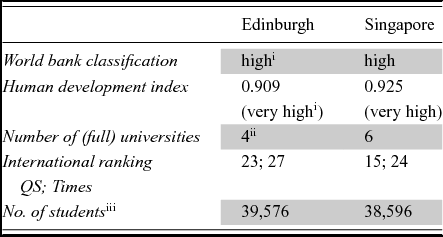
i based on ratings of the United Kingdom
ii total number of universities in East Lothian, the council area to which Edinburgh belongs
iii includes full-time and part-time undergraduates and postgraduates
Participant demographics and self-reported language proficiency. SDs are given in parentheses.
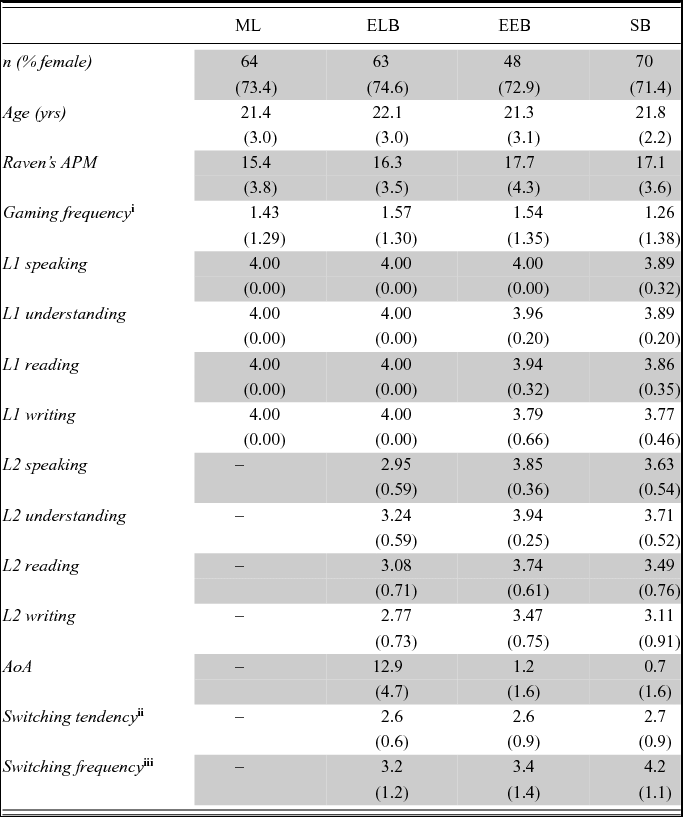
i This was scored on a scale of 0: once a year or less, 1: few times a year, 2: few times a month, 3: few times a week, and 4: daily
ii Rated on a Likert scale of 1: always sticking to one language, 2: frequently sticking to one language, 3: frequently mixing languages, and 4: always mixing languages.
iii Rated on a Likert Scale of 1: once a year, 2: once a month, 3: few times a month, 4: few times a week, and 5: every day.
All ML, ELB, and SB participants were native speakers of English. Given the small numbers of early bilinguals in the native Edinburgh population as described above, it would not have been possible to apply the same criteria to the EEB. Accordingly, this group consisted of individuals who grew up in different countries speaking a variety of languages in addition to English, but all of them were born and raised within a monolingual community: a subset of them in the U.K. (19.2%), others in Europe (65.4%) or the United States (15.4%). L2s of bilinguals included the following: (in ELB) Spanish, German, French, Chinese, Japanese; (in SB) Chinese, Malay; (in EEB) French, German, Italian, Chinese, Spanish, Polish, Greek, Punjabi, Urdu, Czech, Swedish, Russian, Hungarian, Romanian, Serbian, Slovenian. The detailed language combinations of bilinguals in the respective groups are given in Appendix A (Supplementary Materials).
As part of the recruitment process, information on language usage and switching behaviour was obtained from all participants. All ELB confirmed that they used their L2s exclusively with a specific group of people, mainly restricted to language classmates in school. To match the EEB group as closely as possible to ELB on their general linguistic environment and thereby interactional context, we therefore only recruited EEB who described themselves as non-switching bilinguals and reported using their languages within distinct contexts with little overlap between them, such as French at home and English in the community.
All ML had been exposed to second language learning as part of their secondary school curriculum but none had functional proficiency in an L2, with usage limited to classroom learning. ELB were university language majors at an intermediate-advanced level or above. The majority of them had spent a year abroad in a country where their L2 was the official language spoken, either in university or on an internship. ML controls were matched for subject of study and consisted of arts/humanities majors in English Literature, Linguistics or History. SB and EEB were predominantly humanities students, but also included participants from other disciplines of study. ELB began L2 learning as part of their secondary school curriculum from age 13, but only started intensive study upon enrolling in university around the age of 17–18. SB were either simultaneous bilinguals (88.4%) or had acquired their second language before the age of 5; EEB were either simultaneous bilinguals (56%) or had acquired their second language before the age of 6.
2.2. Background Measures
L2 measures, switching behaviour, and gaming frequency
Descriptive statisticsFootnote 2 are presented in Table 3. Participants rated themselves on their proficiency in speaking, understanding, reading, and writing in each of their languages (see Appendix B, Supplementary Materials). Self-reported language switching measures were collected via two items in the switching questionnaire, (adapted from Rodriguez-Fornells, Krämer, Lorenzo-Seva, Festman & Münte, Reference Rodriguez-Fornells, Krämer, Lorenzo-Seva, Festman and Münte2012); the first asked about participants’ switching tendency (Q3, bilingual switching questionnaire, Appendix B, Supplementary Materials), with participants stating which of the following best described the way they used their languages with other bilinguals: always sticking to one language, frequently sticking to one language, frequently mixing languages, always mixing languages. The second item on switching frequency (Q4, bilingual switching questionnaire) asked participants to state how frequently they mixed or switched between languages with these bilinguals (once a year, once a month, few times a month, few times a week, every day).
In line with studies showing that cognitive control can be enhanced by video-gaming experience (Dye, Green & Bavelier, Reference Dye, Green and Bavelier2009; Wilms, Petersen & Vangkilde, Reference Wilms, Petersen and Vangkilde2013), we also asked participants to report their video-gaming frequency.
Raven's Advanced Progressive Matrices (APM)
The APM (J. C. Raven & Foulds, Reference Raven and Foulds1962) was administered as a measure of nonverbal general intelligence2. Previous studies (Costa et al., Reference Costa, Hernández, Costa-Faidella and Sebastián-Gallés2009; Paap & Greenberg, Reference Paap and Greenberg2013) have typically used Set 1 which consists of 12 items; however, as pilot testing showed that our participants were performing at ceiling on this set, we adopted Set 2 of the matrices with a time limit of 10 minutes.
2.3. Experimental Tasks
ANT
Participants saw a row of horizontally aligned arrows appearing either above or below a fixation cross and indicated if the central arrow pointed to the left or right. Trials could be (i) congruent, i.e.,  , (ii) incongruent, i.e.,
  , or (iii) neutral, i.e.,
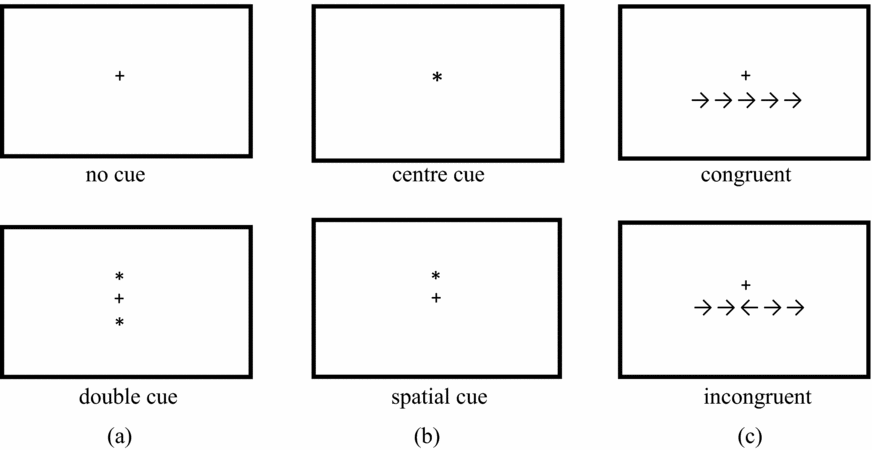
  . There were four cueing conditions: spatial, double, centre, and no cue. The three indices of alerting, orienting, and conflict resolution are given by differences in reaction times (RTs) between the following trial types (Figure 1): (i) Alerting effect – no cue/double cue, (ii) Orienting effect – centre/spatial, and (iii) Conflict effect – incongruent/congruent.
Trial types and indices in the ANT. (a) Alerting effect. (b) Orienting effect. (c) Conflict effect.
Participants were given a practice block consisting 24 trials followed by three experimental blocks of 96 trials each. Feedback on performance was given only in the practice blocks.
TEA Elevator Task
The TEA (Robertson et al., Reference Robertson, Nimmo-Smith, Ward and Ridgeway1994) is a well-established clinical tool used to evaluate attention and the Elevator Task comprises three subtests which assesses different aspects of auditory attention, detailed below. Tones were presented via speakers:
(a) Counting subtest (7 trials) assesses sustained attention. Participants were asked to count the number of beeps presented in a single trial.
(b) Distraction subtest (10 trials) assesses auditory selective attention. Both “basic” tones (as presented in the Counting subtest) and high tones were presented and participants were asked to count only the basic tones, ignoring high ones.
(c) Reversal subtest (10 trials) assesses attentional switching. Three types of tones – high, low, and mid (basic) – were presented and participants had to count either upwards (as prompted by high tones) or downwards (as prompted by low tones) according to cue.
2.4. Statistical analyses
Data with a non-normal distribution were analysed using non-parametric tests and followed up with pairwise comparisons adjusted for p-values where relevant. This included data on L2 measures, video-gaming frequency, gender distribution, and accuracy rates. RT data was analysed with the appropriate analysis of variance (ANOVAs), described in further detail in the relevant sections below. The correlations between self-reported switching tendency/ switching frequency and performance on the respective ANT indices/ TEA subtests were analysed using Spearman's correlational analysis.
3. RESULTS
3.1. Background Measures
Language measures
There were no group differences on age [F(3,241) = 1.22, p = .303], gender distribution [χ2(3) = 0.128, p = .988], and video-gaming frequency [H(3) = 2.52, p = .472]. Self-ratings on L1 proficiency were not analysed as all ML and ELB participants rated themselves a “4” on all components of speaking, understanding, reading, and writing.
Bilingual groups differed on self-rated L2 proficiency in speaking [H(2) = 64.0, p <.001], understanding [H(2) = 49.9, p <.001], reading [H(2) = 30.1, p <.001], and writing [H(2) = 21.6, p <.001]. Pairwise comparisons adjusted for p-values showed that ELB rated themselves lower than both SB and EEB on all aspects (ELB compared to SB: speaking and understanding, ps<.001; reading, p = .001; writing, p = .021; ELB compared to EEB: speaking, understanding, reading, writing, all ps <.001).
There were no differences between groups on self-rated switching tendency [H(2) = 1.88, p = .390], but groups differed on self-rated switching frequency, H(2) = 22.3, p < .001. SB reported switching more frequently than both ELB (p < .001) and EEB (p = .003).
Raven's APM
Raven's APM scores were analysed using a one-way ANOVA. Group differences were observed [F(3, 215) = 3.47, p = .017] and Tukey's HSD revealed that ML scored lower than EEB (p = .017, d = 0.56). All other group comparisons were not statistically significant.
Supplementary analyses
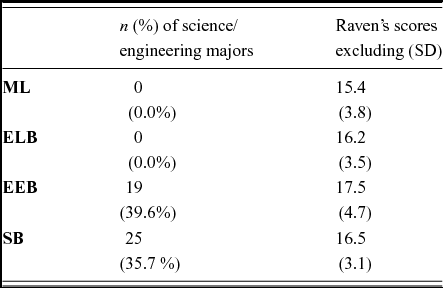
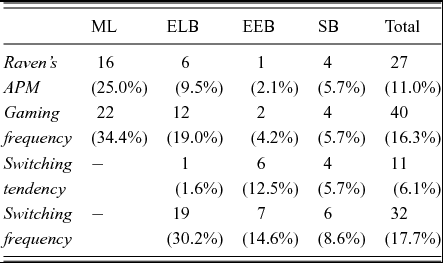
Previous norming exercises on the APM have documented differences in performance across disciplines, with a trend for higher scores in science/engineering majors as compared to arts and humanities majors (J. Raven, Raven & Court, Reference Raven, Raven and Court1998). To explore if the observed group differences in our sample could have been driven by the higher proportion of science/engineering students in the SB and EEB groups, we performed a follow-up analysis excluding science/engineering majors such that the subjects studied were comparable. This analysis revealed no significant group differences in performance, F(3, 170) = 1.87, p = .137. The number of participants excluded in each group and the average scores after this exclusion is given in Table 4.
Number (percentage) of participants in science and engineering disciplines by group.
3.2. Experimental Tasks
Given the group differences on APM scores, we analysed task performance both using the full sample, and also on a subset excluding science/engineering students. Both analyses revealed the same pattern of results; hence we report results on the full set of data here.
ANT
Overall accuracy rates were analysed using the Kruskal–Wallis test and mean RT data using a one-way between-group ANOVA. Performance on the three respective ANT indices was analysed using a 2 (trial-type, within-group variable) × 4 (group, between-group variable) mixed-ANOVA (ANT alerting: no-cue vs. double cue; ANT orienting: centre cue vs. spatial cue; ANT conflict: incongruent trial vs. congruent trial). Significant interaction effects were followed-up by a one-way between-group ANOVA with the corresponding ANT index as the dependant variable.
Overall performance
Mean RTs were calculated for each individual participant and data was trimmed using a 3-SD criterion (this discarded 1.30% of total trials). Three participants had an overall accuracy that was 3 SDs or more below the average mean of all participants (< 91.7%), thus we analysed task performance both with and without their data. Both analyses showed the same results and hence their data were retained.
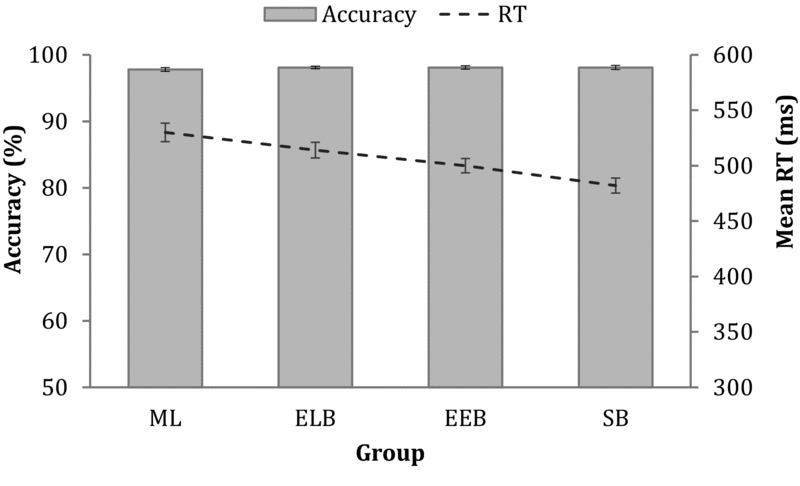
Overall accuracy and mean RTs by group is illustrated in Figure 2. There were no group differences in overall accuracy [H(3) = 2.37, p = .498], but differences were observed in mean RTs [F(3,243) = 8.28, p <.001]. Tukey's HSD revealed that ML were slower than both EEB (p = .018, d = 0.56) and SB (p <.001, d = 0.72), and that ELB were slower than SB (p = .004, d = 0.60). All other group differences were not significant. The same pattern of group differences on mean RTS was observed across all trial types, hence this will not be repeated in the subsequent sections. Mean RTs on the respective trial types are given in Table 5.
Overall performance on the ANT by group, collapsed across trial- and cue-type. Error bars represent ±1 SE.
ANT indices by group. SDs are given in parentheses.

a,b The difference between groups was statistically significant.
Alerting network
The alerting effect was significant, with higher accuracy on double-cue trials (Mean = 96.9%, SD = 3.0%) than no-cue trials (Mean = 96.1%, SD = 2.8%), z = 9.80, p <.001. Participants were also faster on double-cue than no-cue trials [F(1,240) = 627.5, p <.001, ηp2 = .723], but there was no interaction between trial type and group [F(3,240) = 1.78, p = .152, ηp2 = .022]. Group differences were observed on mean RTs [F(3,240) = 8.68, p <.001, ηp2 = .098], with the same pattern reported in the main RT analysis above.
Orienting network
The orienting effect was significant, with higher accuracy on spatial-cue trials (Mean = 97.7%, SD = 2.6%) than centre-cue trials (Mean = 96.2%, SD = 3.2%), z = 7.70, p <.001. On RT data, participants were also faster to respond to spatial-cue trials than centre-cue trials [F(1,240) = 553.3, p <.001, ηp2 = .697]. The Trial Type × Group interaction was not significant, F(3, 240) = 1.01, p = .390, ηp2 = .012. Group differences were observed on mean RTs [F(3,240) = 7.68, p <.001, ηp2 = .088].
Executive network
The conflict effect was significant, with higher accuracy on congruent trials (Mean = 98.7%, SD = 1.4%) than incongruent trials (Mean = 92.8%, SD = 5.3%), %), z = 13.2, p <.001. On RT data, participants were faster on congruent than on incongruent trials, F(1,240) = 2790.9, p <.001, ηp2 = .921. The main effect of group was significant [F(3,240) = 9.01, p =<.001, ηp2 = .101], as was the Group × Trial Type interaction, F(3,240) = 4.58, p = .004, ηp2 = .054. The follow-up one-way ANOVA with the ANT conflict effect as the dependant variable revealed that SB showed a smaller conflict effect compared to both ML (p = .006, d = 0.59) and ELB (p = .016, d = 0.52).
Switching tendency and frequency
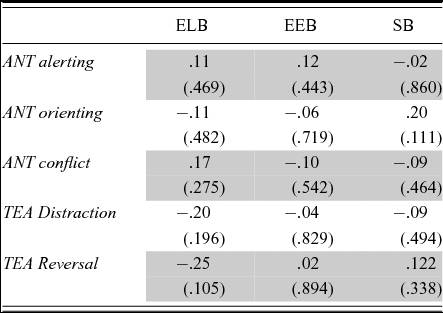
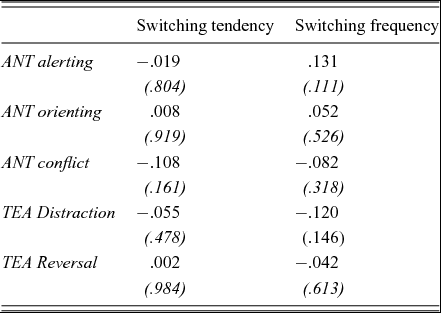
Because group differences were observed on ANT performance, the correlation between self-reported switching behaviour and task performance was investigated within each of the respective bilingual groups (ELB, EEB, SB) using Spearman's correlational analysis.Footnote 3 The Bonferroni correction was applied for multiple comparisons, hence giving a corrected criteria of p < .01. In ELB and SB, the correlation between switching tendency and the ANT conflict effect showed a trend towards significance but without reaching it when corrected for multiple comparisons. Switching frequency was not significantly correlated with any of the indices. Statistics relevant to these analyses are given in Table 6 and Table 7.
Correlations between switching tendency and ANT indices/ TEA subtests in ELB, EEB, and SB. p-values are given in parentheses.

Note. Performance on TEA Counting was not analysed as this subtest was included as a familiarisation task, hence participants were expected to perform at ceiling.
Correlations between switching frequency and the ANT indices/TEA subtests in ELB, EEB, and SB. p values given in parentheses.
TEA Elevator Task
There were no group differences on the Counting [H(3) = 1.34, p = .719] and Distraction subtests [H(3) = 2.24, p = .525], but group differences were found on the Reversal subtest [H(3) = 8.53, p = .036]. Post-hoc comparisons showed that ELB outperformed ML (p = .022). All other group differences were not significant. Group performance on the respective subtests is illustrated in Figure 3.
Performance on the respective TEA Elevator subtests by group. Error bars represent ±1 SE.

4. DISCUSSION
The aim of this study was to examine effects of switching behaviour on attentional control in relation to both the bilingual's interactional context and also to more specific personal tendencies as given by self-reports. Our results showed differences between bilinguals and monolinguals as well as between different bilingual groups. SB outperformed ML and ELB on the ANT conflict index, while ELB were better than ML on the TEA reversal subtest. It is noteworthy that while both the ELB and SB groups showed enhanced attentional control, the superiority in performance was demonstrated on distinct task components. These findings are consistent with the notion put forth by the ACH (Green & Abutalebi, Reference Green and Abutalebi2013), which proposes that differential demands are placed on language control processes depending on the nature of the bilingual's interactional context. In the current study, bilinguals who engage in some form of language switching (dual language/ dense code-switching context) were more efficient in resolving conflicting information arising from congruent and incongruent trials, whereas those who use their languages in distinct contexts (single-language context) showed an enhanced ability in auditory attentional switching.
As compared to ELB and SB, the interpretation of performance in the EEB group is less straightforward. Their performance did not differ significantly from either ELB or SB on both the ANT conflict index and TEA reversal: thus one possible interpretation is that they were performing at a level in between that of the two groups. Since EEB shared greater similarity with ELB in terms of interactional context, but with SB on AoA, this suggests that attentional control could be influenced by an interplay of bilingualism factors; in this case, that of interactional context and AoA. This interpretation would be consistent with the notion that bilingualism is a multi-dimensional construct (Luk & Bialystok, Reference Luk and Bialystok2013), and hence the effects of bilingualism on cognition should be considered from multiple aspects.
As a supplementary aim to the investigation of interactional context, we also examined the relationship between self-reported switching behaviour and task performance. We did not find a significant correlation between self-reported measures of switching (switching tendency, switching frequency) and attentional control indices in any of the EEB, ELB, and SB groups. The results thus found some support for an influence of interactional context on attentional control, but not an influence of self-reported switching behaviour.
This study demonstrates both the advantages and the limitations of a comparison of bilingualism across different societies. The main limitation was the inevitable absence of Singapore monolinguals, dictated by the characteristics of the population as all native Singaporeans would have acquired two languages in childhood as a result of the education system and linguistic environment. For the same reason of population characteristics, the EEB group was more heterogeneous compared to the other three groups as they were made up of participants from different countries. Many of them had lived outside their home country while growing up and those experiences might have influenced their cognitive performance. This may partly explain the higher Raven's APM scores in the EEB group as compared to ML, though we note that these group differences were attenuated when the discipline of study was taken in account.
One other limitation of our study was the absence of a comparison between the dual-language context and dense code-switching contexts as this was difficult to distinguish given that the linguistic environment in Singapore makes it likely for bilinguals to engage in both contexts. Future studies making a distinction between these two interactional contexts would help to further clarify how cognitive control demands differ between them. Another interesting comparison that could be made is that between bilinguals who engage in intersentential vs. intrasentential switching. With regard to participant characteristics, although the current study involved individuals recruited from universities in two different countries, we provided information (see 2.1: Participants) explaining that both the universities involved had highly competitive entrance criteria and were comparable in terms of academic standing at the international level. This thereby indicates that the populations from which participants were recruited were comparable on general academic achievement and motivation. We were, however, unable to consider all demographic variables (socioeconomic status, musical enrichment, cultural orientation etc.) in depth in the current study, and suggest this as a possible investigation for future studies.
Comparisons between different bilingual populations are bound to be difficult due to multiple intervening variables. However, as bilingualism research is adopting an increasingly global agenda (Abutalebi, Guidi, Borsa, Canini, Della Rosa, Parris & Weekes, Reference Abutalebi, Guidi, Borsa, Canini, Della Rosa, Parris and Weekes2015; Bak & Alladi, Reference Bak and Alladi2016; Yang, Yang & Lust, Reference Yang, Yang and Lust2011), such comparisons, carefully conducted and cautiously interpreted, can help contribute to a better understanding of bilingualism in particular and language and cognition in general.
Supplementary material
To view supplementary material for this article, please visit https://doi.org/10.1017/S1366728918000020


 Open access

