


Introduction
Human–wildlife conflicts probably have an ancient origin, perhaps starting in the Neolithic period, and coincide with the sedentarization of human populations, the domestication of some animal species and the beginning of intensive exploitation of the environment (Anderson, Reference Anderson1997). However, in modern times, with the increase in the human population, the occupation of wilderness and the subsequent need to monetize natural resources, the confrontations between wildlife and people are becoming more common and of increasing concern to ecologists and managers (Treves et al., Reference Treves, Wallace and White2009; Gehring et al., Reference Gehring, VerCauteren and Landry2010). This conflict mostly reflects a common scenario of unstable coexistence in which large herbivores and predators (mainly carnivores and birds of prey) damage crops, fisheries, livestock and properties and jeopardize human safety (Peterson et al., Reference Peterson, Birckhead, Leong, Peterson and Peterson2010). This conflict frequently results in persecution of conservation target species, even within protected areas (Graham et al., Reference Graham, Beckerman and Thirgood2005; Peterson et al., Reference Peterson, Birckhead, Leong, Peterson and Peterson2010).
Other groups of species, however, have traditionally been respected, not only because they do not represent a conflict with human interests but also because they provide useful services (although some people ignore the value they provide). Vultures and other large-bodied scavengers have, for millennia, yielded an ecosystem service by eliminating carcasses that would otherwise be carriers of disease (Sekercioglu et al., Reference Sekercioglu, Daily and Ehrlich2004). However, because of profound changes in European agro-grazing systems in the last century, vulture populations have fallen into crisis, declining severely in several European countries (Donázar et al., Reference Donázar, Naveso, Tella, Campión, Pain and Pienkowski1996). Consequently, avian scavengers, and especially griffon vultures (Gyps spp.), are now targets for conservation action. In southern Europe a panoply of management measures over the last 30 years has facilitated a spectacular recovery (>200% in 20 years) of the Eurasian griffon vulture Gyps fulvus population in the Iberian Peninsula and other regions of western Europe (Donázar et al., Reference Donázar, Margalida and Campión2009b). As a result, the Iberian Peninsula is home to the majority (95%) of griffon vultures and other scavengers in the European Union (Margalida et al., Reference Margalida, Donázar, Carrete and Sánchez-Zapata2010).
This successful conservation strategy is now at risk because of an emerging wildlife–human conflict that emerged in the 1990s: attacks by griffon vultures on livestock. This conflict has intensified in the last decade, causing major unrest among farmers but receiving scarce attention from the scientific community (Margalida et al., Reference Margalida, Campión and Donázar2011a). In the face of the public outcry because of attacks on livestock attributed to vultures, there is a need for an objective assessment of this problem and any implications it has for the management and conservation of scavenger populations. Our purpose here is to explore this emerging issue, examining the human, economic and conservation dimensions of this unusual conflict.
Quantifying the impact of vulture attacks on livestock
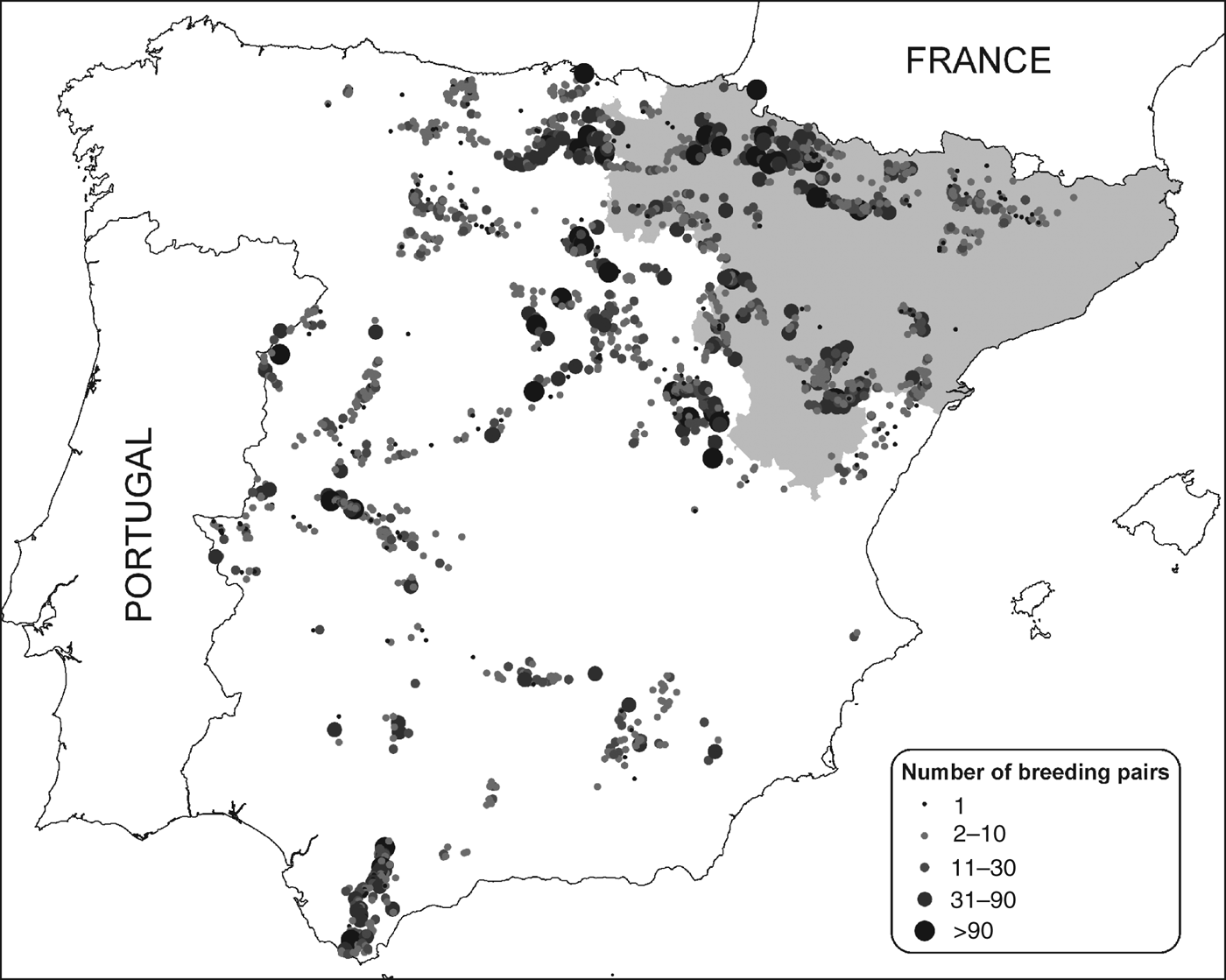
Although aggressive interactions between vultures and livestock have been documented throughout Spain and southern France, for an initial diagnosis of the phenomenon we selected an area of 78,000 km2 in north-east Spain. During our study period (1996–2010) most of the reported attacks on livestock attributed to griffon vultures in Spain were concentrated in this zone (Fig. 1). The local griffon vulture population has experienced continuous growth and in 2008 was estimated at 7,433 pairs, constituting 27.3% of the vulture population in the European Union (Fig. 2; Margalida et al., Reference Margalida, Donázar, Carrete and Sánchez-Zapata2010). This area is characterized by the presence of abundant livestock (an estimated 709,294 cows, 3,236,333 sheep, 109,118 goats and 24,772 horses; MAGRAMA, 2012). Most of this livestock is reared extensively and their numbers increase in the mountains during June–September because of transhumance. Throughout the study area there were supplementary feeding stations for avian scavengers, supplied mainly by intensive farming (Donázar et al., Reference Donázar, Margalida and Campión2009b). Traditionally, livestock carcasses were left in the field to be consumed by vultures but after the outbreak of bovine spongiform encephalopathy (BSE) in 2001 there was a shortage of domestic carcasses generally and at feeding stations in Spain (Donázar et al., Reference Donázar, Margalida, Carrete and Sánchez-Zapata2009a; Margalida et al., Reference Margalida, Carrete, Sánchez-Zapata and Donázar2012). This shortage was pronounced from 2006 onwards following increasingly effective application of European sanitary regulations, and it is estimated that the number of carcasses available to vultures decreased by 80% in the study area (Cortés-Avizanda et al., Reference Cortés-Avizanda, Carrete and Donázar2010; Margalida et al., Reference Margalida, Colomer and Oro2014).
Study area (encompassed by white line) and circum-Mediterranean distribution (shaded black) of the Eurasian griffon vulture Gyps fulvus population.

Distribution of griffon vulture colonies in Spain in 2008. Circle size denotes colony size (number of breeding pairs). The study area is shaded grey (modified from Del Moral, Reference Del Moral2009).
We compiled data from all complaints made to the regional authorities responsible for the management of livestock and wildlife during 1996–2010. Cases of apparent predation of livestock by vultures were generally reported to the authorities by forest rangers, and because of the existence of monetary compensations we are confident that virtually all of the potential livestock losses related to griffon vultures were communicated. Following a complaint lodged by a farmer, authorities sent administrative staff (technical experts and/or forest rangers and veterinarians), if necessary, to evaluate the damage. A complaint was accepted and the farmer compensated if clear evidence was found (i.e. wounds, bruises) demonstrating that the animal was still alive when the vultures began to eat.
Between 1996 and 2010 there were 1,793 reported cases of vulture attacks on livestock in the study region. The number of successful compensation claims for vulture attacks increased with time (r s = 0.55, P < 0.025, n = 15; Fig. 3). Most cases occurred after 2006 when supplementary feeding stations were closed. On average 69% of the complaints presented each year were rejected (range 57.6–73.8%). Most of the cases (60%) were reported between April and June and in 36% of cases the attack appeared to be associated with birthing, generally affecting young and occasionally the mother. The majority of complaints involved sheep (49%), followed by cows (31%) and horses (11%). The economic cost of the compensations assessed during 2004–2010 was EUR 278,590 (Fig. 3).
Changes in the number of complaints about attacks by griffon vultures on livestock received in the study area in north–east Spain (Fig. 2) during 1996–2010. Data on the proportion of complaints accepted (white bars) were not available before 2004. The cost of compensation (1,000s EUR) is shown above the bars.

A conflict with multiple causes?
The opportunistic killing of small- and medium-sized vertebrates has been reported as relatively frequent for some New World vulture species (Lowney, Reference Lowney1999; Avery & Cummings, Reference Avery and Cummings2004) but has only been reported occasionally for Old World vultures (Houston, Reference Houston, del Hoyo, Elliott and Sargatal1994). Griffon vultures, however, are obligate scavengers specialized in the consumption of large ungulate carcasses (Houston, Reference Houston1974). Although before 1990 only anecdotal cases of livestock predation by Eurasian griffon vultures had been reported (Camiña et al., Reference Camiña, Honrubia and Senosiaín1995), from the middle of 2000 onwards the number of cases increased across many regions of Spain. A similar scenario developed in the French Pyrenees: between 1993 and 2009 a total of 596 complaints were documented, with 58.2% of them during 2007–2009 (C. Arthur & V. Zenoni, unpubl. data).
The availability of food resources may have played a significant role in this apparent behavioural change. In western Europe the appearance of BSE caused food shortages for scavengers as a result of changes in agricultural policies (Donázar et al., Reference Donázar, Margalida, Carrete and Sánchez-Zapata2009a; Margalida et al., Reference Margalida, Donázar, Carrete and Sánchez-Zapata2010). To control the disease the EU promulgated strict regulations regarding the use of animal by-products (Regulation [CE] No. 1774/2002). Although in 2009 and 2010 new regulations in some cases permitted the disposal of carcasses to feed avian scavengers (Margalida et al., Reference Margalida, Donázar, Carrete and Sánchez-Zapata2010, Reference Margalida, Carrete, Sánchez-Zapata and Donázar2012), the global result of the regulations is a strong decrease in food availability that has affected demographic parameters and population growth rates (Margalida & Colomer, Reference Margalida and Colomer2012; Margalida et al., Reference Margalida, Colomer and Oro2014) and has caused dietary and behavioural shifts, with vultures now tolerating human presence to within a few metres (Donázar et al., Reference Donázar, Margalida and Campión2009b; Zuberogoitia et al., Reference Zuberogoitia, Martínez, Margalida, Gómez, Azkona and Martínez2010). Complaints peaked between 2006 and 2010, coinciding with the period of food shortage, supporting the idea that attacks by griffon vultures can be at least partially explained by changes in food availability.
More frequent predation by griffon vultures could also be influenced by changes in husbandry practices. Traditionally in many European countries extensive-grazing livestock were tended by shepherds and dogs, deterring predators (Kaczensky, Reference Kaczensky1999). However, current practice in many mountain areas of south-western Europe, where large carnivores are absent, is to let livestock range freely or remain unattended in large fenced enclosures, even at the time of lambing. These circumstances increase the chance of predation by small- and medium-sized predators such as canids and other carnivores, common ravens Corvus corax and even wild boars Sus scrofa (authors, unpubl. data). These animals frequently consume available remains, mainly placentas, but may come in contact with and attack weakened animals, both offspring and mothers, something that would not have been possible with the presence of guard dogs and shepherds. Griffon vultures may consume the kills of other species and the remains of animals that died at birth, and farmers may consider this opportunistic behaviour as an attack.
In addition to farming practices, increasing griffon vulture populations may have an important role in the observed increase in predation cases; i.e. the probability of interactions may have increased simply as a result of this demographic trend. It is now possible to see vultures breeding and feeding near human habitations and infrastructure (Donázar et al., Reference Donázar, Margalida and Campión2009b). Carcasses are consumed very quickly, often before the farmer has the opportunity to determine the cause of death of the animal, so vultures are sometimes mistakenly characterized as fearless predators responsible for the deaths.
Analysis of the spatial distribution of reported cases of vultures attacking livestock shows that complaints are clustered. This suggests either that phenomena increasing the risk of interactions may be operating at a local scale or that there are clusters of reporting behaviour by farmers. Alternatively, the repeated cases of predation by vultures in well-defined areas could be explained by the existence of specialized problem individuals (Linnell et al., Reference Linnell, Odden, Smith, Aanes and Swenson1999). Not necessarily independent of this, it is possible that these observations may be partially explained by spatial variability in husbandry practices, which could increase the risk of killing events. In addition, the spatial and temporal clustering of the conflict may be influenced by human-related factors such as imitation (or patterns of unconscious behaviour) between livestock owners looking for easy compensation.
Discussion
Considering conflicts between humans and wild animals in general, killing of livestock by griffon vultures is a relatively minor problem. Domestic species, mostly dogs, cause greater damage to livestock than vultures. However, supposedly undesirable vultures are being dealt with using illegal practices such as poisoned bait. Traditionally, these practices were used for carnivores blamed for damage to livestock and game; consequently, most cases of poisoning of scavenger birds were incidental (Hernández & Margalida, Reference Hernández and Margalida2008, Reference Hernández and Margalida2009). However, griffon vultures have now become a target and several cases of intentional poisoning have been detected in the study area, affecting dozens of individuals (Margalida et al., Reference Margalida, Campión and Donázar2011a; Margalida, Reference Margalida2012). This new dimension to the problem is of concern as long-lived species such as avian scavengers are extremely sensitive to unnatural increases in mortality rates, which can quickly lead to the extinction of populations (Oro et al., Reference Oro, Margalida, Carrete, Heredia and Donázar2008).
There is a strong current of opinion among managers, governments and some ecologists, attributing the apparent change in the conduct of vultures to lack of food. Although empirical data are scarce (Margalida & Colomer, Reference Margalida and Colomer2012), farmers are demanding an increase in the number and size of supplementary feeding sites for vultures to alleviate a perceived scarcity of vulture food (Margalida et al., Reference Margalida, Campión and Donázar2011a,Reference Margalida, Colomer and Sanuyb). The negative perception of the relationship between humans and vultures is an example of how a minor conflict, with few economic repercussions, can change a quasi-mutualistic relationship that has existed for thousands of years (Margalida et al., Reference Margalida, Donázar, Carrete and Sánchez-Zapata2010). Unfortunately, the media find this conflict attractive and the absence of scientific information has facilitated magnification of the perception of the risks of vulture attacks. In the short term, the media must endeavour to use their influence to base public opinion on scientific facts. In the medium and long term, solutions to this emerging conflict need to be agreed by all stakeholders involved, based on accurate information. Livestock farmers, authorities, scientists and conservation groups should then participate in the design and implementation of future strategies for the management of vulture populations, husbandry practices and the availability of carcasses. Recent changes in sanitary policies allowing the presence of livestock carcasses in the field could partially alleviate the human perception of this conflict (Margalida et al., Reference Margalida, Carrete, Sánchez-Zapata and Donázar2012). In addition, in many countries of Europe and North America the conflict between livestock and predators has been minimized by the use of livestock protection dogs (see review in Gehring et al., Reference Gehring, VerCauteren and Landry2010), which serve as an effective tool to reduce the number of attacks (Espuno et al., Reference Espuno, Lequette, Poulle, Migot and Lebreton2004; Shivik, Reference Shivik2006).
This type of emerging conflict could also occur between humans and other species that, as a result of conservation strategies, recover rapidly. This could occur in Europe in particular as many populations of large vertebrates are recovering successfully (Deinet et al., Reference Deinet, Ieronymidou, McRae, Burfield, Foppen, Collen and Böhm2013) and the gap between wildlife and humans is progressively increasing.
Acknowledgements
We are grateful to D. García, G. Lampreave, J. Ruiz-Olmo (Generalitat de Catalunya), M. Alcántara (Diputación General de Aragón), J. Carreras (Diputación Foral de Álava), J. Larumbe (Diputación Foral de Navarra), I. Mendiola, M. Olano (Diputación Foral de Gipuzkoa) and M. Razin (LPO, France) for providing data, and J.C. del Moral and M. de la Riva for providing Fig. 2. The comments of two anonymous reviewers improved the article. L. Bortolotti kindly revised the English. AM was supported by a Ramón y Cajal research contract from the Ministerio de Economía y Competitividad (RYC-2012-11867).
Biographical sketches
Antoni Margalida is interested in the behavioural ecology and conservation biology of threatened species, particularly avian scavengers. David Campión's interests are in management and conservation of threatened species. José A. Donázar's research in conservation biology focuses on long-lived vertebrates.



