

INTRODUCTION
Over the past century, states have constructed a sophisticated system of international law to constrain the worst impulses of governments. Yet high-profile accusations of international law violations are a common feature of international politics. Allegations related to Russian massacres in Bucha, US prisoner abuse at Abu Ghraib, and recent Saudi humanitarian law violations in Yemen are a few prominent examples. While some reported transgressions spark intense backlash from domestic and international audiences, others provoke little or no reaction.
When do alleged violations generate political costs for accused governments? Without a global executive to punish noncompliance, an action’s consequences depend on how third parties perceive and respond to the government’s behavior. Noncompliance is not simply identified and punished. Instead, allegations trigger a heated rhetorical battle (Adler-Nissen Reference Adler-Nissen2014; Alter, Hafner-Burton, and Helfer Reference Alter, Hafner-Burton and Helfer2019; Cardenas Reference Cardenas2011; Howse and Teitel Reference Howse and Teitel2010; Morse and Pratt Reference Morse and Pratt2022), where strategic messaging campaigns target citizens and political elites in an effort to influence perceptions of the government’s conduct. While international law shapes this rhetorical contest, the political costs governments face may be distinct from the question of legal compliance.
This article develops and tests a new theoretical approach to understanding the politics of noncompliance. Our account focuses on the contested nature of alleged violations. It emphasizes that noncompliance is more than a matter of legal classification; it is an opportunity for governments to dispute key facts and challenge the perceived appropriateness of the international law. These claims, along with countervailing messages from other prominent actors, shape the beliefs and reactions of third parties who can impose political costs on alleged violators.
In our framework, governments accused of international law violations adopt mitigation strategies to reduce backlash and undermine calls for punishment. We provide a typology of mitigation strategies, which may reject the factual basis of the allegation (“denials”), challenge the legitimacy of international law or relevant institutions (“validity challenges”), or argue that extenuating circumstances render the law inapplicable (“applicability challenges”). These strategies aim to reduce certainty and temper outrage among key audiences in order to decrease support for punishment. Government rhetoric competes with counter-messages from international organizations (IOs), which provide information, clarify exceptions, and affirm the legitimacy of international law to encourage enforcement.
This process of contested noncompliance helps explain why citizens and elites sometimes push their governments to punish international law transgressions. We focus specifically on democratic states, where citizens are frequent targets of foreign government influence operations (Martin, Shapiro, and Nedashkovskaya Reference Martin, Shapiro and Nedashkovskaya2019), and where public attitudes are more likely to shape foreign policy choices (Baum and Potter Reference Baum and Potter2008). In such environments, public support is crucial for states to sustain potentially costly punitive policies. Alleged violators recognize this constraint and strategically target public attitudes abroad. Russian efforts to undermine Western public support for military aid to Ukraine and Israeli attempts to combat outrage over its actions in Gaza illustrate the significant political stakes of these battles.
We test our argument with survey experiments that investigate how government mitigation strategies and IO counter-messages shape public and elite willingness to impose punishment. The experiments examine two politically salient areas of international law: military aggression and human rights abuses. We find that foreign government rhetoric is surprisingly effective among the American public: both denials and applicability challenges reduce respondents’ willingness to punish the alleged transgressor. IO counter-messages help rebut both of these government claims, though with varying success. While IO messaging fully counteracts the effect of government denials, it is less effective at neutralizing applicability challenges. A second experiment on foreign policy elites recruited via LinkedIn shows that global foreign policy elites respond similarly to the US public. We also find suggestive evidence that diplomatic officials from the Global North and Global South respond differently to government rhetoric.
Our article makes several important contributions to international relations (IR) and international law scholarship. First, our theory illuminates the importance of strategic political messaging in countries that may punish violations. Government rhetoric interacts with competing IO messages to shape opinion via two channels: certainty over the facts and outrage over the alleged behavior. In highlighting these pathways, our account addresses gaps in existing rationalist and sociological accounts of compliance. Rationalist theories argue that violations provide valuable information to third parties (Axelrod Reference Axelrod1984; Keohane Reference Keohane1984; Morrow Reference Morrow2014; Oye Reference Oye1985), but often neglect the possibility of conflict over information and its relationship to prevailing moral values. Sociological accounts draw attention to shared normative commitments and norm contestation (Barnett and Finnemore Reference Barnett and Finnemore2004; Deitelhoff and Zimmermann Reference Deitelhoff and Zimmermann2020; Dixon Reference Dixon2017; Finnemore and Sikkink Reference Finnemore and Sikkink1998; Franck Reference Franck1990; Panke and Petersohn Reference Panke and Petersohn2012; Wiener Reference Wiener2014), but tend to focus on consequences for norm robustness rather than enforcement. Our theory offers a typology of government strategies that includes both factual and normative arguments. We also provide new evidence on the comparative effect of these strategies and the ability of IOs to rebut them.
Second, our theory highlights the importance of individual-level attitudes for understanding the politics of noncompliance. Conventional accounts tend to explain the choice to punish noncompliance on the basis of a state’s strategic interests (Axelrod Reference Axelrod1984; Bas, Coe, and Gheorghe Reference Bas, Coe and Gheorghe2024; Terman and Voeten Reference Terman and Voeten2018). When alleged violations are salient and politically charged, however, they often spill beyond high politics and take on dynamics similar to public relations scandals.Footnote 1 This process has a distinct logic in which rhetorical competition plays out in the public arena and can amplify outrage and calls for punishment. Understanding which messaging strategies are likely to be persuasive in this context—and when global governance bodies can effectively combat them—is crucial.
Third, our model of contested noncompliance illustrates how perceptions, rather than objective facts, drive patterns of enforcement. This differs from other accounts in which responses to violations emerge straightforwardly from the government’s behavior (Keohane Reference Keohane1984; Tomz Reference Tomz2007) or from legal judgments about compliance (Llamzon Reference Llamzon2007). Instead, we argue that audiences formulate judgments about alleged violations in a turbulent atmosphere of uncertainty, multifaceted preferences, and competing narratives. In this environment, a country may pay political costs for misbehavior even if legal scholars can defend it as falling within the letter of the law; they may also escape political costs for behavior that clearly violates the law.
Finally, our empirical findings identify novel and important heterogeneity in the ability of political actors to shape attitudes about noncompliance. We find that both denials and applicability challenges reduce support for punishment, but validity challenges have no significant effect. We also demonstrate that IOs have asymmetric impacts: while they can convey credible information to counteract government denials, they cannot completely rebut applicability challenges. Such findings add critical nuance to research programs examining perceptions of IOs (Dellmuth and Tallberg Reference Dellmuth and Tallberg2023; Dellmuth et al. Reference Dellmuth, Scholte, Tallberg and Verhaegen2022) and their ability to “name and shame” human rights violators (Hafner-Burton Reference Hafner-Burton2008; Terman and Voeten Reference Terman and Voeten2018). Our findings also caution against generalizing too broadly across countries and contexts. We find preliminary evidence that elites from the Global North sometimes draw different inferences from government messaging than those in the Global South. These differences suggest that government messaging campaigns may resonate unevenly across foreign governments, making it difficult to maintain a broad multinational coalition in support of enforcement.
RESEARCH ON NONCOMPLIANCE COSTS
For centuries, states have used international law to define appropriate conduct, encourage cooperation, and limit conflict. International agreements provide clear expectations about how states are expected to behave (Keohane Reference Keohane1984; McAdams and Nadler Reference McAdams and Nadler2008) and help states coordinate domestic policies (Raustiala Reference Raustiala2002; Slaughter Reference Slaughter2004). Yet despite pressures for compliance, legal violations remain relatively common. States may break the rules because of high short-term payoffs (Downs, Rocke, and Barsoom Reference Downs, Rocke and Barsoom1996; Goldsmith and Posner Reference Goldsmith and Posner2005) or simply because the law itself is ambiguous (Chayes and Chayes Reference Chayes and Chayes1993). Powerful countries may create laws that reflect their own interests and violate them as soon as interests diverge (Goldsmith and Posner Reference Goldsmith and Posner2005; Mearsheimer Reference Mearsheimer1995).
When alleged violations of international law emerge, accused governments face at least two types of potential costs. First, if international or domestic institutions are tasked with adjudicating compliance, a state may face legal costs arising from formal judgments of culpability and associated demands for restitution. Such costs have increased over time due to the growing construction and use of international courts and tribunals (Alter, Hafner-Burton, and Helfer Reference Alter, Hafner-Burton and Helfer2019; Cassese Reference Cassese1998; Goldstein and Martin Reference Goldstein and Martin2000). These institutions issue rulings about noncompliance and may make legal demands for policy reversal, restitution, or other forms of redress.
Second, states accused of violating the law face potential political costs. Third parties like foreign governments, firms, or citizens may learn about an alleged transgression and respond by punishing, excluding, or reducing support for the accused government. Political costs can take the form of direct retaliation, such as the punitive sanctions that many governments imposed on Russia following its invasion of Ukraine. Costs also encompass less direct responses, including reciprocal policy adjustment (Keohane Reference Keohane1986), social shaming (Johnston Reference Johnston2001; Terman Reference Terman2023), outcasting (Hathaway and Shapiro Reference Hathaway and Shapiro2011), and reputational damage (Guzman Reference Guzman2008). Because international law confers legitimacy upon state actions, even the most powerful states may face political costs from transgressions (Hurd Reference Hurd2017; Scott and Ambler Reference Scott and Ambler2007).
To illustrate these two types of costs, consider the Bush administration’s attempt to carve out exemptions to international laws governing the treatment and interrogation of terrorist suspects. In the years following 9/11, the Bush administration used “enhanced interrogation techniques” at black sites around the world. Poland paid legal costs for its involvement in the program: the European Court of Human Rights ruled the government had violated the European Convention on Human Rights and ordered recompensation for victims of torture (European Court of Human Rights 2014). The United States, on the other hand, faced few direct costs from international courts, but understood that the allegations were political liabilities. Between 2002 and 2004, international support for the US war on terror declined sharply in many countries, even before the revelations of prisoner abuse at Abu Ghraib.Footnote 2 By early 2005, 14 countries had withdrawn troops from the “coalition of the willing” in Iraq.Footnote 3 In response, the Bush administration felt compelled to defend its public image (Stimmer Reference Stimmer2019, 277) and avoided openly rejecting legal principles (Krisch Reference Krisch2005). Ultimately, US policy shifted back toward compliance (Nunez-Mietz Reference Nunez-Mietz2016).
IR scholars have devoted significant attention to the origins of political costs. A rationalist tradition tends to emphasize that costs arise via reputational mechanisms, in which violations provide information to third parties, who in turn update their beliefs about the government and take actions that reduce its welfare (Axelrod Reference Axelrod1984; Guzman Reference Guzman2008; Keohane Reference Keohane1984; Tomz Reference Tomz2007). A sociological tradition emphasizes a different mechanism, driven by a logic of appropriateness that motivates states to comply with international norms and laws (Finnemore and Sikkink Reference Finnemore and Sikkink1998; Hurd Reference Hurd1999; Lutz and Sikkink Reference Lutz and Sikkink2000; March and Olsen Reference March and Olsen1998). When alleged violations occur, these same normative motivations can lead actors to ostracize, exclude, and punish transgressors (Erickson Reference Erickson2020; Johnston Reference Johnston2001; Rathbun Reference Rathbun2023).Footnote 4 Political costs of noncompliance may therefore emerge as a result of either informational or normative mechanisms.
Recent research, however, demands revisiting both approaches. On the information side, scholars increasingly recognize that state reputations are complex, multifaceted, and rely on subjective interpretation (Crescenzi Reference Crescenzi2018; Downs and Jones Reference Downs and Jones2002; Weisiger and Yarhi-Milo Reference Weisiger and Yarhi-Milo2015). While violations may signal meaningful information about a government’s disposition, audiences filter this information through their individual values (Brutger and Kertzer Reference Brutger and Kertzer2018; Rathbun et al. Reference Rathbun, Kertzer, Reifler, Goren and Scotto2016). In cases where international laws are perceived as illegitimate, violations could even offer a reputational benefit to governments (Chaudoin Reference Chaudoin2016; Morse and Pratt Reference Morse and Pratt2022). Governments can also strategically influence the information environment via secrecy (Poznansky Reference Poznansky2020), disinformation (Lanoszka Reference Lanoszka2019), or strategic rhetoric (Morse and Pratt Reference Morse and Pratt2022). Together, these findings suggest that the informational pathway to noncompliance costs is more complicated than initially imagined.
A recent turn in norms research also complicates the sociological understanding of political costs. Because norms are intersubjective standards of appropriate behavior (Katzenstein Reference Katzenstein1996), they evolve over time (Finnemore and Sikkink Reference Finnemore and Sikkink1998; Panke and Petersohn Reference Panke and Petersohn2012) and are frequently subject to contestation (Clark et al. Reference Clark, Kaempf, Reus-Smit and Tannock2018; Deitelhoff and Zimmermann Reference Deitelhoff and Zimmermann2019; Keating Reference Keating2014; Stimmer Reference Stimmer2019; Wiener Reference Wiener2014). Such behavioral standards may align with international law or differ from legalized rules in important ways, creating space for governments to exploit “norm-law” gaps (Búzás Reference Búzás2021) and use rhetorical contestation to justify noncompliance (Adler-Nissen Reference Adler-Nissen2014; Evers Reference Evers2017). Taken together, this literature suggests that governments could pay political costs for behavior deemed legally compliant if it violates how citizens understand appropriate conduct. Alternatively, governments may avoid political costs even amid clear legal violations.
In sum, while existing research provides essential insights into the political repercussions of international law violations, several important gaps remain. Rationalist accounts too often presume that audiences accurately interpret facts without considering strategic misinformation, subjective biases, and interpretive contestation. Similarly, constructivist perspectives often overlook how rhetorical contestation shapes support for enforcement actions, instead emphasizing gradual, long-term normative evolution. Neither tradition has provided a systematic typology that includes both information and normative claims, making it difficult to discern which approaches are most influential under different conditions. Finally, existing literature rarely examines the role of countervailing voices, such as IOs, in shaping audience perceptions, leaving unanswered questions about their ability to counter government narratives. In the following section, we address these gaps by introducing a typology of government mitigation strategies, theorizing explicitly about how each strategy influences audience perceptions and explaining how IOs can counteract these rhetorical efforts.
A THEORY OF CONTESTED NONCOMPLIANCE COSTS
Our theory focuses on salient allegations of international law violations, limiting our scope to cases where public and elite attitudes are more likely to be influential in determining foreign policy. “Salient allegations” generally involve behavior that violates long-standing and broadly accepted international laws, such as the prohibition of military aggression or human rights abuses.Footnote 5 These types of violations are more likely to attract media attention, drawing the alleged behavior into public discussion and creating the potential for shifts in attitudes to lead to punishment. Examples include recent extraterritorial assassinations by the Saudi and Indian governments, Myanmar’s repression and forced relocation of the Rohingya minority, Russia’s 2014 invasion and annexation of Crimea, and US torture of terrorist suspects after the 9/11 attacks.
To unpack the political consequences of alleged noncompliance, we develop a theoretical model involving three sets of actors: an accused government, compliance advocates, and relevant audiences. The accused is a government that has allegedly broken international law. This actor is the villain in the traditional compliance story: the government charged with invading its neighbor or torturing its citizens. A public allegation that the government violated international law is the precipitating event that triggers our theory. As others learn about the alleged behavior, the accused government faces the risk of direct punishment or more diffuse reputational damage. It draws from a range of mitigation strategies, detailed below, to minimize these political costs.
Accused governments must contend with compliance advocates who want rules upheld and violators held accountable. Compliance advocates might include advocacy groups, other states, nongovernmental organizations (NGOs), and IOs. Among such actors, we argue that IOs are particularly important compliance advocates as they are both creators and upholders of international law (Abbott et al. Reference Abbott, Keohane, Moravcsik, Slaughter and Snidal2000; Johns Reference Johns2022). States grant IOs formal responsibilities that are specifically designed to create noncompliance costs (Hawkins et al. Reference Hawkins, Lake, Nielson and Tierney2006), including monitoring state behavior, adjudicating potential violations, and publicizing noncompliance to heighten reputation costs (Abbott and Snidal Reference Abbott and Snidal2000; Alter, Hafner-Burton, and Helfer Reference Alter, Hafner-Burton and Helfer2019; Dai Reference Dai2002; Morse Reference Morse2022).
When an alleged violation surfaces, the accused government and compliance advocates compete to shape how the government’s behavior is perceived. Their strategic messaging targets the third set of actors in our model: relevant audiences. These are foreign and domestic actors whose reaction to the violation impacts the welfare of the accused government. Audiences with influence over the policy response of powerful states are particularly important in this process. Relevant audiences observe the debate over the alleged violation, draw inferences about the state’s culpability, and adjust their behavior accordingly. We argue that the audience’s support for punitive enforcement action is driven by two underlying variables: certainty about the government’s culpability and outrage about the alleged behavior. If audiences believe that the government is unquestionably guilty of egregious misbehavior, they may withdraw political support, seek to avoid future cooperation, or directly retaliate against it.
A wide range of actors can serve as relevant audiences in the wake of an alleged violation. Recent work has focused on how domestic citizens (Chaudoin Reference Chaudoin2014; Chilton and Versteeg Reference Chilton and Versteeg2016; Morse and Pratt Reference Morse and Pratt2022) and market actors (Morse Reference Morse2022) respond to noncompliance. In this article, we focus on two key audiences that shape political costs for accused governments: foreign publics and political elites.
We summarize our theoretical model in Figure 1. After an alleged violation surfaces, governments select a mitigation strategy to reduce backlash. These strategies either dispute factual information about the violation (Denial), challenge the legitimacy of the law or an institution (Validity Challenge), or combine factual claims and assertions about the appropriate scope of the law to argue it should not apply (Applicability Challenge). IOs respond strategically to rebut the government’s claims. These competing messages interact to shape the audience’s level of certainty and outrage, which in turn determine support for punishment.

Figure 1. Theoretical Model of Contested Noncompliance
Mitigation Strategies
Mitigation strategies are publicly advanced claims about the alleged behavior. These claims typically set the terms of the ensuing debate. In most cases, the government has preexisting knowledge of the alleged behavior, making it well-positioned to craft a strategic communications campaign. Media coverage of alleged violations often request an initial response from the accused government, increasing its agenda-setting power.Footnote 6
We characterize mitigation strategies based on two underlying dimensions: informational claims about the facts of the allegation and normative arguments about the appropriateness of the alleged behavior. We use these dimensions to develop a typology of strategies that may reduce support for punishing the government.
Information-based claims are assertions regarding the factual details of an alleged violation—the who, what, when, how, and why of what transpired. In principal, governments can employ informational claims to either acknowledge or reject any facts related to the purported transgression. In practice, they often deny aspects of the allegation in order to foster doubt about their culpability or lower outrage over their behavior.
Normative arguments, in contrast, focus on the appropriateness or legitimacy of the alleged behavior. Governments use these claims to portray their conduct as morally permissible, thereby reducing the perceived offensiveness of their actions. A major challenge, of course, is that the government’s conduct has already been alleged to violate international law. Therefore, effective normative claims must justify why the international law itself is either unsuitable or inapplicable in the particular context of the allegation. In other words, the government must provide a persuasive rationale for deviating from the shared normative expectations embodied in the law (Brunnée and Toope Reference Brunnée and Toope2010).
Our typology of mitigation strategies builds upon this basic distinction between informational and normative claims. Accused governments can reduce punitive attitudes by disputing information, contesting standards of appropriateness, or both. Purely informational strategies involve contesting alleged facts. We define Denials as instances in which accused governments reject factual claims related to an alleged violation in order to increase uncertainty about their culpability.
To characterize normative arguments, we draw inspiration from a growing body of research on norm contestation (Deitelhoff and Zimmermann Reference Deitelhoff and Zimmermann2019; Dixon Reference Dixon2017; Wiener Reference Wiener2014). Deitelhoff and Zimmermann (Reference Deitelhoff and Zimmermann2020) note that states often challenge the righteousness or legitimacy of international norms, a process that they call “validity contestation.” Translating this approach to government rhetoric about international law, we argue that governments may try to reduce the perceived offensiveness of alleged violations in a similar manner. An accused transgressor could attack the appropriateness of the law itself, or it might attack the legitimacy of an international institution empowered to enforce the law. We label this strategy a Validity Challenge.
A final category of mitigation strategies combines factual and normative claims to argue that an international law should not apply to the circumstances of the alleged violation. This approach has clear parallels in work on norm contestation, which highlights how governments “[draw] on the norm’s content” to minimize perceived violations (Dixon Reference Dixon2017, 85). Deitelhoff and Zimmermann (Reference Deitelhoff and Zimmermann2020) label attempts to question whether a norm is appropriate for a given situation as “applicatory contestation.” Legal scholarship is also relevant, as the indeterminacy of law can allow states to strategically contest scope and meaning (Hernández Reference Hernández2022) and invoke alternative legal standards or competing principles (Alter Reference Alter, Barnett and Sikkink2023). We label these mitigation strategies as Applicability Challenges.
These three categories describe common techniques in which governments leverage information or normative claims to weaken support for punishment. While we acknowledge that fine-grained distinctions within these categories are possible, we opt for parsimony for both theoretical clarity and to facilitate empirical tests. Below, we expand on each mitigation strategy and provide illustrative examples of their use by accused governments. Notably, we do not argue that these strategies occur with equal frequency; as we discuss below, validity challenges are likely to be less common in the context of legalized international rules.
Denials
Denials occur when governments challenge the factual basis of alleged violations. Assertions of fact can be about the content or scope of the alleged behavior, or about the government’s responsibility. Denials take a variety of forms (Cohen Reference Cohen2013). Absolute denials argue that the alleged incident never occurred. Governments frequently pair this extreme version of the strategy with claims that other information sources are biased or promoting “fake news.” In 2022, for example, the Russian government argued that allegations of Russian troops torturing and executing civilians in Bucha, Ukraine were fabricated.Footnote 7 In other cases of denial, a government may acknowledge an incident but dispute its responsibility for the alleged violation. When the Iranian military shot down a civilian airliner in January 2020, officials initially blamed a mechanical malfunction. As media investigations and intelligence reports began to contradict the report, Iran partially acknowledged its role by attributing the incident to “human error at a time of crisis caused by US adventurism.”Footnote 8
Governments may also issue partial denials to “muddy the waters,” admitting to some facts while obscuring or denying others. In one common version of partial denials, states acknowledge that a government actor participated in a violation but claim the behavior was isolated and did not reflect official policy.Footnote 9 The Bush Administration, for example, attributed prisoner abuse at Abu Ghraib prison to the actions of “a few bad apples.”Footnote 10 These denials of magnitude attempt to minimize the perceived extent of a violation. We provide additional examples in Table A1 in the Supplementary Material. The goal of these and other denials is to introduce uncertainty about the government’s culpability, thereby reducing support for punishment among relevant audiences.
Validity Challenges
Governments can also wield normative claims to justify their behavior without disputing the underlying facts. These validity challenges use rhetoric to portray alleged conduct as appropriate, while challenging the legitimacy of relevant international laws or institutions. While denials induce uncertainty about whether a state actually violated international law, validity challenges question the law’s status as an arbiter of acceptable behavior. A state may attack the law’s legitimacy, ask whether a different law or normative principle should be given permanent priority, or challenge the law indirectly by attacking the international legal body entrusted with monitoring and enforcing compliance.
As with denials, validity challenges can take various specific forms. Direct, unconditional attacks on the law’s legitimacy are most feasible if audiences are only weakly committed to the law (Panke and Petersohn Reference Panke and Petersohn2012). For salient transgressions of established international laws, however, governments may have a more difficult time directly attacking the validity of the law itself (Brunnée and Toope Reference Brunnée and Toope2019). In these cases, governments find ways to incrementally undermine the law’s legitimacy. They may argue that the law is outdated and unsuitable for current challenges. The Israeli government, for example, has argued that international humanitarian law fails to account for the complexity of modern asymmetric warfare.Footnote 11 Alternatively, governments may challenge the law indirectly by attacking the authority of associated international institutions. For instance, during the 1980s, the United States justified its support for anti-government rebels in Nicaragua—a policy the International Court of Justice ruled violated international law—by characterizing the Court as a “semi-legal, semi-juridical, semi-political body, which nations sometimes accept and sometimes don’t.”Footnote 12 Ugandan President Musevenei used similar rhetoric to justify violations of the Rome Statute establishing the International Criminal Court, describing the institution as “a bunch of useless people” that are biased against African nations.Footnote 13 We list further examples of validity challenges in Table A2 in the Supplementary Material.
Applicability Challenges
Finally, applicability challenges employ informational claims while also integrating normative messages to argue that the government’s behavior is appropriate, given the factual circumstances of the alleged violation. In this approach, governments do not challenge the legitimacy of the international law in general—in fact, they often reaffirm their general commitment to legal principles. Instead, they argue that extenuating circumstances should render the law inapplicable in the specific context of the alleged violation. In doing so, they make the case that the government’s behavior was an appropriate response to the situation.
The goal of an applicability challenge is to reduce perceived outrage. In effect, these strategies argue that circumstances warrant a “morally permissible” exception to international law. To make this case persuasively, a government must persuade audiences that extenuating circumstances justify an exemption from the broader rule, as well as make the factual case that these circumstances are present. Despite the dual burdens required by this strategy, applicability challenges are quite common in international politics (see Table A3 in the Supplementary Material for empirical examples). A potential reason is that applicability challenges allow states to make narrower and more selective claims regarding the facts and the appropriate scope of the law.
In applicability challenges, governments may cite formal legal exceptions or offer nonlegal arguments about the appropriate interpretation of the law. Russia’s argument that its invasion of Ukraine was motivated by self-defense, for example, invokes a legally recognized exception to the prohibition against military aggression in the UN Charter. In his first term, U.S. President Trump’s justification for steel and aluminum tariffs on national security grounds also conforms with an institutionalized exemption in World Trade Organization rules. But applicability challenges are not limited to legal exemptions: Trump also justified alleged trade violations by making normative claims about fairness and reciprocity (Brutger and Rathbun Reference Brutger and Rathbun2021; Carnegie and Carson Reference Carnegie and Carson2019).
In our framework, governments draw on one or more of these mitigation strategies to reduce backlash from alleged international law violations. We view these tactics as political tools that governments use to shape the perceptions of key audiences. This can be distinguished from legal tactics governments may employ in domestic or international judicial proceedings. In a court of law, the government’s goal is to formally establish the legality of its actions. While there is some overlap with political strategies—both contexts involve advancing factual claims and interpretative arguments about the meaning of legal provisions—the constraints differ significantly. In legal settings, governments are bound by formal procedural requirements, evidentiary standards, and judicial expectations. In the court of public and elite opinion, in contrast, governments operate under fewer constraints. They can employ a broader array of rhetorical strategies, including explicit validity challenges that attack the appropriateness of international laws.Footnote 14
We also distinguish our theory from the related process of norm contestation, which our model of contested noncompliance differs from in important ways. Norm contestation refers to “the range of social practices, which discursively express disapproval of norms” (Wiener Reference Wiener2014, 1). Although our framework draws from this tradition, our specific focus is narrower: we concentrate on contestation surrounding alleged violations of international law.Footnote 15 Law, like nonlegal norms, derives legitimacy and effectiveness from shared understandings, social interactions, and consistent practices (Brunnée and Toope Reference Brunnée and Toope2010). Nevertheless, legalized rules may also differ from nonlegalized norms in key aspects. Legalization consolidates expectations around formal rules (Búzás Reference Búzás2021) and may grant legitimacy to laws that other norms lack (Franck Reference Franck1990). This may make international laws more resistant to legitimacy-based rhetorical challenges employed against nonlegal norms.
How IOs Constrain Mitigation Strategies
Mitigation strategies are constrained by a variety of contextual factors. Government actions exhibit different levels of transparency, making denials more or less persuasive. Validity and applicability challenges are also context-constrained, given variation in the perceived legitimacy of international laws and the presence of commonly accepted exceptions to them.
While we acknowledge the importance of these contextual factors, our framework prioritizes another important constraint: the presence of an IO that can rebut a government’s mitigation strategy. Although a variety of compliance advocates can contest government justifications, IOs are particularly prominent actors in the domain of international law.Footnote 16 States delegate monitoring powers to IOs to leverage their specialized knowledge and impartiality; as a result, IO messages are perceived as more credible and unbiased than criticism from a single state (Bradley and Kelley Reference Bradley and Kelley2008; Hawkins et al. Reference Hawkins, Lake, Nielson and Tierney2006; Morse Reference Morse2022). IO monitoring can serve as an important informational shortcut for citizens, who are often minimally informed about foreign affairs (Thompson Reference Thompson2006). IOs may also have heightened moral influence due to their perceived legitimacy and rational-legal authority (Barnett and Finnemore Reference Barnett and Finnemore1999). These features should make IOs particularly powerful voices in the battle to shape public and elite perceptions.
IOs as Information Providers
IOs counter government denials by clarifying facts about the state’s behavior.Footnote 17 When states delegate monitoring authority to an IO, it can produce more credible information (Martin Reference Martin, Hawkins, Lake, Nielson and Tierney2006; Pollack Reference Pollack, Hawkins, Lake, Nielson and Tierney2006). Bureaucrats with specialized expertise enhance an organization’s legitimacy and authority (Barnett and Finnemore Reference Barnett and Finnemore1999; Littoz-Monnet Reference Littoz-Monnet2017). Such processes mean that IO information may hold additional sway with foreign publics and elites.
Empirically, states empower IOs to report on state behavior in a wide range of policy domains. In the context of contested noncompliance, IO messages can provide credible information and undermine the plausibility of government denials. For example, the Saudi government initially denied any involvement in the disappearance of journalist and Saudi dissident Jamal Khashoggi in October 2018. The UN Office of the High Commissioner for Human Rights, however, voiced prompt concern over the disappearance, calling for an independent inquiry and suggesting links to the Saudi government.Footnote 18 Shortly thereafter, the Saudi government was forced to shift messaging tactics. In general, we expect that IO rebuttals of government denials will increase audience certainty and produce greater support for punishment.
IOs as Normative Authorities
IOs may also be able to reinforce the legitimacy of international law. Scholars have long theorized that IOs serve as “custodians of the seals of international approval and disapproval” (Claude Reference Claude1966, 371–2). IOs enjoy moral authority (Barnett and Finnemore Reference Barnett and Finnemore1999) and can “act as agents of socialization by pressuring targeted actors” (Finnemore and Sikkink Reference Finnemore and Sikkink1998, 902). Accordingly, IO messaging is often value-laden rather than purely informational (Hafner-Burton Reference Hafner-Burton2008). IOs may underscore the illegality of alleged behavior, mobilizing opposition by tying a transgression to a state’s broader obligation to comply with international law (Strezhnev, Simmons, and Kim Reference Strezhnev, Simmons and Kim2019). In other cases, IOs publicize testimony from victims or empower expert bodies to publicly condemn state misbehavior. For example, in 2005, amid the Bush administration’s claims that waterboarding was not torture and secret renditions were not violations of international law, UN High Commissioner for Human Rights Louise Arbour criticized US policy, calling it “insidious” that governments were “watering down [the] definition of torture, claiming established rules do not apply anymore.”Footnote 19 We anticipate these messages to increase punitive attitudes against accused governments.
The Moderating Effect of IO Legitimacy
IOs that are perceived as legitimate should be particularly effective at influencing audience judgments. A vibrant research program examines the sources and effects of IO legitimacy in world politics (Buchanan and Keohane Reference Buchanan and Keohane2006; Chapman Reference Chapman2009; Dellmuth et al. Reference Dellmuth, Scholte, Tallberg and Verhaegen2022; Tallberg and Zürn Reference Tallberg and Zürn2019; Voeten Reference Voeten2005). When organizations like the UN are perceived as more credible and unbiased, we expect that they will have increased power to reinforce international law and shape individual perceptions. When they become less legitimate in the eyes of audiences, we expect that they will have a diminished capacity to marshal outrage and punishment in the face of law violations.
Audience Attitudes
The final step in our theory is attitude formation. We argue that rhetorical interventions by governments and IOs influence audience support for punishment through two channels: certainty about the government’s culpability and outrage about the alleged behavior. As an individual becomes increasingly certain, or views a transgression as more outrageous, they are more likely to endorse a punitive response to noncompliance.Footnote 20
While our approach can be applied to a broad set of audiences, we focus here on foreign government officials and citizens in third-party democracies. Foreign policy elites are directly involved in assessing culpability and crafting their government’s response to noncompliance. As a result, accused governments often attempt to influence the opinion of political elites in other countries. Elites may also influence how the public conceptualizes and responds to various foreign policy issues (Guisinger and Saunders Reference Guisinger and Saunders2017; Saunders Reference Saunders2022).
Citizens in democracies can shape punishment by setting political incentives for leaders and constraining foreign policy choices (Baum and Potter Reference Baum and Potter2008). In democratic states, the free press provides accused governments a direct pathway for influencing public opinion; political leaders may also be more responsive to shifts in public sentiment. Recent debate in the US over the Israel–Gaza war exemplifies this process. Some Democratic voters, increasingly alarmed about Israeli actions, pressured the Biden Administration to reduce military support and impose costs on the country.Footnote 21 In Europe, public support has been instrumental in permitting countries to muster a strong response to the Russian invasion of Ukraine.Footnote 22 Because these foreign audiences create opportunities for costly punishments and can also derail such efforts, alleged transgressors increasingly target them with strategic public diplomacy campaigns (Hadari and Turgeman Reference Hadari and Turgeman2016; Sheafer and Shenhav Reference Sheafer and Shenhav2009; Simons Reference Simons2014).
TESTING CONTESTATION OVER NONCOMPLIANCE
We test the effect of mitigation strategies and IO counter-messaging using a set of original survey experiments.Footnote 23 An experimental design allows us to randomly assign the government’s mitigation strategy and the IO intervention, avoiding the selection bias that plagues observational data in this area. We build on a growing body of work that leverages experimental methods to assess the effect of international law on public attitudes (Brutger and Strezhnev Reference Brutger and Strezhnev2022; Chaudoin Reference Chaudoin2014; Chilton Reference Chilton2014; Cohen and Powers Reference Cohen and Powers2024; Powers Reference Powers2024; von Borzyskowski and Vabulas Reference von Borzyskowski and Vabulas2024; Zvobgo Reference Zvobgo2019). Experiments are a crucial complement to qualitative research analyzing efforts to minimize the costs of noncompliance (Búzás Reference Búzás2021; Nunez-Mietz Reference Nunez-Mietz2016; Scott and Ambler Reference Scott and Ambler2007).
Our vignette experiment presents a hypothetical scenario where an unnamed foreign government is alleged to have violated international law related to military aggression or human rights. To ensure balance on background beliefs, we randomize the foreign country’s regime type and its history of compliance with international law. We decline to name a specific country in order to minimize the potential for identity–treatment inconsistency and capture the general relationship between mitigation strategies, IO interventions, and punishment (Brutger et al. Reference Brutger, Kertzer, Renshon and Weiss2022).
All respondents view a summary of the alleged violation and are randomly assigned to three levels of treatment. First, they read about the foreign government’s response: either a control condition where the government declines to comment or one of three mitigation strategies. Second, respondents who received a government mitigation strategy are randomly assigned to an IO control group (no further information) or a UN message that rebuts the government’s claims. Finally, a subset of respondents who received the IO intervention also receive a legitimacy treatment: a short priming message highlighting past negative performance by the UN.
Our main outcome of interest is respondents’ willingness to punish the foreign government for the alleged violation. To measure punishment, we rate respondent support for four punitive policy measures: diplomatic condemnation, economic sanctions, expulsion from international institutions, and material support for government adversaries. We combine these via principal components analysis.
Survey Methodology
Our surveys target two key audiences: the American public and global foreign policy elites. The American public is a crucial audience for government mitigation strategies, in large part due to US material power and US leaders’ sensitivity to public opinion. While this sample population may also shed light on democratic citizens more broadly, we are cautious about generalization given the peculiarities of the US public.Footnote 24 We conducted an initial survey of the US public in November 2023, and a subsequent version with the full suite of treatment arms in September 2024. We present the September 2024 results in the main text and include the earlier results in Section A.2 of the Supplementary Material.Footnote 25 The September 2024 survey includes approximately 2,800 US nationals recruited via Lucid Theorem and quota-sampled to US census margins.
A second survey in November and December 2024 targeted foreign policy elites. Elites possess specialized knowledge, experience, and distinct institutional incentives, which may lead them to process information differently than the public in foreign policy contexts (Saunders Reference Saunders2015; Reference Saunders2017). Kertzer (Reference Kertzer2022), on the other hand, finds substantial similarities between elite and public reactions to experimental stimuli. We test for potential differences empirically by recruiting LinkedIn users employed in the foreign and defense ministries of the United States, Canada, the United Kingdom, Australia, India, Pakistan, South Africa, Nigeria, and the Philippines to participate. This sample allows us to assess whether findings from the US public generalize to a diverse set of political elites involved in shaping decisions about punishment.
The two surveys are virtually identical in structure.Footnote 26 Prior to the experiment, respondents answer questions about their foreign policy attitudes and views of the United Nations. They subsequently view and respond to two vignettes, which depict alleged violations related to military aggression and human rights abuses. We randomize the order of these issue areas. To minimize the effect of respondent views on current events, we set each scenario five years in the future. The military aggression vignette reads as follows:
Imagine it is five years in the future. A foreign country is involved in an escalating dispute with a neighboring country.
The foreign country is [a democracy and has a vibrant free press / not a democracy and restricts the press]. It has a history of [following international law and peacefully resolving international disputes / violating international law and using military aggression to resolve international disputes].
News outlets report that the foreign country’s troops may have invaded the neighboring state. Hundreds of casualties are reported, including dozens of civilian deaths.
Respondents are then presented with a mitigation strategy from the foreign government. In the military aggression case, they read:
-
– Control: The foreign government declines to comment.
-
– Denial: The foreign government denies that it was involved in the attack, arguing the action was taken by separatists in the neighboring country.
-
– Validity Challenge: The foreign government acknowledges the attack but argues that traditional norms restricting the use of military force are obsolete and ill-suited to modern security threats.
-
– Applicability Challenge: The foreign government acknowledges the attack but argues that emergency actions are justified to defend itself against countries that harbor terrorists.
Those who receive a government mitigation strategy are then assigned to an IO intervention arm, which includes a control condition (no additional information) or a rebuttal statement attributed to a United Nations expert body.Footnote 27
-
– UN Denial Message: A United Nations expert body says that physical evidence and eyewitness testimony confirm that the foreign government invaded its neighbor.
-
– UN Validity Message: A United Nations expert body says that international laws prohibiting military aggression are a pillar of world order and help prevent war and protect civilians.
-
– UN Applicability Message: A United Nations expert body says that the foreign country’s actions are a flagrant violation of international law, and that the government’s concerns about terrorism do not justify unilateral military aggression.
Finally, respondents who receive a statement from the UN are randomly assigned to a control condition with no additional information or the following negative legitimacy prime: “In the past, the UN has been criticized for its bias, undermining confidence in its judgments.”
The human rights scenario is constructed identically with relevant language on human rights substituted for language on aggression. The allegation involves a government “rounding up and imprisoning members of opposition groups” and suggests that “hundreds of citizens have been arrested without charges and dozens of deaths are reported.” The full text of the human rights treatment and associated messaging strategies are presented in Section A.4 of the Supplementary Material.
After each vignette, subjects proceed to an outcome questionnaire. Our primary outcomes are respondents’ reported certainty about the government’s culpability, outrage about the alleged behavior, and support for punitive policy responses. To gauge certainty, we ask respondents to report how certain they are that the foreign government committed the violation. Our outrage measure asks whether the alleged behavior is a good or bad thing, given the circumstances in the scenario.
To measure support for punishment, we ask respondents to indicate their level of support for four punitive measures that their own government could take in response to the violation. These include a public statement demanding the foreign government cease its actions, an effort to expel the country from the UN Human Rights Council, joining partner countries in imposing economic penalties, and providing material support to victimized parties. Respondents rate support on a five-point Likert scale, and our aggregate measure of punishment combines these four questions via principal components analysis.
Hypotheses
We test five hypotheses derived from our theory. First, we expect that mitigation strategies shape audience attitudes through the mechanisms of certainty and outrage. Our theory predicts that denials should reduce certainty about government responsibility, while validity and applicability challenges should reduce perceived outrage about the behavior.
H1 (Certainty Mechanism): Foreign government denials reduce respondent certainty that the government committed the violation.
H2 (Outrage Mechanism): Foreign government validity challenges and applicability challenges decrease perceived outrage about the violation.
Next, we expect all three mitigation strategies to reduce support for punishment. Although the strategies differ in their underlying logic, each is designed to minimize backlash in the wake of an alleged violation.
H3 (Punishment): Government denials, validity challenges, and applicability challenges decrease respondent willingness to punish the accused government.
Finally, we hypothesize that IO condemnation will increase support for punishment among respondents. We further expect that an IO’s ability to shape public attitudes is conditioned on its perceived legitimacy among respondents.
H4a (IO Intervention): IO messaging increases respondent willingness to punish in the wake of government mitigation strategies, compared to the same strategies without IO interventions.
H4b (IO Legitimacy): IO messaging will have a smaller effect when the IO is perceived as illegitimate.
RESULTS
We begin by analyzing results among the US public, and then assess whether foreign policy elites exhibit similar responses to contestation. The results presented in the main text are pooled estimates that include both the human rights and military aggression scenarios; separate estimates are presented in Table A11 in the Supplementary Material. All reported results cluster standard errors by survey respondent.
Contested Noncompliance and the US Public
Our first results examine how denials, validity challenges, and applicability challenges shape perceptions of certainty and outrage among US nationals.Footnote 28 Figure 2 presents estimated treatment effects and 95% confidence intervals for respondent certainty (left panel) and outrage (right panel). The results are largely consistent with expectations. Denials significantly diminish certainty that the foreign government committed the violation (H1). The effect is approximately 0.3 points on the 5-point scale, or a third of a standard deviation. Validity challenges increase perceived certainty ( $ p<0.01 $
), while applicability challenges have no significant effect.
$ p<0.01 $
), while applicability challenges have no significant effect.

Figure 2. Effect of Mitigation Strategies on Certainty, Outrage
Note: We display ATEs and 95% confidence intervals for each mitigation strategy on perceived certainty (left panel) and outrage (right panel). Effects are relative to the control condition (no government comment). Full results in Table A5 in the Supplementary Material.
The treatment effects on respondent outrage (right panel) are starkly different. Government denials and validity challenges have no significant effect, while applicability challenges produce a clear reduction in outrage. This represents mixed support for H2, which expected both validity and applicability challenges to reduce outrage. Overall, the results in Figure 2 suggest that two mitigation strategies may help accused governments evade responsibility, though they operate through different channels: denials reduce perceived certainty about the government’s culpability, while applicability challenges minimize outrage by pointing to extenuating circumstances.
Next, we examine whether mitigation strategies depress support for punishment. Figure 3 presents treatment effects on our aggregate measure of respondent willingness to punish the foreign government. The results provide some support for H3, which predicts that all three mitigation strategies reduce punitive attitudes. Each strategy’s effect is negative, but only denials and applicability challenges produce statistically significant reductions in willingness to punish. Denials reduce punitive attitudes by 0.16, or a fifth of a standard deviation. Applicability challenges have a larger effect, decreasing willingness to punish by 0.28.Footnote 29 The estimate for validity challenges is negative but falls short of conventional standards of statistical significance ( $ p=0.08 $
). The relatively weak effect of validity challenges is consistent with the results in Figure 2, which show that this mitigation strategy does not significantly reduce either certainty or outrage about the alleged violation.
$ p=0.08 $
). The relatively weak effect of validity challenges is consistent with the results in Figure 2, which show that this mitigation strategy does not significantly reduce either certainty or outrage about the alleged violation.

Figure 3. Effect of Mitigation Strategies on Willingness to Punish
Note: Average treatment effects of denials, validity challenges, and applicability challenges. Effects are relative to the control condition (no government comment). Full results reported in Table A6 in the Supplementary Material.
We calibrate the substantive size of these treatment effects by comparing them to the government’s regime type and history of compliance, which are known to shape foreign policy preferences.Footnote 30 The effect of applicability challenges is more than three times the size of the government’s regime type, and approximately 50% larger than the government’s history of compliance (see Table A6 in the Supplementary Material)—a significant finding given that government messaging might be dismissed as cheap talk. The effect of denials is larger than the foreign government’s regime type, and slightly smaller than its record of compliance.
Our results are robust to alternative measures of punishment, including a simple average of the four punitive policies (Figure A1 in the Supplementary Material) and support for economic sanctions (Figure A2 in the Supplementary Material). In Table A11 and Figure A3 in the Supplementary Material, we report separate estimates for the military aggression and human rights scenarios. We find broadly similar effects, with no statistically significant differences across the two issue areas. The effect of denials is somewhat larger in the military aggression vignette ( $ -0.214 $
vs.
$ -0.214 $
vs. $ -0.103 $
,
$ -0.103 $
, $ p=0.18 $
), which may be attributable to a key difference in messaging across the two scenarios: in the military aggression vignette, denials include an alternative account of events (blaming separatists for the violence), while in the human rights vignette, the government simply disputes that the alleged behavior occurred.
$ p=0.18 $
), which may be attributable to a key difference in messaging across the two scenarios: in the military aggression vignette, denials include an alternative account of events (blaming separatists for the violence), while in the human rights vignette, the government simply disputes that the alleged behavior occurred.
Finally, we assess whether IO interventions can counteract mitigation strategies. We hypothesized that IO rebuttals should increase punitive attitudes in the wake of government mitigation strategies (H4a). We note that there are two potential quantities of interest for understanding IO interventions: (1) the effect size of the IO message, compared with the same mitigation strategy without an IO rebuttal and (2) the effect of the IO message compared to the control condition (no mitigation strategy). We discuss both comparisons below. Because we are interested in the net political costs for the accused government—i.e., whether IO rebuttals can completely nullify the effect of government rhetoric—we give particular emphasis to the latter quantity.
The top left panel of Figure 4 shows the effect of denial strategies, with and without countervailing messages from the UN. When issued in isolation, denials significantly reduce respondent calls for punishment. The addition of informational rebuttals from the UN, however, significantly increases willingness to punish (0.045, $ p=0.01 $
). In fact, UN counter-messages are sufficient to fully neutralize government denials.
$ p=0.01 $
). In fact, UN counter-messages are sufficient to fully neutralize government denials.

Figure 4. Effect of UN Intervention on Willingness to Punish
Note: The figure shows the estimated effect of each treatment arm on respondent willingness to punish the accused state. All effects are relative to the control condition (no government response). Point estimates and 95% confidence intervals are displayed for each treatment. Full results reported in Table A7 in the Supplementary Material.
The top right panel of Figure 4 presents corresponding estimates for the validity challenge strategy. We observe suggestive evidence that UN responses increase willingness to punish, but the difference between the baseline validity challenge condition is insignificant.
The bottom panel examines UN rebuttals to applicability challenges. As shown above, applicability challenges presented without a UN rebuttal significantly reduce the public’s willingness to punish. UN counter-messaging is successfully able to diminish this effect, increasing punitive attitudes by 0.1 ( $ p=0.02 $
). While this is a substantively meaningful increase in punitive attitudes, respondents remain less willing to punish than in the control condition. Unlike denials, applicability challenges continue to reduce support for punishment even when the UN provides a direct counter-message. Applicability challenges are the only such strategy in our study that is robust to countervailing IO messages.
$ p=0.02 $
). While this is a substantively meaningful increase in punitive attitudes, respondents remain less willing to punish than in the control condition. Unlike denials, applicability challenges continue to reduce support for punishment even when the UN provides a direct counter-message. Applicability challenges are the only such strategy in our study that is robust to countervailing IO messages.
We find little empirical support for our final hypothesis (H4b), which anticipates that the perceived legitimacy of the UN conditions the impact of its rebuttals. The bottom estimates of each panel in Figure 4 display this relationship. For denials and validity challenges, the treatment effects of UN messages are indistinguishable with and without the prime. For applicability challenges, the legitimacy prime reduces the estimated treatment effect, but the difference is not significant at conventional levels ( $ p=0.09 $
). One possible explanation for this surprising result is that perceived legitimacy is difficult to manipulate via experimental priming. We also note that power limitations in our experiment preclude the identification of smaller effects (see A.3 of the Supplementary Material for a power analysis). Additional probes in Figure A6 in the Supplementary Material similarly find no significant effects.
$ p=0.09 $
). One possible explanation for this surprising result is that perceived legitimacy is difficult to manipulate via experimental priming. We also note that power limitations in our experiment preclude the identification of smaller effects (see A.3 of the Supplementary Material for a power analysis). Additional probes in Figure A6 in the Supplementary Material similarly find no significant effects.
Overall, the results provide strong evidence that contested noncompliance is an influential process that shapes support for punishment. Denials and applicability challenges significantly depress the public’s willingness to punish the accused government. They do so, at least in part, by shaping perceptions of certainty and outrage about the government’s alleged behavior. While IOs can counter some of these mitigation strategies, their overall effect is mixed: IO countervailing information can nullify denials, but it can only reduce, not eliminate, the impact of a government applicability challenge.
While our experiment cannot offer a definitive explanation for this difference in IO messaging power, we offer two conjectures. First, American citizens may view the UN as a more credible source of factual information than as a moral or normative authority. This could explain why respondents give more credence to UN informational interventions, compared to messages about the appropriate scope of the law. Second, audiences may generally be more easily moved on factual vs. normative matters, regardless of the messenger.
Contested Noncompliance and Foreign Policy Elites
Next, we investigate whether strategic messaging shapes attitudes among foreign policy elites. Policymakers represent a critical audience in our theoretical framework. These actors are direct participants in government deliberations over how to respond to noncompliance, making them a prime target for strategic messaging. Elites may also differ from the public in important ways—including in foreign policy preferences, expertise, views about IOs, and sensitivity to geopolitical or status concerns—that could condition their reactions to competing messages (Dellmuth et al. Reference Dellmuth, Scholte, Tallberg and Verhaegen2022; Kertzer and Renshon Reference Kertzer and Renshon2022; Kertzer Reference Kertzer2022; Renshon Reference Renshon2015; Sheffer et al. Reference Sheffer, Loewen, Soroka, Walgrave and Sheafer2018).
We repeat the survey experiment among a sample of roughly 300 government officials with foreign policy responsibilities.Footnote 31 The officials were recruited using the social media platform LinkedIn.Footnote 32 We target officials working in the foreign or defense ministries of a diverse set of countries that recognize English as an official language. We include countries in the Global North (the United States, Canada, United Kingdom, and Australia) and the Global South (India, Pakistan, South Africa, Nigeria, and the Philippines). This approach provides a broad sample of the target population and allows us to probe differences between the two groups, which may hold distinct perspectives on the legitimacy of international law and the appropriate response to noncompliance (Coe Reference Coe2015; Ikejiaku Reference Ikejiaku2014).
The survey was distributed in November and December 2024 via direct messages (DMs) to LinkedIn users whose profile lists employment in relevant agencies of these countries.Footnote 33 In total, approximately 22,000 users received a DM, and around 440 chose to participate (2.0% response rate). We remove incomplete responses and respondents that report no record of government employment, yielding a final sample of 285 elites.
A majority of respondents (56%) are US foreign policy officials, which may reflect their disproportionate presence on LinkedIn. The next largest groups are respondents from India, Pakistan, Canada, and Nigeria.Footnote 34 A plurality indicated their primary job responsibility was diplomacy, followed by military/defense policy and economic policy. The sample includes a range of reported job titles, most commonly mid-level bureaucratic positions (e.g., “Foreign Service Officer” and “Desk Officer”), while roughly a third served in more senior or specialized positions (e.g.,“Chargé d’Affaires,” “Director,” and “Attorney”). Although not representative of foreign policy officials worldwide, we consider the respondents a valuable convenience sample for testing mitigation strategies and UN rebuttals.
Our preregistered hypotheses for the elite sample are identical to those in the US public experiment, with two exceptions. First, we exclude the UN legitimacy prime condition due to lack of power and null findings in our initial experiment. Second, we anticipate smaller treatment effects among Global South officials, who may be generally less willing to use coercive policy instruments to punish noncompliance. Figure 5 reports the effects of mitigation strategies and UN counter-messages on elites’ willingness to punish. We show both aggregate treatment effects (top left panel) and estimates for the subsample of Global North (top right panel) and Global South (bottom panel) elites.

Figure 5. Treatment Effects on Willingness to Punish, Foreign Policy Elites
Note: All effects are relative to the control condition (no government response). Point estimates and 95% confidence intervals are displayed for each treatment. Full results reported in Table A9 in the Supplementary Material.
Overall, the pattern of effects is similar to the US public. In the aggregate sample, we find evidence that both government denials ( $ p=0.07 $
) and applicability challenges (
$ p=0.07 $
) and applicability challenges ( $ p<0.01 $
) reduce willingness to punish, while validity challenges fail to shift punitive attitudes (
$ p<0.01 $
) reduce willingness to punish, while validity challenges fail to shift punitive attitudes ( $ p=0.7 $
). The effects of denials and applicability challenges are somewhat larger than in the US public sample, though the differences across samples are not statistically significant.Footnote 35 As in the public sample, UN counter-messaging effectively neutralizes the effect of denials but does not fully eliminate the effect of applicability challenges.
$ p=0.7 $
). The effects of denials and applicability challenges are somewhat larger than in the US public sample, though the differences across samples are not statistically significant.Footnote 35 As in the public sample, UN counter-messaging effectively neutralizes the effect of denials but does not fully eliminate the effect of applicability challenges.
The remaining panels of Figure 5 disaggregate the sample into Global North vs. Global South foreign policy officials. While these are somewhat crude groupings, they broadly coincide with the rule “makers” and “takers” divide that shapes perceptions of international law and the principle of noninterference (Krasner Reference Krasner1999). We find two potential subgroup differences. First, elites in the Global North are receptive to applicability challenges, while Global South elites are not. The treatment effect in the Global North sample is substantively large (0.64, or three-quarters of a standard deviation) and statistically significant ( $ p<0.01 $
), while this strategy has an insignificant effect in the Global South. On the other hand, government denials shift attitudes for Global South officials but not for the Global North. These differences are substantively large, although they do not achieve conventional levels of statistical significance in our limited elite sample (
$ p<0.01 $
), while this strategy has an insignificant effect in the Global South. On the other hand, government denials shift attitudes for Global South officials but not for the Global North. These differences are substantively large, although they do not achieve conventional levels of statistical significance in our limited elite sample ( $ p=0.14 $
for applicatory challenge,
$ p=0.14 $
for applicatory challenge, $ 0.19 $
for denial).Footnote 36 We interpret the findings as suggestive evidence that mitigation strategies may have varied effects across countries.
$ 0.19 $
for denial).Footnote 36 We interpret the findings as suggestive evidence that mitigation strategies may have varied effects across countries.
We conduct several exploratory tests to probe explanations for these differences. To see if they stem from variation in foreign policy attitudes, we add controls for respondent confidence in the UN, belief that governments have a duty to enforce international law, and the perception that international law advances the interests of powerful countries. We obtain identical contrasting results across the two groups, casting doubt on this explanation. A second possibility is that our hypothesized mechanisms, certainty and outrage, operate differently among Global North and Global South elites. To explore this idea, we regress willingness to punish on respondent certainty and outrage in each sample (see Table A13 in the Supplementary Material). We observe a notable difference: while both certainty and outrage predict punishment in the Global North sample, only certainty is a significant predictor of Global South attitudes. While not a full explanation, this provides some insight into why applicatory challenges – which are designed to reduce outrage about the alleged behavior—might fail to influence Global South elites.
CONCLUSION
The consequences of international law violations are not straightforward. While existing theories often emphasize a direct pathway between behavior and punishment, we argue that the most salient allegations play out amid a broader battle over public and elite opinion. Accused states do not simply sit back and accept reputational damage, but work to strategically shape relevant audiences’ perceptions of their behavior. A government may deny an allegation, attack the appropriateness of international law, or contextualize behavior and cite extenuating circumstances. Our empirical findings show that both denials and applicability challenges reduce support for punishing governments accused of military aggression and human rights abuses.
Of course, government messaging does not take place in a vacuum. In many policy domains, states have delegated authority to IOs to monitor and report on alleged transgressions. We provide new evidence of an important asymmetry in the power of IOs: while they can increase punitive attitudes in the wake of both denials and applicability challenges, IO counter-messages can only nullify informational messages. Applicability challenges, which rely on a combination of information and normative appeals, reduce support for punishment even amid a direct IO response.
Our findings suggest three important takeaways for IR scholarship. First, theories of enforcement that ignore perceptions and strategic messaging omit a crucial piece of the politics of noncompliance. Government rhetoric can manipulate beliefs about international law violations, and heterogeneous factors within and across populations affect how individuals respond to such attempts. A message that resonates in a Western democracy may have little impact in the developing world, and a strategy that works on one subset of citizens may not work on others. While our study is an initial step in this direction, future research should continue to explore variation in audience receptivity to strategic messaging. We also encourage researchers to examine other actors whose voices shape perceptions of noncompliance, and to document how state power and policy processes condition the link between backlash and material punishment. Qualitative case studies and cross-national analyses of public opinion could provide unique insight into these processes.
A second implication of our research is that IOs remain important, albeit constrained, actors in international politics. Governments accused of violating international law often begin with denials, and our research indicates that IOs are quite successful in rebutting this strategy. This finding is in line with a long line of scholarly research arguing that IOs are crucial information providers. Contrary to our expectations, we find no evidence that this effect depends on IO legitimacy. IOs can also counter claims about the appropriate scope of the law, but their messaging is only partially effective in this area. From a policy perspective, states committed to upholding international law should strengthen IO monitoring and information gathering, as such investments may be more impactful and robust to IO backlash.
A final takeaway relates to the dominance of the applicability challenge: if attempting to redraw the boundaries of international law is the most effective way for governments to evade accountability, what does this mean for the future of international politics? Here, we think the answer is unclear. Some scholars have argued that applicability challenges can strengthen the law (Alter Reference Alter, Barnett and Sikkink2023) and promote norm robustness (Deitelhoff and Zimmermann Reference Deitelhoff and Zimmermann2020; Stimmer Reference Stimmer2019; Zimmermann et al. Reference Zimmermann, Deitelhoff, Lesch, Arcudi and Peez2023) because the approach acknowledges the general legitimacy of core principles. If applicability challenges lead international law to be more flexible and durable in the long run, then such engagement may ultimately strengthen cooperation. If, however, such rhetoric carves out so many exceptions that the underlying law is unrecognizable, it may ultimately weaken international regimes. Future research might examine these politics of legal evolution through the lens of individual perceptions, identifying how public understandings of legal boundaries shift across time.
SUPPLEMENTARY MATERIAL
To view supplementary material for this article, please visit https://doi.org/10.1017/S0003055425100877.
DATA AVAILABILITY STATEMENT
Research documentation and data that support the findings of this study are openly available at the American Political Science Review Dataverse: https://doi.org/10.7910/DVN/NXB0W0.
ACKNOWLEDGEMENTS
We are grateful to Karen Alter, Jennifer Dixon, Ryan Brutger, Stephen Chaudoin, Ricky Clark, Erin Graham, Amanda Kennard, Robert Keohane, M. L. Kirsch, Rebecca Perlman, Rachel Schoner, Anton Strezhnev, Erik Voeten, and Kelly Zvobgo for feedback on this project. Research related to this project has been presented at the University of Chicago IR Workshop (April 2023), the Political Economy of International Organizations conference (May 2023), the American Political Science Association annual meeting (September 2023), the University of Southern California IR Workshop (September 2023), the Columbia University International Politics Workshop (November 2023), the Carolinas Conflict Consortium (April 2024), the Brown University International Security Seminar (September 2024), the Oxford University IR Colloquium (February 2025), and the University of Glasgow International Political Economy and Development Seminar (March 2025). Maria Storelli, Juliana Heritage, Sara Rubin, Benjamin Williams, Byron Chan, and Grace Wechser provided valuable research assistance.
FUNDING STATEMENT
Portions of this project were funded by the Hellman Family Faculty Fellowship, the Academic Senate of the University of California, Santa Barbara, and the University of North Carolina at Chapel Hill.
CONFLICT OF INTERESTS
The authors declare no ethical issues or conflict of interests in this research.
ETHICAL STANDARDS
The authors declare that the human subjects research in this article was reviewed and approved by the UCSB Office of Research (ORahs Protocols: 4-24-0495 and 4-24-0748) and UNC Office of Human Research Ethics (24-2383). These certificates are available in A.4.4 of the Supplementary Material. Earlier research that informed the experiments presented in this paper were approved under UCSB ORahs protocols 4-23-0167, 4-23-0511, and 4-24-0088. The authors affirm that this article adheres to the principles concerning research with human participants laid out in APSA’s Principles and Guidance on Human Subject Research (2020).

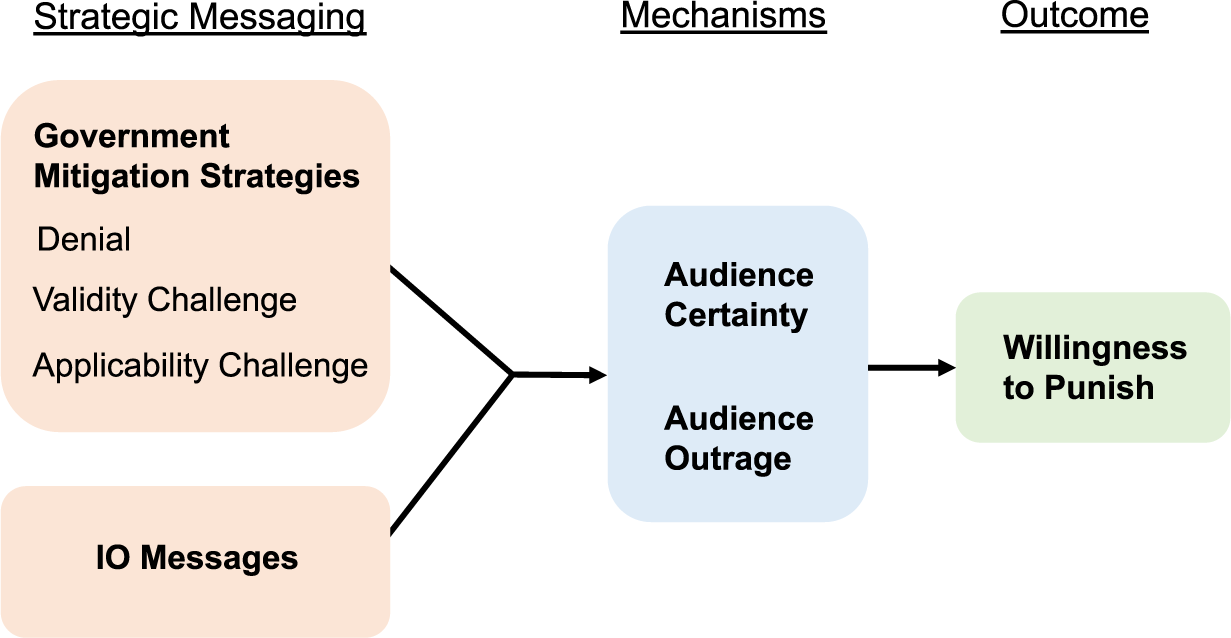


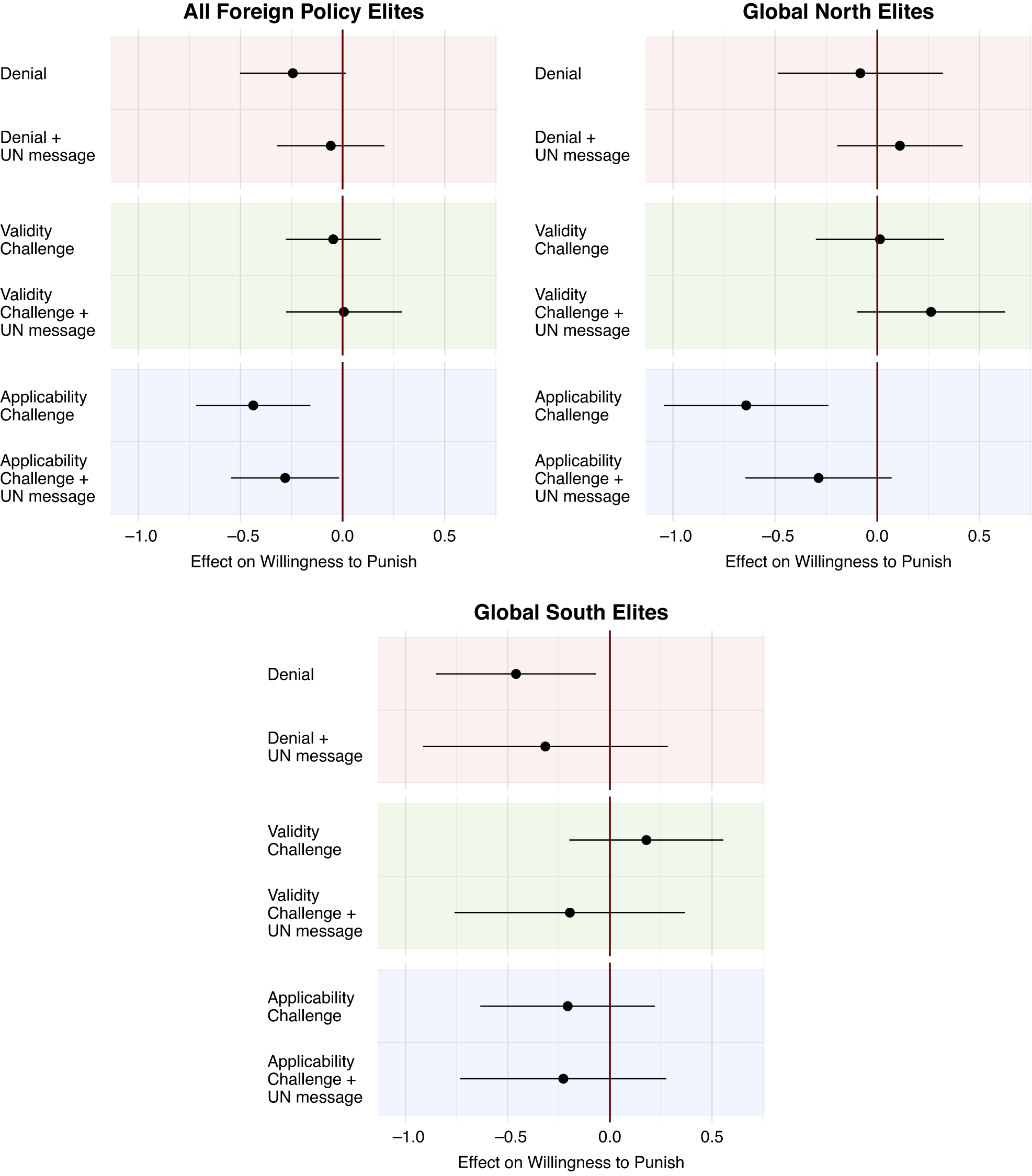




Comments
No Comments have been published for this article.