


Meal size is affected by numerous non-food-related influences. In adults, both laboratory and ‘free-living’ studies have revealed that meal size is strongly influenced by the number of individuals who share the meal(Reference de Castro1, Reference de Castro2). Numerous studies using the ‘weekly food diary’ method confirmed that meal size is a power function of the number of individuals present at the meal(Reference de Castro and Brewer3). Data obtained in free-living American, Dutch and French respondents have confirmed this observation(Reference de Castro, Bellisle and Dalix4). The ‘social facilitation’ of intake is found in all types of meals (breakfast, lunch, dinner, snacks, with or without alcohol; at home or outside)(Reference de Castro, Brewer and Elmore5). One study(Reference Feunekes, de Graaf and van Staveren6) suggests that this social effect might be mediated by the extra time spent at the table when a meal is shared with other individuals, rather than by an independent influence of the presence of other consumers. The social link between consumers is important. The presence of family and friends stimulates intake more than that of unknown individuals(Reference de Castro7). Studies in social psychology have revealed that the general facilitation effect on intake can in fact be moderated or even reversed under certain types of social circumstances(Reference Salvy, Jarrin and Paluch8). Under laboratory conditions, the social facilitation of intake remains to be confirmed, and there is at least one study showing no difference in lunch intake when women were eating alone or in groups(Reference Bellisle and Dalix9). This same study did show increased intake when the participants were eating while listening to a distracting recording of a detective story.
This observation concurs with a number of studies in adults or children showing that external stimuli can act as ‘distractors’ at meal times, whose influence induces an increase in intake. Adult women, having lunch under laboratory settings, ate significantly more when the television was on during the meal(Reference Bellisle, Dalix and Slama10); children who frequently eat in front of the television ate more at a test meal when the television was on(Reference Francis and Birch11). Living in an environment where the television is on is associated with eating more often in free-living adults(Reference Stroebele and de Castro12). Another external influence that increases intake and meal duration in free-living adults is listening to music while eating(Reference Stroebele and de Castro13). Whether these external, non-food-related influences can affect body weight is an interesting question that cannot be answered on the basis of existing data. It is important, however, to detect the potential stimulating influence of such factors, in the context of the widespread obesity epidemic(14). For many years now, experts have expressed concern that we might be fattening our children at the television set(Reference Dietz and Gortmaker15), although lack of activity might contribute to this problem as much as over-stimulation of eating.
Another aspect of lifestyle that has attracted much attention in recent years for its potential impact on total energy intake, especially in young individuals, is the intake of sugar-containing drinks. Many reports have explicitly stressed the contribution of sugar-containing drinks in food intake and weight gain(Reference Berkey, Rockett and Field16–Reference Van de Bulck and Van Mierlo20). The WHO(21) recommends that sugar-containing drinks be consumed in moderation because of their potential adverse effects on weight gain. Among such drinks, sodas and sugar-added fruit juices are popular, especially among adolescents(Reference Volatier22).
In the present study, healthy, normal-weight adolescents participated in a series of meals with identical menus (one popular main dish, dessert, water, fruit juice and soda), under varying conditions of external stimulation. Our goal was to see whether the stimulatory influences already documented in adults or children (presence of television, music, presence of others) would also stimulate ad libitum intake in teenagers, compared with a control condition (the same meal consumed in the absence of the stimulators). One other variable of interest was the actual choice of drinks under the various meal situations.
Methods
Participants
Participants were recruited in high schools situated in the vicinity of the University of Paris 13 in Bobigny, France. Advertisements listing the main selection criteria (boys and girls, normal weight, no declared pathology, aged 15–16 years) and indicating the participants' tasks (having four test meals at the laboratory) were posted in the schools. Interested individuals contacted the experimental team by telephone. After verifying that the potential participant did meet the selection criteria, they were invited for a selection visit, during which they were examined by the team's physician who measured their weight and height and verified the absence of pathology. During this visit, the experimenters explained the experimental task in detail; the participants were asked to taste and rate various foods and drinks, including those used in the experimental meals, and the acceptability of the test products was ascertained; the next four visits to the laboratory were scheduled for each participant.
The present study was conducted according to the guidelines laid down in the Declaration of Helsinki and all procedures involving human subjects were approved by the Ethical Committee for the Protection of Persons participating in biomedical studies (CPP Paris). Written informed consent was obtained from all participants and one of their parents. According to the rules set by the CPP, the subjects received a written information form stating that their participation would consist of four meals ingested under controlled conditions. It was also made clear that the food and drinks to be ingested were standard commercial products bought at a local supermarket and that there was no ‘experimental’ food or ingredient included in the menus. The specific hypotheses and expected effects were not revealed. The participants' parents received 150€ at the end of the meal test series.
Experimental meals
Foods and drinks were bought at a local supermarket. The same brands were used in all tests. At the time of meals, foods and drinks were served without any visible brand name, in plain dishes and bottles. The menu served was identical under all meal conditions:
(a) Main dish: Hachis parmentier (ground beef and mashed potatoes) (2 kg) (composition per 100 g: 414 kJ, 7·1 g protein, 3·4 g fat, 9·9 g carbohydrate);
(b) Dessert: chocolate cake (400 g) (composition per 100 g: 1850 kJ, 5·5 g protein, 26 g fat, 47 g carbohydrate);
(c) Mineral water (2 litres);
(d) Orange juice (2 litres) (composition per 100 g: 188 kJ, 0·6 g protein, 0 g fat, 10·4 g carbohydrate);
(e) Soda (2 litres) (composition per 100 g: 173 kJ; 0 g protein, 0 g fat, 10·2 g carbohydrate).
The main dish was heated according to a standard recipe immediately before being served. Chocolate cake was served at room temperature. Drinks were taken out of the refrigerator (4°C) just before being served.
Experimental meal conditions
There were four experimental lunch conditions, presented in random order. For each participant, meals were scheduled 1 week apart, at the same time of day, on the same day of the week. One of our previous studies(Reference Bellisle, Dalix and Slama10) has established that a 1-week interval is sufficient to avoid the development of boredom with the experimental foods and to maintain constant levels of intake over time.
The four conditions were:
(1) Participants ate alone in a quiet room, undisturbed (control condition);
(2) Participants ate in groups of three;
(3) Participants ate alone while the television was on, the television programme containing no food-related cue;
(4) Participants ate alone while listening to music of their choice via their digital audio MP3 player.
Assessment of hunger, thirst and palatability
Visual analogue scales (VAS) were used to assess hunger, thirst and palatability. These scales are 100 mm horizontal lines, anchored at both ends with phrases indicating the extremes of one particular sensation (for example, ‘I am not hungry at all’, ‘I am extremely hungry’). The participants made a vertical pencil mark on the line corresponding to the intensity of their presently experienced sensations. Scores were obtained by measuring the distance in mm from the left end of the line to the mark made by the respondent.
Procedure
The participants were instructed and agreed to have the same breakfast (each participant's usual one) at the same time of day on every test day. In addition, in order to keep test conditions as similar as possible, all tests took place on regular school days, excluding periods of holidays and examinations. Between breakfast and lunch on test days, the participants were instructed and agreed to refrain from eating; the only drink allowed was plain water. The participants were scheduled to arrive at the laboratory at the same time, on the same day of the week, for 4 consecutive weeks. Just before the beginning of the experimental meal, they rated their present state of hunger and thirst using VAS. They were then introduced to the eating room. This room was equipped with a large table and chairs. Participants ate at this large table, either alone or in groups. A television set was present in the room. It was either turned on or off according to the meal condition. When the condition was ‘music’, the participants were asked to bring their own MP3 device and listen to music of their choice during the meal. The foods and drinks were put on an adjacent table and the participants were invited to help themselves. Plates, glasses and silverware were available. The main dish was placed on a dish heater in order to maintain its temperature.
Participants were instructed to eat and drink as much or as little as wanted of the foods and drinks served. They knew that they could stay as long as they wanted in the eating room, but at least 30 min so as to ensure a minimal exposure to the experimental conditions. At the end of the meal, the participants were asked to rate their hunger, thirst, and the palatability of the just ingested meal using VAS. Portions served and leftovers were weighed. The intake of each food and drink and energy intake could thus be computed.
Statistics
The four environmental conditions are the levels of a within-subject independent variable. In all meal situations, two solid foods and three beverages were offered. Our dependent variables are the intakes of each solid and fluid substance and the ratings of subjective sensations according to meal condition. In our analysis, we considered intake of fluids independently of the intake of solids and analysed their potential relationships.
The statistical tests were carried out using the Systat 10.2 software (version 10-2; SPSS, Inc., Chicago, IL, USA). The data obtained in the four meal conditions were compared using ANOVA for repeated measures, with condition as a within-subject factor, and sex as a between-subject factor. When the ANOVA revealed significant differences between meal conditions, post hoc paired t tests were done to identify differences between two conditions. A power calculation indicated that nineteen subjects would be necessary in order to show a significant 10 % difference if lunch intake was 3344 kJ (800 kcal), the standard deviation 418 kJ (100 kcal), the α risk set at 0·05 and the power at 0·9. Mean values with their standard errors are presented in the text and Figs. Statistical significance level was set at P < 0·05.
Results
Participants' characteristics
A total of thirty-three participants were selected. The VAS ratings as well as meal intakes showed that four of them did not comply with the experimental instructions and came to the laboratory once or more times when they were not hungry. These subjects were excluded from the analyses, leaving a total of twenty-nine (fourteen boys and fifteen girls). Mean BMI was 21·1 (sem 0·5) kg/m2 for girls and 21·5 (sem 0·4) kg/m2 for boys. These values fall between the 50th and the 75th centiles of the BMI distribution for 15- to 16-year-olds in France(Reference Rolland-Cachera23).
Intake at lunch meals
Drinks
Figure 1 presents the volumes of fluid ingested under each of the four conditions, for each type of drink.
Intake of fluid during lunch meals under four conditions: watching television (□); listening to music ( ); eating alone (■); eating in a group (▒). Values are means (n 29), with standard errors represented by vertical bars. a,b,cMean values with unlike letters were significantly different (P < 0·05).

Water
A significant effect of condition appeared (F(3, 81) = 5·43; P = 0·002). Less water was ingested in the group condition than in the music (P = 0·001), television (P = 0·024) and control (P = 0·001) conditions. Less water was ingested in the television than in the music condition (P = 0·05). There was no sex effect and no interaction.
Orange juice
There was no significant effect between treatments, no sex effect and no interaction.
Soda
A significant effect of meal condition was found (F(3, 81) = 2·8; P = 0·045). Intake of soda was larger in the television condition than in the group (P = 0·05), music (P = 0·005) and control (P = 0·02) conditions. Boys ingested more soda than girls (1384 (sem 167) kJ (331 (sem 40) kcal) v. 715 (sem 155) kJ (171 (sem 37) kcal); P = 0·007) but there was no significant sex × condition interaction.
Total volume of fluid
A significant effect of meal condition appeared (F(3, 81) = 4·3; P = 0·007). Less total fluid was ingested in the group condition than in the television (P = 0·002), music (P = 0·027) and control (P = 0·001) conditions.
Intake of energy from drinks
The condition of lunch intake had a significant effect (F(3, 81) = 2·91; P = 0·038). More energy was obtained from drinks in the television condition than in the control (P = 0·002) and music (P = 0·027) conditions. The comparison between the television and the group conditions fell short of statistical significance (P = 0·07).
Solid foods
Figure 2 presents the intake of energy from both solid foods, total energy intake from solids and total energy intake (solid plus liquid) according to meal condition.
Energy intake during lunch meals under four conditions: watching television (□); listening to music (); eating alone (■); eating in a group (▒). Data for each solid food are presented separately, then data for total energy from solid foods (main dish plus dessert), and finally total energy intake from solids plus fluids. Values are means (n 29), with standard errors represented by vertical bars. a,bMean values with unlike letters were significantly different (P < 0·05).

Main dish
A significant effect of meal condition appeared (F(3, 81) = 3·775; P = 0·014). Less was eaten in the group condition than in the music (P = 0·009) and the control (P = 0·007) conditions.
Dessert
Again, condition produced a significant effect (F(3, 81) = 3·47; P = 0·02) and less dessert was eaten in the group meals than in the television (P = 0·001) and the control (P = 0·001) conditions.
Total energy intake from solid foods
Condition induced a significant difference in energy intake from solid foods (F(3, 81) = 7·181; P < 0·0001). Again, intake was less in the group condition than in the other three (v. television P = 0·004; v. music P = 0·001; v. control P < 0·0001). Intake was higher in males (4385 (sem 288) kJ; 1049 (sem 69) kcal) than in females (3390 (sem 184) kJ; 810 (sem 44) kcal; P = 0·007), but there was no sex × condition interaction.
Total energy intake at lunch time
Boys ingested more energy (6082 (sem 339) kJ; 1455 (sem 81) kcal) than girls (4448 (sem 251) kJ; 1064 (sem 60) kcal) did at lunch (P = 0·001); no sex × condition interaction appeared. The convergent effects observed in intake of fluids and solids led to a significant effect of condition of total energy intake at lunch (F(3, 81) = 6·3; P = 0·001). Less energy was ingested in the group meals than in other conditions (v. television P = 0·002; v. music P = 0·009; v. control P < 0·0001). Energy from fluids represented 28 (sem 2) % of total lunch energy in boys and 23 (sem 2) % in girls, this difference falling short of statistical significance (P = 0·07).
Visual analogue scale ratings
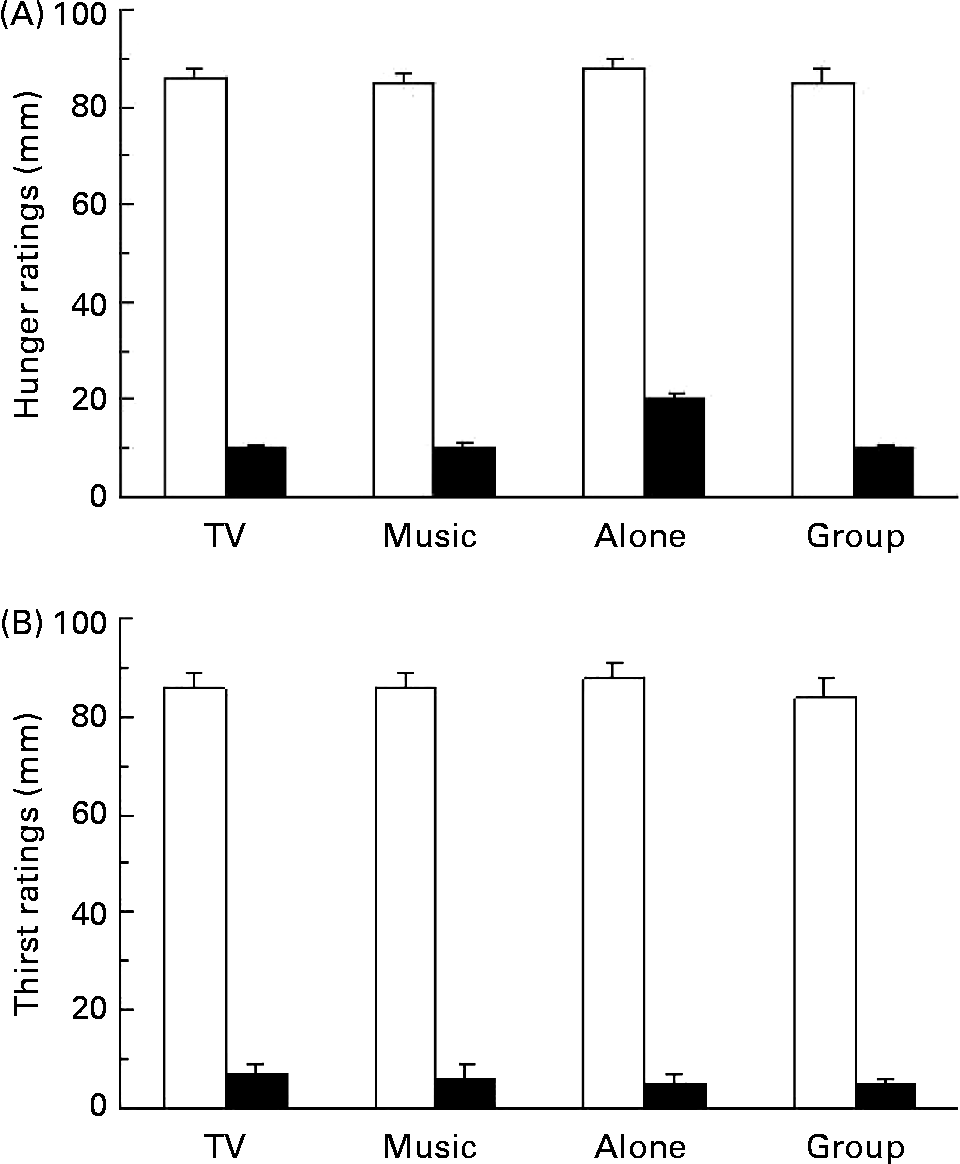
Ratings of hunger and thirst before and after meals are shown in Fig. 3. No significant difference appeared between conditions. There was no significant difference in the rated palatability of meals under the different experimental conditions (see Fig. 4).
Visual analogue ratings of hunger (A) and thirst (B) before (□) and after (■) a lunch meal under four meal conditions: watching television (TV); listening to music; eating alone; eating in a group. Values are means (n 29), with standard errors represented by vertical bars. Differences were significant pre- v. post-meals, but there was no difference according to meal condition.
Visual analogue ratings of the palatability of meals ingested under four experimental conditions: watching television (TV); listening to music; eating alone; eating in a group. Values are means (n 29), with standard errors represented by vertical bars. There was no significant treatment difference.

Discussion
This is the first report of ad libitum intake of foods and drinks by healthy adolescents during meals ingested under a variety of controlled laboratory conditions. As commonly reported under both laboratory and field studies, males ate more solid foods than females(Reference de Castro, Bellisle and Dalix4); they also ingested more of one of the sugar-containing drinks (soda). In line with our previous observations in adults, the results are interesting in terms of identifying situations that might stimulate or inhibit energy intake at meal times. In addition, the results suggest that some meal situations might affect the selection of the drink that is ingested with a standard food menu. To our knowledge, this is the first time such an effect has been examined or demonstrated.
In terms of total energy intake at lunch, the present observations suggest a ‘social inhibition’ of intake, in contrast to the ‘social facilitation’ that has been reported numerous times before, mainly in free-living adults(Reference de Castro1–Reference de Castro7). Two factors appear as potential sources of the discrepancy: one is the age of the subjects; the other is the fact that ad libitum lunches were eaten under laboratory settings as opposed to free-living conditions. Our earlier published study in French adults using a very similar laboratory protocol(Reference Bellisle and Dalix9) showed no difference between a meal ingested in groups compared with the baseline condition (meal consumed alone), although in this particular study the presence of a distracting stimulus in the environment induced a larger than baseline meal size. The stimulating effects of external sources of distraction at mealtime (television and recorded detective story) were confirmed in another group of French women having lunch in a laboratory setting(Reference Bellisle, Dalix and Slama10).
Previous studies in free-living adults reported that the type of social link is important and that family and friends produce more social facilitation of intake than other companions(Reference de Castro7). The stimulation effect associated with the number of individuals sharing the meal is observed regardless of the circumstances of meals(Reference de Castro, Brewer and Elmore5) but could be mediated by meal duration(Reference Feunekes, de Graaf and van Staveren6). In the present experiment, the number of individuals present was either one or three. A pure ‘social facilitation’ effect would induce larger meals in the group condition, but the opposite was observed. The nature of the social link in the groups of adolescents participating in the tests was certainly not ‘family’, and could be described as: individuals of the same age living in the same neighbourhood, potentially classmates. This may not be an optimal social link to induce stimulation of intake, but it remains enigmatic why it should induce inhibition. Finally, the duration of the lunch meals was at least 30 min, but could be longer. Consequently, meal duration is unlikely to represent a limiting factor to the expression of a social facilitation effect.
The present results suggest that adolescents might be different from adult women when their ad libitum intake is measured under controlled laboratory conditions. While the group situation did not affect intake in adult women, it decreased it in adolescents; in contrast, external sources of distraction did increase intake in adult women but left the adolescents' intake unchanged. It could be hypothesised that adolescents may have become habituated to the external sources of distraction used in the experiment (television and music) so that no effect appeared on meal size, whereas adult women, at least in France, usually have lunch without such distracting stimulation.
Another hypothesis could be drawn from the populations participating in the present and our former published studies. In the present case, the adolescents were attending schools in the outskirts of Paris whereas our earlier women samples were recruited in the centre of the city. This may in fact correspond to important differences in terms of income, ethnic origin, traditions, etc. A group of adult women also recruited in the same suburb of Paris recently participated in a similar laboratory test of lunch intake and their responses also reflected a social inhibition rather than facilitation effect(Reference Bellisle, Dalix and Airinei24). This suggests that traditional attitudes to meals and habituation to a variety of stimuli present in the eater's environment at the time of meals might be different according to socio-cultural factors. While socio-cultural influences are established determinants of meal size and frequency(Reference de Castro25), more research is needed to sort out the roles of socio-economic and/or ethnic factors in the responses to environmental conditions present at mealtimes.
In spite of the fact that total energy intake was less in the ‘group meal’ condition, the present results show no difference in hunger, thirst or palatability ratings between conditions. This confirms that the lower intake observed in the group meal was not due to lower pre-meal hunger, and also shows that post-meal hunger was equally suppressed regardless of the significantly different levels of energy intake. The palatability of the ‘group’ meal was also comparable with that of the other meal conditions, again suggesting the social (eating in groups), rather than physiological (hunger) or sensory (palatability) origin of the effect.
Although they did not affect total energy intake, the various meal conditions actually induced selection of different drinks. Overall, all participants drank all three fluids at least once during their series of four test meals. They generally consumed more soda than water, while the level of juice intake was intermediate. More soda was consumed when meals were ingested while watching television. The reason for this is unclear. A conditioned association may exist in these young individuals between television and soda intake, because of the frequent exposure to commercials for sodas seen on television. One recent study(Reference Feldman, Eisenberg and Neumark-Sztainer26) also reported that teenagers who often have their meals in front of the television drink more sodas than peers who usually do not watch television while eating. The present results show that television viewing is susceptible to increased intake of soda but not of orange juice. So the effect, whatever its mechanisms, does not seem to affect all sugar-containing beverages. Juice intake was the same under all conditions. Water intake was higher while the participants were listening to music than under other test conditions, but the absolute level of water intake remained lower, even in the music condition, than the intake of soda.
As Figs. 1 and 2 show, intake of energy-containing fluid was about the same in the group condition v. other meal conditions. The lower total energy intake in the group condition thus originated from less energy ingested from solid foods. This observation suggests that intakes of solids and fluids at the time of meals do not necessarily compensate each other to obtain a certain level of energy or meal size. It has been reported earlier that intake of energy from fluids at mealtime did not induce compensatory decreases in energy intake from solids(Reference Van Wymelbeke, Béridot-Thérond and de la Guéronière27, Reference de Castro28). The present observations conversely show that lower energy intake from solids (for example, in group meals) does not affect contemporary intake of energy-containing drinks. Energy intake at meals can thus vary according to the solid foods presented, the types of drinks, as well as the environmental conditions of the meal. Neither hunger nor thirst seems to be affected by such variations.
Conclusions
In healthy normal-weight teenagers, eating in groups seems to induce ‘social inhibition’, rather than ‘social facilitation’ of intake, at least under laboratory conditions. The presence of external sources of distraction, such as television and music, which tend to stimulate intake in adults, has no such effect in teenagers, perhaps due to different conditioned responses or habituation to these stimuli. One surprising effect is that more soda was consumed when meals were ingested while watching television. The reason for this remains unclear but could be attributed to a long-established association between television and the intake of soda advertised in commercials or displayed in programmes. Overall, the results of the present study confirm that the external circumstances of meal intake can influence energy intake and products consumed. This may be an important avenue to explore in the context of the prevention and management of the present epidemic of overweight. The effects reported here should be investigated under free-living conditions, and in adolescents with other nutritional status (for example, obesity) and socio-cultural origins.
Acknowledgements
The present study was supported by a grant from the Centre Evian Pour l'Eau (CEPE).
F. B. designed the experiment and wrote the paper. S. P., A. M. and A.-M. D. carried out the experimental work. G. A. and S. H. supervised the medical aspects of subject selection and follow-up. D. C. assisted in the execution of the protocol and carried out the statistical analysis.
Two of the authors (S. H. and F. B.) are members of the scientific advisory committee for the Centre Evian Pour l'Eau. None of the other authors has any conflicts of interest to declare.



