


Poor diet quality is one of the leading risk factors for non-communicable diseases such as CVD, cancer, chronic respiratory disease and diabetes, which kill 41 million people globally each year( 1 ). Socio-economic position is closely linked with non-communicable diseases; specifically, in high-income countries, non-communicable disease rates are higher in disadvantaged and marginalised people than in groups of higher socio-economic position( Reference Di Cesare, Khang and Asaria2 ). Socially disadvantaged people are more likely to become ill and die prematurely than people of higher social positions, in part because they are at greater risk of being exposed to unhealthy behaviours such as dietary practices that are not aligned with recommendations( 1 ). Despite the convincing evidence to date regarding the health benefits associated with healthy eating, alarmingly, the average diet quality of the Western population continues to remain poor( Reference Livingstone and McNaughton3,4 ). In fact, in Australia approximately 35 % of energy consumption comes from discretionary food intake( 5 ) and US data indicate that 86 % of the population consumes more than the recommended limit of discretionary choices( 4 ). Unhealthy discretionary items include sweet biscuits, cakes, confectionary, chocolate, ice cream and other ice confections, processed meats and sausages, pastries, pies, fried foods, potato chips, crisps, fatty and/or salty snack foods, sugar-sweetened soft drinks and cordials, and alcoholic drinks( 6 ).
A range of interventions have been shown to successfully promote fruit and vegetable consumption( Reference Pomerleau, Lock and Knai7 ). For example, trials targeted at adults living on a low income have reported effects ranging from approximately +0·42 to +1·1 servings of fruits and vegetables daily( Reference Haire-Joshu, Brownson and Nanney8–Reference Tredici, Joy and Omelich12 ). However, those studies have not reported whether such programmes concomitantly reduce discretionary food consumption, in the absence of an explicit focus on restricting such foods( Reference Pomerleau, Lock and Knai7 ). At best, they may simply aim to reduce kilojoules from fat( Reference Haire-Joshu, Brownson and Nanney8,Reference Havas, Anliker and Greenberg10 ). For example, two interventions( Reference Haire-Joshu, Brownson and Nanney8,Reference Havas, Anliker and Greenberg10 ) aimed at promoting fruit and vegetable consumption also focused on reducing fat intake, primarily through encouraging recipe modification and choosing lower-fat versions of foods. While neither study reported on discretionary food intake specifically, both found positive intervention effects on both increased fruit and vegetable consumption and reduced intake of kilojoules from fat.
Of relevance, programmes focusing on weight loss as an outcome commonly emphasise energy restriction. While these may achieve weight loss (or minimise weight gain) during the treatment period, this is commonly followed by regain of some, if not all, of the lost weight( Reference Robinson, Dube, Bechara and Dagher13 ). Some studies have even shown that one- to two-thirds of dieters regain more weight than they lost on their diets( Reference Mann, Tomiyama and Westling14 ). One possible reason is that too great an emphasis is placed on outcome motivators (e.g. weight loss), with insufficient attention to process motivators which are key to influencing behaviour( Reference Robinson, Dube, Bechara and Dagher13,Reference Bandura15 ). Process motivators are the factors that elicit and sustain attention to and persistence in an activity (e.g. increase intrinsic motivation for participating in the process of behaviour change such as fun, taste, control, social interaction and pride)( Reference Robinson, Dube, Bechara and Dagher13 ). To achieve behaviour change, it has been suggested that the activities required for the behaviour change process are rewarding( Reference Robinson, Dube, Bechara and Dagher13 ). Hence, programmes that promote consumption of healthy foods by encouraging self-efficacy (e.g. label reading, meal planning, cooking, budgeting, etc.), meal enjoyment, social interaction and goal setting, while drawing minimal attention to restricting unhealthy foods, are a potentially promising approach for achieving success. Such an approach is similar to that of the theory-based stealth interventions, which are designed to make the process of behaviour change rewarding, easy and desirable rather than a sacrifice or burden, as ‘diets’ are often perceived to be( Reference Robinson, Dube, Bechara and Dagher13 ).
Potential mechanisms by which programmes that promote healthy food consumption may result in subsequent decreases in (and displacement of) unhealthy foods include increased preferences for healthier foods( Reference Eertmans, Baeyens and Van den Bergh16,Reference Newman, Bolhuis and Torres17 ); greater skills and confidence in food preparation and cooking; and/or reduced environmental constraints related to procuring, preparing and eating nutritious produce( Reference Snyder18 ). However, few studies have examined these proposed mechanisms and the potential to influence changes in discretionary food consumption indirectly through nutrition promotion( Reference Robinson, Dube, Bechara and Dagher13 ).
The aim of the present study was to identify whether discretionary food consumption declined in an intervention whose primary focus was to promote fruit and vegetable consumption. Of note, in the original study (‘ShopSmart’) vegetable consumption increased among socio-economically disadvantaged women( Reference Ball, McNaughton and Le19 ). In the current secondary analysis we also aimed to identify potential mechanisms (mediators) explaining any intervention effects on discretionary food consumption, drawing on past research of determinants for food choice and eating behaviours informed by social cognitive theory( Reference Bandura15,Reference Bandura20 ) to guide mediator selection. Social cognitive theory( Reference Bandura15,Reference Bandura20 ) posits that behaviours are learned and this learning is influenced by the interaction of personal and environmental, as well as behavioural factors. In the present study we focus on both personal factors (self-efficacy, taste preferences and outcome expectancies) and environmental factors (time, cost and availability constraints), given their established links with eating behaviours( Reference Bandura15,Reference Bandura20 ). Exploring the mechanisms that drive food choice provides an opportunity to better understand the reasons for intervention successes and failures, with the potential to design programmes that achieve positive food consumption behaviours.
Methods
The ShopSmart study was a randomised controlled trial targeted at women of low socio-economic position, aimed at testing the effectiveness of a skill-building intervention promoting fruit and vegetable consumption (www.isrctn.com, ISRCTN48771770)( Reference Ball, McNaughton and Le19,Reference Ball, McNaughton and Le21 ). The findings presented here are additional, opportunistic analyses of the ShopSmart intervention data using secondary trial outcomes (mediators) and an additional trial outcome (discretionary food intake). Women were the focus, since they are primarily responsible for food purchasing and preparation in households( Reference Lake, McNaughton and Le22 ). The trial comprised a 3-month retrospective baseline data collection phase (involving retrieval of data for a 3-month retrospective period (after participants registered and consented to the study, but before the intervention began)), followed by a 6-month intervention period and a further 6-month no-intervention follow-up period. The intervention development was guided by social cognitive theory( Reference Bandura15 ) to ensure a strong theoretical, empirical and practical foundation.
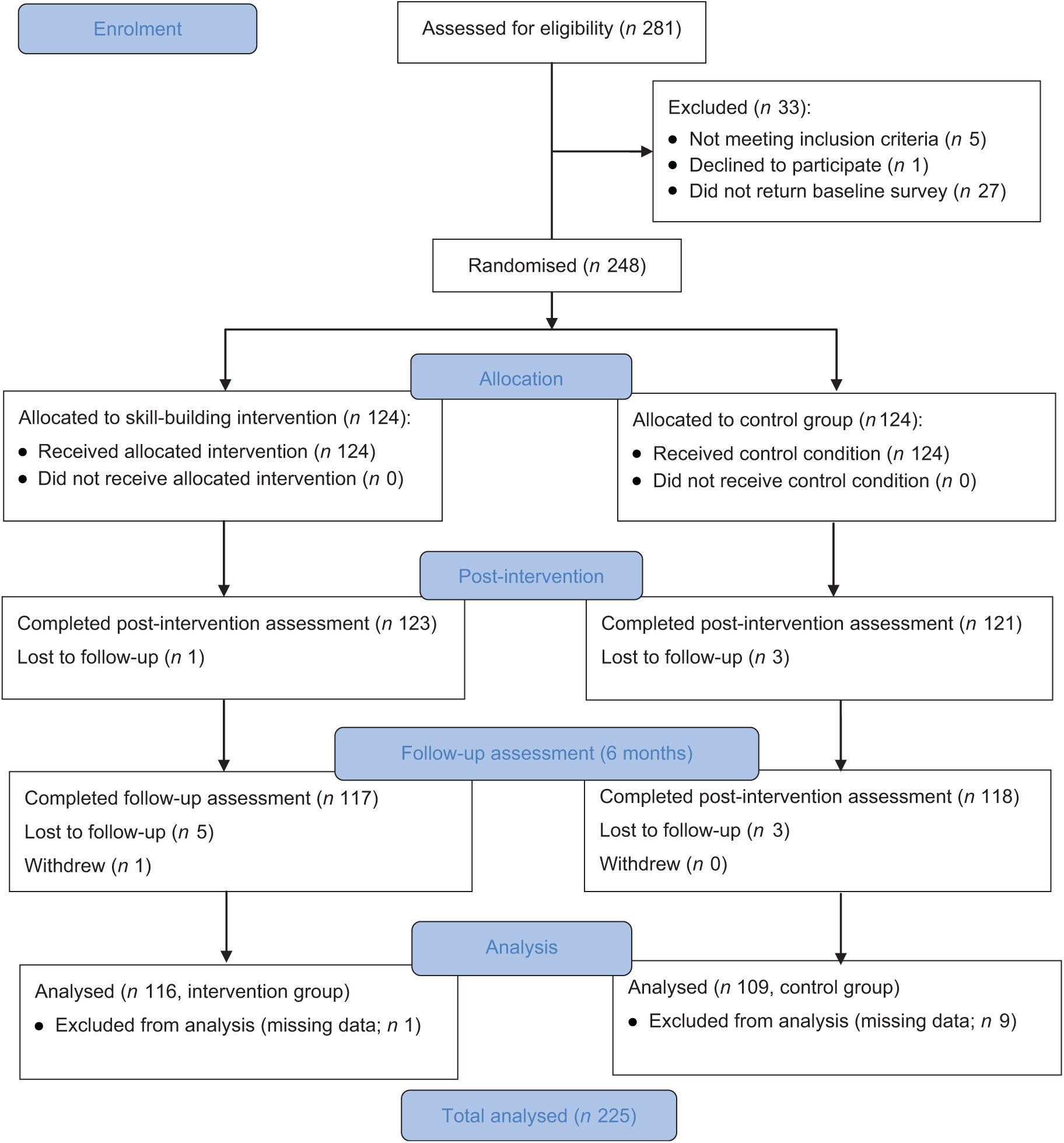
Women were recruited via the Coles FlyBuys loyalty card database from one of two catchment areas (randomly selected disadvantaged neighbourhoods serviced by a Coles store and within 25 km of the main research site; see Ball et al. for further details( Reference Ball, McNaughton and Le19,Reference Ball, McNaughton and Le21 )). Two hundred and forty-eight women returned baseline surveys and were randomly assigned to either the behavioural intervention (n 124) or the control (n 124) condition by using a computer-generated block randomisation sequence, produced and implemented by an independent statistician, that involved blocks of 2 and 4 in varying combinations. Only women with complete data for all reported variables (including survey questionnaires regarding food shopping or dietary behaviours) at baseline (time T1) and intervention completion (time T2) were included in these analyses. Hence, the complete case sample included 225 women (116 intervention and 109 control). See Fig. 1 for ShopSmart participant recruitment and flow through the study.
ShopSmart participant recruitment and flow through the study
Intervention
Women in the intervention arm received a set of eight educational and skill-building newsletters and behaviour change resource packages (sent fortnightly for the first 2 months and monthly for the remaining 4 months of the intervention). They were also invited to take part in a dietitian-led supermarket tour, which provided practical experience and skills in selecting fresh produce, as well as label reading to identify healthier food items. Resources were informed by social cognitive theory( Reference Bandura15 ) and designed to specifically address disadvantaged women’s needs. They focused primarily on affordability and nutrition-related attitudes and skills. ShopSmart intervention details are described in full elsewhere( Reference Ball, McNaughton and Le21 ).
Data collection and outcome measures
Diet was measured using an FFQ composed of items assessing usual frequency of intake, previously developed for use with Australian adults in the 1995 National Nutrition Survey( 23 ) and other Australian population-based surveys( Reference Ball, Cleland and Salmon24,Reference McNaughton, Crawford and Ball25 ). Discretionary food consumption was assessed by self-reported mailed surveys completed pre-intervention (T1), at intervention completion (T2) and at 6 months post-intervention (T3). Total discretionary foods was made up of the sum of nine individual items (i.e. potato crisps, hot chips, chocolates, cakes, pies, fast food, pizza, alcohol and soft drink). Respondents were asked: ‘About how often have you eaten the following: a. potato crisps (or salty snack foods), b. hot chips (or roast potatoes, potato wedges), c. chocolate (or lollies), d. cakes (or doughnuts, sweet biscuits), e. pies (or pastries, sausage rolls), f. fast foods, g. pizza?’, with nine response options ranging from ‘never or less than once/month’ to ‘6 or more times/day’. As these questions did not include portion size, each occasion of eating was assumed to represent a single serving, equivalent to a single serving of discretionary items based on the Australian Dietary Guidelines( 6 ). For example, a single serving of discretionary foods that provides approximately 600 kJ is: 2 scoops of regular ice cream, or 2 slices of processed meat, or 30 g of salty crackers, or 40 g of plain cake, or 25 g of chocolate, or 1/3 of a commercial meat pie, or 12 hot chips( 6 ). Alcohol consumption was assessed using a combination of two questions, ‘On average how often did you drink beer, wine and/or spirits?’ and ‘On days when you were drinking alcohol, about how many glasses of beer, wine and/or spirits altogether did you usually drink?’, which allowed for calculation of the number of glasses of alcohol per day. Based on the Australian Dietary Guidelines, two standard drinks was equivalent to a single discretionary serving (e.g. approximately 600 kJ)( 26 ). Finally, for soft drink consumption (e.g. regular (sugar-sweetened) carbonated soft drink), respondents were asked ‘About how much full-calorie soft drink do you usually drink each day?’, with ten response options ranging from ‘I don’t drink soft drink’ to ‘6 or more serves/day’. One can of full-calorie soft drink (375 ml) was equivalent to a single discretionary serving( 6 ).
Sociodemographic characteristics assessed included age, country of birth, relationship status, highest attained level of education, smoking status, whether they had children and BMI. These measures were collected in self-reported surveys completed at T1. The control group completed assessments only, and at the conclusion of the study were offered all of the printed intervention materials.
Mediator selection
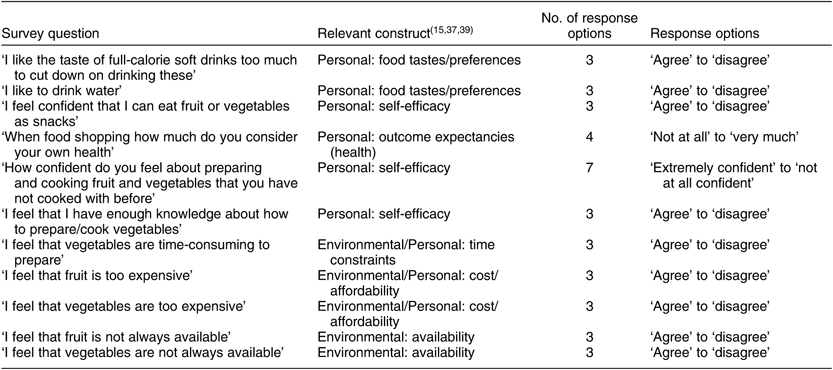
The eleven ShopSmart survey questions, and response options, utilised for assessing food shopping and dietary behaviours that allowed for mediator analysis are provided in Table 1. The mediators selected were constructs, represented by the items described in Table 1, selected based on past research of determinants of food choice and eating behaviours( Reference Caspi, Sorensen and Subramanian27,Reference Sleddens, Kroeze and Kohl28 ), which align with social cognitive theory( Reference Bandura15 ). They were categorised as personal or environmental constructs or both, consistent with theory and past research( Reference Brug29 ).
ShopSmart survey questions, with their proposed constructs and response options, that were examined as potential mediators
Statistical analysis
Descriptive analyses were performed on baseline characteristics of the original ShopSmart cohort (n 248) and the total eligible sub-sample (n 225), including the intervention (n 116) and control groups (n 109). Wilcoxon-signed rank tests were used to explore the changes in dietary intake (servings per day of discretionary items) from baseline to post-intervention completion (6 months post-baseline) for the intervention and control group. These analyses were performed to establish whether the ShopSmart programme (primarily aimed at promoting fruit and vegetable consumption) was associated with changes in the measure of total discretionary items and its sub-components (i.e. potato crisps, hot chips, chocolates, cakes, pies, fast food, pizza, alcohol and soft drink).
Linear regression models examined intervention effects on self-reported total discretionary food consumption at T2. Because of the skewed distribution of the dependent variable, log transformation was performed (log normal). When modelling a log-transformed outcome, regression coefficients and CI can be exponentiated (i.e. e b ) and subsequently interpreted as proportional differences in the geometric mean (approximately the median) of the outcome. All of the models controlled for baseline levels of the outcome and for the following covariates (determined a priori): catchment area (one of two neighbourhoods), age (years), country of birth (Australia, other), relationship status (married/de facto, separated/divorced/widowed, never married), highest attained level of education (low (less than Year 12), medium (Year 12/trade/diploma), high (tertiary)), smoking status (never, former, current), children (yes, no) and BMI (kg/m2).
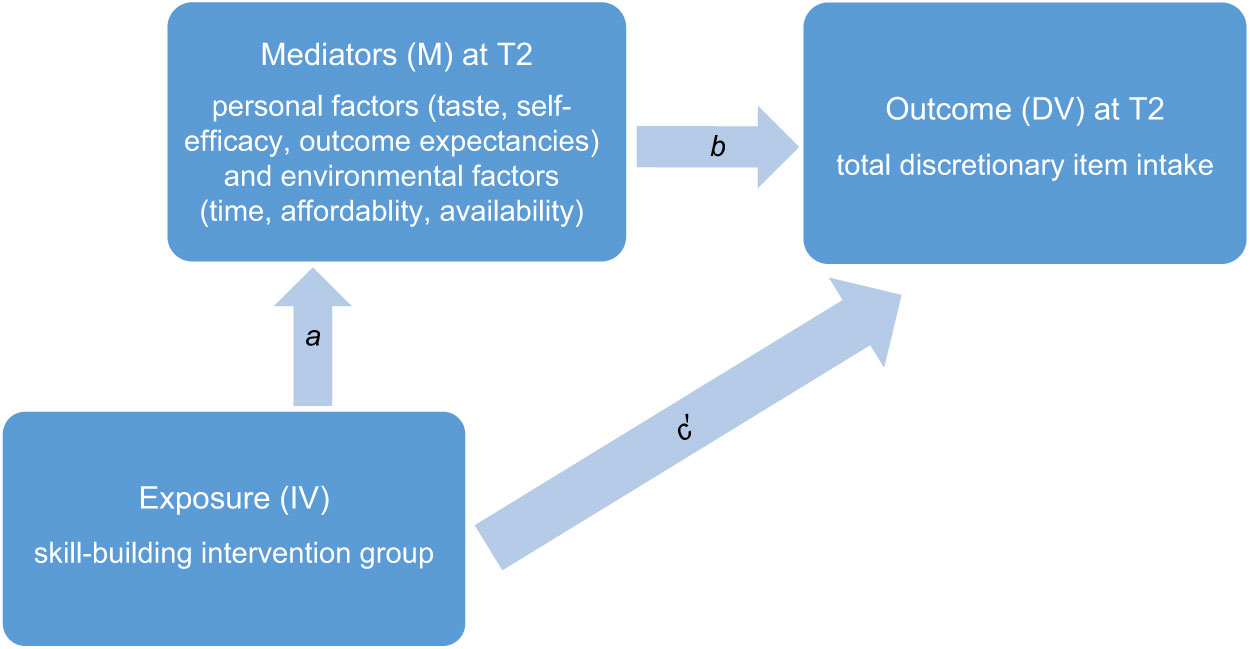
A half-longitudinal mediator analysis( Reference Cole and Maxwell30 ) was performed to examine the potential mediating effects of personal and environmental factors (T2) on the association between the intervention effects and on total discretionary food consumption (T2). This analysis allowed for a better understanding of the explanatory pathways/mechanisms by which the intervention led to the dietary outcome. The half-longitudinal approach to mediation is typically used when there is no temporal separation between measurement of the mediator and the outcome variable( Reference Cole and Maxwell30 ). Although we had three time points of data available, the half-longitudinal analysis was the preferred method (rather than a full longitudinal analysis) since the outcome of interest was discretionary food consumption at intervention completion (T2), rather than 6 months post-intervention (T3). Indirect (mediated) effects were tested by the product of coefficients method with bootstrapped se using Andrew Hayes’ PROCESS macro for SPSS( Reference Hayes31 ). The proposed mediation model can be seen in Fig. 2, which includes the exposure/independent variable (IV) (skill-building intervention group), the mediators (M) and the outcome/dependent variable (DV) (discretionary food intake). As seen in Fig. 2, a represents the relationship of IV to M, and b represents the relationship of M to DV adjusting for IV. There is a direct effect (c′) relating IV to DV adjusting for M, and a mediated effect where IV indirectly affects DV through M. Finally, the model controlled for the covariates listed above, as well as baseline levels of the mediators.
Mediator model for examining potential mediating effects of personal factors (at T2) of intervention effects and on total discretionary food consumption (at T2) in the ShopSmart randomised controlled trial (M, mediator; DV, dependent variable; IV, independent variable; T2, intervention completion, 6 months post-baseline)
Statistical significance was set at P < 0·05 (two-tailed) and all statistical analyses were conducted using the statistical software package IBM SPSS Statistics version 25 (2017).
Results
Descriptive statistics
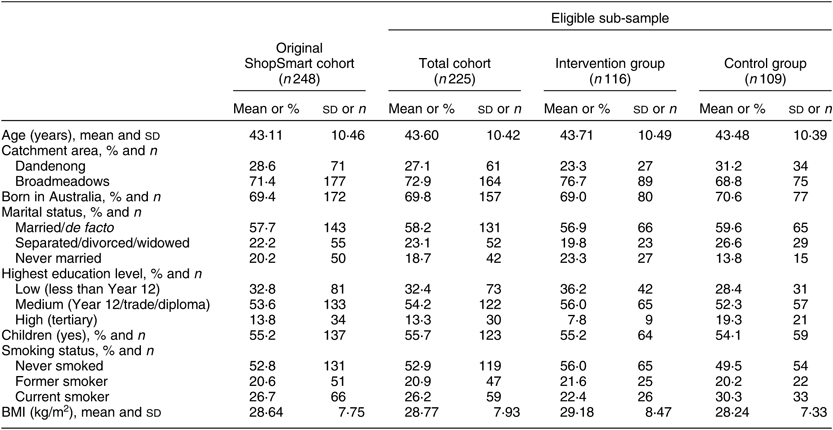
Baseline characteristics of the ShopSmart cohort and the eligible sub-sample (total cohort, intervention and control groups) are displayed in Table 2.
Baseline characteristics of the original ShopSmart cohort and the eligible sub-sample (total cohort, intervention and control groups)
From baseline to intervention completion among intervention group participants, noticeable improvements were observed for intakes of total discretionary foods and individual discretionary food items (potato crisps, chocolates and cakes; P < 0·05). In contrast, as expected, no obvious improvements in any discretionary food were found among control group participants (P > 0·05), other than for cake (P = 0·001; Table 3).
Change in discretionary item consumption (servings per day) from baseline (T1) to intervention completion (T2; 6 months post-baseline) for the intervention and control groups in the ShopSmart randomised controlled trial. Wilcoxon signed-rank tests performed
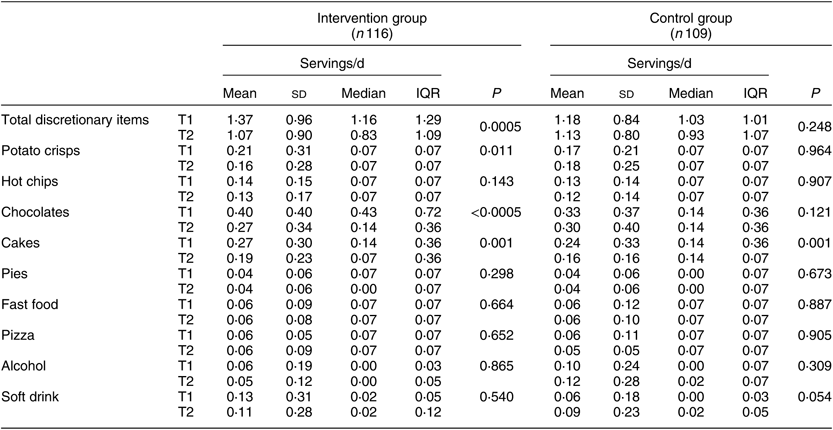
IQR, interquartile range.
Linear regression analysis
Linear regression analysis showed that compared with controls, intervention participants consumed fewer discretionary foods at intervention completion (T2; B = −0·194, 95 % CI −0·378, −0·010 servings/d; P = 0·039) after controlling for baseline levels of discretionary foods and covariates (catchment area, age, country of birth, marital status, highest attained level of education, smoking status, children and BMI). The natural exponentiation of this coefficient equals 0·82 (95 % CI 0·69, 0·99), indicating that the intervention group had an approximately 18 % lower median for discretionary servings at T2, compared with the control group.
Mediator analysis
Four out of the eleven potential mediator variables were found to be associated with the outcome, independent of intervention group, including food tastes/preferences (‘I like to drink water’; b = 0·31, 95 % CI 0·11, 0·51; P = 0·003), outcome expectancies (‘When food shopping how much do you consider your own health’; b = −0·22, 95 % CI −0·38, 0·07; P = 0·004), self-efficacy (‘How confident do you feel about preparing and cooking fruit and vegetables that you have not cooked with before’; b = 0·11, 95 % CI 0·04, 0·17; P = 0·002) and time constraints (‘I feel that vegetables are time-consuming to prepare’; b = −0·22, 95 % CI −0·36, −0·09; P = 0·011). However, there was no evidence that they mediated intervention effects (P > 0·05). This is largely explained by the fact that there were no intervention effects observed for any of the mediators selected (Table 4).
Results of mediator analyses in the ShopSmart randomised controlled trial (n 225)
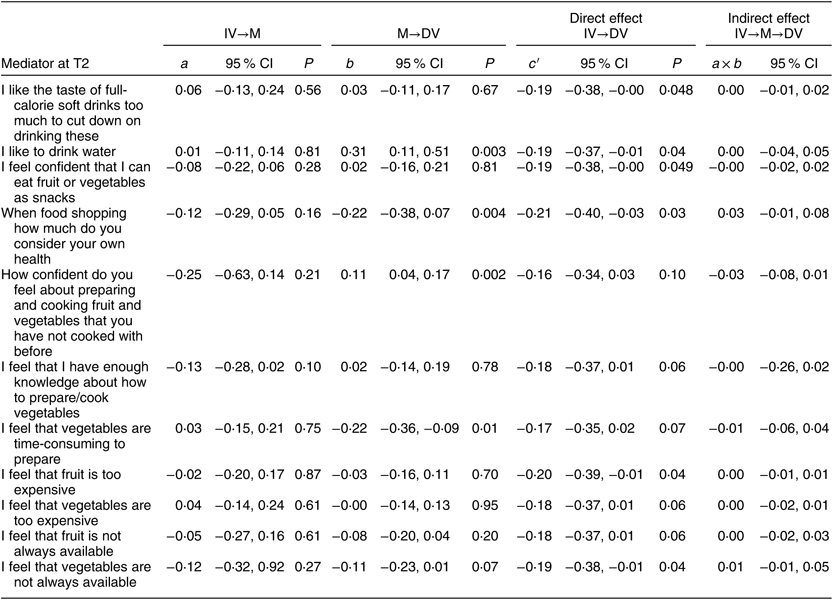
T2, intervention completion (6 months post-baseline); IV, independent variable/exposure/intervention; M, mediator; DV, dependent variable/outcome/discretionary foods.
As seen in Fig. 2, a represents the relationship of IV to M, and b represents the relationship of M to DV adjusting for IV. There is a direct effect (c′) relating IV to DV adjusting for M, and a mediated effect where IV indirectly affects DV through M.
Models controlled for baseline levels of the outcome and baseline levels of the mediator, as well as the following covariates: catchment area, age, country of birth, marital status, highest attained level of education, smoking status, children and BMI.
Discussion
The present study demonstrated that an intervention focused on promoting fruit and vegetables among socio-economically disadvantaged participants was effective in reducing intakes of unhealthy discretionary items, even in the absence of a specific focus on limiting such foods. On average, those in the intervention group reduced their discretionary food intake by 0·3 servings/d at intervention completion, which is equivalent to approximately 180 kJ/d. This was primarily due to a decline in consumption of potato crisps, chocolates and cakes. Although this reduction in energy intake may appear small, other studies have shown the importance of similar daily declines( Reference Hill32 ). For example, Hall et al. reported that every change in energy intake of 100 kJ/d will lead to an eventual body weight change of about 1 kg( Reference Hall, Sacks and Chandramohan33 ). Hence, our findings are of likely clinical significance when considering that modest weight losses of 5 to 10 % of body weight can contribute to important health benefits including improved glucose tolerance, hyperlipidaemia and blood pressure in overweight and obese adults( 34 ). Moreover, unhealthy dietary patterns have been associated with increased risk of chronic diseases, including CHD, type 2 diabetes, metabolic syndrome, some types of cancer( Reference Tyrovolas and Panagiotakos35 ) and depression( Reference Jacka, O’Neil and Opie36 ), and lower intakes of essential nutrients( Reference Johnson, Appel and Brands37 ). Thus, even small reductions in discretionary food servings is likely to be associated with a number of health benefits.
Food choice is a complex behaviour as demonstrated by the consistently poor-quality diets of the nation( Reference Livingstone and McNaughton3 ). The positive findings of the present study provide us with an alternative perspective on successful programme design, such as stealth interventions( Reference Robinson, Dube, Bechara and Dagher13 ) where emphasis is placed on incentives for the process of behaviour change rather than outcomes. For example, the ShopSmart study promoted fruit and vegetable consumption by encouraging self-efficacy (e.g. label reading, meal planning, cooking, budgeting, etc.), meal enjoyment, social interaction and goal setting, with minimal focus on restricting unhealthy foods( Reference Ball, McNaughton and Le21 ). These design features make the behaviour change process rewarding and desirable rather than a sacrifice or burden, as ‘diets’ are often perceived to be( Reference Robinson, Dube, Bechara and Dagher13 ).
One limitation of the present study was the use of self-reported FFQ items. These items have been widely used in other population-based studies but were not validated as a complete FFQ against other dietary assessment tools. This may have resulted in socially desirable under-reporting of discretionary food intake. However, given the intervention did not focus explicitly on reducing discretionary foods, it seems unlikely that this completely accounts for the reduction in reported intakes observed in the intervention group compared with the control group. The present study failed to identify mediators on the explanatory pathway linking the intervention to a reduction in discretionary food consumption. Given the intervention was focused on fruit and vegetables, it is possible that the ShopSmart survey did not include measures of mediators relating to the intervention’s effect on discretionary foods. Additionally, some mediator measures lacked variation in responses (e.g. included only three response options), which may have reduced the ability to identify mediating effects. Moreover, due to the half-longitudinal analysis performed, the examined relationships between the mediators and outcome were actually cross-sectional. Purposefully designed measures focused on discretionary foods (e.g. confidence for, or environmental barriers to, reducing discretionary foods) may have helped highlight the important pathways. Future studies may also benefit from including additional measures of potential mediating factors such as those relating to household values or social factors, for example relationships of individuals that can constrain or facilitate food choice decisions. Early family cuisine, upbringing and family dynamics can result in the development of food roles and eating identities that lead to persistent patterns of food choices( Reference Sobal and Bisogni38 ).
Strengths of the present study include the randomised controlled trial design and low attrition rates, which demonstrates that the ShopSmart intervention effectively attracted and retained women of low socio-economic position, who are a commonly difficult group to engage( Reference Bull, Dombrowski and McCleary39 ). Robust analyses of mediators were performed and a range of covariates was included in both the mediator model and linear regression analysis.
Although specific mediators were not identified, researchers and public health professionals should continue searching for mechanisms by which interventions have an effect to guide future programme design. A better understanding of why some interventions/programmes do or do not work will help to inform future programme decision making. Importantly, the present study is one of few to demonstrate that an intervention focused on promoting fruit and vegetables was effective in reducing intakes of discretionary items, even in the absence of a specific focus on limiting such foods. Hence, programmes such as stealth interventions( Reference Robinson, Dube, Bechara and Dagher13 ), which emphasise incentives for the process of behaviour change rather than outcomes, may encompass the necessary features for achieving programme success. Maintaining a holistic view of food choice decisions and food behaviours is likely essential( Reference Sallis, Owen, Fisher, Glanz, Rimer and Viswanath40 ). Food behaviours are complex and cannot be detached or extracted from many other aspects of people’s lives, in addition to structure (e.g. social institutions and other environments) and individual agency. Without considering all these aspects, future programmes are likely to be insufficient to produce the desired outcomes.
Acknowledgements
Acknowledgements: Coles supermarkets and the National Heart Foundation of Australia provided in-kind support (e.g. access to FlyBuys database for recruitment; assistance with fruit and vegetable promotion resources). Financial support: The ShopSmart 4 Health study was supported by the Australian Research Council’s Linkage Projects funding scheme (project LP0990129). S.A.M. is supported by a National Health and Medical Research Council Career Development Fellowship Level 2 (ID1104636) and was previously supported by an Australian Research Council Future Fellowship (2011–2015, FT100100581). The funding bodies had no role in the design, implementation, analysis or interpretation of the study and the article contents do not reflect the views of the funding bodies. Conflict of interest: None. Authorship: K.B. and D.C. designed the original ShopSmart research; K.B., S.A.M., Ha N.D. Le and D.C. developed measures and conducted the original ShopSmart research. For this study specifically, R.S.O. and K.B. designed and conducted the research; R.S.O. and G.A. designed the analytical plan, analysed the data and performed statistical analyses; and all authors drafted the manuscript, contributed to revising the manuscript, interpreted the data, and read and approved the final manuscript. Ethics of human subject participation: The ShopSmart 4 Health trial was registered at www.isrctn.com as ISRCTN48771770. This study was conducted according to the guidelines laid down in the Declaration of Helsinki and all procedures involving human subjects were approved by the Deakin University Faculty of Health Human Ethics Advisory Group (HEAG-H 188/09). Written informed consent was obtained from all participants.



