





Introduction
UK dietary guidance recommends that children consume five portions of fruit and vegetables (FV) per day to support a healthy, balanced diet(1). Vegetables are an essential source of nutrients, and adequate intake is associated with a reduced risk of noncommunicable diseases(Reference Woodside, Nugent and Moore2). Despite these well-established benefits, 91% of UK children do not meet the recommended five daily portions(3). Data from the UK National Diet and Nutrition Survey further indicate that children’s median vegetable intake is only one portion per day(Reference Chawner, Blundell-Birtill and Hetherington4). This shortfall, along with the associated health benefits of consuming vegetables, highlights an urgent need to improve children’s vegetable intake specifically.
Increasing vegetable consumption is challenging for many parents, particularly given the developmental peak in food neophobia between ages 2 and 7(Reference Dovey, Staples and Gibson5), which has been associated with lower vegetable consumption(Reference Jarman, Edwards and Blissett6,Reference Perry, Mallan and Koo7) . Humans naturally prefer sweet flavours over bitter ones(Reference Ustun, Reissland and Covey8), meaning that children are more likely to accept fruits into their diet but often need repeated and supportive exposure to learn to enjoy bitter-tasting food, such as many vegetables. The food environment plays a crucial role in shaping children’s eating behaviours(Reference Varela, De Rosso and Moura9). While parents contribute directly through the feeding practices that they use to determine what, when and how much children eat, children’s eating habits are also shaped by the social nature of interactions with food.
Social experiences are a key mechanism through which children learn what foods are acceptable, desirable or enjoyable(Reference Birch and Anzman10). Indeed, most eating in childhood occurs in shared social contexts, such as with family members at home or alongside peers at school(Reference Higgs and Thomas11). These everyday interactions provide children with opportunities to observe and have positive experiences with nutritious food(Reference Marty, Chambaron and Nicklaus12). Social interactions during eating also offer wide-ranging benefits that extend beyond nutritional intake, such as improving wellbeing and supporting psychosocial development. For example, positive social experiences at mealtimes can strengthen interpersonal bonds and are associated with better family functioning, greater connectedness, increased happiness and improved mental health(Reference Utter, Larson and Berge13,Reference Berge, Doherty and Klemenhagen14) .
Harnessing the social dimension of eating is therefore a promising avenue for improving children’s acceptance of nutritious but often disliked foods, such as vegetables. Social interactions during meals are complex. Eating with others can be shaped by multiple overlapping factors, including the frequency and duration of shared meals, who is present, the number of co-eaters, the emotional tone of the interaction and what others are eating. These individual and combined elements are likely to influence what and how much children eat. Despite growing recognition of these social influences, research has not yet consolidated evidence on how to create positive eating experiences for children to improve vegetable consumption. A clearer understanding of the broader contextual factors, such as child and household characteristics, is also needed to determine for whom and under what conditions social eating can be most effectively supported. Bringing this work together in a comprehensive way will clarify the current research landscape and help identify key targets for future research. Ultimately, this knowledge will enhance the development and implementation of tailored, socially grounded interventions designed to promote healthier eating among children.
Hence, this review aimed to: (a) present evidence about the effect of positive social influences on children’s vegetable consumption, (b) explore how child and household characteristics may influence the effect of social influences on children’s vegetable consumption and (c) discuss opportunities for intervention and future research. Research conducted with children aged 2–11 years (i.e., preschool and primary school) will be included since early childhood is a critical period for establishing lifelong healthy dietary behaviour(Reference Craigie, Lake and Kelly15–Reference Mikkilä, Räsänen and Raitakari17). It is important to note that some of the evidence described in this review relates to combined FV intake; these findings are used to inform conclusions about vegetable consumption noting that the findings may not always generalise.
Positive social influences on children’s vegetable consumption
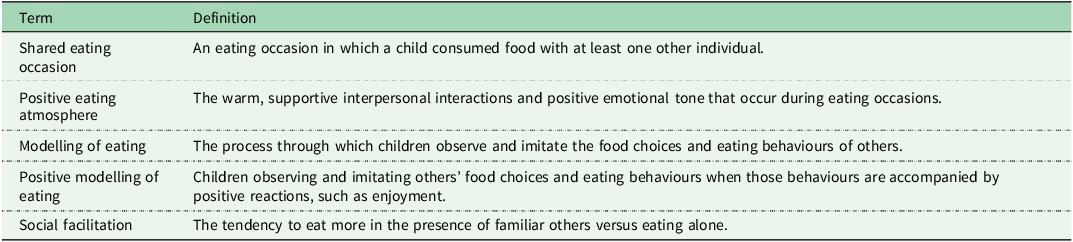
The following sections present evidence to address Objective A. See Table 1 for terms and definitions.
Terms and definitions of positive social influences on children’s eating

Table 1. Long description
A table with two columns: Term and Definition. The table has six rows, each providing a term and its corresponding definition. Row 1: Term, Shared eating occasion; Definition, An eating occasion in which a child consumed food with at least one other individual. Row 2: Term, Positive eating atmosphere; Definition, The warm, supportive interpersonal interactions and positive emotional tone that occur during eating occasions. Row 3: Term, Modelling of eating; Definition, The process through which children observe and imitate the food choices and eating behaviors of others. Row 4: Term, Positive modelling of eating; Definition, Children observing and imitating others’ food choices and eating behaviors when those behaviors are accompanied by positive reactions, such as enjoyment. Row 5: Term, Social facilitation; Definition, The tendency to eat more in the presence of familiar others versus eating alone.
Shared eating occasions
For this review, we use a broad definition of ‘shared eating occasions’, referring to any occasion in which a child eats with at least one other individual. This definition recognises that shared eating experiences are not limited by who is present, such as parents, siblings or other caregivers, nor by the setting, as meals do not need to occur at a table. Evidence from the UK National Diet and Nutrition Survey shows that children typically eat vegetables at home with family members, often alongside other food groups rather than in isolation(Reference Chawner, Blundell-Birtill and Hetherington4). Shared eating occasions therefore provide an important context for children to learn to enjoy eating vegetables.
Family mealtimes are one type of shared eating occasion, though their frequency and duration vary across households(Reference Fiese, Foley and Spagnola18). Definitions of ‘family mealtimes’ vary in the literature, for example, in terms of who must be present (ranging from all family members to at least one parent and one child) and what counts as a shared meal, with some definitions limited to the evening meal and others including any eating occasion(Reference Martin-Biggers, Spaccarotella and Berhaupt-Glickstein19). A recent umbrella review reported that between one quarter and one half of families eat together several times per week(Reference Snuggs and Harvey20). The reviews included by Snuggs and Harvey(Reference Snuggs and Harvey20) did not limit search criteria by country, except for four reviews which limited their criteria to studies conducted in the US, and they did not examine the moderating role of country. Evidence from across 43 countries across Europe and North America align with this, showing that almost half (49%) of children and adolescents aged 10–17 years have daily family meals(Reference López-Gil, Smith and Tully21). In England, this proportion is higher, with 60% of young people reporting daily family meals(Reference López-Gil, Smith and Tully21). Similar patterns are found among younger children. For example, one study found that 44% of UK families with preschool-aged children ate their main meal together at least five times per week, whereas 13% ate their main meal together once per week or less(Reference Sweetman, McGowan and Croker22). Overall, this suggests that there is opportunity to increase the frequency of shared eating occasions.
Shared meals increase children’s exposure and opportunity to eat vegetables. Consistent with this, the frequency of eating dinner together has been positively associated with the number of vegetable servings offered to preschool children(Reference FitzPatrick, Edmunds and Dennison23). Systematic reviews and meta-analyses further demonstrate positive associations between more frequent family meals and children’s fruit and vegetable intake(Reference Robson, McCullough and Rex24,Reference Glanz, Metcalfe and Folta25) and healthier overall dietary patterns(Reference Hammons and Fiese26).
Beyond meal frequency, meal duration also appears to influence children’s vegetable consumption. A meta-analysis found that longer duration of family meals was associated with better child nutritional health(Reference Dallacker, Hertwig and Mata27). In a randomised clinical trial, Dallacker et al.(Reference Dallacker, Knobl and Hertwig28) found that extending family mealtimes by 50% (approximately 10 minutes) led children aged 6–11 years (N = 50) to consume significantly more FV (7 additional pieces on average, equivalent to ∼1 extra portion) without increasing intake of other foods offered. This suggests that longer mealtimes may result in higher vegetable intake rather than promoting greater overall energy consumption. Although longer mealtimes may offer additional benefits, recommending them universally could increase pressure on parents who already face significant time constraints. Therefore, the primary goal should be to encourage frequent shared eating occasions, with longer eating occasions included when feasible.
It is also important to consider broader contextual factors that may shape the benefits of shared eating occasions. For example, the positive association between family meal frequency and vegetable servings was reduced when the television was on during dinner(Reference FitzPatrick, Edmunds and Dennison23). However, a meta-analysis by Dallacker et al.(Reference Dallacker, Hertwig and Mata29) found that neither the number of family members present nor the type of meal (breakfast, lunch or dinner) moderated the relationship between family meal frequency and children’s healthy food consumption. This suggests that shared mealtimes may be a useful strategy across a range of family structures and routines. Moreover, shared meals provide additional opportunities for social learning. Sweetman et al.(Reference Sweetman, McGowan and Croker22) found that parents who regularly eat the same foods as their preschool-aged children during shared meals have children with higher vegetable intake, highlighting the role of modelling during shared mealtimes.
In addition to family mealtimes, children may also experience shared eating in school settings, such as eating with peers or staff. Research identifies school mealtimes as an important and enjoyable opportunity for social interaction(Reference Chapman, Gosliner and Olarte30,Reference Lalli31) . Indeed, Baines and MacIntyre(Reference Baines and MacIntyre32) found that 80% of children aged 9–10 years (n = 316) reported enjoying sitting with others whilst eating their school lunch. Further qualitative exploration showed that these shared mealtimes enable social communication, for example talking about hobbies or discussing the sensory properties of food(Reference Baines and MacIntyre32). This highlights schools as a potential candidate location for implementing social eating interventions to improve vegetable consumption.
Several limitations of the existing evidence base should be noted. Definitions of family meals vary widely across studies(Reference Snuggs and Harvey20,Reference Caldwell, Terhorst and Skidmore33) , which may introduce variability or attenuation, making it challenging to fully determine the impact of shared eating occasions on vegetable intake. For example, some studies define family meals exclusively as evening meals eaten together(Reference Caldwell, Terhorst and Skidmore33), which excludes shared eating at breakfast, lunch or snack times. Additionally, most research in this area is cross-sectional, highlighting the need for longitudinal and intervention studies to clarify the long-term and causal effects of shared eating on children’s vegetable consumption(Reference Glanz, Metcalfe and Folta25).
Positive eating atmosphere
Eating with others can create a more enjoyable and supportive eating atmosphere, making shared eating occasions an important social context for improving children’s healthy eating. While we have highlighted the value of children eating alongside others, these social interactions are most likely to encourage vegetable consumption when the eating environment is perceived as positive. Although definitions vary, mealtime emotional climate (or atmosphere) generally refers to the positive or negative interpersonal interactions and emotional expressions that occur during eating occasions(Reference Smith, Saltzman and Dev34). In line with the focus of this review, we consider research on positive eating atmospheres, characterised by warm, nurturing interactions, shared enjoyment between those eating together, positive emotions and encouraging communication about food(Reference Smith, Saltzman and Dev34). We also extend this definition beyond traditional ‘mealtimes’ to include other eating occasions, such as snack times, recognising that some families may not routinely share meals (e.g., when children attend school or wraparound care). It is important to recognise that shared eating occasions may not always be characterised by a positive atmosphere. Child characteristics such as fussy eating can create tension or conflict during eating occasions, which may contribute to a negative emotional climate(Reference Wolstenholme, Kelly and Hennessy35). Parent stress and household chaos can also make mealtimes feel pressured rather than enjoyable(Reference Fulkerson, Telke and Larson36). As a result, achieving the ‘ideal’ of a positive family mealtime may be more challenging for some families than others(Reference Le Moal, Litterbach and Dunn37).
Observational research has demonstrated the effects of having a positive eating climate. For example, Berge et al.(Reference Berge, Jin and Hannan38) analysed video recordings of family mealtimes (n = 40) and found that positive interpersonal dynamics, including constructive communication, were associated with higher vegetable intake among adolescents. Similar findings have been shown with younger children. For example, Saltzman et al.(Reference Saltzman, Bost and Musaad39) identified two groups of parent-child dyads (n = 74) using observations of mealtimes: ‘Positive Expressers’ (79%; high positive and low negative emotions) and ‘All Expressers’ (20%; similar levels of positive and negative emotions). Parents who were ‘Positive Expressers’ reported that their child had greater habitual intake of healthy food (including fruit, vegetable and soy intake) compared to ‘All Expressers’. Research has also examined mealtime atmosphere over multiple eating occasions. Knobl et al.(Reference Knobl, Dallacker and Hertwig40) asked parents (n = 310) to complete seven daily surveys about routines (e.g., positive atmosphere and modelling) during their most important family meal of the day. Creating a positive mealtime atmosphere and parental modelling were strong predictors of greater FV intake by children. A meta-analysis by Dallacker et al.(Reference Dallacker, Hertwig and Mata27) similarly demonstrated an association between a positive mealtime atmosphere and better child nutritional health. Collectively, these findings underscore the significant role that positive eating atmospheres play in supporting children’s consumption of nutritious foods, such as vegetables.
The atmosphere of the eating occasion can also influence parent’s use of specific feeding practices, particularly parent’s use of structure-based feeding practices which provide organisation of a child’s food environment, such as making healthy food available and accessible, and monitoring and modelling healthy food intake(Reference Vaughn, Ward and Fisher41). For example, mothers of children (1.5–6 years; n = 275) who reported more positive emotional experiences during family mealtimes were more likely to use structure-based feeding practices, such as modelling(Reference White, Meyer and Palfreyman42). Consistent results have been observed in Ecological Momentary Assessment studies, where parents of preschool children (n = 109) were more likely to engage in structure-based practices (e.g., modelling) when the atmosphere was positive or neutral(Reference Edwards, Pickard and Farrow43). Together, these findings highlight the complex interplay between emotional atmosphere and feeding practices within family eating contexts.
Research in this area also faces challenges. One limitation is the absence of a consistent operational definition of a positive eating atmosphere, which contributes to variation in how it is measured(Reference Smith, Saltzman and Dev34). Additionally, most research focuses exclusively on mealtimes. While vegetables are often served at meals, creating positive snack-time experiences, where vegetables could also be offered, may be equally valuable. Addressing these limitations in future research is essential for fully understanding how the emotional climate of eating experiences relates to children’s vegetable consumption. There is also a need to understand children’s own perceptions of the eating atmosphere to identify what they consider important for a positive, social eating experience. Gaining insight into children’s perspectives will help to improve understanding of underlying mechanisms and pinpoint key levers for designing healthy eating interventions, such as the frequency and duration of shared eating experiences and communicating food enjoyment. We next turn to discussion of the mechanisms that underpin the effect of shared eating on intake.
Modelling of eating
Eating with others provides children with opportunities to observe and copy the food choices and eating behaviours of those around them – a process known as modelling. Drawing on the principles of Social Learning Theory, children learn behaviours through observing and imitating others(Reference Bandura and Walters44), and this extends to eating behaviour, where modelling plays a central role(Reference Cruwys, Beyelander and Hermans45). Observational research also shows that modelling is a common parental feeding practice, with parents frequently using their own eating behaviour to encourage children to try foods(Reference Blissett, Bennett and Donohoe46). Modelling is a key social mechanism for shaping children’s eating behaviour and an important focus for understanding how shared eating environments influence vegetable consumption.
There is strong evidence from multiple systematic reviews that modelling effectively increases children’s vegetable intake. A systematic review and meta-analysis found that modelling was positively associated with healthy food consumption, including vegetables(Reference Yee, Lwin and Ho47). Similarly, Ong et al.(Reference Ong, Ullah and Magarey48) reported consistent links between parental modelling and children’s fruit and vegetable intake. Pickard et al.(Reference Pickard, Alving-Jessep and Delivett49) also showed that behavioural modelling interventions in group-based settings improved fruit and vegetable consumption among 3–7-year-olds. More recently, a systematic review of prospective studies with young children (1–6 years) found that structure-based feeding practices, including modelling, were positively associated with fruit and vegetable intake over time(Reference Pullar, Jarman and Spence50). Together, this body of evidence strongly supports modelling as an effective feeding strategy for improving children’s vegetable intake.
Positive modelling
The beneficial effects of modelling are enhanced if information is shared about how enjoyable food is. For example, an eater may convey food enjoyment through positive facial expressions (e.g., smiling)(Reference Edwards, Thomas and Higgs51,Reference Edwards, Thomas and Higgs52) , statements (e.g., ‘yummy, I love cauliflower’)(Reference Farrow, Belcher and Coulthard53) or vocalisations (e.g., gustatory ‘mmm’)(Reference Wiggins54). This is known as the positive modelling of eating.
The effectiveness of positive modelling on children’s vegetable intake has been examined in experimental research. For example, Staiano et al.(Reference Staiano, Marker and Frelier55) exposed children (aged 3–5 years; n = 42) to either a video of other children eating a vegetable (pepper) and positively interacting with it, a non-food video or no video. Children’s vegetable intake was measured on day 1 (exposure) and on days 2 and 7 (no exposure). When controlling for vegetable intake on day 1, children who were exposed to positive modelling consumed more of the modelled vegetable at day 7, compared to children in the no-video control condition. In another study, Appleton et al.(Reference Appleton, Barrie and Samuel56) exposed children aged 7–10 years (n = 155) to a story which mentioned that fictional characters ate carrots (modelling), liked eating carrots (positive modelling) or there was no mention of the characters eating carrots (control condition). Children’s intake and liking of carrots was greater after being exposed to positive modelling, compared to modelling and control conditions. Adult models are also effective. For example, Edwards et al.(Reference Edwards, Thomas and Higgs51) found that children aged 4–6 years (n = 111) ate more than double the amount of raw broccoli, on average, after observing an adult model eating raw broccoli with a positive facial expression, compared to children in the no-food control condition. This beneficial effect appears to be enhanced if children have repeated exposure to positive modelling(Reference Edwards, Thomas and Higgs52). Overall, these findings indicate that exposing children to positive eating models is an effective way to increase their vegetable intake. Although some models may be more influential than others, for example children prefer snacks chosen by peer models rather than adult models(Reference Frazier, Gelman and Kaciroti57), evidence suggests that a wide range of models, including peers, adults and fictional characters, can be effective. This opens valuable opportunities for intervention, such as providing parents with guidance on modelling healthy eating or incorporating peer and fictional models into school-based programmes and media campaigns.
Modelling has been incorporated into several healthy eating programmes that have been shown to increase children’s FV consumption. For example, the Food Dudes programme exposes children to enthusiastic role models (the ‘Food Dudes’ characters), provides repeated taste exposure to FV and uses small rewards (e.g., stationery) to encourage trying new foods. Multiple studies have demonstrated the programme’s effectiveness in increasing children’s FV intake(Reference Horne, Hardman and Lowe58–Reference Marcano-Olivier, Sallaway-Costello and McWilliams61). Similar combinations of modelling, rewards and repeated exposure have also been effective when parents act as the models. For example, Holley et al.(Reference Holley, Haycraft and Farrow62) found that this approach increased children’s liking and intake of a previously disliked vegetable.
Digital interventions have also used modelling. Farrow et al.(Reference Farrow, Belcher and Coulthard53) developed Vegetable Maths Masters, a mobile app in which children play maths games featuring repeated exposure to vegetable images, positive modelling through character statements (e.g., ‘Yummy, I love cauliflower’) and in-game rewards for correct answers. Children aged 3–6 years (n = 74) who played the app showed greater vegetable liking and intake than those who played a no-food control game.
Collectively, these findings suggest that interventions incorporating modelling, through characters, parents or digital platforms, can effectively support children’s vegetable consumption. Social influences such as eating with others and exposure to positive role models have also been integrated into policies. For example, the Holiday Activities and Food Programme (HAF) provides children with opportunities to socialise around food(Reference Long, DeFeyter and Stretesky63). Recognising how modelling operates within shared eating contexts also helps to clarify other social mechanisms that may shape children’s intake, such as social facilitation.
Social facilitation
Another mechanism that may underlie the relationship between shared eating and vegetable consumption is social facilitation. Social facilitation refers to the phenomenon whereby people eat more in the presence of familiar others compared with when eating alone. Robust evidence from meta-analytic work indicates that individuals both select and consume more food in social contexts compared to solitary eating, with effects that are large and reliable. This phenomenon has been extensively studied in adult populations and consistently shows increased food intake during shared meals(Reference Ruddock, Brunstrom and Vartanian64–Reference Herman67).
Social facilitation has also been examined in child populations. For example, experimental research with children aged 2–6 years (n = 54) found that those eating in larger groups (nine children) consumed more crackers than those in smaller groups (three children), even after controlling for meal duration(Reference Lumeng and Hillman68). Additionally, Salvy et al.(Reference Salvy, Coelho and Kieffer69) studied children aged 6–10 years with either normal weight (n = 15) or overweight (n = 17). Social facilitation was found among children with normal weight only: these children ate more pizza when dining in groups of four than when eating alone. Therefore, weight status could moderate social facilitation effects(Reference Ruddock, Brunstrom and Vartanian64). Research using diary methods also supports social facilitation in early childhood. Pearcey and de Castro(Reference Pearcey and De Castro70) asked parents of infants aged 8–16 months (n = 29) to complete daily food-intake diaries for seven days, recording both consumption and contextual factors such as who was present during meals. There was a weak positive correlation (r =.14) between the number of people present and infants’ food intake. Together, these findings highlight that social facilitation shapes children’s food intake from an early age. However, these effects are relatively weak and based on small samples sizes, thus, further research with child populations is needed(Reference Ruddock, Brunstrom and Vartanian64).
A key component of social facilitation is affiliation. People typically eat more when eating with familiar others, such as friends or family, compared with unfamiliar co-eaters(Reference Ruddock, Brunstrom and Vartanian64). Salvy et al.(Reference Salvy, Vartanian and Coelho71) found that children (aged 5–11 years; n = 44) ate more cookies when eating with siblings, compared to when eating with strangers or alone. This suggests that studies relying on unfamiliar eating partners may underestimate the impact of social eating. In this context, school environments, where children routinely eat alongside familiar peers in large groups, represent a promising yet underexplored setting for leveraging social facilitation to promote vegetable intake. Beyond influencing intake, eating together can also strengthen social bonds and reinforce social norms, highlighting additional benefits of shared meals.
There is also evidence that eating with others enhances enjoyment of the eating occasion.(Reference Ruddock, Brunstrom and Vartanian64) This raises the possibility that social facilitation could help increase children’s enjoyment of vegetables, which are often disliked in early childhood. However, it remains unclear whether social facilitation operates similarly across different food types. For example, if social facilitation can be leveraged to increase FV intake, then ensuring these foods are available during shared meals could be an effective strategy(Reference Ruddock, Brunstrom and Higgs66). Much of the existing literature has focused on the relationship between social facilitation, and higher energy intake and obesity(Reference Salvy, de La Haye and Bowker72), underscoring the need for studies that specifically examine how social facilitation influences children’s vegetable consumption.
Social facilitation effects may also persist over time, which could have positive implications for child health. While this has yet to be tested with children, research with adult women showed that energy consumption was greater when eating with friends than when eating alone, across three consecutive days(Reference Ruddock, Brunstrom and Vartanian73), similar long-term social facilitation effects. If vegetable consumption is socially facilitated, children may continue to eat more vegetables outside of the shared meal context and develop social norms that support healthier food choices. This represents an important avenue for future research.
Individual differences
It is essential to consider both individual and environmental characteristics when developing feeding guidance to ensure it meets the needs of diverse families and contexts. Doing so will help improve the effectiveness and sustainability of social eating interventions. There are multiple, interacting factors that shape children’s healthy eating. These include individual characteristics, such as children’s appetite traits, as well as elements of their personal and sociocultural environment, including household characteristics and food culture(Reference Varela, De Rosso and Moura9). Such factors may influence which interventions are appropriate and effective for supporting healthy eating, for example, strategies that create positive social experiences around food.
Children’s eating behaviour
Children differ in their eating behaviour(Reference Carnell, Benson and Pryor74), which could influence the effectiveness of positive social influences on increasing FV intake. Avoidant eating behaviour, marked by high food fussiness and low enjoyment of food(Reference Pickard, Croker and Edwards75), is persistent across childhood(Reference Pickard, Edwards and Kininmonth76) and has been linked to lower vegetable intake(Reference Tharner, Jansen and Kiefte-de Jong77–Reference Dubois, Farmer and Girard79). Despite this subgroup being most likely to need intervention, children with avoidant eating are under-represented in research about positive social influences. This could be due to challenges with recruitment, for example, parents may be less likely to volunteer for research which includes food their child strongly dislikes. There is some research to suggest that modelling is an effective strategy for increasing novel fruit consumption by children with low food responsiveness, a characteristic of avoidant eating behaviour(Reference Blissett, Bennett and Fogel80). However, there remains an urgent need for research which specifically targets avoidant eaters to fully realise the potential of using positive social influence to improve healthy eating for all children.
Research has also identified an avid eating profile which is marked by high enjoyment of and responsiveness to food, along with high levels of emotional overeating(Reference Pickard, Croker and Edwards75). Whilst children with avid eating have greater risk of developing obesity(Reference Kininmonth, Smith and Carnell81), the high levels of food enjoyment and responsiveness within the context of vegetables could be exploited to improve intake of healthy food. Qualitative research has shown that positive social influences, such as modelling and eating as a family, are effective with children with avid eating(Reference Edwards, Blissett and Croker82). However, whether these strategies are effective for specifically increasing vegetable intake by children with avid eating remains to be examined. Moreover, given the high levels of emotional overeating observed in avid eating(Reference Pickard, Croker and Edwards75), along with parents using food to soothe negative emotions(Reference Pickard, Farrow and Haycraft83), feeding guidance which emphasises the importance of positive, versus negative, emotions during eating experiences could be particularly beneficial for these families.
Although family meals are often portrayed as beneficial, they may not be positive experiences for all families. Many households face barriers that make it difficult to achieve the idealised image of a family meal, including child characteristics (e.g., challenging eating behaviours), parent factors (e.g., mental health difficulties) and broader household constraints (e.g., time scarcity or limited food access)(Reference Le Moal, Litterbach and Dunn37). For example, fussy eating can create a tense emotional climate at mealtimes, as children’s food refusal and parents’ use of pressure or coercive feeding practices often lead to conflict(Reference Wolstenholme, Kelly and Hennessy35). Feeding children with avoidant or avid eating patterns is also associated with poorer parent mental health. Parents of children with avid eating report higher levels of stress, depression and anxiety(Reference Pickard, Edwards and Farrow84), while parents of children with avoidant eating experience poorer psychological wellbeing(Reference Edwards, Pickard and Farrow85). These challenges illustrate that ‘positive’ mealtimes are not equally attainable for all families and highlight the complex interplay between children’s eating behaviours, parental factors and wider household circumstances.
Household characteristics
It is also important to consider household characteristics. Households vary widely in characteristics such as socioeconomic status (SES), levels of food security and the degree of household chaos. These factors often interact. For example, food insecurity has been linked to greater household chaos and reduced mealtime planning(Reference Fiese, Gundersen and Koester86). Children living in households with low SES, food insecurity or high levels of chaos may be most in need of interventions to support healthy eating, consistent with observational evidence linking poorer diet quality with these characteristics(Reference Fernández-Alvira, Mouratidou and Bammann87–Reference Martin-Biggers, Quick and Zhang92). Considering these household-level characteristics when developing feeding guidance is therefore essential, as they may shape parents’ capacity to create positive social experiences around food and influence the effectiveness of such strategies.
Feeding practices. Research has shown that household characteristics shape how parents use feeding practices. Parents with higher SES report greater use of modelling as a feeding strategy(Reference Zarnowiecki, Dollman and Parletta93). Moreover, recent evidence shows that parental modelling partly explains the link between parent education and children’s FV intake and fully explains the association between household income and children’s FV intake(Reference Serasinghe, Vepsäläinen and Lehto94). This suggests that parents with low SES may model healthy eating less often, despite its well-established benefits for children’s dietary behaviour. Research has also shown that parents experiencing food insecurity tend to use more controlling strategies, such as restriction(Reference Adams, Caccavale and Smith95), particularly under conditions of high stress or low mood(Reference Berge, Fertig and Trofholz96). Household chaos plays a similar role, whereby parents who report lower chaos are more likely to use structured feeding practices such as modelling and involving children in food preparation(Reference Povall, Blissett and Pickard97). Furthermore, qualitative research showed that families experiencing food insecurity describe chaotic mealtimes characterised by disrupted routines, fewer shared meals and a more negative emotional climate, though strong family relationships can still facilitate enjoyable mealtime experiences(Reference Rosemond, Blake and Shapiro98). Together, this evidence illustrates how food insecurity and chaos interact to undermine positive social eating environments.
Mealtime frequency. Findings on SES and family mealtime frequency are less consistent. Some studies show that families with lower SES(Reference Neumark-Sztainer, Hannan and Story99) or experiencing food insecurity(Reference Widome, Neumark-Sztainer and Hannan100) have fewer family meals, whereas other studies report no SES differences(Reference Skeer, Yantsides and Eliasziw101). A meta-analysis also found that SES does not moderate the association between family meal frequency and children’s diet quality, indicating that shared meals are beneficial across socioeconomic groups(Reference Dallacker, Hertwig and Mata29). These inconsistencies suggest that mealtime frequency may be shaped by multiple and interacting contextual factors, not SES alone. This underscores the need for further research, for example, studies using qualitative methods or Ecological Momentary Assessment to provide an in-depth understanding of mealtime experiences by families with lower SES.
Taken together, this body of research suggests that children from households with lower SES, food insecurity or high chaos may have less exposure to positive social influences during mealtimes, likely because their environments make such experiences more challenging to implement and/or sustain(Reference Arlinghaus and Laska102). However, much existing evidence relies on parent-report questionnaires. While informative, there is a pressing need for more observational research, particularly in households at greater risk of poorer dietary habits, to ensure feeding guidance is appropriately tailored to diverse family contexts.
Opportunities for research and practice
Overall, this review suggests that fostering positive social influences is a promising and effective way to increase children’s vegetable consumption. However, the success of such approaches is likely to vary depending on child- and household-level characteristics, emphasising the need for interventions/advice that are tailorable to individual and contextual differences. This aligns with recent calls from public health experts to shift nutrition campaigns toward promoting the enjoyment of nutritious foods, such as through shared, social eating, rather than emphasising nutritional value alone(Reference Haines, Haycraft and Lytle103). Although some evidence-informed feeding resources exist (e.g., the Child Feeding Guide), public health guidance remains largely generic. Current advice tends not to provide clear, practical strategies that parents and childcare professionals can adapt to diverse contexts, routines and needs. As a result, parents and childcare professionals may struggle to translate broad recommendations into meaningful eating practices. Research is needed to develop tailored interventions that account for children’s eating profiles and household constraints, using recruitment strategies that better engage underserved families. There is also a need to identify practical strategies beyond the home, such as peer-based interventions in schools that use group eating to harness social facilitation and peer modelling. In addition, a stronger evidence base is required for actionable guidance from the literature, including encouraging any form of shared eating rather than idealised daily meals. This could involve flexible approaches (e.g., meals or snacks) and adaptable techniques (e.g., modelling small amounts of familiar vegetables for avoidant eaters). Guidance should also address how to create a positive eating atmosphere, such as promoting enjoyable conversation, using positive facial expressions and minimising distractions.
Social influences offer an important avenue for health interventions because they are simple, low-cost and adaptable across settings, including homes and childcare settings. The overlap between strategies, for example shared meals naturally create opportunities for both modelling, social facilitation and a positive atmosphere further enhances the utility of social influence across diverse families and contexts. For example, a family may prioritise eating together on most evenings, while choosing to actively model vegetable intake during meals when caregivers have the time and capacity.
Despite its importance, relatively little is known about how social eating develops across childhood. Existing frameworks, such as Social Learning Theory(Reference Bandura and Walters44), explain how young children learn which foods are safe and palatable, but they offer limited insight into how social eating becomes embedded within broader social, emotional and cognitive development as children grow older. Much of the current evidence is cross-sectional, making it difficult to understand how children’s responses to social eating environments change over time. A developmental perspective is therefore essential. Early in childhood, many foods are unfamiliar, and children often rely on observing others to judge what is safe and enjoyable to eat. As children age and their food familiarity increases, the role of social influences may shift. Once safety and palatability are established, social motives, such as the desire to fit in or be liked, may become more influential(Reference Robinson, Blissett and Higgs104). With increasing age and concern for impression management(Reference Salvy, de La Haye and Bowker72), children may adapt their eating behaviour in different ways to align with peers. These developmental changes highlight the need for longitudinal research that tracks how social influences on eating change over time. Such research is crucial for identifying the long-term implications of social eating and for designing interventions that promote healthy eating habits throughout childhood and beyond.
Conclusion
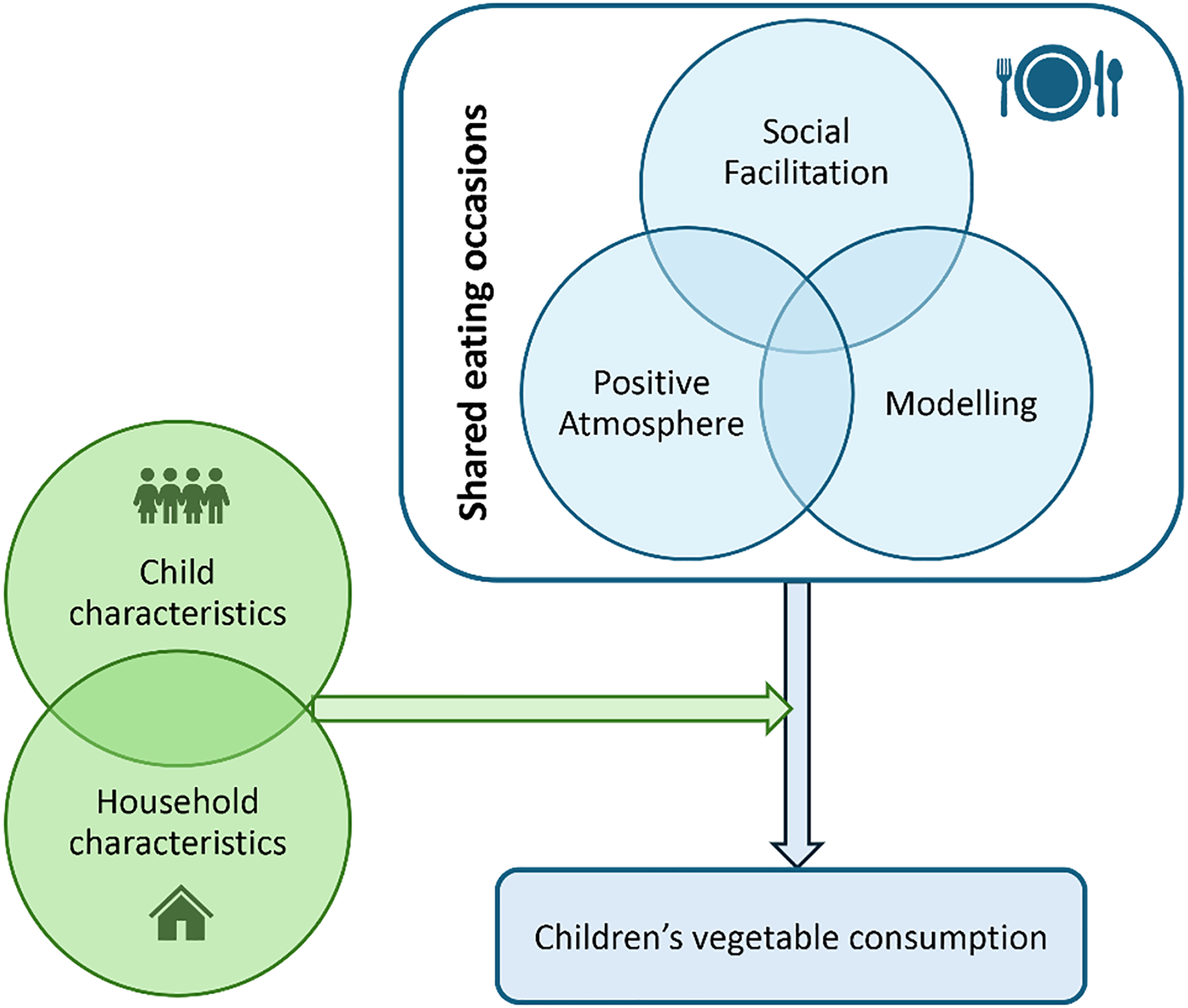
Positive social influences appear an effective approach for improving children’s vegetable intake (Fig. 1). Evidence across shared eating occasions, positive eating atmosphere, modelling and social facilitation demonstrates that social experiences shape children’s dietary behaviour, offering meaningful opportunities to support healthier eating habits. These social mechanisms are simple, low-cost and adaptable across settings, making them relevant for real-world interventions in homes and childcare settings. Intervention may also need to be tailored to meet individual needs. For example, differences in children’s eating behaviour and household characteristics may influence both the feasibility and effectiveness of creating positive social eating environments. Tailoring guidance to these diverse contexts is therefore essential. More research is now needed with under-represented groups, including children with avoidant or avid eating behaviour and families with low SES and/or food insecurity. Taken together, the current evidence suggests that creating social and enjoyable eating experiences is a promising strategy for improving children’s vegetable consumption.
Positive social influences increase children’s vegetable intake, but this relationship is likely to be influenced by child- and household-level characteristics.

Acknowledgements
The authors are grateful to the Nutrition Society to present at the Scottish Section Conference.
Author contributions
Katie L. Edwards: Conceptualisation; Writing – Original Draft. Suzanne Higgs: Conceptualisation; Writing – Review & Editing.
Financial support
This research received no specific grant from any funding agency, commercial or not-for-profit sectors.
Competing interests
The authors declare none.

 Open access

