





Introduction
The use of chemicals in agricultural fields is an increasingly controversial issue due to public backlash. Furthermore, the intensive use of commercial herbicides for weed control results in the evolution of herbicide-resistant weeds (Owen and Zelaya Reference Owen and Zelaya2005). Extensive and intensive use of herbicides has resulted in the spread of herbicide-resistant weeds in many crop production systems (Nakka et al. Reference Nakka, Jugulam, Peterson and Asif2019). Therefore, it is imperative to devise nonchemical and organic weed control methods for application in field cropping (Farooq et al. Reference Farooq, Flower, Jabran, Wahid and Siddique2011). Organic mulches, such as straw, hay, municipal waste, manure, and chip board mulch are efficient methods for suppressing weed growth (Campiglia et al. Reference Campiglia, Paolini, Colla and Mancinelli2009; Teasdale and Mohler Reference Teasdale and Mohler2000).
The disposal of spent coffee grounds (SCG) is problematic due to the high oxygen demand during decomposition and the potential release of residual caffeine, tannin, and polyphenol contaminants into the environment (Kovalcik et al. Reference Kovalcik, Obruca and Marova2018). The application of SCG to agricultural fields has been shown to inhibit plant growth owing to their chlorogenic acid content (Pandey et al. Reference Pandey, Soccol, Nigam, Brand, Mohan and Roussos2000). SCG contain more nitrogen and potassium than common organic materials such as cow and chicken manure (Kasongo et al. Reference Kasongo, Verdoodt, Kanyankagote, Baert and Ranst2011; Pandey et al. Reference Pandey, Soccol, Nigam, Brand, Mohan and Roussos2000). Therefore, the application of SCG to the soil in crop rotation systems could help reduce the application of chemical fertilizers, promote soil quality, and enhance weed control.
In our previous studies, we found that SCG could not only improve soil fertility but also control weed growth in agricultural fields (Hirooka et al. Reference Hirooka, Kurashige, Yamane, Watanabe, Kakiuchi, Ishikawa, Miyagawa, Iwai and Iijima2022; Yamane et al. Reference Yamane, Kono, Fukunaga, Iwai, Sekine, Watanabe and Iijima2014). Yamane et al. (Reference Yamane, Kono, Fukunaga, Iwai, Sekine, Watanabe and Iijima2014) reported that the plow-in application of SCG was considered an effective method for weed control owing to its inhibitory effects on plant germination. In addition, the application of SCG increased the carbon and nitrogen content in the soil; this was thought to have enhanced crop growth at more than 5 mo after SCG application. Hirooka et al. (Reference Hirooka, Kurashige, Yamane, Watanabe, Kakiuchi, Ishikawa, Miyagawa, Iwai and Iijima2022) conducted a field experiment in an upland field cropping system and reported that SCG mulching at more than 5 kg m−2 after crop germination facilitated weed control; in addition, the continuous application of SCG in cropping fields maintained the soil C/N ratio, although the application of organic materials generally increases this ratio. These studies revealed that the inhibitory effect of SCG was reduced 5 mo after the application; additionally, the application after crop germination minimized the inhibitory effect of SCG on the crop productivity. It can be said that SCG application with intertillage during cropping and/or with tillage after crop harvesting is economically efficient and effective for weed control and soil improvement.
Disposing of SCG has detrimental economic and environmental impacts that could be addressed by recycling them for use as an organic alternative in agricultural fields (Cervera-Mata et al. Reference Cervera-Mata, Pastoriza, Rufián-Henares, Párraga, Martín-García and Delgado2018). Enrichment of soil with organic carbon is an important agricultural method for mitigating climate change (Lehmann et al. Reference Lehmann, Hansel, Kaiser, Kleber, Maher, Manzoni, Nunan, Reichstein, Schimel, Torn, Wieder and Kögel-Knabner2020). The application of SCG may help mitigate global climate change, because the carbon derived from SCG would remain in the soil longer than other organic materials (Yamane et al. Reference Yamane, Kono, Fukunaga, Iwai, Sekine, Watanabe and Iijima2014). To advance the practical use of SCG applications, their effects on weed growth must be evaluated via long-term field experiments.
The objective of the present study was to evaluate the effects of different amounts and methods of SCG application on weed growth through field experiments. For this purpose, two field experiments were conducted to quantitatively evaluate the effect of the amount and number of SCG applications (Experiment 1) and of different SCG application methods, “mulching” and “plow-in” (Experiment 2), on weed growth in agricultural fields. In these experiments, we evaluated the inhibitory effects of SCG on both germination and growth of weeds. We hypothesized that experiments started at different times would lead to different growth environments and that different weed species would be dominant in each experiment.
Materials and Methods
Experimental Location
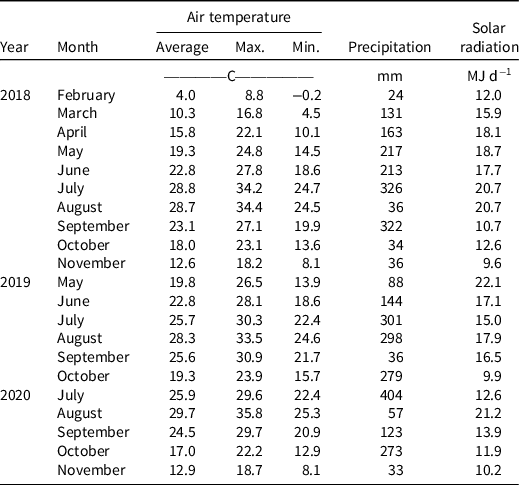
Field experiments were conducted in the period from 2018 to 2020 in an upland field that was converted from a paddy field on a farm in Nara, western Japan (34.40°N, 135.45°E, 174 m above sea level). The soil type at the experimental site, was classified as sandy clay loam (sand:silt:clay = 71.0:14.5:14.5). The soil had 15.3 g of total C kg−1, 1.45 g of total N kg−1, 320 mg of available P kg−1, and 0.36 cmol of K kg−1. The monthly temperature, rainfall, and solar radiation during the experimental period are listed in Table 1. During the summer of 2017 (June to October), mixed-seed crotalaria (Crotalaria juncea L.), guinea grass (Urochloa maxima R.), and sunflower (Helianthus annuus L.) crops were planted for green manure at the experimental site and harvested before the heading of guinea grass. A week before the start of the experiment, the fields were prepared and leveled to a depth of 15 cm using a rotary plow.
Daily average, maximum, and minimum air temperature, monthly precipitation, and solar radiation during the experimental period at the field site in Nara, western Japan. a
a The data were obtained from the Japan Meteorological Agency website (https://www.data.jma.go.jp/obd/stats/etrn/index.php).
Experimental Design and Treatments
Experiment 1
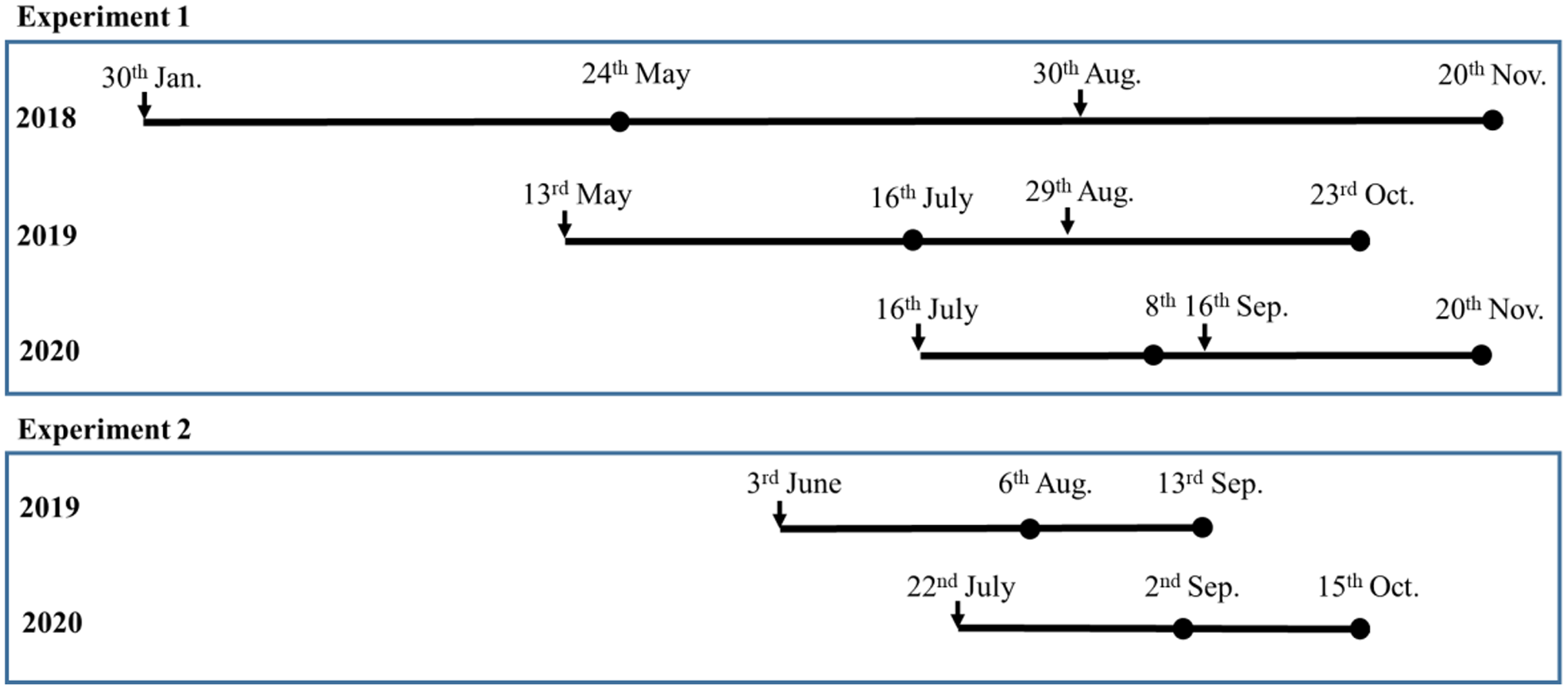
Experiment 1 was conducted in 2018, 2019, and 2020. Eight treatments were arranged in a completely randomized block design in six replicates. The same treatments were continued in the same plots throughout the three experimental years. The size of each plot was 1.0 m by 1.0 m, with all the experimental plots covering a total of 8.0 m by 6.0 m (48.0 m2). Three quantities of SCG were set: 1 kg m−2, 5 kg m−2, and 10 kg m−2, along with two SCG application timings: once and twice per year. The SCG were uniformly top-dressed (i.e., the mulching method) after hand tilling on January 30 and August 30, 2018; May 13 and August 29, 2019; and July 16 and September 16, 2020 (Figure 1). It was anticipated that different initialization timings would lead to the predominance of different weed species in each experimental year. In addition to these six treatments, a control treatment (no SCG application) and no-mulching treatment (plow-in of 10 kg m−2 SCG twice) were employed. For the plow-in treatment, the SCG were incorporated to a depth of 10 cm by hand tilling. The SCG were provided by UCC Ueshima Coffee (Kobe, Japan). Total carbon and nitrogen content of the SCG was 249 and 22 g kg−1, respectively, and the water content was 58.3 ± 0.3% (Hirooka et al. Reference Hirooka, Kurashige, Yamane, Watanabe, Kakiuchi, Ishikawa, Miyagawa, Iwai and Iijima2022). The weeds were mowed and removed from the experimental field just before SCG application; the naturally occurring weeds were later used to evaluate the inhibitory effect of SCG on weed growth. The weeds were sampled on May 24 and November 20, 2018; July 10 and October 23, 2019; and September 8 and November 20, 2020 (Figure 1).
Schedule of the two experiments carried out in the present study. Arrows denote the dates of spent coffee grounds (SCG) application. Black circles denote the sampling dates.
Experiment 2
Experiment 2 was conducted in 2019 and 2020. Seven treatments were arranged in a completely randomized block design in six replicates. The same plot treatment allocations were used in both experimental years. The size of each plot was 1.0 m by 1.0 m, with all the plots covering a total of 7.0 m by 6.0 m (42.0 m2). Three quantities of SCG were applied: 5 kg m−2, 10 kg m−2, and 20 kg m−2; and two SCG application methods were used: mulching and plow-in. The SCG were uniformly top-dressed after hand tilling for the mulching treatment and incorporated to a depth of 10 cm by hand tilling for the plow-in treatment on June 3, 2019, and July 22, 2020. In addition to the six treatments, a control treatment (no SCG application) was employed. The SCG used were the same type as those used in Experiment 1. The weeds were mowed and removed from the experimental field immediately before the SCG were applied, after which naturally occurring weeds were investigated. The weeds were sampled on August 6 and September 13, 2019; and September 2 and October 15, 2020 (Figure 1).
Data Collection and Statistical Analysis
The weed biomass in each subplot was determined using a randomly placed quadrat (30 cm by 30 cm). The dominant weed species were identified visually. The weed samples were collected from each subplot by cutting them at ground level, and their dry weight was measured after oven-drying at 80 C for 72 h. The weed reduction rate was calculated using the following equation (Ghosh et al. Reference Ghosh, Singh, Ray and Das2016; Meighani et al. Reference Meighani, Karaminejad and Farrokhi2021):
 $$\matrix{\quad\quad\quad
{{\rm{Reduction}}{\mkern 1mu} \, {\rm{rate}} = ({\rm{dry}}{\mkern 1mu} \, {\rm{weight}}{\mkern 1mu} \,{\rm{in}}{\mkern 1mu} \,{\rm{the}}{\mkern 1mu} \,{\rm{control}}{\mkern 1mu}\, {\rm{plot}} - } \hfill \cr
{{\rm{dry}}{\mkern 1mu} \,{\rm{weight}}{\mkern 1mu} \,{\rm{in}}{\mkern 1mu} \,{\rm{the}}{\mkern 1mu}\, {\rm{treated}}{\mkern 1mu} \,{\rm{plot)/}}\left( {{\rm{dry}}{\mkern 1mu} \,{\rm{weight}}{\mkern 1mu} \,{\rm{in}}{\mkern 1mu}\, {\rm{the}}{\mkern 1mu}\, {\rm{control}}{\mkern 1mu} \,{\rm{plot}}} \right)} \hfill \cr
{ \quad\quad\times {\rm{100}}\left( \% \right)} \hfill \cr } $$
$$\matrix{\quad\quad\quad
{{\rm{Reduction}}{\mkern 1mu} \, {\rm{rate}} = ({\rm{dry}}{\mkern 1mu} \, {\rm{weight}}{\mkern 1mu} \,{\rm{in}}{\mkern 1mu} \,{\rm{the}}{\mkern 1mu} \,{\rm{control}}{\mkern 1mu}\, {\rm{plot}} - } \hfill \cr
{{\rm{dry}}{\mkern 1mu} \,{\rm{weight}}{\mkern 1mu} \,{\rm{in}}{\mkern 1mu} \,{\rm{the}}{\mkern 1mu}\, {\rm{treated}}{\mkern 1mu} \,{\rm{plot)/}}\left( {{\rm{dry}}{\mkern 1mu} \,{\rm{weight}}{\mkern 1mu} \,{\rm{in}}{\mkern 1mu}\, {\rm{the}}{\mkern 1mu}\, {\rm{control}}{\mkern 1mu} \,{\rm{plot}}} \right)} \hfill \cr
{ \quad\quad\times {\rm{100}}\left( \% \right)} \hfill \cr } $$
For all multiple comparisons, Dunnett’s multiple comparison test was performed to compare the means of each treated plot with those of the control plot, and the levels of statistical significance were set at P < 0.1, P < 0.05, and P < 0.01. The effects of the different amounts and numbers of SCG applications (Experiment 1) or the amount and methods of SCG applications (Experiment 2) on the weed reduction rate were analyzed using two-way ANOVA. All statistical analyses were performed using Excel Statistics v. 2015 (Social Survey Research Information, Tokyo, Japan).
Results and Discussion
Experiment 1
Over the 3 yr of the experiment, one or two dominant weed species were observed at each sampling as follows: in the first year (2018), Italian ryegrass [Lolium perenne L. ssp. multiflorum (Lam.) Husnot] (first sampling) and green bristlegrass [Setaria viridis (L.) P. Beauv.] and wingleaf primrose-willow (second sampling); in the second year (2019), Italian ryegrass and horseweed (first sampling) and Oriental lady’s thumb [Persicaria longiseta (Bruijn) Kitag.] and violet crabgrass (Digitaria violascens Link) (second sampling); in the third year (2020), barnyardgrass [Echinochloa crus-galli (L.) P. Beauv.] and Italian ryegrass (first sampling) and violet crabgrass (second sampling). The different initialization timings in each experimental year (winter, spring, and summer) led to the predominance of different weed species. Other weed species observed during the experimental period included slender amaranth (Amaranthus viridis L.), Canada goldenrod (Solidago altissima L.), eastern daisy fleabane [Erigeron annuus (L.) Pers.], American sloughgrass [Beckmannia syzigachne (Steud.) Fernald], sticky chickweed (Cerastium glomeratum Thuill.), annual bluegrass (Poa annua L.), Japanese dock (Rumex japonicus Houtt.), and Asian flatsedge (Cyperus microiria Steud.). Most of the weeds in the experimental area were grasses (i.e., the family Gramineae).
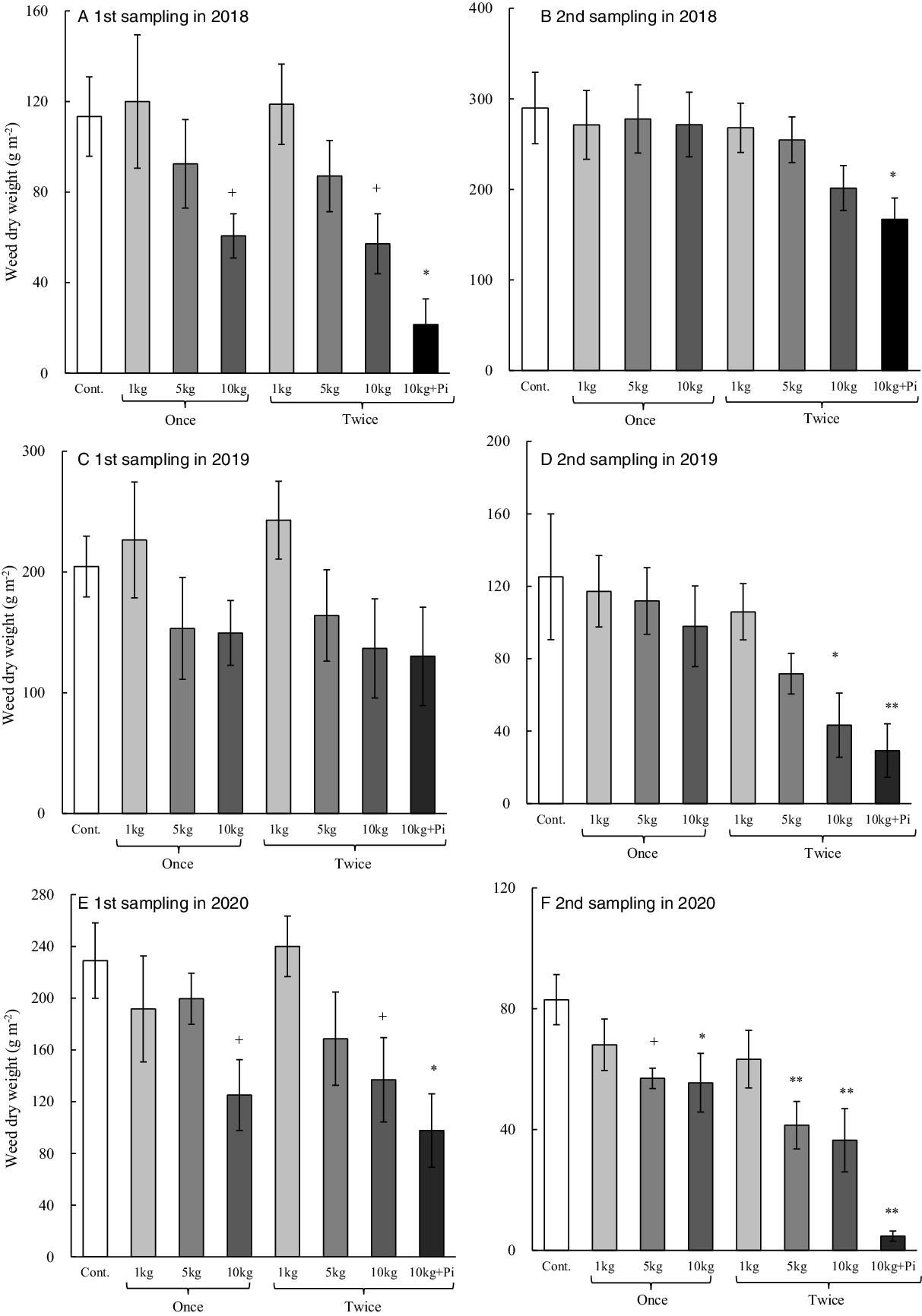
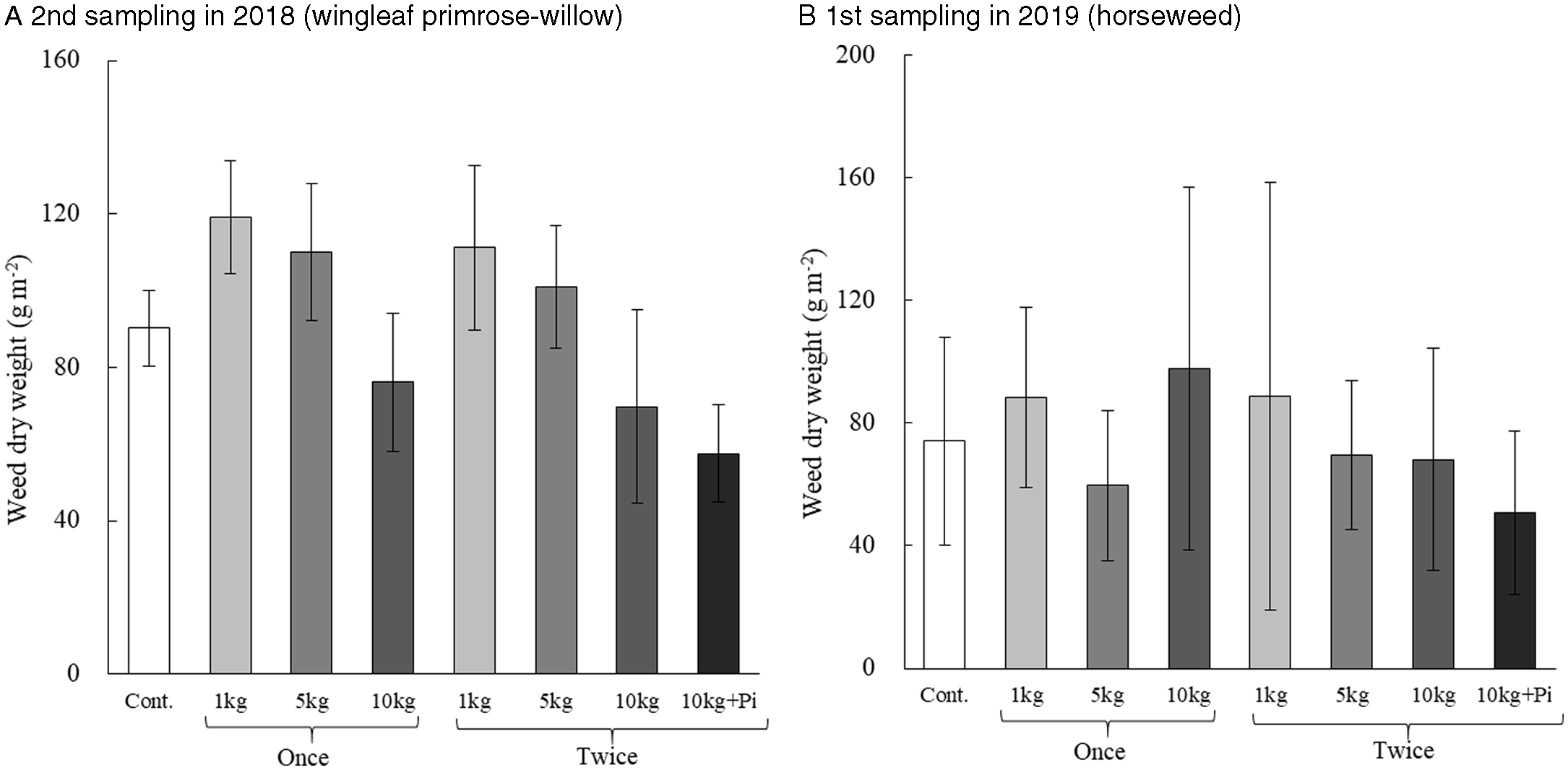
At the first sampling in 2018, the weed dry weight in the 10 kg m−2 SCG mulching plot was lower than that in the control plot (P < 0.1; Figure 2A). In addition, compared with the control, the plow-in application of 10 kg m−2 of SCG significantly decreased weed dry weight by approximately 80% (Table 2). At the second sampling in 2018, SCG mulching did not affect the weed dry weight, whereas SCG plow-in application significantly decreased the weed dry weight compared with the control (P < 0.05; Figure 2B). At this time, wingleaf primrose-willow was dominant, and the weed dry weight was not significantly affected by SCG mulching (Figure 3). At the first sampling in 2019, the application of more than 5 kg m−2 of SCG led to an approximately 20% decrease in the weed dry weight compared with the control; however, the difference was not significant (Figure 2C). The weed dry weight of the SCG plow-in plot was also not significantly different from that of the control plot, probably because the dry weight of horseweed did not decrease after SCG application (Figure 3). At the second sampling in 2019, the second 10 kg m−2 SCG mulching and plow-in application at 2 mo before sampling led to a significant decrease in the weed dry weight compared with the control, although the first SCG application at 5 mo before sampling did not affect weed dry weight (Figure 2D). At the first sampling in 2020, the 10 kg m−2 SCG mulching treatment tended to decrease the weed dry weight compared with the control (P < 0.1), and the SCG plow-in treatment significantly decreased weed dry weight (P < 0.05; Figure 2E). At the second sampling in 2020, compared with the control, the second application of more than 5 kg m−2 of SCG at 2 mo before sampling significantly decreased the weed dry weight (P < 0.01), and the first application of 10 kg m−2 of SCG at 4 mo before sampling significantly decreased weed growth (P < 0.05; Figure 2F). In addition, the weed dry weight in the SCG plow-in plot decreased by 94% compared with that of the control plot (Figure 2F).
Weed dry weight at each sampling in Experiment 1. Symbols indicate significant differences compared with the control plot at +P < 0.1, *P < 0.05, and **P < 0.01, using Dunnett’s multiple comparison test.
Average weed reduction rates of the treated samples compared with the control samples in Experiment 1.
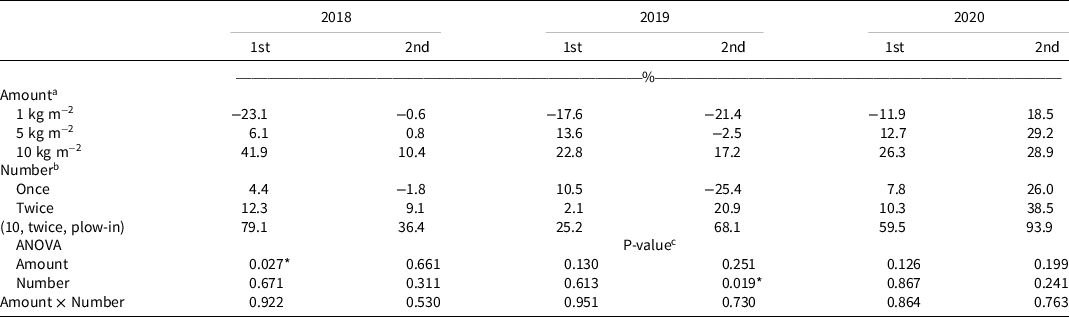
a Amount: amounts of spent coffee grounds (SCG) application.
b Number: the number of SCG applications per year.
c An asterisk (*) indicates significant effects at P < 0.05.
The results of Experiment 1 show that the plant growth inhibitory effect of SCG did not continue for periods longer than 4 mo during the weed growth stage and that plow-in application was the most efficient method for weed control. In addition, weed species other than Gramineae, such as wingleaf primrose-willow and horseweed, were tolerant of the SCG (Figure 3).
Experiment 2
There were two dominant weed species in each experimental year. In the first year, these were Canada goldenrod and violet crabgrass; in the second year, these were Asian flatsedge and green bristlegrass. Other weed species observed during the experimental period included Italian ryegrass, horseweed, slender amaranth, Oriental lady’s thumb, violet crabgrass, barnyardgrass, eastern daisy fleabane, green bristlegrass, American sloughgrass, sticky chickweed, and annual bluegrass. All of the dominant weeds in the experimental area were grasses (family Gramineae).
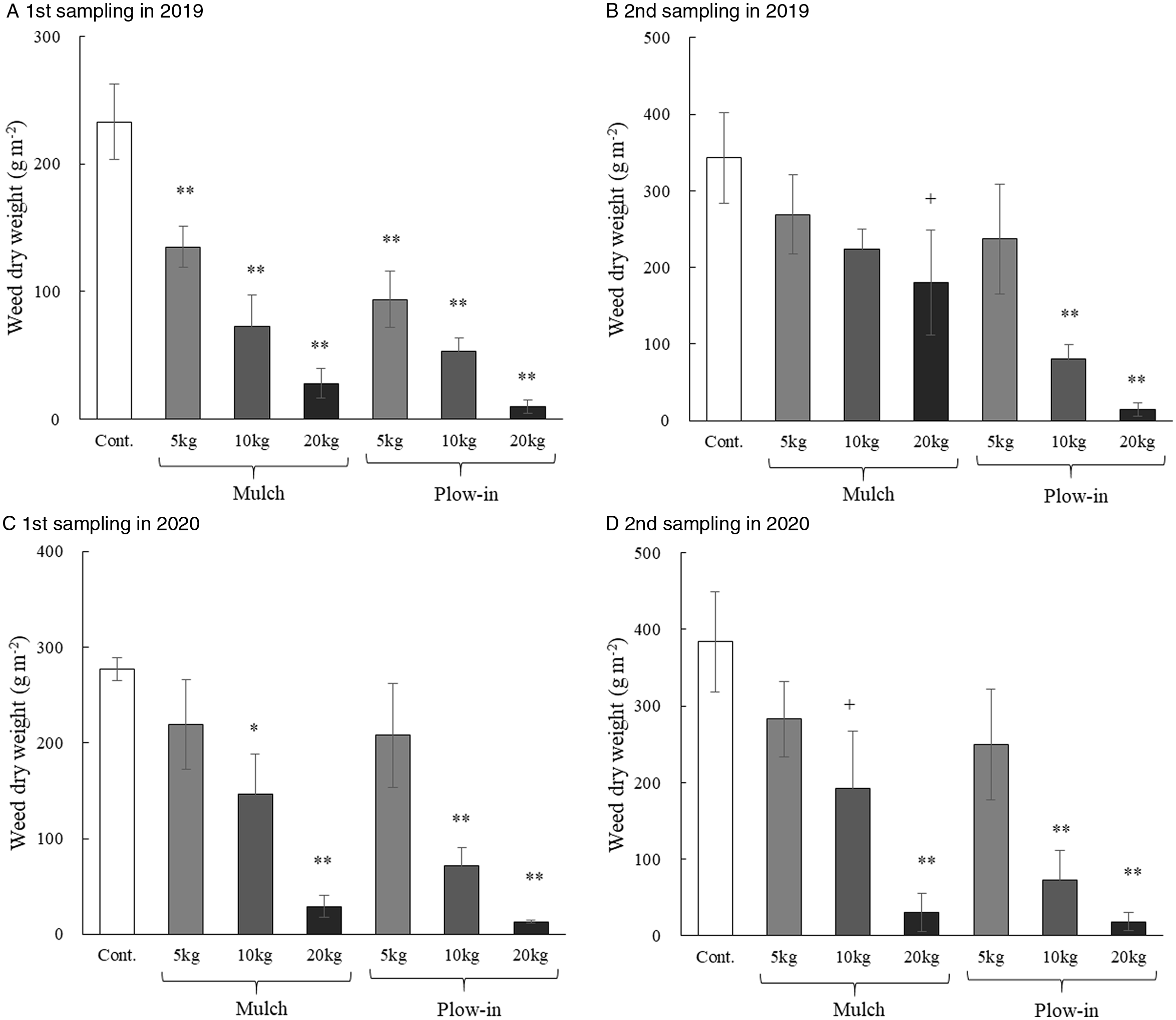
At the first sampling in 2019, the mulching and plow-in treatments treated with more than 5 kg m−2 of SCG significantly decreased the weed dry weight compared with the control plot (P < 0.01; Figure 4A). The SCG plow-in method decreased the weed dry weight more than the SCG mulching method (P < 0.1; Table 3). At the second sampling in 2019, SCG mulching did not significantly affect the weed dry weight compared with the control, whereas the plow-in treatment with more than 10 kg m−2 of SCG significantly reduced weed dry weight (P < 0.01; Figure 4B). The effect of the plow-in method was significantly greater compared with the mulching method (P < 0.01; Table 3), indicating that SCG plow-in application may be an efficient method for long-term weed growth inhibition, probably because the plow-in application of SCG inhibits both the germination of weed seeds in the soil and weed growth. At the first and second samplings in 2020, the plow-in application of more than 10 kg m−2 of SCG and 20 kg m−2 mulching significantly decreased the weed dry weight compared with the control (Figure 4C and D). In 2020, the effect of SCG plow-in application was not significantly different from that of SCG mulching (Table 3).
Dry weights of weeds (wingleaf primrose-willow and horseweed) at each sampling in Experiment 1. Dunnett’s multiple comparison test was performed to compare these measurements with those from the control plot.
Weed dry weight at each sampling in Experiment 2. Symbols indicate significant differences compared with the control plot at +P < 0.1, *P < 0.05, and **P < 0.01, using Dunnett’s multiple comparison test.
Average weed reduction rates of the treated samples compared with the control samples in Experiment 2.
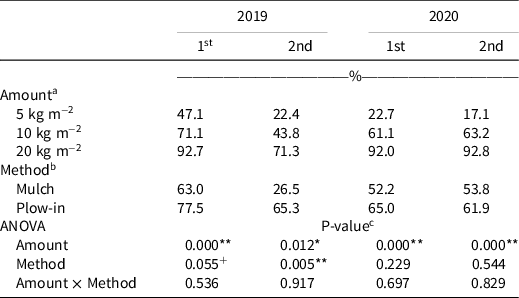
a Amount: amount of spent coffee grounds (SCG) application.
b Method: application method of SCG.
c Symbols indicate significant effects at: +P < 0.1, *P < 0.05, and **P < 0.01.
The results of Experiment 2 show that the plow-in application of SCG was more effective than the mulching application for continuous weed control over a long period in most cases and that the plow-in application of SCG was comparable to multiple mulching applications of SCG.
Agricultural Implications
Weed infestation remains one of the most significant problems in agricultural fields, especially organic farms (Jodaugienė et al. Reference Jodaugienė, Pupalienė, Urbonienė, Pranckietis and Pranckietienė2006). In addition, postplanting weed control in abandoned farmlands is considered an important weed control measure (Siipilehto Reference Siipilehto2001). In the present study, the effect of different amounts and methods of SCG application on weed growth 2 to 4 mo after application was evaluated. SCG contain caffeine, tannins, and polyphenols, which inhibit plant growth (Pandey et al. Reference Pandey, Soccol, Nigam, Brand, Mohan and Roussos2000). Hirooka et al. (Reference Hirooka, Kurashige, Yamane, Watanabe, Kakiuchi, Ishikawa, Miyagawa, Iwai and Iijima2022) reported that the mulching application of SCG at 5 kg m−2 significantly decreased weed growth during soybean [Glycine max (L.) Merr.] cropping for approximately 4 mo. The results of the present study show that for mulching in bare fields, 10 kg m−2 of SCG was needed to inhibit weed growth for more than 2 mo after application. Compared with mulching, the plow-in application of 10 kg m−2 of SCG was more effective for weed control, and the effect of this plow-in amount was equal to or greater than the effect of mulching with 20 kg m−2 of SCG. Thus, the SCG plow-in application was comparable to multiple SCG mulching applications, possibly because SCG plow-in decreased weed dry weight for a longer time. It should be noted that SCG applied by plow-in method come in direct contact with weed seeds and inhibit their germination. SCG have been shown to inhibit both plant seed germination andplant growth (Ciesielczuk et al. Reference Ciesielczuk, Rosik-Dulewska, Poluszyńska, Miłek, Szewczyk and Sławińska2018).
SCG plow-in application was not efficient for weed control during cropping because of the inhibitory effects of SCG on plant growth and germination (Yamane et al. Reference Yamane, Kono, Fukunaga, Iwai, Sekine, Watanabe and Iijima2014). Considering that the plant growth inhibitory effect diminished approximately 4 mo after SCG application in our study, SCG plow-in application may be useful in fallow periods or for fallow land. Thus, SCG should be applied with tillage after crop harvesting, which is an economically efficient and time- and labor-saving strategy. SCG are able to improve soil nutrients and enhance nitrogen and carbon content (Hirooka et al. Reference Hirooka, Kurashige, Yamane, Watanabe, Kakiuchi, Ishikawa, Miyagawa, Iwai and Iijima2022; Yamane et al. Reference Yamane, Kono, Fukunaga, Iwai, Sekine, Watanabe and Iijima2014). Additionally, the soil improvement due to SCG application can help enhance crop growth approximately 5 mo after application (Yamane et al. Reference Yamane, Kono, Fukunaga, Iwai, Sekine, Watanabe and Iijima2014), while the plant growth inhibitory effect can be eliminated by composting the SCG (Wakasawa et al. Reference Wakasawa, Takahashi and Mochizuki1998). Continuous SCG application can improve soil quality, and hence would not inhibit the growth of upland crops such as wheat (Triticum aestivum L.) and soybean (Hirooka et al. Reference Hirooka, Kurashige, Yamane, Watanabe, Kakiuchi, Ishikawa, Miyagawa, Iwai and Iijima2022). Therefore, SCG application with tillage after crop harvesting in the fallow period can be used to achieve higher growth rates and yields of the crops cultivated following this practice.
In this study, the increase in weed biomass was affected by seed germination and regeneration following harvest. Later-ripening weed seeds may have also had an effect, despite weeds being removed from the experimental field before SCG application. In future studies, it may be important to evaluate the inhibitory effect of SCG application on each factor of weed growth, seed germination, or regeneration after harvesting.
As the present study was conducted in a field converted from a rice paddy, most weed species in the field were from the Gramineae family. The inhibitory effect of SCG application was lower for species belonging to other plant families, such as Asteraceae (horseweed) and Onagraceae (wingleaf primrose-willow), than for gramineous plants. Legumes, such as adzuki bean [Vigna angularis (Willd.) Ohwi & Ohashi] and soybean, show better growth in soils containing SCG than Gramineae, such as wheat (Hirooka et al. Reference Hirooka, Kurashige, Yamane, Watanabe, Kakiuchi, Ishikawa, Miyagawa, Iwai and Iijima2022; Kito and Yoshida Reference Kito and Yoshida1997). As weed species other than those of the family Gramineae are dominant in some upland fields, the inhibitory effect of SCG on their growth is likely to be lower than that observed in the converted paddy fields in the present study. Further studies on the effect of SCG application on the growth of different weed species under various field environments are needed.
In conclusion, the results of the present study show that mulching and plow-in of SCG application have the potential for weed control. The SCG plow-in application was a more efficient weed control method than mulching, being comparable to multiple mulching applications. Furthermore, SCG had a greater the inhibitory effect on the growth of Gramineae weeds compared with species belonging to other families, such as Asteraceae and Onagraceae. As SCG can increase the levels of soil nutrients, SCG plow-in in the fallow period can be used to achieve higher crop yields, as well as weed growth inhibition in the subsequent periods. Because SCG hindered the growth of Gramineae weeds under the specific conditions in this study, it would be valuable to explore other potential applications of this novel means of weed control.
Acknowledgments
We thank Yoshihiro Masuda, Hikaru Umeyama, Mirino Asahina, Yuya Kuroki, Keiji Okadome, Taiki Yoshii, Taiji Fukunaga, Yuusaku Narita, Tsukasa Kobayashi, and other members of the Crop Science Laboratory of the Faculty of Agriculture, Kindai University, and UCC Ueshima Coffee Co., Ltd., for their support. This research received no specific grant from any funding agency or the commercial or not for profit sectors. No conflicts of interest have been declared.


 Open access

