


An estimated 17·3 million people died from CVD in 2008, accounting for 30 % of all global deaths( 1 ). Of these deaths, some 7·3 million were due to CHD and 6·2 million to stroke( 2 ). Indeed, globally, CVD are the number one cause of death; that is, more people die annually from CVD than from any other cause( 1 ). Nevertheless, these diseases are considered preventable by modifying dietary and lifestyle risk factors( Reference Lewis, Sullivan and Watts 3 , Reference Galimanis, Mono and Arnold 4 ). Fish consumption, particularly fatty fish, may be inversely associated with stroke since n-3 fatty acids, especially found in this type of fish, have been suggested as protective in terms of CVD( Reference Mozaffarian and Wu 5 ). However, epidemiological studies of fish consumption in relation to risk of stroke have produced inconsistent results( Reference Myint, Welch and Bingham 6 – Reference Kuhn, Teucher and Kaaks 12 ).
Hitherto the prospective association between fish consumption and risk of stroke has not been explored in a general Spanish population. We therefore aimed to assess, in a prospective observational study, whether fish consumption was associated with the risk of stroke in men and women in the Spanish cohort of the European Prospective Investigation into Cancer and Nutrition (EPIC-Spain), characterized by a high fish consumption( Reference Welch, Lund and Amiano 13 ).
Methods
Study population
The Spanish EPIC cohort consists of 41 438 participants (men and women), aged 20–69 years, recruited from 1992 to 1996 in five Spanish regions, three in the north (Asturias, San Sebastian and Navarra) and two in the south (Granada and Murcia) of the country. Study participants were mostly blood donors, with a participation rate of 55–60 % across regions. The methodological details of EPIC have been published previously( Reference Riboli and Kaaks 14 , Reference Riboli, Hunt and Slimani 15 ). The study was approved by a local ethical review board. Written informed consent was obtained from all participants.
Dietary and lifestyle questionnaires
Detailed descriptions of both the dietary and lifestyle questionnaires used have been published previously( Reference Riboli and Kaaks 14 , Reference Riboli, Hunt and Slimani 15 ). Briefly, data on usual food intake over the previous year were collected in a face-to-face interview by means of a computerized questionnaire based on a previously validated dietary history instrument( 16 ). The questionnaire was structured by meals and recorded the frequency of consumption of foods eaten at least twice per month (or once per month in the case of seasonal foods). Total nutrient and energy intakes were estimated using food composition tables( Reference Slimani, Deharveng and Unwin 17 ). Fish were grouped according to their fat content and therefore classified as ‘white fish’ (fat up to 4 g/100 g) or ‘fatty fish’ (fat equal to or greater than 4 g/100 g), and in a wide category of ‘total fish’, including all fish, crustaceans and fish products( Reference Welch, Lund and Amiano 13 ). A lifestyle questionnaire was used to collect information on sociodemographic characteristics, lifestyle and medical history as well as on reproductive factors in women. Drug use (classified according to the Anatomical Therapeutic Chemical (ATC) classification system( 18 )) was assessed with respect to the previous 7 d. Anthropometric measurements (waist and hip circumference, body weight and height) were also taken at recruitment using standardized procedures.
Case ascertainment and follow-up
The EPIC-Spain cohorts from Asturias, San Sebastian, Navarra, Granada and Murcia took part in the study. The follow-up period ran from the recruitment date (1992–1996) to December 2008, with the exception of Asturias, in which the follow-up period of stroke cases ran to December 2006. We ascertained incident cases of stroke. Cases of cerebrovascular disease were identified by record linkage with hospital discharge databases (codes 430–438 of the 9th revision of the International Classification of Diseases; Clinical Modification (ICD-9-CM)) and primary-care records (codes K89, K90 and K92 from the International Classification of Primary Care and ICD-9 codes 430–438). Fatal cases were identified by record linkage with the centralized national database, containing data from regional mortality registries, available from the Spanish National Statistics Institute (www.ine.es), using ICD-9 codes 430–438 and ICD-10 codes I60–I69. A validation process was carried out to confirm and classify all identified stroke events. The validation was performed by a team of trained health professionals by carefully reviewing patient hospital records or, if not available, primary-care records, and noting the date of diagnosis. Cases of stroke were classified on the basis of symptoms, presence of cerebrovascular risk factors and specific medical tests (computerized tomography, MRI, angiography, Doppler imaging and/or lumbar puncture), following the 2006 guidelines of the Spanish Society of Neurology( Reference Díez-Tedejor 19 ), as ischaemic, haemorrhagic (cerebral and subarachnoid) or unspecific strokes, two expert neurologists helping with the classification of the most difficult cases.
Statistical analysis
Cox proportional hazards regression was used to examine the association between fish consumption and stroke. In regression models, fish consumption values (g/d) were adjusted for energy intake by the residual method( Reference Willett, Howe and Kushi 20 ). Entry time was defined as age at baseline and exit time as age when participants were diagnosed with stroke, died, were lost to follow-up or were censored at the end of the follow-up period (31 December 2006 in case of the Asturias cohort and 31 December 2008 for the rest), whichever came first. Participants reporting intake more than 3 sd from the mean of total log-transformed daily energy intake (<3262 or >23 876 kJ/d (<779·7 or >5706·6 kcal/d)) were considered to have implausible dietary data and were therefore excluded from the analysis.
Three models were built: model 1 was adjusted for age at baseline, centre and total energy intake (kcal/d); model 2 was additionally adjusted for classical stroke risk factors, i.e. BMI category (underweight, normal weight, overweight, obesity), waist circumference (cm; continuous), tobacco smoking status (‘never smoker’, ‘former smoker’, ‘smoker’), smoking before 20 years of age (‘yes’, ‘no’), total physical activity, education level (‘no formal education’, ‘primary’, ‘technical’, ‘secondary’, ‘university degree)’, alcohol consumption (‘never drinker’, ‘former drinker’, ‘low’ (<5 g/d), ‘moderate’ (5–30 g/d), ‘high’ (30–90 g/d), ‘very high’ (>90 g/d; for men only)), use of antithrombotic or antihaemorrhagic agents (ATC code B01/B02), use of cardiovascular drugs (ATC codes C01–C10), use of salicylic acid or derivatives (ATC code N02BA), incident acute myocardial infarction, diabetes and self-reported diseases (hypertension, hyperlipidaemia), as well as, in women, menopausal status, hormone replacement therapy (‘yes’, ‘no’) and oral contraceptives (‘yes’, ‘no’). Finally, model 3 was further adjusted for dietary factors related to the risk of stroke: percentage of energy from protein, from carbohydrate and from fat, and consumption of vegetables, fruit, dairy products and fish (all continuous variables). Models 2 and 3 were also recalculated considering recreational physical activity( Reference Huerta, Chirlaque and Tormo 21 ) rather than total physical activity. Tests for linear trends across quintiles were performed by assigning the energy-adjusted median intake value to each quintile of fish consumption and modelling these values as a continuous variable. All analysis considered men and women separately since physiologically the disease stroke has different characteristics in men and women( Reference Katsiki, Ntaios and Vemmos 22 ).
Potential confounders were selected taking into account variables that could influence the outcome, considering data previously published in the literature. Variables with a statistical significance of P>0·2 were dropped from the regression model( Reference Grambsch and Therneau 23 ). Sensitivity analysis was carried out by censoring the first 2 years of follow-up and by excluding self-reported hypertension or hyperlipidaemia and participants with cardiovascular drug use at baseline. R version 3·0·1 software was used for data analysis.
Results
A total of 41 438 participants attended the baseline appointments. After exclusion of participants with prevalent stroke (n 259) and with implausible energy values (n 159), a final cohort of 41 020 individuals (15 490 men and 25 530 women) aged 29–69 years was available for analysis. After a mean follow-up of 13·8 years, 674 incident stroke cases (373 men and 301 women) were identified. By type, most cases were ischaemic (n 531; 302 in men and 229 in women).
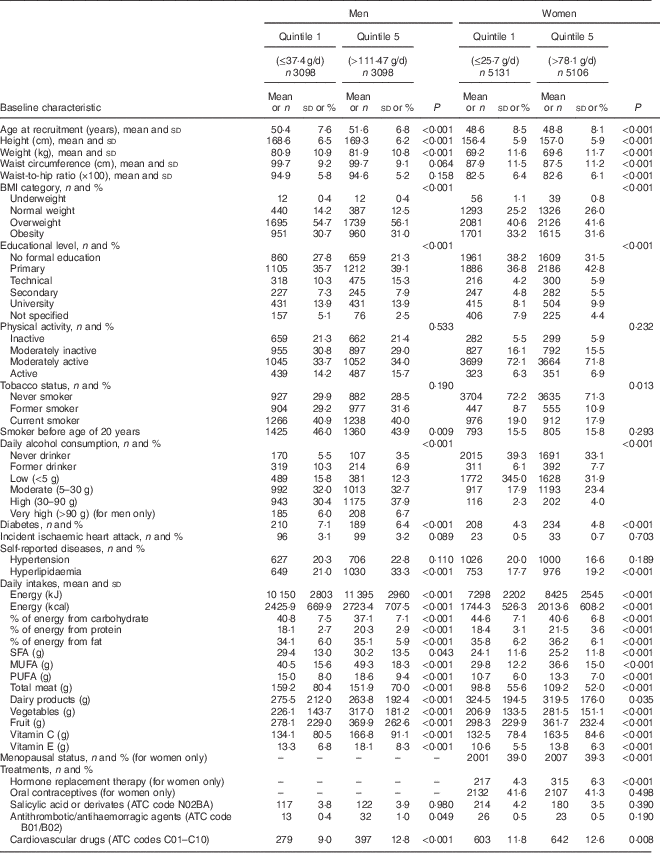
Baseline characteristics are shown in Table 1 in the extreme quintiles of fish consumption. Participants with the highest total fish consumption (quintile 5 v. quintile 1) were older; were more overweight or obese but also more active; drank more alcohol (>30 g/d); had higher intakes of total energy, vegetables and fruit, but lower intakes of dairy products; and were more likely to have hypertension and/or hyperlipidaemia. The mean consumption of total fish was 77·3 (sd 48·5) g/d among men and 53·7 (sd 34·7) g/d among women.
Lifestyle characteristics at baseline in the extreme quintiles of total fish consumption in men and women; Spanish cohort of the European Prospective Investigation into Cancer and Nutrition (EPIC-Spain)
ATC, Anatomical Therapeutic Chemical (classification system).
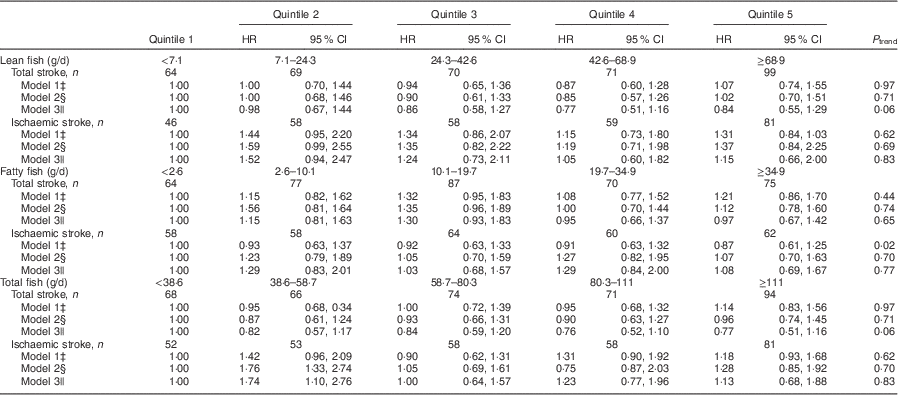
Prospective associations between fish consumptionFootnote * and the risk of total stroke and ischaemic stroke in men (hazard ratios (HR) and 95 % confidence intervalsFootnote †); Spanish cohort of the European Prospective Investigation into Cancer and Nutrition (EPIC-Spain)
ATC, Anatomical Therapeutic Chemical (classification system).
* Fish consumption was adjusted for energy intake by the residual method.
† Calculated by Cox proportional hazards regression analysis.
‡ Model 1 includes age at baseline (years), centre (Asturias, Granada, Murcia, Navarra, Gipuzkoa) and total energy intake.
§ Model 2: as model 1, and additionally adjusted for BMI, waist circumference, smoking status, smoking before 20 years of age, total physical activity, educational level, alcohol consumption, use of vitamin supplements (all), use of antithrombotic and antihaemorrhagic agents (ATC code B01/B02), use of cardiovascular drugs (ATC codes C01–C10), use of salicylic acid or derivates (ATC code N02BA), incident ischaemic heart attack, diabetes, self-reported diseases (hypertension, hyperlipidaemia), menopausal status (in women), hormone replacement therapy (in women) and oral contraceptives (in women).
|| Model 3: as model 2, and additionally adjusted for percentage of energy from carbohydrate, from protein and from fats, and intakes of vegetables, fruit, dairy products and meat.
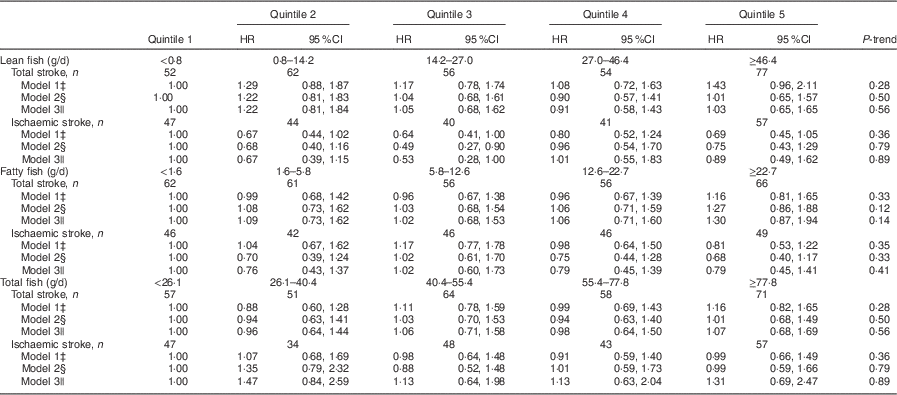
Table 2 and 3 present the hazard ratios (HR) of stroke in men and women by dietary intakes of lean fish, fatty fish and total fish. No associations were found between the intakes of lean fish, fatty fish or total fish and the incidence of total or ischaemic stroke in the models considered in men or women. In men, the multiple-adjusted model revealed a non-significant trend towards a lower risk of total stroke with higher intake of lean fish (HR=0·84; 95 % CI 0·55, 1·29, P trend=0·06) and total fish (HR=0·77; 95 % CI 0·51, 1·16, P trend=0·06). In women, none of the models indicated any notable trends. No significant changes were observed in models adjusted for recreational physical activity (data not shown). Sensitivity analysis did not significantly alter the findings compared with the main analysis.
Prospective associations between fish consumptionFootnote * and the risk of total stroke and ischaemic stroke in women (hazard ratios (HR) and 95 % confidence intervalsFootnote †); Spanish cohort of the European Prospective Investigation into Cancer and Nutrition (EPIC-Spain)
ATC, Anatomical Therapeutic Chemical (classification system).
* Fish consumption was adjusted for energy intake by the residual method.
† Calculated by Cox proportional hazards regression analysis.
‡ Model 1 includes age at baseline (years), centre (Asturias, Granada, Murcia, Navarra, Gipuzkoa) and total energy intake.
§ Model 2: as model 1, and additionally adjusted for BMI, waist circumference, smoking status, smoking before 20 years of age, total physical activity, educational level, alcohol consumption, use of vitamin supplements (all), use of antithrombotic and antihaemorrhagic agents (ATC code B01/B02), use of cardiovascular drugs (ATC codes C01–C10), use of salicylic acid or derivates (ATC code N02BA), incident ischaemic heart attack, diabetes, self-reported diseases (hypertension, hyperlipidaemia), menopausal status (in women), hormone replacement therapy (in women) and oral contraceptives (in women).
|| Model 3: as model 2, and additionally adjusted for percentage of energy from carbohydrate, from protein and from fats, and intakes of vegetables, fruit, dairy products and meat.
Discussion
In the EPIC-Spain cohort with a relatively high consumption of fish, we found no evidence that higher lean fish, fatty fish or total fish consumption is associated with reduced risk of subsequent stroke either in men or women. However, in men, there was a non-significant linear trend towards a lower risk of total stroke with higher consumption of lean fish and total fish.
Several population-based studies on the association of fish consumption and stroke have produced inconsistent findings. Our results are similar to those of Atkinson et al.( Reference Atkinson, Whitley and Ness 8 ), a prospective cohort study with 225 incident cases of stroke, in that we also did not find a significant association between fish consumption and risk of stroke. However, Atkinson et al.’s findings suggested a slightly lower risk of stroke with higher intake of oily fish, while our findings point to a slightly lower risk of stroke in men with higher intakes of lean and total fish. In any case, these trends were weak. Similarly, fish consumption was not found to be related to the risk of stroke in either the EPIC-Germany( Reference Kuhn, Teucher and Kaaks 12 ) or the EPIC-Norfolk( Reference Myint, Welch and Bingham 6 ) prospective cohort with 525 and 425 cases, respectively, although fatty fish consumption in women was significantly inversely associated with risk of stroke when comparing fish consumers with non-consumers( Reference Myint, Welch and Bingham 6 ). The Swedish Mammography Cohort study( Reference Larsson, Virtamo and Wolk 9 ) (1680 cases) suggested that consumption of lean fish, in women, was inversely associated with risk of stroke, with women who consumed ≥3 servings of lean fish per week having a 33 % lower risk of total stroke. Interestingly, results of the case–control carried out by Oudin and Wennberg( Reference Oudin and Wennberg 11 ), with 2469 cases, suggested just the opposite: namely, lean fish intake in women was associated with a higher stroke risk, while fatty fish intake seemed to have a protective effect in both men and women( Reference Oudin and Wennberg 11 ). Another case–control carried out by Wennberg et al.( Reference Wennberg, Bergdahl and Stegmayr 7 ) (369 cases) reported a higher risk of stroke in males with a high total fish intake, differing from our results. It has been speculated that the mixed results observed across studies may be due to differences not only in study design and exposure period but also in the types of fish consumed and its preparation, with the suggestion that some methods of fish preparation (e.g. deep frying) may negate any cardiovascular benefit( Reference Myint, Welch and Bingham 6 ). However, there are studies that have not found any association between the consumption of fried fish and risk of stroke( Reference Larsson, Virtamo and Wolk 9 ).
Generally, the results of prospective cohort studies in this field are inconsistent. There is no consensus on the effect of eating fish on stroke for the entire population or among those who indicate differences by sex. Despite these, some meta-analyses have concluded that there is an inverse association between fish intake and risk of stroke, although it has been defined as ‘moderate’. He et al.( Reference He, Song and Daviglus 24 ) performed a meta-analysis of eight cohort studies and found an inverse association between fish intake and risk of stroke, suggesting that consumption of fish one to three times monthly reduces the risk of ischaemic stroke. Further, in a recent meta-analysis including fifteen prospective studies, an inverse association was found between fish consumption and risk of stroke: for each 3 servings/week increase in fish consumption, the risk of stroke decreased by 6 %( Reference Larsson and Orsini 10 ). Chowdhury et al. and Xun et al., including twenty-six and sixteen prospective cohort studies, respectively, concluded that, overall, fish consumption was moderately but significantly associated with a lower risk of stroke( Reference Chowdhury, Stevens and Gorman 25 , Reference Xun, Qin and Song 26 ). The modest inverse association was more pronounced with ischaemic stroke and was attenuated with haemorrhagic stroke( Reference Xun, Qin and Song 26 ). However, we cannot rule out publication bias that, if present, could be influencing the results of these meta-analyses. Meta-analyses were in addition limited to examine fish intake in relation to stroke subtypes due to an overall lack of available data on the cause-specific stroke event. Also a few studies assessed lean and fatty fish separately.
One of the strengths of the present study is the validity of the dietary questionnaire used( 16 ). A further strength is the prospective design of the study, involving a long follow-up period of a large sample of healthy individuals. It should also be underlined that the current study included incident stroke events confirmed according to international standards.
On the other hand, some potential limitations of the study should also be considered. Although several potential confounders related to stroke were included in the multivariate models, the possibility of residual confounding cannot be ruled out. In addition, information on diet was collected at baseline only and dietary habits might have changed during the study period, in particular in the case of individuals who developed stroke and became aware of early symptoms related to their disease. Nevertheless, there were no notable differences in the results after the sensitivity analysis. Because of scarce data, the effect of fish intake on the risk of haemorrhagic stroke remains unknown. On the other hand, although our cohort is characterized by a high total fish consumption, fatty fish consumption is not high and this may explain the observed inconsistent association( Reference Welch, Lund and Amiano 13 ).
Conclusions
In the present study we have found no evidence of an association between the intake of lean fish, fatty fish or total fish and the risk of stroke in either men or women from the EPIC-Spain cohort. These results highlight the ongoing inconsistency in findings concerning the potential association between fish intake and stroke risk reported in previous studies.
Acknowledgements
Acknowledgements: The authors would like to thank the participants in the Spanish EPIC cohort for their contribution to this study as well as the team of nurses who participated in the recruitment. Financial support: This research received no specific grant from any funding agency in the public, commercial or not-for-profit sectors. Conflict of interest: None. Authorship: P.A. and S.C. contributed to acquisition and interpretation of data and wrote the manuscript. N.Et. contributed to analysis and interpretation of data. L.A., C.M.-I., J.-M.H., N.Eg., M.G., C.N., M.-D.C., M.-J.S., E.M.-M., M.R., J.-R.Q., M.O.-S., P.J., C.-A.G. and M.D. contributed to acquisition of data and reviewed the manuscript. All authors approved the final version of the manuscript. Ethics of human subject participation: The study was approved by a local ethical review board. Written informed consent was obtained from all participants.



