


The environment in which a person lives and works can facilitate or impede the accessibility, availability and affordability of healthy food(Reference Sharkey1). These latter three variables, in turn, may influence individuals’ weight and the quality of their diet(Reference Black and Macinko2–Reference Laraia, Siega-Riz and Kaufman7). Widespread recognition of the relationship between the built environment, health status and food choices has led to growing interest in measuring aspects of the food store environment(Reference Morland and Filomena8–Reference Kamphuis, Giskes and de Bruijn15). However, few studies have examined both subjective(Reference Moore, Diez Roux and Brines16, Reference Sharkey, Johnson and Dean17) and objective measures of the food store environment and their association with weight and diet quality(Reference Laraia, Siega-Riz and Kaufman7, Reference Sharkey, Johnson and Dean17–Reference Casey, Elliott and Glanz22).
Perceived and objective measures each provide unique data that, taken together, can elucidate important factors operating at both the individual and the neighbourhood level. Subjective perceptions about food access and availability, for example, may shape individuals’ food purchasing habits(Reference Kaufman and Karpati23) and frequency of shopping(Reference Coveney and O'Dwyer24). Objective neighbourhood-level measures, such as in-store food audits or information on store type (collected on-site or from national databases), can supplement perceptual measures, documenting actual food availability in a given locality. Simultaneous consideration of both types of measure has the potential to establish a broader context for understanding the environmental determinants of obesity(Reference Moore, Diez Roux and Brines16).
To date, there is little published research drawing on both objective and perceived measures to explore the relationship between individuals and their food store environment. Moreover, few studies have used both types of measure to examine associations between weight and fruit and vegetable intake(Reference Sharkey, Johnson and Dean17). Those studies that have assessed the food environment have found only limited associations among diet, weight status and the food environment(Reference Moore, Diez Roux and Nettleton4, Reference Moore, Diez Roux and Brines16). In the USA, studies with an urban and suburban focus have suggested that lack of access to healthy foods in economically and socially disadvantaged neighbourhoods contributes to a lower intake of fruit and vegetables(Reference Morland, Wing and Diez Roux25, Reference Diez-Roux, Nieto and Caulfield26) and to a higher prevalence of obesity(Reference Morland, Diez Roux and Wing27). Outside the USA, however, studies have failed to detect any association between food environment and weight or diet quality(Reference White28–Reference Giskes, van Lenthe and Kamphuis31).
To address existing gaps in knowledge, the present study was undertaken with both methodological and substantive aims. First, the study sought to highlight similarities and differences between subjective and objective measures of the food store environment at both the individual and the neighbourhood level. Second, the study examined associations between subjective/objective measures of the food store environment and (i) fruit and vegetable intake and (ii) weight status.
Methods
Study sample
Individual-level data were obtained from baseline surveys completed by women enrolled in a weight-loss intervention trial (Weight-Wise). Weight-Wise is an evidence-based behavioural weight-loss intervention shown to be effective in low-income women(Reference Samuel-Hodge, Johnston and Gizlice32). Participants (n 189) were women aged 40 to 64 years, with incomes at or below 250 % of the federal poverty level, and who had a BMI between 27·5 and 45·0 kg/m2 inclusive. Women were recruited from six county health departments in North Carolina. Four of the six counties are classified as non-metro (less densely populated), while two are classified as metro(33) based on rural–urban continuum codes. Details regarding the study design, intervention components and baseline characteristics have been published elsewhere(Reference Samuel-Hodge, Johnston and Gizlice32). The University of North Carolina School of Medicine Institutional Review Board approved and monitored the study.
Food store environment
The study included two objective and two subjective food store environment indicators, measured at both the store and the neighbourhood level. At the store level, the food store environment was characterized by: (i) the availability of healthy foods in stores where Weight-Wise participants shopped, as measured by food store audits (objective); and (ii) summary scores of the women's self-reported perceptions of availability of healthy foods in their primary food store (perceived). At the neighbourhood level, measures of the food store environment included: (i) the number and type of food stores within the census tract (objective); and (ii) summary scores of the women's self-reported perceptions of availability of healthy foods in their neighbourhood (perceived). Each measure is described in greater detail below.
Objective measure of food availability at store level
Specific food stores where women shopped were identified from a survey question asking ‘What is the name and street of the grocery store where you do your primary shopping?’ The survey responses regarding the location of the named food store were confirmed using ground-truthing (direct observation of food store addresses)(Reference Sharkey1, Reference Sharkey and Horel34). To ascertain in-store food availability, we modified items from the Nutrition Environment Measures Survey in Stores (NEMS-S)(Reference Glanz, Sallis and Saelens35) using data about purchasing habits from the Bureau of Labor Statistics(36) and the US Department of Agriculture Continuing Survey of Food Intakes by Individuals (CSFII). To reflect the purchasing habits of the Weight-Wise study population (low-income southern women), we therefore added frozen and canned goods and pork, while excluding baked goods(37). In the spring and summer of 2009 (after participants had been enrolled into the study), we assessed food availability in all eighty stores identified by participants, focusing on thirty-seven food items in nine food groups: (i) non-fat/low-fat milk; (ii) fruit; (iii) vegetables; (iv) low-fat meats; (v) frozen fruit and vegetables; (vi) canned vegetables; (vii) 100 % whole-wheat bread; and (ix) non-sugar-sweetened cereals. All stores were surveyed between 09.00 and 16.00 hours on weekdays to maintain consistency relative to stock on the shelves between stores. A tally sheet was used to determine whether the food item was available at the time of the audit. Each food item received 1 point if available, with a minimum possible survey score of zero and a maximum possible score of 37. Food store availability then was categorized as low, medium or high (tertiles) to facilitate comparisons with other studies(Reference Franco, Diez-Roux and Nettleton38).
Objective measure of food availability at neighbourhood level
We collected several types of data to measure neighbourhood food availability. First, data on the number and type of food stores in all six counties were obtained from InfoUSA, Inc. (Papillion, NE, USA) in August 2008 and 2009 to assure accuracy in addresses over repeated times. Food stores then were classified based on supplemented Standard Industrial Classification (SIC) codes to allow for comparisons with other studies(Reference Morland, Wing and Diez Roux3, Reference Moore and Diez Roux39). Codes included supercentres (e.g. Super Walmart; SIC 531102), convenience stores (SIC 541102, 541103), and supermarkets and large and small grocery stores (SIC 541101, 541104–541106). Second, to assess the number of stores in each participant's neighbourhood, home addresses were geocoded and matched to the 2000 US census tracts using Juice analytics software (http://www.juiceanalytics.com) and ArcMap (ArcGIS version 9·2, 1999–2994; ESRI, Redlands, CA, USA). Finally, the objective neighbourhood availability variable was dichotomized as either ‘yes’ (≥1 store) for each store type in the census tract or ‘no’ (none of that store type)(Reference Morland, Wing and Diez Roux3).
Measure of perceived healthy food availability and accessibility in neighbourhoods and primary food stores
Participants’ self-report of their local food environment was collected via a telephone survey after enrolment into Weight-Wise but before the intervention began. The survey questions were used to measure perceived access to and availability of healthy foods in each woman's neighbourhood (defined as the area approximately 5 miles around her home), as well as availability in her primary food store (described in detail below).
Neighbourhood healthy food availability
To assess perceived neighbourhood healthy food availability, participants were asked about the extent to which they agreed with the following statements about their neighbourhood: (i) ‘A large selection of fruits and vegetables is available in my neighbourhood’; (ii) ‘A large selection of low-fat products is available in my neighbourhood’; and (iii) ‘The fruits and vegetables in my neighbourhood are of a high quality’. Responses to all questions were coded on a 5-point Likert scale (0 = ‘strongly agree’; 4 = ‘strongly disagree’). The neighbourhood availability questions have previously been tested for reliability and validity and are described elsewhere(Reference Moore, Diez Roux and Nettleton4, Reference Mujahid, Diez Roux and Morenoff40).
In-store healthy food availability
Participants were also asked about the extent to which they agreed with the following statements for their primary food store: (i) ‘A large selection of fruits and vegetables is available’; (ii) ‘A large selection of low-fat meat products is available (90 % lean beef, skinless chicken)’; (iii) ‘A large selection of brown breads is available’; and (iv) ‘A large selection of low-fat cheese or skim milk is available’. Responses to all questions were coded on a 5-point Likert scale (0 = ‘strongly agree’; 4 = ‘strongly disagree’). The total possible score on this measure was 0 to 16, with a higher score indicating higher perceived availability. The food store availability questions were adapted from the neighbourhood questions, after being pre-tested among ten low-income women in a rural community in North Carolina.
Responses from both neighbourhood questions and food store questions were summed into two separate summary scores (neighbourhood availability and food store availability) and then categorized into high, medium and low availability (tertiles) based on distribution of data.
Accessibility
Access was defined in two ways: (i) objective potential spatial access (network distance along roads from participant's home to primary food store); and (ii) perceived access (length of time and distance travelled to primary food store). A dichotomous variable was created to group access into easy or difficult access based on bimodal distribution of data. Easy access was defined as living <5 miles or <10 min travel time to the primary food store v. difficult access as ≥5 miles or ≥10 min to the primary food store. The cut-off points of 5 miles or 10 min correspond approximately to the mean response, and are also consistent with the cut-off points used in previous studies(Reference Rose and Richards18).
Definition of outcomes
BMI and weight
At the beginning of the intervention, participants were weighed to the nearest 0·5 lb (1 lb = 0·4536 kg) on an electronic scale (Seca 770; Seca Corporation, Columbia, MD, USA). Weight was measured twice and the average of the two measurements was used as the final weight. Height was measured with a portable stadiometer (Schorr Productions, Olney, MD, USA). Both height and weight were measured according to approved protocols(Reference Samuel-Hodge, Johnston and Gizlice32). BMI was calculated as kg/m2.
Fruit and vegetable intake
Fruit and vegetable intake was collected using a validated rapid food survey(Reference Block, Gillespie and Rosenbaum41) which assessed fruit, vegetable and fibre intakes. The survey is effective in identifying persons with high fat intake, low fruit/vegetable intake or low fibre intake. The fruit and vegetable servings per day were determined from the food survey.
Statistical analysis
Of the 189 women originally enrolled in the intervention, three women were missing all exposure variables on perceived access and were excluded from analyses, leaving a total sample of 186 women for analysis. There were no significant differences on key outcome or exposure variables between the total sample and the missing women. All was analyses were conducted using the STATA statistical software package version 11·0 (StataCorp., College Station, TX, USA).
To estimate the associations between perceived and objective neighbourhood availability, logistic regression with robust standard errors, utilizing White–Huber correction to account for county-level clustering, was used. In relevant models where census tract was the exposure variable, no stores in a participant's census track was used as the referent category. Additionally, models were stratified by store type or by combination of store type based on a priori hypothesis and direct field observation of community landscape.
Multinomial (polytomous) logistic models were used to analyse the three-level categorical outcome of perceived food store availability for the three-level exposure variable of objective food store availability. In all cases, low perception or low objective food store availability was used as the reference category.
Multivariable linear regression was used to model the association among fruit and vegetable intake, weight, BMI, and perceived or objective measures of the food store environment.
All associations were adjusted in all models for race (black, white, other), education (years of education completed), income (reported range of household income such as $US 20 000–29 999) and smoking status (excluded when fruit and vegetable intake was modelled as outcome). All models included a cluster statement on county since women are nested within the six counties, allowing for robust standard errors. The type I error rate was set at 0·05 for main effects. The inclusion of a random intercept for census tract or store was not warranted (intra-class correlation coefficient of 0·001).
Results
The study sample consisted of 186 women with complete data on all variables. Descriptive statistics for subjective and objective measures of the food store environment and shopping habits are shown in Table 1.
Perceived and objective measures of the food store environment, outcome measures, shopping habits and demographics, North Carolina, 2009 (n 186)
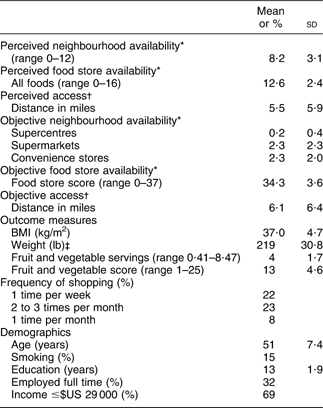
*Higher score indicates greater availability at the store and neighbourhood level of healthy foods.
†Access is reported or calculated miles from home to primary food store.
‡1 lb = 0·4536 kg.
Table 2 shows the association between living in a neighbourhood with each type of food store and the odds of perceiving the neighbourhood as high in availability of healthy foods. Individuals who lived in census tracts with at least one convenience store and one supercentre had higher odds of perceiving their neighbourhood as high in availability of healthy foods (OR = 6·87 (95 % CI 2·61, 18·01)) than individuals who did not have any stores in their neighbourhood. Interestingly, our study did not find those who lived in areas with a high density of supermarkets perceived their neighbourhood to have many healthy food items.
Odds ratio and 95 % confidence interval for perceived availability of healthy foods by type of store in census tracts, North Carolina, 2009 (n 186)

All models adjusted for race, education, income and age.
*Low density, <2 stores in census tract; medium density, 2–7 stores in census tract; high density, >7 stores in census tract.
Table 3 displays the results for prevalence ratios and predicted probabilities between perceived and objective food store availability. As the number of healthy foods available in a store decreased in objective terms, the probability that participants would perceive the store to have a high availability of healthy foods increased.
Prevalence ratio (PR) with 95 % confidence interval and predicated probability of perceived and objective food store availability of healthy foods, North Carolina, 2009 (n 186)
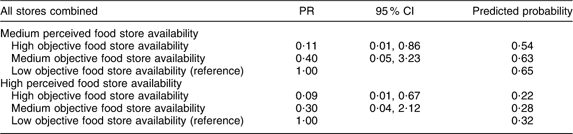
All models adjusted for age, race, education and income.
Strongly agreeing that the neighbourhood and store had many healthy foods, as indicated by perceived food store environment responses (Table 4), was not associated with any of the outcomes.
Perceived local food environment and the association with diet and weight, North Carolina, 2009 (n 186)
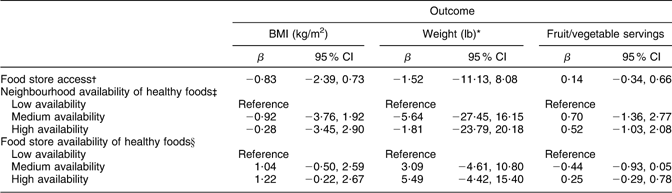
Each block represents the coefficient for one separate model. All models adjusted for race, age, education, income and smoking status (latter excluded when fruit and vegetable intake was modelled as outcome).
*1 lb = 0·4536 kg.
†Easy access is defined as <5 miles as first inclusion followed by <10 min travel time. R 2 values 0·04–0·07.
†Neighbourhood availability: low, ≤4; medium, 4–8; high, >8; range 0–12. R 2 values 0·04–0·07.
§Store availability: low, ≤10; medium, 10–14; high, >14; range 6–16. R 2 values 0·04–0·09.
Objective food store environment results (Table 5) indicate that individuals with a supercentre in their census tract weighed more (2·40 (95 % CI 0·66, 4·15) kg/m2, P = 0·02; 14·72 (95 % CI 4·32, 25·11) lb, P = 0·02) compared with individuals without one. Individuals who lived in a census tract with a supercentre and a convenience store also consumed fewer servings of fruits and vegetables (−1·22 (95 % CI −2·40, −0·04), P = 0·04).
Objective food store environment and the association with weight and diet, North Carolina, 2009 (n 186)
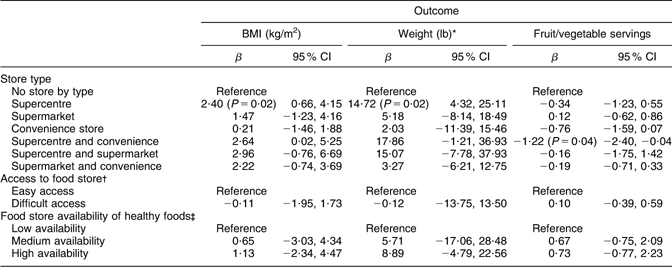
Interaction terms significant at P ≤ 0·05. Each block represents the coefficient for one separate model. All models adjusted for race, age, education, income and smoking status (latter excluded when fruit and vegetable intake was modelled as outcome). R 2 values 0·04–0·18.
*1 lb = 0·4536 kg.
†Easy access is defined as <5 miles or <10 min travel time, difficult access as ≥5 miles or ≥10 min travel time.
‡Food availability: low, <30 points; medium, 30–35 points; high, >35; range 9–37 points.
Discussion
The present study highlights how subjective and objective measures can provide insight into cross-sectional associations between food store environment, weight, and fruit and vegetable intake. Our study presents conflicting results when comparing subjective and objective measures at the store and neighbourhood levels, while pointing to an association between objective (but not subjective) food store environment measures with weight and fruit and vegetable intake.
Our first set of results examined the odds of perceiving a neighbourhood as having healthy food items depending on what stores were available. Our study did not find an association for those who live in areas with a high density of supermarkets perceiving their neighbourhood to have many healthy items. This is not consistent with other studies and a bit surprising(Reference Moore and Diez Roux39, Reference Zenk, Schulz and Hollis-Neely42). However, this result may reflect variation in the quality of healthy food items available for purchase in rural supermarkets relative to urban supermarkets, where most of the studies have taken place. For example, although a neighbourhood may have many supermarkets, the actual quality of the food available for purchase may be low and thus individuals in those neighbourhoods perceive the healthy food items to be of low quality. We then found that individuals who live in neighbourhoods with supercentres and convenience stores are more likely to perceive their neighbourhood as high in availability of healthy food items compared with those living in a neighbourhood with no stores. This finding suggests that having multiple food store options, relative to no stores within the census tract, influences perceptions at the neighbourhood level(Reference Zick, Smith and Fan43).
The second set of results compared perceived and objective measures within the stores where individuals shop. Surprisingly, women who shopped at a grocery store with many healthy foods actually had a lower probability of perceiving their food store as high in availability. One possible explanation for this discrepancy between perceived and actual availability at the store level is that perceived quality, not assessed in our study, may contribute significantly to perceived availability(Reference Block, Gillespie and Rosenbaum41). Without an assessment of quality, our objective measure of availability may not have fully captured the foods most likely to be perceived as acceptable for purchase.
Our next set of results used both types of measure to examine the association of food store environment with fruit and vegetable intake and weight. Although we found no associations of the two outcomes with perceptions of the store or neighbourhood, objective measures of the food store environment were associated with weight and diet. Individuals residing in neighbourhoods with supercentres had a higher BMI and lower consumption of fruits and vegetables. Although supercentres in and of themselves may not be directly responsible for increased weight, our findings suggest that supercentres are likely to be markers of neighbourhoods that have other characteristics associated with an ‘obesogenic’ environment. For example, rural landscapes or ‘food swamps’ may be more conducive to the building of superstores(Reference Ver Ploeg44), and may also have a higher density of fast-food restaurants and fewer areas for recreation and physical activity(Reference Ver Ploeg44–Reference Rose, Hutchinson and Bodor46).
Our study has several limitations. First, objective food store addresses were collected from secondary data sources, which may misrepresent the true number of food stores currently available to residents(Reference Sharkey1, Reference Sharkey and Horel34). Second, the use of census tracts to define neighbourhoods may not reflect individuals’ true neighbourhood habits and exposure level. Third, our study captured only three types of food store, whereas the food store environment may comprise many other non-traditional food outlets (e.g. Dollar Stores)(Reference Sharkey1). Fourth, because our study sample consisted only of low-income overweight women, our ability to generalize to other populations is limited. Finally, perception-based measures may be subject to measurement error and may be influenced by differing cultural, economic and neighbourhood contexts(Reference Moore, Diez Roux and Brines16).
Conclusions
The present study contributes to a growing body of research seeking to understand whether and how the food store environment is associated with weight and diet, especially among low-income and rural residents(Reference Sharkey1, Reference Lytle9, Reference Saelens and Glanz10). Our results, which point to discrepancies between perceived and objective measures of the food store environment, confirm the importance of obtaining both types of measure to deepen our awareness of the food environment and its influence on obesity risk. Additional research is needed to disentangle the respective influence of individual- and neighbourhood-level food environment factors on diet and weight status.
Acknowledgements
Financial support was provided by the Centers for Disease Control and Prevention (CDC) Dissertation Grant (R36 DP002021-01). The authors have no conflict of interest to report. The authors each contributed to reviewing and development of manuscript. The authors would like to acknowledge the Weight-Wise research team, participants and health department staff.



