




Introduction
Sustainable Agricultural intensification is often promoted to increase crop productivity and resilience, yet in the Global South, meeting this challenge is complicated by income inequalities, poor crop productivity and rising food prices that further impact food security for resource poor households (Cassman and Grassini, Reference Cassman and Grassini2020; Gathala et al., Reference Gathala, Laing, Tiwari, Timsina, Islam, Chowdhury, Chattopadhyay, Singh, Bhatt, Shrestha, Barma, Rana, Jackson and Gerard2020). The Eastern Gangetic Plains (EGP) encompasses the highly populated areas across parts of India, Bangladesh, and Nepal that faces additional challenges including out-migration, rising input costs, labor shortages and climate variability (Jat et al., Reference Jat, Datta, Choudhary, Sharma and Jat2021; Sugden et al., Reference Sugden, Maskey, Clement, Ramesh, Philip and Rai2014).
Compared to the Western Gangetic Plains, the EGP remains largely untapped in terms of agricultural intensification, highlighting the need for efficient solutions to make agricultural practices suitable and profitable for farmers (Gathala et al., Reference Gathala, Laing, Tiwari, Timsina, Islam, Chowdhury, Chattopadhyay, Singh, Bhatt, Shrestha, Barma, Rana, Jackson and Gerard2020). These factors also make it a potential area of interest to sustainably intensify crop production given the agro-ecological conditions, high agricultural engagement, and relatively limited mechanization (Karki, Sharma and Brown, Reference Karki, Sharma and Brown2022). Sustainable intensification solutions include conservation agriculture-based sustainable intensification (CASI) practices, which are noted to have the potential to promote efficient and sustainable food systems. However, the uptake of CASI remains constrained in the EGP (Bhan and Behera, Reference Bhan and Behera2014; Giller et al., Reference Giller, Andersson, Corbeels, Kirkegaard, Mortensen, Erenstein and Vanlauwe2015), due in part to limited access to machinery and service providers which is further exacerbating machinery exposure gaps for farmers (Brown, Paudel and Krupnik, Reference Brown, Paudel and Krupnik2021).
Studies show that technology adoption varies depending on farmers livelihood opportunities as they have different levels of commitment to managerial time: some farmers might be aiming to maximize income and diversifying their livelihood portfolio while others may simply be looking to stabilize their income via agriculture (Fernandez-Cornejo et al., Reference Fernandez-Cornejo, Mishra, Nehiring, Hendricks, Southern and Gregory2007). Existing literature on agriculture adoption processes finds that the lifecycle of technology adoption is dynamic and complex: it is based on an individual's decision-making process involving risk attitude, financial capacity, and access to physical, human and information resources (Chaudhary et al., Reference Chaudhary, Timsina, Suri, Karki, Sharma, Sharma and Brown2022, Reference Chaudhary, Timsina, Karki, Sharma, Suri, Sharma and Brown2023; Fernandez-Cornejo et al., Reference Fernandez-Cornejo, Mishra, Nehiring, Hendricks, Southern and Gregory2007). Research also shows that the rate of adoption of agricultural technology can be influenced by other factors including type of farm (subsistence or commercial), land type, rate of out migration and related labor rates along with an area's specific agroecology (Kumar et al., Reference Kumar, Takeshima, Thapa, Adhikari, Saroj, Karkee and Joshi2020; Mellon Bedi et al., Reference Mellon Bedi, Azzarri, Hundie Kotu, Kornher and von Braun2021) making it a nuanced process and highlighting the gap in understanding in most binary adoption studies.
Findings from Brown, Nuberg and Llewellyn (Reference Brown, Nuberg and Llewellyn2020) indicate viewing adoption as a binary process for farmers leads to misclassification, and that farmers fall within a spectrum of decision choices along the adoption process. Previous studies have generally tended to ignore the exploration of ‘progressing’ farmers, typically classifying them as either adopters or non-adopters, mostly using quantitative methods that analyze indicators ranging from caste group to land type to source of information to better understand factors impacting adoption rates (Kumar et al., Reference Kumar, Takeshima, Thapa, Adhikari, Saroj, Karkee and Joshi2020). Such findings suggest that adoption probability tends to be influenced by the farmer's information source, with access to informal sources (including cooperatives) yielding higher chances of technology acceptance. Studies such as (Ntshangase, Muroyiwa and Sibanda, Reference Ntshangase, Muroyiwa and Sibanda2018; Teklewold, Kassie and Shiferaw, Reference Teklewold, Kassie and Shiferaw2013) highlight characteristics such as household wealth, access to credit, farmer education household size that are also positively correlated to technology adoption with varied results, while Ruzzante, Labarta and Bilton (Reference Ruzzante, Labarta and Bilton2021) highlight the importance of ensuring relevancy to local agricultural and cultural contexts in future promotion efforts.
The commonality within literature does indicate a lack of understanding of adoption as a process, and particularly the point at which assessment is occurring (i.e., the progression stage). This is also paired with observations highlighted by Aravindakshan et al. (Reference Aravindakshan, Krupnik, Shahrin, Tittonell, Siddique, Ditzler and Groot2021) that while most interventions in South Asia focus on increasing crop productivity, sustainability and resilience through technology adoption, there is limited understanding of the perceptions and experiences of farmer's decision-making processes. Studies mostly focus on why sustainable intensification remains constrained and overlooks farmers experiences and perception. Understanding nuances like these in farmer's lived experiences and decision-making processes can help shed light on the necessary steps required to help farmers adopt improved agricultural practices.
While economic models do incorporate agroecological and socioeconomic variables, they lack in-depth analyses of farmers perceptions and experiences. Therefore, Brown, Nuberg and Llewellyn (Reference Brown, Nuberg and Llewellyn2017b) highlight the need to rethink current binary classification of adoption pathways and identify 10 stages (not necessarily sequential) that range from unaware farmers to unsupported users. These are based on locally relevant steps focused on intensification of utilization of CASI principles instead of focusing on a singular technology. With evidence from the Nepal Terai, Brown, Paudel and Krupnik (Reference Brown, Paudel and Krupnik2021) highlight the value of delving deeper into this process using first-hand farmer experiences and perceptions to provide a more nuanced understanding about how farmers navigate between the various stages of adoption.
This paper aims to explicitly explore the period of the adoption process between learning of a practice and adopting a practice. That is, the critical crossroads with adoption, non-adoption, and dis-adoption. It does this via a case study approach with CASI. CASI has received substantial research and policy support over decades in the EGP but is yet to see substantial uptake. By applying a qualitative approach to explore why farmers do not progress to use, we aim to delve deeper into unpacking why there remains a gap in uptake. To do this, we specifically focus on the experiences of farmers in communities who have tried the machinery and are still weighing out the benefits and issues. The aim is to examine three research questions:
1) What experiences of ‘interested’ farmers dictate their limited progression?;
2) What experiences of ‘experimental’ farmers dictate their likely progression to autonomous use?; and
3) What do these experiences mean for ensuring potential adopters move to autonomous use?
In this way, it builds on the work of Chaudhary et al. (Reference Chaudhary, Timsina, Suri, Karki, Sharma, Sharma and Brown2022) who assessed how CASI adoption occurs in the EGP, but we explore this from an alternative angle of those farmers who are aware and willing but have not made the same leap to adopt CASI practices. This has important learnings on how to promote sustainable intensification, and what factors impact farmer decision making not only for CASI practices, but more broadly for sustainable intensification initiatives.
Methods
Technological focus
This paper is part of a broader investigation of CASI in the EGP and focuses on the Zero Tillage (ZT) planting systems applied in the Rabi (winter) season. ZT systems in all study locations follow the common unifying principle of reduced tillage events before planting crops but the technology has been adapted to address the specific needs of the farmers in the region. In Bangladesh, a two-wheeler planter box attachment is used by farmers while in India and Nepal, a four-wheel multi-crop planter attachment is used.
Location selection
The study spans six locations across the EGP which were selected based on previous engagement for promotional activities since 2013 as part of the ‘Sustainable and Resilient farming systems intensification’ (SRFSI) project. Locations for promotional activities were selected through a pre-screening process based on suitable agro-ecological and climatic conditions for CASI to ensure farmers can benefit from applying CASI principles and have representative conditions to allow for wider scaling of CASI across the region. A full agronomic overview and rationale for selection of locations is detailed in Gathala et al. (Reference Gathala, Laing, Tiwari, Timsina, Rola-Rubzen, Islam, Maharjan, Brown, Das, Pradhan, Chowdhury, Kumar, Datt, Anwar, Hossain, Kumar, Adhikari, Magar, Sapkota, Shrestha, Islam, Rashid, Hossain, Hossain, Brown and Gerard2021). The six locations were in Purnea, Cooch Behar and Malda, in India, Rajshahi and Rangpur in Bangladesh and Sunsari in Nepal (Fig. 1).
Map of study locations.
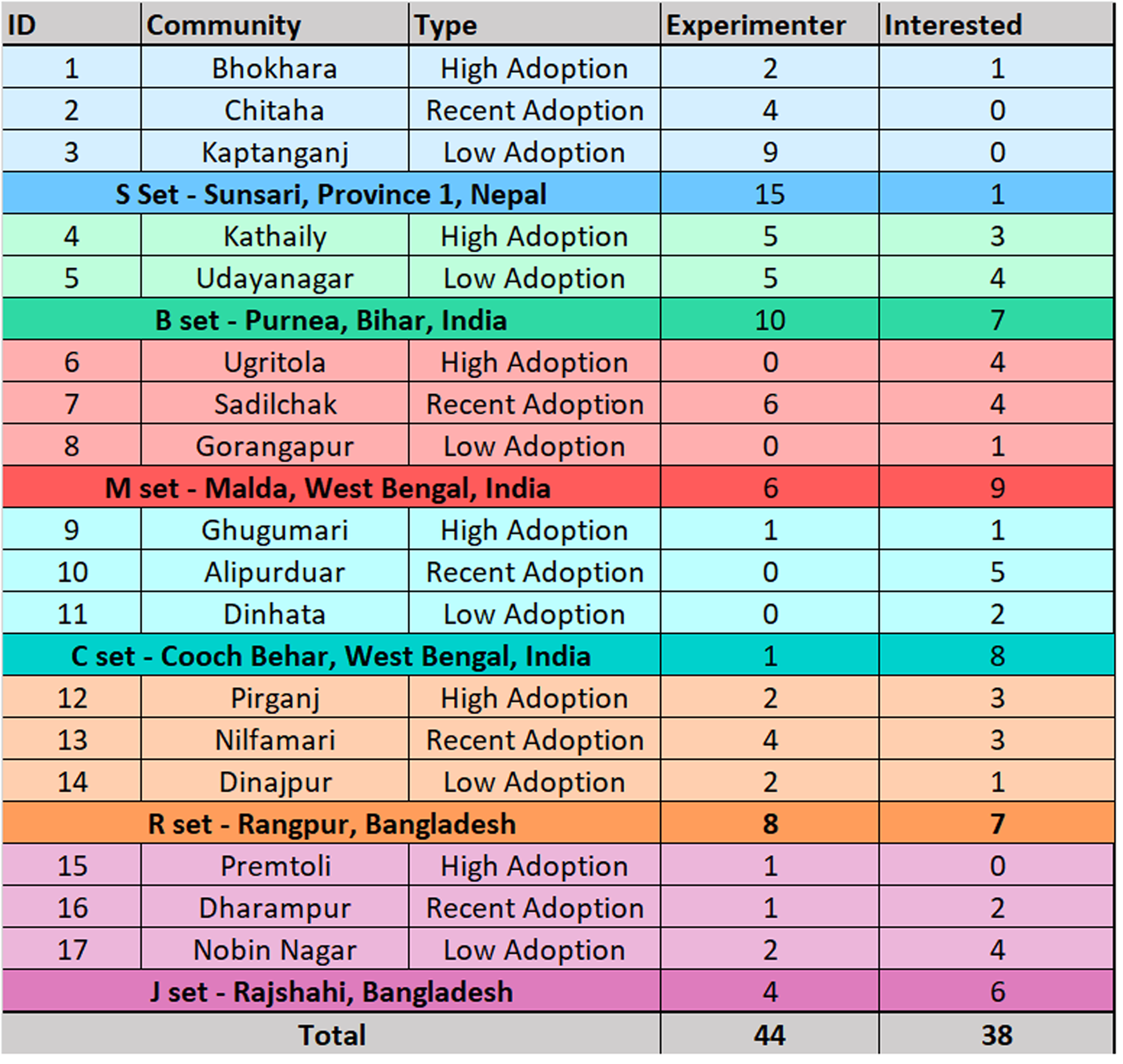
The selection of communities to be investigated was undertaken purposively within each of the six locations to capture a diverse range of ZT equipment user typologies during the 2019 Rabi season. In each of the six locations of interest, three communities were chosen after discussion with key project implementing partners of the project. While the project operated in many communities in each of the six locations, there were various outcomes after multiple years of promotion. As such, three types of communities were selected:
[1] ‘comparatively high adoption’ communities who have had promotional activities since 2014 and compared to other communities in the location have shown comparatively higher rates of adoption (note this does not denote ‘high’ adoption but comparatively high adoption’;
[2] ‘Comparatively low adoption’ communities, the inverse of the first community type where there have been similar promotional activities since 2014 but comparatively low adoption; and
[3] ‘recently introduced’ community, where promotion only started since 2018 and awareness is comparatively low compared to the above two community types. (Fig. 1).
The rate of adoption and classification was relevant only within each of the six locations and no fixed adoption rate was used, but a comparative divergence of uptake in each location. This was done to capture the perspectives of diverse typologies along an adoption pathway (see section 2.3). Except for Purnea (Bihar), where no community with recent adoption was located due to a lack of project activities, all other locations of interest follow these selection criteria.
Respondent selection
This work builds on the referral sampling methodology applied widely to explore processes of adoption across both Sub-Saharan Africa (Brown, Nuberg and Llewellyn, Reference Brown, Nuberg and Llewellyn2017a, Reference Brown, Nuberg and Llewellyn2018a, Reference Brown, Nuberg and Llewellyn2018b, Reference Brown, Nuberg and Llewellyn2018c, Reference Brown, Nuberg and Llewellyn2019, Reference Brown, Nuberg and Llewellyn2020; Brown, Llewellyn and Nuberg, Reference Brown, Llewellyn and Nuberg2018a, Reference Brown, Llewellyn and Nuberg2018b) and in South Asia (Chaudhary et al., Reference Chaudhary, Timsina, Suri, Karki, Sharma, Sharma and Brown2022, Reference Chaudhary, Timsina, Karki, Sharma, Suri, Sharma and Brown2023; Timsina et al., Reference Timsina, Chaudhary, Sharma, Karki, Suri and Brown2023). This body of work is implemented on the premise of engaging widely with different typologies of farmers who are on an adoption journey. This adoption journey is framed within the Process of Agricultural Utilization Framework (PAUF) (Brown, Nuberg and Llewellyn, Reference Brown, Nuberg and Llewellyn2017a, p. 15) and subsequent evolution to the Stepwise Process of Mechanization Framework (Brown, Paudel and Krupnik, Reference Brown, Paudel and Krupnik2021, p. 263). These frameworks provide the steps in which farmers go through in learning, evaluating, experimenting, and using or not using an agricultural practice.
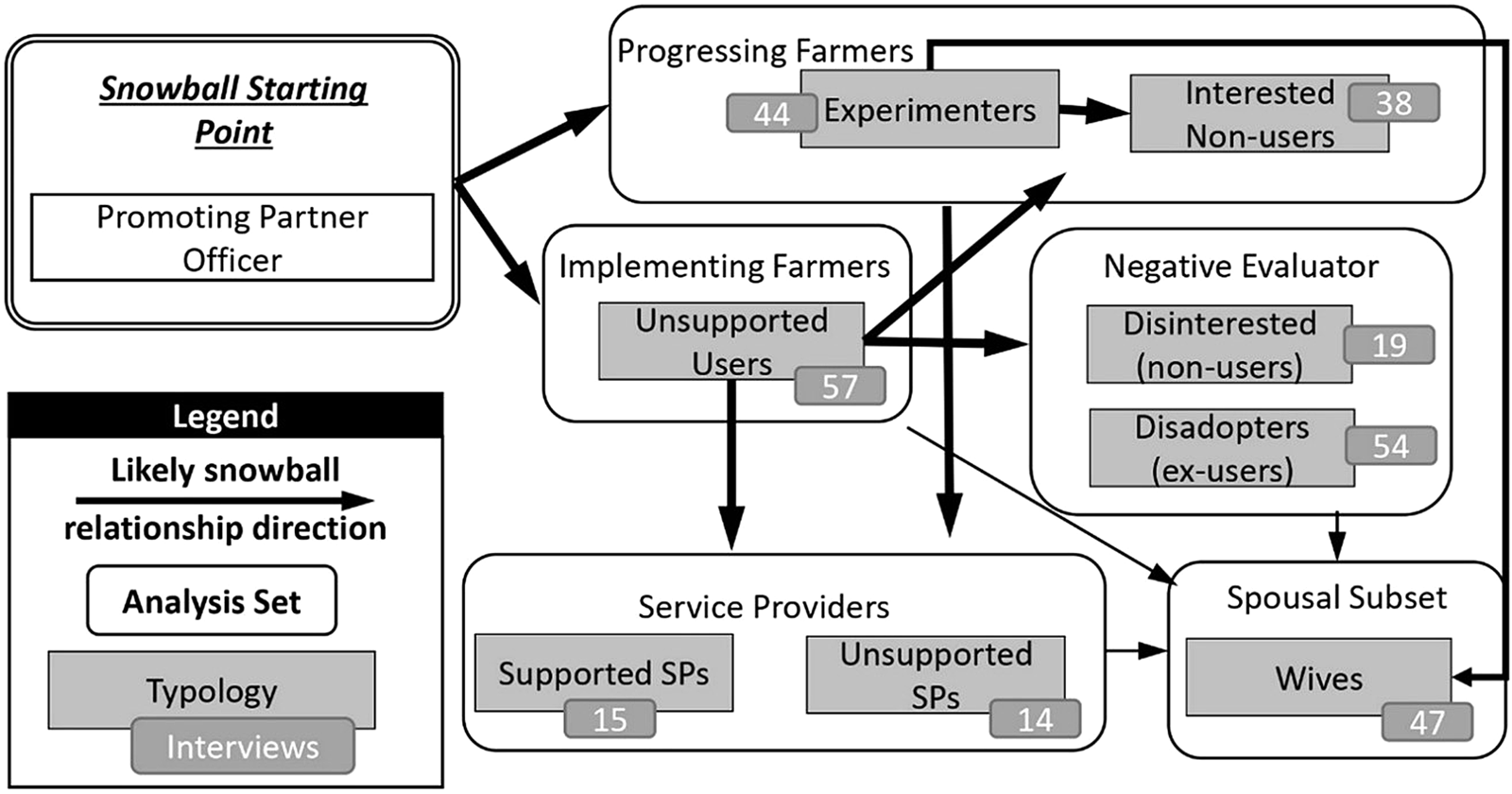
To apply this framework, a referral sampling approach was applied where an officer from the respective local promoting partner organization was asked to identify the first adopting respondent (note the local officer was not present during the interview to reduce biases in the responses provided). The household decision-maker was selected in each household to participate in the interview. At the end of each interview, respondents were asked to identify other typologies of interest within their community for further interviews. The goal of the overall study was to ensure each typology was represented which generally led to 15–20 respondents in each community (obtaining at least two respondents of each typology), depending on the type of community and the availability of the different types of respondents (Fig. 2). The objective was to capture between 50–60 interviews in each of the six locations, given that some typologies may be absent in some communities which may lead to uneven distributions of typologies between locations. Applying this methodology, 288 interviews were conducted totaling 171 h and 34 min, with an average of 35 min per interview.
Snowball sampling methodology with overall interviews across the total dataset.
Subset selection
To enable a true analysis of the decision making and evaluating processes of different farmer typologies, the 288 interviews were partitioned according to the SPM framework stages. This work focuses on a subset of 82 ‘progressing’ farmers (see Fig. 2). To be categorized in this subset, farmers must be considered in the act of evaluating CASI machinery but have not made an autonomous investment in adoption. Within this, we analyze two sub-typologies who are in the act of evaluation, experimenter farmers and interested non-user farmers, categorized together as progressing farmers according to the SPM framework (Fig. 2). Experimenter farmers are respondents who are currently practicing ZT in their own farms (2019 Rabi season) and are receiving some form of support to do so, whereas interested non-user farmers are those who have positively evaluated CASI but have not practiced yet.
As such, this work provides an alternative view on adoption processes by evaluating farmer before they reach an adoption decision, be it to adopt CASI in an ongoing, non-supported manner (Chaudhary et al., Reference Chaudhary, Timsina, Suri, Karki, Sharma, Sharma and Brown2022), or those who have chosen to dis-adopt or not adopt CASI (Chaudhary et al., Reference Chaudhary, Timsina, Karki, Sharma, Suri, Sharma and Brown2023). This is an area in literature—understanding farmers who are in the process of evaluating and deciding rather than adopting or not adopting—that is often ignored in the literature. The usefulness of this approach is highlighted with a similar study implemented in Africa that explored the in-between of adoption, non-adoption and disadoption in CASI Brown, Nuberg and Llewellyn (Reference Brown, Nuberg and Llewellyn2020).
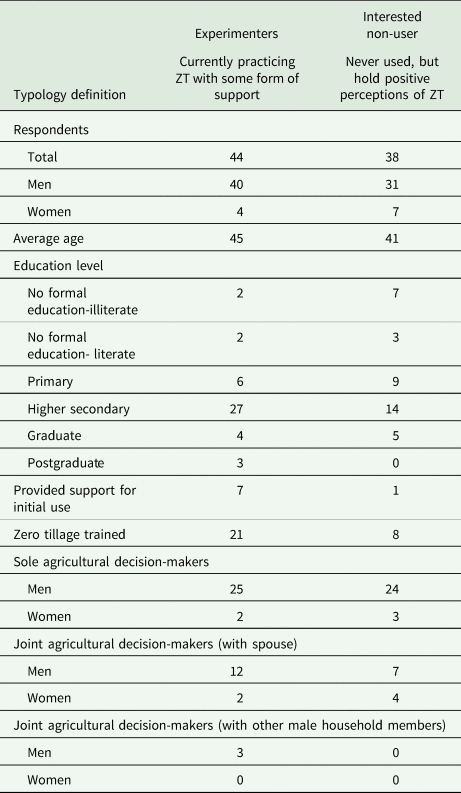
In this study, focus is placed on exploring the process of adoption rather than adoption as an outcome. The 44 experimenter farmers and 38 interested non-user farmers are identified to fit within this typology: 15 from Sunsari, 17 from Purnea, 15 from Malda, 9 from Cooch Behar, 15 from Rangpur and 10 from Rajshahi. Out of the 82 respondents, 33 respondents have had at least a full year of CASI experience while 11 are in their first year. Respondents have experimented with a variety of crops with ZT including maize, rice, wheat, lentils, and jute. Summary demographic information is given in Table 1.
Summary demographic information of respondents
Questionnaire development
This question schedule and analysis framework for this study is based on the Decision-making Dartboard (DmD) framework (Brown et al., Reference Brown, Samaddar, Datt, Leipzig, Kumar, Singh, Malik, Craufurd, Kumar and McDonald2021). The DmD framework unpacks decision making processes into four asset categories across six levels which are then combined to examine the various factors individuals evaluate to arrive at their final typology conclusion. The DmD is based on the Livelihoods Platforms Approach (Brown, Nuberg and Llewellyn, Reference Brown, Nuberg and Llewellyn2017a).This work applied the DmD framework to develop a semi-structured question schedule with seven modules was designed to be adaptive to the respondent typology, with the overarching goal to determine their typology and what is required to progress toward full use of CASI. Module 1 collected pre-screening and demographic data on KoboCollect software to determine respondent typology. Based on the respondent typologies, the questionnaire was adapted to ensure only relevant questions were asked (e.g., for interested non-user farmers, only their evaluation based on current level of knowledge and observation was asked). Module 2 explored the respondent's agricultural background and future agricultural plans and prospects while Module 3 focused on their interest regarding learning new agricultural practices, learning preferences and more specifically current knowledge and gaps regarding CASI. Module 4 explored current livelihood constraints while Module 5 delved into their evaluation and experience of CASI. Module 6 focused on the community perspectives and context regarding CASI adoption and Module 7 explored the implications and inter-household changes due to CASI adoption and suggestions for success in other locations. A similar approach has been applied in Sub-Saharan Africa (Brown, Nuberg and Llewellyn, Reference Brown, Nuberg and Llewellyn2020) and in the EGP as detailed in Chaudhary et al. (Reference Chaudhary, Timsina, Suri, Karki, Sharma, Sharma and Brown2022, Reference Chaudhary, Timsina, Karki, Sharma, Suri, Sharma and Brown2023).
Survey implementation
Based on their proficiency in the local language, five enumerators were chosen for the data collection and assigned study locations. All enumerators received comprehensive training on semi-structured data collection and were guided by a lead enumerator to advise and assist throughout the data collection process and to ensure standardization of the study implementation. To reduce recall bias, implementation took place from August 2019 to December 2019, following Rabi (winter) season planting but before Rabi harvest. All the interviews were conducted in local languages.
Analysis process
Pre-screening data was summarized using Microsoft Excel and the interviews were translated and transcribed into English and analyzed using Dedoose qualitative software (https://Dedoose.com) and thematically coded using the DmD framework. The themes for the coding included 24 codes related to the DmD framework (6 levels by 4 resource types) with the addition of 20 child-codes related to topics commonly raised in all study locations (for example, weed management, gender and social norms, community demand and perspectives on CASI, business strategies for CASI). Altogether 4324 excerpts were coded into the 44 abovementioned themes. The themes were analyzed in line with the DmD framework to extrapolate the results. The results are presented using a unique identifier linking with the location and typology, using the sets in Figure 1, (e.g., B1[E] refers to Interview 1 conducted with an experimenting farmer in Sunsari).
Results
Results Are framed around three key questions in the decision-making process: is stagnation in the adoption process a factor of (a) technological performance (section 3.1); (b) the feasibility of implementation (section 3.2); or (c) the enabling environment (section 3.3). This is informed by a similar study implemented to understand progression of CASI adoption in Africa using the livelihood platforms approach (Brown, Nuberg and Llewellyn, Reference Brown, Nuberg and Llewellyn2020).
Is progression limited by technological performance?
Respondents in all locations were overwhelmingly positive about the benefits of CASI, with commonly identified benefits including reduced input requirements (e.g., ‘we require less seed and fertilizers in zero tillage, and most importantly, the root of the crop is very strong’ B29[I]), reduced production costs (e.g., ‘if we cultivate wheat or maize through zero tillage, our expenses are reduced. The cost is higher if we cultivate through ploughing’ J22[I]), and reduced labor requirements (e.g., ‘The biggest difference is that in conventional farming there is a lot of labor required, but in zero tillage that is reduced’ J14[E]).
Notwithstanding this, two key issues with technological performance were consistently raised: inconsistent seed drop and increased weed incidence, both of which raised concerns with yield performance.
Inconsistent seed drop
Respondents expressed concerns about a decrease in yield in the locations (Bihar, Cooch Behar, and Sunsari) that used the four-wheel attached multi crop planter. This was usually linked to low germination of seeds (e.g., ‘We only got 60–70% of expected yield in zero tillage. The success rate for traditional methods when we manually plant is 100%. Production was low due to a germination problem’ S34[E]), and consistency of seed drop (e.g., ‘provide a better machine than zero tillage. It should sow seeds uniformly, and the crop should germinate well. If the seed germinates well, it gives a good crop’ B30[E]). Additionally, respondents would occasionally link this decrease in yield to a lack of leveled land (e.g., ‘due to bumpy soil, some seeds fall deeper, and some fall on the top of the soil. Therefore, the seed does not germinate well, and it results in less yield’ B20[E]). This trend was also observed with interested non-user farmers as a factor in their lack of progression (e.g., ‘I saw it myself. Some plants were smaller in size because he sowed the seeds by hand in the gaps left by the machine’ M20[I]).
Increased weed incidence
Inconsistent crop yields were also linked to increased weed incidences in Rajshahi, Rangpur and Sunsari by some experimenter farmers (e.g., ‘This time there were more weeds [in CASI], we could not control the weeds and I think this time we will experience a loss in yield because of it’ C28[E]). Higher weed growth also negated some of the anticipated labor-saving benefits of transition to a ZT system (e.g., ‘Weed growth is a little high in [CASI]. If the old method required one laborer, [CASI] requires two laborers [for weeding]’ J37[E]). This was likely related to herbicide use, with those not experiencing weed growth issues identifying the use of herbicides (e.g., ‘we spray the herbicides beforehand… weeds are not increasing due to the use of herbicides’ S18[E]; ‘I used more herbicide that is why there was a decrease in weed growth in the second year. I also did not till the land, so it [weed incidence] slowly decreases’ B24[E]).
Is progression limited by the feasibility of implementation?
Each respondent was asked to identify the key reason why they did not progress to use of CASI. Based on the DMD framework, these were thematically coded, and six themes emerged, as below.
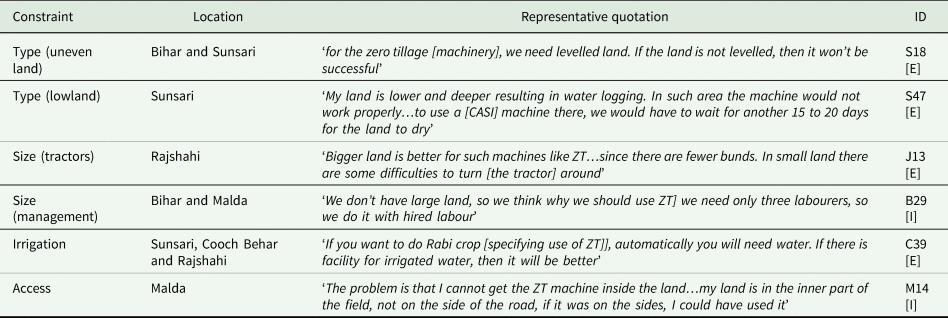
Suitable land
Many respondents indicated they did not have suitable land to progress to ZT implementation, though the actual physical land resource constraint tended to differ by location (Table 2).
Physical resource constraints identified that relate to land type
Access to machinery
Lack of access to machinery was common in all locations (except Cooch Behar) (e.g., ‘The machine required for zero tillage was not available when we needed it, as only one zero tillage machine is available in this area. Thus, we used the tractor instead and tilled the farm quickly.’ M33[I]), which often related to only project drills being in communities (e.g., ‘That zero tillage machine isn't available here. We are ready to pay for it but it's not available…none of us have bought it, we can only use the one provided by the office [local research institution]’ J14[E]). This was often perceived to be due to a lack of interest among existing service providers in providing ZT services (e.g., ‘here it is not possible to take others’ tractor in lease and run the zero till drill…the owner doesn't allow their tractor to be used with another machine. They say that they will profit if the farmers continue to farm by plowing the fields’ S22[E]), while purchase was rarely considered an alternative solution (e.g., ‘I am a small farmer. What will I do by purchasing a zero till drill? Not every farmer will buy it. We do not have that much income’ B37[I]).
Skilled and available machinery operators
In addition to machine unavailability, respondents highlighted CASI as knowledge intensive and difficulty in accessing skilled operators, even if machines were available (e.g., ‘The person operating the zero till drill must be very well trained or else it is difficult to handle’ R41[E]), and some interested non-user farmers identified poor observations of other farms (e.g., ‘There should be a good technician so that seed and fertilizer will fall equally…last time my neighbor used zero till drill for maize, the seeds were not sown uniformly’ B21[I]). This was sometimes also related to an overall lack of trained manpower and reliability (e.g., ‘Only one person was given training to sow wheat. The person who has to drive the tractor got sick. Now who will do it? So there was an issue the next time we wanted to sow [using zero till drill]’ S21[E]).
Competing uses for crop residues
Respondents were widely aware of the benefits of stover retention in improving their soil fertility (e.g., ‘The stover is retained to increase the fertility of the soil… it becomes organic fertilizer after rotting’ M21[E]), but there were often multiple competing uses for that stover which did not allow them to implement this aligned practice. These included priorities for sourcing fodder for livestock (e.g., ‘We have to keep fodder for the livestock, so I don't keep most of stover in the field’ B6[E]) and fuel for cooking (e.g., ‘Why will I keep stover in the field? It is required for cooking’ R42[E]). In some cases, stover was also sold for additional income (e.g., ‘We cut off the stover totally, then we sell the stover’ C20[E]). Some respondents also continued to hold a preference for stover burning as a mechanism to increase soil fertility (e.g., ‘In maize crop, we keep half of the stalk in the field and burn it, and it becomes manure’ B11[I]).
Difficulty in accessing information (locally)
Respondents in all locations experienced various issues in accessing information that hindered their progression, which often related to the relatively new emergence of ZT in communities (e.g., ‘I have seen crops grown with the help of zero till drill but have not yet seen the machine’ B28[I]) and the desire to see results before progressing to use (e.g., ‘I will check to see if my neighbor is using it [CASI machinery] or not and find out if he got good results. I will investigate it and get information, and then I will decide’ B37[I]). This process of learning was often, however, hampered by perceptions of poor training implementation (especially in Bihar and Sunsari; e.g., ‘This zero tillage machine is extremely beneficial. If you could provide training with full information to everyone, it would be better. Everyone would use it. The rural municipality should take up the responsibility of disseminating information. They should be accountable for its success’ S47[E]). This was often linked to limited opportunities to view CASI implementation with preference for in-person training (e.g., ‘If they can show me the work of zero till practically then I can easily learn by observing the process’ J34[I]) and limited time to go outside of the community to seek information on CASI (e.g., ‘I don't get time, then what can I do? I can go to Purnea [agriculture institution], but I don't get time to go [due to work]’ B6[E]).
Lack of profitability in current system
A general issue raised with progression to a CASI system was in the financial viability of farming overall (e.g., ‘This is the problem in agriculture. The expenses are high, but income is low’ S18[E]). This was often linked with a lack of financial capital to experiment with new practices (e.g., ‘I have to continue following the traditional methods of cultivation because I don't have money and I am not able to use CASI machinery’ B20[E]). Respondents often raised was that while trainings were necessary, they would also require some financial support to help enable practice change (e.g., ‘If you conduct a lot of trainings, there is still an issue with financial capacity. They tell you to do this and that, to do something in a certain way, that is alright. But to do that you need money’ C40[I]). Respondents across locations (except Cooch Behar) also identified high input costs limit the potential to intensify production (e.g., ‘The biggest problem is that the costs of fertilizers, pesticides and herbicides are very high. We cannot buy it. We are not being able to use it in our cultivation’ J33[E]).
Is progression limited by limited enabling environments?
In terms of the enabling environments to ease adoption, two key themes emerged around change processes, financial viability, and incentives.
Cultural stigma associated with experimentation
Experimenter farmers in all locations experienced limited community support during their transition to a ZT system. There was a common theme among experimenter farmers who had to overcome social stigma that surrounded their decision to practice CASI (e.g., ‘When I farmed in the unploughed field for the first time, many farmers told me that I have gone mad… They told me it would never work’ S21[E]). Interested non-user farmers also observed a negative community perception regarding CASI, which impacted their intention to experiment (e.g., ‘in the beginning, a lot of people thought this zero till technique would be unsuccessful, and nothing will come out of it. They all laughed and mocked [other famers]…so I misunderstood and did not use it [ZT drill]’ R28[I]).
Financial contexts and transitional incentives
In terms of utilizing any additional yields for financial gains, respondents were often pessimistic about economic opportunities that could be exploited (e.g., ‘We don't get the justified amount of price for selling our crops…we are losing out on our profit. The middlemen purchase it from us but earn a lot more profit selling our crops at a wholesale rate’ M17[I]). This was often compounded by a lack of aggregation (especially in Rangpur; e.g., ‘We face some problems when it comes to selling our crops. This is because we sell them individually, so we don't receive the appropriate amount. The transportation costs are also higher because of this’ R41[E]), or a lack of storage facilities (especially in Sunsari and Malda; e.g., ‘If the production is more then we have to store them. Farmers do not have any means to store them. If we store them in our houses, the pests will destroy them. The diseases will spread all over so, we must sell them’ S2[E], ‘We don't have enough storage space to stack our crops and we cannot store them at our home so, we try to sell the crops to earn some money’ M17[I]).
Because of this financial context, stagnation of adoption was often linked to a desire or need to be provided economic incentives to transition their production system (e.g., ‘Farmers are not economically strong when they depend on agriculture. A farmer cannot invest in new practices that comes in the market, so the government should provide support’ B9[E]). Requests varied from additional inputs to be packaged (e.g., ‘the zero till drill should be provided with fertilizers and pesticides. If it all comes together for us, it will be better’ R11[E]), to machinery use at no cost (e.g., ‘Why should I pay the rent? The zero till drill is in my courtyard. It is given by the government, so it is free’ B3[E]). One suggestion made could be in a risk sharing or insurance mechanism that may better enable ownership of decision making (e.g., ‘If somebody would have given subsidy to us and if our yield were below expectation, then people would have taken the risk’ C36[I]), to avoid pseudo adoption and stagnation while waiting for financial incentives.
Discussion
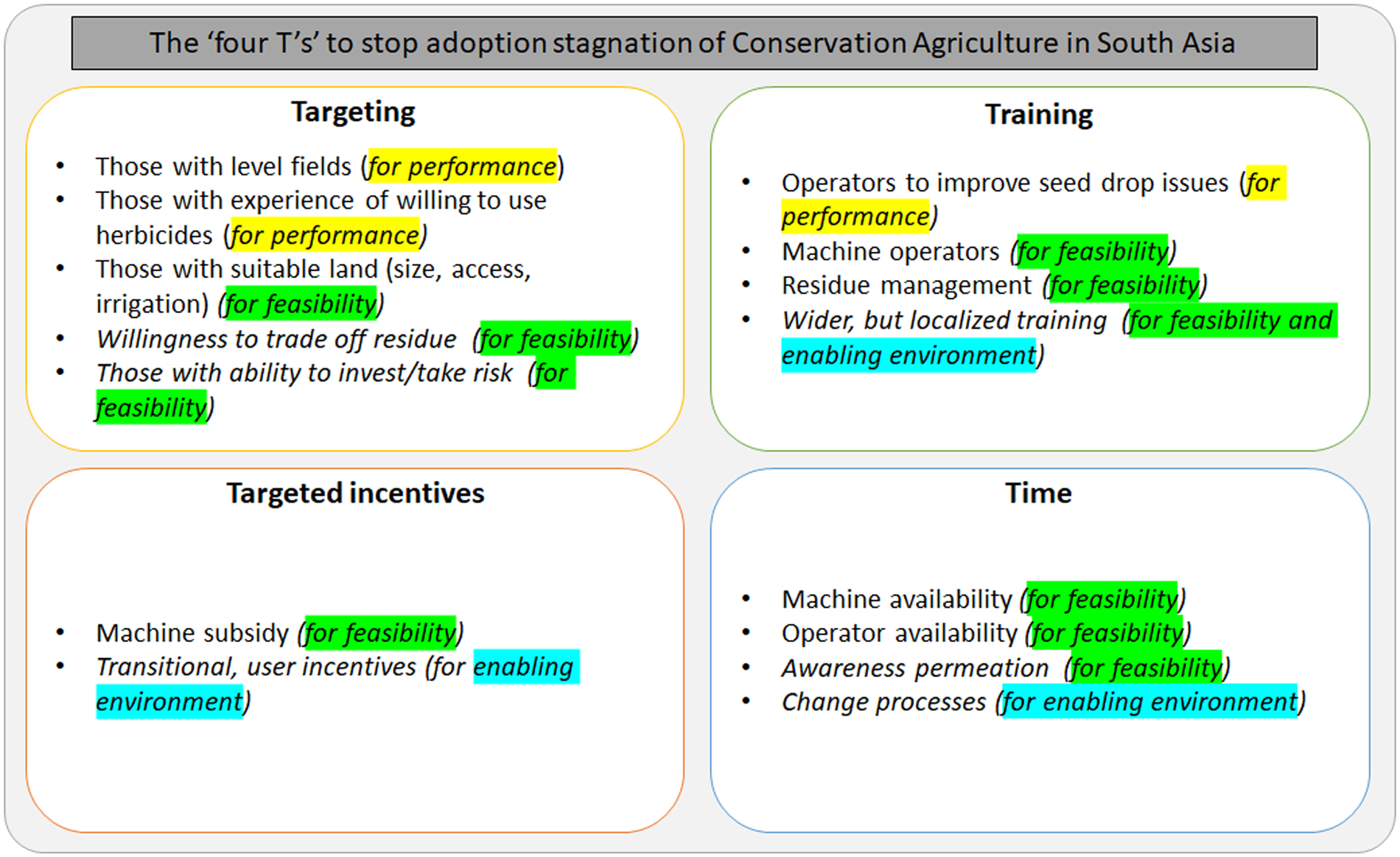
This Study explored three key questions to better understand a common experience facing promotional organization in multiple geographies (Brown, Nuberg and Llewellyn, Reference Brown, Nuberg and Llewellyn2020): why are farmers who often express an interest in using or experimenting with CASI practices, unable to progress to (unsupported) use?. In terms of the perceived performance of CASI, respondents indicated a mixed perception with the identification of various benefits of CASI, consistent with multiple other studies (e.g., Chaudhary et al., Reference Chaudhary, Timsina, Suri, Karki, Sharma, Sharma and Brown2022; Gathala et al., Reference Gathala, Laing, Tiwari, Timsina, Islam, Chowdhury, Chattopadhyay, Singh, Bhatt, Shrestha, Barma, Rana, Jackson and Gerard2020), but also identified some issues, such as inconsistent yield and weed emergence, that impacted overall performance. However, these were not the only reasons to explain stagnation in the adoption process since respondents also indicated other external issues such as lack of access to CASI machinery, lack of skilled operators, and expectation of continued financial support. Therefore, performance issues did not appear to be the primary reason for stagnation in the adoption process given the identification of various benefits of CASI, which are consistent with multiple other studies. In terms of feasibility, six key themes across four resource types were identified as the primary contributors to adoption stagnation and were also linked to the two key enabling environment constraints in change processes and financial viability. These themes can be linked together by four overarching categories that should be considered to ensure that farmers who express interest in CASI (or any emerging practice change) can progress from awareness and interest to unsupported use. These are: [1] Targeting; [2] Training; [3] Targeted incentives; and [4] Time (Fig. 3).
Summary of interlinked results to help overcome CASI adoption stagnation.
Targeting
This Study is unusual in its exploration of why supported farmers do not progress, an area often unexplored in the literature due to a reliance on binary adoption studies (Brown, Nuberg and Llewellyn, Reference Brown, Nuberg and Llewellyn2020). In doing this, we find that experimenter farmers often do not progress due to their current situation (due to a lack of suitable land, experience with requirements such as herbicides, or willingness to use stover for sole purposes or take risks). This is likely to indicate that selection of lead/intervention farmers is often not based on their ability to implement, as much as their ability to influence (e.g., selecting influential farmers to lead project interventions) (Hailemichael and Haug, Reference Hailemichael and Haug2020). While many interventions rely on such an approach, the actual impact on out-scaling of technologies remains limited due to socio-economic differences between lead farmers and targeted end users (Fisher et al., Reference Fisher, Holden, Thierfelder and Katengeza2018). In addition, the cultural stigma associated with refraining from plowing or tilling the field during the experimentation with CASI machinery exemplifies the substantial influence of social pressures on the adoption of CASI, as voiced by certain farmers, thereby constraining the conducive environment for those farmers interested in exploring innovative practices due to the fear of facing ridicule within their communities.
To create an impact on the larger community, greater emphasis needs to be put into identifying farmers who can progress beyond the experimentation stage. This includes selection of lead/intervention farmers with similar resource capacities who tend to interact closely in their communities and allow for experience sharing and knowledge exchange to take a risk and invest in a new technology but also seek to target lead farmers from various socioeconomic backgrounds (Keil et al., Reference Keil, Mitra, Srivastava and McDonald2019). Targeting such central farmers is crucial to accelerating the dissemination process, as has already been addressed in academia (Beaman and Dillon, Reference Beaman and Dillon2018). If individuals chosen to experiment do not themselves advance to unsupported use, there is a risk of fostering a culture of expectation of support (Brown, Nuberg and Llewellyn, Reference Brown, Nuberg and Llewellyn2017a; Brown, Llewellyn and Nuberg, Reference Brown, Llewellyn and Nuberg2018b). Making the process inclusive is equally vital as contextualizing who to target with intervention activities to avoid adoption stagnation.
While it is crucial to identify the inclusion of such interventions, it is also critical to note that due to existing resource constraints, not all technologies will function across all groups, necessitating a packaged approach for inclusive development. Instead of concentrating solely on the promotion of CASI machinery, a packaged approach based on the resource constraints of a particular location is needed. This can range from the promotion of land preparation machinery to ensure a leveled land to weed management practices that can complement CASI implementation based on farmer's current access to required resources. This indicates that, in order to assure autonomous use when support ends, farmer selection process is critical to ensure technological feasibility based on current resource context. This argument has been made in other emerging literature (Brown, Nuberg and Llewellyn (Reference Brown, Nuberg and Llewellyn2020) in Africa and Chaudhary et al. (Reference Chaudhary, Timsina, Suri, Karki, Sharma, Sharma and Brown2022) in Asia) though project focus still remains on farmers ability to influence rather than also ability and willingness to adopt. Such findings are typical of agricultural initiatives outside of CASI, as evidenced by Nkhoma (Reference Nkhoma2018) highlighting the impact of external influence that leads to deviation from program objective and target group to end-users who may lack the required skills and resources to adopt the promoted technology.
Training
Emerging Literature from the EGP (Chaudhary et al., Reference Chaudhary, Timsina, Suri, Karki, Sharma, Sharma and Brown2022) indicates that while sustained CASI adoption is possible, many of the raised constraints of respondents in this study indicate they have differing experiences to adopters in the same community (e.g., see associated study in same locations with adopters (Chaudhary et al., Reference Chaudhary, Timsina, Suri, Karki, Sharma, Sharma and Brown2022)). Many of the concerns raised by respondents are the consequence of a lack of knowledge, which might be remedied with increased investment in training of both farmers and service providers (individual entrepreneurs, Custom Hiring Centers (CHC) etc.) and information exchange, as emphasized by Keil et al. (Reference Keil, Mitra, Srivastava and McDonald2019). The observed significant influence of perceived technological underperformance among the farmers affected their adoption decisions and could also potentially influence other farmers' choices within the community, underscoring the need for targeted training to mitigate these concerns and enhance technology acceptance. For instance, seed drop issues are partly resolved by careful assessment of land type, alongside training sufficient highly skilled operators. Likewise, the willingness to trade-off residues could be increased by knowledge dissemination to ensure farmers understand tradeoffs and benefits in changing this practice, particularly for those who burn stover with the intention to enhance soil fertility.
In terms of deployment of training, the importance of localized training was emphasized by respondents, meaning that future promotion does need increased resources to target local implementation. This also relates to creating an enabling environment and ensuring that sufficient ‘trainers’ are aware and willing to promote using interactive methods, including through government and industry channels. Traditional extension systems that are largely focused on top-down technology transfer models limit two-way flow of information exchange between farmers and trainers to address recurring issues (Ghimire, Reference Ghimire2014) highlighting the need to collaborate with other entities who have established trust within the community. This need was also raised in other studies (Chaudhary et al., Reference Chaudhary, Timsina, Suri, Karki, Sharma, Sharma and Brown2022), where access to trainings from formal extension institutions and reliable information sources along with the intention to explore alternative access mechanisms provided an opportunity to increase the machine access and pool of operators to expand usage and ensure consistent performance. Such efforts will allow for greater opportunities to trial a technology with reduced chances of performance issues. Similarly, smaller tractor owning farmers (and CHCs) can also be targeted for business development trainings (Keil, D'Souza and McDonald, Reference Keil, D'Souza and McDonald2016) to support ZT service provision to expand coverage and provide income generating opportunities.
Targeted incentives
Many technological transfer interventions including CASI provide various incentives (e.g., input distribution, technical provision and support etc.) during the initial phase (Joshi et al., Reference Joshi, Choudhary, Kumar, Venkateswaran and Solanki2019; Mellon Bedi et al., Reference Mellon Bedi, Azzarri, Hundie Kotu, Kornher and von Braun2021) to smallholder farmers that are currently unconvinced about the utilization of apparent gains made by changes in agricultural practices, as indicated by respondents in this study. However, incentives alone are insufficient to address other underlying issues (e.g., high input costs) that persist in current agricultural systems as indicated by the respondents. Furthermore, the stigma attached to experimentation makes it difficult for interested farmers with the necessary resources to accept the potential risks of testing new technologies. While there is a need to support farmers to transition, the current mechanism perpetuates a system of financial dependency which is unsustainable in the long term once the initial support ends. One of the ways to negate this is to take a targeted approach in farmer selection based on the resource requirements and providing risk sharing incentives (e.g., co-payment systems for technology experimentation) to support sustained use. This will also discourage adoption based on partial understanding of associated benefits commonly experienced in other technologies where farmers primary intent for technology adoption is to avail subsidized inputs (Mugisha et al., Reference Mugisha, Madsen, Tumusiime and Byekwaso2004). Similarly, Williams et al. (Reference Williams, Afroz, Brown, Chialue, Grünbühel, Jakimow, Khan, Minea, Reddy, Sacklokham, Santoyo Rio, Soeun, Tallapragada, Tom and Roth2016) emphasize the need to contextualize household level livelihood strategies and resource availability to better understand the drivers influencing to progression toward full use of agricultural technology such as ZT machinery. Therefore, policy makers need to consider the differences in resource availability at household level decisions as crucial elements when formulating future distribution of financial support to farmers to promote new technology.
Sustained CASI adoption is also dependent on the availability and accessibility of required machinery and operator which is a common issue (Brown, Paudel and Krupnik, Reference Brown, Paudel and Krupnik2021; Keil, D'Souza and McDonald, Reference Keil, D'Souza and McDonald2016) hindering progression. This indicates that current purchase-based mechanisms are not appropriate for CASI due to the high upfront costs associated with machinery purchase unlikely to be feasible for purchase by the majority of smallholder farmers in the EGP (Chaudhary et al., Reference Chaudhary, Timsina, Karki, Sharma, Suri, Sharma and Brown2023). With an emphasis on provision of services for the farmers rather than direct incentives, the fee-for-hire service provision sector offers a targeted pathway to grow adoption as seen in other machines (Mohapatra, Baruah and Yamano, Reference Mohapatra, Baruah and Yamano2014), and it can operate as a catalyst to accelerate change for the wider usage of CASI in the region. In addition, recent evidence highlights the altruistic intentions of some service providers supported the implementation of CASI (Brown et al., Reference Brown, Samaddar, Datt, Leipzig, Kumar, Singh, Malik, Craufurd, Kumar and McDonald2021) and this needs to be incorporated in the promotional strategies to foster a network of service providers willing to use their time and resources for communal good. In order to meet farmers' needs, service providers can be supported to provide a packaged approach (e.g., land leveling, sowing, harvesting, and weed management). Such strategies will also contribute toward reducing the barriers associated with taking a risk and encourage other farmers to continue use with lowered investment costs.
Time
While the development and governmental communities can at times expect overnight change to occur, the adoption processes require time and patience to create benefits for farmers. For instance, there is an obvious lag time from increased training activities and the flow on to end users, given that not all farmers can be reached at a single point in time. Likewise, there is also a lag time between training, purchasing machinery, and enabling others to use. In many instances once the trial period ends, there are high levels of disadoption either due to heterogeneity in the fixed costs associated with the uptake of new technology (Llewellyn and Brown, Reference Llewellyn and Brown2020) which were previously supplemented by incentives or the unavailability of the actual technology (e.g., machinery and skilled operators) for widespread use due to issues in the supply networks (Mwangi and Kariuki, Reference Mwangi and Kariuki2015). Given the lack of profitability in the current agricultural system as indicated by respondents, farmers may not value a switch in agriculture practice for technologies that do not provide immediate benefit and seek to prioritize off-farm income opportunities instead. Additional factors such as human resource constraints, farmer's capabilities, attitudes, and priorities (Llewellyn and Brown, Reference Llewellyn and Brown2020) and the interaction of these factors with the promoted technology (de Oca Munguia and Llewellyn, Reference de Oca Munguia and Llewellyn2020) need to be recognized when predicting the speed and extent of adoption due to the heterogeneity among small and large farmers.
Similarly, there is a lag time from training to awareness permeation to overcome the ingrained cultural change processes for farmers during the inception of a new technology. As awareness is raised and interest increases, one would expect that communal change processes would be catalyzed. This again highlights the importance of targeting farmers with required resource capacities to adopt the technology and for service provider models to increase machinery access to decrease upfront investment associated with CASI and address immediate needs such as high costs of labor and inputs. In addition, there is a need to strongly invest in training aimed at farmers with low levels of formal education and less knowledge-seeking behavior (Llewellyn and Brown, Reference Llewellyn and Brown2020) to allow for awareness permeation.
Given the informational isolation and weak financial status experienced by respondents in this study, further progression will be limited if access to machinery and knowledge transfer is only limited to lead farmers with established relations to formal institutions. Hence there is a greater need to develop advisory support services that not only disseminate relevant practical knowledge and engage in frequent communication but also provide other services such buyback guarantees and credit support (Kumaran et al., Reference Kumaran, Vimala, Chandrasekaran, Alagappan and Raja2012). Use of local service providers with altruistic motivations (Brown et al., Reference Brown, Samaddar, Datt, Leipzig, Kumar, Singh, Malik, Craufurd, Kumar and McDonald2021) can play an integral role in increasing farmer's awareness and access to ZT machinery to experiment in their own fields. This has implications on not just progression for CASI uptake but to any agricultural system indicating current information and support services are limited in providing enough incentives to catalyze change.
Conclusion
This Study explored adoption processes outside of a conventional binary classification of adoption or non-adoption, to create a more nuanced understanding of why adoption stagnation occurs. While this has been explored in Africa and with specific issues like service provision in Asia, this is the first of its kind study to explore why stagnation occurs with interested and experimenting farmers in South Asia. Overall, ten key themes emerged across technological performance (seed drop inconsistencies, weed emergence), feasibility of implementation (land suitability, machinery access, skilled operators, competing uses for crop residues, limited information access and lack of profitability in current system) and enabling environments (cultural stigma and expectation of continued financial support) that explain the stagnation along the adoption process. These ten themes can be linked together through four key categories: Targeting, training, targeted incentives, and time to address the issues experienced by farmers. Additionally, the notable impact of both perceived technological shortcomings and the social pressures associated with CASI adoption, as highlighted by farmers, played a crucial role in shaping their decisions. Importantly, these categories have emerged out of a CASI case study, but likely apply to any attempt to influenced practice change in smallholder system in South Asia and more broadly. We propose that if change is to be enabled in such systems, a focus needs to be placed on targeting farmers who are willing to and can actually adopt, not just who are influential, training widely within local communities, providing targeted incentives to encourage provision of ZT services (individual, CHC etc.) that do not lead to a dependency expectation, and allowing sufficient time for change to occur (i.e., setting realistic expectations). Such findings create a framework though which development initiatives should consider when attempting to create change in any smallholder community. Beyond these direct findings that are relevant to both extension and policy audiences, the method of exploring decision making processes at the ‘in-between’ of adoption and non-adoption provides an important framework for academics to explore adoption processes which is widely applicable in understanding change processes in smallholder farming communities.
Data availability statement
The data that support the findings of this study are available from the corresponding author upon reasonable request.
Acknowledgements
We are thankful for the support of Bhavya Suri in assisting the team during data collection. The members from the following partner organizations are thanked for their contribution during data collection—Uttar Banga Krishi Vishwavidyalaya, Satmile Satish Club O Pathagar, Department of Agriculture, Sabuj Mitra Krishak Sangha and Sabuj Bahini, Gourangapur Farmers Club in West Bengal; Bangladesh Agricultural Research Institute (BARI) and Rangpur Dinajpur Rural Service (RDRS) in Bangladesh; Bihar Agricultural University (BAU) in Bihar; Nepal Agricultural Research Council (NARC) in Nepal. We also thank the 82 respondents who gave their time for this research.
Authors’ contributions
Brendan Brown was in charge of the study's conceptualization and design. Emma Karki, Akriti Sharma, Pragya Timsina, Anjana Chaudhary, and Rama Sharma were in charge of material preparation, data collection as well as analysis of this sub-set with oversight of Brendan Brown. Emma Karki drafted the manuscript with support from Akriti Sharma, Pragya Timsina and Brendan Brown in refining and finalizing the manuscript which included contributions from all authors in the review process.
Funding statement
This research is funded by the Australian Centre for International Research via two projects (CSE/2011/077 and WAC/2018/221).
Competing interests
The author(s) declared no potential competing interest with respect to the research, authorship, and/or publication of this article.
Informed consent
The studies involving human participants were reviewed and approved by Gideon Kruseman, Head of Centro Internacional de Mejoramiento de Maíz y Trigo (CIMMYT)—The International Maize and Wheat Improvement Center's Internal Review Ethics Committee (Ethics approval number: IREC-2019.020). The participants provided their informed consent to participate in this study.


 Open access

