


Underground storage organs are plant structures that store energy and water. Underground storage organs are a very valuable food resource (Singels Reference Singels2013): they grow seasonally, are predictable and reliable, as well as relatively easy to gather and process. Their consumption is attested in a variety of ethnographic sources (Berihuete-Azorín et al. Reference Berihuete-Azorín, Arranz Otaegui and López-Dóriga2018), while data suggest that around 40 species of underground storage organs were used as food by recent northern hunter-gatherers (Kuhnlein & Turner Reference Kuhnlein, Turner and Katz1991). Underground storage organs had a key role throughout human history. There is no doubt that they offered the most abundant and readily available source of carbohydrates in Palaeolithic and Mesolithic Europe (Kubiak-Martens Reference Kubiak-Martens, Kubiak-Martens and Hardy2016), and it is estimated that probably 20–30 species were used (Mears & Hillman Reference Mears and Hillman2007). Their importance, however, has been undervalued for multiple reasons such as recovery issues, identification difficulties and a focus on other food resources. This project aims to provide reference material that can be used for the identification of underground storage organs and their processing on any archaeological site, and thus fill a gap in the study of archaeological hunter-gatherer economies.
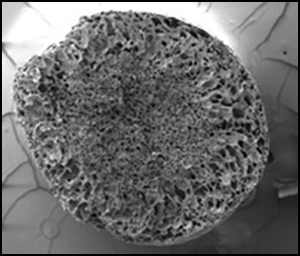
Macrobotanical remains regularly document the presence of fruits and seeds belonging to species that also produce underground storage organs. The direct presence of underground storage organs is rarely described, however, with very few recorded examples (e.g. Holden et al. Reference Holden, Hather and Watson1995; Kubiak-Martens Reference Kubiak-Martens1996, Reference Kubiak-Martens1999, Reference Kubiak-Martens2002; Pryor et al. Reference Pryor, Steele, Jones, Svoboda and Beresford-Jones2013; Larbey et al. Reference Larbey, Mentzer, Ligouis, Wurz and Jones2019; Florin et al. Reference Florin, Fairbairn, Nango, Djandjomerr, Marwick, Fullagar, Smith, Wallis and Clarkson2020; Wadley et al. Reference Wadley, Backwell, d'Errico and Sievers2020). Current reconstructions of hunter-gatherer diets are dominated by chemical analyses of animal and human bones, plant microremains (starch and phytolith), and use-wear analysis of lithic tools. This is partly because the recovery of plant macroremains requires sampling, sediment processing and sorting of the residues, whereas the aforementioned techniques can be applied without systematic sampling methods. The situation is even less favourable for underground storage organs because the recovery of archaeological parenchyma (meristematic and epidermal tissue of plants) requires special effort (Mason & Hather Reference Mason and Hather2002) and entails numerous identification difficulties. While small-sized, complete tubers that retain features such as shape or detachment scars may allow easier identification; when dealing with fragmented storage organs, it is necessary to examine the internal anatomy, especially the organisation of vascular tissue and anatomy of parenchyma cells, for which scanning electron microscopy is required. Moreover, the limited availability of atlases and reference collections contribute to the underrepresentation of this resource in the archaeological record (Figure 1).
Unidentifiable underground storage organ remains: left) visible vascular bundles from La Draga, Spain (micrograph by L. Kubiak-Martens); right) underground storage organ remains from Zamotsje 2, Russia (micrograph by M. Berihuete-Azorín).

A first step to overcome this situation is the creation of a reference collection in an online repository. This project aims higher, however, by creating a larger corpus of information that will also link to examples of exploitation of underground storage organs by other means, namely use-wear and residue analyses on tools. We will create a set of wooden tools (digging sticks) and stone tools (knifes/scrapers and grinding stones) that ethnobotanical studies suggest are involved in harvesting and processing underground storage organs (e.g. Hurtado & Hill Reference Hurtado and Hill1989). These three tool types will be used to harvest and process underground storage organs, and the use-wear of the used tools will be recorded; the tools will then be sampled for starches, which can be taxon distinctive, in order to create a reference collection for the selected species. A set of experiments to test how heat and different processing techniques may affect the starches will also be carried out. All data will be made available for reference in one repository.
The application of new imaging techniques has proven useful in identifying underground storage organs (Pritchard et al. Reference Pritchard, Lewis, Beeching and Denham2019) and other food remains (González et al. Reference González-Carretero, Wollstonecroft and Fuller2017; Heiss et al. Reference Heiss, Antolín, Bleicher, Harb, Jacomet, Kühn and Valamoti2017). Some of these new methodologies (3D scanning and microCT) will also be tested and used to generate the underground storage organ reference collection. In addition to the methodological innovation, the project will systematically search the material archives of nine key prehistoric archaeological sites on the Iberian Peninsula to check for the presence of underground storage organs. Some of these sites, such as Trinchera Dolina, Atapuerca (Figure 2), where the earliest hominids of Europe were discovered (Carbonell et al. Reference Carbonell, de Castro, Parés, Pérez-González, Cuenca-Bescós, Ollé and Sala2008), are fundamental to our understanding of Iberian Prehistory and human evolution.
Early hunter-gatherer sites (red): 1) Trinchera Dolina, Atapuerca, (Burgos); 2) Cova Eirós, Tricastela (Lugo); 3) Abric Romaní, Capellades (Barcelona). Early Homo sapiens hunter-gatherer sites (purple): 4) Molí de Salt, Vimbodí i Poblet (Tarragona); 5) Serinyà sites (Girona); 6) El Cierro, Ribadesella (Asturias); 7) El Aspio, Ruesga (Cantabria). Last hunter-gatherer sites (green): 8) Cova de Fems, Ulldemolins (Tarragona); 9) Poças de Sao Bento, Alcácer do Sal (Alentejo).

These nine sites were selected to cover a wide chronological framework and allow the detection of variations in prehistoric resource management. This project crosses disciplinary boundaries to overcome the limitations in identifying archaeological underground storage organs. It brings together new and traditional archaeobotanical methods, and cutting-edge image-representation techniques that are complemented by use-wear analysis and a starch reference collection.
Acknowledgements
Marian Berihuete-Azorín is hosted at IPHES from the Generalitat de Catalunya CERCA Programme, as a member of the 2017-SGR-836 Group. Special thanks to E. Allué, supervisor of this project, and to L. Kubiak-Martens and E. Cristiani.
Funding statement
Marian Berihuete-Azorín (2018 BP 00272) received funding from the postdoctoral fellowships programme Beatriu de Pinos, which was in turn funded by the Secretary of Universities and Research (Government of Catalonia) and by the Horizon 2020 programme of research and innovation of the European Union under the Marie Skłodowska-Curie grant agreement 801370.



